

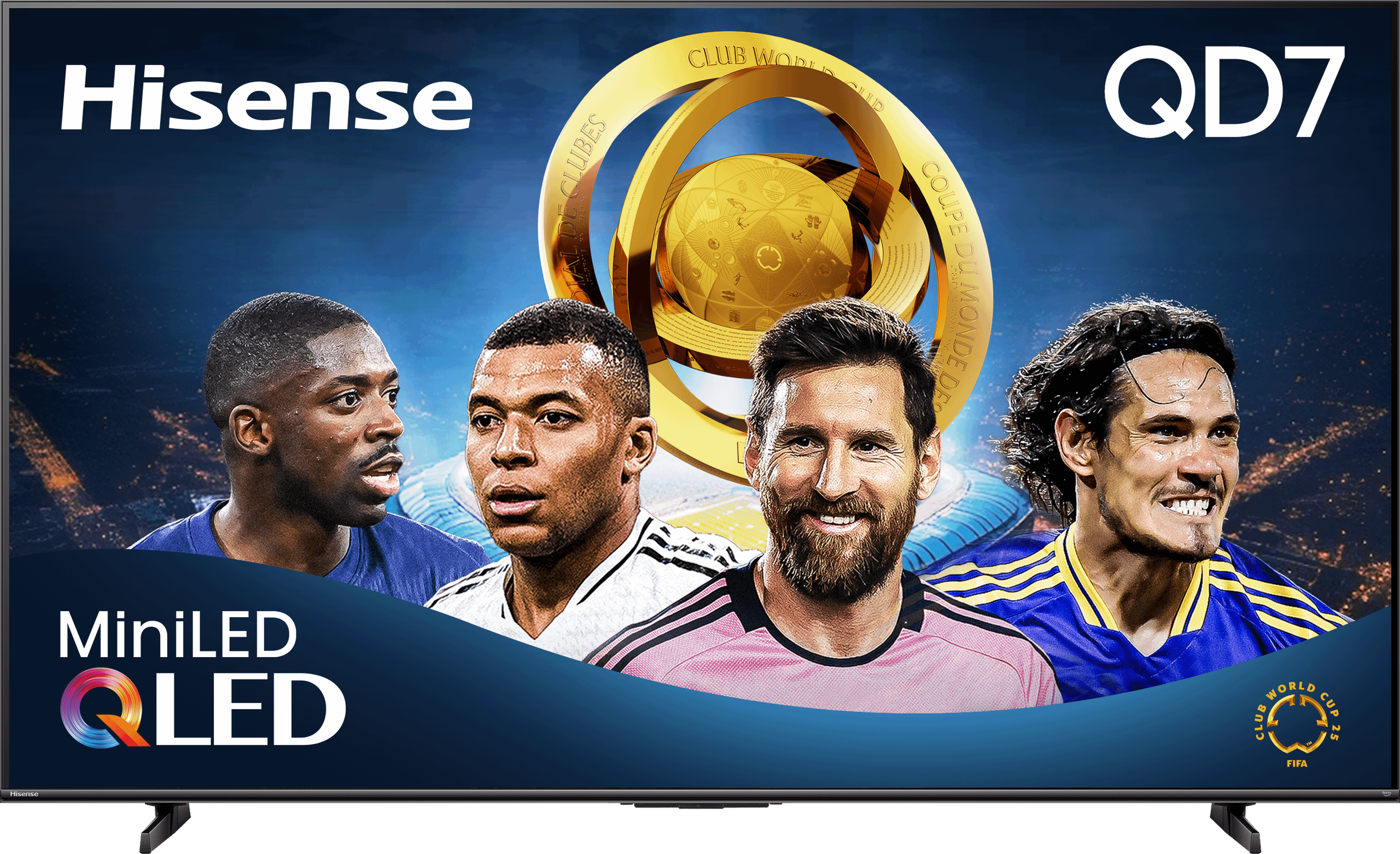
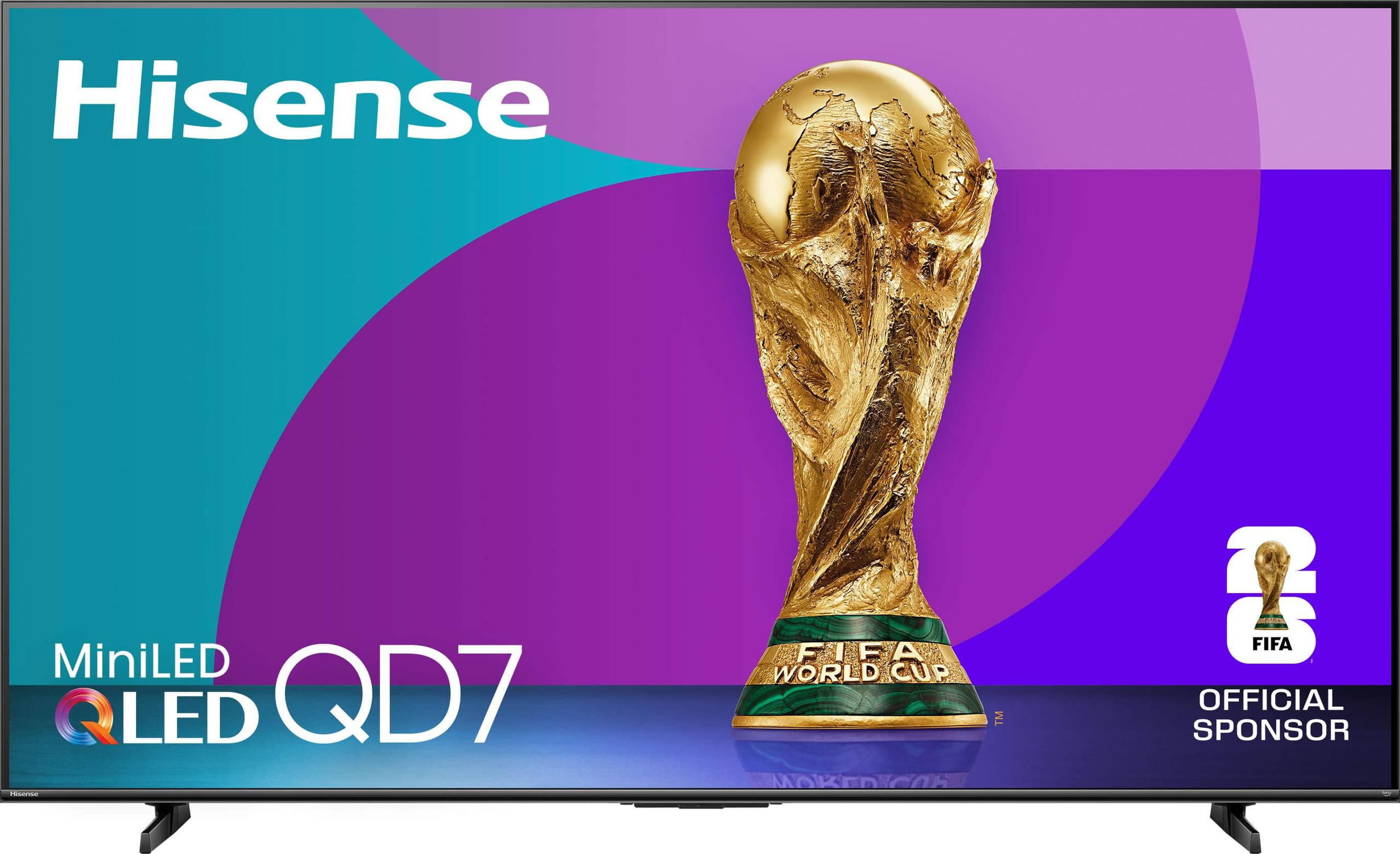
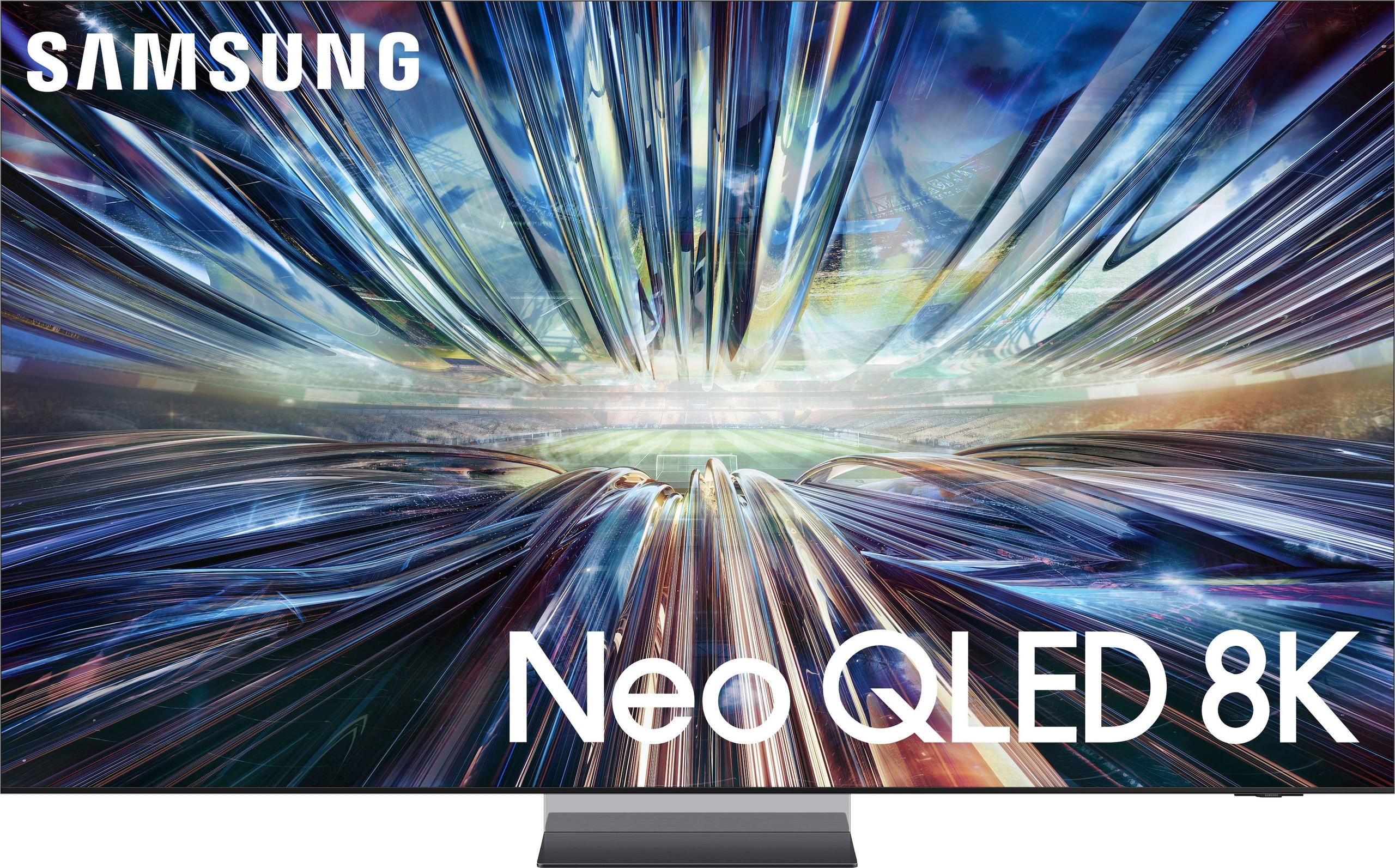
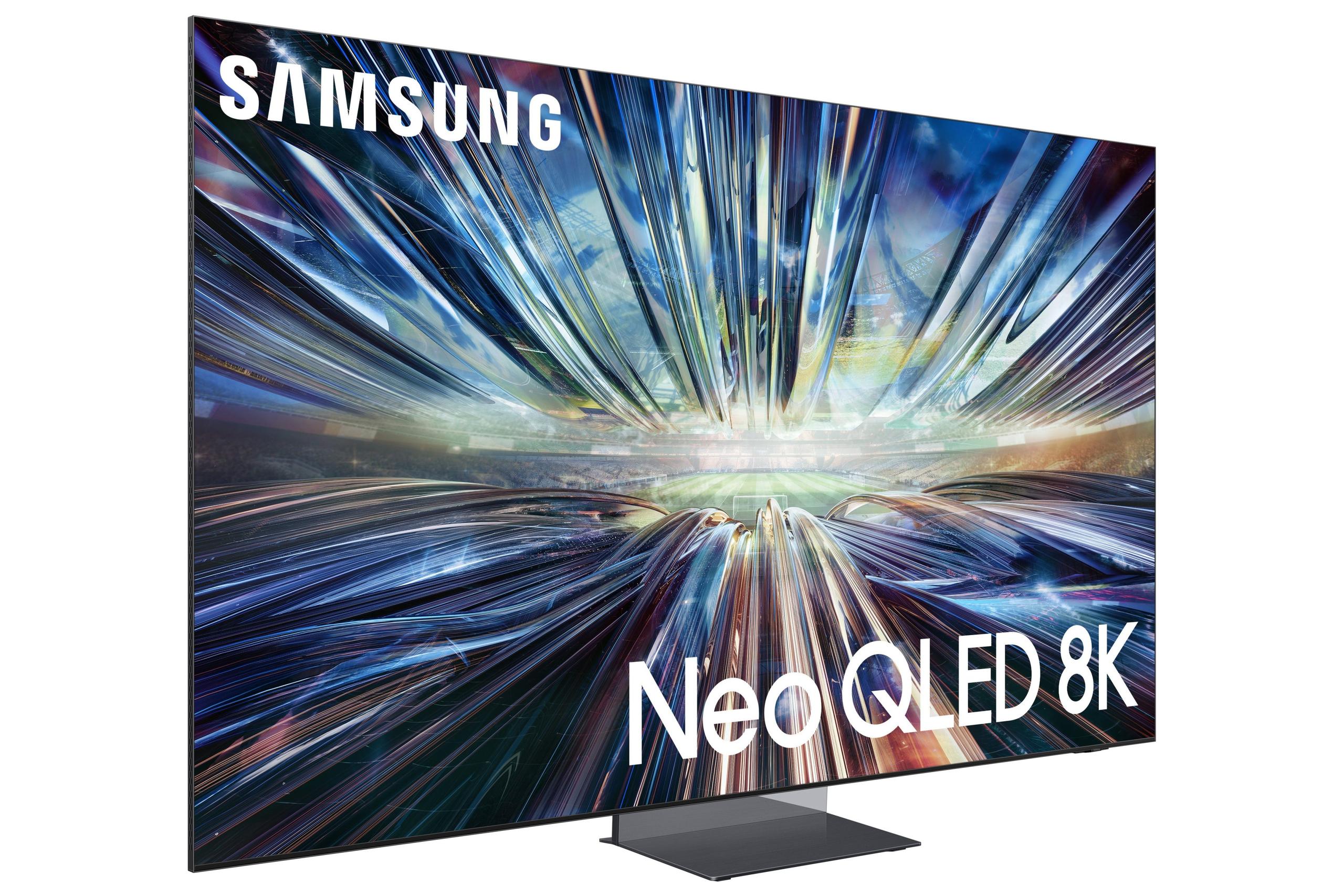
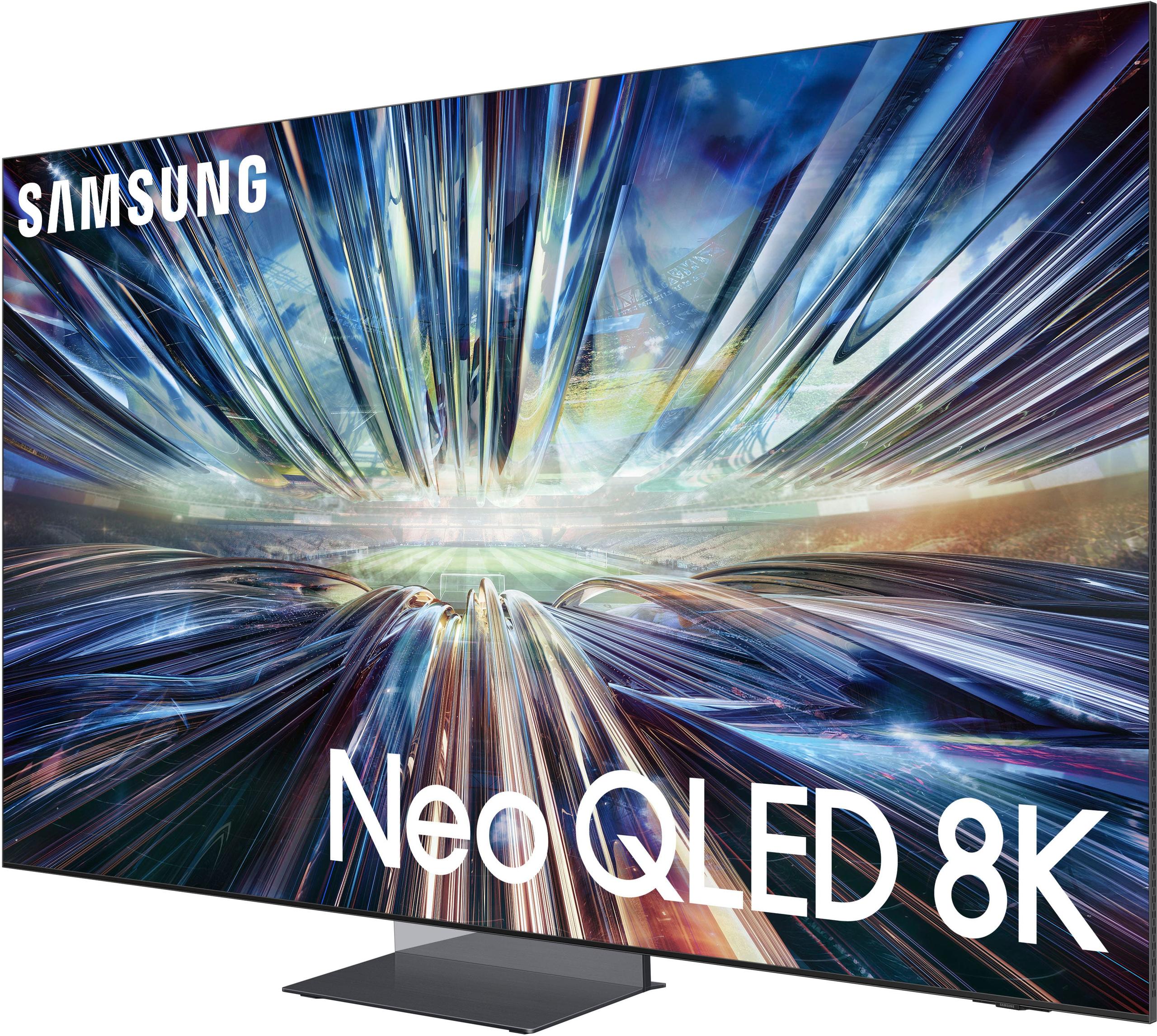
Shopping for a premium 65-inch TV can feel overwhelming, especially when you're comparing products that seem worlds apart in price. The Hisense 65" QD7 Series Mini-LED 4K Fire TV 2025 at $469.99 and the Samsung QN900D Series 65" Neo QLED 8K Smart TV at $2,897.00 represent two very different approaches to premium television technology. While both offer impressive features, they target completely different budgets and user expectations.
The premium TV market has evolved dramatically over the past few years. What we consider "premium" today includes features that were flagship-only just a couple of years ago. Mini-LED backlighting, quantum dot color technology, and high refresh rates have trickled down to more affordable models, while true flagship TVs have pushed into 8K territory and advanced AI processing.
When evaluating premium TVs, there are several key areas that matter most to your viewing experience: display technology (how the picture actually looks), smart features (how easy it is to use), gaming performance (especially important with PlayStation 5 and Xbox Series X), audio quality, and overall build quality. The most important consideration, though, is understanding what you actually need versus what sounds impressive on paper.
The Hisense QD7 launched in 2025 as part of Hisense's strategy to bring flagship-level features to budget-conscious buyers. It's the kind of TV that makes you wonder why anyone would spend more money. The Samsung QN900D, released in late 2024, represents Samsung's vision of the absolute pinnacle of TV technology, with 8K resolution and AI processing that would have seemed like science fiction just a few years ago.
These represent two fundamentally different approaches to premium TVs. Hisense asks: "What if we could deliver 90% of the flagship experience at 20% of the cost?" Samsung asks: "What if we pushed every boundary of what's technically possible?"
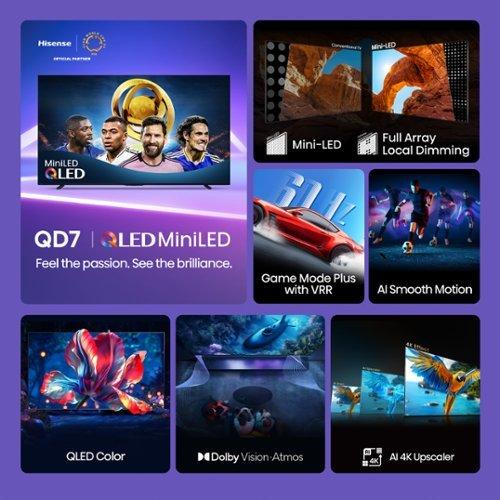
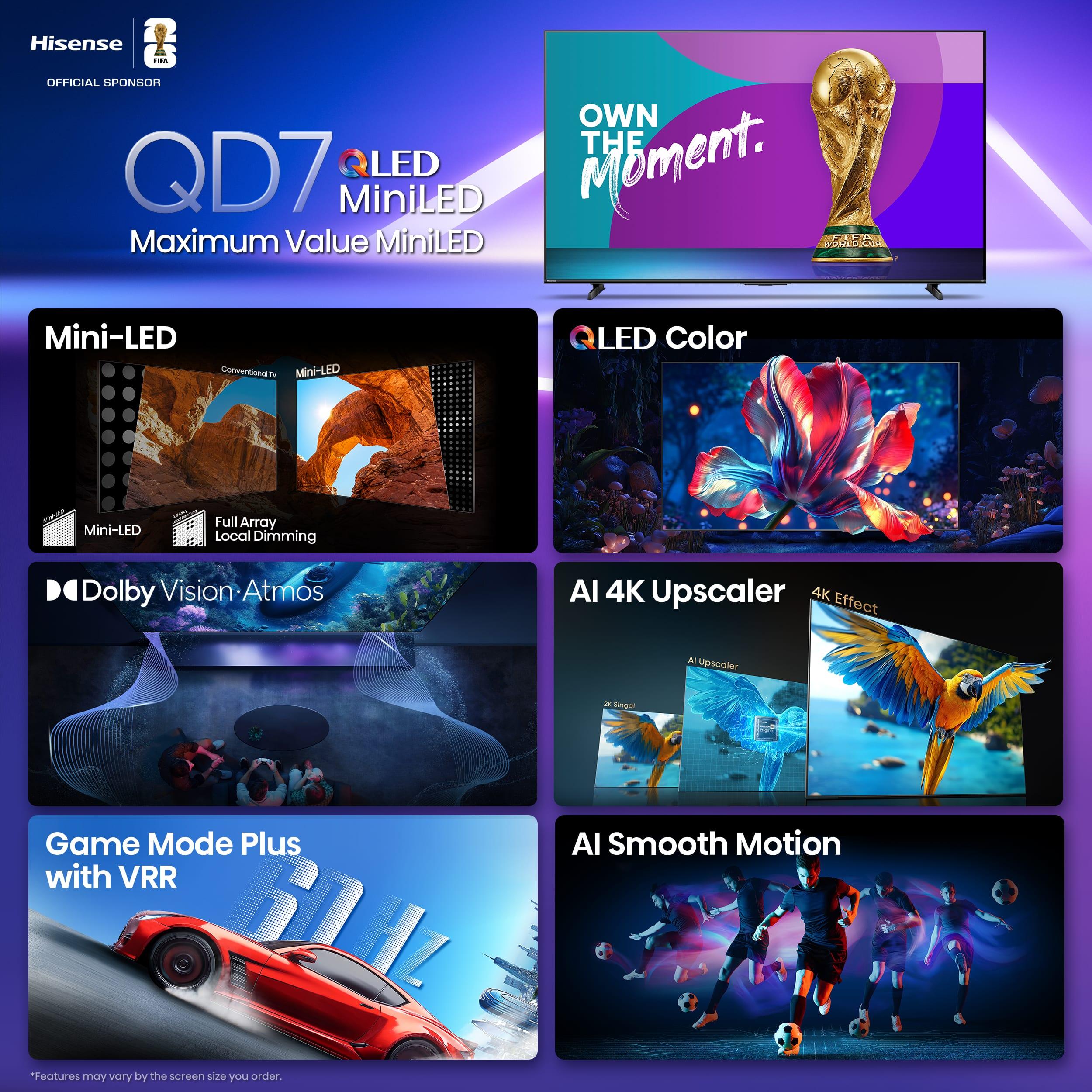
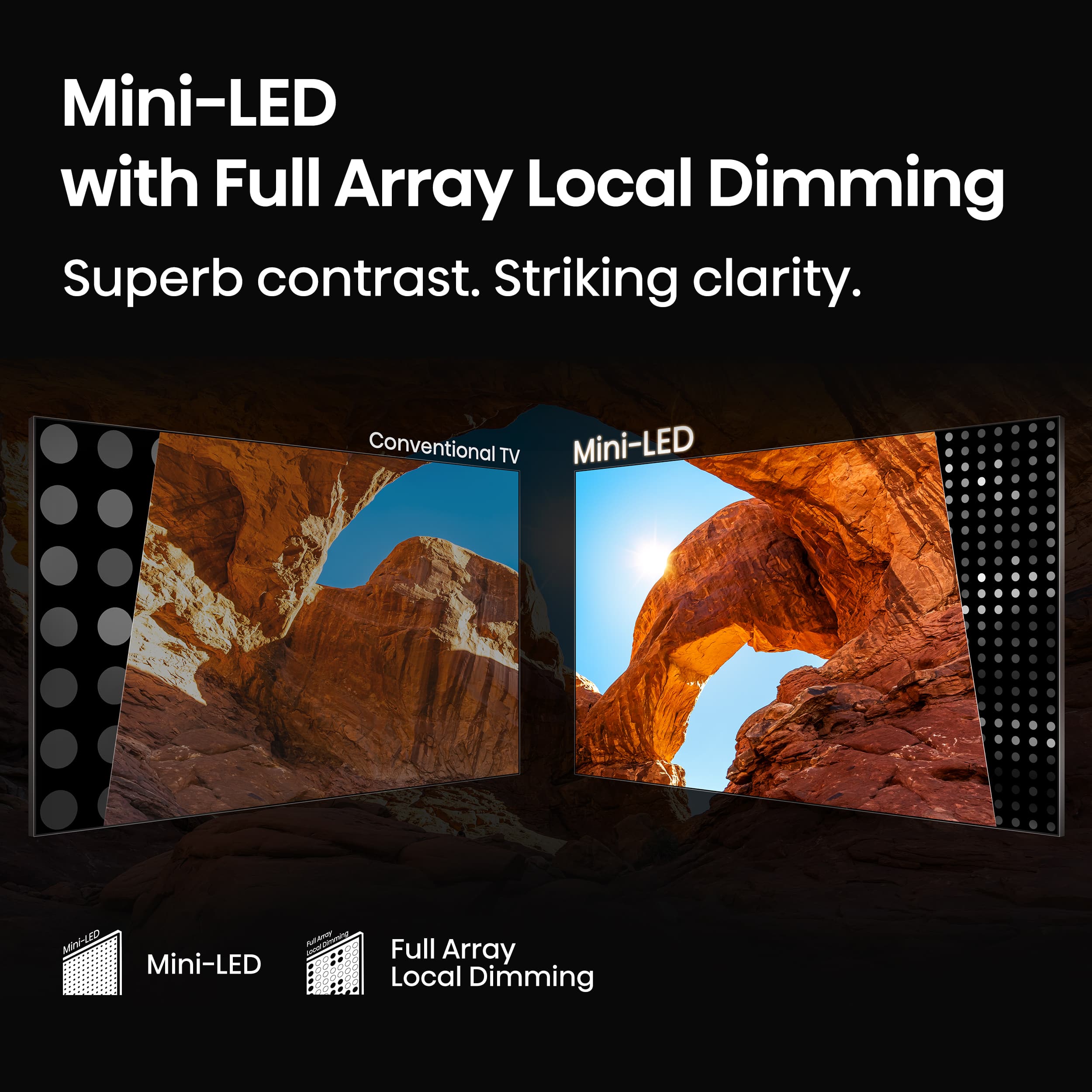
Both TVs use Mini-LED backlighting, but the implementation differs significantly. Mini-LED technology uses thousands of tiny LEDs instead of traditional larger LEDs, allowing for much more precise control of brightness and darkness across the screen. Think of it like having thousands of tiny flashlights behind the screen instead of a few big ones – you can light up bright areas while keeping dark areas truly dark.
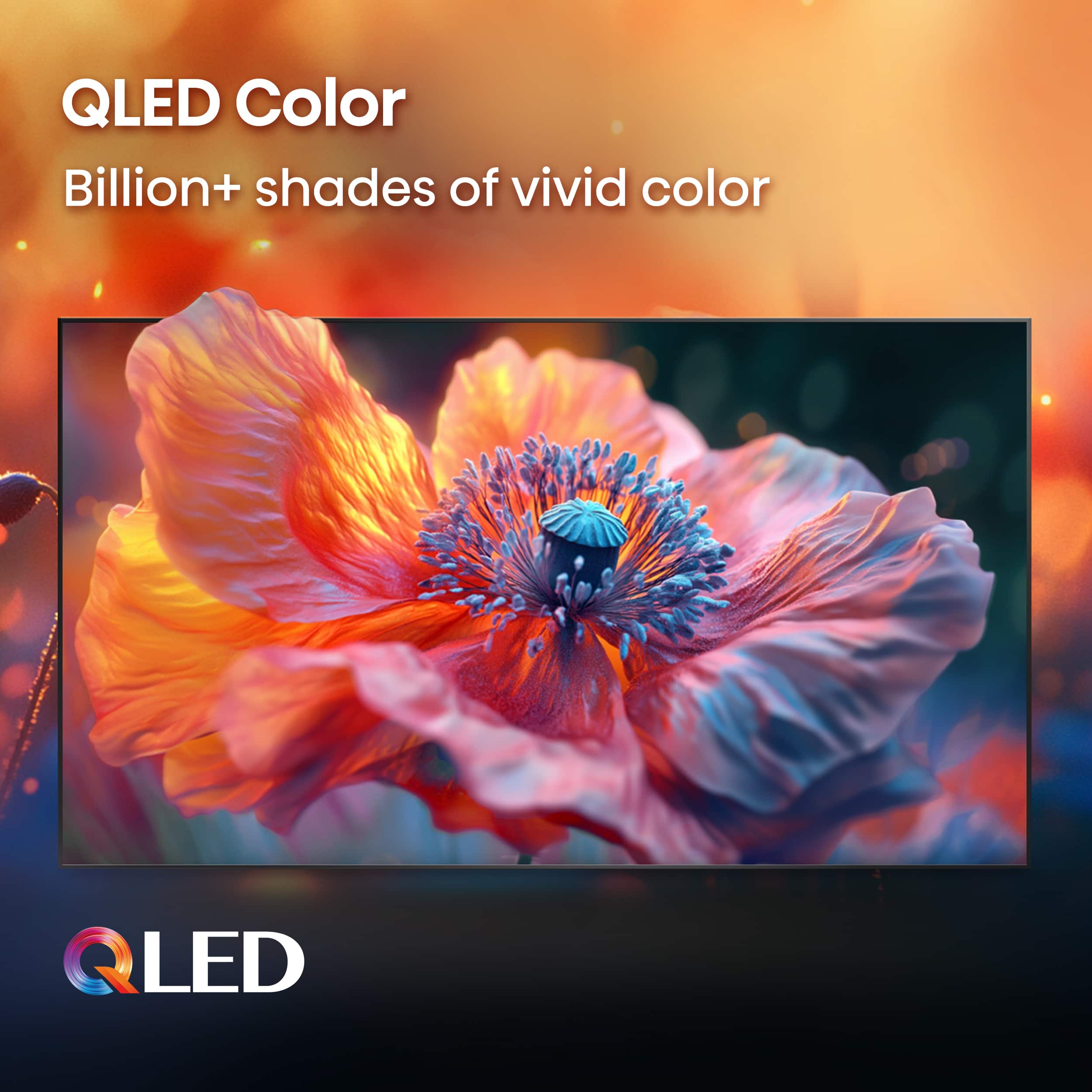
The Hisense QD7 combines Mini-LED with quantum dot technology (that's the "Q" in QLED). Quantum dots are microscopic particles that emit very pure colors when light hits them. This means you get more vibrant, accurate colors than traditional LED TVs. The QD7 can reach up to 3,000 nits of peak brightness, which is genuinely impressive for any TV, let alone one at this price point.
The Samsung QN900D takes this further with what Samsung calls "Neo QLED" technology. It's essentially a more refined version of Mini-LED with even smaller LEDs and more precise control. The local dimming zones (areas of the screen that can be independently brightened or dimmed) are more numerous and sophisticated, resulting in better contrast and less "blooming" – that halo effect you sometimes see around bright objects against dark backgrounds.
Here's where things get interesting. The QD7 delivers 4K resolution (3840 x 2160 pixels), while the QN900D offers 8K (7680 x 4320 pixels). On paper, 8K sounds amazing – it's four times as many pixels as 4K. But here's the reality: there's virtually no native 8K content available. Netflix, Amazon Prime, Disney+, and even 4K Blu-rays are all 4K or lower.
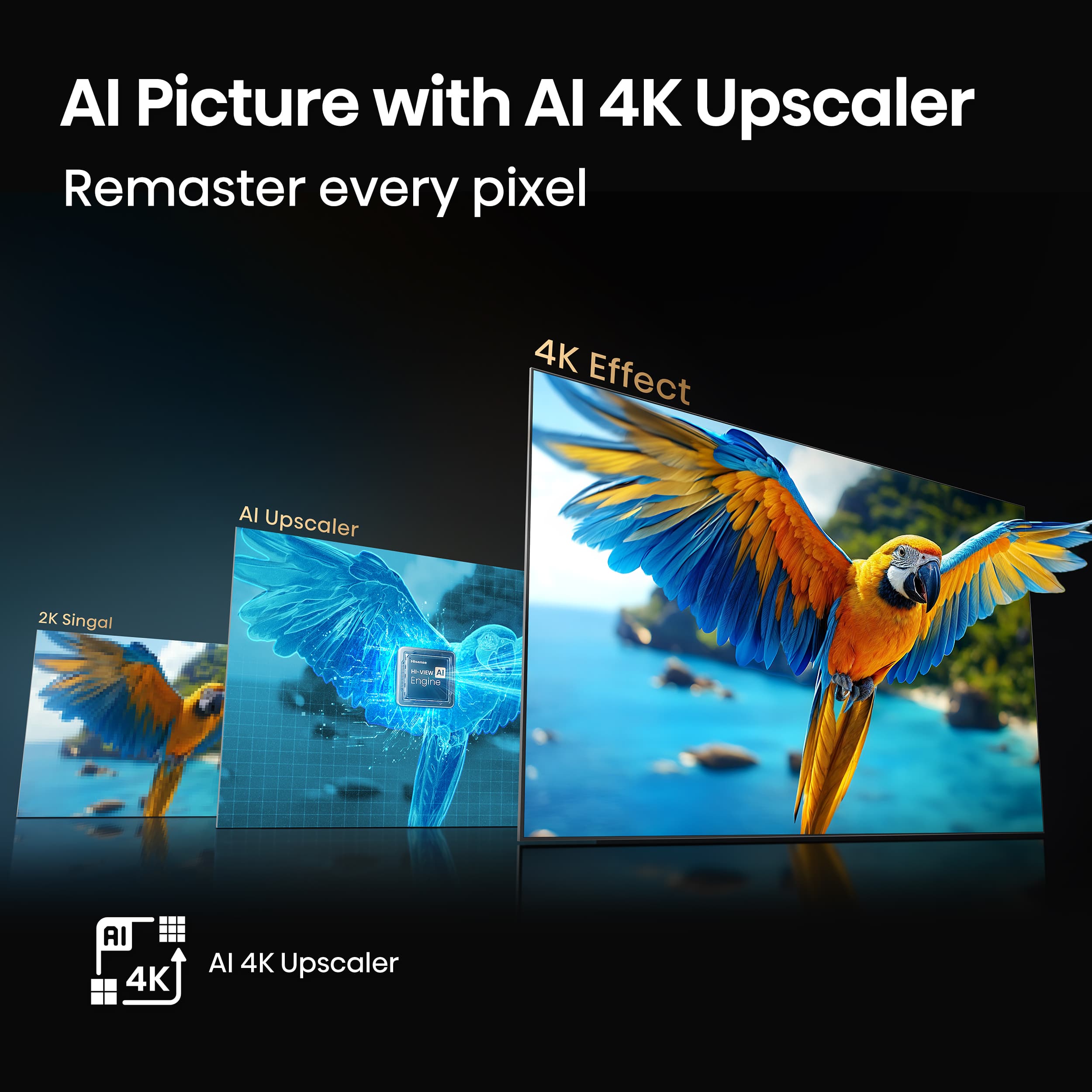
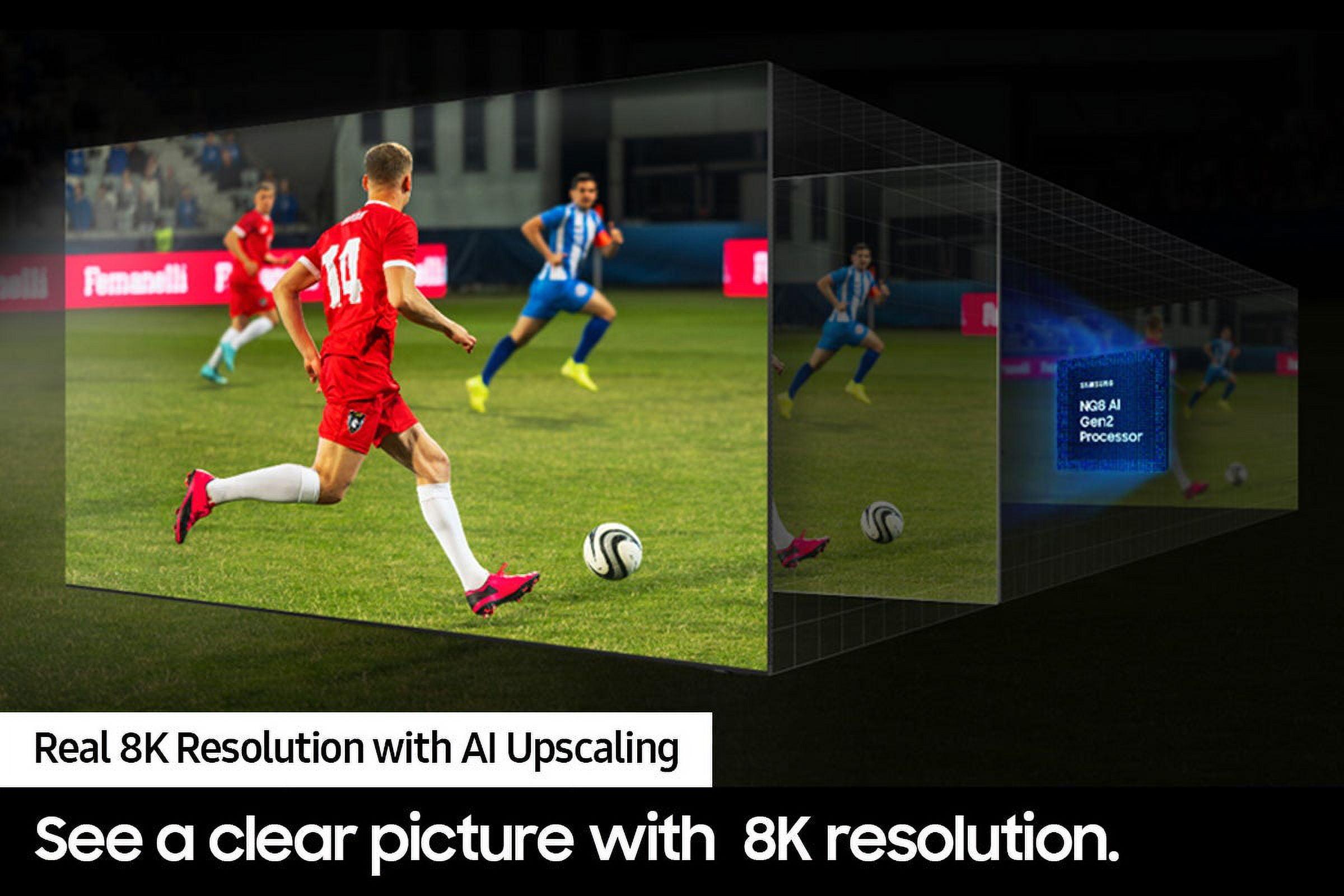
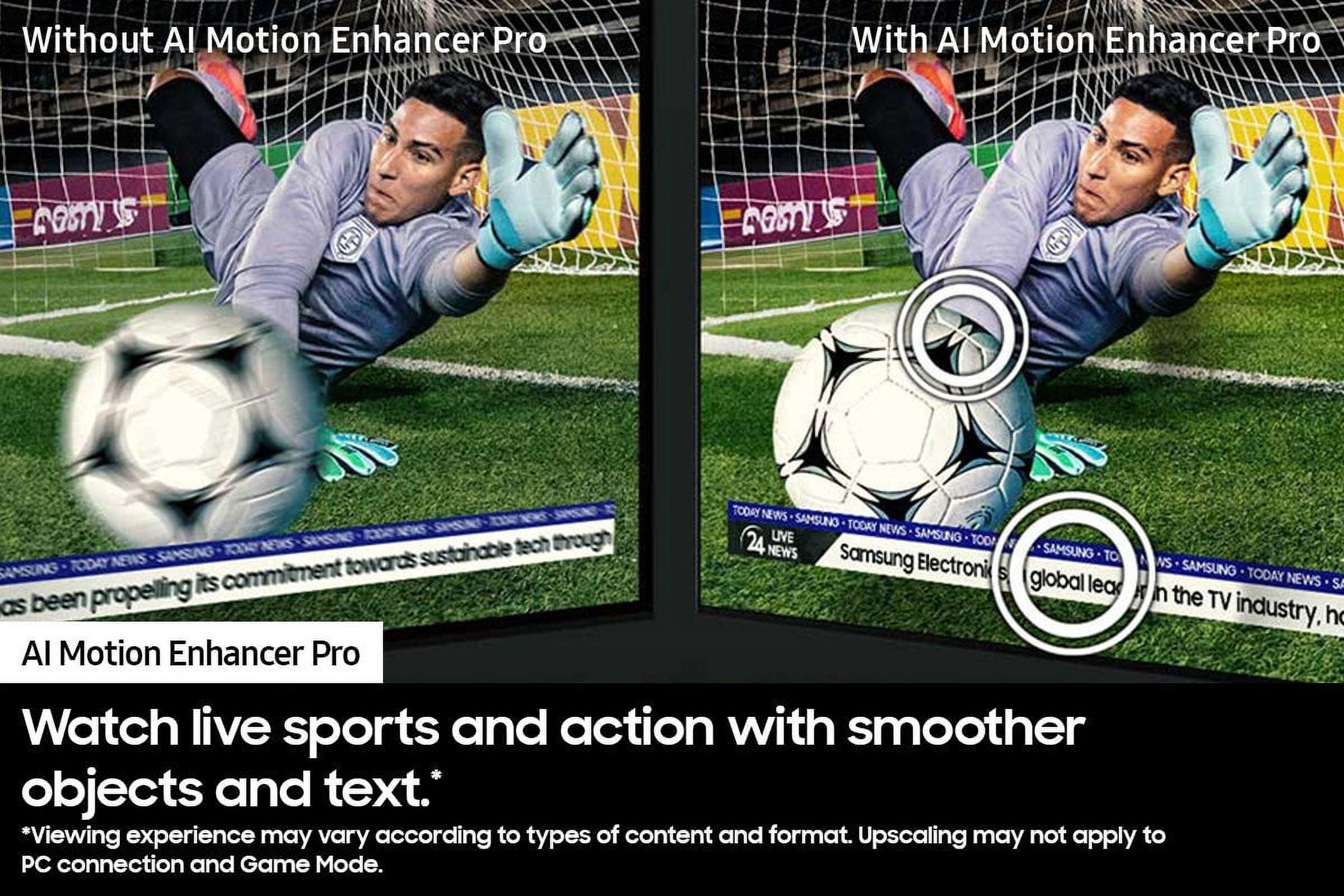
What 8K TVs like the Samsung excel at is upscaling – taking lower resolution content and making it look sharper. The QN900D's NQ8 AI Gen3 processor uses artificial intelligence and neural networks to analyze every frame and enhance details. It's genuinely impressive technology that can make 4K content look noticeably better than it would on a 4K display.
But here's my honest take: unless you're sitting very close to the screen (closer than most people sit to a 65-inch TV), the difference between well-upscaled 4K and native 4K is subtle at best. The QD7's 4K resolution is perfectly suited for all current content and will remain so for years to come.
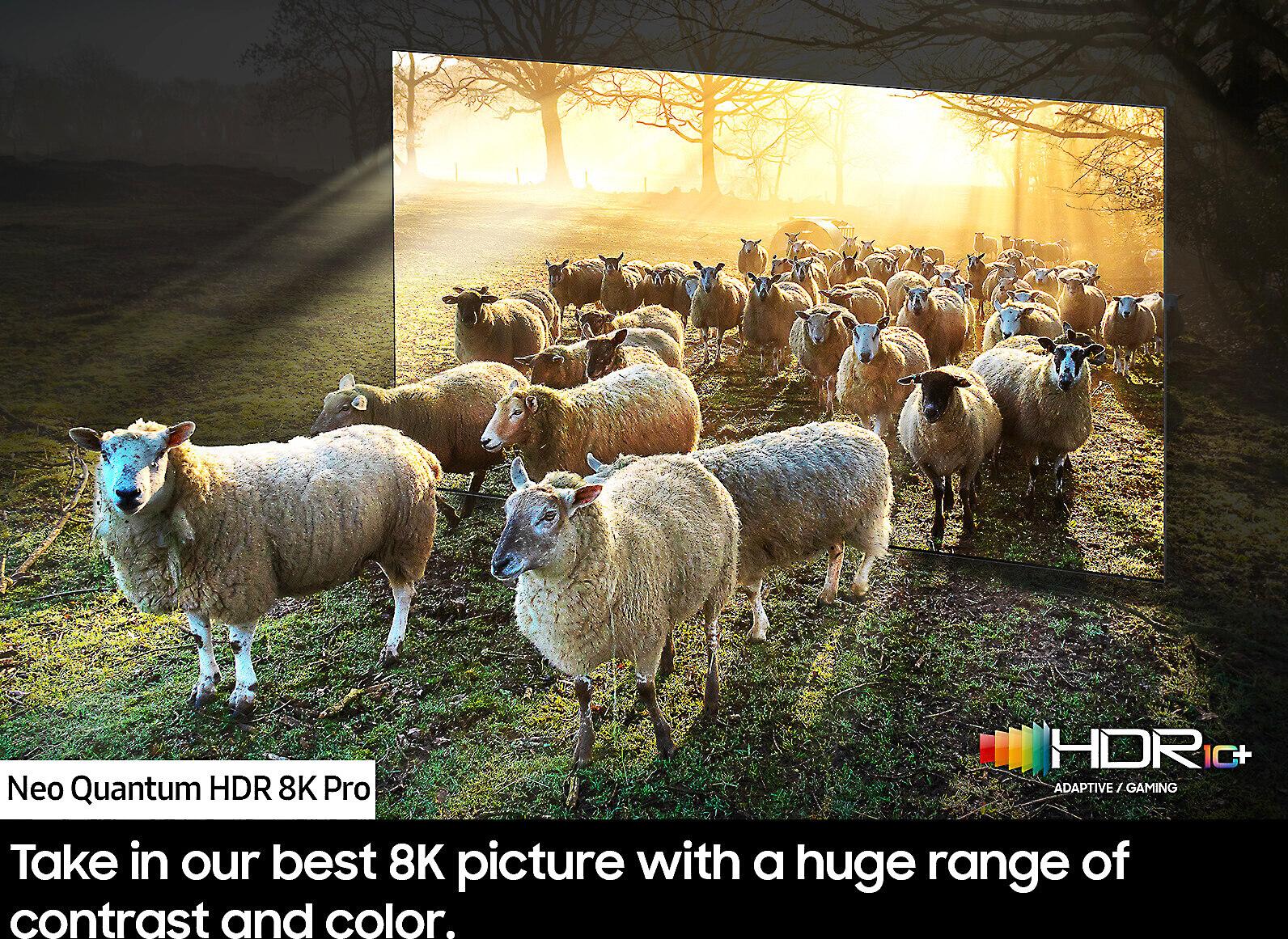
Both TVs support HDR (High Dynamic Range), but with different approaches. HDR is arguably more important than resolution for picture quality – it's what makes bright scenes truly bright and dark scenes truly dark, with more realistic colors throughout.
The Hisense QD7 supports both Dolby Vision and HDR10+, the two main HDR formats. Dolby Vision is particularly impressive because it optimizes brightness and color scene by scene, rather than applying the same settings to an entire movie. This means better-looking content on Netflix, Amazon Prime, and most streaming services.
The Samsung QN900D supports HDR10+ but notably lacks Dolby Vision support. This is a bit puzzling for a flagship TV, as Dolby Vision is widely considered the superior HDR format. Samsung has their own reasons for this (likely related to licensing costs and their relationship with Dolby), but it means you'll miss out on the optimal viewing experience for a lot of streaming content.
Gaming performance has become crucial with the PlayStation 5 and Xbox Series X pushing high frame rates and advanced graphics features. Both TVs are well-equipped for gaming, but with different strengths.
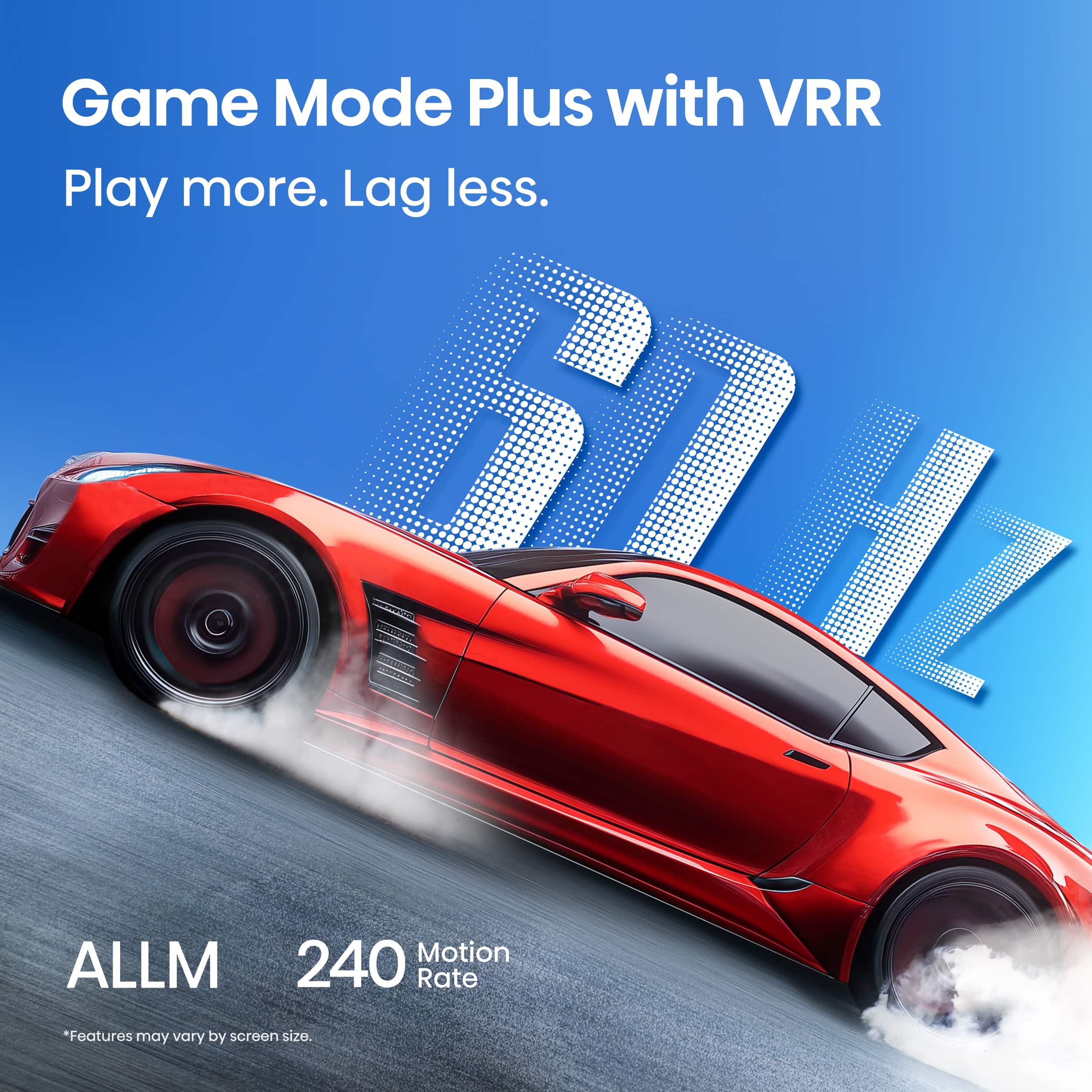
The Hisense QD7 offers 4K gaming at up to 120Hz with Variable Refresh Rate (VRR) support. VRR synchronizes the TV's refresh rate with the console's frame rate, eliminating screen tearing and stuttering. It includes Auto Low Latency Mode (ALLM), which automatically switches to game mode when it detects a console. The input lag – the delay between pressing a button and seeing the action on screen – is respectably low for smooth gaming.
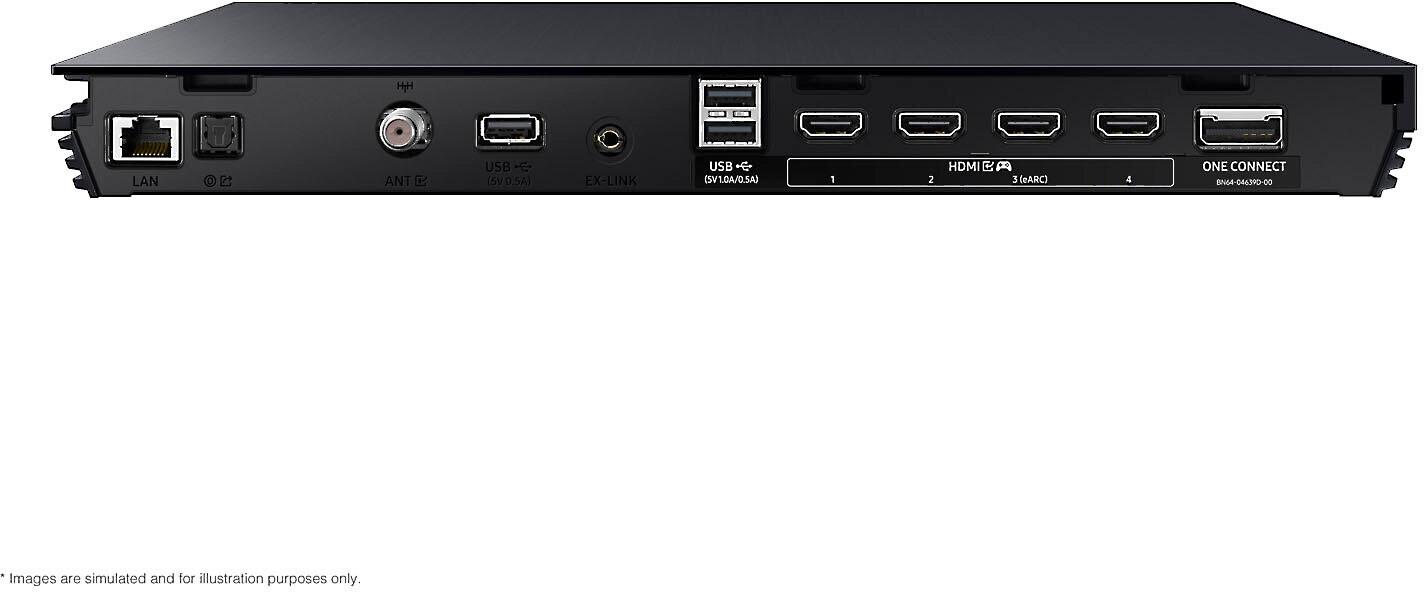
The Samsung QN900D takes gaming to another level entirely. It supports 4K gaming at up to 240Hz and even 8K gaming at 60Hz. The input lag is exceptionally low, often measured in single-digit milliseconds. It has four HDMI 2.1 ports compared to the Hisense's two, which matters if you have multiple gaming consoles, a high-end PC, and other devices that need the full bandwidth.
For most gamers, the Hisense will be perfectly adequate. The Samsung is overkill unless you're a serious competitive gamer or have multiple high-end gaming systems.
TV audio has improved dramatically in recent years, and both of these TVs offer respectable built-in sound systems that many users will find adequate without a separate soundbar.
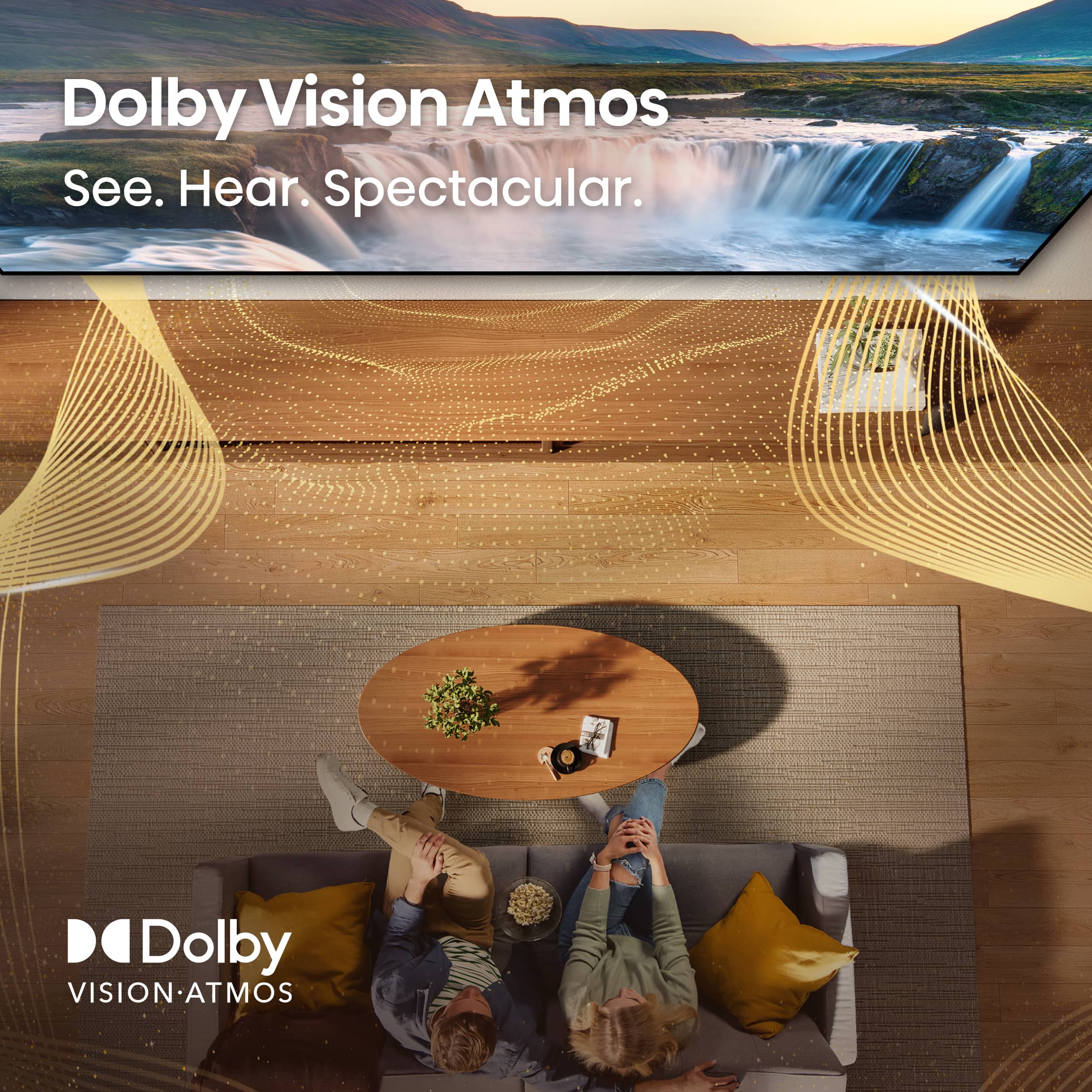
The Hisense QD7 features a 2.1.2 channel system with a built-in subwoofer and support for Dolby Atmos and DTS:X. Dolby Atmos creates a three-dimensional sound experience where effects can seem to come from above, behind, or beside you. Having a built-in subwoofer is unusual at this price point and really helps with bass response for movies and music.
The Samsung QN900D has a more sophisticated 6.2.4 channel system with 90 watts of total power. It features Object Tracking Sound, which moves audio around the screen to follow action – so if a car drives from left to right, the sound follows it. The TV also supports Q-Symphony, allowing it to work in harmony with Samsung soundbars for an even more immersive experience.
Surprisingly, the Samsung doesn't support Dolby Atmos, which is a notable omission for a flagship TV. The Hisense actually has better audio codec support, though the Samsung's physical speaker system is more advanced.
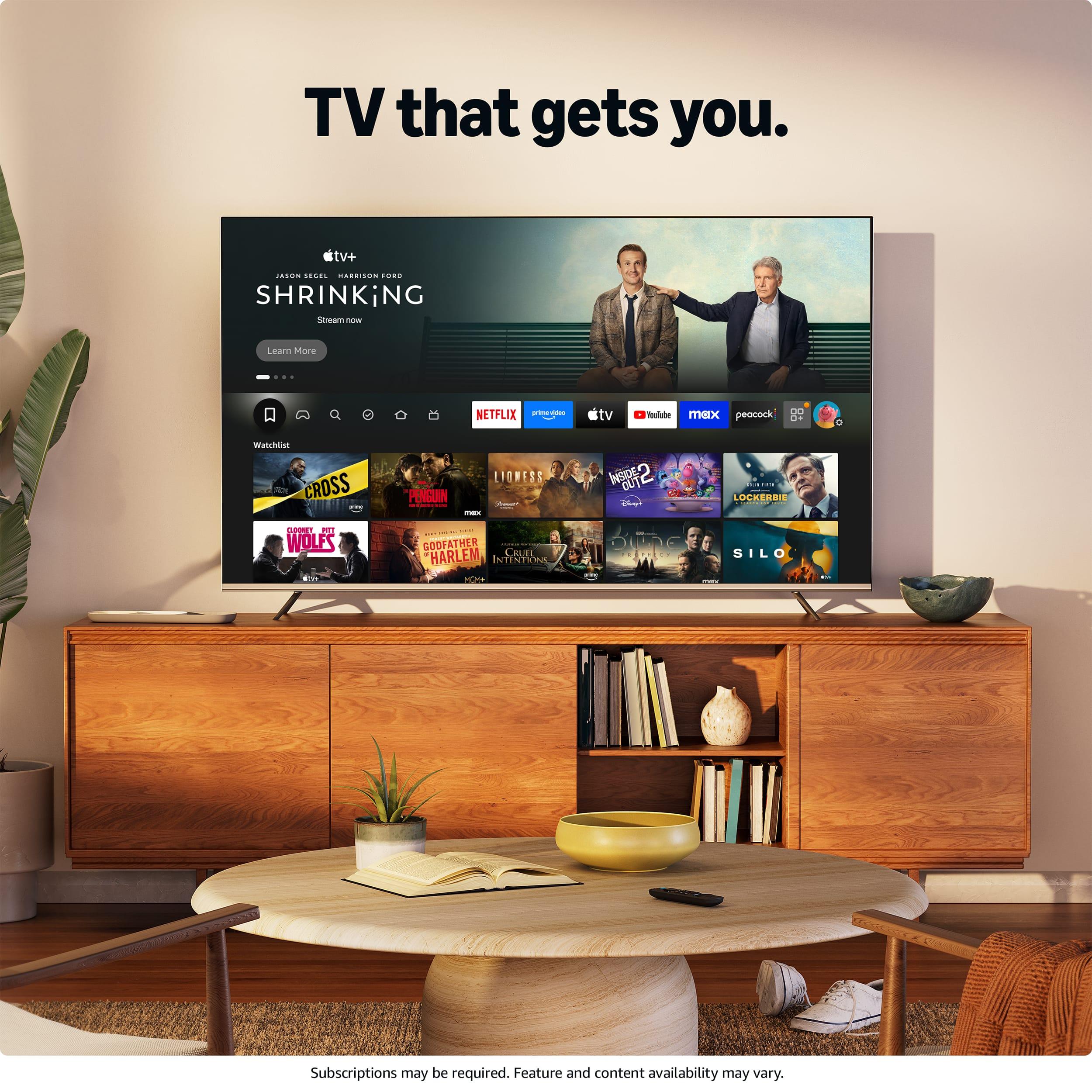
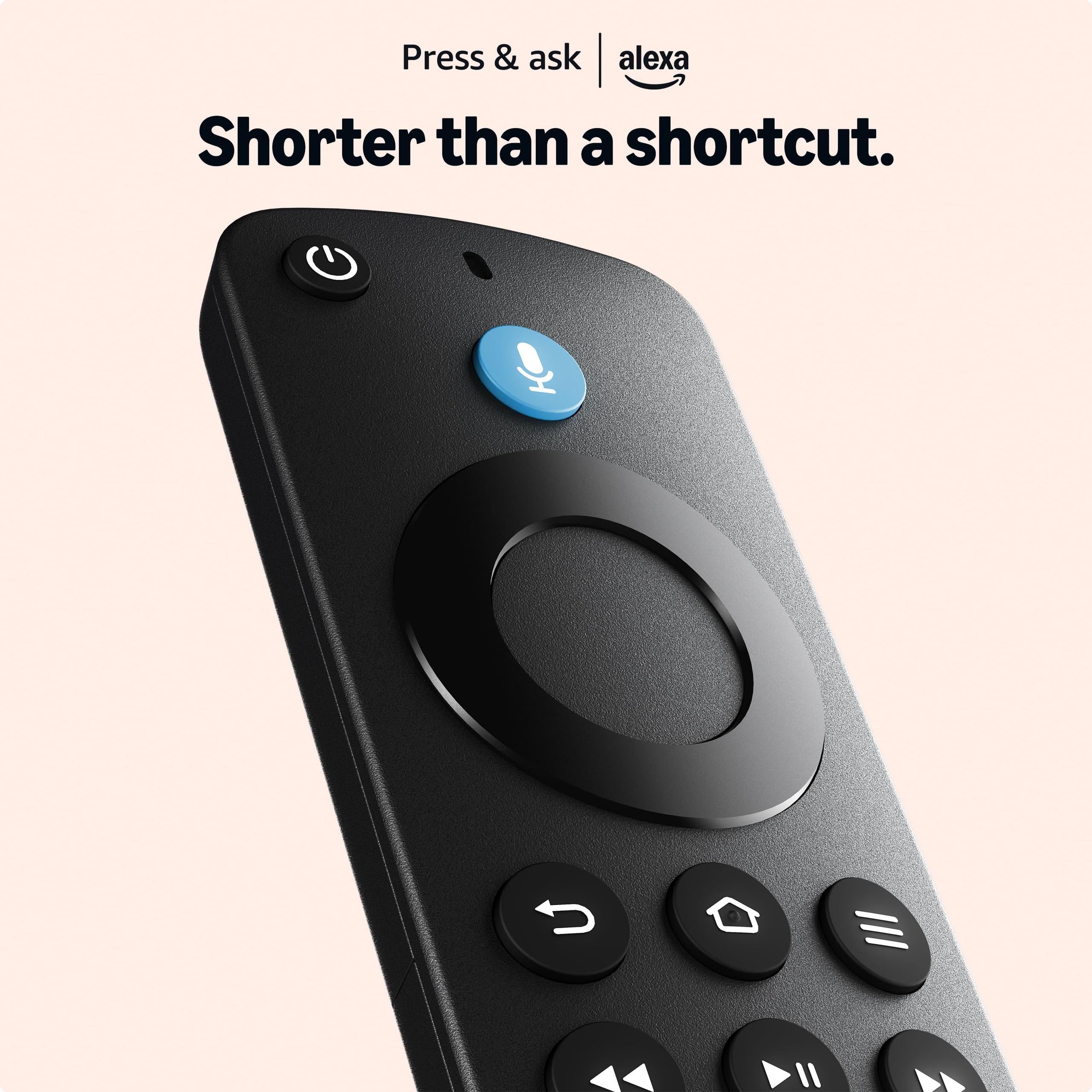
The smart TV platform affects your daily experience more than you might expect. The Hisense QD7 runs Fire TV, Amazon's smart TV platform. It's fast, has access to virtually every streaming app, and integrates deeply with Alexa voice control. The interface is clean and focuses on content discovery. If you're already in the Amazon ecosystem, it feels natural and familiar.
The Samsung QN900D runs Tizen, Samsung's proprietary smart TV platform. It's more polished and visually appealing than Fire TV, with smooth animations and a premium feel. It integrates well with Samsung's SmartThings ecosystem and supports both Bixby and Alexa. The interface is more customizable and feels more premium overall.
Both platforms are responsive and feature-rich, but Samsung's feels more refined. However, Fire TV's deep integration with Amazon services and its straightforward approach might appeal to users who want simplicity over customization.
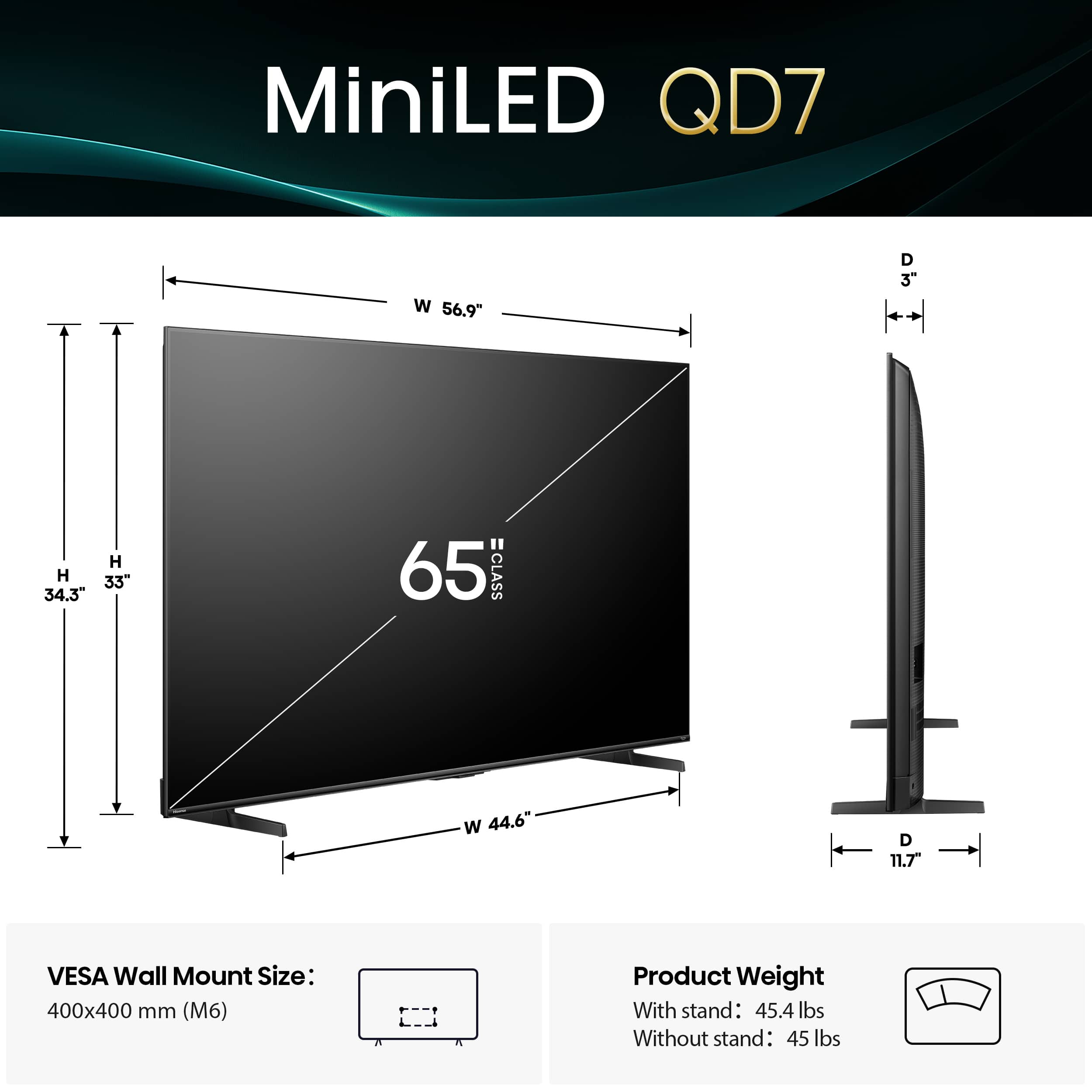
The physical differences between these TVs reflect their different price points and target audiences. The Hisense QD7 has a standard slim profile with a functional design. The bezels are thin, the build quality is solid, and the included remote is straightforward. It's not going to win any design awards, but it won't look out of place in any living room.
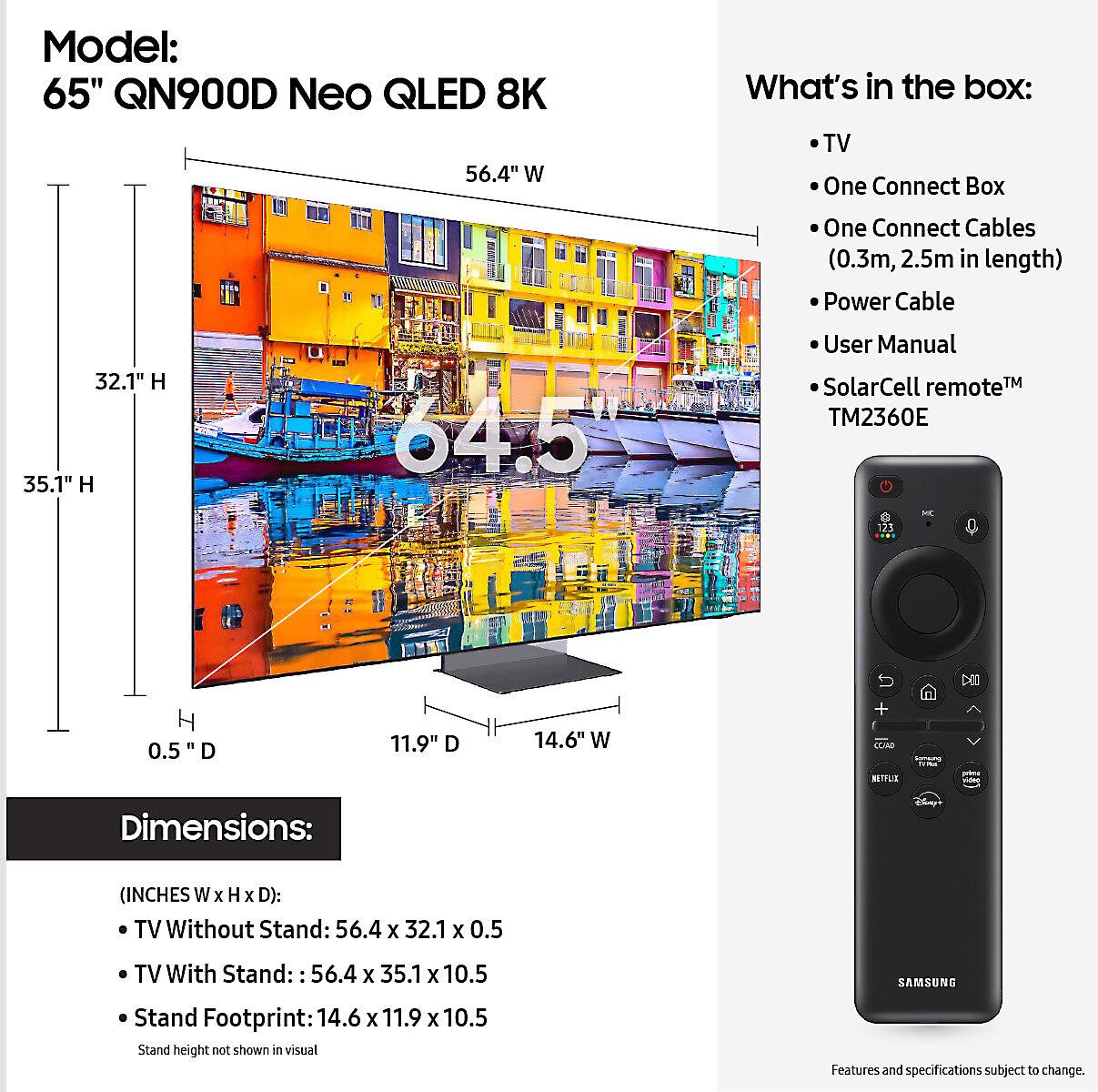
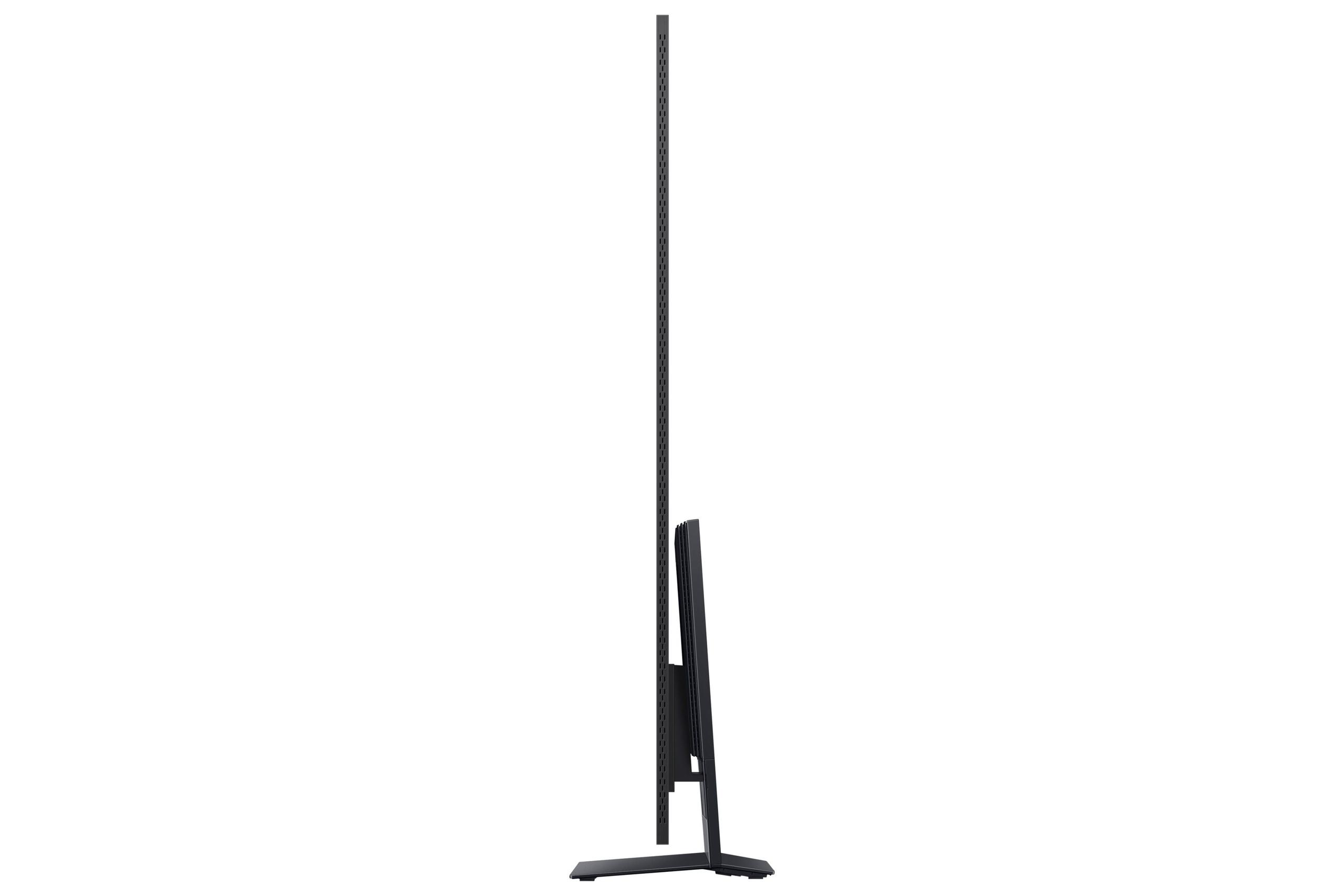
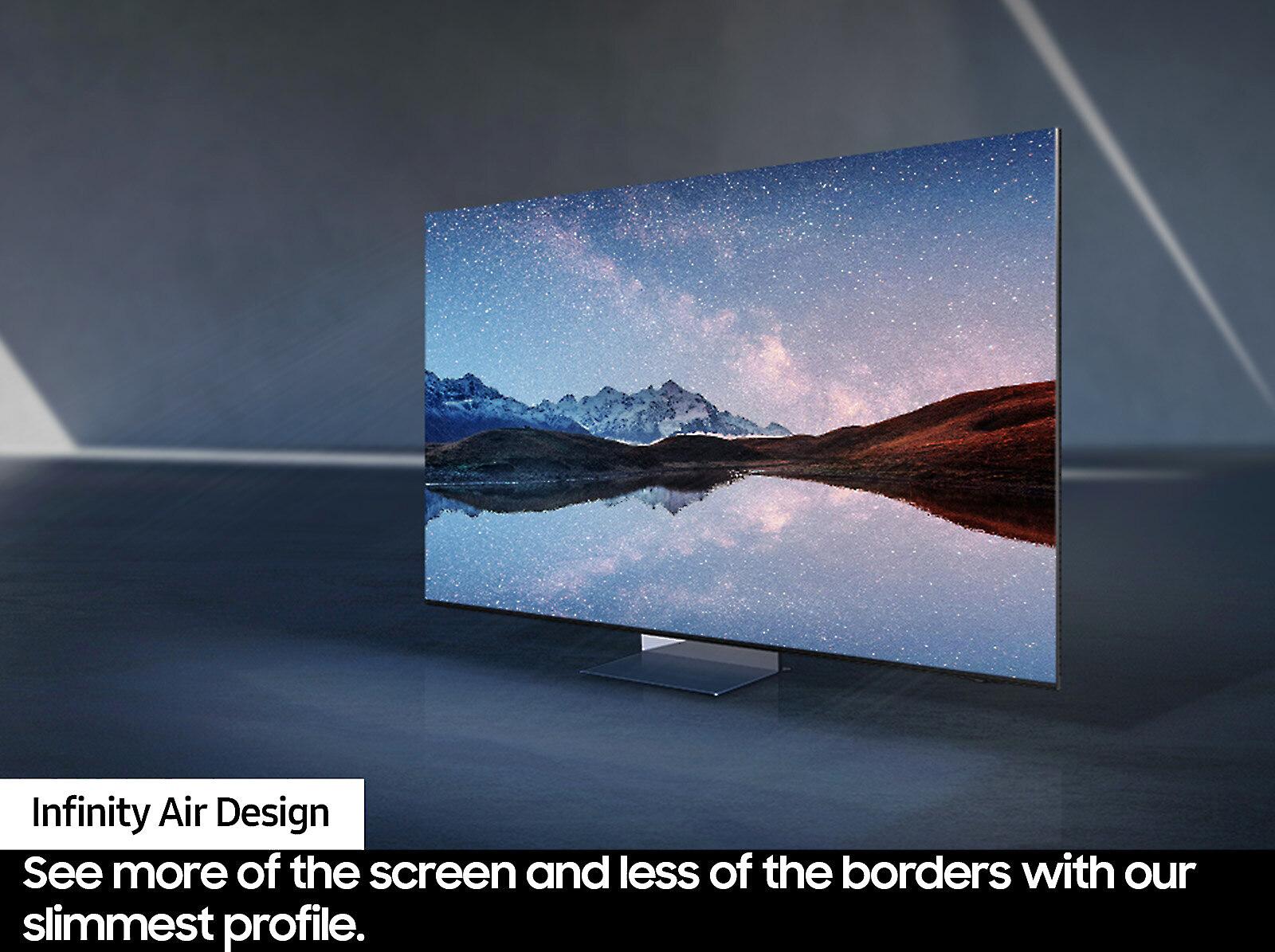
The Samsung QN900D showcases what Samsung calls "Infinity Air" design – it's almost impossibly thin with nearly invisible bezels. The build quality is exceptional, with premium materials throughout. The One Connect Box houses all the connections, allowing for a cleaner installation with just a single cable running to the TV. It's the kind of TV that makes guests ask about it.
If you're building a dedicated home theater, both TVs have merits but serve different purposes. The Hisense QD7 offers excellent value for a home theater setup, especially if you're planning to add a separate sound system anyway. Its bright, vibrant picture works well in controlled lighting environments, and the money saved could go toward a quality soundbar or surround sound system.
The Samsung QN900D is better suited for a no-compromise home theater where you want the absolute best picture quality. Its superior processing and 8K capability mean it will handle whatever content becomes available in the future. The advanced local dimming is particularly beneficial in dark room viewing, where contrast is most noticeable.
This is where the fundamental difference becomes clear. The Hisense QD7 at $469.99 offers approximately 80-90% of the flagship experience at roughly 16% of the cost. It's the kind of value proposition that makes you question whether spending more makes sense for most people.
The Samsung QN900D at $2,897.00 delivers the absolute pinnacle of current TV technology. Every aspect is refined, every feature is implemented at the highest level, and the future-proofing is as complete as possible. But you're paying a significant premium for that last 10-20% of performance and refinement.
Both TVs represent significant advances from their predecessors. The QD7 brings features that were flagship-only just two years ago down to an accessible price point. Mini-LED, quantum dots, and high refresh rate gaming were premium features that now feel standard.
The QN900D showcases how AI processing is transforming TV technology. The NQ8 AI Gen3 processor represents a genuine leap forward in how TVs handle content, using machine learning to optimize every frame. This kind of processing power was unimaginable in consumer TVs just a few years ago.
Choose the Hisense QD7 if you want flagship-level features without flagship pricing. It's perfect for most viewing scenarios, offers excellent gaming performance, and provides genuinely impressive picture quality. The money saved could go toward a sound system, streaming subscriptions, or simply staying in your budget.
Choose the Samsung QN900D if you want the absolute best available technology and price is less of a concern. It's ideal for dedicated home theaters, serious gamers with multiple high-end systems, or anyone who wants the peace of mind that comes with having the most advanced TV available.
The honest truth is that both TVs will provide excellent viewing experiences. The QD7 offers exceptional value that makes premium TV features accessible to many more people. The QN900D pushes the boundaries of what's possible and provides a glimpse into the future of TV technology.
Your choice ultimately depends on your priorities: maximum value or maximum performance. Both approaches are valid, and both TVs execute their respective visions exceptionally well.
| Hisense 65" QD7 Series Mini-LED 4K Fire TV 2025 | Samsung QN900D Series 65" Neo QLED 8K Smart TV |
|---|---|
| Price - The most significant difference between these TVs | |
| $469.99 (exceptional value for flagship features) | $2,897.00 (premium pricing for cutting-edge technology) |
| Resolution - 4K vs 8K impact on actual viewing experience | |
| 4K (3840 x 2160) - perfect for all current content | 8K (7680 x 4320) - future-proof but limited native content |
| Display Technology - What creates the picture quality | |
| Mini-LED with Quantum Dot, Full Array Local Dimming | Neo QLED Mini-LED with superior local dimming zones |
| Peak Brightness - Critical for HDR and daytime viewing | |
| Up to 3,000 nits (excellent for bright rooms) | Flagship-level brightness with advanced control |
| HDR Support - Affects color and contrast quality | |
| Dolby Vision, HDR10+, HLG (comprehensive support) | HDR10+, HLG (no Dolby Vision - notable omission) |
| Gaming Performance - Console compatibility and responsiveness | |
| 4K@120Hz, VRR, ALLM, 2 HDMI 2.1 ports | 4K@240Hz, 8K@60Hz, VRR, ALLM, 4 HDMI 2.1 ports |
| Processor - Affects upscaling and smart features | |
| Standard processing with good 4K upscaling | NQ8 AI Gen3 with advanced AI upscaling and optimization |
| Audio System - Built-in sound capabilities | |
| 2.1.2 channel with subwoofer, Dolby Atmos, DTS:X | 6.2.4 channel (90W), Object Tracking Sound, no Dolby Atmos |
| Smart Platform - Daily user experience | |
| Fire TV with Alexa (simple, fast, comprehensive apps) | Tizen OS (polished, customizable, premium feel) |
| Design Quality - Build and aesthetic appeal | |
| Slim profile, functional design, solid build | Ultra-slim "Infinity Air" design, premium materials |
| Best For - Target user and use cases | |
| Value seekers wanting flagship features on a budget | Enthusiasts wanting absolute best technology available |
The Hisense 65" QD7 Series Mini-LED 4K Fire TV 2025 at $469.99 offers exceptional value, delivering flagship-level features like Mini-LED backlighting, quantum dot technology, and gaming capabilities at a fraction of premium TV costs. The Samsung QN900D Series 65" Neo QLED 8K Smart TV at $2,897.00 provides cutting-edge technology and superior refinement but costs over 6 times more for incremental improvements.
The Hisense QD7 features 4K resolution (3840 x 2160), which is perfect for all current streaming content, games, and Blu-rays. The Samsung QN900D offers 8K resolution (7680 x 4320) with four times more pixels, but there's virtually no native 8K content available. The Samsung's advantage lies in superior upscaling of 4K content using AI processing.
Both TVs excel at gaming, but serve different needs. The Hisense QD7 supports 4K gaming at 120Hz with VRR and has 2 HDMI 2.1 ports, perfect for most gamers. The Samsung QN900D offers 4K at 240Hz, 8K at 60Hz, ultra-low input lag, and 4 HDMI 2.1 ports, making it ideal for serious gamers with multiple consoles.
The Hisense QD7 runs Fire TV, offering fast performance, comprehensive app selection, and deep Alexa integration with a straightforward interface. The Samsung QN900D uses Tizen OS, providing a more polished and customizable experience with better visual design and SmartThings integration, though it's more complex.
The Hisense QD7 supports Dolby Vision, HDR10+, and HLG, providing comprehensive HDR compatibility with all major streaming services. The Samsung QN900D supports HDR10+ and HLG but notably lacks Dolby Vision support, which is a significant omission for a flagship TV, especially for Netflix and Amazon Prime content.
The Hisense QD7 features a 2.1.2 channel system with built-in subwoofer and supports Dolby Atmos and DTS:X audio formats. The Samsung QN900D has a more sophisticated 6.2.4 channel system with Object Tracking Sound technology but surprisingly doesn't support Dolby Atmos, making the Hisense better for audio codec compatibility.
Both TVs perform well in bright rooms thanks to Mini-LED technology. The Hisense QD7 reaches up to 3,000 nits peak brightness, which is excellent for daytime viewing. The Samsung QN900D offers flagship-level brightness with more precise local dimming control, providing slightly better performance in challenging lighting conditions.
The Hisense QD7 features a standard slim profile with functional design and solid build quality appropriate for its price point. The Samsung QN900D showcases premium "Infinity Air" design with ultra-thin profile, nearly invisible bezels, premium materials, and a One Connect Box for clean cable management.
For home theater setups, the Samsung QN900D offers superior performance with advanced local dimming, better contrast in dark rooms, and more refined processing. However, the Hisense QD7 provides excellent home theater value, especially if you plan to add a separate sound system, allowing you to invest savings in other components.
The Hisense QD7 delivers impressive picture quality with Mini-LED backlighting, quantum dot colors, and excellent brightness. The Samsung QN900D offers superior picture processing with its NQ8 AI Gen3 processor, more precise local dimming zones, and advanced upscaling that makes all content look sharper and more detailed.
The Hisense QD7 will remain excellent for current 4K content and gaming for many years, offering great longevity for typical viewing needs. The Samsung QN900D provides more future-proofing with 8K capability, advanced processing, and premium build quality, though the practical benefits may not be realized for several years.
Choose the Hisense QD7 if you want flagship features at an accessible price and 4K resolution meets your needs. Select the Samsung QN900D if you want the absolute best technology available, have a higher budget, and value premium design and future-proofing over cost savings.
We've done our best to create useful and informative comparisons to help you decide what product to buy. Our research uses advanced automated methods to create this comparison and perfection is not possible - please contact us for corrections or questions. These are the sites we've researched in the creation of this article: bestbuy.com - custrevs.com - youtube.com - bestbuy.com - rtings.com - youtube.com - rtings.com - pcrichard.com - bestbuy.com - pcrichard.com - camelcamelcamel.com - amazonfiretv.blog - hisense-usa.com - hisense-usa.com - hisense-usa.com - bestbuy.com - leaseville.com - youtube.com - bestbuy.com - flatpanelshd.com - rtings.com - videoandaudiocenter.com - bestbuy.com - avsforum.com - bestbuy.com - walts.com - images.samsung.com - samsung.com - merlinstv.com - samsung.com - avsforum.com - samsung.com

Privacy Policy
Terms and Conditions - Affiliate Policy
Home Security
© Copyright 2008-2026.
11816 Inwood Rd #1211, Dallas, TX 75244