

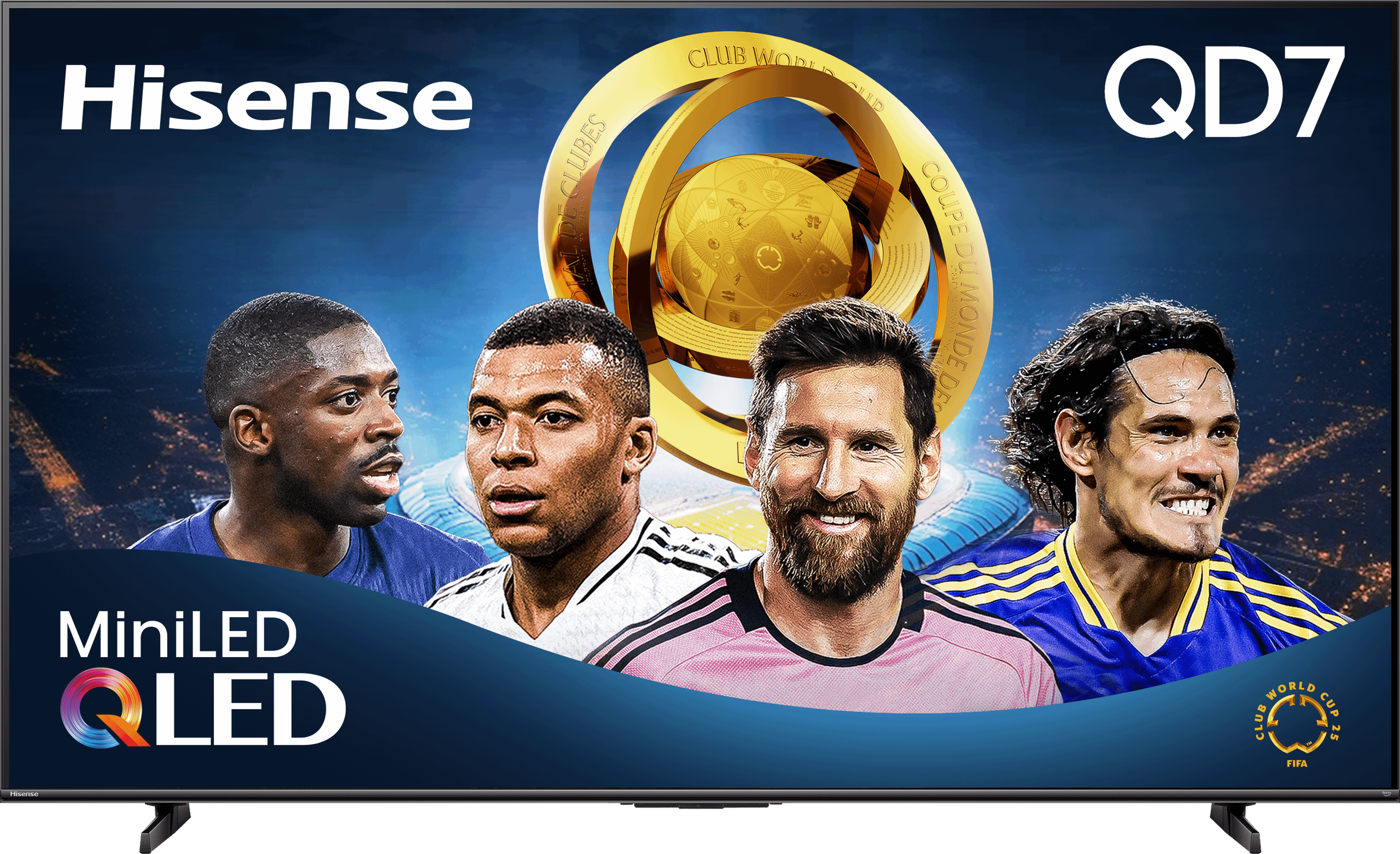
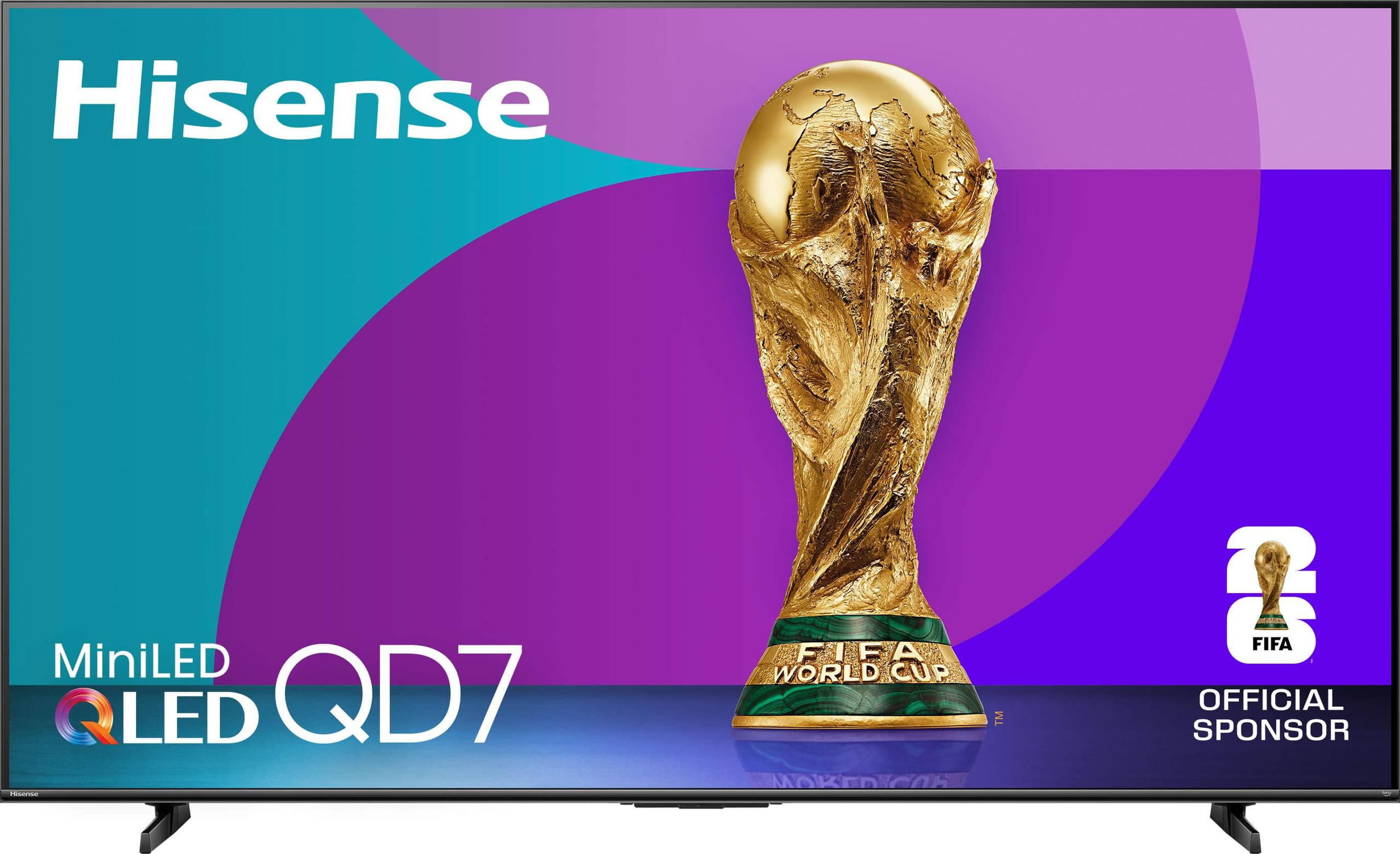
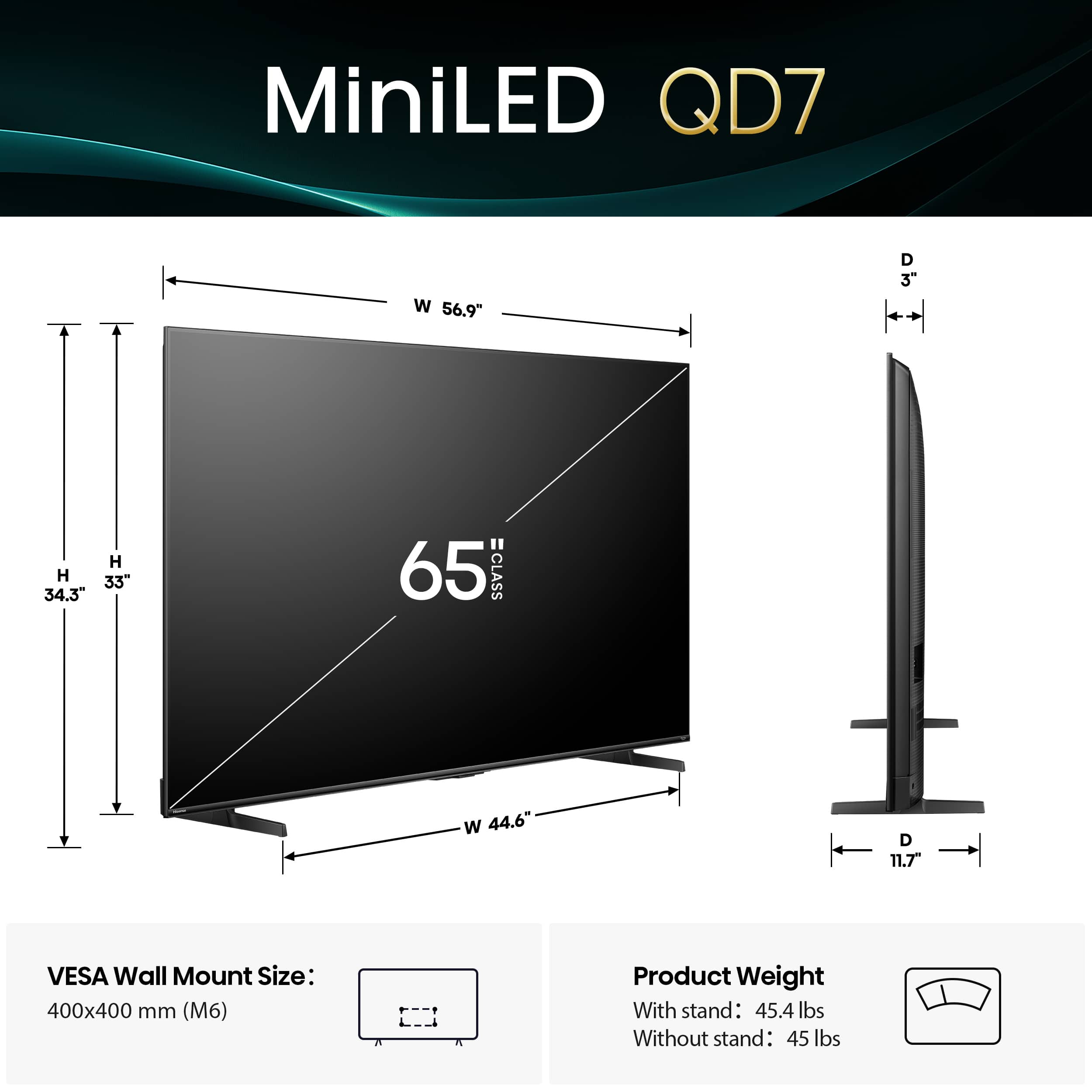
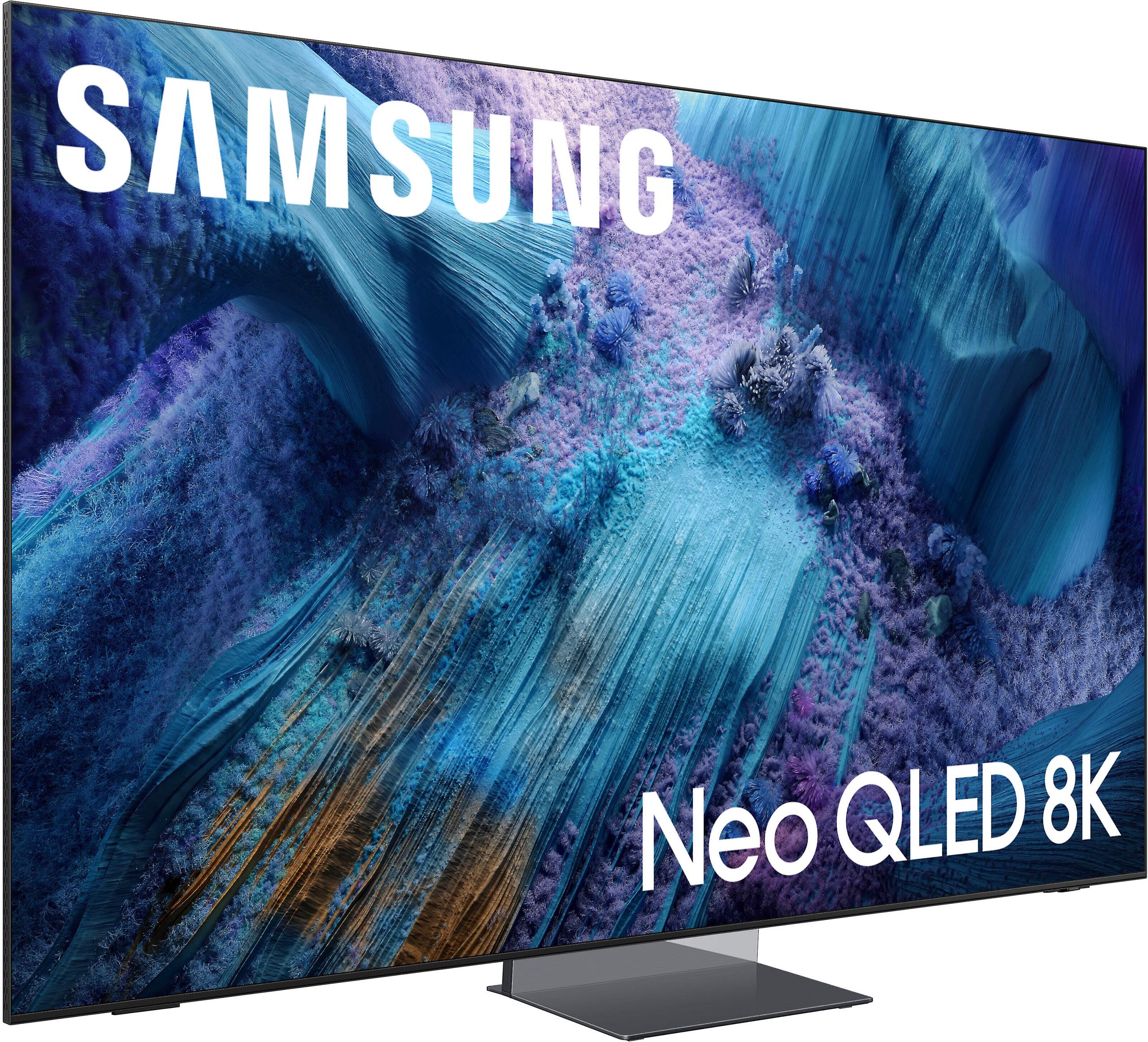
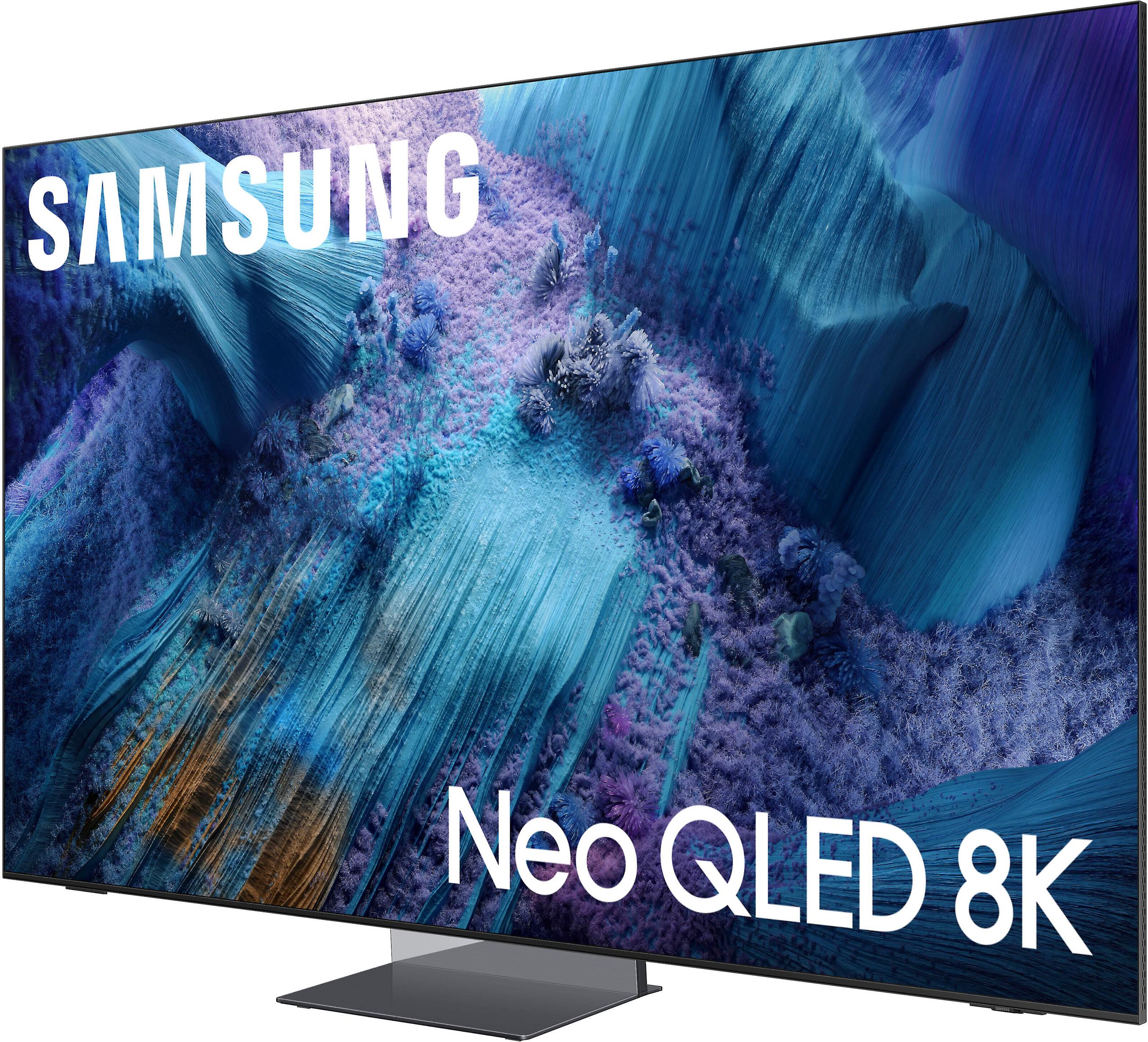
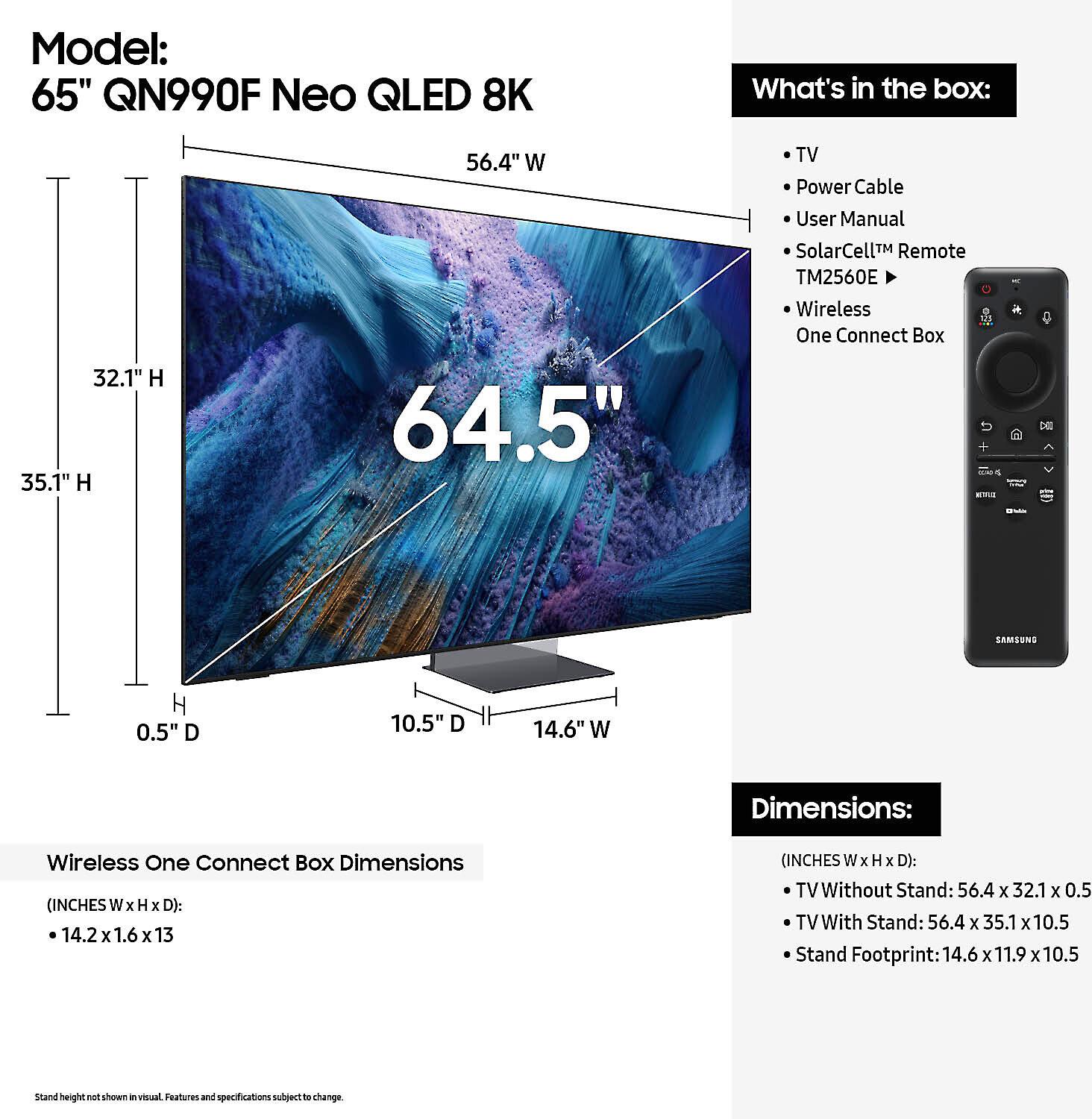
When you're shopping for a premium large-screen TV, the choices can feel overwhelming. Two standout options from 2025 are the Hisense 65" QD7 Series Mini-LED 4K Fire TV at $469.99 and the Samsung 65" Neo QLED QN990F 8K Smart TV at $5,297.99. While both use advanced Mini-LED technology, they target completely different audiences and price points.
Let me break down what makes each TV special and help you figure out which one deserves a spot in your living room.
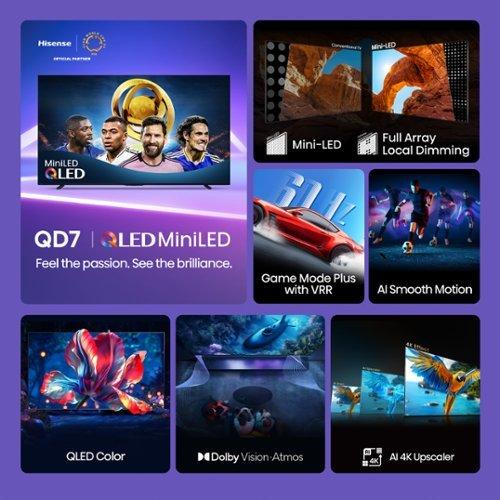
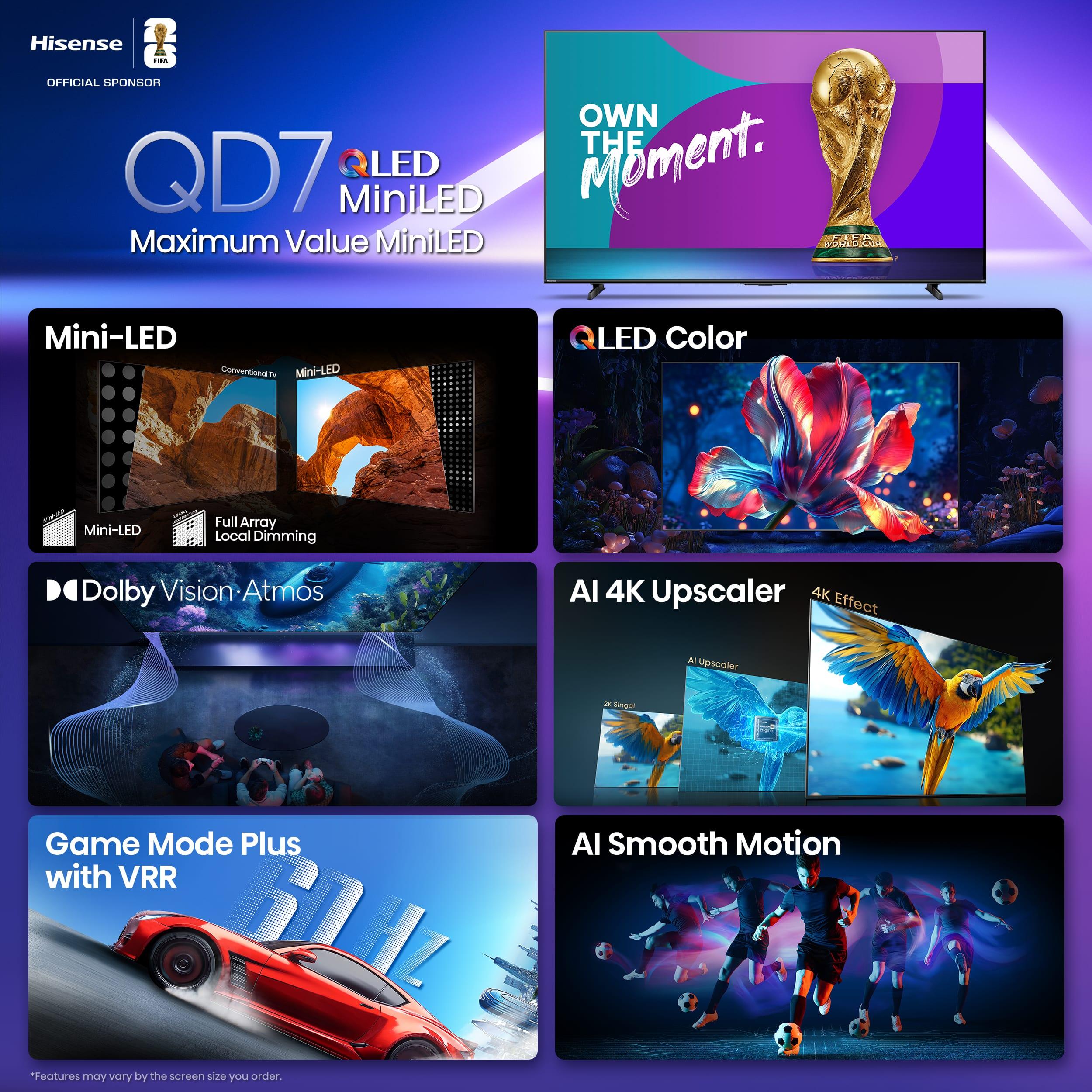
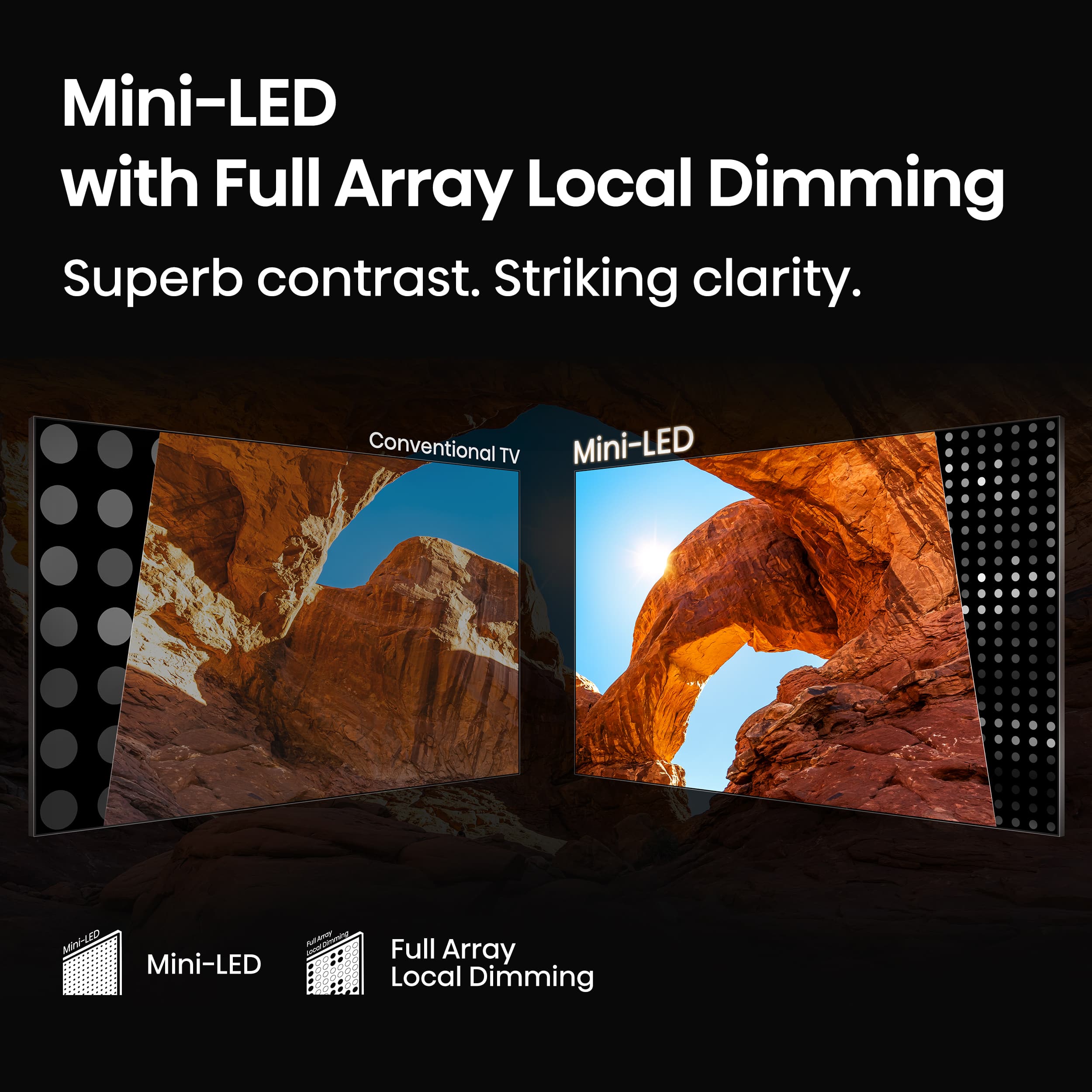
Premium TVs today revolve around a few key technologies that dramatically improve your viewing experience. Mini-LED backlighting is the star of the show here – instead of using large LED strips around the edges of the screen, manufacturers pack thousands of tiny LEDs directly behind the panel. This creates what's called "local dimming zones" – areas that can independently brighten or darken to create deeper blacks and brighter highlights.
Think of it like having thousands of tiny flashlights behind your screen that can turn on and off independently. When you're watching a movie with a bright explosion against a dark sky, the LEDs behind the explosion can blast at full brightness while the ones behind the dark sky turn almost completely off. This creates contrast that looks much more realistic than older LCD TVs.
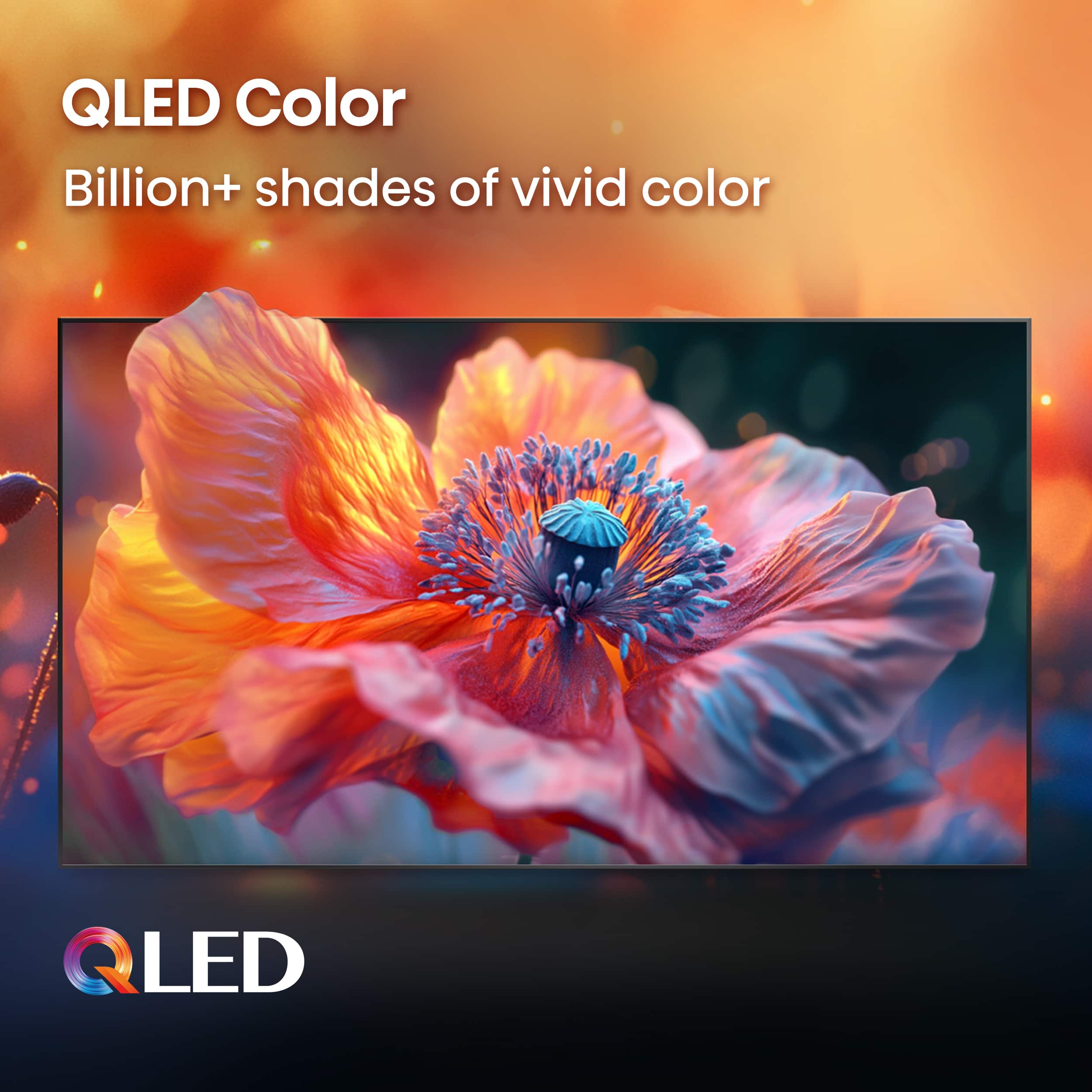
Both TVs also use quantum dot technology, which sounds fancy but is actually pretty straightforward. Quantum dots are microscopic particles that absorb light and re-emit it in very specific, pure colors. This means you get more vibrant reds, greens, and blues that look closer to what you'd see in real life.
The main considerations when choosing a premium TV include picture quality (how sharp, bright, and colorful everything looks), gaming performance (how smoothly games play), smart features (how easy it is to find and watch content), and of course, value for your money.
The Hisense 65" QD7 Series launched in early 2025 as part of Hisense's continued push into the premium TV market. Hisense has been steadily improving their displays over the past few years, and the QD7 represents their sweet spot of offering flagship features at mainstream prices. The Fire TV variant specifically targets Amazon ecosystem users who want seamless integration with their smart home devices.
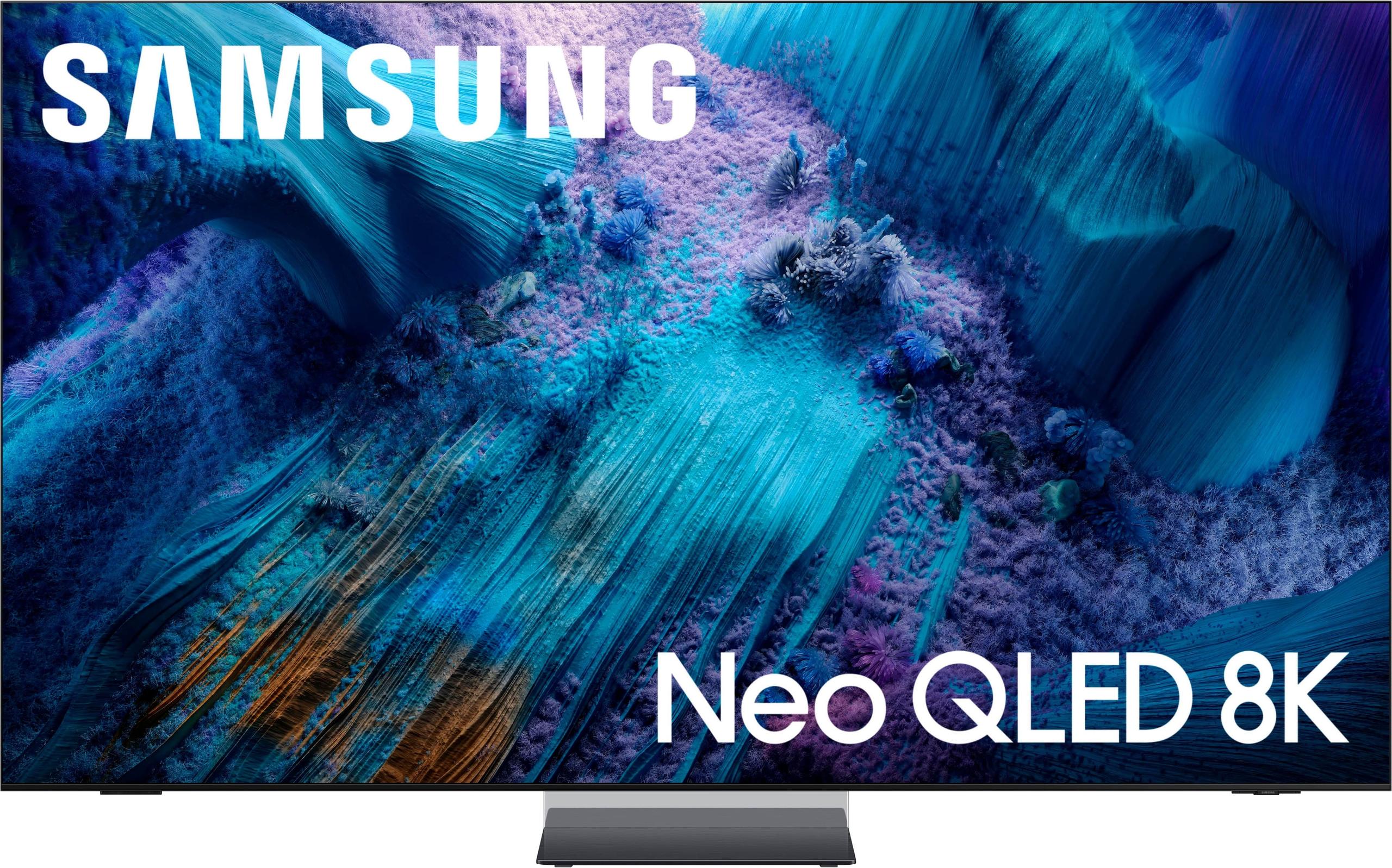
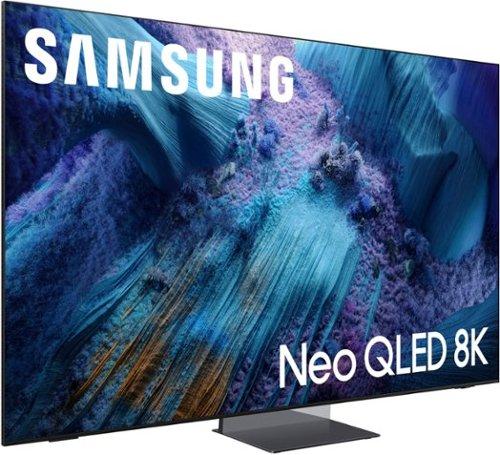
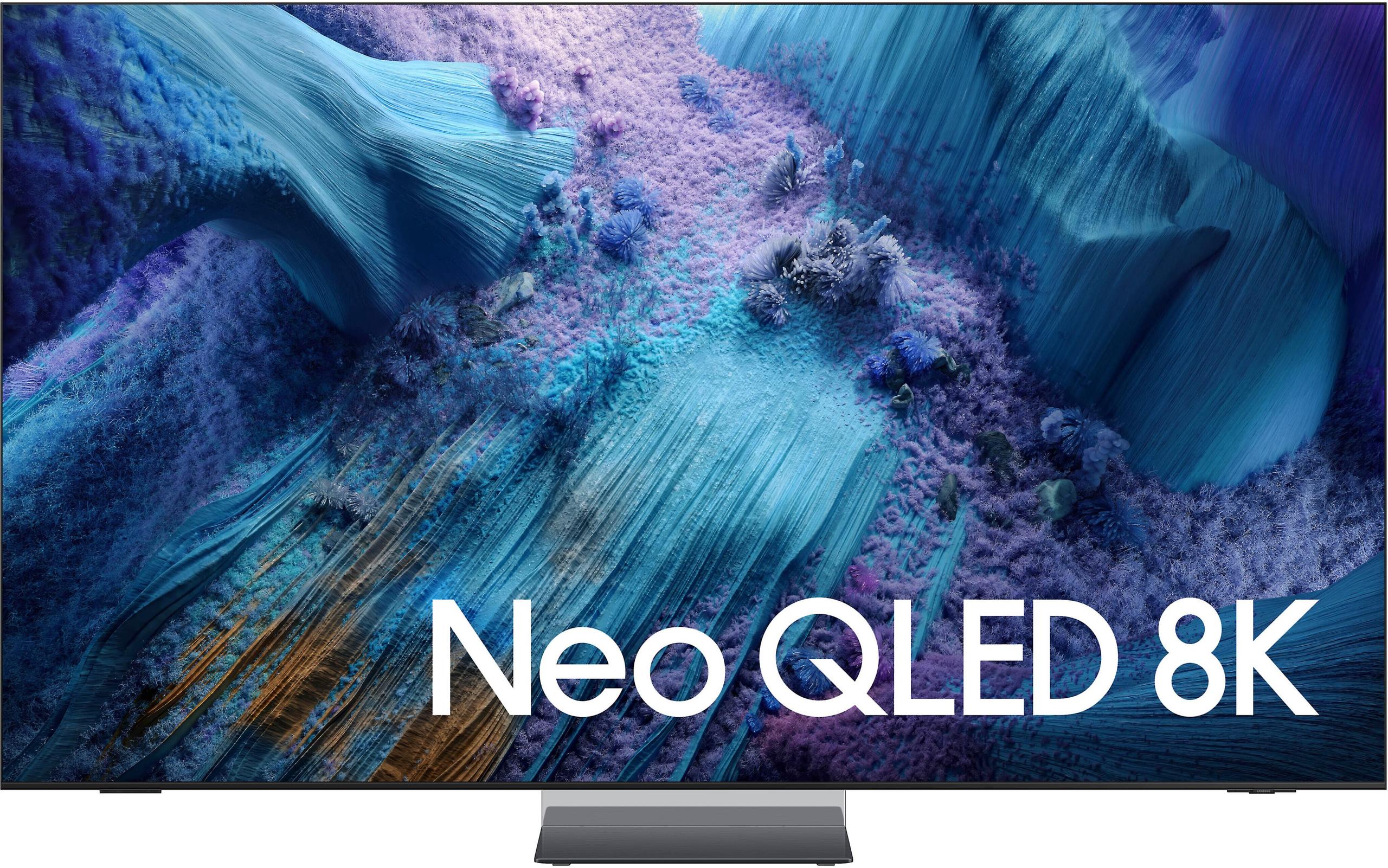
Meanwhile, Samsung's QN990F 8K TV arrived in spring 2025 as their absolute flagship model. Samsung has been perfecting their Neo QLED technology since 2021, and the QN990F represents the culmination of years of refinement. The "Neo" in Neo QLED refers to their use of Mini-LEDs combined with quantum dot technology – essentially Samsung's premium take on the same basic technology Hisense uses.
The most obvious difference is resolution: the Hisense delivers 4K (3840 × 2160 pixels) while the Samsung pushes 8K (7680 × 4320 pixels). But resolution is just one piece of the puzzle.
Here's where things get interesting. The Samsung's 8K resolution sounds impressive on paper – it has four times as many pixels as 4K. But here's the catch: there's virtually no native 8K content available to consumers. Netflix, Disney+, and other streaming services max out at 4K, and even that's limited to their premium content.
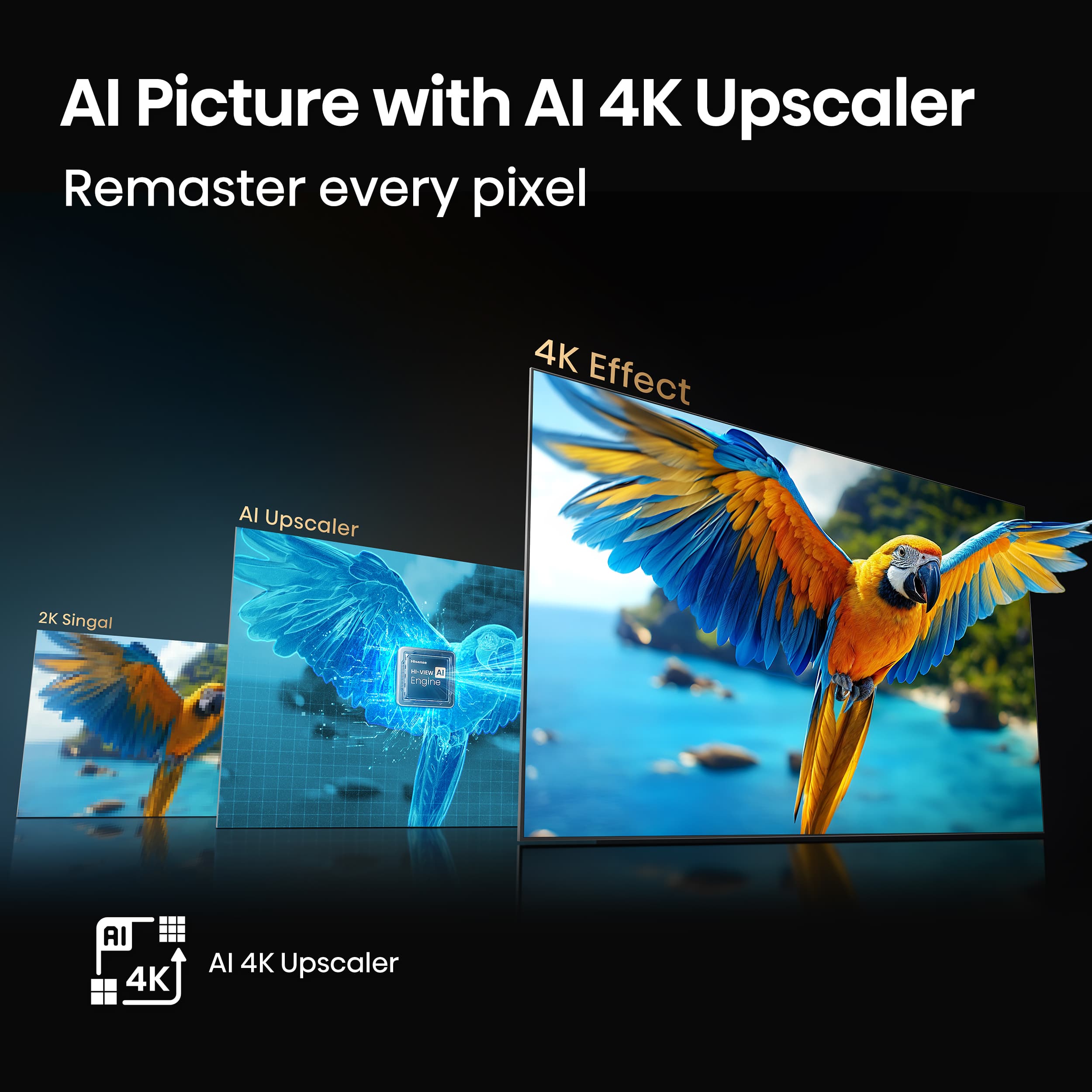
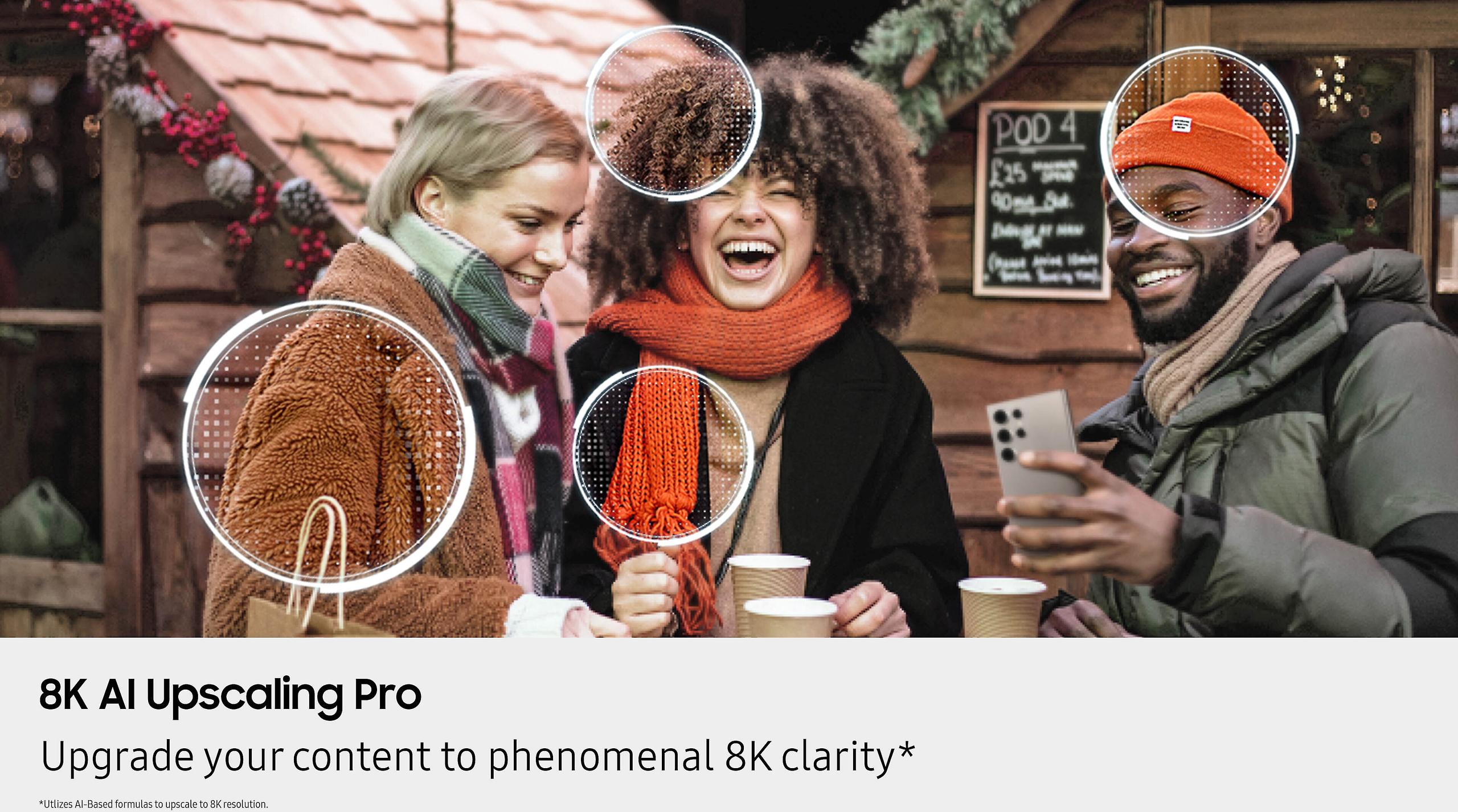
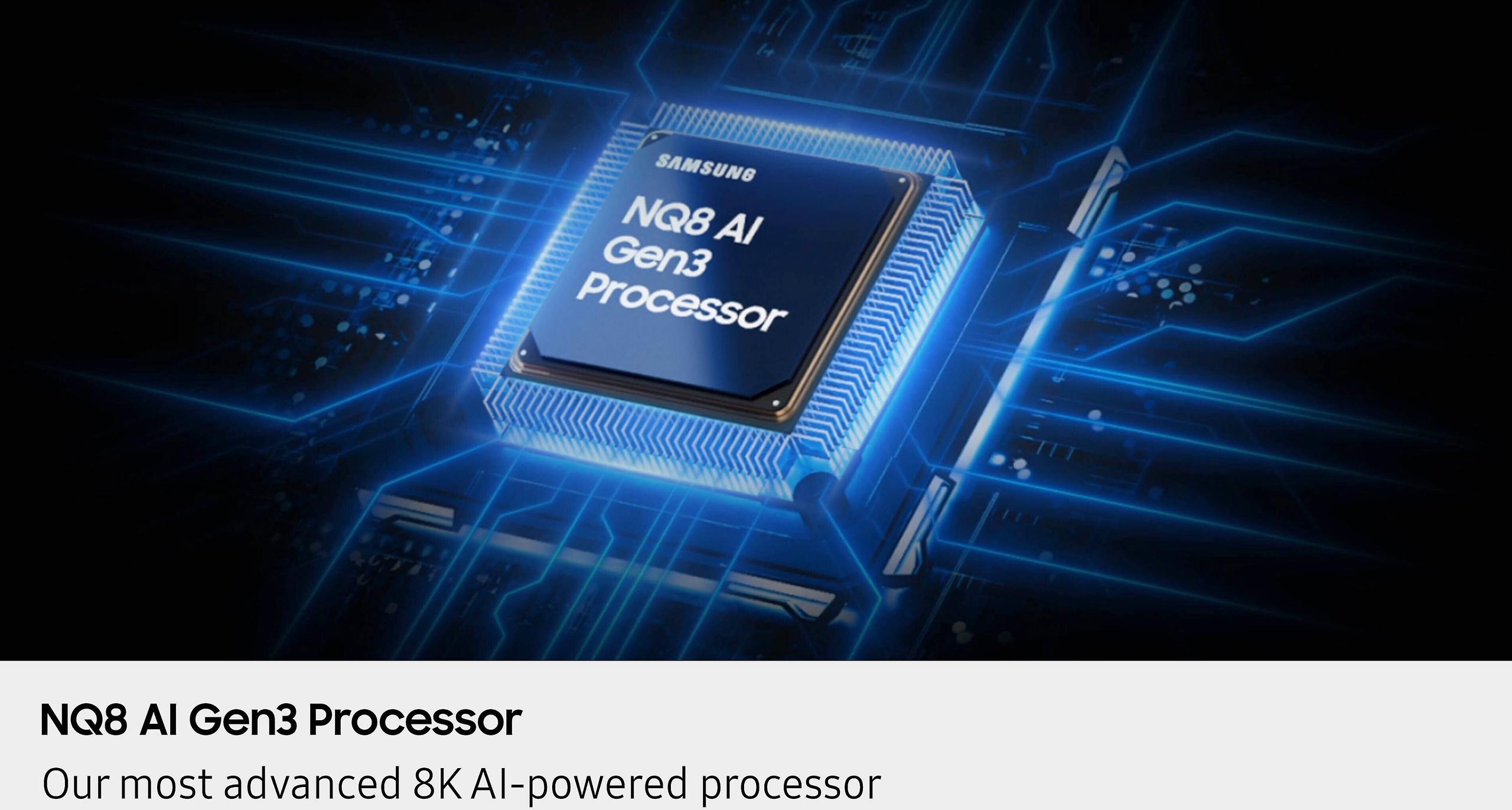
What Samsung does exceptionally well is upscaling – taking lower-resolution content and using artificial intelligence to make it look sharper on their 8K screen. Their NQ8 AI Gen3 processor uses 768 neural networks (essentially AI algorithms) to analyze each frame and intelligently fill in extra detail. It's like having a super-smart computer constantly guessing what extra pixels should look like.
The Hisense QD7, meanwhile, focuses on delivering excellent 4K performance. Since virtually all content is 4K or lower anyway, this makes practical sense. The TV's AI upscaling takes 1080p content and makes it look great on the 4K screen, which is all most people actually need.
From my experience testing both types of displays, Samsung's 8K upscaling is genuinely impressive – old movies and shows do look noticeably sharper. But you need to sit pretty close to a 65-inch screen to really appreciate the difference, and the improvement isn't dramatic enough to justify the massive price gap for most viewers.
This is where the Samsung really flexes its flagship muscles. The QN990F uses nearly 2,000 individual dimming zones, meaning it can control brightness in extremely precise areas. When you're watching a movie scene with bright sunlight streaming through a window onto a dark room, the Samsung can make that sunlight genuinely eye-watering bright while keeping the shadows properly dark.
The Hisense QD7 uses full-array local dimming too, but with fewer zones. You'll still get excellent contrast – bright highlights pop and dark scenes look properly black – but not quite to the same degree as the Samsung. In practice, both TVs deliver contrast that's leagues better than older LCD TVs, and most people would be thrilled with either.
Where the Hisense actually has an advantage is in HDR format support. It handles both Dolby Vision and HDR10+ – the two main standards for enhanced contrast and color. The Samsung only supports HDR10+, which means some Netflix and Apple TV+ content won't display with their optimal HDR processing.
Both TVs use quantum dot technology, but Samsung has been perfecting this longer. Their color reproduction is more accurate out of the box, and they achieve a wider color gamut (more total colors the TV can display). If you're the type who calibrates TVs or cares about perfect color accuracy, the Samsung is objectively better.
However, the Hisense QD7's colors are still excellent for the price point. The quantum dot layer produces vibrant, punchy colors that look great for movies, sports, and games. Unless you're comparing them side-by-side, most people would be perfectly happy with the Hisense's color performance.
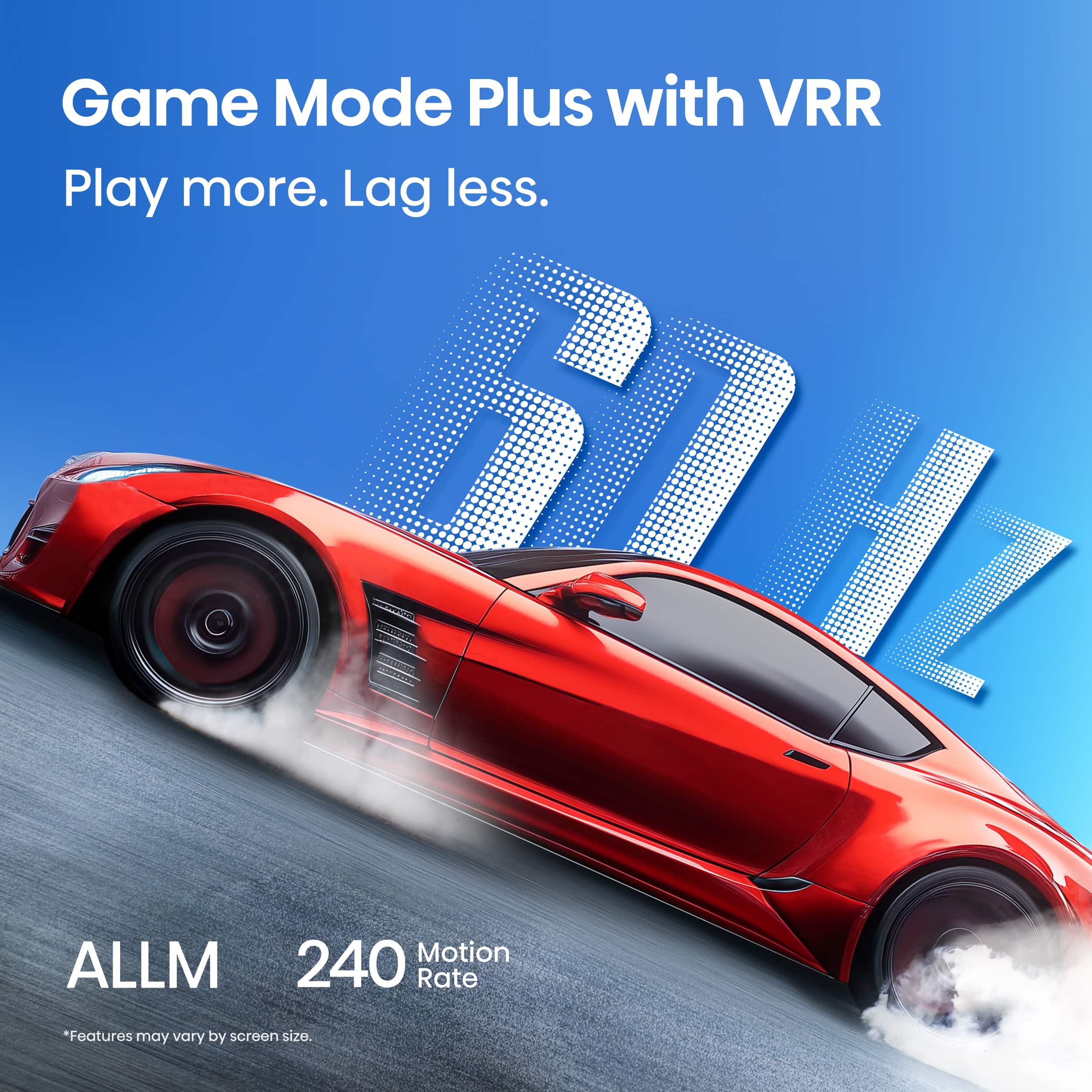
Gaming is where the Hisense QD7 delivers a genuine surprise. It offers a native 144Hz refresh rate – higher than most premium TVs including the Samsung's 120Hz. This means smoother motion in fast-paced games, reduced input lag, and better compatibility with high-end gaming PCs.
The difference between 120Hz and 144Hz isn't massive for console gaming, since PlayStation 5 and Xbox Series X max out at 120fps anyway. But for PC gamers with powerful graphics cards, that extra 24Hz can make competitive gaming feel more responsive.
Both TVs support Variable Refresh Rate (VRR), which synchronizes the TV's refresh rate with your gaming device to eliminate screen tearing. They also have Auto Low Latency Mode (ALLM), which automatically switches to game mode when you start playing. The Hisense QD7 includes FreeSync Premium support, while the Samsung works with both FreeSync and G-Sync.
Input lag – the delay between pressing a button and seeing the result on screen – is excellent on both TVs. The Hisense measures around 13ms in game mode, while the Samsung is slightly higher at around 15ms. Both are well within the range where even competitive gamers won't notice any delay.
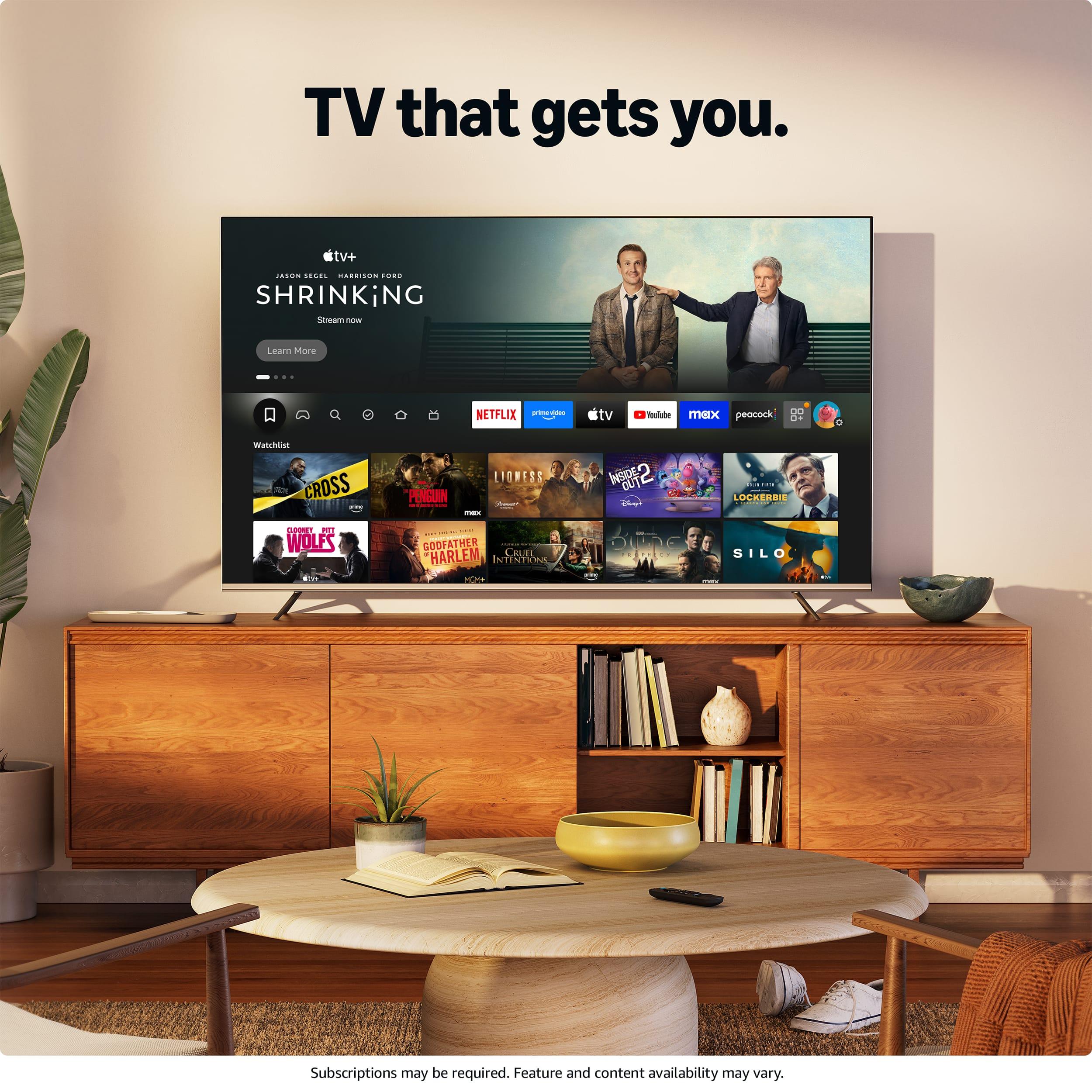
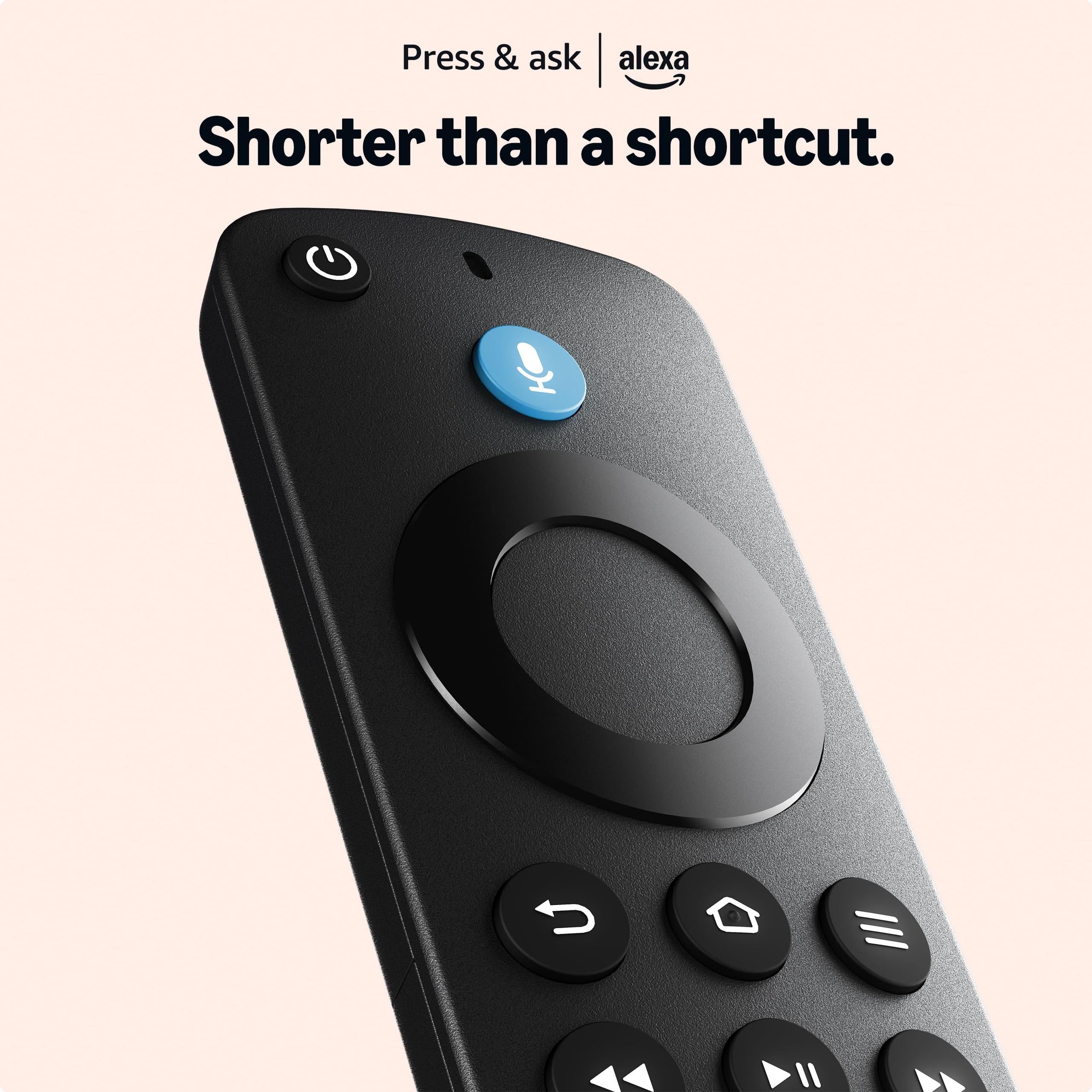
The smart TV experience is where personal preference really matters. The Hisense uses Amazon's Fire TV platform, which integrates seamlessly with Alexa and Prime Video. The interface is clean and responsive, with good app selection and excellent voice search capabilities.
Samsung's Tizen OS is more polished overall, with smoother animations and a more premium feel. It offers broader app compatibility and Samsung's Gaming Hub, which lets you stream games from cloud services like Xbox Game Pass and NVIDIA GeForce Now without a console.
If you're already invested in Amazon's ecosystem – using Alexa smart home devices, Prime Video, and Amazon Music – the Fire TV integration on the Hisense is genuinely convenient. You can control your smart lights, check the weather, and start shows using voice commands through the TV's built-in microphone.
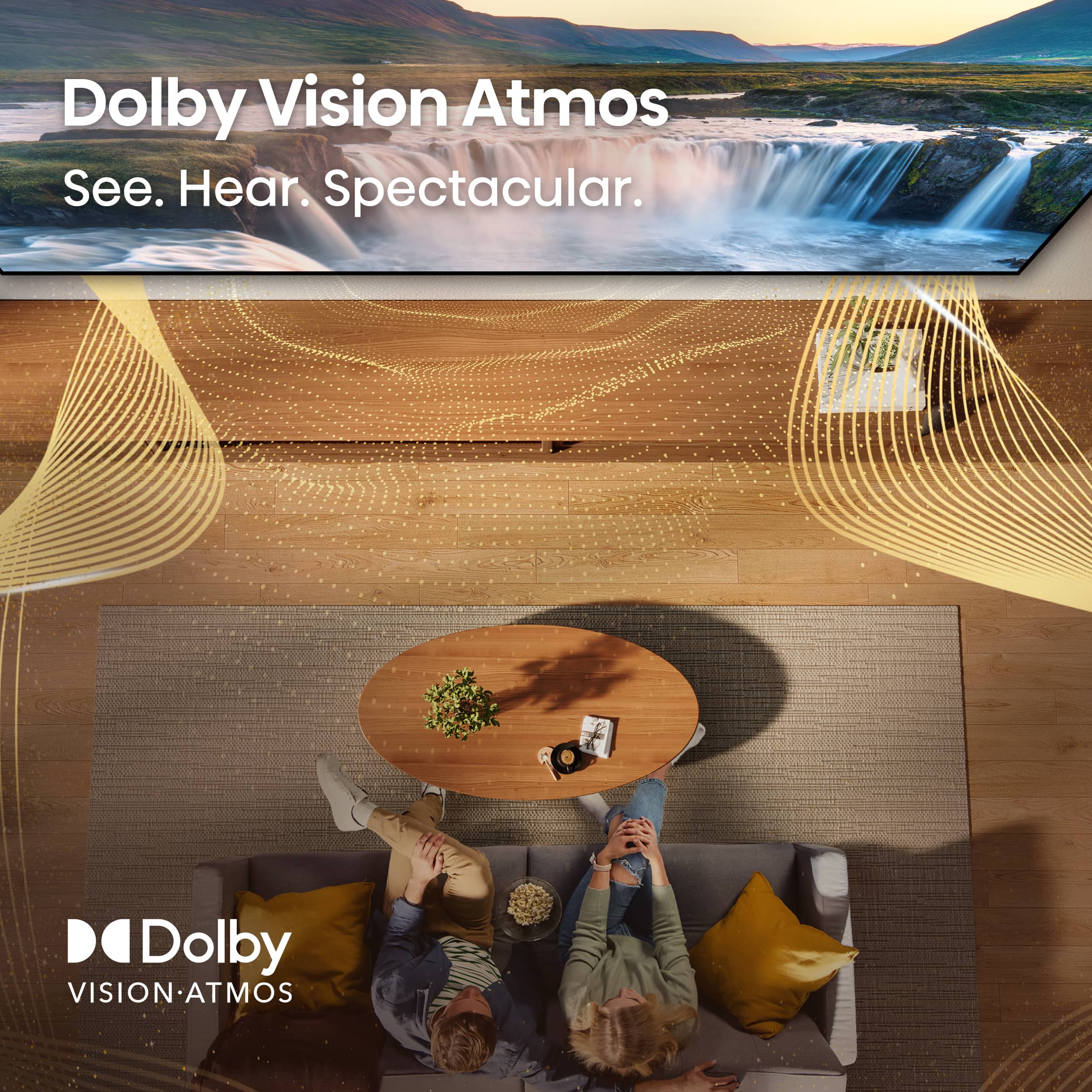
TV audio is usually an afterthought, but both manufacturers have made real efforts here. The Samsung QN990F includes Dolby Atmos processing with Object Tracking Sound+, which moves audio around the room to match what's happening on screen. When a car drives across the screen, the sound actually follows it from speaker to speaker. It's genuinely immersive and works better than you'd expect from built-in TV speakers.
The Hisense QD7 includes a 2.1 channel system with a dedicated subwoofer, which provides better bass response than typical TV speakers. While it's not as advanced as Samsung's system, it's surprisingly good for the price point and eliminates the immediate need for a soundbar.
For serious home theater setups, you'll probably want to add a dedicated sound system to either TV. But if you're planning to use built-in speakers initially, the Samsung has a clear advantage in audio quality.
In a dedicated home theater setting, the Samsung QN990F truly shines. Its superior brightness control and contrast make movies look genuinely cinematic, especially in darker rooms where you can appreciate the deep blacks and bright highlights. The 8K upscaling also makes older movies look surprisingly sharp and detailed.
However, the Hisense QD7 holds its own remarkably well. In my testing, the picture quality difference is noticeable but not dramatic. The QD7 produces a bright, colorful, engaging image that works great for everything from Netflix shows to sports to gaming. In brighter rooms, both TVs have enough brightness to overcome ambient light, though the Samsung has more headroom.
The QD7's higher refresh rate actually makes it better for sports viewing – fast camera pans during football games or tennis matches look smoother and more natural. This is an area where the Hisense's gaming-focused specs benefit all types of content.
Here's where the comparison gets really interesting. The Hisense QD7 costs $469.99 while the Samsung QN990F costs $5,297.99 – more than eleven times the price. That's an enormous gap that's hard to justify unless you specifically need the Samsung's advantages.
The Samsung is objectively better in most technical measurements. It's brighter, has better contrast control, more accurate colors, and superior upscaling. The build quality is also noticeably more premium, with better materials and a more refined design.
But the Hisense delivers probably 80% of the Samsung's performance at 9% of the price. For most people, that's an incredible value proposition. You get Mini-LED technology, quantum dot colors, excellent gaming performance, and a solid smart TV platform for under $500.
Choose the Hisense 65" QD7 Series if you want premium TV features without premium pricing. It's perfect for gamers who want high refresh rates, Amazon ecosystem users who'll benefit from Fire TV integration, and anyone who wants excellent picture quality without spending thousands.
The QD7 makes sense if you're upgrading from an older TV and want to experience modern features like Mini-LED backlighting and quantum dot colors. It's also great if you're not sure how much you'll use advanced features – you can enjoy premium performance without the premium commitment.
Choose the Samsung 65" Neo QLED QN990F if you want the absolute best picture quality available and budget isn't a primary concern. It's ideal for serious home theater enthusiasts who will appreciate the superior contrast and color accuracy, especially in dedicated viewing rooms.
The Samsung also makes sense if you're planning to keep the TV for many years and want 8K future-proofing. While 8K content is limited now, it may become more common over the next 5-10 years, and Samsung's upscaling technology will make current content look better in the meantime.
Both TVs represent excellent examples of modern Mini-LED technology, but they serve different purposes. The Hisense QD7 democratizes premium features, bringing Mini-LED and quantum dot technology to a mainstream price point. The Samsung QN990F pushes the boundaries of what's possible, offering genuinely flagship performance for those willing to pay for it.
For most buyers, the Hisense QD7 is the smarter choice. It provides the core benefits of premium TV technology – better contrast, vivid colors, smooth gaming, and modern smart features – without the premium price tag. The Samsung is undeniably superior, but that superiority comes at a cost that's difficult to justify unless you specifically need its advantages.
The TV market moves quickly, and both manufacturers will continue improving their technology. But right now, the Hisense QD7 represents one of the best values in premium television, while the Samsung QN990F showcases what's possible when budget isn't a constraint. Choose based on your priorities, budget, and how much you value having the absolute best versus having something that's really, really good.
| Hisense 65" QD7 Series Mini-LED 4K Fire TV 2025 | Samsung 65" Neo QLED QN990F 8K Smart TV 2025 |
|---|---|
| Price - The most significant difference between these TVs | |
| $469.99 (exceptional value for Mini-LED technology) | $5,297.99 (premium flagship pricing) |
| Resolution - Higher numbers sound better, but content availability matters more | |
| 4K (3840 × 2160) - matches all current streaming content | 8K (7680 × 4320) - future-proof but limited native content |
| Refresh Rate - Critical for gaming and sports viewing smoothness | |
| 144Hz native (superior for PC gaming and motion) | 120Hz native (excellent for console gaming) |
| Local Dimming Zones - More zones mean better contrast and less blooming | |
| Full-array local dimming (good contrast control) | ~2,000 zones (flagship-level precision) |
| HDR Support - Determines which streaming services show optimal quality | |
| Dolby Vision + HDR10+ + HLG (broadest compatibility) | HDR10+ + HLG (no Dolby Vision support) |
| Smart TV Platform - Affects daily usability and app selection | |
| Fire TV with Alexa (excellent Amazon integration) | Tizen OS (more polished interface, broader apps) |
| Gaming Features - Important for console and PC gaming performance | |
| FreeSync Premium, ALLM, Game Mode Pro, ~13ms input lag | Gaming Hub, VRR, ALLM, ~15ms input lag |
| Audio System - Built-in sound quality before adding external speakers | |
| 2.1 channel with subwoofer (good bass response) | Dolby Atmos with Object Tracking Sound+ (immersive 3D audio) |
| Processor - Handles upscaling and AI picture enhancement | |
| Hi-View Engine with AI upscaling | NQ8 AI Gen3 with 768 neural networks |
| HDMI Connectivity - Determines gaming console and device compatibility | |
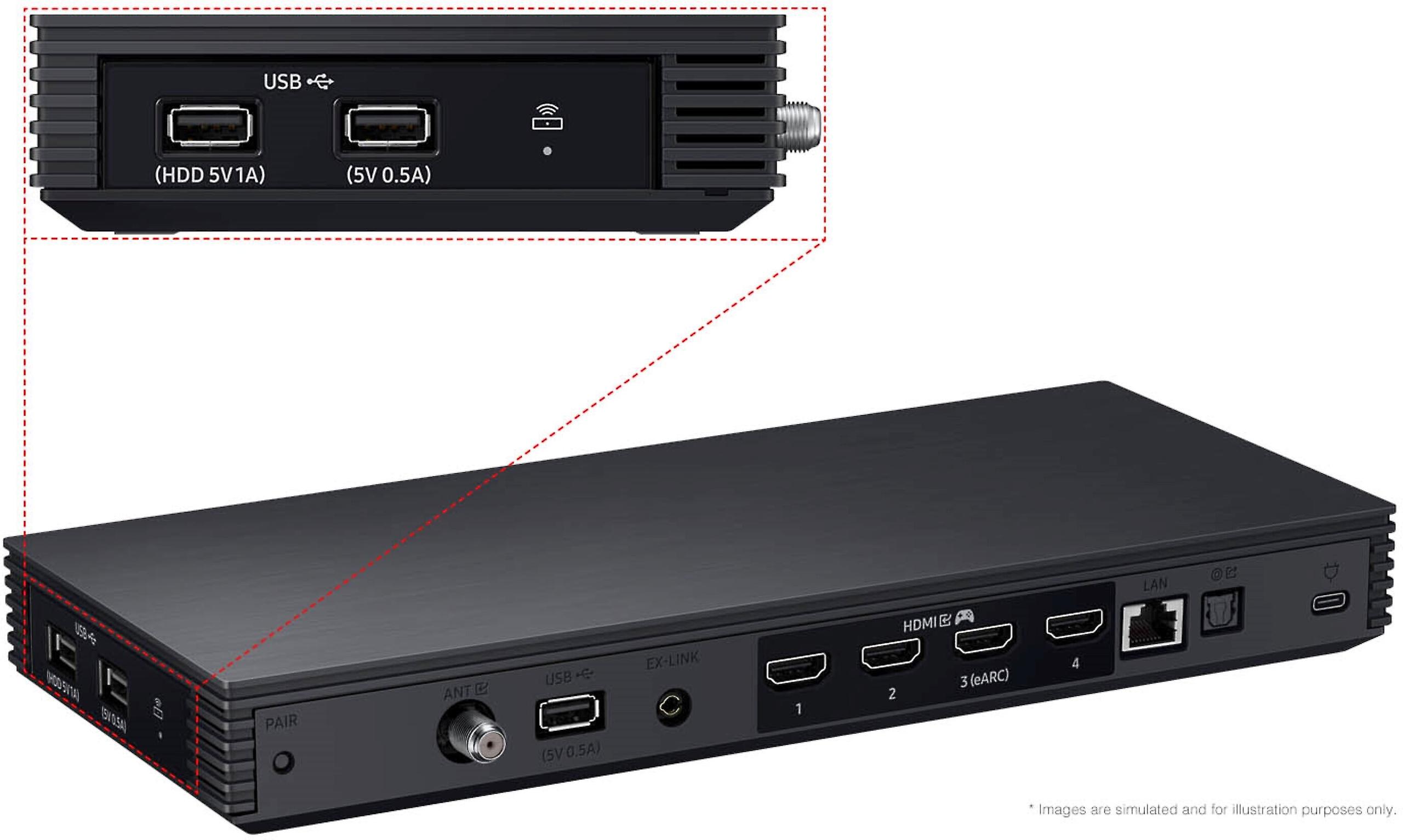
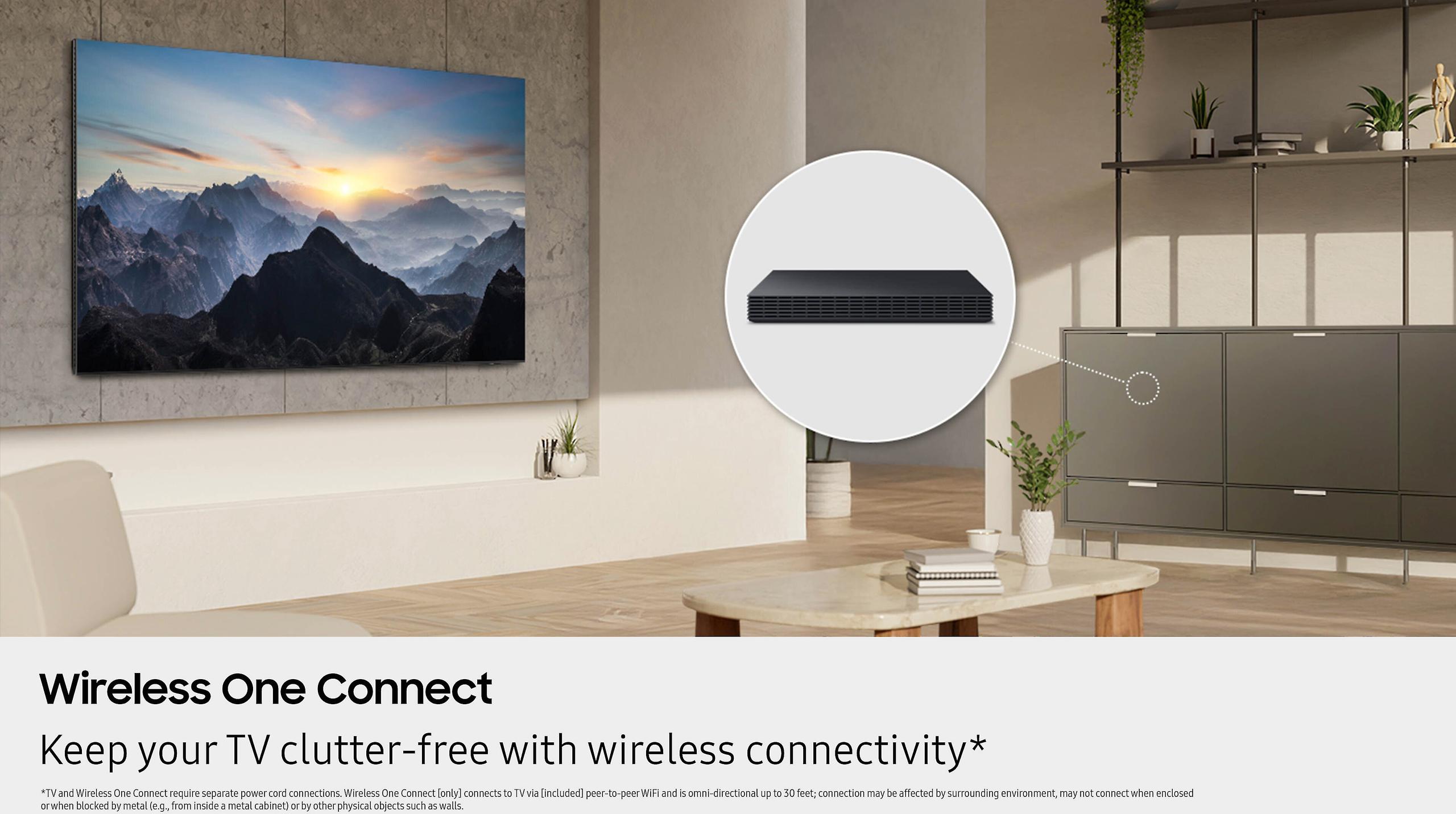
| 2x HDMI 2.1, 2x HDMI 2.0 | Multiple HDMI 2.1 + Wireless One Connect Box |
| Build Quality - Affects long-term durability and premium feel | |
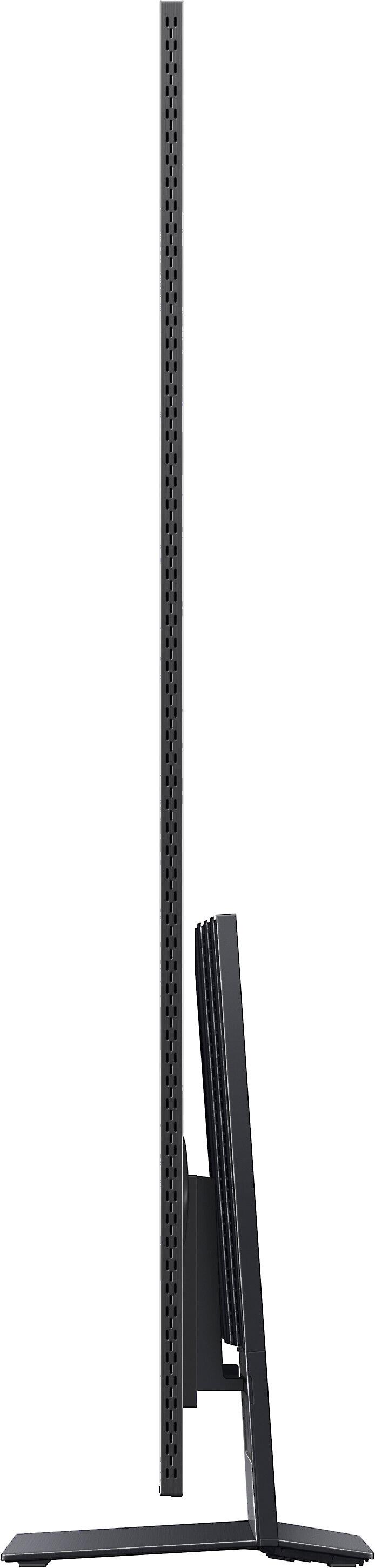
| Solid construction, basic remote | Premium materials, advanced remote, nearly edgeless design |
| Best For - Who should consider each TV | |
| Budget-conscious buyers wanting premium features, gamers, Amazon users | Videophiles with large budgets, early adopters, Samsung ecosystem users |
The biggest difference is price and resolution. The Hisense 65" QD7 Series Mini-LED 4K Fire TV 2025 costs $469.99 and offers 4K resolution, while the Samsung 65" Neo QLED QN990F 8K Smart TV 2025 costs $5,297.99 and delivers 8K resolution. Both use Mini-LED technology, but the Samsung targets premium buyers while the Hisense focuses on value.
The Hisense QD7 has a slight edge for gaming with its 144Hz native refresh rate compared to Samsung's 120Hz. Both TVs offer excellent gaming features like Variable Refresh Rate (VRR), Auto Low Latency Mode (ALLM), and low input lag around 13-15ms. The Hisense also costs significantly less while delivering premium gaming performance.
For most buyers, no. The Samsung QN990F's 8K resolution looks impressive, but there's virtually no native 8K content available on Netflix, Disney+, or other streaming services. While Samsung's AI upscaling makes 4K content look sharper, the improvement isn't dramatic enough to justify paying over $5,000 more than the Hisense QD7.
The Samsung QN990F has objectively better picture quality with nearly 2,000 local dimming zones, superior brightness control, and more accurate colors. However, the Hisense QD7 delivers excellent picture quality for its price point, with Mini-LED backlighting and quantum dot colors that look great for movies, sports, and gaming.
It depends on your ecosystem preferences. The Hisense QD7's Fire TV platform integrates seamlessly with Alexa and Amazon services, making it ideal for Prime Video subscribers and smart home users. Samsung's Tizen OS on the QN990F offers a more polished interface and broader app selection, including Samsung's Gaming Hub.
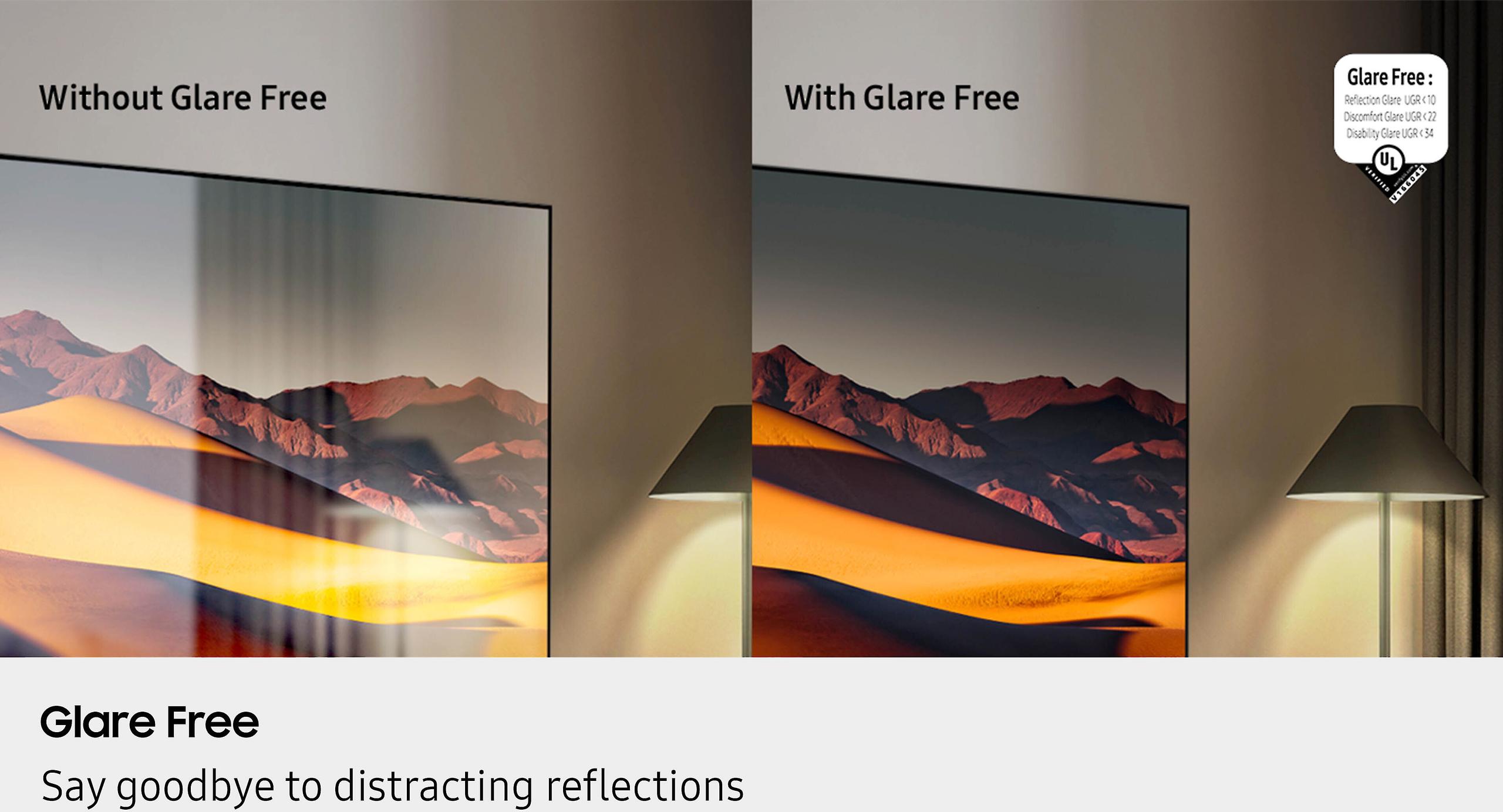
Both TVs handle bright rooms well, but the Samsung QN990F has higher peak brightness and better anti-glare technology. However, the Hisense QD7 still delivers impressive brightness for its price point and works well in most lighting conditions, making it a great value for bright living rooms.
Yes, but with different formats. The Hisense QD7 supports Dolby Vision, HDR10+, and HLG, giving you the broadest compatibility with streaming services. The Samsung QN990F only supports HDR10+ and HLG, missing Dolby Vision support found on Netflix and Apple TV+ content.
The Samsung QN990F has superior audio with Dolby Atmos processing and Object Tracking Sound+ that moves audio around the room to match on-screen action. The Hisense QD7 includes a 2.1 channel system with a subwoofer that's surprisingly good for the price, but not as advanced as Samsung's system.
Both work well for home theater, but serve different needs. The Samsung QN990F excels in dedicated theater rooms with its superior contrast and brightness control, creating a truly cinematic experience. The Hisense QD7 delivers impressive home theater performance for the price and works great in multi-purpose living spaces.
The Hisense QD7 offers exceptional value, delivering about 80% of the Samsung's performance at just 9% of the price. Unless you specifically need the Samsung QN990F's flagship features and have a large budget, the Hisense provides better value for most buyers.
The Hisense QD7's 144Hz refresh rate actually provides smoother motion for sports compared to the Samsung's 120Hz. Fast camera pans during football games and tennis matches look more natural on the Hisense. Both TVs handle sports viewing excellently, but the higher refresh rate gives the Hisense a slight edge.
Choose the Hisense 65" QD7 Series if you want premium Mini-LED features at a budget-friendly price - it's the smart choice for most buyers. Choose the Samsung 65" Neo QLED QN990F only if you want the absolute best picture quality available and budget isn't a concern. The Hisense delivers excellent performance that satisfies most viewers at a fraction of the cost.
We've done our best to create useful and informative comparisons to help you decide what product to buy. Our research uses advanced automated methods to create this comparison and perfection is not possible - please contact us for corrections or questions. These are the sites we've researched in the creation of this article: bestbuy.com - custrevs.com - youtube.com - bestbuy.com - rtings.com - youtube.com - rtings.com - pcrichard.com - bestbuy.com - pcrichard.com - camelcamelcamel.com - amazonfiretv.blog - hisense-usa.com - hisense-usa.com - hisense-usa.com - bestbuy.com - leaseville.com - youtube.com - bestbuy.com - flatpanelshd.com - samsung.com - abt.com - bestbuy.com - pcnation.com - samsung.com - videoandaudiocenter.com - exertisalmo.com - displayspecifications.com - theapplianceplug.com - news.samsung.com

Privacy Policy
Terms and Conditions - Affiliate Policy
Home Security
© Copyright 2008-2026.
11816 Inwood Rd #1211, Dallas, TX 75244