

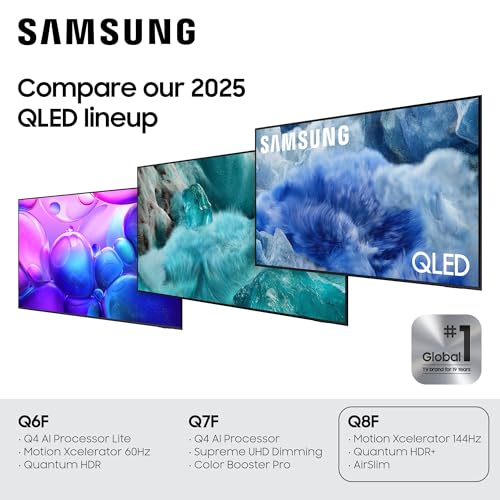
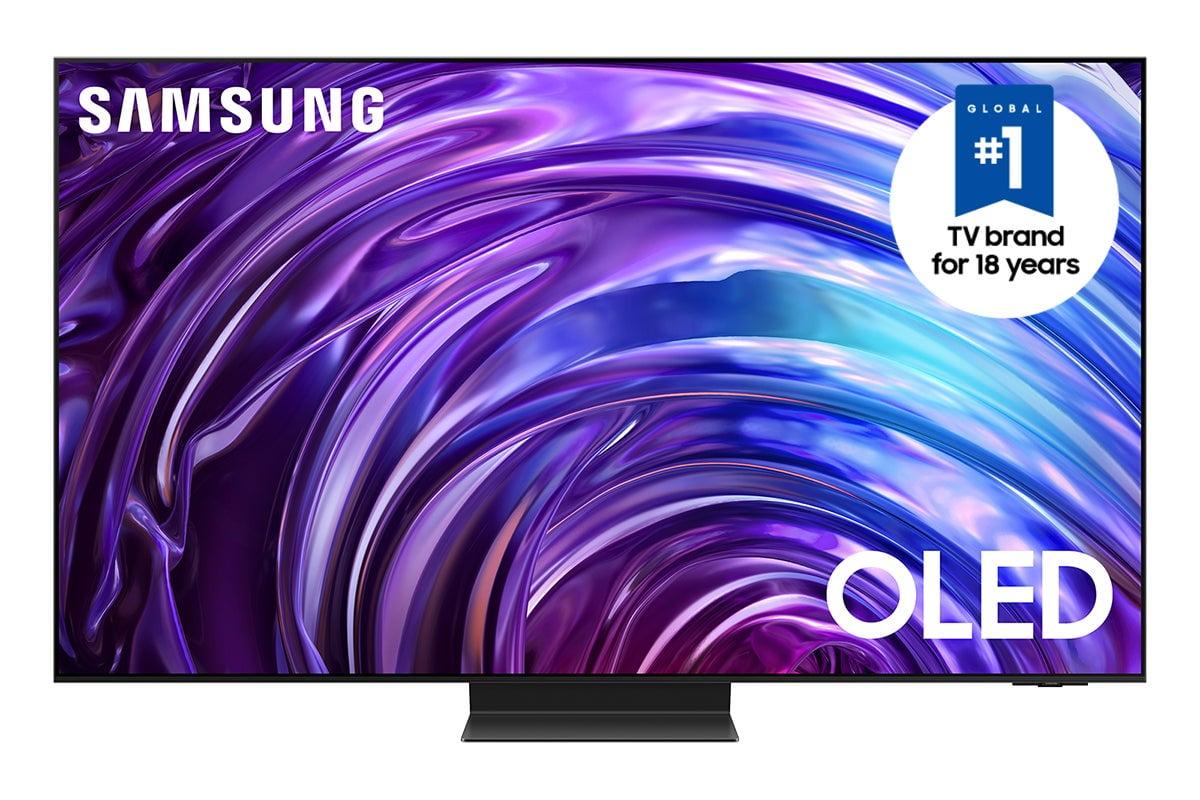
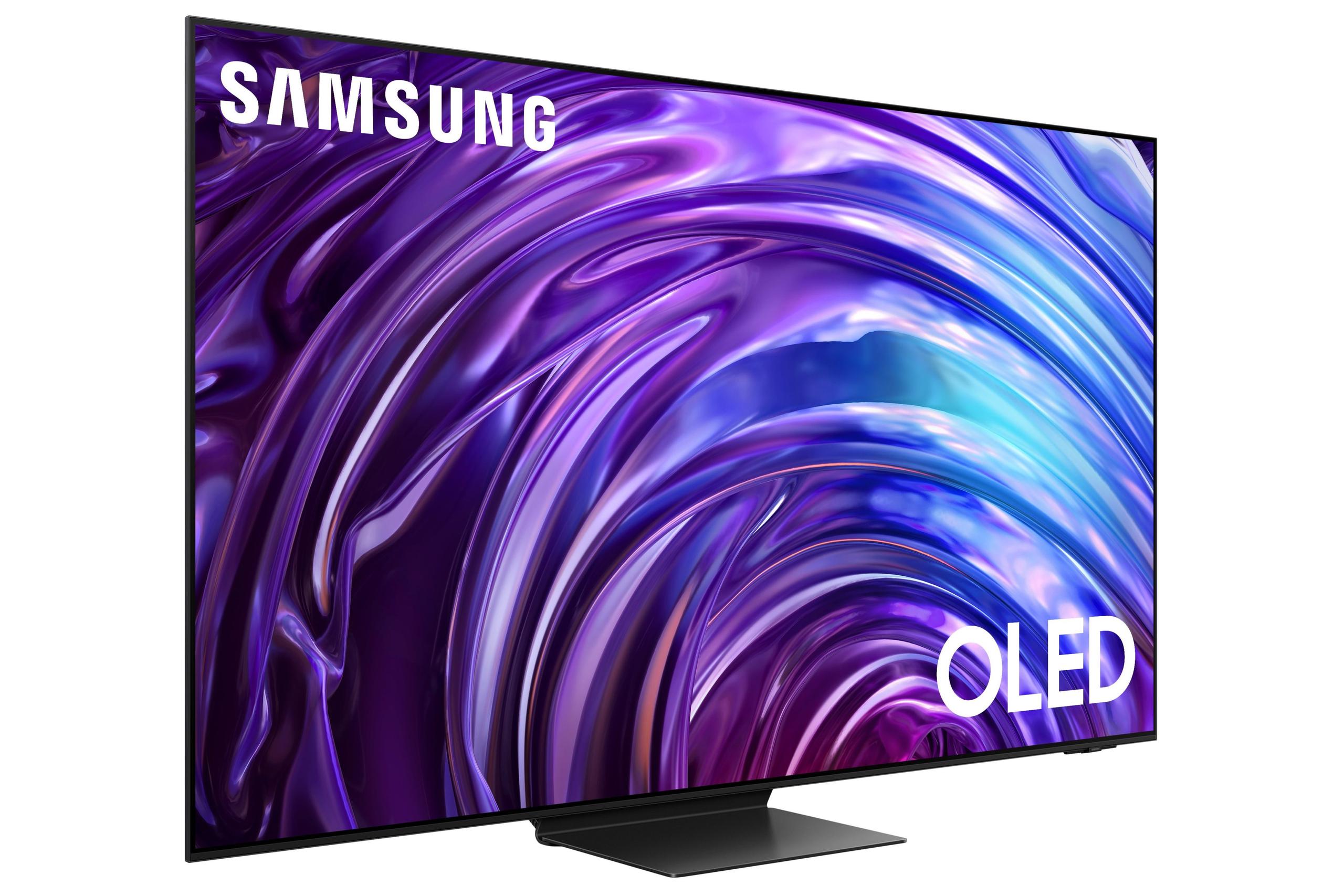
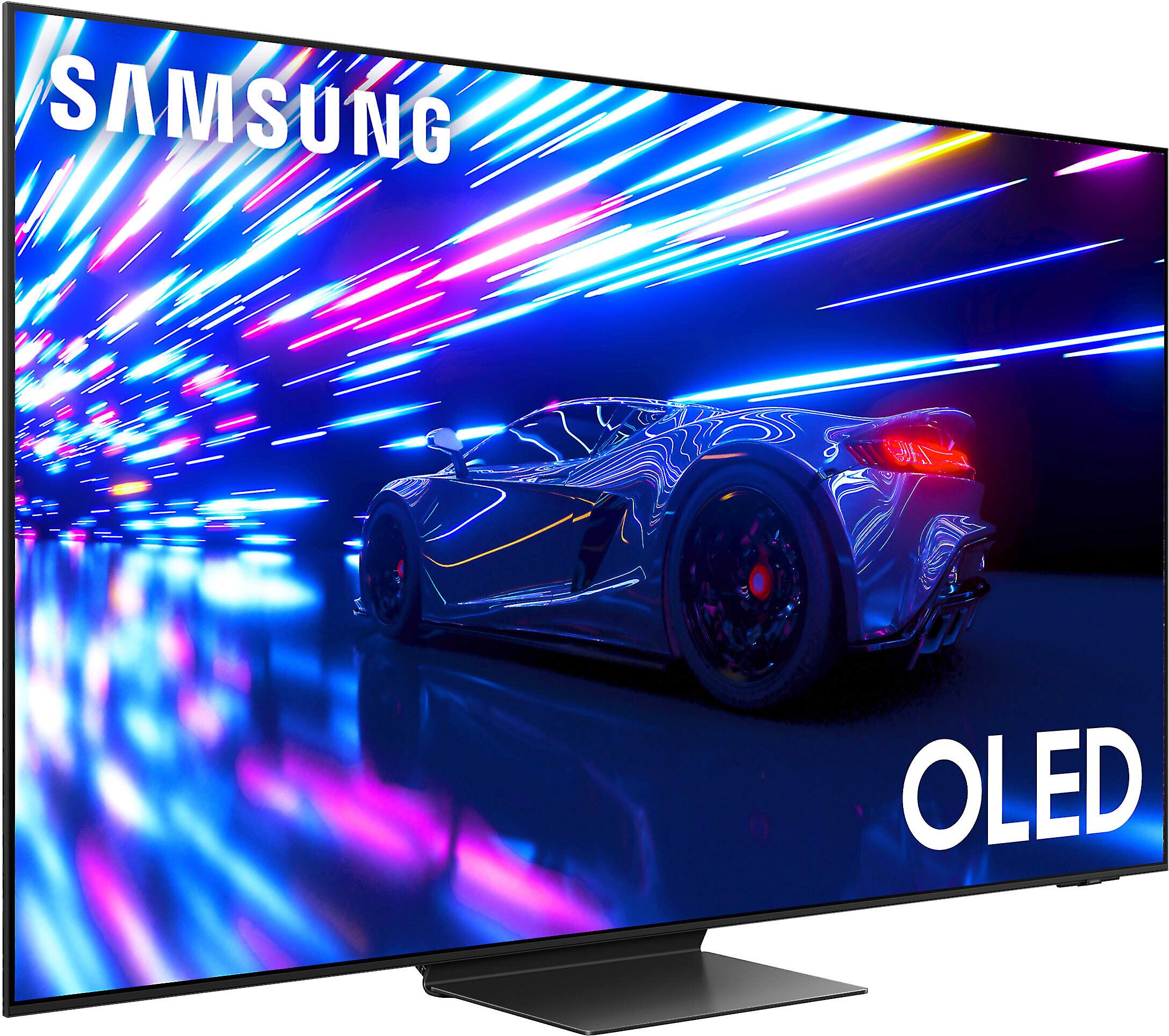
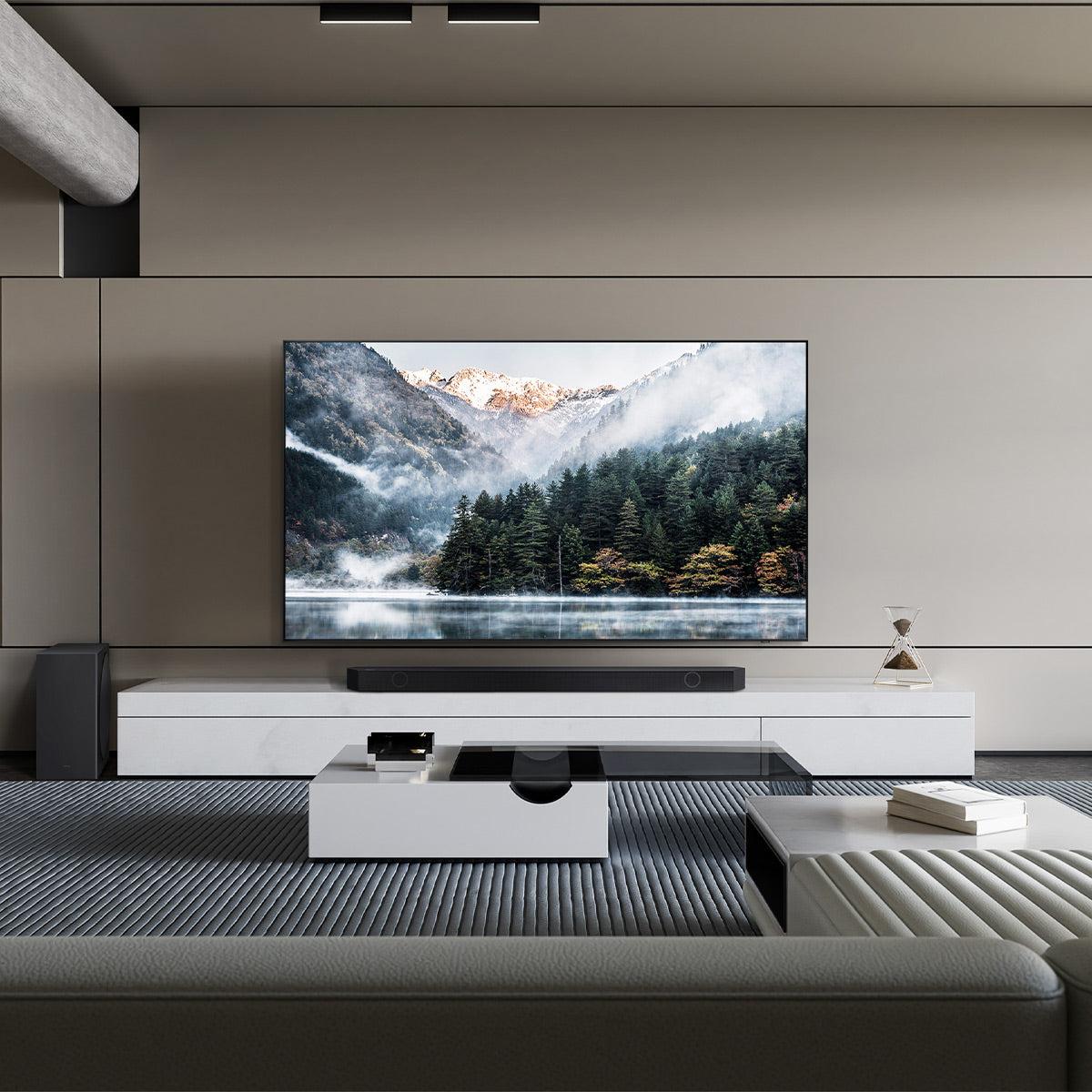
When you're ready to upgrade to a premium 65-inch TV, you'll quickly discover that not all high-end displays are created equal. Two fundamentally different technologies dominate the premium TV market: QLED and OLED. These aren't just marketing buzzwords—they represent completely different approaches to creating the picture on your screen, and understanding the difference is crucial for making the right choice.
The Samsung Q8F QLED, released in 2025, and the Samsung S95D OLED, which hit the market in 2024, perfectly illustrate this divide. At the time of writing, the Q8F costs roughly $900 while the S95D commands over $2,100—a significant price gap that reflects their different positions in Samsung's lineup and the underlying technology costs.
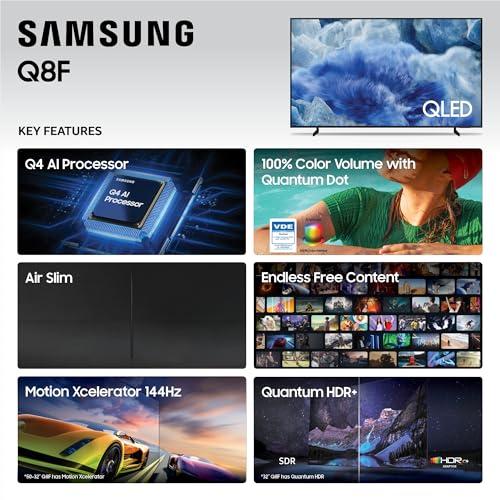
QLED (Quantum Dot Light Emitting Diode) technology takes a traditional LED-backlit LCD panel and enhances it with quantum dots—microscopic crystals that convert blue LED light into precise red and green wavelengths. Think of quantum dots as incredibly efficient color filters that can produce more accurate and vibrant colors than standard LCD displays. The Q8F uses this approach, with an LED backlight shining through quantum dot layers to create the image you see.
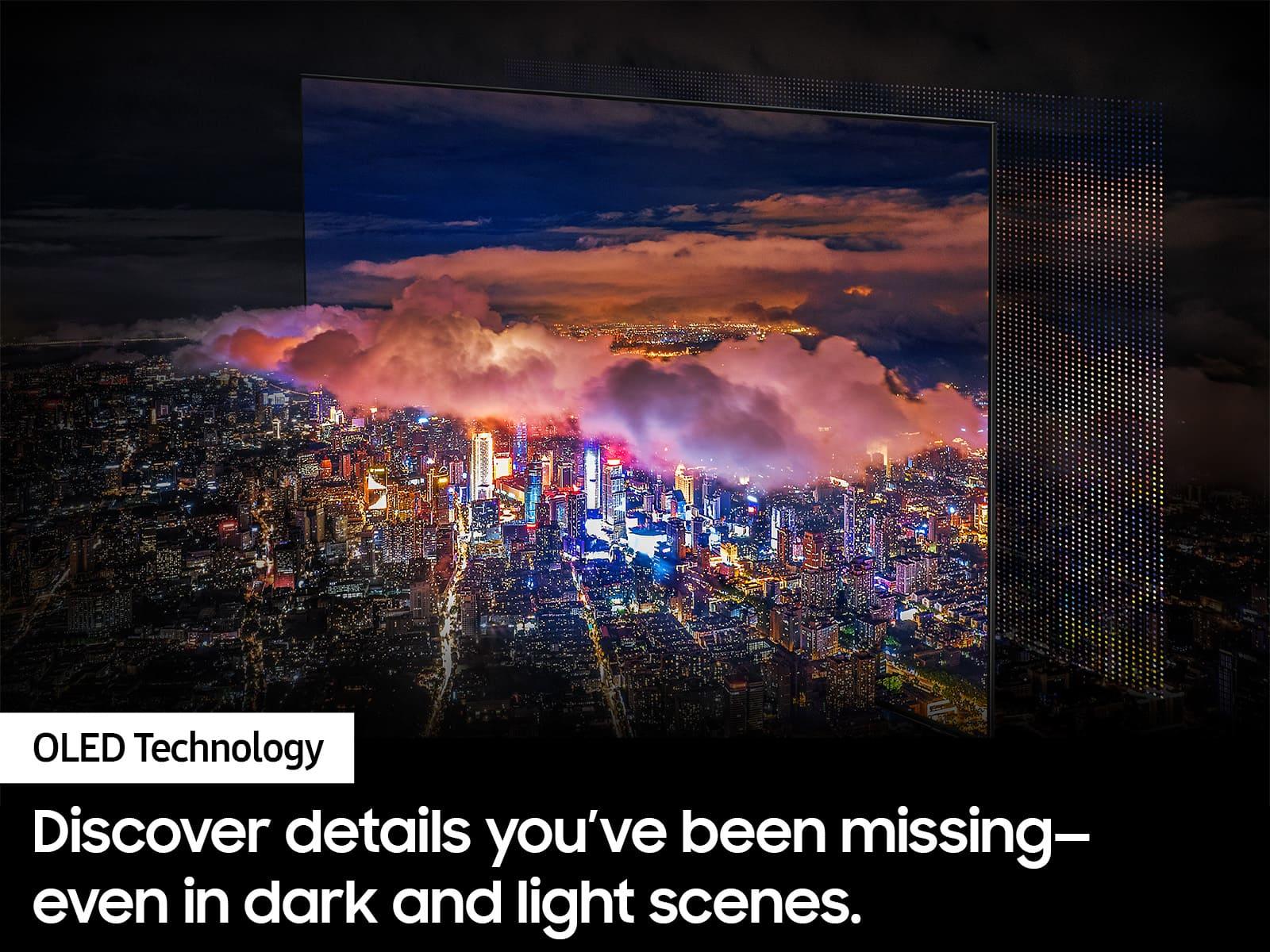
OLED (Organic Light Emitting Diode) works completely differently. Each individual pixel contains organic compounds that emit light when electricity passes through them. This means every pixel can turn completely on or completely off independently—no backlight required. The S95D goes one step further with QD-OLED technology, combining OLED's pixel-level control with quantum dots for enhanced color and brightness.
This fundamental difference creates distinct strengths and weaknesses that affect everything from picture quality to price.
Here's where the technology difference becomes most apparent. The S95D OLED achieves what engineers call an "infinite contrast ratio" because its pixels can turn completely off, producing true black. When you're watching a space movie with stars against the void, those black areas are genuinely black—no light escapes at all.
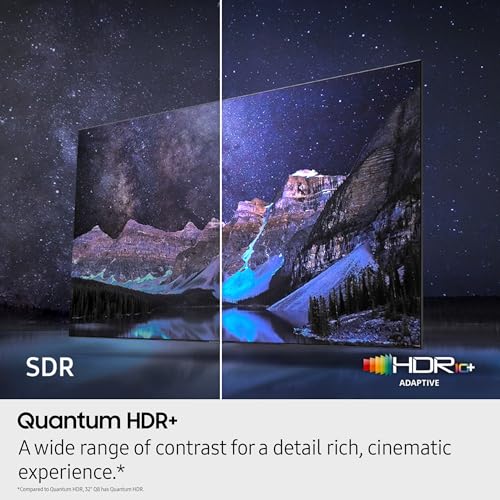
The Q8F, despite its impressive Dual LED backlighting system and Supreme UHD Dimming technology, can't match this performance. It uses local dimming zones to darken specific screen areas, but some light always bleeds through. In a dark room watching the same space movie, you might notice that "black" space appears slightly gray compared to an OLED.
However, this doesn't automatically make OLED better for everyone. The Q8F's quantum dot technology produces exceptionally bright, vibrant colors that can look more dynamic in well-lit rooms where absolute black levels matter less.
Peak brightness is where QLED technology traditionally dominates, and the Q8F continues this trend. Quantum dot displays can push brightness levels significantly higher than most OLED panels, making HDR (High Dynamic Range) highlights pop with intensity. When watching a sunrise scene or an explosion in an action movie, that extra brightness creates a more impactful visual experience.
The S95D breaks typical OLED brightness limitations thanks to its QD-OLED panel, achieving impressive peak brightness while maintaining perfect blacks. But more importantly, it features Samsung's revolutionary Glare Free technology—a matte screen coating that virtually eliminates reflections from windows, lamps, and overhead lighting.
This anti-glare feature is a game-changer for real-world viewing. Traditional glossy TV screens, including the Q8F, can become mirrors in bright rooms, forcing you to close curtains or dim lights. The S95D's matte finish maintains picture quality even with light sources directly behind your seating position.
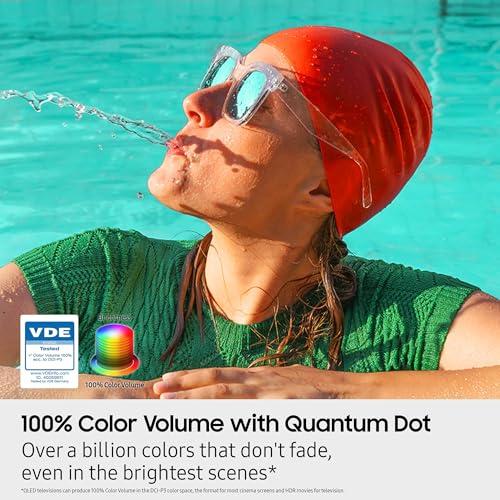
Both TVs deliver exceptional color performance, but through different approaches. The Q8F achieves 100% color volume with its quantum dot technology, displaying over a billion color shades across all brightness levels. This creates consistently vibrant images whether you're watching bright outdoor scenes or dimly lit indoor moments.
The S95D takes color accuracy further with Pantone validation—meaning colors are certified to match professional color standards. This matters most for content creators or viewers who prioritize color accuracy over pure vibrancy. The QD-OLED combination provides both wide color coverage and precise accuracy.
Gaming capabilities have become crucial TV features, and both models deliver excellent performance with important differences.
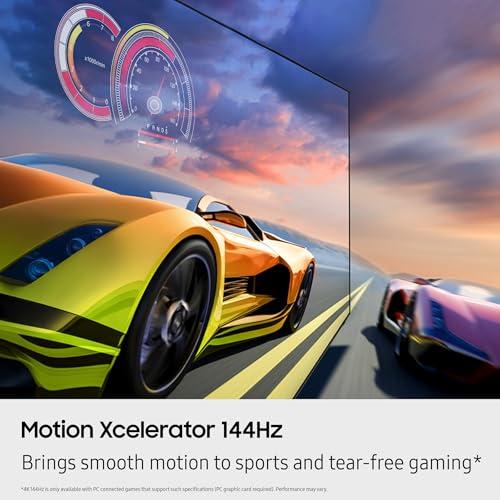
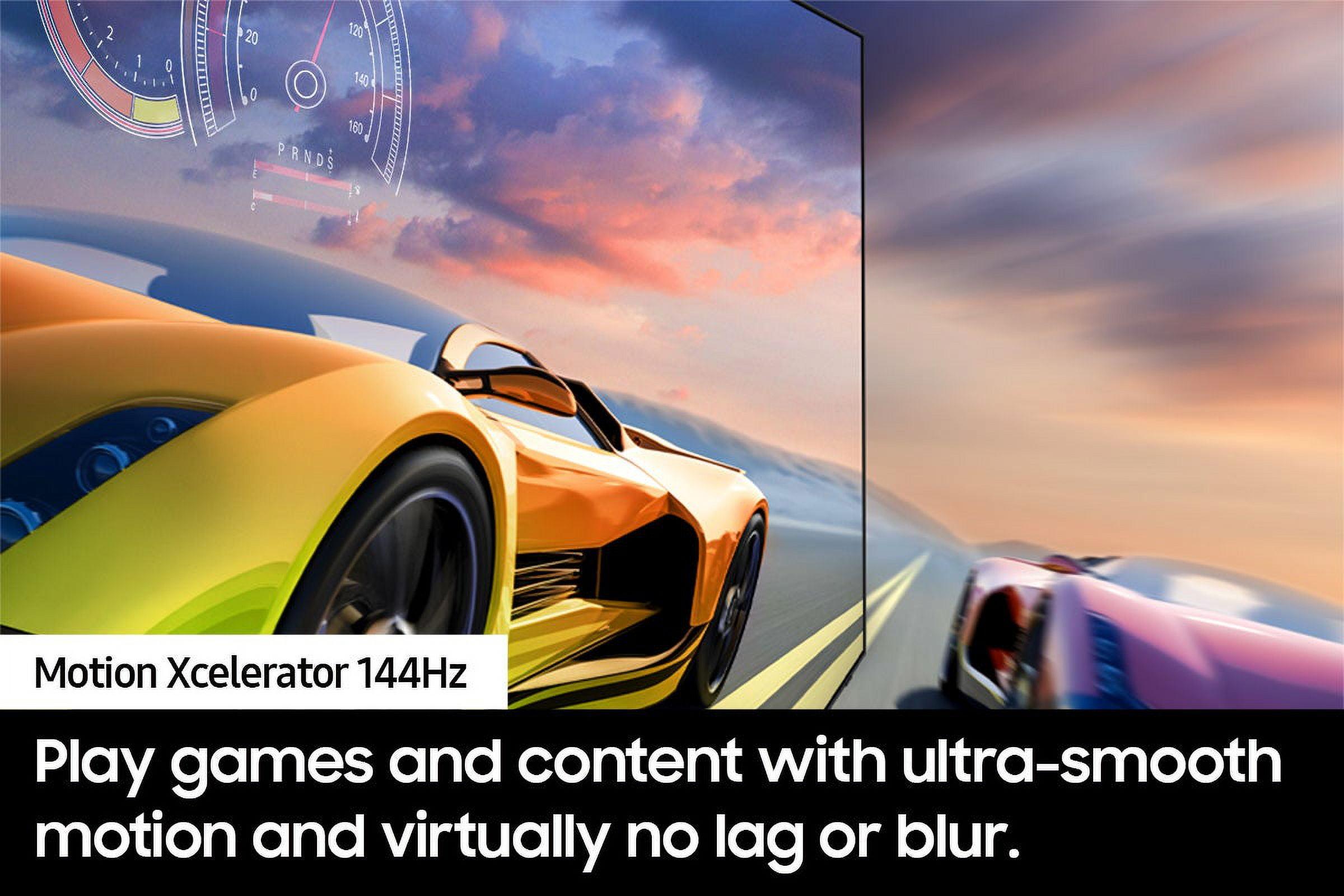
The Q8F supports 120Hz at 4K resolution with Motion Xcelerator 144Hz processing. This provides smooth motion for console gaming and reduces blur during fast-paced scenes. Input lag—the delay between pressing a controller button and seeing the action on screen—measures around 10-15 milliseconds in game mode, which is excellent for competitive gaming.
The S95D pushes gaming performance further with native 144Hz at 4K resolution and approximately 9 milliseconds input lag. For serious PC gamers with high-end graphics cards, this extra refresh rate capability provides noticeably smoother motion. OLED's instantaneous pixel response also eliminates motion blur entirely, creating the sharpest possible image during rapid movement.
However, OLED technology carries a potential concern for hardcore gamers: burn-in. If static game UI elements like health bars or mini-maps remain on screen for hundreds of hours, they might leave permanent ghost images. Modern OLED panels are highly resistant to this issue, and the S95D includes pixel-shifting and other protective features, but it's worth considering if you play the same game extensively.
TV speakers rarely match dedicated audio systems, but both models offer respectable built-in audio with different approaches.
The Q8F features Object Tracking Sound Lite with Q-Symphony technology. This means audio can sync with on-screen movement—if a car drives from left to right, the sound follows. Q-Symphony allows the TV speakers to work alongside compatible Samsung soundbars rather than being disabled, creating richer overall sound.
The S95D includes more advanced Object Tracking Sound+ with Dolby Atmos support. Dolby Atmos creates three-dimensional audio that can place sounds above, below, and around your listening position. While TV speakers can't fully replicate a dedicated Atmos system, the S95D does a better job creating spatial audio effects than the Q8F.
For serious home theater enthusiasts, both TVs will likely be paired with external audio systems, but the S95D provides a more complete out-of-box experience.
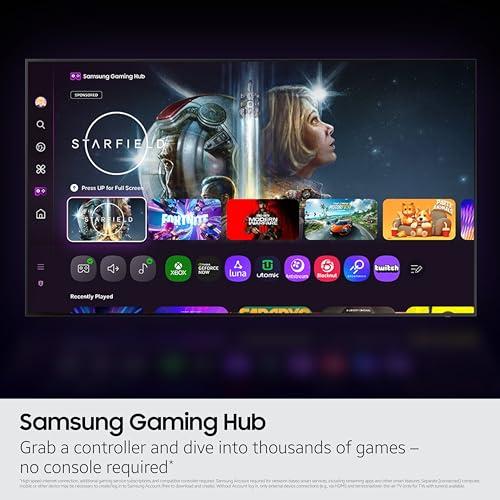
Both TVs run Samsung's Tizen operating system with comprehensive streaming app support and voice control capabilities. The interfaces are nearly identical, offering easy access to Netflix, Disney+, Amazon Prime, and hundreds of other services.
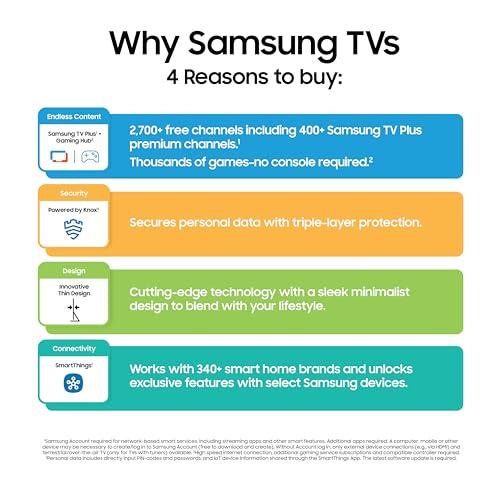
The Q8F includes some unique 2025 features like Generative Wallpaper, which uses AI to create custom backgrounds based on your preferences. It also serves as a SmartThings Hub with Matter support, allowing direct control of smart home devices without additional hardware.
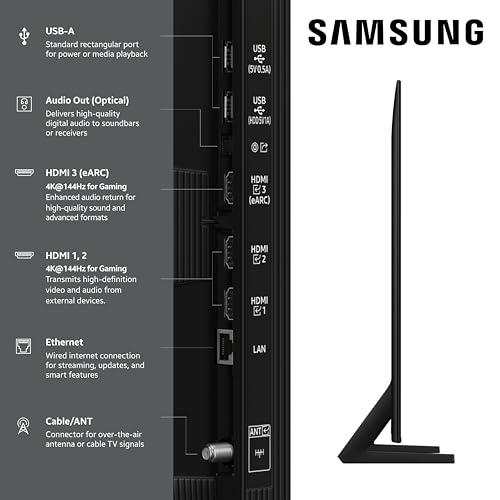
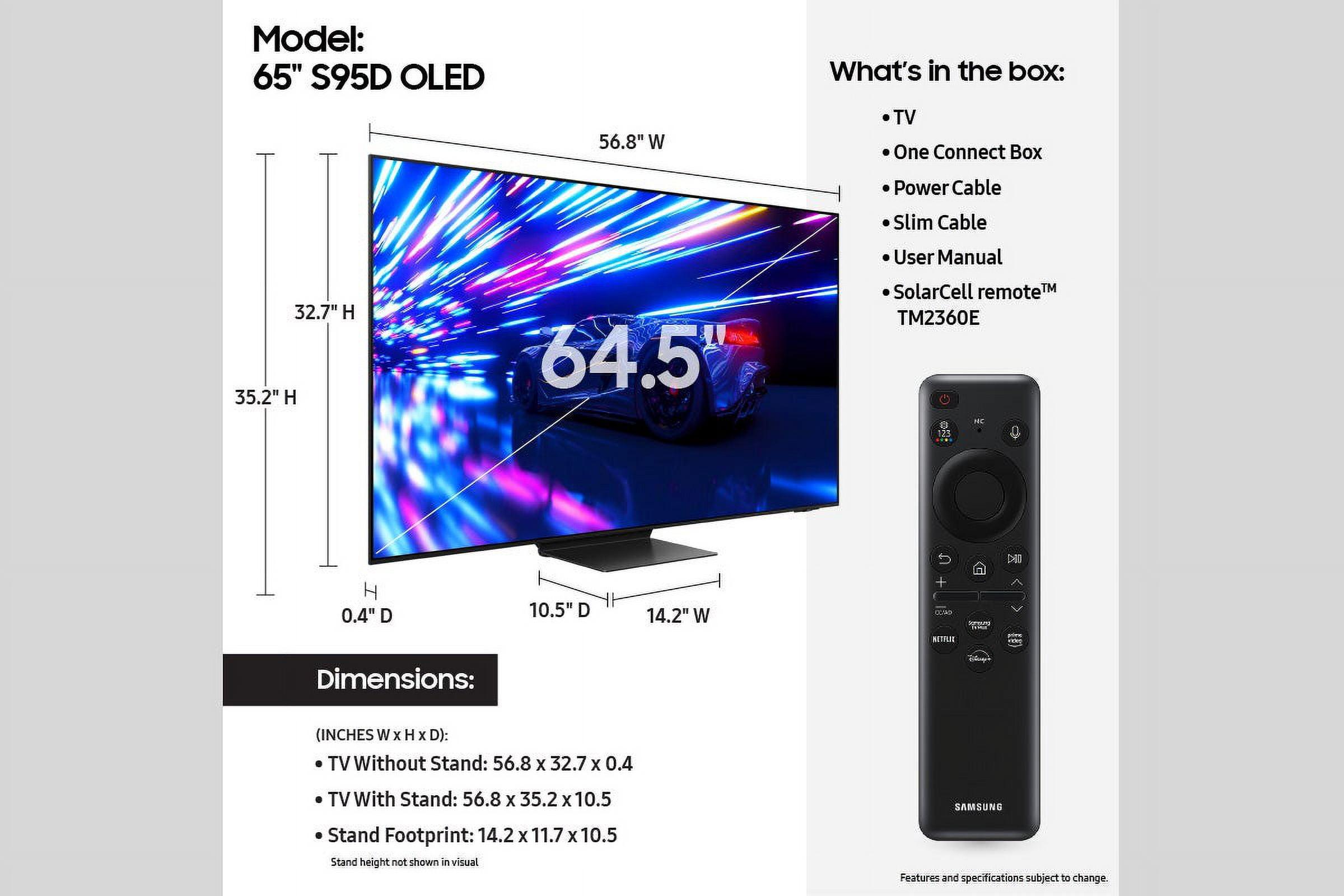
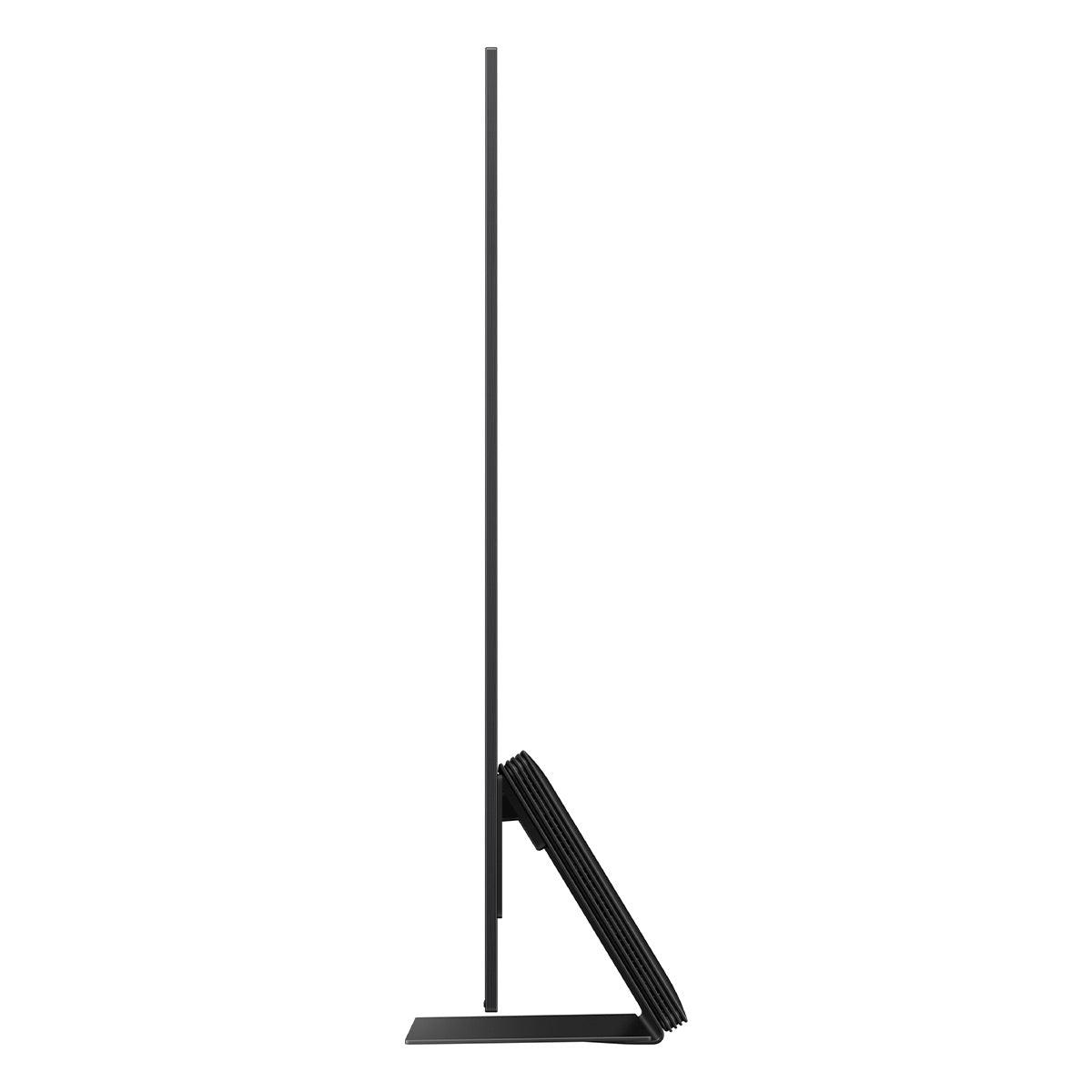
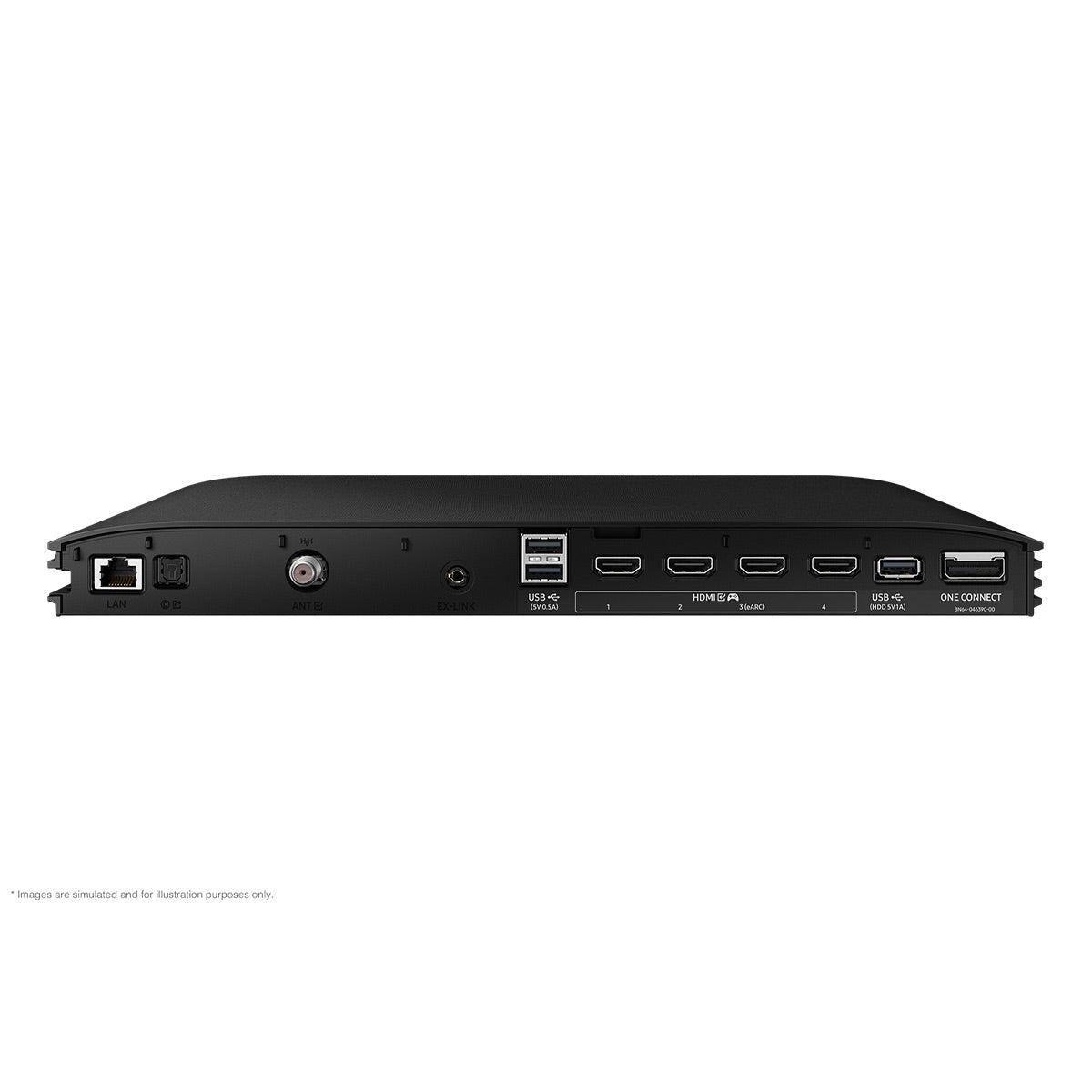
The S95D takes a different approach with its One Connect Box—an external unit that houses all HDMI inputs, USB ports, and connections. This allows the TV panel itself to be incredibly thin (just 11mm) and makes wall mounting cleaner since only one slim cable runs to the display. Cable management becomes much simpler, and future upgrades to the One Connect Box could extend the TV's lifespan.
Physical design differences extend beyond aesthetics to practical installation concerns.
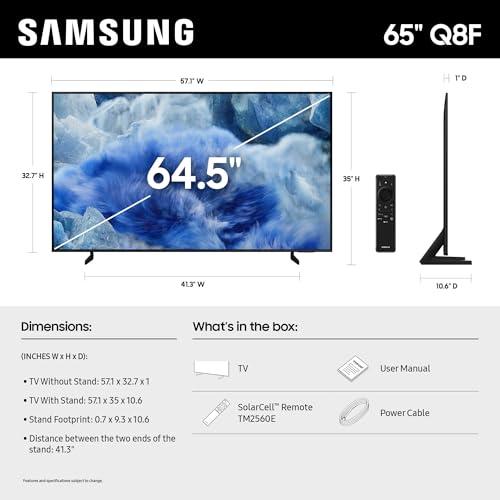
The Q8F follows traditional TV construction with connections directly on the back panel. It's reasonably thin for a QLED display and includes Samsung's AirSlim design language, but it's notably thicker than the S95D.
The S95D's One Connect Box design creates installation flexibility. You can hide the connection box in a cabinet or behind furniture while keeping the ultra-thin display prominent. This is particularly valuable for wall mounting, where cable management often becomes challenging.
At the time of writing, the price difference between these models is substantial—the S95D costs roughly 140% more than the Q8F. This gap reflects both the premium OLED technology and the S95D's flagship positioning.
The Q8F delivers excellent performance for its price point, offering bright, vibrant images that excel in well-lit rooms, solid gaming capabilities, and comprehensive smart features. For many users, it provides 90% of premium TV performance at less than half the cost.
The S95D justifies its premium pricing with superior picture quality, innovative glare reduction, enhanced gaming performance, and premium design elements. However, the cost difference means you could purchase the Q8F and a high-quality soundbar system for less than the S95D alone.
For dedicated home theater use, picture quality becomes paramount, and room lighting control is typically excellent. In these conditions, the S95D's perfect blacks, infinite contrast, and color accuracy create a more cinematic experience. The anti-glare coating becomes less important in light-controlled environments, but the superior contrast still provides more engaging viewing.
However, many families use their primary TV for varied content in mixed lighting conditions. The Q8F's higher brightness output and proven reliability might serve these situations better, especially considering the cost savings.
Choose the Samsung Q8F if you primarily watch in bright rooms, want excellent performance without flagship pricing, or prefer proven technology with no burn-in concerns. It's ideal for families who watch varied content throughout the day and want a TV that performs consistently in any lighting condition.
Select the Samsung S95D if you want the absolute best picture quality, frequently watch in mixed lighting conditions, are a serious gamer requiring maximum refresh rates, or can appreciate and afford cutting-edge display technology. It's perfect for dedicated home theater enthusiasts and users who prioritize having the latest innovations.
The decision ultimately depends on your viewing environment, content preferences, and budget priorities. Both represent excellent choices within their respective categories, but understanding these fundamental differences ensures you'll choose the TV that best matches your specific needs and expectations.
| Samsung 65" QLED Q8F 4K Smart TV 2025 | Samsung 65" S95D 4K OLED Smart TV |
|---|---|
| Display Technology - Fundamentally different approaches to creating the picture | |
| QLED with Quantum Dot (LED backlight + quantum dots) | QD-OLED (self-emitting pixels + quantum dots) |
| Contrast Performance - Most noticeable difference in dark room viewing | |
| Local dimming zones, excellent but not perfect blacks | Infinite contrast ratio with pixel-level on/off control |
| Peak Brightness - Critical for HDR impact and bright room viewing | |
| Very high brightness ideal for well-lit rooms | High brightness for OLED + revolutionary glare-free coating |
| Gaming Refresh Rate - Higher numbers mean smoother motion for PC gaming | |
| 120Hz at 4K (excellent for consoles) | 144Hz at 4K (premium PC gaming performance) |
| Input Lag - Lower is better for competitive gaming | |
| ~10-15ms (excellent for gaming) | ~9ms (among the best available) |
| Audio System - Built-in sound quality varies significantly | |
| Object Tracking Sound Lite with Q-Symphony | Object Tracking Sound+ with Dolby Atmos |
| Design Approach - Affects installation flexibility and aesthetics | |
| Traditional design with direct TV connections | Ultra-thin panel (11mm) with external One Connect Box |
| Burn-in Risk - Important consideration for varied content usage | |
| No burn-in risk with LED technology | Minimal risk with modern OLED + protective features |
| Smart Features - Both run Tizen OS with unique additions | |
| AI wallpaper generation, SmartThings Hub built-in | Expert factory calibration, solar-powered remote |
| Best Use Case - Where each TV excels most | |
| Bright rooms, family use, budget-conscious buyers | Mixed lighting, home theater, premium experience seekers |
The Samsung Q8F QLED is specifically designed for bright rooms and excels in high ambient light conditions. Its quantum dot technology delivers exceptional peak brightness that cuts through glare from windows and overhead lighting. While the Samsung S95D OLED offers superior picture quality overall, the Q8F maintains better visibility and color saturation when competing with daylight.
QLED TVs like the Samsung Q8F use LED backlighting enhanced with quantum dots for bright, vibrant colors, while OLED displays like the Samsung S95D have self-emitting pixels that can turn completely on or off. This means the S95D OLED produces perfect blacks and infinite contrast, while the Q8F QLED achieves higher brightness levels but cannot match OLED's black performance.
Both TVs offer excellent gaming capabilities, but the Samsung S95D OLED has a slight edge with 144Hz refresh rate at 4K and approximately 9ms input lag compared to the Q8F's 120Hz refresh rate. However, the Samsung Q8F has no burn-in risk from static gaming UI elements, making it worry-free for extended gaming sessions with the same game.
For movie watching, the Samsung S95D OLED provides superior cinematic experience with perfect blacks, infinite contrast, and more accurate colors. Dark movie scenes will show dramatically better shadow detail and image separation. The Samsung Q8F QLED delivers excellent picture quality with brighter, more vibrant colors that some viewers prefer, especially for animated content or bright scenes.
The Samsung Q8F QLED offers exceptional value, delivering premium TV performance at roughly half the cost of the S95D. For most viewers, the Q8F provides 90% of the premium experience without the flagship price. The Samsung S95D OLED justifies its higher cost with cutting-edge technology and superior picture quality for those who want the absolute best.
Both TVs work excellently for home theater use, but serve different priorities. The Samsung S95D OLED is ideal for dedicated dark-room home theaters where its perfect blacks and infinite contrast create the most cinematic experience. The Samsung Q8F QLED works better for multipurpose family rooms where the TV is used throughout the day in varying lighting conditions.
The Samsung S95D OLED features more advanced Object Tracking Sound+ with Dolby Atmos support, creating better spatial audio effects than the Q8F's Object Tracking Sound Lite system. However, both TVs will benefit from external soundbars for serious home theater use, and the Samsung Q8F includes Q-Symphony technology that works alongside Samsung soundbars.
The Samsung S95D OLED offers superior wall mounting flexibility with its One Connect Box design, allowing the ultra-thin panel (11mm) to mount cleanly while hiding all connections in the external box. The Samsung Q8F QLED uses traditional direct connections on the TV back, which is still manageable but requires more cable management planning.
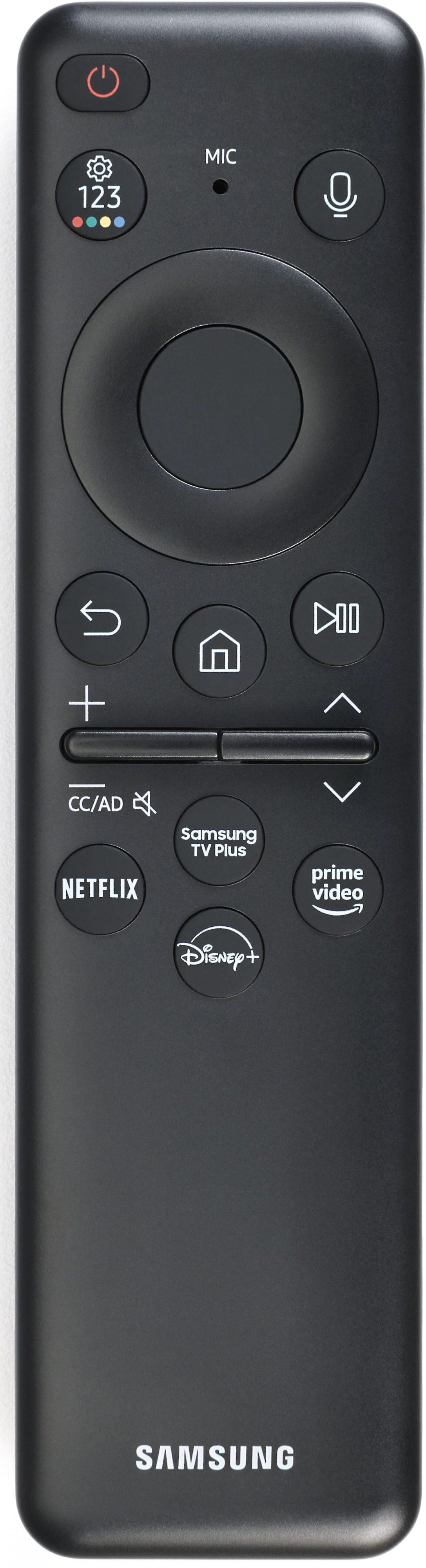
Both TVs run Samsung's Tizen operating system with identical streaming app support and voice control. The Samsung Q8F adds unique 2025 features like AI wallpaper generation and built-in SmartThings Hub functionality. The Samsung S95D OLED includes premium touches like expert factory calibration and a solar-powered remote, but the core smart TV experience is very similar.
The Samsung Q8F QLED uses proven LED technology with no burn-in concerns, making it extremely reliable for varied content viewing over many years. The Samsung S95D OLED uses modern OLED technology that's highly resistant to burn-in issues, but still requires some consideration for static content exposure. Both offer similar warranty coverage and build quality.
OLED displays like the Samsung S95D typically consume less power when displaying dark content since black pixels are completely off, but can use more power with bright scenes. QLED TVs like the Samsung Q8F maintain more consistent power consumption regardless of content. Real-world energy usage will depend heavily on your viewing habits and content preferences.
Choose the Samsung Q8F QLED if you watch primarily in bright rooms, want excellent performance without flagship pricing, or prefer worry-free technology for family use. Select the Samsung S95D OLED if you want the absolute best picture quality, watch in mixed lighting conditions, are a serious gamer requiring maximum refresh rates, or can appreciate and afford cutting-edge display technology.
We've done our best to create useful and informative comparisons to help you decide what product to buy. Our research uses advanced automated methods to create this comparison and perfection is not possible - please contact us for corrections or questions. These are the sites we've researched in the creation of this article: bestbuy.com - rtings.com - tomsguide.com - youtube.com - samsung.com - youtube.com - youtube.com - youtube.com - rtings.com - rtings.com - linqcdn.avbportal.com - bestbuy.com - samsung.com - samsung.com - samsung.com - youtube.com - youtube.com - billsmith.com - samsung.com - samsung.com - samsung.com - hometechnologyreview.com - shopjetson.com - certappl.com - samsung.com - theapplianceplug.com - samsung.com - manuals.plus - bestbuy.com - device.report - samsung.com - shopsilica.com - dentonstv.com - techradar.com - videoandaudiocenter.com - avsforum.com - cnet.com - abt.com - merlinstv.com - nfm.com - rtings.com - flintsfurniture.com - samsung.com - bestbuy.com - displayspecifications.com

Privacy Policy
Terms and Conditions - Affiliate Policy
Home Security
© Copyright 2008-2026.
11816 Inwood Rd #1211, Dallas, TX 75244