

When you're shopping for a premium 65-inch TV, Samsung's QLED lineup offers some compelling options that take very different approaches to the same basic goal. The Samsung Q8F 2025 and The Frame 2024 both deliver excellent picture quality, but they're designed for completely different types of viewers and living spaces.
At the time of writing, you're looking at roughly a 45% price premium for The Frame over the Q8F, which immediately raises the question: what exactly are you paying extra for? After diving deep into both TVs' specifications, user feedback, and expert reviews, the answer isn't just about picture quality—it's about how you want your TV to fit into your life.
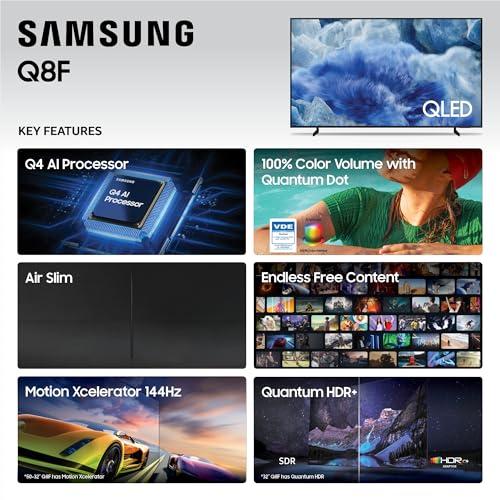
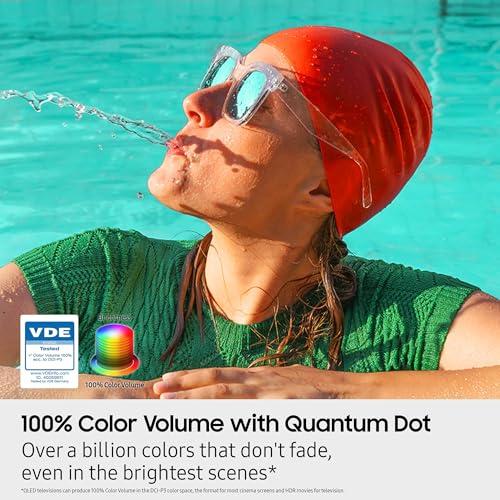
Before we dig into the differences, let's talk about what these TVs have in common. Both use QLED technology, which stands for Quantum Dot Light Emitting Diode. This might sound complicated, but it's actually pretty straightforward: tiny semiconductor particles called quantum dots sit between the LED backlight and the LCD panel, converting blue light into incredibly pure red and green colors.
The result? Colors that are more vibrant and accurate than traditional LED TVs, especially at high brightness levels. This is why QLED TVs excel in bright rooms where OLED screens might struggle to compete with ambient light. Both the Q8F and The Frame claim 100% color volume, meaning they can display rich, saturated colors even when the screen is very bright.
But here's where things get interesting: despite sharing the same basic display technology, these two TVs approach picture quality very differently.
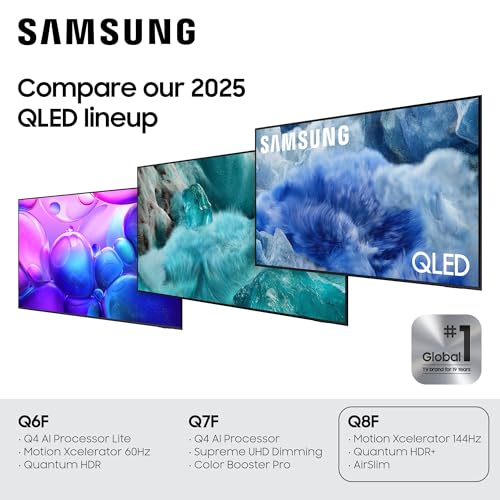
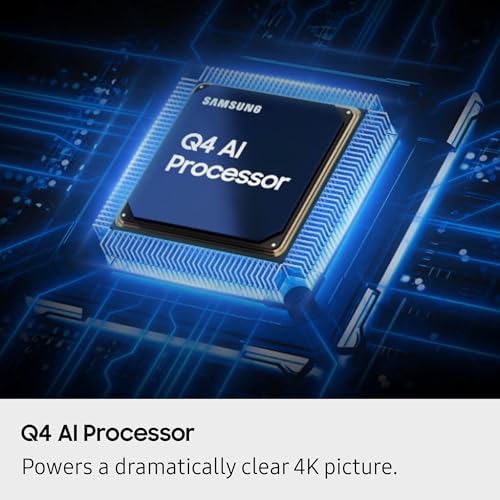
The Samsung Q8F 2025 is built around Samsung's Q4 AI Processor, which uses machine learning to analyze each scene and optimize the picture in real-time. This processor doesn't just upscale lower-resolution content to near-4K quality—it actually studies the type of content you're watching and adjusts color, contrast, and sharpness accordingly.
What makes the Q8F particularly impressive is its Dual LED backlighting system. Most budget TVs use a single type of LED backlight, but the Q8F uses LEDs with two different color temperatures. This allows it to produce both warm and cool tones more accurately, resulting in better skin tones in movies and more realistic colors in nature documentaries.
The Supreme UHD Dimming feature divides the screen into hundreds of zones, controlling brightness and darkness with much more precision than standard edge-lit displays. While it's not as advanced as the full-array local dimming you'd find on high-end Mini-LED TVs, it's a significant step up from basic LED panels.
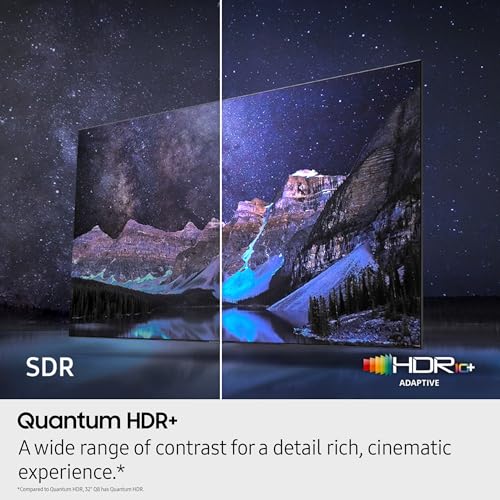
For HDR content—those movies and shows with enhanced brightness and contrast—the Q8F supports HDR10+ Adaptive. This format adjusts the tone mapping (basically, how bright and dark areas are displayed) scene by scene, rather than using the same settings for an entire movie. The practical result is more detail in both shadows and highlights.
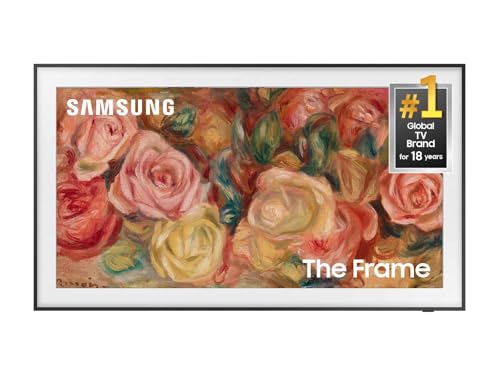
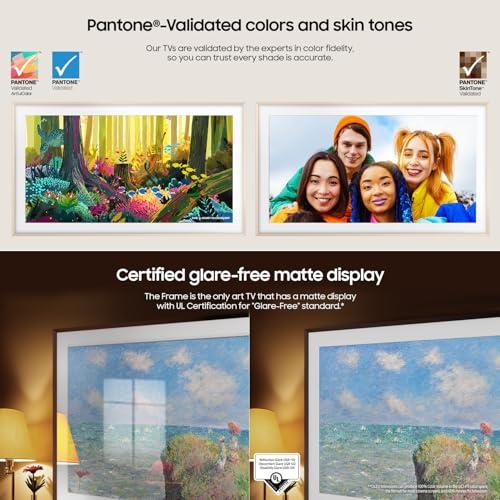
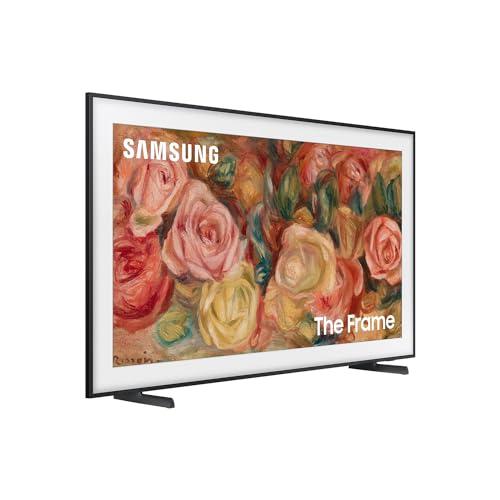
The Frame 2024 takes a completely different approach with its Anti-Glare Matte Display. This premium matte coating scatters ambient light to reduce reflections, making the TV look more like an actual canvas or framed artwork. It's genuinely impressive how well this works—you can have lamps or windows directly facing the TV without the harsh reflections that would wash out a glossy screen.
However, this matte coating comes with trade-offs. Colors can appear slightly muted compared to the Q8F's glossy display, and blacks might not look as deep in dark rooms. The matte finish is optimized for displaying artwork and reducing glare, not necessarily for delivering the most vibrant movie experience.
The Frame also uses the Quantum Processor 4K, which handles both video content and static artwork. It's particularly good at adjusting brightness and color temperature based on ambient lighting—crucial when the TV is displaying a painting during the day and switching to movie mode at night.
Based on professional measurements, the Q8F achieves higher peak brightness in HDR mode, reaching levels that make bright highlights in movies truly pop. The Frame, while still capable of good HDR performance (around 590 nits in a 10% window), prioritizes consistency over peak performance.
For home theater enthusiasts, this brightness difference matters significantly. HDR content like "Top Gun: Maverick" or "Dune" relies on bright highlights to create that cinematic wow factor. The Q8F delivers more of that impact, while The Frame provides a more subdued, gallery-like viewing experience.
Neither TV supports Dolby Vision, which is Samsung's ongoing stance in favor of their own HDR10+ format. While HDR10+ is excellent, some streaming services and UHD Blu-rays use Dolby Vision exclusively, so you'll miss out on the enhanced experience for that content.
Gaming has become a crucial consideration for TV buyers, especially with PlayStation 5 and Xbox Series X consoles demanding high refresh rates and low input lag.
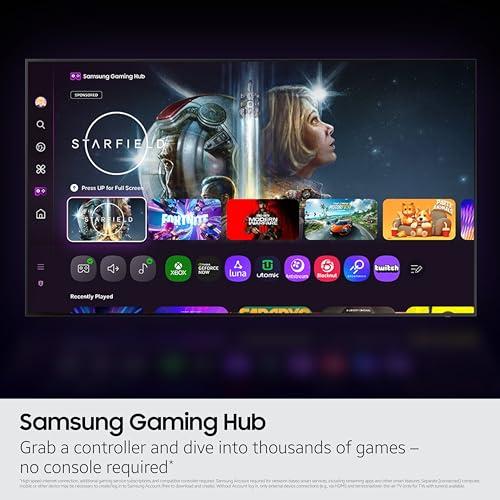
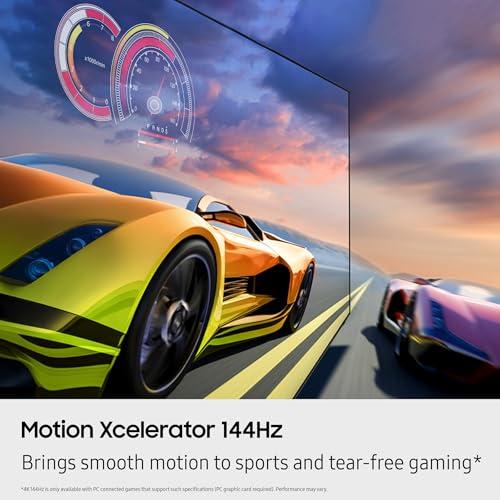
The Q8F 2025 is clearly the gaming-focused option here. Its Motion Xcelerator 144Hz technology delivers exceptionally smooth motion for fast-paced games, and features like Super Ultra Wide Game View and Mini Map Zoom show Samsung is thinking seriously about PC and console gamers. The AI Auto Game Mode automatically detects when you're gaming and optimizes settings without you having to dig through menus.
The Frame 2024 is no slouch either, with native 120Hz refresh rate and support for Variable Refresh Rate (VRR) technology. VRR synchronizes the TV's refresh rate with your console's frame rate, eliminating screen tearing and stuttering. The ultra-low input lag of 9.2ms is actually excellent—most gamers won't notice any delay between controller input and on-screen action.
However, The Frame's dynamic refresh rate feature is worth noting: when displaying artwork, it automatically drops from 120Hz to 60Hz to save energy. This smart power management makes sense for a TV that might display art for hours, but it means the gaming features are clearly secondary to the aesthetic functions.
This is one area where The Frame significantly outperforms the Q8F. The 40W 2.0.2 channel system with dedicated up-firing drivers provides genuine Dolby Atmos support, creating a sense of height and dimensionality that the Q8F's 20W 2-channel system simply can't match.
Object Tracking Sound (OTS) on The Frame is the full implementation, meaning audio follows action across the screen more convincingly. When a car drives from left to right in a movie, you'll hear the sound move with it. The Q8F has OTS Lite, which provides some positional audio but isn't as sophisticated.
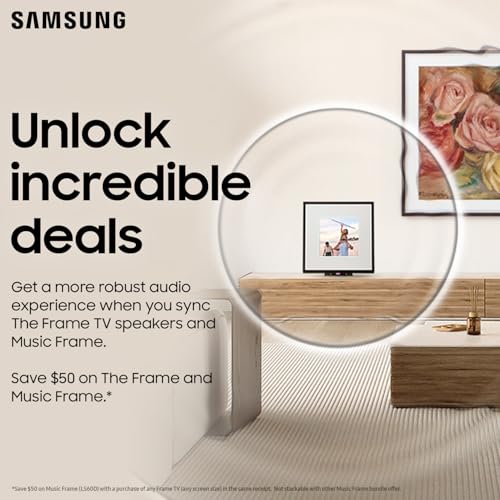
For many buyers, this audio difference might justify The Frame's higher price even without considering the art features. Good TV audio is rare, and both TVs support Q-Symphony, which allows the built-in speakers to work alongside compatible Samsung soundbars for even richer sound.
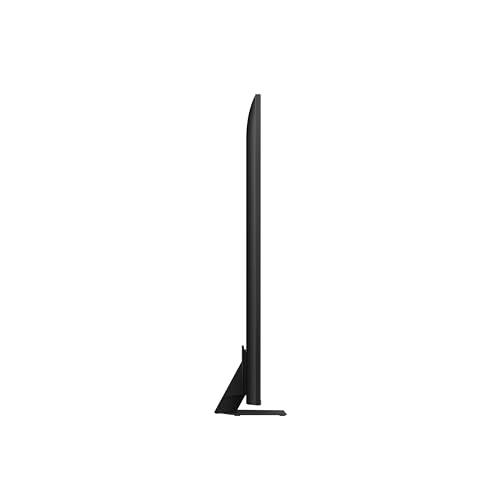
Here's where these TVs diverge most dramatically. The Q8F 2025 embraces traditional TV design with its AirSlim chassis—thin enough to look elegant on a stand or wall mount, but clearly identifiable as a television.
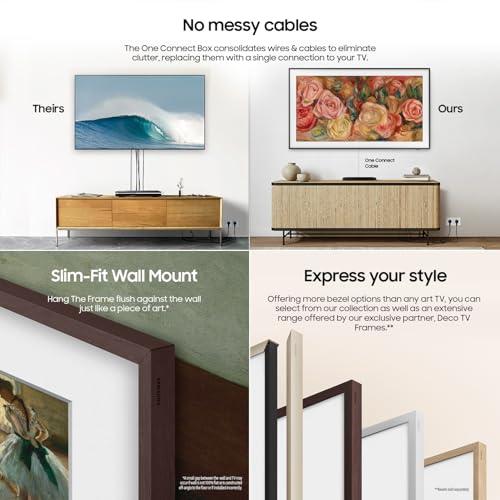
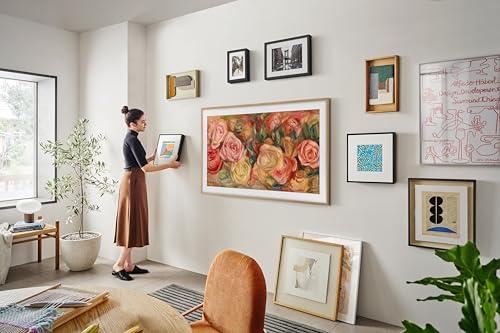
The Frame 2024 is something entirely different. When wall-mounted with the included Slim-Fit mount, it sits nearly flush against the wall like a framed painting. The customizable magnetic bezels (sold separately, unfortunately) let you match your décor, whether you prefer traditional wood frames, modern metal, or colorful artistic borders.
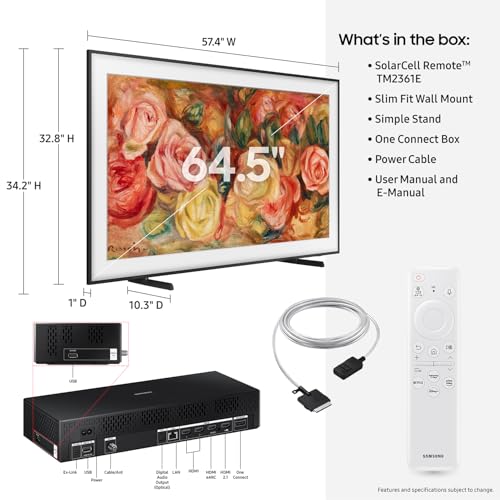
The One Connect Box is a game-changer for clean installations. All your devices—cable box, gaming console, streaming stick—connect to this external box, with only a single cable running to the TV. This makes wall mounting much cleaner and allows you to hide the connection box in a cabinet or closet.
Initially, I was skeptical about Art Mode. Do people really want their TV displaying paintings when not in use? Based on user reviews and feedback, the answer is a resounding yes—for the right buyers.
The Frame's motion sensor detects when you enter the room and can automatically switch from art to TV mode. The brightness sensor adjusts the display based on ambient lighting, so artwork looks natural whether it's bright afternoon sunlight or dim evening lighting.
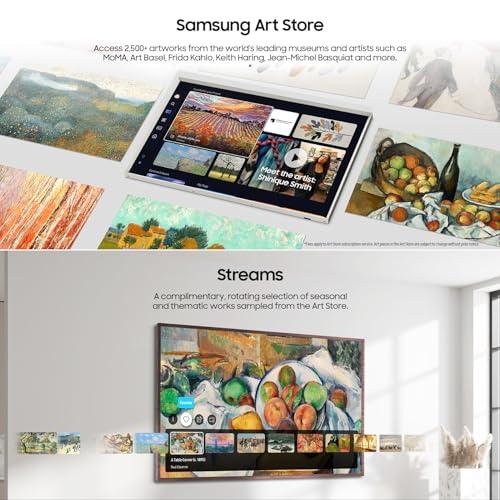
The Samsung Art Store offers thousands of pieces from museums and galleries worldwide, though accessing the full library requires a subscription (around $5-6 monthly at the time of writing). You can also display your own photos and artwork, and the Pantone art certification ensures colors are reproduced accurately.
What surprised me most in researching this feature is how many users report it changes their relationship with their living space. Instead of a blank black rectangle dominating the wall, you have rotating artwork that becomes a conversation piece.
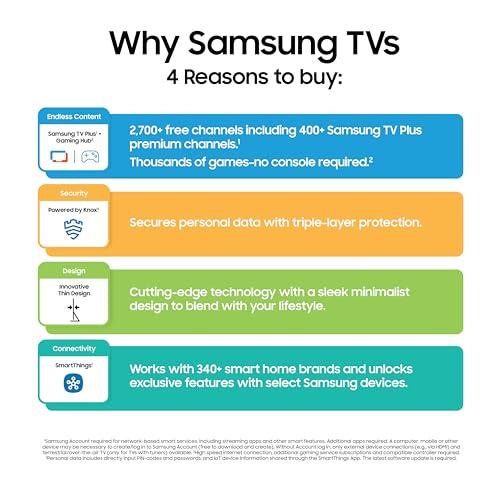
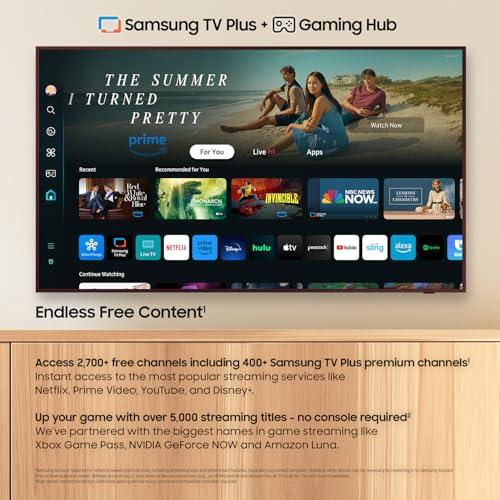
Both TVs run Samsung's Tizen operating system, which has improved significantly over the years. It's fast, intuitive, and includes all the major streaming apps. The SmartThings Hub functionality with Matter support means either TV can control compatible smart home devices directly.
The Q8F includes some unique AI features like Generative Wallpaper, which creates custom backgrounds based on keywords you provide. It's a fun feature that showcases Samsung's AI capabilities, though not necessarily essential for most users.
The Frame focuses more on integration features—the SmartThings app makes uploading personal artwork simple, and the art-focused interface feels more refined for gallery-style browsing.
For dedicated home theater setups, the Q8F 2025 is the clear choice. Its higher peak brightness, more aggressive contrast enhancement, and gaming-focused features align better with the home theater enthusiast's priorities. The Motion Xcelerator 144Hz technology particularly shines with action movies and sports.
The Frame 2024 is better suited for living rooms where the TV serves multiple functions. The anti-glare coating makes it excellent for rooms with windows or multiple light sources, but the matte finish can reduce the impact of dark, atmospheric movies in a properly darkened theater room.
At the time of writing, The Frame's premium over the Q8F essentially breaks down to these key differentiators:
The Q8F offers better traditional TV performance per dollar—higher brightness, more advanced gaming features, and AI-optimized picture processing at a lower price point.
Choose the Samsung Q8F 2025 if:
Choose The Frame 2024 if:
Both TVs excel at what they're designed for, but they serve fundamentally different needs. The Q8F 2025 is the better traditional television—brighter, more gaming-focused, and offering excellent value for pure entertainment purposes.
The Frame 2024 is something more ambitious: a piece of technology that integrates into your living space in a way no traditional TV can match. Yes, you pay a premium for that integration, but for design-conscious buyers who want their technology to enhance rather than dominate their space, that premium can be worth every penny.
The decision ultimately comes down to whether you want a TV that disappears into your entertainment center or one that transforms your wall into something beautiful. Both approaches have merit—it just depends on what role you want your television to play in your home.
| Samsung 65" QLED Q8F 4K Smart TV 2025 | Samsung 65" The Frame QLED 4K 2024 TV 2024 |
|---|---|
| Display Technology - Core picture quality foundation | |
| QLED with Dual LED backlighting and Supreme UHD Dimming | QLED with Anti-Glare Matte Display and standard backlighting |
| Peak Brightness - Critical for HDR impact and bright room viewing | |
| Higher peak brightness with Quantum HDR+ for more impactful highlights | Good brightness (~590 nits) optimized for art display and glare reduction |
| Refresh Rate - Smooth motion for gaming and sports | |
| 120Hz native with Motion Xcelerator 144Hz technology | 120Hz native with dynamic refresh rate (drops to 60Hz in Art Mode) |
| Gaming Features - Console and PC gaming capabilities | |
| Auto Game Mode, Super Ultra Wide Game View, Mini Map Zoom, AI optimization | Auto Game Mode, VRR support, ultra-low 9.2ms input lag, FreeSync Premium |
| Audio System - Built-in sound quality | |
| 20W 2CH with Object Tracking Sound Lite | 40W 2.0.2CH with Dolby Atmos and full Object Tracking Sound |
| Design Philosophy - How it fits in your space | |
| Traditional AirSlim TV design, 3 bezel-less sides | Gallery-style with customizable magnetic bezels and flush wall mounting |
| Special Features - Unique capabilities | |
| Generative Wallpaper, Color Booster Pro, AI Mode optimization | Art Mode with motion sensor, Samsung Art Store, One Connect Box |
| Display Finish - Reflection handling | |
| Glossy screen with standard reflection properties | Premium matte coating that eliminates glare but may reduce color vibrancy |
| HDR Support - Enhanced contrast formats | |
| HDR10+ Adaptive with scene-by-scene optimization | HDR10+ with Quantum HDR (no Dolby Vision on either) |
| Smart TV Platform - Apps and connectivity | |
| Tizen OS with SmartThings Hub, Matter support, AI features | Tizen OS with SmartThings Hub, Matter support, art-focused interface |
| Installation Flexibility - Setup and cable management | |
| Standard wall mount or stand setup | Slim-Fit Wall Mount included, One Connect Box for clean cable management |
| Best Use Case - Who should buy this | |
| Entertainment-focused households prioritizing performance and value | Design-conscious buyers wanting dual TV/art gallery functionality |
The Samsung Q8F 2025 delivers superior picture quality for traditional entertainment with higher peak brightness, Dual LED backlighting, and Quantum HDR+ technology. Its glossy display produces more vibrant colors and deeper contrasts, making it ideal for movies and sports viewing. The Frame 2024 uses a matte anti-glare coating that reduces reflections but can make colors appear slightly muted compared to the Q8F.
The core difference is design philosophy: the Samsung Q8F 2025 is a traditional high-performance TV focused on entertainment, while The Frame 2024 doubles as both a TV and digital art display. The Frame features customizable bezels, Art Mode functionality, and flush wall mounting to look like framed artwork when not in use, while the Q8F prioritizes picture quality and gaming performance.
The Samsung Q8F 2025 is the superior gaming choice with Motion Xcelerator 144Hz technology, Super Ultra Wide Game View, Mini Map Zoom, and AI Auto Game Mode. While The Frame 2024 offers excellent gaming with 120Hz refresh rate and ultra-low 9.2ms input lag, the Q8F provides more gaming-specific features and smoother motion handling for competitive gaming.
Yes, The Frame 2024 genuinely functions as convincing wall art thanks to its matte anti-glare display, motion sensor activation, and customizable magnetic bezels. The TV displays artwork from Samsung's Art Store or your personal photos, automatically adjusting brightness based on room lighting. Many users report it transforms their living space, though accessing the full art library requires a subscription.
The Frame 2024 significantly outperforms the Samsung Q8F 2025 in audio quality with its 40W 2.0.2 channel system featuring Dolby Atmos and full Object Tracking Sound. The Q8F has a more basic 20W 2-channel system with Object Tracking Sound Lite. The Frame's superior audio makes it less dependent on external soundbars.
Both TVs handle bright rooms well but in different ways. The Frame 2024 excels in bright spaces thanks to its premium matte coating that eliminates glare and reflections from windows or lamps. The Samsung Q8F 2025 uses higher peak brightness and Dual LED backlighting to compete with ambient light. The Frame is better for rooms with direct light sources, while the Q8F works well in generally bright environments.
The Samsung Q8F 2025 provides better traditional TV value with superior picture quality, gaming features, and performance at a lower price point. The Frame 2024 commands a premium for its unique aesthetic features, better audio, and dual TV/art functionality. The Q8F is better value for entertainment-focused buyers, while The Frame justifies its premium for design-conscious users.
Yes, both the Samsung Q8F 2025 and The Frame 2024 run Samsung's Tizen Smart TV platform with access to all major streaming services including Netflix, Disney+, Amazon Prime Video, and YouTube. Both also feature SmartThings Hub functionality and Matter support for smart home integration. The interface is nearly identical, though The Frame includes additional art-focused menus.
The Samsung Q8F 2025 is superior for dedicated home theater use with higher peak brightness for impactful HDR, better contrast in dark rooms, and gaming-optimized features. Its glossy display delivers more vibrant colors in controlled lighting. The Frame 2024 is better suited for multi-purpose living rooms where aesthetics matter as much as performance, though its matte display can reduce impact in dark theater environments.
The Frame 2024 offers cleaner installation with its included Slim-Fit Wall Mount for flush mounting and One Connect Box that consolidates all device connections into a single cable to the TV. The Samsung Q8F 2025 uses traditional mounting and requires direct connections to the TV. The Frame's installation system is more complex but results in a much cleaner, artwork-like appearance on the wall.
Both TVs offer similar core smart features through Tizen OS, but with different focuses. The Samsung Q8F 2025 includes AI-powered features like Generative Wallpaper and enhanced optimization modes. The Frame 2024 focuses on art integration with SmartThings app support for uploading personal artwork and gallery-style browsing. Both TVs support voice assistants and smart home control equally well.
If you don't value the art functionality, the Samsung Q8F 2025 is the better choice, offering superior entertainment performance at a lower price. However, The Frame 2024 still provides benefits like better audio quality, excellent glare reduction for bright rooms, and cleaner cable management through the One Connect Box. Consider The Frame only if these secondary benefits justify the premium over the Q8F's better overall TV performance.
We've done our best to create useful and informative comparisons to help you decide what product to buy. Our research uses advanced automated methods to create this comparison and perfection is not possible - please contact us for corrections or questions. These are the sites we've researched in the creation of this article: bestbuy.com - rtings.com - tomsguide.com - youtube.com - samsung.com - youtube.com - youtube.com - youtube.com - rtings.com - rtings.com - linqcdn.avbportal.com - bestbuy.com - samsung.com - samsung.com - samsung.com - youtube.com - youtube.com - billsmith.com - samsung.com - samsung.com - samsung.com - hometechnologyreview.com - shopjetson.com - certappl.com - samsung.com - theapplianceplug.com - samsung.com - manuals.plus - bestbuy.com - device.report - samsung.com - shopsilica.com - dentonstv.com - tomsguide.com - rtings.com - rtings.com - youtube.com - bestbuy.com - techlicious.com - youtube.com - smalllilystudio.com - theeverymom.com - livingetc.com - pcrichard.com - image-us.samsung.com - samsung.com - images.samsung.com - samsung.com - buydig.com - tvsbook.com - bestbuy.com - samsung.com - samsung.com - flatpanelshd.com

Privacy Policy
Terms and Conditions - Affiliate Policy
Home Security
© Copyright 2008-2026.
11816 Inwood Rd #1211, Dallas, TX 75244