

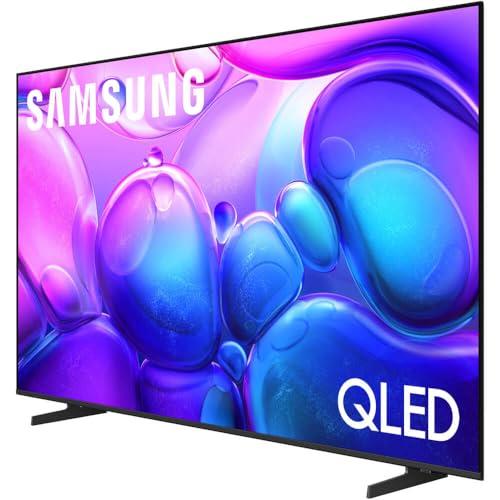
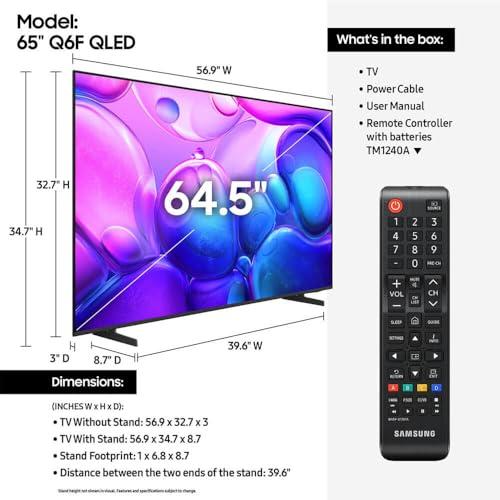
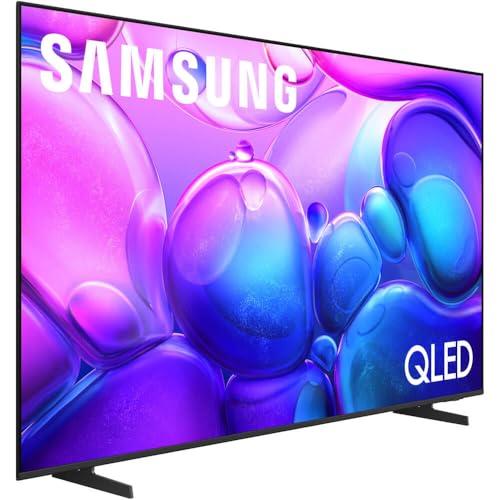
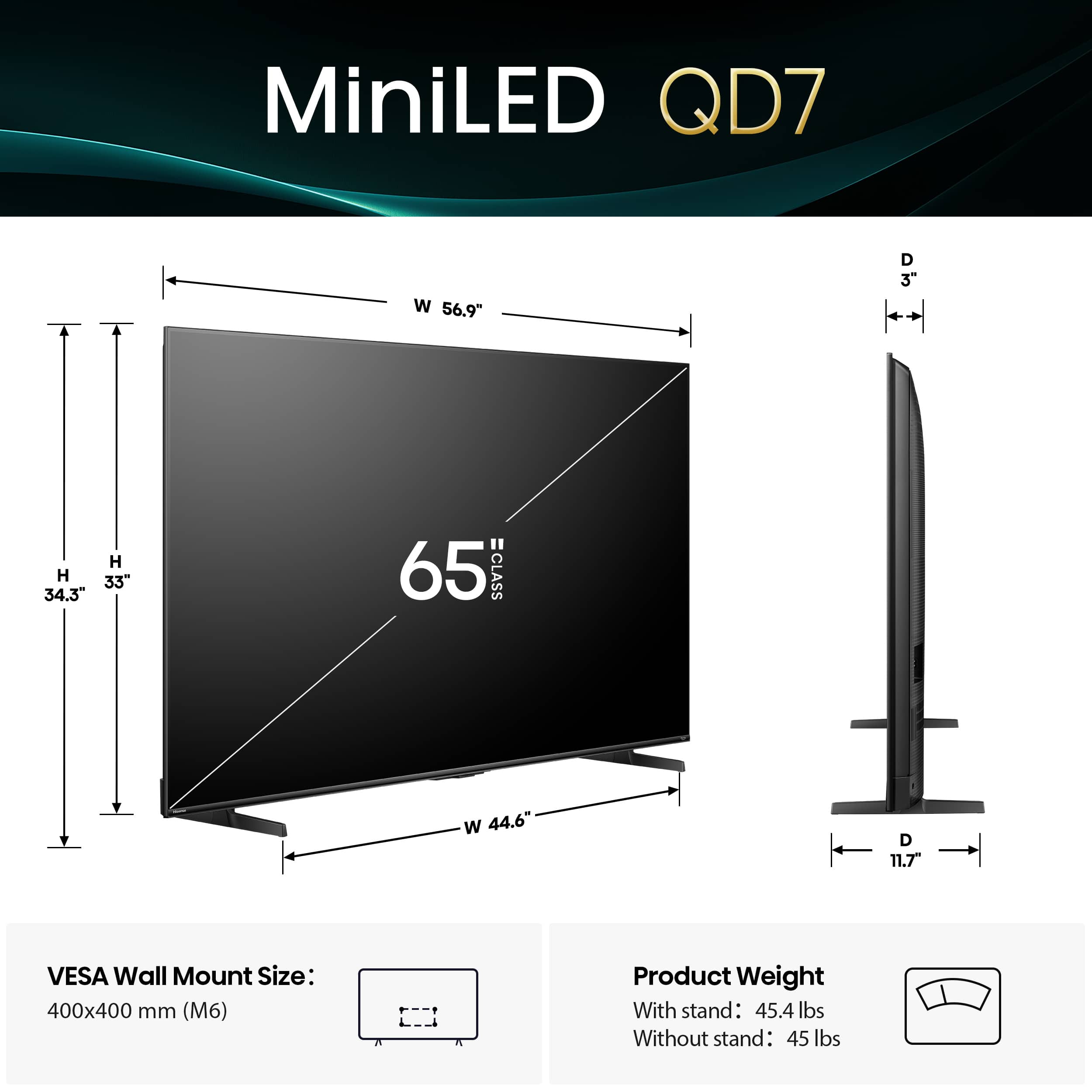
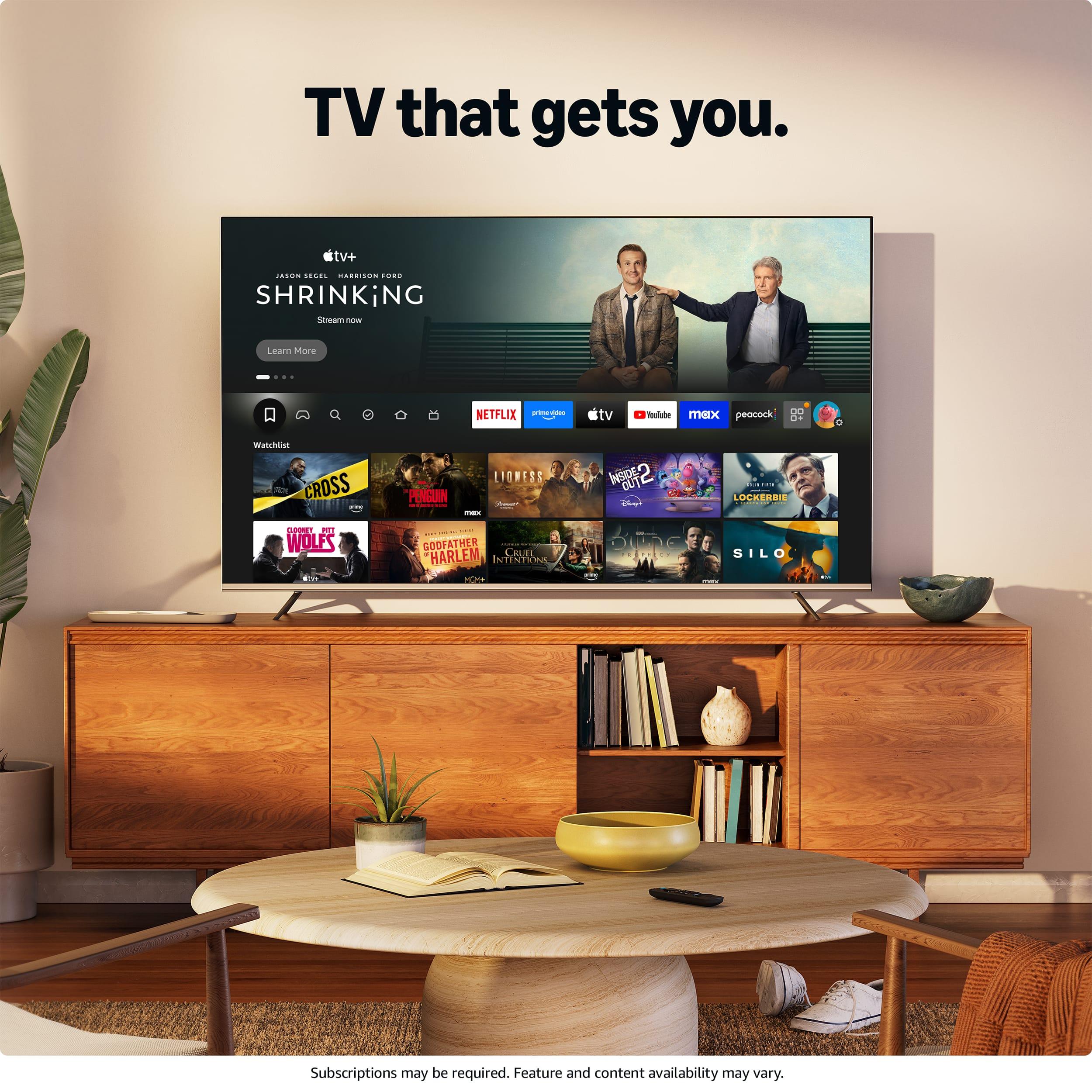
Choosing the right TV used to be simple—pick the biggest screen you could afford and call it a day. But in 2025, the budget TV landscape has become surprisingly complex, with manufacturers packing premium features into affordable packages. Two standout options that exemplify this trend are the Samsung 65" QLED Q6F 4K Smart TV 2025 and the Hisense 65" QD7 Series Mini-LED 4K Fire TV 2025.
Both TVs target that sweet spot where most people shop: decent-sized screens with modern features that won't break the bank. But despite similar names and price points at the time of writing, these TVs take fundamentally different approaches to delivering your entertainment. One prioritizes brand ecosystem integration and reliability, while the other pushes cutting-edge display technology typically found in much more expensive models.
The budget 4K TV segment has evolved dramatically since 2020. What we consider "budget" today would have been premium just a few years ago. Modern buyers expect quantum dot color technology (which produces more vibrant, accurate colors using microscopic particles), HDR support (high dynamic range that creates more realistic brightness and contrast), and smart TV platforms that rival dedicated streaming devices.
The most important considerations when shopping in this category are picture quality fundamentals like color accuracy and contrast, smart platform performance, gaming capabilities for console users, and long-term value. Unlike premium TVs where every feature is top-tier, budget models force manufacturers to make trade-offs. Understanding these compromises helps you pick the TV that aligns with your priorities.
The Samsung Q6F 2025 represents Samsung's entry-level QLED approach, released as part of their spring 2025 lineup. Samsung uses edge-lit LED backlighting, where LEDs are positioned around the perimeter of the screen rather than across the entire back panel. This design keeps costs down and allows for thinner TVs, but it creates limitations in how precisely the TV can control brightness across different areas of the screen.
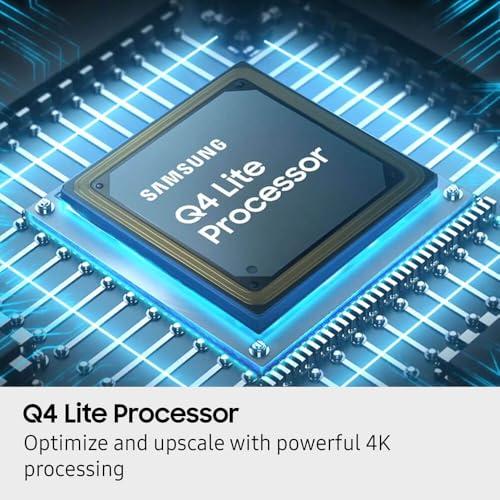
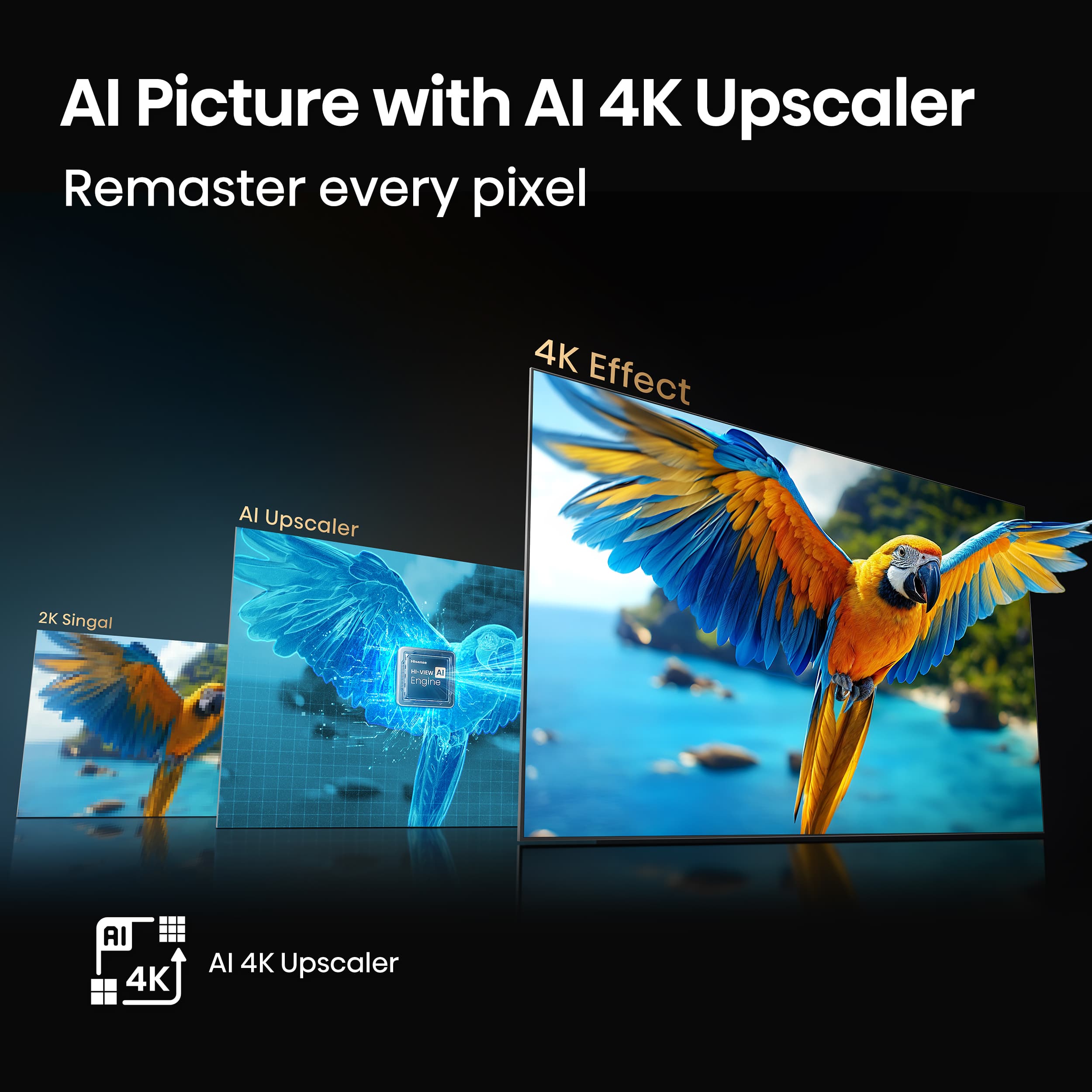
Samsung pairs this with their Q4 Lite Processor, which handles the basic AI upscaling (converting lower-resolution content to 4K) and picture optimization. The Tizen smart TV platform has matured significantly since its rocky early days, now offering a clean interface with Samsung Knox security—enterprise-grade protection that encrypts your viewing data and smart home connections.
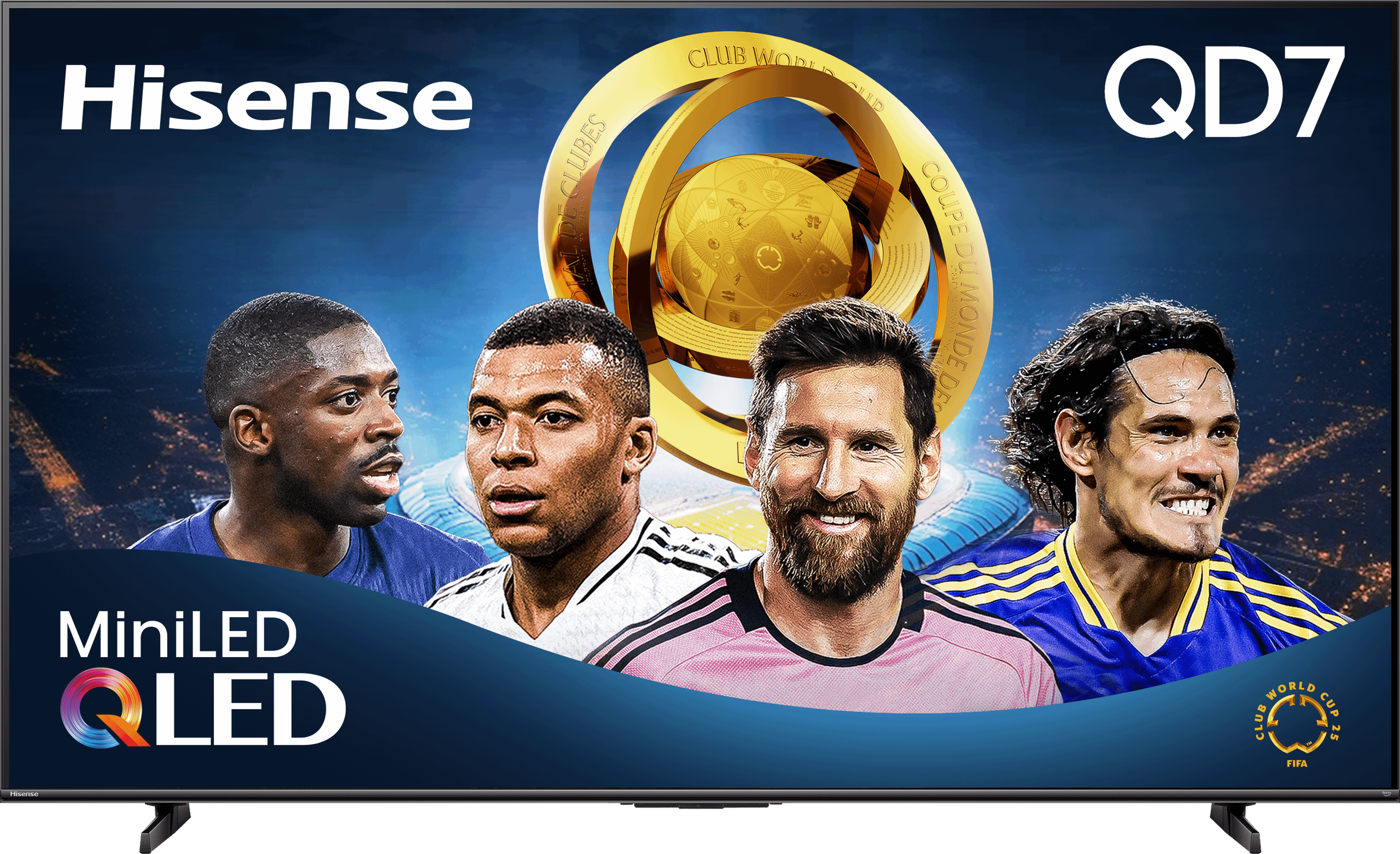
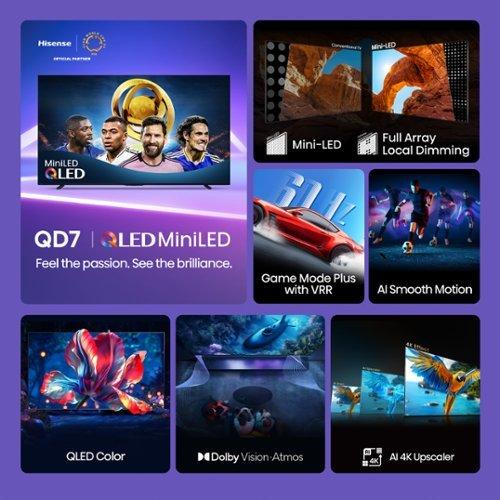
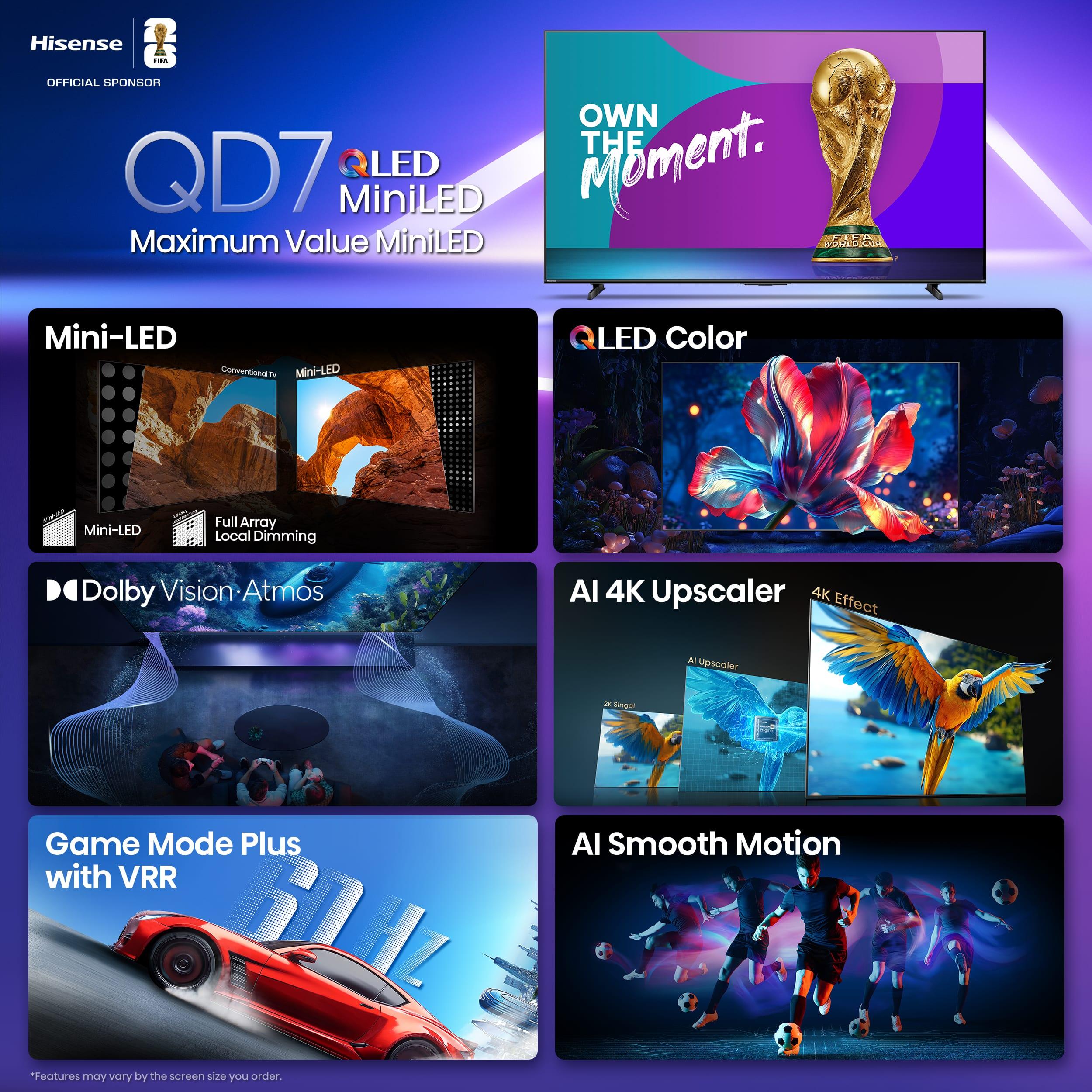
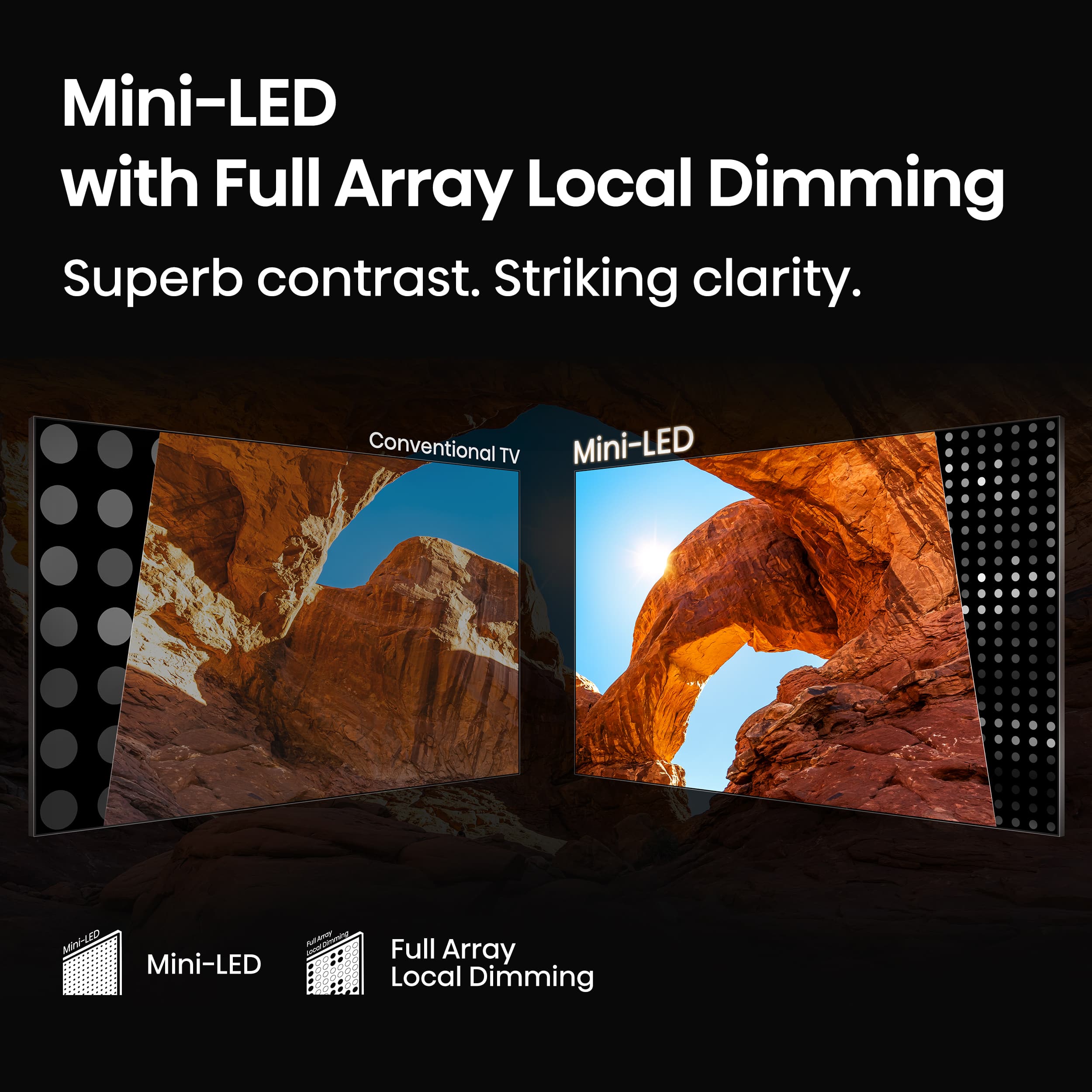
The Hisense QD7 2025, released in March 2025, takes a completely different approach. Instead of edge-lighting, it uses Mini-LED technology—thousands of tiny LEDs spread across the entire back of the panel. These LEDs are organized into local dimming zones, meaning specific areas can be brightened or darkened independently. This is the same technology that Samsung and Sony use in their premium models costing twice as much.
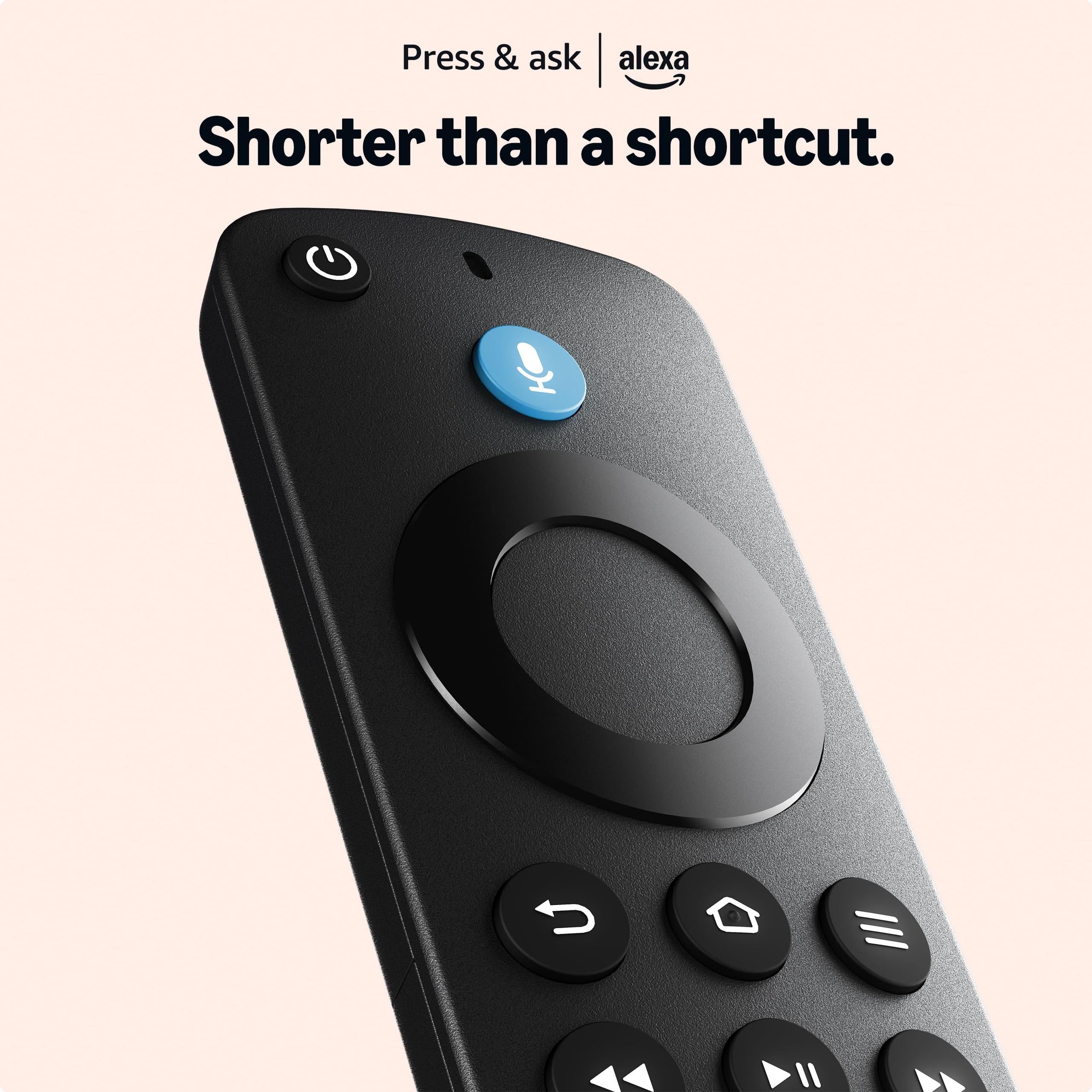
Hisense combines this with Amazon's Fire TV platform, which has become increasingly sophisticated. The interface prioritizes content discovery and integrates deeply with Amazon's ecosystem, including Alexa voice control that actually works reliably for TV functions.
This is where the technology difference becomes immediately apparent. The Hisense QD7's Mini-LED backlighting with local dimming creates a night-and-day difference in contrast performance. When you're watching a movie with both bright explosions and dark cave scenes, the Hisense can make the bright parts truly bright while keeping the dark parts genuinely dark.
The Samsung Q6F, with its edge-lit design, struggles with this fundamental challenge. Dark scenes often appear washed out or grayish because the backlighting can't turn off completely in specific areas. This limitation becomes particularly noticeable in dark room viewing, which is typically when you want your TV to perform best for movie nights.
From our research into user experiences and professional reviews, the contrast difference is substantial enough that casual viewers notice it immediately. If you've ever been annoyed by black bars on movies appearing gray instead of black, or dark scenes looking hazy, you'll appreciate what proper local dimming accomplishes.
High Dynamic Range is where modern content really shines, but not all HDR implementations are equal. The Hisense QD7 supports Dolby Vision, which is arguably the most advanced HDR format available. Dolby Vision uses dynamic metadata—information that tells the TV exactly how to display each individual scene for optimal brightness, color, and contrast. It's like having a professional colorist adjust your TV settings for every scene in a movie.
The Samsung Q6F supports HDR10+ (which also uses dynamic metadata) but lacks Dolby Vision support. While HDR10+ is technically capable, Dolby Vision has broader content support, especially from streaming services like Netflix, Disney+, and Apple TV+. This means you'll see more content that takes full advantage of the Hisense's HDR capabilities.
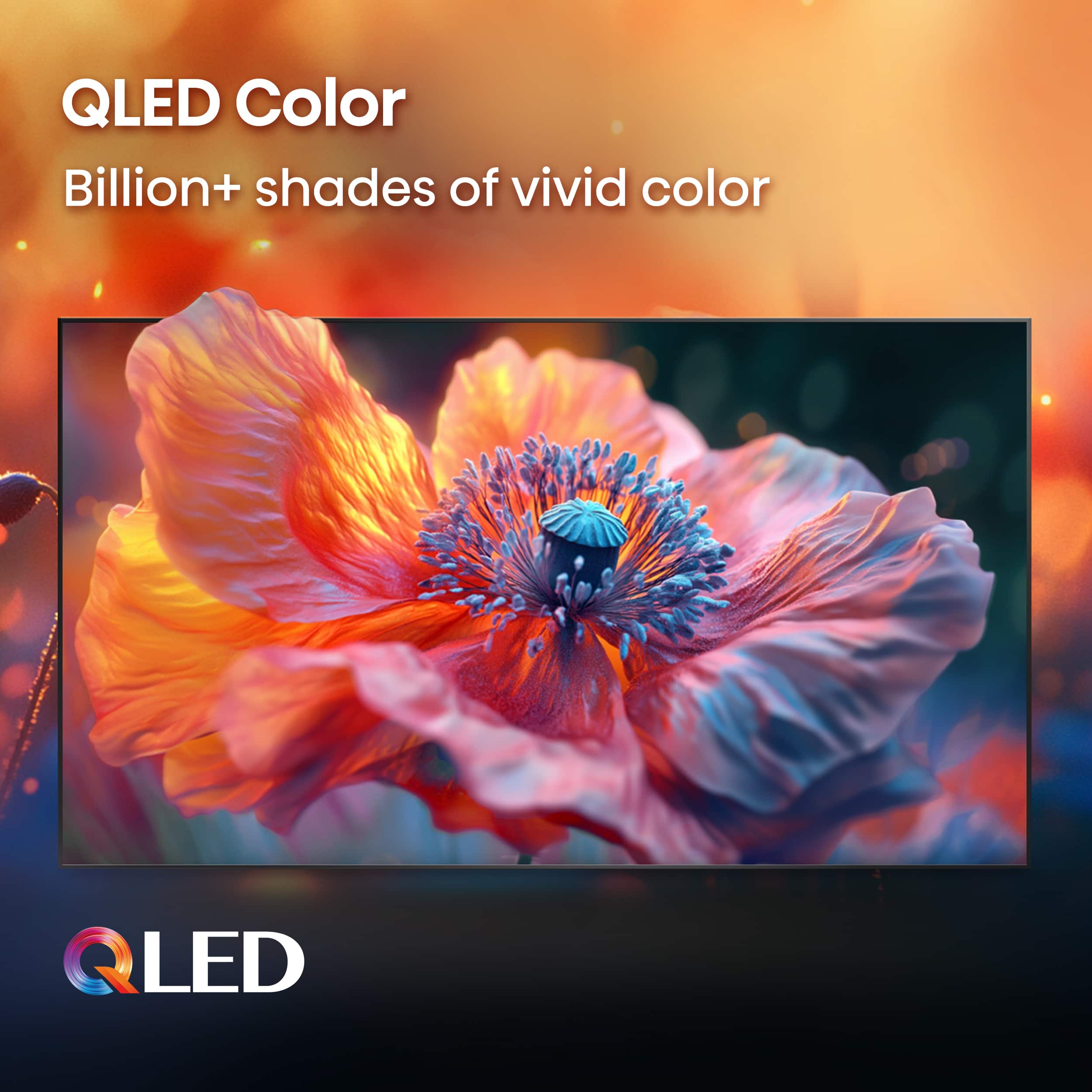
Both TVs feature quantum dot technology for color reproduction, which means they can display over a billion different colors with impressive accuracy. However, the Hisense's superior backlighting allows those colors to appear more vivid and realistic because it can control the underlying brightness more precisely.
Peak brightness—how bright the TV can get—affects usability in different lighting conditions. Based on professional measurements and user reports, both TVs achieve respectable brightness levels for their price range, though neither reaches the peak levels of premium models. The Hisense QD7 typically maintains better brightness uniformity across the screen due to its full-array backlighting, while the Samsung Q6F can show some brightness variation, particularly near the edges.
For most living rooms with normal lighting, both TVs provide adequate brightness. However, if you have large windows or bright ambient lighting, you might notice the limitations of budget-tier peak brightness on both models.
Gaming has become a crucial differentiator in modern TVs, especially with the PlayStation 5 and Xbox Series X pushing high frame rates and advanced features. This is where the Hisense QD7 completely outclasses the Samsung Q6F.
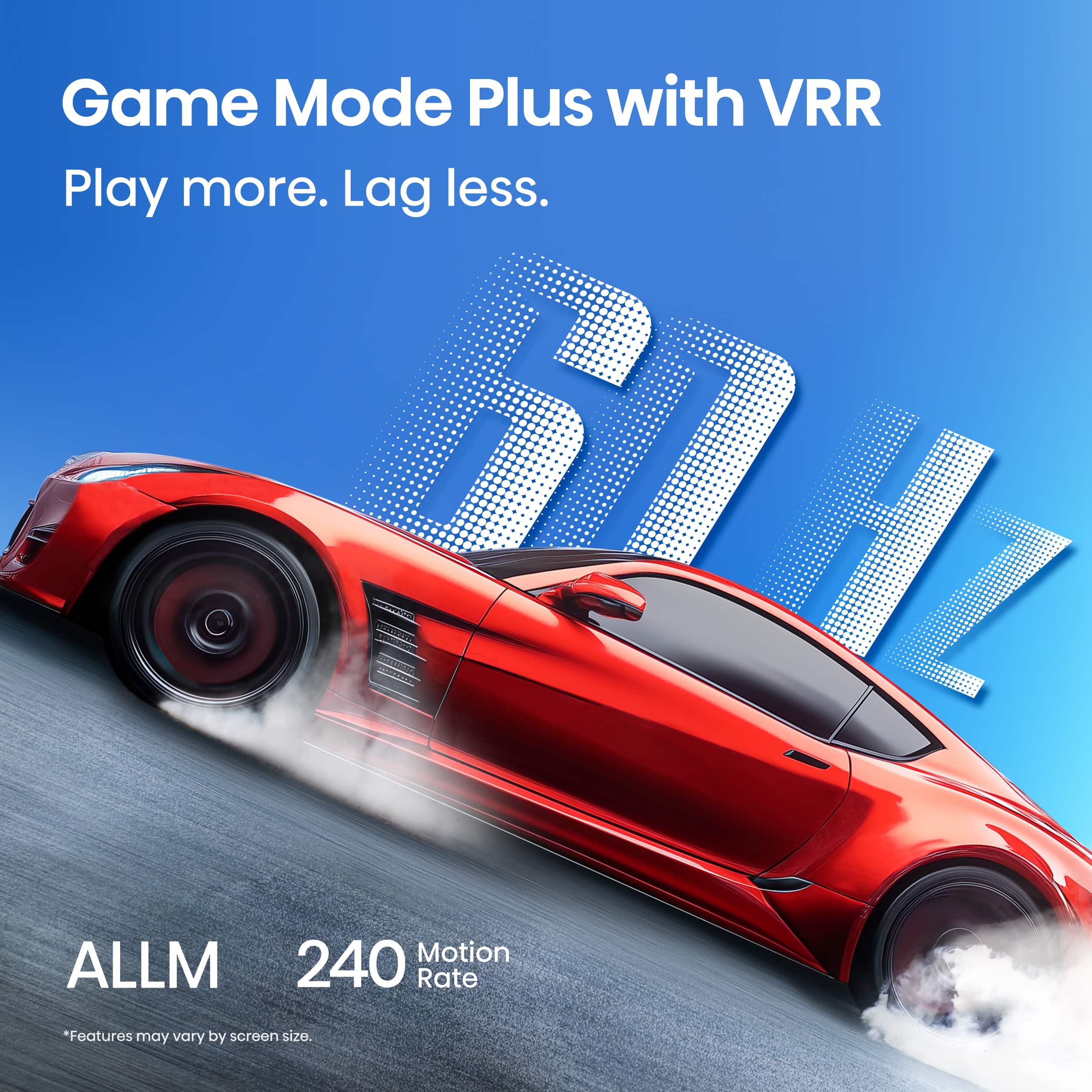
The Hisense QD7 offers 144Hz Game Mode Pro, supporting high refresh rate gaming that eliminates screen tearing (when the image appears to split or stutter). This isn't just marketing—it represents a fundamental advantage for anyone gaming on modern consoles or PCs. Games feel more responsive, motion appears smoother, and competitive gaming becomes more enjoyable.
The Samsung Q6F is limited to 60Hz, which was standard five years ago but feels outdated today. Modern consoles can output 120Hz for supported games, and that extra smoothness is immediately noticeable in fast-paced action games, sports titles, and first-person shooters.
Variable Refresh Rate (VRR) and Auto Low Latency Mode (ALLM) have become essential for serious gaming. VRR synchronizes the TV's refresh rate with your console's output, preventing stuttering when frame rates fluctuate. ALLM automatically switches the TV to its lowest-latency mode when it detects a gaming signal.
The Hisense QD7 includes both features, while the Samsung Q6F offers only basic ALLM support. If you own a PS5 or Xbox Series X, or plan to upgrade soon, this difference is significant enough to strongly favor the Hisense.
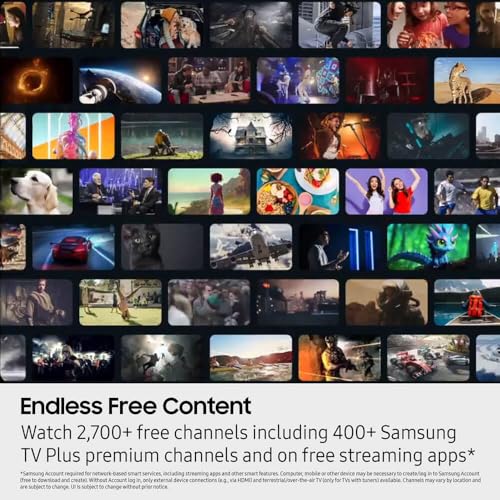
Samsung's Tizen platform has evolved into a mature, secure smart TV experience. The interface feels clean and responsive, with easy access to popular streaming apps. Samsung TV Plus offers over 1,200 free channels, which provides surprising value for cord-cutters. The platform integrates well with Samsung smartphones and smart home devices through SmartThings.
Tizen supports multiple voice assistants—Bixby, Alexa, and Google Assistant—giving you flexibility in how you control your TV. Samsung Knox security provides peace of mind for privacy-conscious users, encrypting connections and protecting personal data.
Amazon's Fire TV platform on the Hisense QD7 prioritizes content discovery and streaming integration. The interface learns your viewing habits and suggests relevant content across multiple services. Alexa integration feels more natural here since it's Amazon's own platform, with voice control that extends beyond basic TV functions to smart home control and information queries.
Fire TV's app selection is extensive, and the platform generally receives updates and new features quickly. However, some users find the interface more advertising-heavy than Tizen, with prominent placement of Amazon's own content and services.
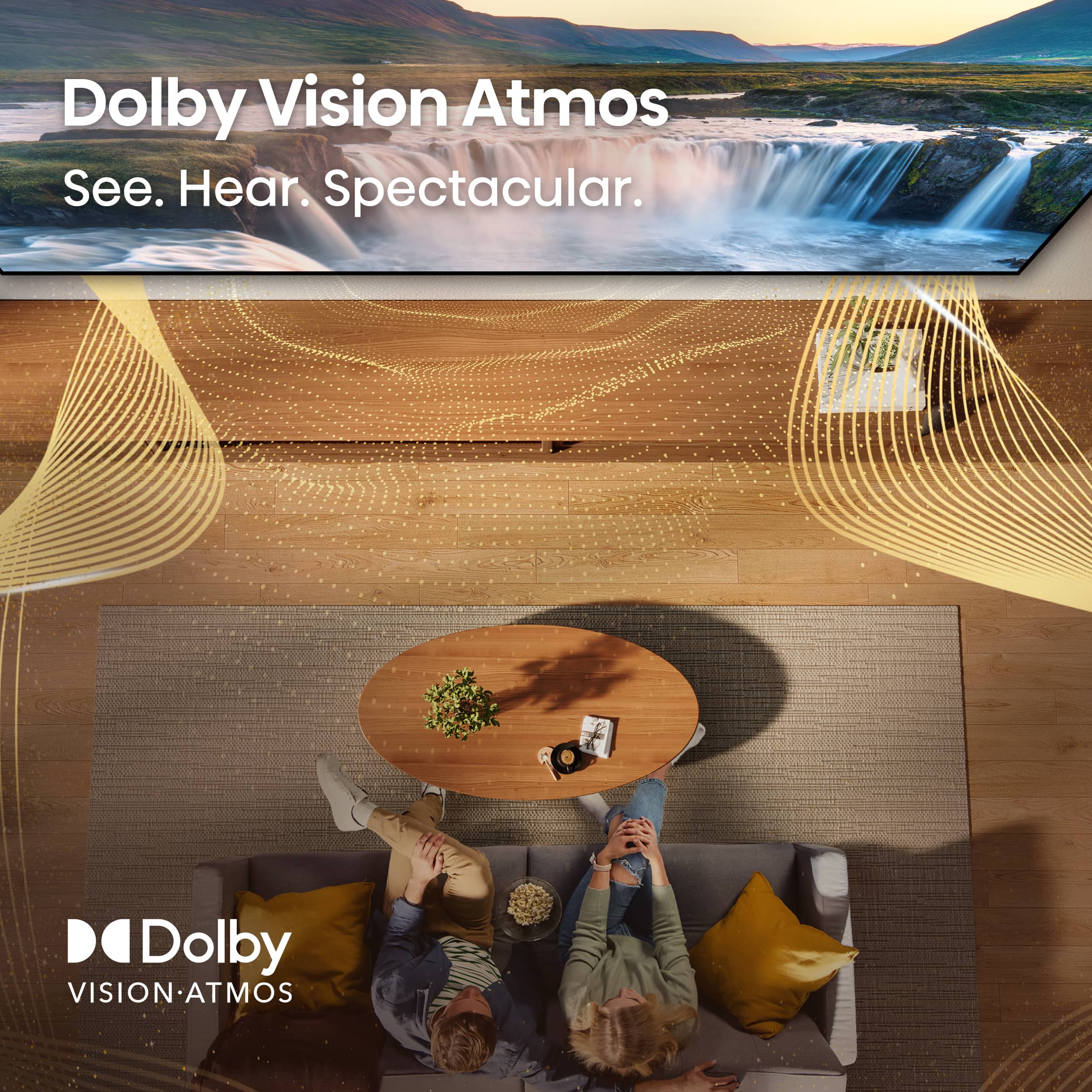
TV speakers rarely impress, but there are meaningful differences between these models. The Hisense QD7 supports Dolby Atmos, which creates a more immersive three-dimensional soundstage. While TV speakers can't replicate true Atmos surround sound, the processing does improve spatial audio perception for built-in speakers.
The Samsung Q6F uses a more traditional 2-channel audio setup without advanced spatial processing. Both TVs benefit significantly from external sound solutions, but the Hisense provides a better baseline experience for users who plan to rely on built-in audio initially.
At the time of writing, both TVs compete in the same general price segment, but they deliver vastly different value propositions. The Hisense QD7 essentially offers Mini-LED technology that typically costs $300-500 more in competing brands' lineups. This represents exceptional value for buyers prioritizing picture quality and gaming performance.
The Samsung Q6F provides solid basic performance with the reliability and support network that comes with Samsung's brand reputation. However, from a pure feature-per-dollar perspective, it's harder to justify unless Samsung ecosystem integration is a priority.
For dedicated home theater use—dark room movie watching with emphasis on cinematic experience—the Hisense QD7 is the clear winner. Its superior contrast performance makes dark scenes dramatically more engaging, while Dolby Vision support ensures you're getting the director's intended picture quality for an increasing amount of content.
The Samsung Q6F can certainly handle movie nights, but its limitations become more apparent in the controlled environment of a dedicated theater space. The edge-lit backlighting creates visible uniformity issues that are less noticeable in casual viewing but more distracting during focused movie watching.
You're already invested in Samsung's ecosystem with Galaxy phones, Samsung smart home devices, or other Samsung electronics. The seamless integration and unified control experience provides genuine convenience that's hard to replicate with mixed brands.
You prioritize brand reliability and support over cutting-edge features. Samsung's customer service network and longer track record with software updates provide peace of mind for less tech-savvy users.
Your viewing habits focus on casual content consumption rather than critical evaluation of picture quality. For background viewing, news, and daytime programming, the Q6F's limitations are less apparent.
Gaming enthusiasts who want to take full advantage of modern consoles. The 144Hz support and advanced gaming features future-proof your purchase for the current console generation.
Home theater enthusiasts who prioritize picture quality above all else. The Mini-LED technology and Dolby Vision support deliver genuinely premium visual performance at a budget price.
Value-conscious buyers who want the most advanced technology for their money. The QD7 punches well above its price class in terms of display technology.
Users who prefer Amazon's ecosystem or want robust voice control integration.
Based on our research and analysis of user experiences, the Hisense QD7 Series Mini-LED 4K Fire TV 2025 represents the better value for most buyers. Its Mini-LED technology, 144Hz gaming support, and Dolby Vision capabilities provide features typically found in much more expensive TVs.
The Samsung 65" QLED Q6F 4K Smart TV 2025 isn't a bad TV—it's competent and reliable. However, in today's competitive market, competent isn't enough when the competition offers genuinely advanced features at similar pricing.
Unless Samsung ecosystem integration is crucial to your setup, the Hisense delivers more performance, better future-proofing, and superior value. The picture quality difference is substantial enough that most users notice it immediately, and the gaming advantages make it a smart choice even for casual gamers who might upgrade their consoles in the future.
For most buyers shopping in this segment, the Hisense QD7 represents one of the best TV values available in 2025, offering premium display technology at a price that would have seemed impossible just a few years ago.
| Samsung 65" QLED Q6F 4K Smart TV 2025 | Hisense 65" QD7 Series Mini-LED 4K Fire TV 2025 |
|---|---|
| Display Technology - Core difference affecting picture quality and contrast | |
| Edge-lit LED with Quantum Dot (no local dimming) | Mini-LED with Full Array Local Dimming + Quantum Dot |
| HDR Support - Determines compatibility with premium streaming content | |
| Quantum HDR, HDR10+ (no Dolby Vision) | Dolby Vision, HDR10+, HDR10, HLG |
| Gaming Performance - Critical for console and PC gaming | |
| 60Hz refresh rate, basic Auto Game Mode | 144Hz Game Mode Pro, VRR, ALLM |
| Smart TV Platform - Affects app selection and user experience | |
| Tizen OS with Samsung Knox Security | Fire TV with built-in Alexa |
| Audio Technology - Impacts built-in speaker experience | |
| 20W 2CH speakers, Object Tracking Sound Lite | Dolby Atmos support |
| Processor - Handles upscaling and picture optimization | |
| Q4 Lite Processor | Standard processor with AI 4K upscaling |
| Voice Assistant Support - Convenience for hands-free control | |
| Bixby, Alexa, Google Assistant | Amazon Alexa (built-in) |
| Connectivity - Important for modern devices and gaming | |
| 3 HDMI ports, 1 USB, Wi-Fi 5, Bluetooth 5.3 | 4 HDMI ports, 2 USB, Wi-Fi, Bluetooth 5.0 |
| Ecosystem Integration - Matters if you own other brand devices | |
| Strong Samsung device integration, SmartThings Hub | Amazon services integration, Apple AirPlay |
| Best For - Who should choose each TV | |
| Samsung ecosystem users, basic 4K viewing, brand reliability | Gamers, home theater enthusiasts, value seekers wanting premium display tech |
The Hisense 65" QD7 Series Mini-LED 4K Fire TV 2025 delivers significantly better picture quality for movies thanks to its Mini-LED backlighting with local dimming zones. This technology provides deeper blacks and better contrast compared to the Samsung 65" QLED Q6F 4K Smart TV 2025, which uses edge-lit LED backlighting. The Hisense QD7 also supports Dolby Vision HDR, offering superior color accuracy and brightness optimization for cinematic content.
The Hisense 65" QD7 Series Mini-LED 4K Fire TV 2025 is significantly better for gaming, featuring 144Hz Game Mode Pro, Variable Refresh Rate (VRR), and Auto Low Latency Mode (ALLM). These features eliminate screen tearing and provide smoother gameplay. The Samsung 65" QLED Q6F 4K Smart TV 2025 is limited to 60Hz with basic gaming features, making the Hisense QD7 the clear choice for serious gamers.
The primary difference is display technology: the Hisense 65" QD7 Series Mini-LED 4K Fire TV 2025 uses advanced Mini-LED backlighting with local dimming for superior contrast, while the Samsung 65" QLED Q6F 4K Smart TV 2025 uses traditional edge-lit LED backlighting. This makes the Hisense QD7 better for dark room viewing and overall picture quality.
Both TVs offer excellent smart features but with different approaches. The Samsung 65" QLED Q6F 4K Smart TV 2025 runs Tizen OS with Samsung Knox security and integrates well with Samsung devices. The Hisense 65" QD7 Series Mini-LED 4K Fire TV 2025 uses Amazon Fire TV with built-in Alexa and strong content discovery. The choice depends on whether you prefer Samsung's ecosystem or Amazon's platform.
The Hisense 65" QD7 Series Mini-LED 4K Fire TV 2025 offers exceptional value by providing Mini-LED technology typically found in much more expensive TVs. It includes premium features like Dolby Vision, 144Hz gaming, and Dolby Atmos at a competitive price point. The Samsung 65" QLED Q6F 4K Smart TV 2025 provides solid basic performance but fewer advanced features for similar pricing.
Both the Samsung 65" QLED Q6F 4K Smart TV 2025 and Hisense 65" QD7 Series Mini-LED 4K Fire TV 2025 offer adequate brightness for most living rooms with normal lighting. However, neither reaches premium-level peak brightness for extremely bright rooms. The Hisense QD7 maintains better brightness uniformity across the screen due to its full-array backlighting design.
The Hisense 65" QD7 Series Mini-LED 4K Fire TV 2025 has superior audio features with Dolby Atmos support, creating a more immersive three-dimensional soundstage. The Samsung 65" QLED Q6F 4K Smart TV 2025 offers decent 20W speakers with Object Tracking Sound Lite but lacks advanced spatial audio processing. Both TVs benefit from external soundbars for optimal audio experience.
The Hisense 65" QD7 Series Mini-LED 4K Fire TV 2025 supports more HDR formats including Dolby Vision, HDR10+, HDR10, and HLG. The Samsung 65" QLED Q6F 4K Smart TV 2025 supports Quantum HDR and HDR10+ but lacks Dolby Vision. Since many streaming services use Dolby Vision, the Hisense QD7 offers broader compatibility with premium content.
The Hisense 65" QD7 Series Mini-LED 4K Fire TV 2025 excels in dark rooms due to its Mini-LED local dimming technology, which produces true blacks and excellent contrast. The Samsung 65" QLED Q6F 4K Smart TV 2025 struggles with dark room performance as its edge-lit backlighting can make black scenes appear grayish. For home theater setups, the Hisense QD7 is the superior choice.
The Hisense 65" QD7 Series Mini-LED 4K Fire TV 2025 offers more connectivity with 4 HDMI ports and 2 USB ports compared to the Samsung 65" QLED Q6F 4K Smart TV 2025's 3 HDMI ports and 1 USB port. Both TVs include Wi-Fi and Bluetooth, but the additional ports on the Hisense QD7 provide more flexibility for connecting multiple devices.
The Samsung 65" QLED Q6F 4K Smart TV 2025 benefits from Samsung's established reputation for reliability and extensive customer support network. However, Hisense has significantly improved its build quality and support in recent years. Both the Samsung Q6F and Hisense QD7 come with standard warranties, though Samsung typically offers more service centers and longer software update support.
Choose the Samsung 65" QLED Q6F 4K Smart TV 2025 if you prioritize Samsung ecosystem integration and want reliable basic 4K performance. Select the Hisense 65" QD7 Series Mini-LED 4K Fire TV 2025 if you want superior picture quality, gaming performance, and premium features at an excellent value. For most buyers, the Hisense QD7 offers more advanced technology and better overall performance.
We've done our best to create useful and informative comparisons to help you decide what product to buy. Our research uses advanced automated methods to create this comparison and perfection is not possible - please contact us for corrections or questions. These are the sites we've researched in the creation of this article: tomsguide.com - bestbuy.com - samsung.com - rtings.com - youtube.com - rtings.com - bestbuy.com - samsung.com - samsung.com - samsung.com - manuals.plus - shopjetson.com - samsung.com - samsung.com - samsung.com - samsung.com - bestbuy.com - jefflynch.com - bestbuy.com - custrevs.com - youtube.com - bestbuy.com - rtings.com - youtube.com - rtings.com - pcrichard.com - bestbuy.com - pcrichard.com - camelcamelcamel.com - amazonfiretv.blog - hisense-usa.com - hisense-usa.com - hisense-usa.com - bestbuy.com - leaseville.com - youtube.com - bestbuy.com - flatpanelshd.com

Privacy Policy
Terms and Conditions - Affiliate Policy
Home Security
© Copyright 2008-2026.
11816 Inwood Rd #1211, Dallas, TX 75244