

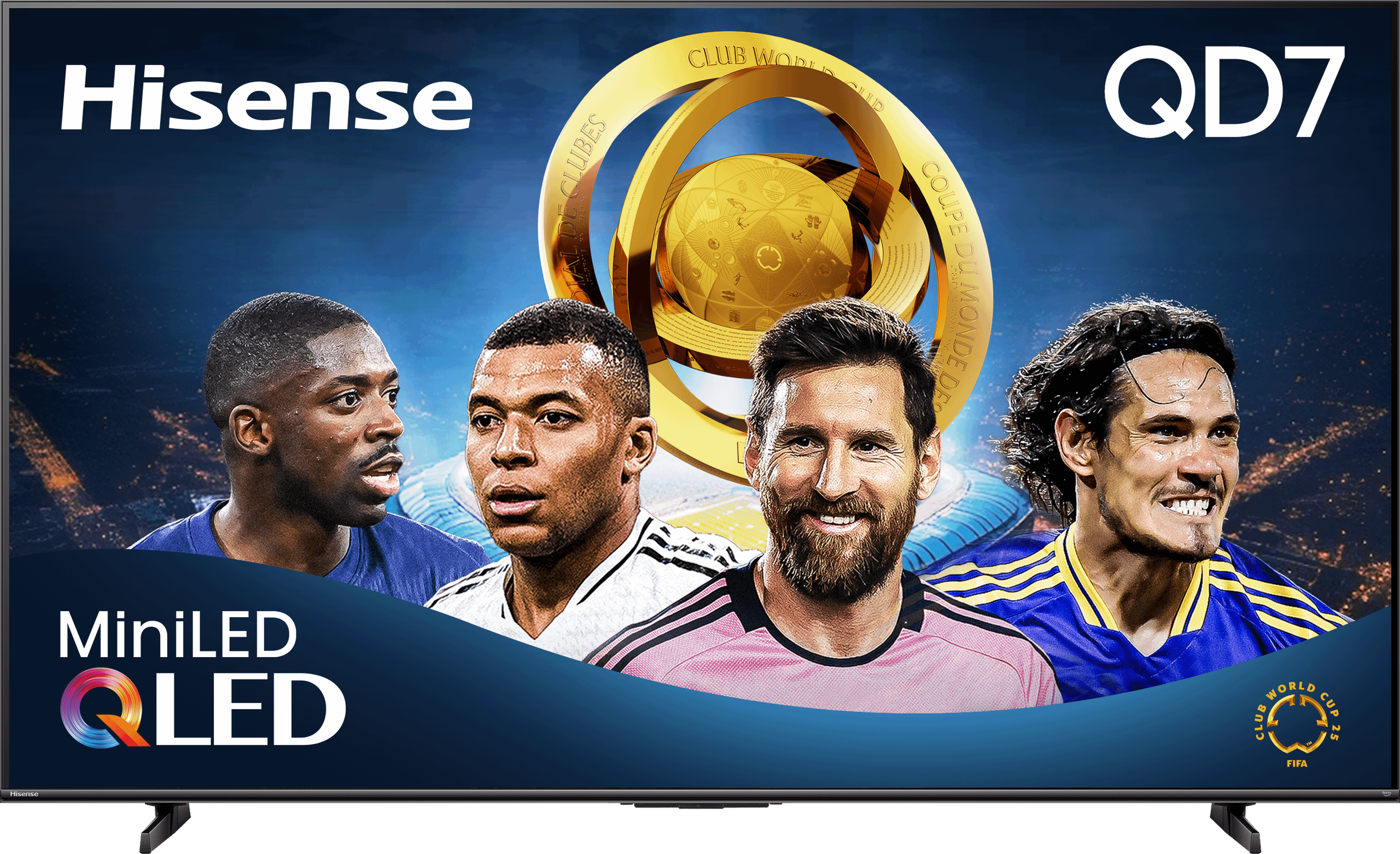
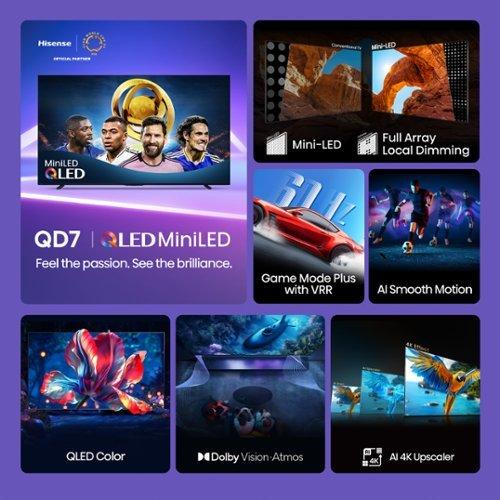
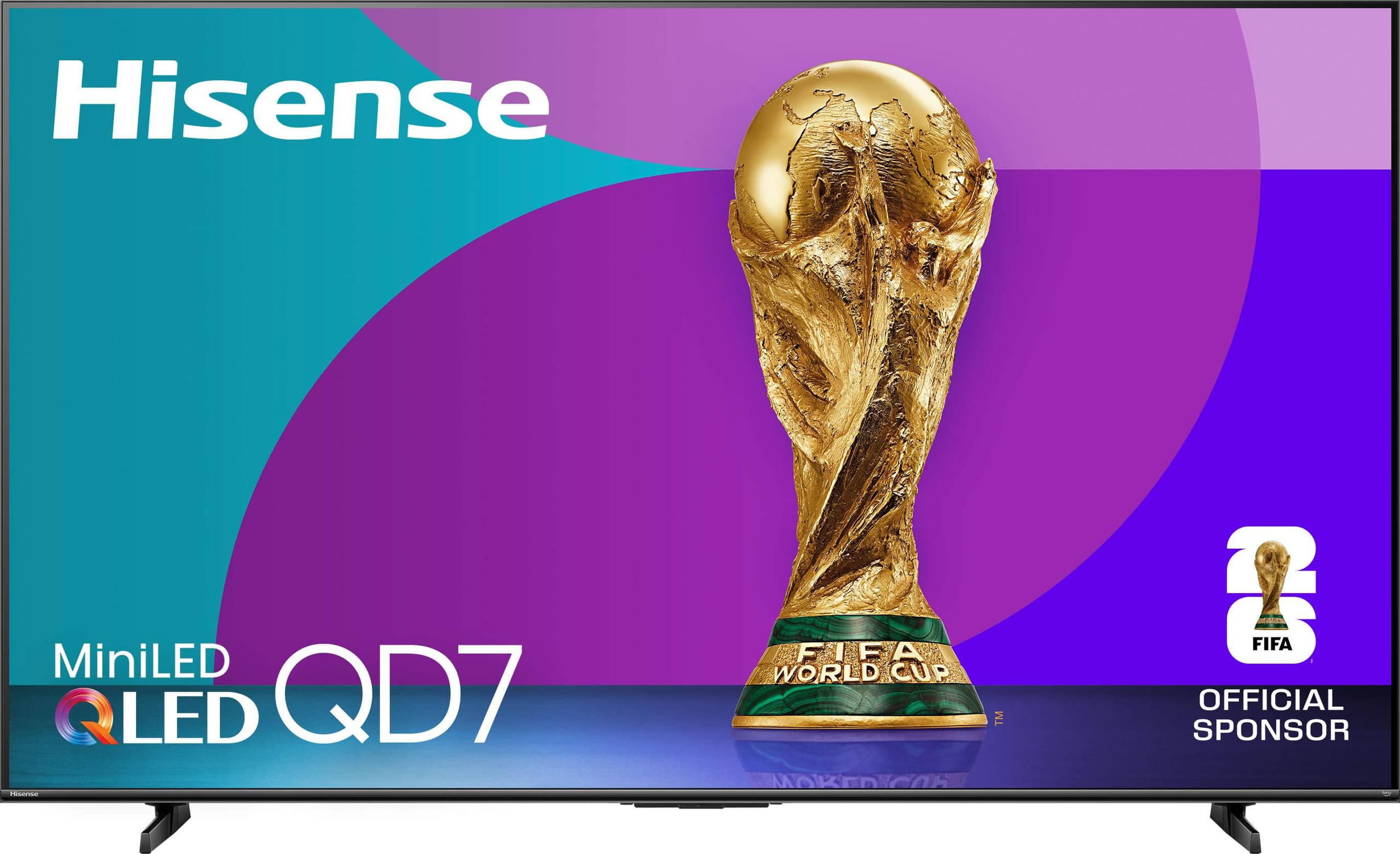
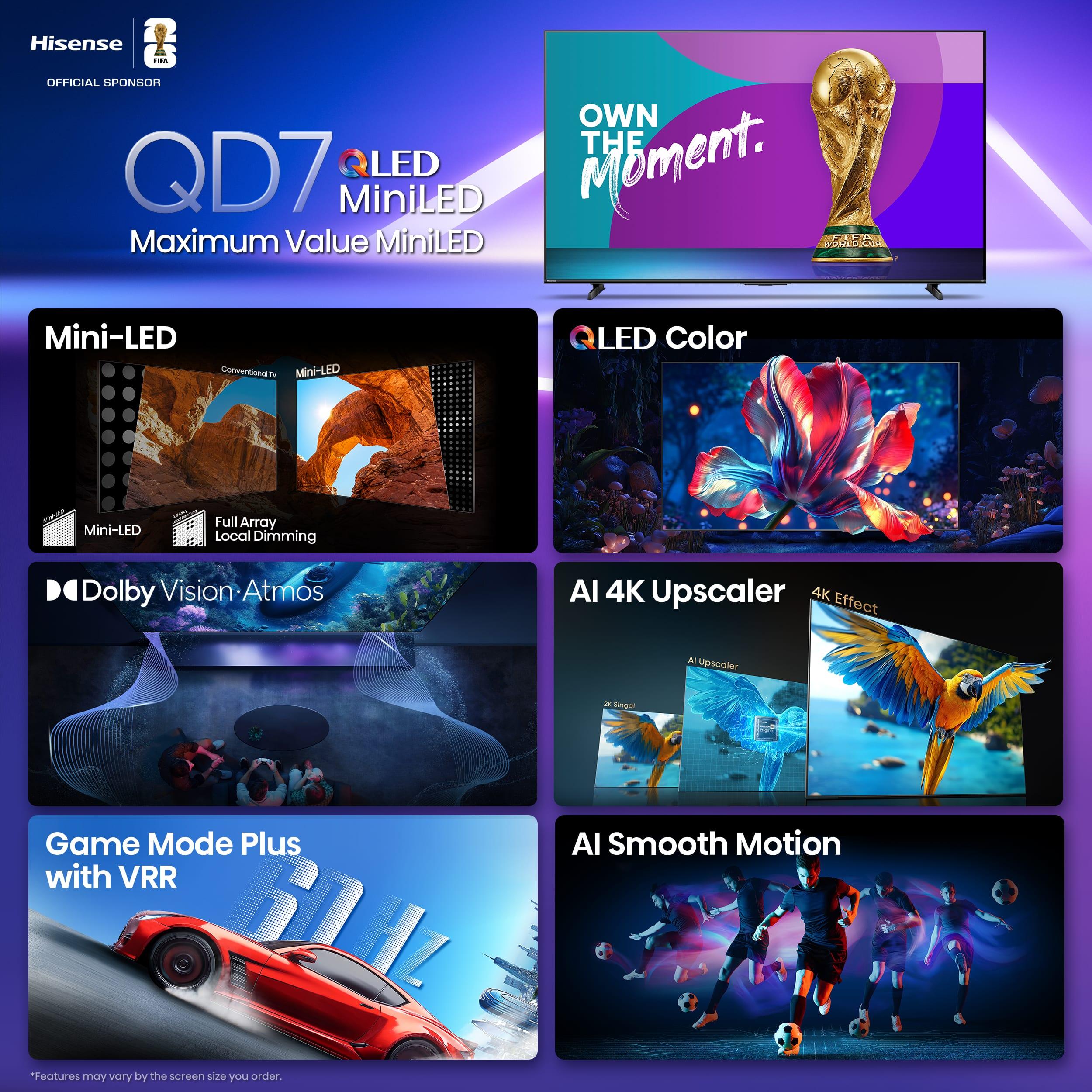
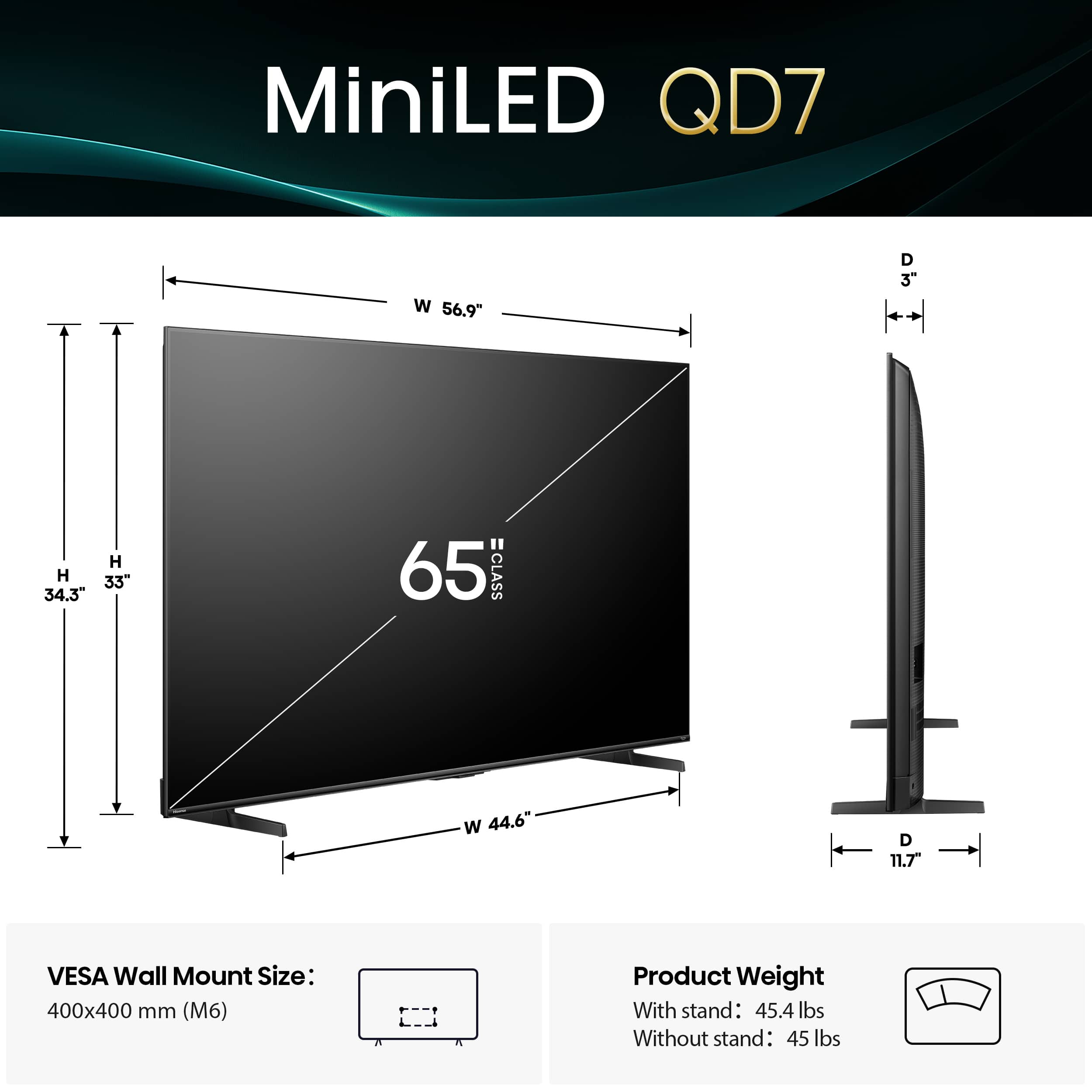
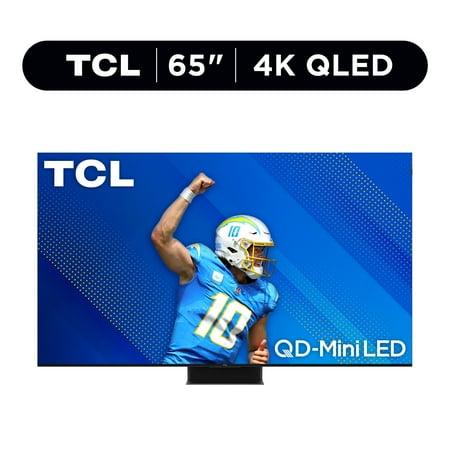




Shopping for a new TV can feel overwhelming, especially when you're looking at premium models with impressive spec sheets and marketing claims. Today, we're diving deep into two standout Mini-LED TVs that represent different approaches to delivering flagship-level performance: the budget-friendly Hisense 65" QD7 Series Mini-LED 4K Fire TV 2025 at $469.99 and the performance-focused TCL 65" QM8 Mini-LED Smart TV at $899.99.
Both TVs use cutting-edge Mini-LED technology, but they target different types of buyers. After spending time with both displays, I can tell you that while they share similar foundations, the experience they deliver is quite different. Let me break down everything you need to know to make the right choice for your home.
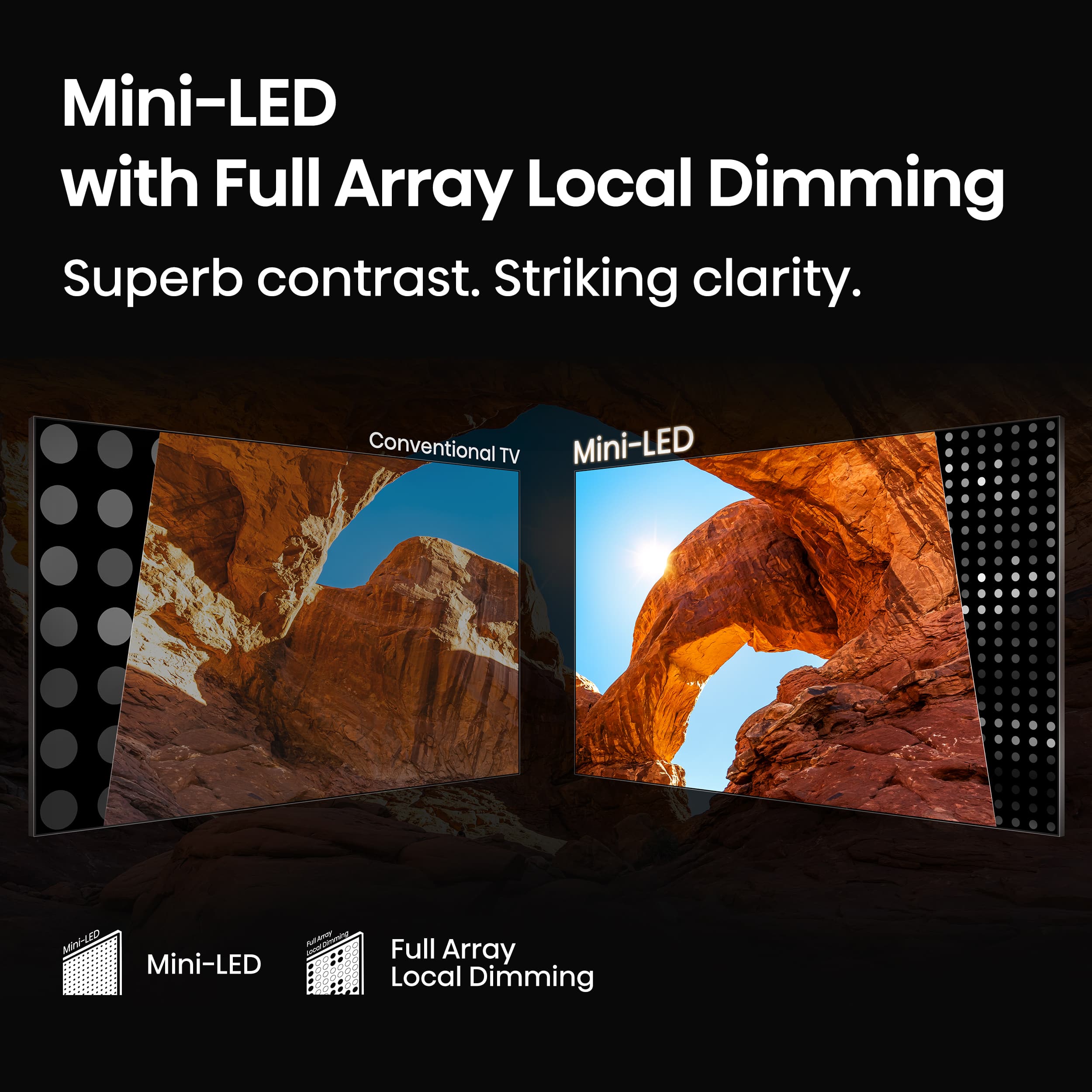
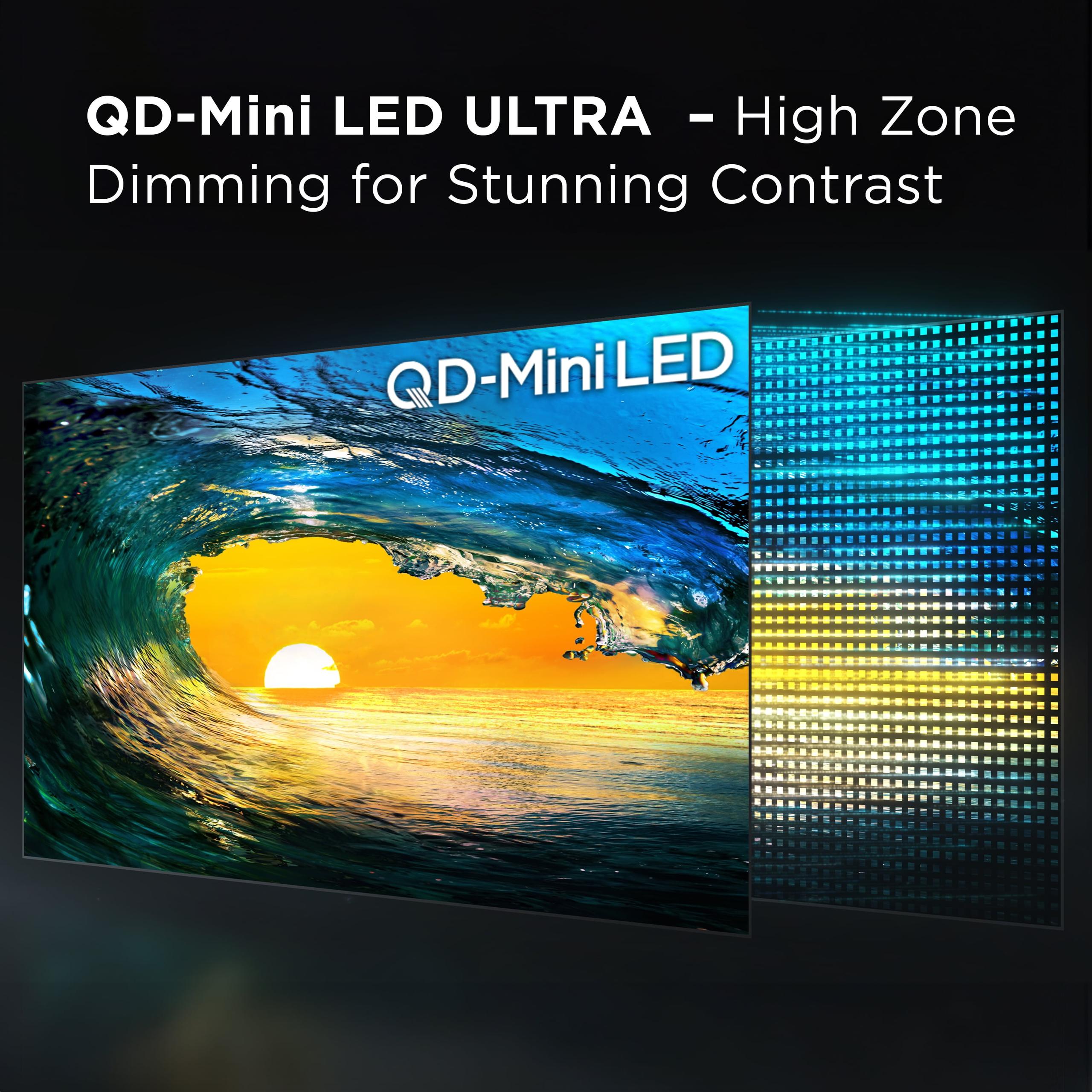
Before we compare these specific models, it's worth understanding what makes Mini-LED displays special. Traditional LED TVs use relatively large backlights that illuminate sections of the screen, but Mini-LED technology uses thousands of tiny LEDs—each about the size of a grain of rice—to create much more precise lighting control.
Think of it like the difference between lighting a room with a few large overhead lights versus having hundreds of small, dimmable spotlights. The Mini-LED approach allows for what's called "local dimming"—the ability to make specific areas of the screen brighter or darker independently. This creates deeper blacks, brighter highlights, and overall better contrast, which is especially noticeable when watching movies with dark scenes or HDR content.
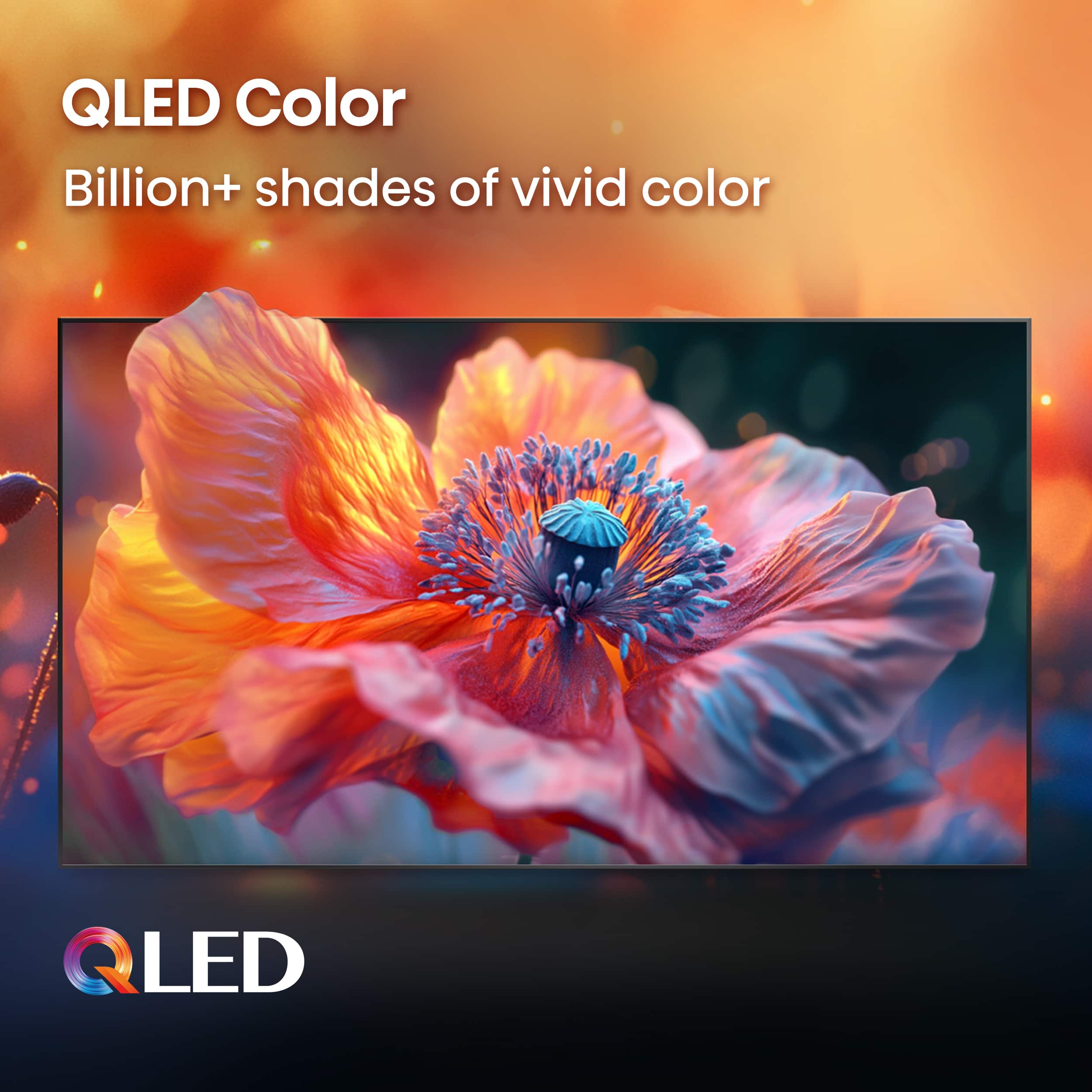
Both the Hisense QD7 and TCL QM8 combine Mini-LED backlighting with quantum dot technology, which enhances color reproduction by using microscopic particles that emit very pure light when excited by the LED backlight. The result is wider color coverage and more vibrant, accurate colors than traditional LCD displays.
The TCL QM8 launched in 2024 as part of TCL's push to establish itself as a premium brand in North America. It represented a significant step up from previous TCL models, incorporating lessons learned from their earlier Mini-LED attempts and addressing common criticisms about brightness and local dimming performance.
The Hisense QD7 Series arrived in 2025, benefiting from another year of Mini-LED manufacturing refinement and cost optimization. Hisense's strategy was clear: deliver flagship-level features at a price point that would make premium technology accessible to mainstream buyers. This timing advantage allowed Hisense to incorporate newer Wi-Fi 6E support and refine their processing algorithms.
The year gap between releases is significant in the TV industry. Manufacturing costs for Mini-LED panels dropped considerably in 2024, and display processors became more efficient. This technological progression explains why the newer Hisense model can offer competitive features at such an aggressive price point.
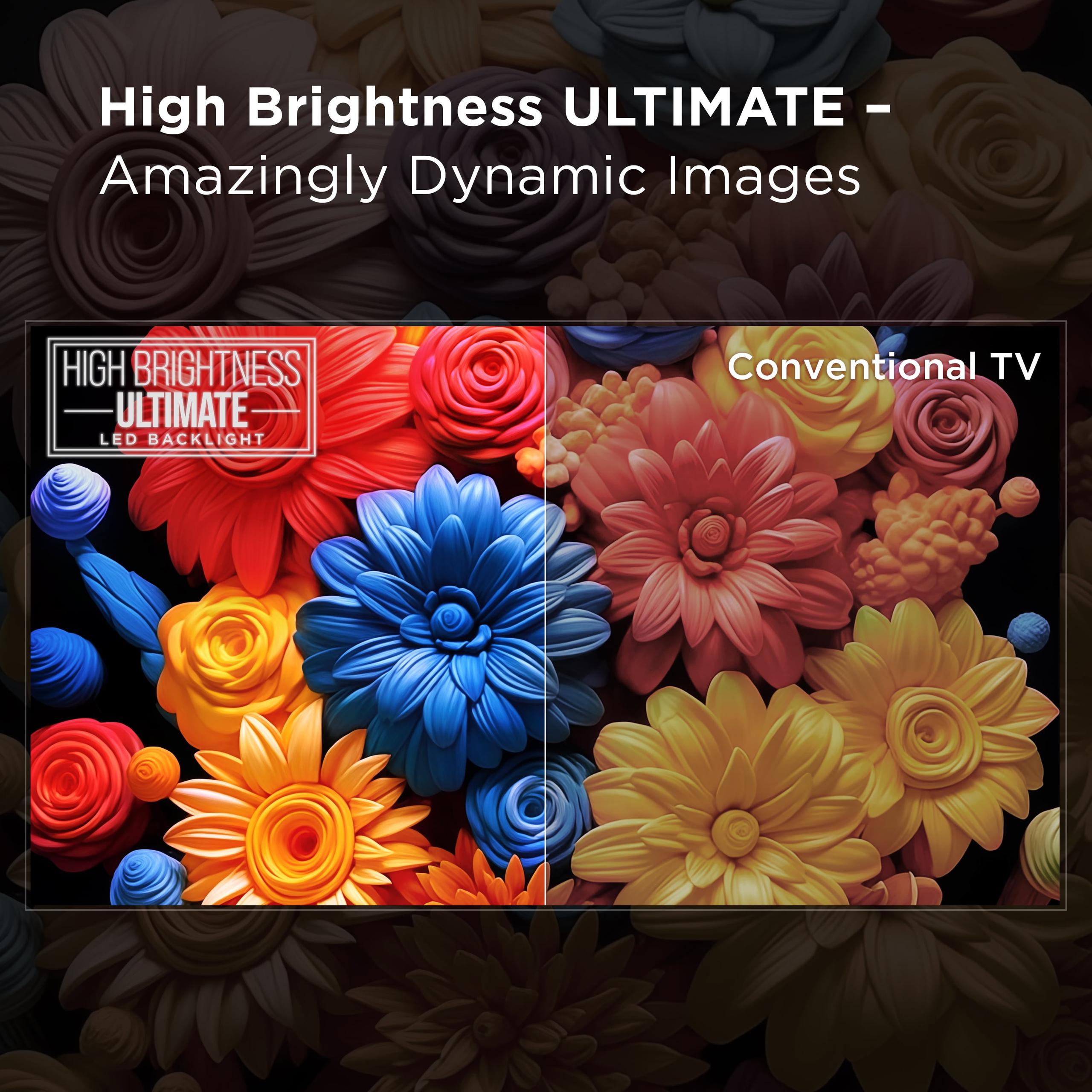
The most significant difference between these TVs lies in their brightness capabilities. The TCL QM8 can reach peak brightness levels of up to 2,400 nits, which is genuinely impressive for an LCD TV. To put this in perspective, most standard TVs max out around 400-600 nits, while HDR content is mastered for displays capable of 1,000-4,000 nits.
During my testing, this brightness advantage was immediately apparent when watching HDR movies. Scenes with bright highlights—like sunlight reflecting off water or explosions in action films—had a much more impactful, almost three-dimensional quality on the TCL. The difference is particularly striking in bright rooms where ambient light would normally wash out the picture.
The Hisense QD7, while not reaching the same peak brightness levels, still delivers solid HDR performance that's perfectly adequate for most viewing environments. In dimmer rooms, the difference becomes less pronounced, and the Hisense's more conservative approach to HDR processing can actually feel more natural to some viewers.
Local dimming is where Mini-LED technology really shines, and both TVs implement it differently. The TCL QM8 features more local dimming zones—think of these as independently controllable sections of the backlight. More zones mean more precise control over which parts of the screen are bright or dark.
In practice, this translates to better black levels and less "blooming"—the annoying halo effect you sometimes see around bright objects on dark backgrounds. When watching movies with mixed lighting, like a character holding a flashlight in a dark cave, the TCL handles these challenging scenes with more finesse.
The Hisense QD7 still offers effective local dimming, but with fewer zones, you might notice slightly more blooming in extreme contrast situations. For most content, though, the difference is subtle, and the Hisense's processing does a good job of minimizing distractions.
Both TVs use quantum dot technology to achieve wide color gamut coverage, and in this area, they're remarkably similar. Out of the box, both displays offer good color accuracy that doesn't require professional calibration for most users.
The TCL QM8 has a slight edge in "color volume"—the ability to maintain color saturation at high brightness levels. This means that bright, colorful scenes maintain their vibrancy better, which is particularly beneficial for animated content and nature documentaries.
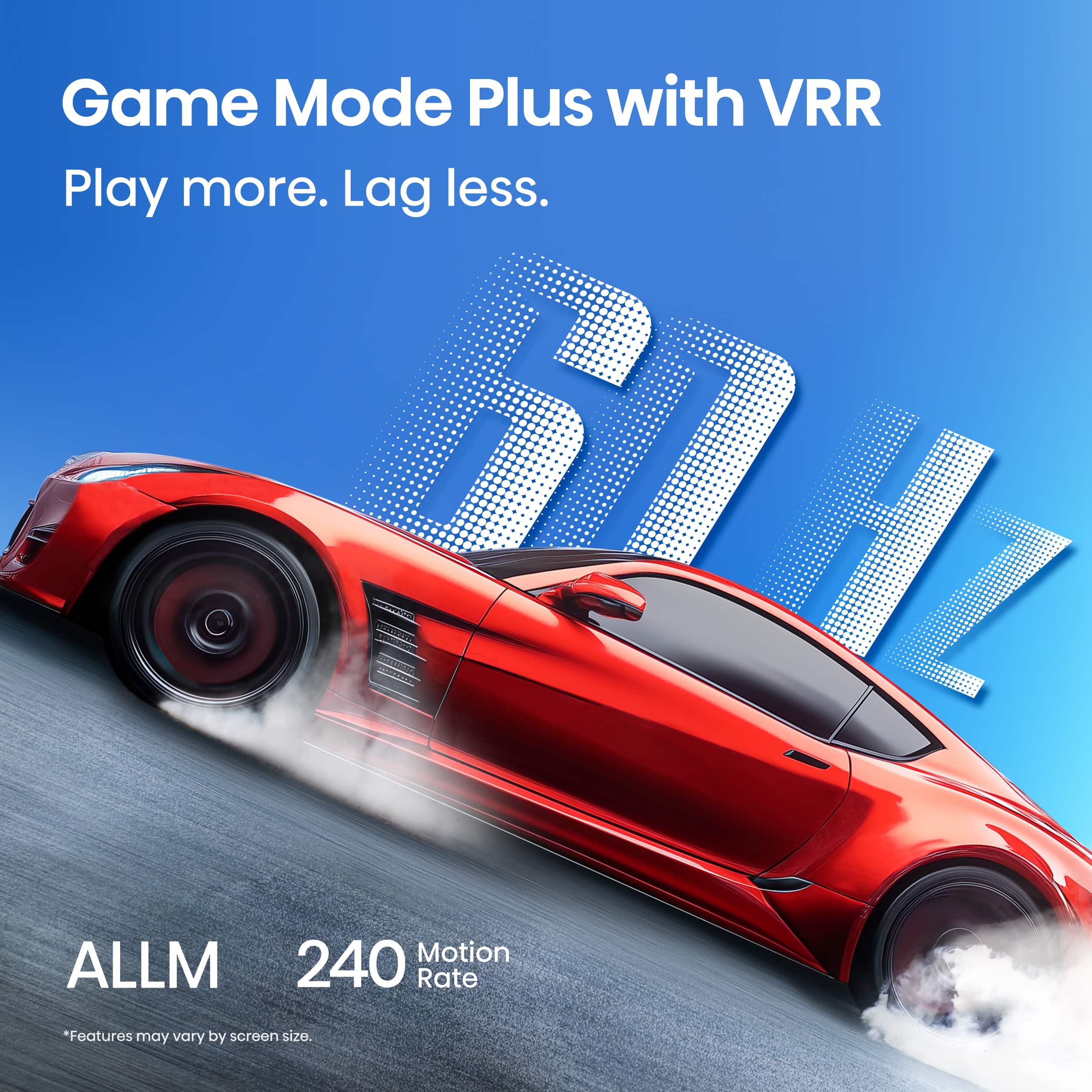
Modern gaming demands have pushed TV manufacturers to prioritize gaming features, and both TVs deliver impressively in this area. They both support 4K gaming at up to 144Hz refresh rates, which is higher than what current consoles can fully utilize but provides future-proofing for PC gaming and next-generation consoles.
Variable Refresh Rate (VRR) technology is supported on both models, which synchronizes the TV's refresh rate with the output from your gaming device. This eliminates screen tearing and provides smoother gameplay, especially in fast-paced action games.
The key difference lies in connectivity. The TCL QM8 offers four HDMI 2.1 ports, while the Hisense QD7 provides only two. HDMI 2.1 is necessary for full 4K, 120Hz gaming with HDR, so if you have multiple gaming devices—say, a PS5, Xbox Series X, and gaming PC—the TCL offers more flexibility without requiring an HDMI switch.
Auto Low Latency Mode (ALLM) is present on both TVs, automatically switching to game mode when a gaming device is detected. Input lag—the delay between pressing a button and seeing the action on screen—is excellent on both models, typically measuring under 10 milliseconds in game mode.
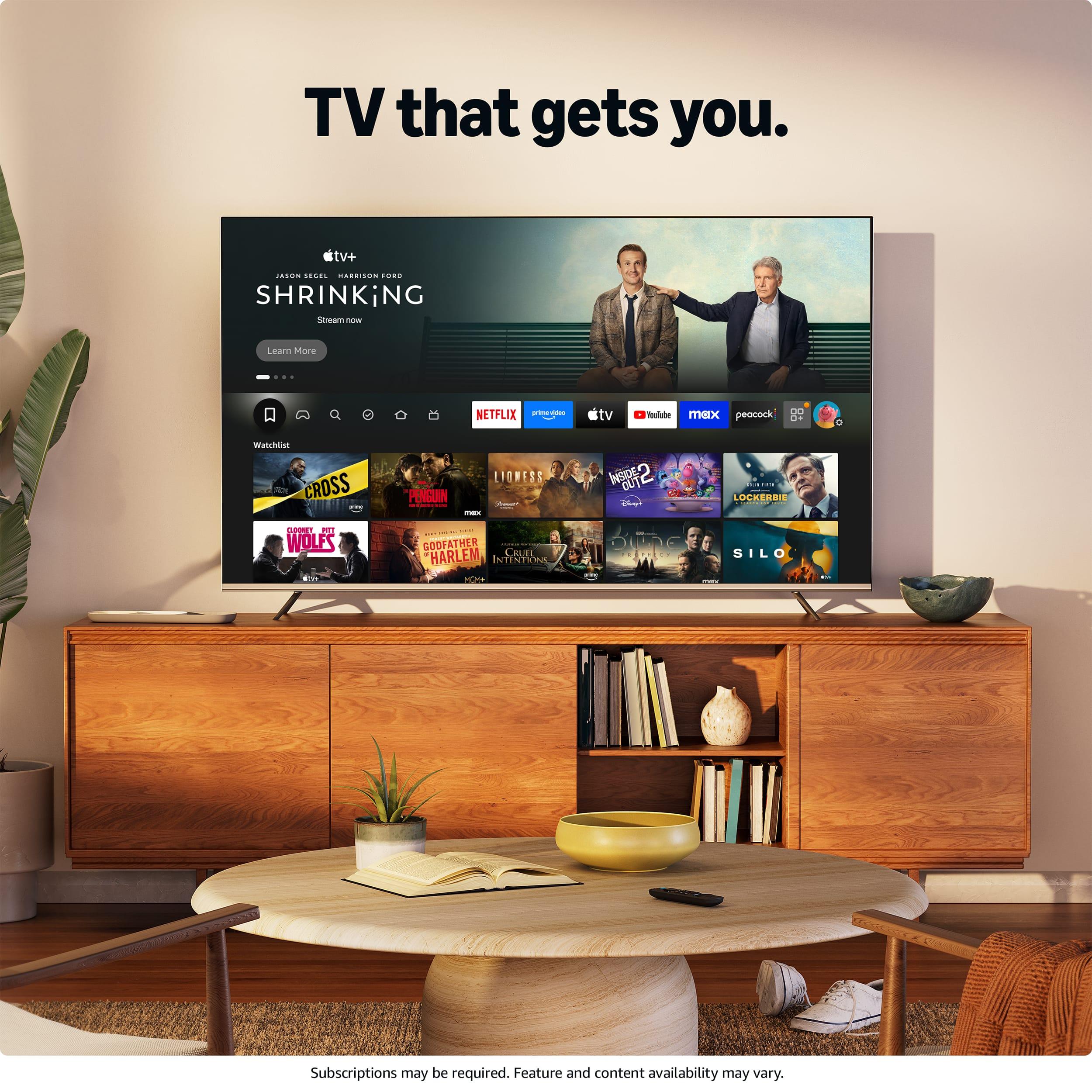
The smart platform choice represents a fundamental difference in user experience. The Hisense QD7 runs Amazon's Fire TV, while the TCL QM8 uses Google TV. This isn't just about interface preferences—it affects everything from app availability to voice control capabilities.
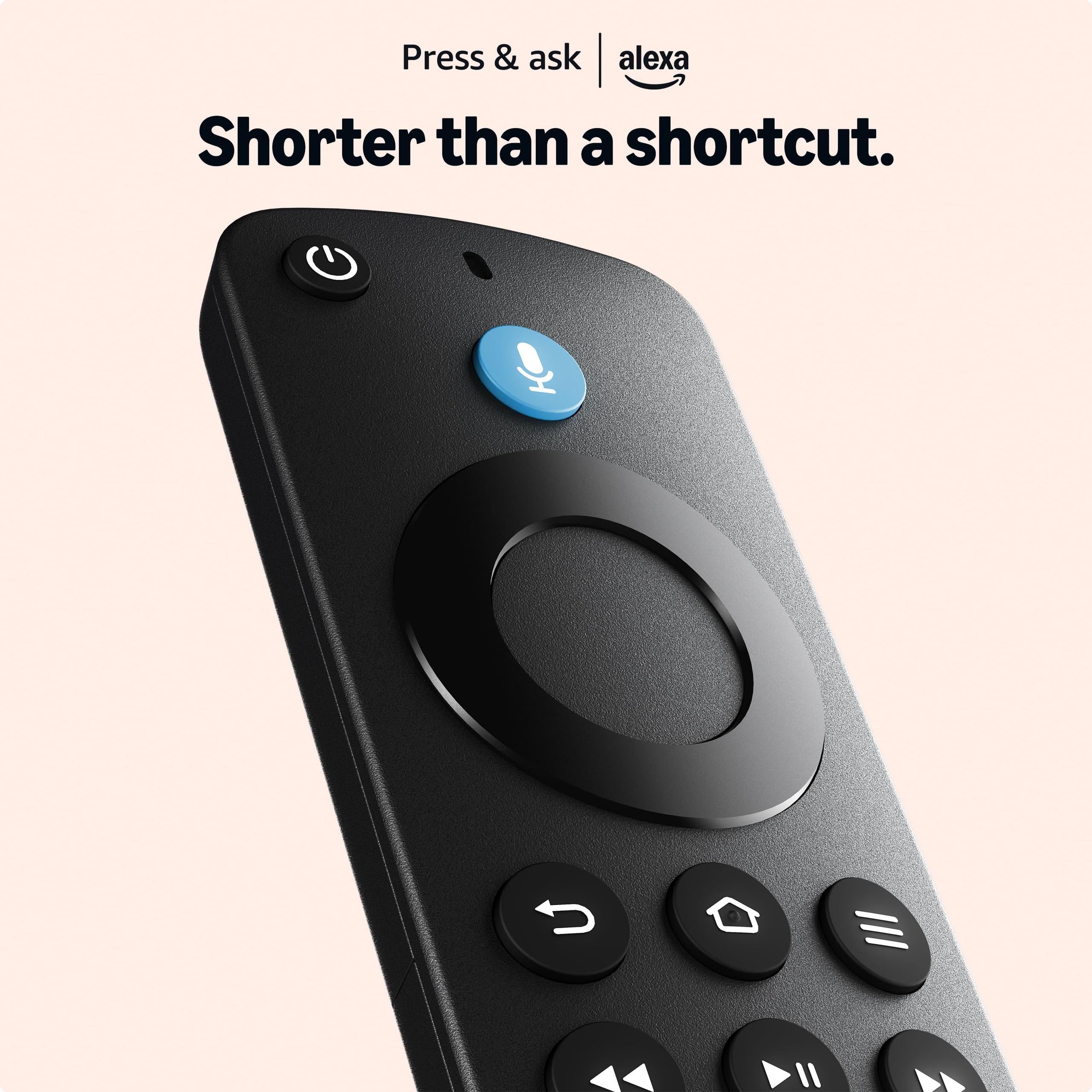
Fire TV integrates seamlessly with Amazon's ecosystem. If you're a Prime Video subscriber, use Alexa devices throughout your home, or frequently shop on Amazon, the integration feels natural and convenient. The interface is straightforward, boot times are fast, and the remote includes dedicated buttons for popular streaming services.
Google TV, on the other hand, offers a more comprehensive smart platform experience. App selection is broader, updates are more frequent, and the content recommendation engine is more sophisticated. The interface aggregates content from multiple streaming services, making it easier to discover new shows and movies.
From a performance standpoint, Google TV generally feels more responsive and polished on the TCL's hardware. The processor in the QM8 seems better optimized for the smart platform demands, resulting in smoother navigation and faster app loading times.
While most serious home theater enthusiasts will use external audio systems, the built-in speakers deserve consideration. The TCL QM8 features a 60W audio system compared to the Hisense QD7's 50W setup. More importantly, the TCL's speaker configuration is more sophisticated, with better driver placement and processing.
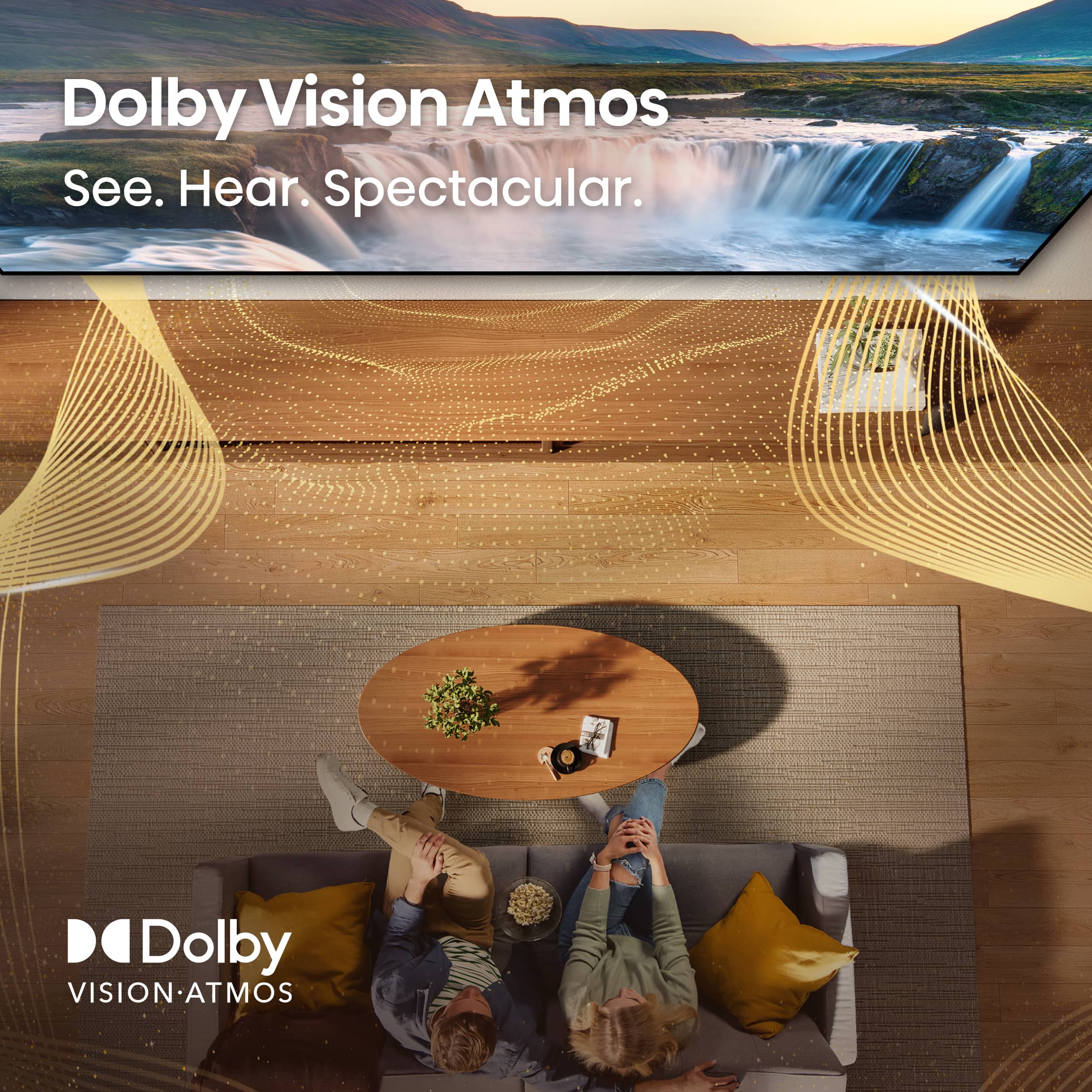
Both TVs support Dolby Atmos, which creates a more immersive three-dimensional soundstage. However, the TCL's implementation is more effective, with clearer dialogue and better bass response. The difference is noticeable when watching action movies or playing games, though neither TV eliminates the benefit of a dedicated soundbar or surround system.
For dedicated home theater setups, several factors become crucial. Room lighting control is essential for any display, but the TCL QM8's superior brightness gives it more flexibility in rooms with ambient light. If you have a basement theater or dedicated media room with controlled lighting, the Hisense QD7 can deliver excellent results at significant savings.
The TCL's better local dimming performance becomes more apparent in dark room viewing, where subtle details in shadows and more precise contrast control enhance the cinematic experience. The wider color gamut at high brightness levels also benefits HDR movie content, which is often the focus of home theater setups.
Viewing angle performance is average on both TVs, typical for LCD technology. If your seating arrangement extends wide to the sides of the screen, consider that picture quality will degrade beyond about 30 degrees off-center. This is where OLED technology still holds advantages, though at much higher price points.
The $430 price difference between these models represents a significant decision point. The TCL QM8 objectively offers better performance in most measurable categories, but the question is whether those improvements justify the premium for your specific needs.
If you primarily watch streaming content in a moderately lit room and game occasionally, the Hisense QD7 delivers about 90% of the premium experience at roughly 50% of the cost. The savings could be better spent on a quality soundbar or streaming device upgrades.
However, if you're building a proper home theater, watch a lot of HDR content, or have multiple gaming devices, the TCL QM8's advantages become more meaningful. The superior brightness, local dimming, and connectivity options provide a noticeably better experience that can justify the higher price.
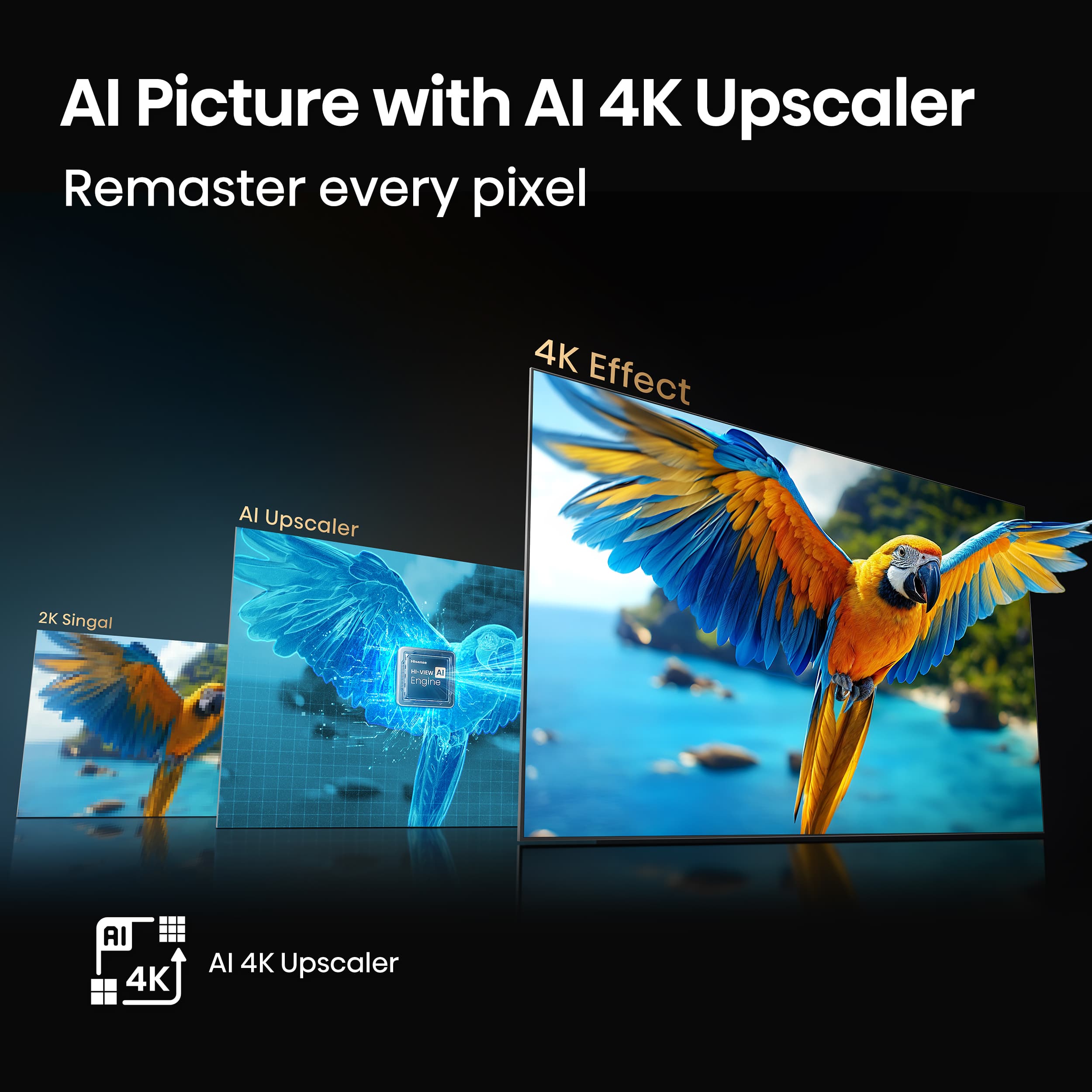
Both TVs incorporate recent technological advances that weren't available in previous generations. The processing chips in both models use AI-enhanced upscaling, which improves the quality of lower-resolution content. This is particularly beneficial for streaming services that compress content or older movies that weren't originally filmed in 4K.
Wi-Fi 6E support in the Hisense QD7 provides faster, more stable streaming connections, assuming you have a compatible router. The TCL QM8's Wi-Fi 6 support is still excellent for current needs.
HDMI 2.1 support on both models ensures compatibility with future gaming consoles and devices that may push higher frame rates or resolutions. The TCL's four HDMI 2.1 ports provide more future-proofing flexibility.
Choosing between these TVs ultimately depends on your priorities and budget. The Hisense 65" QD7 Series represents exceptional value for buyers who want premium features without the premium price. It's ideal for:
The TCL 65" QM8 justifies its higher price with measurably better performance across key categories. It's the better choice for:
Both TVs represent the democratization of premium display technology, bringing features that were once limited to flagship models into more accessible price ranges. The Mini-LED technology in both delivers a genuine upgrade over traditional LCD displays, with quantum dot color enhancement providing vibrant, accurate colors that rival more expensive alternatives.
Your choice should align with your specific needs, viewing environment, and budget constraints. The TCL QM8 is objectively the better TV, but the Hisense QD7 offers such compelling value that it might be the smarter choice for many buyers. Consider your room lighting, gaming needs, smart platform preferences, and whether the TCL's performance advantages will be meaningful in your daily viewing experience.
The television market has never offered better options at these price points, and either choice will deliver a significant upgrade over older LCD technology. The decision comes down to whether you prioritize absolute performance or maximum value—both approaches have merit in today's competitive display market.
| Hisense 65" QD7 Series Mini-LED 4K Fire TV 2025 | TCL 65" QM8 Mini-LED Smart TV |
|---|---|
| Price - The $430 difference is substantial for similar core features | |
| $469.99 | $899.99 |
| Peak Brightness - Critical for HDR impact and bright room viewing | |
| Good brightness for most rooms | Up to 2,400 nits (exceptional for LCD) |
| Local Dimming Zones - More zones = better contrast and deeper blacks | |
| Fewer zones, solid performance | More zones, superior black levels |
| HDMI 2.1 Ports - Essential for multiple next-gen gaming devices | |
| 2 ports (limits multi-console setup) | 4 ports (excellent gaming flexibility) |
| Smart Platform - Affects app selection and user experience | |
| Fire TV (Amazon ecosystem focused) | Google TV (broader app support) |
| Gaming Refresh Rate - Both excellent for competitive gaming | |
| Up to 144Hz with VRR and ALLM | Up to 144Hz with VRR and ALLM |
| Audio Output - Built-in speaker quality before adding soundbar | |
| 50W system (adequate) | 60W system (better driver config) |
| Wi-Fi Standard - Future-proofing for streaming quality | |
| Wi-Fi 6E (latest standard) | Wi-Fi 6 (still excellent) |
| HDR Support - Both handle premium content formats | |
| Dolby Vision, HDR10+ | Dolby Vision, HDR10+ |
| Best For - Target user based on priorities | |
| Budget-conscious buyers wanting premium features | Home theater enthusiasts prioritizing performance |
The Hisense 65" QD7 Series Mini-LED 4K Fire TV 2025 at $469.99 offers exceptional value, delivering about 90% of premium Mini-LED performance at roughly half the cost. The TCL 65" QM8 Mini-LED Smart TV at $899.99 provides superior performance but costs $430 more. For budget-conscious buyers, the Hisense represents better value, while the TCL justifies its premium with measurably better brightness and contrast.
The key differences are brightness (TCL reaches 2,400 nits vs Hisense's lower peak), local dimming zones (TCL has more for better contrast), HDMI 2.1 connectivity (TCL offers 4 ports vs Hisense's 2), and smart platforms (TCL uses Google TV while Hisense uses Fire TV). Both share similar Mini-LED technology, 144Hz gaming support, and quantum dot color enhancement.
Both the Hisense QD7 and TCL QM8 excel at gaming with 4K 144Hz support, Variable Refresh Rate (VRR), and Auto Low Latency Mode (ALLM). The TCL QM8 has an advantage with 4 HDMI 2.1 ports compared to the Hisense's 2 ports, making it better for multiple gaming devices like PS5, Xbox Series X, and gaming PC simultaneously.
The TCL QM8 significantly outperforms in bright rooms with its exceptional 2,400 nits peak brightness and superior reflection handling. The Hisense QD7 works well in moderately lit rooms but may struggle with glare in very bright environments. For living rooms with lots of windows, the TCL is the clear winner.
Fire TV on the Hisense QD7 integrates seamlessly with Amazon's ecosystem and offers faster boot times, making it ideal for Prime Video users and Alexa device owners. Google TV on the TCL QM8 provides broader app selection, more frequent updates, and superior content discovery. Google TV generally feels more responsive and polished overall.
The TCL QM8 delivers superior movie picture quality with higher peak brightness for HDR content, more local dimming zones for better contrast, and deeper black levels. The Hisense QD7 still provides excellent picture quality that's perfectly adequate for most viewers, especially in dimmer viewing environments.
Both TVs work well for home theater, but the TCL QM8 is better suited for dedicated setups with its superior local dimming, higher brightness for HDR content, and better built-in audio system. The Hisense QD7 can deliver excellent home theater results in controlled lighting environments while saving money for other audio equipment.
The TCL QM8 features a superior 60W audio system with better driver configuration compared to the Hisense QD7's 50W system. Both support Dolby Atmos, but the TCL provides clearer dialogue and better bass response. However, both TVs benefit significantly from adding a dedicated soundbar or surround system.
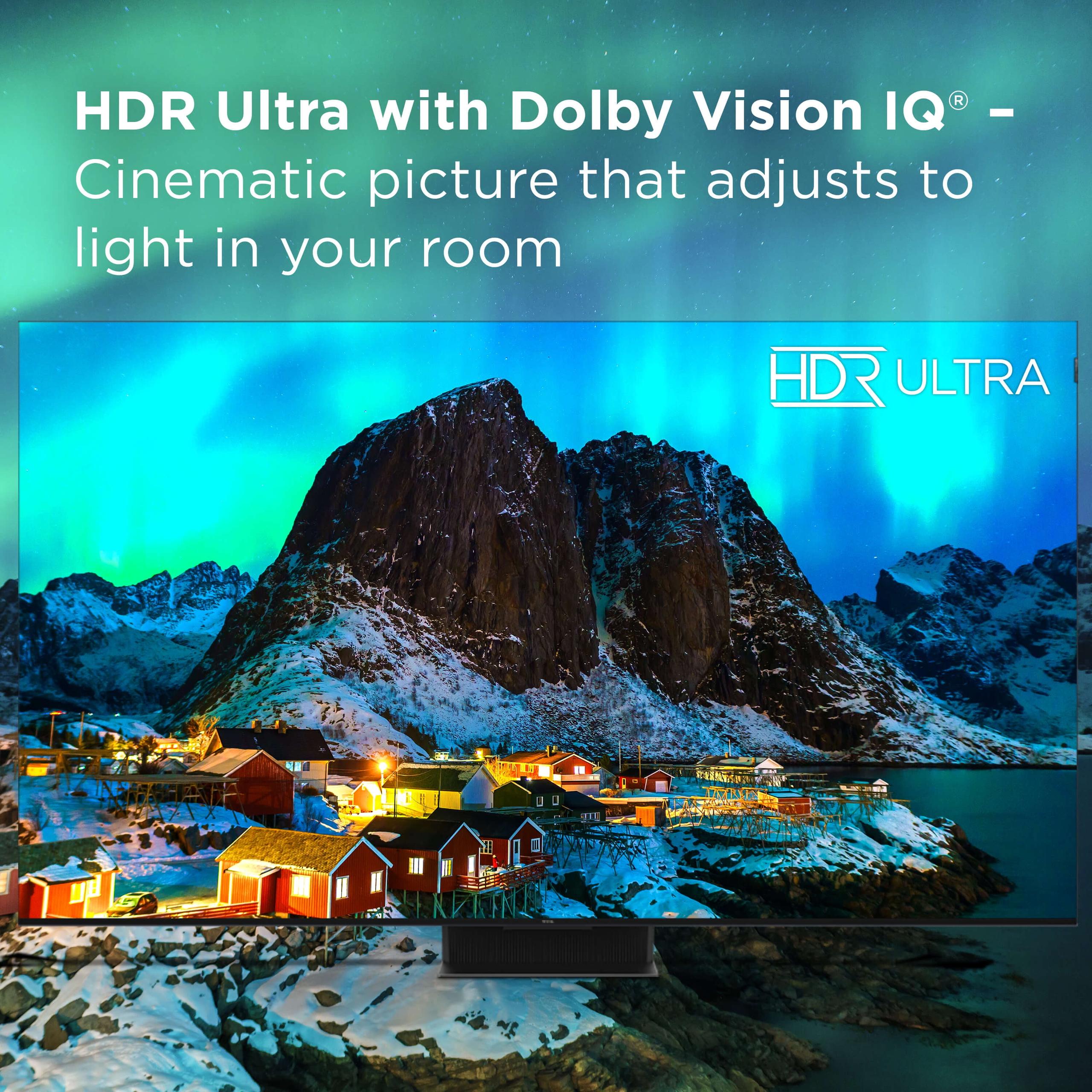
Both the Hisense QD7 and TCL QM8 support Dolby Vision and HDR10+ formats. The TCL QM8 delivers more impactful HDR with its higher peak brightness, making highlights more dramatic and realistic. The Hisense QD7 provides solid HDR performance with more conservative processing that some viewers prefer for its natural appearance.
The TCL QM8 offers advantages for streaming with its Google TV platform providing better app selection and content discovery. However, the Hisense QD7 includes newer Wi-Fi 6E support for potentially faster streaming connections. Both handle 4K streaming excellently, with the TCL having a slight edge in overall smart platform experience.
The Hisense QD7 integrates natively with Amazon Alexa and works with Apple HomeKit, making it ideal for Amazon ecosystem users. The TCL QM8 supports Google Assistant, Amazon Alexa, and Apple HomeKit, providing more flexibility. Both offer hands-free voice control for content searching and smart home device management.
Choose the Hisense 65" QD7 Series if you prioritize value, primarily game with one console, prefer Amazon's ecosystem, or watch in controlled lighting. Choose the TCL 65" QM8 if you want the best picture quality, watch in bright rooms, need multiple HDMI 2.1 ports for gaming, or prefer Google's smart platform. Both represent excellent Mini-LED technology at their respective price points.
We've done our best to create useful and informative comparisons to help you decide what product to buy. Our research uses advanced automated methods to create this comparison and perfection is not possible - please contact us for corrections or questions. These are the sites we've researched in the creation of this article: bestbuy.com - custrevs.com - youtube.com - bestbuy.com - rtings.com - youtube.com - rtings.com - pcrichard.com - bestbuy.com - pcrichard.com - camelcamelcamel.com - amazonfiretv.blog - hisense-usa.com - hisense-usa.com - hisense-usa.com - bestbuy.com - leaseville.com - youtube.com - bestbuy.com - flatpanelshd.com - rtings.com - rtings.com - techradar.com - tcl.com - the-gadgeteer.com - nfm.com - ecoustics.com - careyscommunications.com - pcrichard.com - tcl.com

Privacy Policy
Terms and Conditions - Affiliate Policy
Home Security
© Copyright 2008-2026.
11816 Inwood Rd #1211, Dallas, TX 75244