

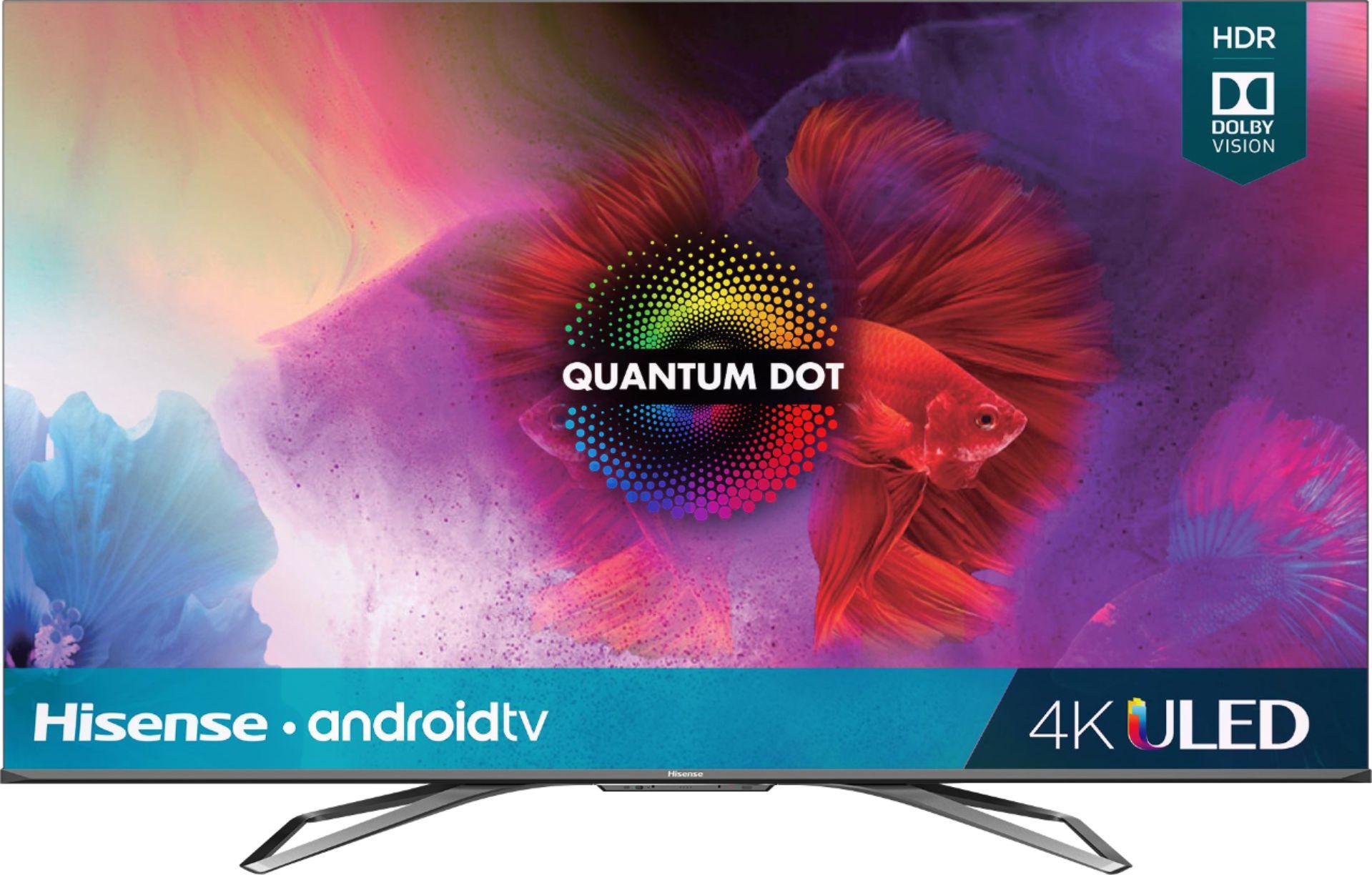
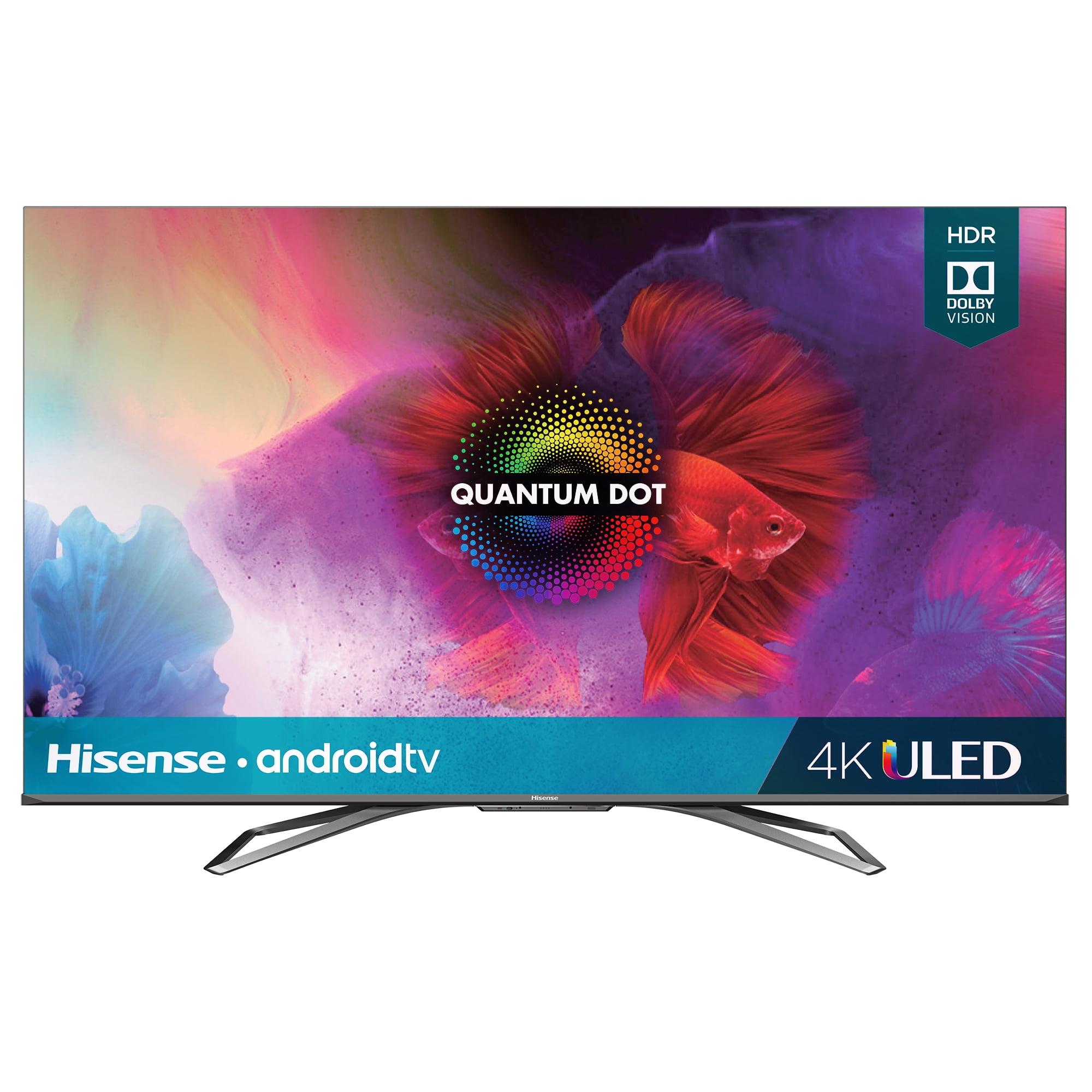
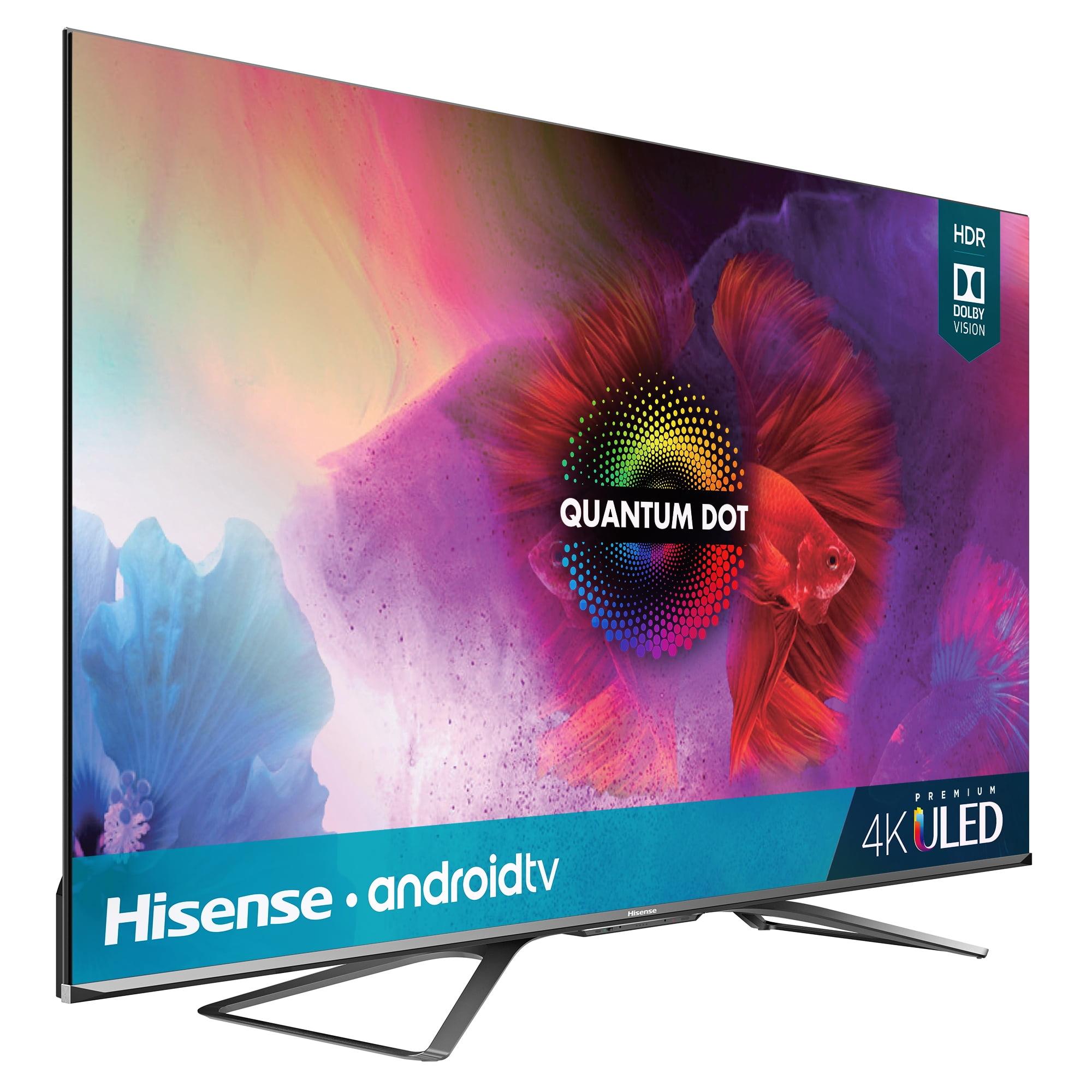

Shopping for a premium 65-inch TV can feel overwhelming, especially when you're comparing models that seem similar on paper but take completely different approaches to picture quality. The Samsung 65" QLED Q8F 2025 and Hisense 65" H9G Quantum Series represent two distinct philosophies in TV engineering—and at the time of writing, they're priced quite differently despite both targeting the premium market.
The Samsung Q8F launched in 2025 with cutting-edge AI processing and represents Samsung's latest thinking on QLED technology. Meanwhile, the Hisense H9G appears to be from an earlier generation, though it brings some compelling features that still matter today. Understanding these differences is crucial because your choice will significantly impact your viewing experience for years to come.
Before diving into specifics, it's worth understanding what separates premium TVs from budget models. At this screen size, you're not just buying a bigger display—you're investing in advanced picture processing, superior backlighting systems, and smart features that can transform your living room into a home theater.
The key technologies that matter most are quantum dots (microscopic particles that enhance color accuracy), local dimming (which controls backlighting in specific screen zones for better contrast), and processing power (the "brain" that optimizes every frame you see). Both TVs use quantum dot technology, but they implement it very differently.
Think of it this way: if budget TVs are like basic cars that get you from A to B, these premium models are like luxury vehicles with advanced engineering under the hood. The question becomes which engineering approach serves your needs better.
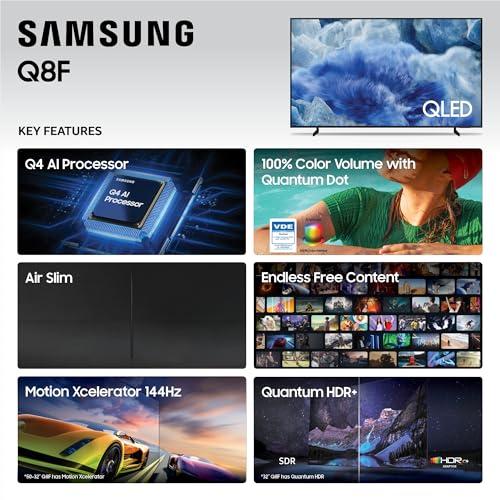
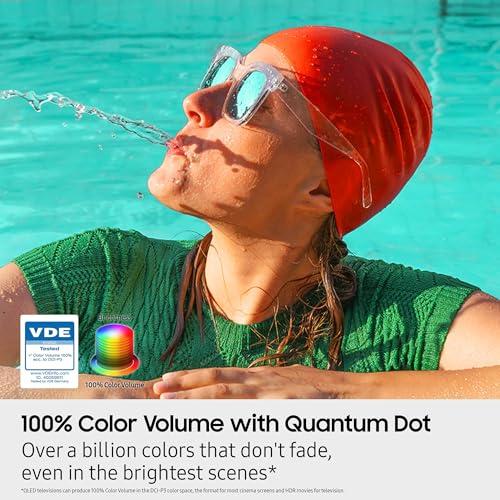
The Samsung Q8F uses what Samsung calls a dedicated Quantum Dot Sheet with over 3,000 parts per million of quantum dot material. This might sound like marketing speak, but it translates to remarkably vibrant colors that stay accurate even at high brightness levels. The quantum dots work like tiny color filters, converting blue LED light into precisely calibrated red and green wavelengths.
What makes this impressive is Samsung's claim of 100% color volume—meaning the TV can display a billion different color combinations across all brightness levels. In practical terms, this means sunset scenes look more natural, skin tones appear more lifelike, and animated content pops with the vibrancy directors intended.
The Hisense H9G, while also using quantum dot technology, doesn't specify the same level of quantum dot concentration. This likely means it can't achieve the same color saturation as the Samsung, particularly in bright scenes where cheaper quantum dot implementations sometimes fade.
Here's where things get interesting. The Hisense H9G uses full-array local dimming with 180 zones, while the Samsung Q8F employs Samsung's Dual LED system with Supreme UHD Dimming.
Full-array local dimming means the H9G has LED lights distributed evenly across the entire back of the screen, divided into 180 controllable zones. When a zone needs to be dark (like in a night scene), it can dim independently from bright zones (like stars or streetlights). This creates impressive contrast—the difference between the brightest whites and deepest blacks.
Samsung's approach is different but clever. The Dual LED system uses two different color temperatures of LEDs to improve both contrast and color accuracy. Combined with their Supreme UHD Dimming technology, it divides the screen into smaller virtual zones for precise brightness control, though not as many physical zones as the Hisense.
In dark room viewing, the Hisense H9G will likely produce deeper, more convincing blacks. However, the Samsung Q8F should maintain better color accuracy across all brightness levels and avoid some of the "blooming" effects (bright halos around objects) that can occur with full-array systems.
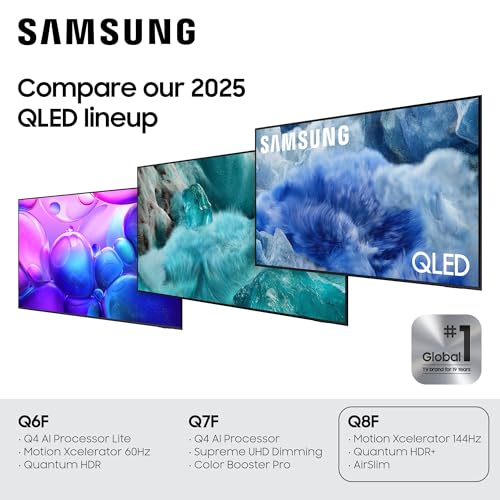
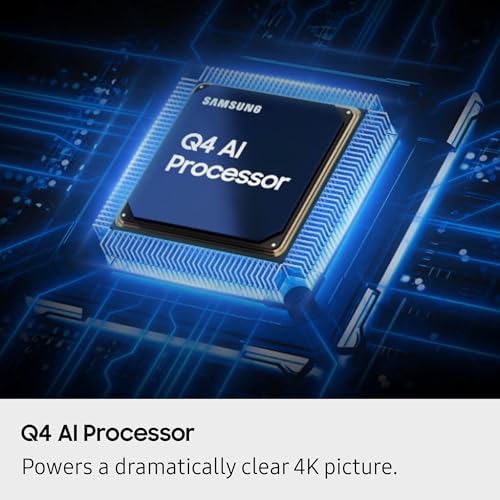
The Samsung Q8F includes Samsung's Q4 AI Processor, which represents a significant advancement in TV processing for 2025. This isn't just marketing—the processor analyzes each scene in real-time, upscaling lower-resolution content while enhancing colors, contrast, and sharpness based on the specific content type.
For example, when watching a nature documentary, the processor recognizes landscape scenes and enhances greens and blues differently than it would for a sports broadcast, where it prioritizes motion clarity and crowd detail. This scene-by-scene optimization wasn't possible with earlier TV generations.
The Hisense H9G doesn't specify its processing capabilities in the same detail, which suggests it's using more traditional, less sophisticated processing. This matters more than you might think—most content you watch isn't native 4K, so the processor's ability to intelligently upscale 1080p Netflix shows or cable TV content directly impacts your daily viewing experience.
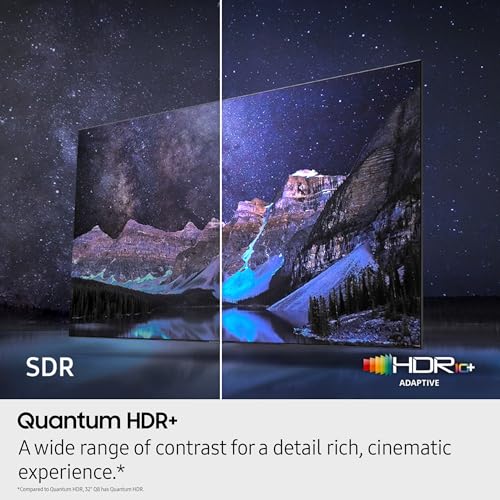
HDR (High Dynamic Range) is where these TVs show their most significant philosophical differences. The Samsung Q8F supports Quantum HDR+ with HDR10+ Adaptive, which adjusts tone mapping scene-by-scene for optimal contrast. This dynamic approach means bright explosions in action movies won't wash out details, while dark dialogue scenes maintain shadow detail.
However, the Samsung notably lacks Dolby Vision support—a significant omission given that Netflix, Disney+, and Apple TV+ increasingly use this format. Samsung has historically avoided Dolby Vision in favor of their own HDR10+ standard, which works well but isn't as widely supported by streaming services.
The Hisense H9G takes the opposite approach, supporting virtually every HDR format including Dolby Vision, HDR10, HDR10+, and HLG (Hybrid Log-Gamma, used for broadcast HDR). This comprehensive support means you'll never encounter an HDR format the TV can't display properly.
For home theater enthusiasts who prioritize format compatibility, the Hisense's broader HDR support is genuinely valuable. However, Samsung's processing often makes HDR10+ content look as good as or better than Dolby Vision on competing displays, so this advantage depends heavily on your content sources.
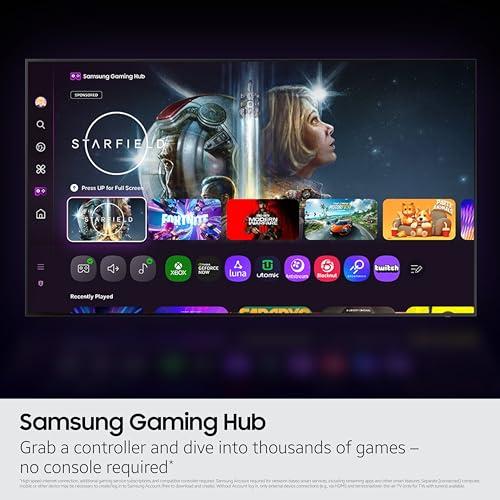
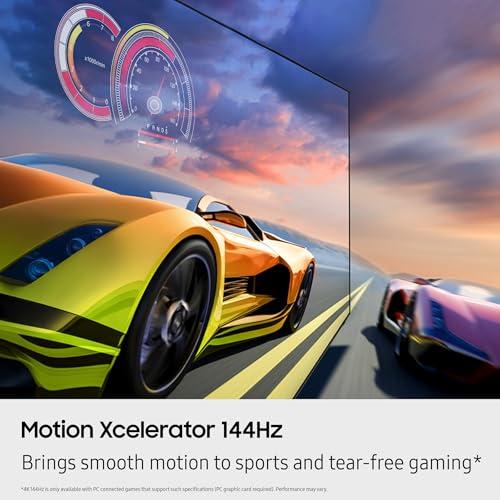
Gaming has become a crucial TV consideration since the PlayStation 5 and Xbox Series X launched. The Samsung Q8F clearly targets gamers with Motion Xcelerator 144Hz technology, supporting refresh rates up to 144Hz. This means games that support high frame rates will look incredibly smooth, with minimal motion blur during fast action.
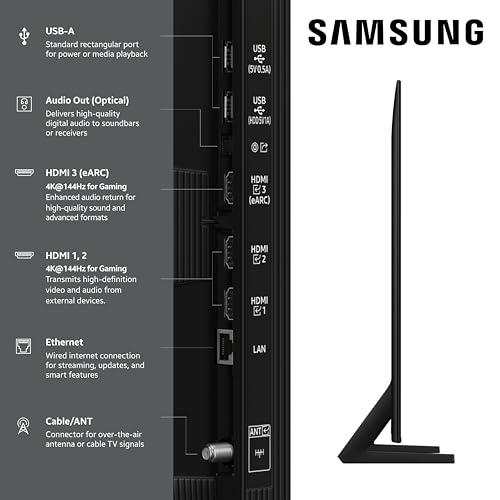
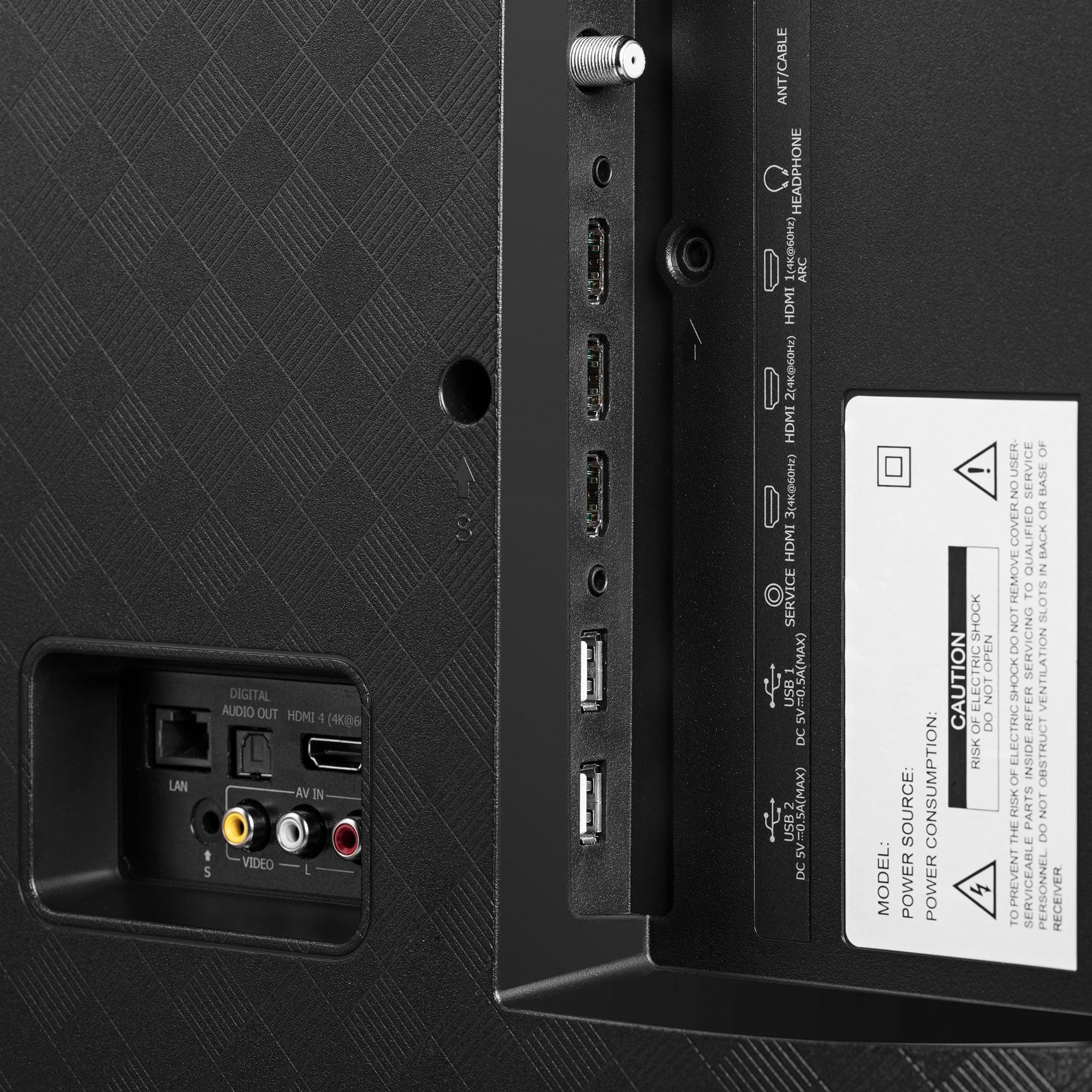
The TV also includes multiple HDMI 2.1 ports, which provide the bandwidth necessary for 4K gaming at high refresh rates. Features like Auto Game Mode reduce input lag (the delay between pressing a controller button and seeing the action on screen) to nearly imperceptible levels.
The Hisense H9G doesn't specify the same level of gaming features. While it likely supports basic game modes with reduced input lag, it probably lacks the high refresh rate support and HDMI 2.1 bandwidth that serious gamers now expect.
If you own or plan to buy a PlayStation 5, Xbox Series X, or high-end gaming PC, the Samsung Q8F is clearly the better choice. The gaming performance difference isn't subtle—it's transformative for supported games.
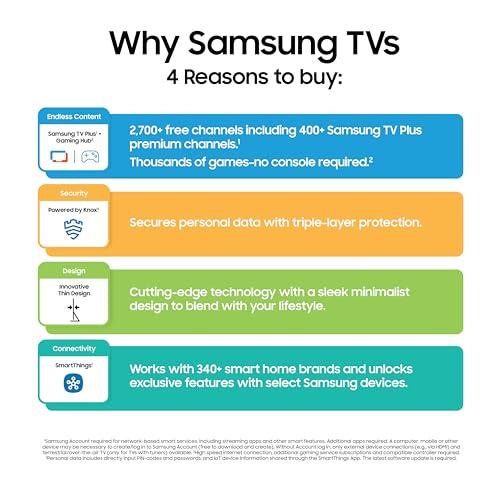
The software experience differs significantly between these TVs. The Samsung Q8F runs Tizen, Samsung's proprietary smart TV platform enhanced with what they call Samsung Vision AI. This system learns your viewing habits and suggests content while providing far-field voice control through built-in microphones.
Tizen integrates well with Samsung's broader ecosystem, including SmartThings home automation devices. If you already use Samsung phones, tablets, or appliances, the cross-device integration can be genuinely convenient.
The Hisense H9G uses Android TV with built-in Chromecast and Google Assistant support. Android TV provides access to the Google Play Store, which typically offers more apps than Samsung's platform. The Chromecast integration makes casting from Android devices seamless, and Google Assistant tends to be more capable than Samsung's Bixby for voice commands.
Neither platform is objectively superior—it depends on your existing tech ecosystem and preferences. Android TV users often appreciate the broader app selection, while Samsung users value the tighter integration with other Samsung devices.
TV speakers rarely impress, but both models attempt to exceed typical expectations. The Samsung Q8F includes Object Tracking Sound Lite (OTS Lite), which creates the illusion that sound follows action across the screen. Combined with Adaptive Sound+ technology that adjusts audio based on room acoustics and content type, it provides a more immersive experience than standard TV audio.
The Q-Symphony feature is particularly clever—if you add a compatible Samsung soundbar later, the TV speakers work in harmony with the soundbar instead of shutting off, creating a more enveloping soundstage.
The Hisense H9G doesn't specify advanced audio features beyond standard capabilities, suggesting more traditional TV audio performance.
However, at this price point, most buyers should budget for a separate soundbar or audio system. Even the best TV speakers can't match dedicated audio equipment due to physical space constraints.
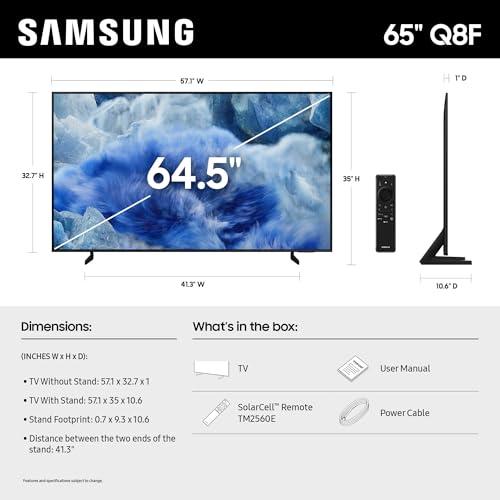
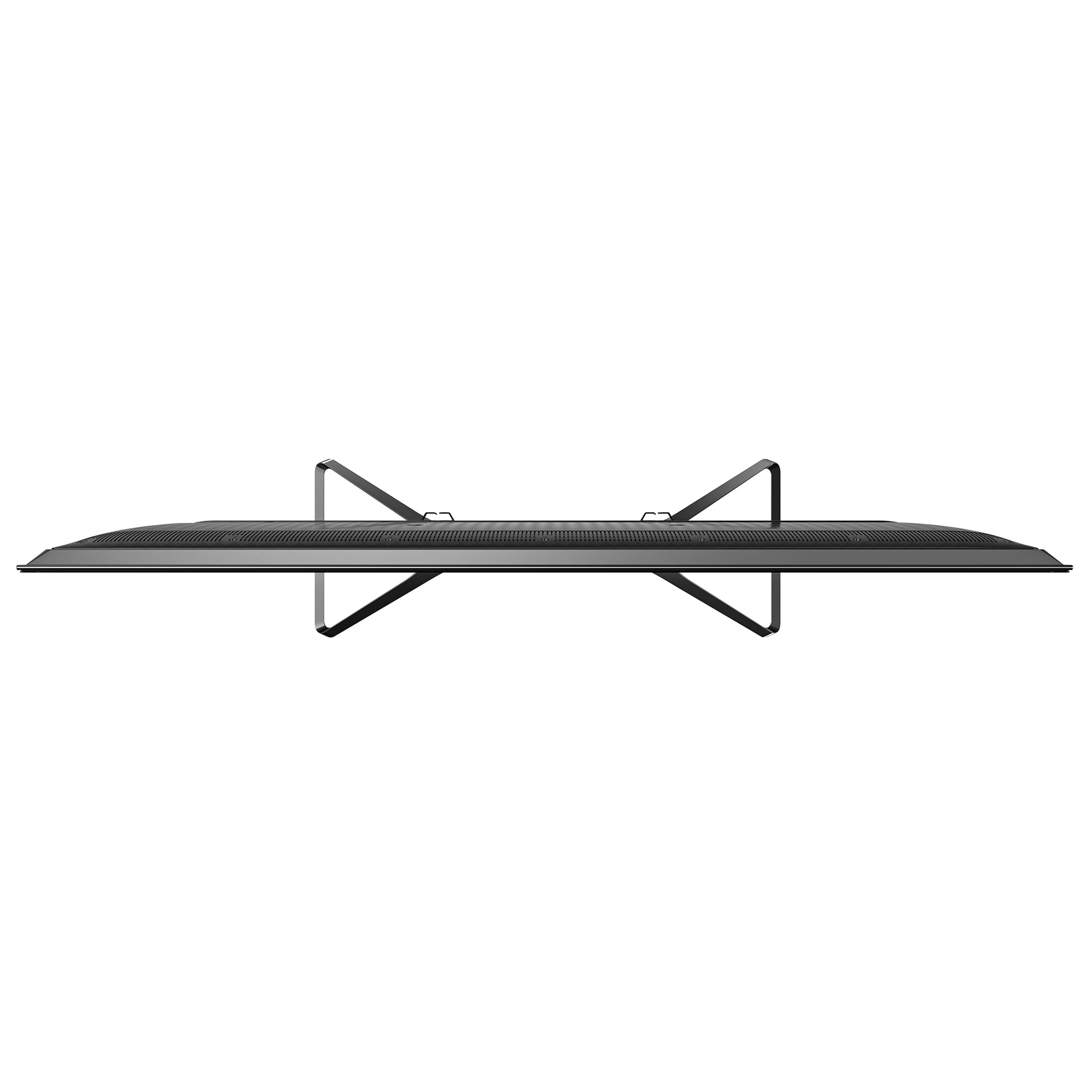
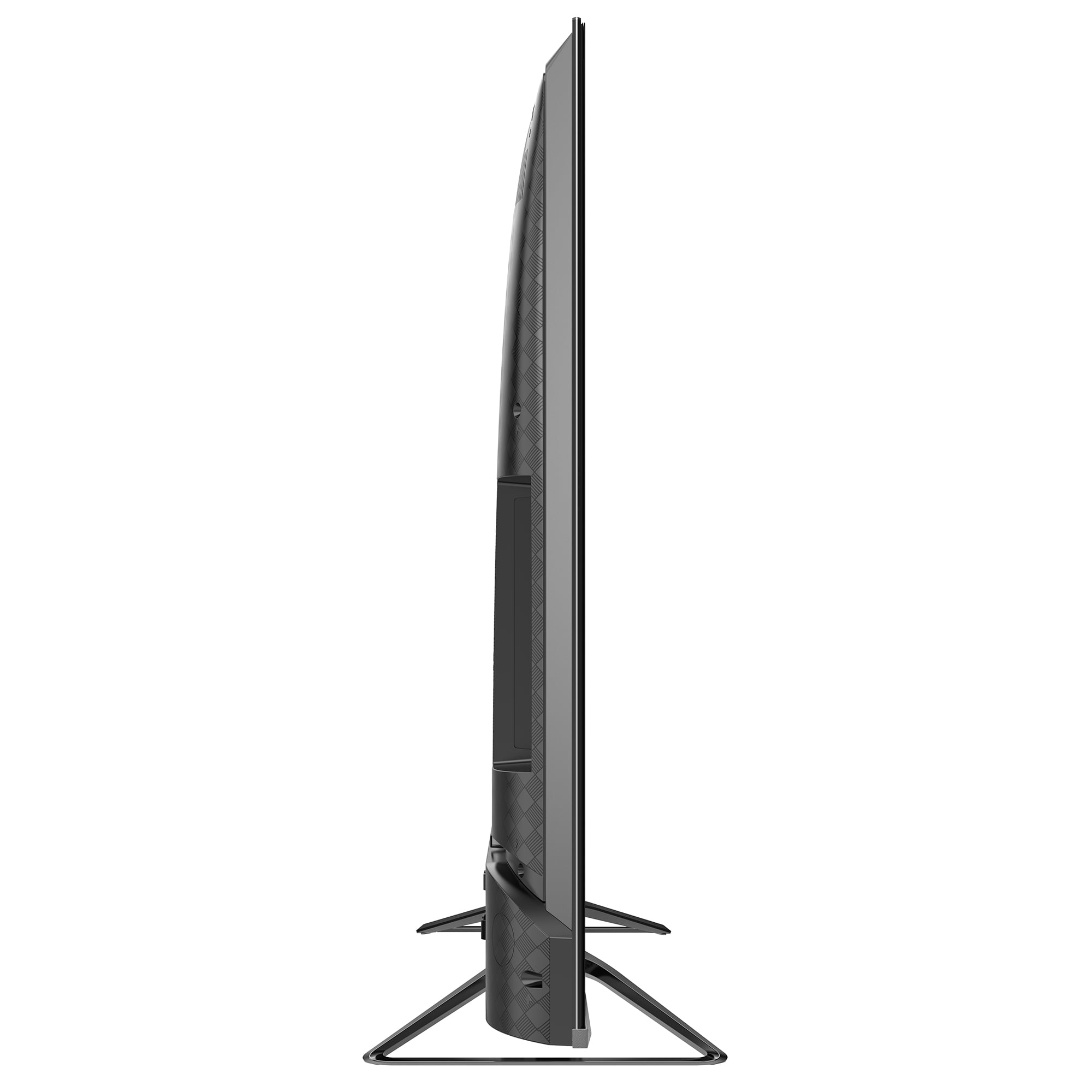
The Samsung Q8F showcases Samsung's AirSlim design philosophy, emphasizing ultra-thin bezels and a minimalist aesthetic that disappears into your room. This matters more than it might seem—thick bezels can be distracting during movie watching, breaking the illusion that you're looking through a window into another world.
The build quality reflects 2025 design thinking, with cable management features and a stand designed to complement modern furniture. If you're wall-mounting, the slim profile creates a more integrated, premium appearance.
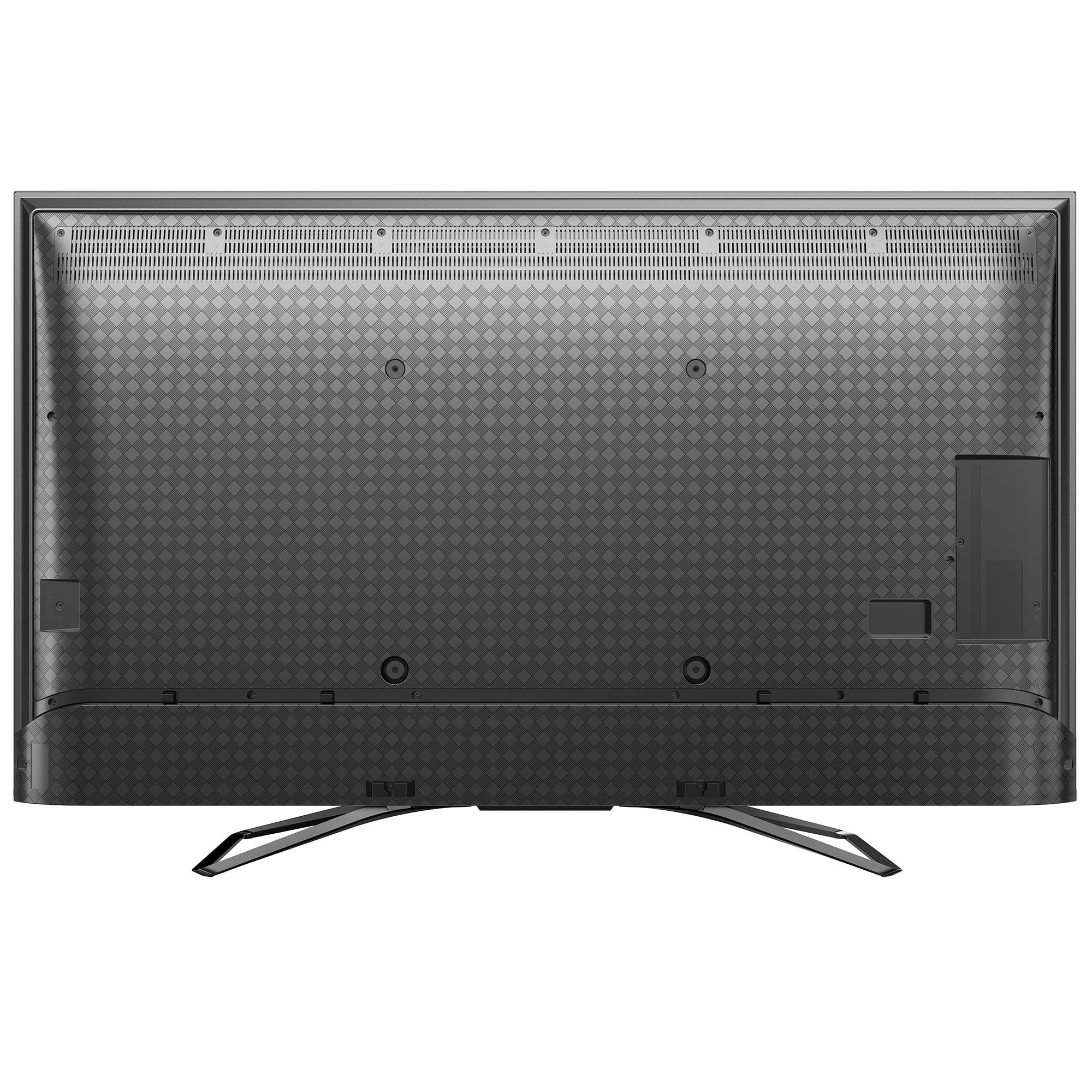
The Hisense H9G uses a more traditional TV design approach. While solidly built, it lacks the refined aesthetic touches that make premium TVs feel special.
At the time of writing, the Samsung Q8F carries a significantly lower price than the Hisense H9G—unusual given that the Samsung represents newer technology. This price positioning makes the Samsung an exceptional value proposition.
The Samsung delivers 2025-generation AI processing, superior gaming features, more advanced color science, and premium design at a lower cost. The Hisense commands a premium price while offering what appears to be previous-generation technology.
However, value isn't just about price—it's about whether a TV meets your specific needs. The Hisense's superior dark-room contrast and comprehensive HDR format support might justify its premium for the right buyer.
For dedicated home theater setups, both TVs have merit but serve different priorities. The Hisense H9G excels in dark, controlled environments where its superior black levels and Dolby Vision support shine. Theater enthusiasts who carefully control lighting and prioritize cinematic accuracy might prefer the H9G despite its higher cost.
However, the Samsung Q8F better handles mixed-use scenarios common in family rooms. Its superior brightness and color accuracy work well with ambient lighting, while the AI processing enhances the wide variety of content sources typical in home theater setups.
The gaming capabilities also matter for modern home theaters, as many families use the main TV for both movie watching and gaming. The Samsung's 144Hz support future-proofs the setup for next-generation gaming.
Choose the Samsung Q8F if you want the best overall value, prioritize gaming performance, use the TV in bright rooms, or prefer Samsung's ecosystem integration. It's also the clear choice if you want cutting-edge 2025 technology at a reasonable price.
The Samsung makes sense for most buyers because it excels across multiple use cases while offering superior price-to-performance ratio. Unless you have specific requirements that favor the Hisense, the Samsung delivers more for less money.
Choose the Hisense H9G if you primarily watch in dark rooms, need comprehensive HDR format support including Dolby Vision, strongly prefer Android TV, or don't require advanced gaming features. The higher price only makes sense if these specific advantages outweigh the Samsung's broader capabilities and better value.
The Samsung 65" QLED Q8F 2025 represents exceptional value in the premium TV market, delivering flagship features at a competitive price point. Its combination of advanced AI processing, superior gaming support, and excellent color science makes it the better choice for most buyers.
The Hisense H9G, while capable, feels overpriced for previous-generation technology. Unless you specifically need its dark-room advantages or Dolby Vision support, the Samsung provides better performance per dollar spent.
In today's competitive TV market, the Samsung proves that you can have premium features without paying a premium price—a rare combination that makes it easy to recommend for most home theater setups.
| Samsung 65" QLED Q8F 4K Smart TV 2025 | Hisense 65" H9G Quantum Series 4K UHD Smart Android TV |
|---|---|
| Display Technology - Determines color accuracy and brightness performance | |
| QLED with dedicated Quantum Dot sheet (100% color volume) | Quantum Series LED (standard quantum dot implementation) |
| Backlighting System - Critical for contrast and black levels in dark rooms | |
| Dual LED with Supreme UHD Dimming (fewer zones, better color accuracy) | Full-Array Local Dimming with 180 zones (superior black levels) |
| Processing Power - Affects upscaling quality and smart features | |
| Q4 AI Processor with 4K AI upscaling and scene optimization | Standard processing (specifications not detailed) |
| Refresh Rate - Essential for gaming and smooth motion | |
| 120Hz native, up to 144Hz with Motion Xcelerator | Standard refresh rate (likely 60Hz) |
| HDR Format Support - Determines compatibility with streaming content | |
| Quantum HDR+ with HDR10+ Adaptive (no Dolby Vision) | Comprehensive: Dolby Vision, HDR10, HDR10+, HLG |
| Gaming Features - Important for PlayStation 5 and Xbox Series X owners | |
| HDMI 2.1, VRR support, Auto Game Mode, 144Hz gaming | Basic game mode functionality |
| Smart TV Platform - Affects app availability and user experience | |
| Tizen with Samsung Vision AI and Bixby voice control | Android TV with Google Assistant and Chromecast built-in |
| Audio Technology - Impacts sound quality without external speakers | |
| 20W with Object Tracking Sound Lite and Adaptive Sound+ | Standard TV audio (specifications not detailed) |
| Design Approach - Affects room aesthetics and mounting options | |
| AirSlim design with ultra-thin bezels and premium build | Traditional TV design with standard bezels |
| Peak Brightness - Important for HDR performance and bright room viewing | |
| High brightness with Dual LED enhancement | Up to 1,000 nits specified |
| Release Generation - Indicates how current the technology is | |
| 2025 model with latest AI and processing features | Previous generation technology |
| Value Proposition - Price-to-performance ratio at time of writing | |
| Exceptional value with premium features at lower cost | Premium pricing for older generation technology |
The Samsung 65" QLED Q8F 2025 delivers superior overall picture quality thanks to its dedicated Quantum Dot sheet technology and Q4 AI Processor. It produces more vibrant colors with 100% color volume and intelligent scene-by-scene optimization. However, the Hisense 65" H9G excels specifically in dark room viewing with its full-array local dimming system that creates deeper black levels and better contrast.
Yes, the Samsung Q8F is significantly better for gaming. It supports up to 144Hz refresh rates, includes HDMI 2.1 ports for next-gen consoles, and features Auto Game Mode with low input lag. The Hisense H9G lacks these advanced gaming features and likely only supports standard 60Hz gaming performance.
The Samsung 65" QLED Q8F 2025 performs better in bright rooms due to its QLED technology and Dual LED backlighting system, which maintains color accuracy and visibility even with ambient lighting. The Hisense H9G is better suited for darker, controlled environments where its superior contrast can shine.
The Samsung Q8F runs Tizen with Samsung Vision AI, Bixby voice control, and SmartThings integration for Samsung device users. The Hisense 65" H9G uses Android TV with Google Assistant, built-in Chromecast, and access to the Google Play Store, offering broader app compatibility.
The Hisense H9G supports more HDR formats including Dolby Vision, HDR10, HDR10+, and HLG, making it compatible with virtually all HDR content. The Samsung Q8F supports Quantum HDR+ and HDR10+ Adaptive but notably lacks Dolby Vision support.
At the time of writing, the Samsung 65" QLED Q8F 2025 is priced lower than the Hisense 65" H9G, making it an exceptional value proposition given its newer technology and advanced features. The Samsung offers more current-generation capabilities at a more affordable price point.
The Hisense H9G delivers superior contrast and black levels thanks to its full-array local dimming system with 180 zones. This creates deeper blacks and better shadow detail in dark scenes. The Samsung Q8F uses Dual LED technology that provides good contrast but cannot match the Hisense's deep black performance.
Both TVs work well for home theaters but serve different needs. The Hisense 65" H9G excels in dedicated dark theater rooms with its superior black levels and comprehensive HDR format support. The Samsung Q8F better handles mixed-use family rooms with ambient lighting while offering superior gaming capabilities for modern home entertainment.
The Samsung 65" QLED Q8F 2025 features more advanced processing with its Q4 AI Processor that provides 4K upscaling, scene-by-scene optimization, and adaptive picture enhancement. The Hisense H9G uses standard processing technology without the same level of AI-driven optimization features.
The Samsung Q8F offers superior built-in audio with Object Tracking Sound Lite, Adaptive Sound+ technology, and Q-Symphony compatibility with Samsung soundbars. The Hisense 65" H9G provides standard TV audio without advanced sound processing features, though both TVs benefit from external sound systems.
The Samsung 65" QLED Q8F 2025 represents significantly better value, offering 2025-generation technology, advanced AI processing, superior gaming features, and premium design at a lower price point. The Hisense H9G commands a premium price for previous-generation technology, making it harder to justify unless you specifically need its dark-room advantages.
Yes, device ecosystem matters. Choose the Samsung Q8F if you use Samsung phones, tablets, or smart home devices for seamless integration. Select the Hisense 65" H9G if you prefer Google services, use Android devices extensively, or rely on Chromecast for content streaming. Both integrate well with their respective ecosystems.
We've done our best to create useful and informative comparisons to help you decide what product to buy. Our research uses advanced automated methods to create this comparison and perfection is not possible - please contact us for corrections or questions. These are the sites we've researched in the creation of this article: bestbuy.com - rtings.com - tomsguide.com - youtube.com - samsung.com - youtube.com - youtube.com - youtube.com - rtings.com - rtings.com - linqcdn.avbportal.com - bestbuy.com - samsung.com - samsung.com - samsung.com - youtube.com - youtube.com - billsmith.com - samsung.com - samsung.com - samsung.com - hometechnologyreview.com - shopjetson.com - certappl.com - samsung.com - theapplianceplug.com - samsung.com - manuals.plus - bestbuy.com - device.report - samsung.com - shopsilica.com - dentonstv.com - rtings.com - bestbuy.com - techradar.com - youtube.com - digitaltrends.com - assets.hisense-usa.com - bestbuy.com - youtube.com - bestbuy.com

Privacy Policy
Terms and Conditions - Affiliate Policy
Home Security
© Copyright 2008-2026.
11816 Inwood Rd #1211, Dallas, TX 75244