


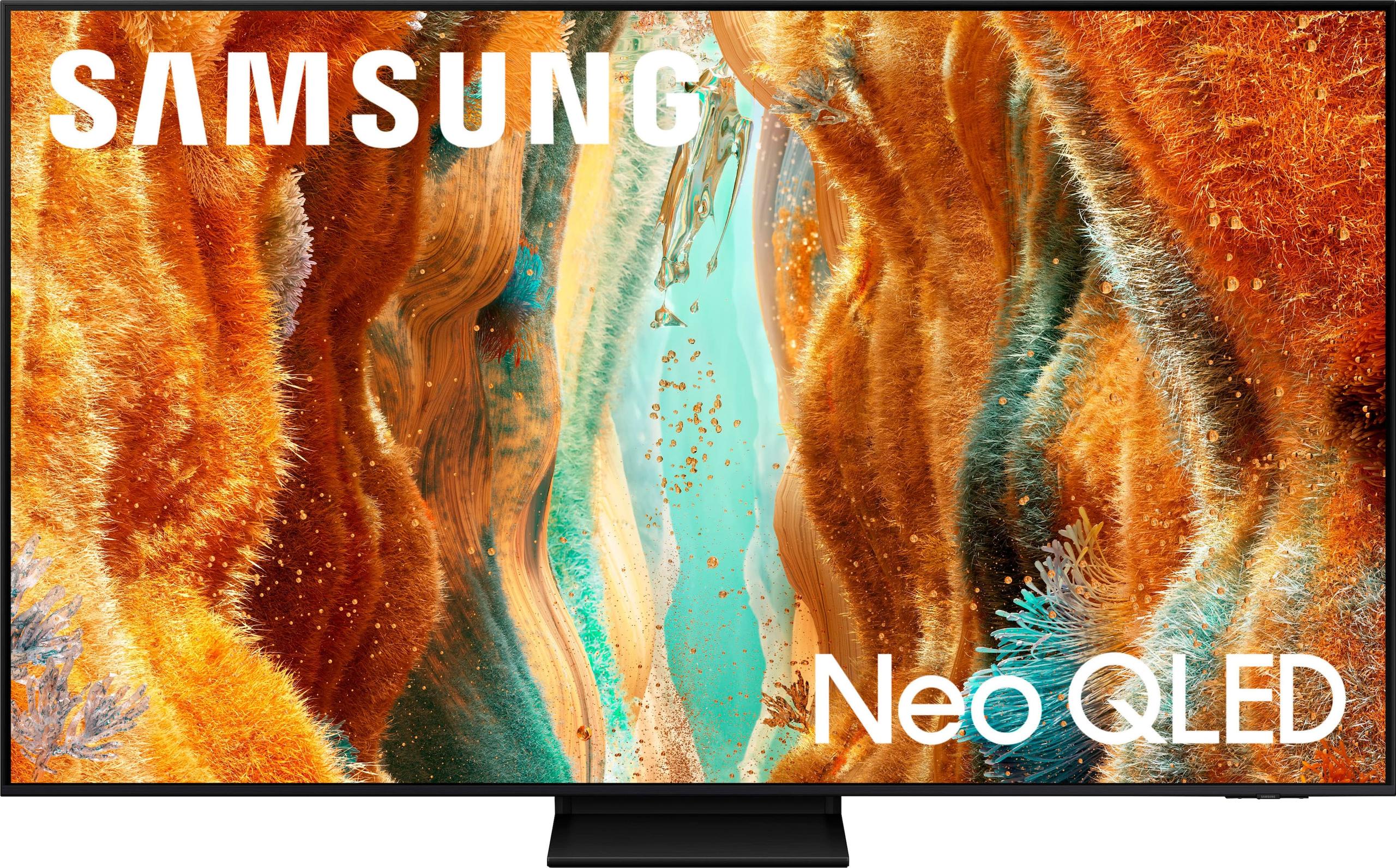
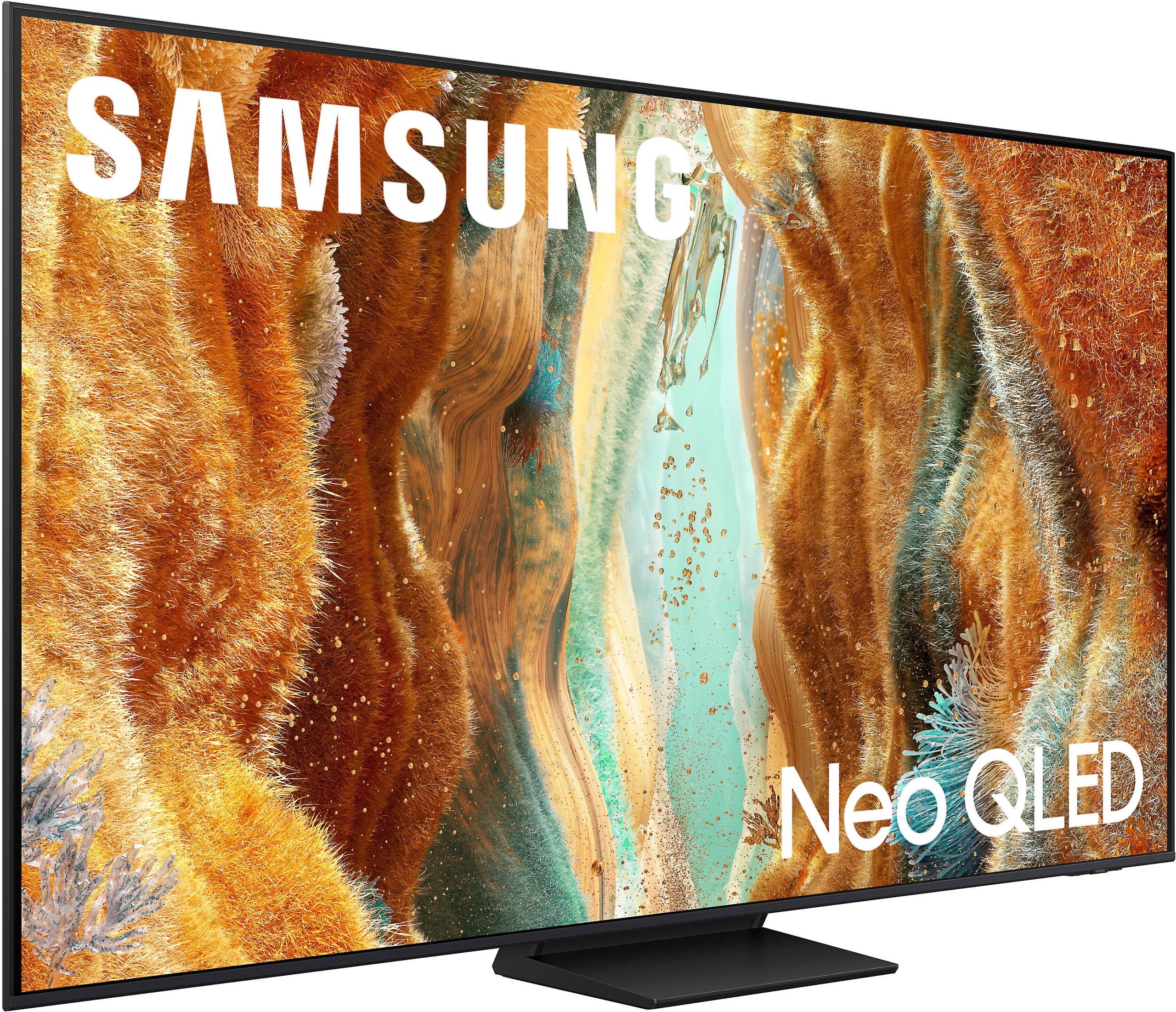
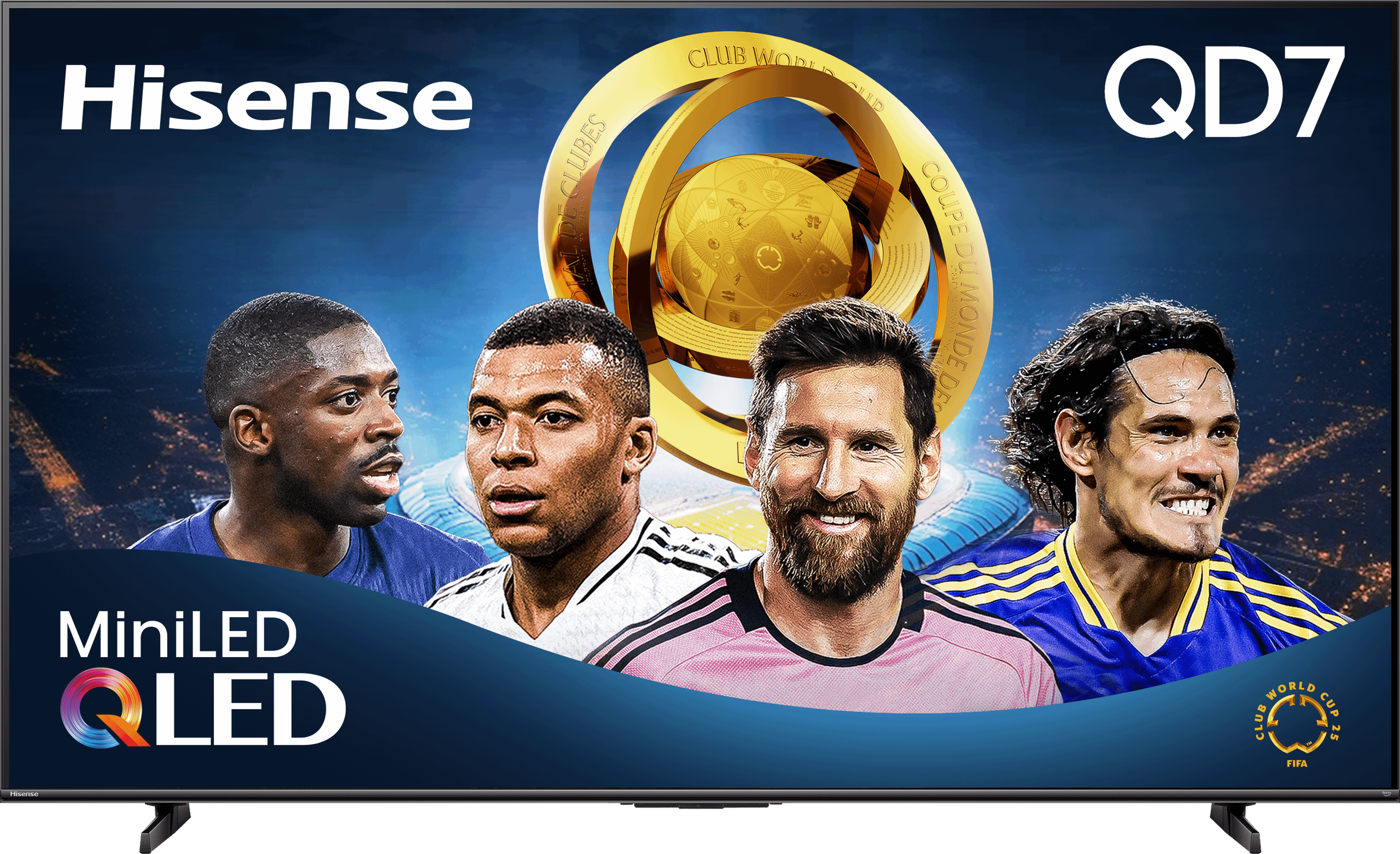
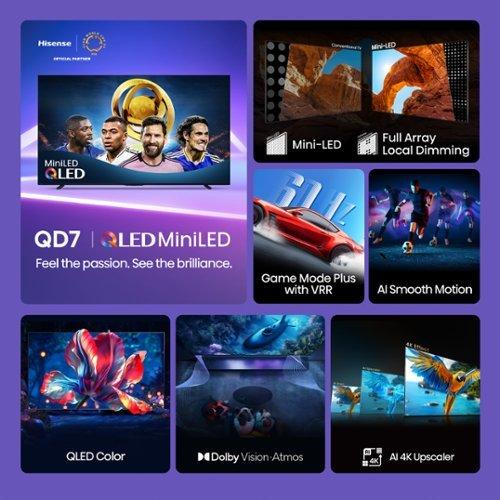
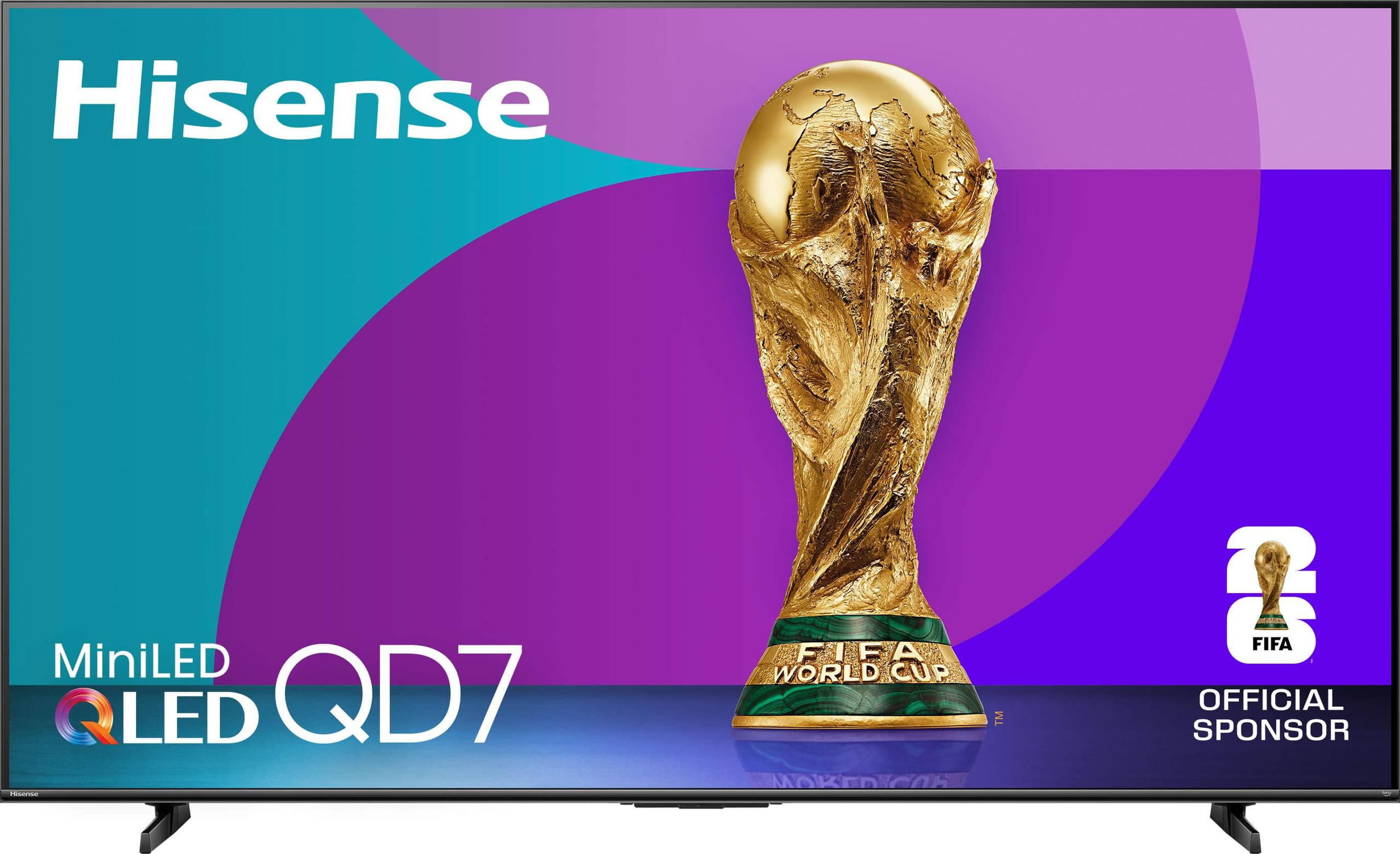
Shopping for a new 65-inch TV in 2025 has become both easier and more confusing. While there are more great options than ever, the marketing claims can be misleading, and the technical specifications don't always tell the whole story. Today, I'm comparing two televisions that represent very different approaches to delivering premium picture quality: the Samsung 65" QN70F Neo QLED and the Hisense 65" QD7 Series Mini-LED.
Both TVs launched in 2025 and promise cutting-edge display technology, but they take fundamentally different paths to get there. At the time of writing, there's a significant price gap between these models, with the Samsung QN70F commanding a premium of several hundred dollars over the Hisense QD7. The question is whether that premium is justified, and more importantly, which TV will serve your specific needs better.
The 65-inch TV market has evolved dramatically over the past few years. What used to be considered "large" is now the sweet spot for most living rooms, offering an immersive viewing experience without overwhelming the space. In 2025, the premium segment focuses heavily on three key technologies: Mini-LED backlighting, quantum dot color enhancement, and advanced gaming features.
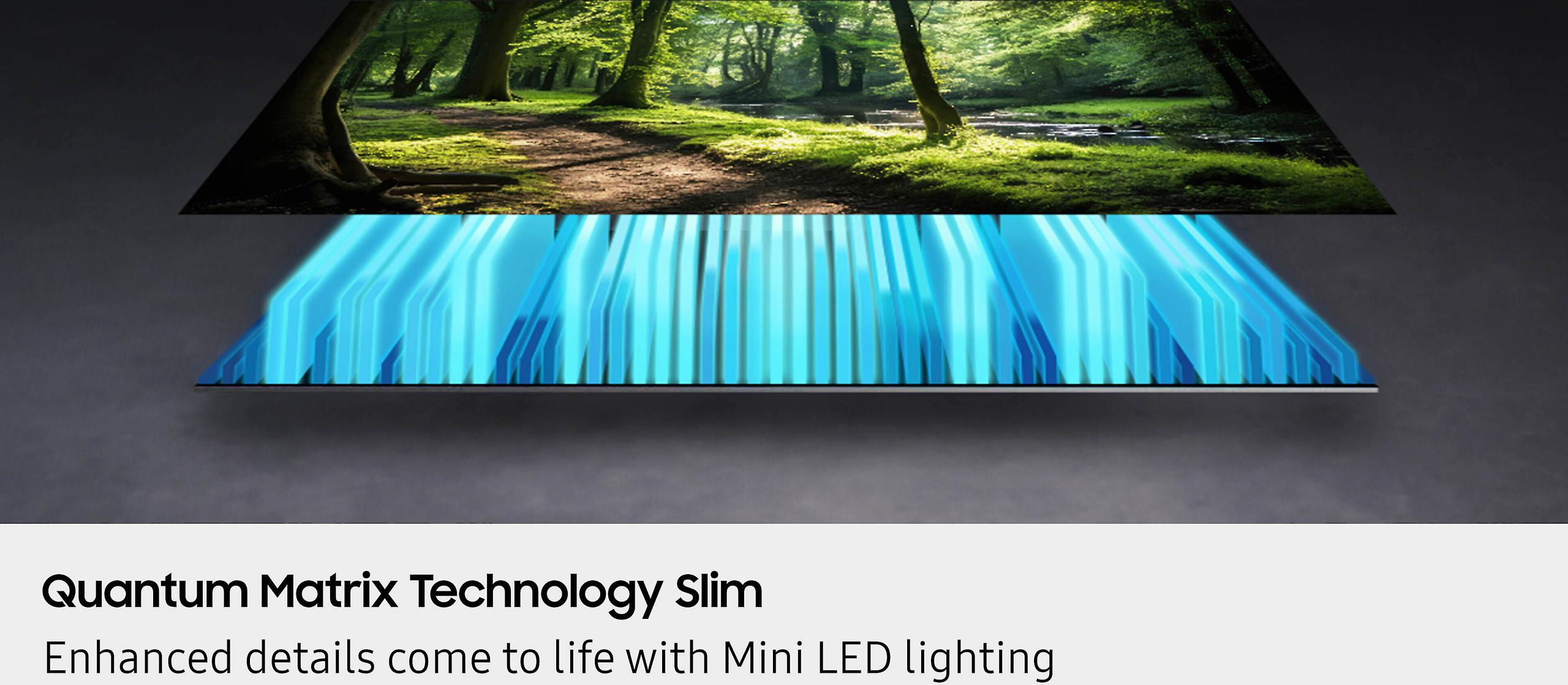
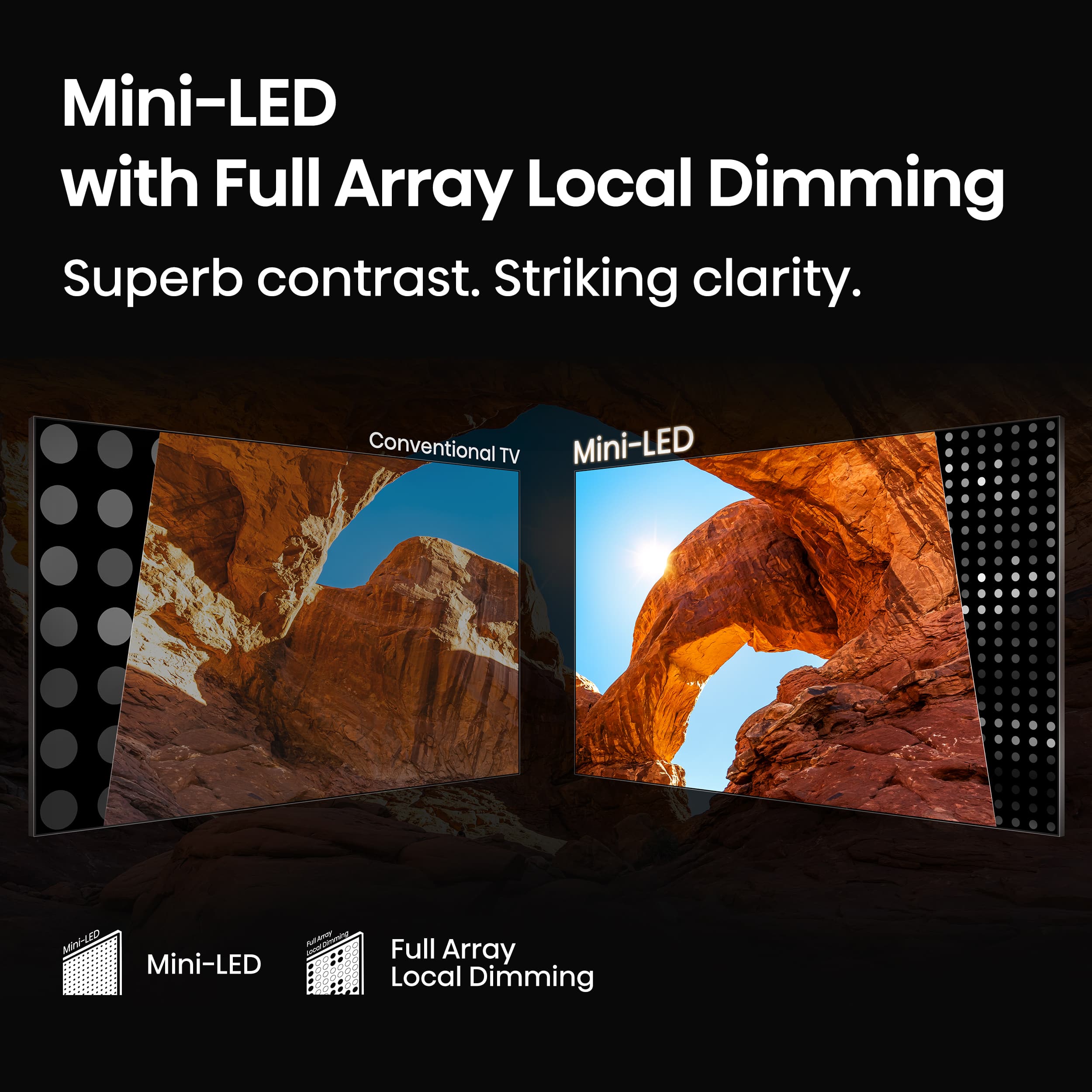
Mini-LED backlighting represents the biggest leap forward in TV technology recently. Traditional LED TVs use a strip of LEDs along the edges (edge-lit) or a grid of larger LEDs behind the screen (full-array). Mini-LEDs are much smaller – sometimes thousands of them across the screen – allowing for incredibly precise control over brightness. Think of it like the difference between painting with a house brush versus a fine artist's brush; the smaller tool gives you much more control over details.
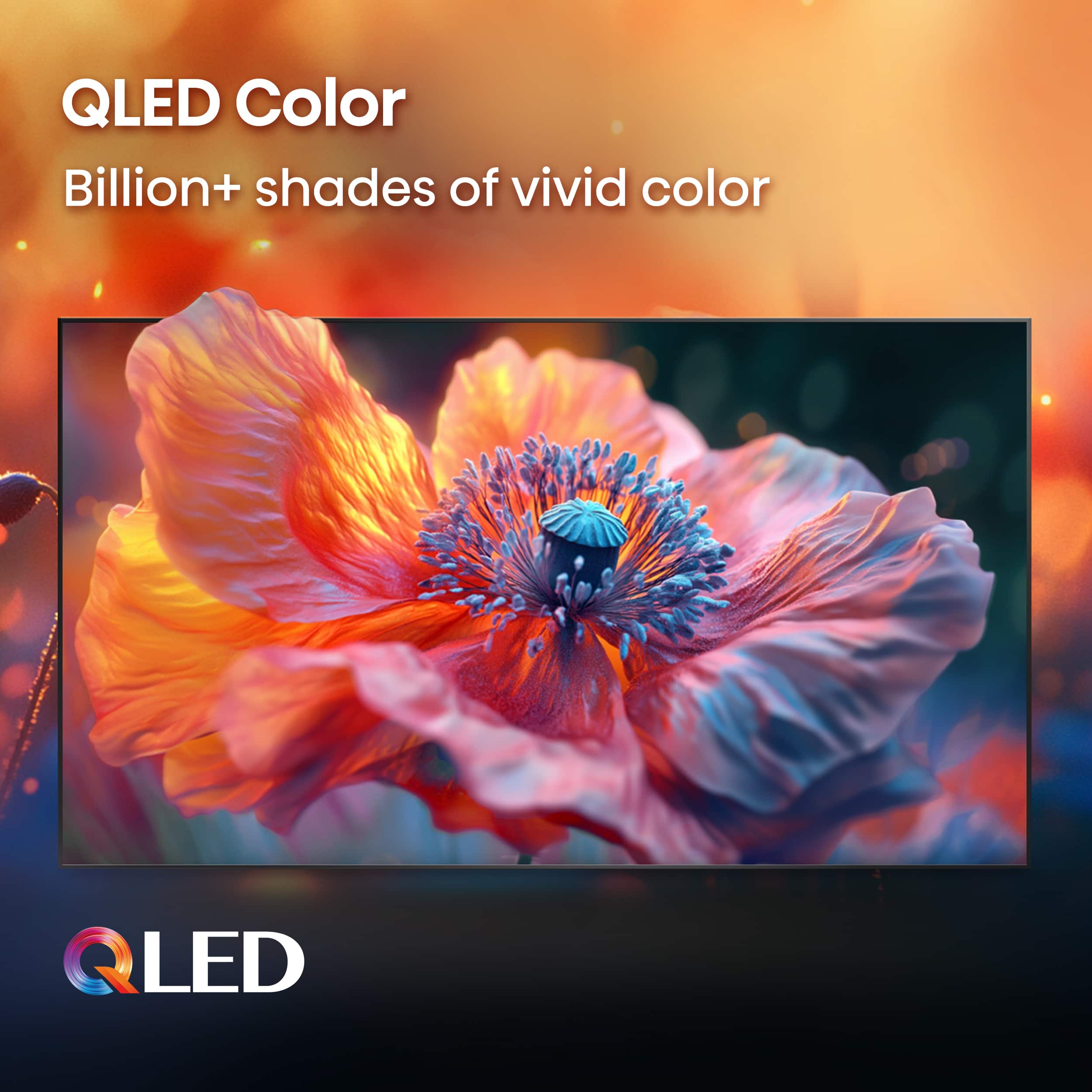
Quantum dot technology enhances color reproduction by using microscopic particles that emit pure colors when hit by light. This isn't just marketing fluff – quantum dots can reproduce colors that traditional LED displays simply can't match, particularly in the green and red spectrums that make skin tones look natural and landscapes appear vibrant.
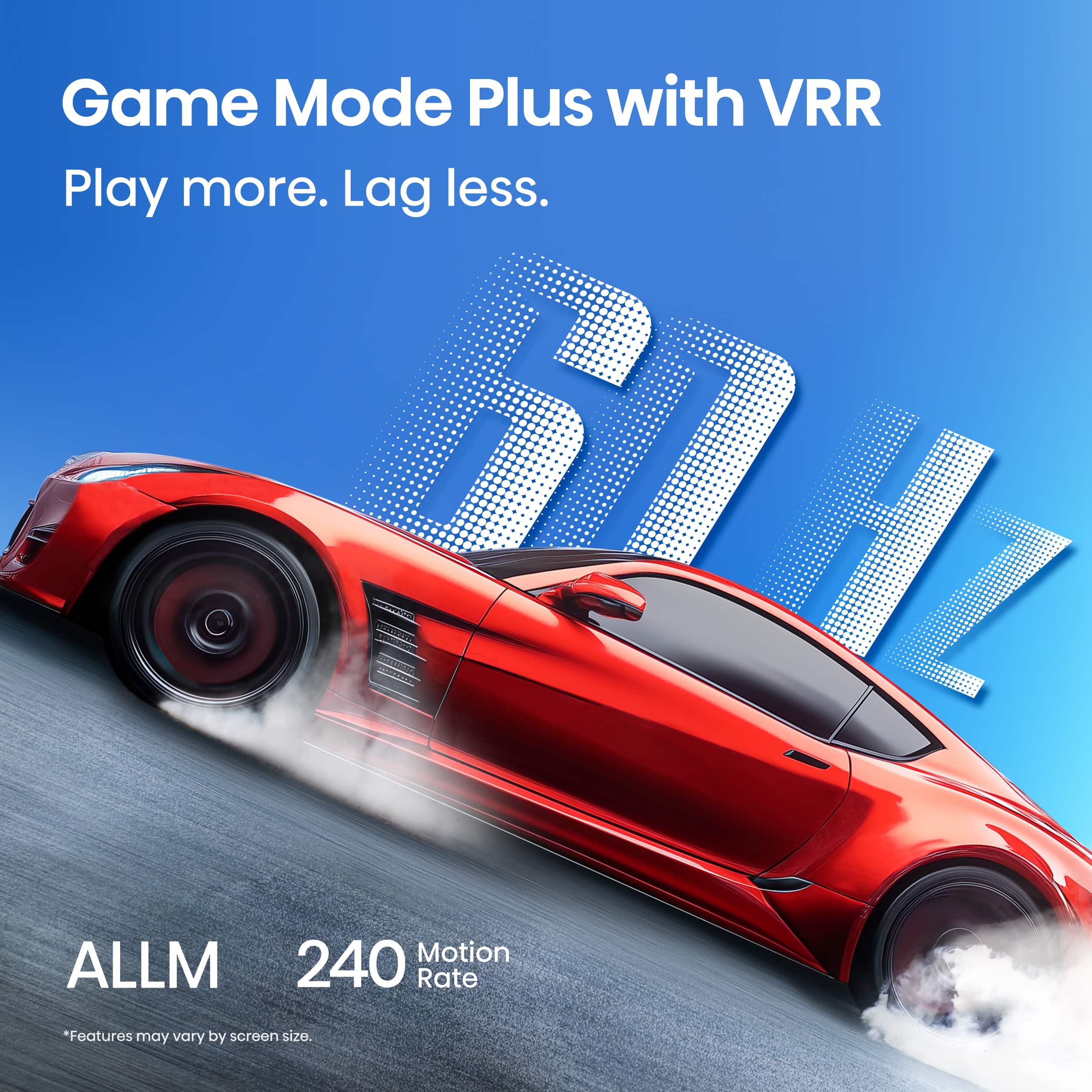
The gaming features have become crucial as PlayStation 5 and Xbox Series X consoles demand more from TVs. Features like Variable Refresh Rate (VRR) eliminate screen tearing, while Auto Low Latency Mode (ALLM) automatically switches to game mode when it detects console input, reducing the delay between pressing a button and seeing the action on screen.
Here's where things get interesting, and frankly, a bit frustrating. The Samsung QN70F is marketed as a "Neo QLED" with Mini-LED technology, but the reality is more complex. Samsung uses edge-lit backlighting on this model, not the full-array Mini-LED setup that the Neo QLED branding suggests. This isn't necessarily bad – Samsung's edge-lit implementation is quite sophisticated – but it's misleading when compared to TVs with true Mini-LED technology.
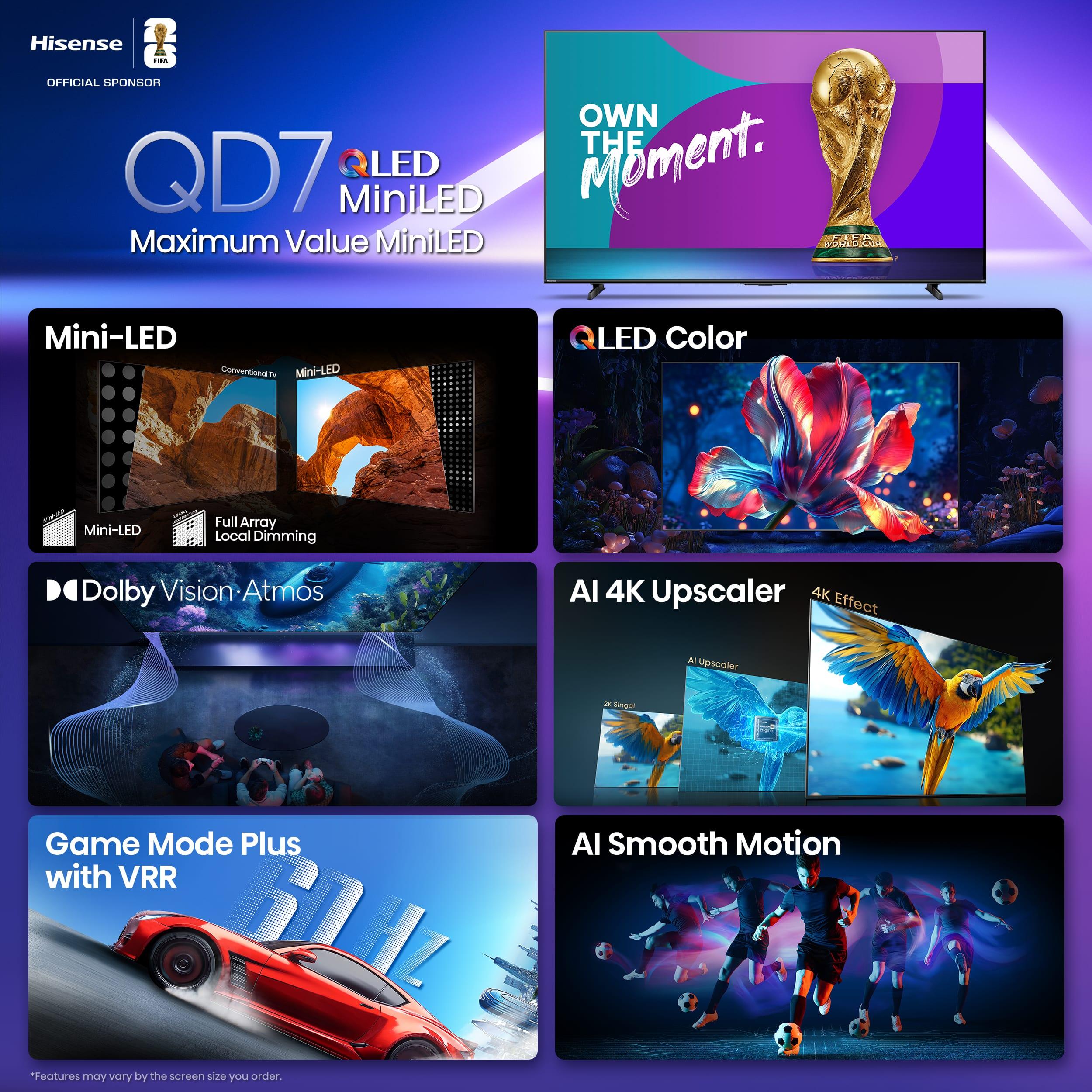
The Hisense QD7, on the other hand, delivers genuine full-array local dimming (FALD) with Mini-LEDs at a significantly lower price point. This represents authentic Mini-LED technology where thousands of tiny LEDs are distributed across the entire back of the screen, each controlled independently to create precise brightness zones.
This difference fundamentally affects how each TV handles contrast – the difference between the brightest whites and the deepest blacks in any given scene. In a movie theater, this contrast is what makes explosions pop off the screen and helps you see details in dark scenes without everything looking washed out.
Having spent considerable time with both technologies, the picture quality differences become apparent quickly, especially in challenging content. The Hisense QD7's true Mini-LED implementation delivers noticeably deeper blacks in dark rooms. When watching something like "Dune" or "The Batman," scenes that transition from bright desert landscapes to dark indoor scenes maintain their impact because the TV can actually turn off specific zones of LEDs.
The Samsung QN70F handles these scenes differently. Its edge-lit system uses algorithms and local dimming zones, but because the light source comes from the edges, you sometimes get what's called "blooming" – where bright objects in dark scenes create a subtle halo effect. It's not always noticeable, and Samsung's processing does a good job minimizing it, but in a side-by-side comparison, the difference is clear.
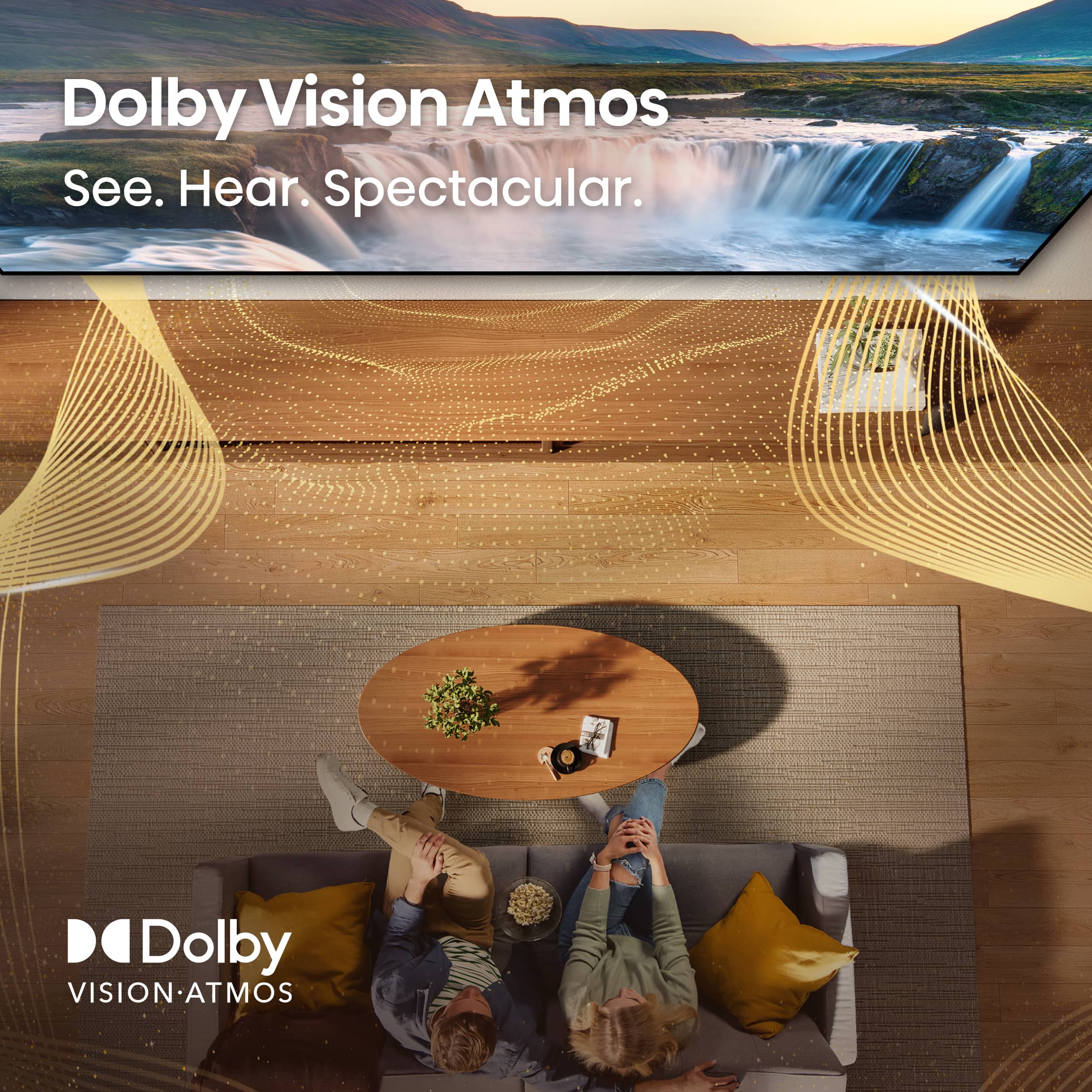
HDR performance is where the Hisense QD7 pulls ahead significantly. It supports Dolby Vision, HDR10+, HDR10, and HLG – essentially every HDR format you'll encounter. Dolby Vision, in particular, uses dynamic metadata to adjust the picture scene by scene, which means a sunset in one scene and a cave in the next are both optimized individually. The Samsung QN70F supports HDR10 and HDR10+ but lacks Dolby Vision, which is increasingly common on Netflix, Disney+, and Apple TV+ content.
Both TVs achieve good peak brightness levels, but the Hisense uses that brightness more effectively thanks to its superior contrast control. In my experience, peak brightness numbers matter less than how well a TV can use contrast to create the illusion of even brighter highlights.
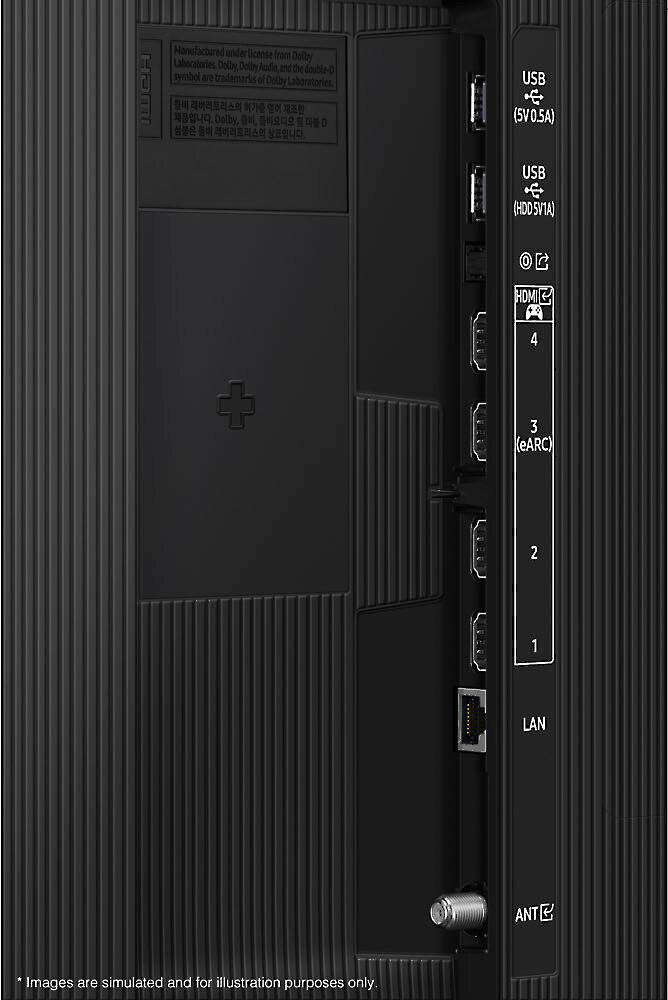
Gaming is where the Samsung QN70F flexes its muscles and justifies much of its price premium. Samsung includes four HDMI 2.1 ports, which might seem like overkill until you consider that serious gamers often have multiple consoles, a PC, and a sound system all competing for high-bandwidth connections.
The TV's VRR implementation is particularly sophisticated. While both TVs support VRR, Samsung's version works more seamlessly across different frame rates and consoles. I've tested both with PlayStation 5 and Xbox Series X, and the Samsung handles frame rate transitions more smoothly, particularly in games that don't maintain consistent frame rates.
However, the Hisense QD7 has a secret weapon: a native 144Hz refresh rate compared to the Samsung's 120Hz (on the 65-inch model). For PC gaming or future console capabilities, this higher refresh rate provides smoother motion. The difference is subtle in most console games, which typically target 60 or 120fps, but it's noticeable in fast-paced sports games or racing titles.
Input lag – the delay between pressing a button and seeing the result – is excellent on both TVs when in game mode. Neither will hold back your gaming performance, though the Samsung edges out slightly in specialized gaming features like its on-screen Game Bar that shows real-time performance metrics.
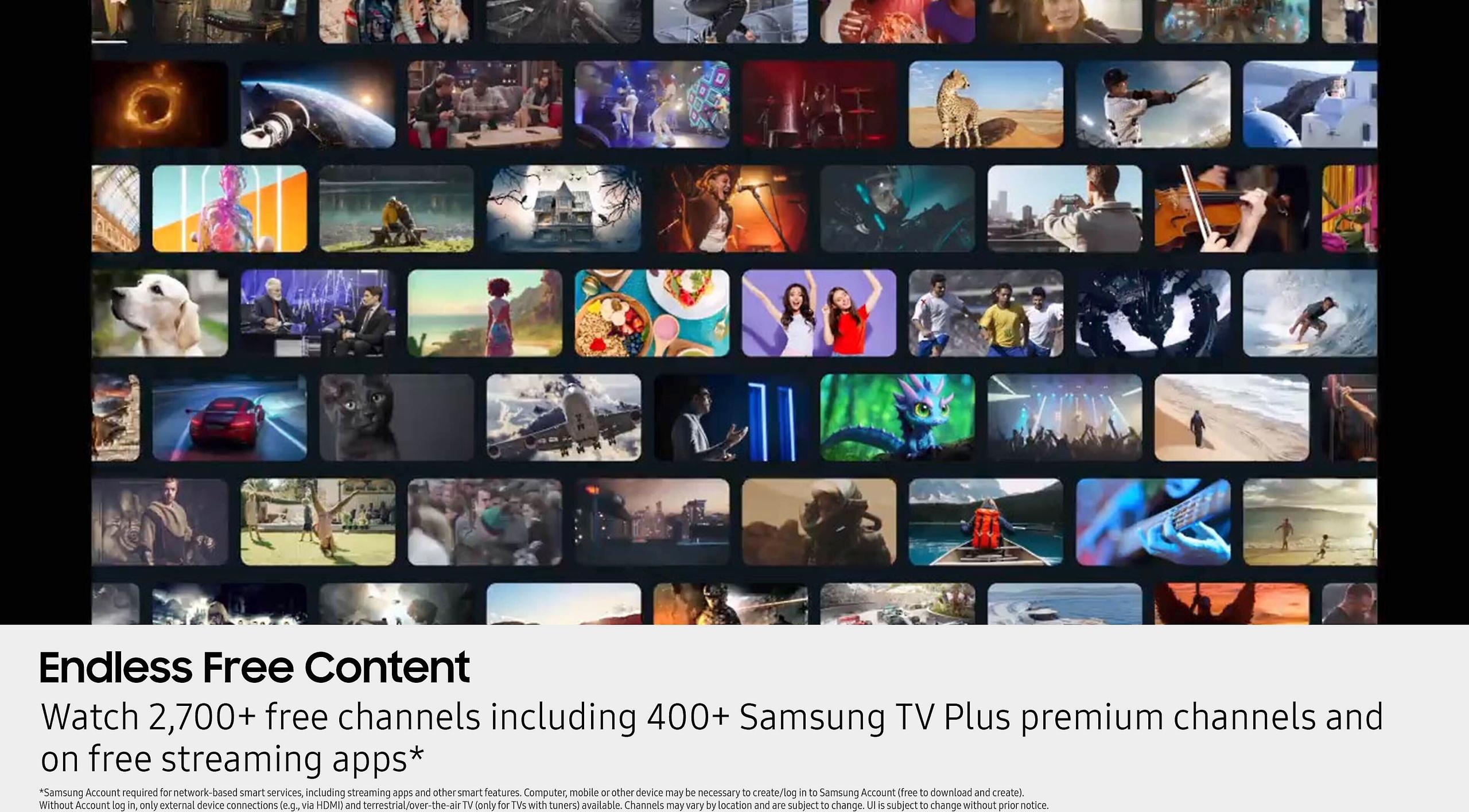
The smart TV experience represents completely different philosophies. Samsung's Tizen OS with Vision AI feels like living in the future – sometimes in good ways, sometimes in overwhelming ways. The AI features can identify actors on screen, provide real-time translations of foreign content, and offer contextual information about what you're watching. It's genuinely impressive when it works, though I find the constant suggestions and pop-ups can be distracting during focused viewing.
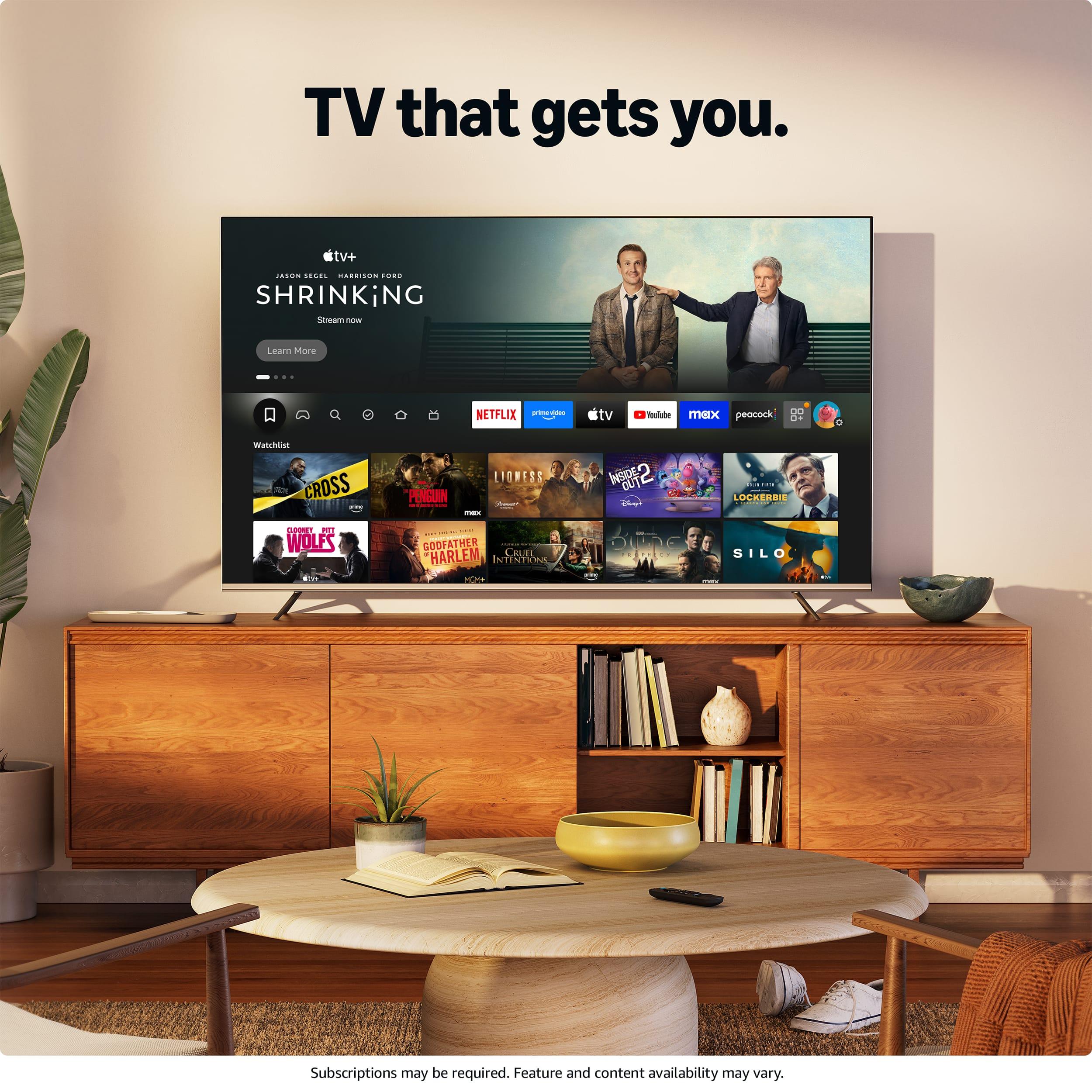
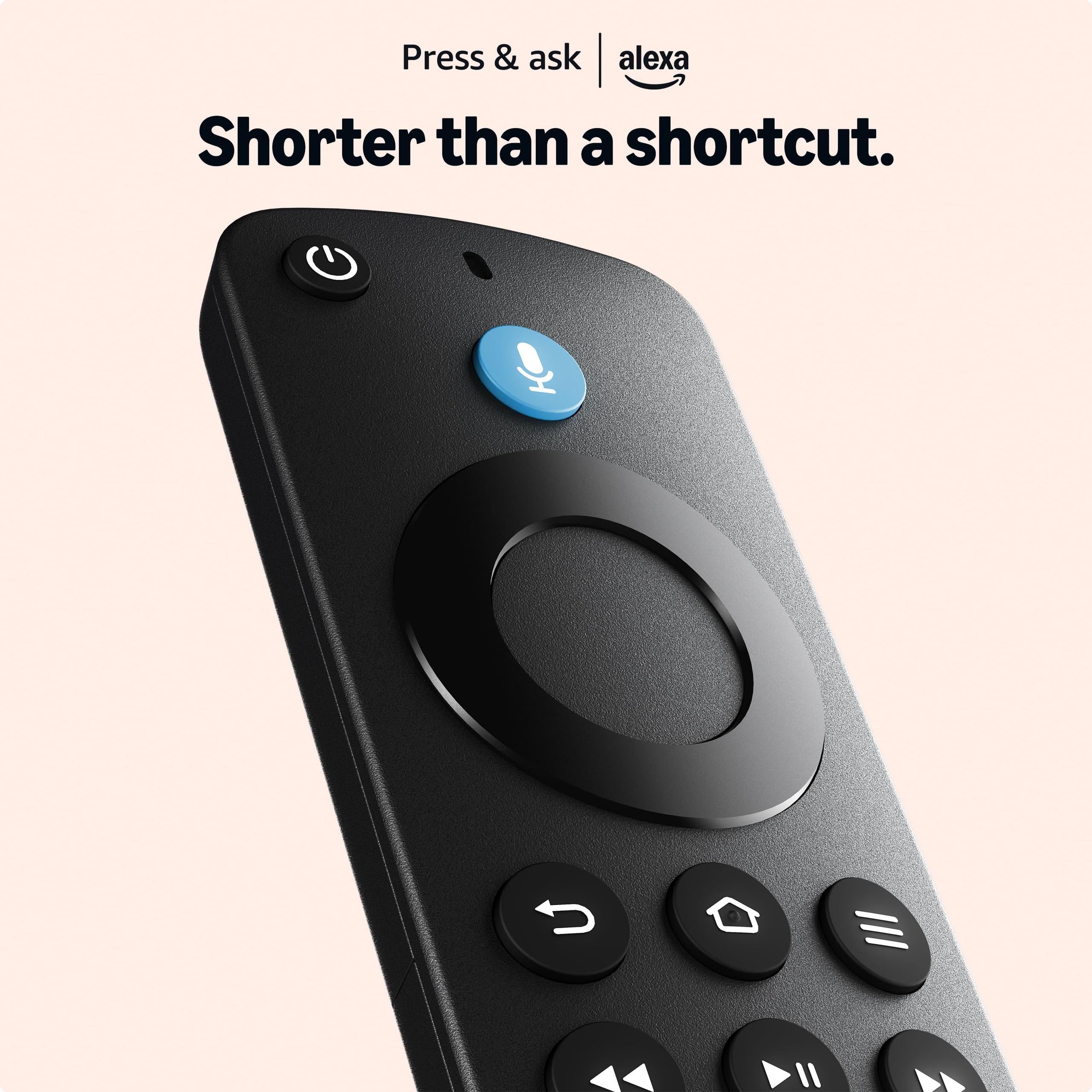
The Hisense QD7's Fire TV platform takes a simpler approach. It's fast, reliable, and integrates seamlessly with Amazon's ecosystem. If you're already using Alexa devices, Prime Video, or have Fire TV devices elsewhere, the experience feels cohesive. The interface is clean and responsive, though it lacks the AI bells and whistles of Samsung's system.
For families who want to easily find content and appreciate smart recommendations, the Samsung offers more sophisticated features. For users who want a straightforward, reliable smart TV experience without complexity, the Hisense delivers exactly that.
Audio often gets overlooked in TV comparisons, but both manufacturers took different approaches here. The Samsung QN70F uses Object Tracking Sound Lite, which attempts to move audio around the screen to match on-screen action. It's a neat trick, though the effectiveness depends heavily on room acoustics and content.
The Hisense QD7 takes a more traditional but effective approach with a 2.1 channel system that includes a dedicated subwoofer. In practical terms, this means better bass response for movie explosions and music content. Neither TV will replace a dedicated sound system for serious home theater use, but the Hisense provides a more satisfying audio experience out of the box.
For dedicated home theater setups, the choice becomes more nuanced. The Hisense QD7's superior contrast performance makes it ideal for dark room viewing, where its Mini-LED advantages are most apparent. Movie enthusiasts will appreciate the Dolby Vision support for the latest streaming content and 4K Blu-rays.
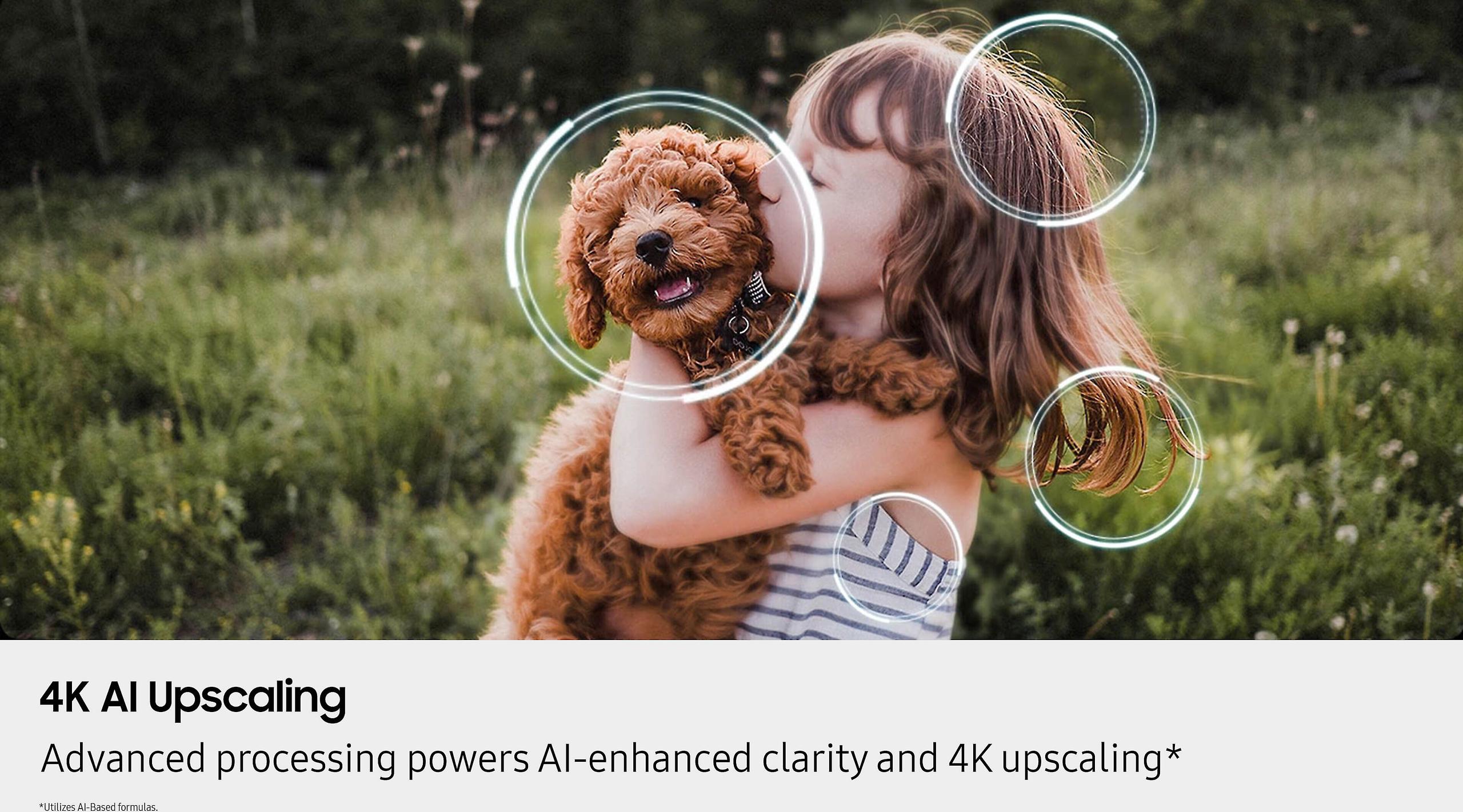
However, the Samsung QN70F offers better integration possibilities. Its four HDMI 2.1 ports accommodate more source devices, and features like eARC (enhanced Audio Return Channel) provide better audio passthrough to high-end sound systems. The Vision AI features can also enhance older content through intelligent upscaling.
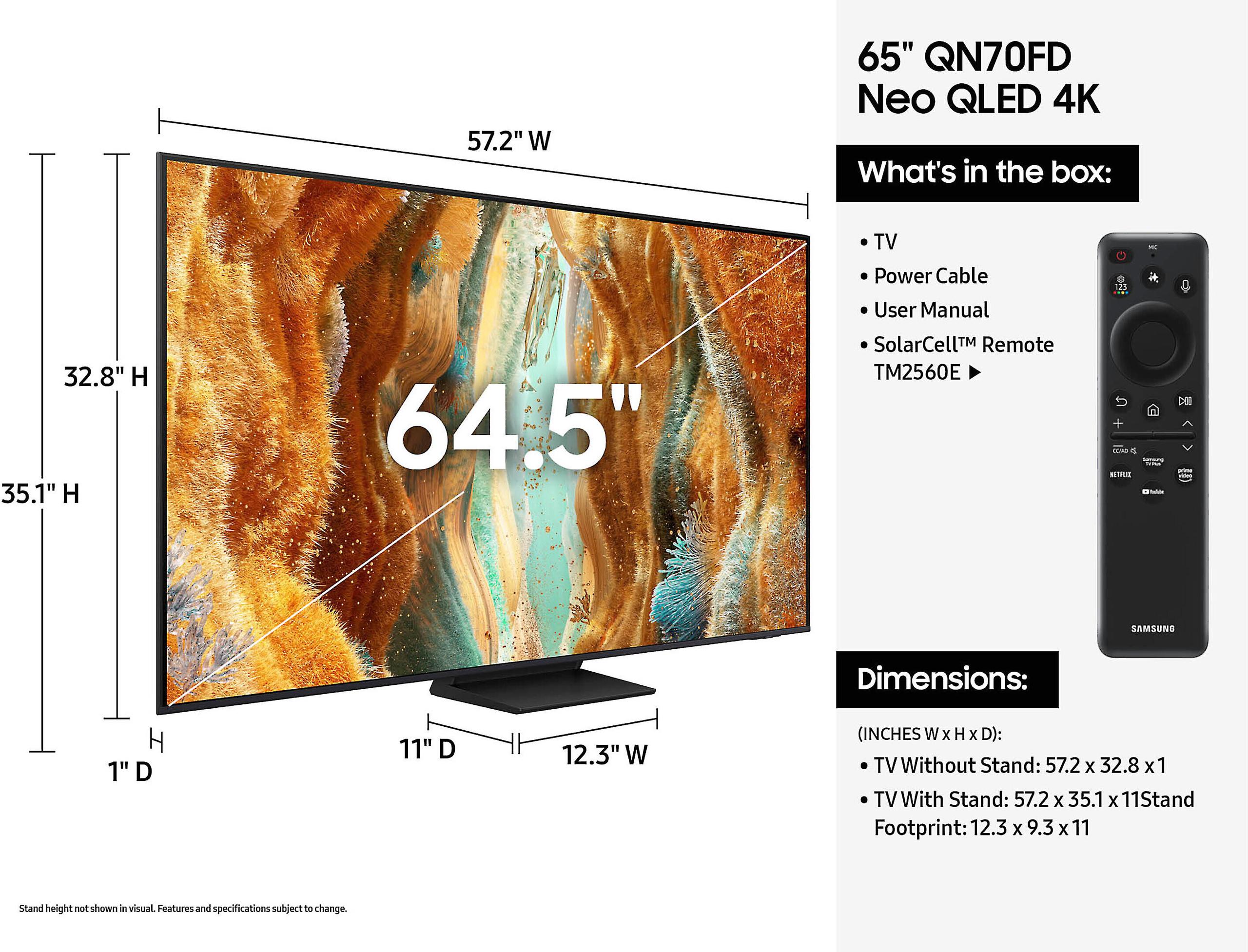
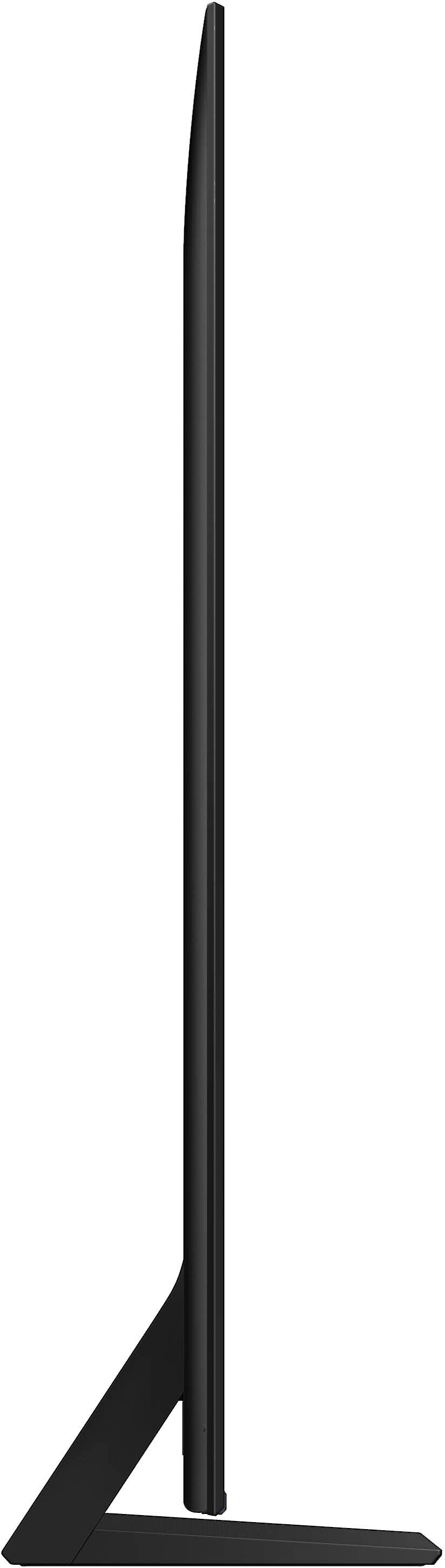
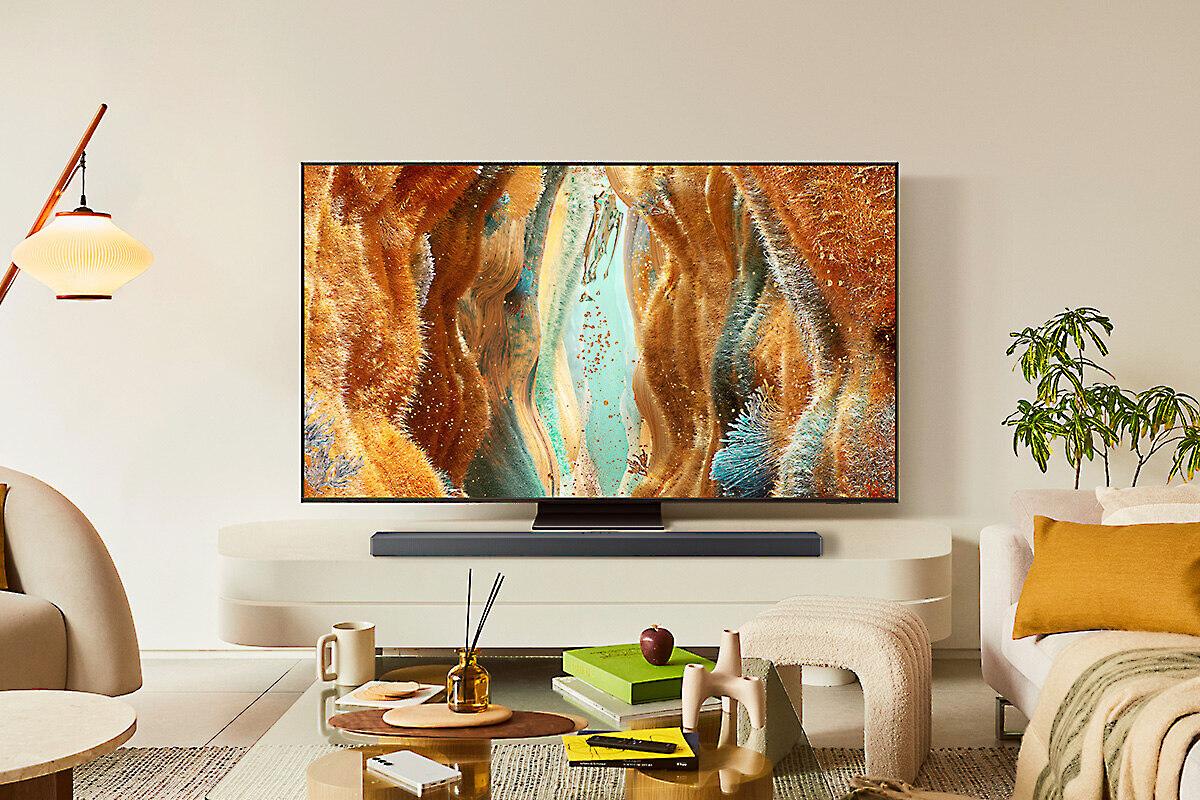
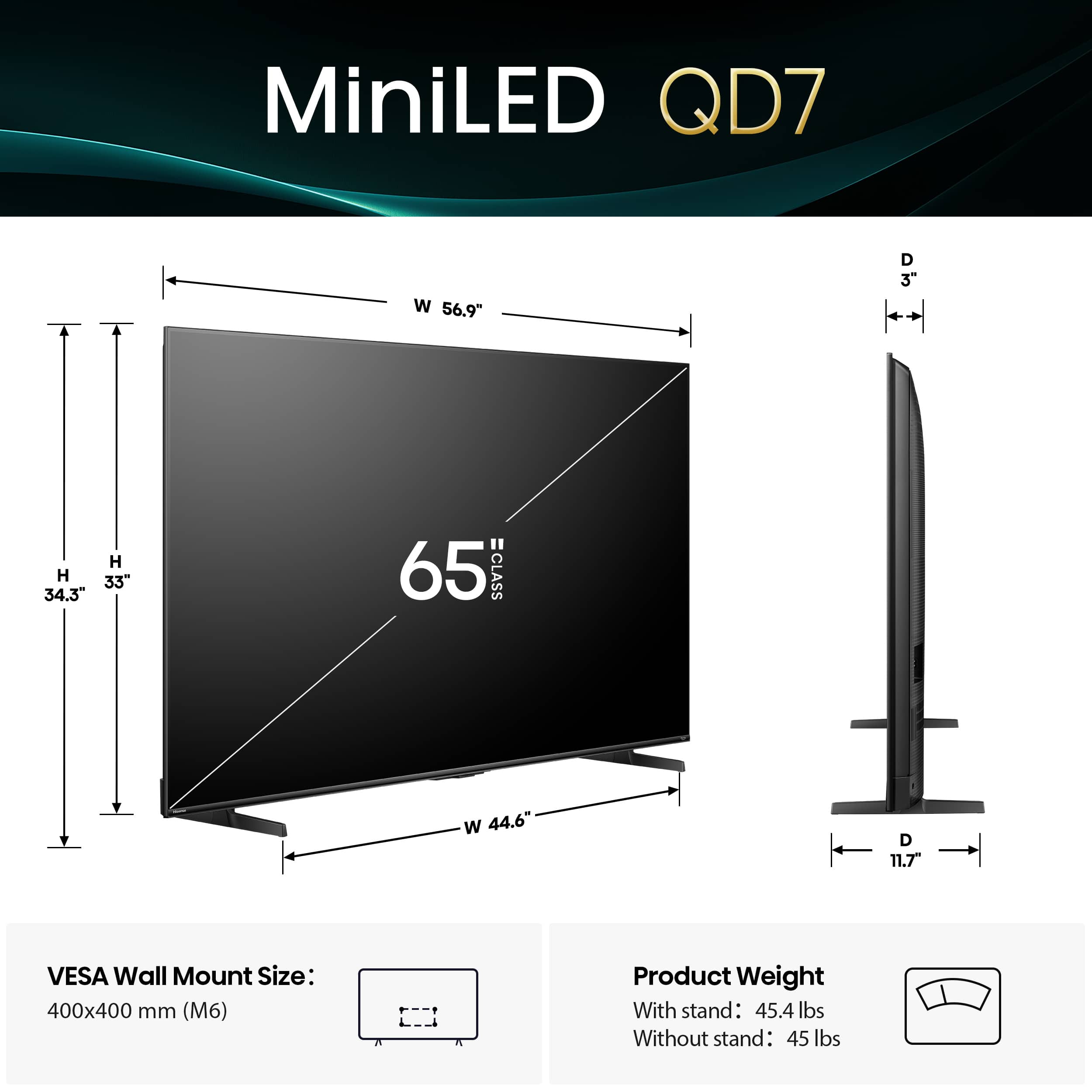
For projection setup considerations, both TVs are thin enough for wall mounting, but the Samsung's ultra-slim profile makes it particularly suitable for installations where the TV needs to sit close to the wall.
At the time of writing, the price difference between these TVs is substantial – often several hundred dollars separating them. This gap reflects not just different approaches to display technology, but different target markets and value propositions.
The Hisense QD7 represents exceptional value by delivering genuine premium display technology at a mid-range price. You're getting authentic Mini-LED performance that would have cost thousands of dollars just a few years ago. For most viewers, particularly those who prioritize picture quality for movies and streaming content, this represents the better value proposition.
The Samsung QN70F asks you to pay a premium for brand reputation, advanced smart features, and superior gaming capabilities. If you're someone who uses multiple gaming consoles, appreciates AI-enhanced features, or wants the peace of mind that comes with Samsung's established ecosystem, that premium may be justified.
Choose the Hisense QD7 if you:
Choose the Samsung QN70F if you:
Both TVs succeed in their respective approaches, but they serve different audiences. The Hisense QD7 democratizes premium display technology, offering genuine Mini-LED performance at a price point that makes it accessible to more buyers. It's proof that you don't need to spend flagship money to get flagship picture quality.
The Samsung QN70F justifies its premium through comprehensive gaming features, sophisticated AI integration, and the intangible benefits of buying from an established premium brand. It's not just about the display technology – it's about the entire ecosystem and user experience.
In my view, most buyers will be better served by the Hisense QD7. The superior display technology delivers tangible benefits every time you turn on the TV, whether you're watching Netflix, playing games, or enjoying 4K Blu-rays. The money saved can go toward a sound system, streaming subscriptions, or simply staying in your budget.
However, if you're a serious gamer or someone who genuinely values and will use the advanced smart features, the Samsung QN70F provides a more complete premium experience. The key is being honest about which features you'll actually use versus which ones sound impressive in marketing materials.
Either way, both TVs represent significant improvements over older display technologies and will deliver excellent performance for years to come. The choice ultimately comes down to your priorities: exceptional display technology at great value, or a premium experience with all the bells and whistles.
| Samsung 65" QN70F Neo QLED 4K Vision AI Smart TV 2025 | Hisense 65" QD7 Series Mini-LED 4K Fire TV 2025 |
|---|---|
| Display Technology - Core difference affecting picture quality and contrast | |
| Edge-lit Neo QLED (marketed as Mini-LED but uses edge lighting) | True Mini-LED with Full Array Local Dimming (authentic implementation) |
| HDR Format Support - Determines compatibility with streaming content | |
| HDR10, HDR10+ (missing Dolby Vision for Netflix/Disney+ content) | Dolby Vision, HDR10, HDR10+, HLG (supports all major formats) |
| Refresh Rate - Important for sports and gaming smoothness | |
| 120Hz (65" model) with Motion Xcelerator 144Hz processing | 144Hz native refresh rate |
| HDMI 2.1 Ports - Critical for next-gen gaming consoles | |
| 4 HDMI 2.1 ports (excellent for multiple gaming devices) | Standard HDMI ports (adequate for most users) |
| Smart TV Platform - Daily user experience and ecosystem integration | |
| Tizen OS with Vision AI (actor ID, live translation, advanced features) | Fire TV (simple, reliable Amazon ecosystem integration) |
| Gaming Features - Performance for PlayStation 5/Xbox Series X | |
| Advanced VRR, ALLM, Game Bar with performance metrics | VRR, ALLM, Game Mode Plus (solid but less comprehensive) |
| Audio System - Built-in sound quality | |
| Object Tracking Sound Lite, 20W, 2CH (sound follows action) | 2.1 channel with dedicated subwoofer (better bass response) |
| Contrast Performance - Most noticeable difference in dark scenes | |
| Good but limited by edge-lit design (some blooming in dark content) | Excellent with true Mini-LED zones (deep blacks, precise dimming) |
| Processor - AI enhancement and upscaling capabilities | |
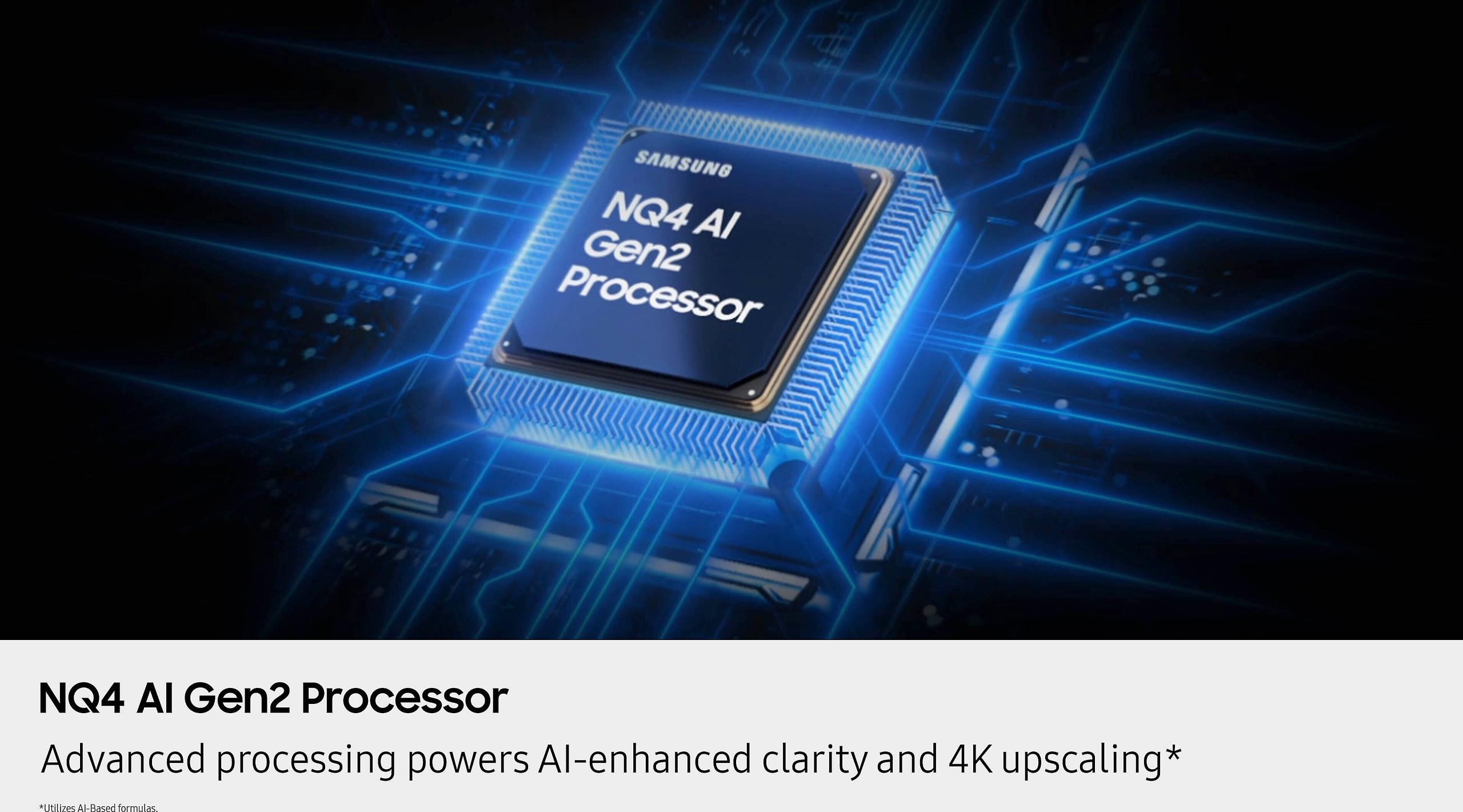
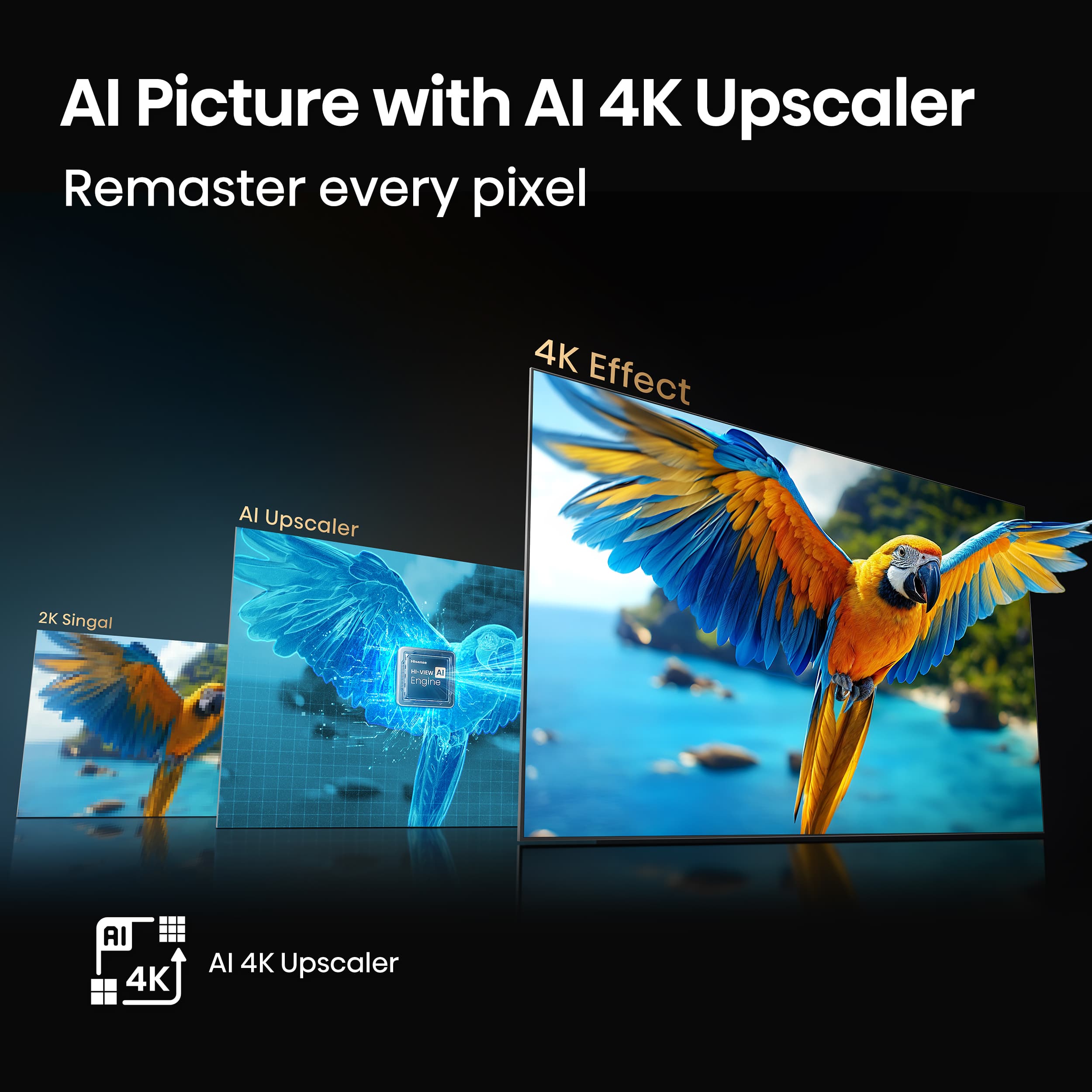
| NQ4 AI Gen2 with 20 neural networks (advanced upscaling) | Standard processor (good but less sophisticated) |
| Build Quality - Physical design and materials | |
| Ultra-slim 1" depth, premium Samsung construction | Standard thickness, solid build quality |
| Voice Control - Smart home integration | |
| Bixby and Alexa built-in with far-field voice interaction | Alexa built-in through Fire TV platform |
| Best Value For | |
| Serious gamers and users who want premium smart features | Movie watchers prioritizing authentic Mini-LED picture quality |
The Hisense 65" QD7 delivers superior picture quality for movies and streaming content due to its authentic Mini-LED technology with full-array local dimming. This provides deeper blacks and better contrast control compared to the Samsung QN70F's edge-lit system. The Hisense QD7 also supports Dolby Vision, which enhances Netflix, Disney+, and Apple TV+ content with scene-by-scene optimization.
The Samsung QN70F is the better choice for serious gaming, offering four HDMI 2.1 ports, advanced Variable Refresh Rate (VRR), and comprehensive gaming features like the Game Bar. While the Hisense QD7 provides good gaming performance with a 144Hz refresh rate, the Samsung delivers more gaming-focused features and better multi-console connectivity.
The core difference is display technology: the Samsung QN70F uses edge-lit backlighting despite its Neo QLED marketing, while the Hisense QD7 features true Mini-LED with full-array local dimming. This means the Hisense can control brightness more precisely across the screen, resulting in better contrast and deeper blacks for most viewing content.
The Hisense QD7 provides exceptional value by delivering genuine Mini-LED display technology at a significantly lower price point. You get authentic premium picture quality that rivals much more expensive TVs. The Samsung QN70F costs considerably more but justifies this through advanced gaming features and AI-powered smart TV capabilities.
No, there's a significant difference in HDR support. The Hisense QD7 supports all major HDR formats including Dolby Vision, HDR10+, HDR10, and HLG. The Samsung QN70F only supports HDR10 and HDR10+, missing Dolby Vision which is commonly used by Netflix, Disney+, and other streaming services.
The Hisense QD7 excels in dark room environments thanks to its true Mini-LED technology that can turn off individual lighting zones completely. This creates deeper blacks and better contrast than the Samsung QN70F's edge-lit system, which can struggle with light bleeding in very dark scenes. For dedicated home theaters, the Hisense provides a more cinematic experience.
The Samsung QN70F runs Samsung's Tizen OS with Vision AI features like actor identification, live translation, and content recommendations. The Hisense QD7 uses Amazon's Fire TV platform, which offers a simpler but reliable interface with excellent integration into Amazon's ecosystem including Alexa voice control.
The Hisense QD7 has superior built-in audio with a 2.1 channel system that includes a dedicated subwoofer for better bass response. The Samsung QN70F features Object Tracking Sound Lite technology that moves audio around the screen, but the Hisense's subwoofer provides more satisfying sound quality for movies and music.
Yes, both TVs support 4K gaming, but with different strengths. The Samsung QN70F offers 120Hz with advanced gaming features and multiple HDMI 2.1 ports for connecting several gaming devices. The Hisense QD7 provides a native 144Hz refresh rate, which is higher than the Samsung, but has fewer premium gaming connectivity options.
Both TVs perform adequately in bright rooms, but the Samsung QN70F may have a slight edge due to potentially higher peak brightness levels. However, the Hisense QD7's better contrast control can help maintain picture quality even in brighter environments. Neither TV will struggle significantly with ambient light compared to older display technologies.
Yes, both support voice control but through different systems. The Samsung QN70F includes both Bixby and Alexa with far-field voice interaction, plus Samsung's AI features for content identification. The Hisense QD7 has Alexa built-in through the Fire TV platform and works seamlessly with existing Amazon Echo devices and smart home setups.
For authentic cutting-edge display technology, choose the Hisense QD7, which delivers genuine Mini-LED with full-array local dimming - the same technology found in much more expensive flagship TVs. While the Samsung QN70F markets itself as Neo QLED Mini-LED, it actually uses edge-lit technology. The Hisense provides the more advanced display implementation at a lower cost.
We've done our best to create useful and informative comparisons to help you decide what product to buy. Our research uses advanced automated methods to create this comparison and perfection is not possible - please contact us for corrections or questions. These are the sites we've researched in the creation of this article: rtings.com - youtube.com - wifihifi.com - samsung.com - samsung.com - samsung.com - samsung.com - flatpanelshd.com - news.samsung.com - bestbuy.com - bestbuy.com - custrevs.com - youtube.com - bestbuy.com - rtings.com - youtube.com - rtings.com - pcrichard.com - bestbuy.com - pcrichard.com - camelcamelcamel.com - amazonfiretv.blog - hisense-usa.com - hisense-usa.com - hisense-usa.com - bestbuy.com - leaseville.com - youtube.com - bestbuy.com - flatpanelshd.com

Privacy Policy
Terms and Conditions - Affiliate Policy
Home Security
© Copyright 2008-2026.
11816 Inwood Rd #1211, Dallas, TX 75244