

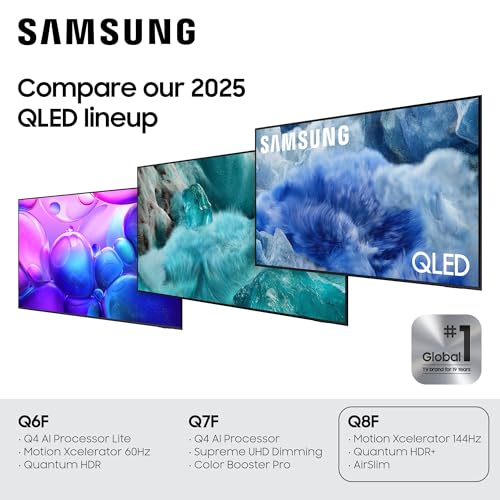
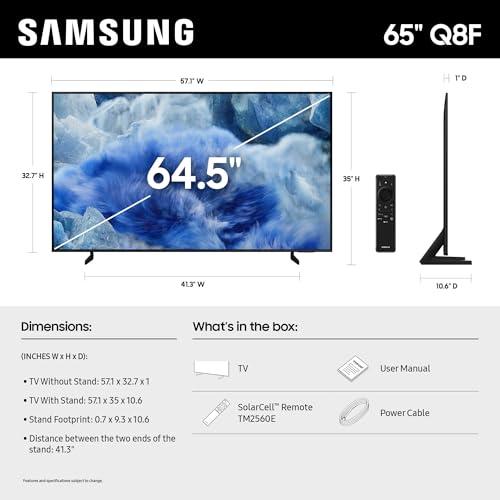
Shopping for a premium 65-inch 4K TV in 2024 means navigating an exciting but complex landscape of display technologies. Two standout options represent different philosophies in TV design: the Samsung Q8F emphasizes versatile performance at an accessible price point, while the Sony BRAVIA 9 pushes Mini LED technology to deliver reference-quality pictures at a premium cost.
Both TVs launched in 2024, representing the latest thinking in display technology. The Samsung Q8F builds on Samsung's mature QLED platform with improved AI processing and gaming features, while the Sony BRAVIA 9 introduces Sony's most advanced Mini LED backlighting system—a significant departure from their traditional approach.
Before diving into specifics, it's worth understanding what separates premium TVs from budget models. The key differentiators include local dimming (the ability to brighten or darken specific screen areas independently), color volume (how accurately colors appear at different brightness levels), peak brightness (how bright whites can get), and processing power (how well the TV enhances incoming content).
The most important performance metrics for any premium TV are contrast ratio (the difference between the brightest whites and darkest blacks), color accuracy, motion handling, and HDR performance. These elements work together to create that "wow factor" when watching high-quality content.
At the time of writing, the Samsung Q8F positions itself as a premium mid-tier option, typically priced several hundred dollars below Sony's flagship. The Sony BRAVIA 9 commands a significant premium—sometimes 40-50% more—reflecting its Mini LED technology and Sony's premium brand positioning.
This price gap creates an interesting value proposition. The question isn't simply which TV is better, but whether the Sony's advantages justify the substantial cost difference for your specific viewing habits and room setup.
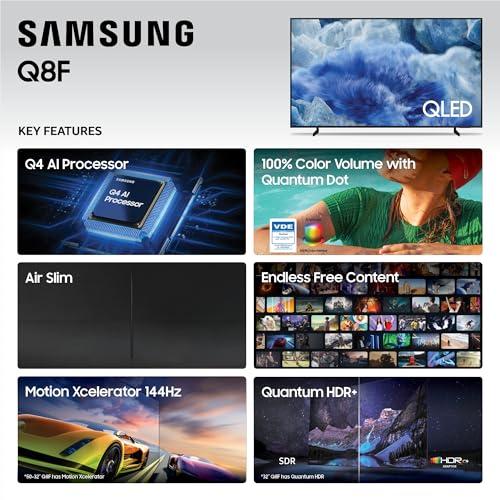
The Samsung Q8F uses Quantum Dot Enhanced Liquid Crystal Display (QLED) technology, which places a layer of quantum dots between the LED backlight and LCD panel. These microscopic particles convert blue LED light into precise red and green wavelengths, creating more accurate colors than traditional LCD TVs.
Samsung pairs this with Dual LED backlighting—a system using both warm and cool LED temperatures to improve contrast and color accuracy. The TV also features Supreme UHD Dimming, which divides the screen into zones for localized brightness control, though not as precisely as full-array local dimming systems.
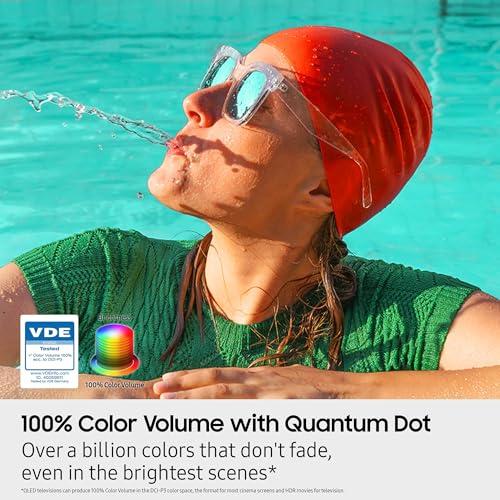
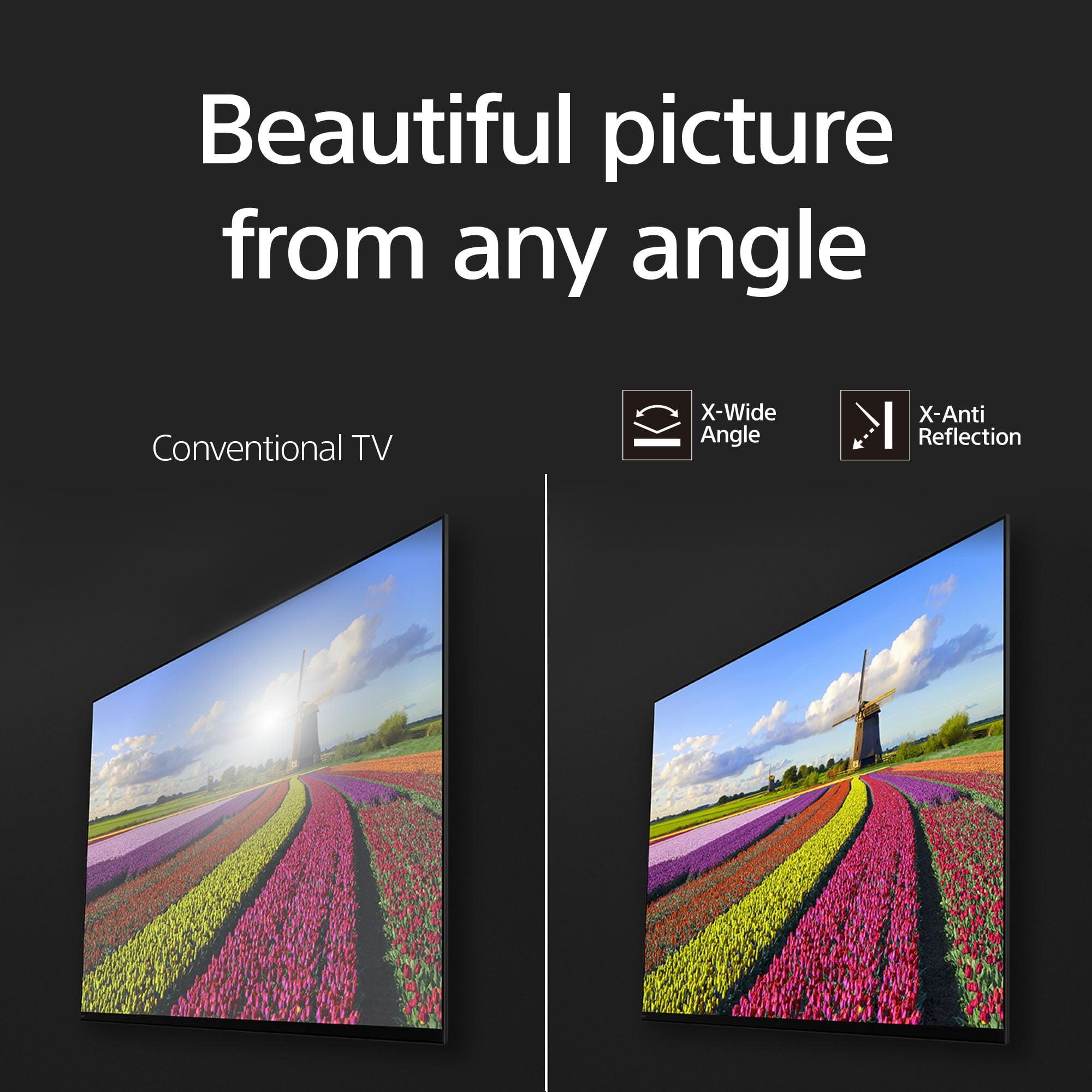
The result is a display that excels in bright rooms. QLED technology naturally produces vibrant, saturated colors and maintains picture quality even with significant ambient light. Samsung claims 100% Color Volume, meaning colors remain accurate across all brightness levels—a genuine strength of quantum dot technology.
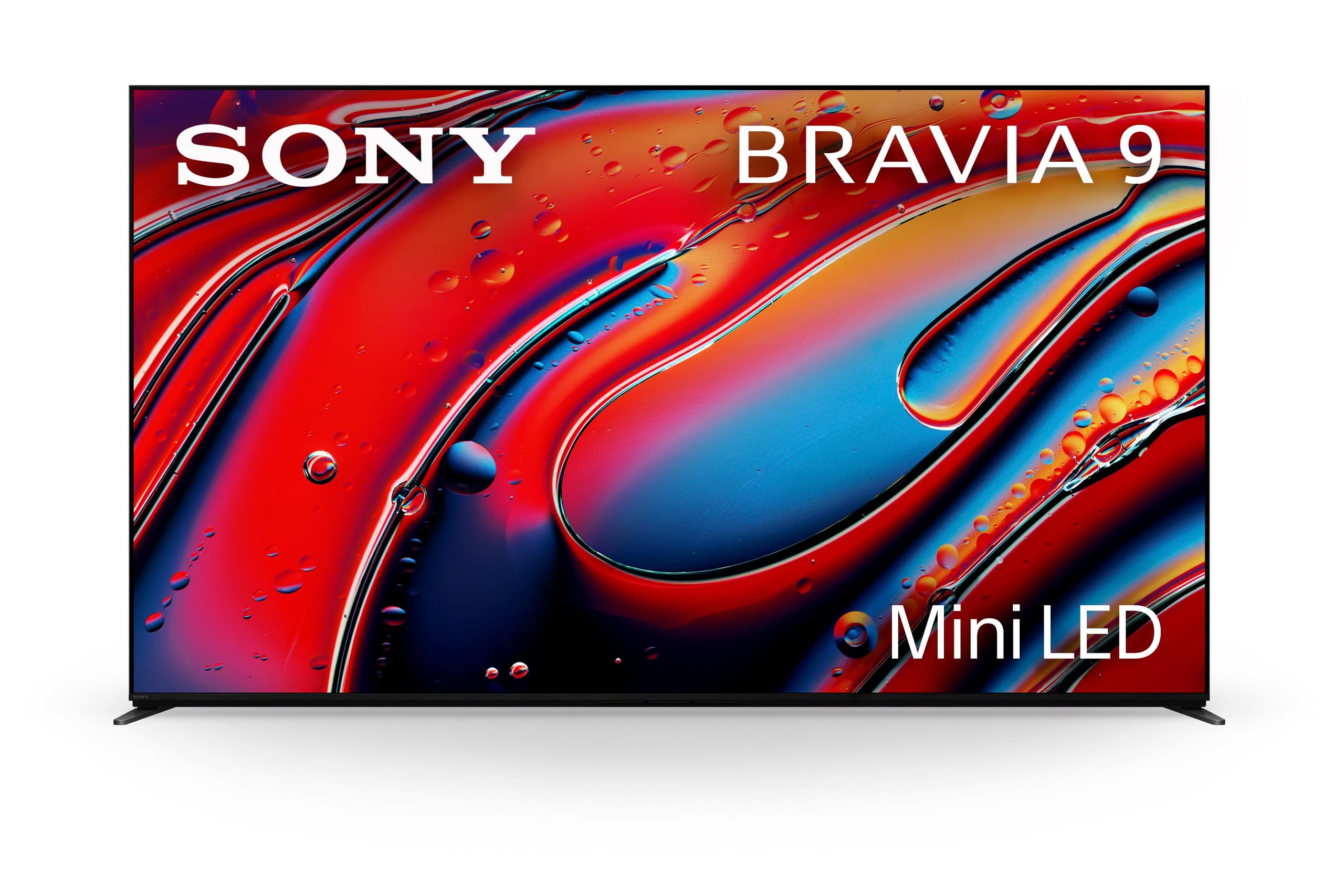
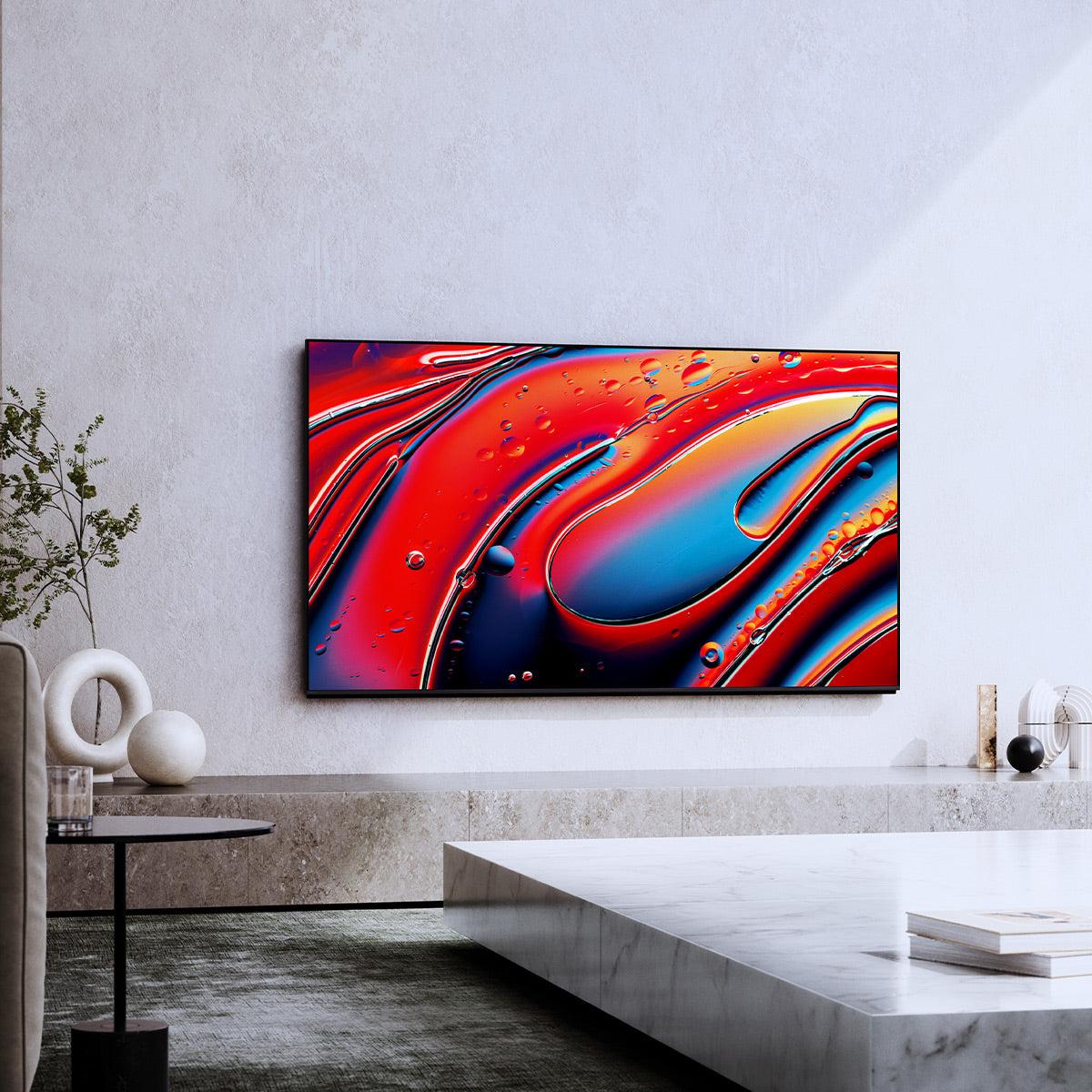
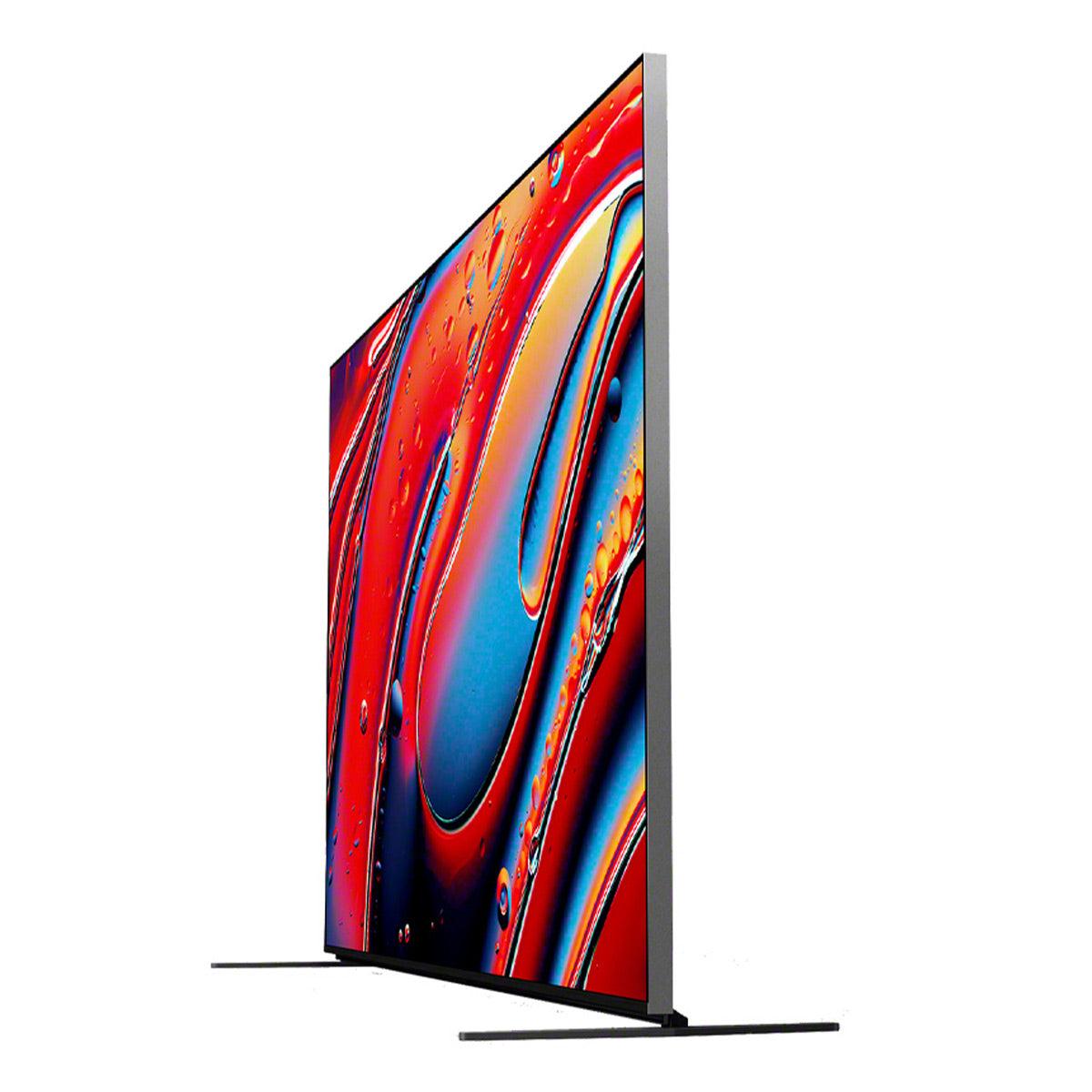
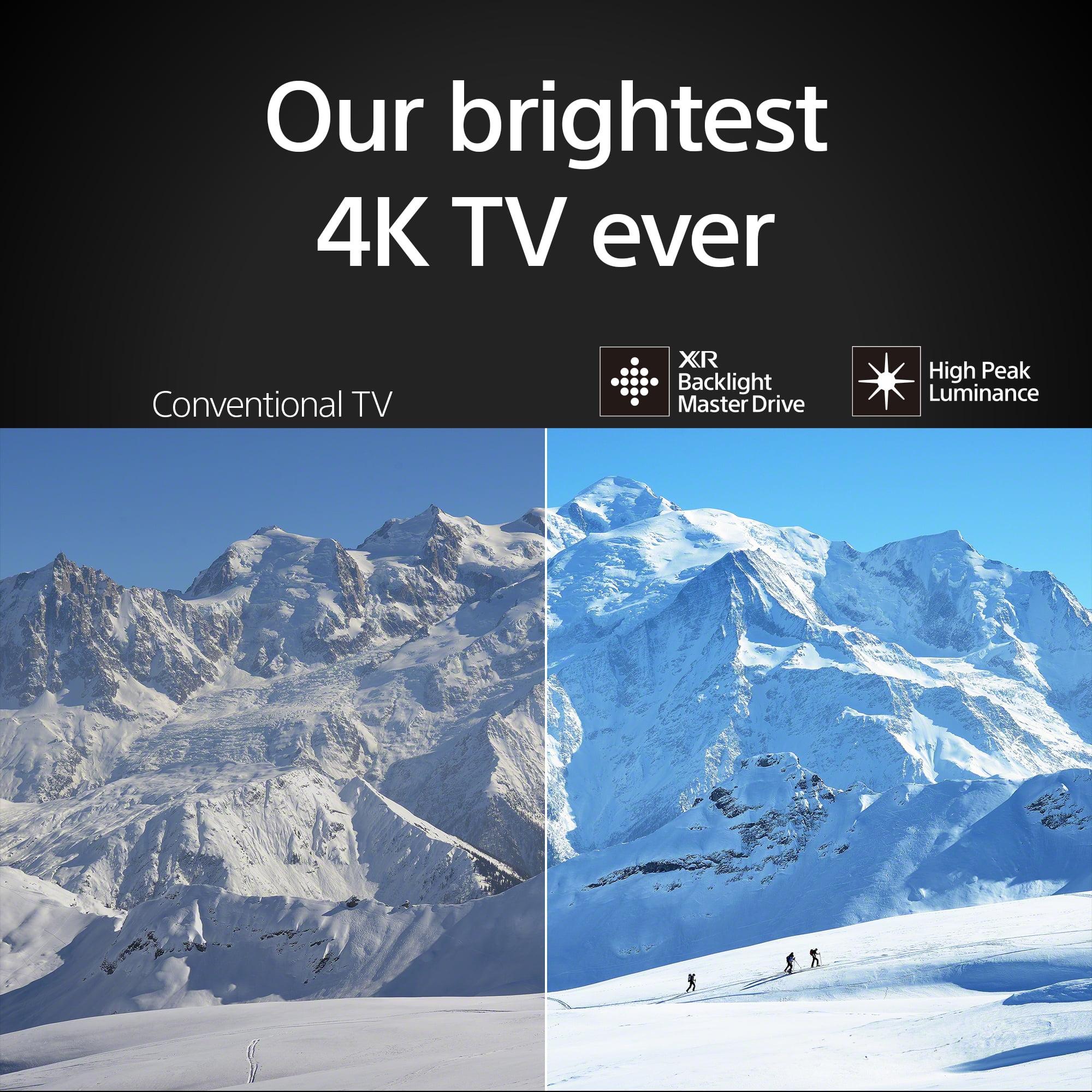
The Sony BRAVIA 9 takes a fundamentally different approach with Mini LED backlighting. Instead of traditional LEDs, it uses thousands of LEDs roughly 1/40th the size of conventional backlights. This allows for dramatically more local dimming zones—areas of the screen that can be independently controlled for brightness.
Sony's XR Backlight Master Drive manages these thousands of Mini LEDs with remarkable precision. When watching a movie with a bright explosion against a dark night sky, the system can make the explosion blindingly bright while keeping surrounding areas genuinely dark. This creates contrast levels approaching OLED displays while maintaining the brightness advantages of LED technology.
The BRAVIA 9 also incorporates XR Triluminos Pro, Sony's color technology that emphasizes natural, realistic colors over the more saturated approach Samsung typically takes. This difference becomes apparent when watching content with natural subjects—skin tones, landscapes, and food often appear more lifelike on Sony displays.
High Dynamic Range (HDR) represents the most significant advancement in TV technology since the jump to 4K resolution. HDR content contains brightness information that far exceeds what traditional TVs can display, requiring advanced processing to map this content to each display's capabilities.
The Sony BRAVIA 9 delivers Sony's brightest picture ever, with peak brightness capabilities that genuinely showcase HDR content as intended. When watching HDR movies on Netflix or 4K Blu-rays, bright highlights like sunlight through windows or reflections off water appear with realistic intensity without washing out surrounding details.
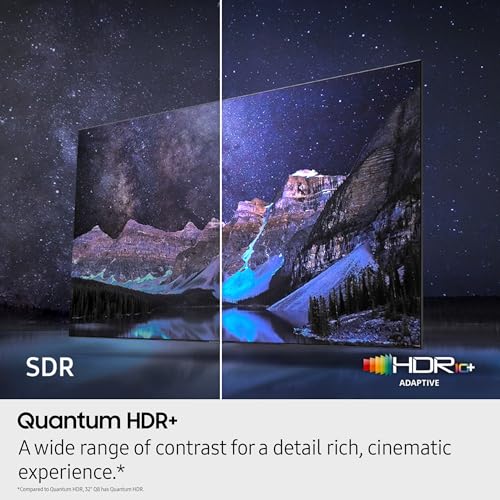
The Samsung Q8F also handles HDR well, supporting HDR10+ Adaptive, which analyzes content scene-by-scene to optimize the HDR mapping. However, it lacks Dolby Vision support—a limitation that matters for premium streaming content from Netflix, Apple TV+, and Disney+. Dolby Vision provides more sophisticated HDR processing and is becoming the premium HDR standard.
This represents the biggest performance gap between these TVs. The Sony BRAVIA 9's Mini LED system achieves significantly deeper blacks than the Samsung Q8F's edge-lit design. In dark room viewing, this translates to more immersive picture quality where dark scenes retain detail without appearing gray or washed out.
The Samsung's Dual LED system helps, but can't match the precise zone control of thousands of Mini LEDs. You'll notice this difference most when watching movies with dark scenes—think Christopher Nolan films or Game of Thrones' notoriously dark episodes.
Both TVs excel at color reproduction but with different philosophies. Samsung's quantum dot technology produces colors that appear vivid and exciting—great for sports, animation, and vibrant content. The Q8F maintains color saturation even at high brightness levels, making it excellent for daytime viewing.
Sony's approach emphasizes accuracy over excitement. The BRAVIA 9 renders skin tones with remarkable naturalness and handles subtle color gradations better. This becomes apparent when watching prestige dramas or documentaries where realistic color reproduction enhances the viewing experience.
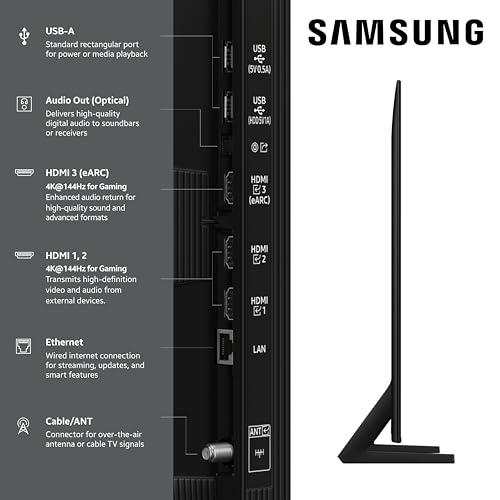
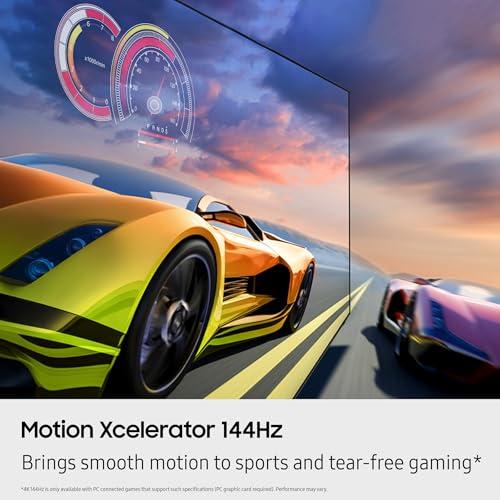
Both TVs target serious gamers, but with different strengths. The Samsung Q8F offers 4K 144Hz support across all HDMI ports—a significant advantage for PC gaming and future console capabilities. This higher refresh rate means smoother motion during fast-paced games, particularly beneficial for competitive gaming.
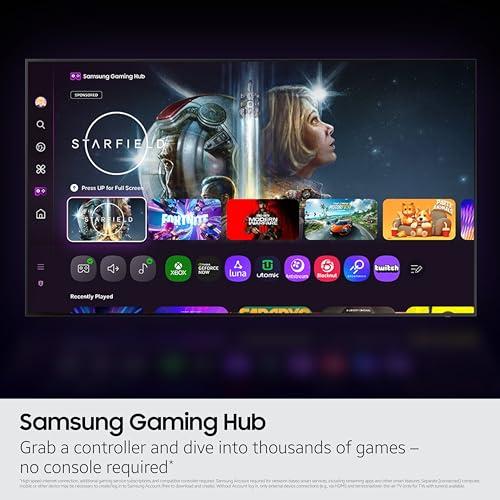
Samsung's Motion Xcelerator 144Hz technology reduces motion blur during gameplay, while Auto Game Mode automatically optimizes settings when it detects gaming content. The TV also includes Variable Refresh Rate (VRR) support, which eliminates screen tearing by synchronizing the display's refresh rate with the gaming device's output.
The Sony BRAVIA 9 supports 4K 120Hz on its HDMI 2.1 ports, which handles current PlayStation 5 and Xbox Series X games perfectly. Sony's Auto HDR Tone Mapping specifically optimizes HDR gaming for PlayStation 5, reflecting Sony's console division influence. The TV's superior contrast also enhances gaming immersion, particularly in darker games where shadow detail matters.
For most console gamers, both TVs perform excellently. PC gamers who want maximum refresh rates should favor the Samsung, while PlayStation owners might appreciate Sony's optimizations.
The choice between Tizen (Samsung) and Google TV (Sony) often comes down to personal ecosystem preferences and smart home integration needs.
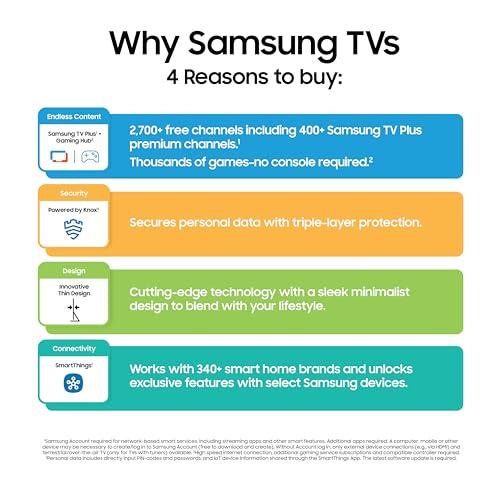
Samsung's Tizen platform has matured significantly, offering smooth navigation and comprehensive app support. The Q8F includes Samsung TV Plus with thousands of free channels, and the integrated SmartThings Hub can control compatible smart home devices directly from the TV. This eliminates the need for separate smart home hubs in many setups.
The Bixby voice assistant has improved considerably, now handling complex multi-step commands. However, if you're deeply invested in Google or Amazon ecosystems, Samsung's AI integration might feel less natural.
Google TV on the Sony BRAVIA 9 excels at content discovery, using Google's algorithms to suggest shows across streaming platforms. The built-in Chromecast functionality works seamlessly with Android phones, and Google Assistant integration feels more comprehensive than Samsung's offering.
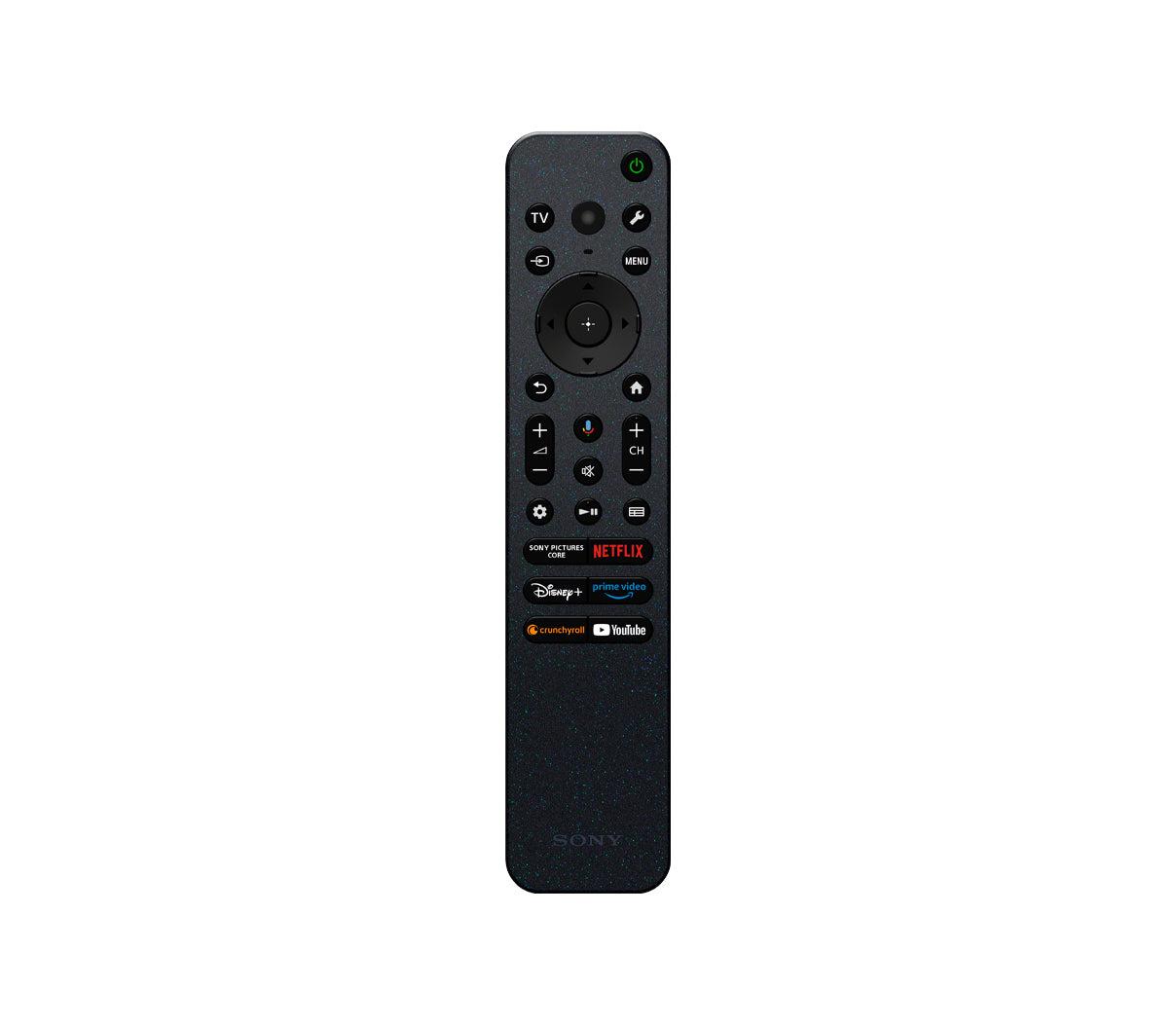
Sony also provides access to Sony Pictures Core, offering free movies for Sony TV owners—a nice value-add that helps offset the higher purchase price.
While most premium TV buyers eventually add soundbars, the built-in audio quality varies dramatically between these models.
The Samsung Q8F features a modest 20W, 2-channel system with Object Tracking Sound Lite that attempts to move audio across the screen. It's adequate for casual viewing but clearly designed with the expectation that serious users will add external audio.
The Sony BRAVIA 9 includes a substantially more powerful 70W, 2.2.2-channel system with up-firing beam tweeters built into the frame. This Acoustic Multi-Audio+ system creates a surprisingly expansive soundstage for built-in TV speakers. The Dolby Atmos support and 3D Surround Upscaling genuinely enhance the viewing experience without additional equipment.
For buyers planning to use built-in audio—perhaps in a bedroom or secondary viewing space—the Sony provides significantly better sound quality that might delay or eliminate the need for a soundbar.
For dedicated home theater setups, room characteristics become crucial in choosing between these TVs.
Bright rooms with lots of windows strongly favor the Samsung Q8F. QLED technology maintains picture quality despite ambient light, and Samsung's processing emphasizes the vibrant colors that combat light reflection. The lower purchase price also leaves more budget for room treatments or audio equipment.
Dark, controlled environments showcase the Sony BRAVIA 9's strengths. The Mini LED backlighting system delivers contrast that approaches OLED performance while maintaining the brightness needed for HDR content. If you've invested in blackout curtains and controlled lighting, the Sony's picture quality advantages become more apparent.
Mixed-use rooms—spaces used for both daytime TV watching and evening movie viewing—present the toughest choice. The Samsung offers better all-around performance across different lighting conditions, while the Sony provides superior picture quality when conditions allow.
Our research into professional reviews and user experiences reveals consistent patterns. The Samsung Q8F earns praise for its bright, vibrant picture and comprehensive gaming features. Users consistently highlight its excellent upscaling of non-4K content and reliable smart platform performance. The main criticisms focus on black level performance in dark rooms and occasional blooming around bright objects.
The Sony BRAVIA 9 receives acclaim for picture quality and natural color reproduction, with reviewers noting its exceptional contrast and processing capabilities. Users appreciate the superior built-in audio and premium build quality. However, some find Sony's color presentation less exciting than Samsung's more saturated approach, and the higher price point draws frequent mention.
Choose the Samsung Q8F if you:
The Samsung delivers approximately 80% of premium TV performance at a significantly lower cost, making it excellent value for most buyers.
Choose the Sony BRAVIA 9 if you:
The Sony justifies its premium pricing for viewers who can appreciate its advanced technology in appropriate viewing conditions.
At the time of writing, both TVs represent strong values in their respective market segments. The Samsung Q8F offers remarkable performance accessibility—delivering premium TV features without the premium price penalty. It's an excellent choice for most buyers, especially those with bright rooms or serious gaming interests.
The Sony BRAVIA 9 targets buyers willing to pay more for cutting-edge technology and superior picture quality. Its Mini LED implementation genuinely advances display technology, delivering contrast performance that justifies the premium for viewers who can appreciate the difference.
Your room characteristics and viewing habits should drive this decision more than brand loyalty or feature lists. Both TVs will deliver years of excellent performance, but they excel in different scenarios and serve different priorities in premium TV ownership.
| Samsung 65" QLED Q8F 4K Smart TV 2025 | Sony BRAVIA 9 65" 4K UHD Mini LED QLED Smart Google TV |
|---|---|
| Display Technology - Core difference affecting picture quality and price | |
| QLED with Dual LED backlighting, edge-lit design | Mini LED with thousands of precise dimming zones |
| Peak Brightness - Critical for HDR and bright room viewing | |
| High brightness with Quantum HDR+ | Sony's brightest TV ever with superior HDR peak brightness |
| Black Levels & Contrast - Most noticeable difference in dark rooms | |
| Good blacks for edge-lit QLED, some blooming possible | Exceptional blacks approaching OLED quality |
| Gaming Refresh Rate - Matters for PC gaming and future consoles | |
| 4K 144Hz on all HDMI ports | 4K 120Hz on HDMI 2.1 ports |
| HDR Format Support - Important for premium streaming content | |
| HDR10+ Adaptive (no Dolby Vision) | HDR10, HDR10+, Dolby Vision, and HLG |
| Smart Platform - Affects daily user experience and ecosystem integration | |
| Tizen with SmartThings Hub built-in | Google TV with Chromecast built-in |
| Built-in Audio Power - Determines if you need a soundbar immediately | |
| 20W 2-channel system (soundbar recommended) | 70W 2.2.2-channel with Dolby Atmos (surprisingly good) |
| Color Approach - Affects visual preference and content accuracy | |
| Vibrant, saturated quantum dot colors | Natural, accurate color reproduction |
| Processor & Upscaling - Important for non-4K content quality | |
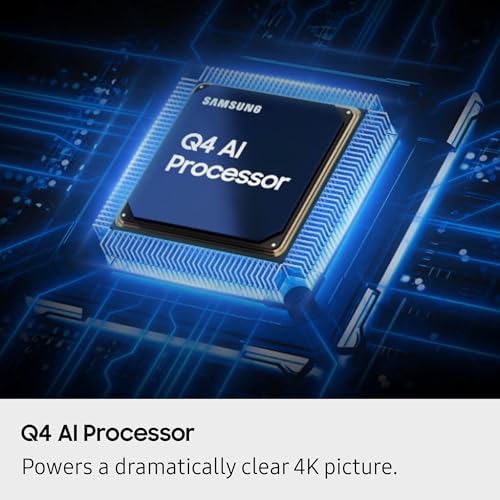
| Q4 AI Processor with 4K AI upscaling | Advanced Sony XR processing with superior motion clarity |
| Local Dimming Zones - Directly impacts contrast control | |
| Supreme UHD Dimming (moderate zone control) | Thousands of Mini LED zones with precise control |
| Best Room Type - Where each TV performs optimally | |
| Bright rooms with ambient light | Dark, controlled viewing environments |
| Value Positioning - Who gets the best deal | |
| Excellent premium features at accessible pricing | Premium technology for buyers prioritizing picture quality |
The Samsung Q8F is better for bright rooms due to its QLED technology and Dual LED backlighting system. QLED displays maintain vibrant colors and picture quality even with significant ambient light, while the Sony BRAVIA 9's Mini LED technology is optimized for darker viewing environments where its superior contrast can shine.
The Samsung Q8F uses traditional QLED with edge-lit Dual LED backlighting, while the Sony BRAVIA 9 features advanced Mini LED technology with thousands of tiny LEDs for precise local dimming. This gives the Sony much better contrast and black levels, but the Samsung offers better value and bright room performance.
Both TVs handle current consoles well, but the Samsung Q8F offers 4K 144Hz on all HDMI ports versus the Sony BRAVIA 9's 4K 120Hz on select ports. For console gaming, either works excellently, but PC gamers who want maximum refresh rates should choose the Samsung.
Only the Sony BRAVIA 9 supports Dolby Vision, along with HDR10+ and HLG. The Samsung Q8F supports HDR10+ Adaptive but lacks Dolby Vision support, which matters for premium streaming content from Netflix, Disney+, and Apple TV+.
The Sony BRAVIA 9 has significantly better built-in audio with a 70W 2.2.2-channel system including up-firing speakers and Dolby Atmos support. The Samsung Q8F has a basic 20W 2-channel system that works but clearly expects users to add a soundbar.
Yes, the Samsung Q8F offers excellent value, delivering about 80% of premium TV performance at a much lower cost than the Sony BRAVIA 9. The Sony justifies its premium pricing with superior picture quality, but the Samsung provides better bang for your buck for most buyers.
Both are excellent but serve different needs. The Samsung Q8F runs Tizen with built-in SmartThings Hub for smart home control and Samsung TV Plus free channels. The Sony BRAVIA 9 uses Google TV with superior content discovery and seamless Google ecosystem integration.
The Sony BRAVIA 9 delivers much better black levels thanks to its Mini LED backlighting with thousands of dimming zones. The Samsung Q8F has good blacks for an edge-lit QLED but can't match the precise contrast control of Mini LED technology.
For dedicated dark home theaters, the Sony BRAVIA 9 excels with superior contrast, natural colors, and excellent built-in audio. For mixed-use rooms or bright spaces, the Samsung Q8F offers better versatility and leaves more budget for additional theater equipment.
Yes, both TVs excel at upscaling. The Samsung Q8F uses Q4 AI processing for 4K upscaling, while the Sony BRAVIA 9 features Sony's renowned XR processing. Both make non-4K content look significantly better than the original source.
The Samsung Q8F offers 4 HDMI ports with gaming features across all ports, while the Sony BRAVIA 9 has 4 HDMI ports with 2.1 features on select ports. Both include comprehensive connectivity with USB, optical audio, and wireless capabilities.
For movie enthusiasts, the Sony BRAVIA 9 provides superior picture quality with better contrast, natural colors, and Dolby Vision support. However, the Samsung Q8F still delivers excellent movie performance at a much lower cost, making it great value for casual movie watchers.
We've done our best to create useful and informative comparisons to help you decide what product to buy. Our research uses advanced automated methods to create this comparison and perfection is not possible - please contact us for corrections or questions. These are the sites we've researched in the creation of this article: bestbuy.com - rtings.com - tomsguide.com - youtube.com - samsung.com - youtube.com - youtube.com - youtube.com - rtings.com - rtings.com - linqcdn.avbportal.com - bestbuy.com - samsung.com - samsung.com - samsung.com - youtube.com - youtube.com - billsmith.com - samsung.com - samsung.com - samsung.com - hometechnologyreview.com - shopjetson.com - certappl.com - samsung.com - theapplianceplug.com - samsung.com - manuals.plus - bestbuy.com - device.report - samsung.com - shopsilica.com - dentonstv.com - bestbuy.com - bestbuy.com - youtube.com - whathifi.com - crutchfield.com - rtings.com - pcrichard.com - merlinstv.com - youtube.com - sony.ca - electronics.sony.com

Privacy Policy
Terms and Conditions - Affiliate Policy
Home Security
© Copyright 2008-2026.
11816 Inwood Rd #1211, Dallas, TX 75244