

When shopping for a new 65-inch TV, Samsung offers two dramatically different approaches: the budget-friendly Q8F 4K and the flagship QN900D 8K. These aren't just incremental upgrades—they represent fundamentally different philosophies about what a modern TV should deliver.
The TV market has split into distinct camps. Budget models focus on delivering large screens with adequate picture quality, while premium TVs push technological boundaries with features like 8K resolution, advanced AI processing, and gaming capabilities that rival dedicated monitors. The key considerations haven't changed: picture quality, smart features, gaming performance, audio, and value. What has changed is how dramatically these can vary between price points.
Modern TVs also serve multiple roles. They're streaming hubs, gaming displays, smart home controllers, and increasingly, the centerpiece of elaborate home theater setups. Understanding which role matters most to you helps determine whether you need basic competence or cutting-edge performance.
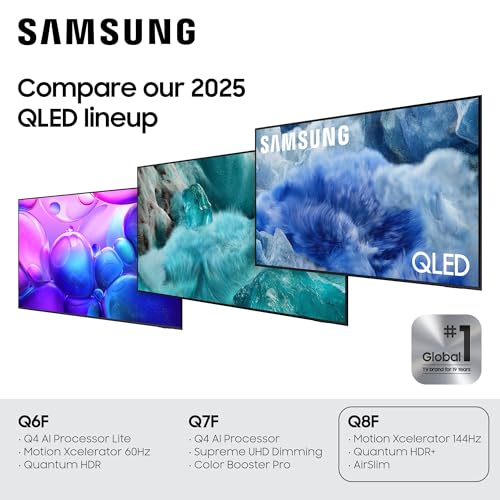
The Samsung Q8F 4K, released in 2025, represents Samsung's answer to budget-conscious buyers who want a large screen without premium pricing. At roughly half the cost of Samsung's flagship models (at the time of writing), it delivers standard 4K performance with basic QLED technology.
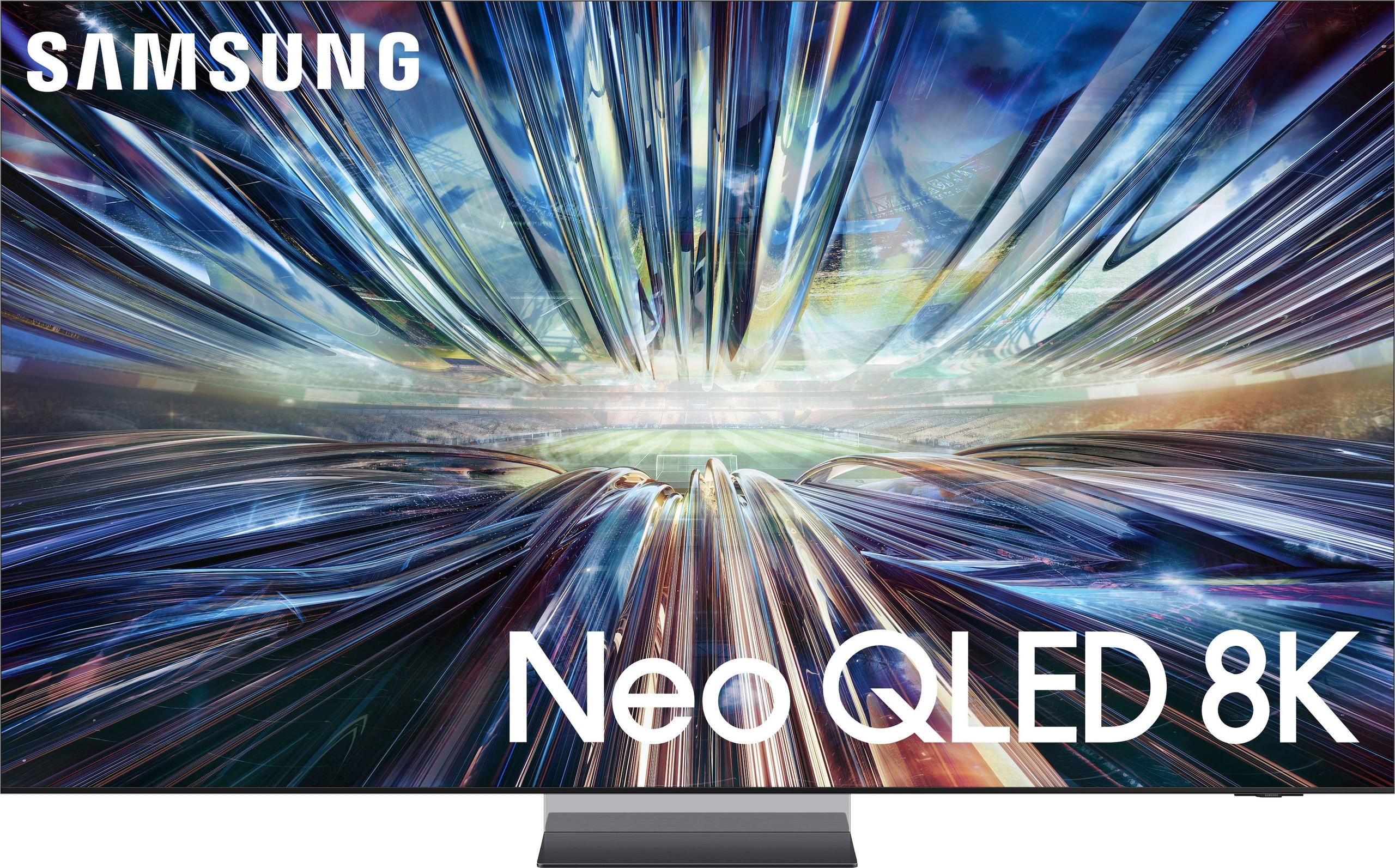
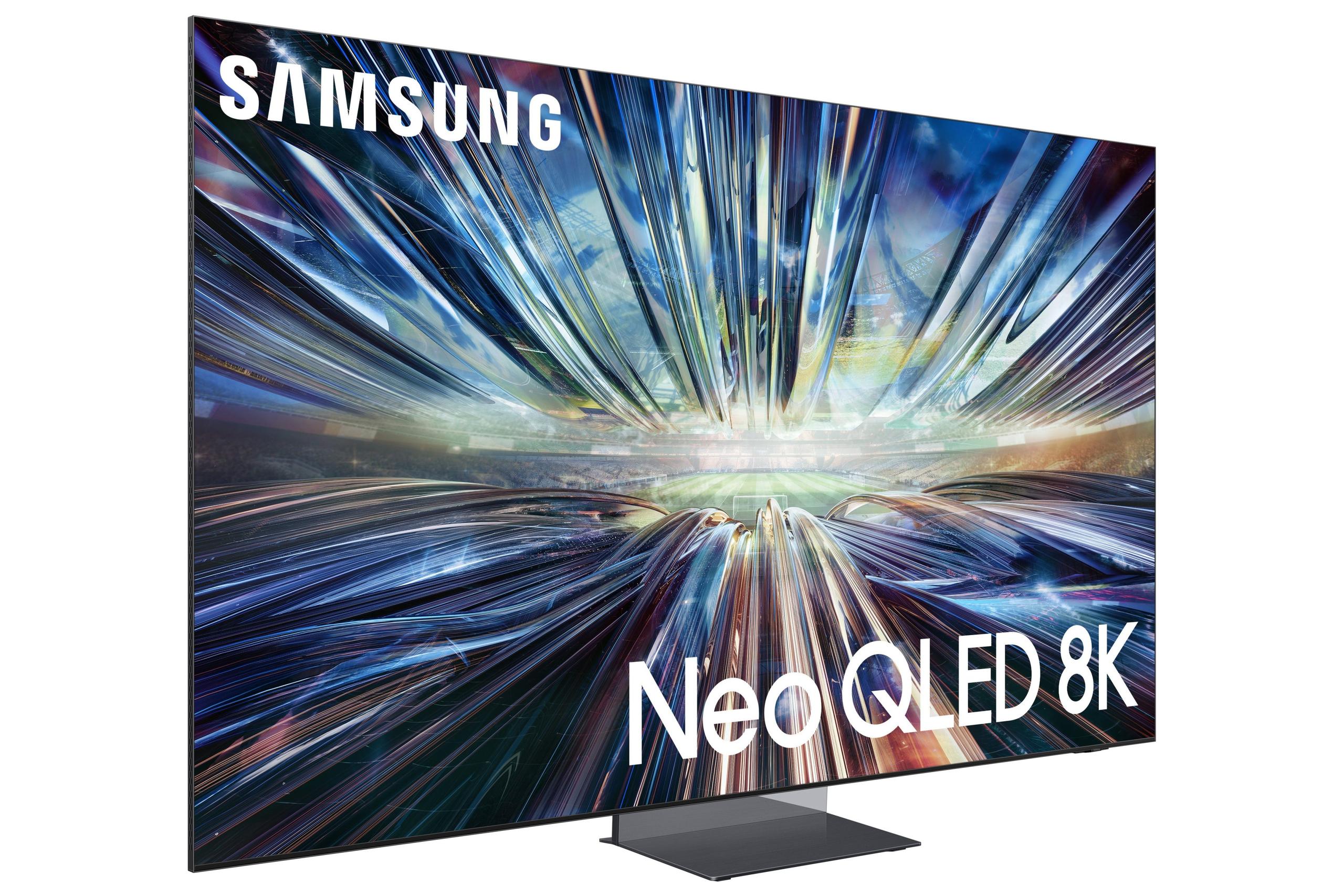
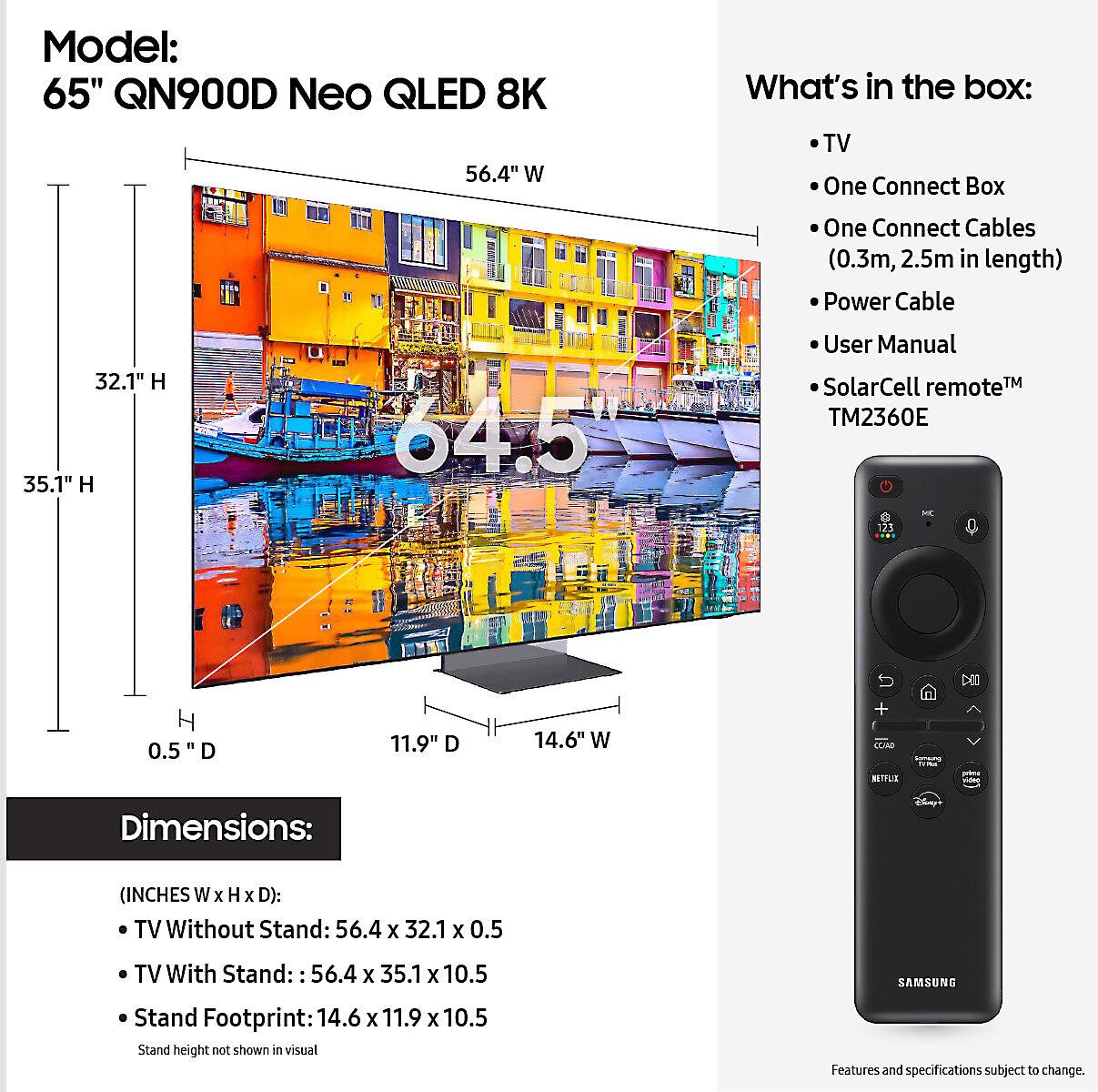
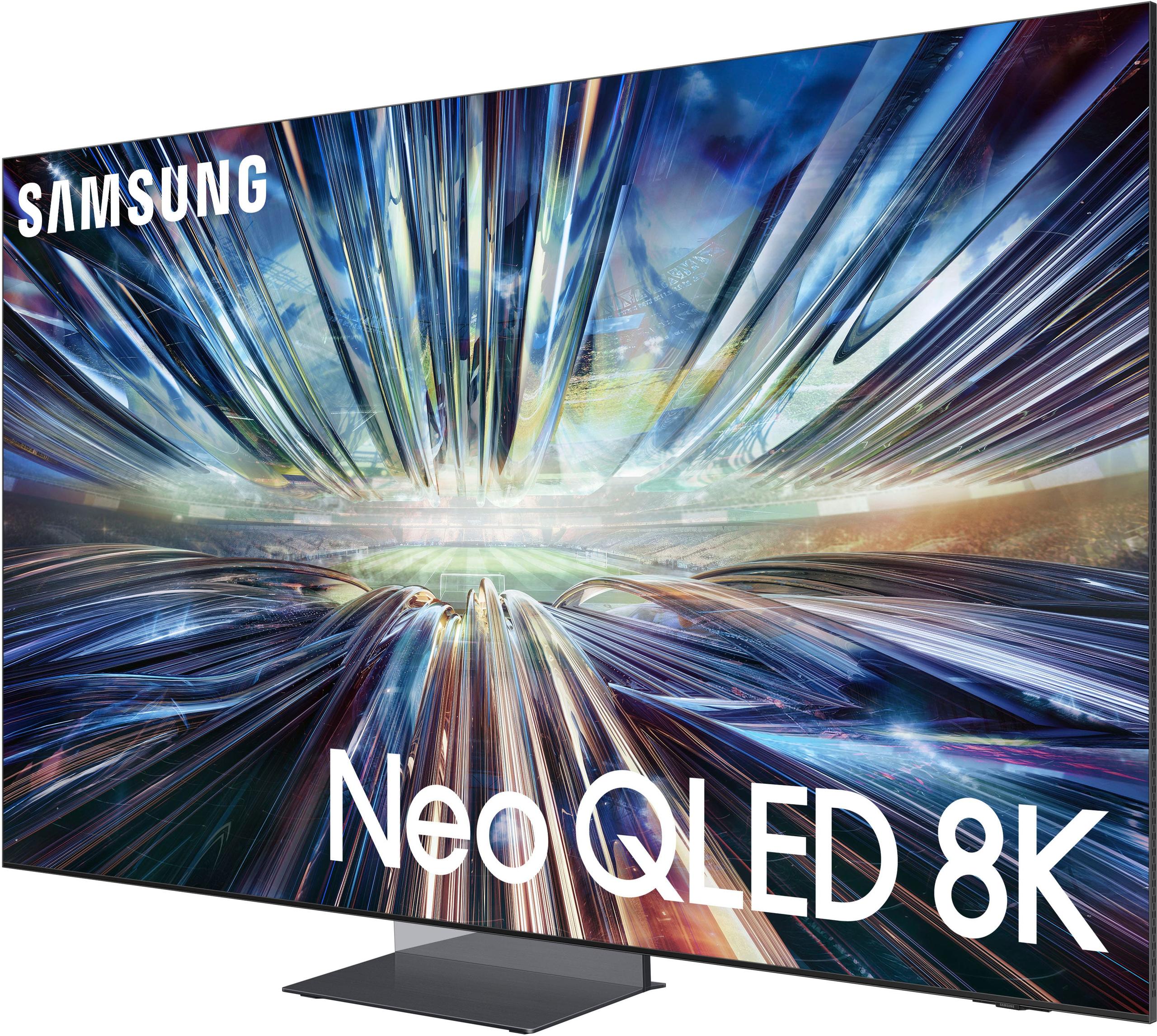
The Samsung QN900D 8K, launched in 2024, sits at the opposite extreme. This is Samsung's technological showcase—their most advanced TV packed with innovations like 8K resolution, AI-powered processing, and professional-grade gaming features. The price reflects this premium positioning, typically costing nearly twice as much as the Q8F.
The most obvious difference is resolution. The Q8F delivers standard 4K at 3,840 x 2,160 pixels, which remains the sweet spot for most content. Netflix, Disney+, and gaming consoles primarily output 4K, making this resolution practical and future-ready for several more years.
The QN900D quadruples that pixel count to 7,680 x 4,320. That's 33 million pixels compared to the Q8F's 8 million. But here's the thing about 8K: native content barely exists. Most streaming services max out at 4K, and even YouTube's 8K videos are rare.
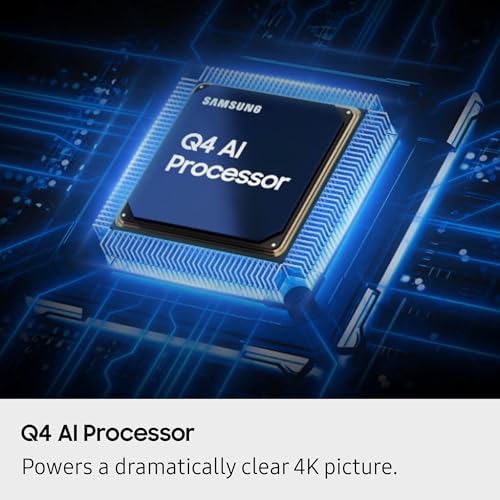
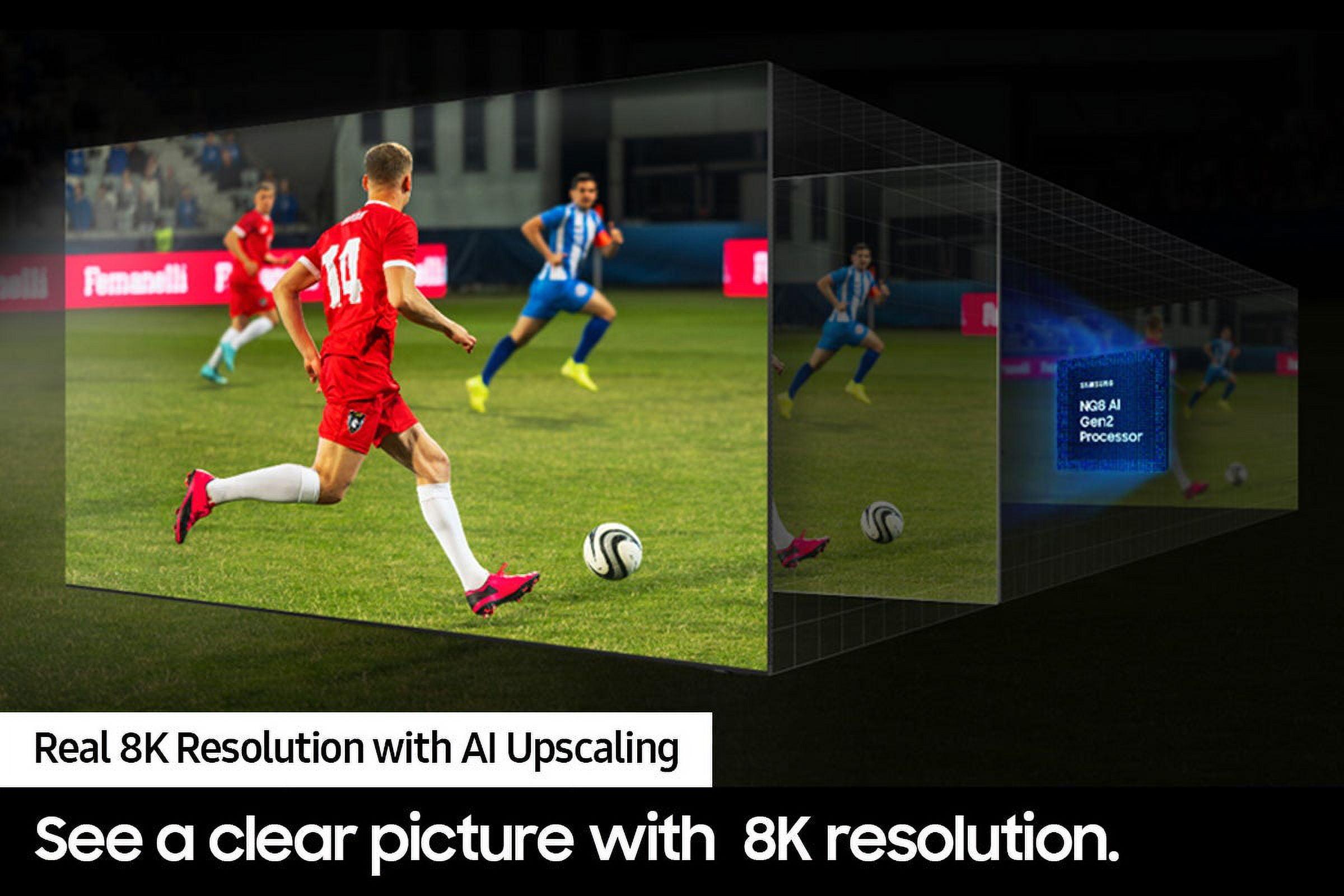
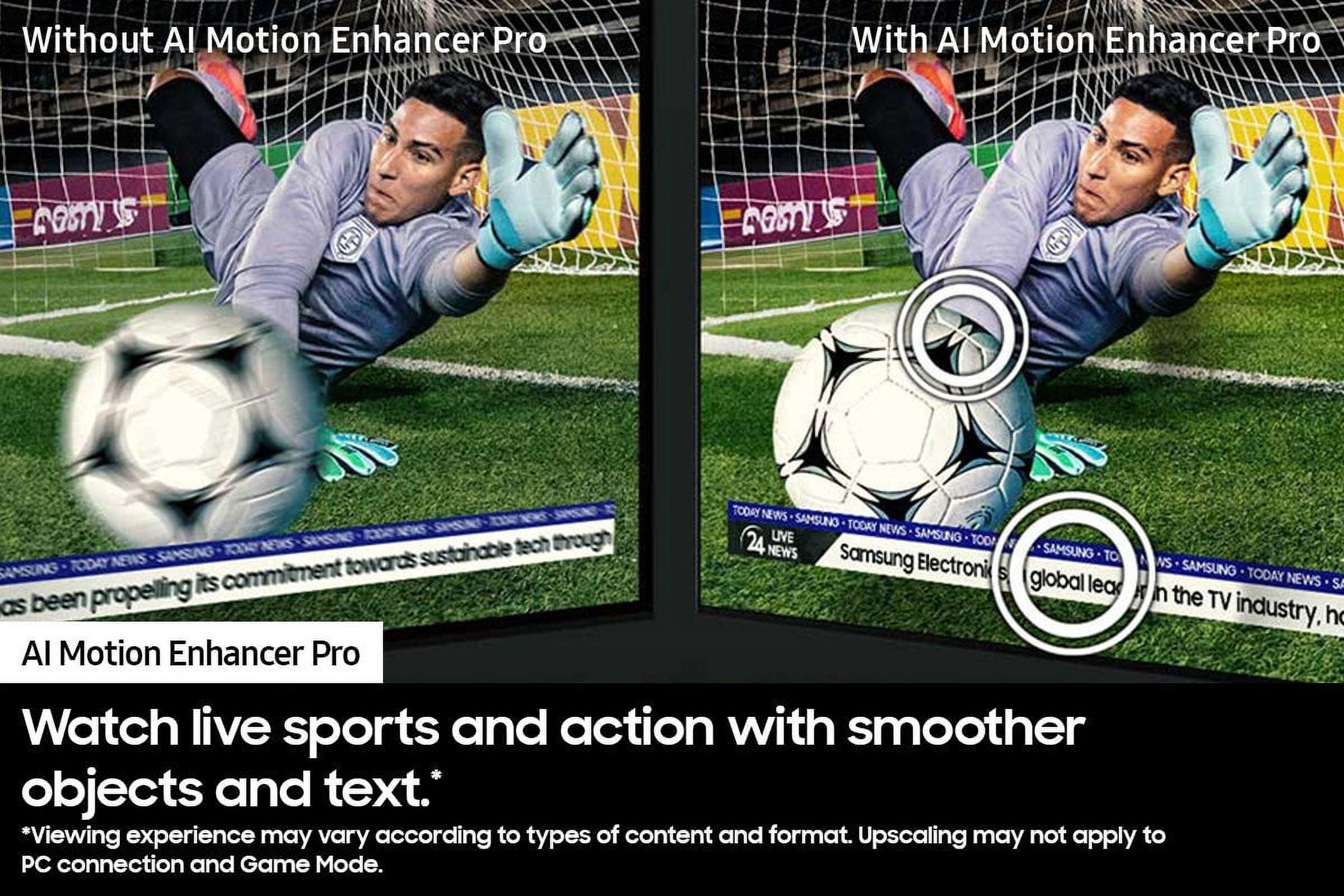
What makes 8K potentially valuable is upscaling—the TV's ability to take lower-resolution content and intelligently add detail. The QN900D includes Samsung's most advanced upscaling technology, called 8K AI Upscaling Pro. This system uses 512 neural networks (essentially mini-computers) to analyze each frame and reconstruct missing detail. Based on expert reviews, this creates genuinely impressive results, making 4K content look noticeably sharper and more detailed than on standard 4K displays.
The Q8F lacks this AI processing entirely, relying on basic upscaling that simply stretches pixels without adding intelligent detail enhancement.
This is where the technological gap becomes most apparent. Picture quality fundamentally depends on a TV's ability to control light—making bright scenes brilliant while keeping dark scenes truly dark.
The Q8F uses edge-lit backlighting, where LEDs sit around the screen's edges and shine light across the panel. This design keeps costs down but creates significant limitations. Without local dimming zones (areas that can be independently brightened or darkened), the entire screen tends to wash out during high-contrast scenes. Think of watching a movie with bright explosions and dark shadows—edge-lit displays struggle to show both convincingly in the same frame.
The QN900D employs full-array Mini LED backlighting with what Samsung calls Quantum Matrix Technology Pro. Instead of edge lighting, thousands of tiny LEDs sit directly behind the screen, organized into precise dimming zones. Each zone can independently adjust brightness, creating dramatically better contrast. This means darker blacks, brighter highlights, and more realistic images overall.
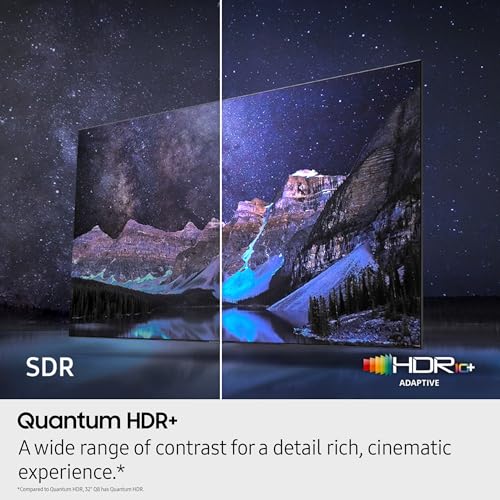
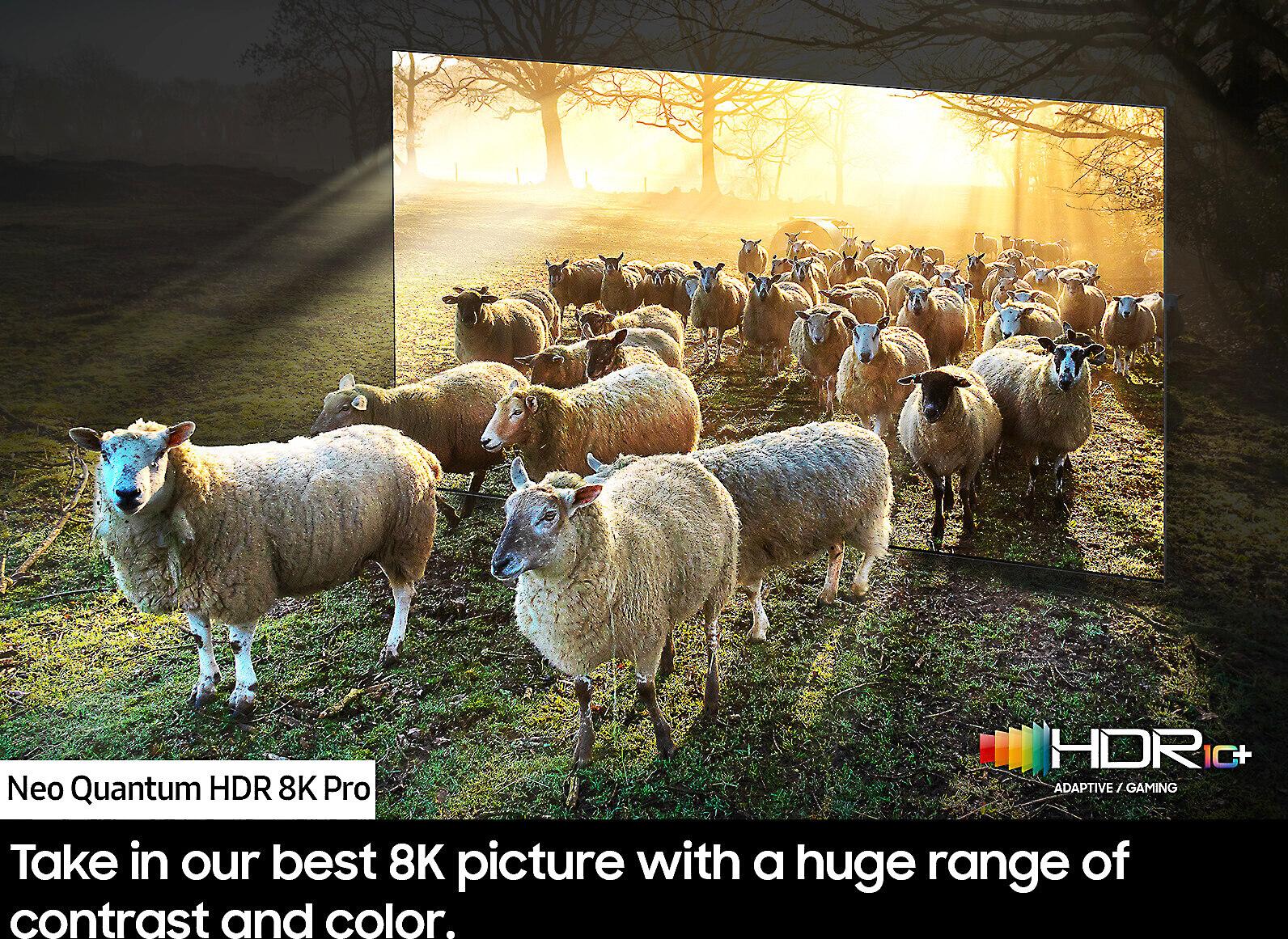
Peak brightness tells the story numerically. The QN900D reaches over 2,300 nits in HDR mode—bright enough to create genuinely eye-catching highlights that make HDR content pop off the screen. The Q8F achieves standard QLED brightness levels, adequate for most viewing but lacking the punch that makes premium TVs special.
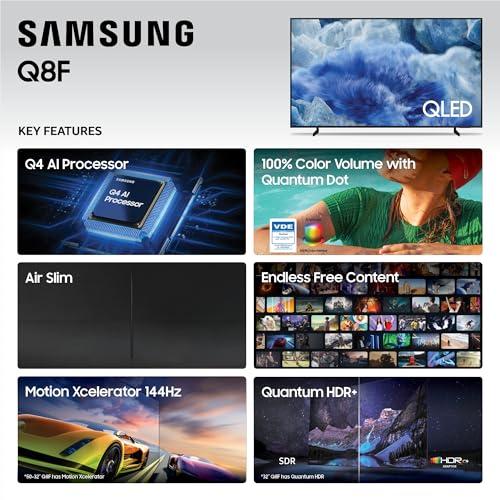
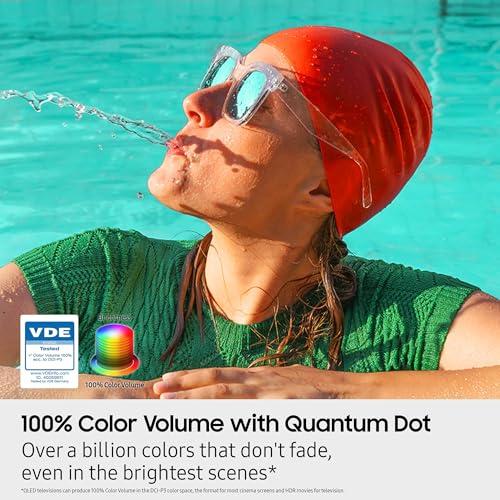
Both TVs use quantum dot technology, which enhances color accuracy and vibrancy compared to traditional LCD panels. Quantum dots are microscopic particles that convert blue LED light into pure red and green, creating more accurate colors across the spectrum.
The Q8F includes basic quantum dot enhancement, delivering the improved color that makes QLED appealing. Colors appear more vivid than standard LCD TVs, particularly in well-lit rooms where QLED technology shines.
The QN900D advances this with Quantum Matrix Technology Pro, which combines quantum dots with precise backlight control. This creates what Samsung calls 100% color volume—the ability to display accurate colors at any brightness level. In practice, this means colors remain vibrant in both bright outdoor scenes and darker indoor moments, rather than washing out or becoming muted.
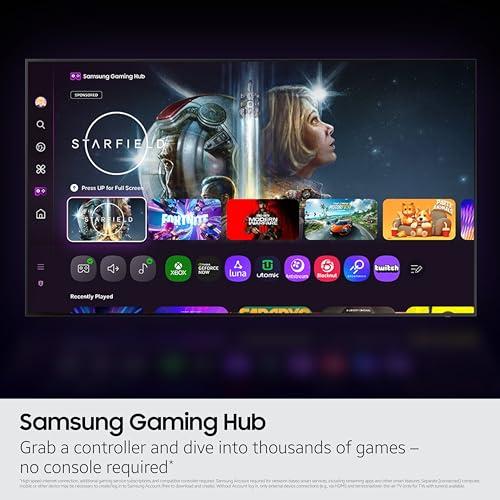
Gaming capabilities represent another major division between these models. The Q8F includes basic gaming features like Auto Low Latency Mode (ALLM), which automatically switches to a low-lag game mode when detecting console input. It supports 120Hz refresh rates, adequate for most gaming but not cutting-edge.
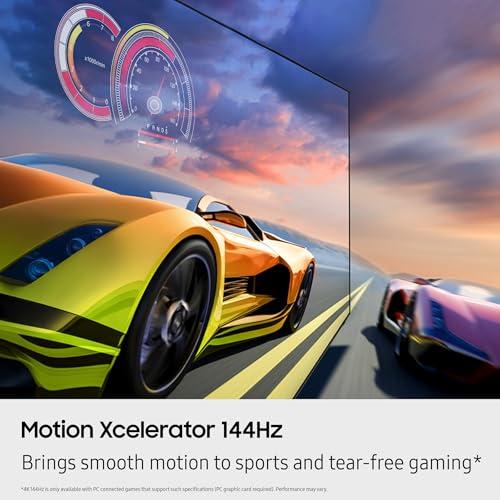
The QN900D transforms into a high-end gaming monitor. It supports 8K gaming at 60Hz and 4K gaming at an impressive 240Hz—nearly three times the frame rate capability of the Q8F. All four HDMI ports support full HDMI 2.1 bandwidth, enabling these high refresh rates without compromise.
Variable Refresh Rate (VRR) support eliminates screen tearing by matching the display's refresh rate to the gaming console's output frame rate. The QN900D supports all VRR standards, ensuring compatibility with PlayStation 5, Xbox Series X, and high-end gaming PCs.
Input lag—the delay between controller input and on-screen response—measures exceptionally low on the QN900D in Game Mode. This responsiveness rivals dedicated gaming monitors, making it suitable for competitive gaming where milliseconds matter.
The Q8F includes 20W speakers with basic Object Tracking Sound Lite, which attempts to direct audio toward moving objects on screen. It's adequate for casual viewing but lacks the power and sophistication for cinematic experiences.
The QN900D delivers 90W through a 6.2.4-channel speaker system with true Dolby Atmos support. This creates three-dimensional audio that moves sound around the room, particularly effective for action movies and immersive gaming. The AI-powered Adaptive Sound Pro adjusts audio characteristics based on room acoustics and content type.
Both TVs support Q-Symphony, Samsung's technology for coordinating built-in speakers with compatible soundbars rather than disabling them entirely. However, for serious home theater setups, external audio solutions will surpass either TV's built-in capabilities.
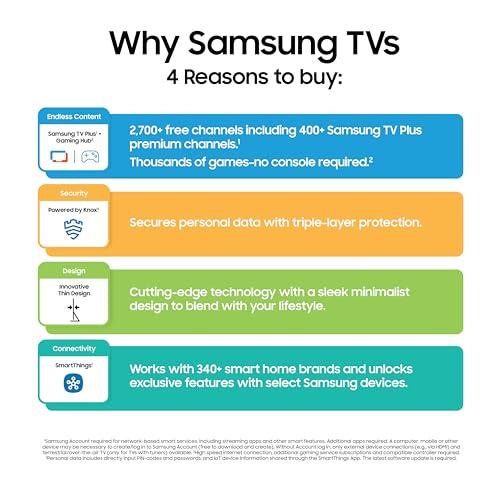
Both models run Samsung's Tizen operating system, providing access to major streaming services and Samsung's free TV Plus channels. The interface remains consistent, though the QN900D's more powerful processor handles navigation more smoothly.
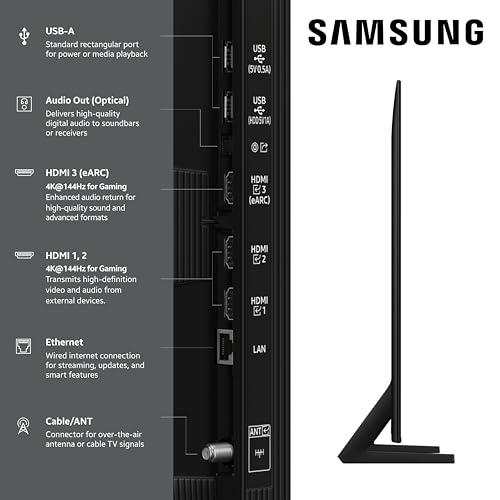
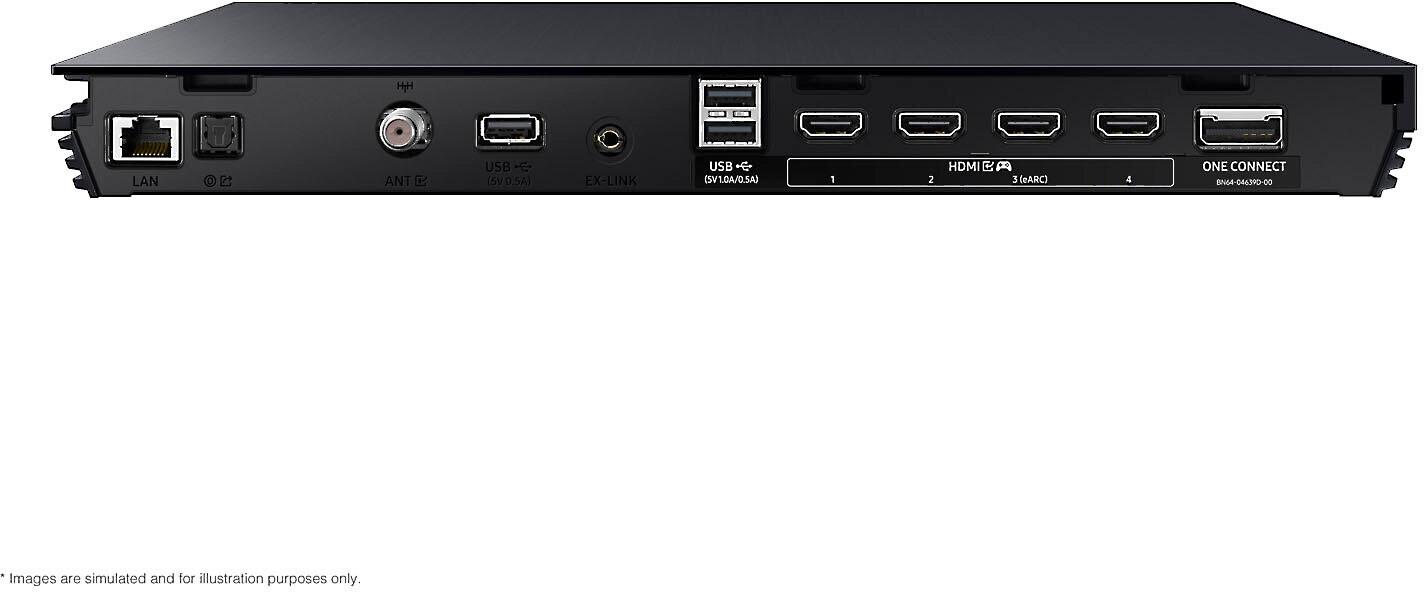
The QN900D includes an external One Connect Box that houses all connections, keeping cables organized and making wall-mounting cleaner. This box supports Wi-Fi 6E for faster wireless speeds and includes four HDMI 2.1 ports compared to the Q8F's three basic HDMI connections.
Smart home integration works similarly on both models, with voice assistant support and SmartThings hub functionality for controlling connected devices.
At the time of writing, these TVs exist in completely different value categories. The Q8F prioritizes affordability while delivering competent 4K performance. For families wanting a large screen for streaming Netflix, watching sports, and casual gaming, it provides excellent value. The picture quality suffices for most content, and the smart features match more expensive models.
The QN900D justifies its premium through technological advancement. The AI upscaling genuinely improves picture quality for existing content libraries. The gaming capabilities future-proof the purchase for next-generation consoles and high-end PC gaming. The brightness and contrast create a more immersive viewing experience, particularly noticeable in varied lighting conditions.
For dedicated home theater setups, the differences become more pronounced. The QN900D's superior contrast ratio, peak brightness, and color accuracy create a more cinematic experience. The Dolby Atmos audio, while not matching dedicated speakers, provides better spatial sound for movie watching.
The Q8F's edge-lit backlighting becomes more limiting in dark room viewing, where contrast deficiencies become obvious. However, in bright family rooms where the TV competes with ambient light, both models perform adequately for casual viewing.
Samsung's 2024-2025 generation represents significant advancement in AI processing and gaming capabilities. The QN900D's NQ8 AI Gen3 processor delivers genuinely improved upscaling compared to previous generations, making the 8K resolution more practically beneficial.
Gaming features have evolved rapidly, with 4K at 240Hz becoming the new enthusiast standard. The QN900D positions itself for future console generations and PC gaming advancement, while the Q8F's 120Hz capability covers current generation needs without significant headroom.
Choose the Samsung Q8F 4K if you prioritize value and need solid performance without premium features. It excels for streaming content, casual gaming, and general family viewing. The picture quality satisfies most viewers, and the smart features match expensive alternatives. Budget-conscious buyers get impressive screen size without compromise in basic functionality.
Choose the Samsung QN900D 8K if you want cutting-edge performance and can justify the premium cost. Serious gamers benefit from the advanced features, home theater enthusiasts appreciate the superior picture quality, and tech enthusiasts value the AI processing and future-proofing. The brightness and contrast improvements create genuinely better viewing experiences across all content types.
The decision ultimately depends on viewing priorities and budget flexibility. The Q8F delivers everything most viewers need at an accessible price point. The QN900D provides everything possible at current technology limits, justified for users who prioritize performance over cost considerations.
Both represent solid choices within their respective categories, but they serve fundamentally different audiences with different expectations for their home entertainment centerpiece.
| Samsung 65" QLED Q8F 4K Smart TV 2025 | Samsung QN900D Series 65" Neo QLED 8K Smart TV |
|---|---|
| Resolution - Higher resolution shows more detail, but 8K content is still rare | |
| 4K (3,840 x 2,160) - Perfect for all current streaming content | 8K (7,680 x 4,320) - 4x more pixels, future-proof but limited native content |
| AI Processing - Dramatically improves picture quality of older content | |
| Basic image processing only | NQ8 AI Gen3 with 512 neural networks for intelligent upscaling |
| Backlight Technology - Controls contrast and black levels, crucial for picture quality | |
| Edge-lit Mini LED (no local dimming zones) | Full-array Mini LED with Quantum Matrix Technology Pro |
| Peak Brightness - Higher brightness makes HDR content more impactful | |
| Standard QLED levels (~600-800 nits) | 2,300+ nits (exceptional HDR performance) |
| Gaming Refresh Rate - Higher rates reduce motion blur for competitive gaming | |
| 120Hz maximum | 8K @ 60Hz, 4K @ 240Hz (industry-leading gaming performance) |
| HDMI Ports - More 2.1 ports support advanced gaming features | |
| 3 HDMI ports (basic bandwidth) | 4 HDMI 2.1 ports (full bandwidth for 8K/high refresh gaming) |
| Audio System - Better built-in sound reduces need for soundbar | |
| 20W, 2-channel with basic Object Tracking Sound | 90W, 6.2.4-channel with Dolby Atmos and advanced processing |
| Design Approach - Affects installation and cable management | |
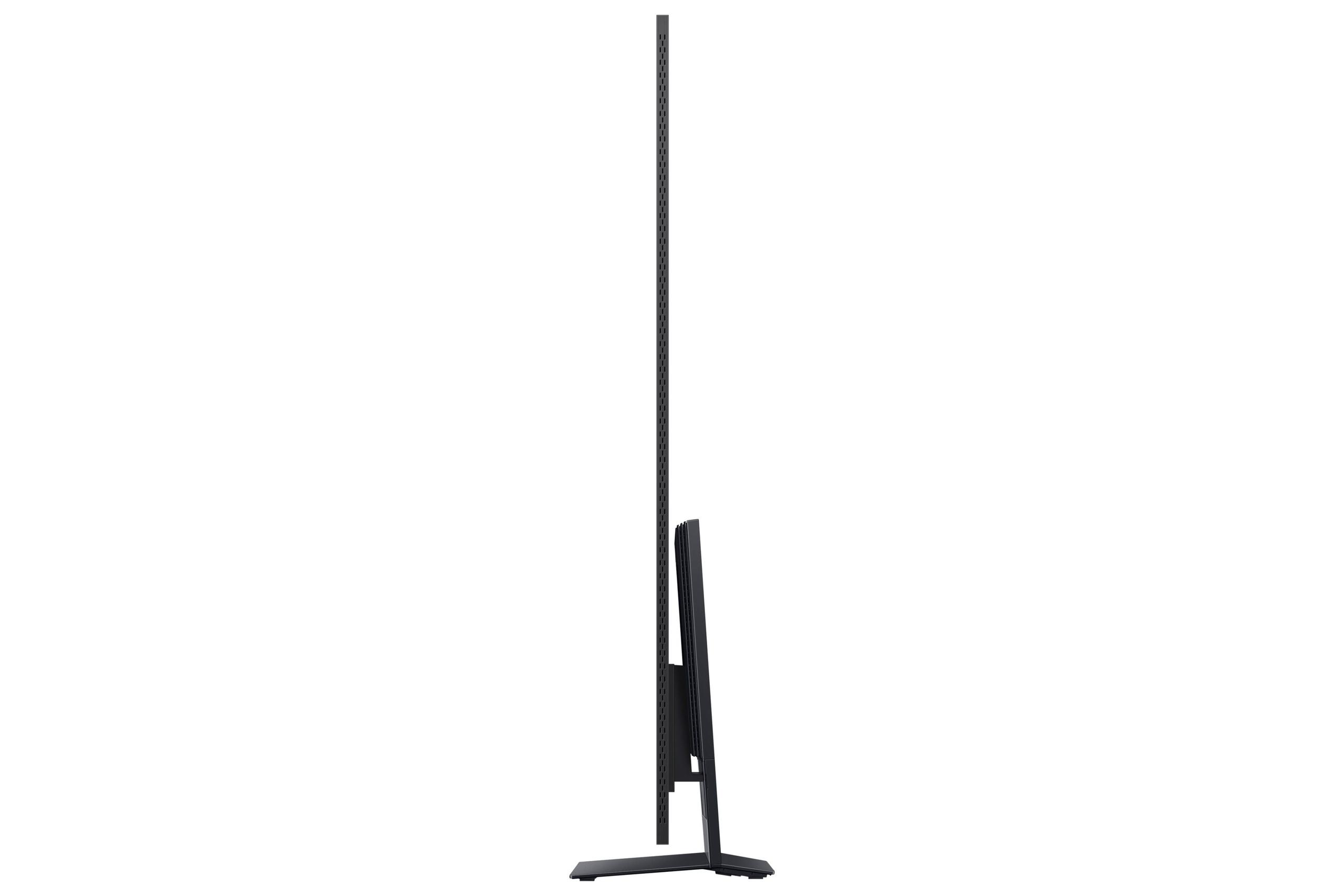
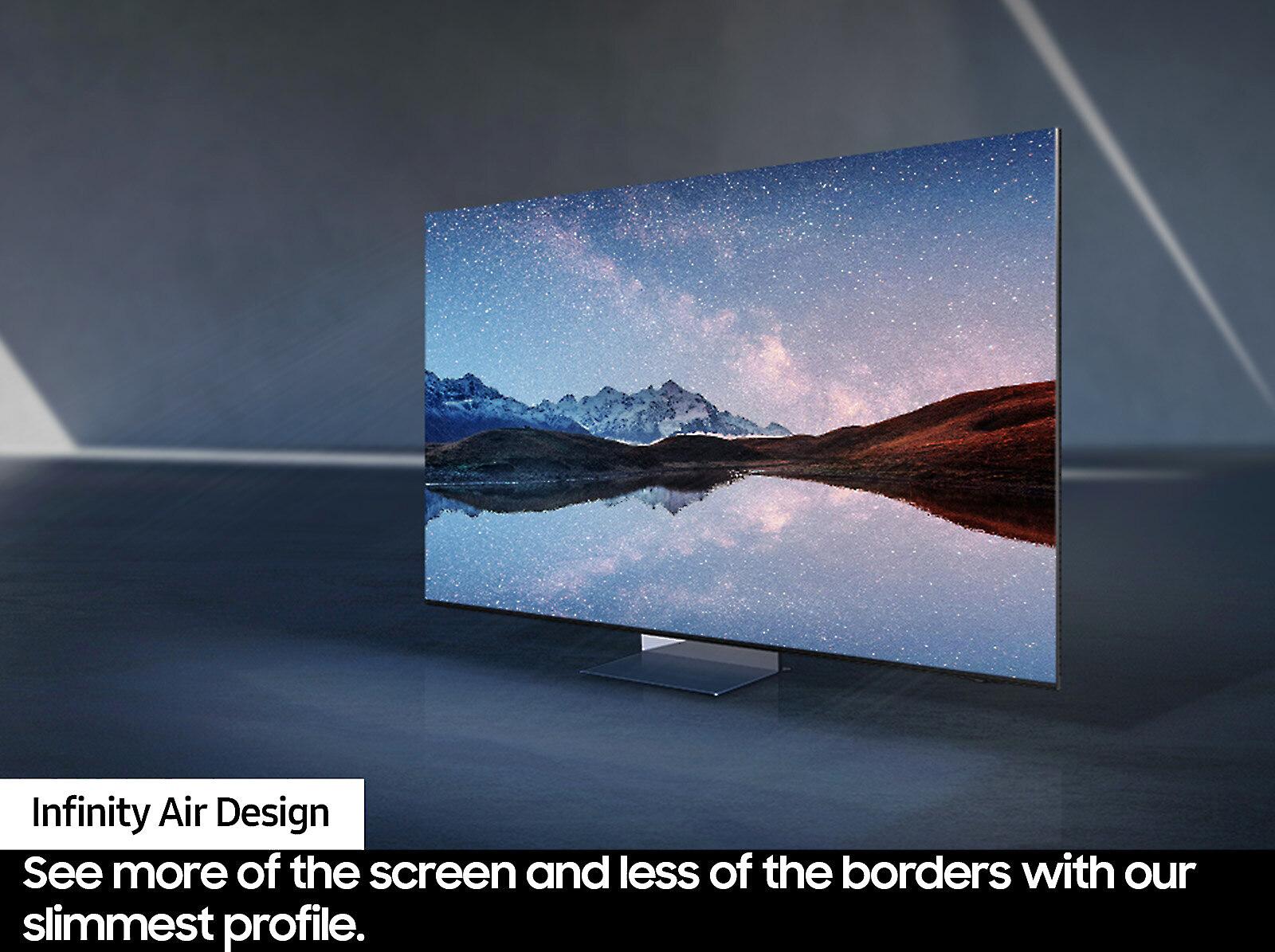
| Traditional integrated design | Premium Infinity Air design with external One Connect Box |
| Target Audience - Who gets the best value from each model | |
| Budget-conscious buyers wanting large 4K viewing | Performance enthusiasts and serious gamers seeking cutting-edge features |
The Samsung QN900D 8K delivers significantly better picture quality with its full-array Mini LED backlighting, 2,300+ nits peak brightness, and advanced AI processing. The Samsung Q8F 4K provides decent picture quality for the price but lacks local dimming and advanced contrast control, making it better suited for casual viewing rather than cinematic experiences.
The 8K resolution on the Samsung QN900D is primarily valuable for its AI upscaling technology, which makes 4K content look noticeably sharper. Since true 8K content is still rare, you're mainly paying for better processing of existing 4K shows and movies. The Samsung Q8F 4K handles current 4K content perfectly fine without the upscaling benefits.
The Samsung QN900D 8K is far superior for gaming with 4K @ 240Hz capability, full HDMI 2.1 support on all ports, and ultra-low input lag. The Samsung Q8F 4K offers basic 120Hz gaming that works fine for casual players but lacks advanced features for serious gamers or next-gen consoles.
Both the Samsung Q8F 4K and Samsung QN900D 8K run the same Tizen operating system with identical streaming apps and smart features. The main difference is processing speed—the QN900D navigates menus faster thanks to its more powerful processor, but both provide the same core smart TV experience.
The Samsung QN900D 8K performs much better in bright rooms due to its exceptional peak brightness of 2,300+ nits and anti-glare technology. The Samsung Q8F 4K can handle moderate ambient light but may appear washed out in very bright spaces or rooms with lots of windows.
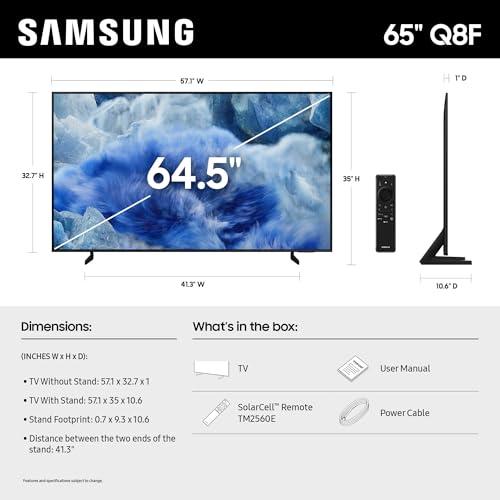
The Samsung QN900D 8K features premium Infinity Air design with an ultra-thin profile and external One Connect Box for clean cable management. The Samsung Q8F 4K uses a standard TV design that's functional but less premium, with all connections built into the TV itself.
The Samsung QN900D 8K includes a powerful 90W, 6.2.4-channel system with Dolby Atmos for immersive three-dimensional sound. The Samsung Q8F 4K has basic 20W, 2-channel audio that's adequate for casual viewing but will likely need a soundbar for better home theater experiences.
The Samsung Q8F 4K offers excellent value for budget-conscious buyers who want a large 65" screen with solid 4K performance. The Samsung QN900D 8K justifies its higher price through cutting-edge technology, but only provides good value for users who will actually benefit from its advanced features like 8K upscaling and high-refresh gaming.
The Samsung Q8F 4K has significant contrast limitations due to its edge-lit design and lacks advanced gaming features. The Samsung QN900D 8K doesn't support Dolby Vision HDR (only HDR10+) and requires the external One Connect Box which some users find inconvenient for cable management.
For home theaters, the Samsung QN900D 8K is clearly superior with its exceptional contrast ratio, peak brightness, and Dolby Atmos audio creating a more cinematic experience. The Samsung Q8F 4K works adequately in home theaters but the edge-lit backlighting becomes more noticeable in dark room viewing.
The Samsung QN900D 8K is highly future-proof with 8K resolution, advanced gaming features, and AI processing that will remain relevant for many years. The Samsung Q8F 4K covers current needs well but has limited headroom for future gaming consoles or content improvements.
Choose the Samsung Q8F 4K for general family viewing, streaming, and casual use where budget is a priority. Select the Samsung QN900D 8K if your family includes serious gamers, movie enthusiasts, or if you want the best possible picture quality regardless of cost considerations.
We've done our best to create useful and informative comparisons to help you decide what product to buy. Our research uses advanced automated methods to create this comparison and perfection is not possible - please contact us for corrections or questions. These are the sites we've researched in the creation of this article: bestbuy.com - rtings.com - tomsguide.com - youtube.com - samsung.com - youtube.com - youtube.com - youtube.com - rtings.com - rtings.com - linqcdn.avbportal.com - bestbuy.com - samsung.com - samsung.com - samsung.com - youtube.com - youtube.com - billsmith.com - samsung.com - samsung.com - samsung.com - hometechnologyreview.com - shopjetson.com - certappl.com - samsung.com - theapplianceplug.com - samsung.com - manuals.plus - bestbuy.com - device.report - samsung.com - shopsilica.com - dentonstv.com - rtings.com - videoandaudiocenter.com - bestbuy.com - avsforum.com - bestbuy.com - walts.com - images.samsung.com - samsung.com - merlinstv.com - samsung.com - avsforum.com - samsung.com

Privacy Policy
Terms and Conditions - Affiliate Policy
Home Security
© Copyright 2008-2026.
11816 Inwood Rd #1211, Dallas, TX 75244