

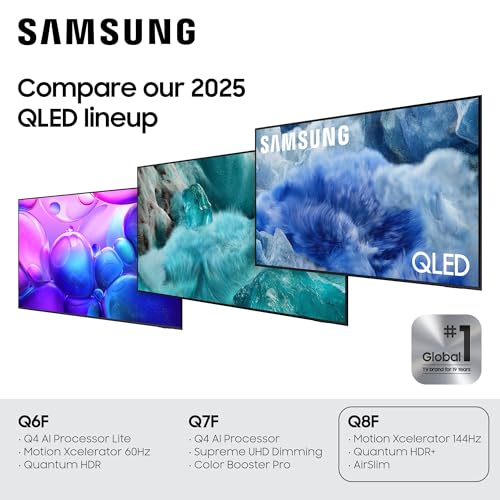


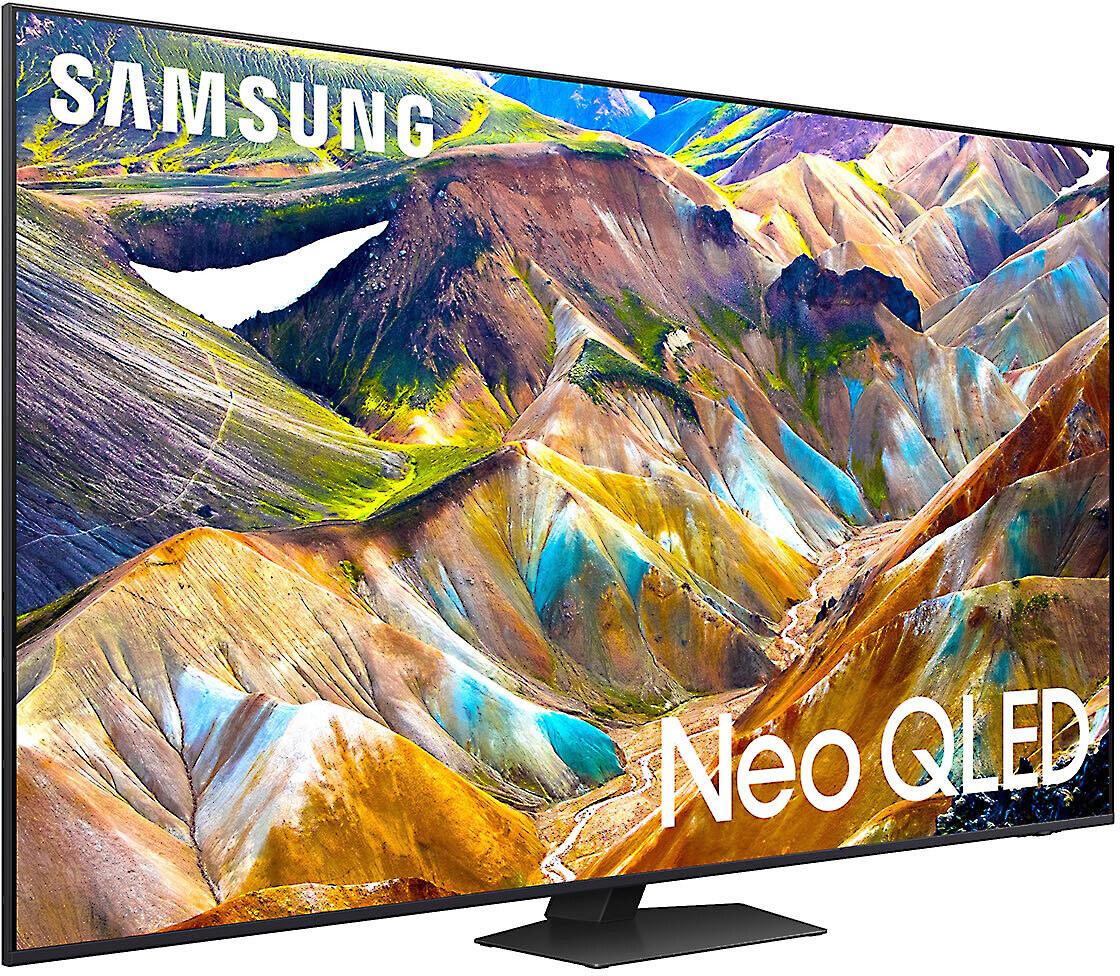
When you're shopping for a premium 65-inch TV, Samsung's lineup can be confusing. The QLED Q8F and OLED S90D represent two completely different approaches to creating stunning images on your wall. At the time of writing, these models sit in different price tiers with the Q8F positioned as Samsung's mainstream QLED champion and the S90D as their accessible OLED entry point.
Understanding which one fits your living room—and your budget—requires digging into what makes each technology tick and where they truly shine.
Before we dive into specific models, let's clear up what QLED and OLED actually mean for your viewing experience.
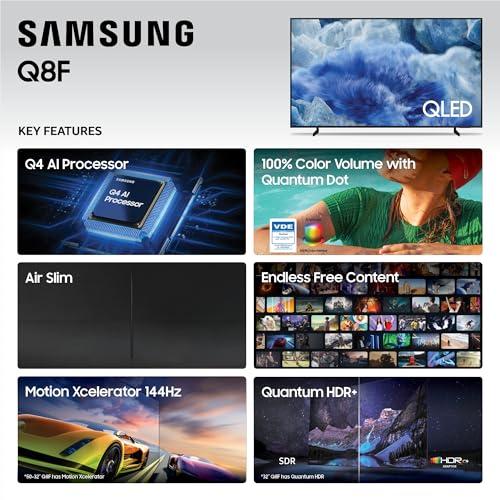
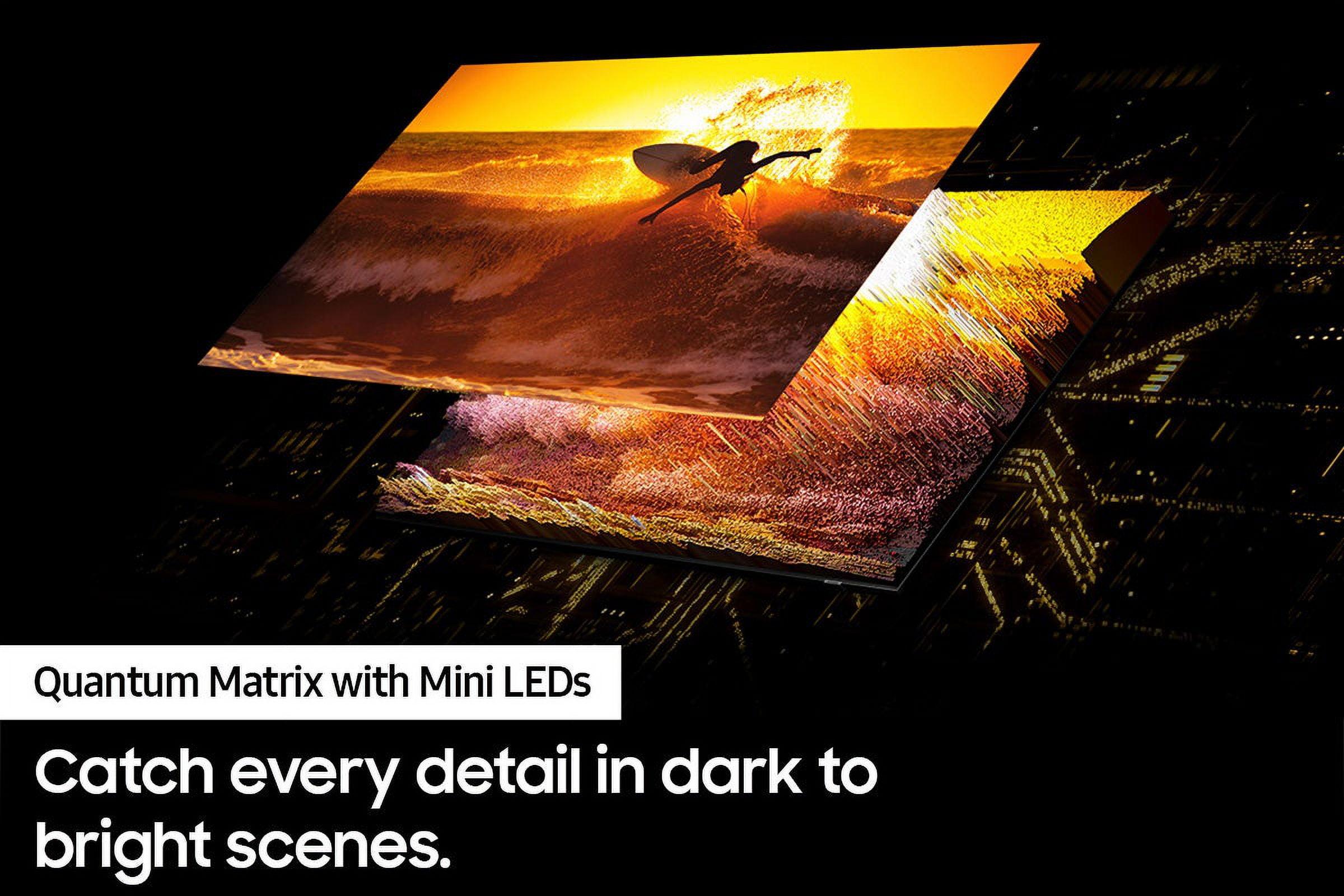
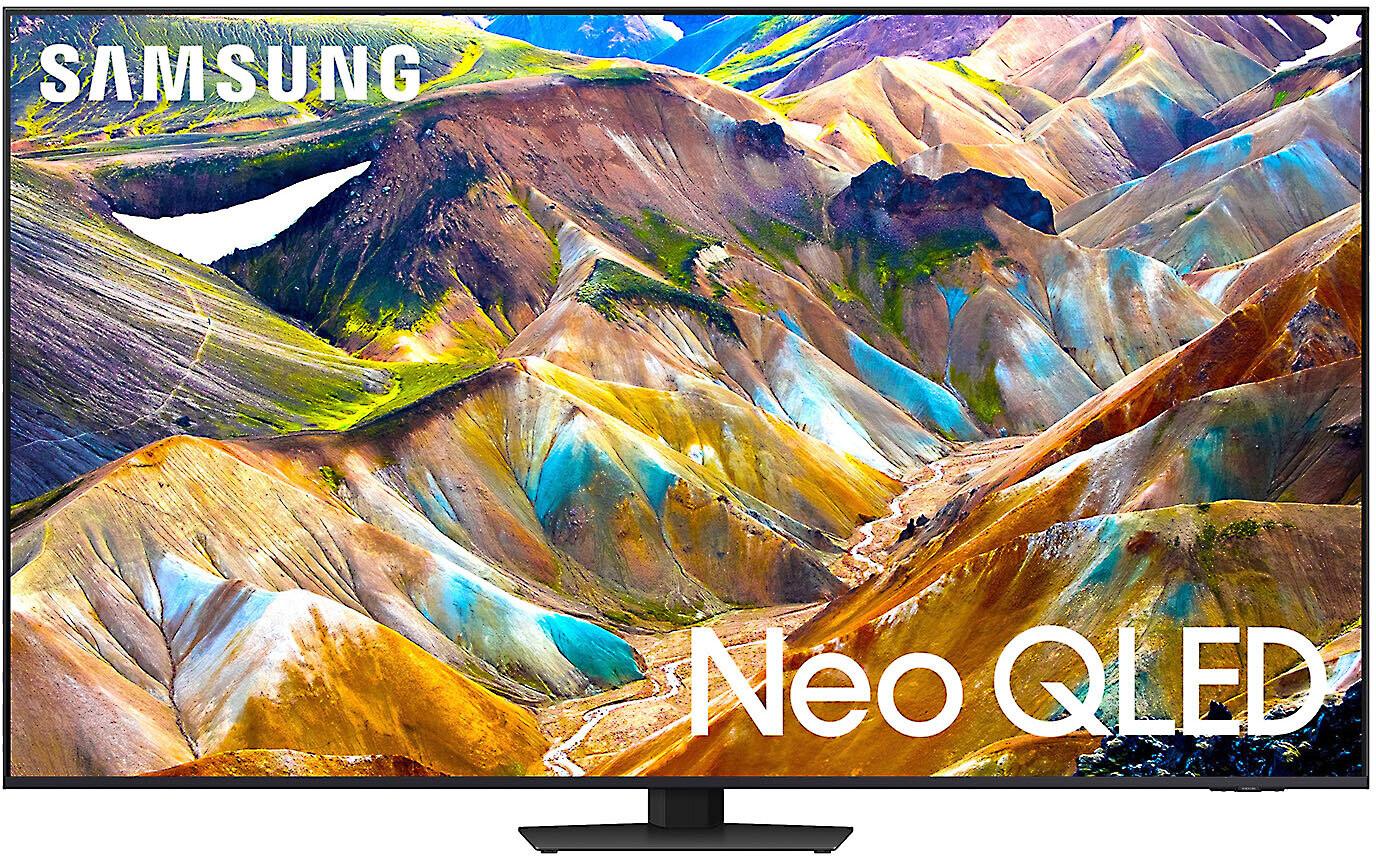
QLED (Quantum Dot Light Emitting Diode) technology, used in the Q8F, starts with a traditional LED backlight system but adds a layer of quantum dots—tiny semiconductor particles that convert blue LED light into highly pure red and green colors. Think of quantum dots as incredibly precise color filters that can produce more accurate and vibrant colors than standard LED TVs. The Q8F uses Samsung's Dual LED system, which combines warm and cool LED backlights to improve both color accuracy and contrast.
OLED (Organic Light Emitting Diode) technology in the S90D works completely differently. Each pixel contains organic compounds that light up when electricity passes through them. This means every single pixel can turn completely on or completely off independently—no backlight needed. When an OLED pixel turns off, it produces true black because it's literally emitting zero light.
The fundamental difference? The Q8F uses zones of LEDs behind the screen to control brightness, while the S90D controls each individual pixel. This creates vastly different strengths and weaknesses.
Your living room setup plays a huge role in which technology works best. The QLED Q8F can push significantly higher peak brightness levels—reaching Samsung's HDR1500 specification—making it excellent for bright rooms with lots of windows or overhead lighting. During sports viewing or daytime TV watching, this brightness advantage becomes immediately obvious.
The OLED S90D produces roughly 1,240 nits of peak brightness in our research of expert measurements, which sounds like less but tells only part of the story. OLED's infinite contrast ratio means that even at moderate brightness levels, the picture appears more dynamic and three-dimensional because the darkest parts of the image are truly black.
Here's what this means practically: if your TV faces windows or you do most of your viewing during bright daylight hours, the Q8F's superior brightness will fight ambient light more effectively. But if you can control your room lighting—dimming lights for movie night or having your TV on a wall perpendicular to windows—the S90D's contrast advantage becomes much more valuable than raw brightness.
Contrast ratio—the difference between the brightest whites and darkest blacks—forms the foundation of picture quality. This is where these TVs diverge most dramatically.
The Q8F uses Supreme UHD Dimming, which divides the screen into zones that can brighten or darken independently. Samsung has improved this local dimming significantly in 2025, but it still can't achieve pixel-perfect control. When a bright object appears next to something dark (like credits rolling over a night scene), you might notice slight "blooming" where light bleeds into areas that should be darker.
The S90D's infinite contrast ratio eliminates this issue entirely. Each pixel controls its own brightness, so a bright star in a dark sky looks exactly as it should—no compromises. This creates more realistic depth in images and makes HDR content more impactful. Dark movie scenes that look murky on LED TVs reveal subtle shadow details on OLED.
For home theater enthusiasts, this difference is substantial. The S90D delivers a more cinematic experience that matches what filmmakers intended, especially in darker viewing environments.
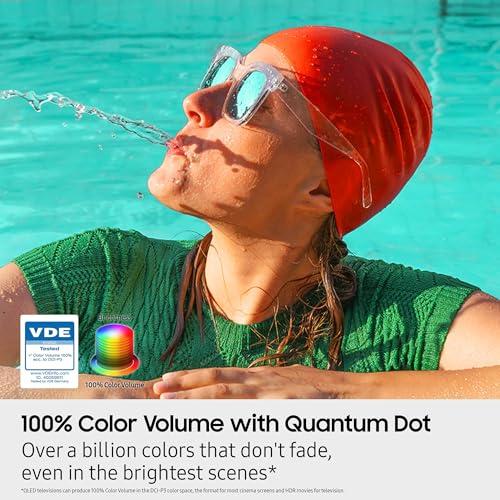
The Q8F's quantum dot technology achieves what Samsung calls "100% Color Volume"—the ability to display accurate colors at all brightness levels. This means vibrant reds stay vibrant whether they're in a bright sunset or dim candlelit scene. The Quantum Dot layer is also cadmium-free, meeting environmental safety standards without sacrificing performance.
The S90D uses QD-OLED technology, which combines quantum dots with OLED pixels. This hybrid approach delivers both the color benefits of quantum dots and OLED's perfect blacks. In practice, this means colors appear more natural and realistic, though perhaps slightly less saturated than the Q8F's more vivid presentation.
Neither approach is inherently better—it depends on preference. The Q8F produces colors that pop off the screen and grab attention, while the S90D aims for accuracy and natural reproduction.
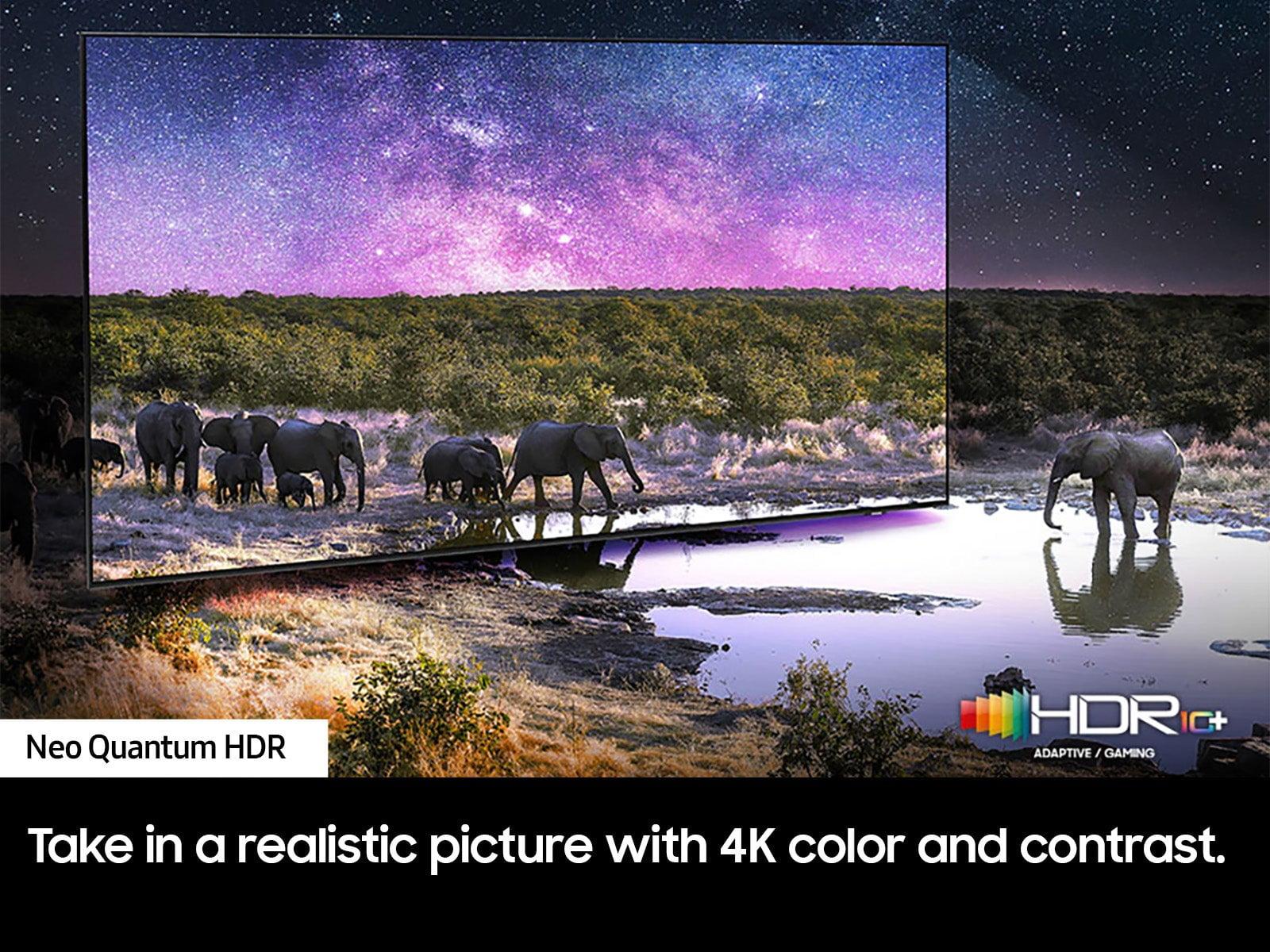
Both TVs support HDR10+ (High Dynamic Range), which provides scene-by-scene optimization for better contrast and color. However, neither supports Dolby Vision—Samsung's consistent limitation across their lineup.
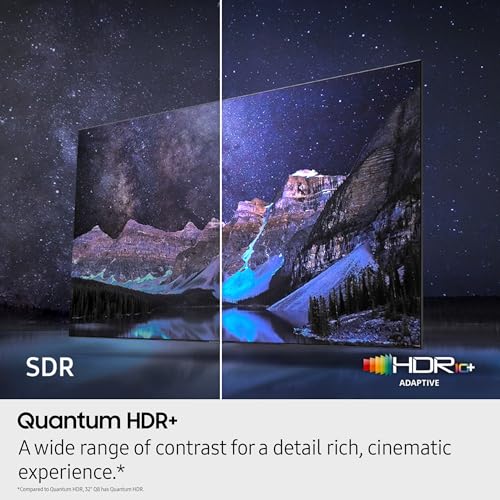
The Q8F's Quantum HDR+ technology combines its bright panel with local dimming to create impressive HDR highlights. Bright explosions in action movies or sunlit outdoor scenes really shine, though dark scene performance remains limited by the local dimming system.
The S90D's OLED HDR+ takes a different approach. While peak highlights might not be quite as intense, the combination of perfect blacks and good brightness creates more realistic HDR presentations. The overall dynamic range—from darkest dark to brightest bright—feels more natural and immersive.
Gaming capabilities have become crucial TV features, and both models deliver here with important differences.
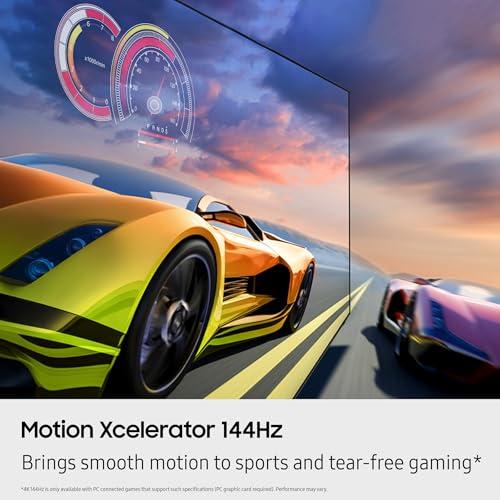
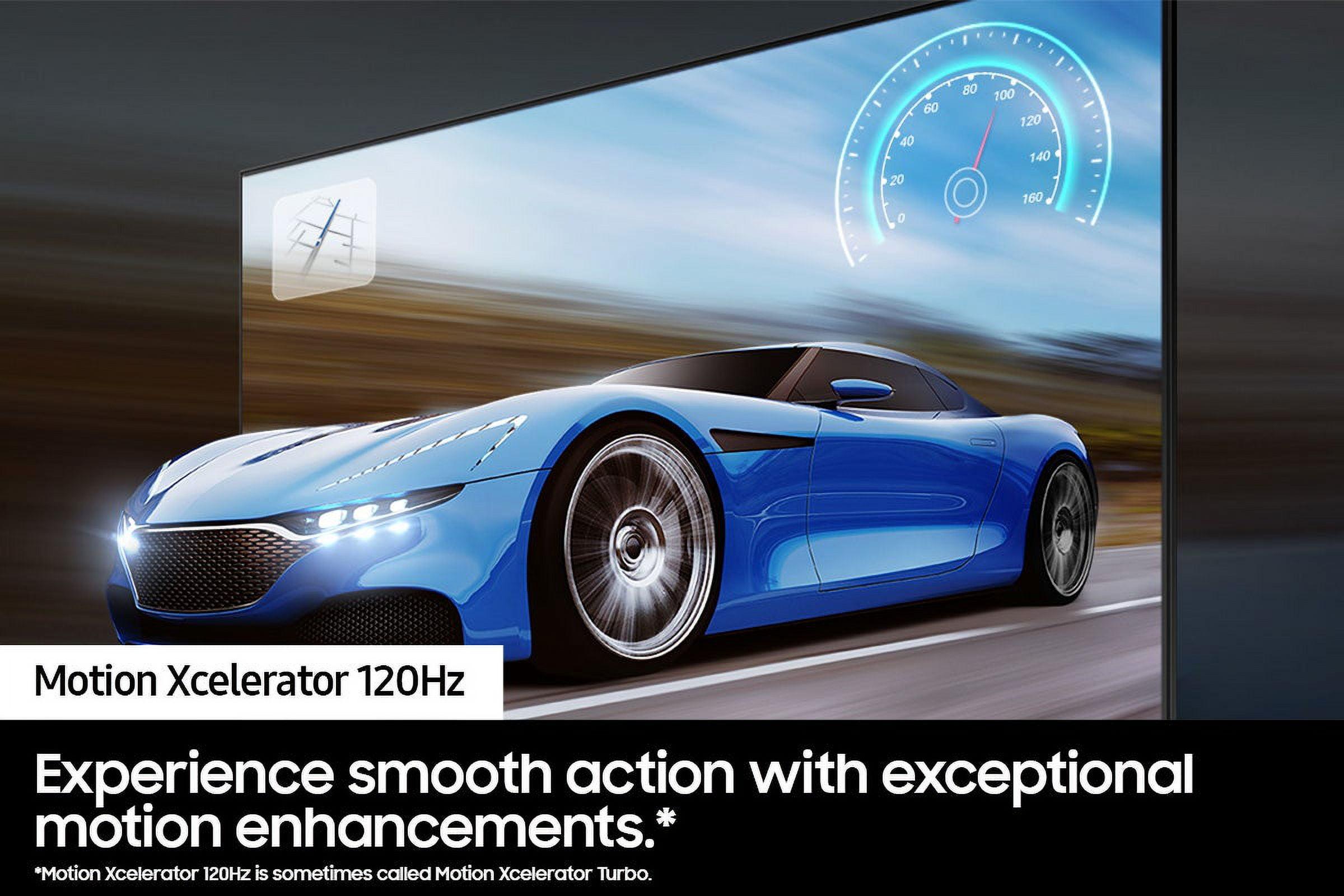
The Q8F supports 120Hz refresh rates with Motion Xcelerator 144Hz processing, which smooths out motion through interpolation (adding frames between original frames). While this helps with sports and action movies, serious gamers should note this is different from native high refresh rate gaming.
The S90D supports true 144Hz refresh rates when connected to compatible gaming PCs with Variable Refresh Rate (VRR) technology. This eliminates screen tearing and provides genuinely smoother gameplay in fast-paced competitive games. OLED's near-instantaneous pixel response times also mean less motion blur during rapid movement.
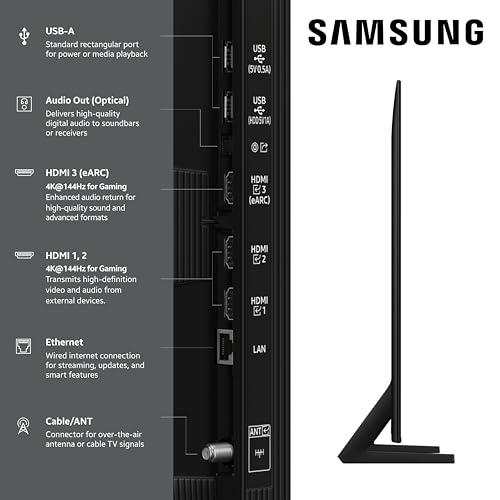
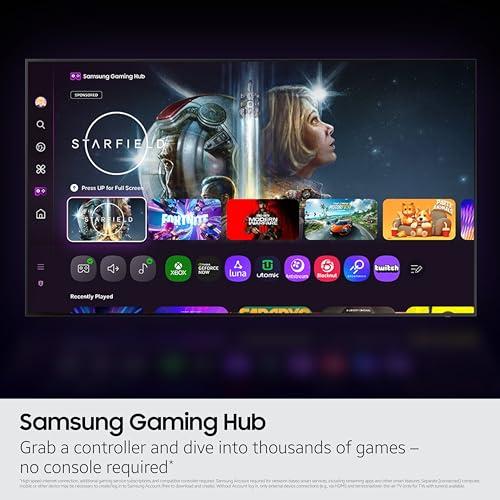
Both support HDMI 2.1 features including Auto Low Latency Mode (ALLM), which automatically switches to game mode when it detects a gaming console. For console gaming, either TV performs excellently, but PC gamers seeking maximum frame rates will prefer the S90D.
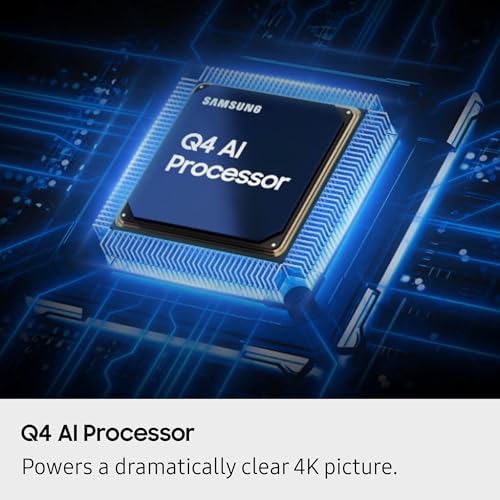
Samsung's 2025 improvements shine most clearly in the Q8F's smart features. The Q4 AI Processor represents a significant upgrade, using machine learning to analyze content in real-time and optimize both picture and sound settings.
This AI processing particularly excels at upscaling—taking lower-resolution content and making it look better on the 4K screen. If you watch a lot of older shows, YouTube videos, or broadcast television, the Q8F's upscaling makes a noticeable difference in sharpness and clarity. The AI can identify faces, text, and different scene types, applying appropriate enhancement to each.
The Q8F also includes Generative Wallpaper, which creates custom backgrounds based on keywords you provide. While this might sound gimmicky, it's actually quite impressive for personalizing your space when the TV isn't actively displaying content.
The S90D, being a 2024 model, lacks these advanced AI features. Its processing focuses more on preserving the director's original intent rather than enhancing content. For purists who prefer minimal processing, this might actually be preferable.
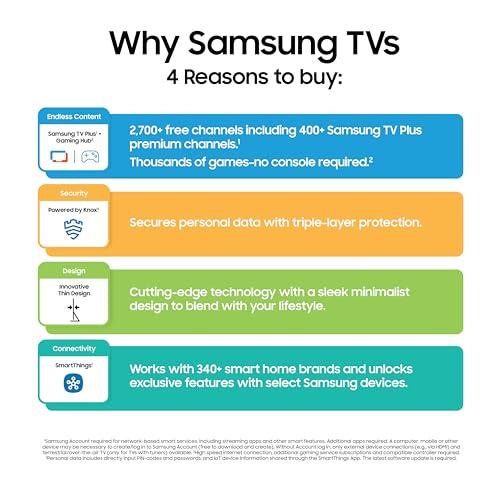
Both run Samsung's Tizen operating system, which remains snappy and user-friendly. App loading times are quick, and the interface stays responsive even with multiple apps running in the background.
Audio often gets overlooked in TV comparisons, but both models include interesting spatial audio technologies.
The Q8F features Object Tracking Sound Lite (OTS Lite), which attempts to match audio movement with on-screen action. When a car drives across the screen, the sound follows. Combined with Q-Symphony technology that can coordinate with Samsung soundbars, the Q8F creates a more immersive audio environment.
The S90D includes Dolby Atmos support, which provides height channels for more three-dimensional sound. This works particularly well for movie soundtracks designed with Dolby Atmos in mind.
Neither TV's built-in speakers will satisfy serious home theater enthusiasts, but both provide solid performance for casual viewing and integrate well with external sound systems.
At the time of writing, the Q8F costs significantly less while delivering impressive performance across most categories. This represents exceptional value for buyers seeking premium TV features without OLED pricing.
The S90D commands a premium that reflects OLED technology's inherent advantages. Expert reviews consistently note it performs nearly as well as Samsung's higher-end OLED models while costing considerably less, making it the value leader within OLED technology.
The question becomes whether OLED's picture quality advantages justify the price difference for your specific situation and priorities.
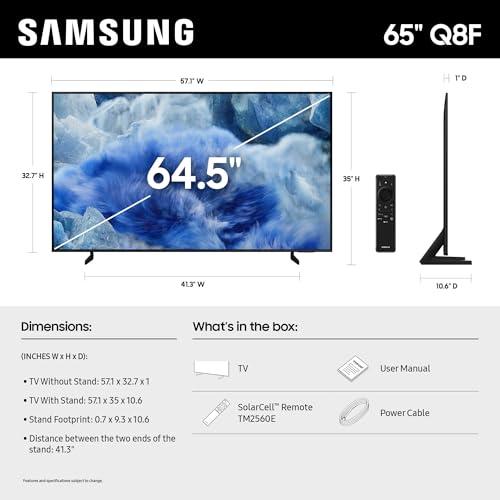
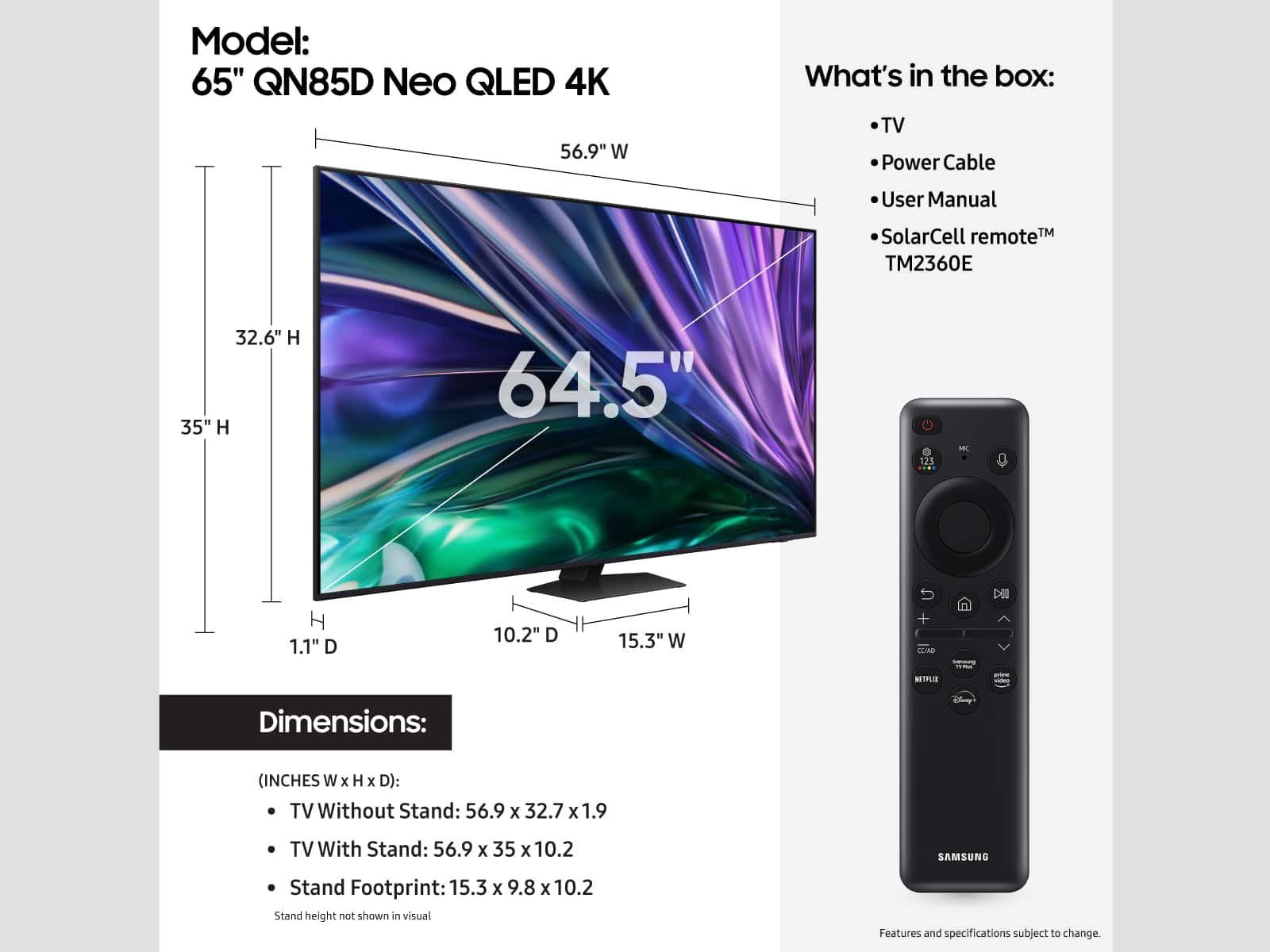
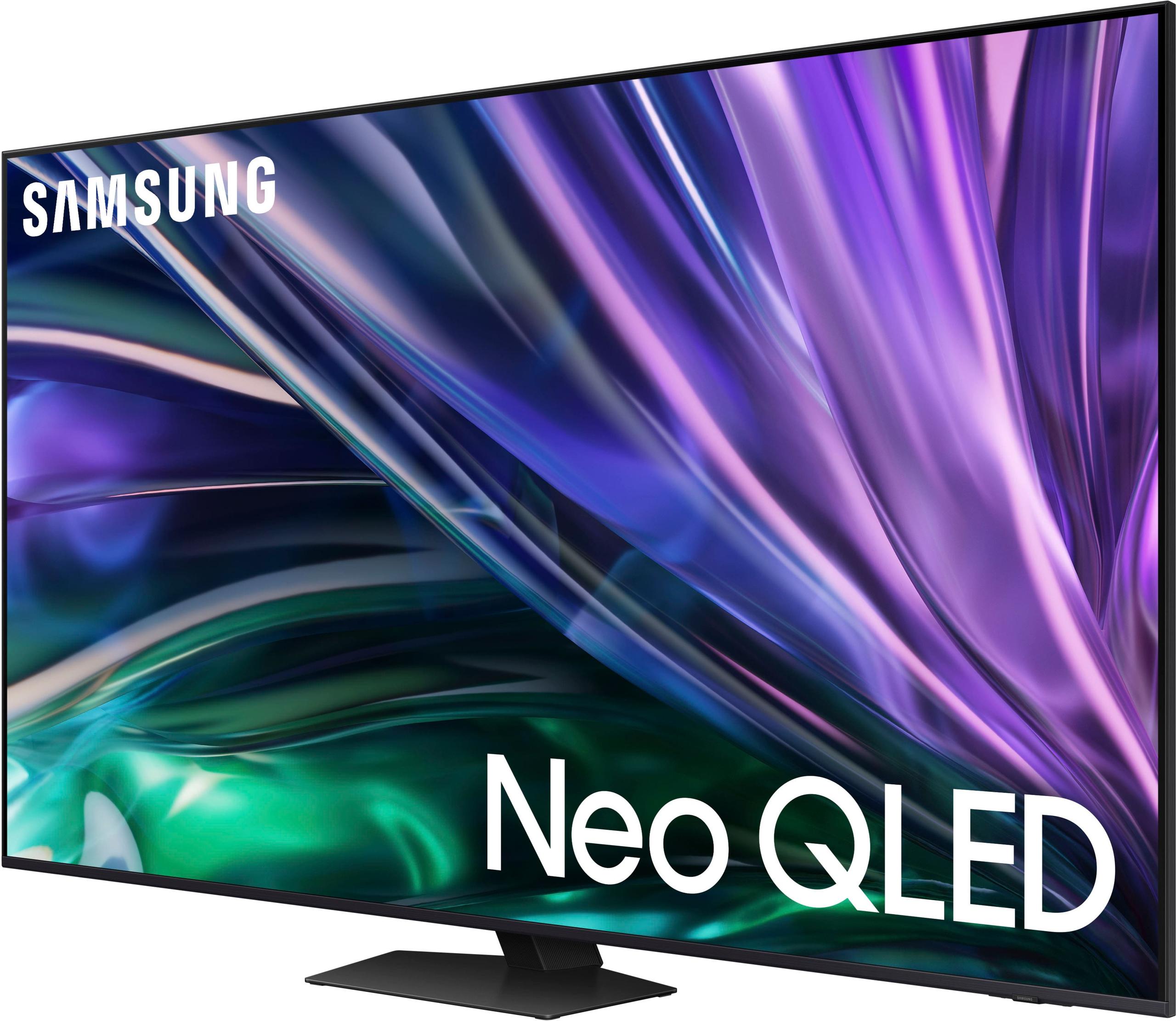
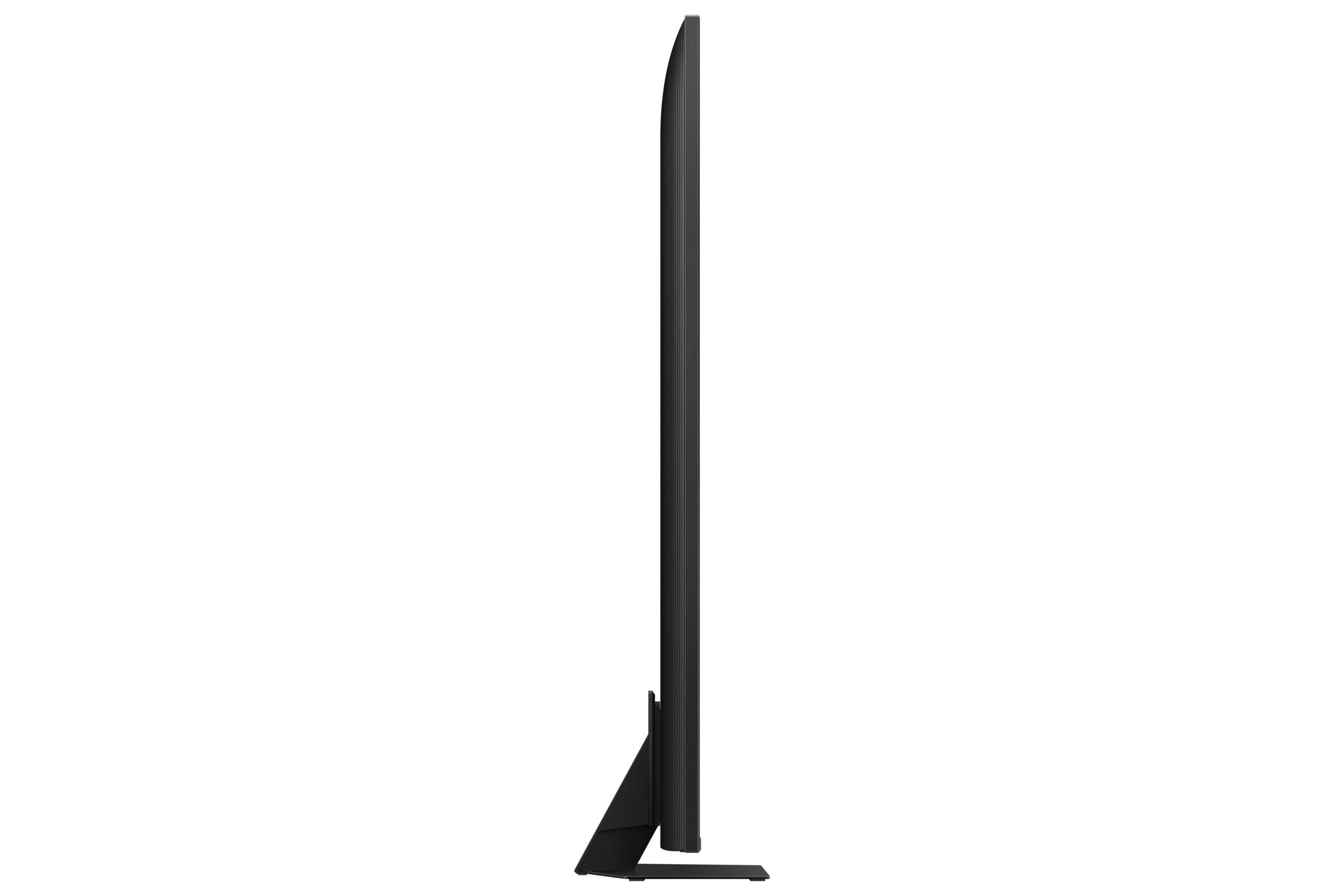
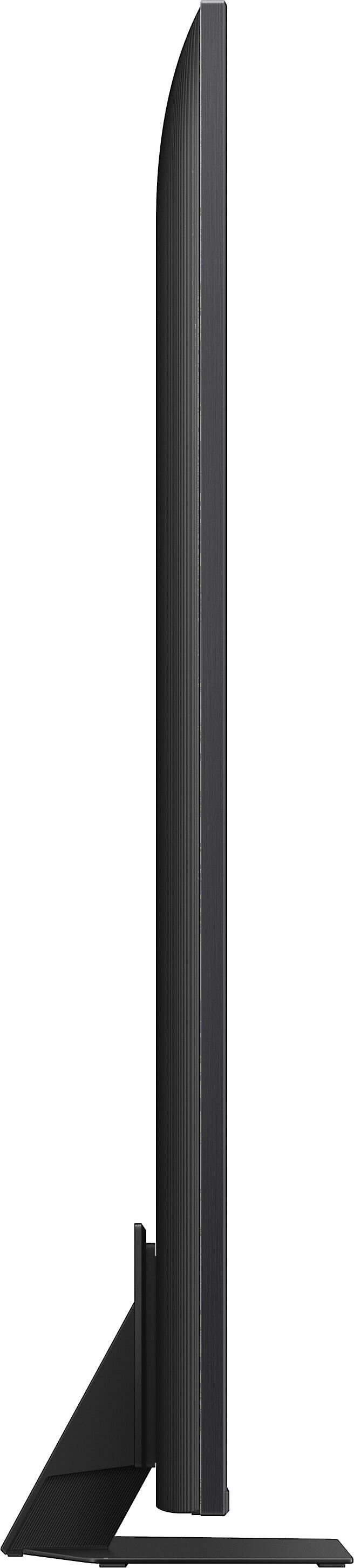
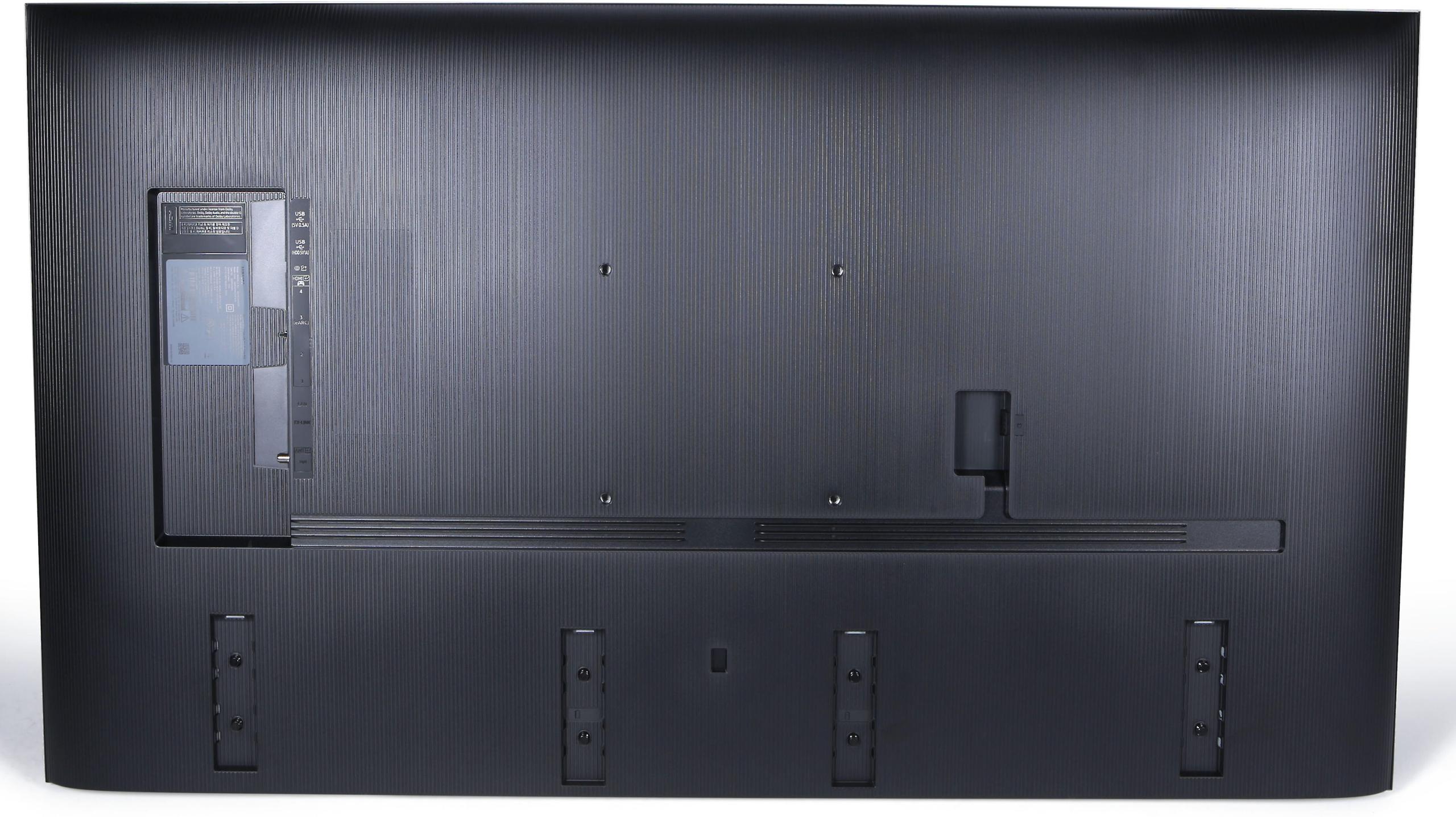
Both TVs feature Samsung's refined 2024-2025 design language with thin profiles and minimal bezels. The Q8F's AirSlim design creates an elegant appearance whether wall-mounted or on a stand.
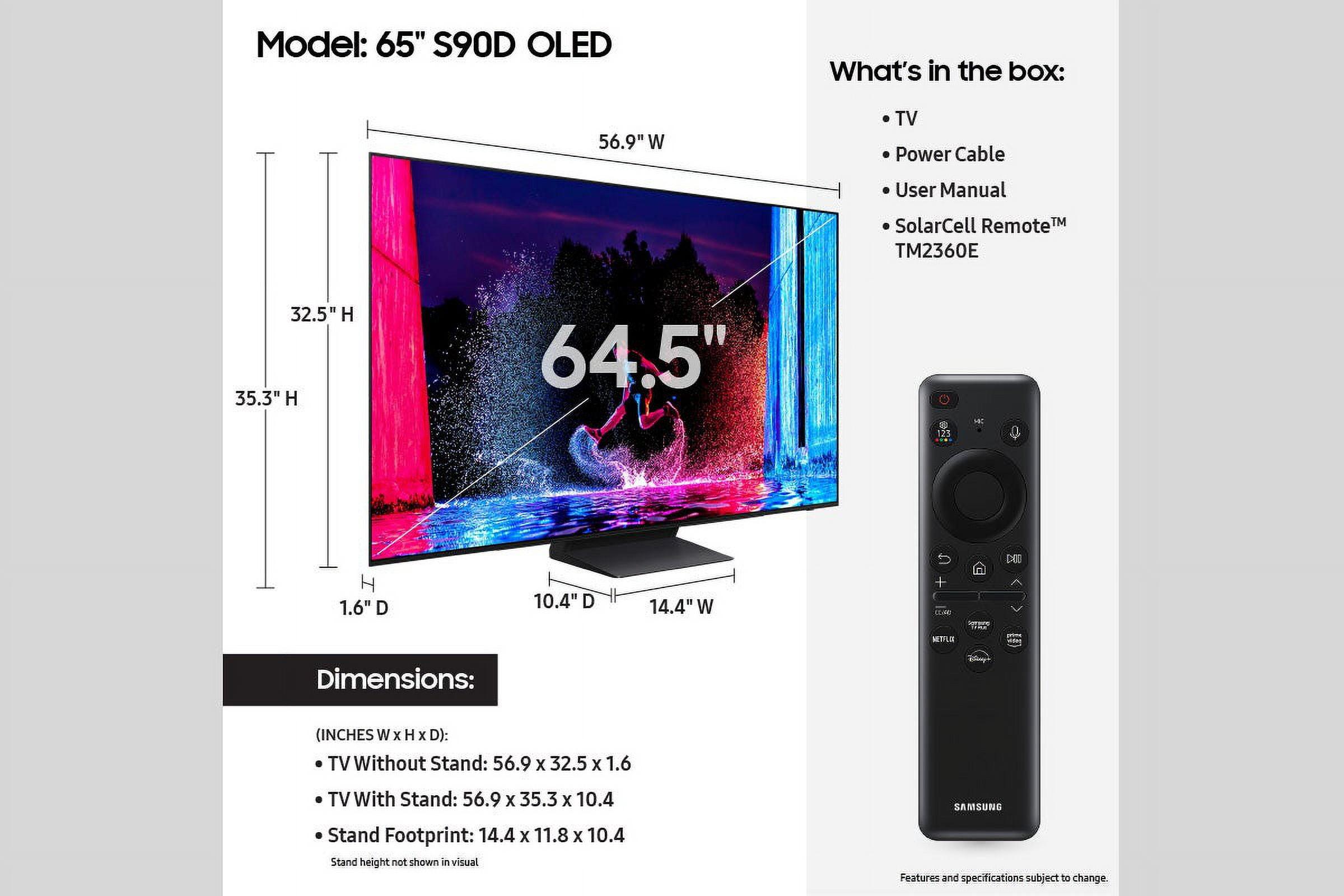
The S90D's OLED panel allows for an even thinner profile—just 1.6 inches deep without the stand. This ultra-slim design makes wall mounting particularly attractive and helps the TV disappear into your room's decor.
Both use glossy screen finishes rather than anti-glare coatings, prioritizing contrast and color accuracy over reflection reduction. This design choice works best in rooms where you can control lighting rather than bright spaces with lots of ambient light.
The Q8F represents Samsung's 2025 QLED technology, incorporating their latest processing improvements and AI features. As a current-generation model, it includes Samsung's most recent smart TV platform updates and should receive software support for several years.
The S90D, while using 2024 OLED technology, still represents mature and proven OLED performance. OLED technology has stabilized significantly, with concerns about burn-in largely resolved through improved pixel management and usage patterns.
Both TVs should provide excellent long-term performance, though the Q8F's newer processing and AI features might age better as streaming services and content sources continue evolving.
For dedicated home theater setups, the S90D provides a more authentic cinematic experience. Its infinite contrast ratio reveals details in dark scenes that simply aren't visible on LED-based displays, while maintaining excellent performance with bright content.
The Q8F excels in mixed-use living rooms where the TV serves multiple purposes throughout the day. Its superior brightness handles various lighting conditions better, while AI processing enhances whatever content you're watching.
The Q8F represents the sweet spot for most buyers—delivering premium performance with advanced AI features at a mainstream price point. If your TV lives in a bright room, serves multiple family members with varied viewing habits, and budget considerations matter, the Q8F provides exceptional value.
The S90D justifies its premium for viewers who prioritize absolute picture quality, especially in dark room viewing scenarios. Home theater enthusiasts, movie lovers, and anyone who appreciates OLED's visual superiority will find the investment worthwhile.
Your choice ultimately depends on room environment, viewing preferences, and how much picture quality improvement justifies the price difference. Both represent excellent televisions that will satisfy for years, just with different strengths that appeal to different priorities.
Consider the Q8F if bright room performance, AI-enhanced features, and value matter most. Choose the S90D if you can control your viewing environment and want OLED's superior contrast and gaming performance. Either way, you're getting a quality Samsung display with the reliability and features you'd expect from a premium television.
| Samsung 65" QLED Q8F | Samsung 65" OLED S90D |
|---|---|
| Display Technology - The fundamental difference that drives all other performance characteristics | |
| QLED with Quantum Dots and Dual LED backlighting | QD-OLED (Quantum Dot OLED) with self-emissive pixels |
| Contrast Ratio - Most important factor for picture depth and realism | |
| High contrast with local dimming zones | Infinite contrast ratio (true blacks) |
| Peak Brightness - Critical for bright room viewing and HDR impact | |
| HDR1500 specification (excellent for bright rooms) | ~1,240 nits measured (adequate for most scenarios) |
| Native Refresh Rate - Determines smoothness for gaming and sports | |
| 120Hz with Motion Xcelerator 144Hz processing | True 144Hz with VRR support |
| AI Processing - Enhances content quality and user experience | |
| Q4 AI Processor with 4K AI Upscaling and Generative Wallpaper | Standard processing without AI enhancement features |
| HDR Format Support - Affects compatibility with premium streaming content | |
| HDR10+ and Quantum HDR+ (no Dolby Vision) | HDR10+ and OLED HDR+ (no Dolby Vision) |
| Gaming Features - Important for console and PC gaming performance | |
| Auto Game Mode, Game Motion Plus, AI Auto Game Mode | HDMI 2.1, VRR, 144Hz PC gaming support |
| Smart Platform - Determines app availability and user interface quality | |
| Tizen OS with advanced AI features and voice control | Tizen OS with standard smart TV functionality |
| Audio Technology - Built-in sound quality and external integration | |
| Object Tracking Sound Lite (OTS Lite) with Q-Symphony | Dolby Atmos support with standard audio processing |
| Screen Finish - Affects reflection handling in different lighting conditions | |
| Glossy finish (preserves contrast, shows reflections) | Glossy finish (preserves contrast, shows reflections) |
| Design Profile - Important for wall mounting and room aesthetics | |
| AirSlim design with standard QLED thickness | Ultra-thin OLED profile (1.6" depth without stand) |
| Value Positioning - Performance-to-price relationship at time of writing | |
| Exceptional mainstream value with premium features | Premium OLED performance at accessible price point |
| Best Use Case - Ideal viewing scenarios for each technology | |
| Bright rooms, mixed content, AI-enhanced viewing | Dark rooms, cinematic content, gaming enthusiasts |
The Samsung QLED Q8F is significantly better for bright rooms due to its superior peak brightness reaching HDR1500 specification. The Samsung OLED S90D produces around 1,240 nits, which is adequate but may struggle in very bright environments with lots of ambient light. If your TV faces windows or you watch during daytime hours, the QLED Q8F will maintain better picture visibility.
The biggest difference is contrast performance. The OLED S90D delivers infinite contrast with perfect blacks since each pixel can turn completely off, creating more realistic depth and shadow detail. The QLED Q8F uses local dimming zones for good contrast but cannot achieve pixel-perfect black control, though it compensates with brighter highlights and more vibrant colors.
The OLED S90D has advantages for serious gaming with true 144Hz refresh rate support and near-instantaneous pixel response times. The Samsung QLED Q8F offers 120Hz with Motion Xcelerator processing and gaming-specific AI features. For competitive PC gaming, choose the S90D. For console gaming with enhanced features, the Q8F works excellently.
Both run Samsung's Tizen operating system with access to major streaming services, but the QLED Q8F includes more advanced features like Q4 AI Processor for content upscaling, Generative Wallpaper, and AI Mode for adaptive settings. The OLED S90D has standard Tizen functionality without the enhanced AI processing features.
The Samsung QLED Q8F provides exceptional value with premium features at a mainstream price point, offering about 90% of high-end performance for significantly less cost. The OLED S90D justifies its premium pricing with superior OLED picture quality that matches much more expensive models. Value depends on whether OLED's benefits matter for your viewing preferences.
The OLED S90D is worth the premium if you prioritize picture quality, watch in dark or controlled lighting, enjoy cinematic content, or want the best gaming performance. Stick with the Samsung QLED Q8F if you have a bright room, watch mixed content types, or prefer spending less while still getting excellent performance.
The OLED S90D excels in dark room viewing thanks to its infinite contrast ratio and perfect blacks, revealing shadow details that LED TVs cannot display. This creates a more cinematic experience that matches filmmakers' intentions. The Samsung QLED Q8F performs well in dark rooms but cannot match OLED's contrast performance for movie watching.
Neither the Samsung QLED Q8F nor OLED S90D supports Dolby Vision HDR, which is a consistent limitation across Samsung's TV lineup. Both support HDR10+ format instead, which provides scene-by-scene optimization but isn't as widely adopted as Dolby Vision across streaming services and content.
Audio quality is roughly comparable between both models. The QLED Q8F features Object Tracking Sound Lite and Q-Symphony for soundbar integration, while the OLED S90D includes Dolby Atmos support. Neither will satisfy serious home theater setups, but both offer decent built-in audio for casual viewing and work well with external sound systems.
The Samsung QLED Q8F includes significantly more AI functionality with its Q4 AI Processor, offering 4K upscaling for lower-quality content, adaptive picture and sound optimization, and Generative Wallpaper creation. The OLED S90D lacks these advanced AI features, focusing instead on natural picture processing without enhancement algorithms.
The QLED Q8F may have slight future-proofing advantages due to its 2025-era AI processing and smart features that should adapt well to evolving content sources. The Samsung OLED S90D offers proven OLED technology with excellent longevity, though it lacks the newest processing features. Both should provide years of excellent performance with regular software updates.
For most family living rooms, the Samsung QLED Q8F is the better choice due to superior bright room performance, AI upscaling that improves varied content quality, and excellent value for mixed-use scenarios. Choose the OLED S90D only if you can control room lighting and prioritize absolute picture quality over versatility and value.
We've done our best to create useful and informative comparisons to help you decide what product to buy. Our research uses advanced automated methods to create this comparison and perfection is not possible - please contact us for corrections or questions. These are the sites we've researched in the creation of this article: bestbuy.com - rtings.com - tomsguide.com - youtube.com - samsung.com - youtube.com - youtube.com - youtube.com - rtings.com - rtings.com - linqcdn.avbportal.com - bestbuy.com - samsung.com - samsung.com - samsung.com - youtube.com - youtube.com - billsmith.com - samsung.com - samsung.com - samsung.com - hometechnologyreview.com - shopjetson.com - certappl.com - samsung.com - theapplianceplug.com - samsung.com - manuals.plus - bestbuy.com - device.report - samsung.com - shopsilica.com - dentonstv.com - bestbuy.com - valueelectronics.com - youtube.com - cnet.com - bestbuy.com - videoandaudiocenter.com - youtube.com - samsung.com - samsung.com - pcrichard.com - samsung.com

Privacy Policy
Terms and Conditions - Affiliate Policy
Home Security
© Copyright 2008-2026.
11816 Inwood Rd #1211, Dallas, TX 75244