

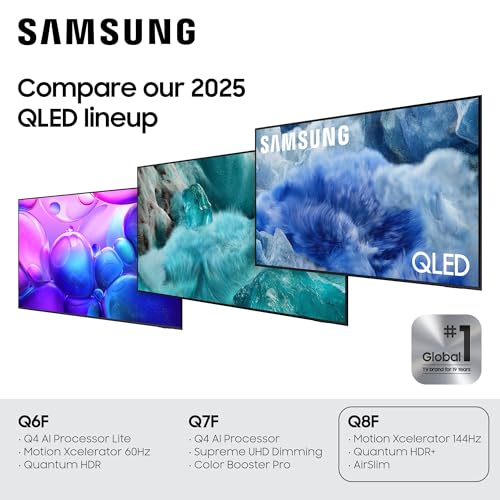
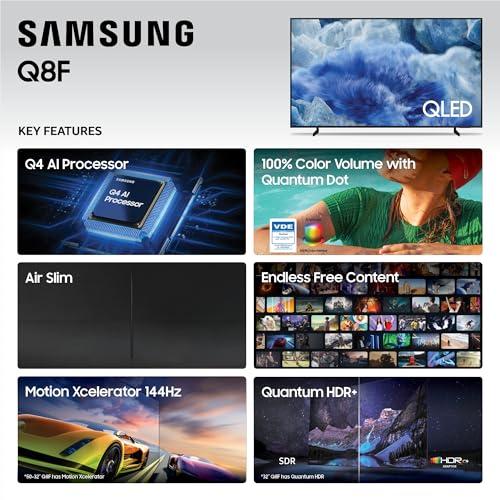
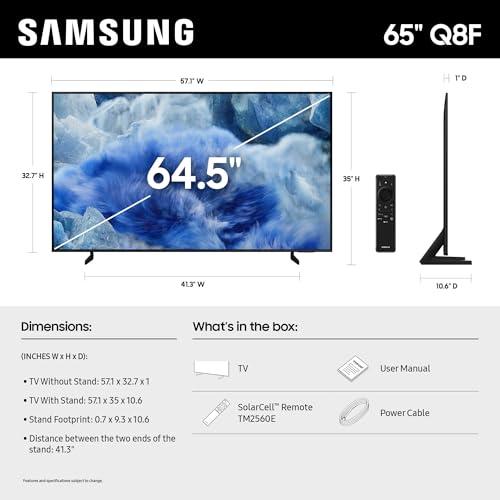
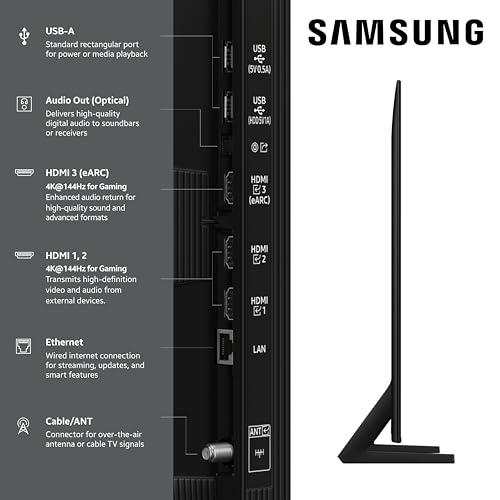
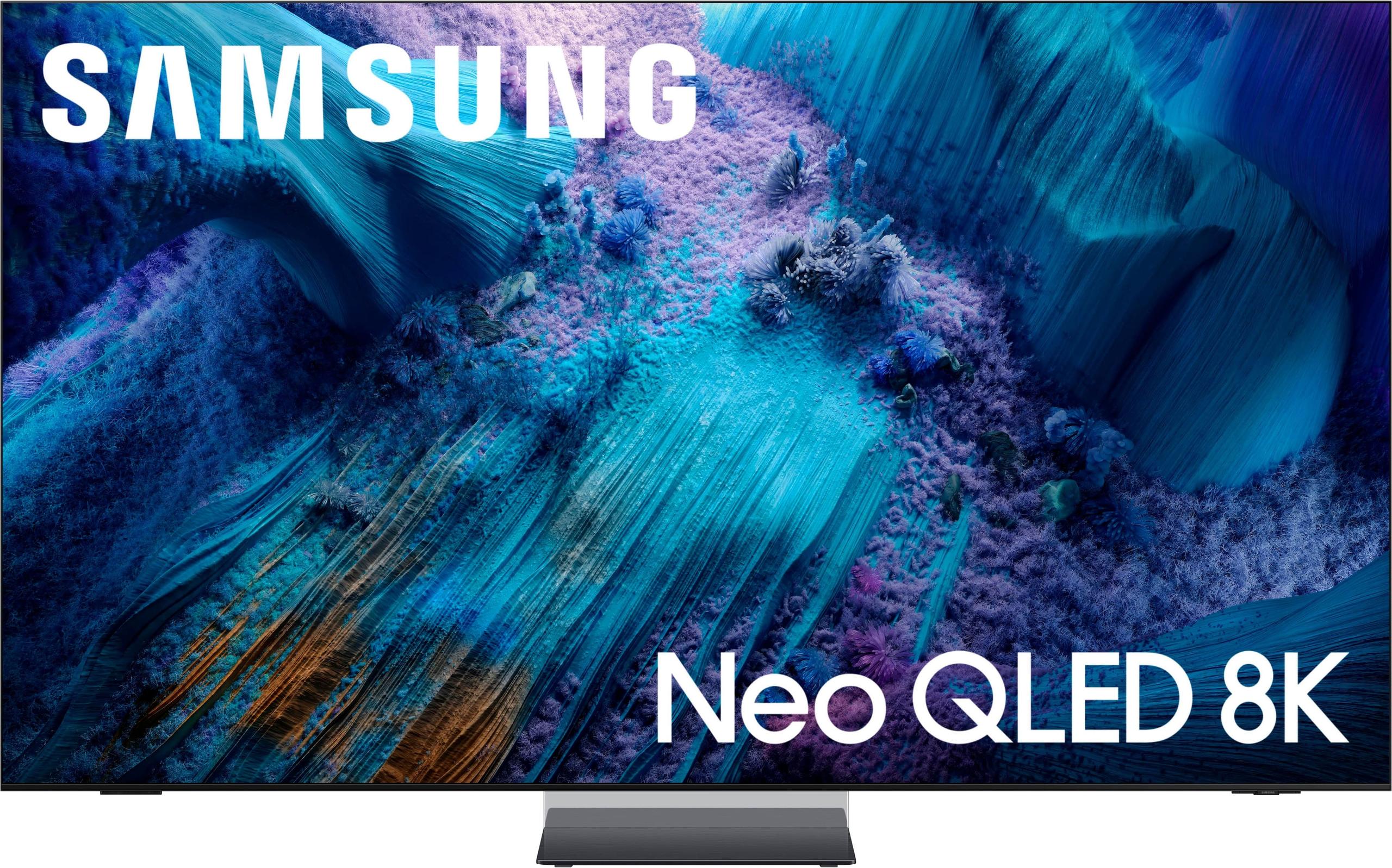
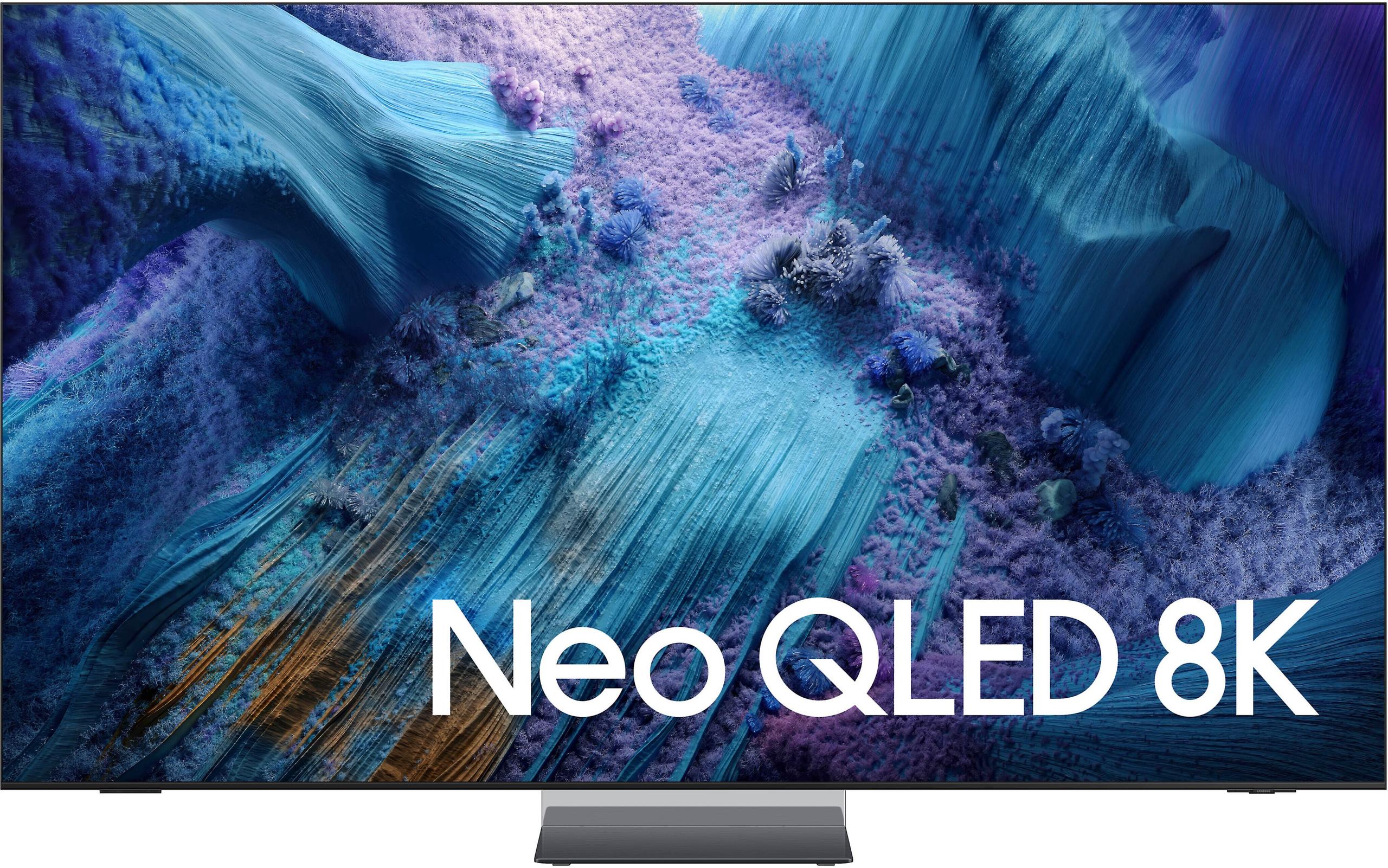
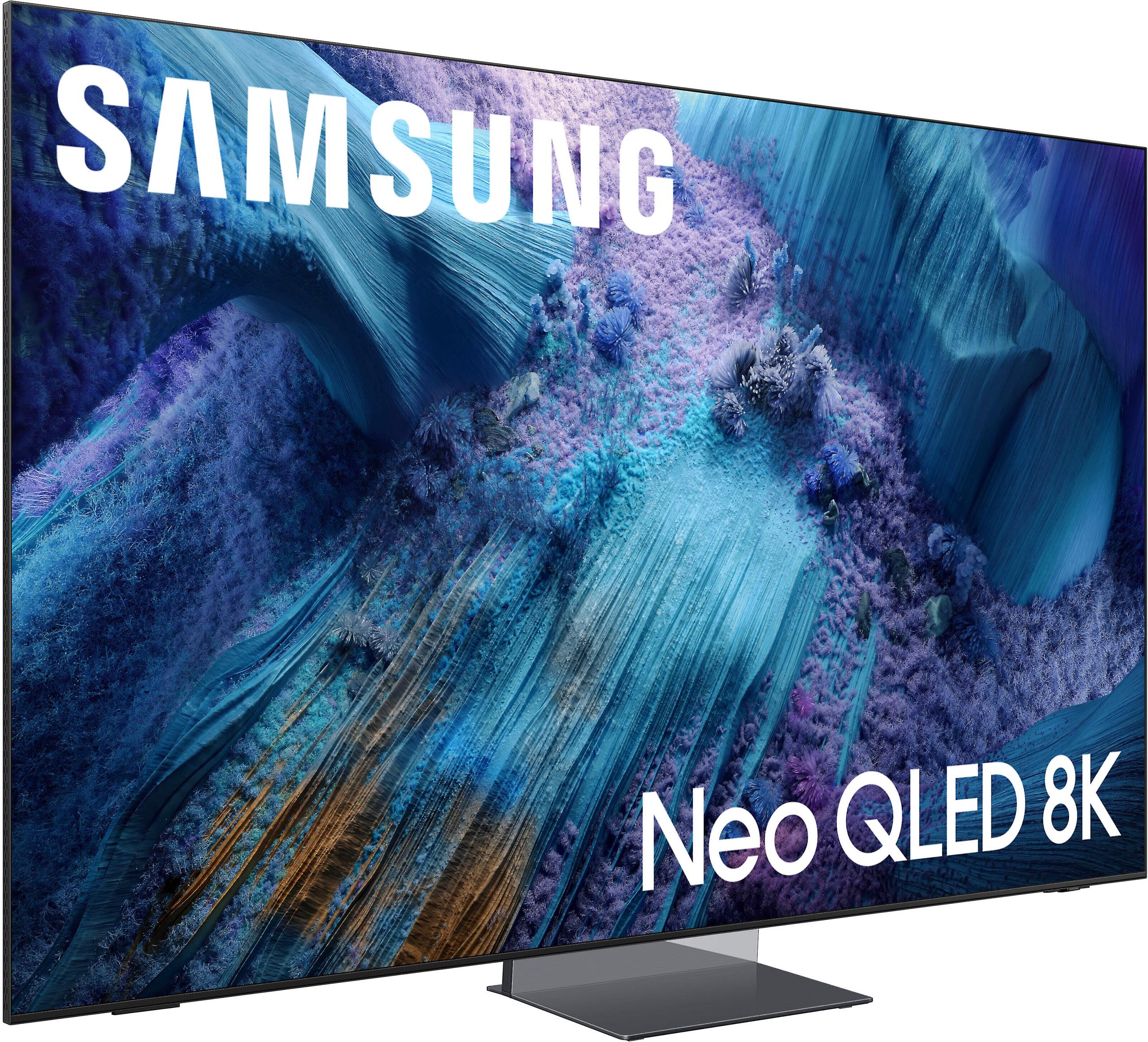
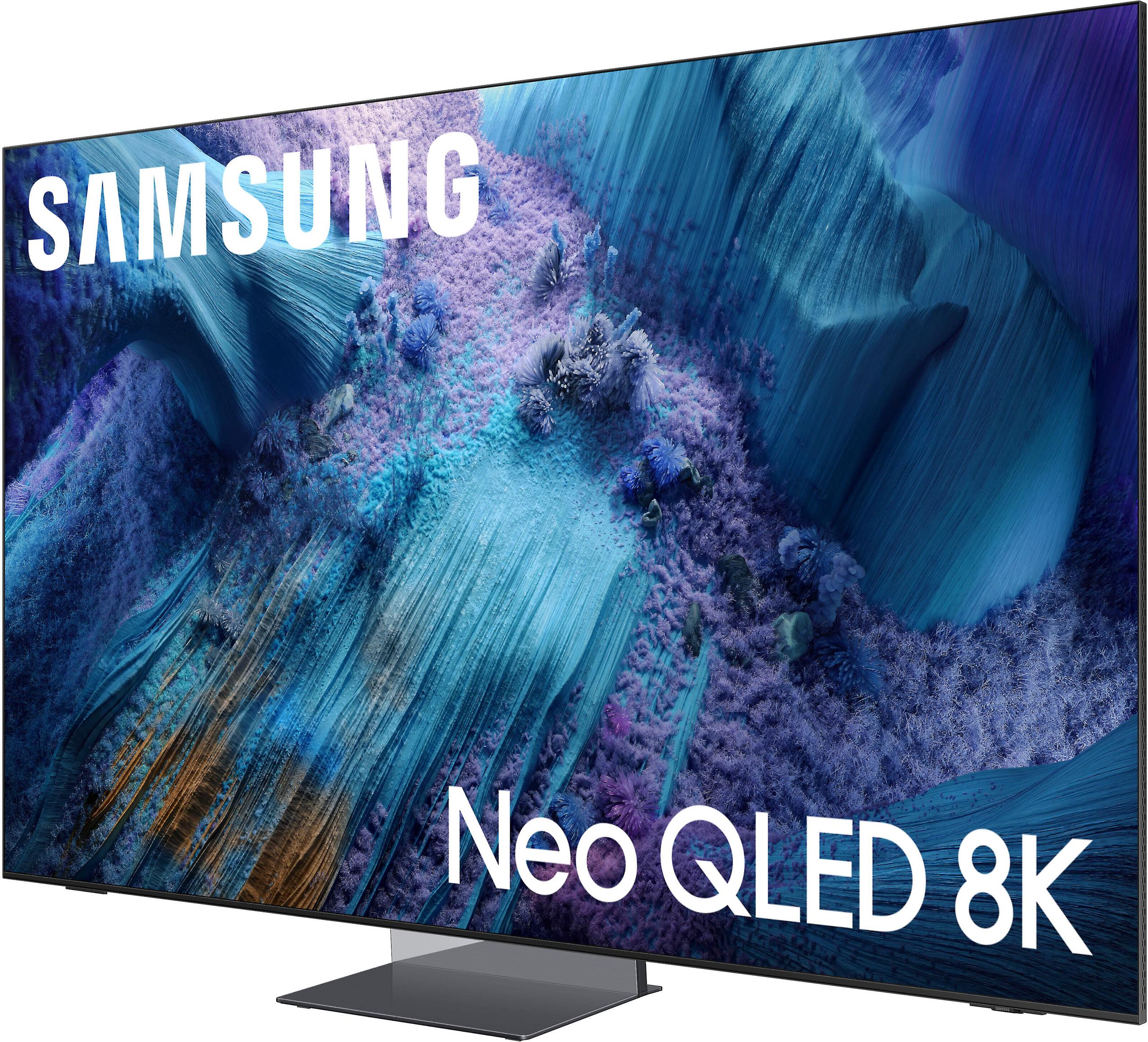

When Samsung released these two televisions in 2025, they represented very different philosophies in TV design. The Q8F aims to bring quantum dot technology to mainstream buyers without breaking the bank, while the QN990F pushes the absolute boundaries of what's possible in home television technology. Understanding which approach fits your needs—and your wallet—requires diving deep into what makes these TVs tick.
Before we compare these specific models, let's establish what QLED actually means and why it matters. QLED stands for "Quantum Dot Light Emitting Diode," which sounds complicated but breaks down simply: these TVs use microscopic particles called quantum dots to convert blue LED light into incredibly pure colors. Think of quantum dots as tiny color filters that can produce more vibrant reds and greens than traditional LCD TVs.
The main considerations when evaluating any QLED TV include how bright it can get (measured in nits), how well it controls contrast between dark and bright areas, how accurately it reproduces colors, and how smoothly it handles fast motion. Gaming performance has become increasingly important, with refresh rates and input lag now major deciding factors for many buyers.
What's changed significantly since 2024 is the integration of AI processing. Both the Q8F and QN990F use artificial intelligence to analyze each scene and optimize the picture in real-time, but they do so with dramatically different levels of sophistication.
The most crucial difference between these TVs lies in their backlighting systems—a technical detail that creates a massive gap in real-world performance.
The Q8F uses edge-lit LED backlighting, meaning LED lights are positioned around the edges of the screen and shine inward. This keeps the TV thin and affordable, but creates a significant limitation: the entire screen shares the same brightness level. When you're watching a movie with a bright explosion and dark shadows in the same scene, the Q8F can't make the explosion bright without also brightening the shadows, resulting in washed-out blacks and reduced contrast.
The QN990F, by contrast, employs what Samsung calls "Quantum Mini LED Pro" technology. This system uses thousands of tiny LEDs arranged directly behind the screen, organized into nearly 2,000 dimming zones (on the 65-inch model). Each zone can independently adjust its brightness, allowing the TV to display deep blacks right next to brilliant highlights. This creates the dramatic contrast that makes HDR content truly pop.
From our research into professional reviews and user feedback, this difference is immediately apparent in dark room viewing. The QN990F delivers blacks that approach OLED quality while maintaining the superior brightness that QLED is known for. The Q8F, while perfectly adequate for bright room viewing, simply cannot match this level of contrast control.
Here's where things get interesting—and controversial. The QN990F boasts 8K resolution (7,680 x 4,320 pixels), which sounds impressive until you consider the current content landscape.
As of 2025, native 8K content remains extremely rare. Netflix, Disney+, Amazon Prime, and other major streaming services still primarily offer 4K as their highest resolution. Even high-end Blu-ray discs max out at 4K. This means the QN990F must upscale virtually everything you watch from lower resolutions to fill its 8K display.
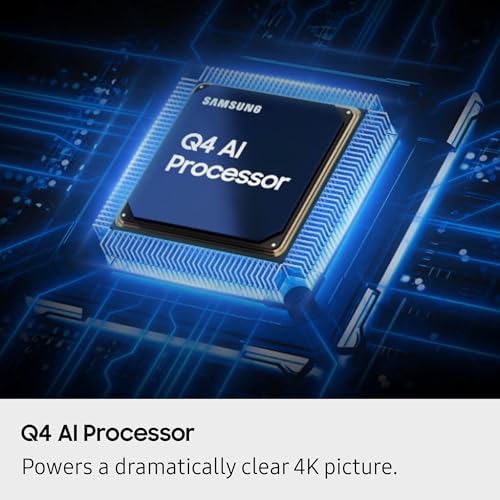
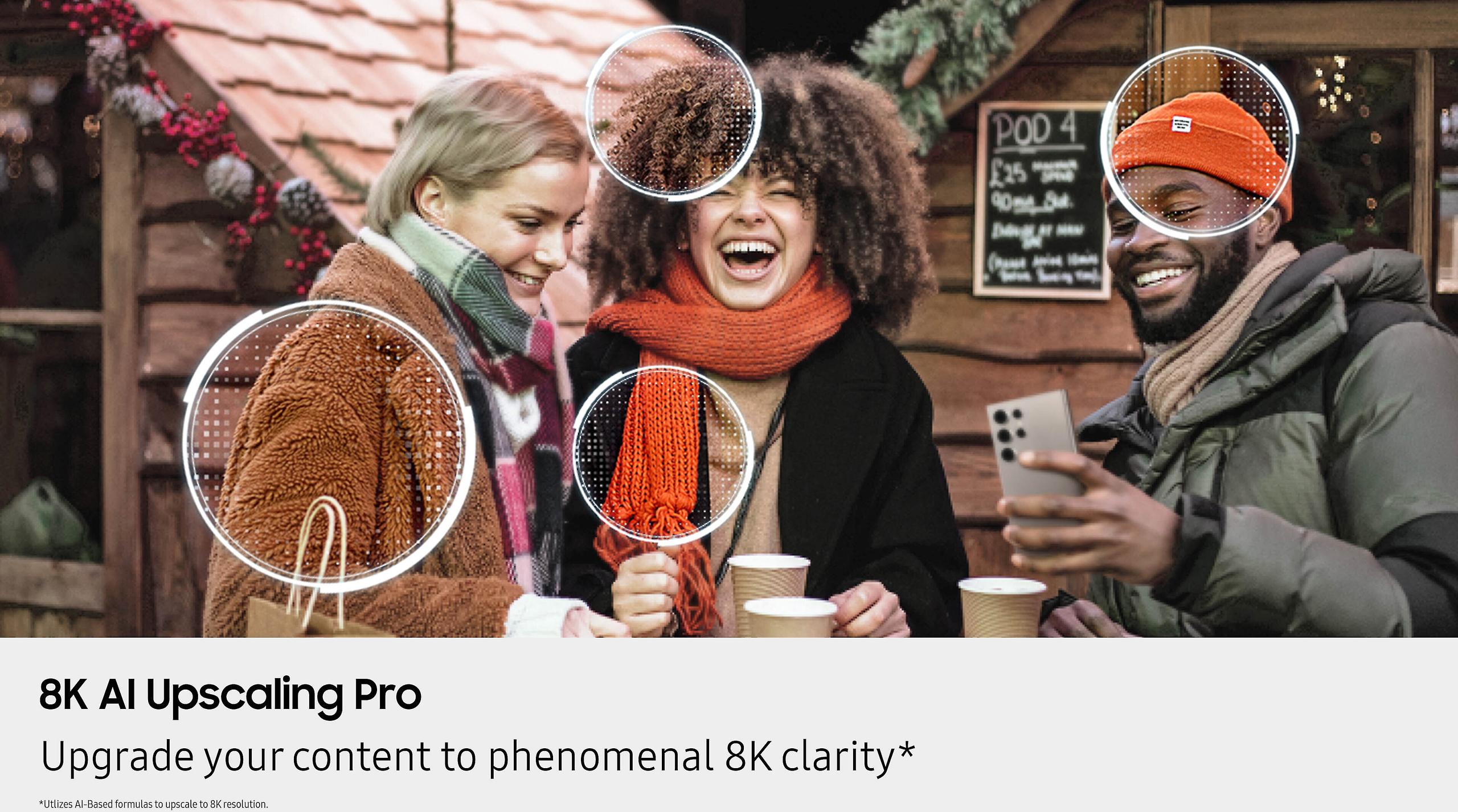
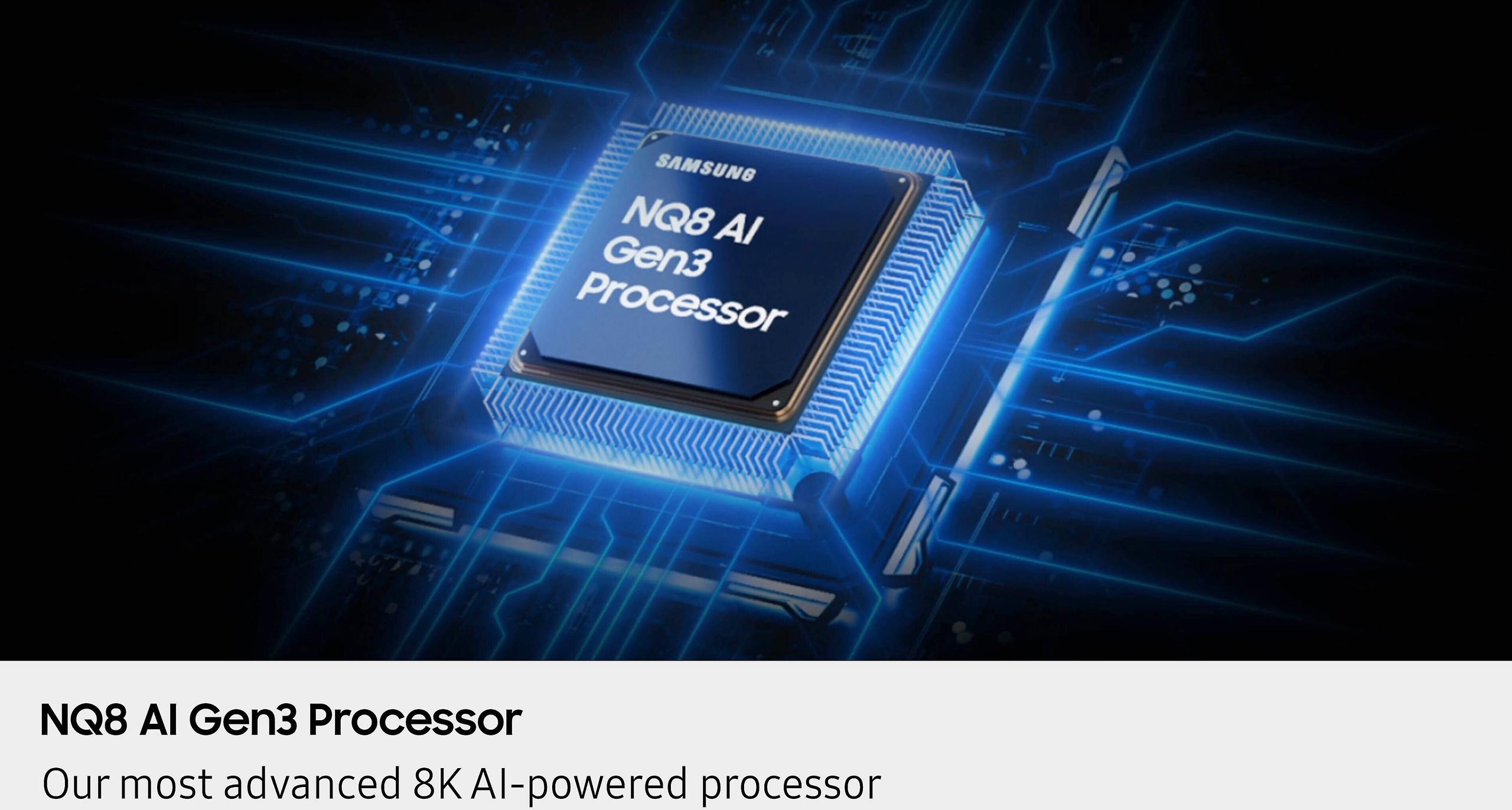
The good news is that the QN990F excels at this upscaling process. Its NQ8 AI Gen3 processor uses 768 neural networks—essentially 768 different AI algorithms working together—to analyze each frame and intelligently add detail. This system examines textures, edges, and patterns to reconstruct images with remarkable sharpness. The processor runs 90% faster than previous generations, enabling real-time analysis of every scene.
The Q8F uses a more basic processor that handles standard 4K upscaling well but lacks the sophisticated AI enhancement of its premium sibling. For most current content, this difference is subtle but becomes more noticeable with lower-quality sources like cable TV or older streaming content.
Based on expert reviews and user feedback, the 8K advantage is most apparent when viewing content from close distances (closer than the typically recommended viewing distance) or with extremely large screen sizes. At normal viewing distances, the superior contrast and brightness control of the QN990F provides more visual impact than the resolution increase alone.
Gaming has become a major consideration for TV buyers, and these models cater to very different types of gamers.
The Q8F supports up to 120Hz refresh rates, which covers most gaming scenarios adequately. Modern consoles like the PlayStation 5 and Xbox Series X can output 4K at 120fps in select games, and the Q8F handles this smoothly. Its input lag (the delay between controller input and on-screen response) measures respectably low, making it suitable for casual to moderate gaming.
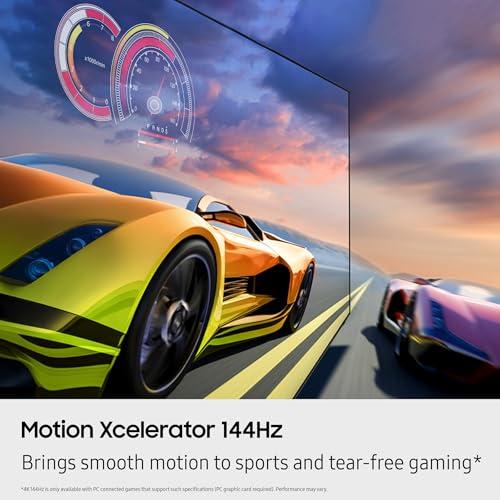
The QN990F takes gaming to another level entirely. It supports up to 240Hz at 4K resolution, which primarily benefits PC gamers with high-end graphics cards. More importantly for console gamers, it includes advanced motion processing called "AI Motion Enhancer Pro" that reduces blur and judder in fast-moving scenes. This technology analyzes motion patterns and adjusts processing accordingly, resulting in clearer action during racing games, sports, or first-person shooters.
User reviews consistently highlight the QN990F's gaming superiority, particularly for competitive players where every millisecond of response time matters. The Q8F remains perfectly suitable for casual gaming but can't match the premium model's precision.
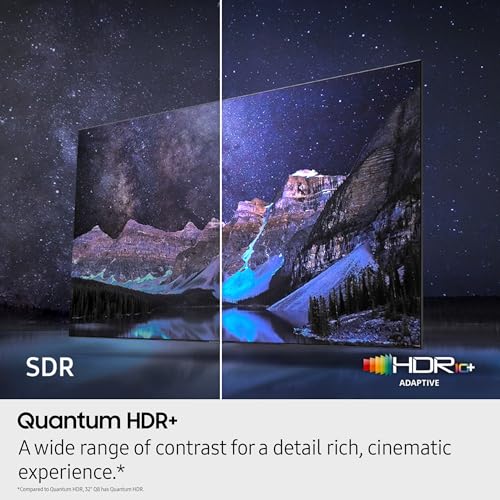
Both TVs use quantum dot technology, but they implement it very differently. The Q8F achieves good brightness levels suitable for most viewing environments, typically reaching around 600-800 nits in HDR content. This provides adequate pop for HDR movies and shows, though it may struggle in very bright rooms with lots of windows.
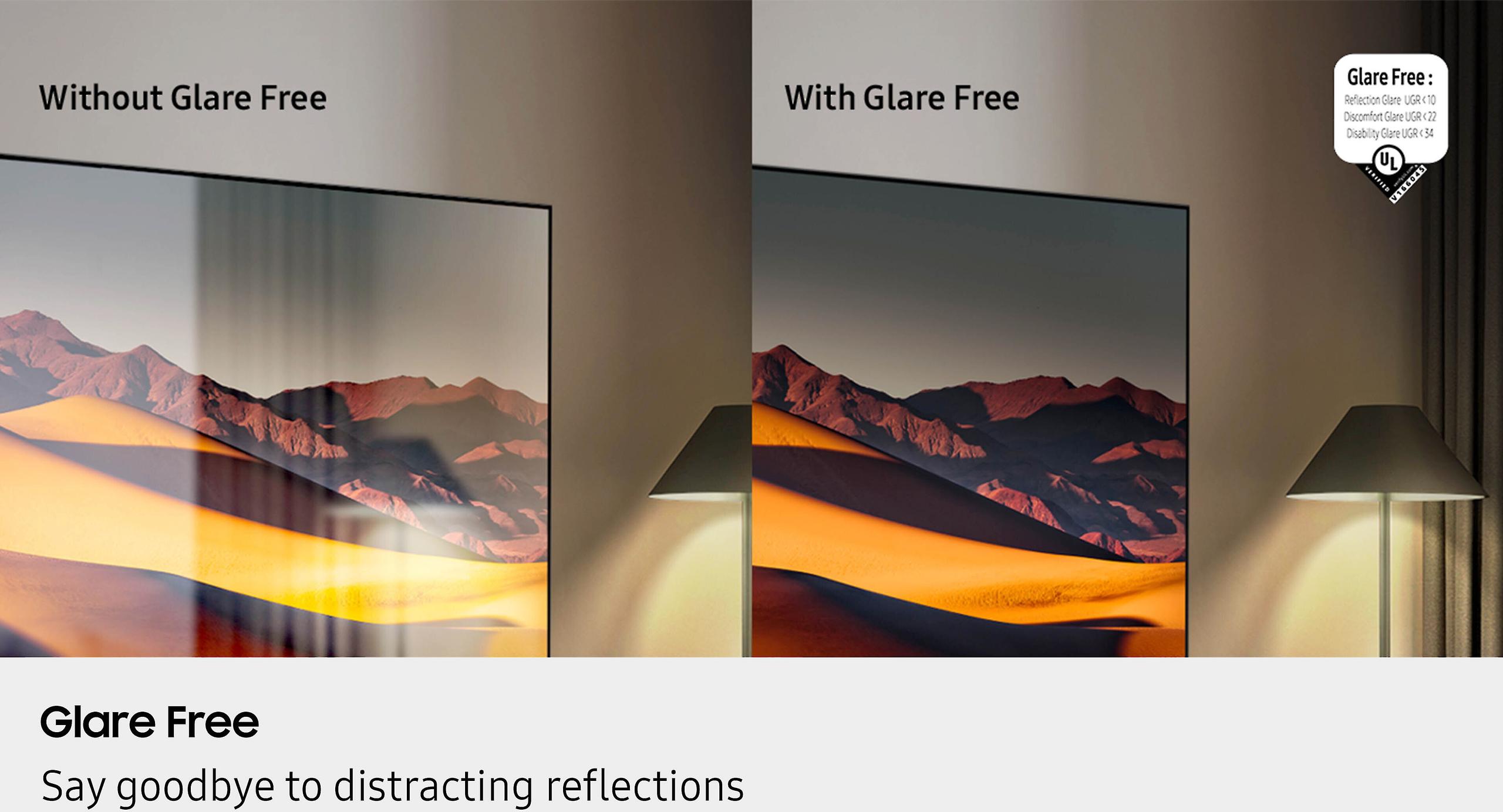
The QN990F pushes brightness to extremes, often exceeding 1,500 nits in peak highlights. This level of brightness serves two purposes: it makes HDR content truly dazzling, and it enables viewing in challenging lighting conditions. Combined with Samsung's "Glare Free" screen coating—a matte treatment that reduces reflections without dulling colors—the QN990F performs exceptionally well in bright living rooms where most TVs would become unwatchable.
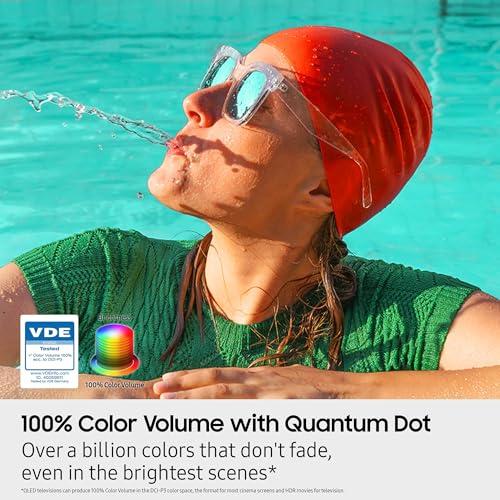
Color reproduction shows similar scaling. Both TVs cover wide color gamuts, but the QN990F achieves greater color volume—the combination of color range and brightness that creates more lifelike images. Professional reviews consistently rate the QN990F among the most color-accurate TVs available, while the Q8F provides good but not exceptional color performance.
Samsung updated both TVs with their latest Tizen operating system in 2025, but the experience differs significantly between models.
The Q8F includes standard smart TV features: voice control through Bixby, access to all major streaming apps, and basic AI optimization that adjusts picture settings based on content type. It's responsive and user-friendly, covering all essential smart TV functions without additional complexity.
The QN990F introduces Samsung Vision AI, a comprehensive system that goes far beyond basic smart TV features. This AI analyzes not just content but also room lighting, viewing patterns, and even audio characteristics to optimize the entire viewing experience. It can automatically adjust picture settings when switching from a bright action movie to a dark drama, or modify audio based on whether you're watching dialogue-heavy content or explosive action sequences.
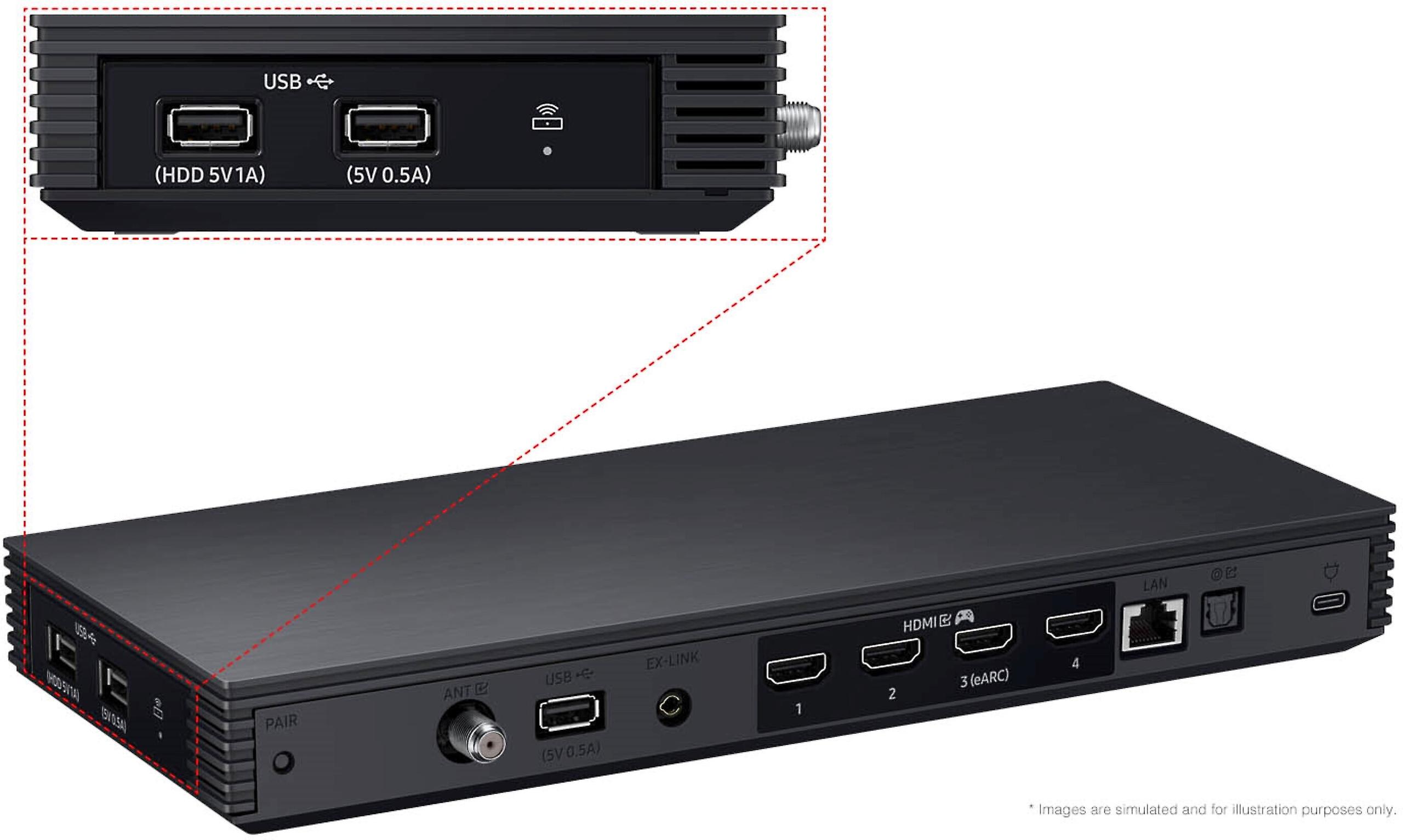
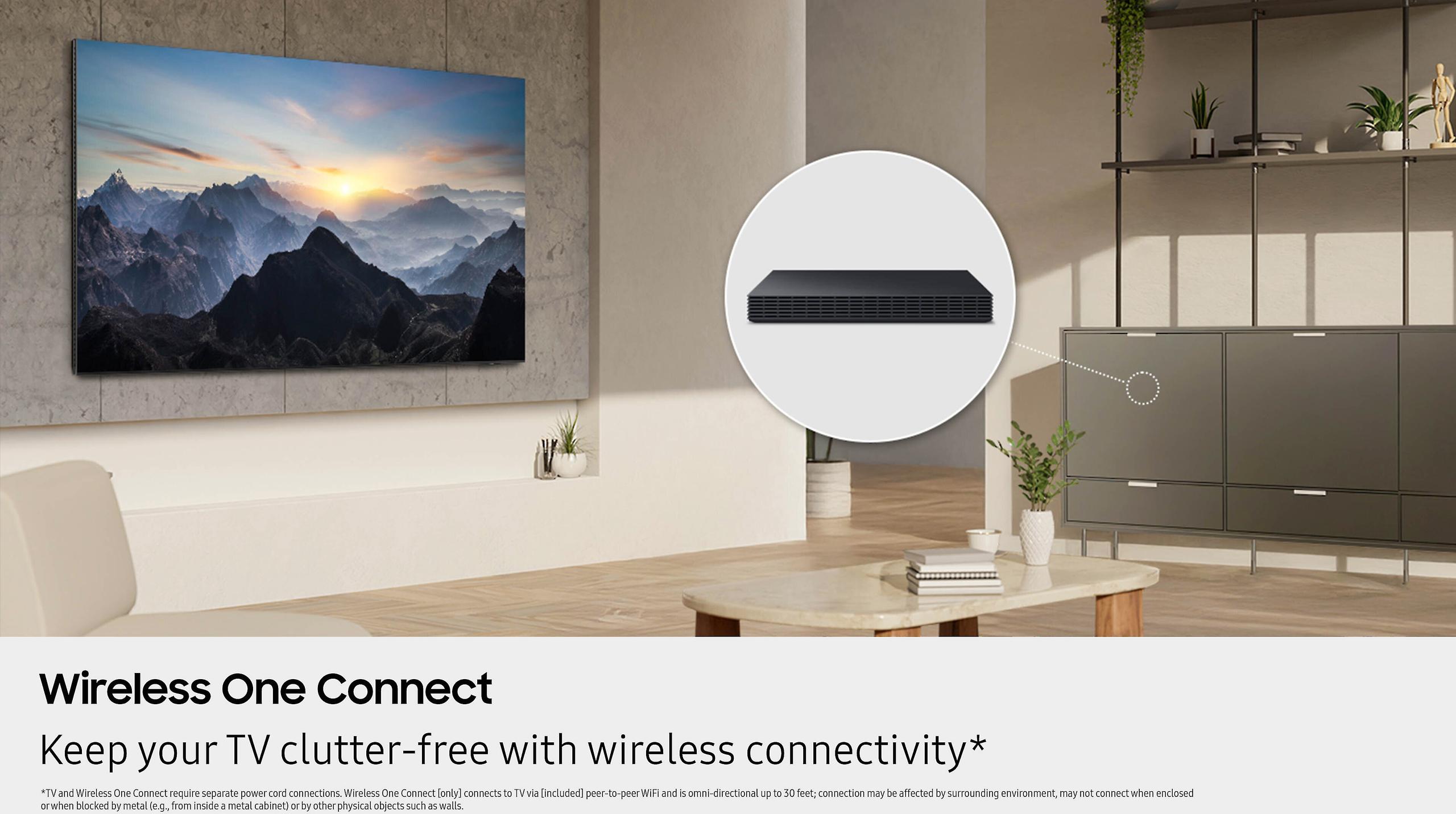
The QN990F also includes a Wireless One Connect box, which allows you to connect cable boxes, gaming consoles, and other devices to a separate unit placed up to 30 feet from the TV. This eliminates cable clutter and enables cleaner installations, particularly valuable for wall-mounted setups.
Audio represents another significant divide between these models. The Q8F includes a basic 20-watt, 2-channel speaker system that provides clear dialogue and adequate volume for small to medium rooms. It supports Samsung's Q-Symphony feature, allowing it to work in harmony with compatible Samsung soundbars without muting the TV's own speakers.
The QN990F features a sophisticated 90-watt, 6.2.4-channel audio system with dedicated speakers positioned around the TV. Its "Object Tracking Sound Pro" technology moves audio effects across the screen to match on-screen action—car engines pan from left to right, helicopters move overhead, and dialogue stays centered even when characters move around. This system supports Dolby Atmos for three-dimensional sound that can genuinely compete with mid-range soundbars.
From user feedback, the QN990F's built-in audio often eliminates the need for additional audio equipment in smaller rooms, while the Q8F benefits significantly from pairing with a soundbar or surround system.
For dedicated home theater setups, the choice becomes clearer based on your priorities and room conditions.
The Q8F works well in controlled lighting environments where its contrast limitations are less apparent. Its edge-lit design means it performs best in dark or dimly lit rooms, making it suitable for basement theaters or dedicated media rooms with good light control. At its price point (significantly lower than the premium model at the time of writing), it allows budget for additional home theater components like a quality sound system or acoustic treatments.
The QN990F excels in multipurpose living spaces that serve as both everyday family rooms and entertainment centers. Its glare-free screen and extreme brightness enable excellent performance even with ambient lighting, while its contrast capabilities satisfy critical viewing in dark conditions. The built-in premium audio system reduces the need for additional components, simplifying setup while maintaining high performance standards.
Professional home theater reviews consistently rank the QN990F among the top choices for high-end installations, while the Q8F receives praise as an excellent value option that punches above its weight class.
At the time of writing, these TVs occupy entirely different price segments, with the QN990F costing roughly four times more than the Q8F. This pricing reflects their target markets rather than just their technical differences.
The Q8F targets mainstream consumers who want quantum dot technology without premium pricing. It delivers solid 4K performance, good color reproduction, and comprehensive smart features at a price point that makes QLED accessible. For many buyers, it provides all the performance they need without features they wouldn't fully utilize.
The QN990F aims at enthusiasts and luxury buyers who want the absolute best available technology. Every specification exceeds the Q8F, often dramatically. The question becomes whether these improvements justify the substantial price premium for your specific needs and viewing habits.
Based on our research into user reviews, professional evaluations, and technical analysis, the decision breaks down along several clear lines:
Choose the Q8F if you:
Choose the QN990F if you:
The Q8F represents excellent value for buyers who understand its limitations and work within them. The QN990F justifies its premium through superior performance across every category, but that superiority comes at a substantial cost.
For most buyers, the decision ultimately comes down to budget and priorities. The Q8F delivers a satisfying QLED experience that handles current content beautifully, while the QN990F provides a premium experience that excels in any environment and offers genuine future-proofing. Both represent solid choices within their respective market segments, but they serve fundamentally different needs and expectations.
| Samsung 65" QLED Q8F 4K Smart TV 2025 | Samsung 65" Neo QLED QN990F 8K Smart TV 2025 |
|---|---|
| Resolution - Higher resolution provides sharper detail, but 8K content is extremely limited | |
| 4K (3,840 x 2,160) - Perfect for all current streaming and gaming content | 8K (7,680 x 4,320) - Future-proof but requires AI upscaling for virtually all content |
| Backlighting Technology - The most critical factor affecting picture quality and contrast | |
| Edge-lit LED with no local dimming - Thin design but limited contrast control | Quantum Mini LED Pro with 1,920+ local dimming zones - Exceptional contrast and HDR performance |
| Processor - Determines upscaling quality and AI-powered picture optimization | |
| Standard QLED processor with basic upscaling | NQ8 AI Gen3 with 768 neural networks - Advanced AI upscaling and scene optimization |
| Gaming Performance - Critical for console and PC gaming | |
| 120Hz refresh rate, good for casual gaming | Up to 240Hz at 4K with AI Motion Enhancer Pro - Excellent for competitive gaming |
| Brightness & HDR - Affects visibility in bright rooms and HDR content impact | |
| 600-800 nits peak brightness, Quantum HDR+ | 1,500+ nits peak brightness with Glare-Free screen - Superior for bright rooms |
| Audio System - Determines need for external speakers | |
| 20W 2-channel with Object Tracking Sound Lite - Benefits from soundbar | 90W 6.2.4-channel with OTS Pro and Dolby Atmos - Premium built-in audio |
| Smart Features - Affects ease of use and advanced functionality | |
| Standard Tizen OS with basic AI features | Samsung Vision AI with comprehensive room optimization and Wireless One Connect |
| Screen Coating - Impacts performance in bright lighting conditions | |
| Standard glossy finish - May show reflections in bright rooms | Glare-Free matte coating - Eliminates reflections without dulling colors |
| Size Options - Flexibility for different room configurations | |
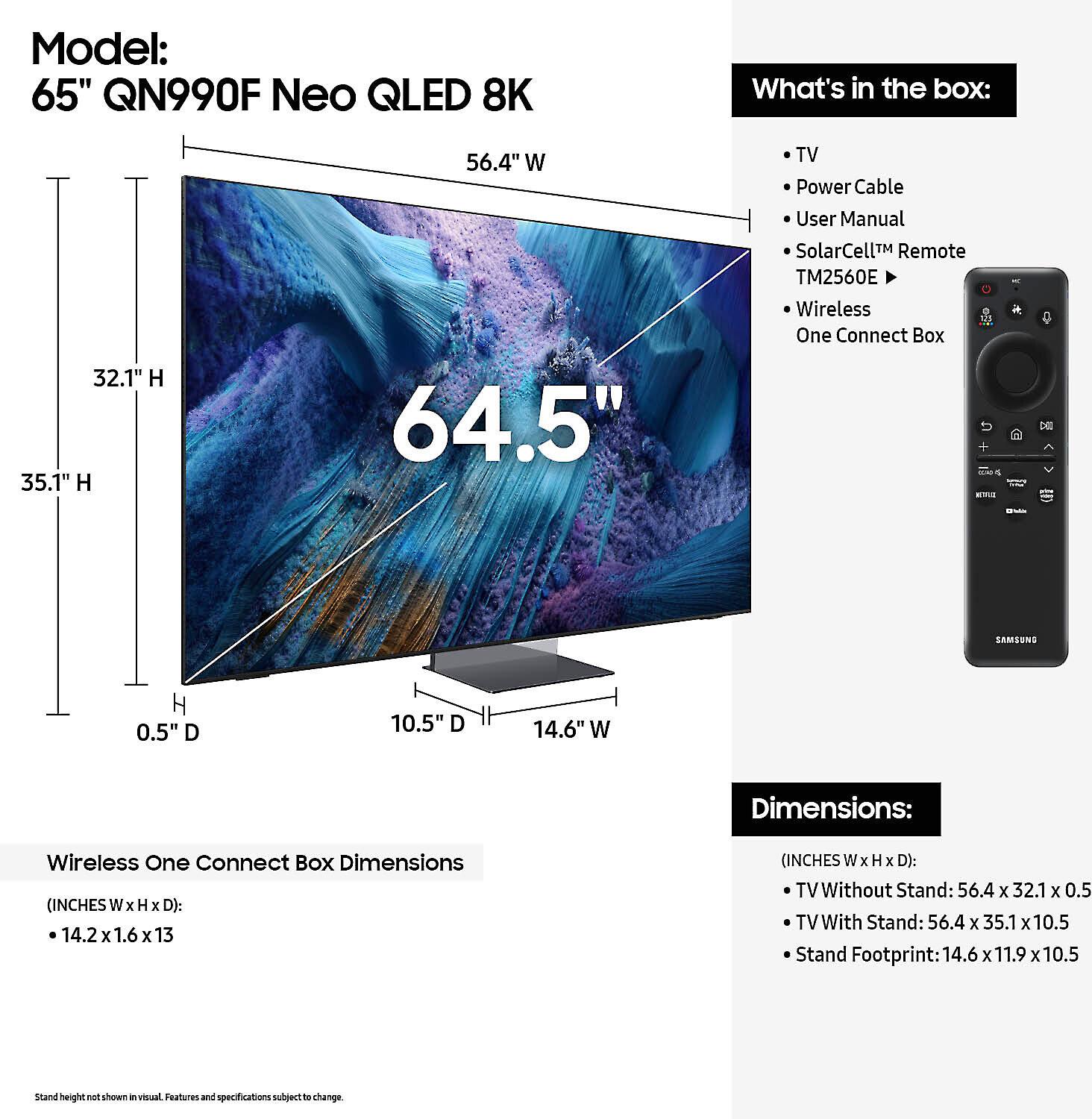
| Available in 7 sizes (32" to 85") - Great flexibility | Available in 4 sizes (65" to 98") - Premium sizes only |
| Target Market - Who each TV is designed for | |
| Mainstream buyers wanting QLED at accessible pricing | Enthusiasts and luxury buyers wanting flagship performance |
The primary difference is backlighting technology. The Samsung Q8F uses edge-lit LED backlighting without local dimming, while the Samsung QN990F features Mini LED technology with nearly 2,000 local dimming zones. This gives the QN990F dramatically better contrast, deeper blacks, and superior HDR performance.
The Samsung QN990F is significantly better for bright rooms thanks to its Glare-Free screen coating and higher peak brightness (1,500+ nits vs 600-800 nits). The Q8F uses a standard glossy screen that can show reflections and wash out in very bright lighting conditions.
For most viewers, 4K is sufficient since native 8K content is extremely rare in 2025. The Samsung Q8F handles all current streaming services and gaming perfectly at 4K. The QN990F's 8K resolution mainly benefits from AI upscaling of lower-resolution content, which provides some improvement but may not justify the cost difference for average users.
The Samsung QN990F offers superior gaming performance with up to 240Hz refresh rates at 4K and advanced motion processing. The Q8F supports 120Hz, which is adequate for console gaming but can't match the premium model's competitive gaming capabilities.
The Samsung QN990F has a premium 90W 6.2.4-channel audio system with Dolby Atmos that often eliminates the need for additional speakers. The Q8F has a basic 20W 2-channel system that provides clear audio but benefits significantly from pairing with a soundbar.
The Samsung Q8F offers exceptional value for mainstream buyers wanting quantum dot technology at an accessible price point. The QN990F provides premium performance across all categories but costs significantly more, making it better value only for enthusiasts who will utilize its advanced features.
Both work well for home theaters but in different scenarios. The Samsung Q8F excels in dark, controlled lighting environments and leaves budget for additional home theater components. The QN990F performs excellently in any lighting condition and includes premium built-in audio, making it ideal for multipurpose living spaces.
The processing difference is significant for picture quality. The Samsung QN990F uses 768 neural networks for advanced scene optimization and superior upscaling, while the Q8F has basic processing adequate for standard content. The difference is most noticeable with lower-quality sources like cable TV.
The Samsung QN990F includes advanced Samsung Vision AI that optimizes picture and sound based on content and room conditions, plus a Wireless One Connect box for cable management. The Q8F has standard smart TV features that cover all essential functions without additional complexity.
The Samsung QN990F excels at HDR with its Mini LED backlighting, high peak brightness, and precise dimming control. The Q8F supports HDR formats but cannot achieve the same contrast and brightness levels due to its edge-lit design, making HDR less impactful.
The Samsung QN990F is superior for sports viewing with its 240Hz motion processing, brighter display, and better performance in well-lit rooms where sports are typically watched. The Q8F handles sports adequately but may show more motion blur and struggles in bright viewing environments.
Choose the Samsung Q8F if you have a controlled lighting environment, watch primarily streaming content, and want excellent QLED performance at an accessible price. Choose the QN990F if you have a bright living space, want the absolute best picture quality, are serious about gaming, or prefer premium built-in features over external components.
We've done our best to create useful and informative comparisons to help you decide what product to buy. Our research uses advanced automated methods to create this comparison and perfection is not possible - please contact us for corrections or questions. These are the sites we've researched in the creation of this article: bestbuy.com - rtings.com - tomsguide.com - youtube.com - samsung.com - youtube.com - youtube.com - youtube.com - rtings.com - rtings.com - linqcdn.avbportal.com - bestbuy.com - samsung.com - samsung.com - samsung.com - youtube.com - youtube.com - billsmith.com - samsung.com - samsung.com - samsung.com - hometechnologyreview.com - shopjetson.com - certappl.com - samsung.com - theapplianceplug.com - samsung.com - manuals.plus - bestbuy.com - device.report - samsung.com - shopsilica.com - dentonstv.com - samsung.com - abt.com - bestbuy.com - pcnation.com - samsung.com - videoandaudiocenter.com - exertisalmo.com - displayspecifications.com - theapplianceplug.com - news.samsung.com

Privacy Policy
Terms and Conditions - Affiliate Policy
Home Security
© Copyright 2008-2026.
11816 Inwood Rd #1211, Dallas, TX 75244