

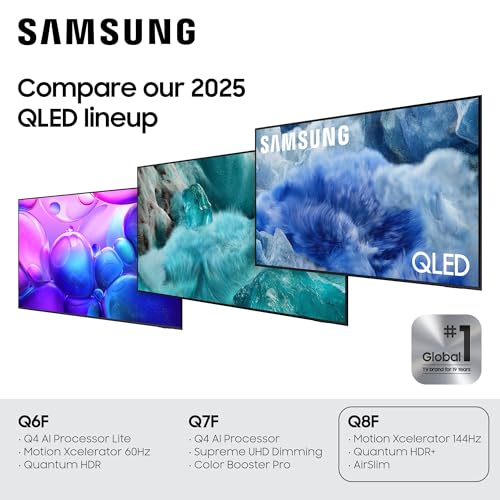
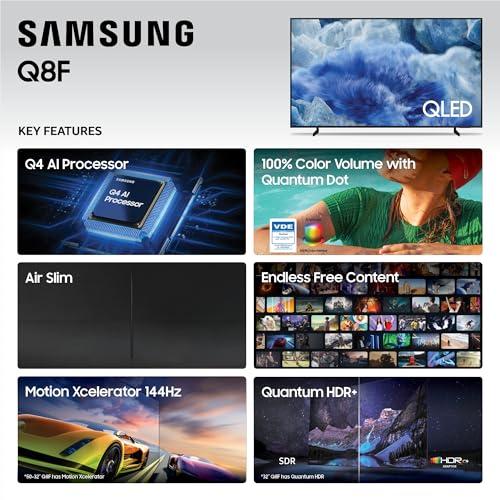
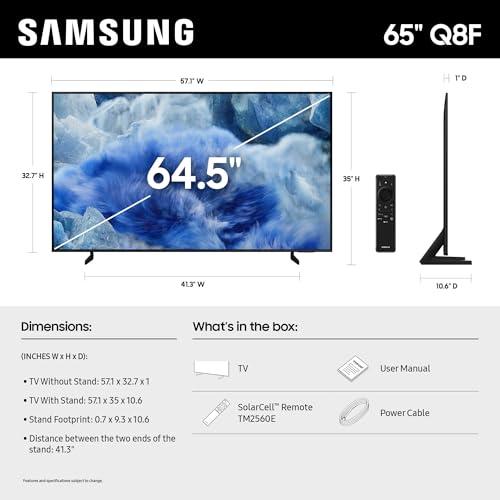
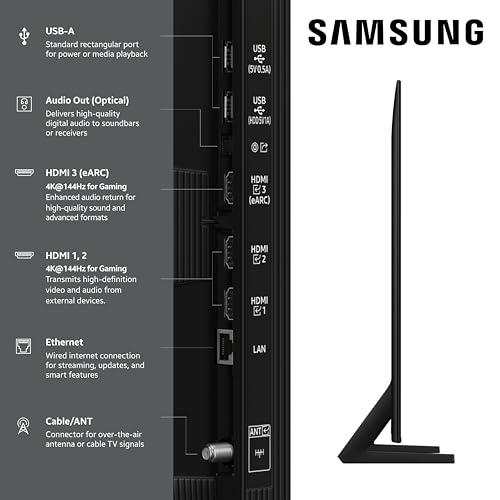

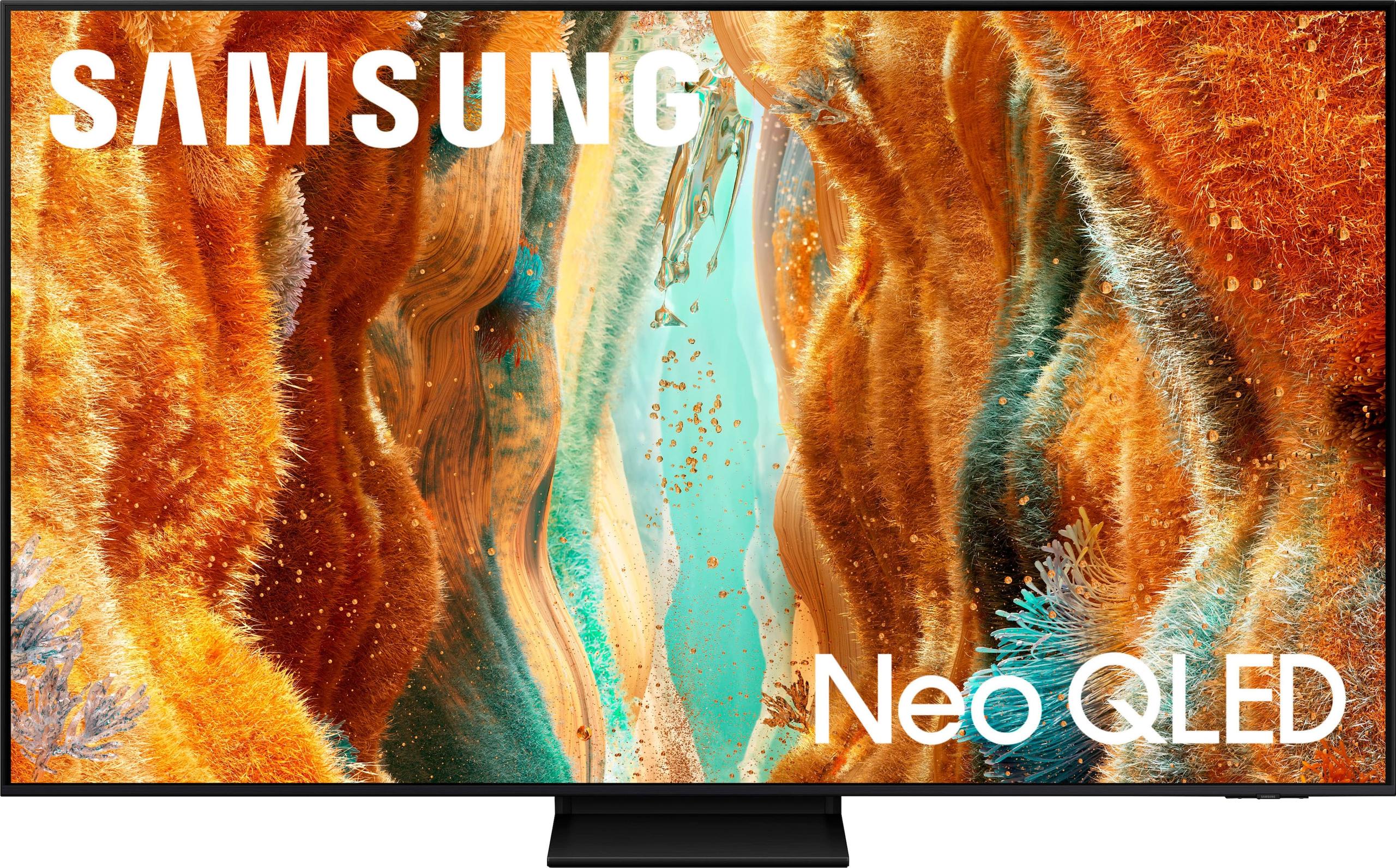
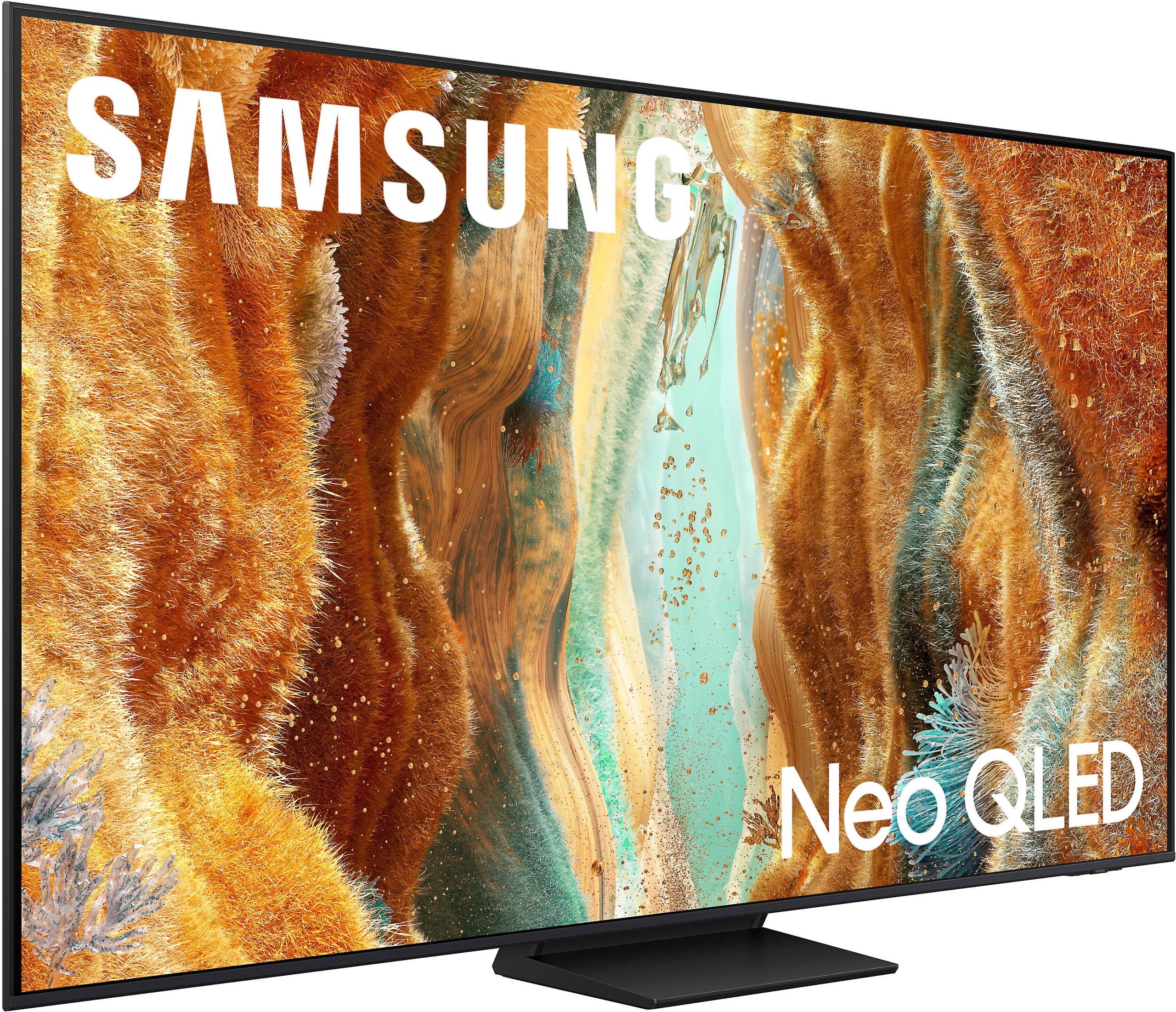
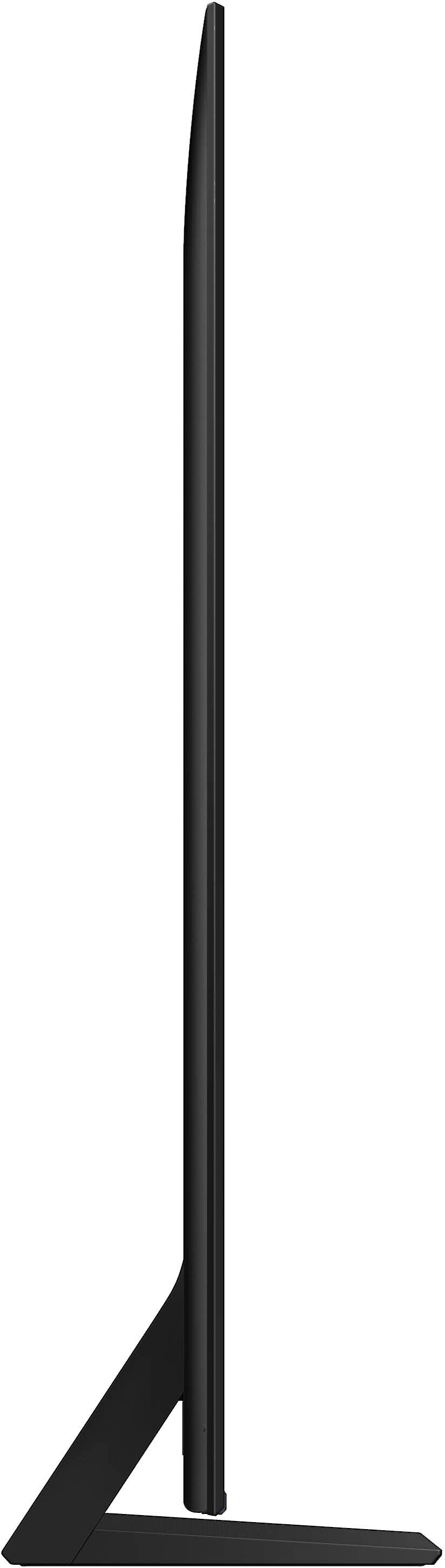
Choosing between Samsung's Q8F QLED and QN70F Neo QLED reveals a fascinating clash between traditional display technology and Samsung's newer Mini LED approach. Both 65-inch 4K TVs launched in 2025, but they represent fundamentally different philosophies in how to deliver great picture quality. After researching extensive user feedback and expert analysis, one emerges as a clear winner for most buyers – though not necessarily the one you'd expect based on pricing.
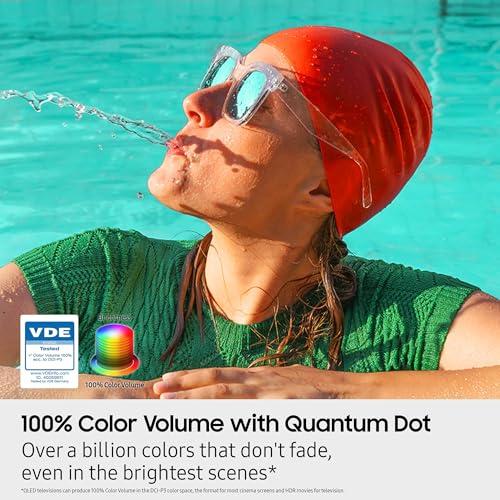
Samsung's 2025 lineup introduced some surprising changes to their traditional hierarchy. The Q8F represents their entry-level QLED offering, using conventional edge-lit LED backlighting with quantum dot technology. QLED, which stands for Quantum Dot Light Emitting Diode, enhances color reproduction by using microscopic particles that emit specific colors when hit by light. It's been Samsung's mainstream technology for several years now.
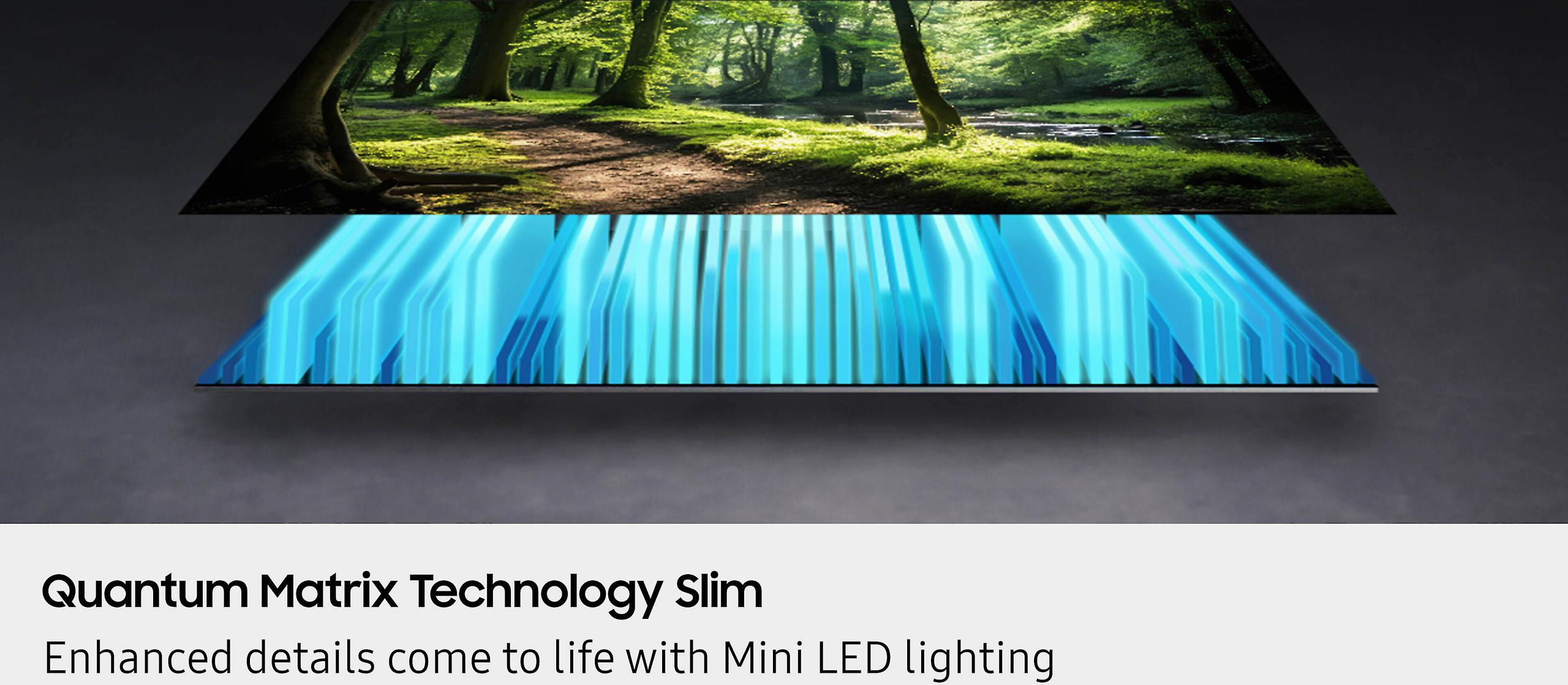
The QN70F, meanwhile, uses Neo QLED technology – Samsung's marketing term for Mini LED backlighting combined with quantum dots. Mini LEDs are exactly what they sound like: much smaller LED backlights that allow for more precise control over different areas of the screen. Think of it like having hundreds of tiny flashlights instead of a few big ones illuminating your TV screen.
What makes 2025 interesting is that Samsung made some puzzling decisions with their lineup. The Q8F actually took a step backward in certain specifications compared to previous generations, while the QN70F packed advanced features typically reserved for higher-end models into their entry-level Neo QLED.
The most shocking difference between these TVs lies in their refresh rate capabilities – and this alone might determine your choice. The Q8F maxes out at 60Hz refresh rate, meaning it can only display 60 frames per second. This represents a significant downgrade from Samsung's previous generation models, which supported 120Hz even in their mid-tier offerings.
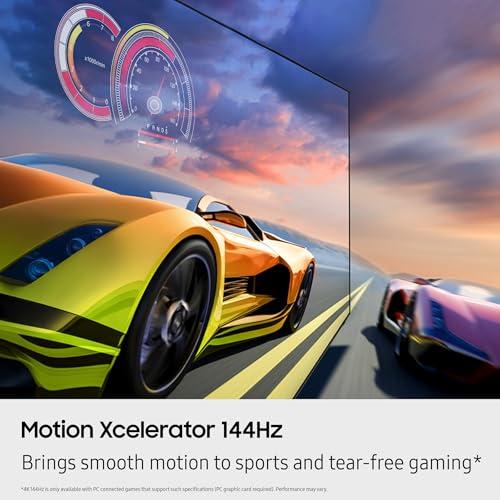
The QN70F, conversely, supports native 120Hz and can even push up to 144Hz with Motion Xcelerator technology. Refresh rate directly impacts how smooth motion appears on screen. Higher refresh rates reduce motion blur and make fast-paced content like sports and video games look significantly more fluid and natural.
For context, most streaming content runs at 24-30 frames per second, so a 60Hz display handles this fine. But gaming, particularly on newer consoles like PlayStation 5 and Xbox Series X, can output 120 frames per second for supported games. Sports broadcasts are increasingly experimenting with higher frame rates too. Having 120Hz+ capability means your TV can display these sources without having to duplicate frames or introduce processing artifacts.
From our research into user experiences, the difference is immediately noticeable. Gamers report that the QN70F delivers dramatically smoother gameplay, while the Q8F's 60Hz limitation creates a choppy experience with modern gaming systems. Even for sports viewing, the higher refresh rate makes following fast action like hockey pucks or soccer balls significantly easier on the eyes.
The backlighting technology represents the second major distinction between these models. The Q8F uses traditional edge-lit LED backlighting, where LEDs are positioned around the perimeter of the screen and light is distributed across the panel through a light guide. This approach keeps costs down and allows for thinner TV designs, but it limits how precisely the TV can control brightness in different screen areas.
The QN70F's Mini LED system places many smaller LEDs across the back of the screen in an edge-lit configuration, creating more precise lighting zones. This means when you're watching a scene with bright stars against a dark night sky, the TV can make those stars brilliantly bright while keeping the surrounding darkness truly dark – something called local dimming.
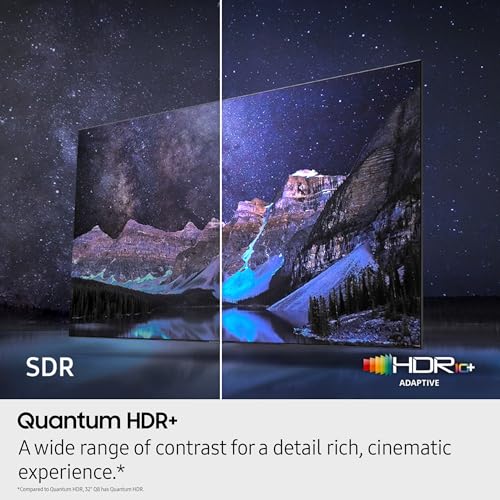
User reviews consistently highlight this difference. QN70F owners frequently mention "vivid colors," "deep contrast," and "impressive brightness" as standout characteristics. The Mini LED system produces what experts describe as more "punchy" HDR (High Dynamic Range) performance, where bright highlights really pop off the screen while maintaining detail in shadow areas.
The Q8F, while still delivering good QLED color reproduction, shows the limitations of edge-lit design. Users report that while colors are vibrant and the screen gets plenty bright for well-lit rooms, contrast control isn't as impressive. Dark scenes may appear slightly washed out compared to the QN70F.
For home theater enthusiasts, this difference becomes critical. Movie nights with the lights dimmed really showcase the QN70F's superior black levels and contrast. The Mini LED technology helps create that immersive cinematic experience where you forget you're looking at a display.
Samsung equipped these TVs with significantly different processors, and the gap is wider than you might expect. The Q8F uses Samsung's standard processor with basic AI brightness adjustment and their Supreme UHD Dimming technology, which analyzes content to optimize picture settings.
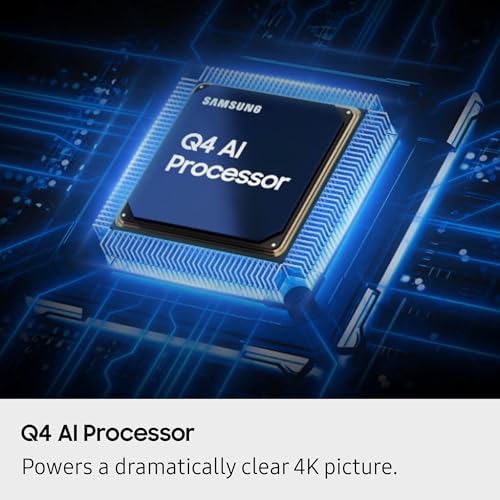
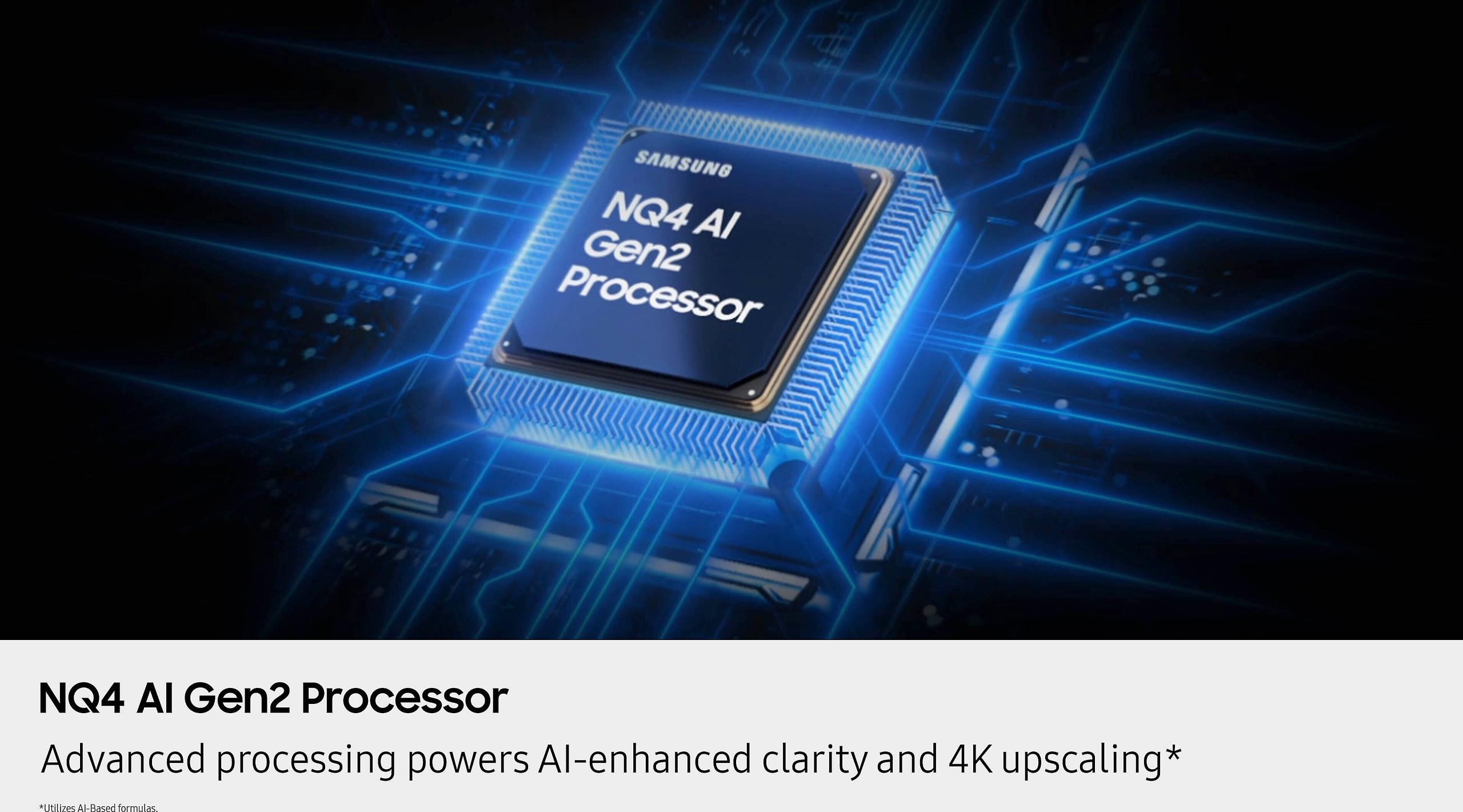
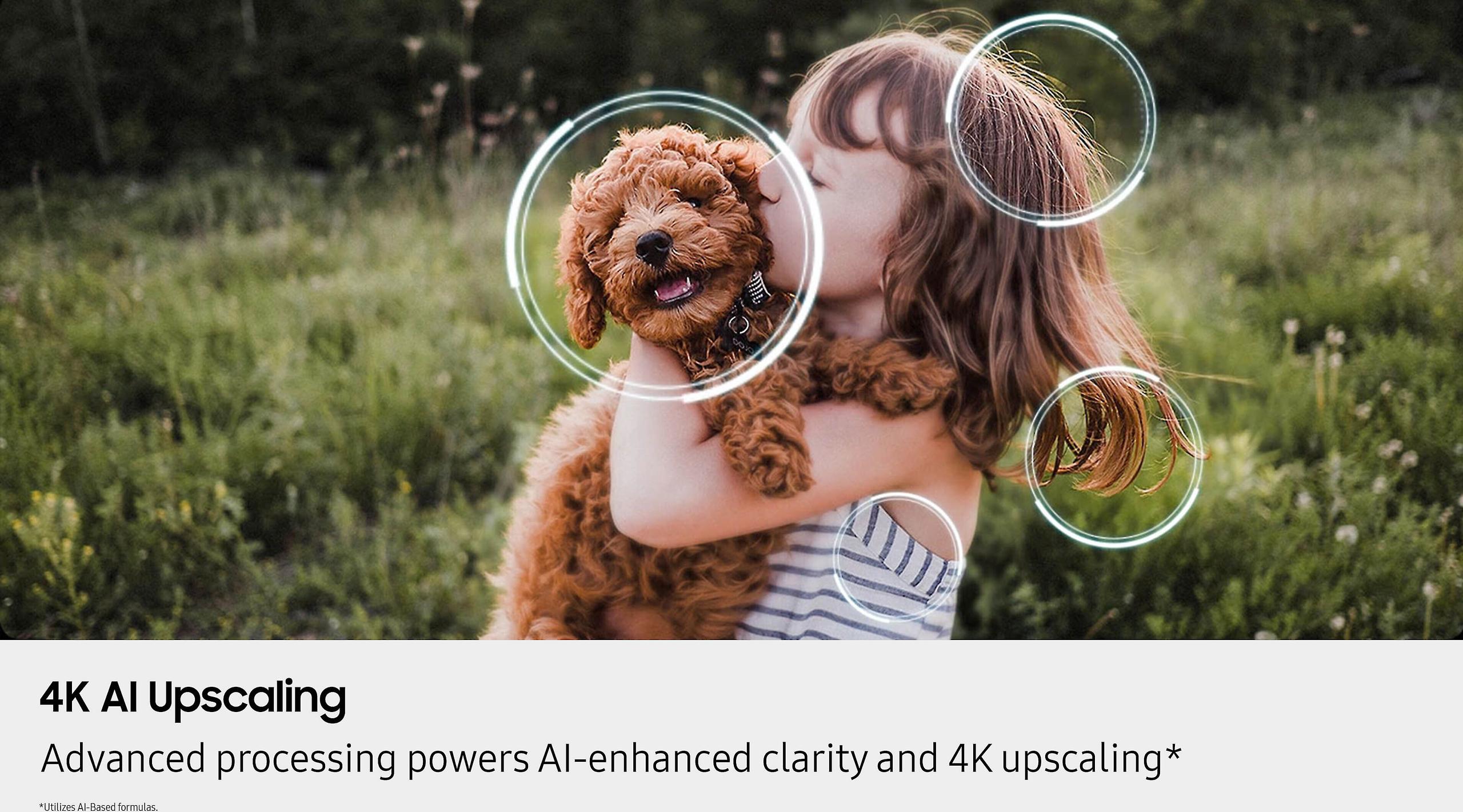
The QN70F features Samsung's NQ4 AI Gen2 processor with 20 dedicated neural networks – essentially specialized computer chips designed to handle specific types of calculations. This advanced processor powers Samsung Vision AI, which includes some genuinely useful features like click-to-search (identify actors or objects on screen), real-time translation for live broadcasts, and more sophisticated 4K upscaling.
4K upscaling deserves explanation because it's crucial for everyday viewing. Most content you watch – whether from Netflix, cable TV, or older movies – isn't native 4K resolution. The TV's processor must "upscale" this lower-resolution content to fill your 4K screen. Better processors create sharper, more detailed upscaled images with fewer artifacts.
Based on user feedback, the QN70F's more advanced processor delivers noticeably better upscaling results. Standard definition and 1080p content looks sharper and more detailed, with improved texture rendering and reduced pixelation. The Real Depth Enhancer feature also creates more convincing three-dimensional depth by adjusting foreground contrast while leaving backgrounds unchanged.
Here's where the Q8F scores an unexpected victory. Despite the QN70F's overall technological superiority, user reviews consistently praise the Q8F's dialogue clarity. The audio processing specifically excels at separating speech from background sounds and music, making it exceptional for movie watching and TV shows with complex soundtracks.
The QN70F includes AI Sound Pro, which adapts audio based on your room acoustics and content type, plus 360 Audio support for more immersive surround sound experiences. However, users note that while the overall audio experience is good, dialogue clarity isn't as pronounced as the Q8F.
For home theater setups, most enthusiasts will pair either TV with a dedicated sound system anyway, making this difference less critical. But if you're planning to rely on built-in speakers, the Q8F's speech clarity advantage could matter for dialogue-heavy content like dramas or news programs.
The refresh rate difference makes gaming performance a one-sided affair. The QN70F supports 4K gaming at 120Hz on all four HDMI ports, with full HDR10 compatibility. Modern gaming consoles can take full advantage of this capability, delivering incredibly smooth gameplay with reduced input lag – the delay between pressing a controller button and seeing the result on screen.
The Q8F's 60Hz limitation severely handicaps gaming performance. While it includes a game bar with various picture presets, the lack of high refresh rate support means you're not getting the full potential from modern gaming systems. Competitive gamers will find this particularly limiting, as higher refresh rates provide tangible advantages in fast-paced games.
User reviews from gamers are unambiguous: the QN70F delivers what one reviewer called "silky smooth sports and action" while the Q8F shows "some perceivable artifacts during camera pans." For anyone serious about gaming, the choice is clear.
Both TVs run Samsung's Tizen operating system, but the QN70F includes significantly more advanced AI features through Samsung Vision AI. The click-to-search functionality lets you identify actors, clothing, or objects on screen just by pointing and clicking. Live translation provides real-time subtitle translation for foreign language content – genuinely useful for international sports or news.
The Q8F sticks to more basic smart TV functionality, which works fine for streaming apps and basic connectivity but lacks the forward-looking features that might become standard in coming years.
At the time of writing, the pricing situation reveals Samsung's interesting strategy. The QN70F typically costs less than the Q8F despite offering substantially superior technology across nearly every category. This unusual pricing structure makes the value proposition remarkably clear.
The QN70F delivers Mini LED backlighting, 120-144Hz refresh rates, advanced AI processing, and superior picture quality at a lower price point than the more basic Q8F. Customer satisfaction ratings strongly support this value assessment, with the QN70F earning 4.7 out of 5 stars from extensive user reviews.
For dedicated home theater use, the QN70F clearly excels. The Mini LED backlighting creates better contrast for darkened viewing environments, crucial for that cinematic experience. The higher refresh rates eliminate the soap opera effect that can make movies look unnaturally smooth, while providing smooth motion when desired for sports content.
The advanced processor also handles complex HDR content better, producing those dramatic bright highlights and deep shadows that make HDR movies so impressive. Film enthusiasts will appreciate the Real Depth Enhancer creating more convincing three-dimensional space in properly mastered content.
The Q8F makes sense for a very specific user: someone who primarily watches streaming services and movies, values exceptional dialogue clarity above all else, never games, and rarely watches sports. Even then, the pricing reality makes this choice questionable unless dialogue clarity is truly your singular priority.
The QN70F suits virtually everyone else. Gamers get superior performance, sports fans enjoy smooth motion, movie watchers benefit from better contrast and processing, and tech enthusiasts appreciate advanced AI features. The combination of better performance at lower cost makes this an easy recommendation for most buyers.
After extensive research into user experiences and expert analysis, the QN70F Neo QLED emerges as the clear winner for most buyers. It represents exceptional value by delivering premium Mini LED technology, advanced processing, and high refresh rates at a price point that undercuts the more basic Q8F.
Samsung's 2025 lineup created an unusual situation where their entry-level Neo QLED significantly outperforms their standard QLED while costing less money. Unless you have very specific needs around dialogue clarity and zero interest in gaming or sports, the QN70F delivers better performance, better features, and better value.
This isn't a close comparison – it's a demonstration of how rapidly display technology is advancing and how strategic pricing can create compelling value propositions for consumers willing to research their options carefully.
| Samsung 65" QLED Q8F 4K Smart TV 2025 | Samsung 65" QN70F Neo QLED 4K Vision AI Smart TV 2025 |
|---|---|
| Display Technology - Core difference affecting picture quality and contrast | |
| Standard QLED with edge-lit LED backlighting | Neo QLED with Mini LED backlighting for superior contrast |
| Refresh Rate - Critical for gaming and sports viewing | |
| 60Hz maximum (no 120Hz support) | Native 120Hz with up to 144Hz Motion Xcelerator |
| Processor - Impacts upscaling quality and smart features | |
| Standard processor with basic AI features | NQ4 AI Gen2 with 20 neural networks and Vision AI |
| Gaming Performance - Console compatibility and smoothness | |
| Limited to 60fps, basic game mode | 4K 144Hz HDR10 on all HDMI ports, excellent for competitive gaming |
| HDR Support - Enhanced contrast and color range | |
| HDR10, HDR10+, HLG | Neo Quantum HDR, HDR10+ Adaptive, superior brightness control |
| Local Dimming - Contrast control in dark scenes | |
| Supreme UHD Dimming (basic edge-lit zones) | Supreme UHD Dimming with Mini LED precision control |
| Audio Clarity - Built-in speaker performance | |
| Exceptional dialogue clarity in complex scenes | AI Sound Pro with room adaptation, good overall audio |
| HDMI Ports - Connection flexibility | |
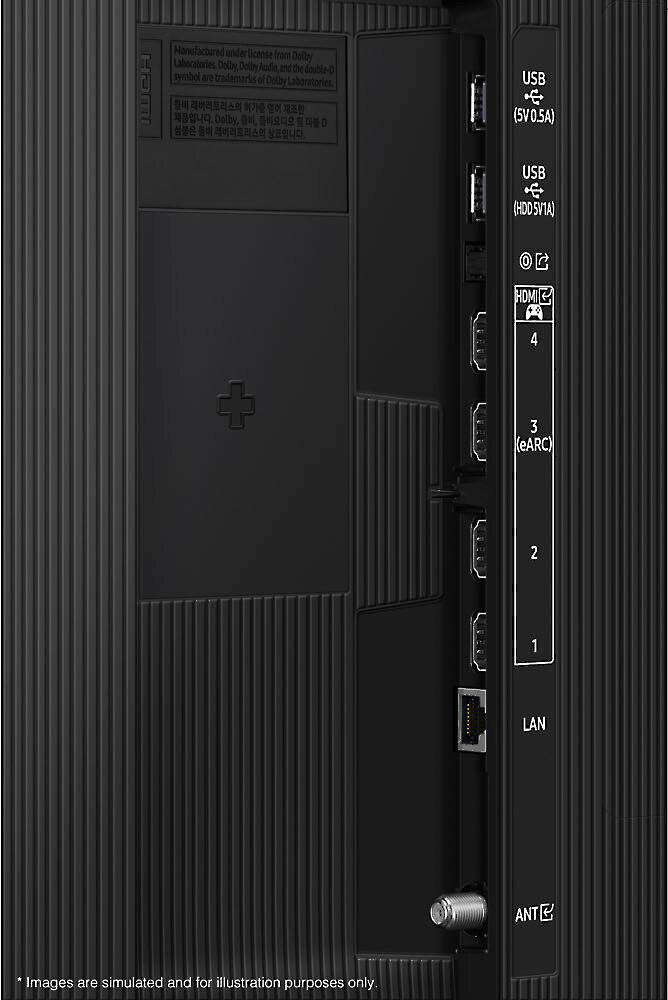
| 3 HDMI ports | 4 HDMI 2.1 ports with full feature support |
| AI Features - Smart functionality and future-proofing | |
| Basic AI brightness adjustment | Vision AI with click-to-search, live translation, actor ID |
| Motion Handling - Smoothness during fast action | |
| Average with some artifacts during camera pans | Smooth motion with excellent sports and action performance |
| Best Use Cases - Who should choose each model | |
| Movie/streaming focus with dialogue-heavy content | Gaming, sports, general entertainment, home theater setups |
| Value Proposition - Performance per dollar at typical retail | |
| Higher price for basic QLED technology | Lower price for advanced Mini LED and 120Hz+ features |
The primary difference is display technology: the Samsung Q8F uses standard QLED with edge-lit LED backlighting, while the Samsung QN70F features Neo QLED with Mini LED backlighting. The QN70F also supports 120Hz refresh rates compared to the Q8F's 60Hz limitation, making it significantly better for gaming and sports viewing.
The Samsung QN70F is dramatically better for gaming. It supports native 120Hz and up to 144Hz refresh rates with 4K HDR10 on all four HDMI ports, providing smooth gameplay perfect for modern consoles. The Samsung Q8F is limited to 60Hz, which severely restricts gaming performance and doesn't take full advantage of PlayStation 5 or Xbox Series X capabilities.
Yes, both the Samsung Q8F and Samsung QN70F support 4K resolution and HDR formats. However, the QN70F offers superior HDR performance with Neo Quantum HDR and better brightness control thanks to its Mini LED backlighting, while the Q8F provides standard HDR10 and HDR10+ support.
The Samsung QN70F delivers superior picture quality due to its Mini LED backlighting technology, which provides better contrast control, deeper blacks, and more vibrant colors. User reviews consistently rate the QN70F's picture quality higher, with many praising its "vivid colors" and "deep contrast" compared to the Q8F's more basic edge-lit design.
The Samsung QN70F includes advanced Samsung Vision AI features like click-to-search, actor identification, and real-time translation, powered by the NQ4 AI Gen2 processor. The Samsung Q8F offers basic smart TV functionality with standard Tizen OS but lacks the advanced AI capabilities found in the QN70F.
For general movie watching, the Samsung QN70F excels with superior contrast and Mini LED technology that enhances dark scenes. However, the Samsung Q8F has notably clearer dialogue in complex audio scenes, making it excellent for dialogue-heavy content. For home theater use, the QN70F's better contrast makes it the preferred choice.
The refresh rate difference is significant: the Samsung Q8F maxes out at 60Hz, while the Samsung QN70F supports native 120Hz with Motion Xcelerator technology up to 144Hz. This makes the QN70F much better for sports, gaming, and any fast-motion content where smoothness matters.
The Samsung QN70F typically offers better value, providing Mini LED technology, 120Hz+ refresh rates, and advanced AI features often at a lower price point than the Samsung Q8F. The QN70F delivers significantly more advanced technology while usually costing less, making it an exceptional value proposition.
Both TVs perform well in bright rooms thanks to QLED technology, but the Samsung QN70F has an advantage with its Mini LED backlighting providing better brightness control and more vivid colors. The Samsung Q8F still delivers good brightness for daytime viewing, though not quite matching the QN70F's performance.
The Samsung Q8F excels in dialogue clarity, making speech easier to understand in complex audio scenes. The Samsung QN70F features AI Sound Pro with room adaptation and 360 Audio support for a more immersive overall audio experience, though dialogue clarity isn't as pronounced as the Q8F.
The Samsung QN70F is significantly better for sports due to its 120Hz refresh rate and superior motion handling, which reduces blur during fast action. Sports fans will notice smoother motion and easier tracking of fast-moving objects compared to the Samsung Q8F's 60Hz limitation that can create choppy motion during rapid camera movements.
For home theater use, the Samsung QN70F is the clear choice. Its Mini LED backlighting provides better contrast for darkened viewing environments, essential for that cinematic experience. The advanced processor handles complex HDR content better, and the higher refresh rates eliminate processing artifacts. The Samsung Q8F only makes sense if dialogue clarity is your absolute top priority and you never watch sports or game.
We've done our best to create useful and informative comparisons to help you decide what product to buy. Our research uses advanced automated methods to create this comparison and perfection is not possible - please contact us for corrections or questions. These are the sites we've researched in the creation of this article: bestbuy.com - rtings.com - tomsguide.com - youtube.com - samsung.com - youtube.com - youtube.com - youtube.com - rtings.com - rtings.com - linqcdn.avbportal.com - bestbuy.com - samsung.com - samsung.com - samsung.com - youtube.com - youtube.com - billsmith.com - samsung.com - samsung.com - samsung.com - hometechnologyreview.com - shopjetson.com - certappl.com - samsung.com - theapplianceplug.com - samsung.com - manuals.plus - bestbuy.com - device.report - samsung.com - shopsilica.com - dentonstv.com - youtube.com - wifihifi.com - samsung.com - samsung.com - samsung.com - samsung.com - flatpanelshd.com - news.samsung.com - bestbuy.com

Privacy Policy
Terms and Conditions - Affiliate Policy
Home Security
© Copyright 2008-2026.
11816 Inwood Rd #1211, Dallas, TX 75244