


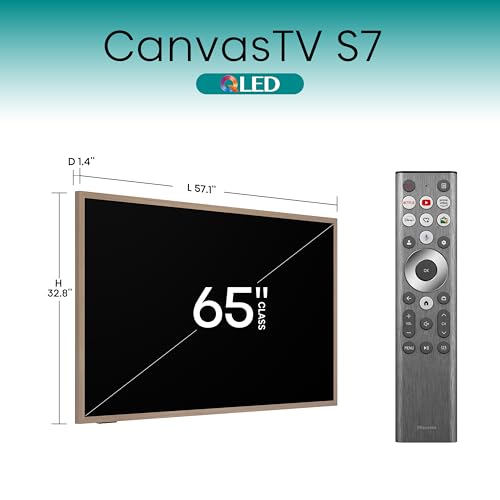


The premium 65-inch QLED TV market has become incredibly competitive, with manufacturers pushing the boundaries of what these displays can do beyond just showing your favorite Netflix series. In 2024 and 2025, we've seen two particularly interesting approaches emerge: traditional performance-focused designs and innovative dual-purpose displays that blur the line between technology and home décor.
Both the Samsung 65" QLED Q8F 2025 and Hisense 65" S7N CanvasTV represent compelling options in this space, but they take distinctly different approaches to solving the same basic problem—how do you create a premium TV experience that fits seamlessly into modern living spaces?
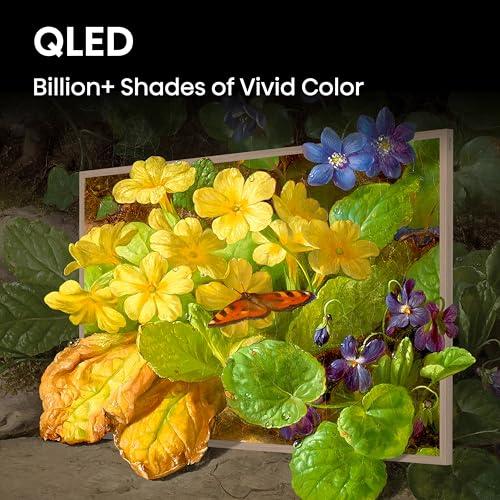
Before diving into these specific models, it's worth understanding what makes QLED displays special. QLED stands for Quantum Dot Light-Emitting Diode, which sounds complicated but essentially means these TVs use microscopic particles called quantum dots to produce more accurate and vibrant colors than traditional LED displays.
Think of quantum dots as tiny color filters that can be precisely tuned to emit specific wavelengths of light. When blue LED backlights hit these quantum dots, they convert that light into pure red and green colors, creating a much wider range of colors (called a color gamut) than standard LED TVs can produce. The result is more lifelike skin tones, richer landscapes, and overall more realistic images.
Both the Samsung Q8F and Hisense CanvasTV use this technology, but they implement it differently, leading to distinct performance characteristics that matter for different types of users.
The Samsung Q8F, released in 2025, represents Samsung's continued refinement of their traditional QLED formula. It's designed first and foremost as a premium television, with every engineering decision focused on maximizing picture quality and smart features for entertainment use.
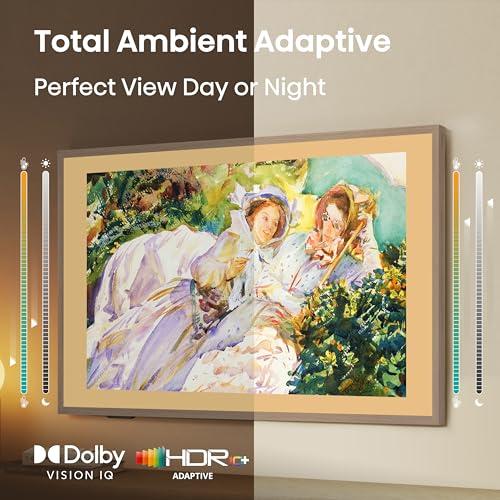
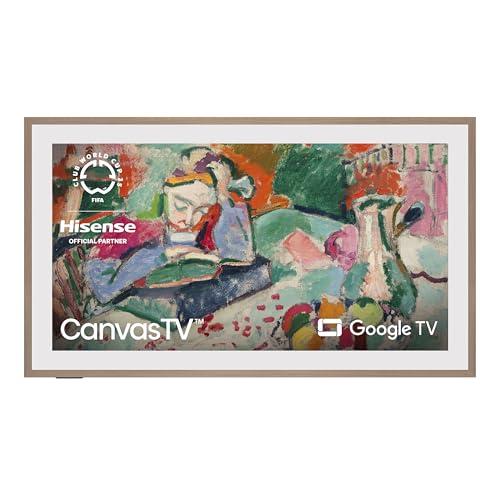
The Hisense S7N CanvasTV, launched in 2024, takes a more radical approach. Yes, it's a capable QLED TV, but it's also designed to function as a digital art display when you're not watching content. This dual-purpose design influences every aspect of its construction, from the matte screen coating to the magnetic frame system.
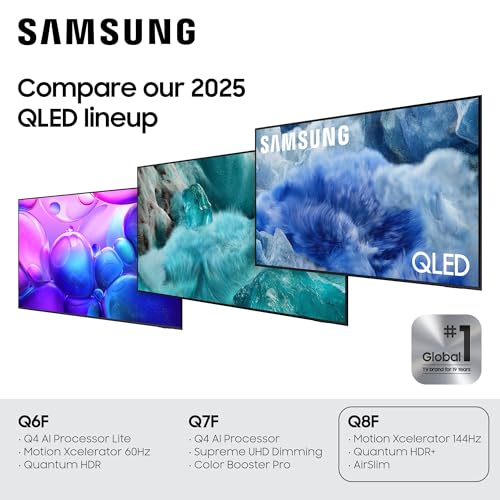
When it comes to pure picture quality, the Samsung Q8F takes a more traditional high-performance approach. Its Dual LED backlighting system uses two different color temperatures to improve contrast, while the Supreme UHD Dimming technology divides the screen into hundreds of zones for precise brightness control. This translates to better performance in both bright and dark scenes.
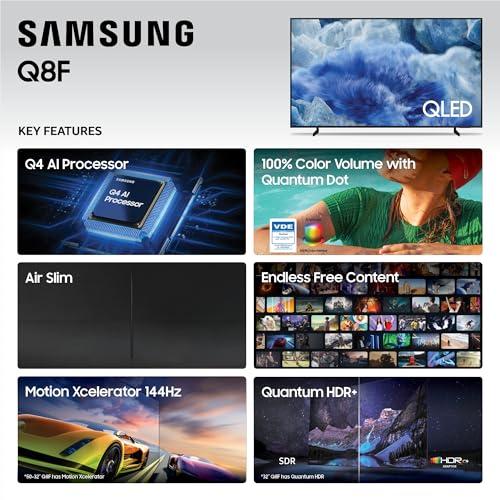
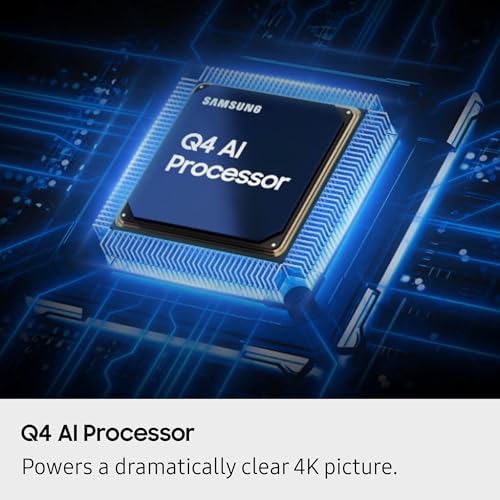
The Q4 AI Processor in the Samsung Q8F is particularly impressive for upscaling lower-resolution content. If you're still watching a lot of 1080p content from cable or older streaming sources, this processor uses machine learning to analyze each frame and intelligently fill in the missing detail to approach near-4K quality. It's not magic, but the difference is noticeable, especially with older TV shows and movies.
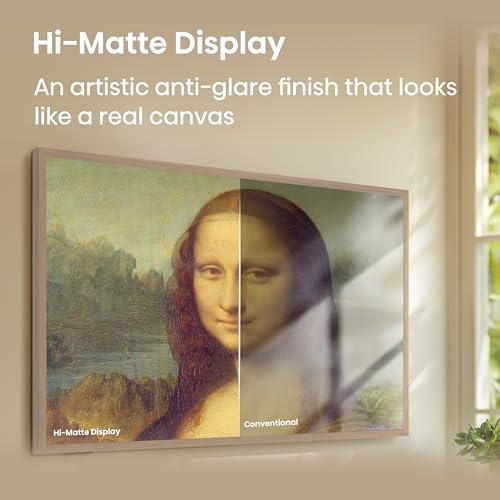
The Hisense CanvasTV takes a different approach with its Hi-Matte anti-glare coating, which reduces reflections to just 5% compared to glossy screens. This is a game-changer if your living room has windows or bright lighting that typically creates annoying reflections on TV screens. However, this matte coating does slightly reduce the overall brightness and can make the image appear softer in some conditions.
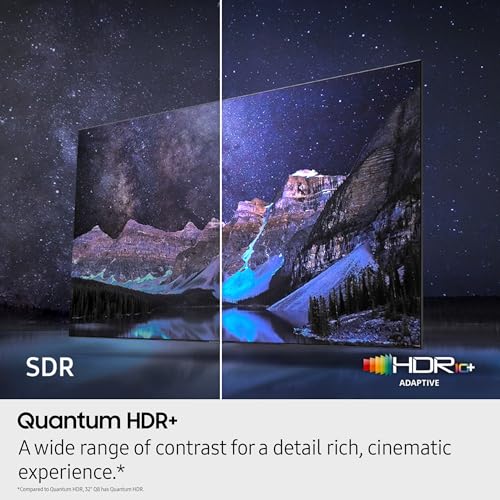
Interestingly, the Hisense CanvasTV supports Dolby Vision, while the Samsung Q8F does not. Dolby Vision is a premium HDR (High Dynamic Range) format that provides scene-by-scene optimization for contrast and color. Think of HDR as a way to display a much wider range of brightness levels—from deep shadows to brilliant highlights—more like what your eyes see in real life. While the Samsung supports HDR10+, which offers similar dynamic optimization, Dolby Vision is more widely supported by streaming services and 4K Blu-rays.
Both displays achieve impressive color reproduction, but through different methods. The Samsung Q8F claims 100% color volume with its Quantum Dot technology, meaning it can display a full range of colors at any brightness level. This is particularly noticeable in bright, colorful scenes like animated movies or nature documentaries, where colors remain saturated even in brilliant highlights.
The Hisense CanvasTV uses quantum dots as well, but its focus on the matte display coating means colors appear slightly more muted in direct comparison. However, this trade-off becomes worthwhile in bright rooms where glare would otherwise wash out colors on glossy screens.
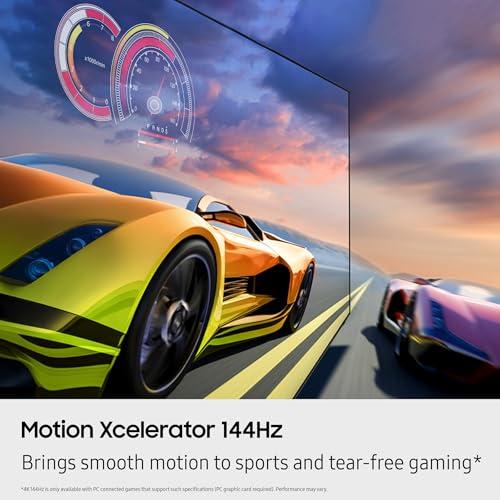
Both TVs support 144Hz refresh rates, which is excellent for gaming and fast-moving sports content. The Samsung Q8F includes Motion Xcelerator 144Hz technology that's particularly effective at reducing motion blur during rapid camera movements or fast-paced action sequences.
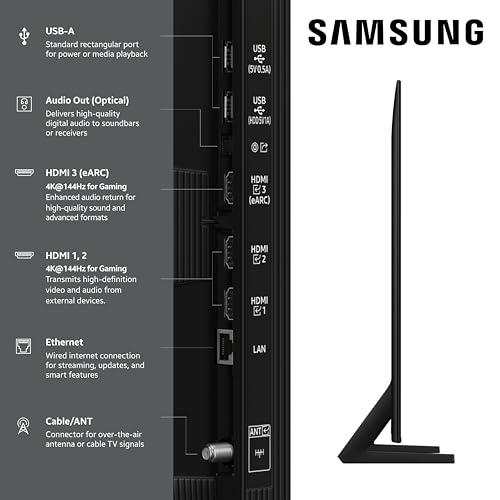
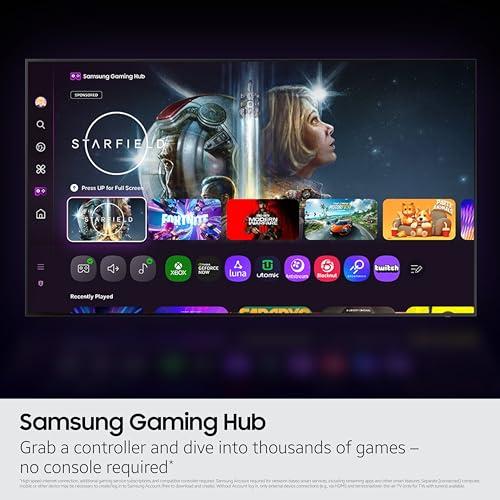
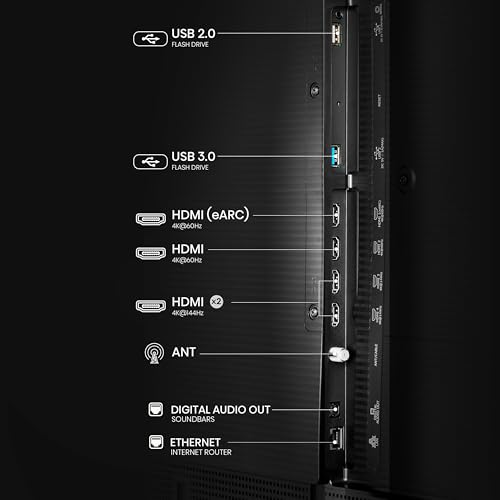
For gaming, both displays support the latest HDMI 2.1 features, including Variable Refresh Rate (VRR) and Auto Low Latency Mode (ALLM). VRR synchronizes the display's refresh rate with your gaming console's frame rate, eliminating screen tearing and stuttering. ALLM automatically switches the TV to its lowest latency mode when it detects a gaming signal. The Samsung Q8F has a slight edge here with more refined gaming mode optimizations and consistently lower input lag across different resolutions.
The smart TV experience has become almost as important as picture quality, and these two displays take notably different approaches.
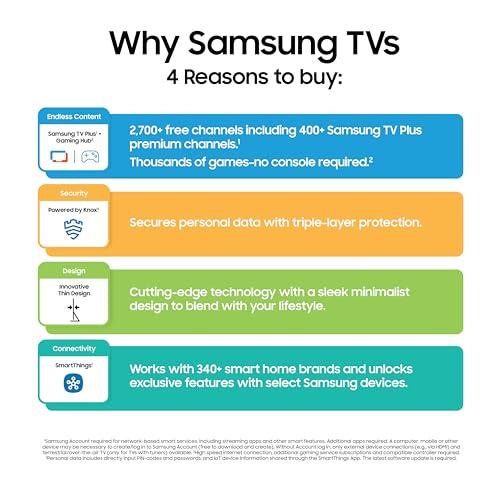
The Samsung Q8F runs on Samsung's Tizen operating system, which has matured significantly over the years. It includes Samsung's SmartThings Hub functionality, essentially turning your TV into a smart home control center that can manage compatible lights, thermostats, and other connected devices. The Generative Wallpaper feature is particularly clever—it uses AI to create unique background images based on keywords you provide, turning your TV into a personalized digital canvas even when you're not watching content.
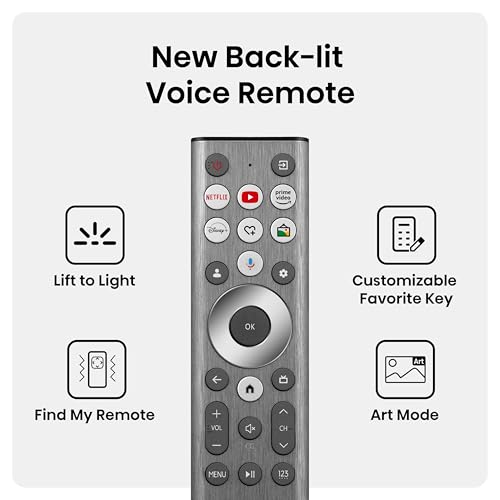
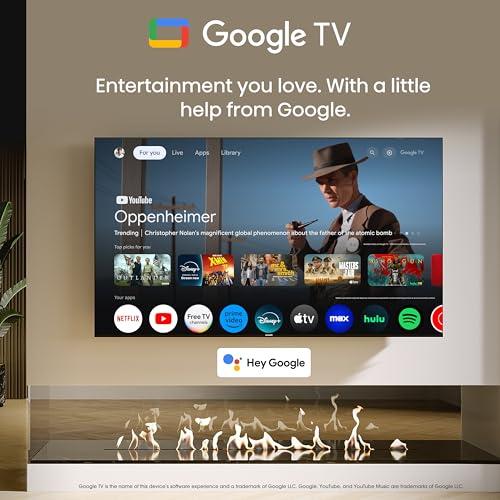
The Hisense CanvasTV uses Google TV, which many users find more intuitive than other smart TV platforms. It integrates seamlessly with Google services and provides better content recommendations across multiple streaming platforms. The interface feels more like using a giant Android tablet, which most people find familiar and easy to navigate.
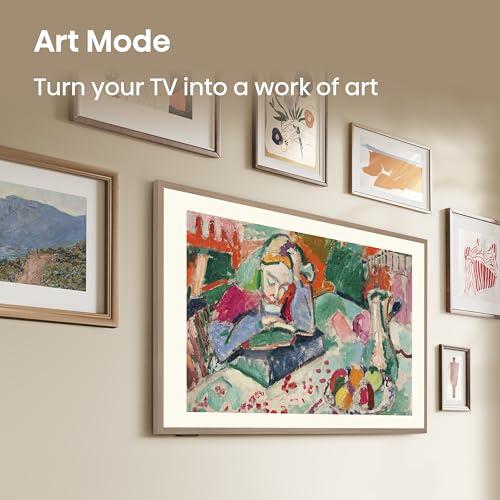
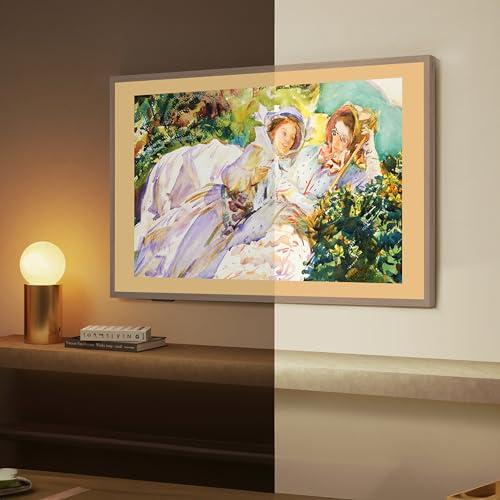
Where the Hisense CanvasTV really differentiates itself is with its Art Mode functionality. When activated, the TV displays artwork from a built-in library or your own uploaded images. Unlike Samsung's Frame TV, which requires a subscription for premium artwork, Hisense includes hundreds of high-quality images at no additional cost. The motion sensor automatically activates Art Mode when someone enters the room, creating a truly seamless transition between TV and art display.
This is where the philosophical differences between these displays become most apparent.
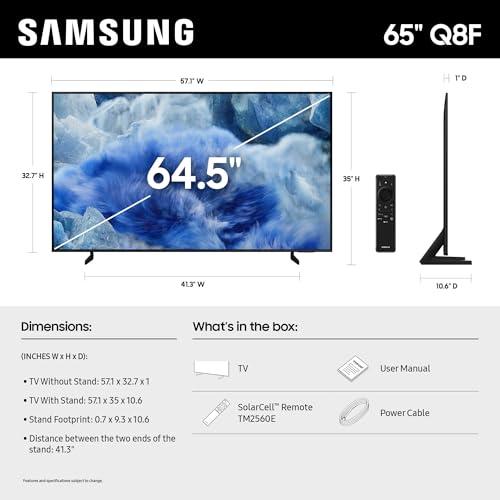
The Samsung Q8F embraces its identity as a premium television. Its AirSlim design is impressively thin, and the three-bezel-less construction creates an elegant, modern appearance. It's designed to look like a high-end TV, and it succeeds admirably at that goal.
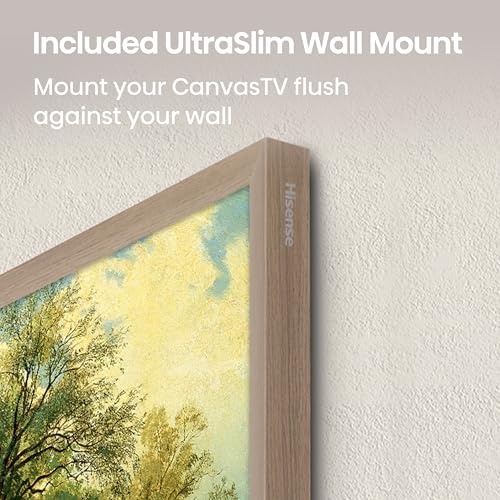
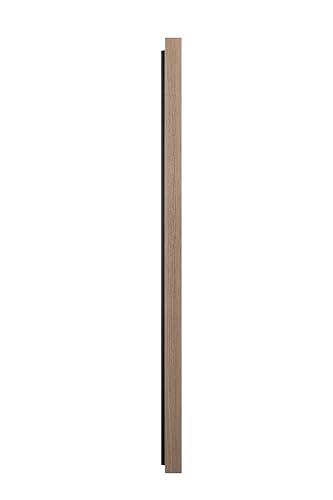
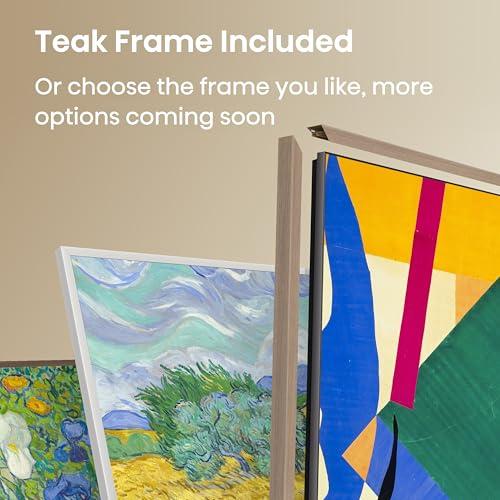
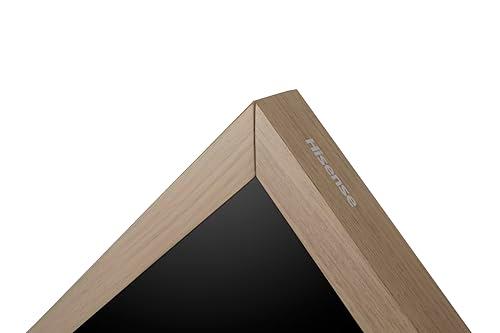
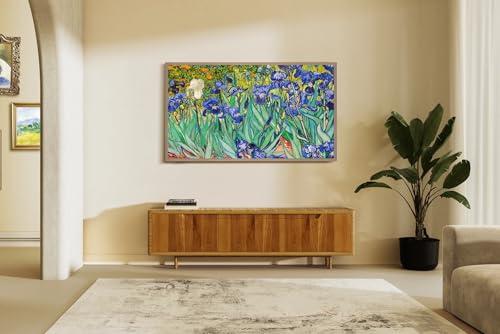
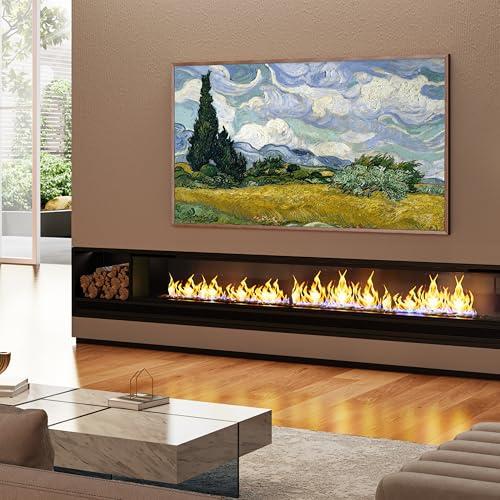
The Hisense CanvasTV challenges the entire concept of what a TV should look like in your living space. The magnetic frame system allows you to choose between teak (included), white, or walnut finishes to match your décor. The UltraSlim Wall Mount positions the display just 3mm from the wall, creating the illusion of a framed painting hanging in your room.
This design approach extends to the Hi-Matte coating, which not only reduces glare but also mimics the texture and depth of real artwork. When displaying paintings or photographs in Art Mode, the effect is genuinely convincing from normal viewing distances.
TV audio is often an afterthought, but both of these displays put more effort into their built-in sound systems than most competitors.
The Samsung Q8F includes Object Tracking Sound Lite, which attempts to move audio effects across the screen to match the action on screen. It's a subtle effect, but it adds to the immersion in movies and shows with lots of movement. The Q-Symphony feature allows the TV's speakers to work in harmony with compatible Samsung soundbars rather than being muted, creating a more enveloping sound experience.
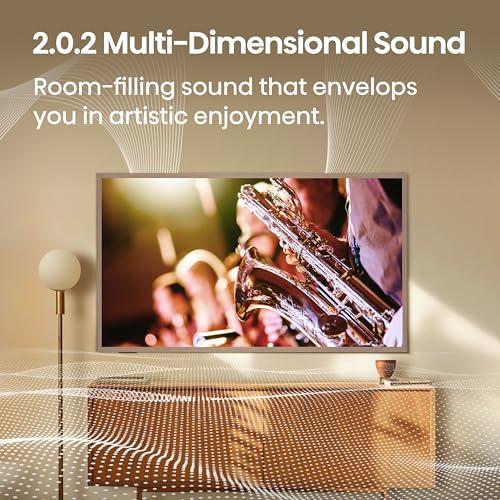
The Hisense CanvasTV takes a more direct approach with its 2.0.2 channel system that includes upward-firing speakers. These speakers bounce sound off your ceiling to create a sense of height and dimensionality that's particularly effective for movie soundtracks and Dolby Atmos content. At 36 watts total power compared to the Samsung's 20 watts, it simply produces more volume and fuller sound.
Based on user reviews and professional testing, the Hisense CanvasTV consistently outperforms the Samsung Q8F in built-in audio quality, which is worth considering if you don't plan to add a soundbar immediately.
For dedicated home theater use, the choice between these displays depends largely on your room setup and viewing habits.
The Samsung Q8F excels in darker viewing environments where its superior brightness and contrast capabilities can shine. Its more sophisticated processing makes it better suited for serious movie watching, particularly if you have a collection of 4K Blu-rays or frequently stream high-quality content. The lack of Dolby Vision support is a notable limitation for future-proofing, as more content adopts this format.
The Hisense CanvasTV is better suited for multi-purpose living spaces where the TV needs to look good even when it's not in use. The anti-glare coating makes it the clear choice for rooms with windows or bright ambient lighting. However, its lower peak brightness means HDR content won't have quite the same impact in dark room viewing sessions.
At the time of writing, these displays are positioned differently in the market, with the Hisense CanvasTV generally offering better value for money when considering the complete feature set.
The Samsung Q8F commands a premium price that's justified by its superior picture processing and bright room performance, but you're paying extra for Samsung's brand reputation and ecosystem integration. If you're already invested in Samsung appliances and smart home devices, this premium might be worthwhile.
The Hisense CanvasTV delivers most of the picture quality benefits of premium QLED technology while adding unique aesthetic features that no other TV can match at similar price points. The inclusion of the wall mount, multiple frame options, and free artwork library adds significant value beyond just the display technology.
After researching extensive user reviews and professional evaluations, clear usage patterns emerge for each display.
Choose the Samsung Q8F if you're a serious movie enthusiast who watches primarily in darker rooms, values the absolute best picture quality available, or is already invested in Samsung's smart home ecosystem. It's also the better choice for competitive gaming where every millisecond of input lag matters.
The Hisense CanvasTV is ideal for design-conscious buyers who want their TV to enhance their living space even when it's not in use. It's particularly well-suited for bright, modern living rooms where glare is an issue, and for users who appreciate Google TV's superior interface and content recommendations.
For most buyers, the Hisense CanvasTV represents the more interesting and versatile choice. Its dual-purpose design solves real problems that many people have with large black screens dominating their living spaces, while still delivering excellent performance for entertainment use.
The Samsung Q8F is the choice for purists who prioritize traditional TV performance above all else and don't mind paying extra for incremental improvements in processing and brightness.
Both displays represent the current state of the art in QLED technology, but they serve different philosophies about how technology should integrate into our homes. Your choice should depend on whether you want the absolute best traditional TV experience or a more innovative approach that rethinks what a premium display can be.
| Samsung 65" QLED Q8F 4K Smart TV 2025 | Hisense 65" S7N CanvasTV QLED 4K Smart Display |
|---|---|
| Peak Brightness - Critical for HDR impact and bright room viewing | |
| Higher peak brightness for more impactful HDR | 450 cd/m² peak (good for most rooms, excellent anti-glare coating compensates) |
| Display Technology - Affects viewing experience and room suitability | |
| Traditional glossy QLED (vibrant colors, some glare) | Hi-Matte QLED with 5% reflection reduction (perfect for bright rooms) |
| HDR Format Support - Determines compatibility with premium content | |
| HDR10, HDR10+ (missing Dolby Vision) | HDR10, HDR10+, Dolby Vision, HLG (complete format support) |
| Smart TV Platform - Daily usability and app ecosystem | |
| Tizen OS with SmartThings Hub integration | Google TV with Chromecast built-in (generally preferred interface) |
| Refresh Rate - Gaming and sports performance | |
| 144Hz with Motion Xcelerator technology | 144Hz native (supports 4K@144Hz, 1080p@240Hz) |
| Audio System - Determines if you need a soundbar immediately | |
| 20W 2CH with Object Tracking Sound Lite | 36W 2.0.2 with upward-firing speakers and DTS Virtual:X |
| Design Philosophy - How it integrates into your living space | |
| Traditional premium TV aesthetic with AirSlim design | Dual-purpose art display with magnetic swappable frames |
| Art Mode Functionality - Adds value when TV is off | |
| Generative Wallpaper feature only | Full Art Mode with free artwork library and motion sensor activation |
| Wall Mounting - Installation complexity and appearance | |
| Standard VESA mounting options | UltraSlim Wall Mount included (3mm from wall, painting-like appearance) |
| Picture Processing - Upscaling and optimization quality | |
| Q4 AI Processor with advanced upscaling | Hi-View Engine PRO (good but less sophisticated than Samsung) |
| Gaming Features - Competitive gaming performance | |
| ALLM, VRR, superior motion processing | ALLM, VRR, FreeSync Premium, Game Bar interface |
| Smart Home Integration - Ecosystem compatibility | |
| SmartThings Hub with Matter support | Google Assistant, Alexa, Apple HomeKit support |
| Color Volume - Vibrancy across all brightness levels | |
| 100% Color Volume certification | Wide color gamut with quantum dots (slightly less saturated due to matte coating) |
| Best Use Case - Who should buy this TV | |
| Traditional home theater enthusiasts and Samsung ecosystem users | Design-conscious buyers wanting dual TV/art functionality in bright rooms |
The Samsung 65" QLED Q8F delivers superior overall picture quality with higher peak brightness, more advanced processing through its Q4 AI Processor, and better upscaling of lower-resolution content. However, the Hisense S7N CanvasTV offers better viewing in bright rooms due to its anti-glare coating and supports more HDR formats including Dolby Vision, which the Samsung lacks.
The main difference is their design philosophy: the Samsung Q8F is a traditional premium TV focused on maximum picture performance, while the Hisense CanvasTV is designed as a dual-purpose display that functions as both a TV and an art piece when not in use, featuring a matte anti-glare screen and magnetic frame system.
Both the Samsung Q8F and Hisense CanvasTV offer excellent gaming performance with 144Hz refresh rates, HDMI 2.1 support, VRR, and ALLM. The Samsung Q8F has a slight edge with more refined gaming optimizations and consistently lower input lag, while the Hisense CanvasTV supports higher frame rates at 1080p (up to 240Hz).
The Hisense CanvasTV is specifically designed for this with a dedicated Art Mode, motion sensors, and a free artwork library. The Samsung Q8F offers a Generative Wallpaper feature that creates AI-generated backgrounds, but it's not designed as a true art display like the Hisense CanvasTV.
The Hisense S7N CanvasTV is significantly better for bright rooms thanks to its Hi-Matte anti-glare coating that reduces reflections to just 5%. The Samsung Q8F has a traditional glossy screen that can show reflections and glare in bright environments, though it compensates with higher overall brightness.
The Samsung Q8F runs Tizen OS with SmartThings Hub integration for smart home control, while the Hisense CanvasTV uses Google TV with Chromecast built-in. Most users find Google TV more intuitive and easier to navigate than Tizen.
The Hisense CanvasTV has superior built-in audio with a 36W 2.0.2 channel system including upward-firing speakers and DTS Virtual:X support. The Samsung Q8F offers 20W 2CH audio with Object Tracking Sound Lite, which is adequate but not as powerful or immersive as the Hisense system.
Yes, both support HDR content, but with different format compatibility. The Samsung Q8F supports HDR10 and HDR10+, while the Hisense CanvasTV supports HDR10, HDR10+, Dolby Vision, and HLG. The Hisense CanvasTV has broader HDR format support for streaming services.
For dedicated dark-room home theater use, the Samsung Q8F is better due to its higher brightness, superior processing, and optimized picture quality. However, for multi-purpose living spaces or bright rooms, the Hisense CanvasTV may be more practical with its anti-glare properties and aesthetic appeal.
The Hisense CanvasTV includes an UltraSlim Wall Mount that positions the TV just 3mm from the wall, creating a painting-like appearance. The Samsung Q8F uses standard VESA mounting and will sit further from the wall with conventional mounts, though it maintains a slim AirSlim design profile.
The Hisense S7N CanvasTV generally offers better value, providing most premium QLED benefits plus unique art display functionality, better built-in audio, and comprehensive HDR support. The Samsung Q8F commands a premium for its superior processing and brand reputation, making it better value for users prioritizing absolute picture quality.
Choose the Samsung Q8F if you prioritize maximum picture quality, are invested in Samsung's ecosystem, or primarily watch in darker rooms. Choose the Hisense CanvasTV if you want a TV that doubles as art décor, have a bright living room, prefer Google TV's interface, or want better built-in audio without buying a soundbar.
We've done our best to create useful and informative comparisons to help you decide what product to buy. Our research uses advanced automated methods to create this comparison and perfection is not possible - please contact us for corrections or questions. These are the sites we've researched in the creation of this article: bestbuy.com - rtings.com - tomsguide.com - youtube.com - samsung.com - youtube.com - youtube.com - youtube.com - rtings.com - rtings.com - linqcdn.avbportal.com - bestbuy.com - samsung.com - samsung.com - samsung.com - youtube.com - youtube.com - billsmith.com - samsung.com - samsung.com - samsung.com - hometechnologyreview.com - shopjetson.com - certappl.com - samsung.com - theapplianceplug.com - samsung.com - manuals.plus - bestbuy.com - device.report - samsung.com - shopsilica.com - dentonstv.com - bestbuy.com - hisense.sg - tomsguide.com - content.syndigo.com - rtings.com - hisense-usa.com - youtube.com - bestbuy.com - youtube.com - displayspecifications.com - displayspecifications.com - manuals.plus - displayspecifications.com - bestbuy.com - hisense-canada.com - manuals.plus - bargainoutletandmore.com - bestbuy.com - device.report

Privacy Policy
Terms and Conditions - Affiliate Policy
Home Security
© Copyright 2008-2026.
11816 Inwood Rd #1211, Dallas, TX 75244