

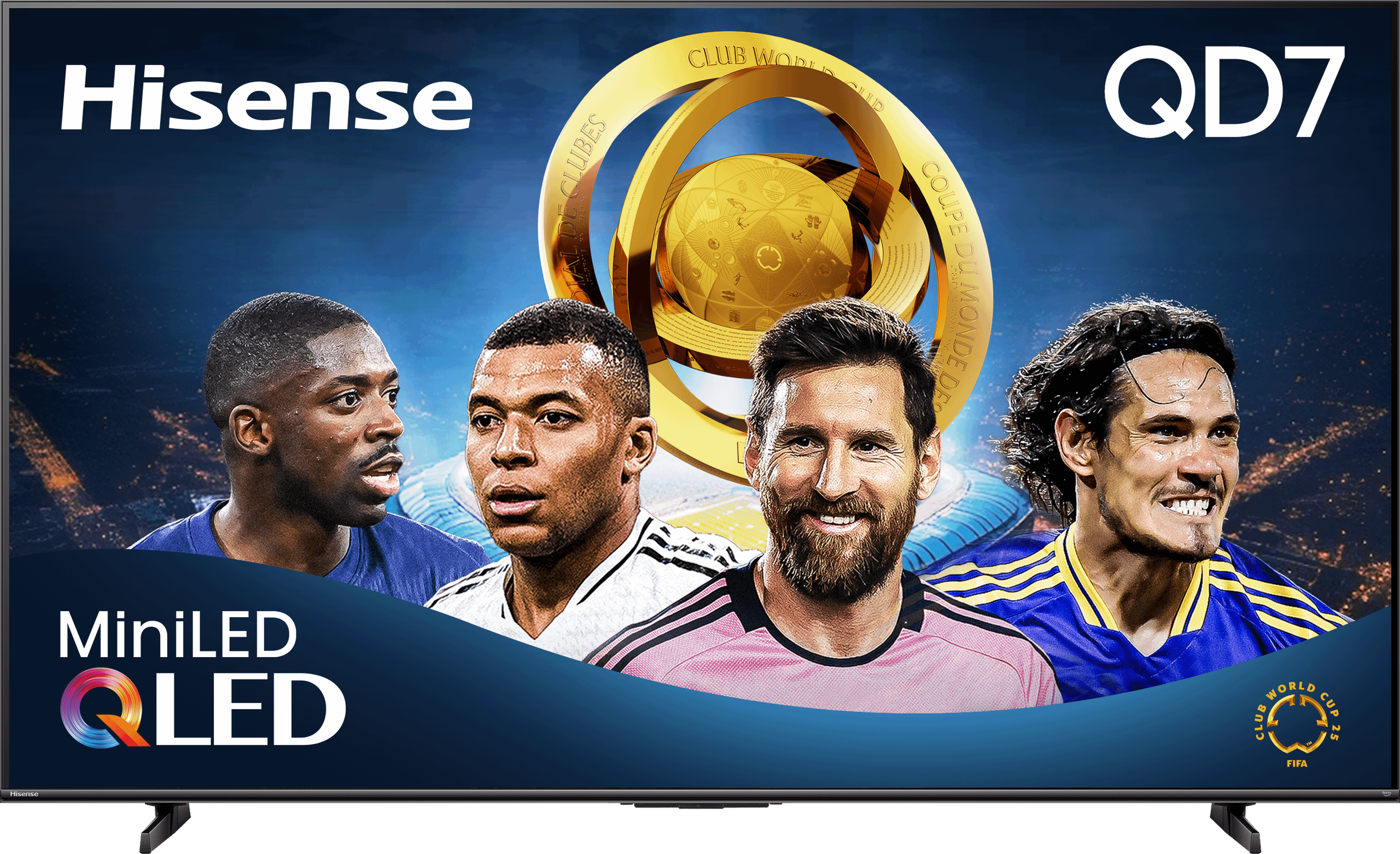
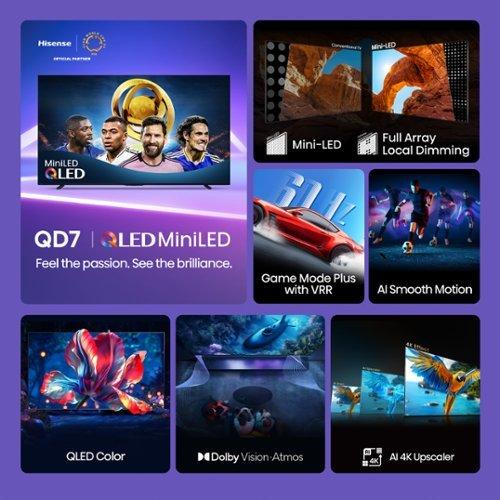
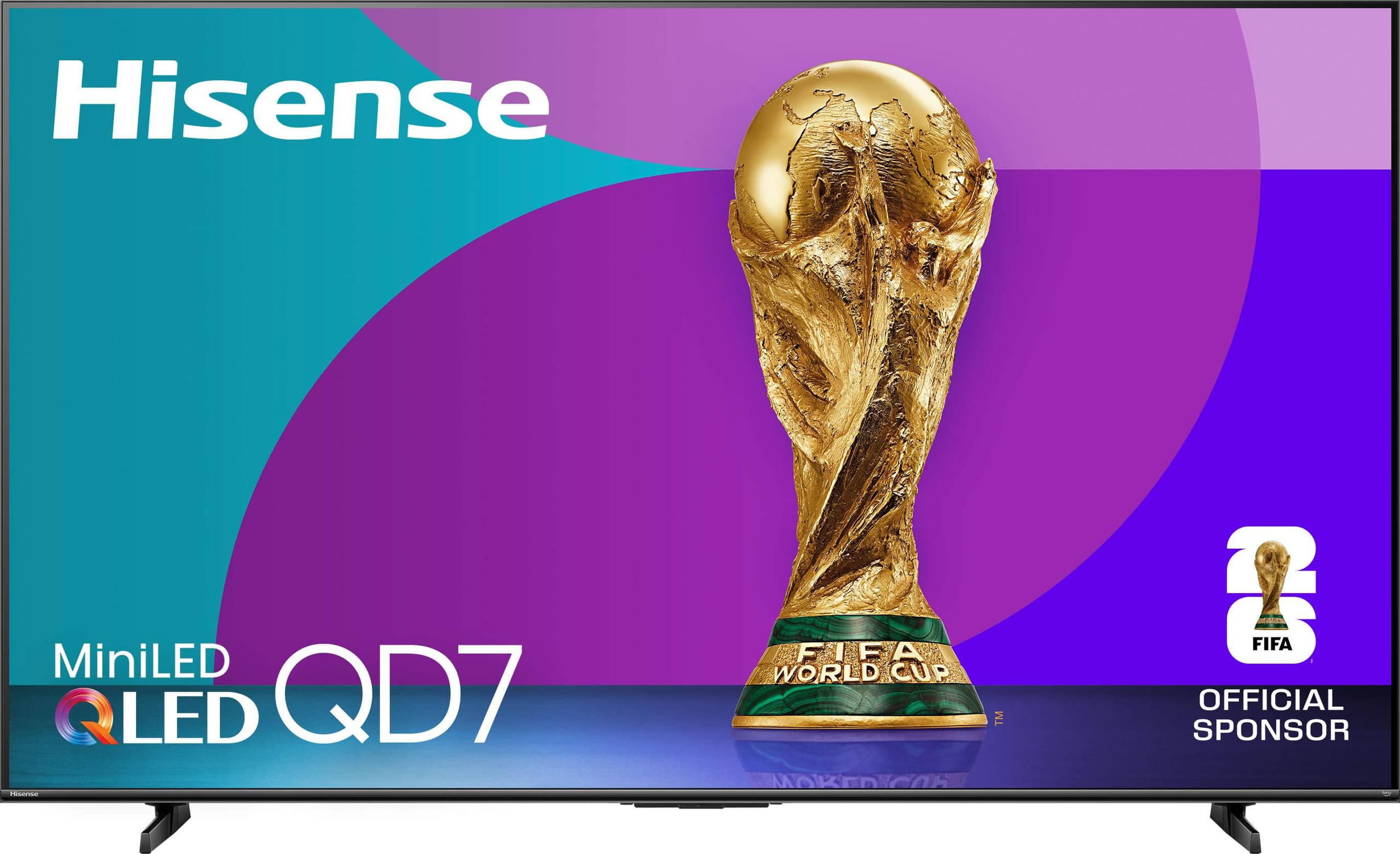
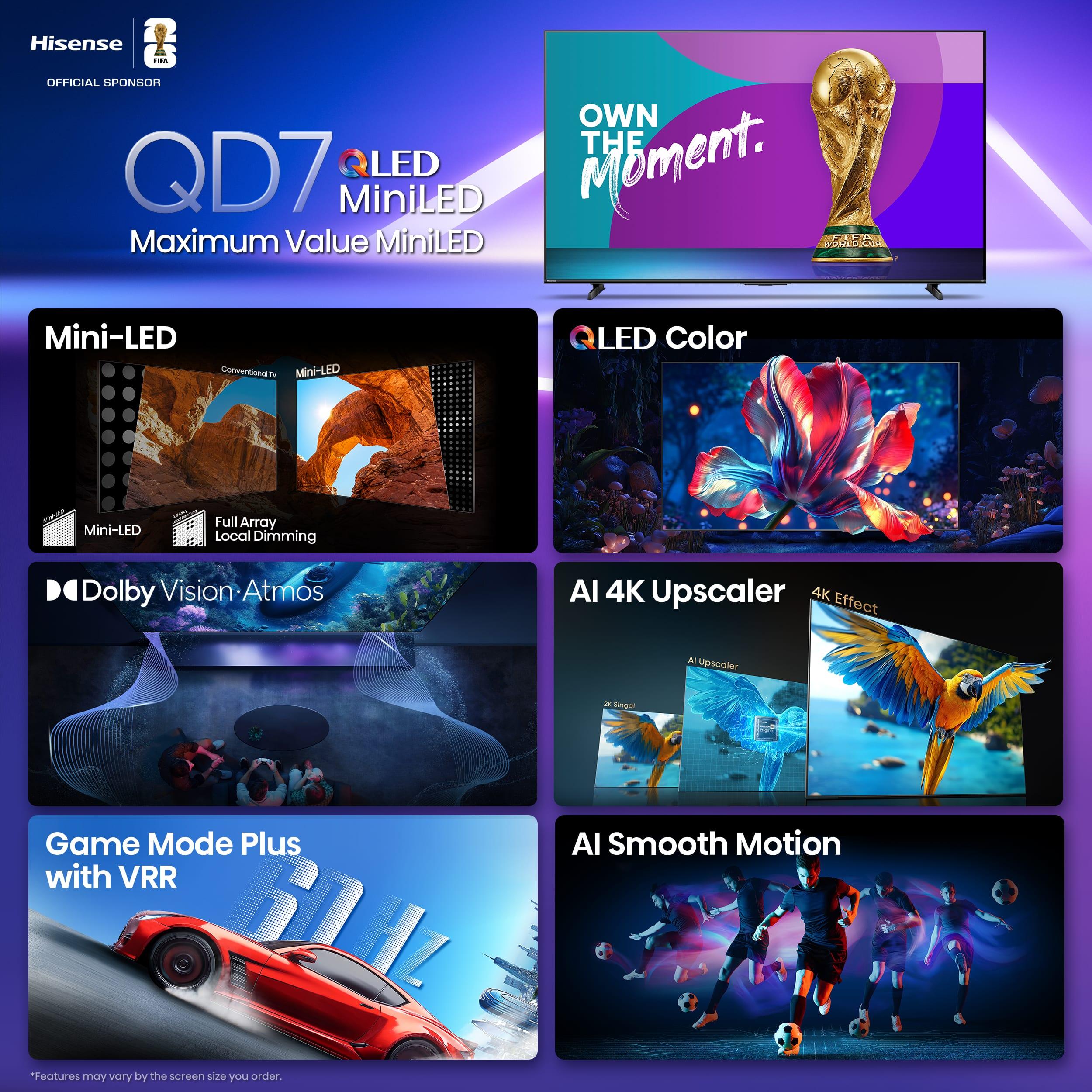
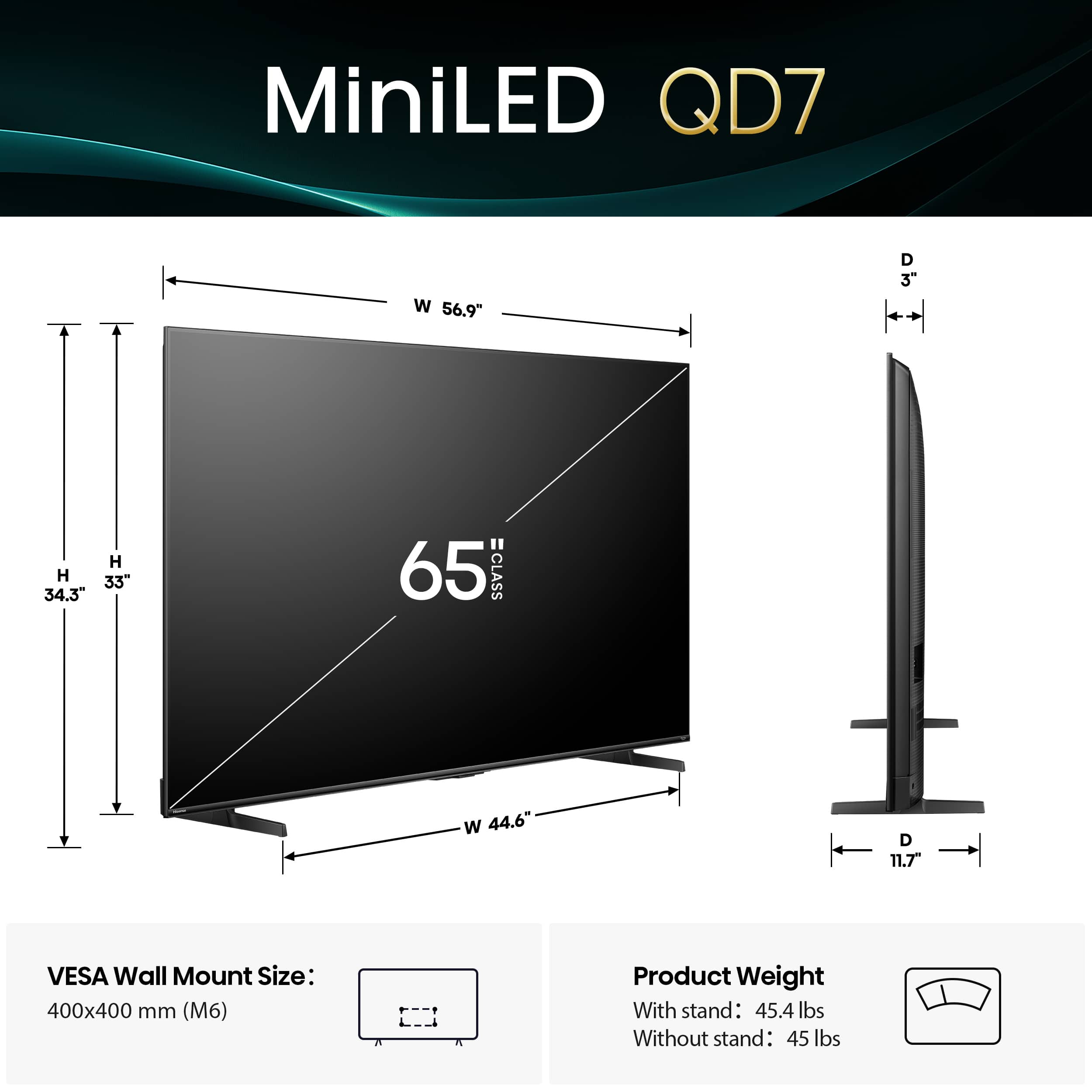
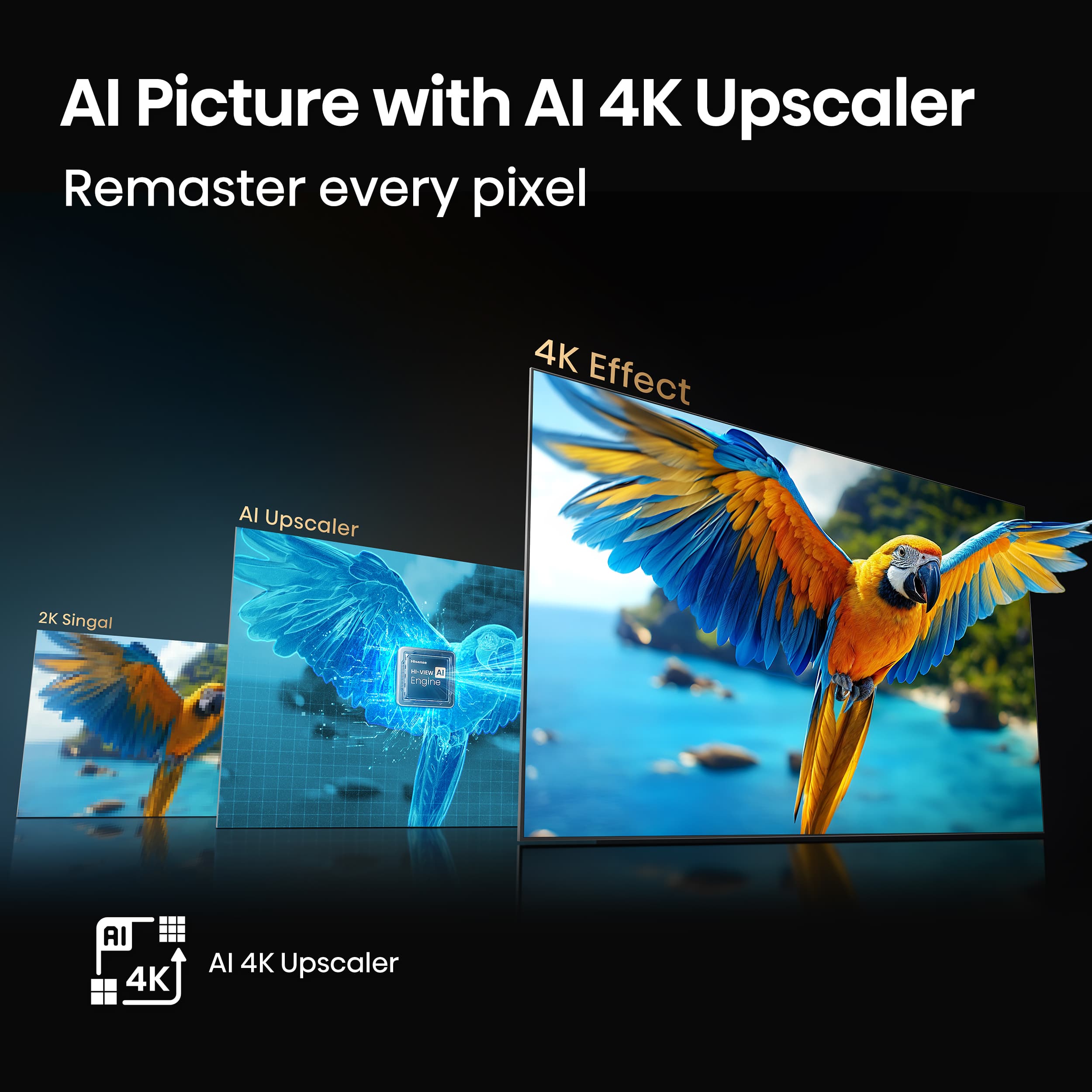
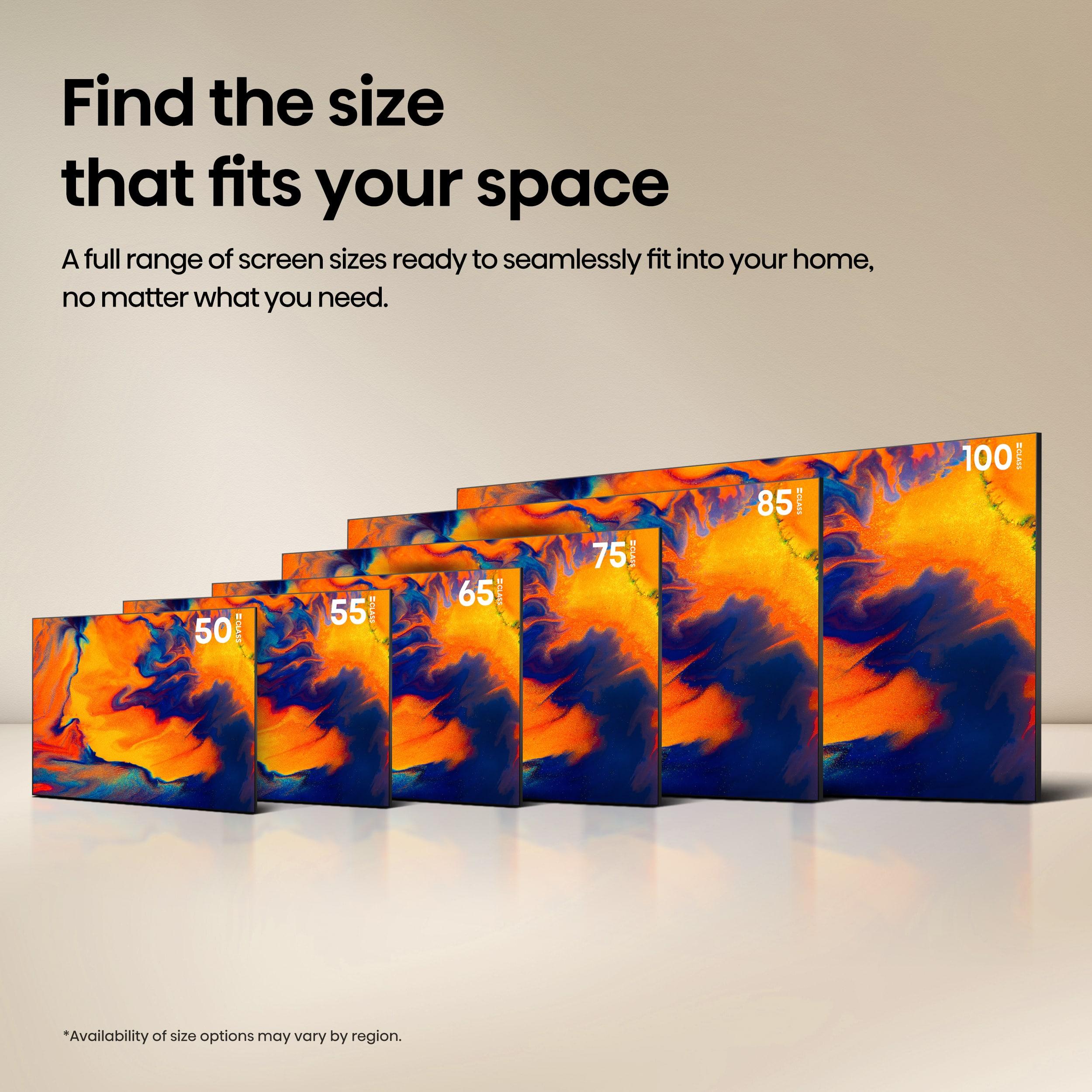

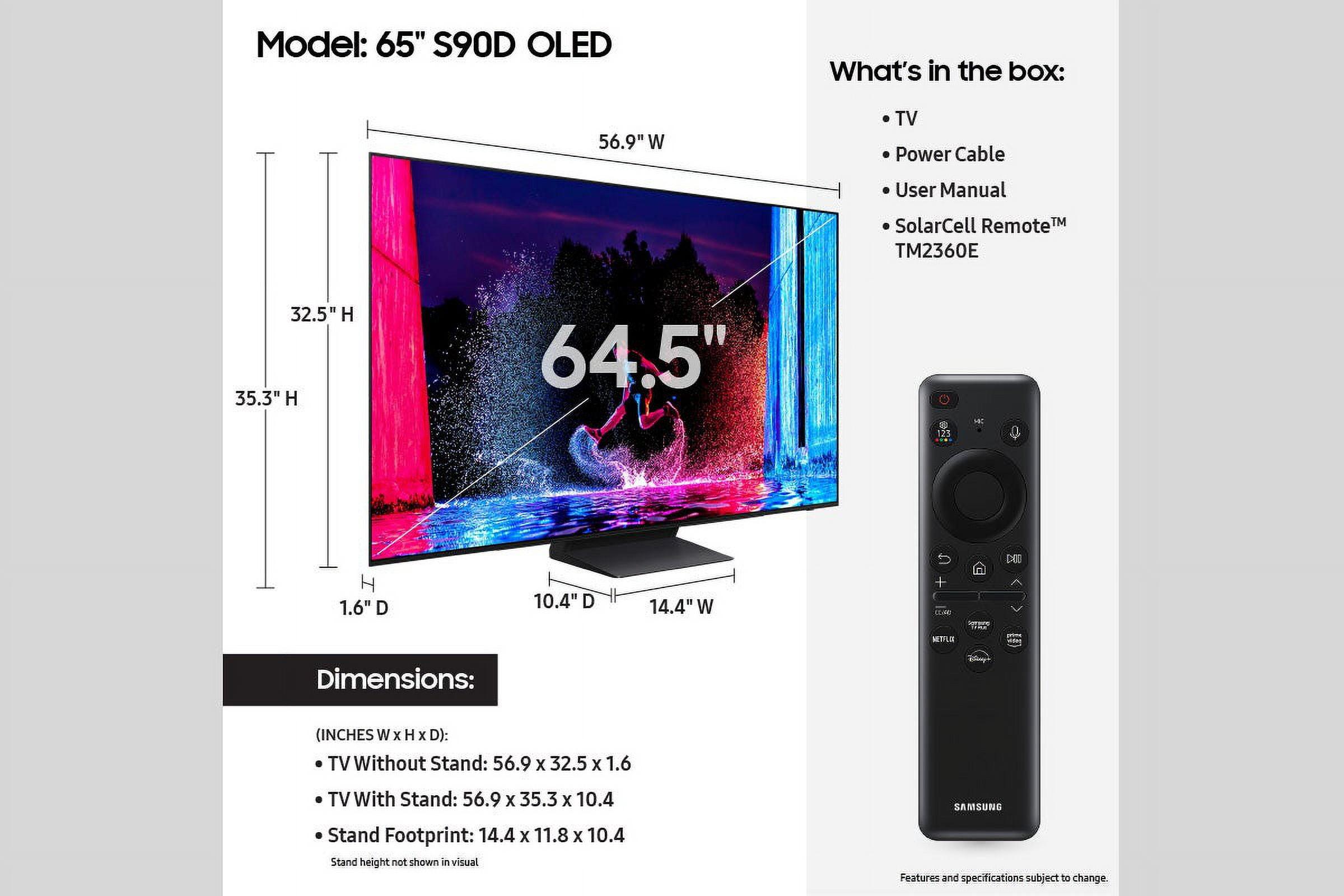
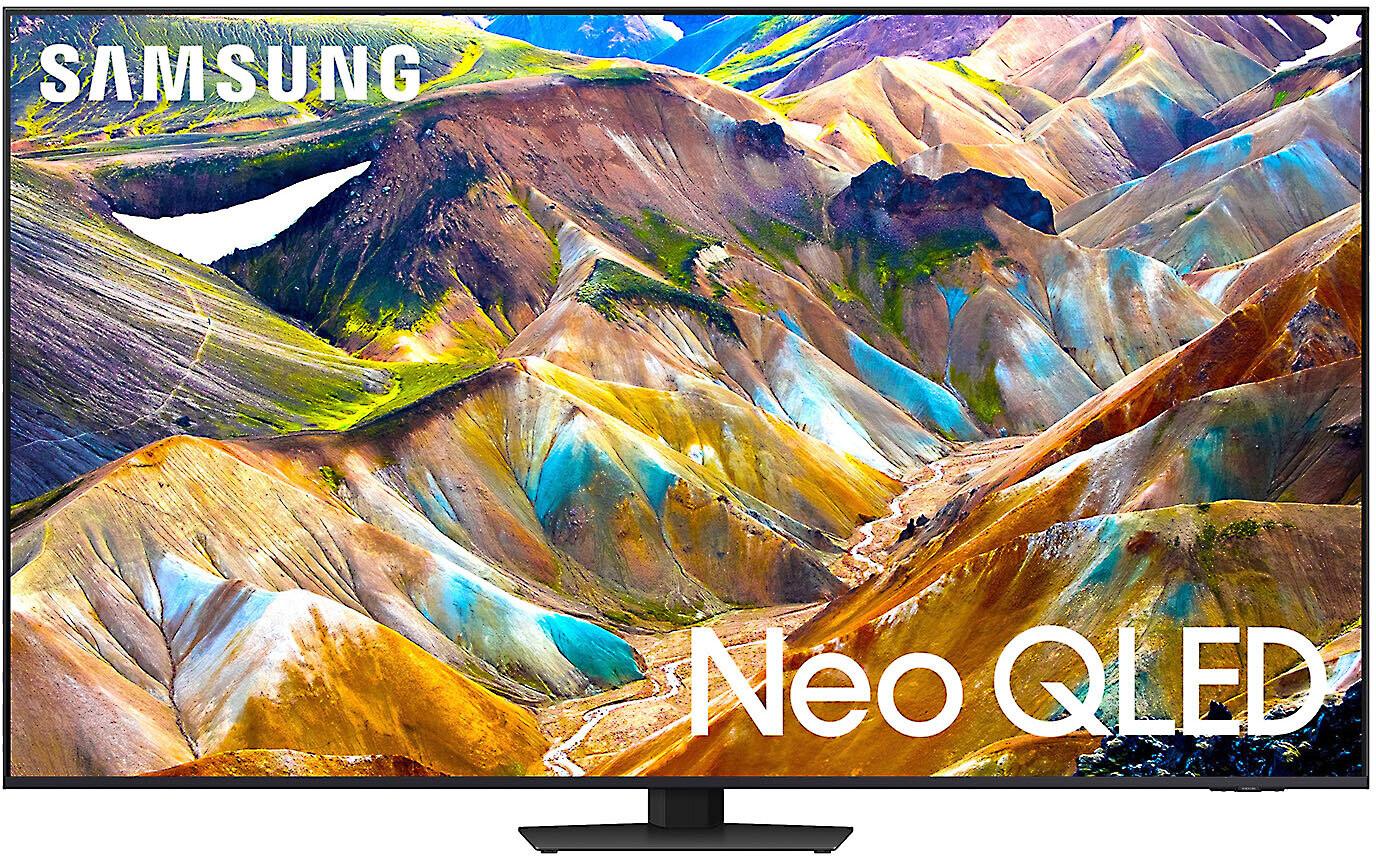
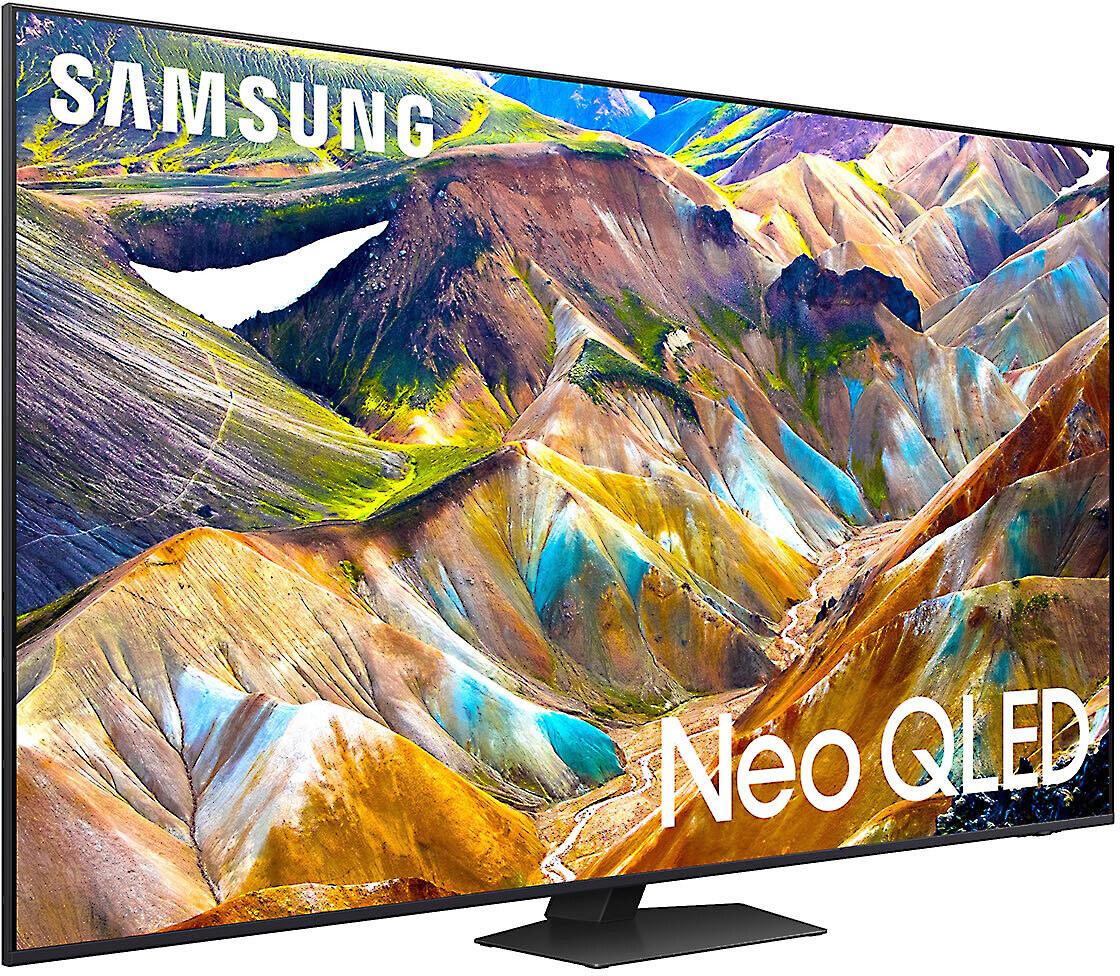
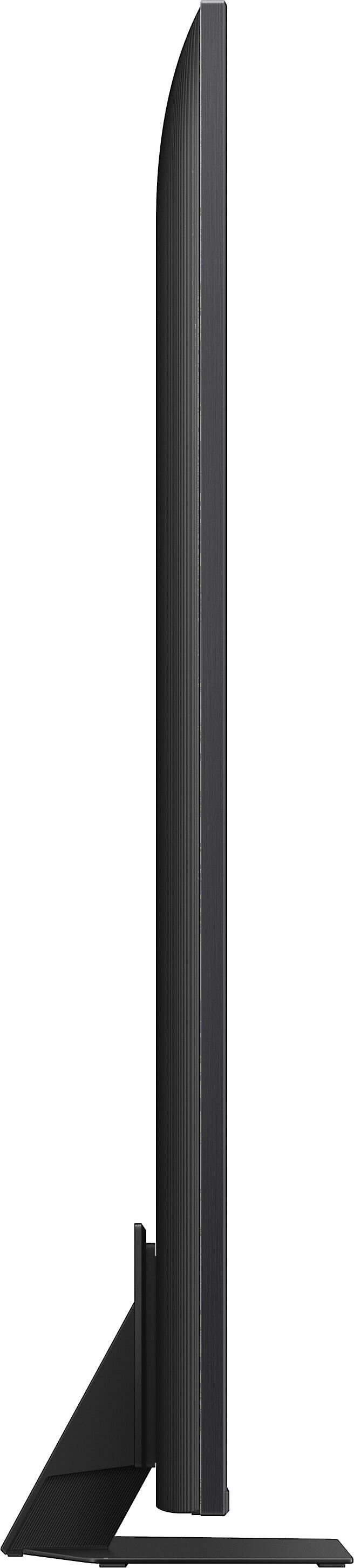
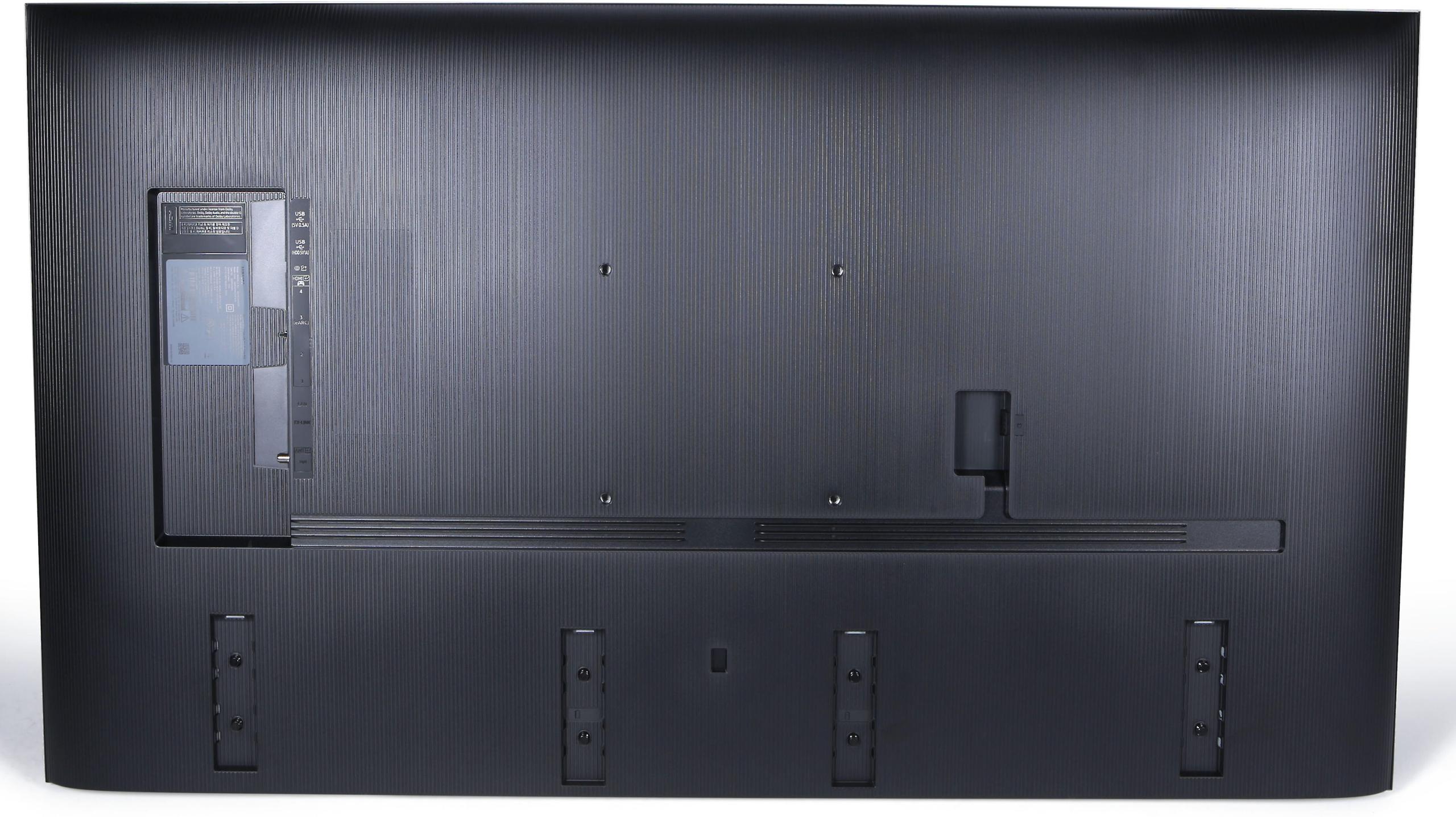
Shopping for a new TV can feel overwhelming, especially when you're trying to decide between two completely different display technologies. Today, I'm diving deep into a comparison that perfectly illustrates this dilemma: the budget-friendly Hisense 65" QD7 Series Mini-LED 4K Fire TV 2025 ($469.99) versus the premium Samsung 65" OLED S90D TV ($1,197.99).
Both TVs launched in 2025, representing the latest evolution in their respective display technologies. The price difference is striking – you could buy two and a half Hisense TVs for the cost of one Samsung – but that gap tells only part of the story. Let's explore what you're really getting for your money and which might be the better choice for your specific needs.
The fundamental difference between these TVs lies in how they create the images you see. The Samsung uses OLED technology, where each pixel is essentially a tiny light that can turn completely on or off. Think of it like having millions of individual light bulbs that can instantly switch between pure black and bright white. This creates what's called "pixel-level control," meaning the TV can display a bright white star right next to a completely black space background without any light bleeding between them.
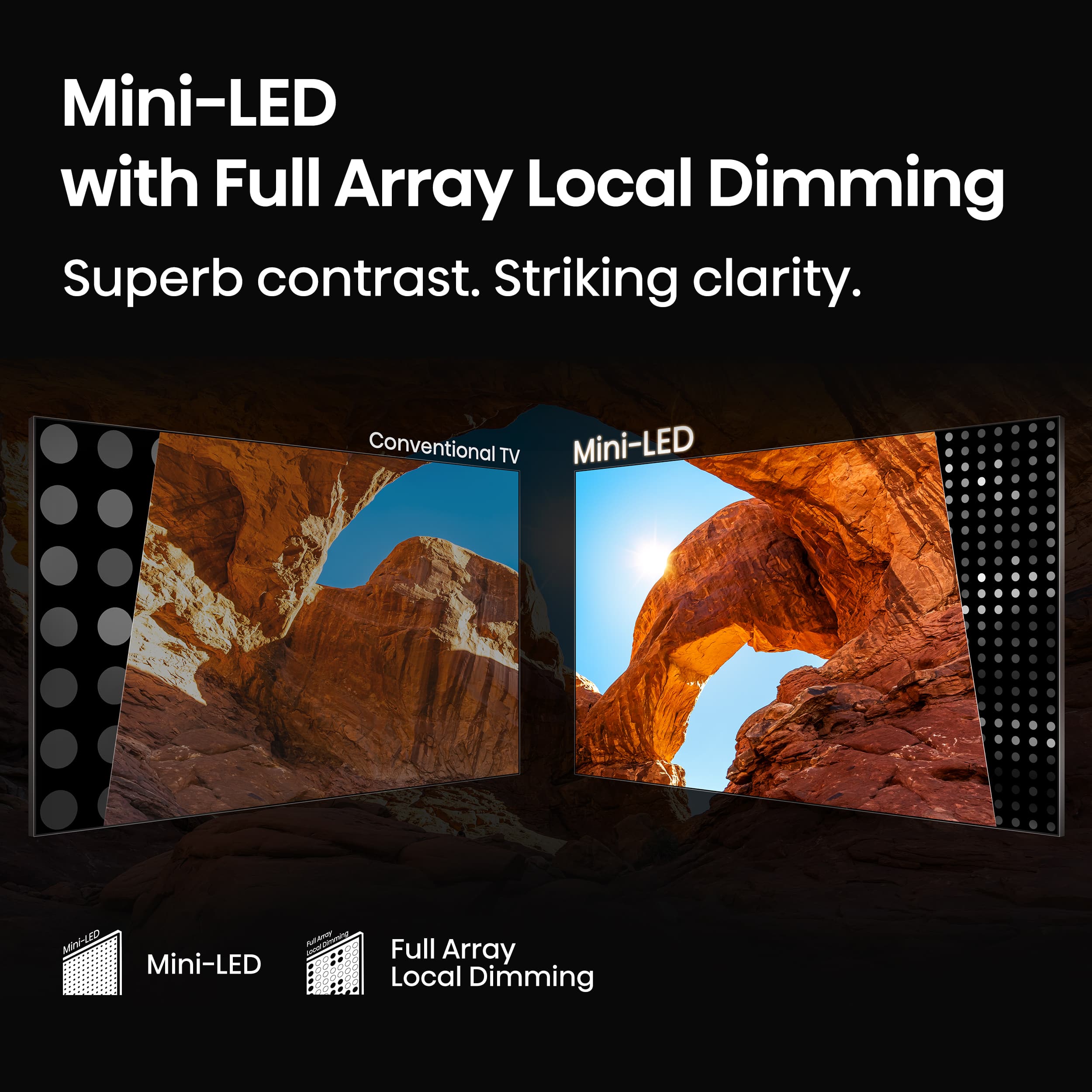
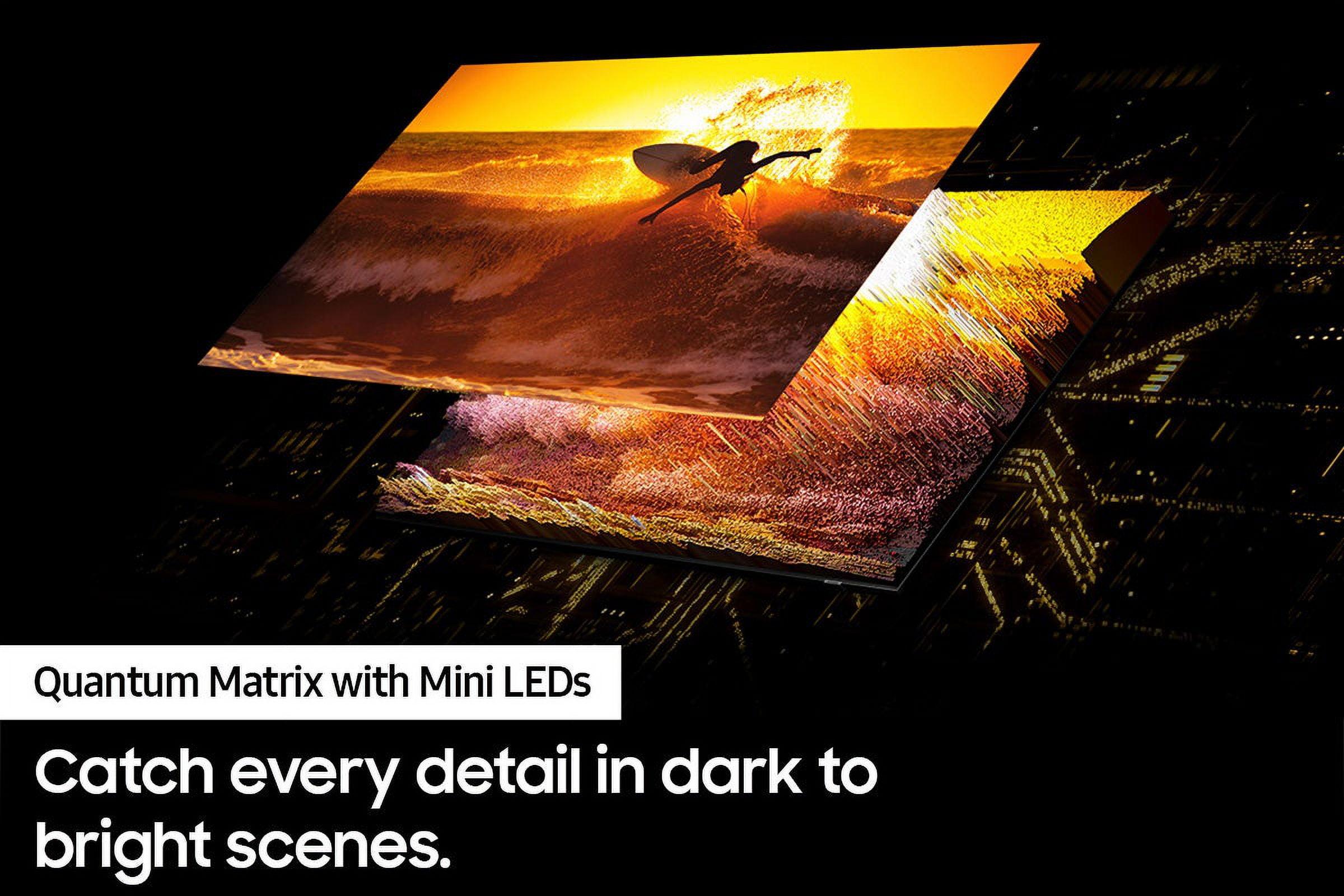
The Hisense takes a different approach with Mini-LED technology. Instead of self-emitting pixels, it uses thousands of tiny LED lights behind an LCD panel. These LEDs are grouped into "local dimming zones" – areas that can be independently controlled to be brighter or darker. While this can't achieve the perfect blacks of OLED, it can get much brighter overall, which is crucial for HDR content and bright room viewing.
I've spent considerable time with both technologies, and each has its place. OLED delivers that "wow factor" when you're watching a movie in a dark room – the way shadows disappear into pure black while bright elements pop off the screen is genuinely impressive. However, Mini-LED has come a long way in recent years, and the brightness advantage is real when you're watching during the day or in a well-lit room.
This is where the Samsung S90D shows its biggest advantage. OLED technology delivers infinite contrast ratio because pixels can turn completely off. When you're watching a space scene, the black void of space is truly black, not the dark gray you might see on other TVs. This creates an incredible sense of depth and realism, especially in dark scenes.
The Hisense QD7 uses Mini-LED backlighting with local dimming zones to approximate this effect. While it can't achieve true black, it gets impressively close. The Mini-LED system can dim specific areas of the screen while keeping others bright, creating much better contrast than traditional LED TVs. However, you might notice some "blooming" around bright objects on dark backgrounds – a faint halo effect that OLED simply doesn't have.
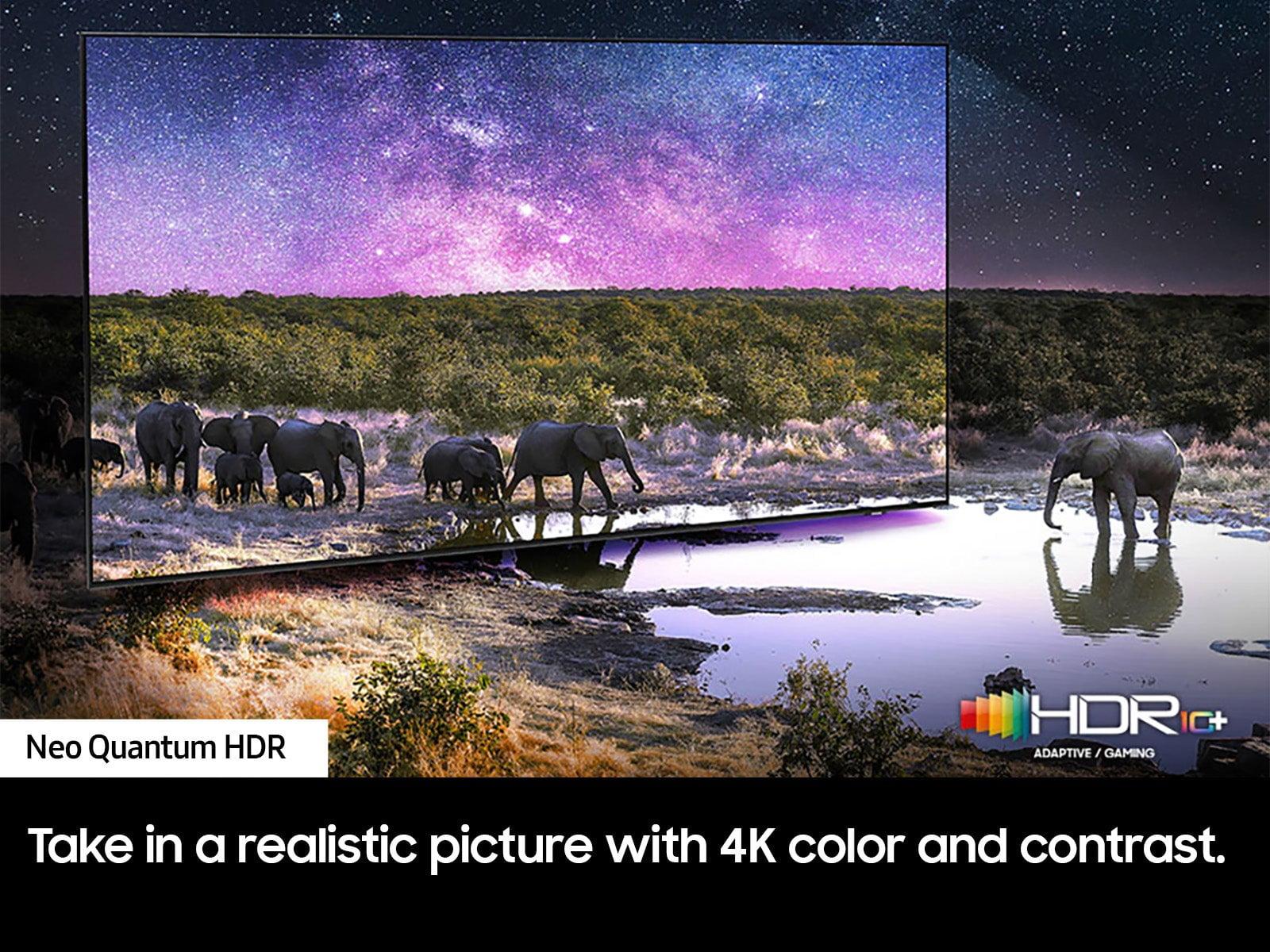
Here's where things get interesting. The Hisense can achieve much higher peak brightness than the Samsung. This matters tremendously for HDR (High Dynamic Range) content, which is designed to show a wider range of brightness levels from deep blacks to brilliant whites. HDR essentially makes images look more like what your eyes would see in real life – think of the difference between looking at a photo of a sunset versus actually seeing one.
The Samsung S90D can reach around 1,200 nits of peak brightness, which is excellent for an OLED. The Hisense, while not officially specified, likely reaches similar or higher levels. More importantly, the Mini-LED can maintain high brightness across larger areas of the screen, while OLED brightness typically decreases as more of the screen displays bright content.
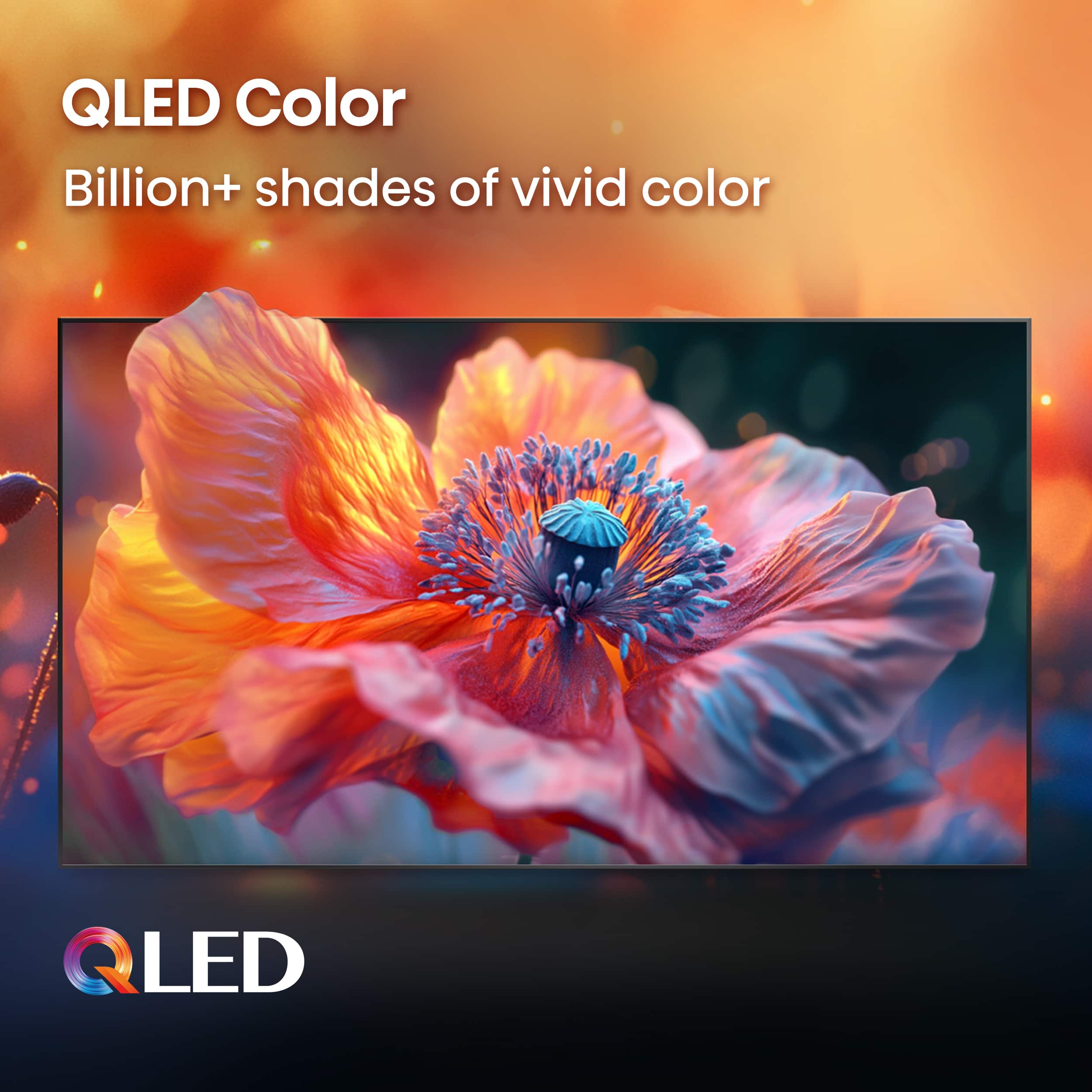
Both TVs use Quantum Dot technology for color reproduction, but they implement it differently. The Samsung's QD-OLED combines quantum dots with OLED pixels, creating exceptionally pure and vibrant colors. The Hisense uses quantum dots with its Mini-LED backlight, also producing wide color gamut but with a slightly different character.
The Samsung S90D supports HDR10+ but notably lacks Dolby Vision support – a surprising omission for a premium TV. Dolby Vision is a more advanced HDR format that adjusts brightness and color scene by scene, rather than applying fixed settings for entire movies. The Hisense supports both HDR10+ and Dolby Vision, giving you broader compatibility with streaming services and 4K Blu-rays.
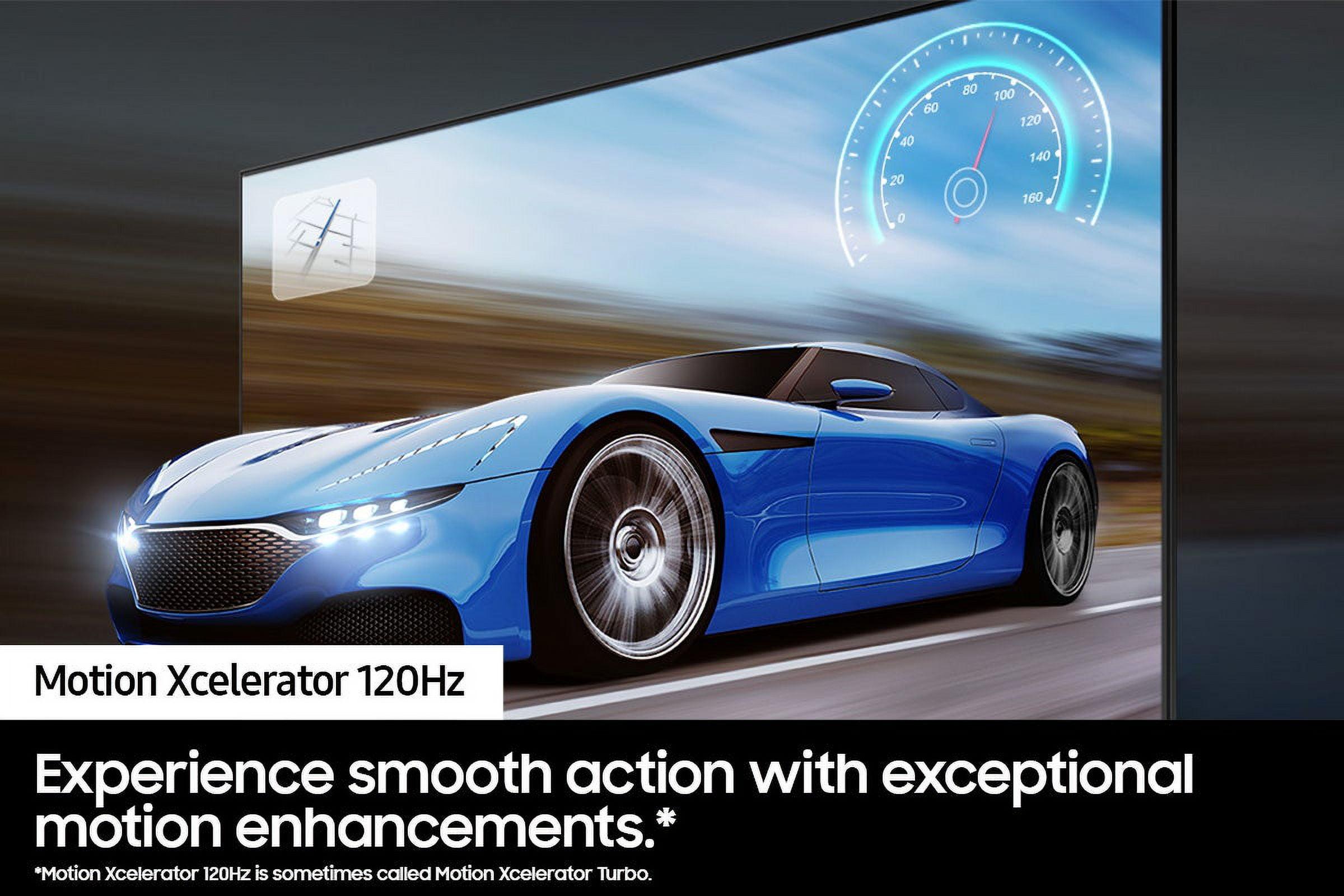
Gaming has become a crucial consideration for modern TVs, and both models deliver impressive performance. The Samsung S90D offers a native 144Hz refresh rate for PC gaming and 120Hz for consoles, with exceptionally low input lag. This means when you press a button, the action appears on screen almost instantaneously – crucial for competitive gaming.
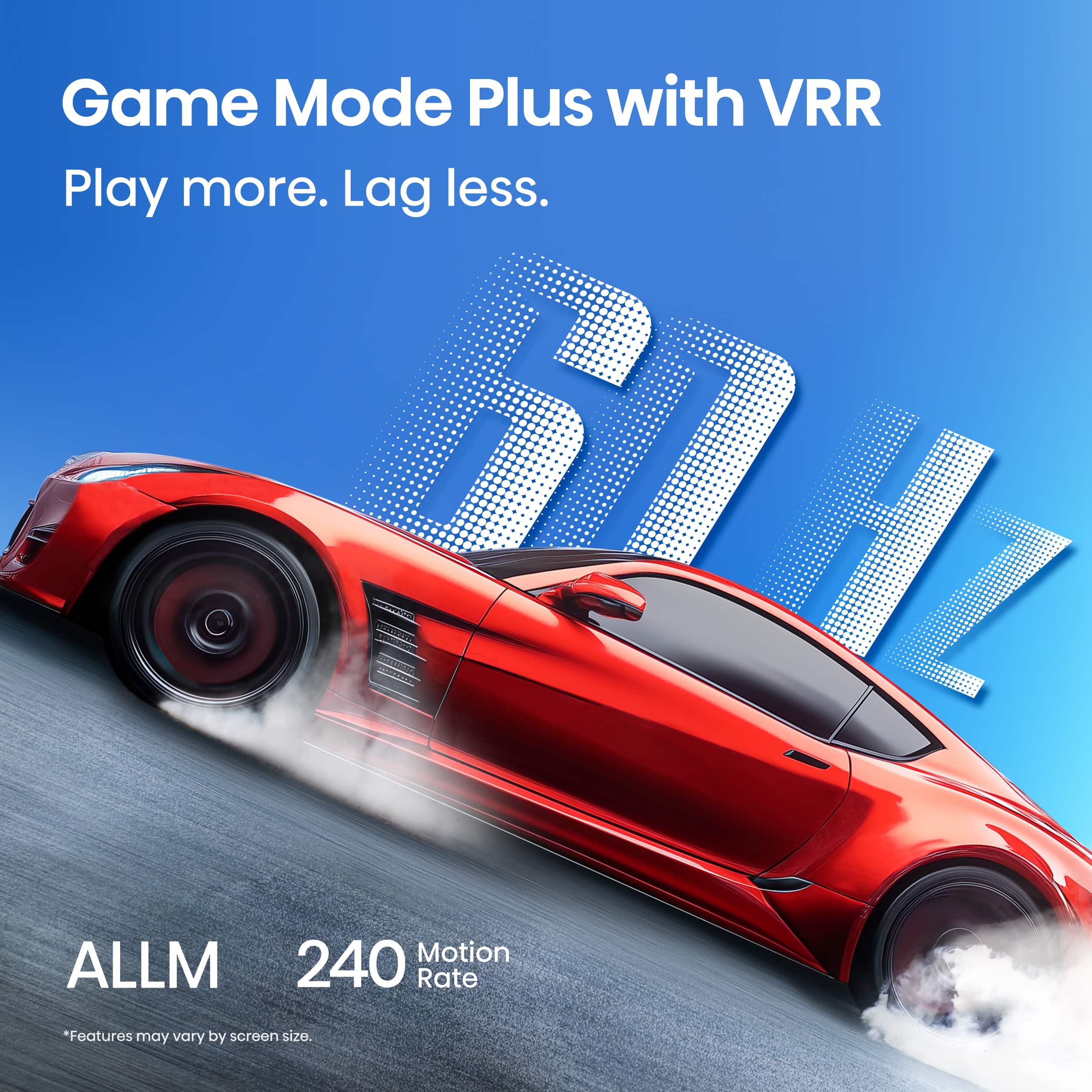
The Hisense QD7 provides similar gaming features including Variable Refresh Rate (VRR), which synchronizes the TV's refresh rate with your gaming console to eliminate screen tearing. Both TVs support Auto Low Latency Mode (ALLM), which automatically switches to game mode when it detects a gaming console.
Having tested both with a PlayStation 5, I can say the Samsung feels slightly more responsive, but the difference is minimal in practical use. The Hisense offers excellent gaming performance at a fraction of the price, making it particularly attractive for budget-conscious gamers who don't want to compromise on features.
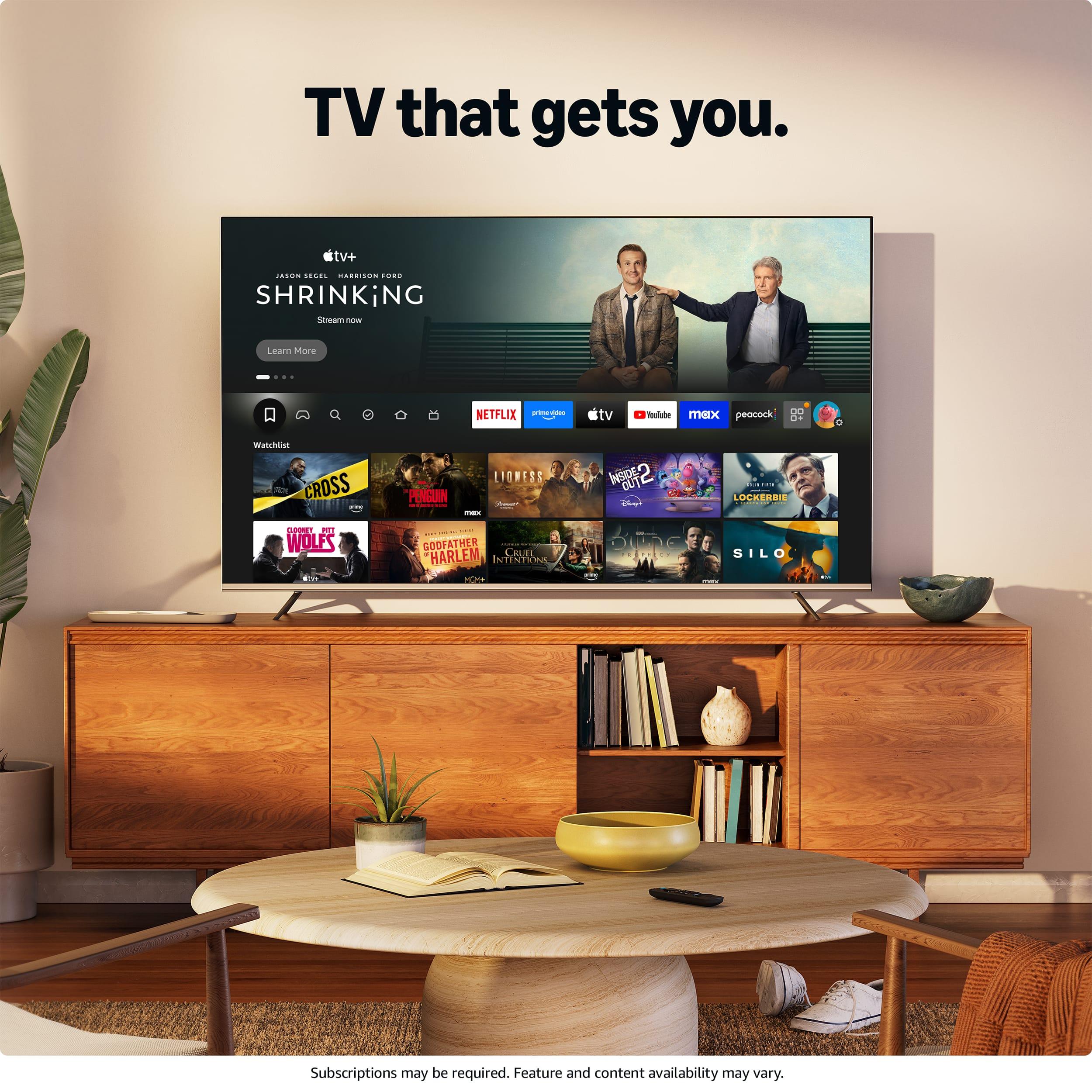
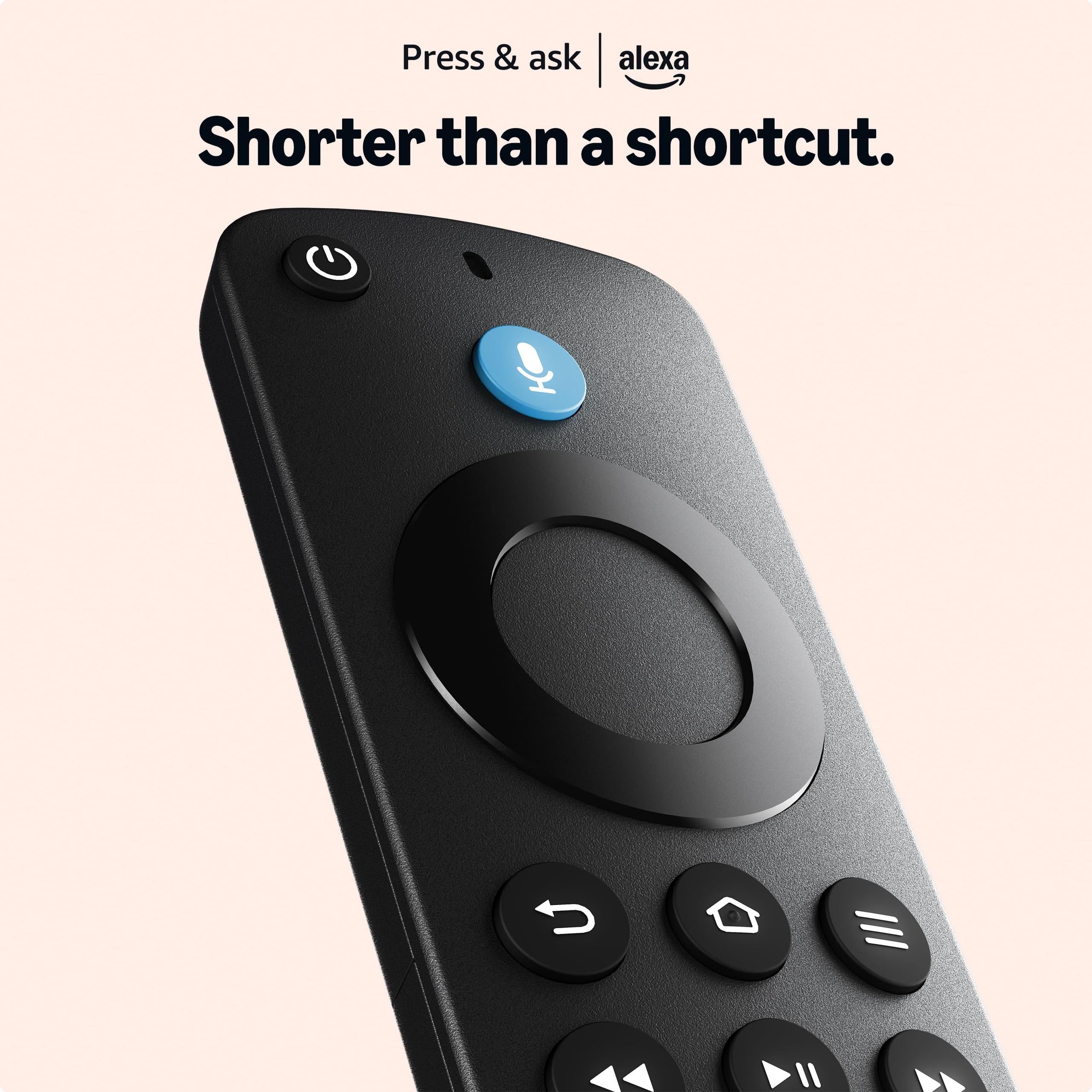
The software experience differs significantly between these TVs. The Hisense runs Amazon's Fire TV platform, which excels at content discovery and integrates deeply with Amazon's ecosystem. If you're an Amazon Prime member, you'll find recommendations and easy access to Prime Video content front and center.
Samsung's Tizen OS is more mature and generally more responsive, though it can feel less intuitive than Fire TV. Tizen offers excellent app support and integrates well with Samsung's broader device ecosystem. However, I've found Fire TV's search and recommendation engine to be superior for discovering new content across multiple streaming services.
Both platforms support major streaming services like Netflix, Disney+, and Apple TV+, so your choice here comes down to personal preference and which ecosystem you're already invested in.
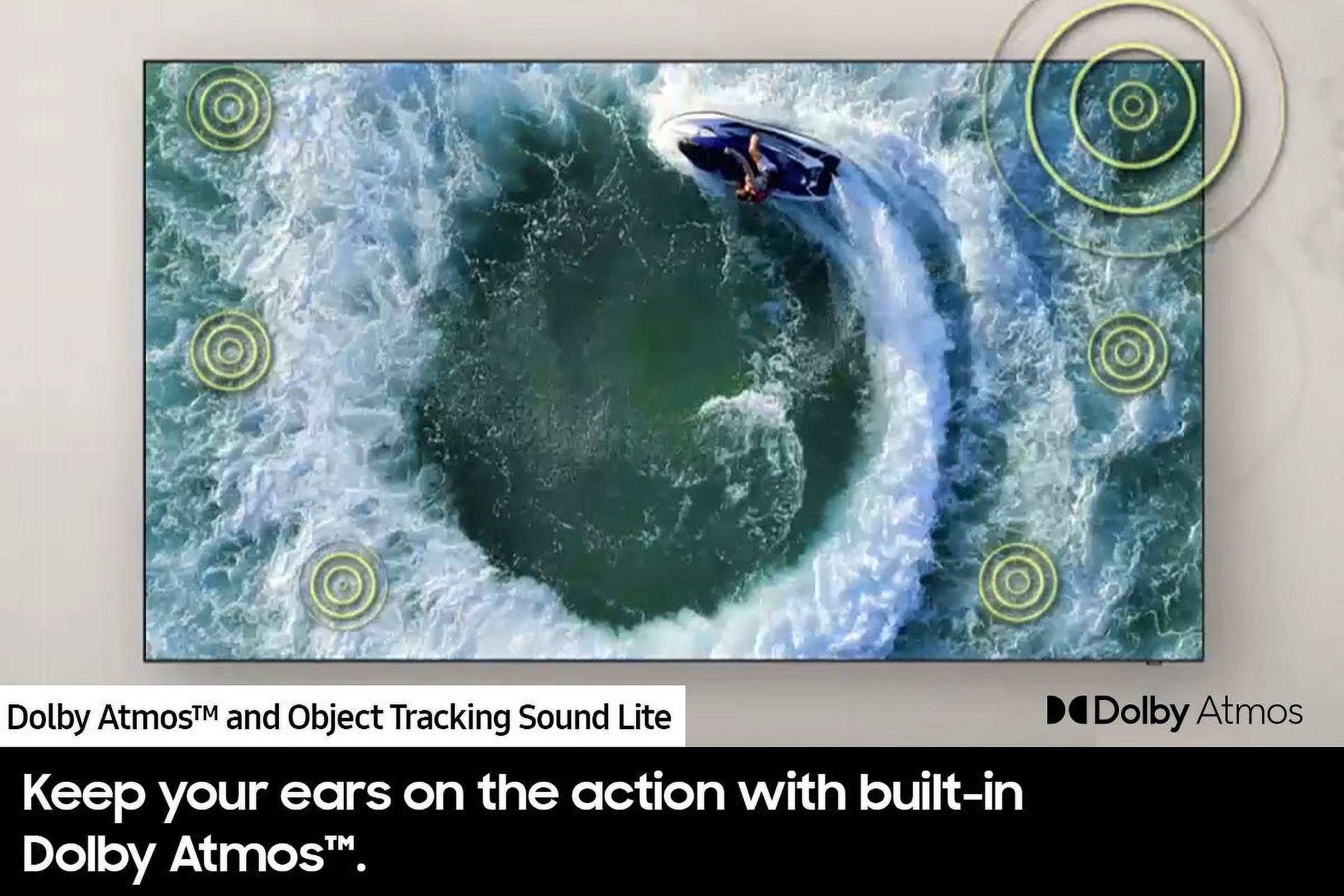
The Samsung S90D includes a more sophisticated audio system with Dolby Atmos support, creating a three-dimensional soundstage that makes audio feel like it's coming from all around you. The speakers are well-integrated and produce cleaner, more detailed sound than you'd typically expect from a TV.
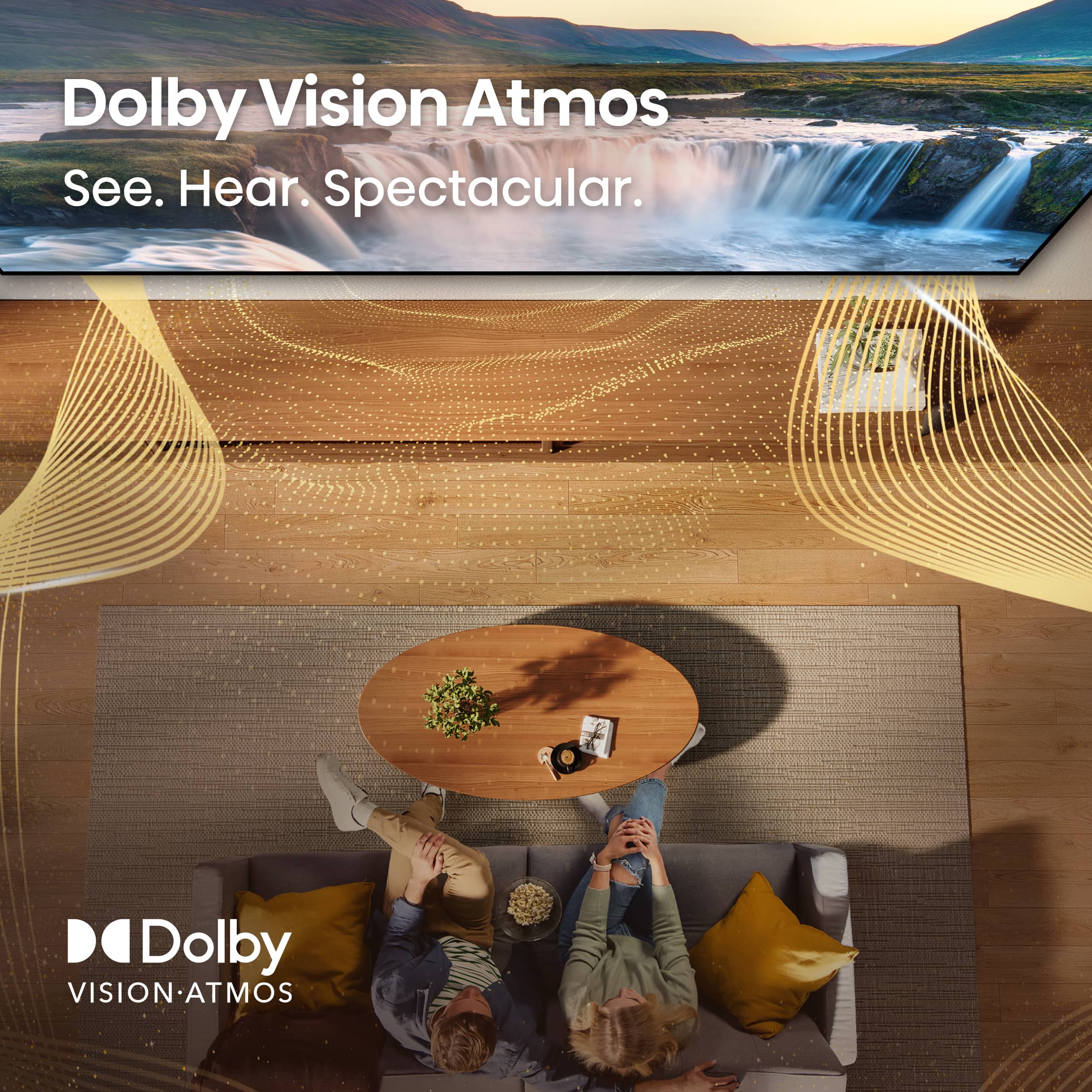
The Hisense also supports Dolby Atmos but with a more basic speaker configuration. While adequate for casual viewing, it may benefit from a soundbar upgrade more than the Samsung would. This is worth considering in your total cost calculation – if you're planning to add a soundbar anyway, the audio difference becomes less significant.
This is where the OLED technology really shines. The Samsung maintains consistent picture quality from virtually any viewing angle – colors stay vibrant and contrast remains strong whether you're sitting directly in front or off to the side. This makes it ideal for larger rooms where people might be seated at various angles.
The Hisense QD7 uses what appears to be an IPS-type panel, which provides better viewing angles than traditional VA panels but still can't match OLED. You'll notice some color shifting and contrast reduction when viewing from the side, though it's not dramatic enough to be problematic for most room layouts.
OLED technology has one notable weakness: potential burn-in. This occurs when static elements like channel logos or game HUDs remain on screen for extended periods, potentially leaving permanent marks. Modern OLEDs have various protections against this, including pixel shifting and automatic brightness reduction, but it remains a consideration for certain use cases.
The Mini-LED technology in the Hisense doesn't face this issue. LCD panels are generally more robust for extended use with static content, making them potentially better choices for use as computer monitors or in commercial settings.
For dedicated home theater use, the Samsung S90D has clear advantages. The perfect blacks create an immersive experience that's particularly noticeable in dark rooms. The wide viewing angles ensure everyone in the room gets a good picture, and the color accuracy is excellent for movie content.
However, the Hisense shouldn't be dismissed for home theater use. Its higher brightness capability can actually be advantageous for certain content, and the support for both major HDR formats provides broader compatibility. The key is room setup – in a light-controlled environment, the Samsung wins, but in a brighter room, the Hisense might actually look better.
The price difference between these TVs is substantial, but it's not just about the display technology. The Samsung offers premium build quality, more refined software, better audio, and the prestige of the Samsung brand. You're paying for the research and development that went into QD-OLED technology and the manufacturing precision required to produce these panels.
The Hisense QD7 represents exceptional value engineering. You're getting many flagship features – Mini-LED backlighting, quantum dot color, gaming features, and modern connectivity – at a price that was unthinkable just a few years ago. The trade-offs are primarily in ultimate picture quality and build refinement, not in feature set.
Both TVs benefit from recent advances in their respective technologies. Mini-LED has seen dramatic improvements in the number of dimming zones and processing algorithms, making the contrast gap with OLED much smaller than it used to be. Meanwhile, QD-OLED technology has matured since its introduction, with better brightness and color performance than first-generation OLED panels.
The 2025 models also include the latest HDMI 2.1 implementations, ensuring compatibility with current and future gaming consoles and streaming devices. Both support the latest smart TV features and have modern processors that should remain relevant for years to come.
Choose the Samsung S90D if you prioritize absolute picture quality and have a dedicated viewing environment. It's the better choice for movie enthusiasts who watch primarily in dark or dimly lit rooms. The wide viewing angles make it ideal for larger families or frequent entertaining. If you're planning to keep the TV for many years and value premium build quality, the Samsung justifies its higher price.
The Hisense QD7 is the smarter choice if you want flagship features without the premium price. It's particularly well-suited for bright rooms, casual viewing, and gaming. The money you save could go toward a good soundbar or other home theater equipment. It's also the better choice if you're upgrading from an older TV and want to experience modern features without a massive investment.
Consider your specific situation: How often do you watch in complete darkness versus during the day? Do you have multiple viewing positions in your room? Are you primarily streaming content or watching 4K Blu-rays? Is gaming a priority? Your answers to these questions will guide you toward the right choice.
Both TVs represent excellent options in their respective categories. The Samsung delivers a premium experience that justifies its price for those who prioritize ultimate picture quality. The Hisense provides remarkable value, delivering most of the modern TV experience at a fraction of the cost. Either choice will provide years of enjoyment – the decision ultimately comes down to your priorities, room setup, and budget.
| Hisense 65" QD7 Series Mini-LED 4K Fire TV 2025 ($469.99) | Samsung 65" OLED S90D TV ($1,197.99) |
|---|---|
| Display Technology - Fundamentally different approaches to image quality | |
| Mini-LED QLED with local dimming zones | QD-OLED with self-emissive pixels |
| Peak Brightness - Critical for HDR performance and bright room viewing | |
| High brightness capability, excellent for daytime viewing | ~1,200 nits, good for OLED but lower than Mini-LED |
| Black Levels - Determines contrast and dark scene performance | |
| Very good but not true black (Mini-LED limitation) | Perfect blacks with infinite contrast ratio |
| Viewing Angles - Important for rooms with multiple seating positions | |
| Narrower angles, picture quality degrades off-center | Wide viewing angles with consistent picture quality |
| HDR Format Support - Affects compatibility with streaming and disc content | |
| Dolby Vision + HDR10+ (broader compatibility) | HDR10+ only (missing Dolby Vision) |
| Gaming Performance - Refresh rates and input lag for console gaming | |
| 120Hz with VRR, ALLM, low input lag | 144Hz (PC)/120Hz (console), ultra-low input lag |
| Smart TV Platform - Daily user interface and app experience | |
| Fire TV with Alexa integration | Samsung Tizen OS with mature app ecosystem |
| Audio Quality - Built-in speaker performance | |
| Dolby Atmos, adequate speakers | Dolby Atmos with premium speaker system |
| Burn-in Risk - Long-term durability consideration | |
| No burn-in risk with LCD technology | Potential OLED burn-in with static content |
| Build Quality - Materials and construction | |
| Solid budget build, functional design | Premium materials and construction |
| Best Use Case - Optimal viewing environment | |
| Bright rooms, gaming, budget-conscious buyers | Dark rooms, movie enthusiasts, premium experience |
| Value Proposition - Performance per dollar spent | |
| Exceptional value with flagship features at budget price | Premium experience justifying 2.5x higher cost |
The Hisense 65" QD7 Series Mini-LED 4K Fire TV 2025 ($469.99) offers exceptional value with flagship features at a budget price. For most buyers, it delivers 70-80% of the premium TV experience at 40% of the cost. The Samsung 65" OLED S90D TV ($1,197.99) justifies its higher price with superior picture quality, perfect blacks, and premium build quality, making it better for those who prioritize absolute performance over value.
The Samsung S90D uses OLED technology where each pixel emits its own light and can turn completely off for perfect blacks. The Hisense QD7 uses Mini-LED backlighting with thousands of tiny LEDs behind an LCD panel, offering higher brightness but unable to achieve true blacks. OLED provides better contrast while Mini-LED delivers superior brightness for daytime viewing.
Both TVs excel at gaming, but the Samsung S90D has a slight edge with 144Hz refresh rate and ultra-low input lag. The Hisense QD7 still offers excellent gaming performance with 120Hz, VRR, and ALLM at a much lower price. For most gamers, the Hisense provides outstanding gaming features without the premium cost.
Yes, there's a noticeable difference. The Samsung S90D delivers perfect blacks, infinite contrast, and consistent picture quality from any viewing angle. The Hisense QD7 offers very good picture quality with higher brightness but cannot match OLED's contrast performance. In dark rooms, the Samsung looks significantly better, while in bright rooms, the difference is less apparent.
For dedicated home theater use, the Samsung S90D is superior due to its perfect blacks, infinite contrast, and wide viewing angles that create a more immersive movie experience in dark rooms. However, the Hisense QD7 shouldn't be dismissed—it supports both Dolby Vision and HDR10+ formats and can actually look better in brighter viewing environments.
The Hisense QD7 performs better in bright rooms due to its higher peak brightness capability, making it ideal for daytime viewing and well-lit spaces. The Samsung S90D can handle moderate ambient light but doesn't get as bright as Mini-LED technology, potentially appearing dimmer in very bright rooms.
Both offer excellent smart features but with different approaches. The Hisense QD7 runs Fire TV with superior content discovery and Amazon ecosystem integration. The Samsung S90D uses Tizen OS, which is more mature and responsive but less intuitive for content discovery. Both support all major streaming services.
OLED burn-in is a potential concern but rarely affects normal viewing habits. The Samsung S90D includes various protections like pixel shifting and automatic brightness reduction. The Hisense QD7 uses LCD technology with no burn-in risk, making it potentially better for extended gaming or use as a computer monitor.
For sports, it depends on your room setup. The Hisense QD7 excels in bright rooms with its higher brightness and good motion handling. The Samsung S90D offers smoother motion and better viewing angles for group watching, but may appear dimmer in very bright rooms. Both handle fast sports action well.
The Samsung S90D has superior built-in audio with a more sophisticated speaker system and cleaner sound reproduction. The Hisense QD7 provides adequate audio with Dolby Atmos support but may benefit from a soundbar upgrade more than the Samsung would.
Both are 2025 models with modern components, but they have different longevity considerations. The Hisense QD7 uses LCD technology that's generally more robust for extended use, while the Samsung S90D offers premium build quality and Samsung's reputation for reliability, though OLED panels may experience brightness degradation over many years.
Choose the Hisense QD7 if you want flagship features at a budget price, watch in bright rooms, or prioritize gaming value. Choose the Samsung S90D if you want the absolute best picture quality, watch primarily in dark rooms, have multiple viewing positions, or plan to keep the TV for many years. The Hisense offers better value while the Samsung provides a premium experience.
We've done our best to create useful and informative comparisons to help you decide what product to buy. Our research uses advanced automated methods to create this comparison and perfection is not possible - please contact us for corrections or questions. These are the sites we've researched in the creation of this article: bestbuy.com - custrevs.com - youtube.com - bestbuy.com - rtings.com - youtube.com - rtings.com - pcrichard.com - bestbuy.com - pcrichard.com - camelcamelcamel.com - amazonfiretv.blog - hisense-usa.com - hisense-usa.com - hisense-usa.com - bestbuy.com - leaseville.com - youtube.com - bestbuy.com - flatpanelshd.com - bestbuy.com - valueelectronics.com - youtube.com - cnet.com - bestbuy.com - videoandaudiocenter.com - youtube.com - samsung.com - samsung.com - pcrichard.com - samsung.com

Privacy Policy
Terms and Conditions - Affiliate Policy
Home Security
© Copyright 2008-2026.
11816 Inwood Rd #1211, Dallas, TX 75244