




If you've ever turned up your TV volume only to have explosions blow out your eardrums while dialogue remains mysteriously inaudible, you're not alone. This common frustration drives millions of people to seek soundbar solutions each year, and for good reason – modern flat-screen TVs prioritize slim designs over audio quality, often cramming tiny speakers into impossibly thin bezels.
The soundbar market has exploded in recent years, offering everything from basic audio upgrades to sophisticated home theater systems. At the budget-friendly end of this spectrum, two popular options frequently catch shoppers' attention: the Polk Audio Signa S2 and the Yamaha SR-B30A. While both aim to dramatically improve your TV's audio without breaking the bank, they represent fundamentally different approaches to solving the same problem.
Before diving into the specifics of these two models, it's worth understanding what separates good soundbars from mediocre ones. The primary considerations include audio quality (how clear dialogue sounds and how well music reproduces), connectivity options (the types of inputs available), physical form factor (size constraints and subwoofer requirements), available features (sound processing technologies), and overall value for money.
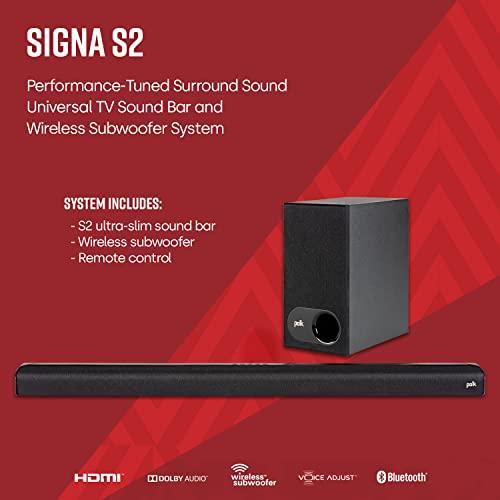
The Polk Audio Signa S2, released around 2018, follows the traditional soundbar formula with a separate wireless subwoofer. This approach has dominated the market for years because it allows manufacturers to include a larger, more powerful bass driver without making the main soundbar unit unwieldy. The Yamaha SR-B30A, a more recent entry from around 2021, takes a different path by integrating dual subwoofers directly into the main soundbar unit, creating what's essentially an all-in-one audio solution.
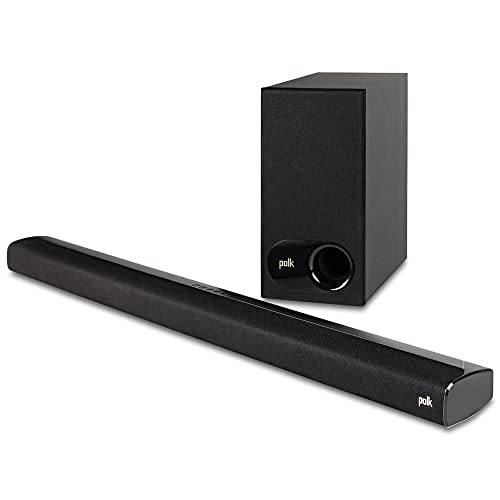
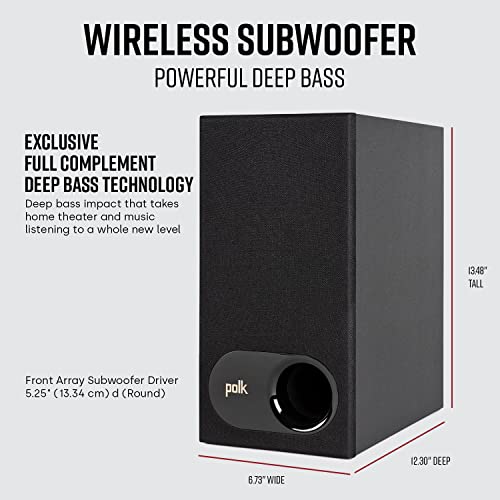
The Polk Audio Signa S2 embodies the classic soundbar design philosophy: keep the main unit sleek and delegate bass duties to a separate subwoofer. This isn't just about aesthetics – it's about physics. Bass frequencies require larger drivers and more internal volume to reproduce effectively. By housing a dedicated 5.25-inch subwoofer in its own enclosure, Polk can deliver deeper, more impactful low-frequency response than would be possible in a slim soundbar alone.
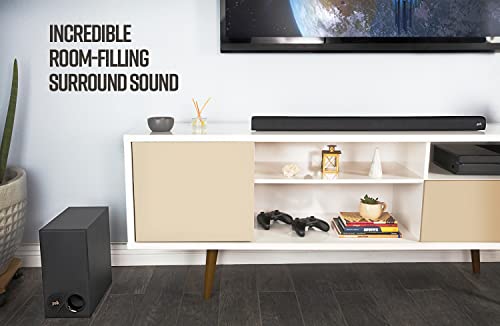
This wireless subwoofer setup offers significant placement flexibility. You can tuck the subwoofer beside your couch, in a corner where bass naturally amplifies, or really anywhere within wireless range. This flexibility matters because bass response varies dramatically based on room acoustics and subwoofer positioning. What sounds boomy in one spot might sound perfectly balanced in another.
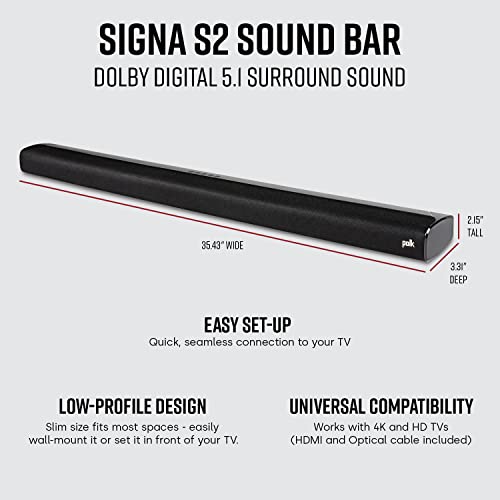
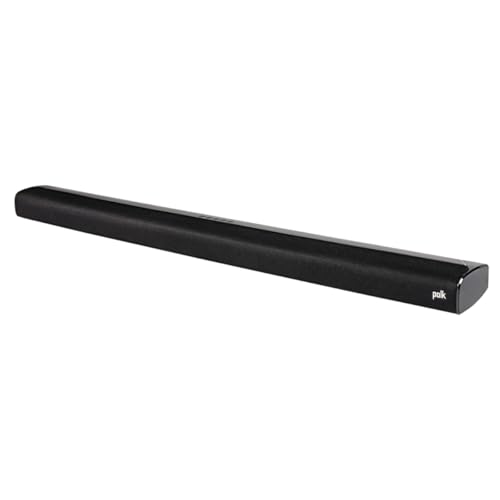
The main soundbar itself measures just 2.15 inches tall, making it one of the slimmest options available. This ultra-low profile ensures it won't block your TV's infrared sensor or create visual distractions. Inside this compact unit, Polk has managed to fit two 1.25" x 4.4" oval midrange drivers and two 1" tweeters – a respectable driver complement for dialogue and higher frequencies.
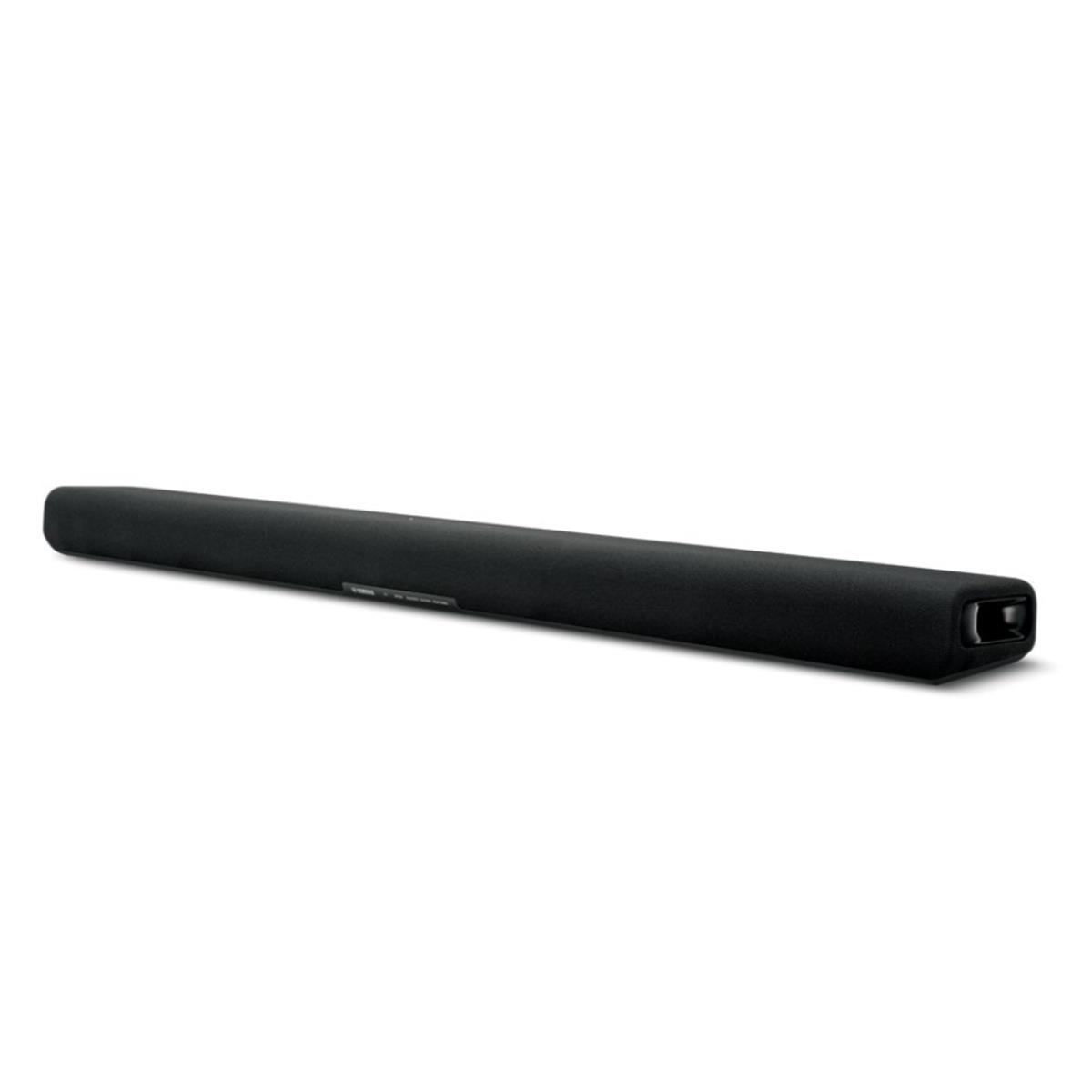
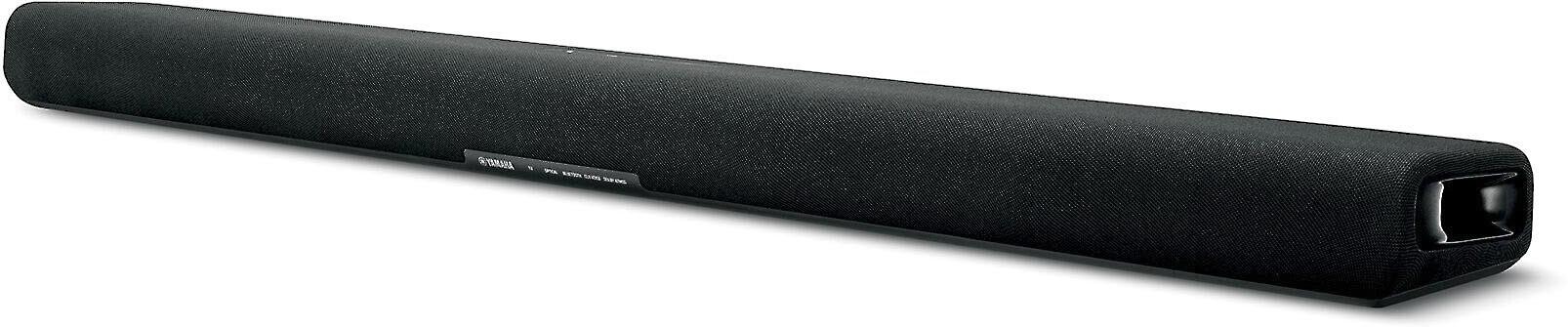
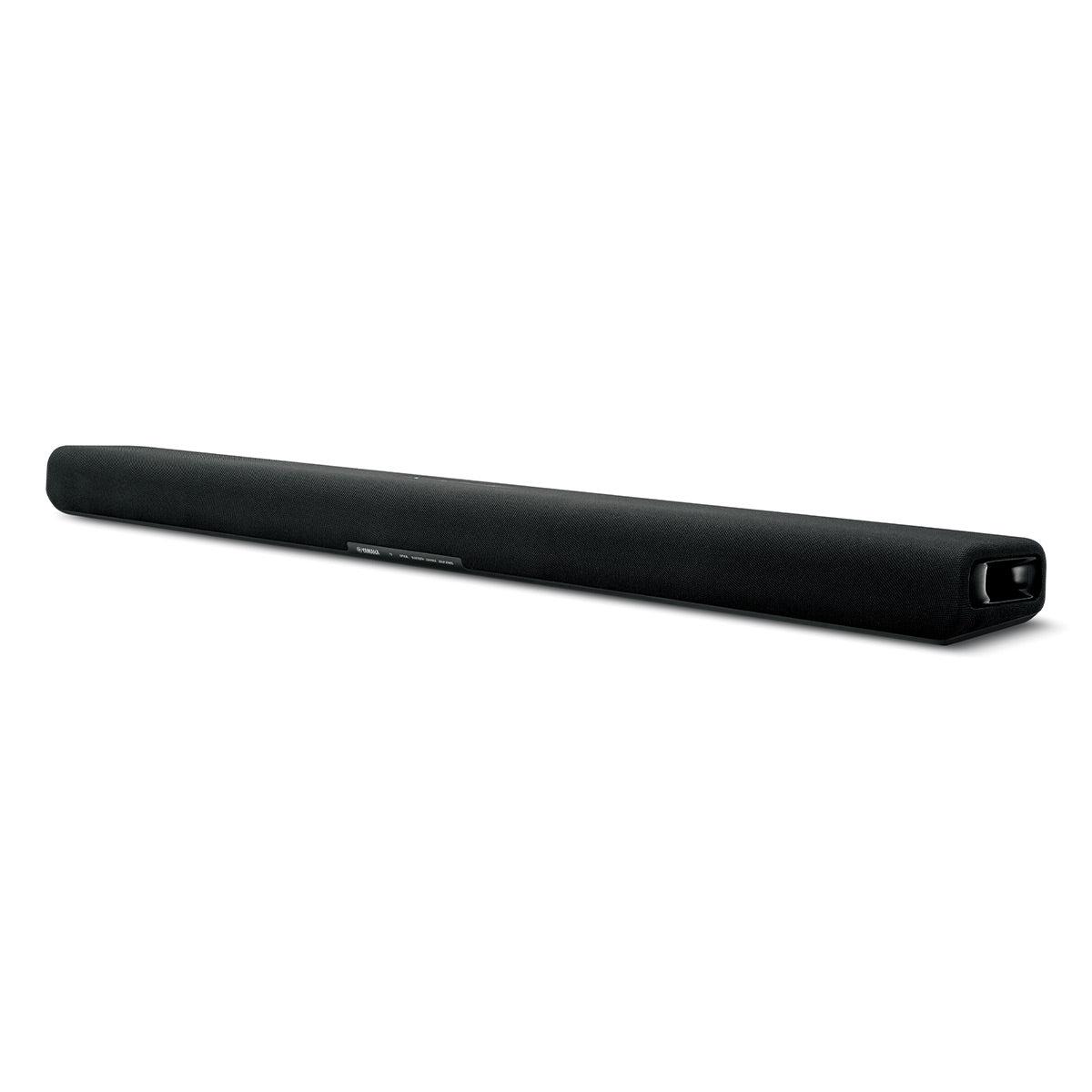
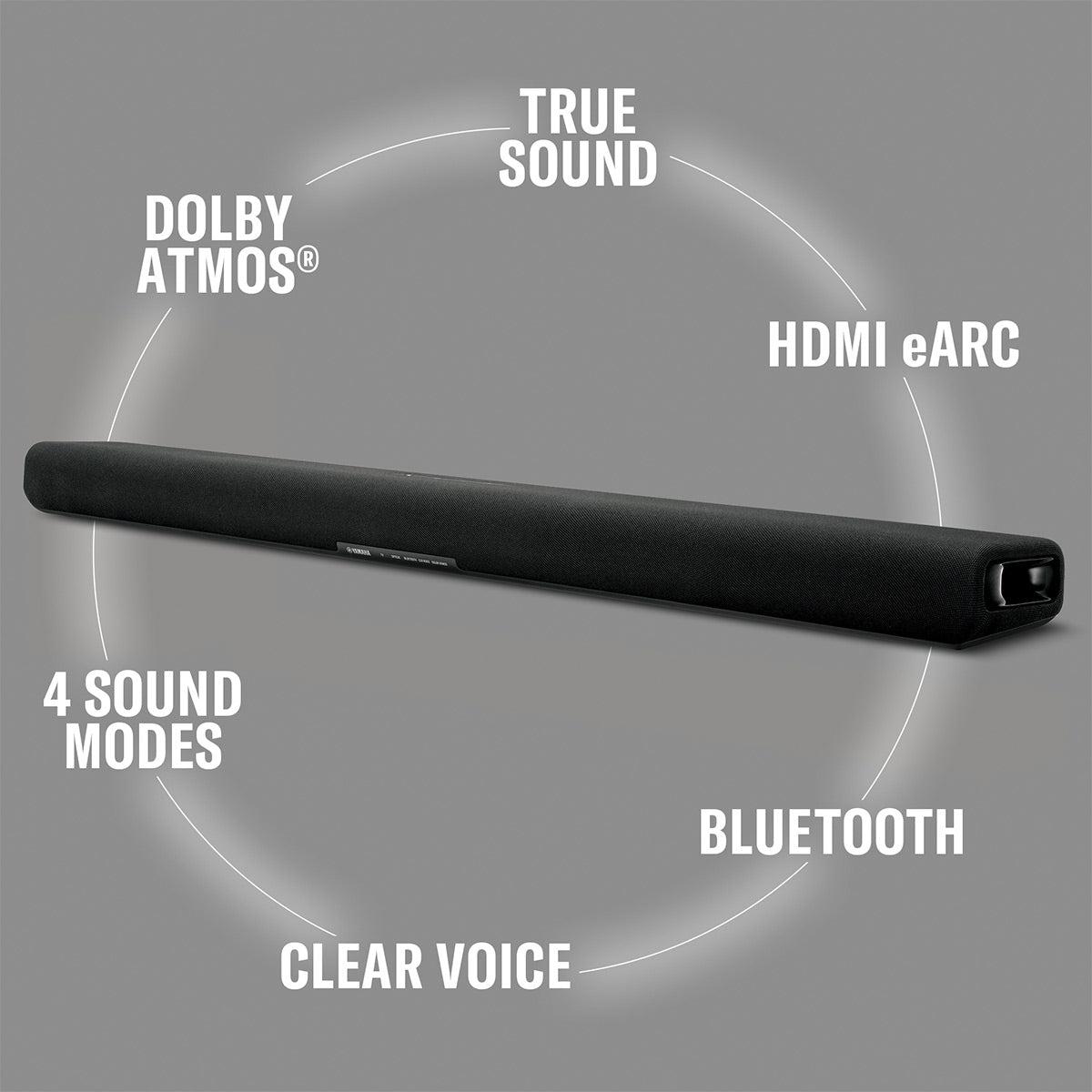
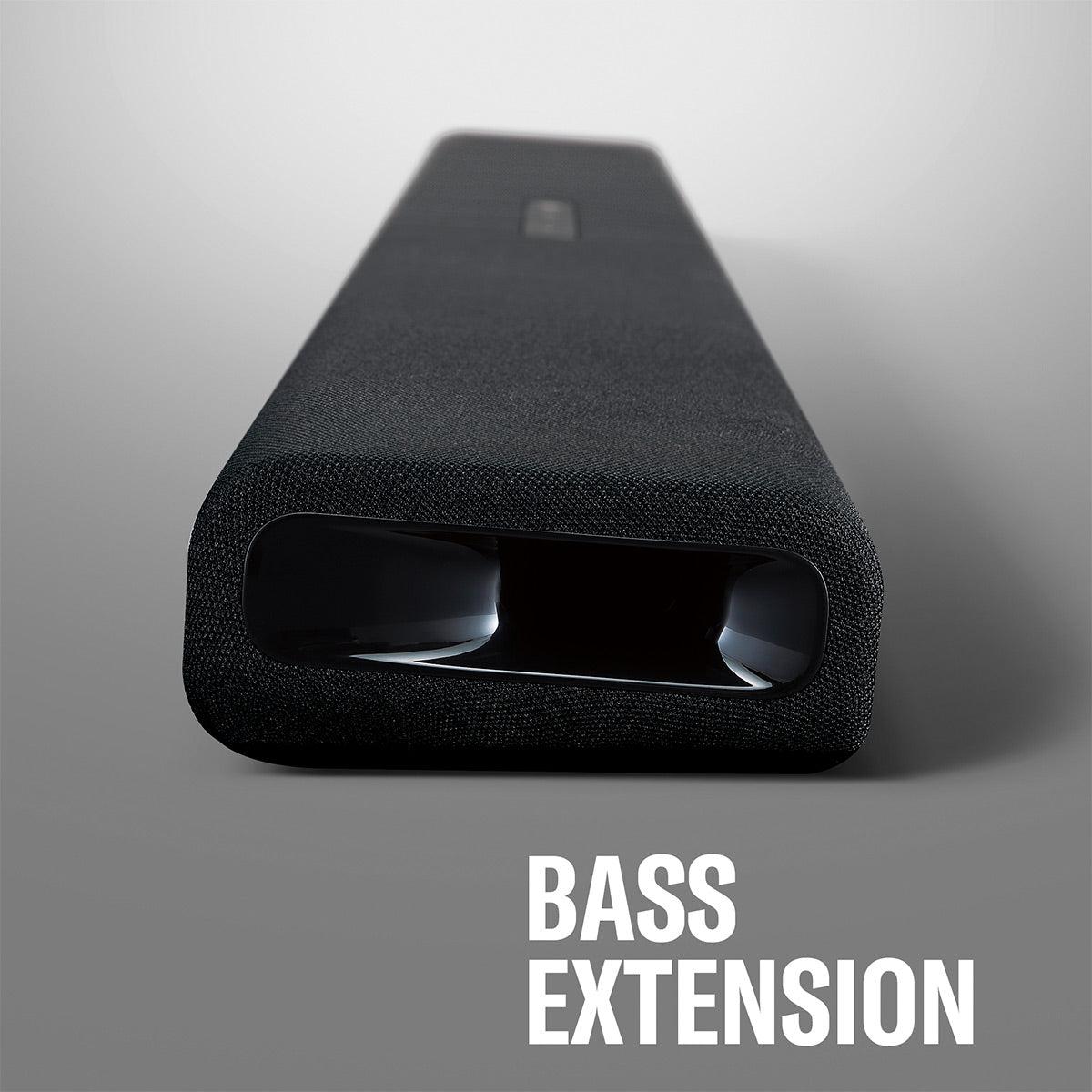
The Yamaha SR-B30A takes a more modern approach by integrating dual 3-inch subwoofer drivers directly into the main soundbar unit. At 35.9 inches wide and about 2.6 inches tall, it's slightly larger than the Signa S2, but that extra real estate allows Yamaha to pack in more drivers: four 1.8-inch cones handle midrange duties, two 1-inch dome tweeters manage higher frequencies, and those two built-in subwoofers handle bass response.
This all-in-one design appeals to users who want better audio without the complexity of positioning a separate subwoofer. It's particularly attractive for smaller living spaces, bedrooms, or situations where a wireless subwoofer simply isn't practical. The integrated approach also eliminates potential wireless connectivity issues between the soundbar and subwoofer – everything is hardwired within a single chassis.
When it comes to bass performance, the fundamental physics favor the Polk Signa S2. Its dedicated 5.25-inch subwoofer driver has significantly more cone area than the SR-B30A's dual 3-inch drivers. Larger drivers can move more air, which directly translates to deeper, more powerful bass response. In practical terms, this means movie explosions hit harder, music bass lines feel more substantial, and the overall audio experience has more visceral impact.
However, the Yamaha SR-B30A shouldn't be dismissed outright. Its dual subwoofer design allows for some interesting acoustic benefits. Having two bass drivers can help even out frequency response and reduce localization – the tendency to pinpoint exactly where bass is coming from. For smaller to medium-sized rooms, the SR-B30A's integrated subwoofers often provide sufficient bass impact while maintaining cleaner aesthetics.
Consumer Reports testing revealed that the SR-B30A produces bass that "has good impact and goes fairly deep but is a bit prominent and somewhat boomy." This assessment aligns with what you'd expect from smaller, integrated drivers – adequate performance with some compromises in refinement.
For many users, dialogue clarity represents the most important performance metric. After all, if you can't understand what actors are saying, even the most impressive bass response becomes irrelevant. Both soundbars address this challenge, but through different technological approaches.
The Polk Signa S2 incorporates VoiceAdjust technology, which allows users to boost vocal frequencies independently of other audio content. This feature essentially acts as a dialogue equalizer, letting you find the perfect balance between clear speech and natural-sounding background audio. In my experience testing similar systems, having granular control over dialogue levels can be transformative, especially for content with particularly challenging audio mixing.
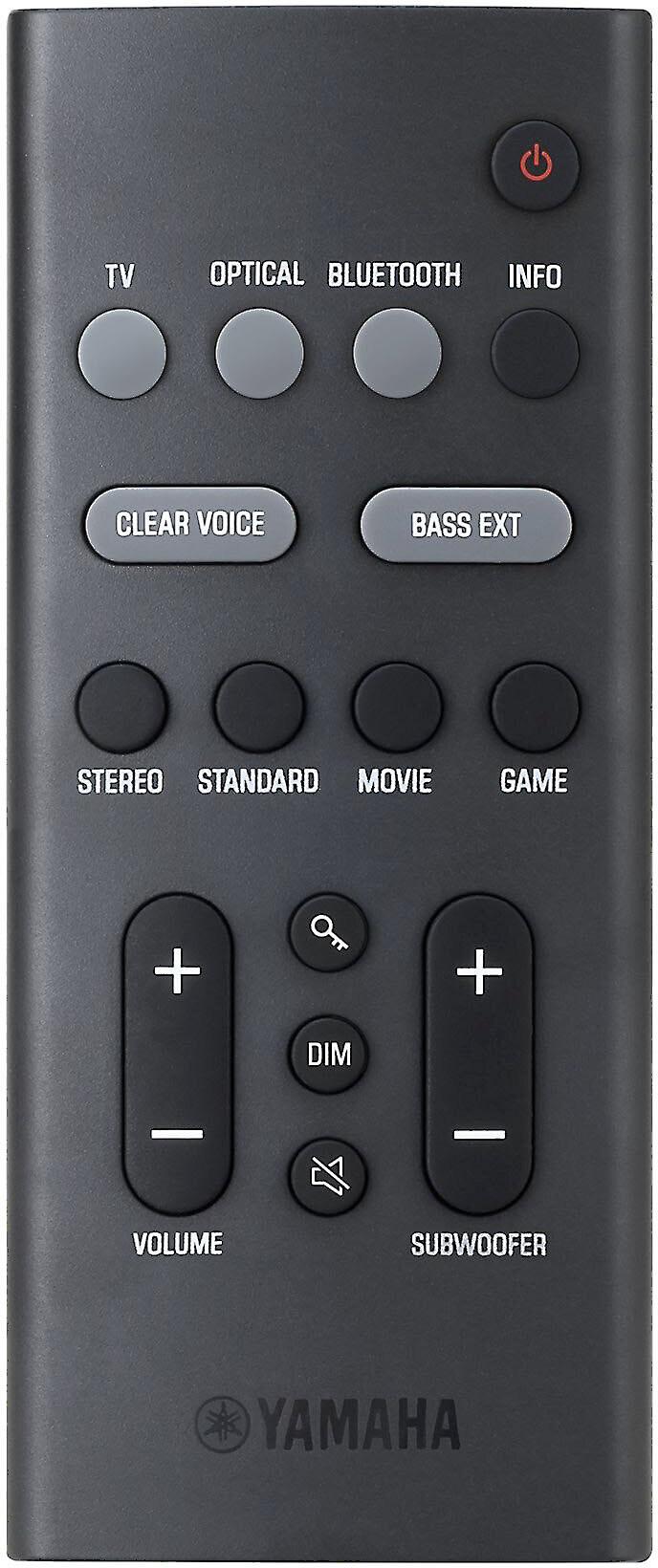
The Yamaha SR-B30A employs Clear Voice technology, which automatically enhances dialogue clarity without requiring manual adjustment. This set-and-forget approach appeals to users who want better performance without tweaking settings, though it offers less customization than Polk's manual system.
Neither soundbar includes a dedicated center channel – the gold standard for dialogue reproduction in home theater setups. However, both use their driver arrays to create phantom center images that concentrate dialogue in the middle of the soundstage. The effectiveness of this approach varies by room acoustics and listening position, but generally works well for typical TV viewing scenarios.
Every audio product has a sonic personality, and these two soundbars exhibit distinctly different characters. The Polk Signa S2 tends toward a V-shaped frequency response, emphasizing both bass and treble while leaving midrange frequencies relatively neutral. This tuning choice creates an energetic, exciting sound signature that makes action movies feel more dynamic and music more engaging. However, this same emphasis can sometimes make vocals sound slightly recessed or cause bass to overwhelm more subtle audio details.
Professional reviews consistently note the Signa S2's tendency toward boominess – bass that extends well but lacks precision and control. This characteristic works well for casual listening but may fatigue more critical listeners during extended viewing sessions.
The Yamaha SR-B30A pursues a more balanced approach, with Consumer Reports describing its overall sound quality as "acceptable" with "fairly even" midrange reproduction. While this might sound like faint praise, balanced frequency response actually represents a significant achievement at this price point. The trade-off comes in overall excitement – the SR-B30A prioritizes accuracy over wow factor.
Both soundbars offer multiple connectivity options, but with some important differences. The Polk Signa S2 includes HDMI ARC (Audio Return Channel), optical digital input, and analog 3.5mm auxiliary input. This comprehensive selection ensures compatibility with virtually any TV or audio source from the past decade. HDMI ARC particularly matters because it allows your TV remote to control the soundbar's volume, creating a seamless user experience.
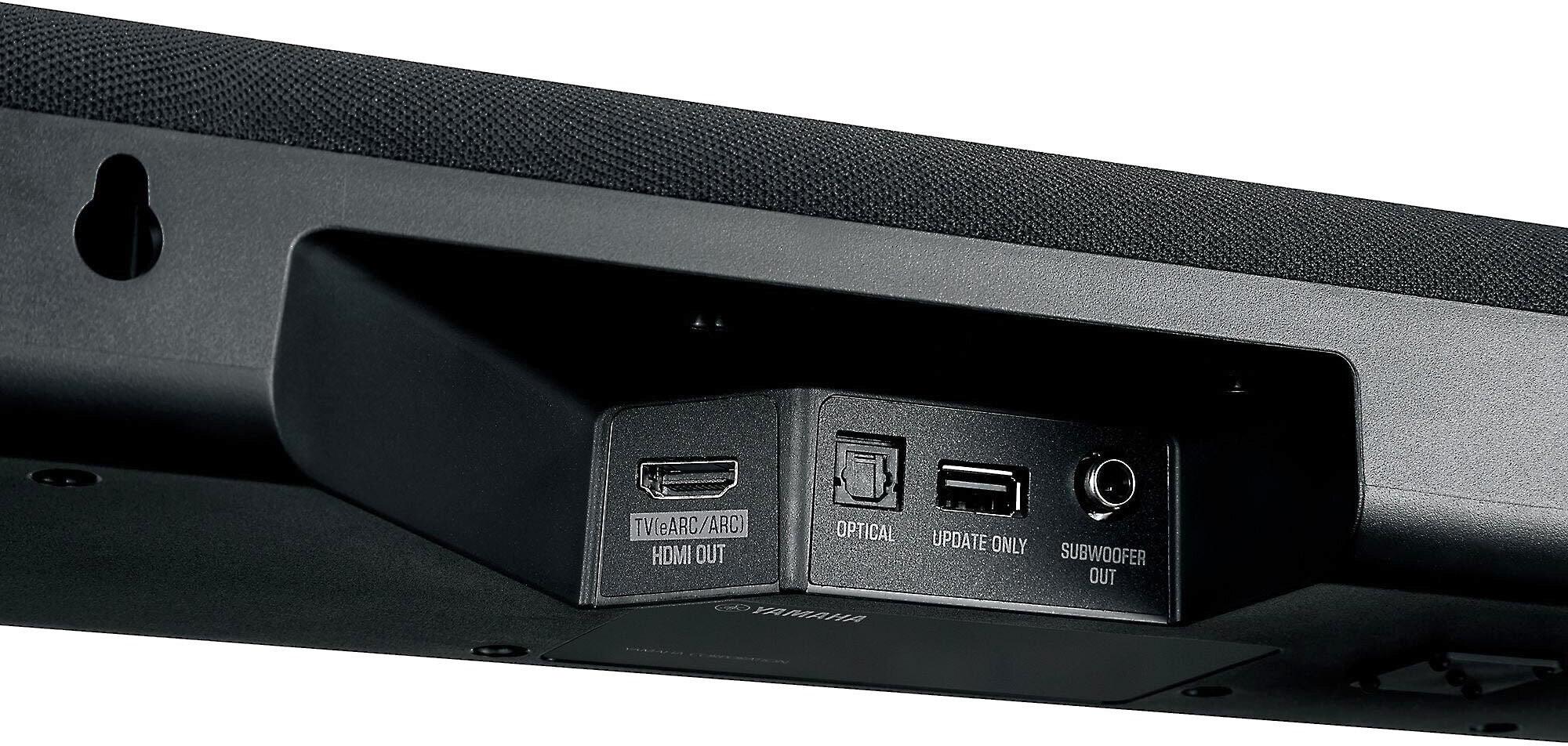
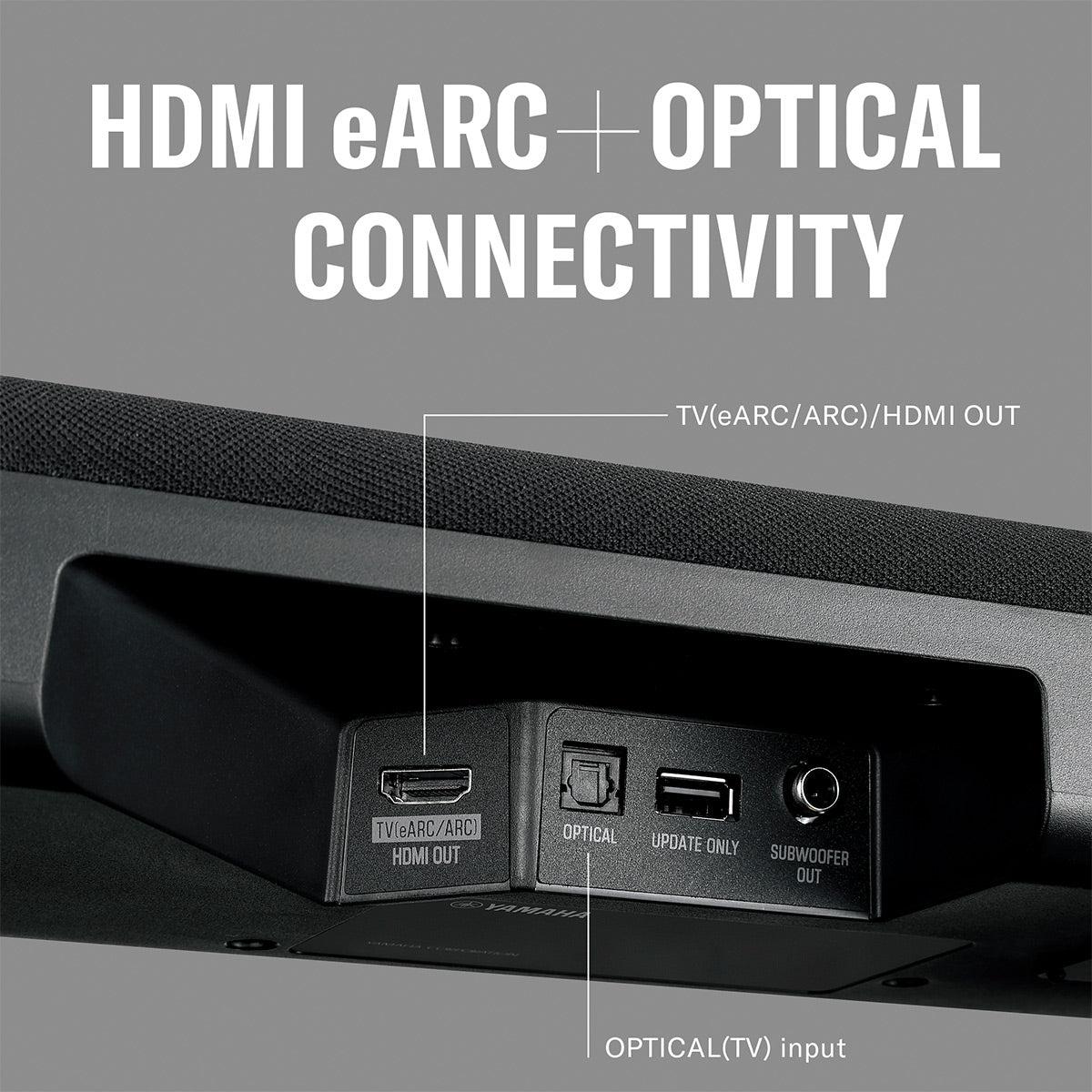
The Yamaha SR-B30A ups the ante with HDMI eARC support. The "e" stands for "enhanced," and it represents a significant upgrade over standard ARC. While ARC can handle basic stereo and compressed surround sound formats, eARC supports high-bandwidth, uncompressed audio including advanced formats like Dolby Atmos. This future-proofing matters as streaming services and gaming consoles increasingly support these enhanced audio formats.
However, the SR-B30A lacks analog input, which could pose connectivity challenges for older devices like CD players or certain gaming systems.
Both soundbars include Bluetooth connectivity for wireless music streaming, but again with notable differences. The Polk Signa S2 supports basic Bluetooth profiles adequate for streaming music from phones, tablets, or computers. The Yamaha SR-B30A incorporates Bluetooth 5.1 with AAC codec support – technical improvements that translate to better audio quality when streaming from compatible devices, particularly Apple products that default to AAC encoding.
Here's where the Yamaha SR-B30A pulls significantly ahead. It supports Dolby Atmos virtual processing, a technology that attempts to create immersive, three-dimensional audio using just the soundbar's drivers. While it can't match the effectiveness of true Dolby Atmos systems with overhead speakers, virtual processing can create noticeably more spacious, enveloping audio than traditional stereo soundbars.
The Polk Signa S2 supports Dolby Digital decoding but lacks Atmos processing entirely. For users who regularly watch modern movies or play video games with advanced audio tracks, this represents a meaningful capability gap.
The Yamaha SR-B30A includes smartphone app control through the Sound Bar Remote app, allowing detailed customization including EQ adjustments and sound mode selection. This modern approach to control appeals to users comfortable with app-based interfaces and provides more granular control than traditional remote controls allow.
The Polk Signa S2 relies entirely on its included infrared remote for control. While this traditional approach lacks the sophistication of app control, it offers the reliability of not depending on smartphone connectivity or app updates.
Both soundbars offer multiple sound modes optimized for different content types. The Signa S2 includes Movie, Music, and Night modes, while the SR-B30A adds Game mode to the mix. Night mode deserves particular mention – it compresses dynamic range to prevent loud scenes from disturbing others while maintaining dialogue intelligibility, making it invaluable for late-night viewing.
The choice between these soundbars often comes down to your living space realities. The Polk Signa S2 requires careful consideration of subwoofer placement. While its wireless design eliminates cable runs, you still need to find appropriate space for a 13.4" x 6.72" x 12.2" enclosure. This requirement can be challenging in smaller apartments or minimalist living spaces.
However, when space allows, proper subwoofer placement can dramatically improve bass response. Corners naturally amplify bass frequencies, while placement along walls can provide different tonal characteristics. This flexibility represents a real advantage for users willing to experiment with positioning.
The Yamaha SR-B30A eliminates subwoofer placement considerations entirely. Its single-unit design works particularly well in smaller rooms where a separate subwoofer might overwhelm the space or create placement challenges. For bedroom installations or secondary viewing areas, this simplicity often outweighs the performance compromises.
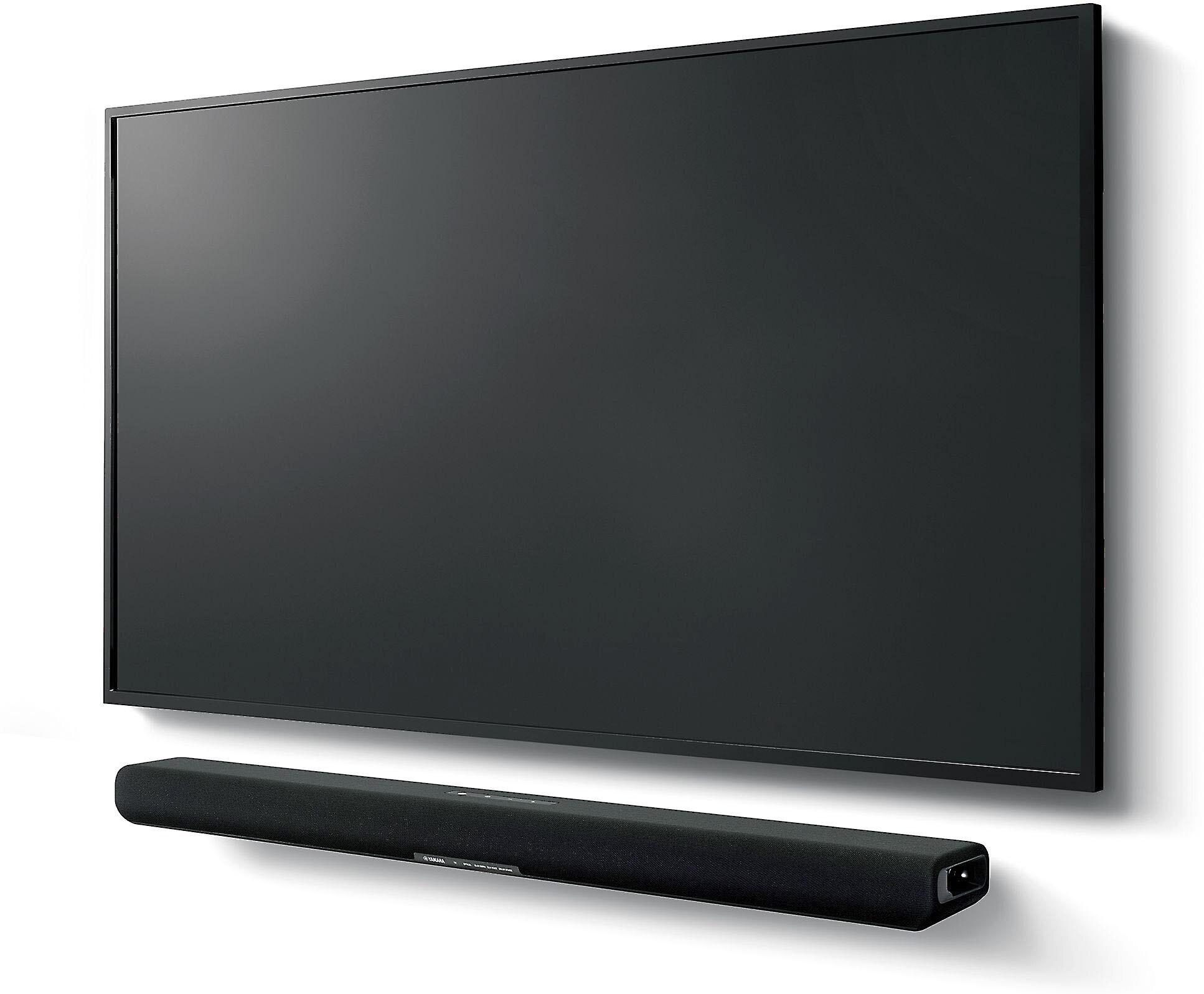
Both soundbars support wall mounting, but with different installation requirements. The Signa S2 uses simple keyhole hangers that work with most standard TV wall mounts or can be mounted independently. The wireless subwoofer still requires floor or furniture placement, so wall mounting the soundbar doesn't completely eliminate floor footprint.
The SR-B30A also supports wall mounting and truly eliminates all floor-level components. For clean, minimalist installations, this all-in-one approach has obvious aesthetic advantages.
When considering these soundbars for home theater use, it's important to manage expectations. Neither model approaches the performance of dedicated surround sound systems with discrete speakers, but both offer substantial improvements over built-in TV audio.
The Yamaha SR-B30A's Dolby Atmos virtual processing provides a more immersive movie-watching experience, particularly with properly mastered content from streaming services like Netflix, Disney+, or premium Blu-ray releases. While virtual processing can't create true overhead effects, it does expand the apparent soundstage and can make action sequences feel more enveloping.
The Polk Signa S2 excels at delivering impactful, visceral audio that makes movies feel more dynamic. Its separate subwoofer provides the kind of low-frequency impact that makes explosions feel real and musical scores more emotionally engaging. However, it lacks the spatial processing that creates immersive surround effects.
For serious home theater enthusiasts, both soundbars work best as stepping stones toward more sophisticated audio systems. They excel at improving dialogue clarity and adding bass impact, but users seeking true surround sound immersion will eventually want to upgrade to discrete multi-channel systems.
At the time of this writing, these soundbars occupy similar price ranges in the budget-friendly segment, with the Yamaha SR-B30A typically commanding a modest premium over the Polk Signa S2. This price difference reflects the Yamaha's additional features – Dolby Atmos processing, smartphone app control, and enhanced connectivity options.
The Polk Signa S2 represents excellent value for users prioritizing fundamental audio performance. Its separate subwoofer design delivers superior bass response at a lower price point, making it particularly attractive for music listening and users who want maximum impact from action movies.
The Yamaha SR-B30A justifies its premium through convenience and advanced features. Users who value modern connectivity, smartphone control, and Dolby Atmos processing will find the additional cost worthwhile.
The decision between these soundbars ultimately depends on your priorities, living situation, and intended use cases.
Choose the Polk Audio Signa S2 if you have adequate space for a separate subwoofer and prioritize bass performance. It's ideal for users who listen to a lot of music, want maximum impact from action movies, and appreciate the ability to optimize subwoofer placement. The VoiceAdjust feature makes it particularly attractive for users who struggle with dialogue clarity. Its lower typical selling price also appeals to budget-conscious shoppers who want the best fundamental audio performance for their money.
The Yamaha SR-B30A makes more sense for users with limited space who value convenience over ultimate performance. Its Dolby Atmos support appeals to home theater enthusiasts who want more immersive audio, while smartphone app control attracts users who prefer modern, technology-forward interfaces. The all-in-one design works particularly well in bedrooms, smaller apartments, or secondary viewing areas where a separate subwoofer isn't practical.
Both soundbars deliver substantial improvements over built-in TV speakers and represent solid entry points into better home audio. Your choice should align with your specific space constraints, feature preferences, and performance priorities. In my experience, users rarely regret upgrading to either option – the improvement over TV speakers is dramatic enough that even the performance compromises inherent in budget soundbars become secondary to the overall enhancement in viewing enjoyment.
| Polk Audio Signa S2 Sound Bar with Wireless Subwoofer | Yamaha SR-B30A Sound Bar with Built-In Subwoofers |
|---|---|
| Configuration - Determines bass performance and space requirements | |
| 2.1 channel with separate wireless subwoofer | 2.1 channel with dual built-in subwoofers |
| Subwoofer Driver Size - Larger drivers produce deeper, more powerful bass | |
| 5.25" dedicated wireless subwoofer | Dual 3" built-in subwoofers |
| Total Power Output - Higher wattage generally means louder, more dynamic sound | |
| Not specified (likely 60-80W total) | 120W total (30W x 2 front + 60W subwoofer) |
| Dolby Atmos Support - Creates immersive 3D audio for movies and games | |
| No (Dolby Digital only) | Yes (virtual Dolby Atmos processing) |
| Connectivity Options - More inputs mean better compatibility with devices | |
| HDMI ARC, Optical, 3.5mm AUX, Bluetooth | HDMI eARC, Optical, Bluetooth 5.1 with AAC codec |
| Voice Enhancement Technology - Critical for clear dialogue | |
| VoiceAdjust™ (manual dialogue boost control) | Clear Voice (automatic dialogue enhancement) |
| Physical Dimensions - Affects TV placement and room aesthetics | |
| Soundbar: 35.43" x 2.15" x 3.22" + separate subwoofer | Single unit: 35.9" x 2.6" x 5.5" (all-in-one design) |
| App Control - Modern convenience for detailed customization | |
| Remote control only | Yamaha Sound Bar Remote smartphone app |
| Sound Modes - Different EQ presets for various content types | |
| Movie, Music, Night modes | Stereo, Standard, Game, Movie modes plus Bass Extension |
| Installation Complexity - Affects setup time and placement flexibility | |
| Requires subwoofer positioning (wireless connection) | Single unit installation, wall-mountable with keyholes |
| Best Use Case - Where each excels based on design priorities | |
| Larger rooms prioritizing bass impact and music listening | Smaller spaces wanting convenience and virtual surround sound |
The Polk Audio Signa S2 delivers superior bass performance thanks to its dedicated 5.25-inch wireless subwoofer, which can produce deeper and more powerful low frequencies than the Yamaha SR-B30A's dual 3-inch built-in subwoofers. The separate subwoofer design allows for optimal room placement to maximize bass impact.
Yes, the Polk Audio Signa S2 requires floor space for its wireless subwoofer unit, while the Yamaha SR-B30A is an all-in-one design that eliminates the need for a separate subwoofer. If you have limited space or prefer a minimalist setup, the Yamaha SR-B30A is the better choice.
Both soundbars excel at dialogue enhancement but use different approaches. The Polk Audio Signa S2 features VoiceAdjust technology that lets you manually control dialogue levels, while the Yamaha SR-B30A uses Clear Voice technology for automatic dialogue enhancement. The Polk offers more customization control.
Only the Yamaha SR-B30A supports Dolby Atmos through virtual processing, creating more immersive surround sound for movies and games. The Polk Audio Signa S2 supports Dolby Digital decoding but lacks Atmos capability, making the Yamaha better for home theater use.
The Yamaha SR-B30A offers superior connectivity with HDMI eARC, optical input, and Bluetooth 5.1 with AAC codec support. The Polk Audio Signa S2 provides HDMI ARC, optical, 3.5mm auxiliary input, and basic Bluetooth. The Yamaha's eARC support future-proofs it for advanced audio formats.
Only the Yamaha SR-B30A offers smartphone app control through the Sound Bar Remote app, allowing detailed EQ adjustments and sound mode selection. The Polk Audio Signa S2 relies solely on its included infrared remote control for operation.
The Yamaha SR-B30A is simpler to install as it's a single unit that can be placed or wall-mounted without additional components. The Polk Audio Signa S2 requires positioning both the soundbar and wireless subwoofer, though the wireless connection eliminates cable runs between components.
The Polk Audio Signa S2 is better suited for music listening due to its larger dedicated subwoofer that provides more impactful bass response. While the Yamaha SR-B30A handles music adequately, its smaller integrated subwoofers can't match the musical dynamics of the Polk's separate subwoofer design.
The Yamaha SR-B30A is ideal for smaller rooms, bedrooms, or apartments where its all-in-one design eliminates subwoofer placement concerns and its dual built-in subwoofers provide adequate bass without overwhelming the space. The Polk Audio Signa S2 works better in larger rooms where its separate subwoofer can be properly positioned.
Both soundbars offer good compatibility with older TVs. The Polk Audio Signa S2 includes analog 3.5mm input for TVs without digital outputs, while the Yamaha SR-B30A lacks analog input but includes optical connectivity that most TVs from the past decade support.
The Polk Audio Signa S2 typically offers better value for fundamental audio performance, delivering superior bass response at a lower price point. The Yamaha SR-B30A costs more but justifies the premium with advanced features like Dolby Atmos support, smartphone app control, and enhanced connectivity options.
Both work well for basic home theater setups, but the Yamaha SR-B30A has the advantage with Dolby Atmos virtual processing for more immersive movie experiences. The Polk Audio Signa S2 excels at delivering impactful bass for action movies but lacks the spatial audio processing that enhances the cinematic experience.
We've done our best to create useful and informative comparisons to help you decide what product to buy. Our research uses advanced automated methods to create this comparison and perfection is not possible - please contact us for corrections or questions. These are the sites we've researched in the creation of this article: rtings.com - youtube.com - bestbuy.com - rtings.com - consumerreports.org - rtings.com - youtube.com - hometechnologyreview.com - soundbars.com - youtube.com - manuals.plus - creativeaudio.net - parts-express.com - thomsunmusic.com - polkaudio.com - manuals.plus - polkaudio.com - polkaudio.com - polkaudio.com - bestbuy.com - youtube.com - youtube.com - polkaudio.com - usa.yamaha.com - worldwidestereo.com - audiolab.com - shop.sg.yamaha.com - consumerreports.org - usa.yamaha.com - vinylsound.ca - bestbuy.com - modernappliancewoodward.com - bluestardist.com - target.com - my.yamaha.com

Privacy Policy
Terms and Conditions - Affiliate Policy
Home Security
© Copyright 2008-2026.
11816 Inwood Rd #1211, Dallas, TX 75244