




When your TV's built-in speakers sound like they're coming from inside a tin can, it's time to consider a soundbar upgrade. But with options ranging from simple stereo systems to complex multi-speaker arrays, how do you know what's right for your home? Today, we're comparing two popular approaches: the Polk Audio Signa S2, a straightforward 2.1 system, and the LG S60TR, a full 5.1 surround sound setup.
Having tested dozens of soundbars over the years, I've learned that the jump from your TV's speakers to even a basic soundbar is dramatic—but the jump from basic to true surround sound is where things get really interesting.
Before diving into specifics, let's talk about what soundbars actually do. Modern flat-screen TVs, despite their impressive picture quality, have terrible audio. The speakers are tiny, face backward or downward, and have virtually no space for proper bass response. Soundbars solve this by providing larger drivers (the actual speakers that produce sound), better amplification, and often a separate subwoofer for low-frequency sounds.
The numbers you see—like 2.1 or 5.1—describe the channel configuration. The first number represents main speakers (left, right, center), while the number after the decimal indicates subwoofers. So a 2.1 system has left and right speakers plus a subwoofer, while 5.1 adds a center channel and two rear speakers for true surround sound.
Key considerations when choosing include:
The Polk Audio Signa S2 and LG S60TR represent two fundamentally different philosophies in addressing these needs.
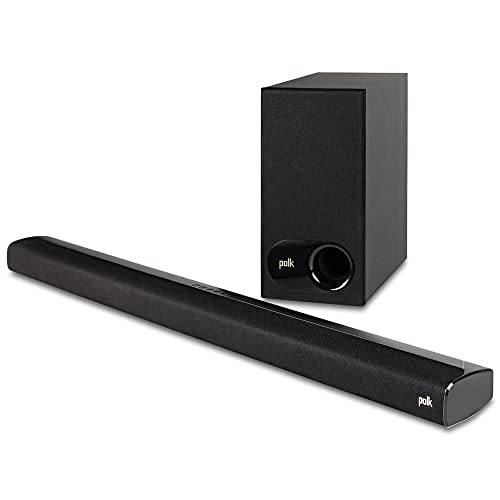
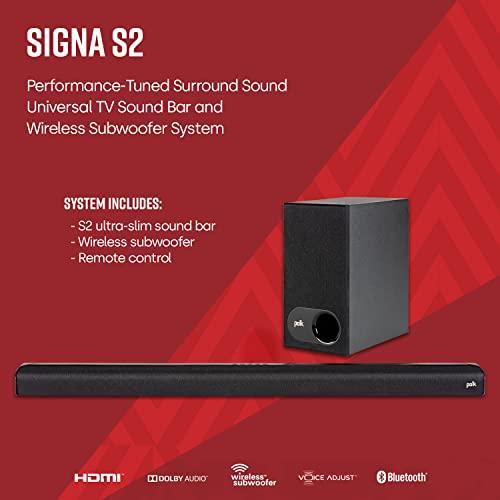
The Polk Audio Signa S2 embodies the "keep it simple" approach. Released several years ago, it's remained popular because it does one thing really well: makes your TV sound significantly better without any fuss. At roughly $200 (at the time of writing), it includes a slim soundbar and wireless subwoofer that connects automatically—no pairing required.
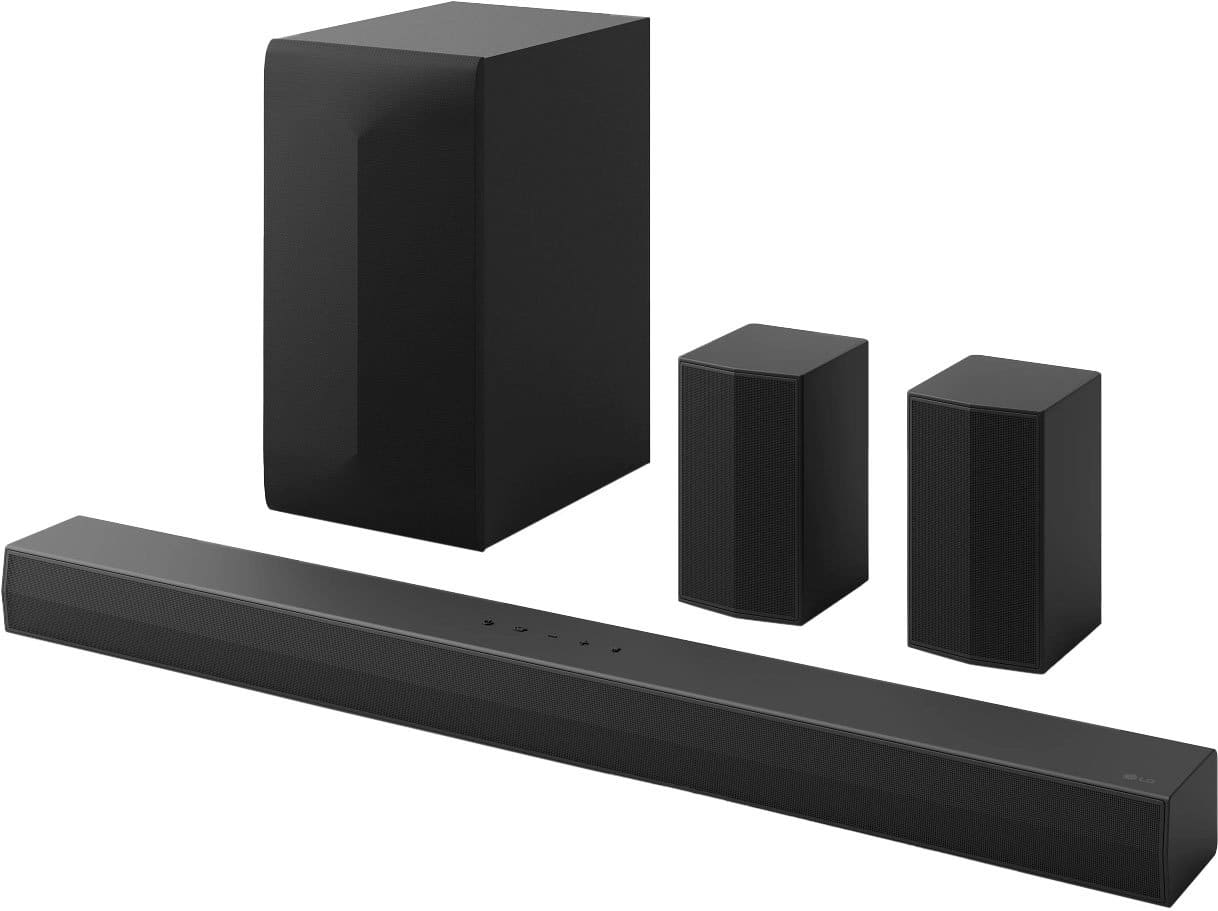
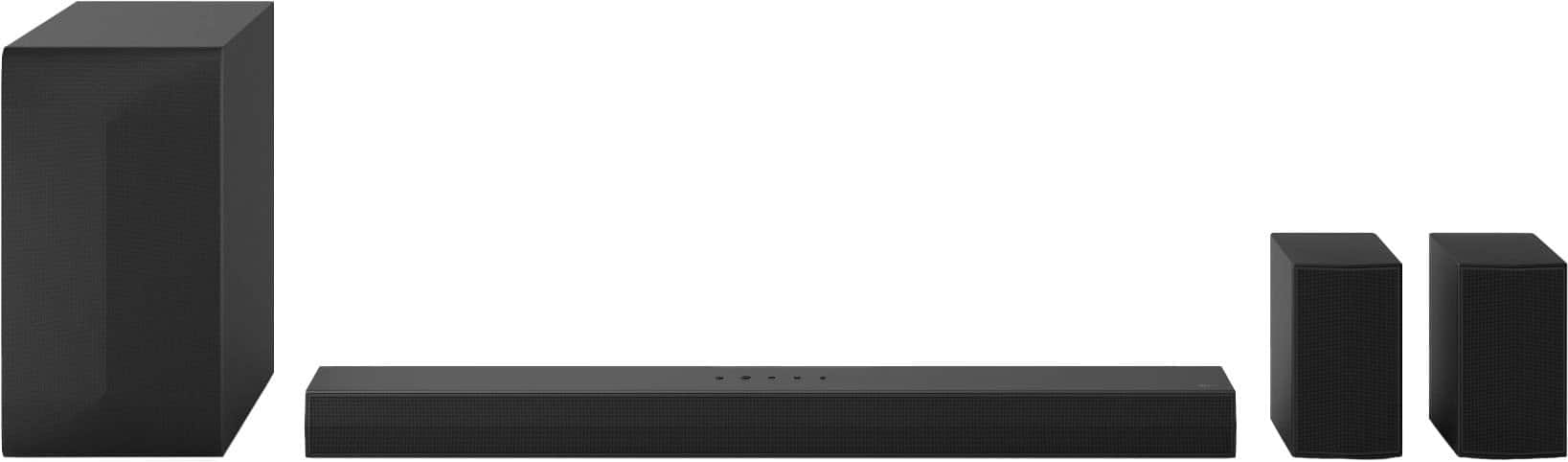
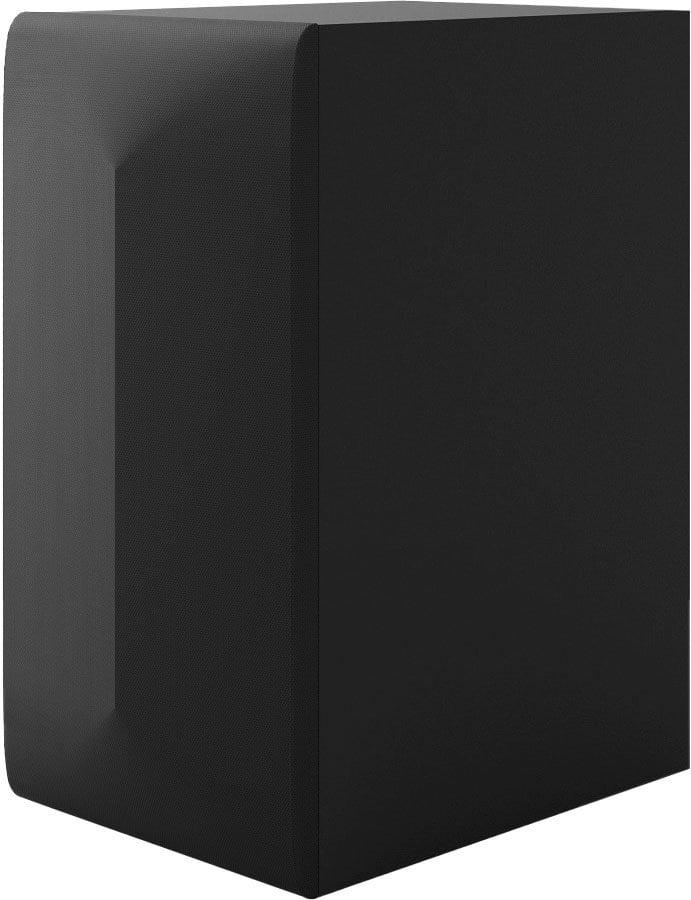
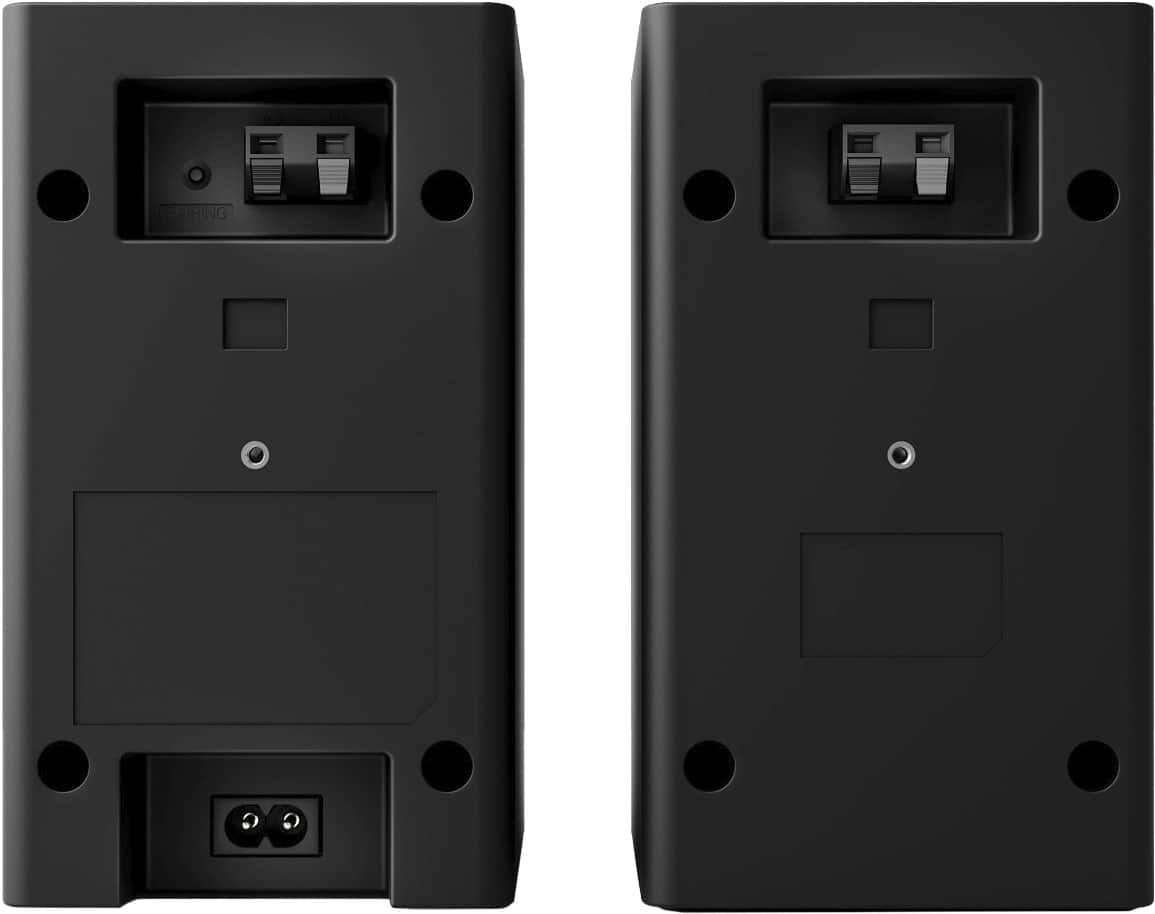
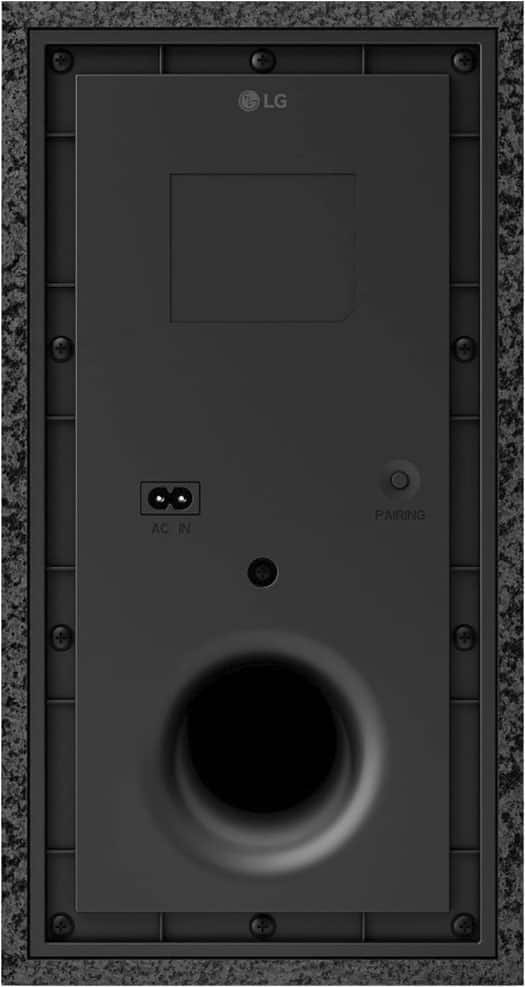
The LG S60TR, launched in 2024, takes a more ambitious approach. For about $100 more, you get a complete 5.1 surround system with the main soundbar, wireless subwoofer, and two additional wireless rear speakers. LG designed this as a comprehensive solution that brings genuine home theater audio to your living room.
I've spent considerable time with both systems, and the differences become apparent the moment you start watching content with any spatial audio elements—which is increasingly common in streaming services and modern movies.
The Polk Audio Signa S2 produces what audio engineers call a "V-shaped" sound signature. This means it emphasizes both bass and treble while de-emphasizing midrange frequencies. In practical terms, you get punchy bass and crisp highs, but voices and instruments in the middle frequencies can sound somewhat recessed or "distant."
This tuning choice makes sense for a budget system—it creates an immediately impressive "wow factor" when you first hear it compared to TV speakers. However, after extended listening, this signature can become fatiguing. Music with a lot of vocal content might sound hollow, while action movies can feel overly aggressive.
The LG S60TR takes a more balanced approach. With 440 watts distributed across six physical speakers, it doesn't need to rely on EQ tricks to sound impressive. The tonal balance is more neutral, which means different types of content—from quiet dramas to explosive action scenes—all sound more natural and less colored.
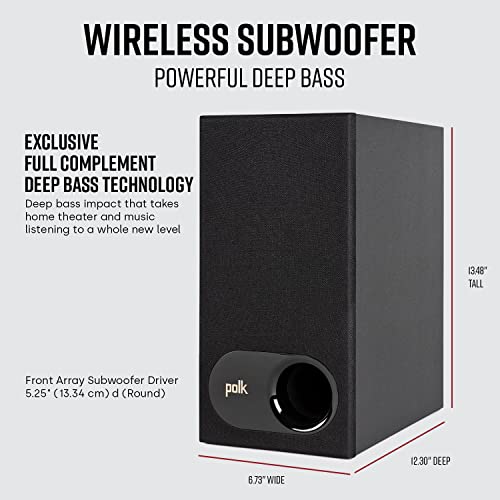
Both systems include wireless subwoofers, but they behave quite differently. The Polk Audio Signa S2's 5.25-inch subwoofer driver produces substantial bass, but it tends toward the "boomy" side. This means you'll hear plenty of low-end thump, but it might not be the cleanest or most controlled bass. For action movies or bass-heavy music, this can actually be enjoyable, but it sometimes overwhelms dialogue or more subtle audio elements.
The LG S60TR's subwoofer, as part of a more sophisticated system, integrates better with the main soundbar. The bass feels more controlled and musical, which is crucial when you're trying to create an immersive surround experience. You want the bass to support the action, not dominate it.
Here's where the differences become most apparent in everyday use. The Polk Audio Signa S2 doesn't have a dedicated center channel, which means dialogue comes from the left and right speakers simultaneously. While Polk's VoiceAdjust technology helps boost vocal frequencies, it's still a compromise compared to having a proper center channel.
The LG S60TR's dedicated center channel makes a huge difference for dialogue clarity. In movies and TV shows, voices appear to come directly from the screen rather than somewhere to the left or right. This isn't just an audiophile preference—it genuinely improves comprehension, especially in content with accents or complex dialogue mixing.
I've found this particularly noticeable when watching British crime dramas or sci-fi content where dialogue can be technically dense. With the Polk system, I sometimes found myself reaching for the remote to adjust volume or rewind scenes. The LG system eliminates most of these issues.
This is where these two systems diverge completely, and it's probably the most important factor in your decision.
The Polk Audio Signa S2 can only create a stereo listening experience with enhanced bass. While it does a decent job of widening the soundstage slightly beyond the physical width of the bar, it cannot create genuine surround effects. When you watch a movie with helicopters flying overhead or ambient sounds coming from behind characters, the Polk system simply plays these effects through the front speakers.
This isn't necessarily a problem if you're primarily upgrading from terrible TV speakers, but it does mean you're missing out on a significant part of the modern audio experience. More importantly, any surround content (which includes most streaming movies and shows) gets "downmixed" to stereo, which can sometimes result in muddy or unclear audio where sounds that were meant to be separated get mixed together.
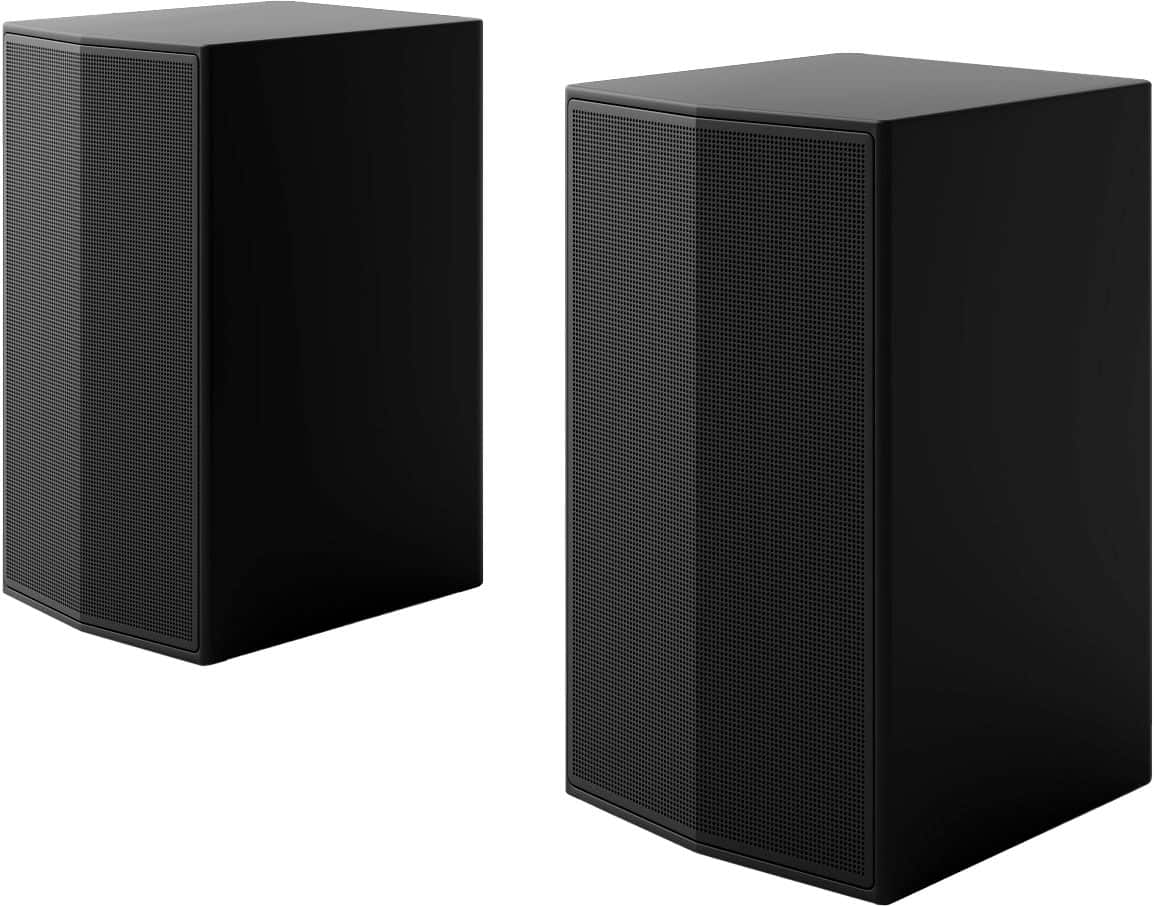
The LG S60TR delivers genuine 5.1 surround sound with physical rear speakers that you place behind your listening position. This creates true spatial audio where sounds can move around the room, creating an immersive experience that dramatically enhances movies, gaming, and even some music.
Having tested both systems extensively, the difference in immersion is substantial. Watching action movies with the LG system, explosions don't just sound louder—they sound like they're happening in three-dimensional space around you. Rain sounds like it's actually falling in the room, and dramatic scenes with subtle environmental audio create a sense of "being there" that the Polk system simply cannot achieve.
For gaming, this difference becomes even more pronounced. Modern games use sophisticated spatial audio to create competitive advantages (hearing enemies approaching from specific directions) and atmospheric immersion. The LG system preserves these effects, while the Polk system flattens them into a stereo presentation.
The technical capabilities of each system reveal important differences in long-term value and compatibility.
The Polk Audio Signa S2 supports only Dolby Digital, which covers most basic surround content but lacks support for DTS (another common surround format) and any of the newer object-based formats like Dolby Atmos. This means some content, particularly from Blu-ray discs or high-end streaming services, won't play correctly or will fall back to basic stereo.
The LG S60TR supports both Dolby Digital and DTS Digital Surround, providing broader compatibility with various content sources. While it doesn't support the latest Dolby Atmos or DTS:X formats, it handles all standard surround content properly, ensuring you hear what content creators intended.
This is where the Polk system shows its budget origins. It lacks support for 4K or HDR video passthrough, which means you can't connect modern gaming consoles or 4K Blu-ray players directly to the soundbar without sacrificing video quality. You'd need to connect these devices directly to your TV and rely on your TV's audio output capabilities.
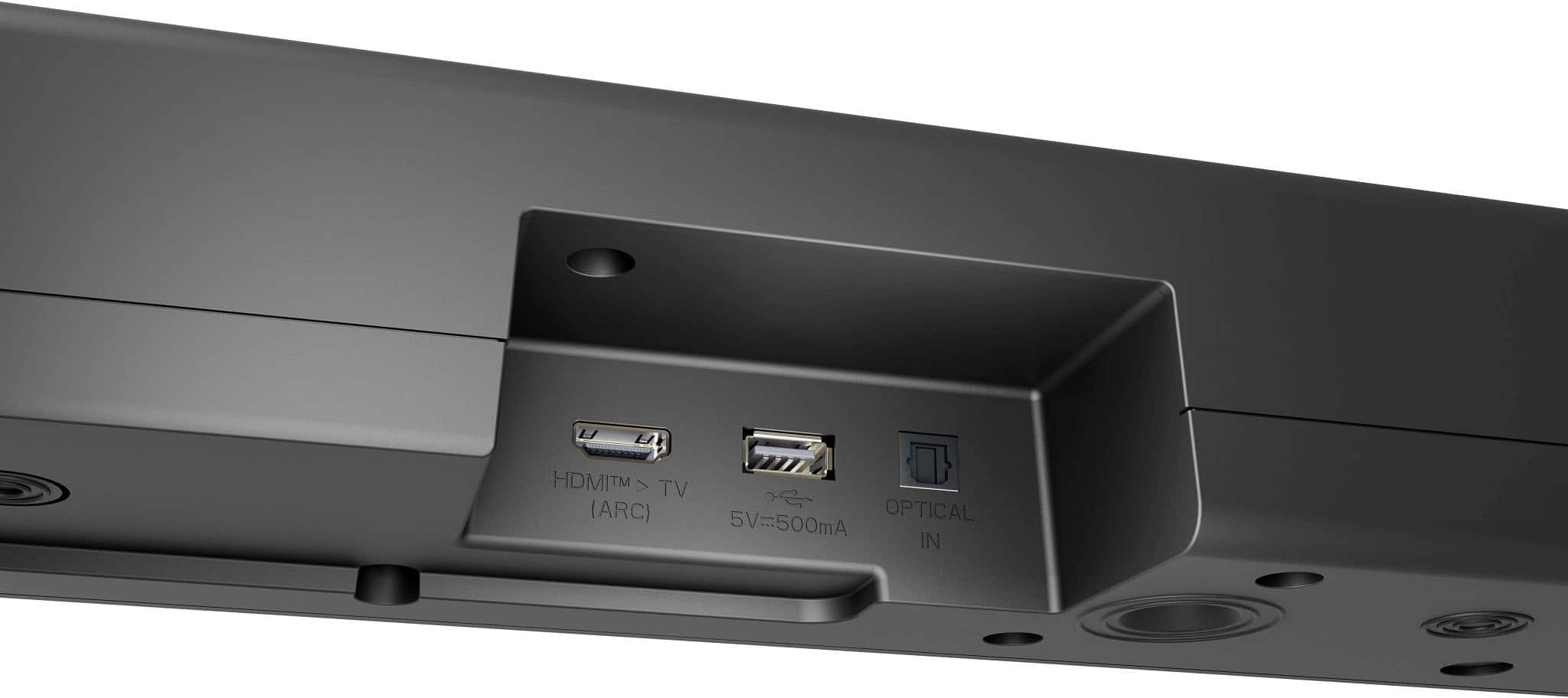
The LG S60TR includes HDMI eARC (enhanced Audio Return Channel) support with 4K passthrough, allowing you to connect high-end devices directly to the soundbar while maintaining full video quality. This is increasingly important as more content moves to 4K resolution and high dynamic range (HDR) formats.
Modern soundbars increasingly include intelligent processing to optimize audio automatically, and this is where the LG S60TR shows its more recent development.
The LG system includes AI Sound Pro technology that analyzes incoming audio content and automatically adjusts the sound profile. When you're watching the news, it emphasizes dialogue clarity. During action scenes, it enhances dynamic range and surround effects. For music, it optimizes the stereo image and tonal balance.
Having used this feature extensively, I can confirm it works well in practice. The adjustments are subtle but effective, and you can override them manually when needed. The system learns from your preferences over time, becoming more effective at predicting the right settings for different content types.
The Polk Audio Signa S2 includes basic VoiceAdjust technology, which is essentially a dialogue enhancement feature you can turn on or off. It's useful but much more limited in scope.
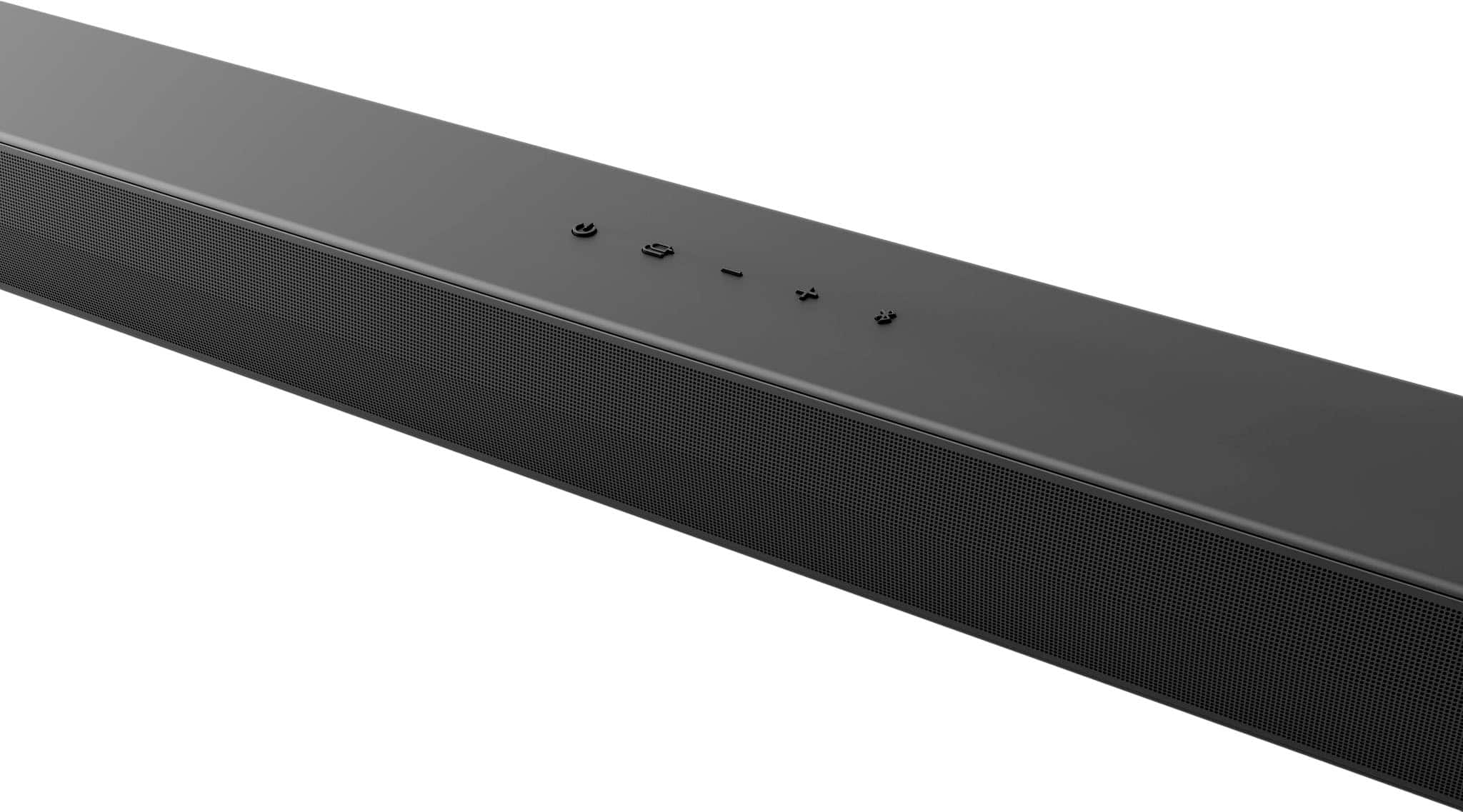
The LG S60TR offers significantly more control through both its physical remote and the LG smartphone app. The app includes a 3-band EQ (bass, midrange, treble adjustments) and various preset modes for different content types. You can fine-tune the system to your room and preferences.
The Polk system provides basic remote control with simple mode switching but little customization. What you hear out of the box is essentially what you get, which can be limiting if the default tuning doesn't match your preferences or room acoustics.
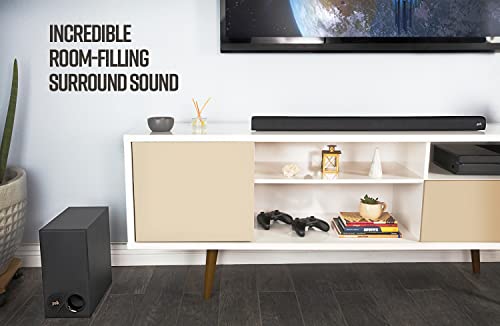
The Polk Audio Signa S2 wins hands-down for simplicity. You place the soundbar in front of your TV, put the subwoofer somewhere on the floor (it connects wirelessly and automatically), and plug in a single cable to your TV. Total setup time is usually under 10 minutes.
The LG S60TR requires more thought and planning. You need to position the main soundbar, find appropriate locations for the rear speakers (which need power outlets), and place the subwoofer optimally. The initial setup includes a specific power-on sequence to ensure all components connect properly. Plan for 30-45 minutes of setup time.
The Polk system works in virtually any room configuration. Whether you're in a studio apartment or a large family room, it will provide better sound than your TV speakers without requiring specific positioning or room treatment.
The LG S60TR needs adequate space for proper rear speaker placement. In my testing, rooms smaller than about 150 square feet don't provide enough separation for the surround effects to work properly. The rear speakers need to be positioned behind and slightly to the sides of your primary listening position, which requires appropriate furniture placement and available power outlets.
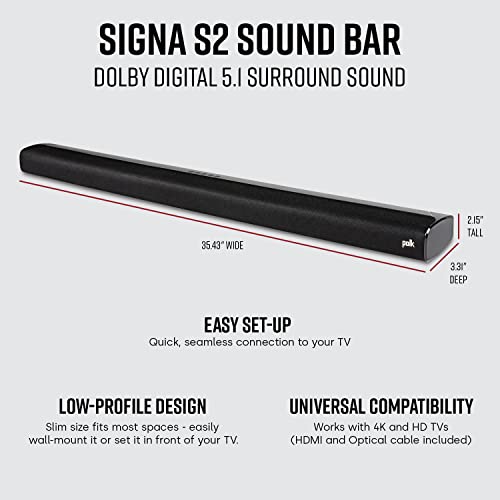
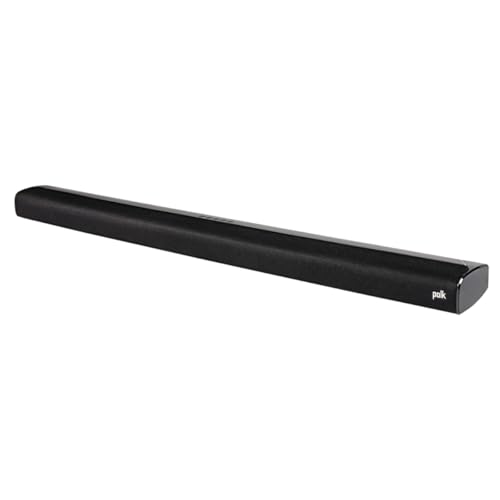
Both systems are designed to blend with modern TV setups, but they approach this differently. The Polk Audio Signa S2 is extremely low-profile at just over 2 inches tall, making it virtually invisible when placed in front of most TVs.
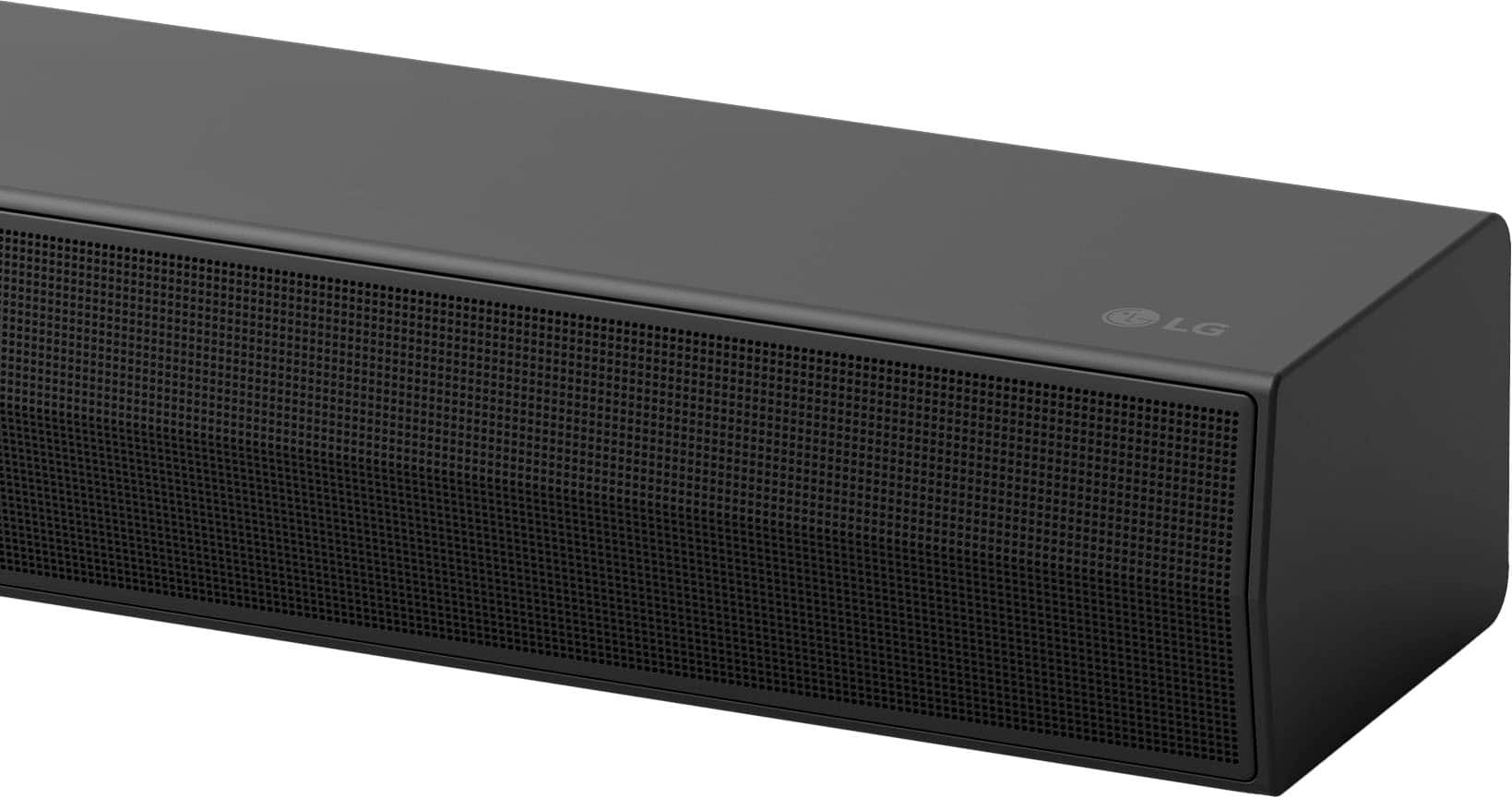
The LG S60TR has a larger footprint due to its multiple components, but each piece is well-designed and finished. The rear speakers are compact and can often be placed on existing furniture without looking intrusive.
At the time of writing, the price difference between these systems is roughly $100, but the capability gap is much larger than that modest premium suggests.
The Polk Audio Signa S2 delivers excellent value for basic TV audio improvement. If you calculate the improvement over TV speakers versus the cost, it's hard to beat. However, the 2.1 configuration means you're essentially buying a stereo system with enhanced bass, not a home theater experience.
The LG S60TR provides exceptional value when you consider you're getting six speakers, wireless connectivity, AI processing, and true surround sound for about 50% more money. When broken down per channel, it's actually remarkably affordable for what you receive.
The Polk system represents a dead end in terms of expansion. What you buy is what you get, and there's no way to add surround speakers later without replacing the entire system. If your needs or expectations grow over time, you'll need to start over.
The LG S60TR is designed as a complete system, so while you can't expand it modularly, you also don't need to. It handles virtually all home theater audio requirements for most users, potentially serving as your primary audio system for many years.
For dialogue-heavy content like dramas, comedies, and news programming, the Polk Audio Signa S2 performs adequately. The VoiceAdjust feature helps with clarity, and the improved dynamics over TV speakers make everything more engaging.
However, for action movies, thrillers, or any content with significant surround sound mixing, the LG S60TR is in a different league. Environmental sounds, directional effects, and the overall sense of immersion transform the viewing experience. I found myself noticing audio details in familiar movies that I'd never heard before.
Both systems handle music reasonably well, though with different strengths. The Polk system's V-shaped signature can make some music sound exciting and energetic, particularly electronic music and pop with heavy production. However, acoustic music, jazz, and classical can sound unbalanced or artificial.
The LG S60TR provides more neutral reproduction that works across a wider variety of musical genres. The dedicated music mode optimizes the EQ for stereo content, and the better overall tonal balance makes for more comfortable long-term listening.
For gamers, the choice is clear-cut. Modern games rely heavily on spatial audio for both competitive advantage and atmospheric immersion. The LG S60TR's true surround capability preserves directional audio cues that can be crucial in competitive gaming, while also providing more immersive single-player experiences.
The Polk system flattens this spatial information, which can put you at a disadvantage in competitive games and reduces the atmospheric impact of single-player adventures.
After extensive testing and daily use with both systems, here's my recommendation framework:
Choose the Polk Audio Signa S2 if:
Choose the LG S60TR if:
The $100 price difference represents one of the best performance jumps you'll find in audio equipment. You're not just getting more speakers—you're getting a fundamentally different and more complete audio experience.
In my experience, most people who choose the Polk system as a budget option eventually find themselves wanting more. The LG S60TR eliminates that upgrade itch by providing genuine home theater performance that remains satisfying over time.
Consider your room layout carefully, be honest about your content consumption habits, and remember that good audio, like good video, is an investment in your daily entertainment enjoyment for years to come.
| Polk Audio Signa S2 | LG S60TR 5.1 Channel Soundbar |
|---|---|
| Channel Configuration - Determines surround sound capability | |
| 2.1 channels (stereo + subwoofer) | 5.1 channels (true surround with rear speakers) |
| Total Power Output - Affects volume and dynamic range | |
| Not specified (estimated ~200W based on performance) | 440W across all channels |
| Audio Format Support - Compatibility with modern content | |
| Dolby Digital only (no DTS or Atmos) | Dolby Digital + DTS Digital Surround |
| Physical Components - What's included in the box | |
| Soundbar + wireless subwoofer | Soundbar + wireless subwoofer + 2 wireless rear speakers |
| Subwoofer Driver Size - Impacts bass depth and quality | |
| 5.25" driver | Not specified (larger cabinet suggests 6"+ driver) |
| Connectivity Options - Flexibility for different setups | |
| HDMI ARC, Optical, 3.5mm AUX (no 4K passthrough) | HDMI eARC with 4K passthrough, Optical, USB |
| Smart Features - AI processing and customization | |
| Basic VoiceAdjust dialogue enhancement | AI Sound Pro with automatic content optimization |
| Control Options - How you adjust settings | |
| Basic IR remote only | IR remote + smartphone app with 3-band EQ |
| Setup Complexity - Time and effort required | |
| Plug-and-play (under 10 minutes) | Multi-component setup (30-45 minutes) |
| Room Requirements - Space needed for optimal performance | |
| Works in any room size or layout | Needs adequate space for rear speaker placement |
| Soundbar Dimensions - Physical footprint | |
| 35.43" W x 2.15" H x 3.22" D (ultra-slim profile) | 33.5" W x 2.5" H x 3.5" D (slightly larger but manageable) |
| Release Year - Technology generation | |
| Released several years ago (proven but older tech) | Released in 2024 (latest processing and features) |
| Target Use Case - Best suited for | |
| Basic TV audio upgrade, dialogue-heavy content | Movies, gaming, complete home theater experience |
| Expandability - Future upgrade options | |
| None (complete system replacement required) | Complete 5.1 system (no expansion needed or possible) |
The primary difference is channel configuration. The Polk Audio Signa S2 is a 2.1 system with just a soundbar and subwoofer, while the LG S60TR is a true 5.1 system that includes wireless rear speakers for genuine surround sound. This means the LG S60TR can create immersive audio effects that move around your room, while the Polk Audio Signa S2 provides enhanced stereo sound with better bass than TV speakers.
The LG S60TR is significantly better for movies due to its true 5.1 surround sound capability. It has dedicated rear speakers that create spatial audio effects, making explosions, ambient sounds, and directional audio feel realistic. The Polk Audio Signa S2 can only provide stereo sound with enhanced bass, so you'll miss out on the immersive surround effects that modern movies are mixed to include.
It depends on your priorities. If you mainly watch TV shows, news, or casual content, the Polk Audio Signa S2 without rear speakers will be a significant upgrade from TV audio. However, if you watch movies, play games, or want a true home theater experience, the rear speakers in the LG S60TR make a dramatic difference by creating genuine surround sound effects that stereo systems cannot replicate.
The Polk Audio Signa S2 is much easier to set up. You simply place the soundbar near your TV and position the wireless subwoofer anywhere in the room—they pair automatically. Setup takes under 10 minutes. The LG S60TR requires positioning four separate components (soundbar, subwoofer, and two rear speakers) and finding power outlets for the rear speakers, typically taking 30-45 minutes to set up properly.
Yes, both the Polk Audio Signa S2 and LG S60TR support Bluetooth connectivity for wireless music streaming from smartphones, tablets, and other devices. However, the LG S60TR offers better music performance due to its more balanced sound signature and dedicated music mode that optimizes the audio for stereo content.
The Polk Audio Signa S2 is better suited for small rooms. It works effectively regardless of room size or layout since it only requires placement of the soundbar and subwoofer. The LG S60TR needs adequate space for proper rear speaker placement—rooms smaller than about 150 square feet don't provide enough separation for the surround effects to work optimally.
Neither the Polk Audio Signa S2 nor the LG S60TR supports Dolby Atmos. However, the LG S60TR supports more audio formats overall, including both Dolby Digital and DTS, while the Polk Audio Signa S2 only supports Dolby Digital. This gives the LG system broader compatibility with different content sources.
The LG S60TR provides superior dialogue clarity because it has a dedicated center channel speaker specifically designed for voices. The Polk Audio Signa S2 uses VoiceAdjust technology to enhance dialogue, but without a center channel, voices still come from the left and right speakers. For TV shows and movies with complex dialogue, the LG S60TR makes conversations easier to understand.
Both soundbars work with gaming consoles, but the LG S60TR is much better for gaming. Modern games use spatial audio for competitive advantages and atmospheric immersion, which the LG system's 5.1 surround sound preserves. The Polk Audio Signa S2 flattens this spatial information to stereo, potentially putting you at a disadvantage in competitive games and reducing immersion in single-player adventures.
The Polk Audio Signa S2 includes the main soundbar, wireless subwoofer, remote control, and necessary cables. The LG S60TR includes the main soundbar, wireless subwoofer, two wireless rear speakers, remote control, optical cable, rear speaker cable, wall mount bracket, and batteries. The LG system provides a complete 5.1 setup with everything needed for installation.
The LG S60TR offers more advanced smart features, including AI Sound Pro technology that automatically adjusts audio based on content type (news, movies, music). It also has a smartphone app for detailed control and a 3-band EQ for customization. The Polk Audio Signa S2 has basic VoiceAdjust technology and simple remote control, but lacks advanced processing or app-based controls.
The LG S60TR typically offers better long-term value despite its higher upfront cost. It provides a complete home theater audio solution that won't need upgrading for years, supports more audio formats, and includes modern features like 4K passthrough. The Polk Audio Signa S2 offers excellent initial value for basic TV audio improvement, but users often find themselves wanting more surround sound capability over time, potentially requiring a complete system replacement.
We've done our best to create useful and informative comparisons to help you decide what product to buy. Our research uses advanced automated methods to create this comparison and perfection is not possible - please contact us for corrections or questions. These are the sites we've researched in the creation of this article: rtings.com - youtube.com - bestbuy.com - rtings.com - consumerreports.org - rtings.com - youtube.com - hometechnologyreview.com - soundbars.com - youtube.com - manuals.plus - creativeaudio.net - parts-express.com - thomsunmusic.com - polkaudio.com - manuals.plus - polkaudio.com - polkaudio.com - polkaudio.com - bestbuy.com - youtube.com - youtube.com - polkaudio.com - bestbuy.com - mynavyexchange.com - youtube.com - consumerreports.org - avsforum.com - rentacenter.com - bestbuy.com - homechoicestores.com - oconsommateur.com - lg.com - bestbuy.com - samsung.com

Privacy Policy
Terms and Conditions - Affiliate Policy
Home Security
© Copyright 2008-2026.
11816 Inwood Rd #1211, Dallas, TX 75244