







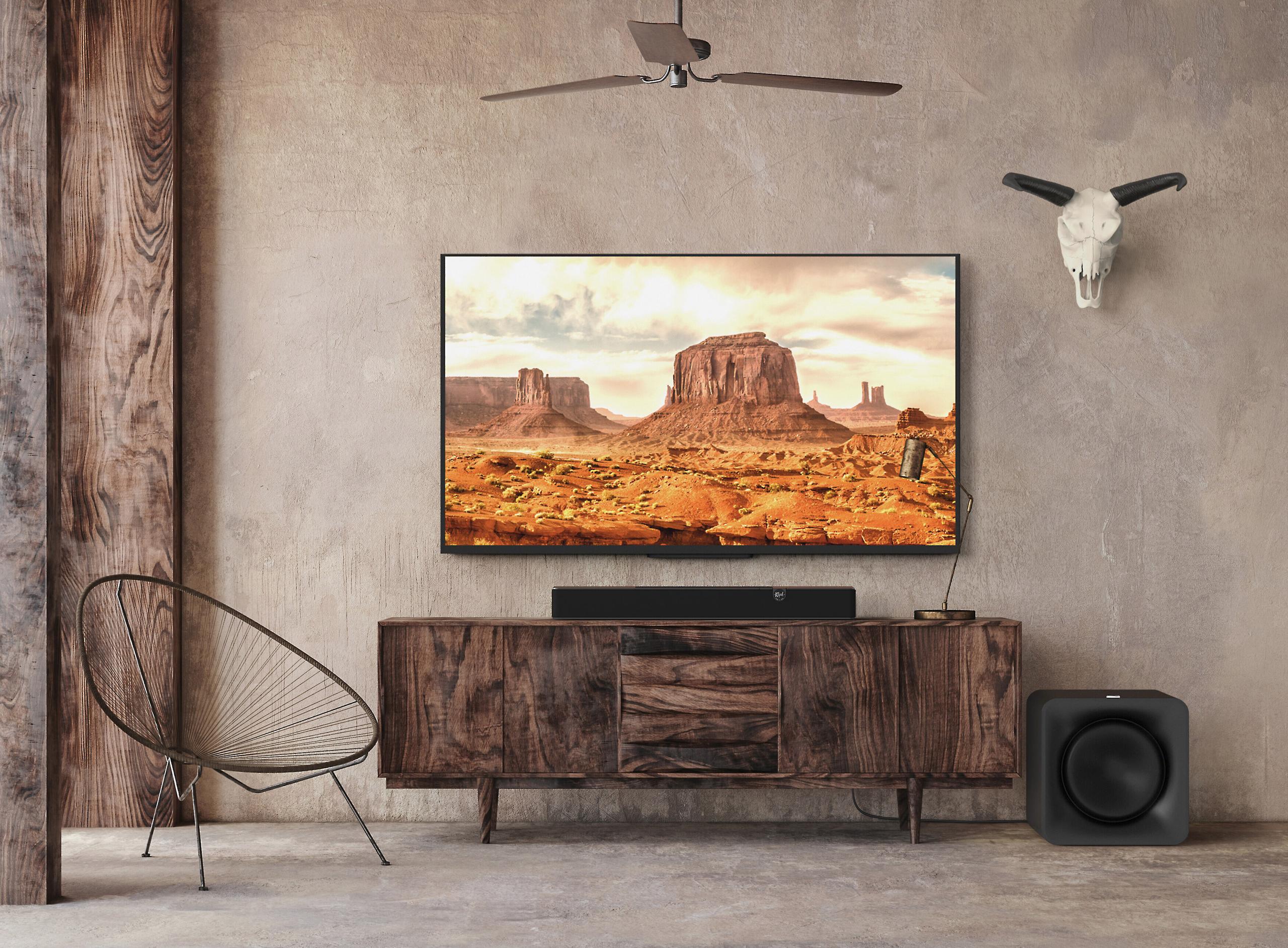
When your TV's built-in speakers just aren't cutting it anymore, a soundbar becomes an obvious upgrade. But stepping into the world of audio equipment can feel overwhelming, especially when you're comparing products that take fundamentally different approaches to the same problem. That's exactly what we're dealing with when looking at the Polk Audio Signa S2 and the Klipsch Flexus Core 100 - two soundbars that represent distinct philosophies in budget-friendly audio design.
The budget soundbar category has exploded over the past few years, and for good reason. These systems typically cost between $200-400 and aim to dramatically improve your TV's audio without requiring the complexity or expense of a full home theater setup. They're designed for people who want better sound but don't want to become audio engineers in the process.
What makes this category particularly interesting is how different manufacturers approach the core challenge: how do you create immersive, impactful sound from a relatively small, affordable package? Some companies stick with tried-and-true methods, while others push technological boundaries. The Polk Signa S2 and Klipsch Flexus Core 100 represent these two approaches perfectly.
The most important factors in this price range are dialogue clarity (since most people watch a lot of TV shows and movies), bass response (because TV speakers are notoriously weak in low frequencies), and ease of setup. Beyond that, you'll want to consider connectivity options, room compatibility, and whether you might want to expand your system later.
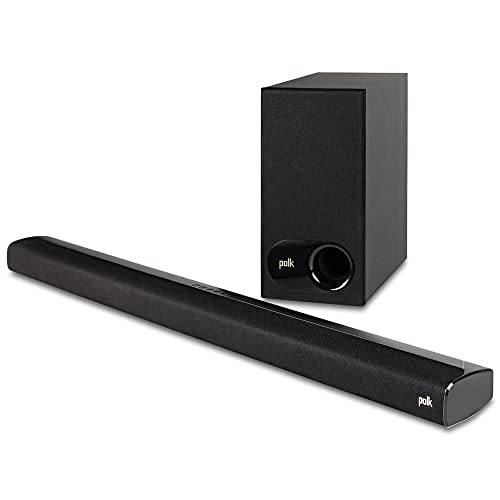
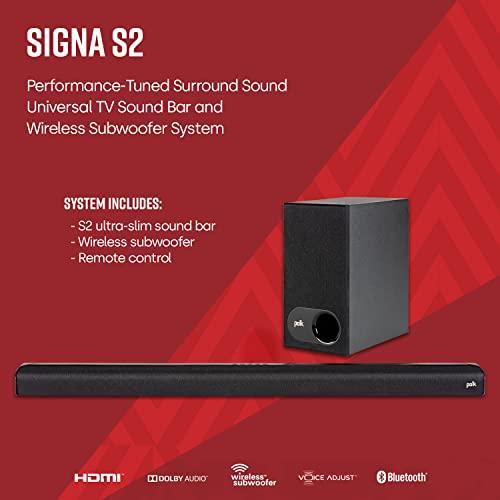
The Polk Audio Signa S2, released around 2020, follows what I'd call the "traditional excellence" approach. It's a classic 2.1 channel system, which means it has a main soundbar plus a separate subwoofer - that ".1" refers to the dedicated low-frequency channel that the subwoofer handles. This isn't revolutionary, but it's a formula that works exceptionally well when executed properly.
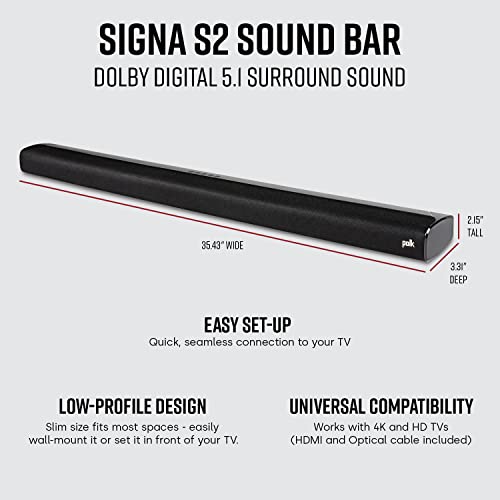
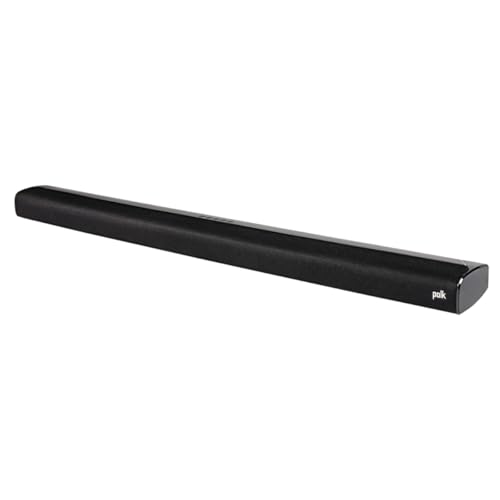
At just over 2 inches tall, the Signa S2 is designed to slip under your TV without blocking any sensors or the screen itself. I've always appreciated this thoughtful design choice because there's nothing more frustrating than upgrading your audio only to lose your remote control functionality. The main bar houses four drivers: two oval-shaped midrange drivers and two dome tweeters. This might sound modest, but the real star is the wireless subwoofer.
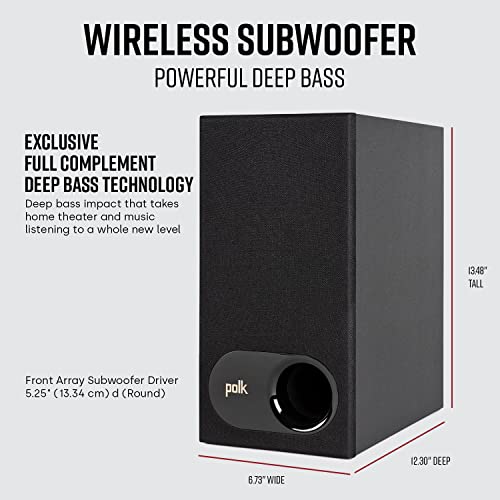
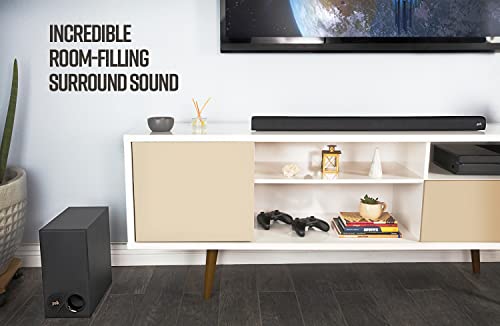
That subwoofer deserves special attention. It's a compact unit with a 5.25-inch driver in a ported enclosure - "ported" means it has a tuned opening that helps extend bass response and efficiency. What makes this particularly valuable is placement flexibility. You can put this subwoofer anywhere in your room where it sounds best, which often isn't right next to your TV. Bass frequencies are omnidirectional (they spread in all directions), so strategic placement can make a huge difference in how the system sounds in your specific room.
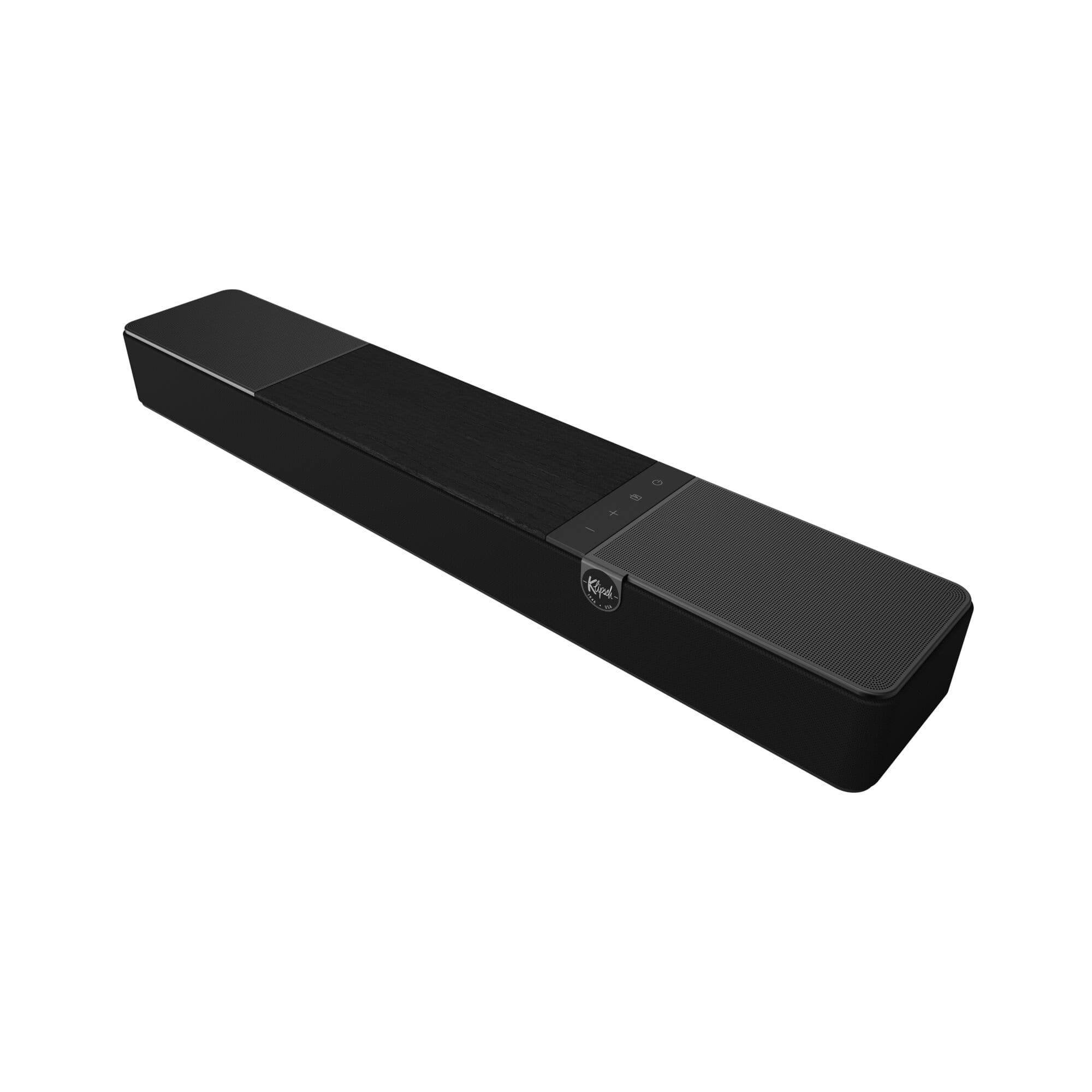
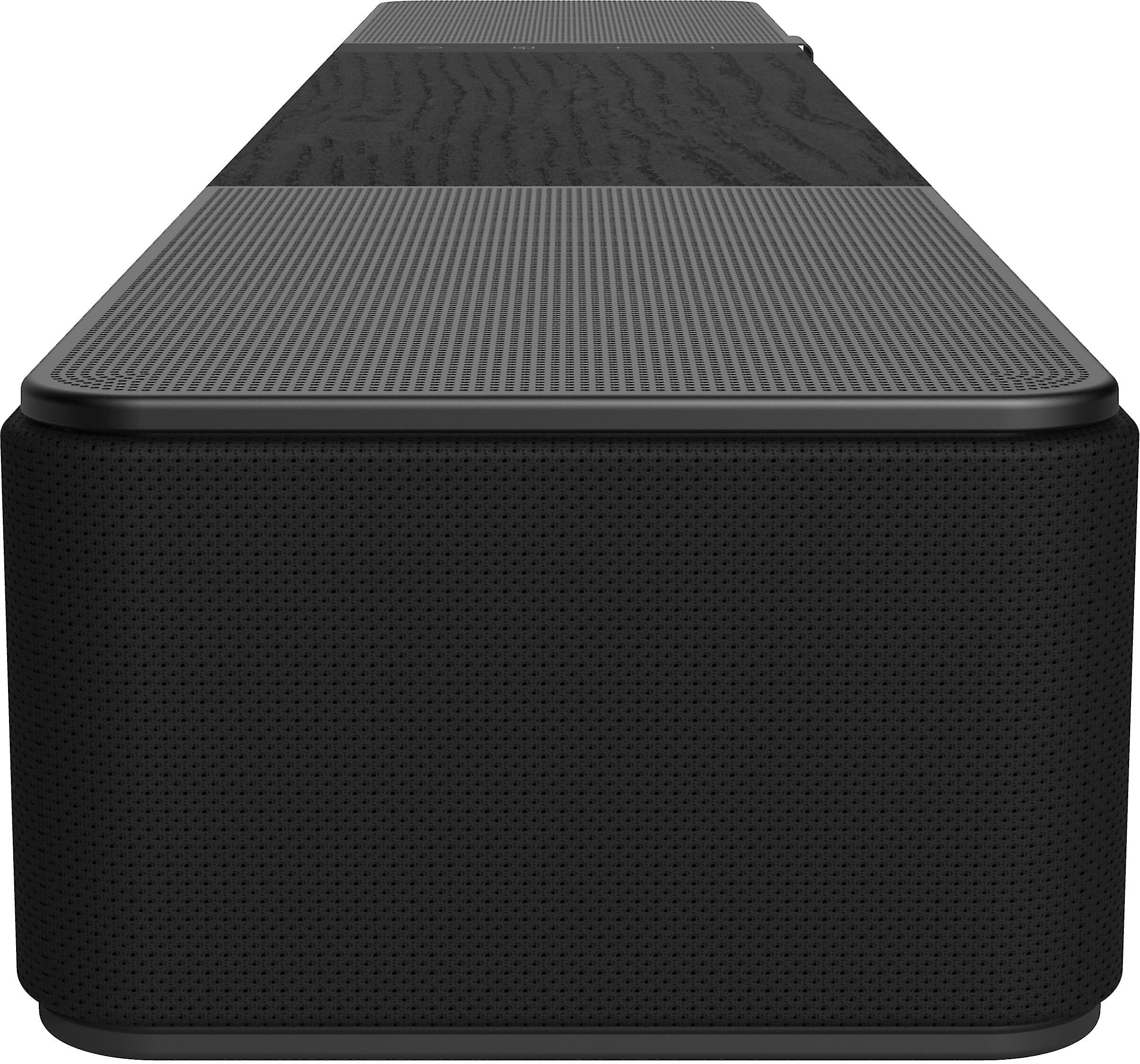
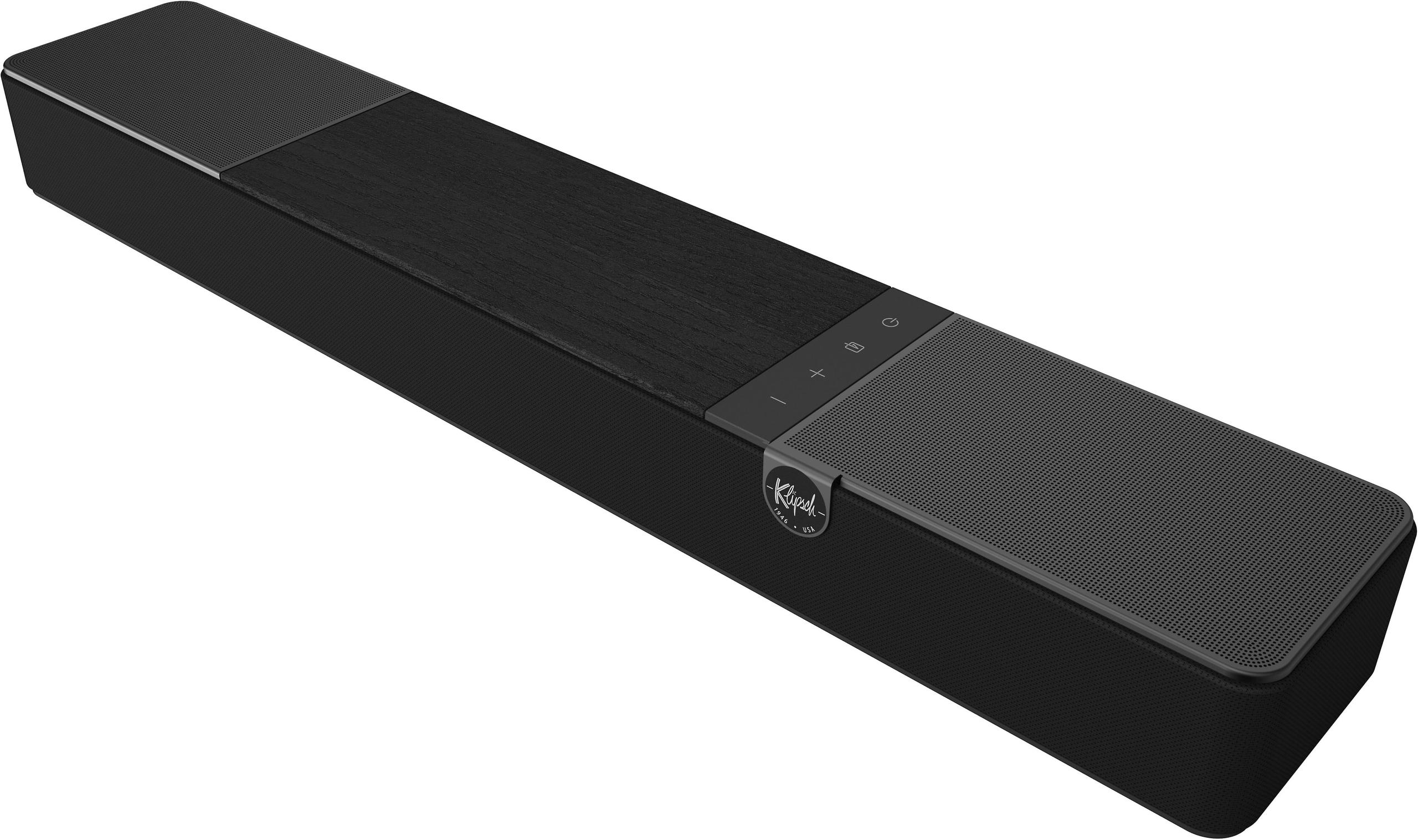
The Klipsch Flexus Core 100, which arrived in 2024, represents a more modern approach to soundbar design. Instead of using a separate subwoofer, Klipsch engineers built dual 4-inch subwoofers directly into the soundbar itself. This isn't just about convenience - it's a fundamental reimagining of how a soundbar system should work.
The Flexus Core 100 is part of Klipsch's partnership with Onkyo, a respected name in audio electronics. This collaboration brings higher-end audio processing typically found in more expensive systems. The soundbar uses two 2.25-inch aluminum cone drivers for mid and high frequencies. Aluminum cones are interesting because they're lighter and more rigid than paper or plastic, which generally means faster, more accurate sound reproduction.
But the real technological advantage here is Dolby Atmos processing. Without getting too deep into the weeds, Dolby Atmos creates a three-dimensional soundstage by processing audio to simulate height channels and more precise positioning of sounds. It's like the difference between stereo and surround sound, but taken to the next level.
Most of your TV watching involves dialogue, making speech clarity arguably the most important performance characteristic. Both systems handle this well, but through different methods.
The Polk Signa S2 uses something called VoiceAdjust technology. This is essentially a smart equalizer (EQ) that boosts the specific frequencies where human speech lives, typically between 85Hz and 255Hz for fundamental tones, and 1.4kHz to 4kHz for consonant clarity. What I appreciate about Polk's implementation is that it enhances dialogue without making everything sound artificial or overly processed.
The Klipsch Flexus Core 100 takes a different approach by relying on its superior overall audio processing and the precision of its aluminum drivers. The Dolby Atmos processing also helps with dialogue by creating a more defined center image - even without a dedicated center channel speaker, the system can position voices more precisely in the soundstage.
In my experience, both systems deliver clear dialogue, but the Polk has a slight edge for people who struggle with hearing dialogue over background music and sound effects. The dedicated VoiceAdjust feature is more targeted for this specific issue.
This is where the philosophical differences become most apparent. Bass response is measured in Hz (hertz), with lower numbers representing deeper bass. Both systems claim to reach down to 45Hz, which is respectable for this price range, but they achieve it very differently.
The Polk's separate 5.25-inch subwoofer can move more air and has more internal volume to work with. In a ported enclosure, this translates to deeper, more impactful bass that can fill a room. The wireless connection means you can experiment with placement - closer to walls or corners typically reinforces bass, while positioning the subwoofer closer to your listening position increases impact.
The Klipsch's dual 4-inch built-in woofers are impressive for their size, but physics is physics. Smaller drivers in a smaller enclosure simply can't move as much air. However, they provide very clean, tight bass that integrates seamlessly with the main drivers. There's no potential for timing issues between the subwoofer and main speakers since everything is in one cabinet.
For movies and music with substantial low-frequency content, the Polk has a clear advantage. For casual listening and content that doesn't depend heavily on deep bass, the Klipsch is perfectly adequate and arguably more convenient.
Here's where the Klipsch Flexus Core 100 pulls significantly ahead. Dolby Atmos processing creates a much more immersive experience than the Polk's standard Dolby Digital decoding.
Dolby Digital, which the Polk supports, is the basic surround sound format that's been around since the 1990s. It takes multichannel audio and downmixes it to work with a stereo or 2.1 system. It's better than stereo, but it's not particularly immersive.
Dolby Atmos, supported by the Klipsch, is a much more advanced format that treats sounds as objects in 3D space rather than just channels. Even with just two main speakers, the processing can create convincing height effects and more precise sound placement. When watching movies or playing games, this difference is immediately noticeable.
Both systems handle music well, but with distinct characteristics that will appeal to different listeners.
The Polk Signa S2 has what's called a V-shaped frequency response - it emphasizes bass and treble while keeping midrange relatively neutral. This creates an energetic, exciting sound that works particularly well with pop, rock, and electronic music. The separate subwoofer means you get real impact on bass-heavy tracks.
The Klipsch Flexus Core 100 offers a more balanced, accurate presentation thanks to its aluminum drivers and superior processing. If you listen to a lot of acoustic music, jazz, or classical pieces, this more neutral approach often sounds more natural and detailed.
Both systems cover the connectivity basics, but the Klipsch shows its more recent design with modern features.
The Polk Signa S2 includes HDMI ARC (Audio Return Channel), optical input, analog 3.5mm input, and Bluetooth streaming. HDMI ARC is important because it allows your TV remote to control the soundbar's volume and lets the TV send audio back to the soundbar through the same HDMI cable that carries video to the TV.
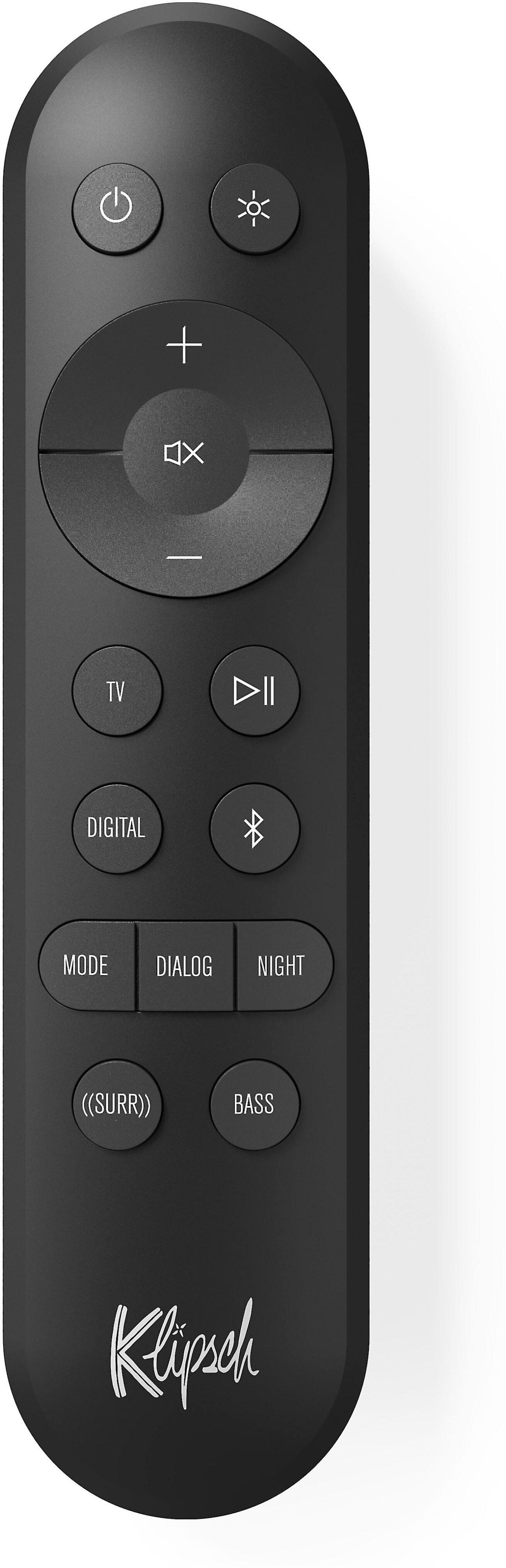
The Klipsch Flexus Core 100 steps up with HDMI eARC (enhanced Audio Return Channel), which supports higher bandwidth and more advanced audio formats. It also includes USB-C connectivity, which is increasingly useful for direct connection to phones, tablets, and laptops. The dedicated Klipsch Connect Plus app provides detailed EQ controls and system management.
This is where the Klipsch Flexus Core 100 really differentiates itself. It's designed as the foundation of a modular system using Klipsch's proprietary Transport technology - essentially a wireless communication system that allows different components to work together seamlessly.
You can add Flexus Surr 100 wireless surround speakers to create a true 5.1 system, or add a Flexus Sub 100 wireless subwoofer for enhanced bass response. This modular approach means your initial purchase isn't a dead end - it's potentially the first step toward a more comprehensive home theater setup.
The Polk Signa S2, by contrast, is what you get. There are no official expansion options, which is actually fine for many users who want a complete solution without future upgrade decisions.
The Polk requires space for both the 35-inch soundbar and the separate subwoofer. While the subwoofer is relatively compact, you'll need to plan for its placement and manage the power cable. The ultra-low profile of the main bar (just 2.15 inches) makes it compatible with almost any TV setup.
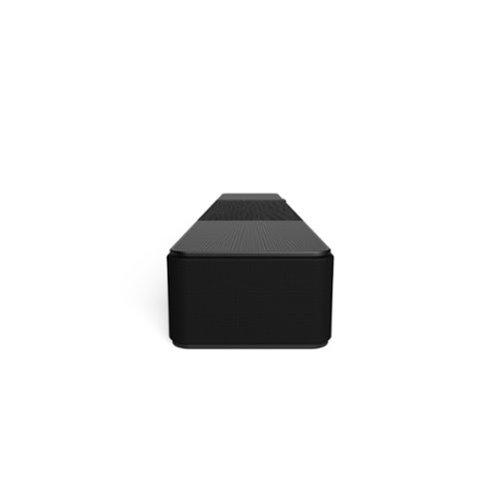
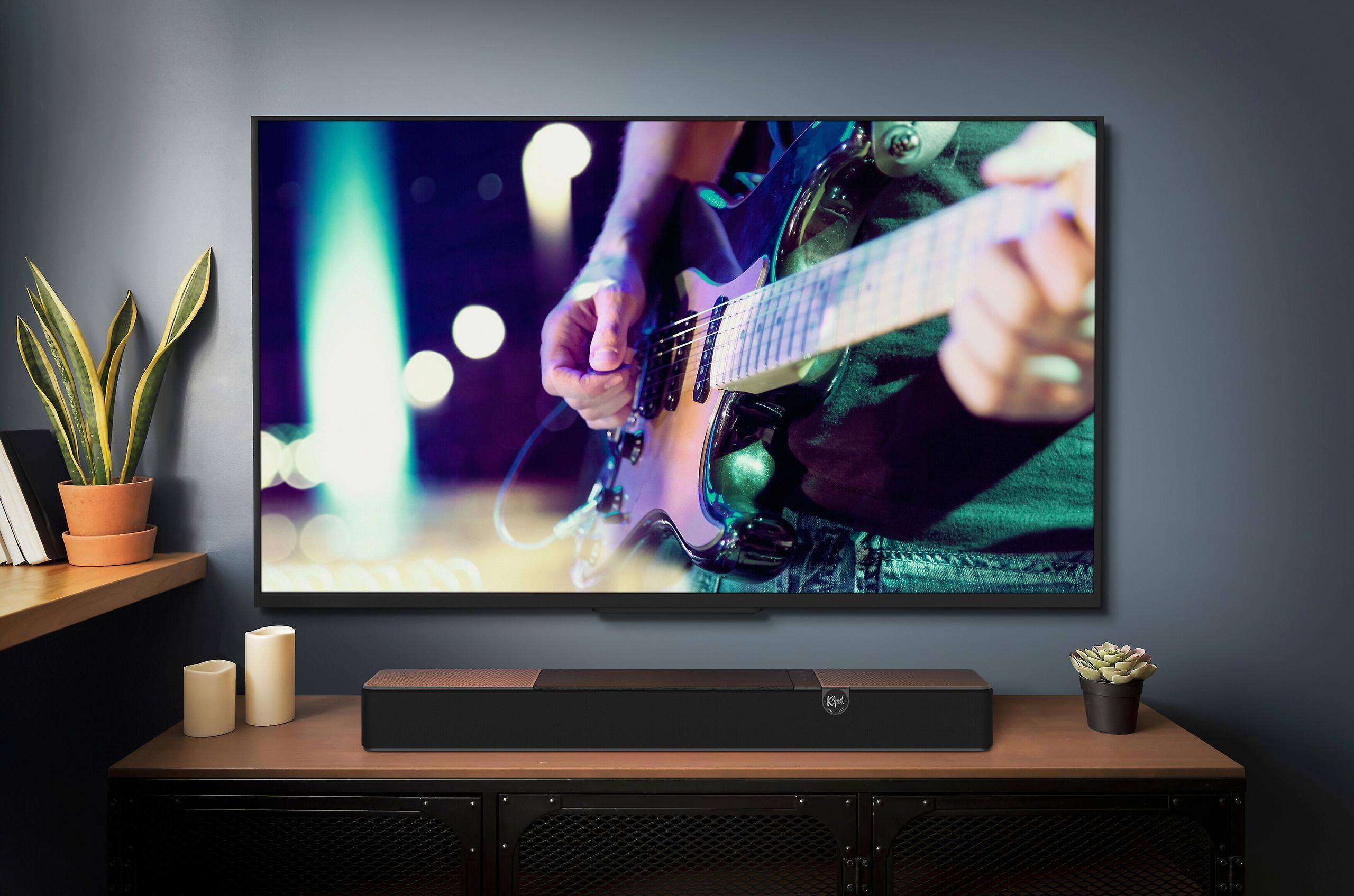
The Klipsch is more compact overall at 28 inches wide, but slightly taller at 3 inches. More importantly, it's a single unit, which simplifies installation and reduces cable management. However, you lose the flexibility of optimizing subwoofer placement for your specific room.
For smaller rooms or situations where minimizing clutter is important, the Klipsch has clear advantages. For larger rooms or users who want maximum bass impact, the Polk's separate subwoofer approach typically works better.
At the time of writing, these systems are priced within about $50 of each other, with the Klipsch commanding a modest premium. This price difference reflects their different value propositions.
The Polk Signa S2 delivers maximum immediate performance per dollar. You get a complete 2.1 system with proven dialogue enhancement and substantial bass response. The included cables and simple setup mean you're ready to go right out of the box. For users who want the biggest upgrade over TV speakers for the least money, this represents excellent value.
The Klipsch Flexus Core 100 asks you to pay slightly more for advanced features and future flexibility. The Dolby Atmos processing, premium materials, and expansion capabilities justify the higher price if you value these features. You're also buying into more recent technology that's likely to remain relevant longer.
If you're building a dedicated home theater space, both systems can work, but they serve different roles.
The Polk is ideal for smaller home theaters where you want substantial bass impact without the complexity of a full surround system. The separate subwoofer can be positioned optimally for your seating, and the dialogue enhancement helps with movie dialogue clarity.
The Klipsch makes more sense if you're planning to grow your system over time. Starting with the Core 100 and adding surrounds and a subwoofer later lets you build a complete 5.1 system gradually. The Dolby Atmos processing also provides a more cinematic experience even in its basic configuration.
Choose the Polk Audio Signa S2 if you want immediate, maximum bang for your buck. It's perfect for users who know they want a 2.1 system and don't need advanced features or expansion options. The dialogue clarity and bass impact make it excellent for both TV and music. It's also the better choice if you have a larger room where the separate subwoofer can really shine.
Choose the Klipsch Flexus Core 100 if you value modern features, clean aesthetics, and future flexibility. The Dolby Atmos processing provides a more immersive experience, and the expansion options mean your investment can grow with your needs. It's also better for smaller spaces where a separate subwoofer would be problematic.
Both represent solid choices in the budget soundbar category, but they're optimized for different users and scenarios. The Polk maximizes traditional soundbar benefits, while the Klipsch pushes toward more advanced, integrated solutions. Understanding these differences should help you choose the system that best matches your needs and preferences.
| Polk Audio Signa S2 | Klipsch Flexus Core 100 |
|---|---|
| System Design - Impacts bass performance and room placement flexibility | |
| Traditional 2.1 with wireless subwoofer | Integrated 2.1 with built-in dual subwoofers |
| Total Power Output - Determines maximum volume and dynamic range | |
| 120W total system power | 100W RMS system power |
| Soundbar Dimensions - Critical for TV compatibility and placement | |
| 35.43" W x 2.15" H x 3.22" D | 28" W x 3" H x 5" D |
| Subwoofer Configuration - Affects bass depth and placement options | |
| Separate 5.25" wireless subwoofer with ported design | Dual 4" built-in subwoofers integrated in soundbar |
| Main Drivers - Influences audio clarity and frequency response | |
| Two 1.25" x 4.4" oval midrange + two 1" tweeters | Two 2.25" aluminum cone full-range drivers |
| Advanced Audio Processing - Determines surround sound capabilities | |
| Dolby Digital decoding with virtual surround | Dolby Atmos processing for 3D spatial audio |
| Dialogue Enhancement - Critical for TV show and movie clarity | |
| Polk VoiceAdjust technology with adjustable levels | Standard processing with aluminum driver precision |
| Connectivity Options - Affects compatibility with modern devices | |
| HDMI ARC, optical, 3.5mm analog, Bluetooth | HDMI eARC, optical, USB-C, Bluetooth |
| Control Methods - Impacts daily usability and customization | |
| IR remote with basic controls, HDMI CEC support | Remote, touch panel, plus Klipsch Connect Plus app |
| Expandability - Future upgrade potential and system growth | |
| Complete system, no expansion options | Modular platform - add wireless surrounds and subwoofer |
| Sound Modes - Optimizes performance for different content types | |
| Movie, Music, Night modes built-in | App-controlled EQ presets and custom settings |
| Frequency Response - Determines bass depth and treble extension | |
| 45 Hz - 20,000 Hz | 45 Hz - 20,000 Hz |
| Warranty Coverage - Indicates manufacturer confidence and support | |
| 1-year electronics, 2-year drivers | 2-year parts and labor coverage |
The Polk Audio Signa S2 has a slight edge for dialogue clarity thanks to its dedicated VoiceAdjust technology, which specifically enhances speech frequencies without affecting other audio elements. The Klipsch Flexus Core 100 also delivers clear dialogue through its precision aluminum drivers and Dolby Atmos processing, but the Polk Signa S2 is specifically designed with dialogue enhancement as a priority feature.
This depends on your room size and bass preferences. The Polk Audio Signa S2 includes a dedicated 5.25" wireless subwoofer that delivers deeper, more impactful bass and allows flexible placement for optimal room response. The Klipsch Flexus Core 100 has dual 4" built-in subwoofers that provide clean, adequate bass while eliminating clutter, but won't match the depth and impact of the Polk's separate subwoofer in larger rooms.
The Klipsch Flexus Core 100 is superior for movies due to its Dolby Atmos processing, which creates a more immersive, three-dimensional soundstage with better spatial effects. While the Polk Audio Signa S2 handles movies well with its powerful bass and dialogue clarity, the Klipsch provides a more cinematic experience that's closer to what you'd get in a movie theater.
Only the Klipsch Flexus Core 100 offers expansion capabilities through its modular design. You can add wireless surround speakers and an additional subwoofer to create a full 5.1 system. The Polk Audio Signa S2 is a complete system with no official expansion options, which is fine if you want a finished solution but limits future upgrades.
The Polk Audio Signa S2 is slightly easier to set up with its straightforward plug-and-play design, included cables, and simple remote control. The Klipsch Flexus Core 100 offers more setup flexibility through its mobile app but requires more initial configuration. Both systems support HDMI ARC for easy TV remote control integration.
The Polk Signa S2 delivers an energetic, V-shaped sound signature that emphasizes bass and treble, making it exciting for pop, rock, and electronic music. The Klipsch Flexus Core 100 offers a more balanced, accurate presentation that works better for acoustic music, jazz, and classical genres. Both handle music well, but with different sonic personalities.
The Klipsch Flexus Core 100 is more space-efficient as a single 28-inch unit with no separate subwoofer to place. The Polk Audio Signa S2 requires space for both the 35-inch soundbar and the wireless subwoofer, though its ultra-low 2.15-inch profile fits under most TVs without blocking sensors.
Yes, both the Polk Signa S2 and Klipsch Flexus Core 100 work with virtually any TV through multiple connection options including HDMI ARC, optical, and analog inputs. The Klipsch includes more modern eARC support for newer TVs, while both offer Bluetooth for wireless music streaming from phones and tablets.
The Polk Audio Signa S2 typically offers better immediate value with its complete 2.1 system including wireless subwoofer at a lower price point. The Klipsch Flexus Core 100 commands a modest premium for advanced features like Dolby Atmos processing and expansion capabilities, making it better value if you plan to use these features.
The Polk Signa S2 with 120W total power can get quite loud and fill medium to large rooms effectively, especially with its dedicated subwoofer providing bass impact. The Klipsch Flexus Core 100 with 100W RMS also reaches satisfying volume levels but may not have quite the same dynamic impact in very large spaces.
The Klipsch Flexus Core 100 is more future-proof with its 2024 design, Dolby Atmos support, eARC connectivity, and modular expansion system. The Polk Audio Signa S2 uses proven but older technology that still performs excellently but lacks the advanced processing and connectivity of the newer Klipsch system.
For smaller to medium rooms, the Klipsch Flexus Core 100 provides excellent performance with less clutter and modern features. For larger rooms or if you prioritize maximum bass impact, the Polk Signa S2 with its dedicated subwoofer will typically provide better room-filling sound and more placement flexibility for optimal bass response.
We've done our best to create useful and informative comparisons to help you decide what product to buy. Our research uses advanced automated methods to create this comparison and perfection is not possible - please contact us for corrections or questions. These are the sites we've researched in the creation of this article: rtings.com - youtube.com - bestbuy.com - rtings.com - consumerreports.org - rtings.com - youtube.com - hometechnologyreview.com - soundbars.com - youtube.com - manuals.plus - creativeaudio.net - parts-express.com - thomsunmusic.com - polkaudio.com - manuals.plus - polkaudio.com - polkaudio.com - polkaudio.com - bestbuy.com - youtube.com - youtube.com - polkaudio.com - cnet.com - klipsch.com - klipsch.com - bestbuy.com - sweetwater.com - assets.onkyo-av.com - youtube.com - worldwidestereo.com - avnirvana.com - target.com

Privacy Policy
Terms and Conditions - Affiliate Policy
Home Security
© Copyright 2008-2026.
11816 Inwood Rd #1211, Dallas, TX 75244