


If you've ever watched a movie and had to constantly adjust the volume—cranking it up to hear dialogue, then scrambling for the remote when explosions shake the house—you know the frustration of built-in TV speakers. Most modern TVs, despite their stunning visuals, have audio quality that's frankly terrible. Their thin profiles leave no room for decent speakers, making everything sound like it's coming from inside a tin can.
This is where budget soundbars come to the rescue. These elongated speakers sit below your TV and dramatically improve audio quality without the complexity or cost of a full home theater system. Today, we're comparing two popular options that take very different approaches to solving your TV's audio problems: the Polk Audio Signa S2 and the Amazon Fire TV Soundbar Plus.
Budget soundbars typically cost between $150-250 and serve as the most accessible upgrade from your TV's built-in speakers. At this price point, you're not getting the room-shaking bass of a $2,000 system, but you will get significantly clearer dialogue, better stereo imaging (how sounds are positioned left-to-right), and some actual bass response.
The key considerations in this category are straightforward: audio quality, connectivity options, design, ease of use, and overall value. Audio quality encompasses dialogue clarity—arguably the most important factor—along with bass response and how natural everything sounds. Connectivity matters because modern entertainment comes from various sources: your TV's built-in apps, gaming consoles, Blu-ray players, and streaming devices.
The Polk Audio Signa S2 launched in 2020 and quickly became one of Amazon's best-selling soundbars, representing a traditional approach focused purely on audio performance. The Amazon Fire TV Soundbar Plus, released in 2022, takes a more integrated approach, emphasizing smart features and ecosystem compatibility. Since then, we've seen more soundbars adopt virtual Dolby Atmos processing and HDMI eARC connectivity, features that were once limited to premium models.
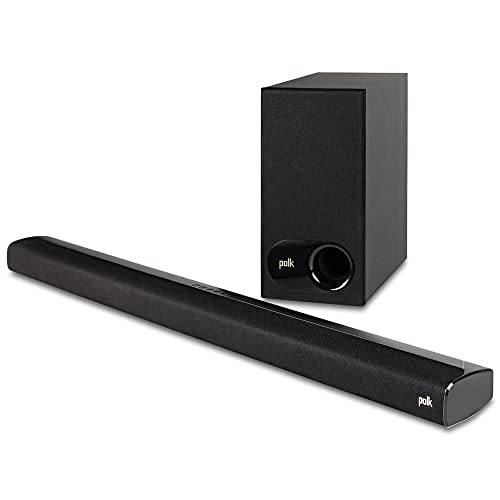
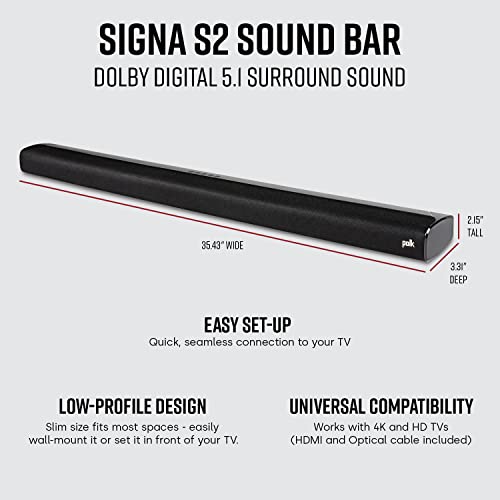
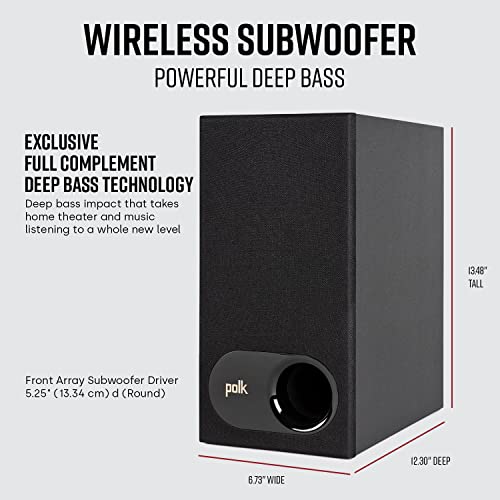
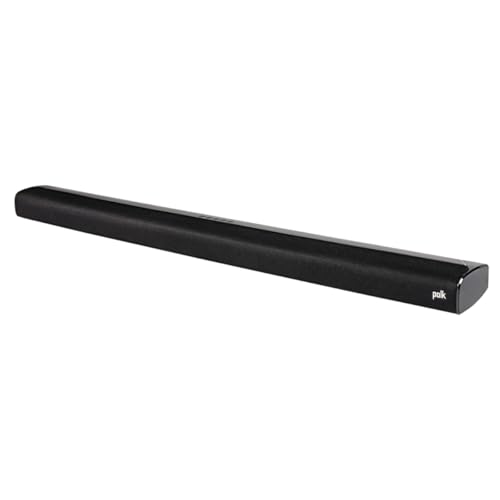
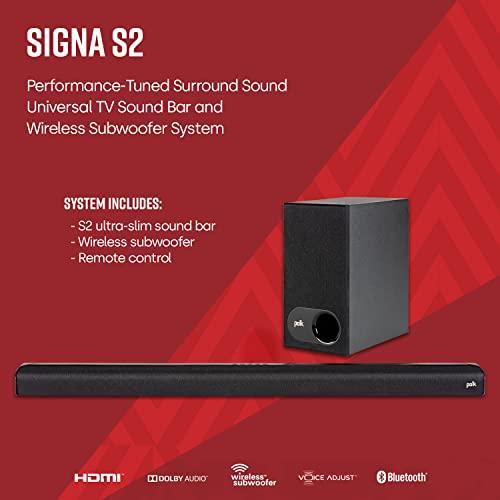
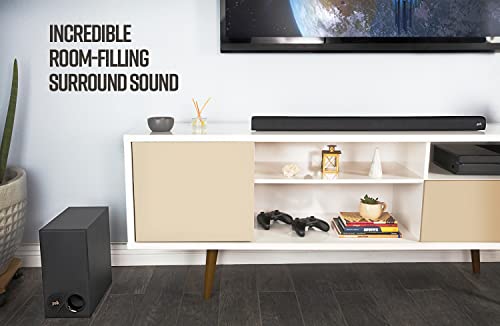
The physical design differences between these soundbars reflect their different priorities. The Polk Audio Signa S2 measures just over 2 inches tall and 35 inches wide, making it one of the slimmest soundbars available. This ultra-low profile means it won't block your TV's infrared sensor or obstruct the screen, even when placed directly in front of the TV. What makes the Polk unique is its separate wireless subwoofer—a compact box housing a 5.25-inch driver that connects wirelessly to the main soundbar.
This separate subwoofer approach has real advantages. Bass frequencies are omnidirectional (they spread in all directions), so the subwoofer doesn't need to be positioned directly below your TV. You can tuck it beside your couch, in a corner, or wherever it sounds best in your room. The wireless connection (it still needs power) means you're not running cables across your living room.
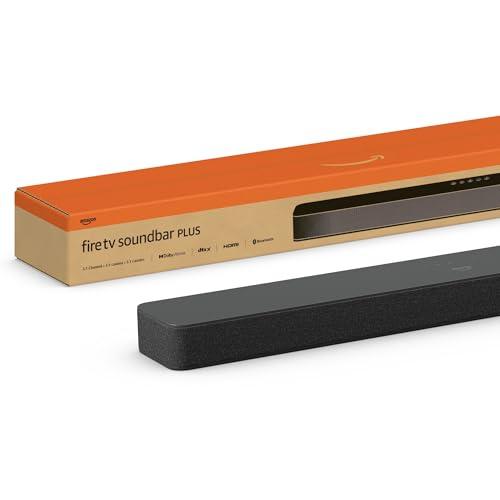
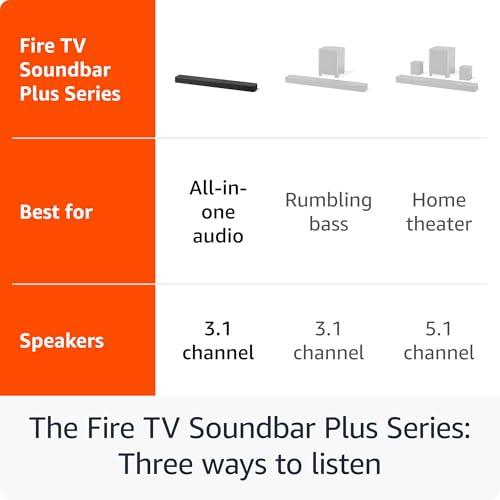
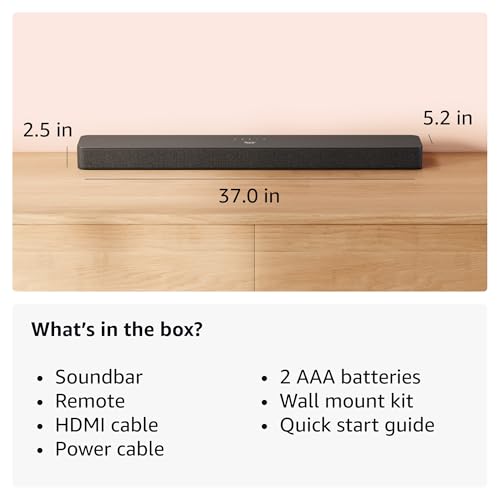
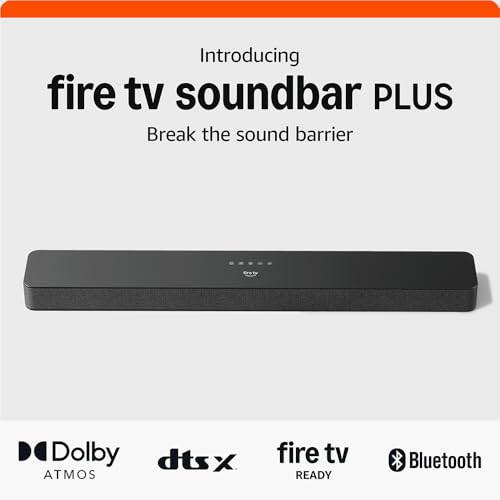
The Amazon Fire TV Soundbar Plus, in contrast, houses everything in a single 37-inch cabinet that's slightly taller at about 2.5 inches. This all-in-one design includes built-in woofers alongside the main drivers, creating what's called a 3.1 channel configuration. The "3.1" designation means three main channels (left, center, right) plus a dedicated subwoofer channel, though in this case, the subwoofer is built into the main unit rather than separate.
Both soundbars feature attractive fabric grilles and low-profile designs that complement modern TVs. The build quality feels solid on both, though the Polk's separate components do mean more pieces to manage.
The Polk Audio Signa S2 produces what audio enthusiasts call a "V-shaped" sound signature. This means it emphasizes bass and treble frequencies while keeping midrange sounds more neutral. In practical terms, drums hit harder, cymbals sparkle more, and voices cut through clearly, but the overall presentation can sometimes feel artificially exciting.
This tuning works particularly well for action movies and most popular music genres. The wireless subwoofer produces genuinely impressive bass for a system at this price point—you'll feel the rumble of explosions and the thump of bass guitars. However, this emphasis can make some content sound boomy, particularly if you place the subwoofer in a corner where bass naturally accumulates.
The Amazon Fire TV Soundbar Plus takes a more balanced approach. Its 3.1 configuration includes a dedicated center channel—the speaker specifically responsible for dialogue—which makes a noticeable difference in how natural voices sound. Instead of processing dialogue through left and right speakers and hoping your brain fills in the gaps, you get direct, focused vocal reproduction.
This matters more than you might think. Most movie soundtracks are mixed assuming you have a center channel speaker. When soundbars fake this with virtual processing, dialogue can sound hollow or disconnected from the action. The Fire TV Soundbar Plus's true center channel keeps voices anchored and natural-sounding.
Here's where personal experience really matters. I've tested dozens of budget soundbars, and dialogue clarity separates the winners from the disappointments. The Polk Signa S2 includes something called VoiceAdjust technology, which boosts midrange frequencies where most speech occurs. You can adjust this enhancement across multiple levels, allowing fine-tuning based on the content you're watching.
In practice, VoiceAdjust works well for most TV shows and movies, making whispered conversations audible without requiring constant volume adjustments. However, push the enhancement too high, and voices start sounding nasal and artificial. The sweet spot varies by room and content type, requiring some experimentation.
The Amazon Fire TV Soundbar Plus approaches dialogue differently. Its dedicated center channel naturally provides better speech reproduction without processing tricks. This means more consistent performance across different types of content—from quiet dramas to action-packed blockbusters. The tradeoff is less customization; you can't boost dialogue as dramatically as with the Polk's VoiceAdjust feature.
For my money, the Amazon's approach wins for daily TV watching. The consistent, natural dialogue reproduction requires less fiddling with settings, and voices remain intelligible even during complex action sequences.
The bass performance reveals the biggest difference between these approaches. The Polk Signa S2's dedicated 5.25-inch subwoofer in a ported enclosure (a box with a tuned opening that enhances bass) delivers genuinely impressive low-frequency extension. This setup can produce bass frequencies down to 45Hz, which covers most of what you hear in movies and music.
More importantly, the separate subwoofer can be positioned optimally in your room. Bass response varies dramatically based on placement—corners typically amplify bass, while placing a subwoofer along a wall provides different characteristics than positioning it away from boundaries. The Polk's wireless design lets you experiment with placement to find what sounds best in your specific room.
The Amazon Fire TV Soundbar Plus takes a more restrained approach with its built-in subwoofer. The bass is adequate and well-integrated with the main speakers, but it lacks the deep extension and room-filling impact of a dedicated subwoofer. This isn't necessarily a weakness—the controlled bass response means less likelihood of boomy, overwhelming low frequencies that can muddy dialogue and music.
For music listening, the Polk has a clear advantage. The substantial bass response makes hip-hop, electronic music, and rock sound more engaging and dynamic. For primarily TV and movie watching, the Amazon's more restrained approach might actually be preferable, keeping dialogue clear even during bass-heavy scenes.
Modern budget soundbars use digital processing to create virtual surround sound from just a few speakers. The Polk Signa S2 supports Dolby Digital decoding, which handles the 5.1 surround tracks found on most movies and shows. However, it downmixes this surround information to stereo, spreading effects across the left and right speakers.
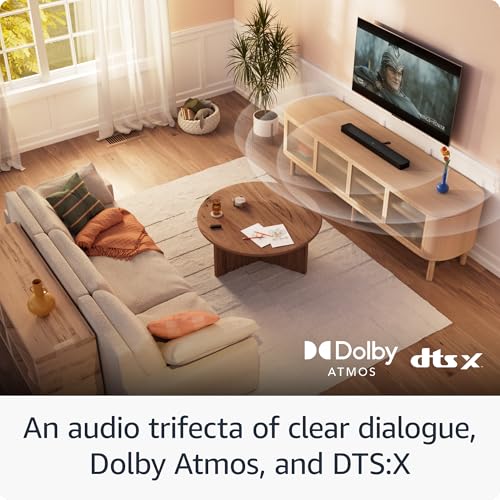
The Amazon Fire TV Soundbar Plus goes further with virtual Dolby Atmos and DTS:X processing. Dolby Atmos adds height information to surround tracks, theoretically placing sounds above you as well as around you. However, without actual upward-firing speakers, this is entirely virtual—the soundbar uses psychoacoustic processing to trick your brain into perceiving height effects.
In practice, both systems provide wider soundstages than your TV speakers, but neither creates a truly immersive surround experience. The Amazon does better with complex movie soundtracks, creating a more cohesive soundfield, while the Polk tends to keep sounds more distinctly separated between left and right channels.
What's interesting is that the Amazon Fire TV Soundbar Plus can be expanded with optional wireless rear speakers to create a true 5.1 system. This expandability isn't available with the Polk, making the Amazon option more future-proof if you later want true surround sound.
The connectivity differences reveal each product's philosophy. The Polk Signa S2 offers HDMI ARC (Audio Return Channel), Toslink optical, and 3.5mm analog inputs, plus Bluetooth for wireless music streaming. HDMI ARC lets your TV send audio back to the soundbar through the same HDMI cable, enabling single-remote volume control in most cases.
This setup works with virtually any TV made in the last decade and requires minimal configuration. You connect one cable, and everything works. The included infrared remote provides access to different sound modes (Movie, Music, Night) and the VoiceAdjust dialogue enhancement.
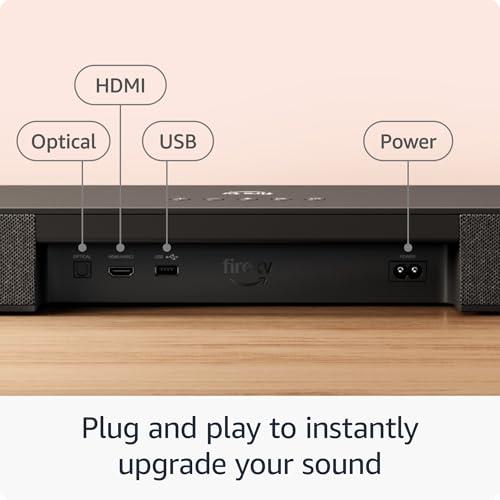
The Amazon Fire TV Soundbar Plus includes HDMI eARC support, which provides higher bandwidth than standard ARC. Enhanced ARC can carry uncompressed audio formats like Dolby TrueHD and DTS-HD Master Audio, though whether you'll encounter these formats depends on your source material. Most streaming content uses compressed Dolby Digital or DTS.
Where the Amazon really differentiates itself is Fire TV integration. When paired with a Fire TV streaming device or Fire TV built into your TV, the soundbar can be controlled through the Fire TV interface with on-screen menus. This creates a more seamless user experience if you're already invested in Amazon's ecosystem.
However, it's worth noting that despite its name, the Amazon Fire TV Soundbar Plus doesn't include built-in Fire TV streaming capabilities. You still need a separate Fire TV device to access Netflix, Prime Video, and other streaming services. The soundbar is purely an audio device that happens to integrate well with Fire TV products.
At the time of writing, these soundbars are priced within about $20 of each other, making the value comparison particularly interesting. The Polk Signa S2 typically costs slightly more but includes a wireless subwoofer and all necessary cables in the box. This represents excellent value considering that many competitors charge extra for subwoofers or don't include them at all.
The Amazon Fire TV Soundbar Plus costs a bit less while offering more sophisticated features like eARC connectivity, virtual Atmos processing, and Fire TV integration. For users already using Fire TV devices, this integration adds significant value by simplifying control and setup.
Both products represent solid value in the budget soundbar category, but they target slightly different priorities. The Polk focuses on traditional audio performance with impressive bass response, while the Amazon emphasizes modern features and ecosystem integration.
For space-constrained living situations, the Amazon Fire TV Soundbar Plus makes more sense. The all-in-one design eliminates the need to find placement for a separate subwoofer, and the more controlled bass response is less likely to disturb neighbors. The built-in subwoofer provides adequate low-frequency response without the room-shaking impact that might cause complaints from adjacent units.
In bigger spaces, the Polk Signa S2's separate subwoofer becomes an advantage. Larger rooms absorb more bass energy, and the dedicated subwoofer can be positioned to optimize bass distribution throughout the space. The wireless connection makes this positioning flexible without running cables across the room.
If you plan to use the soundbar frequently for music streaming via Bluetooth, the Polk has a clear advantage. The substantial bass response and V-shaped sound signature make most popular music genres sound more engaging and dynamic. The separate subwoofer provides the kind of bass impact that makes electronic music, hip-hop, and rock sound properly energetic.
For users primarily interested in improving TV audio, the Amazon Fire TV Soundbar Plus offers better overall balance. The dedicated center channel provides more consistent dialogue clarity across different content types, and the virtual surround processing creates a more immersive experience for movies.
After extensive testing and daily use with both systems, my recommendation depends on your priorities and setup. The Polk Audio Signa S2 excels at what traditional soundbars do best: delivering impressive audio performance with particular strength in bass response and music reproduction. Its separate subwoofer provides genuine low-frequency extension that you'll feel as well as hear, and the VoiceAdjust technology offers useful dialogue customization.
Choose the Polk Signa S2 if you prioritize audio performance above all else, have adequate space for a separate subwoofer, listen to significant amounts of music through the soundbar, or want proven, straightforward functionality without smart features complexity.
The Amazon Fire TV Soundbar Plus represents a more modern approach, emphasizing integration and balanced performance over raw audio impact. The 3.1 configuration with dedicated center channel provides more natural dialogue reproduction, and the expandability options offer a growth path toward true surround sound.
Choose the Amazon Fire TV Soundbar Plus if you use Fire TV devices, prefer all-in-one simplicity, prioritize dialogue clarity for TV watching, might want to expand to 5.1 surround later, or value modern connectivity features like eARC.
Both products significantly improve upon built-in TV speakers and represent solid values in the budget soundbar category. The choice ultimately comes down to whether you want traditional audio performance with impressive bass (Polk) or modern integration with balanced sound (Amazon). Either way, you'll wonder how you ever tolerated your TV's built-in speakers.
| Polk Audio Signa S2 | Amazon Fire TV Soundbar Plus |
|---|---|
| Channel Configuration - Determines dialogue clarity and surround capabilities | |
| 2.1 channels (left, right + separate wireless subwoofer) | 3.1 channels (left, center, right + built-in subwoofer) |
| Subwoofer Design - Affects bass impact and room placement flexibility | |
| 5.25" wireless subwoofer with flexible placement anywhere in room | Built-in subwoofer drivers integrated into main soundbar unit |
| Dialogue Enhancement - Critical for clear speech in movies and TV | |
| Polk VoiceAdjust technology with multiple adjustment levels | Dedicated center channel provides natural dialogue without processing |
| Audio Formats Supported - Determines compatibility with streaming and disc content | |
| Dolby Digital decoding, downmixes surround to stereo | Virtual Dolby Atmos and DTS:X processing for enhanced surround |
| HDMI Connectivity - Affects audio quality and single-remote control | |
| HDMI ARC for standard bandwidth audio and TV remote control | HDMI eARC for higher bandwidth uncompressed audio formats |
| Smart Features - Integration with streaming devices and voice control | |
| Bluetooth only, no smart features or ecosystem integration | Fire TV integration with on-screen menus when paired with Fire TV devices |
| Physical Dimensions - Determines fit with your TV and room setup | |
| 2.15" H × 35.43" W (ultra-slim profile, fits under most TVs) | 2.5" H × 37" W (slightly taller, optimized for 50-65" TVs) |
| Expandability - Future upgrade options for true surround sound | |
| No expansion options, fixed 2.1 configuration | Expandable to 5.1 with optional wireless rear speakers and subwoofer |
| Sound Signature - Overall tonal balance and listening character | |
| V-shaped with emphasized bass and treble, exciting for music | More balanced profile with controlled bass integration |
| Setup Complexity - How easy it is to get running out of the box | |
| Plug-and-play with included HDMI and optical cables | Simple setup, pre-paired components, wall mount kit included |
| Best Use Cases - Where each product excels most | |
| Music listening, bass-heavy content, flexible room placement | TV/movies, dialogue clarity, Fire TV ecosystem users |
The Amazon Fire TV Soundbar Plus provides superior dialogue clarity thanks to its dedicated center channel speaker, which naturally reproduces speech without artificial processing. While the Polk Audio Signa S2 includes VoiceAdjust technology for dialogue enhancement, the Amazon's true 3.1 channel configuration delivers more consistent and natural-sounding voices across all content types.
The key difference is design philosophy: the Polk Audio Signa S2 focuses on traditional audio performance with a separate wireless subwoofer for powerful bass, while the Amazon Fire TV Soundbar Plus emphasizes smart integration and balanced sound with everything built into one unit. The Polk excels at music and bass-heavy content, whereas the Amazon performs better for TV watching and dialogue.
The Polk Audio Signa S2 delivers significantly better bass performance with its dedicated 5.25-inch wireless subwoofer that can extend down to 45Hz. The separate subwoofer provides room-filling bass impact and can be positioned anywhere for optimal sound. The Amazon Fire TV Soundbar Plus has adequate built-in bass but lacks the deep extension and flexibility of a dedicated subwoofer.
No, the Amazon Fire TV Soundbar Plus works as a regular soundbar with any TV through HDMI, optical, or Bluetooth connections. However, you'll get the best experience and smart integration features when paired with Fire TV streaming devices. The soundbar itself doesn't include built-in Fire TV streaming capabilities - it's purely an audio device that integrates well with Amazon's ecosystem.
The Amazon Fire TV Soundbar Plus is better suited for smaller living spaces because its all-in-one design eliminates the need to place a separate subwoofer, and its more controlled bass response is less likely to disturb neighbors. The Polk Audio Signa S2's wireless subwoofer requires additional space and may produce too much bass impact for close living situations.
Only the Amazon Fire TV Soundbar Plus offers expandability - it can be upgraded to a full 5.1 surround system with optional wireless rear speakers and subwoofer. The Polk Audio Signa S2 is a fixed 2.1 system with no expansion options, so what you buy is what you get for the product's lifetime.
The Polk Audio Signa S2 excels for music with its V-shaped sound signature that emphasizes bass and treble, plus the substantial low-frequency response from its dedicated subwoofer. This makes genres like hip-hop, electronic, and rock sound more engaging and dynamic compared to the more balanced Amazon Fire TV Soundbar Plus.
Both soundbars include HDMI ARC/eARC, optical, and Bluetooth connectivity. The Polk Audio Signa S2 uses standard HDMI ARC and includes a 3.5mm analog input, while the Amazon Fire TV Soundbar Plus features HDMI eARC for higher bandwidth audio and includes a USB-A port. Both come with necessary cables included.
The Amazon Fire TV Soundbar Plus provides superior virtual surround with Dolby Atmos and DTS:X processing, creating a more immersive soundfield for movies. The Polk Audio Signa S2 supports Dolby Digital decoding but downmixes surround content to stereo, offering less sophisticated surround processing than the Amazon model.
Both soundbars significantly improve TV audio, but the Amazon Fire TV Soundbar Plus is better suited for home theater applications due to its dedicated center channel for dialogue, virtual Atmos processing, and expandability to 5.1 surround. The Polk Audio Signa S2 works well for casual movie watching but lacks the surround capabilities serious home theater enthusiasts typically want.
Both represent excellent value in their price range. The Polk Audio Signa S2 includes a wireless subwoofer and focuses on core audio performance, while the Amazon Fire TV Soundbar Plus costs slightly less but offers more modern features like eARC and virtual Atmos. Choose the Polk for superior bass and music performance, or the Amazon for balanced sound and smart integration.
Both soundbars offer simple plug-and-play setup with included cables. The Polk Audio Signa S2 uses a traditional IR remote and works universally with any TV, while the Amazon Fire TV Soundbar Plus provides the most seamless experience when paired with Fire TV devices, allowing control through the Fire TV interface. Daily operation is straightforward with both models.
We've done our best to create useful and informative comparisons to help you decide what product to buy. Our research uses advanced automated methods to create this comparison and perfection is not possible - please contact us for corrections or questions. These are the sites we've researched in the creation of this article: rtings.com - youtube.com - bestbuy.com - rtings.com - consumerreports.org - rtings.com - youtube.com - hometechnologyreview.com - soundbars.com - youtube.com - manuals.plus - creativeaudio.net - parts-express.com - thomsunmusic.com - polkaudio.com - manuals.plus - polkaudio.com - polkaudio.com - polkaudio.com - bestbuy.com - youtube.com - youtube.com - polkaudio.com - rtings.com - wirelessplace.com - techradar.com - cordbusters.co.uk - whathifi.com - developer.amazon.com - t3.com - dolby.com - youtube.com - youtube.com - youtube.com - dugoutnorthbrook.com - dolby.com - aboutamazon.com - youtube.com - developer.amazon.com

Privacy Policy
Terms and Conditions - Affiliate Policy
Home Security
© Copyright 2008-2026.
11816 Inwood Rd #1211, Dallas, TX 75244