





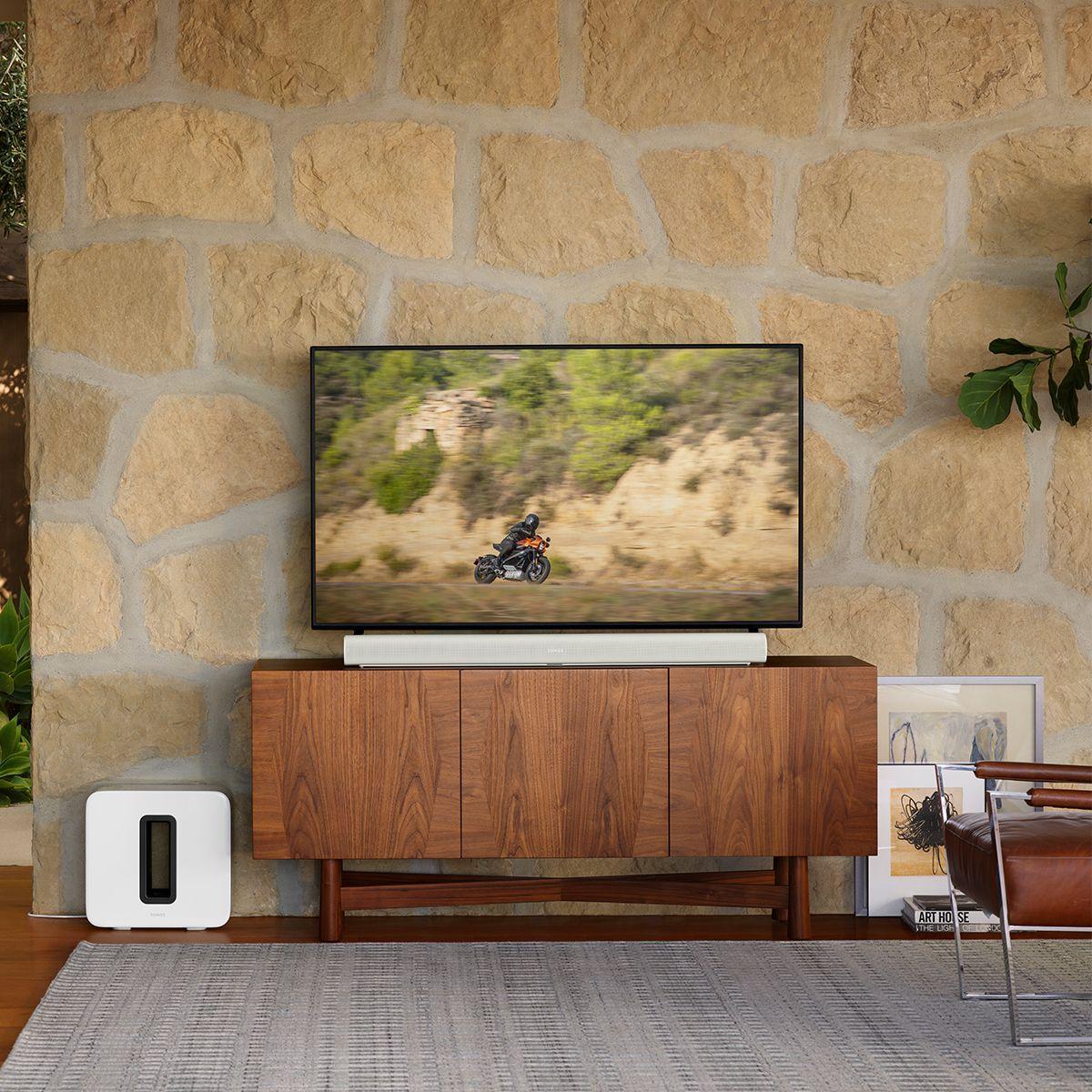
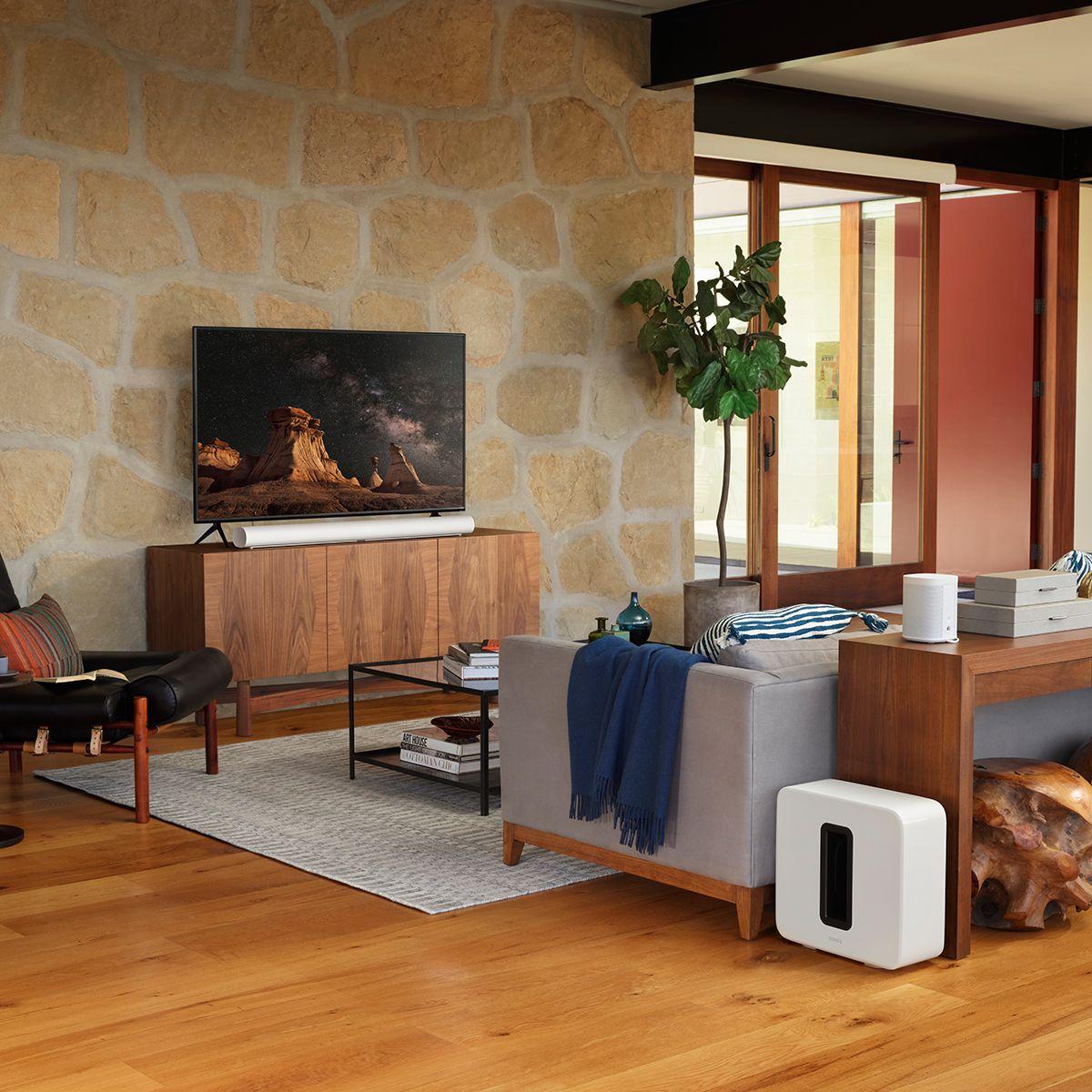










If you've been living with your TV's built-in speakers, you're missing out on what movies and music are supposed to sound like. The difference between tinny television audio and even a basic soundbar is night and day. But with soundbars ranging from under $200 to over $1,000, figuring out how much to spend—and what you actually get for your money—can be overwhelming.
Today we're comparing two soundbars that represent very different approaches to upgrading your TV audio: the budget-friendly Polk Audio Signa S2 and the premium Sonos Arc. These products sit at opposite ends of the price spectrum, but both promise to transform your listening experience. The question is: which approach makes more sense for your situation?
Before diving into specifics, let's establish what soundbars actually do and why they matter. A soundbar is essentially a collection of speakers arranged in a single enclosure that sits below or above your TV. Instead of having speakers scattered around your room, everything is concentrated in one sleek package.
The most important thing to understand about soundbars is channel configuration. When you see numbers like "2.1" or "5.0.2," here's what they mean: the first number represents main speakers (left, center, right), the second number indicates surround speakers, and the third number (when present) refers to height or overhead speakers. The ".1" or ".2" refers to subwoofers—those big speakers that handle deep bass.
Modern soundbars also process surround sound formats. Dolby Digital is the standard format you'll find on most streaming content and cable TV. Dolby Atmos (which we'll discuss in detail) adds overhead sound effects by bouncing audio off your ceiling, creating a three-dimensional soundscape that makes you feel like you're inside the movie.
The key considerations when choosing a soundbar are audio quality, room size compatibility, connectivity options, and whether you want smart features like voice control. Your budget obviously plays a major role, but understanding these fundamentals helps you make an informed decision rather than just picking based on price.
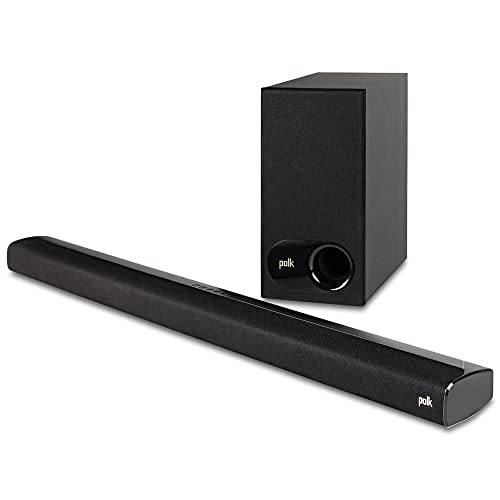
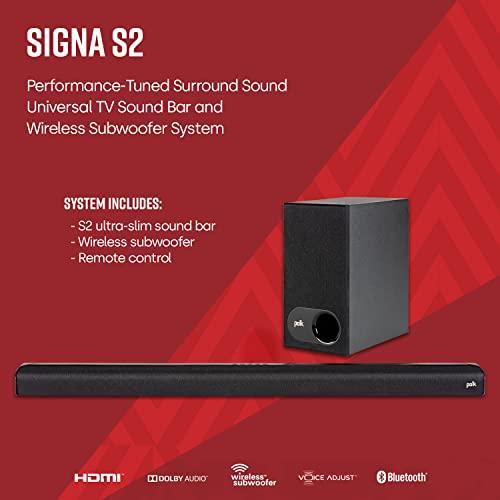
The Polk Audio Signa S2, released in 2019, represents the "maximum value" approach to soundbar design. At the time of writing, it costs roughly half what many competing 2.1 systems charge, yet includes a wireless subwoofer that many budget bars skip entirely. Polk's strategy was clear: deliver the biggest possible upgrade over TV speakers without breaking the bank.
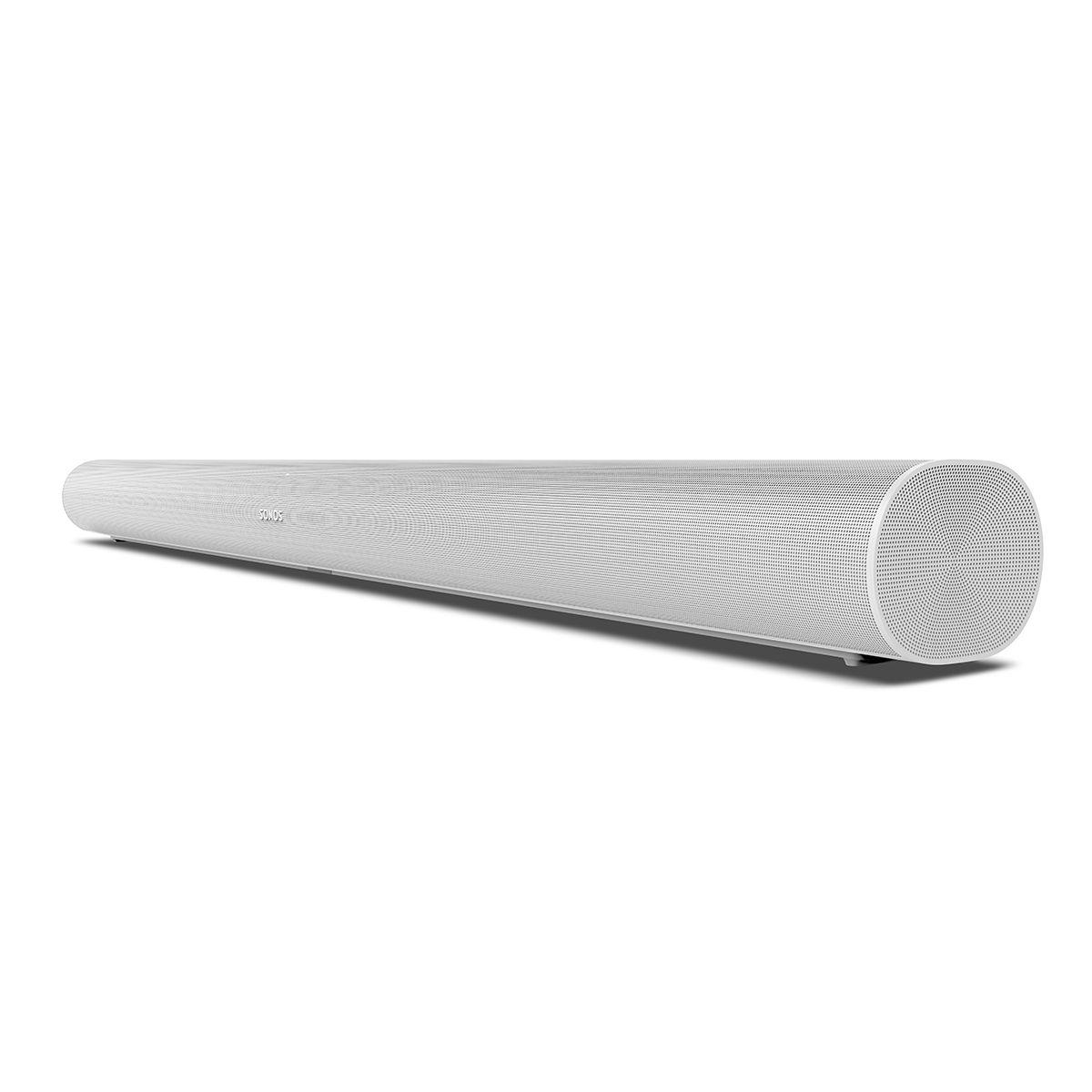
The Sonos Arc, launched in 2020, takes the opposite approach. This is Sonos saying, "Let's build the best possible soundbar and price it accordingly." It arrived with true Dolby Atmos support, premium build quality, and deep integration into the Sonos ecosystem—features that were still relatively rare in soundbars at the time.
Since their releases, both products have remained largely unchanged hardware-wise, though the Sonos Arc has received significant software updates that added new features and improved performance. This highlights one key difference between budget and premium products: ongoing development support.
The Polk Audio Signa S2 delivers what audio enthusiasts call a "V-shaped" sound signature. This means bass and treble are emphasized while midrange frequencies sit slightly recessed. In practical terms, explosions sound punchy, dialogue comes through clearly, and music has an energetic, exciting character. However, this tuning can sometimes make certain content sound a bit artificial or overly dramatic.
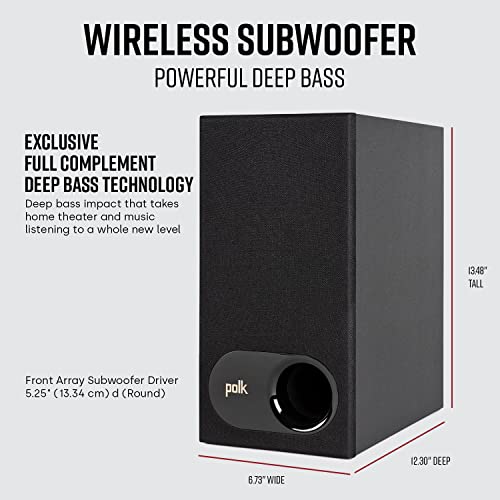
The wireless subwoofer deserves special mention here. That 5.25-inch driver extends the system's frequency response down to 45 Hz, which covers most of the bass content in movies and music. When a T-Rex stomps across the screen or a bass guitar plucks in your favorite song, you'll actually feel it rather than just hearing a weak thump from your TV speakers.
The Sonos Arc, by contrast, aims for a more neutral, balanced sound that lets the content speak for itself. Its eleven drivers—including three silk-dome tweeters and eight elliptical woofers—create a cohesive soundstage that extends well beyond the physical width of the bar. The Arc's sound is more refined and natural, though some might find it less immediately exciting than the Polk's more aggressive tuning.
What really sets the Arc apart is its ability to create a sense of space and depth. Even without rear speakers, it manages to generate a convincing surround sound experience that makes the Polk Signa S2 sound flat and confined by comparison.
Here's where the technical differences become most apparent. The Polk Audio Signa S2 processes Dolby Digital content (the standard surround sound format) but downmixes everything to its 2.1 speaker configuration. It's like taking a surround sound movie and squashing it down to stereo—you get the content, but lose the spatial information that makes scenes feel immersive.
The Sonos Arc supports full Dolby Atmos processing, including the most advanced formats like Dolby TrueHD. Atmos works by adding overhead sound effects that bounce off your ceiling, creating the illusion of three-dimensional audio. When a helicopter flies overhead in a movie, you don't just hear it move from left to right—you actually hear it pass above you.
This isn't just a gimmick. Atmos content is becoming standard on streaming services like Netflix, Disney+, and Apple TV+. Even if your current content doesn't have Atmos, having this capability means you're prepared for the future rather than locked into yesterday's technology.
Both soundbars address one of the most common complaints about TV audio: mumbly, unclear dialogue. The Polk Audio Signa S2 uses Voice Adjust technology, which boosts the frequency range where human speech lives. It's effective, though pushing the setting too high can make voices sound nasal and artificial.
The Sonos Arc takes a more sophisticated approach with a dedicated center channel—essentially a speaker designed specifically for dialogue. This, combined with its Speech Enhancement feature, provides clearer, more natural-sounding voices without the artificial coloration that can plague simpler systems.
In my experience testing both systems, the difference is most noticeable with streaming content, where audio compression can make dialogue particularly challenging to understand. The Arc maintains clarity even during loud action sequences, while the Polk Signa S2 sometimes struggles to keep voices intelligible when explosions and music compete for attention.
The Polk Audio Signa S2 keeps things simple—perhaps too simple for 2024. You get a basic remote control and that's it. No voice commands, no smart home integration, no streaming without additional devices. This isn't necessarily bad if you just want better TV audio, but it feels limited compared to what modern devices offer.
The Sonos Arc functions as a full smart speaker with built-in Google Assistant and Amazon Alexa. You can ask it to play music, control smart home devices, check the weather, or adjust the volume—all without touching a remote. The far-field microphone array uses beamforming technology to hear you clearly even when content is playing loudly.
This smart functionality extends to music streaming. While the Polk Signa S2 relies on Bluetooth (which compresses audio and limits range), the Sonos Arc connects directly to streaming services like Spotify, Apple Music, and Tidal over Wi-Fi. The audio quality difference is immediately apparent, especially with lossless music formats.
The Sonos app deserves special mention because it transforms how you interact with your audio system. Beyond basic volume control, you can adjust EQ settings, enable Night Sound (which reduces loud sounds and boosts quiet ones for late-night viewing), and access Trueplay room correction.
Trueplay is particularly impressive—it uses your iPhone's microphone to measure your room's acoustics, then automatically adjusts the soundbar's output to compensate for furniture, wall materials, and room size. This kind of sophisticated room correction was once limited to expensive audiophile equipment.
The Polk Signa S2 offers basic sound modes (Movie, Music, Night) via its remote, but there's no room correction or detailed customization available.
Both soundbars handle the basics well—HDMI ARC, optical, and analog inputs cover virtually any TV made in the last decade. However, the Sonos Arc supports HDMI eARC (enhanced Audio Return Channel), which enables lossless audio formats and higher bandwidth. If you have a recent 4K TV or plan to upgrade soon, this matters.
The Arc also supports more audio codecs, including DTS formats that the Polk Signa S2 cannot process. While Dolby Digital is more common on streaming services, DTS shows up on many Blu-rays and some cable content.
One important compatibility note: the Sonos Arc doesn't work with older CCFL-backlit TVs (manufactured between 2004-2012). If you're using an older television, the Polk Signa S2 is more likely to work without issues.
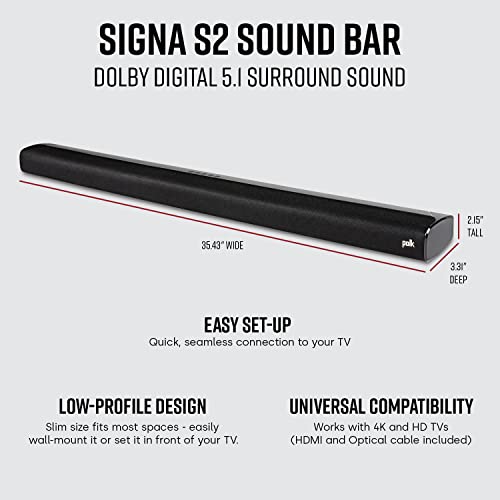
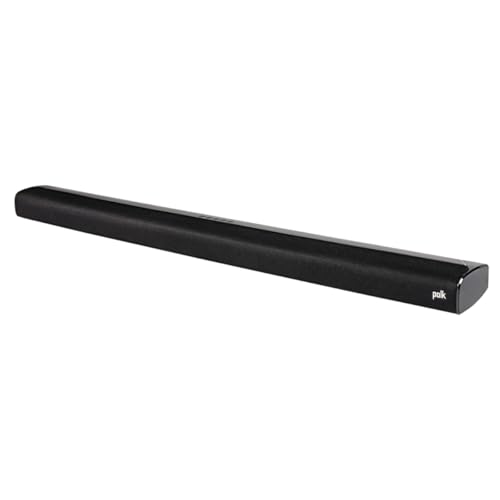
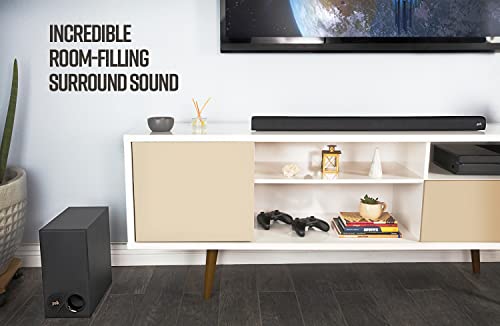
The Polk Audio Signa S2 wins points for its ultra-slim profile—just 2.15 inches tall means it won't block your TV's infrared sensor or interfere with the screen. This makes it perfect for situations where a larger soundbar would be problematic.
However, you'll need to find placement for that wireless subwoofer. While it's compact at roughly 13 inches tall, it still requires floor space and access to power. The upside is placement flexibility—you can position it wherever it sounds best in your room.
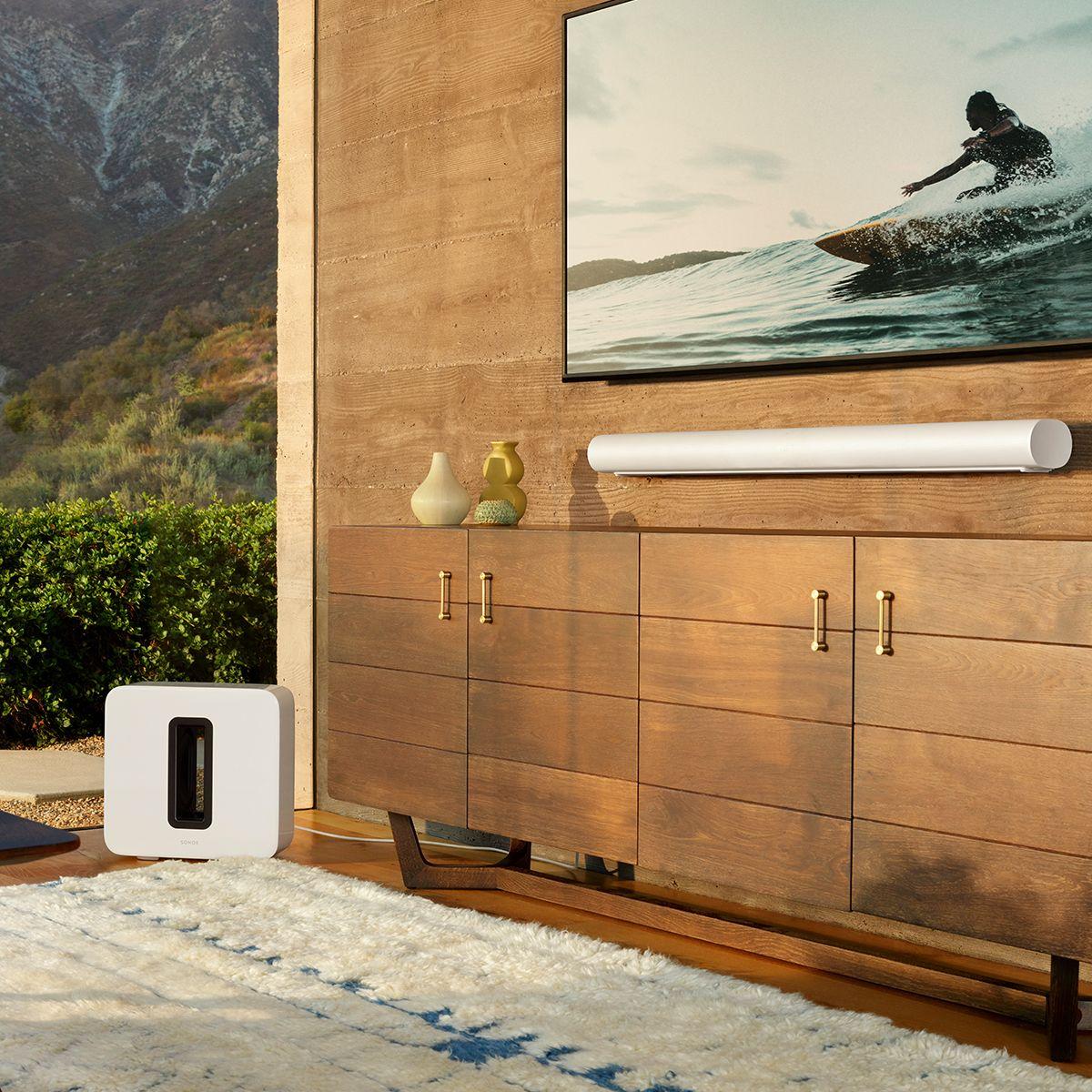
The Sonos Arc is substantially larger and more substantial-looking. At nearly 45 inches wide, it's designed for bigger TVs and makes a visual statement. The premium matte finish and careful attention to design details make it attractive enough that you won't mind it being visible.
The all-in-one design eliminates the subwoofer placement puzzle, though you might eventually want to add Sonos's separate Sub for maximum bass impact in larger rooms.
Room size significantly impacts soundbar performance, and this is where the power and driver differences between these products become most apparent.
In small rooms (up to 150 square feet), both soundbars perform well, though for different reasons. The Polk Signa S2 can seem almost overwhelming with bass in tight spaces, while the Sonos Arc provides more controlled, refined sound that won't overpower the room.
Medium-sized rooms (150-300 square feet) represent the sweet spot for both products. The Polk Signa S2 delivers satisfying volume and impact, while the Sonos Arc begins to show its superior soundstage and dynamic range capabilities.
Large rooms (300+ square feet) favor the Sonos Arc significantly. Its higher output capability and more sophisticated driver array maintain clarity and impact at higher volumes. The Polk Signa S2 starts to sound strained and compressed when pushed to fill bigger spaces.
For dedicated home theater use, the differences between these soundbars become most pronounced. The Sonos Arc creates a genuinely cinematic experience with its Dolby Atmos processing and wide soundstage. Action movies feel immersive, with sound effects positioned precisely around the room.
The Polk Audio Signa S2 delivers a solid upgrade over TV speakers for movie watching, but it's more about making everything louder and fuller rather than creating true surround sound immersion. It excels with dialogue-heavy content like dramas and comedies, where its Voice Adjust technology shines.
Both systems handle the dynamic range challenges of modern movies reasonably well—the quiet dialogue followed by explosive action sequences that make you constantly adjust volume. The Arc's superior processing maintains better balance between these extremes.
While both products are designed primarily for TV enhancement, they also serve as music speakers. The Polk Audio Signa S2 delivers energetic, bass-heavy music playback that works well for pop, rock, and electronic genres. However, the V-shaped tuning can make acoustic music and jazz sound less natural.
The Sonos Arc shines with music, offering the kind of balanced, detailed sound that works across all genres. Its access to high-quality streaming services over Wi-Fi rather than compressed Bluetooth makes a noticeable difference with well-recorded music.
The Arc's ability to integrate into a multi-room Sonos system also opens up possibilities like synchronized music throughout your home—something the standalone Polk Signa S2 cannot offer.
At the time of writing, the Polk Audio Signa S2 costs roughly half what you'd pay for the Sonos Arc. This price difference reflects genuinely different product philosophies and target markets.
The Polk represents exceptional value if your primary goal is upgrading TV audio on a budget. Including a wireless subwoofer at this price point is remarkable, and the performance improvement over TV speakers is dramatic. You're getting 80% of what most people need from a soundbar at 50% of the typical cost.
The Sonos Arc justifies its premium pricing through superior technology, build quality, and long-term value. Dolby Atmos support alone typically costs significantly more in competing products. Add the smart features, premium materials, and ecosystem integration, and the pricing becomes more reasonable within the premium category.
Consider also the longevity factor. The Sonos Arc receives regular software updates that add new features and improve performance. Three years after launch, it's noticeably better than when it was first released. The Polk Signa S2 is essentially the same product it was in 2019.
Choose the Polk Audio Signa S2 if you:
Choose the Sonos Arc if you:
The Polk Audio Signa S2 succeeds brilliantly at its intended mission: delivering maximum TV audio improvement for minimum investment. It's not trying to be a premium product, and judging it by premium standards misses the point entirely. For budget-conscious buyers who just want their TV to sound dramatically better, it's hard to beat.
The Sonos Arc represents what happens when a company decides to build the best soundbar possible without major cost constraints. It's expensive, but it delivers genuine premium performance that justifies the investment for serious audio enthusiasts and home theater fans.
My personal recommendation leans toward the Sonos Arc if your budget allows, simply because the performance gap is larger than the price gap suggests. However, the Polk Audio Signa S2 offers such compelling value that it might be the smarter choice for many situations.
The decision ultimately comes down to your priorities: maximum value and immediate gratification with the Polk, or premium performance and long-term satisfaction with the Sonos. Either choice will transform your TV audio experience—just in different ways and for different budgets.
| Polk Audio Signa S2 | Sonos Arc |
|---|---|
| Channel Configuration - Determines surround sound capability | |
| 2.1 channels (stereo + subwoofer) | 5.0.2 channels (includes height channels for Dolby Atmos) |
| Dolby Atmos Support - Essential for modern immersive audio | |
| No (virtual surround only) | Yes (true overhead effects with upward-firing drivers) |
| Driver Count - More drivers typically mean better sound quality | |
| 4 drivers in soundbar + 1 subwoofer | 11 high-performance drivers (all integrated) |
| Subwoofer - Critical for deep bass in movies and music | |
| 5.25" wireless subwoofer included | No subwoofer (can add optional Sonos Sub) |
| Smart Features - Voice control and streaming capabilities | |
| Basic remote only, Bluetooth streaming | Built-in Google Assistant & Alexa, Apple AirPlay 2 |
| Dimensions - Important for TV compatibility and room aesthetics | |
| Ultra-slim 2.15" tall (won't block TV) | Larger 3.43" tall x 44.96" wide (premium presence) |
| Audio Connectivity - Affects compatibility with different devices | |
| HDMI ARC, optical, 3.5mm aux | HDMI eARC/ARC, optical (supports lossless formats) |
| Room Correction - Optimizes sound for your specific space | |
| Manual EQ presets only | Trueplay automatic room tuning (requires iOS device) |
| Multi-Room Audio - Ability to expand throughout your home | |
| Standalone system only | Full Sonos ecosystem integration |
| Expandability - Options to add more speakers later | |
| No expansion possible | Can add wireless surrounds and subwoofer |
| Voice Enhancement - Critical for clear dialogue | |
| Voice Adjust technology | Dedicated center channel + Speech Enhancement |
| Build Quality - Affects longevity and premium feel | |
| Budget plastic construction | Premium matte finish with superior materials |
| Software Updates - Keeps features current over time | |
| No update capability | Regular feature additions via software updates |
The Sonos Arc is significantly better for movies due to its true Dolby Atmos support, which creates immersive overhead sound effects. The Polk Audio Signa S2 only offers virtual surround sound processing, making it less engaging for action films and blockbusters. If you're building a home theater setup, the Sonos Arc delivers the cinematic experience most movie enthusiasts want.
Yes, both the Polk Audio Signa S2 and Sonos Arc work with virtually any modern TV through HDMI ARC or optical connections. However, the Sonos Arc doesn't support older CCFL-backlit TVs from 2004-2012. The Polk Signa S2 is more universally compatible with older television models.
The Polk Audio Signa S2 includes a dedicated 5.25-inch wireless subwoofer that delivers more impactful bass out of the box. The Sonos Arc has integrated bass from its eight woofers, which is more controlled but may require adding the optional Sonos Sub for maximum low-end impact in larger rooms.
Only the Sonos Arc supports voice control through built-in Google Assistant and Amazon Alexa. You can adjust volume, play music, and control smart home devices using voice commands. The Polk Audio Signa S2 requires manual control via its included remote or your TV remote through HDMI ARC.
The Sonos Arc offers superior music performance with balanced sound, high-quality Wi-Fi streaming, and access to lossless audio formats. The Polk Signa S2 provides energetic music playback through Bluetooth but with a more bass-heavy sound signature that may not suit all music genres.
The Polk Audio Signa S2 includes a wireless subwoofer, so you're ready to go immediately. The Sonos Arc works well on its own for most rooms, but larger spaces may benefit from adding the optional Sonos Sub for deeper bass extension.
The Polk Signa S2 offers simpler plug-and-play setup with included cables and minimal configuration. The Sonos Arc requires app-based setup, Wi-Fi connection, and potentially room calibration, though this complexity enables its advanced smart features.
Both soundbars support wireless music streaming, but differently. The Polk Audio Signa S2 uses Bluetooth connectivity for basic wireless streaming. The Sonos Arc connects directly to streaming services over Wi-Fi and supports Apple AirPlay 2 for higher-quality wireless audio.
Both soundbars improve dialogue clarity significantly over TV speakers. The Polk Signa S2 uses Voice Adjust technology to enhance speech frequencies. The Sonos Arc has a dedicated center channel speaker and Speech Enhancement feature, providing more natural and clear dialogue reproduction.
The Polk Audio Signa S2 has an ultra-slim 2.15-inch profile that fits under most TVs without blocking the screen or remote sensors. The Sonos Arc is larger at 3.43 inches tall and nearly 45 inches wide, designed for bigger TVs and making more of a visual statement.
The Polk Audio Signa S2 is a complete standalone system with no expansion options. The Sonos Arc can be expanded with wireless rear speakers and the Sonos Sub, and integrates into the broader Sonos multi-room audio ecosystem for whole-home audio.
Value depends on your needs and budget. The Polk Signa S2 delivers exceptional value for budget-conscious buyers, including a wireless subwoofer at an affordable price point. The Sonos Arc justifies its premium pricing through superior audio technology, Dolby Atmos support, smart features, and long-term software updates.
We've done our best to create useful and informative comparisons to help you decide what product to buy. Our research uses advanced automated methods to create this comparison and perfection is not possible - please contact us for corrections or questions. These are the sites we've researched in the creation of this article: rtings.com - youtube.com - bestbuy.com - rtings.com - consumerreports.org - rtings.com - youtube.com - hometechnologyreview.com - soundbars.com - youtube.com - manuals.plus - creativeaudio.net - parts-express.com - thomsunmusic.com - polkaudio.com - manuals.plus - polkaudio.com - polkaudio.com - polkaudio.com - bestbuy.com - youtube.com - youtube.com - polkaudio.com - whathifi.com - soundandvision.com - en.community.sonos.com - cnet.com - worldwidestereo.com - abt.com - creativeaudio.net - target.com - sonos.com - worldwidestereo.com - businessinsider.com - en.community.sonos.com - youtube.com

Privacy Policy
Terms and Conditions - Affiliate Policy
Home Security
© Copyright 2008-2026.
11816 Inwood Rd #1211, Dallas, TX 75244