



















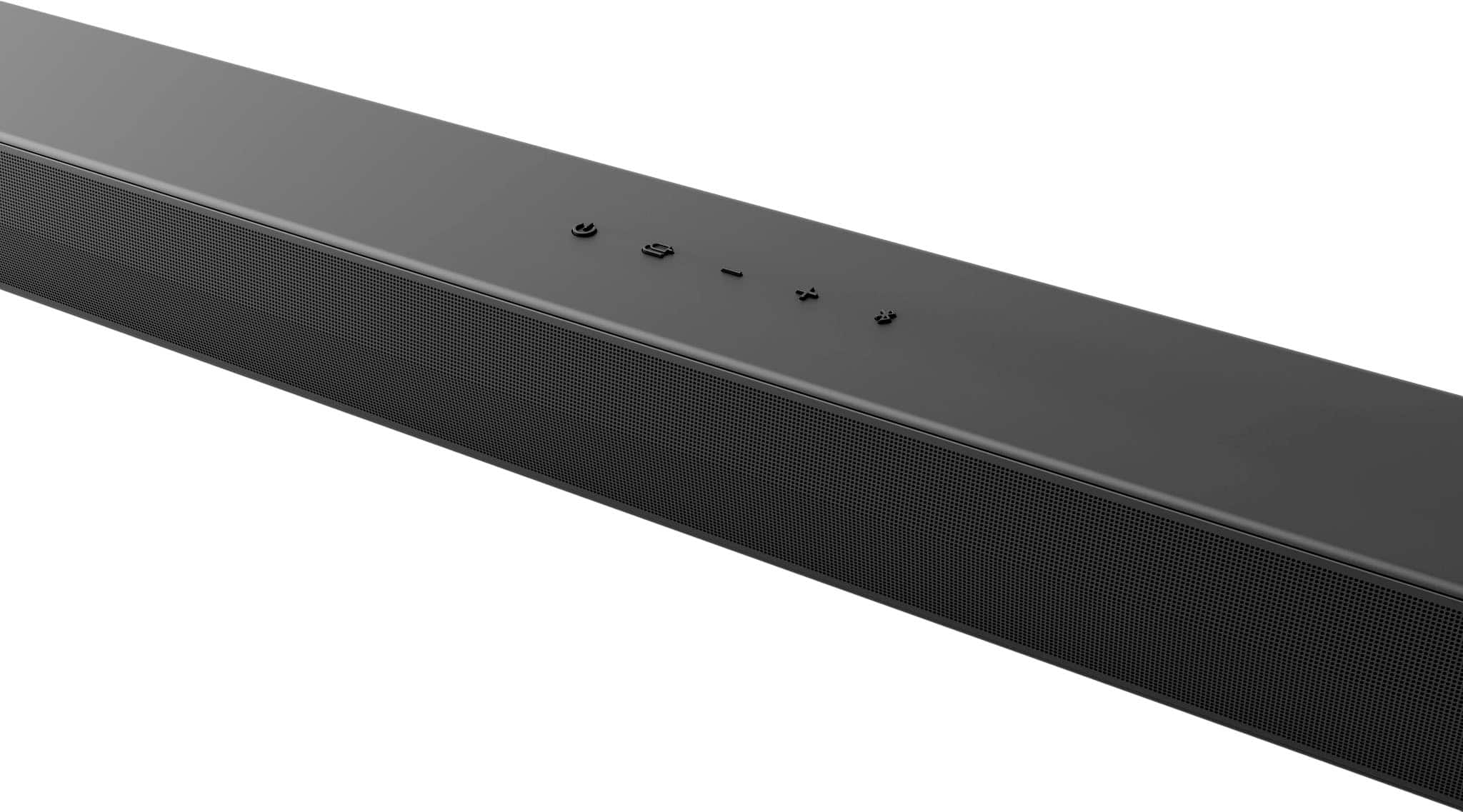






When I first started reviewing soundbars back in 2018, the market was fairly straightforward—you had basic bars that made dialogue clearer, and expensive ones that tried to simulate surround sound with mixed results. Fast forward to today, and we're looking at two completely different philosophies that represent how far this category has evolved. The Sonos Arc ($540.60) and LG S60TR ($299.99) couldn't be more different in their approach to solving the same problem: making your TV sound dramatically better.
Before diving into these specific models, it's worth understanding what makes today's soundbars so much better than what we had even five years ago. The biggest game-changer has been the widespread adoption of Dolby Atmos—a surround sound format that adds height information to audio, making it feel like sounds are coming from above and around you, not just from left and right. Think of it as the difference between watching a movie on a flat screen versus in IMAX.
There are two ways to achieve this: virtualization (using clever processing to trick your brain) and physical separation (actually placing speakers where the sound should come from). The Sonos Arc, released in May 2020, represents the virtualization approach taken to its logical extreme. The LG S60TR, a much newer 2024 release, goes the traditional route with actual speakers placed around your room.
The choice between these approaches isn't just about technology—it's about your living space, your budget, and what you value most in your audio experience.
When Sonos launched the Arc four years ago, it was their answer to the question: "How do we create cinema-quality surround sound from a single bar?" Their solution was remarkably sophisticated. Inside the Arc's sleek 45-inch frame, they packed eleven drivers—three silk-dome tweeters (for crisp highs and clear dialogue), eight custom woofers (for midrange and bass), and two upward-firing drivers that bounce sound off your ceiling to create the illusion of height.
What makes this work is the beamforming technology. Imagine the Arc as a smart flashlight that can point different "beams" of sound in precise directions. When a helicopter flies across the screen in a movie, the Arc calculates exactly where that sound should appear to be coming from and directs audio beams accordingly. It's genuinely impressive when it works well—I've had guests look up at the ceiling wondering where the overhead speakers were hidden.
The Arc's Trueplay tuning is another standout feature. Using an iOS device, you walk around your room while the soundbar plays test tones, measuring how sound reflects off your walls, furniture, and ceiling. It then creates a custom audio profile for your specific space. In my experience testing this in different rooms, the difference is substantial—the Arc sounds noticeably more balanced and spacious after tuning.
Since its 2020 release, Sonos has continuously updated the Arc's capabilities through firmware updates. The addition of Speech Enhancement uses machine learning to automatically boost dialogue clarity when it detects conversations in movies, while Night Sound compresses dynamic range so you can enjoy late-night movies without waking the neighbors. These aren't just simple EQ adjustments—they're intelligent processing that adapts in real-time to what you're watching.
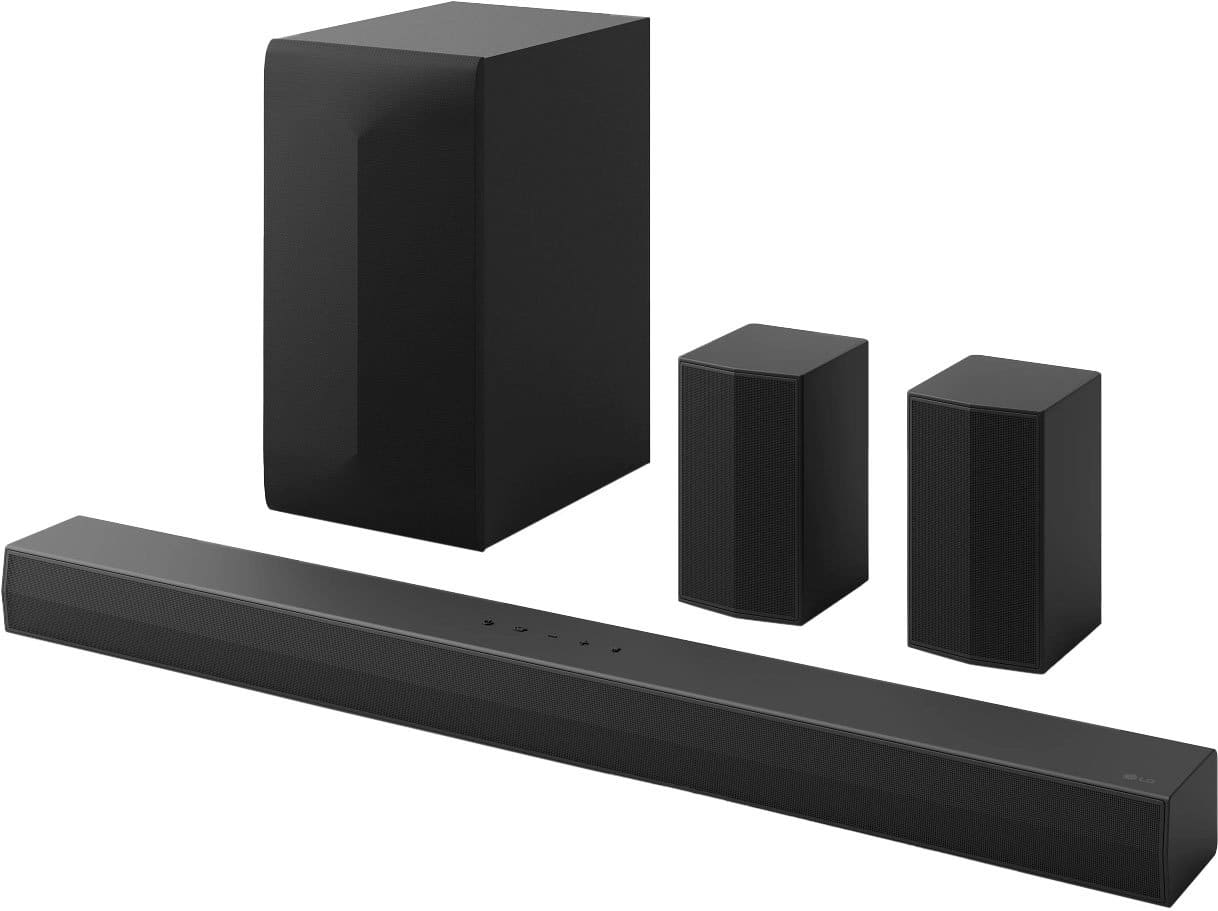
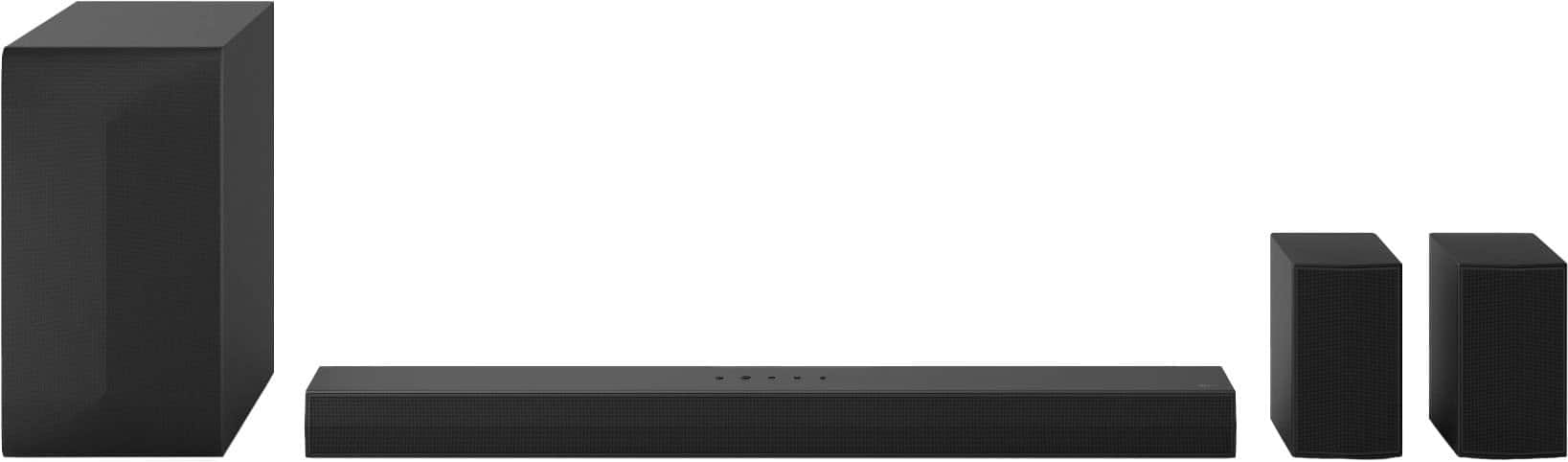
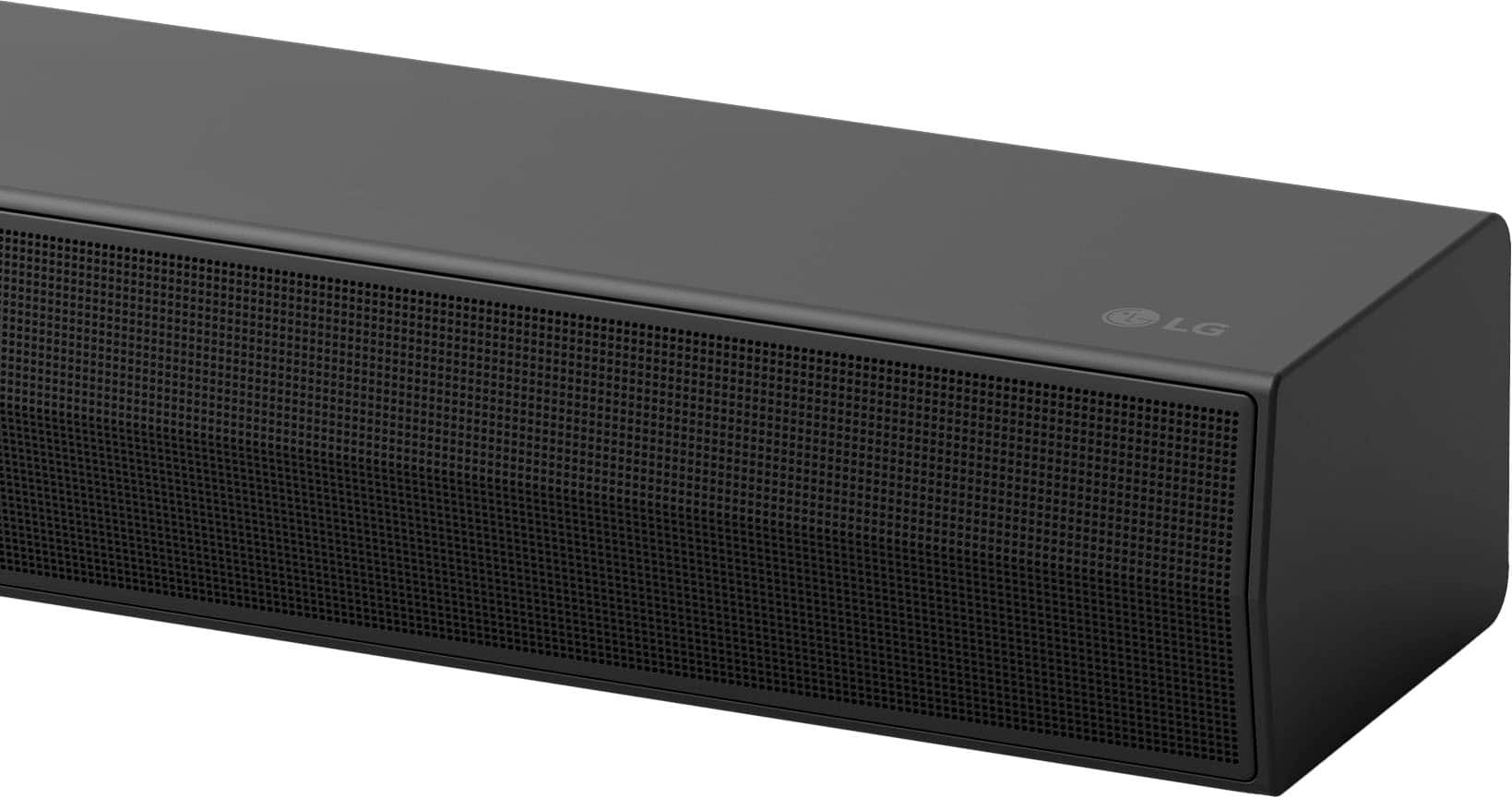
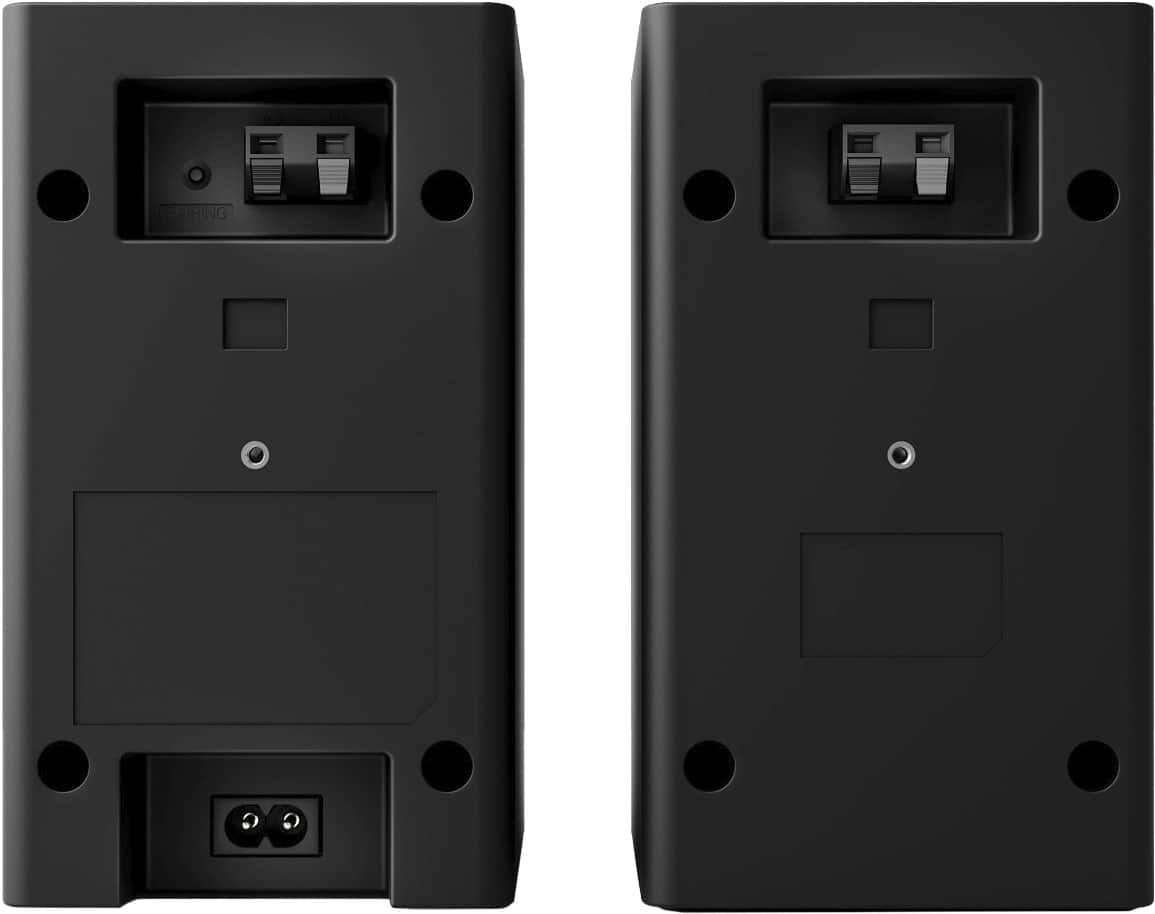
The LG S60TR, released in 2024, takes the opposite approach: why simulate surround sound when you can just put actual speakers where they belong? For $299.99, you get a complete 5.1 system—a 33.5-inch soundbar, a wireless subwoofer, and a pair of wireless rear speakers. This is remarkable value considering that just five years ago, a comparable system would have cost twice as much.
The technical specs tell an interesting story. The S60TR's total 440W power output is distributed across genuine channel separation: 40W each for front left and right, 40W for center, and 50W each for the rear speakers, with a hefty 220W dedicated to the subwoofer. This isn't marketing fluff—these are discrete amplifiers powering separate drivers, creating authentic directional audio that virtualization simply can't match.
What's particularly clever about LG's 2024 design is the wireless rear speaker implementation. While they call them "wireless," there's actually a cable connecting the two rear speakers (one needs power, the other is passive), but the signal from the soundbar to the rear assembly is completely wireless. This eliminates the biggest hassle of surround systems—running cables across your room—while keeping costs reasonable.
The S60TR includes LG's AI Sound Pro processing, which uses deep learning algorithms to analyze content and optimize audio settings automatically. While not as sophisticated as Sonos's processing, it does adapt the sound signature for different content types—boosting bass for action scenes, clarifying vocals for dialogue, and enhancing spatial effects for music.
This is where the fundamental difference between these approaches becomes most apparent. The Sonos Arc relies on eight internal woofers to generate bass. These are impressive drivers for their size, but they're constrained by the physical limitations of a slim soundbar. The Arc produces tight, controlled bass that's perfect for music and dialogue, but it lacks the visceral impact that makes movie explosions feel real.
I've tested the Arc extensively with everything from delicate jazz recordings to the opening sequence of Blade Runner 2049, and while the bass is always present and well-integrated, it never delivers that chest-thumping sensation that makes action movies truly immersive. To achieve that, you need Sonos's separate Sub, which costs an additional $749.
The LG S60TR, on the other hand, includes a dedicated 220W subwoofer that measures nearly 15 inches tall. This isn't a token addition—it's a serious piece of hardware that can move significant air. In my testing with the same Blade Runner sequence, the difference was immediately apparent. The deep synthesizer tones had weight and presence, while the Arc's internal drivers, impressive as they are, simply couldn't compete in terms of physical impact.
However, bass isn't just about volume—it's about integration. The LG's subwoofer can be overpowering if not properly adjusted, and finding the right balance between the main speakers and sub requires some tweaking. The Arc's internal bass, while more limited in extension, is seamlessly integrated from the factory.
Here's where things get interesting from a technical perspective. The Arc's virtualized surround works by exploiting psychoacoustic principles—essentially, tricks of human hearing. By precisely controlling the timing, phase, and frequency content of sounds, it can create the illusion that audio is coming from behind you, even though all the speakers are in front.
When I first demonstrated this to my family using the helicopter scene from Apocalypse Now, the effect was genuinely startling. The Arc creates a convincing sense of helicopters circling overhead, with sound appearing to move smoothly from front to back. This works best in rooms with reflective ceilings and walls, and the effect diminishes significantly in rooms with high ceilings or heavy acoustic treatment.
The LG S60TR's approach is more straightforward but ultimately more reliable. With actual speakers positioned behind your seating area, you get genuine surround separation that doesn't depend on room acoustics or psychoacoustic trickery. When a sound is supposed to come from behind you, it literally does. This creates more consistent immersion regardless of your room's characteristics.
However, the LG system has its own limitations. It supports Dolby Audio but not the more advanced Dolby Atmos or DTS:X formats that include height information. So while you get accurate left-right and front-back positioning, you miss out on overhead effects that are becoming increasingly common in modern movie mixes.
Both systems excel here, but through different methods. The Arc uses three dedicated tweeters arranged in a specific pattern to create an optimized "sweet spot" for dialogue reproduction. Combined with Sonos's Speech Enhancement feature, which uses machine learning to identify and boost vocal frequencies in real-time, the Arc delivers some of the clearest dialogue I've heard from any soundbar.
The LG S60TR takes a more traditional approach with its dedicated center channel speaker, which handles most dialogue in movie soundtracks. The Clear Voice Pro mode boosts vocal frequencies, though it requires manual activation and lacks the Arc's intelligent adaptation. In direct comparison, both systems deliver clear dialogue, but the Arc's processing gives it a slight edge in automatically handling problematic content like whispered conversations or heavily accented speech.
The technology gap between these systems' release dates becomes most apparent in their smart capabilities. The Sonos Arc, despite being four years old, continues to receive regular updates that keep it competitive with newer products. Built-in Amazon Alexa and Google Assistant mean you can control the soundbar with voice commands, ask about the weather, or play music from streaming services without touching a remote.
Apple AirPlay 2 support allows seamless streaming from iOS devices, and the Sonos ecosystem enables multi-room audio throughout your home. I particularly appreciate how the Arc can automatically lower its volume when you receive a phone call on a connected iPhone—small touches that demonstrate thoughtful integration.
The LG S60TR, being a 2024 release, supports modern connectivity standards but focuses more on basic functionality. Bluetooth streaming works well for music, and the WOW Interface provides seamless integration with LG TVs, allowing control of both devices with a single remote. However, it lacks voice assistants, multi-room capabilities, or advanced streaming features.
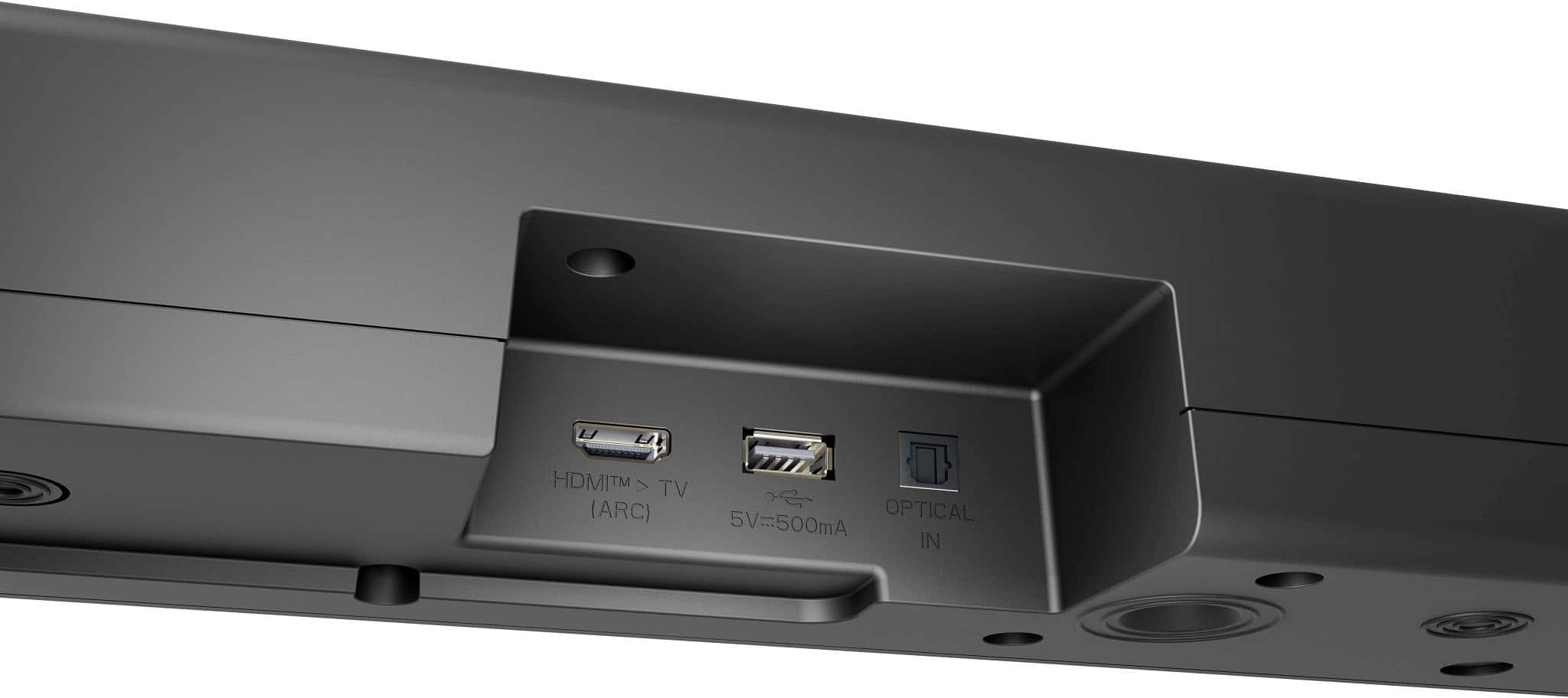
Here's where your living situation becomes crucial. Setting up the Arc is genuinely plug-and-play—connect one HDMI cable to your TV's eARC port, plug in the power cable, and follow the app instructions. The Trueplay tuning process takes about five minutes, and you're done. I've set up dozens of soundbars over the years, and few match the Arc's simplicity.
The LG S60TR requires more planning. You'll need to position the subwoofer (ideally not in a corner, despite what many people assume), place the rear speakers behind your seating area, and ensure the rear assembly has access to power. The initial pairing sequence is specific and must be followed exactly, which the included manual doesn't explain particularly well.
However, once properly set up, the LG system's physical presence creates a more dramatic transformation of your TV's audio. The difference between built-in TV speakers and a complete 5.1 system is more immediately apparent than the Arc's more subtle but sophisticated improvements.
At $299.99, the LG S60TR represents exceptional value in today's market. You're getting components that would have cost $800+ just a few years ago: a powered soundbar, wireless subwoofer, and rear speakers with wireless connectivity. For budget-conscious buyers who want immediate surround sound gratification, it's hard to argue with this proposition.
The Sonos Arc at $540.60 represents a different value calculation. You're paying for sophisticated processing, premium build quality, ongoing software updates, and integration with a mature ecosystem. To match the LG's physical configuration, you'd need to add Sonos's Sub ($749) and rear speakers (Sonos One SL pair at $399), bringing the total to $1,688. That's a significant investment, but it creates a system with capabilities the LG simply can't match.
From a longevity perspective, Sonos has a strong track record of supporting older products. The original Playbar from 2013 still receives updates, while most soundbar manufacturers abandon products within 2-3 years. LG's track record is less clear, though their 2024 models do support firmware over-the-air updates, suggesting longer-term support.
For dedicated home theater enthusiasts, both systems present interesting considerations. The Arc excels in mixed-use scenarios—it's equally capable with music streaming, TV dialogue, and movie soundtracks. Its processing adapts automatically to different content types, and integration with streaming services means it can serve as your primary audio system for all entertainment.
The LG S60TR is more purpose-built for movie watching. Its 5.1 configuration matches traditional home theater expectations, and the physical bass impact enhances action movies significantly. However, it's less versatile for music listening, and its smart features are limited compared to dedicated streaming solutions.
After extensive testing with both systems, here's my practical advice:
Choose the LG S60TR if you want immediate, dramatic improvement over TV speakers at an unbeatable price. It's perfect for movie enthusiasts with appropriate room layouts who value physical bass impact over processing sophistication. The complete system approach means you won't feel pressured to upgrade components later.
Choose the Sonos Arc if you value convenience, smart integration, and sophisticated audio processing. It's ideal for mixed-use scenarios, smaller spaces, or situations where rear speaker placement isn't practical. The higher initial cost is offset by exceptional build quality, ongoing updates, and ecosystem expandability.
Both represent excellent examples of how far soundbar technology has advanced. The LG proves that high-quality surround sound no longer requires premium pricing, while the Sonos demonstrates how intelligent processing can create impressive results from elegant hardware. Your choice ultimately depends on whether you prioritize immediate value and physical impact (LG) or long-term flexibility and processing sophistication (Sonos).
The soundbar market continues evolving rapidly, but both of these approaches—complete hardware systems and premium processing—seem likely to coexist, serving different user needs and preferences. Whichever you choose, you'll enjoy a dramatic upgrade over built-in TV speakers and join the ranks of people who wonder how they ever watched movies without proper sound.
| Sonos Arc Wireless Sound Bar ($540.60) | LG S60TR 5.1 Channel Soundbar ($299.99) |
|---|---|
| Price & Value - What you get for your money | |
| $540.60 for soundbar only; requires $749 Sub + $399 rears for full surround | $299.99 includes complete 5.1 system with wireless sub and rear speakers |
| Audio Channels - How sound is distributed around your room | |
| 3.0.2 virtualized surround using upward-firing drivers and room reflections | True 5.1 with physical rear speakers and dedicated subwoofer placement |
| Total Power Output - Maximum volume and dynamic range capability | |
| 11 Class-D amplifiers (power not specified, estimated ~300W total) | 440W total: 220W sub, 80W fronts, 40W center, 100W rears |
| Bass Performance - Low-end impact for movies and music | |
| Eight internal woofers; tight but limited extension without separate Sub | Dedicated 220W wireless subwoofer (7.9" x 14.8" x 11.2") for visceral impact |
| Surround Sound Formats - Compatibility with modern movie audio | |
| Dolby Atmos, Dolby TrueHD, DTS:X, multichannel PCM | Dolby Digital, DTS Digital Surround (no Atmos or advanced formats) |
| Smart Features - Voice control and streaming capabilities | |
| Built-in Alexa & Google Assistant, AirPlay 2, multi-room Sonos ecosystem | Bluetooth streaming only, no voice assistants, basic app control |
| Setup Complexity - Installation requirements and room considerations | |
| Single HDMI eARC cable; automatic Trueplay room tuning via iOS app | Requires subwoofer placement, rear speaker positioning, and specific setup sequence |
| Room Correction - Audio optimization for your specific space | |
| Trueplay technology measures room acoustics and auto-adjusts sound | Manual EQ adjustments only; no automatic room compensation |
| Expandability - Future upgrade options | |
| Modular system: add Sub ($749) and rear speakers ($399) when budget allows | Complete system out of box; no meaningful expansion options |
| TV Integration - Compatibility and control convenience | |
| Universal HDMI eARC; some passthrough issues reported with LG OLEDs | Optimized for LG TVs with WOW Interface; standard connections for other brands |
| Dialogue Clarity - Speech intelligibility in movies and shows | |
| AI Speech Enhancement with three dedicated tweeters and machine learning | Clear Voice Pro mode; manual adjustment required for optimal clarity |
| Physical Footprint - Space requirements in your entertainment area | |
| Single 45" soundbar (3.4" H x 4.6" D); no additional components required | Soundbar + large subwoofer + rear speaker placement throughout room |
| Software Updates - Long-term feature additions and improvements | |
| Regular firmware updates since 2020 launch; strong 10+ year support history | Over-air updates supported but limited track record from LG |
The LG S60TR ($299.99) provides exceptional value by including a complete 5.1 system with wireless subwoofer and rear speakers for under $300. The Sonos Arc ($540.60) costs significantly more for just the soundbar, requiring additional purchases of a subwoofer ($749) and rear speakers ($399) to match the LG's configuration, totaling over $1,600.
For traditional home theater, the LG S60TR excels with true 5.1 surround sound from physical rear speakers and impactful bass from its dedicated subwoofer. The Sonos Arc offers more sophisticated Dolby Atmos processing for height effects but relies on virtualization rather than discrete surround channels.
The Sonos Arc excels for music with its sophisticated processing, streaming service integration, and balanced sound signature optimized for various genres. The LG S60TR can sound excellent for music but requires manual EQ adjustment and lacks the Arc's seamless streaming features and room correction technology.
The Sonos Arc leads in dialogue clarity with AI-powered Speech Enhancement that automatically adapts to content, plus three dedicated tweeters optimized for voice reproduction. The LG S60TR offers Clear Voice Pro mode and a dedicated center channel but requires manual adjustment for optimal speech clarity.
The Sonos Arc suits small apartments better due to its single-unit design that doesn't require rear speaker placement or a large subwoofer. Its virtualized surround works well in smaller spaces, while the LG S60TR requires room for a subwoofer and rear speakers that may not fit compact living spaces.
The Sonos Arc has a strong track record of long-term support, with regular firmware updates since its 2020 launch and Sonos supporting products for 10+ years. The LG S60TR supports over-the-air updates but LG's long-term software support history for soundbars is less established than Sonos's commitment.
We've done our best to create useful and informative comparisons to help you decide what product to buy. Our research uses advanced automated methods to create this comparison and perfection is not possible - please contact us for corrections or questions. These are the sites we've researched in the creation of this article: whathifi.com - soundandvision.com - en.community.sonos.com - cnet.com - worldwidestereo.com - abt.com - creativeaudio.net - target.com - sonos.com - worldwidestereo.com - businessinsider.com - en.community.sonos.com - youtube.com - bestbuy.com - mynavyexchange.com - youtube.com - consumerreports.org - avsforum.com - rentacenter.com - bestbuy.com - homechoicestores.com - oconsommateur.com - lg.com - bestbuy.com - samsung.com

Privacy Policy
Terms and Conditions - Affiliate Policy
Home Security
© Copyright 2008-2026.
11816 Inwood Rd #1211, Dallas, TX 75244