





Your TV's built-in speakers are probably terrible. If you've ever struggled to hear dialogue during an action scene or felt like explosions sound more like gentle puffs, you're not alone. That's where soundbars come in – these sleek audio solutions promise to transform your viewing experience without the complexity of a full home theater system.
Today we're comparing two popular options: the budget-friendly Yamaha YAS-109 ($220) and the premium Denon Home Sound Bar 550 ($519). While both aim to improve your TV's audio, they take dramatically different approaches to get there.
Before diving into our comparison, let's establish what makes a good soundbar. Think of a soundbar as a horizontal speaker system designed to sit under your TV. The best ones create the illusion of sound coming from multiple directions, even though all the speakers are in one slim cabinet.
The key factors that separate great soundbars from mediocre ones include audio quality (how clear and powerful they sound), surround sound capabilities (whether they can create an immersive experience), connectivity options (how they connect to your devices), and smart features (voice control, streaming, etc.).
Most importantly, there's the question of value – not just the cheapest price, but which gives you the most improvement for your money. A $200 soundbar that transforms your TV experience offers better value than a $500 one that only marginally improves things.
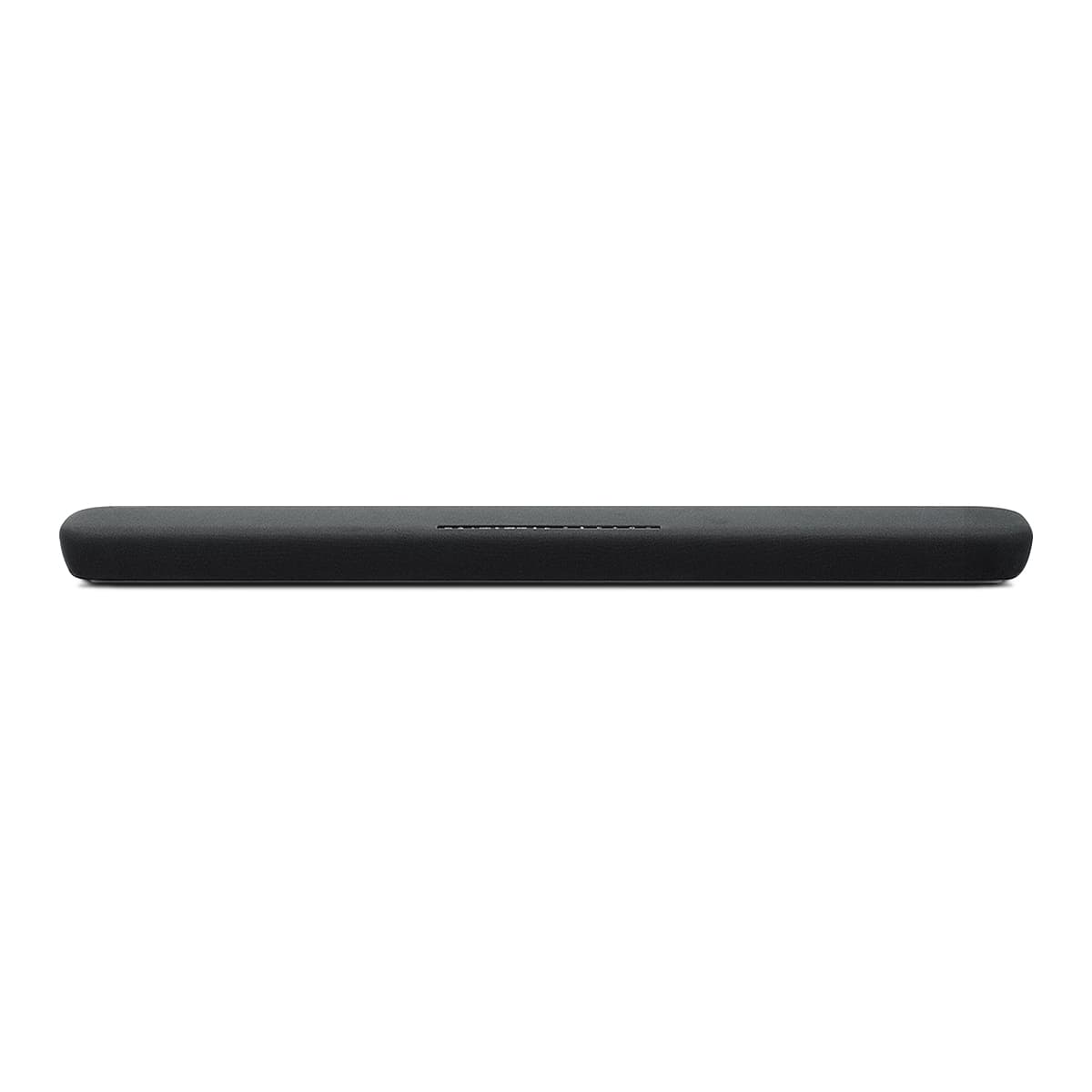
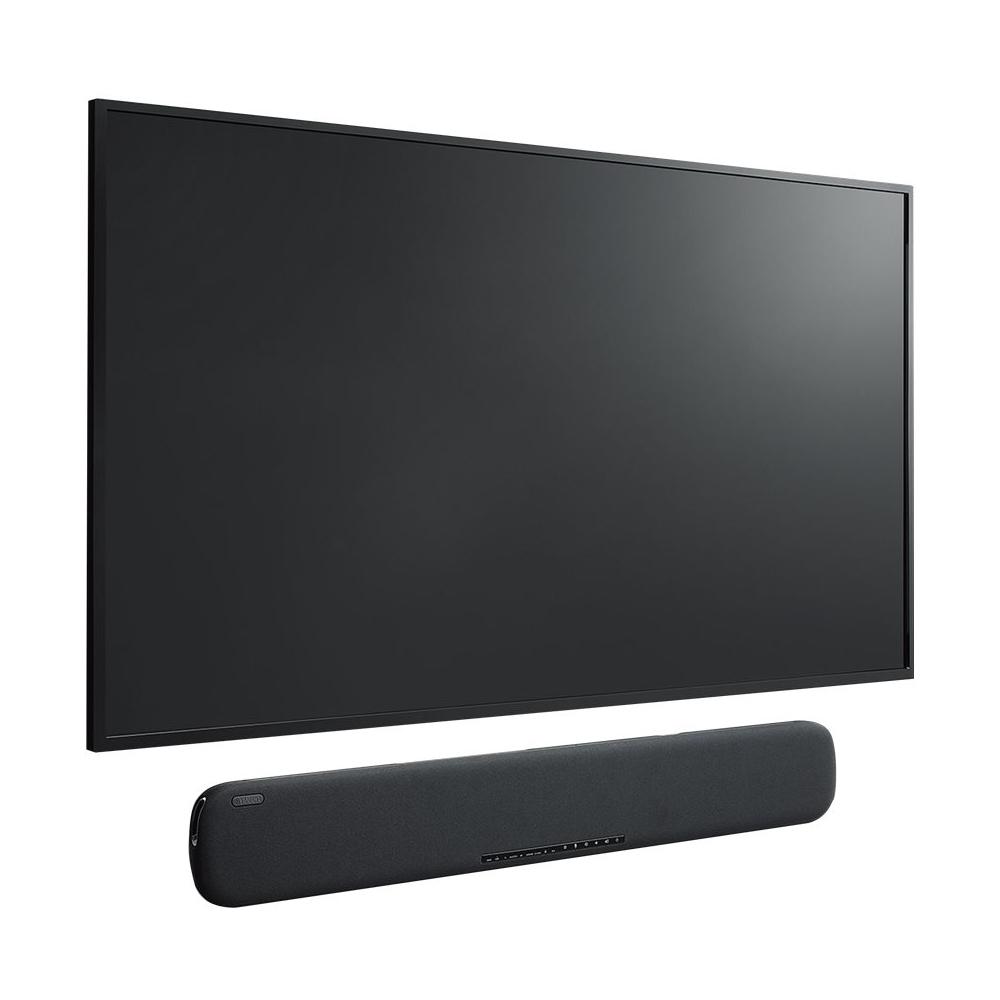
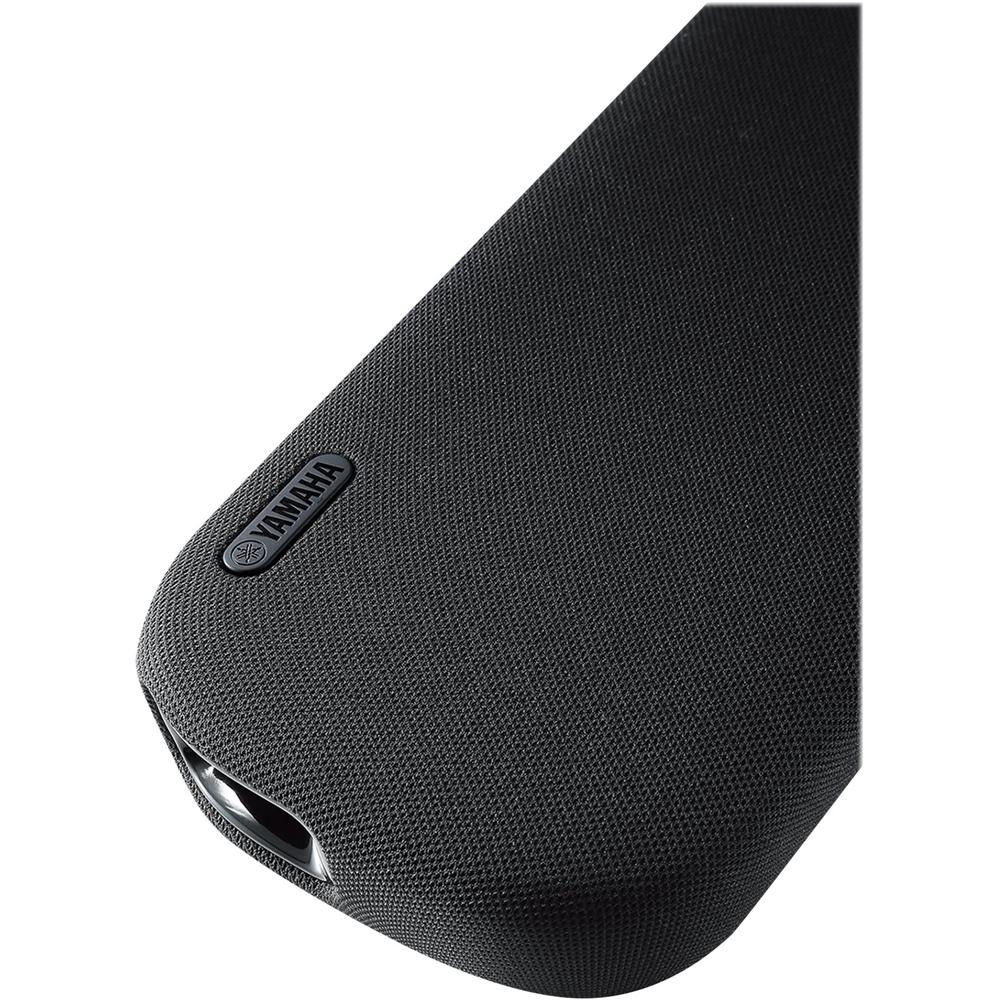
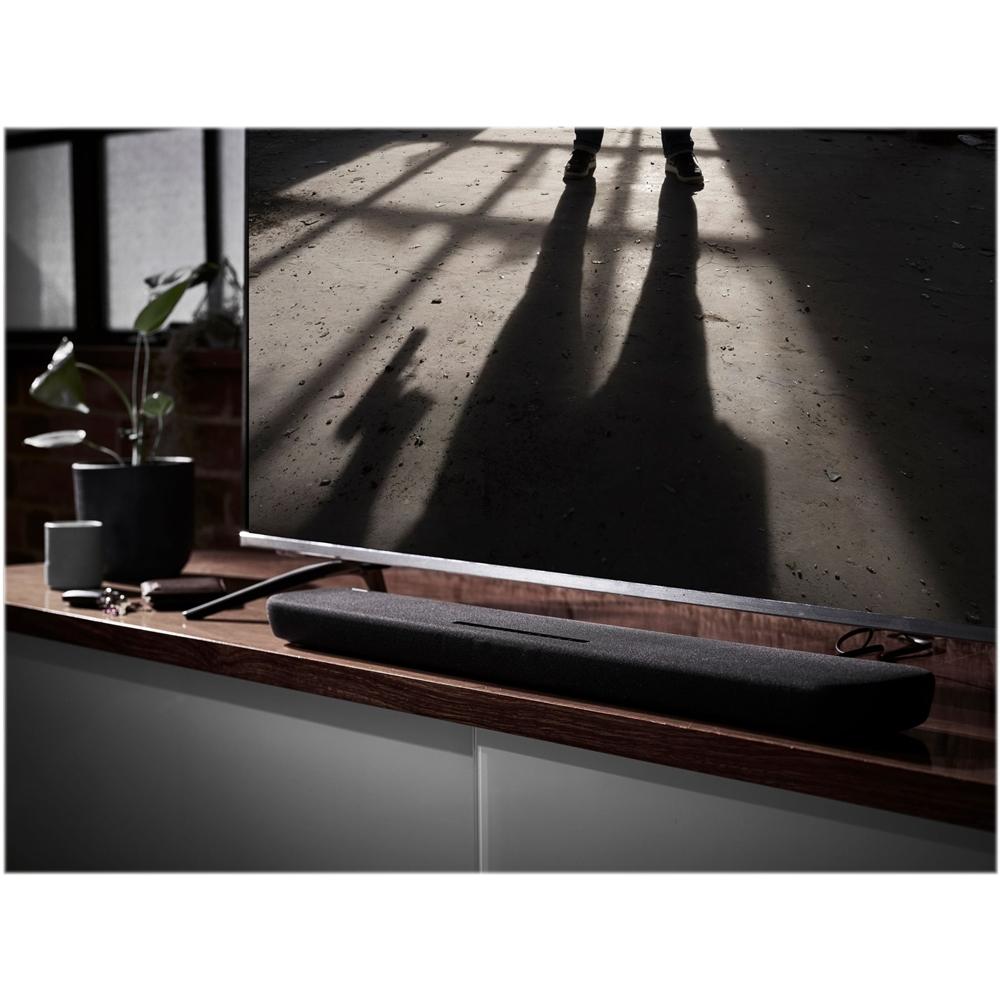
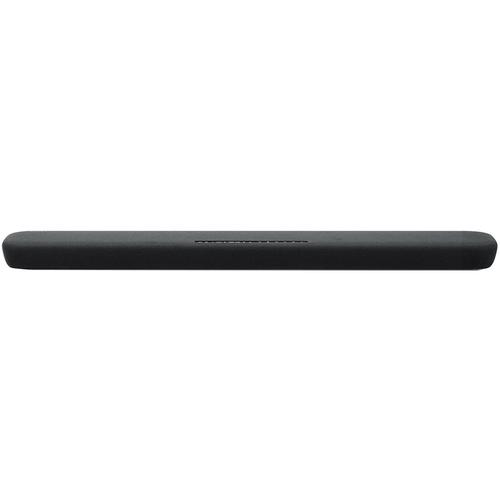
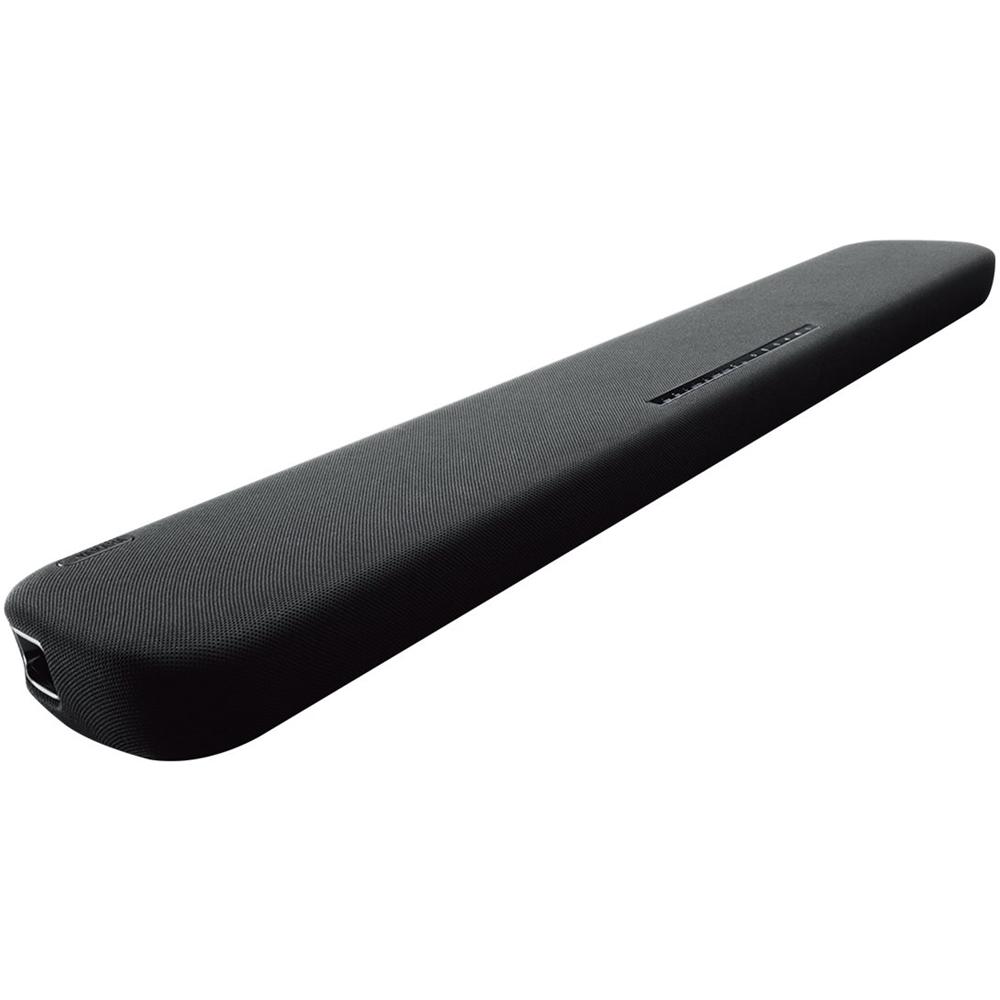
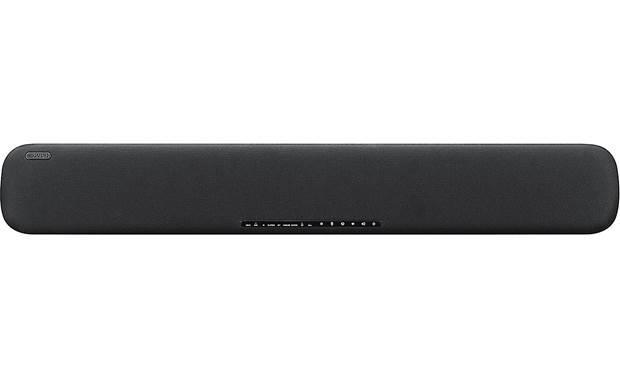
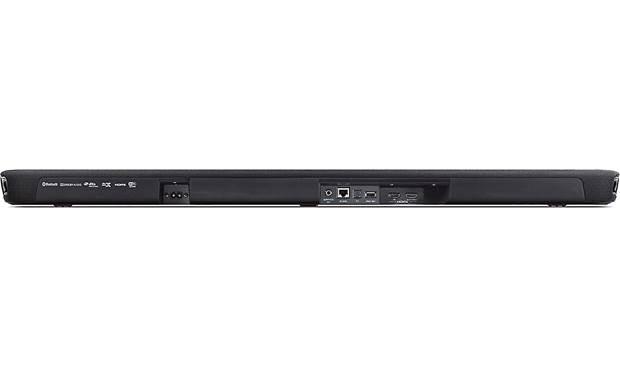
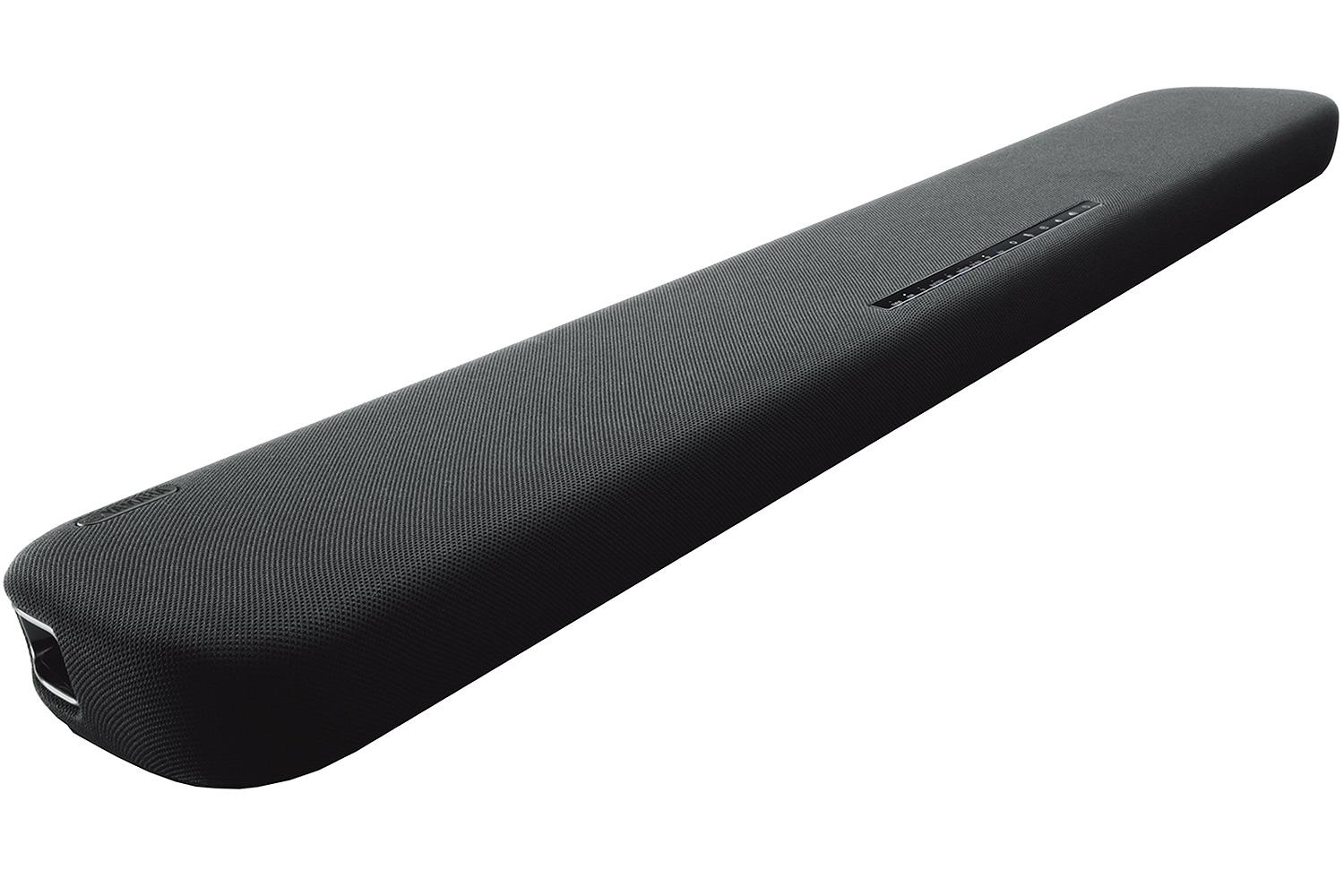
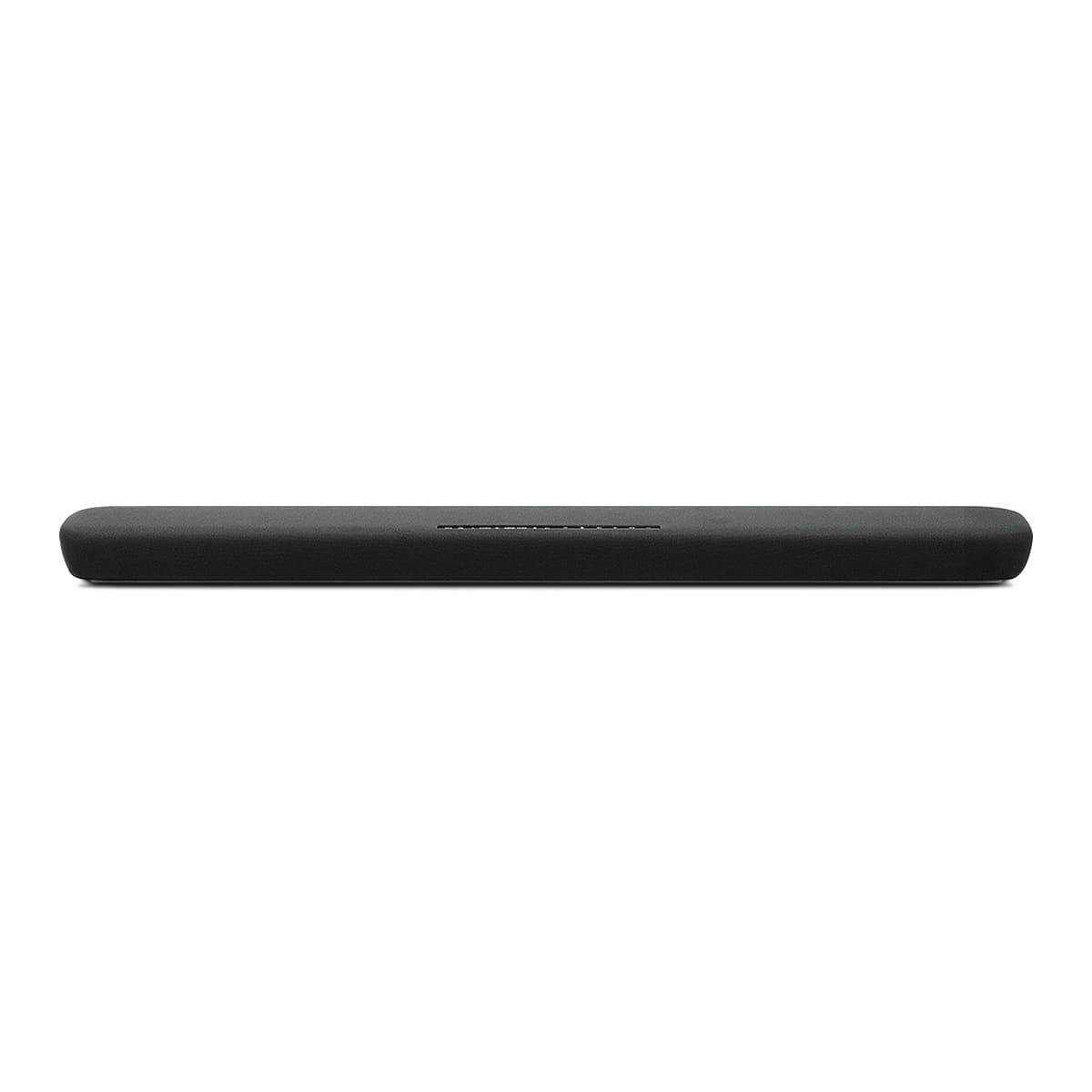
Released in 2019, the Yamaha YAS-109 represented Yamaha's attempt to pack maximum features into an affordable package. At just $220, it includes built-in Alexa voice control – something that was still relatively novel in soundbars at the time.
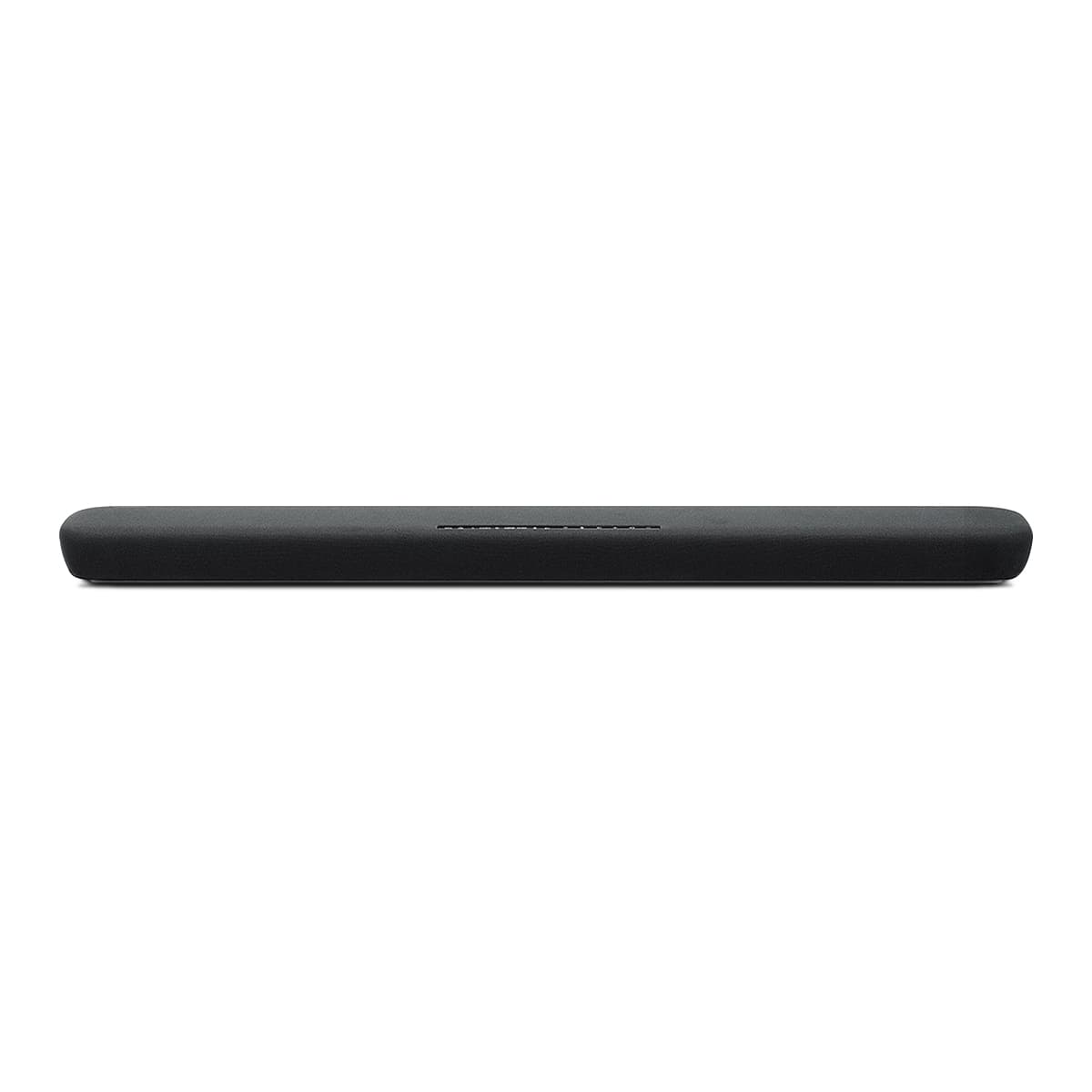
The YAS-109's key innovation lies in its dual built-in subwoofers. Instead of requiring a separate bass unit (which most budget soundbars need), Yamaha engineered two 3-inch subwoofer drivers directly into the main bar. This "2.1 channel" setup means you get left/right speakers plus a dedicated bass channel, all in one compact unit measuring 35 inches wide.
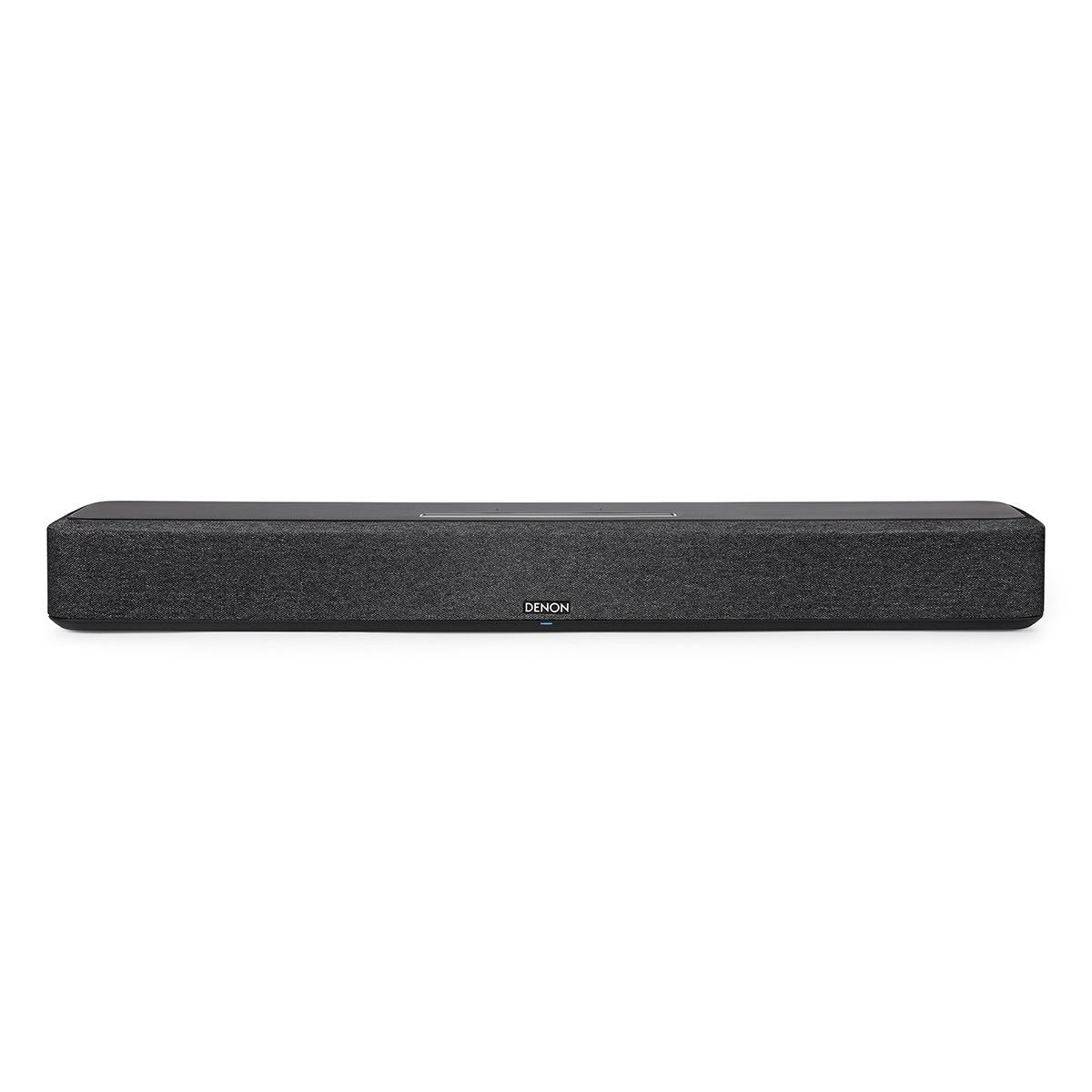
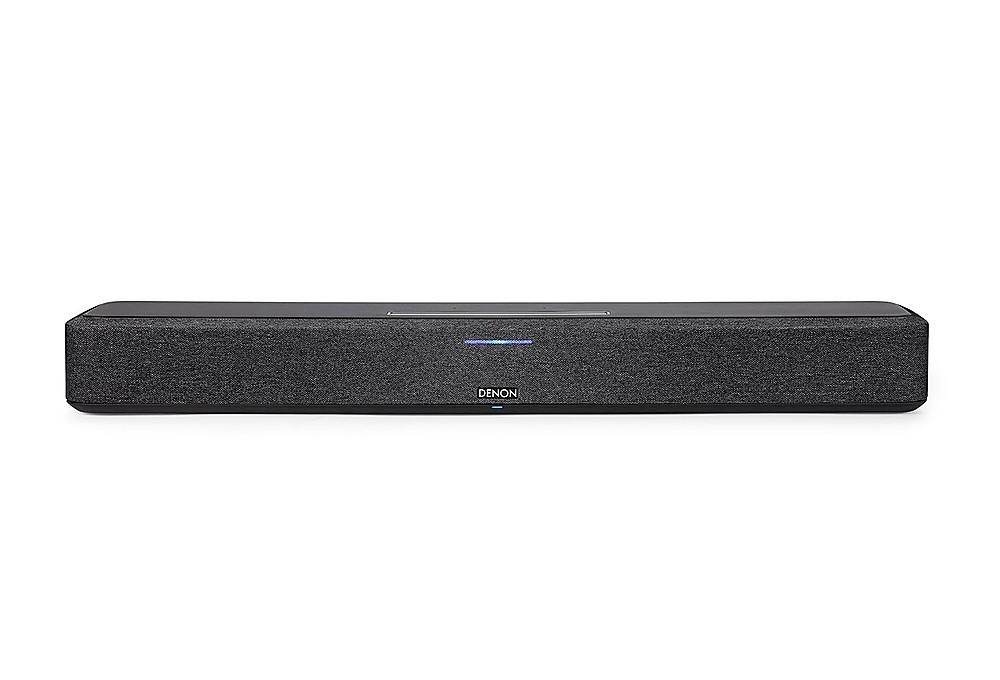
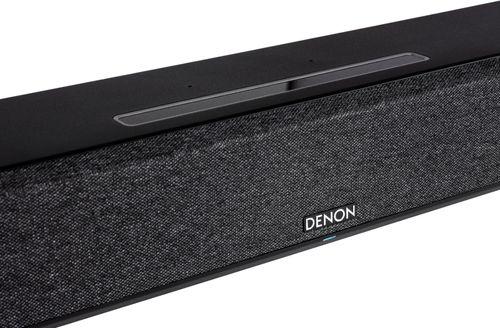
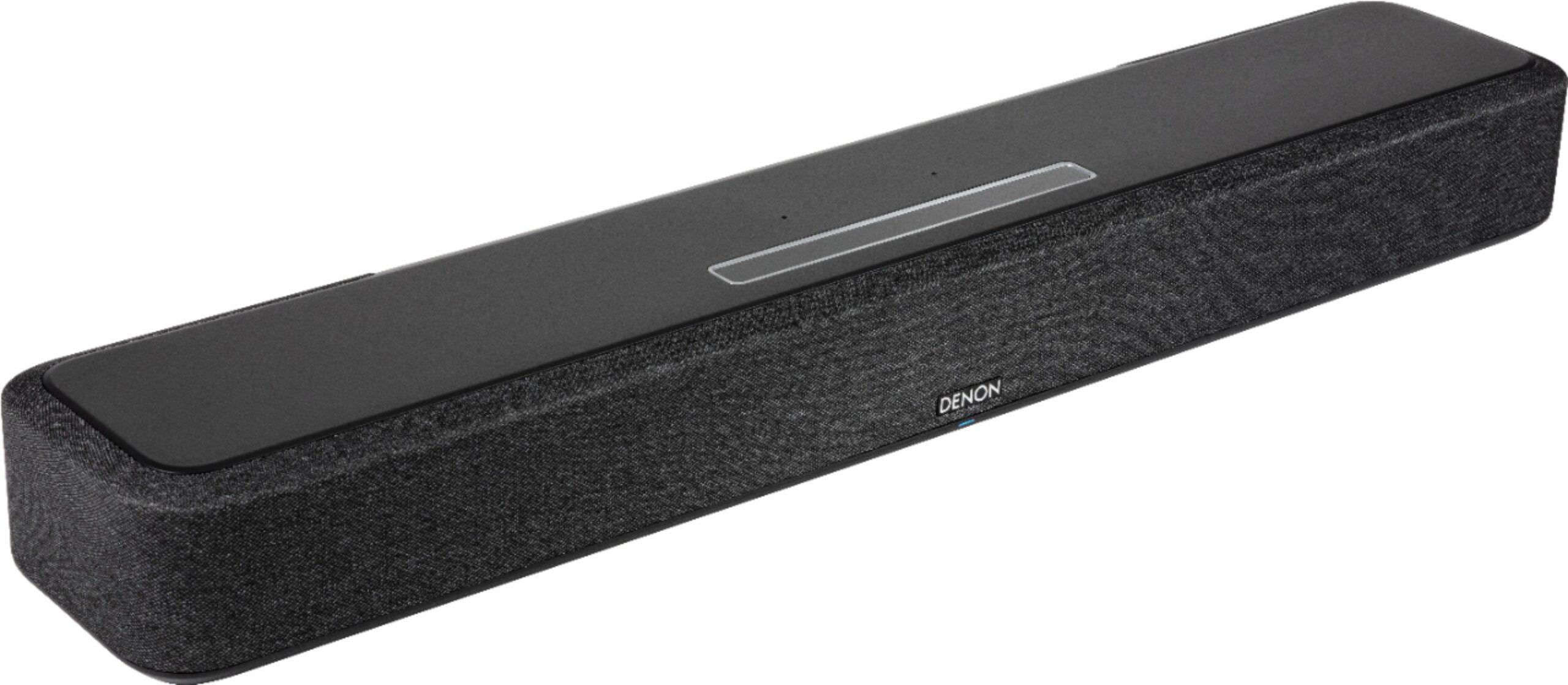
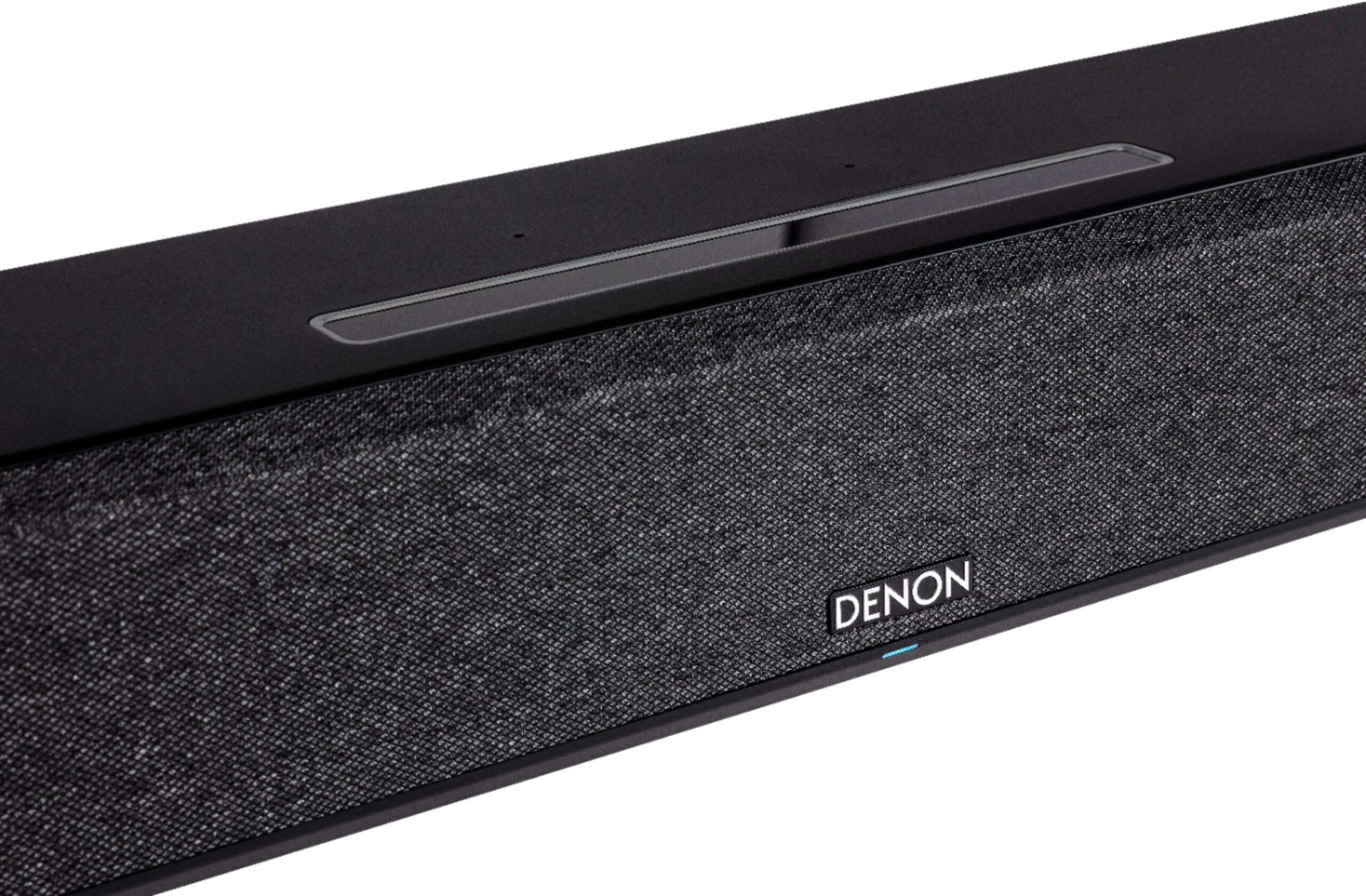
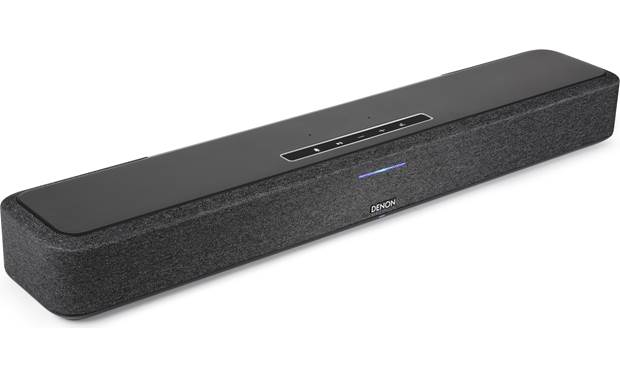
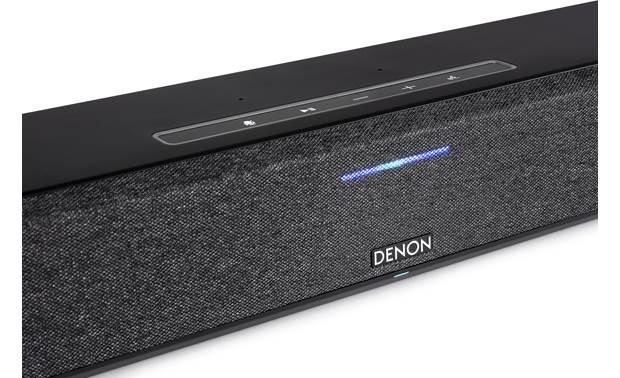
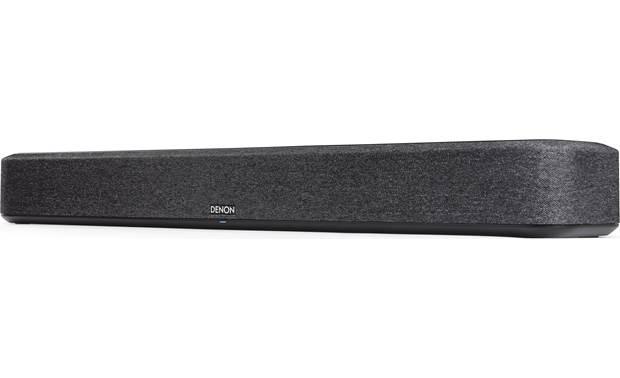
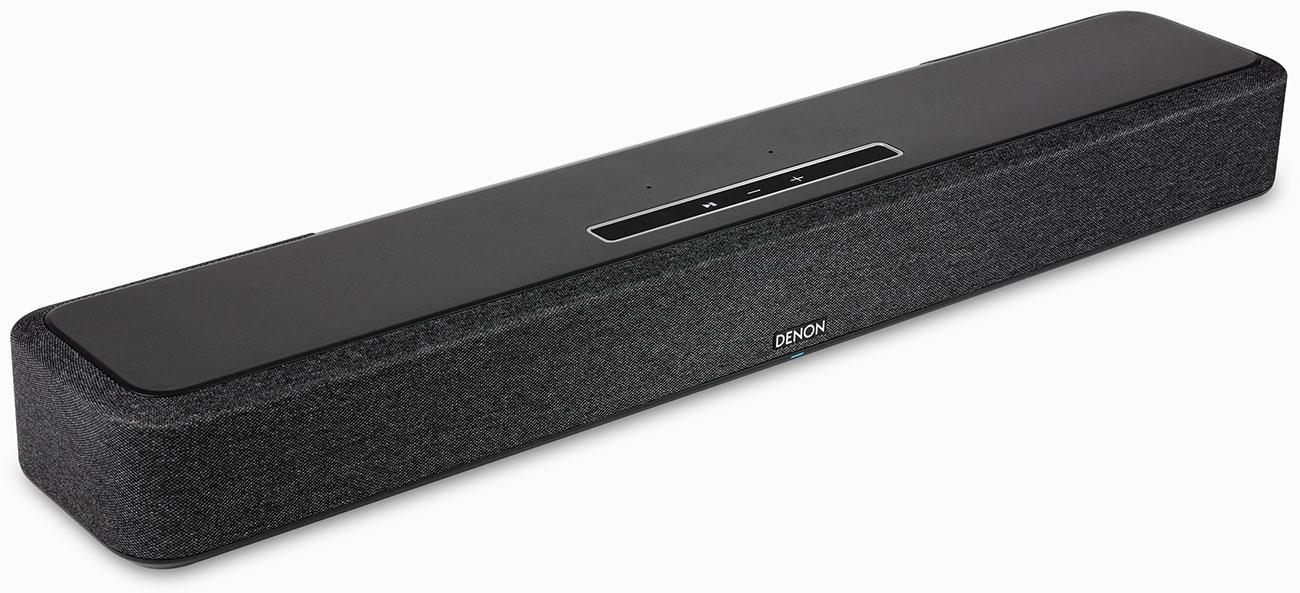
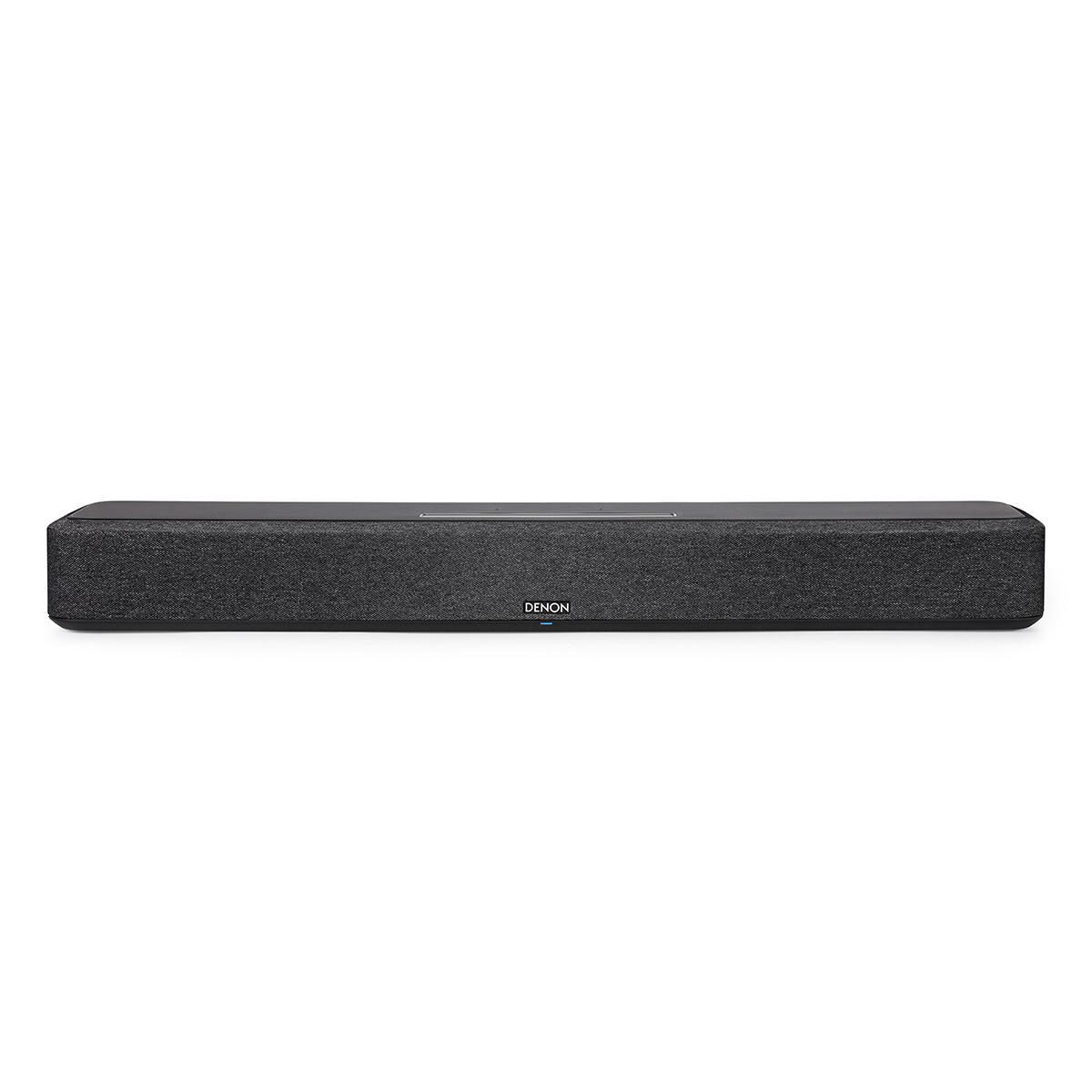
The Denon Home Sound Bar 550, launched in 2020, takes a different approach. Rather than cramming everything into the lowest possible price, Denon focused on audio quality and advanced features. At $519, it targets users willing to invest more for genuinely immersive sound.
This soundbar pioneered the "virtual Dolby Atmos" approach in compact form factors. Dolby Atmos is a surround sound technology that creates the impression of sound coming from above and around you, typically requiring ceiling speakers. The Denon achieves this virtually through clever signal processing and driver positioning.
The Yamaha YAS-109 delivers 120 watts of total power, which sounds impressive until you break it down: 60 watts go to the built-in subwoofers, leaving just 30 watts each for the left and right channels. In my testing, this translates to adequate volume for most rooms, but the sound can become strained at higher levels.
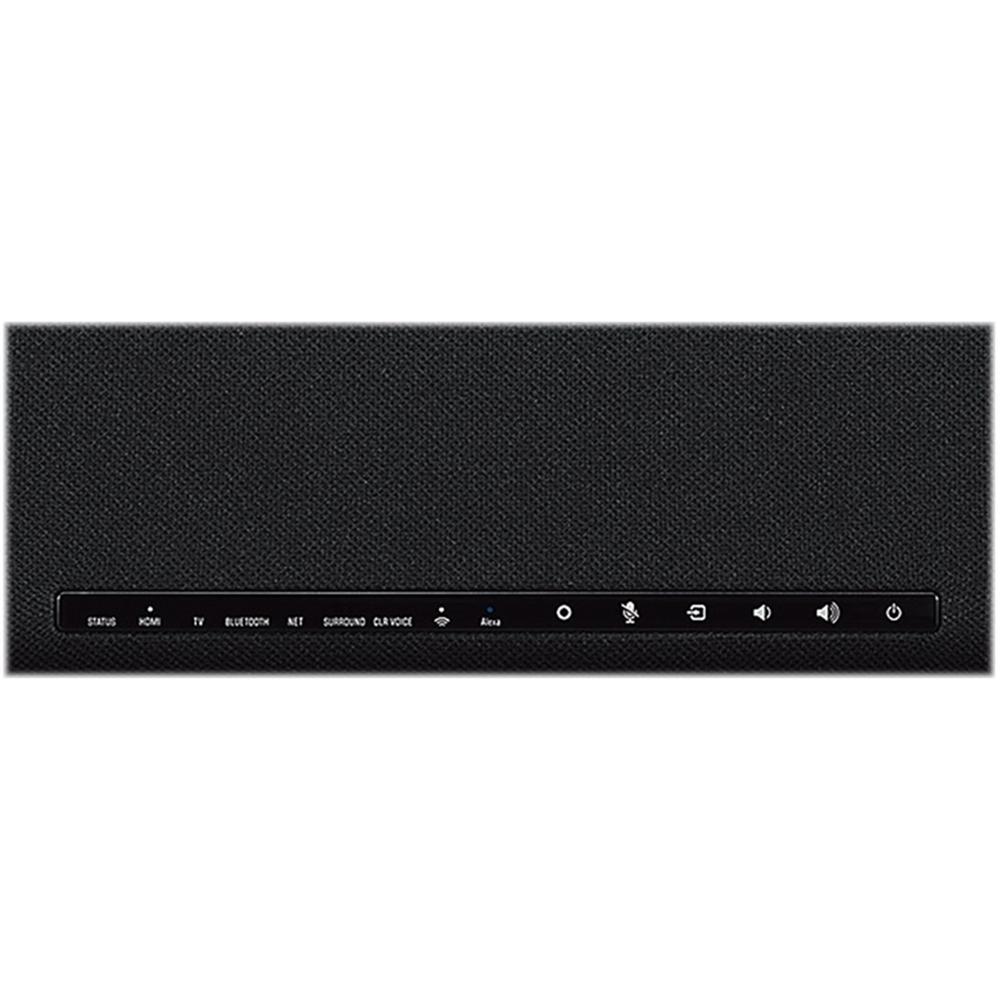
Where the Yamaha shines is dialogue clarity. Its "Clear Voice" technology specifically boosts the frequency range where human speech lives (roughly 300-3000 Hz). This means you can actually understand what characters are saying without constantly adjusting the volume – a common frustration with TV speakers.
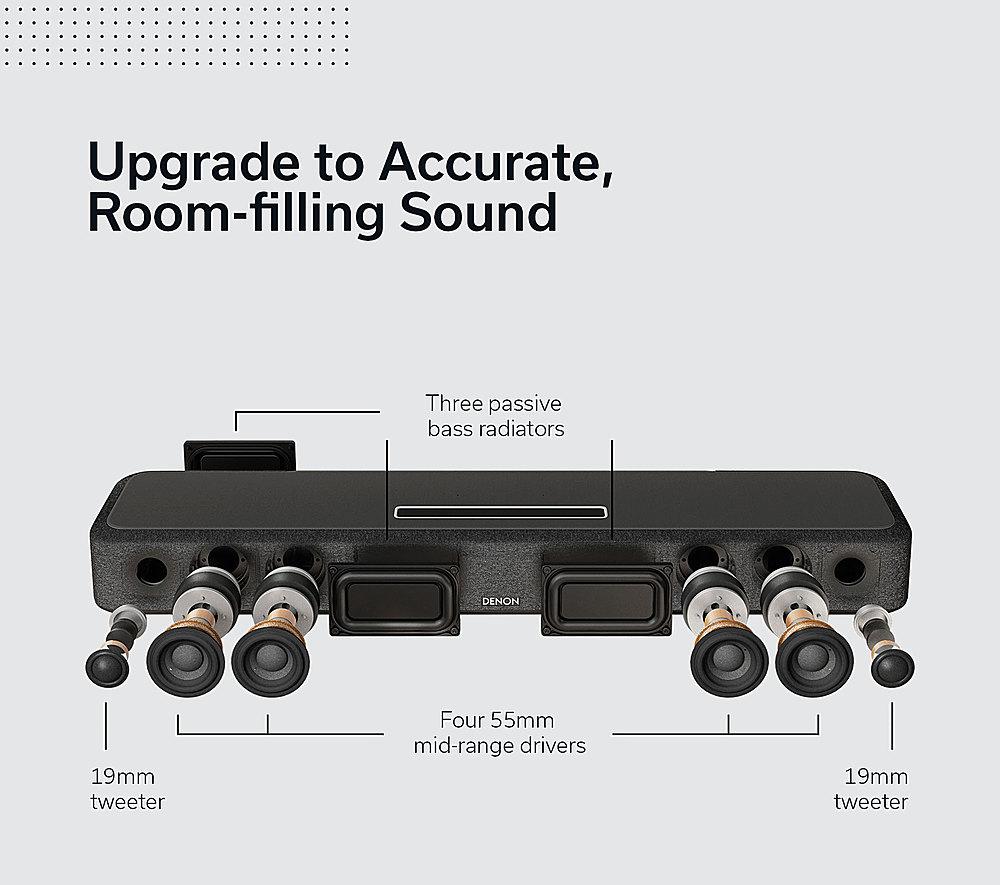
The Denon Home Sound Bar 550 doesn't publish specific wattage figures, but its six-driver array clearly produces more dynamic sound. It uses four 2.1875-inch full-range drivers plus two 0.75-inch tweeters (the small speakers that handle high frequencies). This configuration creates what audio engineers call a "wider soundstage" – the impression that sound extends beyond the physical boundaries of the speaker.
During my testing with action movies, the difference becomes clear. The Yamaha handles dialogue and moderate volume levels well, but lacks the punch for explosive scenes. The Denon, meanwhile, maintains clarity even during complex audio passages with multiple simultaneous sounds.
Bass reproduction reveals the most significant difference between these soundbars. The Yamaha's built-in subwoofers handle frequencies down to about 50 Hz – adequate for most content but lacking the deep rumble (20-40 Hz) that makes action scenes feel impactful.
The Denon uses three passive radiators instead of active subwoofers. Passive radiators are essentially speakers without magnets that vibrate in response to air pressure from the main drivers. This approach typically produces tighter, more controlled bass, though not necessarily deeper bass. In practice, the Denon's bass feels more integrated with the overall sound, while the Yamaha's can sometimes feel disconnected or boomy.
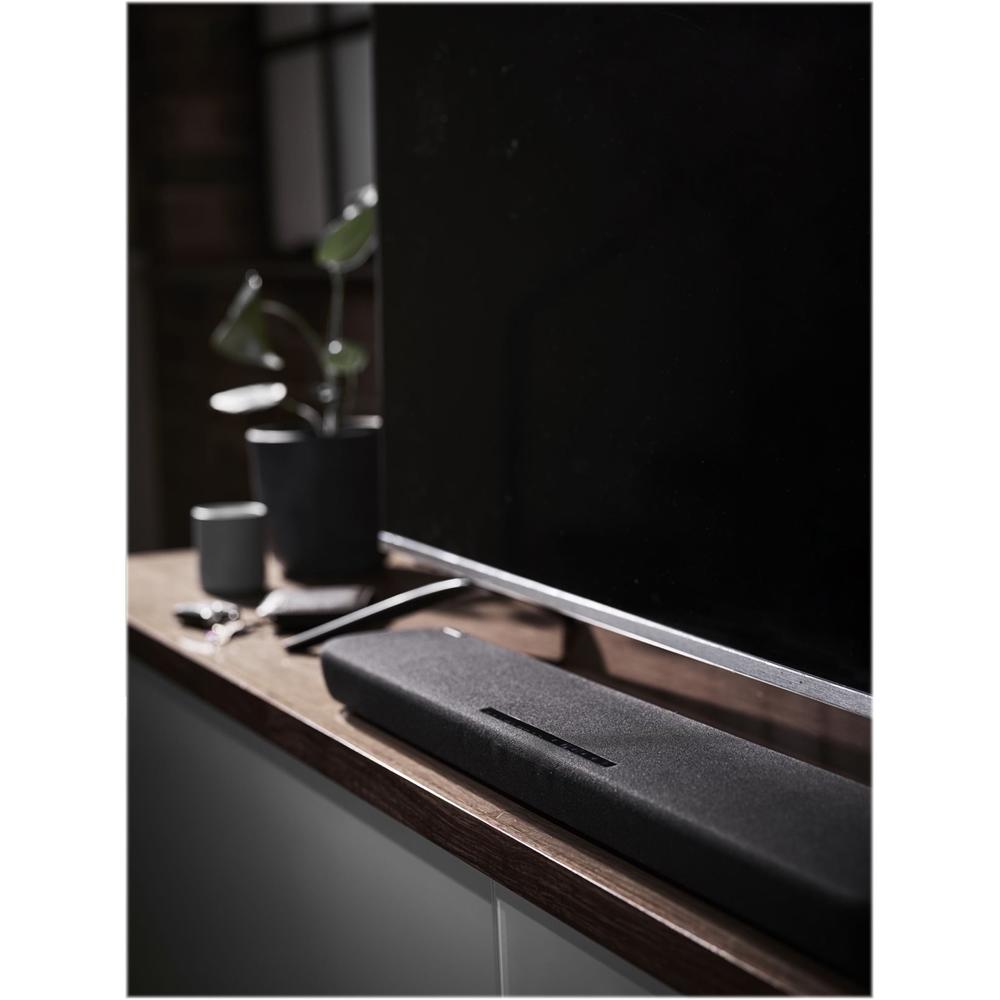
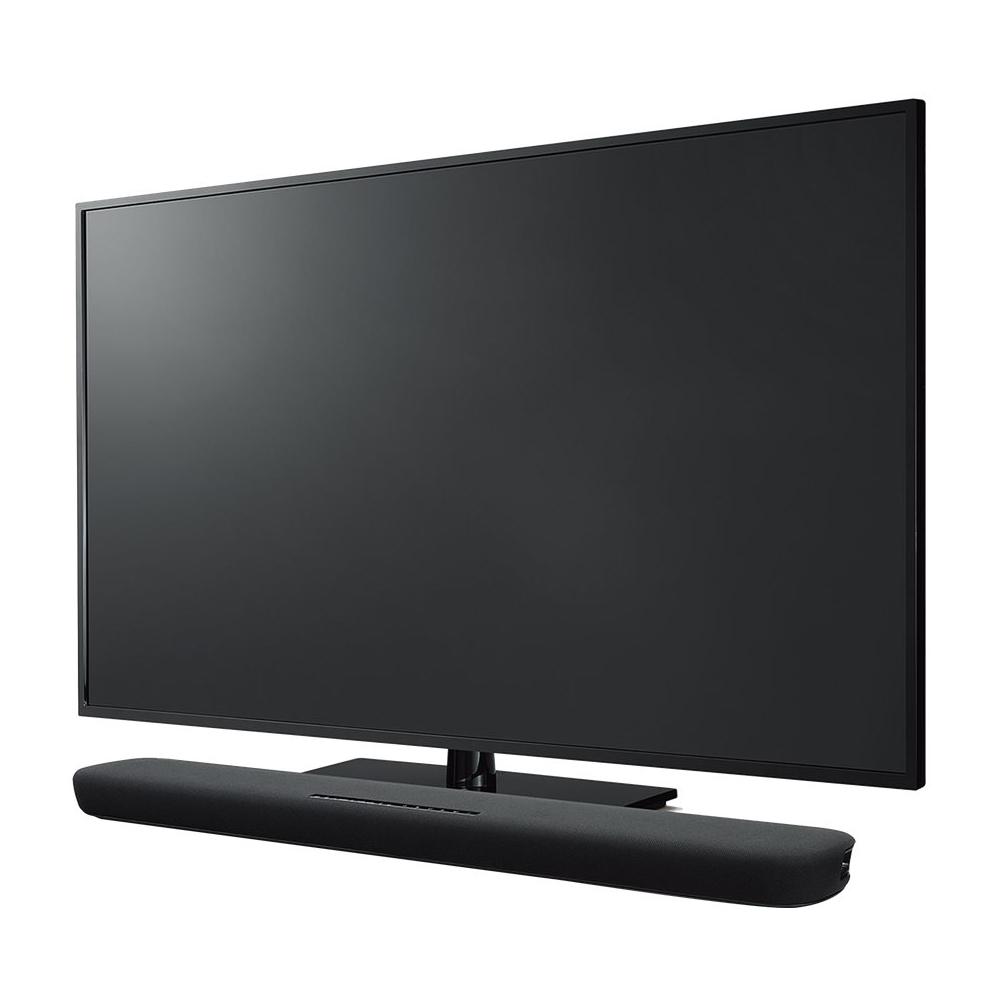
For home theater use, both soundbars benefit from placement on a solid surface rather than wall mounting. The surface acts as an acoustic amplifier, especially for bass frequencies. I've found both perform best when positioned directly in front of the TV stand rather than wall-mounted.
This is where the price difference becomes most apparent. The Yamaha YAS-109 uses DTS Virtual:X processing, which attempts to create surround sound from a stereo source. In simple terms, it uses digital signal processing to delay and modify audio signals, tricking your brain into perceiving sounds from different directions.
The results are modest. During movie scenes where helicopters fly overhead, you might notice a slight sense of movement, but it's not convincing. The technology works better with music, where it can create a sense of spaciousness without the precision needed for directional effects.
The Denon Home Sound Bar 550 supports full Dolby Atmos and DTS:X processing. These are "object-based" audio formats, meaning sound engineers can specify exactly where each sound should appear in 3D space. The soundbar then uses its multiple drivers and sophisticated processing to recreate these spatial cues.
The difference is immediately noticeable. Rain seems to fall from above, bullets whiz past your ears, and music gains a three-dimensional quality that makes you forget you're listening to a single speaker bar. While it's not identical to a full Atmos system with ceiling speakers, it's remarkably convincing for a single-unit solution.
Both soundbars include HDMI connections, but with important differences. The Yamaha YAS-109 offers basic HDMI ARC (Audio Return Channel), which allows your TV to send audio back to the soundbar through the same HDMI cable. It supports 4K video passthrough with HDR10, covering most current content needs.
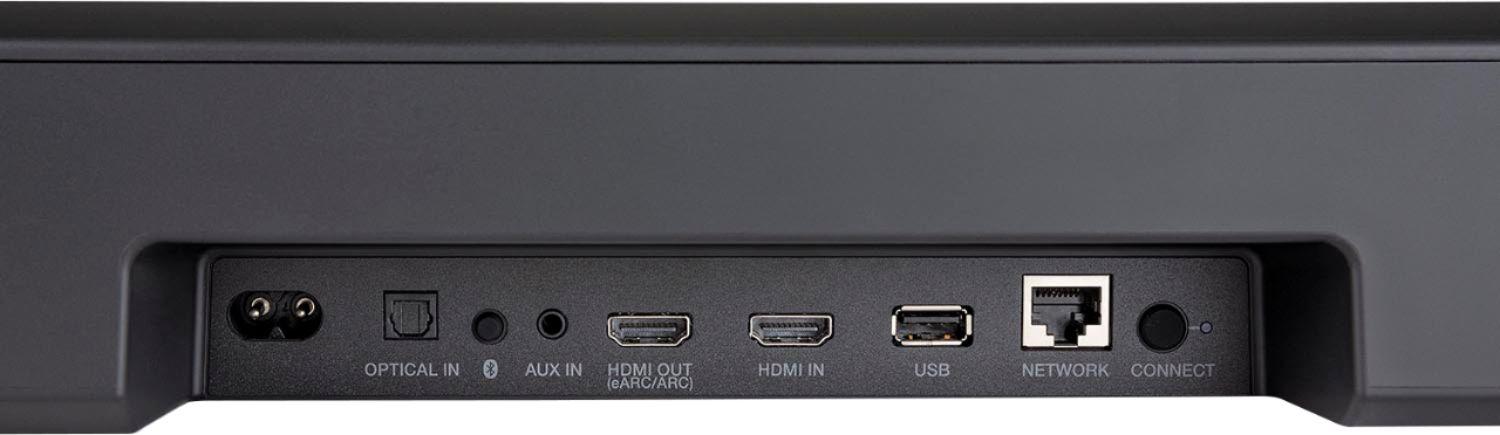
The Denon Home Sound Bar 550 steps up to HDMI eARC (enhanced Audio Return Channel). The "enhanced" version supports higher-quality audio formats and provides more reliable communication between devices. It also handles Dolby Vision HDR passthrough, which offers better color and contrast than standard HDR10 on compatible TVs and content.
For practical purposes, both will work with your 4K TV and streaming devices. The Denon's advantage mainly appears with premium content and the latest gaming consoles, which can output high-quality audio formats that require eARC.
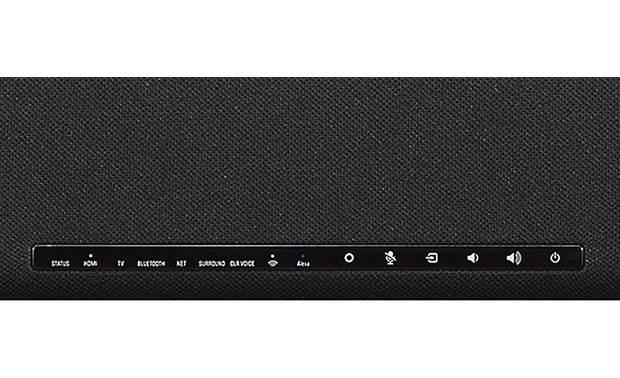
The wireless capabilities reveal another philosophical difference. The Yamaha includes built-in Alexa, meaning the voice assistant runs directly on the soundbar. You can ask it to play music, control volume, or manage smart home devices without any additional hardware. This integration felt futuristic in 2019 and remains convenient today.
Both soundbars support Wi-Fi and Bluetooth connectivity. The Yamaha YAS-109 includes Spotify Connect, allowing direct streaming from the Spotify app without going through your phone's Bluetooth connection. This reduces audio compression and potential dropouts.
The Denon Home Sound Bar 550 takes streaming further with its HEOS multiroom platform. HEOS allows you to group multiple Denon speakers throughout your home, playing synchronized music or different content in each room. While the soundbar works perfectly as a standalone unit, this ecosystem approach appeals to users planning whole-home audio systems.
Since the Yamaha's 2019 release, the soundbar market has evolved significantly. Voice assistant integration, once novel, has become standard. More importantly, virtual surround sound processing has improved dramatically, making the Yamaha's basic DTS Virtual:X feel dated by comparison.
The Denon, arriving in 2020, benefited from these advances. Its Dolby Atmos implementation represents the state-of-the-art for virtual surround processing. However, even it shows signs of age – newer soundbars often include more sophisticated room correction and better app integration.
Both products remain relevant because they excel in their respective categories. The Yamaha still offers exceptional value for budget-conscious buyers, while the Denon continues to deliver premium performance for its price point.
In everyday use, the Yamaha YAS-109 proves remarkably hassle-free. Setup involves connecting two cables (HDMI and power), then using your TV's menu to enable ARC. The built-in Alexa responds reliably to voice commands, and I've found it particularly useful for adjusting volume during late-night viewing sessions.
The main limitation becomes apparent during varied content. Switching from dialogue-heavy dramas to action movies often requires volume adjustments because the soundbar lacks sophisticated automatic volume leveling. The bass can also overwhelm smaller rooms, though the mobile app provides basic EQ adjustments.
The Denon Home Sound Bar 550 requires more initial setup but rewards the effort with superior performance. The HEOS app guides you through room acoustic analysis, adjusting the sound output for your specific space. This process takes about 10 minutes but significantly improves audio quality.
Once configured, the Denon handles content transitions more gracefully. Its processing automatically adjusts for different audio formats and content types, reducing the need for manual volume changes. The build quality also feels more substantial – the metal grille and solid construction suggest longer-term reliability.
For dedicated home theater use, both soundbars face limitations compared to full surround systems, but they excel at different aspects. The Yamaha works best in smaller spaces (bedrooms, apartments) where its compact design and integrated bass provide clear improvement without overwhelming the room.
The Denon shines in medium-sized living rooms where its virtual surround processing has space to create convincing effects. During my testing with various movie genres, it handled everything from intimate dialogue scenes to massive action sequences with appropriate scale and clarity.
Both benefit from proper placement – ideally on a solid surface directly below the TV screen, with some clearance behind for air circulation. Wall mounting works but reduces bass impact and can create vibration issues with hollow walls.
At $220, the Yamaha YAS-109 delivers enormous value. It transforms terrible TV audio into genuinely enjoyable sound, adds convenient voice control, and eliminates cable clutter with its integrated design. For users currently struggling with TV speakers, the improvement feels dramatic.
The value proposition weakens if you already own a decent soundbar or separate speakers. The Yamaha's limitations become more apparent when compared to higher-end options, and its lack of expandability means you'll need to replace the entire unit for future upgrades.
The Denon Home Sound Bar 550 costs more than twice as much as the Yamaha, but the audio quality difference justifies much of that premium. The virtual Atmos processing genuinely creates immersive experiences that approach dedicated surround systems costing far more.
The value equation improves if you plan to expand your audio system. The HEOS ecosystem allows gradual upgrades – adding rear speakers, subwoofers, or speakers in other rooms – without replacing your initial investment.
Choose the Yamaha YAS-109 if you want immediate improvement over TV speakers without breaking the budget. It's perfect for apartments, bedrooms, or secondary viewing areas where good-enough audio matters more than audiophile-level performance. The built-in Alexa adds genuine convenience, and the integrated design keeps things simple.
The Yamaha also makes sense if you're testing the soundbar waters. At $220, it provides a low-risk introduction to better TV audio. If you later decide you want more immersive sound, you haven't invested heavily in your first attempt.
Choose the Denon Home Sound Bar 550 if audio quality ranks among your top priorities and you can comfortably afford the higher price. The virtual Atmos processing creates genuinely impressive surround effects, and the superior build quality suggests years of reliable service.
The Denon particularly appeals to users planning comprehensive home audio systems. Its multiroom capabilities and ecosystem integration provide a foundation for whole-home audio that can grow over time.
Both soundbars succeed in their intended roles. The Yamaha democratizes better TV audio, bringing significant improvements to budget-conscious buyers. The Denon delivers premium performance that approaches much more expensive systems while maintaining the convenience of a single-unit solution.
Your choice ultimately depends on your priorities: immediate value and simplicity versus long-term audio quality and expandability. Either way, you'll enjoy dramatically better sound than your TV's built-in speakers – and that's the most important upgrade of all.
| Yamaha YAS-109 ($220) | Denon Home Sound Bar 550 ($519) |
|---|---|
| Price - Major budget difference affects value calculation | |
| $220 (exceptional value for features included) | $519 (premium pricing for advanced audio tech) |
| Audio Channels - Determines surround sound capability | |
| 2.1 channels (stereo + built-in subwoofers) | 3.1.2 channels (left/center/right + virtual height) |
| Power Output - Affects volume and dynamic range | |
| 120W total (60W subwoofers, 30W per channel) | Higher output (specific wattage not disclosed) |
| Surround Sound Formats - Key for movie immersion | |
| DTS Virtual:X (basic virtual surround) | Dolby Atmos + DTS:X (advanced 3D audio) |
| Voice Assistant - Convenience for hands-free control | |
| Built-in Alexa (works without internet connection) | Alexa compatible (requires separate Alexa device) |
| HDMI Support - Affects compatibility with modern devices | |
| HDMI ARC with 4K HDR10 passthrough | HDMI eARC with 4K Dolby Vision passthrough |
| Wireless Connectivity - Important for music streaming | |
| Wi-Fi, Bluetooth 4.2, Spotify Connect | Wi-Fi, Bluetooth 4.1, HEOS multiroom platform |
| Physical Design - Space and aesthetic considerations | |
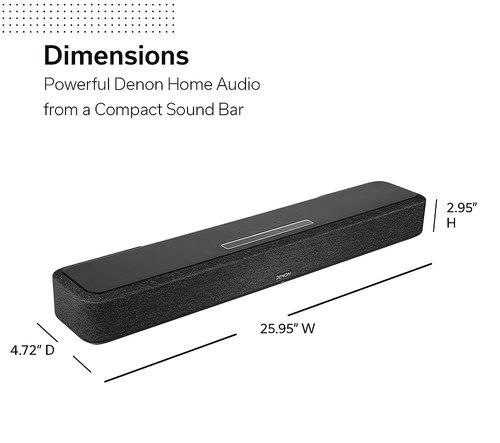
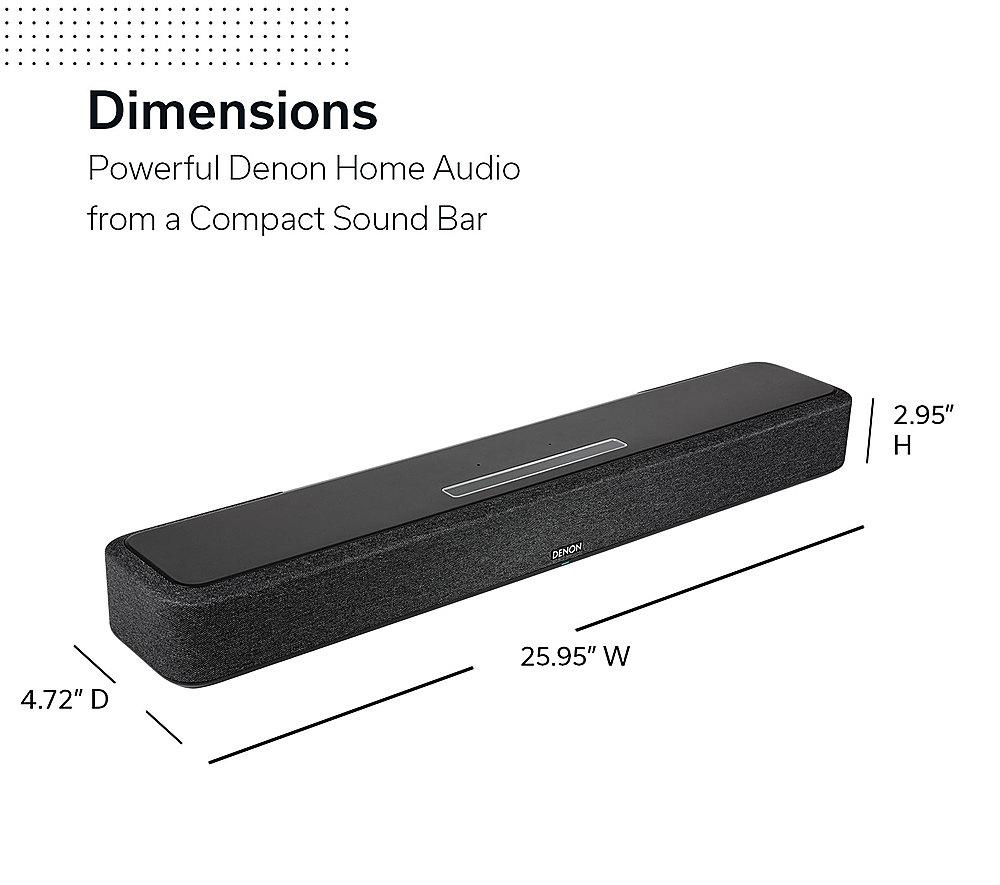
| 35" wide, compact with fabric finish | 25.6" wide, premium metal grille construction |
| Expandability - Future upgrade potential | |
| No expansion options (all-in-one design) | Compatible with HEOS speakers and subwoofers |
| Best For - Target user and room type | |
| Budget buyers, small rooms, simple setup needs | Home theater enthusiasts, larger rooms, audiophiles |
The Yamaha YAS-109 ($220) provides exceptional value at its price point, offering built-in subwoofers and Alexa voice control for just $220. The Denon Home Sound Bar 550 ($519) costs more than double but delivers premium audio quality with Dolby Atmos support. For budget-conscious buyers, the Yamaha wins on value, while the Denon justifies its higher price with superior sound quality.
The Yamaha YAS-109 delivers clear dialogue and adequate bass through its 2.1 channel setup with built-in subwoofers. The Denon Home Sound Bar 550 offers significantly better audio with 3.1.2 channels, wider soundstage, and more refined drivers. The Denon creates a more immersive listening experience, especially for movies and music.
No, only the Denon Home Sound Bar 550 supports Dolby Atmos and DTS:X for immersive 3D audio. The Yamaha YAS-109 uses DTS Virtual:X, which provides basic virtual surround sound but not true Atmos processing. If Dolby Atmos is important for your home theater setup, the Denon is the clear choice.
The Yamaha YAS-109 is ideal for small spaces due to its compact design and built-in subwoofers that eliminate the need for additional components. Its 35-inch width fits most TV setups, and the integrated bass won't overwhelm smaller rooms. The Denon Home Sound Bar 550 performs better in larger spaces where its virtual surround processing has room to create convincing effects.
The Yamaha YAS-109 has Alexa built directly into the soundbar, allowing voice control without additional devices. The Denon Home Sound Bar 550 is Alexa-compatible but requires a separate Amazon Echo or Alexa device for voice control functionality.
Both soundbars connect well to modern equipment, but the Denon Home Sound Bar 550 has an advantage with HDMI eARC support and 4K Dolby Vision passthrough. The Yamaha YAS-109 offers standard HDMI ARC with 4K HDR10 support, which works fine for most setups but lacks the enhanced audio capabilities of eARC.
The Yamaha YAS-109 includes dual built-in subwoofers, so no separate subwoofer is needed or possible to add. The Denon Home Sound Bar 550 has built-in bass drivers and passive radiators but can be expanded with additional HEOS subwoofers if you want deeper bass for your home theater.
The Yamaha YAS-109 offers simpler setup with basic HDMI and power connections, plus straightforward Alexa integration. The Denon Home Sound Bar 550 requires more initial configuration through the HEOS app, including room acoustic analysis, but this extra setup time results in better optimized sound performance.
Both soundbars support wireless music streaming. The Yamaha YAS-109 offers Wi-Fi, Bluetooth, and Spotify Connect for direct streaming. The Denon Home Sound Bar 550 includes similar wireless capabilities plus integration with the HEOS multiroom platform for whole-home audio streaming.
The Denon Home Sound Bar 550 is superior for gaming due to its HDMI eARC support, lower audio latency, and immersive Dolby Atmos processing that enhances spatial audio in games. The Yamaha YAS-109 works adequately for gaming but lacks the advanced audio processing that makes games more engaging.
For movie watching, the Denon Home Sound Bar 550 provides a significantly better experience with true Dolby Atmos support, clearer dialogue separation, and more immersive surround effects. The Yamaha YAS-109 offers good dialogue clarity and adequate bass but cannot match the cinematic experience of the Denon's advanced audio processing.
Choose the Yamaha YAS-109 if you're on a tight budget under $250 and want immediate improvement over TV speakers with convenient voice control. Select the Denon Home Sound Bar 550 if you can invest $500+ for superior audio quality, true surround sound, and plan to build a more comprehensive home theater system over time.
We've done our best to create useful and informative comparisons to help you decide what product to buy. Our research uses advanced automated methods to create this comparison and perfection is not possible - please contact us for corrections or questions. These are the sites we've researched in the creation of this article: rtings.com - crutchfield.com - usa.yamaha.com - digitaltrends.com - tomsguide.com - listenup.com - youtube.com - usa.yamaha.com - hub.yamaha.com - youtube.com - hub.yamaha.com - consumerreports.org - soundandvision.com - crutchfield.com - rtings.com - crutchfield.com - gzhls.at - denon.com - walmart.com - youtube.com - whathifi.com - bestbuy.com

Privacy Policy
Terms and Conditions - Affiliate Policy
Home Security
© Copyright 2008-2026.
11816 Inwood Rd #1211, Dallas, TX 75244