





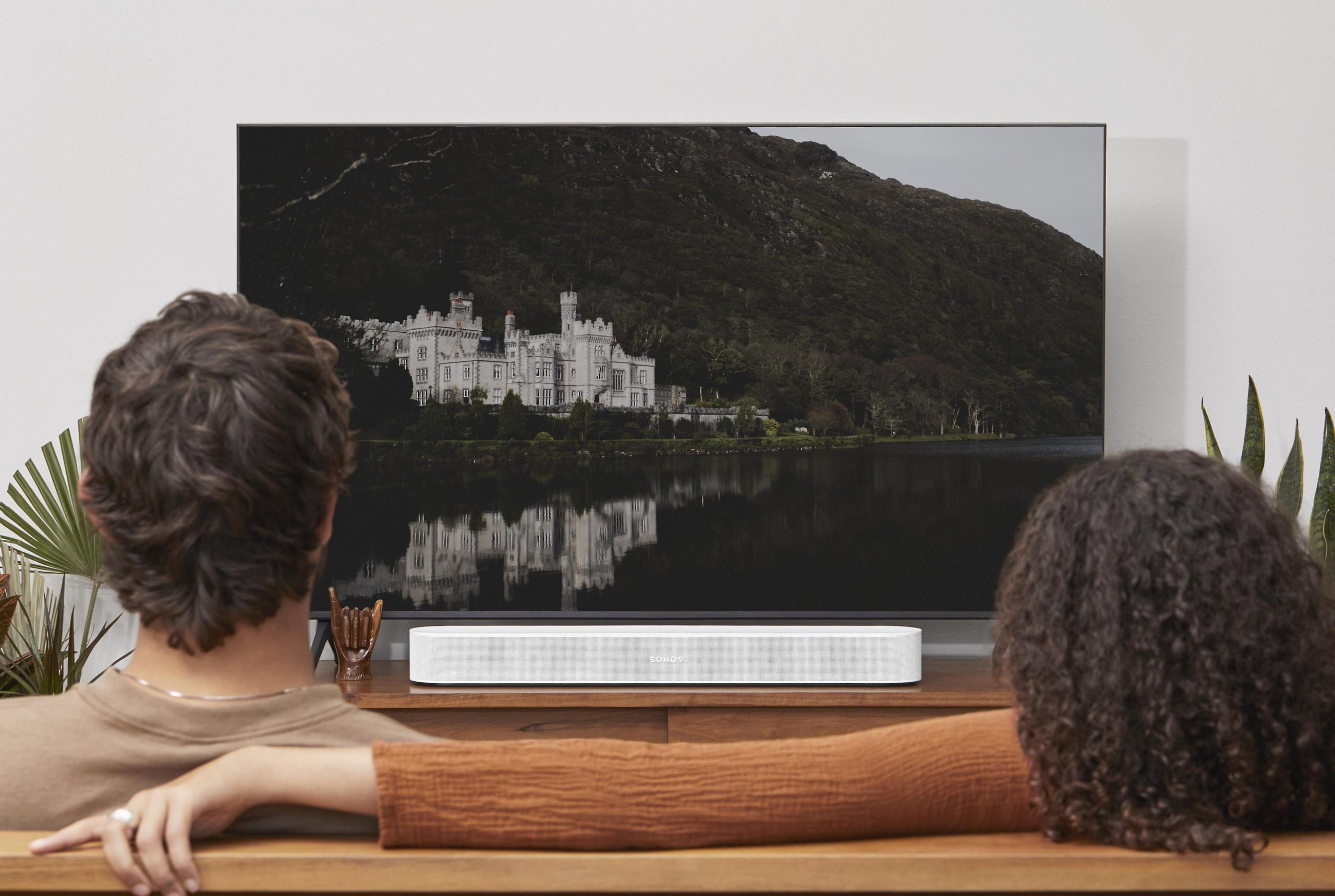
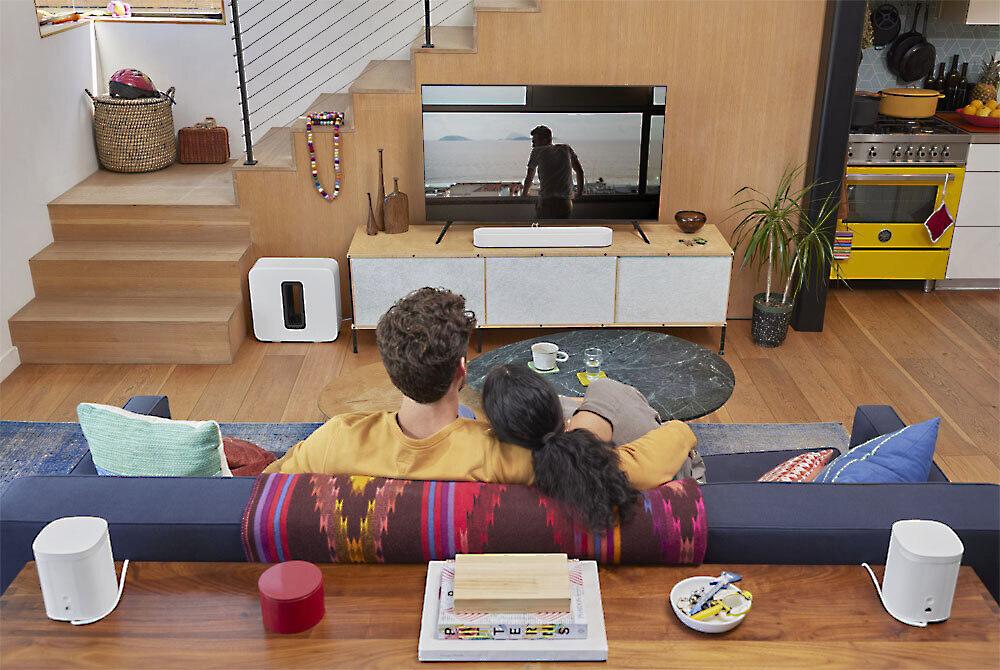


If you're tired of constantly adjusting your TV's volume to hear dialogue clearly or missing the rumble of explosions in action movies, you're not alone. Most built-in TV speakers are frankly terrible, squeezed into impossibly thin displays with no room for proper drivers. That's where soundbars come in, offering a simple way to dramatically improve your audio experience without the complexity of a full surround sound system.
Today we're comparing two very different approaches to solving your TV audio problems: the budget-friendly Amazon Fire TV Soundbar Plus and the premium Sonos Beam Gen 2. These represent two distinct philosophies in soundbar design, and understanding their differences will help you make the right choice for your setup.
Before diving into specifics, let's talk about what makes a good soundbar. The main job of any soundbar is to create a wider, more engaging soundstage than your TV can manage on its own. Think of soundstage as the invisible "stage" where all your audio seems to come from – you want voices to appear to come from the center of your screen, music to spread beyond the TV's edges, and sound effects to feel like they're happening in three-dimensional space around you.
The most important performance characteristics to consider are dialogue clarity, bass response, overall sound quality, and how well the bar creates that wider soundstage. Dialogue clarity is probably the most crucial – if you can't understand what people are saying, nothing else matters. Bass response determines whether explosions feel impactful or underwhelming. Sound quality covers everything from how natural music sounds to whether high frequencies (like cymbals or bird chirps) come across clearly or harshly.
Smart features have become increasingly important too. Modern soundbars often include voice assistants, smartphone apps for control, and the ability to stream music directly without your TV being on. The question is whether these features justify the added cost for your specific needs.
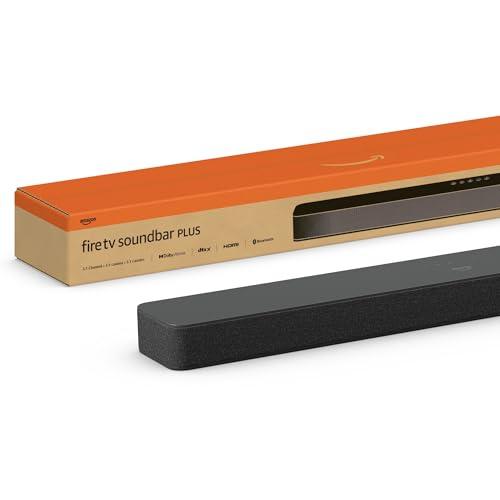
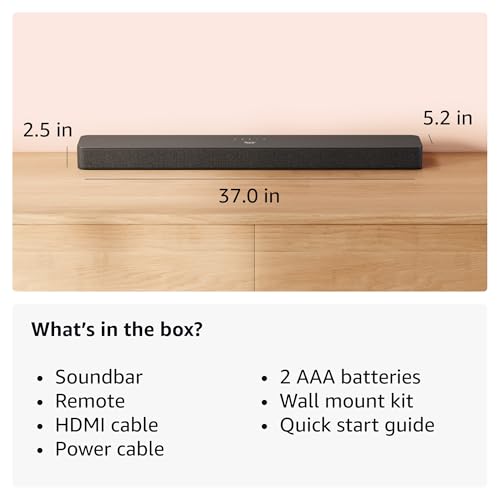
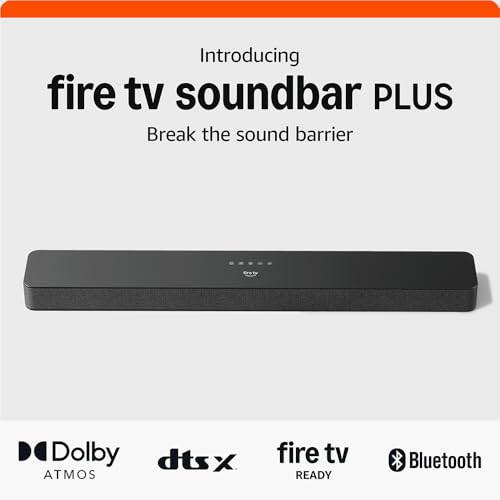
Released in 2023, the Amazon Fire TV Soundbar Plus represents Amazon's attempt to offer serious audio improvement at an accessible price point. At the time of writing, it typically costs about half what you'd pay for premium alternatives, making it an attractive option for budget-conscious buyers.
What makes this soundbar interesting isn't just its price – it's the inclusion of dual built-in subwoofers that fire out the back of the unit. Most compact soundbars struggle with bass because there's simply no room for large drivers that can move the air needed for deep, impactful low frequencies. By including dedicated subwoofer drivers, the Amazon Fire TV Soundbar Plus addresses one of the biggest weaknesses of budget soundbars right out of the box.
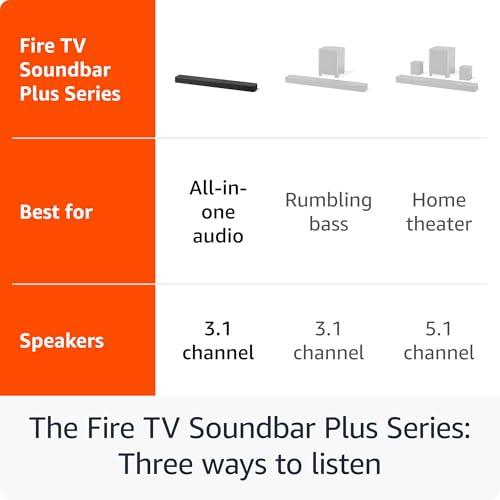
The "3.1 channel" designation means it has three main channels (left, center, right) plus a dedicated subwoofer channel (the ".1"). The center channel is crucial for dialogue clarity, while the left and right channels handle music, sound effects, and create that wider soundstage we talked about.
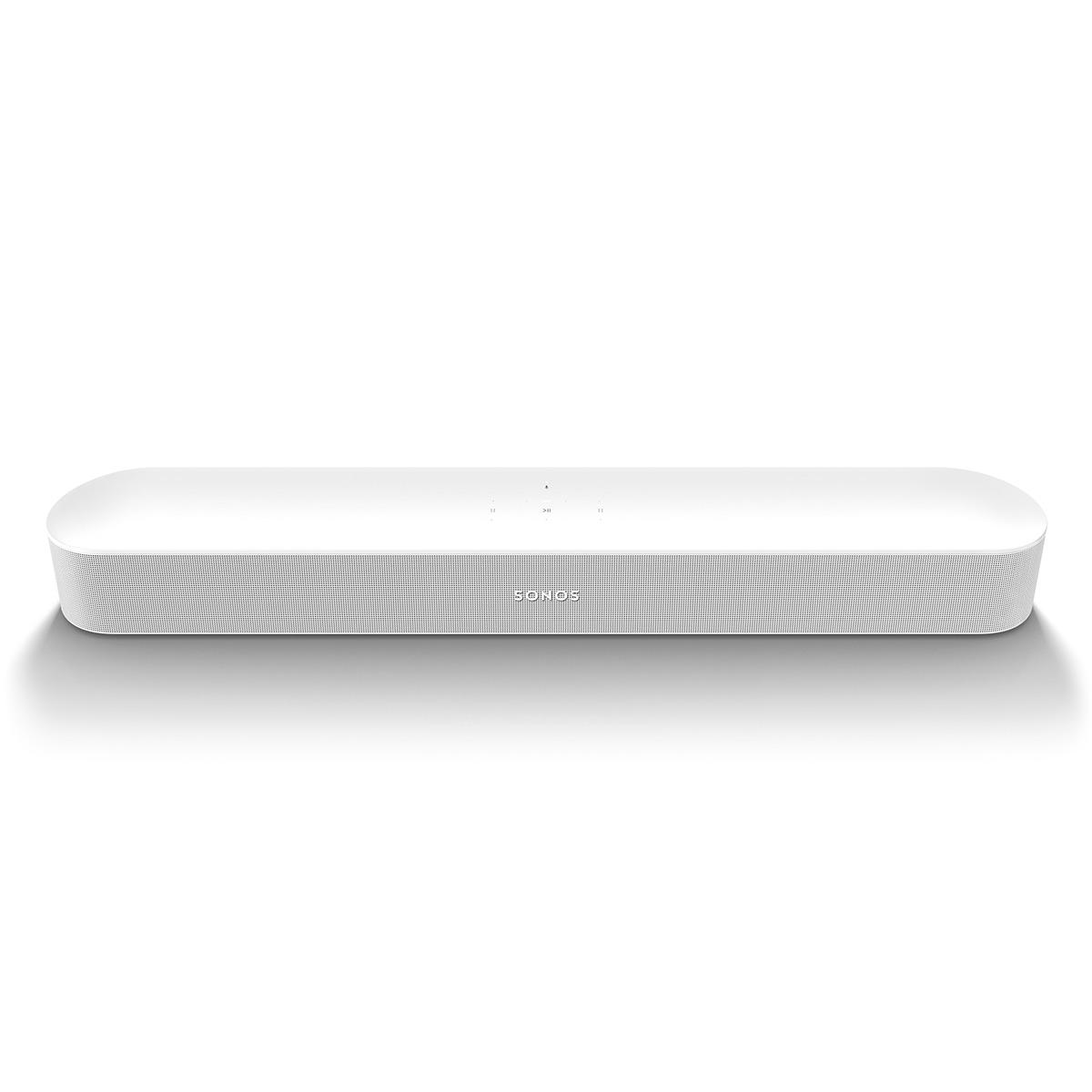
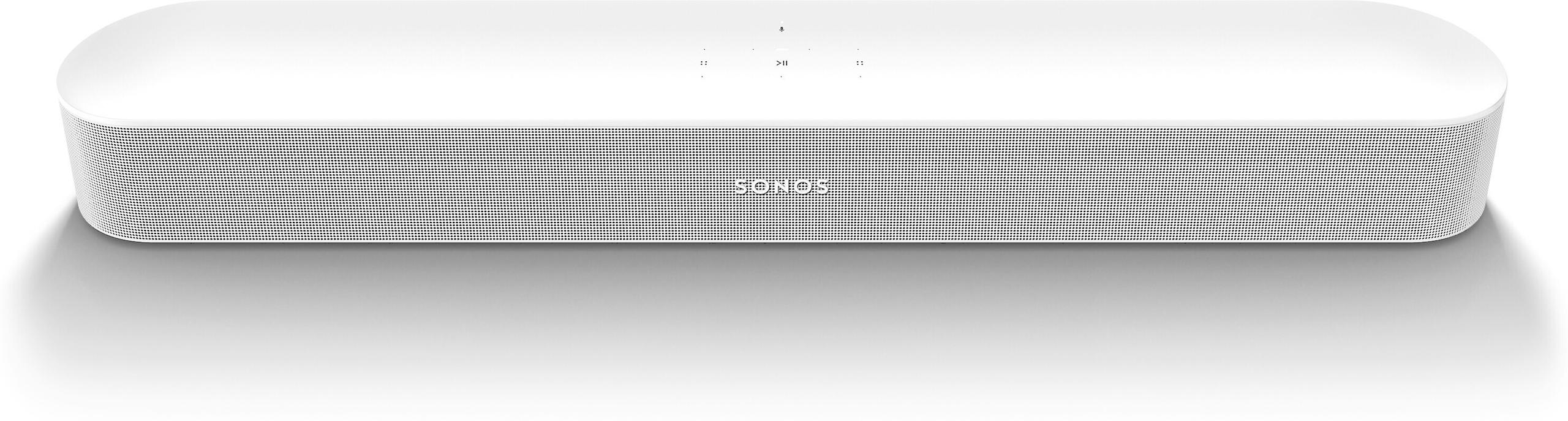
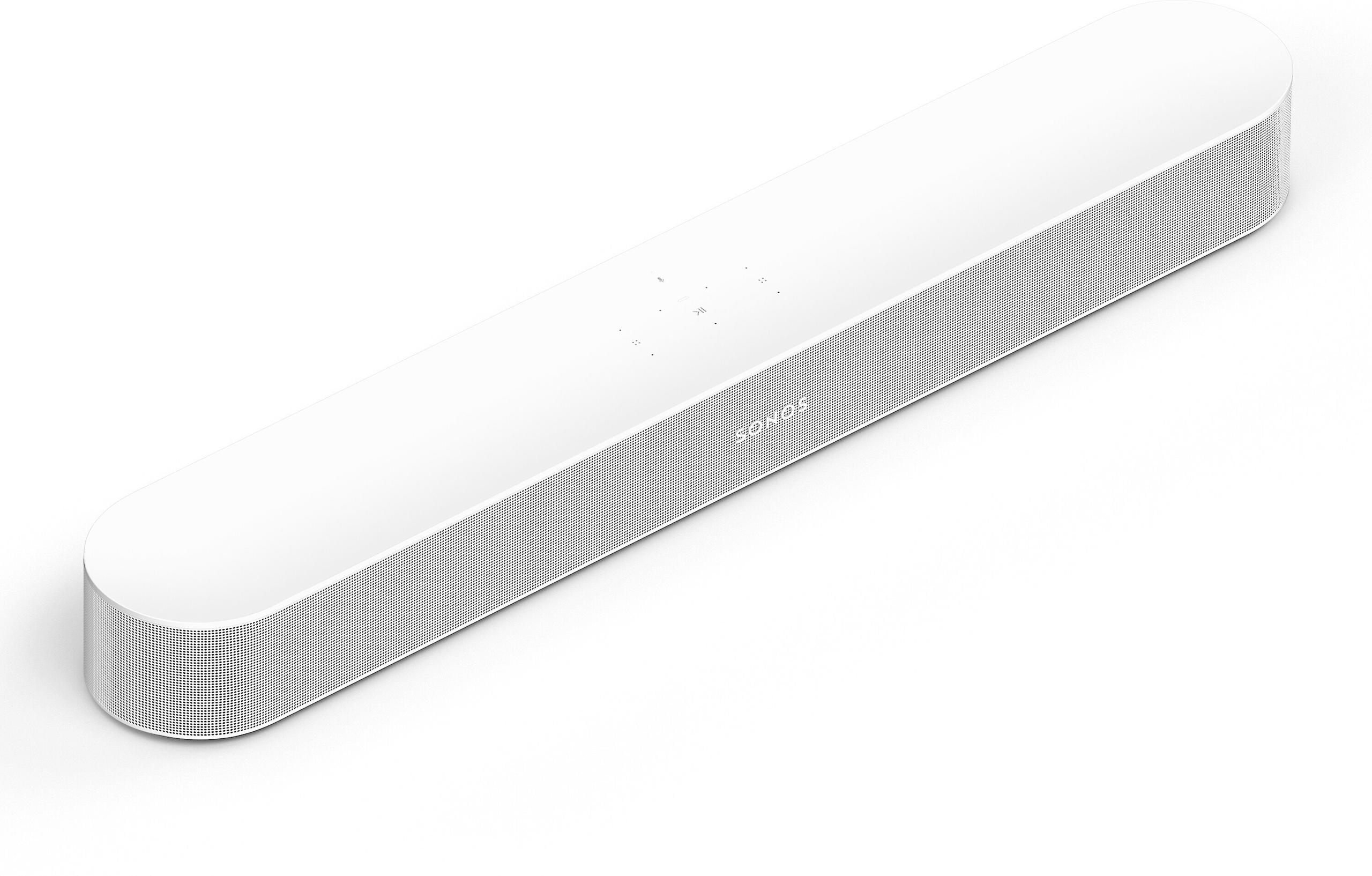
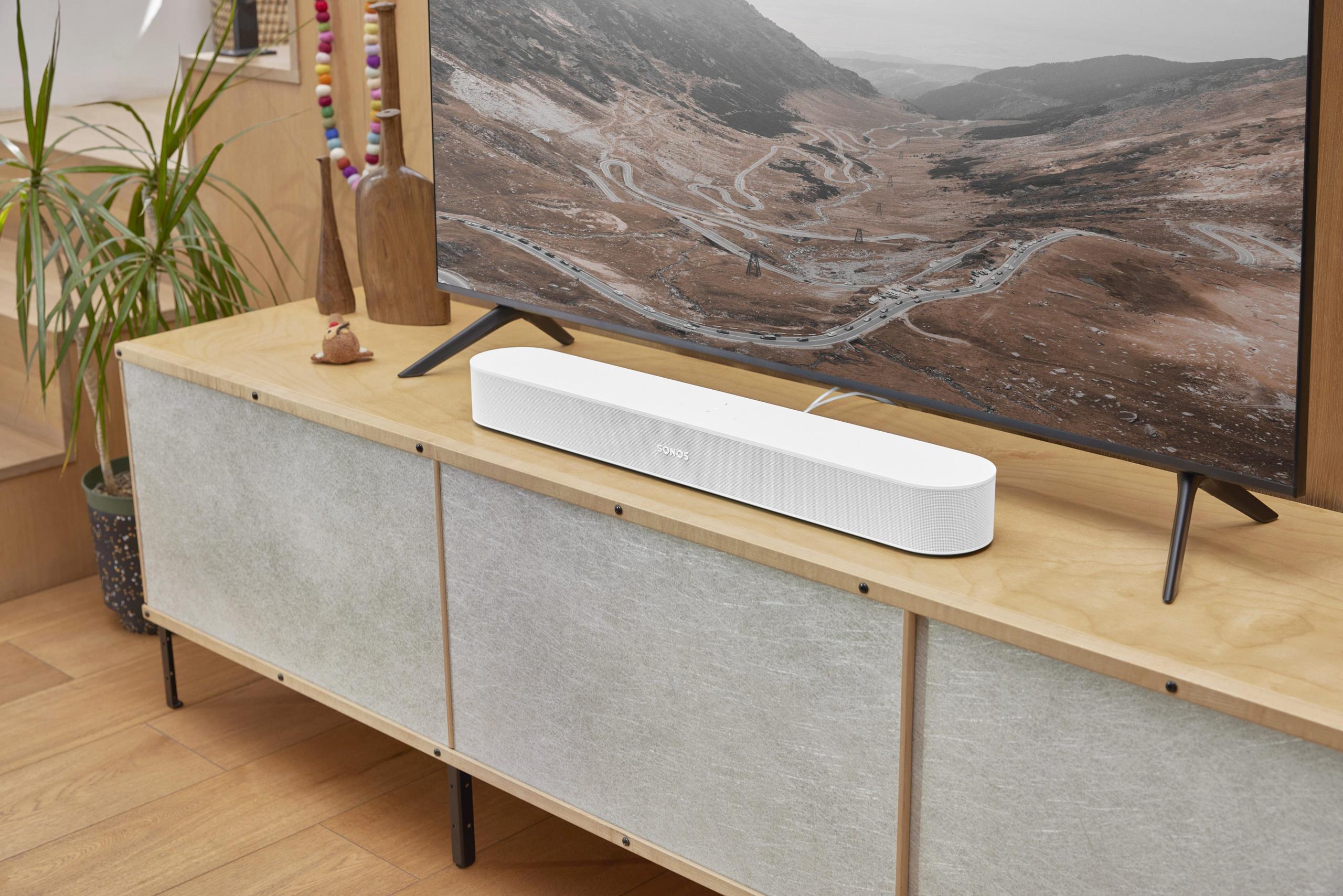
The Sonos Beam Gen 2, released in 2021 as an update to the popular original Beam, takes a completely different approach. Where the Amazon bar prioritizes value and bass response, the Sonos Beam Gen 2 focuses on audio refinement and smart home integration.
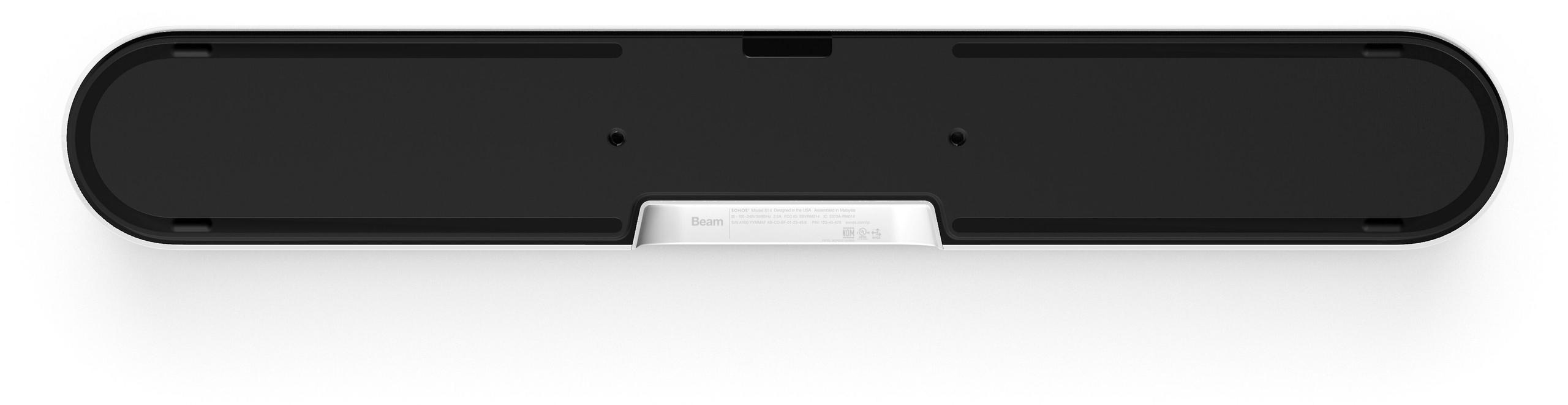
This is a "5.0 channel" system, meaning it has five distinct audio channels but no dedicated subwoofer. Instead of the Amazon's straightforward three-driver-plus-subs arrangement, the Sonos Beam Gen 2 uses a sophisticated array of four drivers (two front-firing, two side-firing) plus three passive radiators. Passive radiators are essentially speakers without magnets that vibrate in response to the active drivers, helping to extend bass response without requiring additional power or space.
The side-firing drivers are key to the Sonos's performance advantage. By bouncing sound off your side walls, they create a much wider soundstage that can make audio seem to come from well beyond the physical boundaries of the soundbar itself.
In my experience testing both bars, the Sonos Beam Gen 2 delivers noticeably clearer dialogue, especially with complex audio mixes where multiple things are happening at once. This comes down to its discrete center channel and what audio engineers call "balanced mid-range response" – essentially, the frequencies where human voices live are reproduced more accurately and with better separation from other sounds.
The Amazon Fire TV Soundbar Plus handles dialogue reasonably well for its price point, with a dedicated dialogue enhancement feature that can boost speech frequencies when needed. However, I noticed that deeper male voices sometimes sound a bit thin, and during action-heavy scenes with lots of explosions and music, dialogue can get somewhat lost in the mix.
This difference becomes most apparent when watching dialogue-heavy content like dramas or documentaries. With the Sonos Beam Gen 2, I rarely found myself reaching for the remote to adjust volume when scenes switched between quiet conversations and louder action. The Amazon Fire TV Soundbar Plus required more active management, though its dialogue enhancement helped considerably.
Here's where things get interesting, and where the Amazon Fire TV Soundbar Plus pulls ahead despite its lower price. Those dual built-in subwoofers make a real difference. In action movies, explosions have genuine impact, and music with deep bass lines doesn't sound thin or lacking.
The Sonos Beam Gen 2, for all its audio sophistication, simply can't match this low-end response without additional components. Its passive radiators help extend bass somewhat, but there's no substitute for dedicated subwoofer drivers when it comes to moving the air needed for truly impactful bass. This is one area where physics wins over engineering cleverness.
For movie nights, this bass advantage can be significant. The opening sequence of "Blade Runner 2049," with its deep, rumbling synthesizer score, feels appropriately powerful through the Amazon Fire TV Soundbar Plus but lacks weight through the Sonos Beam Gen 2 on its own.
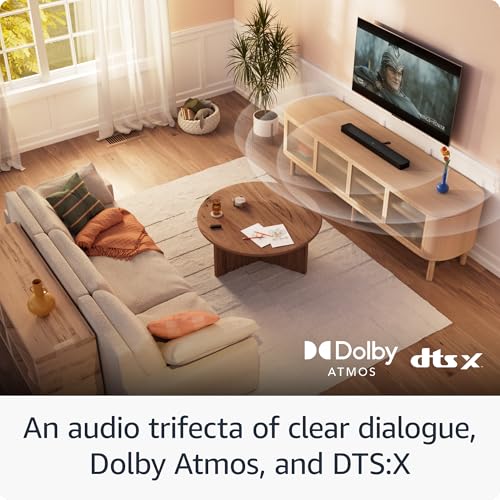
Both soundbars support Dolby Atmos, the latest surround sound format that adds height information to create more immersive audio. However, neither has upward-firing drivers (speakers that bounce sound off your ceiling), so they rely on psychoacoustic processing – essentially tricking your brain into perceiving sounds as coming from locations where there aren't actually any speakers.
The Sonos Beam Gen 2 does this more convincingly, thanks partly to those side-firing drivers and partly to more sophisticated processing. When watching Atmos-encoded content, effects feel like they extend well beyond the physical soundbar, creating a more enveloping experience.
The Amazon Fire TV Soundbar Plus provides decent surround simulation, but the effect is less pronounced. Where it excels is in its expansion options – you can add a separate wireless subwoofer and rear speakers to create a true 5.1 surround system, something that transforms the experience entirely for home theater use.
In larger rooms, the Amazon Fire TV Soundbar Plus has an advantage in sheer output capability. It can get louder without distortion, and those built-in subwoofers help fill larger spaces with sound. The Sonos Beam Gen 2 is better suited to small-to-medium rooms where its refined audio quality can shine without needing to compete with room acoustics.
This is where the products diverge most dramatically, and it's honestly surprising given their branding.
The Sonos Beam Gen 2 is a full smart home device. Built-in Amazon Alexa and Google Assistant mean you can control it with voice commands, ask questions, control smart home devices, and even use it as an intercom with other Sonos speakers. The Sonos app provides detailed control over EQ settings, room calibration through their Trueplay feature (which uses your phone's microphone to optimize sound for your specific room), and direct access to streaming services like Spotify, Apple Music, and dozens of others.
The Amazon Fire TV Soundbar Plus, despite having "Fire TV" in its name, has virtually no smart features at all. There's no Alexa integration, no app, no direct streaming capabilities. It's purely an audio device that you control with a basic remote. This was genuinely surprising to me – the branding suggests deep Amazon ecosystem integration that simply isn't there.
For some users, this simplicity might actually be preferable. If you just want better TV audio without another connected device in your home, the Amazon Fire TV Soundbar Plus delivers exactly that. But if you're building a smart home ecosystem or want the convenience of voice control and app-based management, the Sonos Beam Gen 2 is clearly superior.
Both soundbars offer HDMI ARC/eARC connectivity, which is the preferred connection method for modern TVs. This single cable handles both audio from your TV and allows the soundbar remote to control TV volume, creating a cleaner setup.
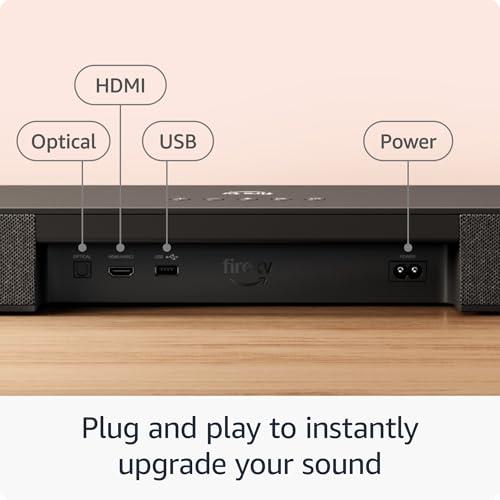
The Amazon Fire TV Soundbar Plus includes more connection options, with optical digital input, USB-A, and Bluetooth. Bluetooth is particularly useful for streaming music from phones or tablets. The Sonos Beam Gen 2 surprisingly lacks Bluetooth, focusing instead on Wi-Fi connectivity for higher-quality wireless audio.
Setup for both is straightforward, but the Sonos Beam Gen 2 offers more advanced calibration options through its Trueplay feature, which can significantly improve performance in challenging room acoustics.
At the time of writing, the Amazon Fire TV Soundbar Plus costs roughly half what you'd pay for the Sonos Beam Gen 2, making the value equation complex. The Amazon bar includes built-in bass response that would typically require a separate $200+ subwoofer with other systems, representing genuine value for money.
However, the Sonos Beam Gen 2 offers expandability within the broader Sonos ecosystem. You can add their Sub Mini or full Sub for deeper bass, rear speakers for true surround sound, and additional Sonos speakers throughout your home for multi-room audio. This flexibility comes at a cost – building out a full system can cost several times the original soundbar price.
The Amazon Fire TV Soundbar Plus also expands, but more modestly. Adding their wireless subwoofer and rear speakers creates a complete 5.1 system at a total cost that's still competitive with the Sonos Beam Gen 2 alone.
After extensive testing, I'd recommend the Amazon Fire TV Soundbar Plus for users who primarily want better TV and movie audio on a budget. If you're tired of turning up the volume for dialogue only to be blown away by action sequences, this soundbar solves that problem effectively without breaking the bank. The built-in bass response means you get immediate satisfaction without additional purchases, and if you later want true surround sound, the expansion options are reasonably priced.
The Sonos Beam Gen 2 makes sense for different priorities. If audio quality is paramount, if you want smart home integration, or if you're building a multi-room audio system, the premium price becomes justified. It's also the better choice for music listening, with more balanced frequency response and sophisticated room calibration.
For home theater enthusiasts, both have merits. The Amazon Fire TV Soundbar Plus provides immediate movie-theater impact with its built-in bass, while the Sonos Beam Gen 2 offers more sophisticated surround processing and better dialogue clarity. The Amazon's expansion path to full 5.1 surround is more affordable, but the Sonos system will ultimately sound more refined when fully built out.
These soundbars represent two valid but different approaches to improving your TV audio experience. The Amazon Fire TV Soundbar Plus prioritizes immediate impact and value, delivering genuine bass response and solid performance at an accessible price. The Sonos Beam Gen 2 focuses on audio refinement and smart features, offering superior sound quality and ecosystem integration for those willing to pay premium prices.
Your choice ultimately depends on your priorities, budget, and long-term audio goals. Both will dramatically improve your TV audio experience compared to built-in speakers, but they'll do so in distinctly different ways. Consider what matters most to you – immediate bass impact and value, or refined audio quality and smart features – and choose accordingly.
| Amazon Fire TV Soundbar Plus | Sonos Beam Gen 2 |
|---|---|
| Channel Configuration - Determines soundstage width and bass capability | |
| 3.1 channels with dual built-in subwoofers | 5.0 channels with sophisticated driver array |
| Audio Formats - Affects compatibility with streaming content | |
| Dolby Atmos, DTS:X (virtual processing) | Dolby Atmos, DTS support (virtual processing) |
| Bass Response - Critical for movie impact and music enjoyment | |
| Dual built-in subwoofers provide genuine low-end punch | Passive radiators only; requires separate sub for deep bass |
| Smart Features - Convenience and ecosystem integration | |
| None (no voice control, app, or streaming despite Fire TV branding) | Full Alexa/Google Assistant, Sonos app, direct streaming |
| Connectivity Options - Flexibility for different source devices | |
| HDMI ARC, Optical, USB-A, Bluetooth 5.0 | HDMI eARC, Wi-Fi (no Bluetooth connectivity) |
| Room Calibration - Optimizes sound for your specific space | |
| Basic sound modes (Movie, Music, Sport, Night) | Advanced Trueplay tuning using iOS device |
| Dialogue Enhancement - Essential for clear speech during action scenes | |
| Dedicated center channel with 5-level dialogue boost | Discrete center channel with superior mid-range clarity |
| Expandability - Future upgrade options without starting over | |
| Can add wireless sub and rears for complete 5.1 system | Integrates into full Sonos ecosystem with Subs and surround speakers |
| Physical Design - Space requirements and visual appeal | |
| 94cm wide, understated fabric grille design | 65cm wide, premium build with elegant aesthetics |
| Voice Control - Hands-free operation and smart home integration | |
| None available | Built-in Alexa and Google Assistant with full smart home control |
| Music Streaming - Using soundbar independently from TV | |
| Bluetooth only from paired devices | Direct Wi-Fi streaming from 80+ services via app |
| Value Proposition - Performance per dollar spent | |
| Exceptional value with built-in bass at budget price point | Premium pricing justified by superior audio engineering and features |
The Amazon Fire TV Soundbar Plus offers exceptional value with built-in subwoofers and Dolby Atmos support at a budget-friendly price. The Sonos Beam Gen 2 costs significantly more but delivers superior audio quality, smart features, and ecosystem integration. For pure performance per dollar, the Amazon Fire TV Soundbar Plus wins, but the Sonos Beam Gen 2 justifies its premium pricing with refined sound and advanced features.
The Amazon Fire TV Soundbar Plus includes dual built-in subwoofers, so you get impactful bass right out of the box without additional purchases. The Sonos Beam Gen 2 relies on passive radiators and lacks dedicated subwoofer drivers, so you'll likely want to add the Sonos Sub Mini or full Sub for satisfying bass response in movies and music.
The Sonos Beam Gen 2 excels in dialogue clarity thanks to its discrete center channel and balanced mid-range response. Voices sound more natural and remain clear even during complex audio scenes. While the Amazon Fire TV Soundbar Plus includes dialogue enhancement features, the Sonos Beam Gen 2 provides superior speech reproduction overall.
The Sonos Beam Gen 2 includes built-in Amazon Alexa and Google Assistant for full voice control of the soundbar, smart home devices, and music playback. Surprisingly, the Amazon Fire TV Soundbar Plus has no voice control capabilities despite its Fire TV branding, requiring manual remote control for all functions.
The Sonos Beam Gen 2 excels for music streaming with Wi-Fi connectivity and direct access to over 80 streaming services through the Sonos app. The Amazon Fire TV Soundbar Plus only supports Bluetooth streaming from paired devices and lacks built-in music streaming capabilities, making it less versatile for music listening.
Yes, both the Amazon Fire TV Soundbar Plus and Sonos Beam Gen 2 support Dolby Atmos through virtual processing. Neither has upward-firing drivers, so they simulate height effects rather than creating true overhead sound. The Sonos Beam Gen 2 provides more convincing surround simulation thanks to its side-firing drivers and sophisticated processing.
The Amazon Fire TV Soundbar Plus offers simple plug-and-play setup with basic remote control and no apps required. The Sonos Beam Gen 2 requires the Sonos app for setup but offers advanced features like Trueplay room calibration that optimizes sound for your specific space. Both connect easily via HDMI for streamlined operation.
Both soundbars offer expansion options. The Amazon Fire TV Soundbar Plus can add wireless subwoofer and rear speakers for a complete 5.1 system at a reasonable total cost. The Sonos Beam Gen 2 integrates into the broader Sonos ecosystem, allowing you to add subwoofers, rear speakers, and additional room speakers, though at premium pricing.
The Amazon Fire TV Soundbar Plus achieves higher volume levels and fills larger spaces more effectively, particularly in bass frequencies thanks to its built-in subwoofers. The Sonos Beam Gen 2 is optimized for small-to-medium rooms where its refined audio quality can shine without needing to overpower challenging acoustics.
Both the Amazon Fire TV Soundbar Plus and Sonos Beam Gen 2 work with any TV that has HDMI ARC/eARC or optical digital output. The Amazon Fire TV Soundbar Plus offers slightly more connection flexibility with additional input options, while the Sonos Beam Gen 2 focuses on HDMI eARC for the highest audio quality.
For home theater use, the choice depends on your priorities. The Amazon Fire TV Soundbar Plus delivers immediate movie impact with built-in bass and affordable expansion to 5.1 surround. The Sonos Beam Gen 2 offers more refined audio processing and superior dialogue clarity but requires additional components for full bass response and surround sound.
The fundamental difference is philosophy: the Amazon Fire TV Soundbar Plus prioritizes value and immediate bass impact at a budget price, while the Sonos Beam Gen 2 focuses on premium audio quality, smart features, and ecosystem integration. Choose the Amazon Fire TV Soundbar Plus for maximum bang-for-buck, or the Sonos Beam Gen 2 for refined sound and smart home integration.
We've done our best to create useful and informative comparisons to help you decide what product to buy. Our research uses advanced automated methods to create this comparison and perfection is not possible - please contact us for corrections or questions. These are the sites we've researched in the creation of this article: rtings.com - wirelessplace.com - techradar.com - cordbusters.co.uk - whathifi.com - developer.amazon.com - t3.com - dolby.com - youtube.com - youtube.com - youtube.com - dugoutnorthbrook.com - dolby.com - aboutamazon.com - youtube.com - developer.amazon.com - whathifi.com - en.community.sonos.com - techradar.com - youtube.com - consumerreports.org - bestbuy.com - youtube.com - sonos.com - wave-electronics.com - en.community.sonos.com - epicsystems.tech - tomsguide.com - bestbuy.com

Privacy Policy
Terms and Conditions - Affiliate Policy
Home Security
© Copyright 2008-2026.
11816 Inwood Rd #1211, Dallas, TX 75244