





When you're looking to upgrade your TV's audio without the complexity of a full surround sound system, a quality soundbar can transform your viewing experience. But the soundbar market has grown incredibly diverse, ranging from budget options under $200 to luxury models that cost more than some people's entire entertainment setup. Today we're comparing two products that represent very different philosophies in premium soundbar design: the Devialet Dione and the Sonos Beam Gen 2.
Released in 2021, both soundbars arrived during a period when Dolby Atmos—a technology that creates three-dimensional sound by bouncing audio off your ceiling—was becoming mainstream. However, these two products take radically different approaches to achieving great sound. The Devialet Dione is an all-in-one luxury solution that costs roughly six times more than the Sonos Beam Gen 2, while Sonos focuses on smart features and expandability at a more accessible price point.
Before diving into specifics, it's worth understanding what separates excellent soundbars from mediocre ones. The most important factor is driver configuration—these are the individual speakers inside the soundbar that actually produce sound. More drivers generally mean better sound separation and the ability to create more convincing surround effects.
Amplification power matters too, but it's not just about getting loud. Quality amplification ensures clean sound at all volume levels and prevents distortion when watching explosive action scenes. Frequency response—how well the soundbar reproduces everything from deep bass to crisp highs—determines whether dialogue stays clear and effects feel impactful.
Dolby Atmos support has become increasingly important, but not all implementations are equal. Some soundbars use physical up-firing speakers that bounce sound off your ceiling, while others rely on digital processing to create the illusion of overhead effects. The difference can be quite noticeable depending on your room.
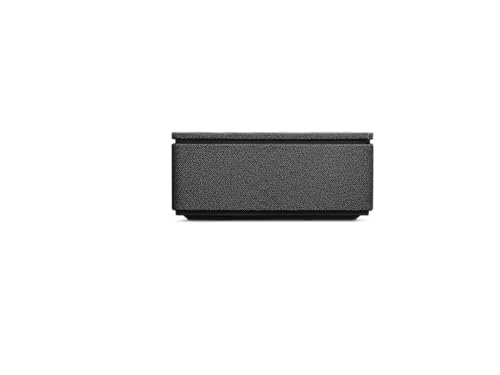
The Devialet Dione represents what happens when a company known for ultra-high-end audio equipment decides to make their first soundbar. Devialet built their reputation with the Phantom speakers—wireless speakers that cost thousands of dollars and deliver sound quality that rivals traditional audiophile setups.
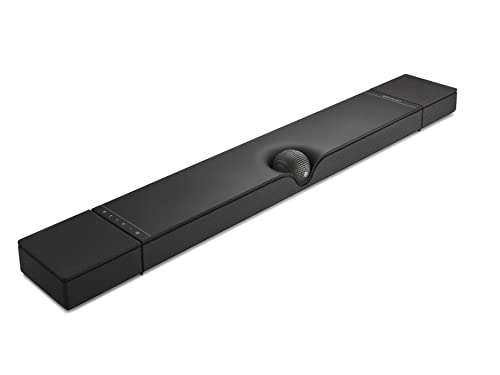
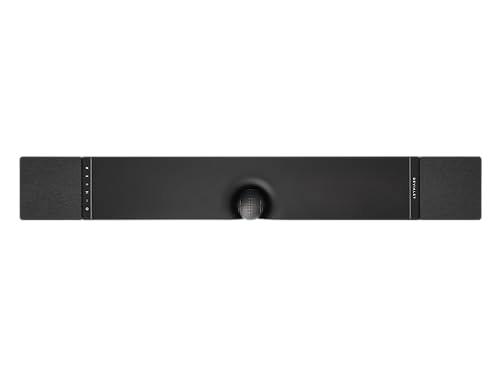
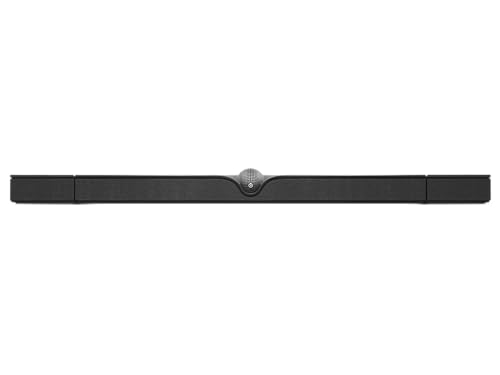
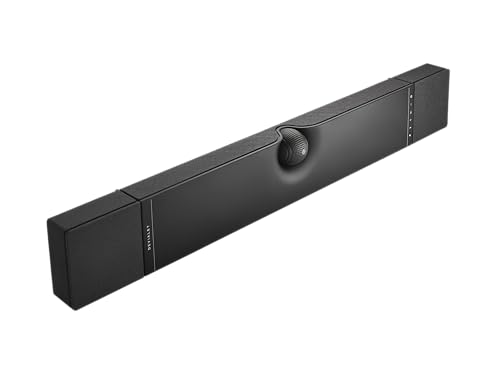
What immediately sets the Devialet Dione apart is its 17-driver configuration. That's not a typo—seventeen individual speakers packed into a single soundbar. These include nine full-range aluminum drivers for midrange and treble, plus eight dedicated subwoofers arranged in what Devialet calls a "push-push" configuration.
This push-push design is particularly clever. Traditional speakers can create vibrations that travel through your furniture, causing rattling and muddying the sound. By mounting subwoofers in pairs facing opposite directions, their vibrations cancel each other out mechanically. This lets the Devialet Dione produce deep, powerful bass without shaking your TV stand—something that becomes crucial when you're dealing with the kind of low-frequency output this soundbar can generate.
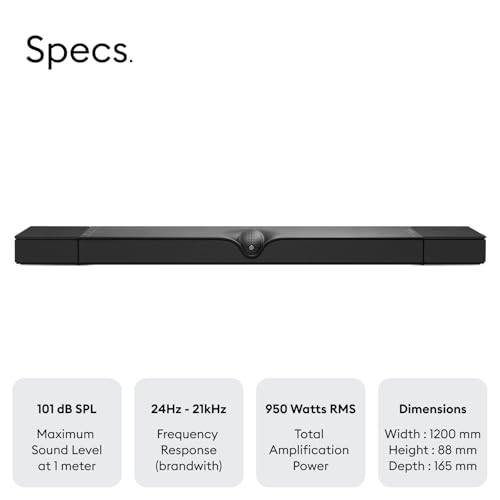
The frequency response extends down to 24Hz, which puts it in the same league as dedicated subwoofers. For context, most soundbars without external subs struggle to reach below 50Hz. This means the Devialet Dione can reproduce the rumble of explosions, the deep notes of an organ, or the impact of a dinosaur's footsteps with authority that most single-unit soundbars simply can't match.
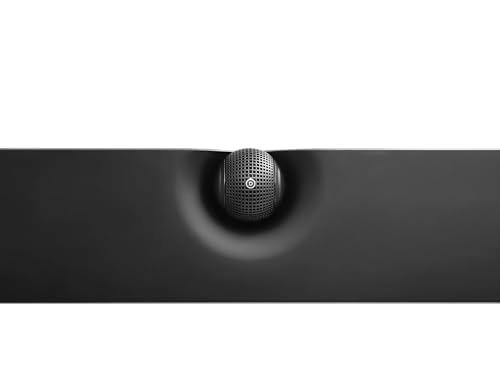
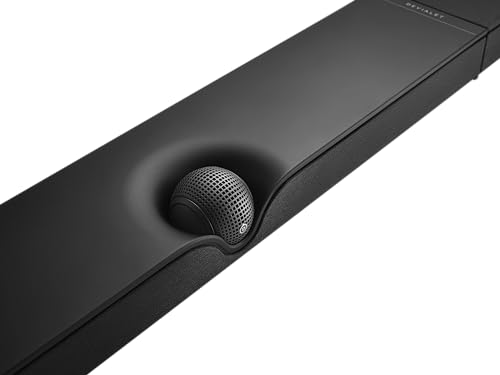
Perhaps the most visually distinctive feature is the ORB—a spherical center channel that can rotate 90 degrees depending on whether you mount the soundbar on a wall or place it on furniture. This isn't just a design flourish; it's solving a real acoustic problem.
The center channel handles dialogue and most vocal content, making it arguably the most important speaker in any surround system. When a soundbar is placed flat on a TV stand, the center speaker fires upward toward the ceiling. Mount that same bar on the wall, and suddenly it's firing directly at your ears. The rotating ORB ensures optimal dialogue placement regardless of installation, which is why conversations remain crystal clear whether you're sitting or standing.
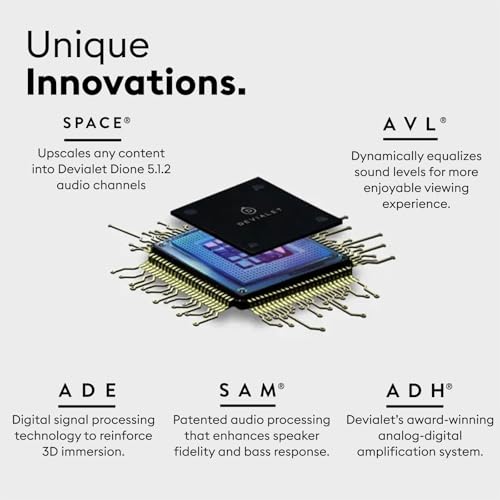
The Devialet Dione incorporates several of Devialet's proprietary technologies adapted from their flagship Phantom speakers. SAM (Speaker Active Matching) continuously analyzes each driver's performance and corrects for any distortion in real-time. This is like having a tiny computer monitoring every speaker and making micro-adjustments hundreds of times per second to ensure accurate sound reproduction.
ADH (Analog Digital Hybrid) amplification combines the warmth of traditional analog amplification with the efficiency and power of digital amplification. The result is 950 watts of total power with exceptionally low distortion—specs that would be impressive in a full-sized AV receiver, let alone a soundbar.
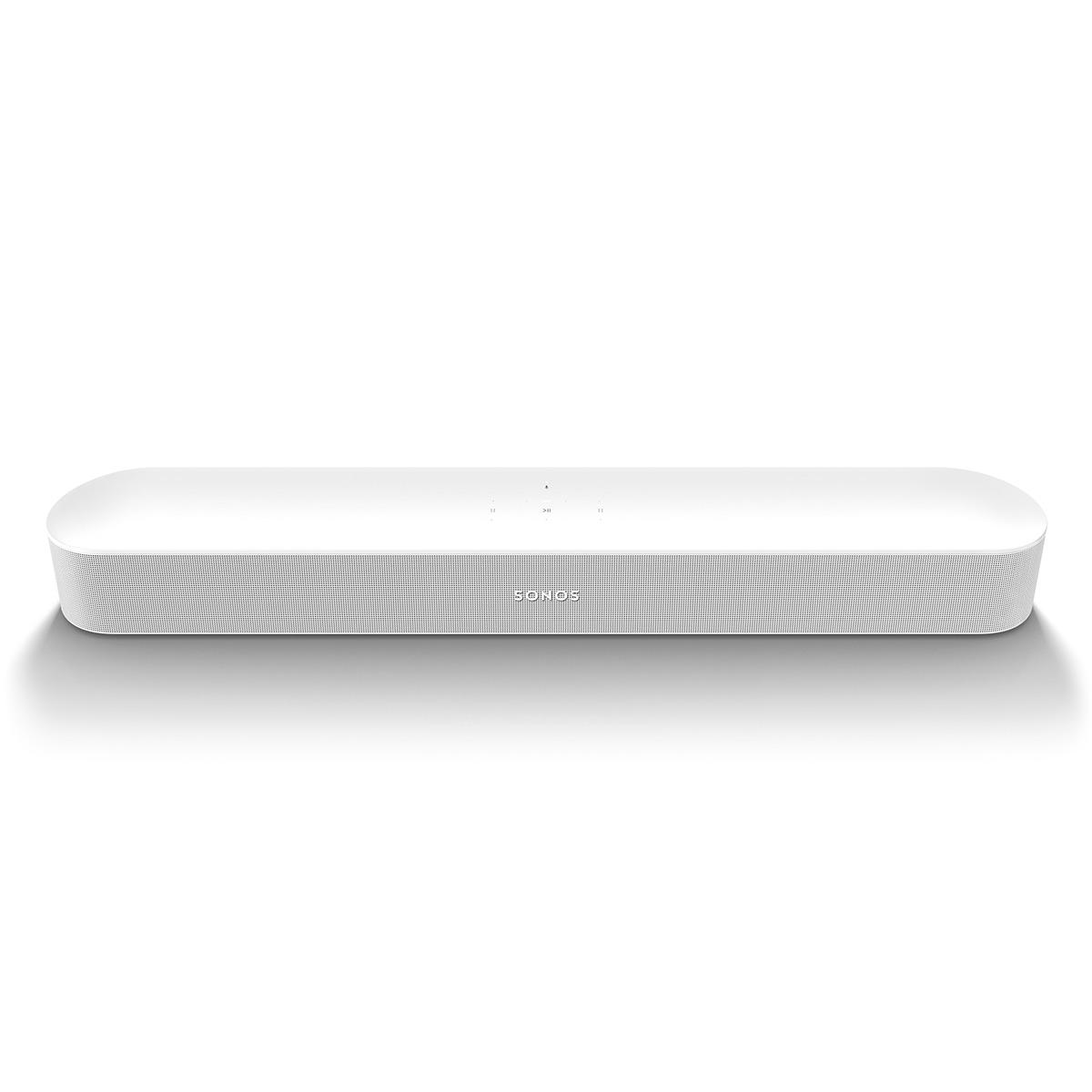
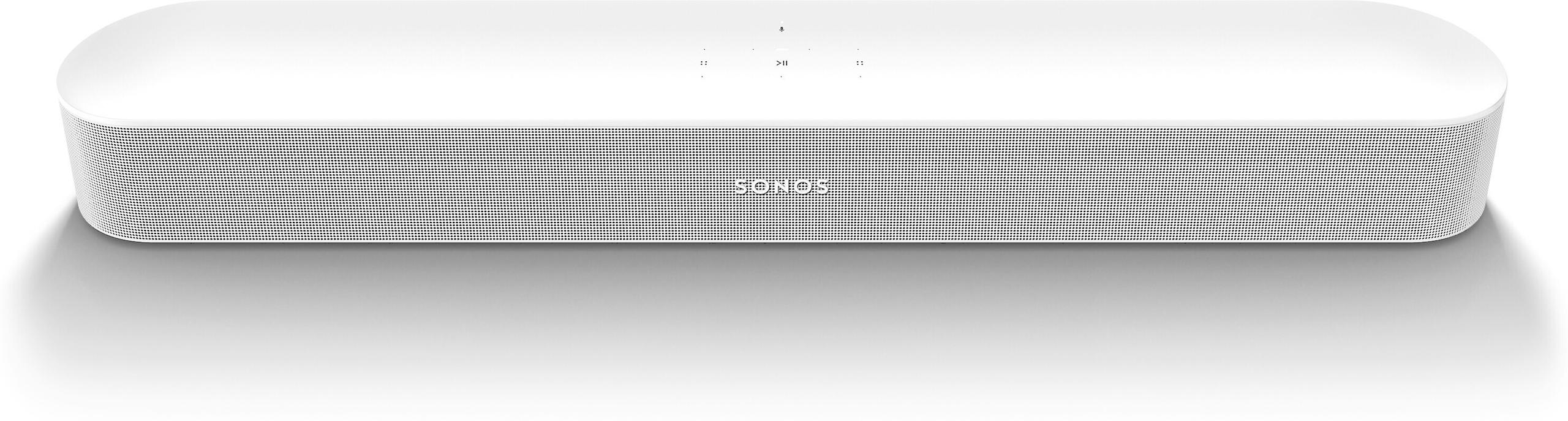
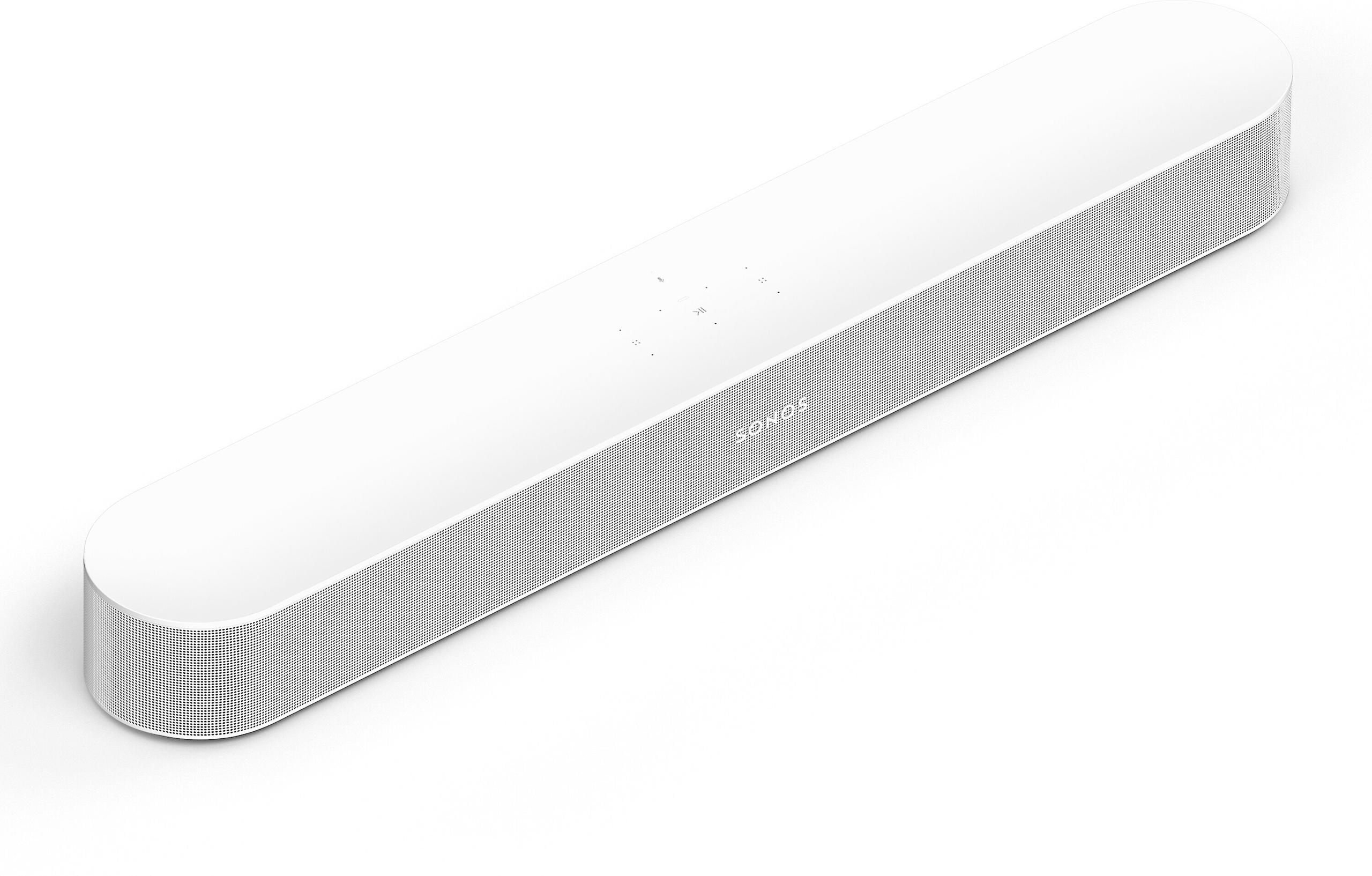
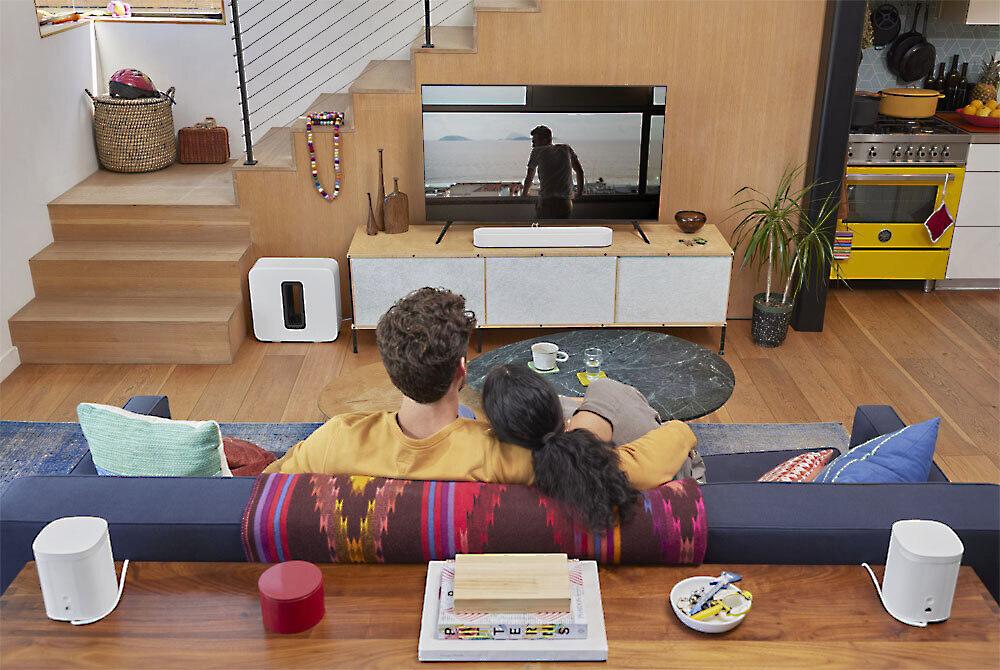
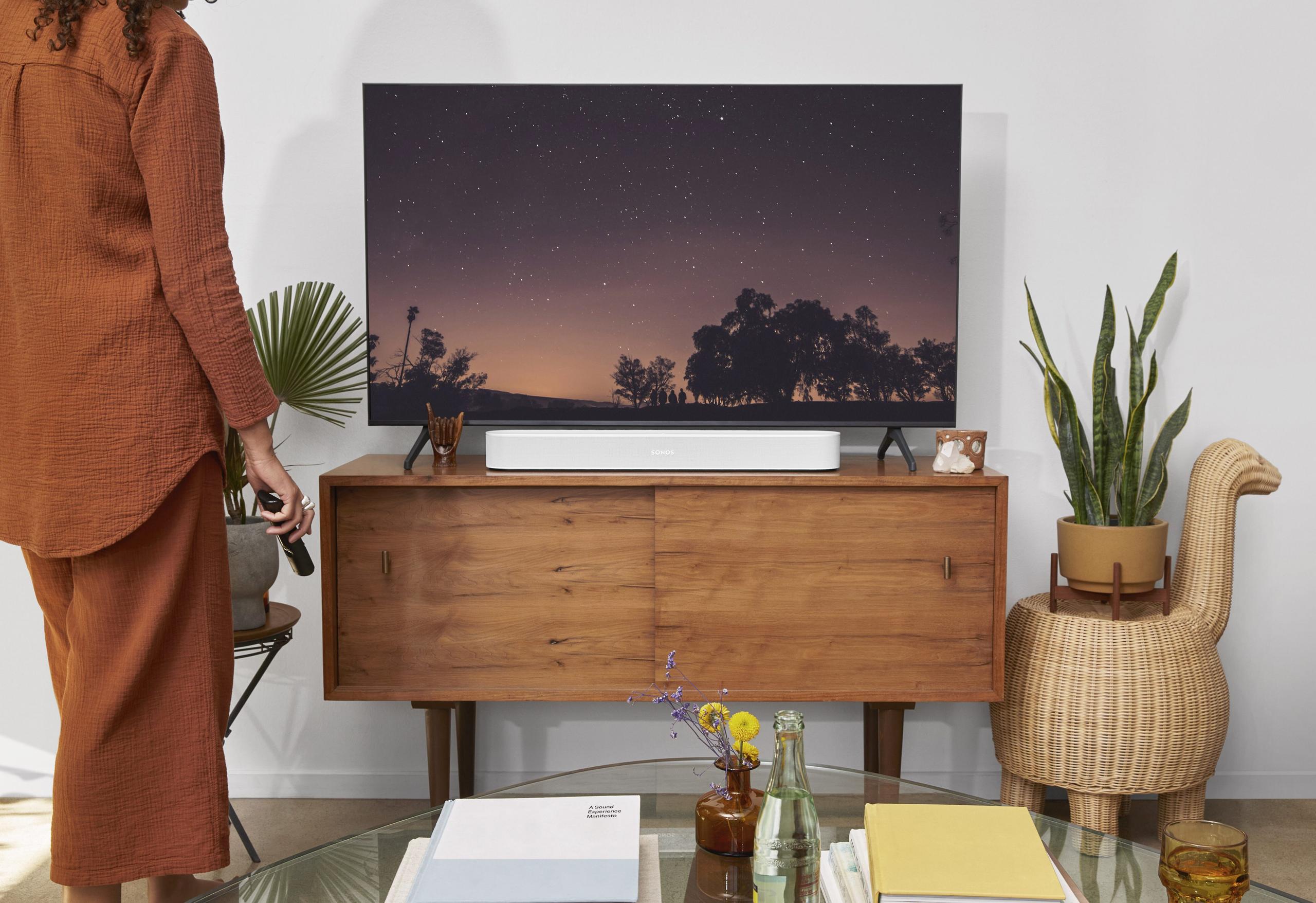
Released the same year as the Devialet Dione, the Sonos Beam Gen 2 takes a completely different philosophy. Rather than trying to be the ultimate all-in-one solution, Sonos designed it as the smart foundation of a expandable audio system.
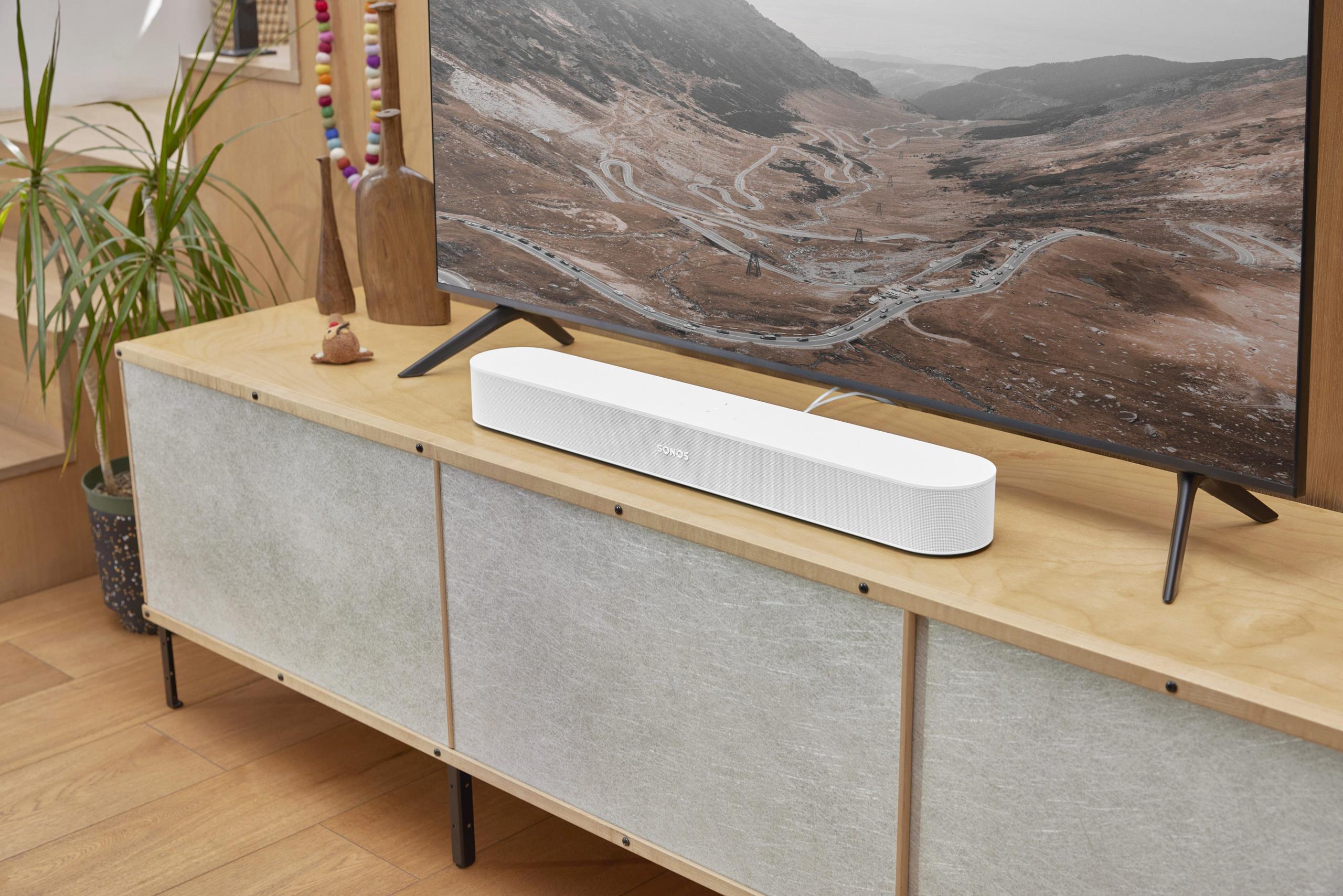
At roughly half the width of the Devialet Dione and weighing just 6.4 pounds compared to the Dione's 26.5 pounds, the Sonos Beam Gen 2 achieves remarkable performance from a compact package. Inside are five drivers: four full-range drivers plus one tweeter specifically for high frequencies.
While five drivers sounds modest compared to the Devialet Dione's seventeen, Sonos makes them work harder through advanced digital processing. The Sonos Beam Gen 2 uses psychoacoustic techniques—essentially tricking your brain into perceiving sounds coming from directions where there are no speakers.
This virtual surround processing has improved significantly since the original Beam. The Gen 2 features a processor that's 40% faster than its predecessor, enabling more sophisticated audio processing and better Dolby Atmos simulation. While it can't match the physical presence of dedicated height speakers, the effect is surprisingly convincing in smaller rooms.
Where the Sonos Beam Gen 2 truly shines is in smart features. Built-in Amazon Alexa and Google Assistant support mean you can control playback, adjust volume, or even control other smart home devices using voice commands. This integration feels natural and responsive in daily use.
The Sonos app ecosystem has matured over years of development, offering seamless streaming from virtually every music service, podcast platform, and radio station you can imagine. The interface is intuitive, and features like TruePlay room calibration use your smartphone's microphone to automatically optimize the soundbar's output for your specific room acoustics.
Perhaps the Sonos Beam Gen 2's greatest strength is its expandability. Start with just the soundbar, then add a Sonos Sub when your budget allows. Later, you can add rear speakers for true surround sound. Each component integrates wirelessly and seamlessly, with the system automatically adjusting its processing to take advantage of the additional speakers.
This modular approach means your initial investment isn't your final investment. You can gradually build toward a complete home theater system while enjoying excellent sound at each step. It's also worth noting that Sonos has an excellent track record of supporting older products with software updates, meaning your investment is likely to improve over time rather than becoming obsolete.
This is where the fundamental difference in approach becomes most apparent. The Devialet Dione's eight integrated subwoofers deliver bass that can genuinely surprise you. During intense movie scenes—think the T-Rex footsteps in Jurassic Park or the truck chase in The Dark Knight—you feel the impact in your chest. This isn't just about getting loud; it's about reproducing the full frequency spectrum that gives movie soundtracks their emotional impact.
The Sonos Beam Gen 2, by comparison, handles bass respectably for its size but clearly reaches its limits during demanding content. It's perfectly adequate for dialogue-heavy content and most TV watching, but action movies and music with significant low-end content reveal the compromises inherent in its compact design. Adding the Sonos Sub transforms the experience entirely, but that's an additional investment that brings the total system cost much closer to the Devialet Dione's price range.
Both soundbars excel at dialogue reproduction, but for different reasons. The Devialet Dione's rotating ORB center channel provides exceptional vocal clarity and precise localization. Voices seem to emanate directly from the screen rather than from the soundbar, creating a more immersive experience. The Speech Enhancement feature intelligently boosts dialogue frequencies without making voices sound artificial.
The Sonos Beam Gen 2 also delivers outstanding dialogue clarity, with several reviewers noting that subtitles become unnecessary even with quiet dialogue. Its smaller size can actually be an advantage here—the center channel sits closer to ear level when the soundbar is placed on furniture, providing more direct vocal reproduction.
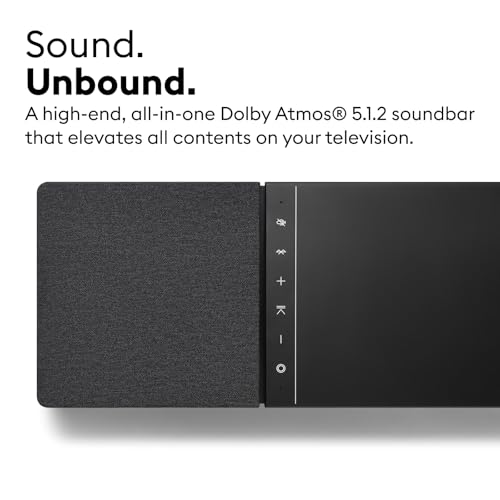
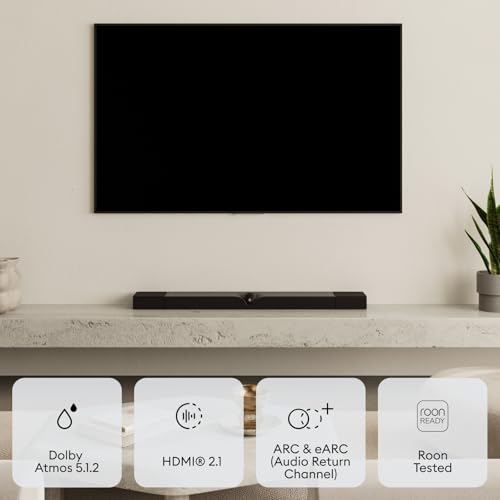
The Devialet Dione implements true 5.1.2 Dolby Atmos with dedicated height channels. When watching properly mixed Atmos content, overhead effects like helicopters or rain genuinely seem to come from above. The ADE (Advanced Dimensional Experience) beamforming technology helps create convincing surround effects even from a single bar, though it can't fully replicate the experience of discrete rear speakers.
The Sonos Beam Gen 2's virtual Atmos processing is impressive for what it is, but it's clearly working within the constraints of its five-driver configuration. In smaller rooms with good ceiling reflection, the height effects can be convincing. However, in larger spaces or rooms with high ceilings, the illusion breaks down. The soundbar creates a wide, enveloping soundstage that's pleasant and immersive, but it's more about expanding the sense of space than creating precise directional effects.
For music listening, the Devialet Dione brings its audiophile heritage to bear. The dedicated Music mode disables spatial processing and focuses on accurate stereo reproduction. The result is impressive dynamics, detailed midrange, and the kind of tonal accuracy that makes familiar songs reveal new details.
The Sonos Beam Gen 2 handles music well, particularly when integrated into a multi-room Sonos system. The convenience of voice control and seamless streaming integration makes it excellent for casual music listening. However, for critical listening or when music is your primary focus, the Devialet Dione's superior drivers and amplification become apparent.
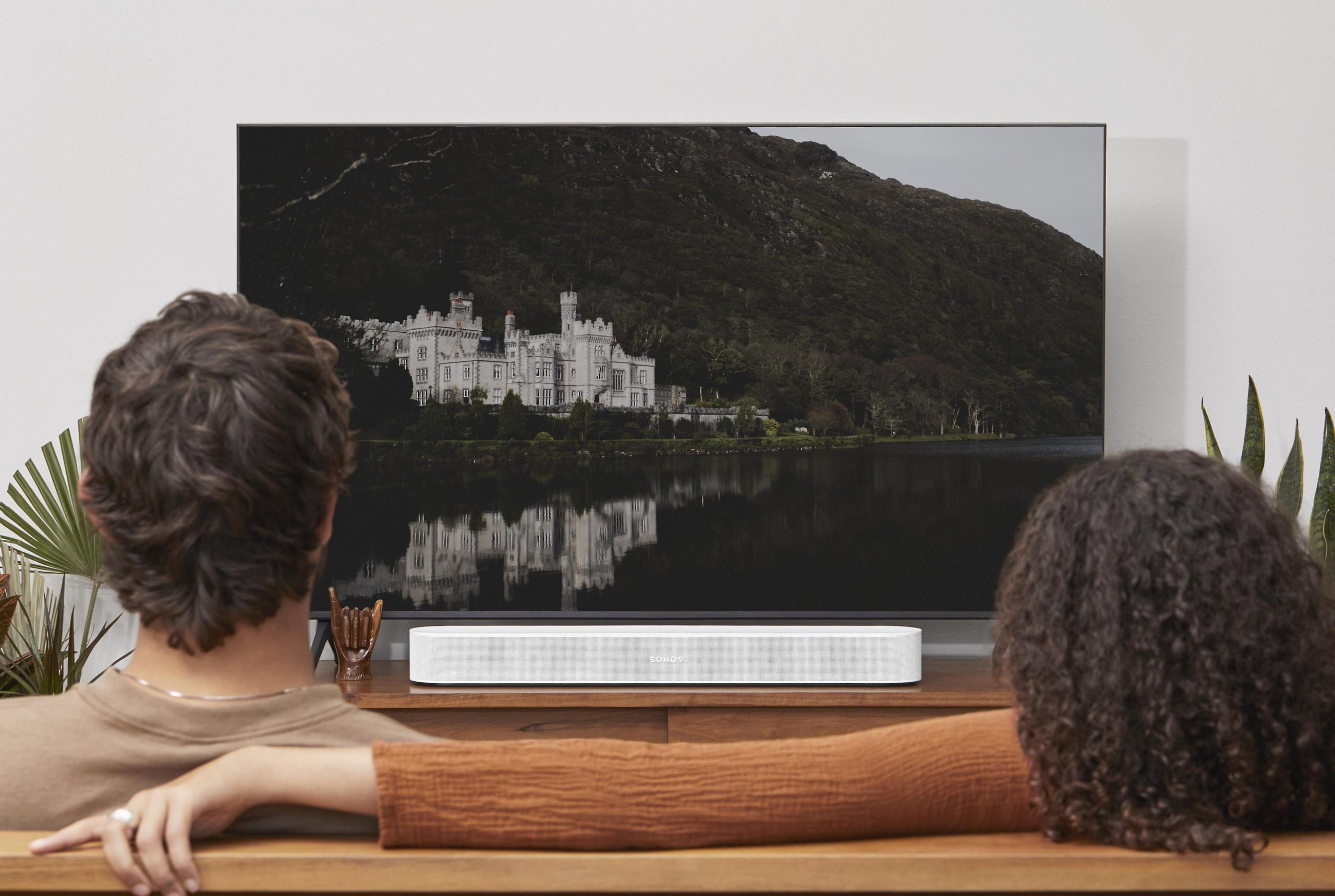
Room size significantly impacts which soundbar makes more sense. The Sonos Beam Gen 2 was designed for smaller spaces—bedrooms, apartments, or compact living rooms where a 25.6-inch soundbar won't overwhelm the setup. Its virtual processing works best when you're sitting relatively close, typically within 10-12 feet of the screen.
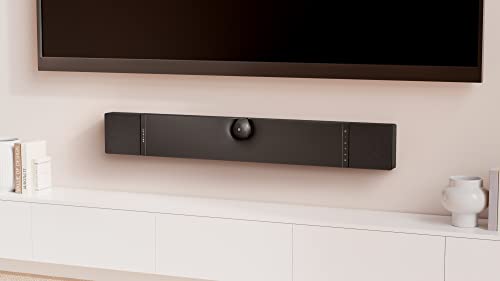
The Devialet Dione's larger size and more powerful amplification make it better suited for medium to large rooms. Its 47-inch width might look imposing under a smaller TV, but it has the acoustic output to fill larger spaces effectively. The integrated subwoofers maintain their impact even at greater distances, making it suitable for open-plan living spaces or dedicated home theaters.
Setup complexity varies significantly between these products. The Sonos Beam Gen 2 is genuinely plug-and-play—connect the HDMI cable, download the app, and you're typically enjoying improved audio within minutes. The TruePlay calibration process takes a few additional minutes but significantly optimizes performance for your specific room.
The Devialet Dione requires more consideration during placement. Its weight and size mean you need to ensure your TV stand can support it, or invest in proper wall mounting hardware. The room calibration is more sophisticated but also more involved, requiring careful attention to placement and orientation for optimal results.
This might be the most important long-term consideration. The Sonos Beam Gen 2 grows with your needs and budget. You might start with just the soundbar, add the Sub for better bass response, and eventually include rear speakers for true surround sound. Each addition integrates seamlessly, and the total investment can be spread over time.
The Devialet Dione is what it is—a complete solution that doesn't expand. This can be liberating if you want simplicity, but limiting if your needs change. You're making a single, significant investment rather than building a system gradually.
After evaluating both products extensively, the choice comes down to your priorities, room size, and how you plan to use your soundbar.
You have a medium to large room and want the absolute best sound quality from a single unit. The Devialet Dione excels when you prioritize audio performance above all else and can justify its premium price for the convenience of a complete, no-compromise solution.
It's particularly compelling for serious movie enthusiasts who want theater-like bass response without adding a separate subwoofer, or for music lovers who want audiophile-grade sound quality without the complexity of a traditional stereo system.
You value flexibility, smart features, and the ability to expand your system over time. The Sonos Beam Gen 2 offers exceptional value at its price point, with performance that exceeds its compact dimensions and integration capabilities that make it a pleasure to use daily.
It's ideal for smaller rooms, smart home enthusiasts, or anyone who wants to start with quality audio and gradually build toward a complete home theater system. The ecosystem benefits and proven track record of software updates make it a sound long-term investment.
Both soundbars represent excellence in their respective approaches. The Devialet Dione demonstrates what's possible when cost is less important than achieving ultimate performance, while the Sonos Beam Gen 2 shows how thoughtful engineering and smart features can deliver remarkable value. Your choice should align with your space, budget, and long-term audio aspirations.
At the time of writing, the price difference between these products is significant—expect to pay roughly six times more for the Devialet Dione. Whether that premium delivers six times the value depends entirely on your priorities and how much you value the convenience of an all-in-one solution versus the flexibility of an expandable ecosystem.
| Devialet Dione | Sonos Beam Gen 2 |
|---|---|
| Driver Configuration - Determines sound quality and bass performance | |
| 17 drivers: 9 full-range + 8 integrated subwoofers | 5 drivers: 4 full-range + 1 tweeter |
| Dolby Atmos Implementation - Creates overhead sound effects | |
| True 5.1.2 with dedicated height channels | Virtual 5.0 using psychoacoustic processing |
| Frequency Response - How deep the bass extends | |
| 24Hz-21kHz (cinema-grade bass without external sub) | 50Hz+ (requires Sonos Sub for deep bass) |
| Total Power Output - Maximum volume and dynamics | |
| 950W RMS with ADH amplification | Undisclosed (adequate for small-medium rooms) |
| Physical Size - Room compatibility and visual impact | |
| 47.2" × 6.5" × 3" (26.5 lbs) | 25.6" × 3.9" × 2.7" (6.4 lbs) |
| Voice Assistant Integration - Smart home control | |
| None (manual control only) | Built-in Amazon Alexa and Google Assistant |
| Expandability - Future upgrade options | |
| All-in-one design (no expansion possible) | Can add Sonos Sub and rear speakers wirelessly |
| Connectivity Options - How you connect devices | |
| HDMI 2.1 eARC, Optical, Bluetooth 5.0, AirPlay 2 | HDMI eARC only, Wi-Fi streaming, AirPlay 2 |
| Audio Format Support - Compatibility with different content | |
| Dolby formats only (no DTS support) | Dolby and DTS formats supported |
| Unique Technology - Standout engineering features | |
| Rotating ORB center channel, SAM driver correction | TruePlay room calibration, multi-room audio |
| Target Room Size - Optimal performance space | |
| Medium to large rooms (15+ feet viewing distance) | Small to medium rooms (10-15 feet viewing distance) |
| Price Category - Value positioning in market | |
| Ultra-premium luxury segment | Mid-range premium with excellent value |
The Sonos Beam Gen 2 is specifically designed for smaller spaces and works exceptionally well in compact rooms. Its 25.6-inch width won't overwhelm smaller TVs, and its virtual Dolby Atmos processing is optimized for close listening distances. The Devialet Dione is much larger at 47.2 inches and is better suited for medium to large rooms where its size and power can be fully appreciated.
The Devialet Dione includes eight integrated subwoofers that deliver deep bass down to 24Hz, eliminating the need for an external subwoofer. The Sonos Beam Gen 2 provides decent bass for its size but benefits significantly from adding the optional Sonos Sub for full-range audio, especially for action movies and music with heavy low-end content.
The Devialet Dione offers true 5.1.2 Dolby Atmos with dedicated physical height channels that create genuine overhead effects. The Sonos Beam Gen 2 uses virtual Atmos processing that simulates height effects through psychoacoustic techniques, which works well in smaller rooms but can't match the precision of dedicated height speakers.
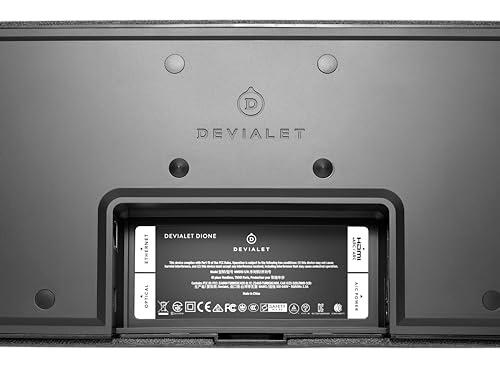
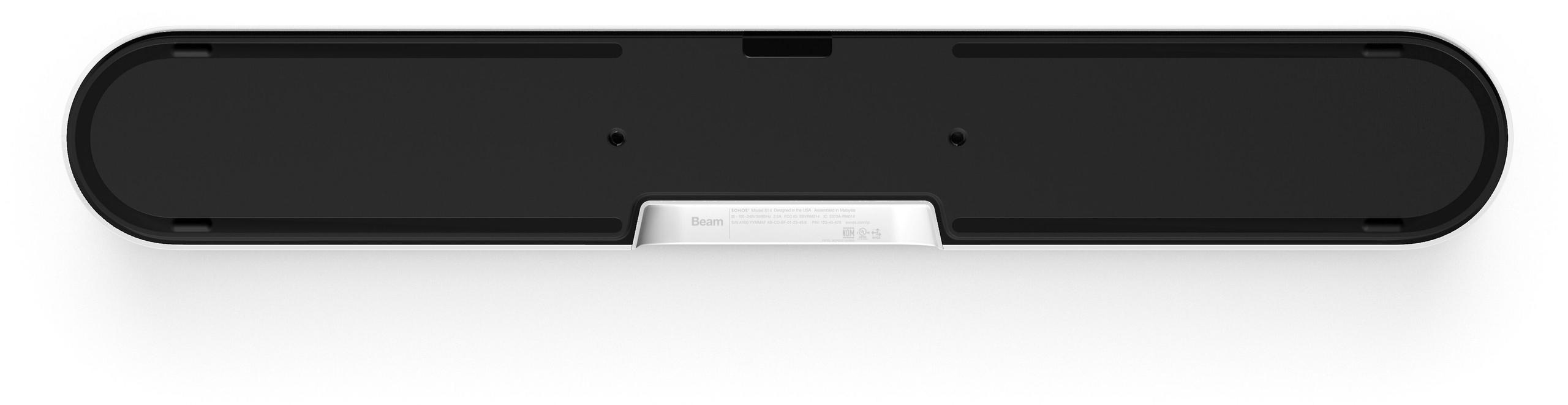
Both soundbars require a wired HDMI connection to your TV for the best audio quality. The Devialet Dione supports HDMI 2.1 eARC and also includes an optical input for older TVs. The Sonos Beam Gen 2 uses HDMI eARC exclusively and removes the optical input found on the original Beam model.
The Devialet Dione excels at music reproduction with its audiophile-grade drivers, advanced amplification, and dedicated Music mode that preserves stereo imaging. The Sonos Beam Gen 2 handles music well and offers superior streaming integration with voice control, but the Devialet Dione provides higher fidelity for serious music listening.
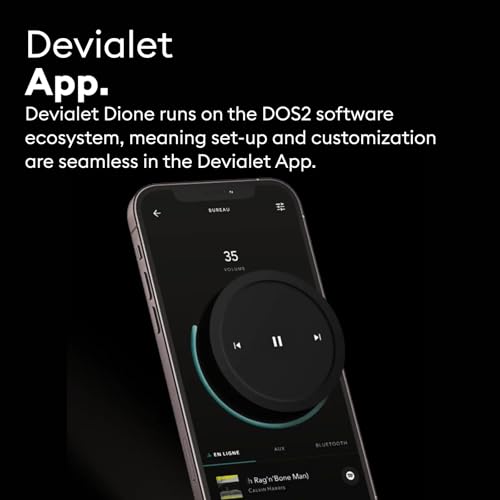
The Sonos Beam Gen 2 includes built-in Amazon Alexa and Google Assistant for hands-free control of playback, volume, and smart home devices. The Devialet Dione does not include any voice assistant integration and requires manual control through the included remote or smartphone app.
The Sonos Beam Gen 2 is designed for expansion—you can wirelessly add the Sonos Sub for better bass and rear speakers for true surround sound. The Devialet Dione is a complete all-in-one solution that cannot be expanded with additional speakers, making it a single-purchase commitment.
The Sonos Beam Gen 2 offers a simpler setup process with its intuitive app and automatic TruePlay room calibration. The Devialet Dione requires more careful placement consideration due to its size and weight, though both soundbars include room calibration features to optimize performance.
Both excel at dialogue reproduction. The Devialet Dione features a unique rotating ORB center channel that adapts to wall or table placement for optimal voice positioning. The Sonos Beam Gen 2 delivers exceptional center channel clarity that often eliminates the need for subtitles, even with quiet dialogue.
The Sonos Beam Gen 2 provides exceptional value with features like voice control, room calibration, and expandability at a much lower price point. The Devialet Dione costs significantly more but delivers premium build quality, integrated subwoofers, and audiophile-grade performance that justifies its luxury pricing for discerning buyers.
The Sonos Beam Gen 2 offers superior streaming integration with native support for most music services, podcasts, and radio through its comprehensive app ecosystem. The Devialet Dione supports AirPlay 2, Spotify Connect, and Bluetooth streaming but lacks the extensive streaming service integration of the Sonos Beam Gen 2.
For dedicated home theater setups, the Devialet Dione provides superior performance with its true Dolby Atmos implementation, powerful integrated bass, and premium audio processing. However, the Sonos Beam Gen 2 can evolve into a complete home theater system when expanded with additional speakers, making it more flexible for users who want to build their system gradually.
We've done our best to create useful and informative comparisons to help you decide what product to buy. Our research uses advanced automated methods to create this comparison and perfection is not possible - please contact us for corrections or questions. These are the sites we've researched in the creation of this article: rtings.com - crutchfield.com - devialet.com - ooberpad.com - bhphotovideo.com - kjwestone.co.uk - whathifi.com - devialet.com - devialet.com - sound-advice.online - kjwestone.co.uk - device.report - tmraudio.com - devialet.com - devialetchat.com - projectorscreen.com - soundandvision.com - bestbuy.com - youtube.com - av.com - audiofi.ca - devialet.com - blog.son-video.com - audioconnection.com.au - baybloorradio.com - cdn.abicart.com - smarthomesounds.co.uk - e-piphany.co.za - cloneyaudio.com - devialet.com - catalog.asbis.ee - av.com - soundandvision.com - youtube.com - comparisontabl.es - whathifi.com - en.community.sonos.com - techradar.com - youtube.com - consumerreports.org - bestbuy.com - youtube.com - sonos.com - wave-electronics.com - en.community.sonos.com - epicsystems.tech - tomsguide.com - bestbuy.com

Privacy Policy
Terms and Conditions - Affiliate Policy
Home Security
© Copyright 2008-2026.
11816 Inwood Rd #1211, Dallas, TX 75244