









Your TV's built-in speakers probably sound terrible. If you've ever watched an action movie and had to constantly adjust the volume—turning it up for whispered dialogue, then scrambling for the remote when explosions nearly blow out your eardrums—you know exactly what I'm talking about. Modern TVs, despite their impressive picture quality, have sacrificed audio performance in favor of ultra-thin designs that simply can't accommodate decent speakers.
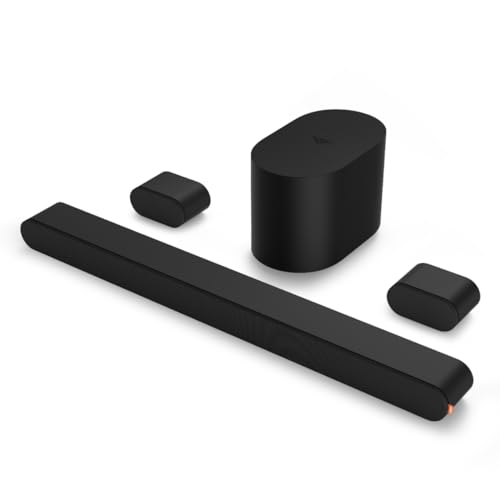
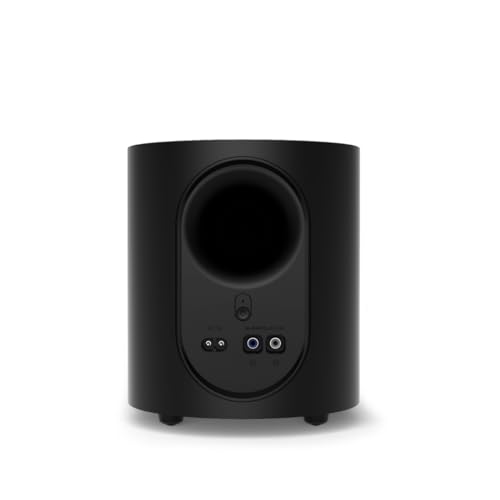
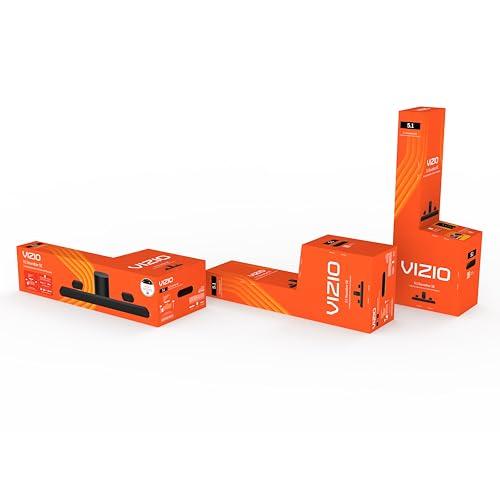
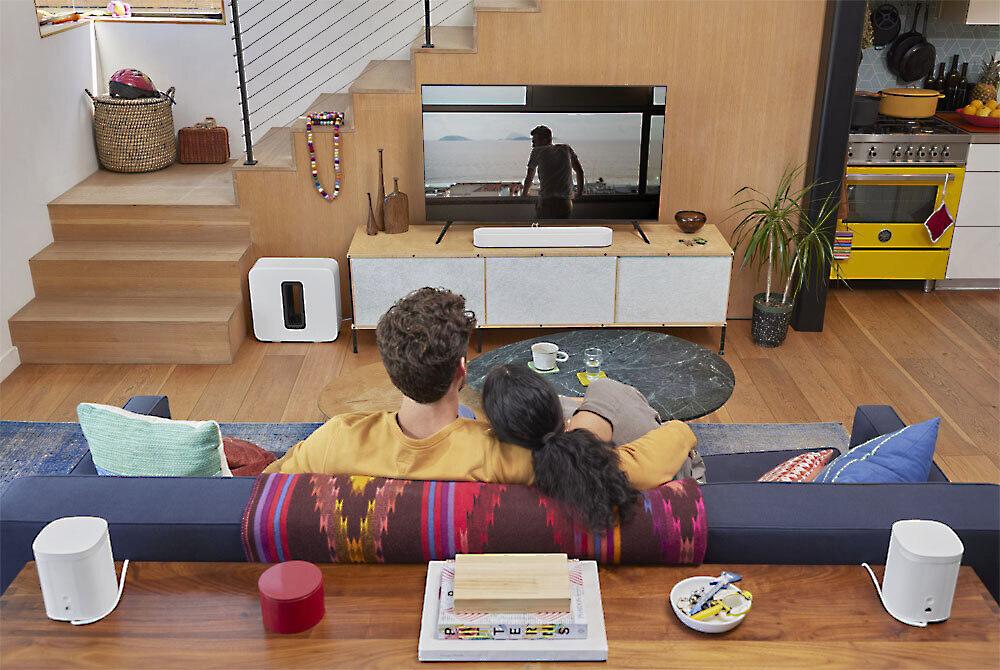
That's where soundbars come in, and at the time of writing, you'll find two fundamentally different approaches competing for your attention. The first strategy involves creating a complete surround sound system with multiple physical components—like the VIZIO 5.1 Soundbar SE Dolby Atmos Surround System, which includes separate rear speakers and a subwoofer. The second approach packs sophisticated audio processing into a single, premium unit that simulates surround sound digitally—exemplified by the Sonos Beam Gen 2 Soundbar.
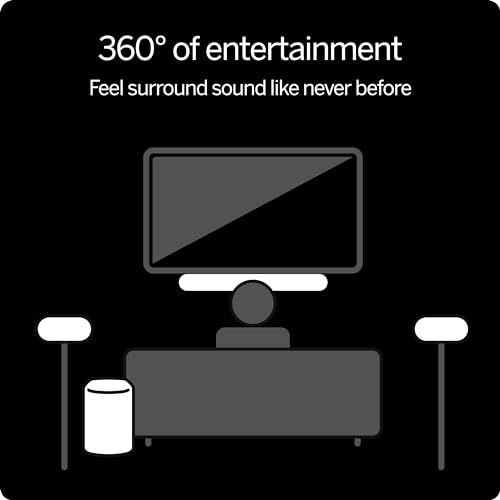
Before diving into specifics, it's worth understanding what makes these approaches so different. Traditional surround sound systems use discrete speakers positioned around your room to create authentic directional audio. When a helicopter flies from left to right in a movie, you hear it moving through actual speakers placed in those positions. This is called "true surround sound," and it's what home theater enthusiasts have preferred for decades.
The newer approach uses digital signal processing (DSP)—essentially computer algorithms that manipulate audio frequencies—to trick your brain into perceiving sounds coming from different directions using fewer speakers. It's similar to how noise-canceling headphones work, but in reverse: instead of canceling sounds, the processing creates the illusion of spatial audio.
Both the VIZIO 5.1 SE and Sonos Beam Gen 2 represent refined examples of their respective strategies, released in 2021 during a period when Dolby Atmos support became increasingly important for mid-range soundbars.
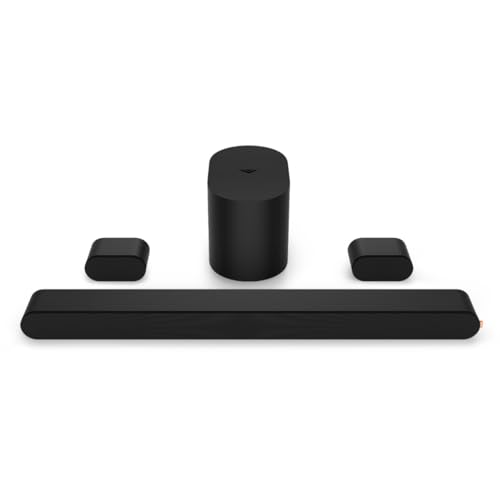
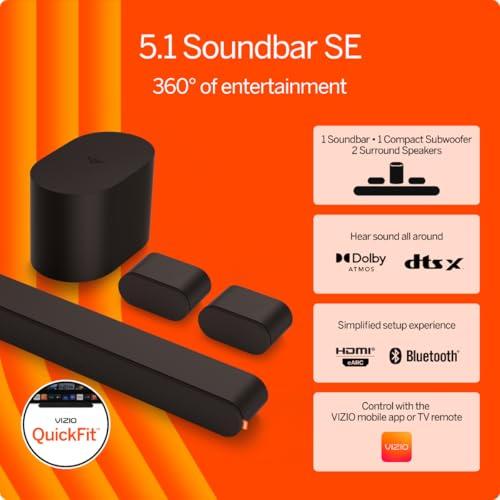
The VIZIO 5.1 Soundbar SE Dolby Atmos Surround System embodies the "more speakers, better sound" philosophy. At the time of writing, it's priced in the budget-friendly range (under $250), making it an attractive option for anyone wanting authentic surround sound without premium pricing.
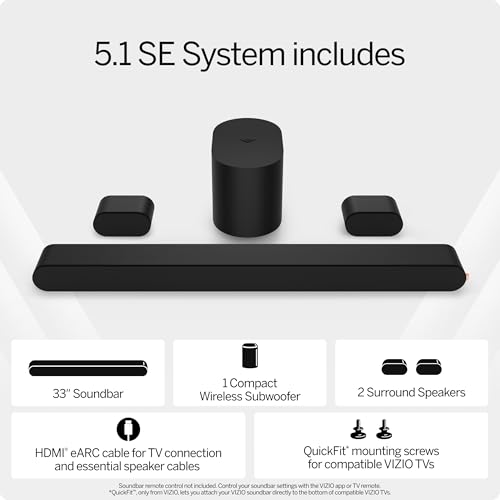
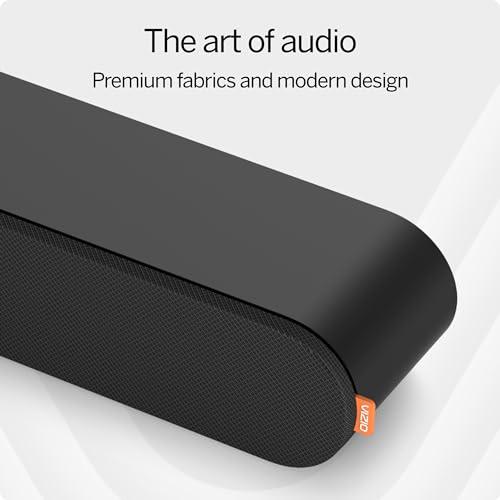
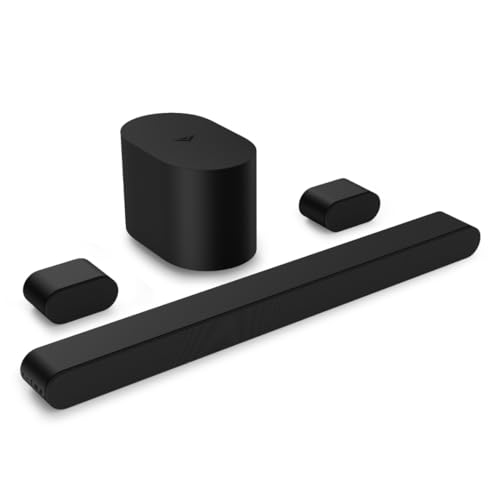
This system includes a 33-inch soundbar housing three full-range speakers for left, center, and right channels, plus two separate surround speakers for rear effects and a wireless subwoofer for bass. The "5.1" designation breaks down as follows: five main speakers (front left, center, front right, surround left, surround right) plus one subwoofer (the ".1" refers to the dedicated low-frequency channel).
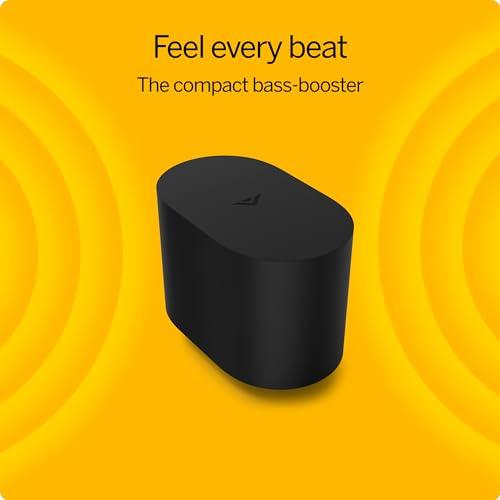
What immediately impressed me about the VIZIO 5.1 SE is how it delivers room-filling sound that genuinely surrounds you. The rear speakers create authentic directional effects—you can actually track sounds moving from front to back, which makes action sequences and gaming significantly more immersive. The dedicated subwoofer handles frequencies down to 50Hz, providing the kind of impactful bass that makes explosions feel visceral rather than flat.
The system reaches 96 decibels at maximum volume, which is loud enough to fill medium to large rooms without distortion. In practical terms, that's sufficient for most home theater setups, though you wouldn't want to sustain those levels for extended periods without risking hearing damage.
However, the VIZIO 5.1 SE does have some limitations that become apparent during critical listening. The satellite speakers, while effective for creating surround effects, lack the clarity and detail of higher-end drivers. This means certain subtle effects—like the shimmer of clashing swords or the delicate reverb in a concert hall—don't come through as cleanly as they might with more expensive components.
Dolby Atmos represents a significant evolution in surround sound technology. Traditional surround systems use channel-based audio (like 5.1 or 7.1), where sounds are assigned to specific speakers. Atmos uses object-based audio, where individual sounds are treated as three-dimensional objects that can be placed anywhere in space, including above your head.
The VIZIO 5.1 SE supports Atmos through processing in the main soundbar, but it's what I'd call an entry-level implementation. The height effects feel like they're coming from above the soundbar rather than truly overhead, and the rear speakers don't contribute to the vertical sound placement. While this creates a more immersive experience than traditional stereo or even basic 5.1, it doesn't deliver the full "bubble of sound" that more sophisticated Atmos systems can achieve.
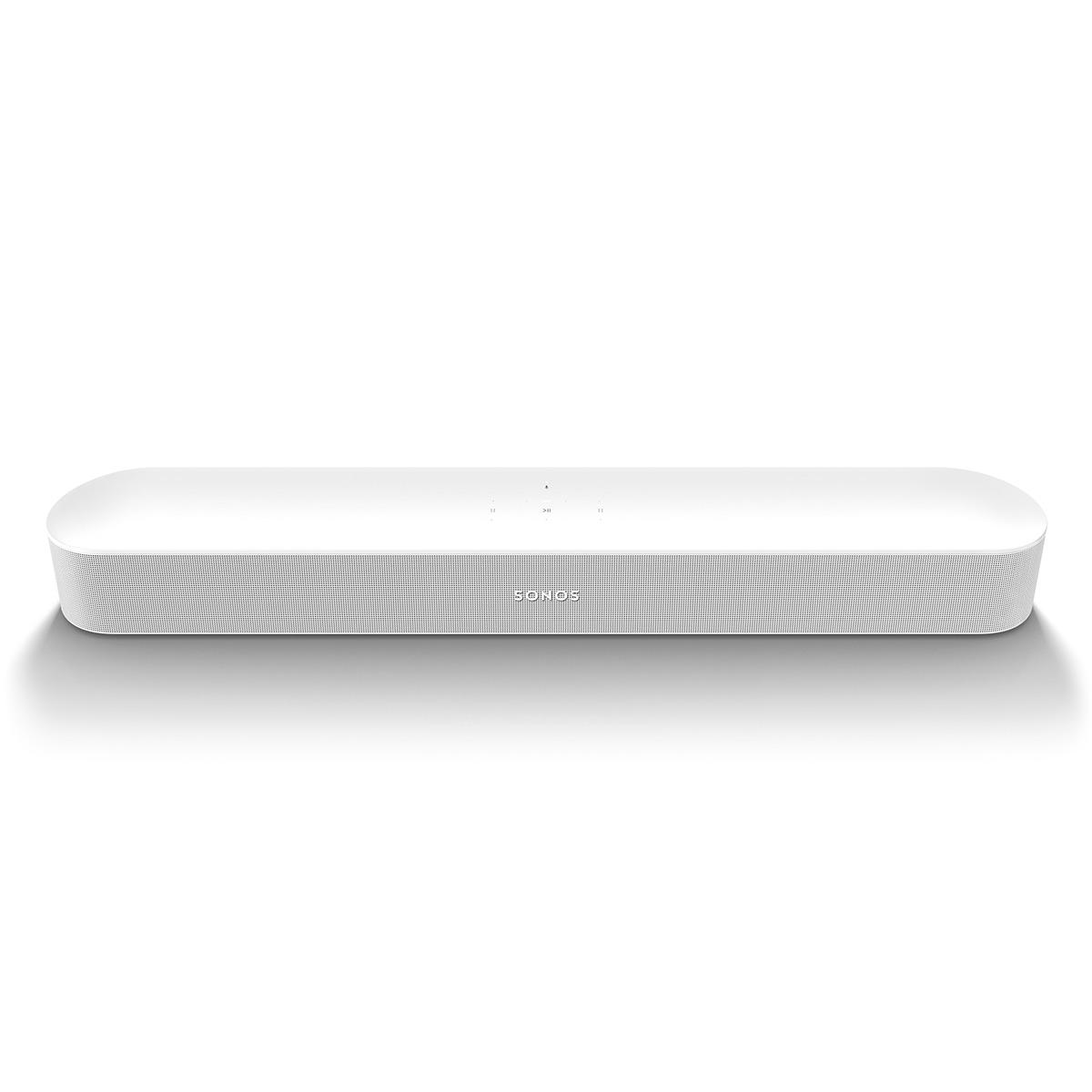
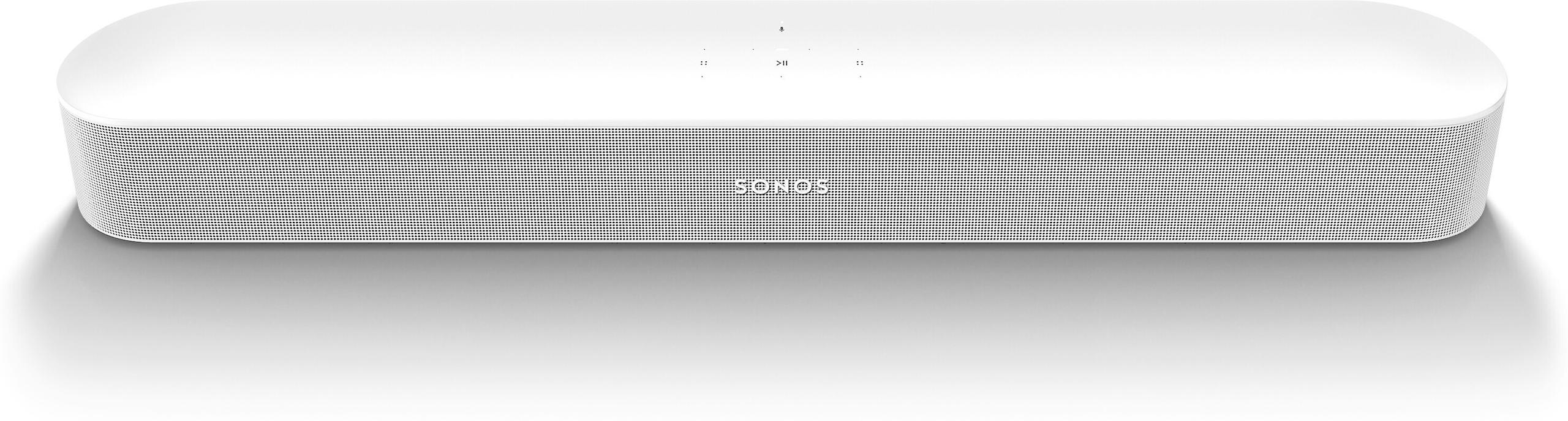
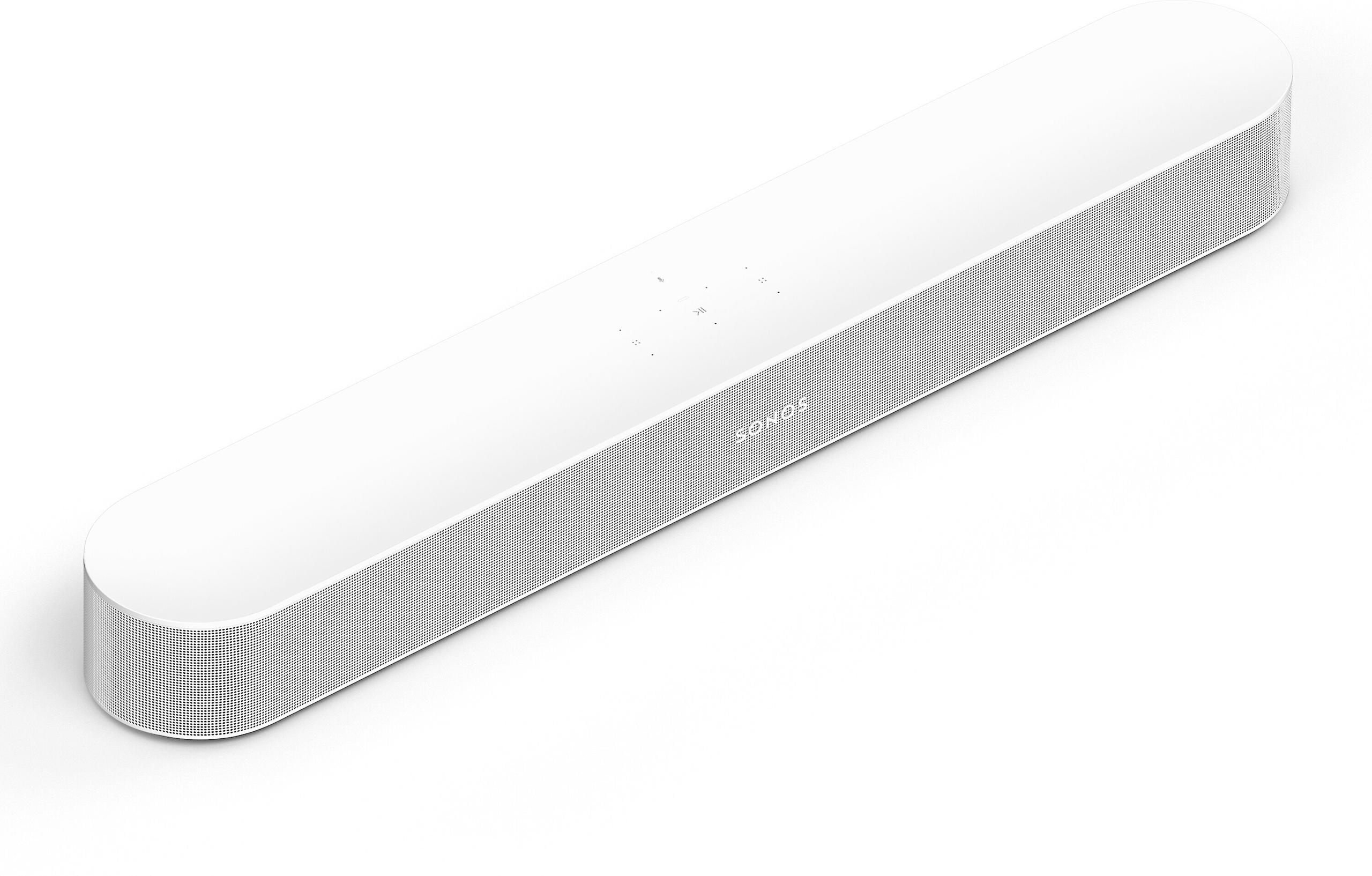
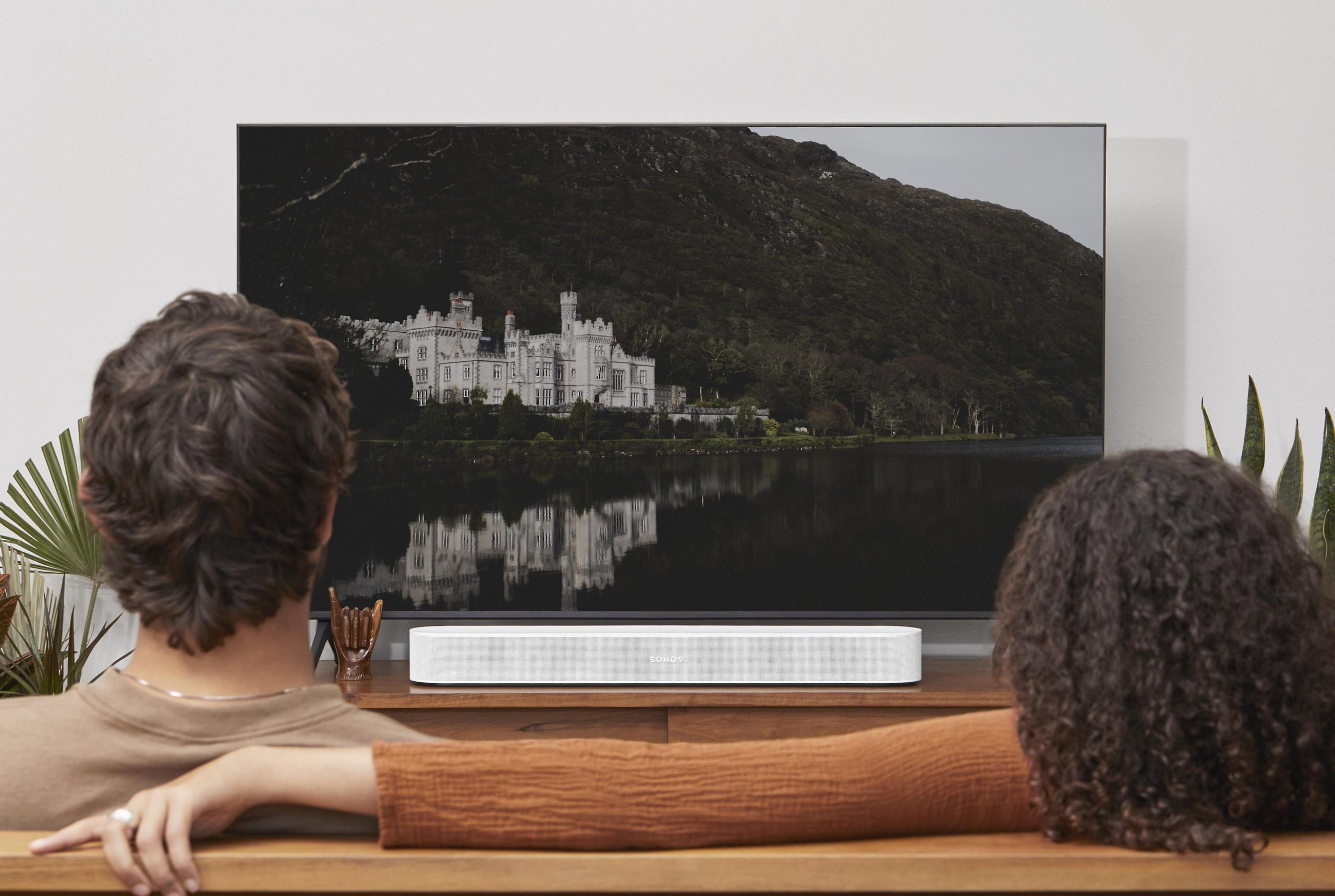
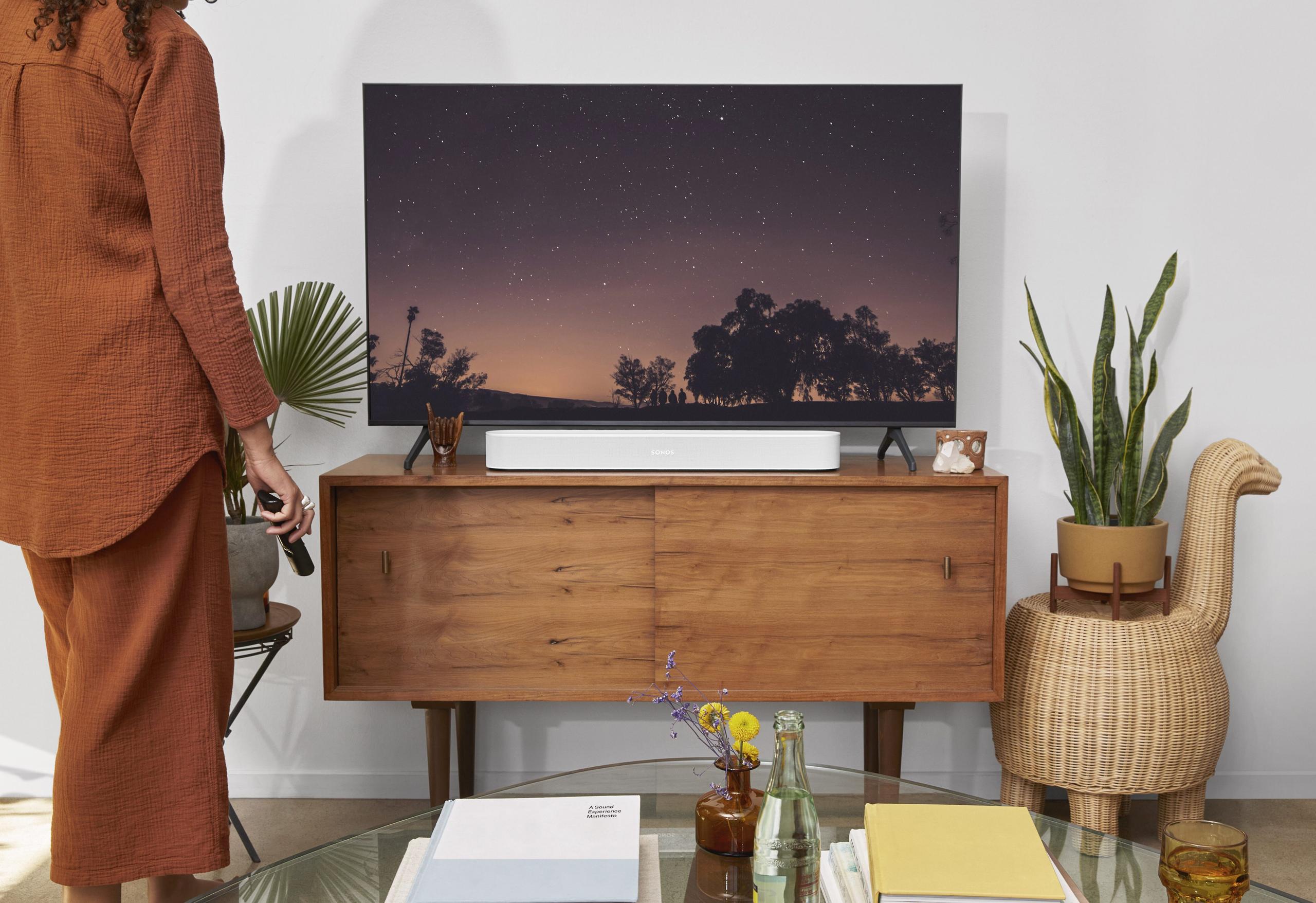
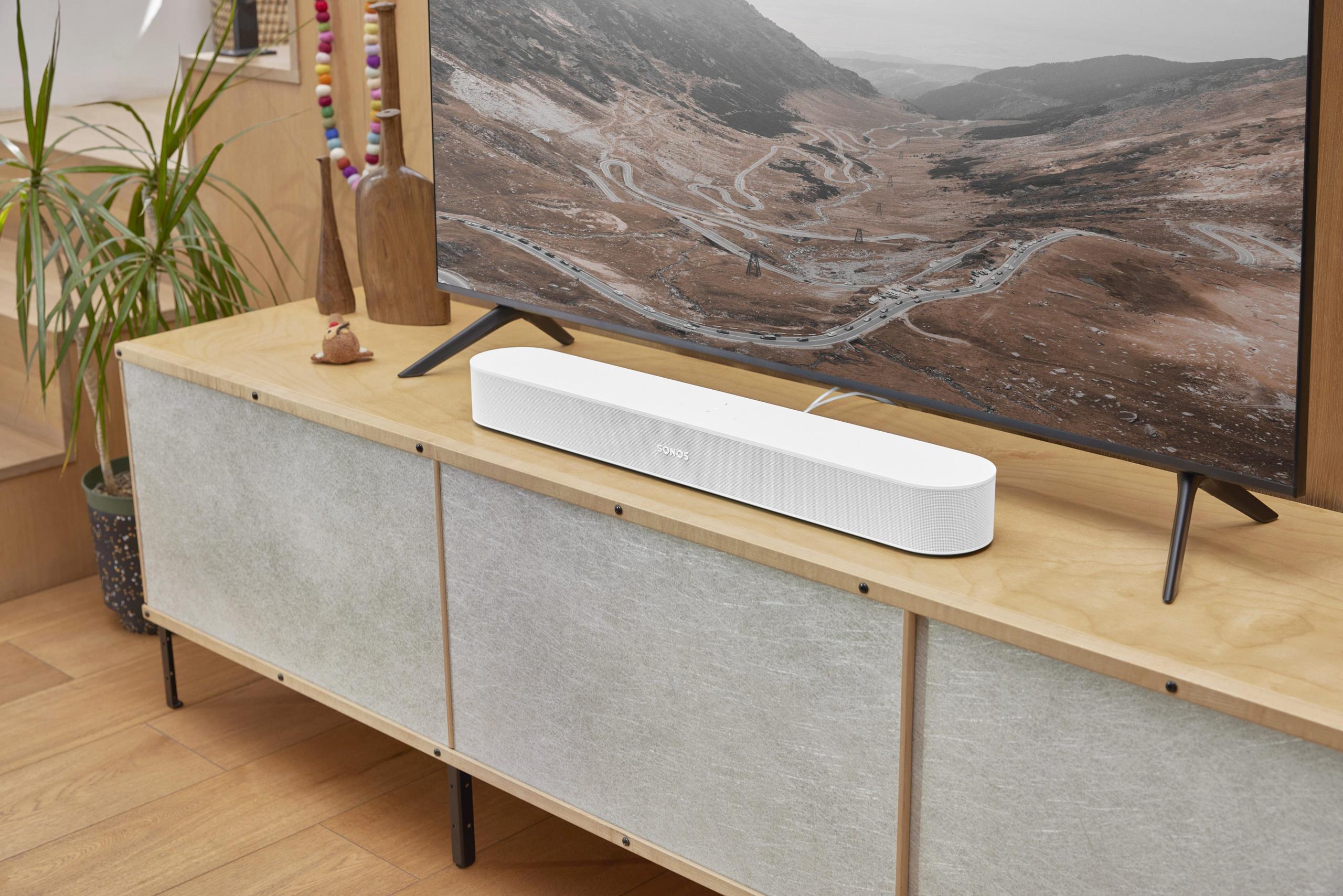
The Sonos Beam Gen 2 Soundbar, released in late 2021, takes a completely different approach. Instead of using multiple physical speakers around your room, it relies on advanced digital processing and carefully engineered driver arrays to create virtual surround sound from a single 25.6-inch unit.
At the time of writing, the Sonos Beam Gen 2 costs roughly double what you'd pay for the VIZIO 5.1 SE, but that premium pricing reflects substantially different engineering priorities and build quality.
The Sonos Beam Gen 2 uses four elliptical mid-woofers, one enhanced center tweeter, and three passive bass radiators—all driven by significantly more powerful processing than its predecessor. The key innovation is Sonos' phased array system, which creates five separate audio zones compared to the original Beam's three. This allows for more precise control over how sound waves interact with your room.
What's particularly impressive about the Sonos Beam Gen 2 is its dialogue clarity. The enhanced center tweeter and sophisticated processing make conversations crystal clear, even during complex action sequences. I've found that subtitles become largely unnecessary when watching movies, something that can't be said for many soundbars in this category.
The build quality also stands out. Where the VIZIO 5.1 SE uses standard drivers and basic materials, the Sonos Beam Gen 2 features premium components and a polycarbonate grille that feels substantial and well-engineered.
Perhaps most remarkably, the Sonos Beam Gen 2 creates convincing height and spatial effects without any upfiring or rear speakers. It accomplishes this through psychoacoustic processing—essentially exploiting how your brain interprets sound waves bouncing off room surfaces.
While purists might argue that virtual surround can never match the real thing, the Sonos Beam Gen 2 comes surprisingly close. Professional reviewers consistently describe it as delivering the best virtual Atmos experience in its price range, and I'd agree. The processing creates a convincing "bubble of sound" that extends well beyond the physical boundaries of the soundbar.
The trade-off is that this virtual approach works best in smaller to medium-sized rooms with favorable acoustics. Large spaces or rooms with unusual layouts might not provide the wall reflections needed for optimal effect.
For pure home theater applications, the choice between these systems often comes down to room size and setup preferences. The VIZIO 5.1 SE provides more authentic surround immersion in larger rooms where you can properly position the rear speakers. There's something satisfying about hearing a spaceship genuinely fly from front to back through discrete speakers positioned around your seating area.
However, the Sonos Beam Gen 2 delivers superior dialogue clarity and overall refinement. Action sequences sound cleaner and more detailed, with better separation between different audio elements. The bass, while not as deep as the VIZIO's dedicated subwoofer, integrates more seamlessly with the overall sound signature.
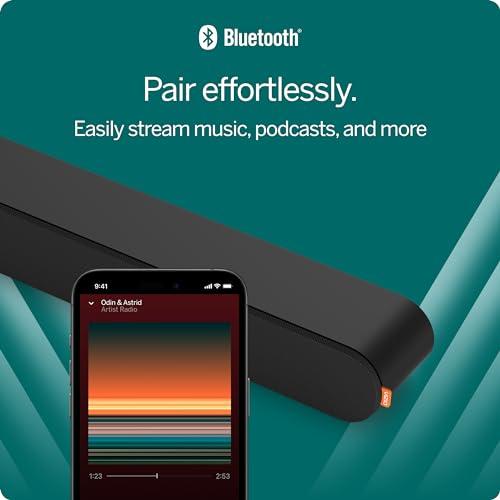
This is where the difference in approach becomes most apparent. The Sonos Beam Gen 2 was designed from the ground up to excel at music reproduction, not just TV audio. It supports dozens of streaming services natively, includes Apple AirPlay 2, and can function as a standalone music speaker when your TV is off.
The stereo soundstage—how wide and spacious music sounds—extends well beyond the physical dimensions of the unit. Jazz recordings showcase impressive instrument separation, while rock music benefits from tight, controlled bass that doesn't overpower midrange frequencies.
The VIZIO 5.1 SE, by contrast, handles music adequately but isn't optimized for stereo reproduction. The system works fine for casual listening, but serious music enthusiasts will notice the difference in detail and spatial presentation.
Gaming introduces unique audio requirements, particularly for competitive players who rely on directional audio cues. The VIZIO 5.1 SE's physical rear speakers provide more accurate positional information—you can genuinely hear footsteps approaching from behind in first-person shooters.
The Sonos Beam Gen 2 offers cleaner communication audio and more refined effects processing, which benefits story-driven games and single-player experiences. The superior dialogue clarity makes it easier to follow complex narratives without missing important plot details.
The setup experience reveals another fundamental difference in philosophy. The VIZIO 5.1 SE requires thoughtful placement of the subwoofer and rear speakers, which can be challenging in smaller spaces or apartments where running speaker wire isn't practical. However, once properly positioned, the system provides consistent performance regardless of where you're sitting.
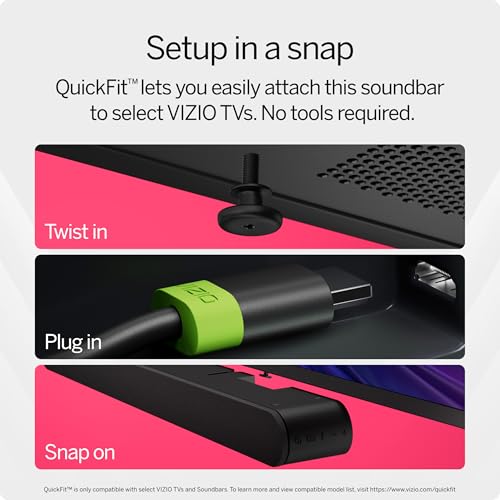
The Sonos Beam Gen 2 offers a plug-and-play experience—connect two cables, run through the setup wizard in the Sonos app, and you're done. The Trueplay calibration feature uses your smartphone's microphone to analyze your room's acoustics and optimize the sound accordingly, though this currently requires an iOS device.
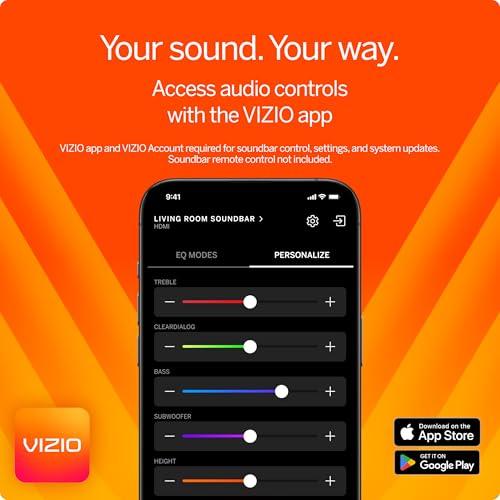
From a smart home integration standpoint, the Sonos Beam Gen 2 is significantly more sophisticated. Built-in voice assistants (Amazon Alexa and Google Assistant) allow for hands-free control, while the comprehensive Sonos app provides access to virtually every major streaming service. The VIZIO 5.1 SE's app is more basic, focusing primarily on audio adjustments rather than content access.
At the time of writing, the VIZIO 5.1 SE represents exceptional value in the traditional surround sound category. Comparable systems from established brands typically cost significantly more, making VIZIO's offering attractive for budget-conscious buyers who prioritize authentic surround effects over premium build quality.
The Sonos Beam Gen 2's higher price reflects its premium positioning, but also its versatility. When you factor in its music streaming capabilities, smart home integration, and potential for expansion within the Sonos ecosystem, the cost-per-feature ratio becomes more justifiable.
Consider also the long-term value proposition. The Sonos Beam Gen 2 can grow with your needs—you can add a Sonos Sub for enhanced bass or Sonos rear speakers for true surround sound. The VIZIO 5.1 SE is essentially a fixed configuration that can't be expanded or upgraded.
Room acoustics play a crucial role in both systems' performance, though in different ways. The VIZIO 5.1 SE works best in rooms where you can position the rear speakers at least six feet behind your seating position, ideally at ear level. Smaller rooms or those with challenging layouts—like open-concept spaces or apartments with noise restrictions—might not accommodate optimal speaker placement.
The Sonos Beam Gen 2 adapts better to difficult room configurations, using its processing power to work with whatever acoustic environment it finds. However, rooms with hard surfaces and minimal soft furnishings can create unwanted reflections that interfere with the virtual surround effects.
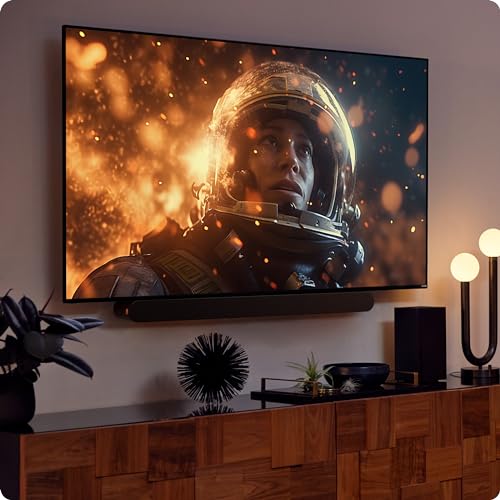
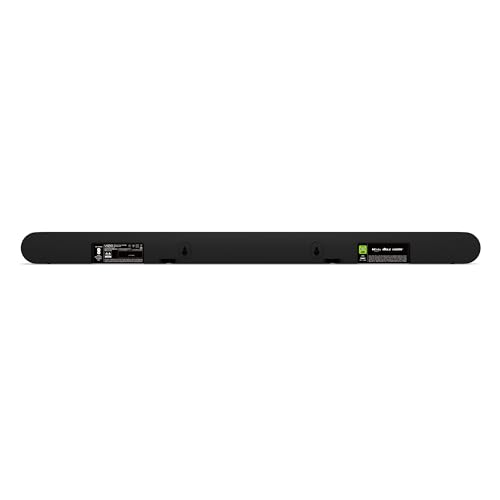
Both systems support wall mounting, though the VIZIO 5.1 SE's multiple components make this more complex. The Sonos Beam Gen 2 can be wall-mounted easily, though mounting hardware isn't included and must be purchased separately.
After extensive testing and consideration, I believe the decision ultimately comes down to your priorities and living situation.
Choose the VIZIO 5.1 Soundbar SE Dolby Atmos Surround System if you're primarily focused on home theater performance and have the space to properly position multiple speakers. It's particularly compelling for movie enthusiasts and gamers who want authentic surround sound without premium pricing. The system excels in medium to large rooms where the rear speakers can be optimally placed, and it's the better choice if your budget is limited but you still want a true surround experience.
The Sonos Beam Gen 2 Soundbar makes more sense if you value convenience, build quality, and versatility. It's ideal for smaller spaces, apartment living, or situations where running speaker wire isn't practical. The superior music performance and smart home integration make it worth the premium if you'll use it for more than just TV audio.
From a pure performance standpoint, both systems deliver impressive results for their respective price points, but they serve different user profiles. The VIZIO 5.1 SE prioritizes traditional surround immersion at an accessible price, while the Sonos Beam Gen 2 offers a more sophisticated, flexible solution that excels across multiple use cases.
Consider your room layout, budget constraints, and how you plan to use the system. If movie night with the family is your primary concern and you have the space for proper setup, the VIZIO 5.1 SE provides exceptional value. If you want a premium audio solution that handles everything from Netflix binges to dinner party playlists with equal skill, the Sonos Beam Gen 2 justifies its higher cost through superior versatility and refinement.
| VIZIO 5.1 Soundbar SE Dolby Atmos Surround System | Sonos Beam Gen 2 Soundbar |
|---|---|
| System Type - Determines setup complexity and surround authenticity | |
| True 5.1 surround with wireless subwoofer and rear satellites | Single-unit virtual surround with advanced processing |
| Speaker Configuration - Impacts sound placement and bass response | |
| 33" soundbar + 6" wireless subwoofer + 2 rear speakers | 25.6" soundbar with 4 woofers, 1 tweeter, 3 passive radiators |
| Maximum Output - Critical for filling larger rooms | |
| 96dB (suitable for medium-large rooms) | Not specified (designed for small-medium rooms) |
| Dolby Atmos Implementation - Affects height and spatial effects quality | |
| Basic processing through soundbar only | Advanced virtual Atmos with phased array technology |
| Bass Extension - Determines impact of explosions and low-frequency effects | |
| Down to 50Hz with dedicated 6" subwoofer | Integrated bass radiators (less extension but cleaner integration) |
| Setup Requirements - Consider your room layout and wire tolerance | |
| Requires positioning subwoofer and rear speakers around room | Plug-and-play with just HDMI connection |
| Smart Features - Important for streaming and voice control | |
| VIZIO mobile app, HDMI eARC, basic streaming | Built-in Alexa/Google Assistant, comprehensive streaming, AirPlay 2 |
| Music Performance - Matters if you'll stream music frequently | |
| Adequate for casual listening | Excellent stereo performance with wide soundstage |
| Expandability - Consider future upgrade potential | |
| Fixed configuration, cannot expand | Can add Sonos Sub and rear speakers, integrates with Sonos ecosystem |
| Build Quality - Affects longevity and audio refinement | |
| Standard drivers and materials for the price point | Premium components with polycarbonate grille and superior processing |
| Dialogue Clarity - Critical for following movie conversations | |
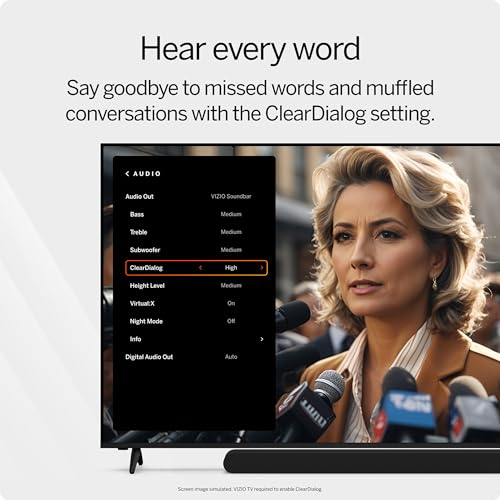
| Good center channel performance | Exceptional dialogue clarity with enhanced center tweeter |
| Room Calibration - Optimizes sound for your specific space | |
| Manual bass and treble adjustment via app | Trueplay automatic room calibration (requires iOS device) |
| Connectivity Options - Determines compatibility with your setup | |
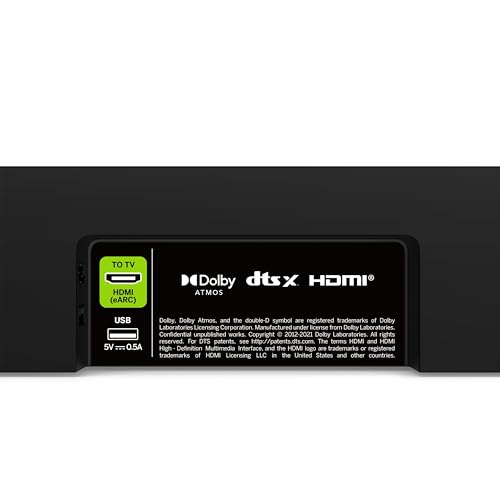
| HDMI eARC, optical adapter included | HDMI eARC, ethernet port, comprehensive wireless connectivity |
For pure home theater use, the VIZIO 5.1 Soundbar SE Dolby Atmos Surround System provides more authentic surround sound with its physical rear speakers and dedicated subwoofer. You'll get genuine directional effects and deeper bass for action movies. However, the Sonos Beam Gen 2 Soundbar offers superior dialogue clarity and more refined audio processing, making conversations easier to follow during complex scenes.
The VIZIO 5.1 Soundbar SE Dolby Atmos Surround System requires positioning a wireless subwoofer and two rear speakers around your room, which can be challenging in smaller spaces. The Sonos Beam Gen 2 Soundbar is much simpler - just connect two cables and you're done. The Sonos also includes automatic room calibration to optimize sound for your space.
The Sonos Beam Gen 2 Soundbar is significantly better for music, offering excellent stereo performance, wide soundstage, and native support for dozens of streaming services. It can function as a standalone music speaker when your TV is off. The VIZIO 5.1 Soundbar SE Dolby Atmos Surround System handles music adequately but isn't optimized for stereo reproduction.
The Sonos Beam Gen 2 Soundbar is ideal for apartments since it's compact and doesn't require additional speakers that might disturb neighbors. The VIZIO 5.1 Soundbar SE Dolby Atmos Surround System needs space for rear speakers and a subwoofer, which may not be practical in smaller living spaces or could cause noise issues.
The VIZIO 5.1 Soundbar SE Dolby Atmos Surround System offers exceptional value for traditional surround sound at a budget-friendly price point. The Sonos Beam Gen 2 Soundbar costs more but provides premium build quality, smart features, and versatility that justify the higher price for many users.
The Sonos Beam Gen 2 Soundbar can be expanded with additional Sonos speakers like the Sub for enhanced bass or rear speakers for true surround sound. It also integrates with the broader Sonos ecosystem. The VIZIO 5.1 Soundbar SE Dolby Atmos Surround System is a fixed configuration that cannot be expanded or upgraded.
Both soundbars support Dolby Atmos, but differently. The VIZIO 5.1 Soundbar SE Dolby Atmos Surround System uses basic processing for entry-level height effects. The Sonos Beam Gen 2 Soundbar employs advanced virtual Atmos processing with phased arrays that create more convincing spatial effects, earning praise as one of the best virtual Atmos soundbars in its class.
For competitive gaming, the VIZIO 5.1 Soundbar SE Dolby Atmos Surround System provides better directional audio cues with its physical rear speakers, helping you locate enemies or hear footsteps. The Sonos Beam Gen 2 Soundbar offers cleaner communication audio and more refined effects, which benefits story-driven games and single-player experiences.
The Sonos Beam Gen 2 Soundbar includes built-in Amazon Alexa and Google Assistant, comprehensive streaming service support, and AirPlay 2 compatibility. The VIZIO 5.1 Soundbar SE Dolby Atmos Surround System has a more basic VIZIO mobile app for control and settings, with HDMI eARC support for TV remote control.
The VIZIO 5.1 Soundbar SE Dolby Atmos Surround System is better suited for larger rooms with its 96dB maximum output and physical speakers that can fill the space effectively. The Sonos Beam Gen 2 Soundbar is designed for small to medium rooms and may not provide sufficient volume or bass impact in very large spaces.
The Sonos Beam Gen 2 Soundbar features premium components, superior driver quality, and a polycarbonate grille that feels substantial and well-engineered. The VIZIO 5.1 Soundbar SE Dolby Atmos Surround System uses standard drivers and basic materials appropriate for its price point, delivering good performance but with less refinement in construction.
Choose the VIZIO 5.1 Soundbar SE Dolby Atmos Surround System if you want authentic surround sound at an affordable price and have space for multiple speakers. Pick the Sonos Beam Gen 2 Soundbar if you prioritize convenience, superior build quality, and plan to use it for both TV and music streaming, especially in smaller spaces where setup simplicity matters most.
We've done our best to create useful and informative comparisons to help you decide what product to buy. Our research uses advanced automated methods to create this comparison and perfection is not possible - please contact us for corrections or questions. These are the sites we've researched in the creation of this article: bestbuy.com - vizio.com - rtings.com - vizio.com - vizio.com - vizio.com - youtube.com - vizio.com - vizio.com - cnet.com - samsclub.com - walmart.com - nfm.com - finelinesdesignstudio.com - dugoutnorthbrook.com - bestbuy.com - whathifi.com - en.community.sonos.com - techradar.com - youtube.com - consumerreports.org - bestbuy.com - youtube.com - sonos.com - wave-electronics.com - en.community.sonos.com - epicsystems.tech - tomsguide.com - bestbuy.com

Privacy Policy
Terms and Conditions - Affiliate Policy
Home Security
© Copyright 2008-2026.
11816 Inwood Rd #1211, Dallas, TX 75244