





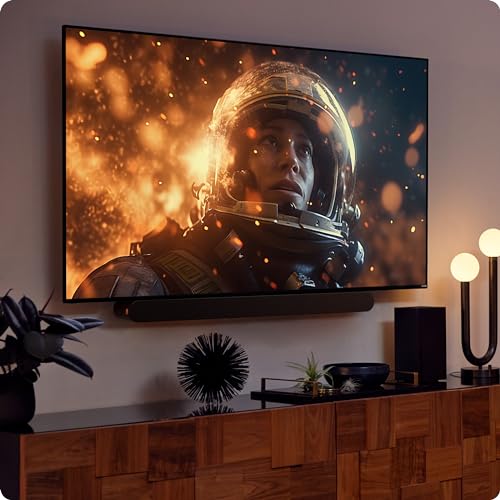
If you've been stuck with the tinny, directionally-challenged audio that passes for TV speakers these days, you've probably started shopping for a soundbar upgrade. The good news is that even basic soundbars deliver dramatically better sound than what's built into your TV. The challenging news is that choosing between different approaches to surround sound can get complicated quickly.
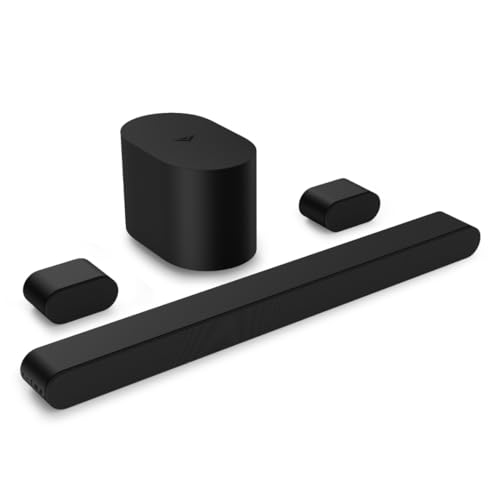
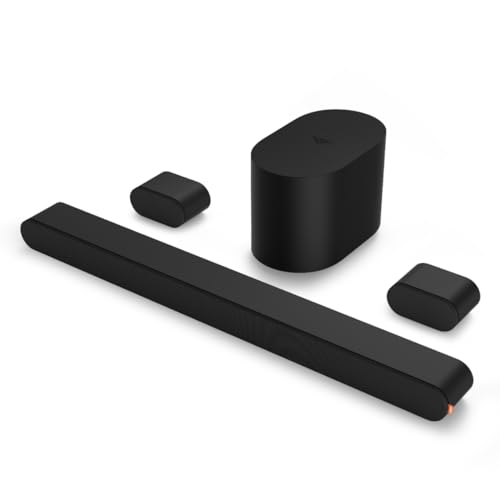
Today we're comparing two fundamentally different takes on home theater audio: the Ultimea Aura A40, which takes the "more speakers equals better surround" approach, and the VIZIO 5.1 SE Dolby Atmos, which focuses on modern audio processing and wireless convenience. Both were released in 2023, representing the current state of soundbar technology, but they solve the surround sound puzzle in very different ways.
Before diving into specifics, it's worth understanding what you're really buying when you shop for a soundbar. At its core, a soundbar replaces your TV's speakers with better drivers (the actual speaker components) housed in a longer enclosure that can create a wider soundstage—the perceived width and positioning of audio.
The magic happens through a combination of physical speaker placement and digital signal processing (DSP), which is essentially computer algorithms that manipulate audio signals to create effects like surround sound. Some systems rely heavily on physical speakers placed around your room, while others use sophisticated processing to trick your ears into hearing sounds coming from directions where no speakers actually exist.
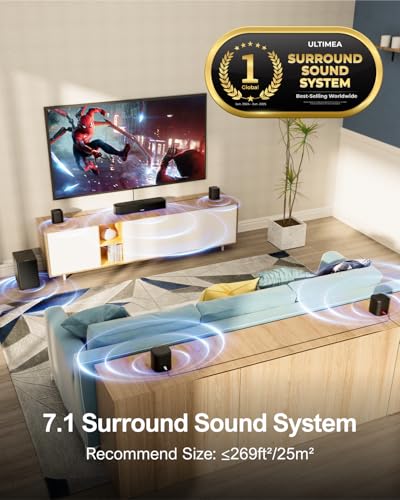
Channel configuration is the industry's way of describing how many speakers and subwoofers a system has. The first number represents main speakers (left, right, center), while the second indicates subwoofers. So 5.1 means five main speakers plus one subwoofer, while 7.1 adds two more surround speakers. When you see terms like "virtual" surround, it means the system is simulating those extra channels rather than using dedicated physical speakers.
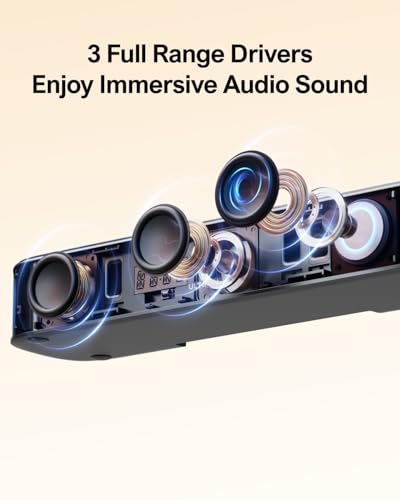
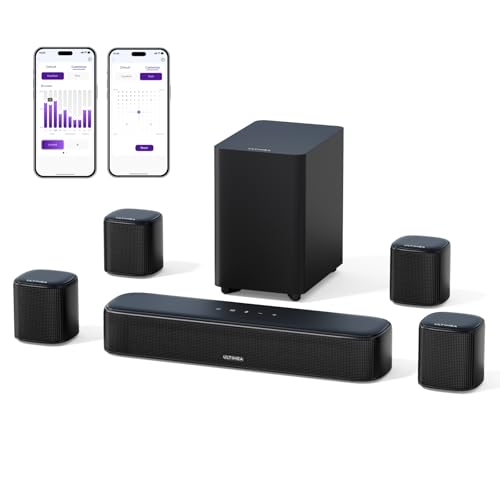
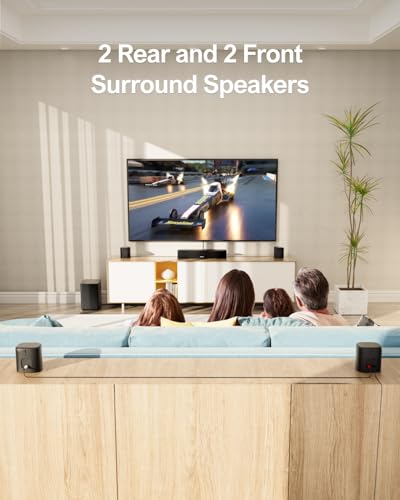
The Ultimea Aura A40 represents what you might call the "brute force" approach to surround sound. Rather than relying primarily on audio processing tricks, it includes four discrete surround speakers that you position around your listening area. Two go near the front (often beside your TV), while two go behind your seating position.
This physical approach has significant advantages. When a helicopter flies overhead in a movie, or when footsteps move from left to right in a video game, the sound actually originates from speakers in those positions. Your brain doesn't have to work to interpret processed audio—it just hears genuine directional sound. Based on our research into user experiences, this creates notably more convincing surround effects compared to systems that simulate directionality.
The Aura A40's 330-watt power output deserves attention too. Watts measure electrical power, but in practical terms, higher wattage typically means the system can play louder without distortion and has more "headroom"—the ability to handle sudden loud sounds like explosions without clipping or distorting. At over 98 decibels maximum output, this system can fill rooms up to about 270 square feet with authority.
The included 4-inch subwoofer extends frequency response down to 65Hz, which covers most of the bass content in movies and music. For context, the lowest note on a bass guitar is around 41Hz, so while you'll miss the deepest synthesized bass drops, you'll get solid impact from most content.
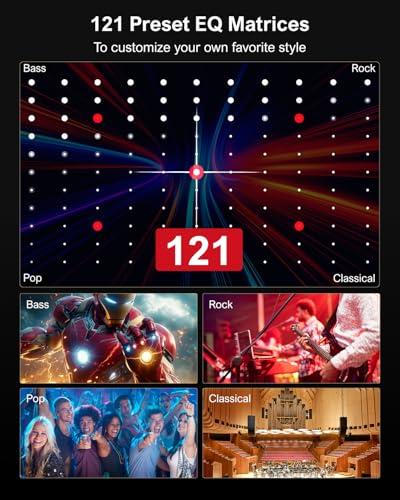
Where the Ultimea really shines is in customization. Its companion app includes 121 preset equalizer settings—think of these as different audio "flavors" optimized for everything from classical music to EDM. The 10-band equalizer lets you manually adjust specific frequency ranges, while six surround levels let you dial in how aggressive the surround effect should be. This level of control is unusual at any price point.
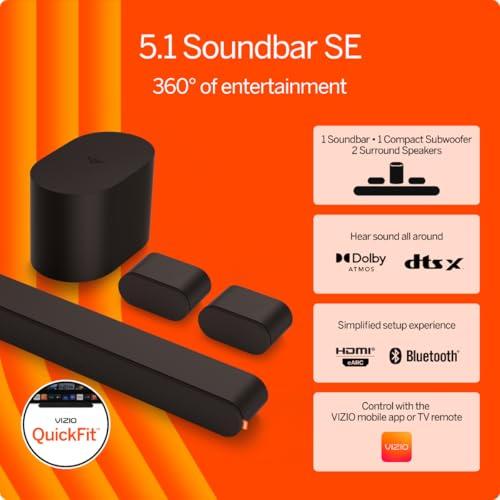
The VIZIO 5.1 SE takes a more contemporary approach, focusing on advanced audio codecs—specialized formats that encode spatial information into audio tracks. Dolby Atmos and DTS:X, both supported here, represent the current pinnacle of cinema audio technology. These formats don't just position sounds left, right, front, and back—they add height information, creating a true three-dimensional soundscape.
When you watch a Marvel movie on Disney+ or a thriller on Netflix that includes Dolby Atmos encoding, the VIZIO system can decode that height information and reflect sounds off your ceiling to create the illusion of overhead audio. Rain seems to fall from above, aircraft fly convincingly overhead, and ambient sounds gain a realistic sense of space and dimension.
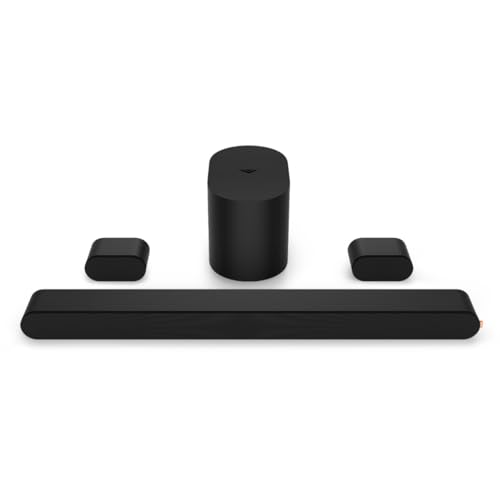
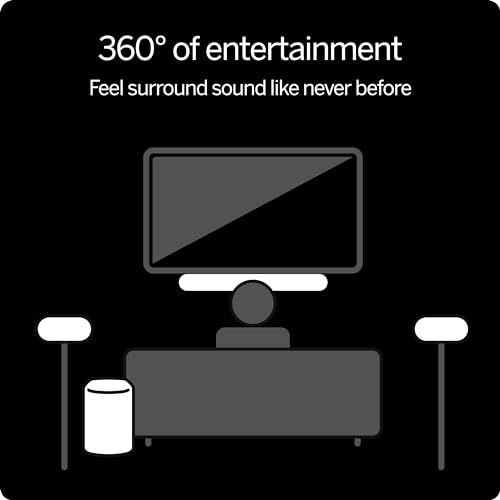
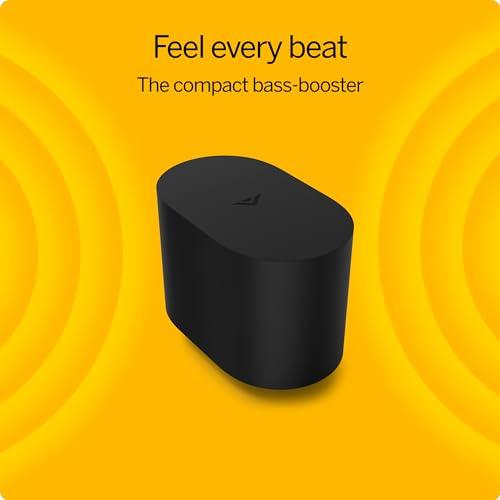
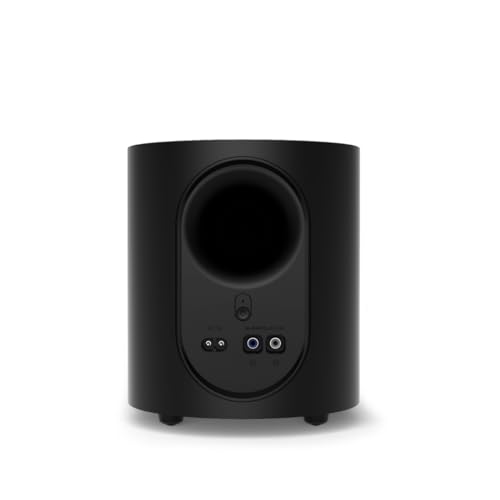
This processing approach has practical benefits beyond just sound quality. The wireless subwoofer can be positioned anywhere within about 30 feet of the main soundbar, giving you flexibility to hide it behind furniture or in a corner where it won't be visually intrusive. The two wireless surround speakers similarly offer more placement freedom than wired alternatives.
At 115 watts peak power and 96dB maximum output, the VIZIO has less raw power than the Ultimea, but it's still capable of filling medium to large rooms. The trade-off is in maximum volume capability and dynamic range—the difference between the quietest and loudest sounds the system can reproduce cleanly.
The wireless subwoofer's 50Hz frequency response actually extends slightly deeper than the Ultimea's 65Hz floor, which means you'll feel more of those deep rumbles and synthesized bass effects. However, the smaller driver size means less overall bass impact at higher volumes.
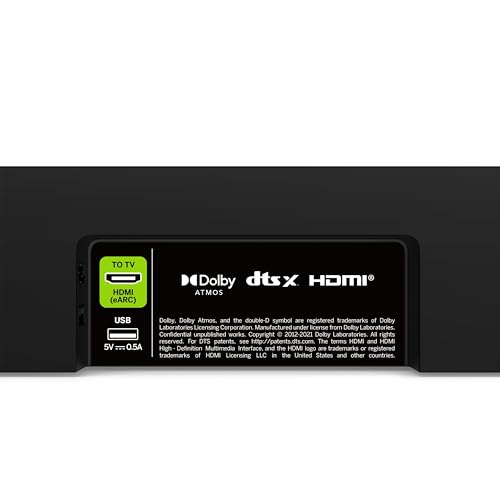
This is where the two systems diverge most dramatically. The VIZIO 5.1 SE includes HDMI eARC (enhanced Audio Return Channel), which has become the gold standard for TV audio connections. This single cable carries high-quality audio from your TV back to the soundbar and enables your existing TV remote to control soundbar volume—a surprisingly important convenience feature.
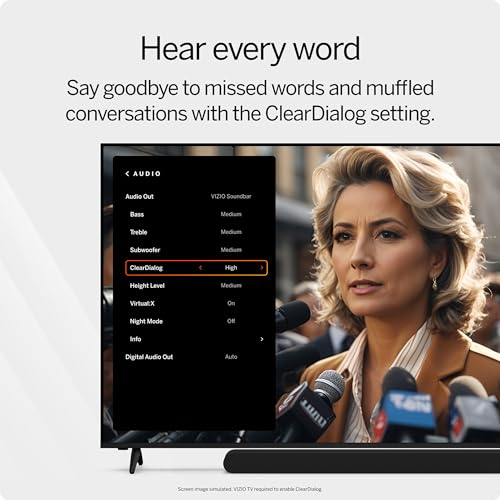
HDMI eARC also supports the full bandwidth needed for Dolby Atmos and DTS:X, ensuring you get the complete audio experience from streaming services and 4K Blu-rays. The system integrates with smart home platforms like Alexa and Google Assistant, fitting into modern connected home setups.
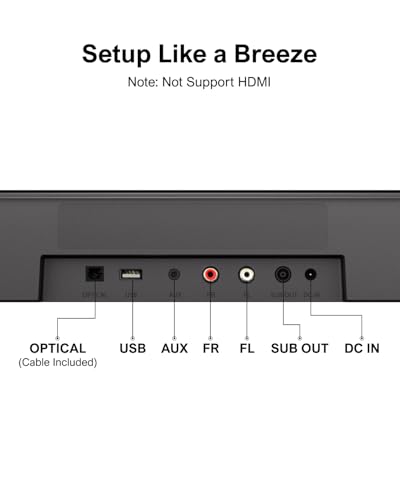
The Ultimea Aura A40, in contrast, relies on optical, auxiliary, and USB connections—no HDMI at all. While optical connections can carry 5.1 surround sound, they lack the bandwidth for modern formats like Dolby Atmos. You'll need to manage volume using either the soundbar's remote or the mobile app, as your TV remote won't work directly.
This connectivity difference reflects the systems' different design philosophies. The VIZIO prioritizes seamless integration with modern TVs and streaming ecosystems, while the Ultimea focuses on delivering maximum surround immersion regardless of your TV's age or capabilities.
Based on extensive research into user and expert feedback, both systems deliver substantial improvements over TV speakers, but in different ways. The Ultimea Aura A40 excels at creating that "surround bubble" effect where you feel genuinely immersed in the audio environment. Users consistently report better directional accuracy for gaming—you can actually pinpoint enemy footsteps or gunfire location more precisely than with processed surround systems.
For movie watching, the Ultimea's approach creates convincing ambient effects. Forest scenes with chirping birds, busy restaurants with background chatter, or action sequences with ricocheting bullets all benefit from having actual speakers positioned around the room. The dialogue clarity remains strong even during complex scenes, thanks to the dedicated center channel in the main soundbar.
The VIZIO 5.1 SE shines with modern content that includes Dolby Atmos encoding. Netflix originals, Disney+ blockbusters, and Apple TV+ productions that utilize height channels create genuinely impressive overhead effects. The system's processing also enhances older content that wasn't originally recorded in surround formats, using algorithms to extract spatial cues and redirect them to appropriate speakers.
However, our research suggests the VIZIO's height effects work best in rooms with appropriate ceiling heights (8-10 feet) and reflective surfaces. Vaulted ceilings, heavy acoustic treatments, or very large rooms can diminish the overhead effect.
At the time of writing, the Ultimea Aura A40 typically costs significantly less than the VIZIO 5.1 SE—often $60-80 less for what amounts to more physical speakers and higher power output. This represents exceptional value if you prioritize surround immersion and don't mind the additional setup complexity.
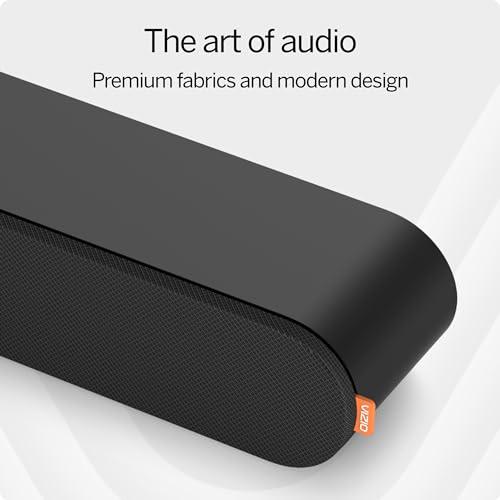
The VIZIO's premium reflects its Dolby Atmos licensing, wireless convenience, and more sophisticated industrial design. You're paying for modern codec support, seamless TV integration, and the aesthetic benefits of fewer visible cables. Whether this premium is worthwhile depends largely on your content preferences and room setup constraints.
From a long-term perspective, the VIZIO's Dolby Atmos support offers better future-proofing. More streaming content includes height channel information every year, and gaming consoles increasingly support spatial audio formats. The Ultimea provides superior performance with current content but may feel dated as Atmos becomes more prevalent.
Room acoustics play a crucial role in soundbar performance, and these systems have different requirements. The Ultimea Aura A40 works best in rectangular rooms where you can properly position the four surround speakers. The front speakers should angle slightly toward your listening position, while rear speakers work best at ear level or slightly above.
The system's 330-watt output makes it suitable for larger spaces than typical soundbars, but the wired surround speakers create cable management challenges. You'll need to run speaker wire to your rear positions, which works well in dedicated theater rooms but can be problematic in multi-purpose living spaces.
The VIZIO 5.1 SE offers more flexibility for awkward room layouts. The wireless surround speakers can be placed on shelves, mounted on walls, or even positioned asymmetrically if needed. The wireless subwoofer can go wherever it sounds best and won't interfere with room aesthetics.
For Dolby Atmos effectiveness, ceiling height and material matter. Smooth drywall ceilings at 8-10 feet work best for reflecting height channels. Popcorn ceilings, exposed beams, or very high ceilings can scatter the reflected sound and reduce the overhead effect.
Gaming represents one area where the Ultimea's physical speaker approach shows clear advantages. First-person shooters, battle royales, and competitive multiplayer games rely heavily on accurate directional audio cues. Being able to pinpoint enemy locations based on footstep direction or gunfire location can provide genuine competitive advantages.
The Aura A40's four discrete surround speakers create more precise left-right and front-rear separation than processed systems. User feedback consistently highlights improved gaming performance, with players reporting they can more accurately track enemy movements and anticipate threats.
The VIZIO 5.1 SE handles gaming well but relies more on processing algorithms to create directional effects. While still a significant improvement over TV speakers, it doesn't provide the same pinpoint accuracy for competitive gaming scenarios.
These systems represent fundamentally different approaches to home theater audio, and your choice should align with your priorities and usage patterns.
Choose the Ultimea Aura A40 if you want maximum surround immersion at the lowest cost, plan to use it primarily for movies and gaming, have a room layout that accommodates four speakers, and don't mind optical connectivity limitations. It's also the better choice if you enjoy tweaking audio settings and want extensive customization options.
The VIZIO 5.1 SE makes more sense if you prioritize wireless convenience and clean aesthetics, frequently stream content from modern services with Dolby Atmos support, have a newer TV with HDMI eARC, and value seamless integration over maximum channel count. It's the more future-proof choice for evolving streaming audio standards.
Both systems deliver substantial improvements over TV speakers, but they solve the surround sound challenge in ways that appeal to different user priorities. The Ultimea maximizes physical immersion and customization at a budget-friendly price, while the VIZIO emphasizes modern convenience and format support at a premium cost.
Your room, content preferences, and tolerance for setup complexity should ultimately guide your decision. Either choice will transform your TV watching experience—they just take different paths to get there.
| Ultimea Aura A40 | VIZIO 5.1 SE Dolby Atmos |
|---|---|
| Channel Configuration - Determines surround sound immersion level | |
| 7.1 virtual surround with 4 physical surround speakers | 5.1 with Dolby Atmos height processing |
| Audio Format Support - Critical for streaming service compatibility | |
| SurroundX & BassMX processing (no Dolby Atmos) | Dolby Atmos & DTS:X support |
| Total System Power - Affects maximum volume and dynamic range | |
| 330W peak (>98dB SPL) - excellent for larger rooms | 115W peak (96dB SPL) - adequate for medium rooms |
| Subwoofer Configuration - Impact on bass depth and placement flexibility | |
| 4" wired subwoofer (65Hz low end) | Compact wireless subwoofer (50Hz low end) |
| Surround Speaker Setup - Determines installation complexity and immersion | |
| 4 wired speakers (2 front + 2 rear placement required) | 2 wireless rear speakers (flexible placement) |
| TV Connectivity - Affects ease of setup and daily use | |
| Optical, AUX, USB only (no HDMI) | HDMI eARC with TV remote integration |
| Audio Customization - Important for fine-tuning sound preferences | |
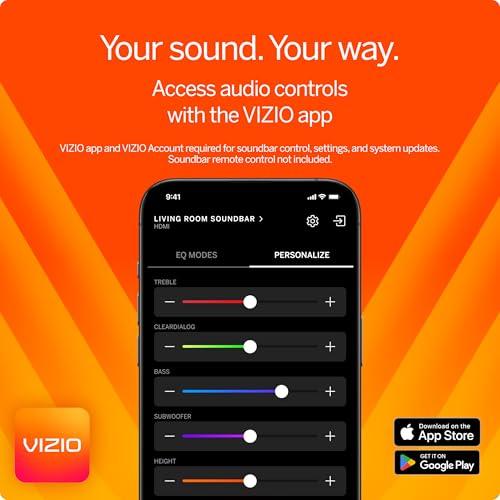
| 121 EQ presets, 10-band EQ, 6 surround levels | Basic bass/treble adjustment via app |
| Physical Footprint - Consider available space and aesthetic preferences | |
| Larger multi-component system with cable runs | Compact wireless design with minimal cables |
| Smart Features - Modern convenience and integration capabilities | |
| Ultimea mobile app control only | App control plus Alexa/Google/Apple HomeKit |
| Best Use Cases - Who should choose each system | |
| Budget buyers wanting maximum surround immersion, gaming enthusiasts, older TVs | Modern streaming users, wireless convenience priority, newer TVs with HDMI eARC |
The Ultimea Aura A40 delivers more immersive traditional surround sound with its four physical surround speakers positioned around your room, creating genuine 360-degree audio placement. The VIZIO 5.1 SE offers modern 3D surround through Dolby Atmos processing that adds overhead height effects. For traditional surround immersion, the Ultimea excels, while the VIZIO provides better compatibility with modern streaming content.
No, only the VIZIO 5.1 SE Dolby Atmos supports Dolby Atmos and DTS:X formats. The Ultimea Aura A40 uses its own SurroundX technology for virtual surround sound but doesn't support Dolby Atmos. If you frequently stream content from Netflix, Disney+, or other services offering Dolby Atmos, the VIZIO is the better choice.
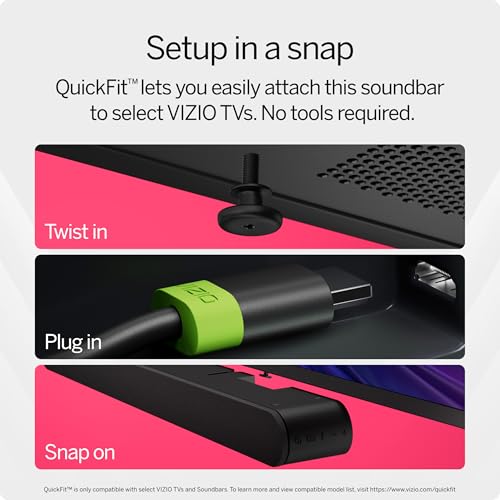
The VIZIO 5.1 SE is significantly easier to set up with its wireless components and single HDMI eARC connection to your TV. The Ultimea Aura A40 requires positioning and wiring four surround speakers around your room, plus optical or auxiliary connections to your TV. For simple installation, the VIZIO is more user-friendly.
The Ultimea Aura A40 delivers more powerful bass with its 4-inch dedicated subwoofer and 330W total power output. While the VIZIO 5.1 SE has a wireless subwoofer that extends slightly deeper (50Hz vs 65Hz), the Ultimea provides more bass impact and volume capability for larger rooms.
Only the VIZIO 5.1 SE supports TV remote control through its HDMI eARC connection. The Ultimea Aura A40 requires using its included remote or mobile app for volume and settings control since it lacks HDMI connectivity. This makes the VIZIO more convenient for daily use.
The Ultimea Aura A40 is superior for gaming due to its four physical surround speakers that provide precise directional audio. This helps with locating enemy positions and environmental cues in competitive games. While the VIZIO 5.1 SE offers good gaming audio, it relies on processing rather than discrete speaker placement, making the Ultimea the better choice for serious gamers.
The Ultimea Aura A40 typically offers exceptional value, providing more speakers, higher power output, and extensive customization features at a lower cost than the VIZIO 5.1 SE. However, the VIZIO justifies its higher price with Dolby Atmos support, wireless convenience, and modern connectivity that may be worth the premium for many users.
The Ultimea Aura A40 works with virtually any TV through optical, AUX, or USB connections, making it compatible with older models. The VIZIO 5.1 SE works best with newer TVs that have HDMI eARC, though it can connect via optical to older TVs with reduced functionality. For older TV compatibility, the Ultimea is more flexible.
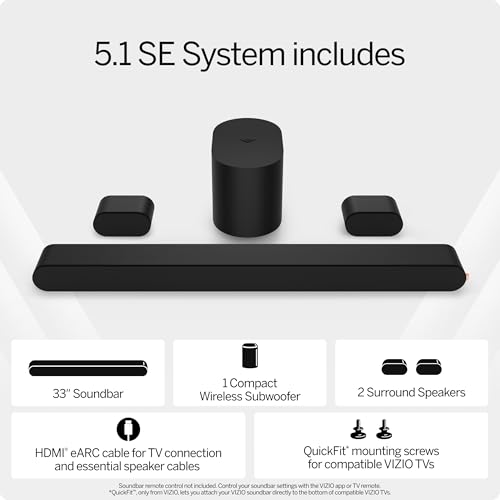
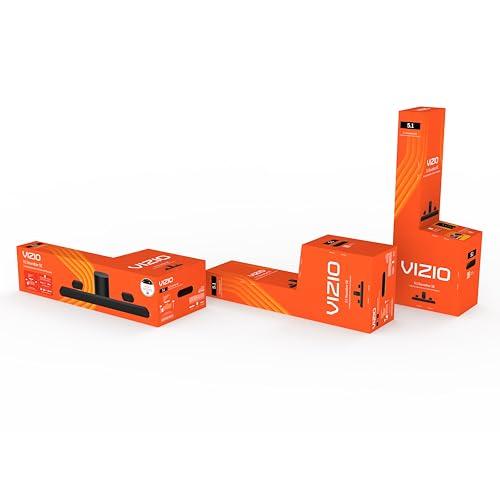
The VIZIO 5.1 SE has a much smaller footprint with just a 33-inch soundbar, wireless subwoofer, and two small wireless surround speakers. The Ultimea Aura A40 requires space for four surround speakers plus cable management around your room. If space is limited, the VIZIO is the more compact solution.
The Ultimea Aura A40 offers superior customization with 121 EQ presets, a 10-band equalizer, and adjustable surround levels through its mobile app. The VIZIO 5.1 SE provides basic app control with standard audio adjustments. For audio enthusiasts who enjoy fine-tuning their sound, the Ultimea provides much more flexibility.
The VIZIO 5.1 SE is better optimized for modern streaming with its Dolby Atmos support, which enhances content from Netflix, Amazon Prime, Disney+, and other services. The Ultimea Aura A40 excels with traditional surround content but lacks the modern audio format support that makes streaming content more immersive. For heavy streamers, the VIZIO is the superior choice.
For a dedicated home theater room where you can properly position speakers and run cables, the Ultimea Aura A40 provides more immersive surround sound and powerful audio. For a living room home theater where convenience and aesthetics matter, the VIZIO 5.1 SE offers wireless flexibility and modern format support. Your room layout and priorities determine which soundbar system works best for your home theater needs.
We've done our best to create useful and informative comparisons to help you decide what product to buy. Our research uses advanced automated methods to create this comparison and perfection is not possible - please contact us for corrections or questions. These are the sites we've researched in the creation of this article: walmart.com - newegg.com - youtube.com - ultimea.com - youtube.com - device.report - ultimea.co - manuals.plus - homestudiobasics.com - youtube.com - bestbuy.com - community.ultimea.com - manuals.plus - eu.ultimea.com - navesapeugeot.com.br - bestbuy.com - images.thdstatic.com - provantage.com - ultimea.com - bestbuy.com - bestbuy.com - vizio.com - rtings.com - vizio.com - vizio.com - vizio.com - youtube.com - vizio.com - vizio.com - cnet.com - samsclub.com - walmart.com - nfm.com - finelinesdesignstudio.com - dugoutnorthbrook.com - bestbuy.com

Privacy Policy
Terms and Conditions - Affiliate Policy
Home Security
© Copyright 2008-2026.
11816 Inwood Rd #1211, Dallas, TX 75244