


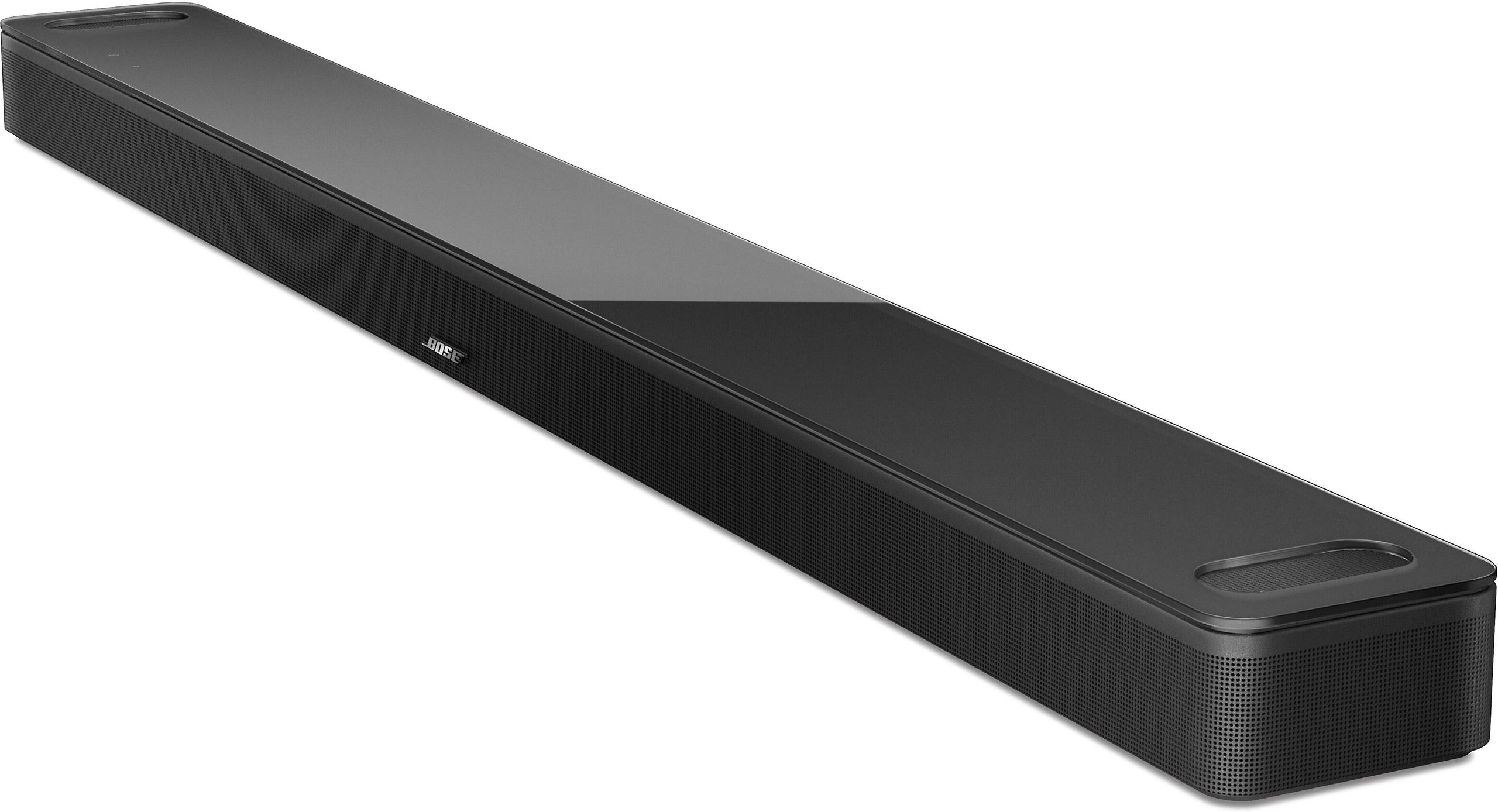
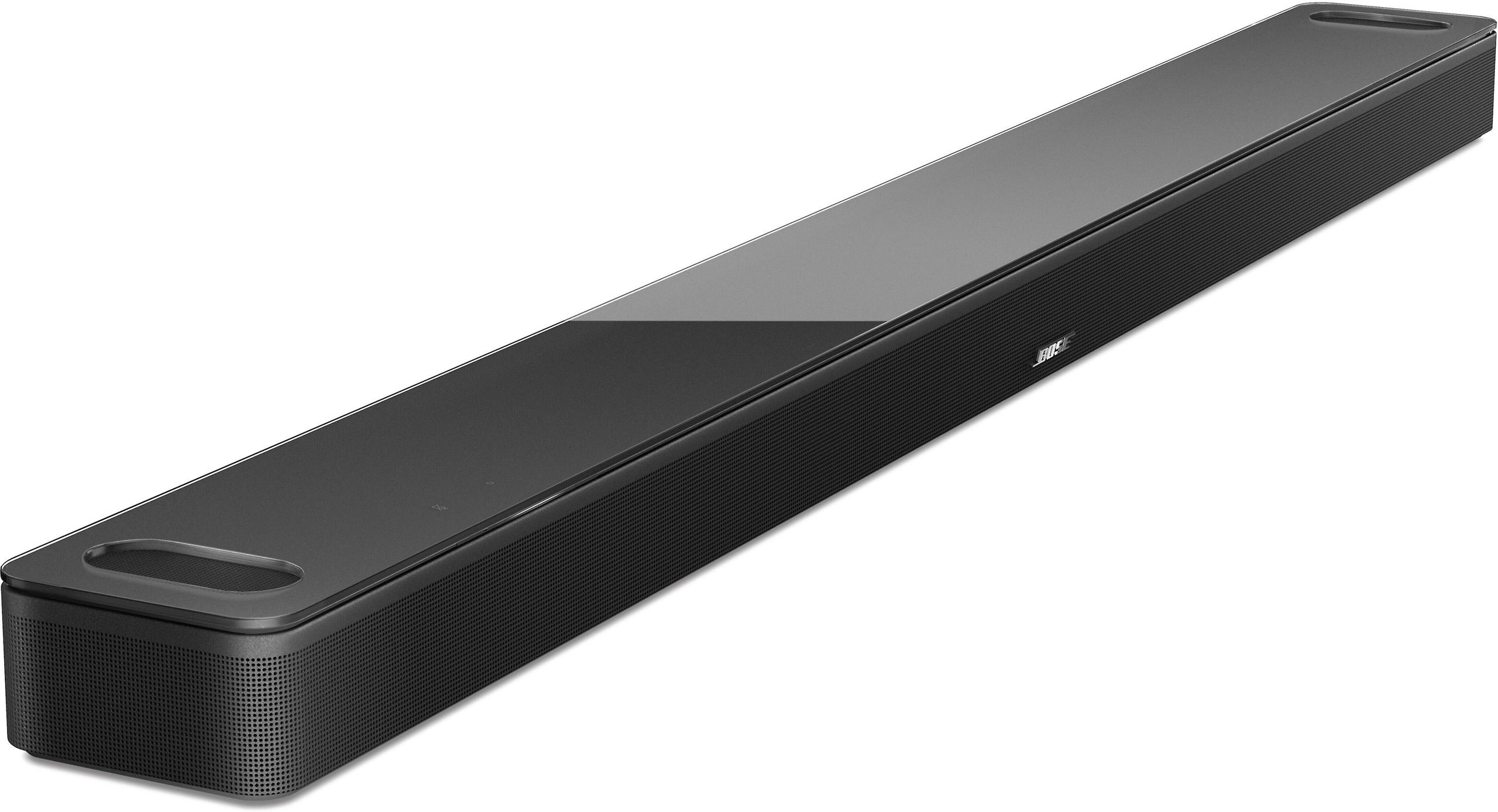

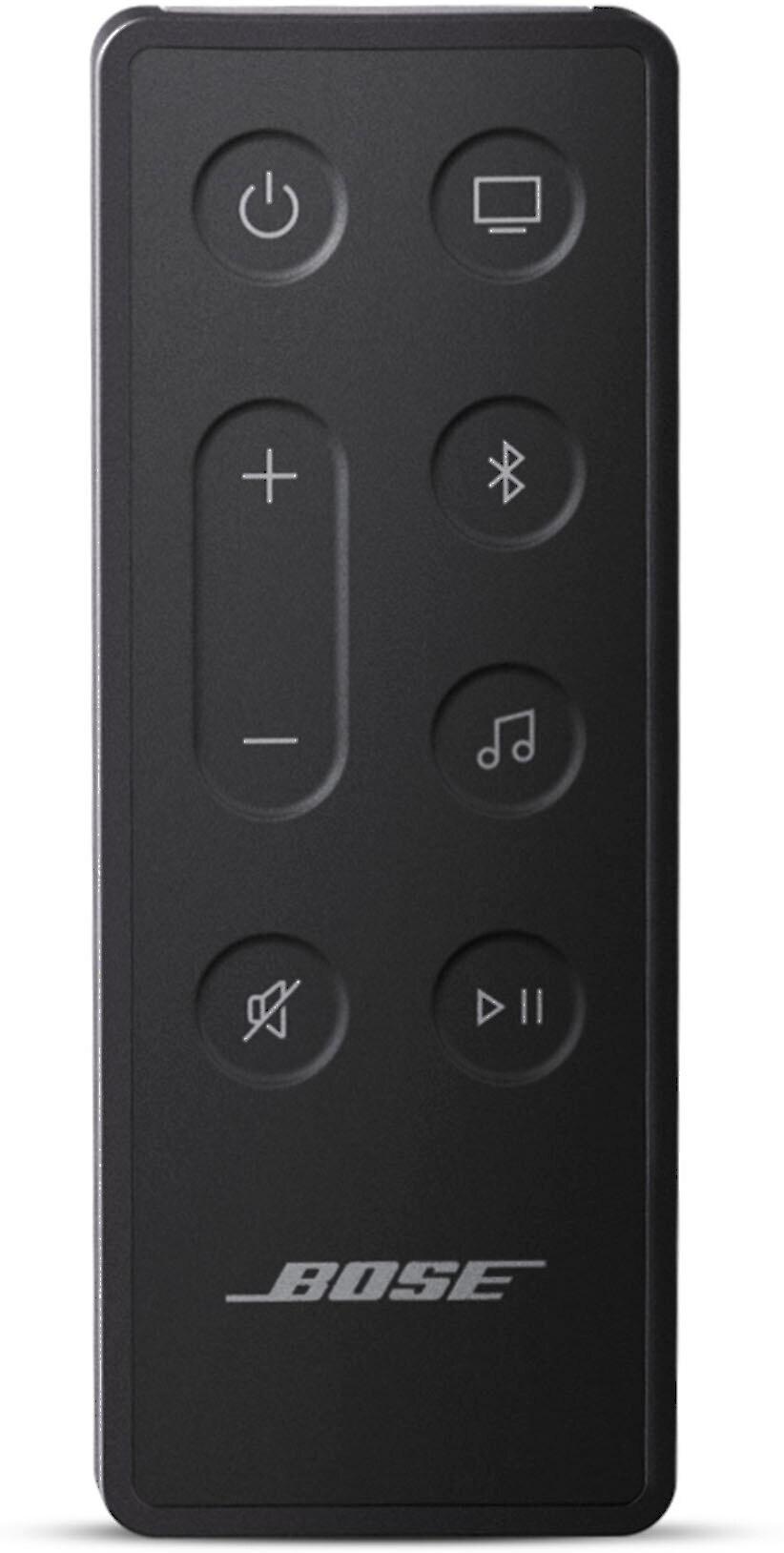
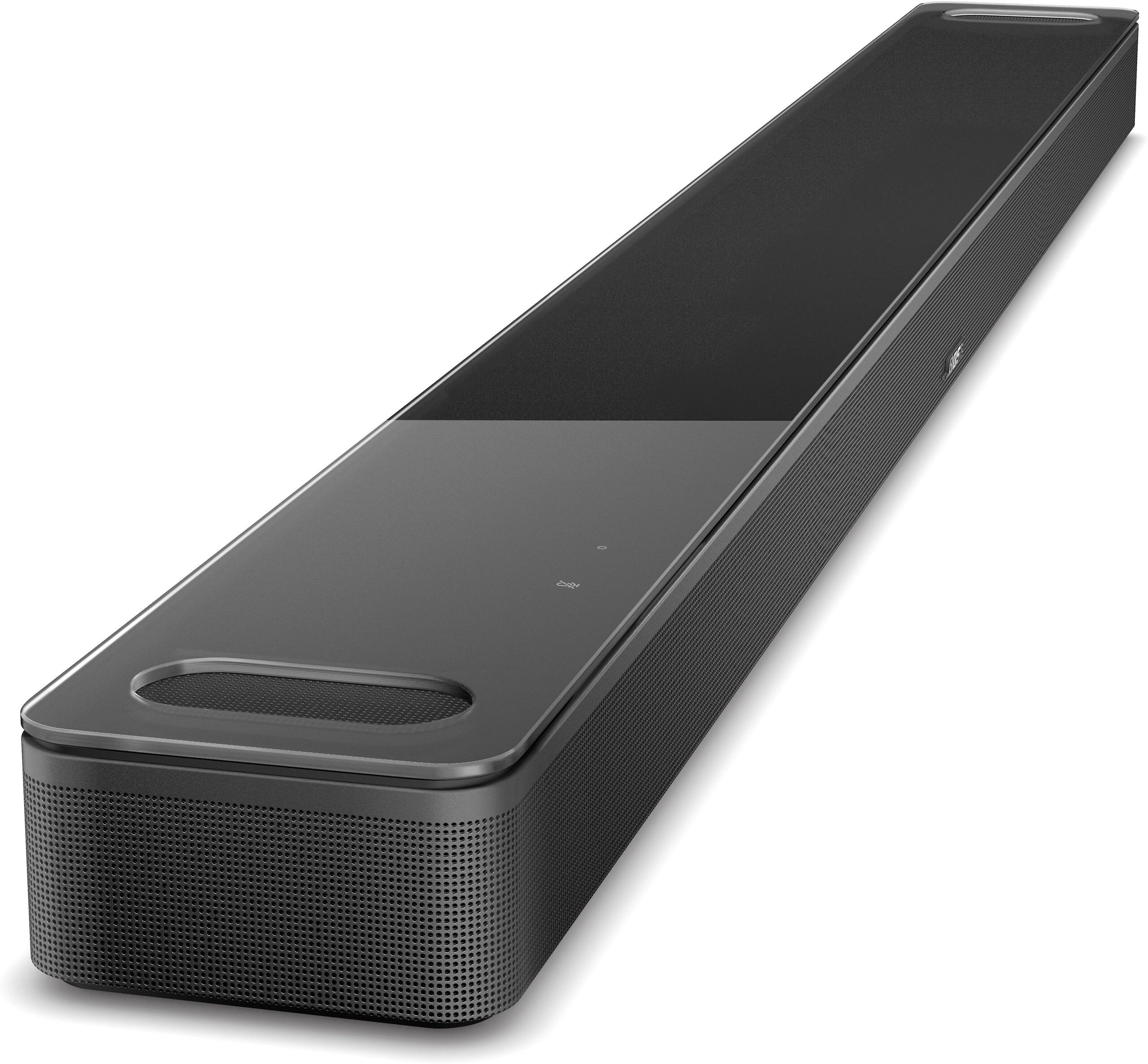
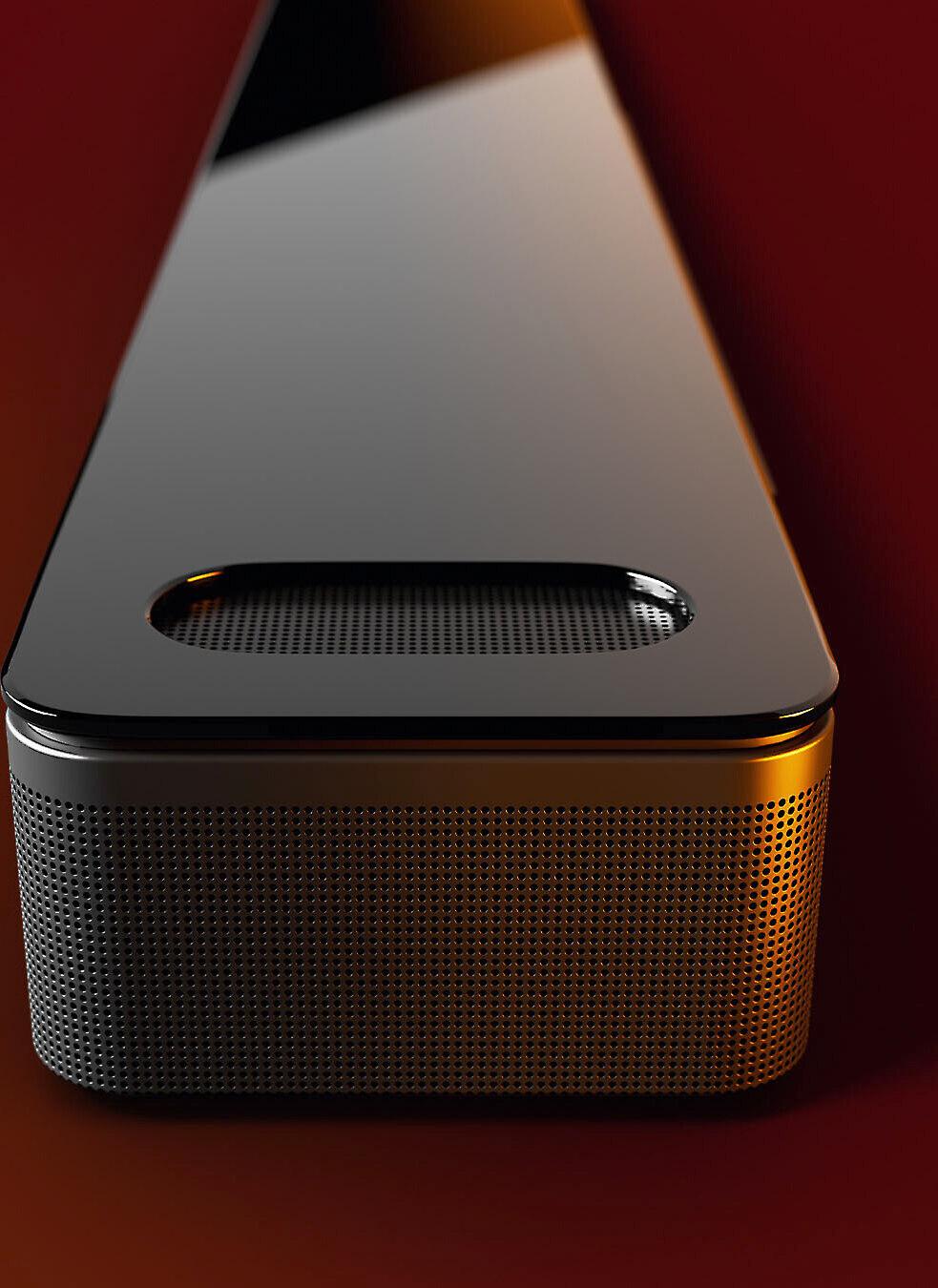
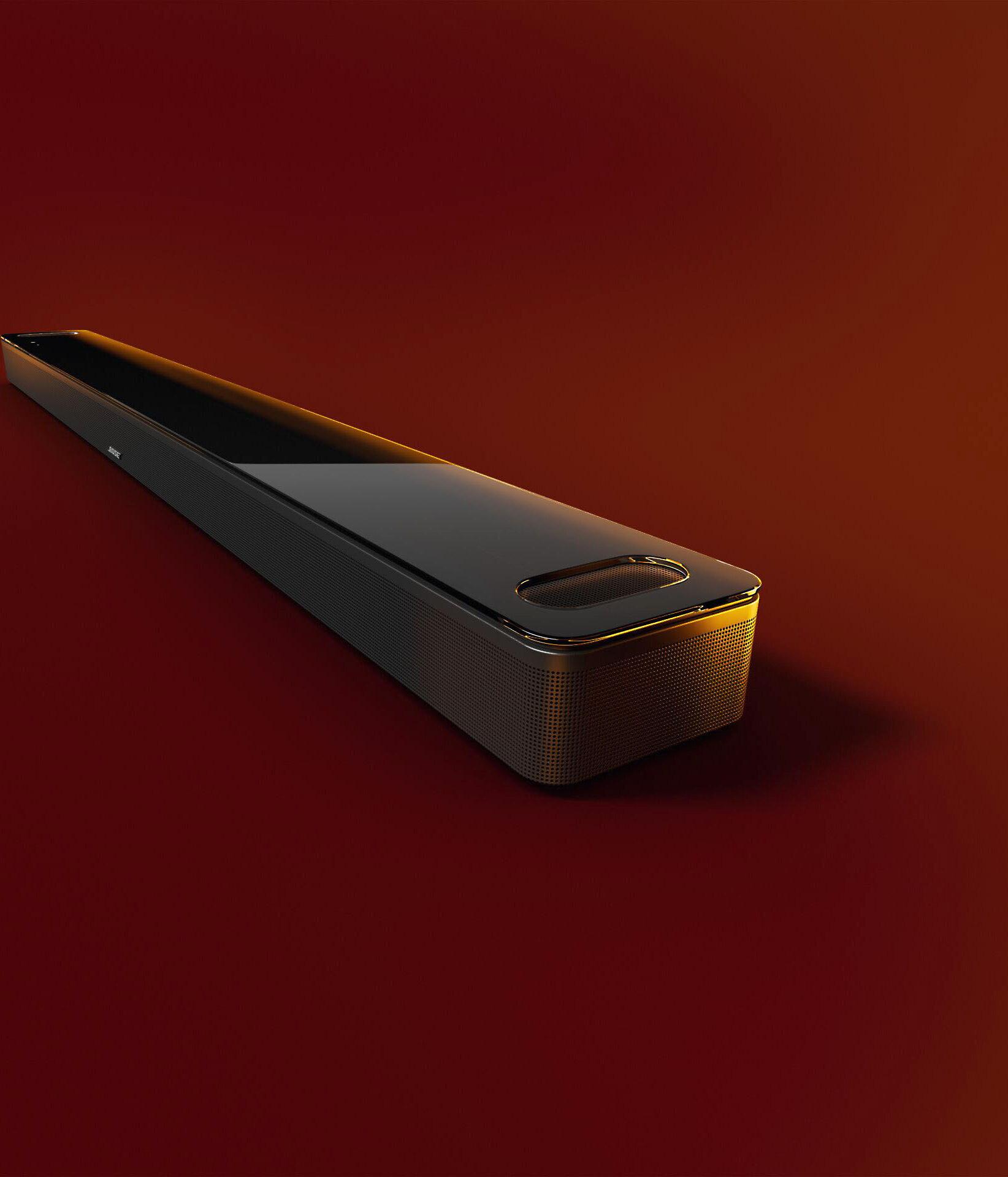
When your TV's built-in speakers sound like they're trapped in a tin can, it's time to upgrade to a soundbar system. But here's where things get interesting: not all soundbar "systems" are created equal. The Ultimea Aura A40 and Bose Smart Ultra represent two completely different philosophies for improving your home theater audio, despite both being marketed as soundbar solutions.
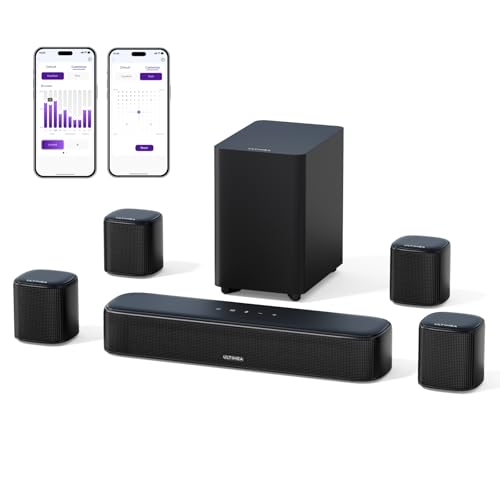
Released in 2024, the Ultimea Aura A40 takes the "everything included" approach - you get a main soundbar, four separate surround speakers, and a dedicated subwoofer all in one affordable package. The Bose Smart Ultra, launched in 2023, follows the premium modular route where you start with an advanced standalone soundbar and add components over time. At the time of writing, you're looking at roughly a 4-5x price difference between these systems, which immediately tells you they're targeting very different buyers.
Before diving into specifics, let's clarify what makes a soundbar system work. Traditional stereo soundbars simply widen your audio left and right. Modern systems like these two create "virtual surround sound" through various techniques - some use clever audio processing to trick your ears, while others use actual physical speakers placed around your room.
The key technologies you'll encounter include Dolby Atmos (which adds height channels for sounds coming from above), virtual surround processing (software that simulates speakers that aren't actually there), and room calibration systems that adjust the sound based on your specific space. Both products use these technologies differently, which creates dramatically different experiences despite serving similar purposes.
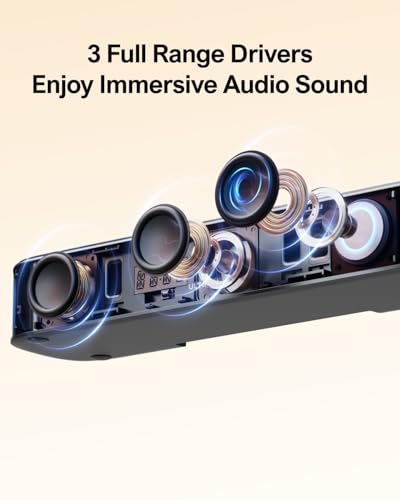
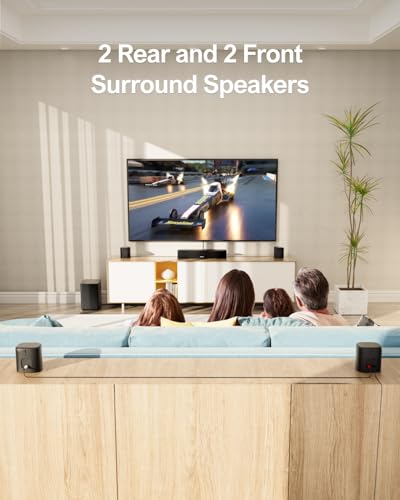
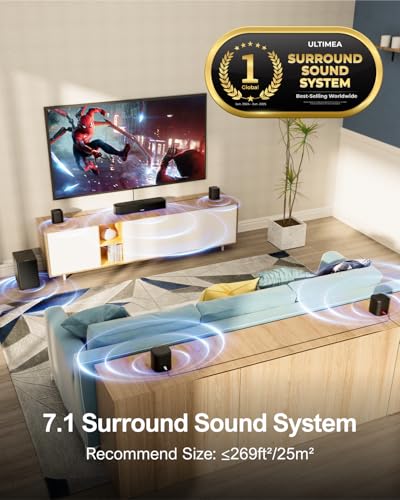
The Ultimea Aura A40 represents what I'd call the "maximalist budget approach." Instead of asking you to choose between different components over time, Ultimea packed everything into one box and priced it aggressively. You get eight separate speakers: three in the main soundbar, four standalone surround speakers (two front, two rear), and one dedicated 4-inch subwoofer.
This physical speaker arrangement creates what's called "discrete surround sound" - actual speakers positioned around your listening area rather than audio trickery. When a helicopter flies overhead in a movie, you're hearing it from actual speakers positioned to your sides and behind you. The system outputs 330 watts of peak power across all these drivers, with a frequency response spanning 65Hz to 18kHz.
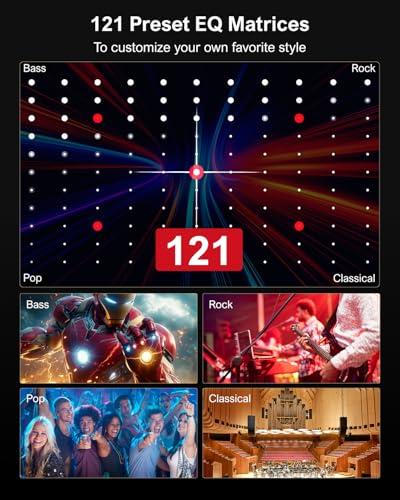
What makes the Ultimea Aura A40 particularly interesting is its app-based control system. The ULTIMEA Smart App provides access to 121 preset EQ matrices - essentially pre-configured sound profiles for different music genres, movie types, and listening preferences. The 10-band equalizer lets you fine-tune specific frequency ranges, while six adjustable surround levels help you dial in the perfect amount of surround effect for your room size.
The system includes proprietary BassMX and SurroundX technologies. BassMX optimizes the subwoofer's output to prevent the boomy, muddy bass that plagues many budget systems, while SurroundX creates a wider, more enveloping soundstage from the physical speaker placement. During our research into user experiences, the consensus points to surprisingly effective surround sound positioning - users consistently report being able to locate specific sound effects in three-dimensional space around their seating area.
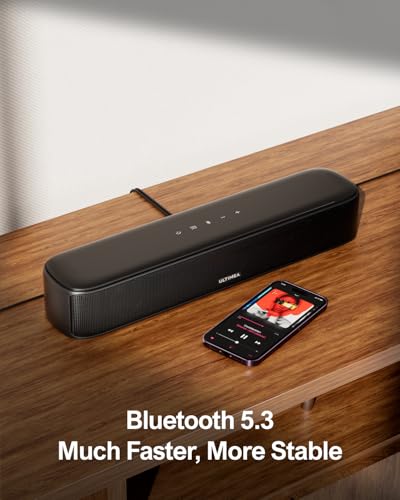
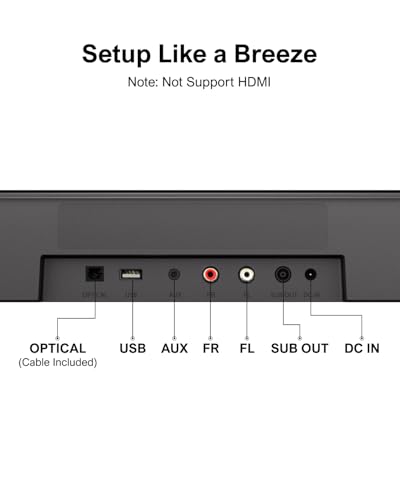
For connectivity, you get Bluetooth 5.3 for wireless streaming, plus optical, auxiliary, and USB inputs. Notably missing is HDMI input, which limits some advanced audio format compatibility but keeps costs down. The system is designed for rooms between 108-270 square feet, making it ideal for apartments, condos, and smaller living rooms.
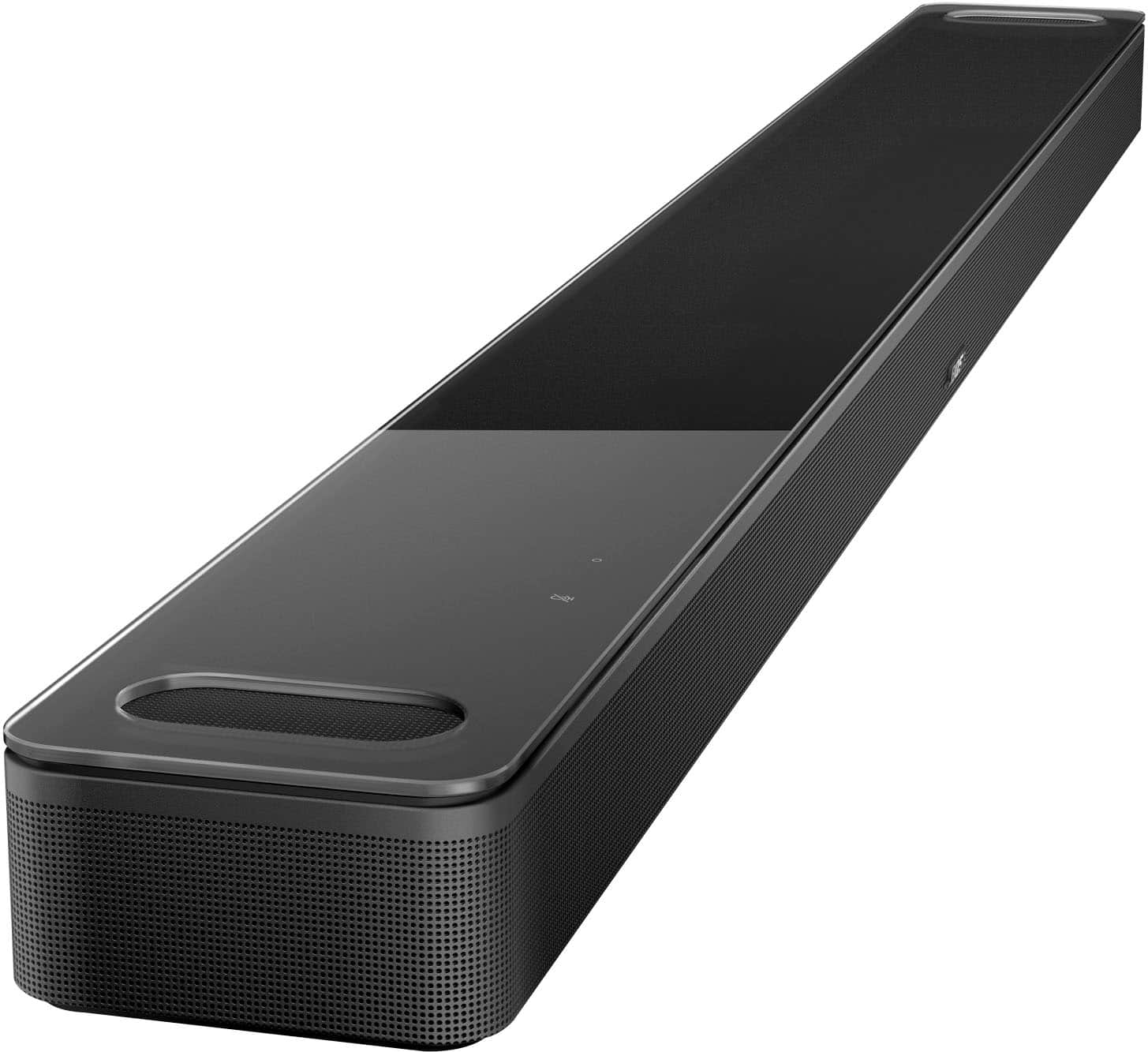
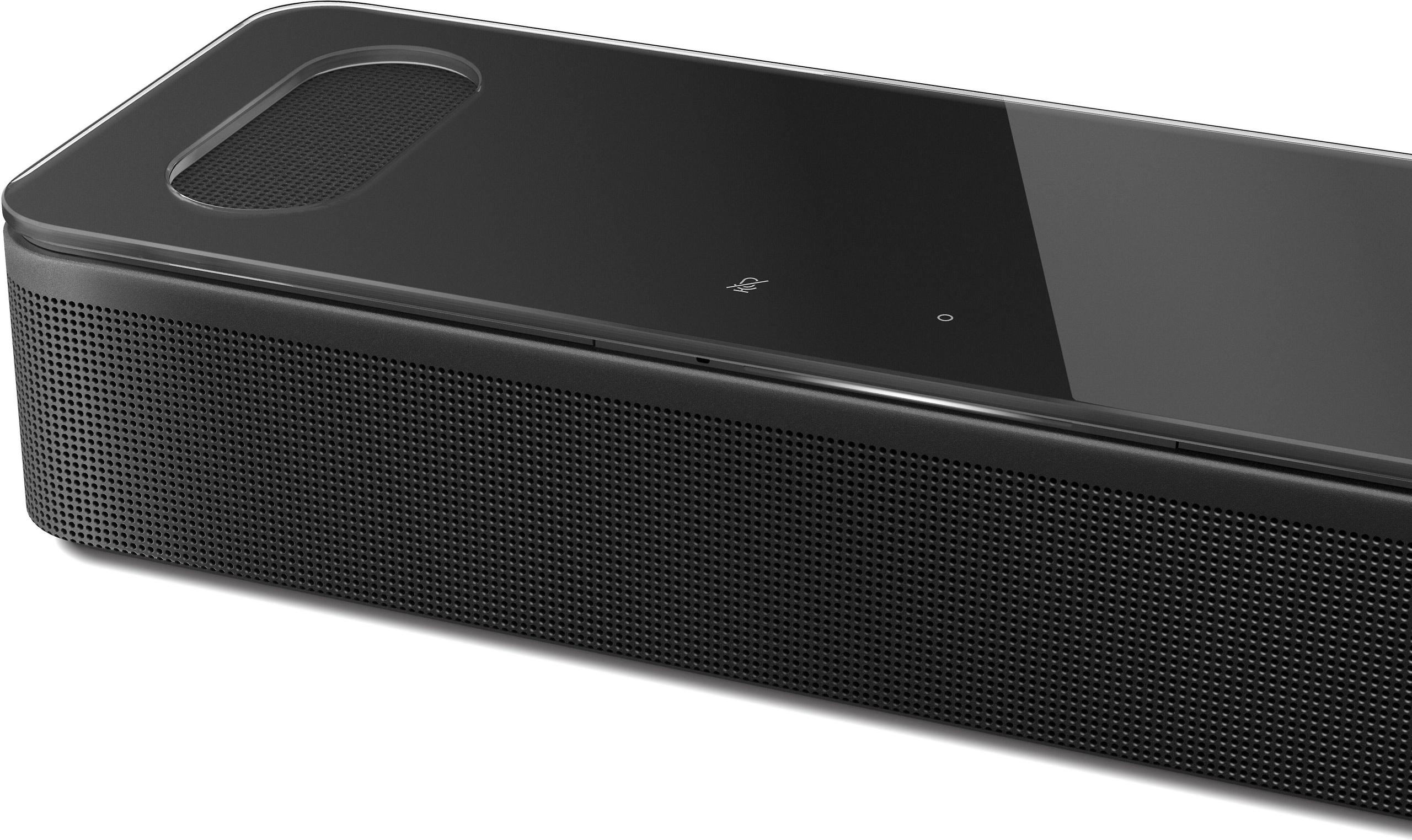
The Bose Smart Ultra takes an entirely different approach. Rather than including everything upfront, Bose focuses on creating the best possible standalone soundbar experience, then offers separate components for expansion. This soundbar-only approach means you're starting with just the main unit - no subwoofer, no surround speakers included.
Where the Bose Smart Ultra excels is in sophisticated audio processing. The system includes Dolby Atmos support with upward-firing drivers that bounce sound off your ceiling to create height channels. This means helicopter sounds don't just move left and right, they can genuinely appear to come from above your listening position. When Dolby Atmos content isn't available, Bose's proprietary TrueSpace technology steps in to upmix regular stereo or 5.1 content into a more immersive experience.
The standout feature here is A.I. Dialogue Mode, which uses machine learning trained on millions of audio clips to automatically balance dialogue clarity against background effects. Anyone who's ever struggled to hear conversation during action scenes will appreciate this technology - it dynamically adjusts the audio mix in real-time to keep voices intelligible without completely crushing the impact of explosions or music.
PhaseGuide technology is another Bose innovation that creates virtual surround effects by carefully controlling how sound waves interact in your room. The system "steers" audio to specific locations, making it seem like sounds are coming from places where no speakers exist. Combined with ADAPTiQ room calibration (which uses a special microphone to measure your room's acoustics), the Bose Smart Ultra adapts its output to work optimally in your specific space.
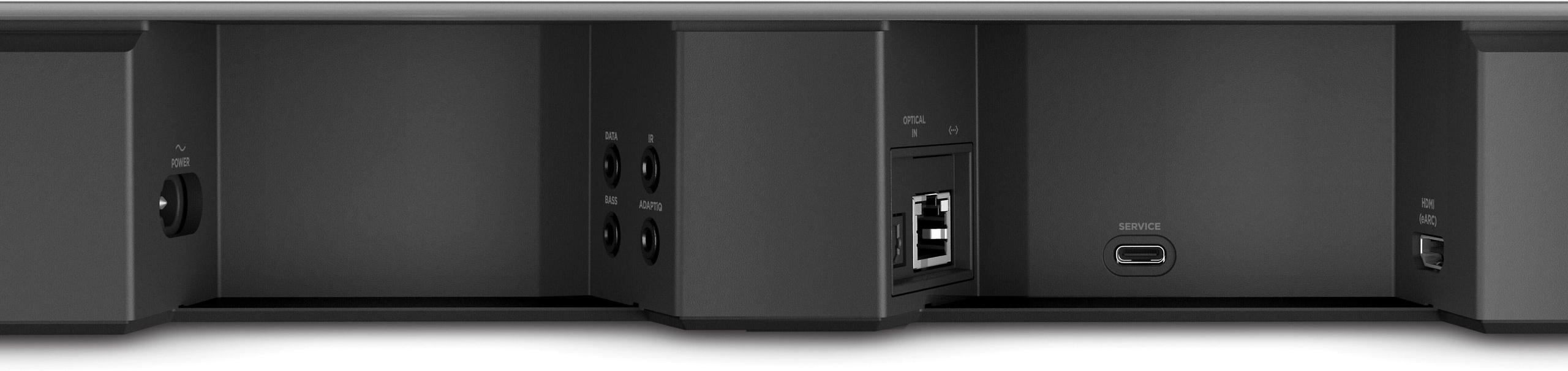
Smart home integration runs deep with built-in Amazon Alexa and Google Assistant support, plus Voice4Video technology that can control your TV through voice commands. Wi-Fi connectivity enables AirPlay 2 and Spotify Connect, while HDMI eARC and optical inputs handle connection to your TV and other sources.
The fundamental difference between these systems comes down to physical speakers versus virtual processing. The Ultimea Aura A40 creates surround sound the traditional way - by actually placing speakers around your listening area. This approach has inherent advantages: when a sound effect is supposed to come from behind you, it literally does come from behind you because there's a real speaker there.
Our research into user experiences reveals that the Ultimea Aura A40 excels at creating an immersive "bubble" of sound around the listener. The discrete speaker placement means directional effects feel natural and convincing. However, the individual speakers are relatively small (2-inch drivers in the surrounds), which limits their ability to reproduce the full frequency range with the authority of larger drivers.
The Bose Smart Ultra, meanwhile, relies on psychoacoustic processing - essentially tricking your brain into perceiving sounds from directions where no speakers exist. This works remarkably well with the right content and room conditions, but it's inherently limited by your room's acoustics and seating position. Move too far from the "sweet spot," and the virtual effects can collapse back to normal stereo sound.
For pure surround sound immersion, especially in action movies and games where directional effects matter most, the Ultimea Aura A40's physical speaker approach generally provides more consistent results across different listening positions. The Bose Smart Ultra counters with superior driver quality and more sophisticated processing that can create genuinely convincing height effects that the Ultimea system simply cannot produce.
Bass reproduction represents another fundamental difference in approach. The Ultimea Aura A40 includes a dedicated 4-inch wired subwoofer that handles frequencies below what the main soundbar can reproduce. This division of labor means the main speakers don't have to struggle with bass reproduction, allowing them to focus on midrange and treble clarity.
However, the included subwoofer has limitations. User feedback consistently indicates that while the bass is present and adds impact to movies and music, it lacks the depth and authority of larger, more powerful subwoofers. The system's frequency response bottoms out at 65Hz, which means the deepest bass notes in music and movie soundtracks simply won't be reproduced.
The Bose Smart Ultra handles bass through built-in drivers in the main soundbar unit. Bose's acoustic engineering typically produces impressive bass output from compact enclosures, but physics still applies - without a dedicated subwoofer, you're limited in how much low-end impact the system can provide. To get equivalent bass performance to the Ultimea Aura A40's included subwoofer, you'd need to purchase Bose's separate Bass Module, which significantly increases the total system cost.
For most users in typical living rooms, the Ultimea Aura A40's included subwoofer provides adequate bass impact for movie watching and casual music listening. Audiophiles and those with larger rooms will likely find both systems' bass response insufficient without additional subwoofer upgrades.
The Bose Smart Ultra clearly wins in smart home integration. Built-in voice assistants mean you can control not just the soundbar but potentially your entire entertainment system through voice commands. The Voice4Video feature is particularly clever - you can say "Alexa, watch Netflix" and the system will turn on your TV, switch to the correct input, and launch the Netflix app.
The Ultimea Aura A40 takes a different approach to "smart" features, focusing instead on audio customization. The smartphone app provides unprecedented control over the sound signature with its 121 preset EQ curves and comprehensive manual adjustments. This level of audio customization is rare at any price point and allows users to fine-tune the system for their specific preferences and content types.
Both systems support over-the-air firmware updates, which has become increasingly important as streaming services update their audio formats and smart home protocols evolve. The Bose Smart Ultra's more extensive smart features likely mean more frequent updates, while the Ultimea Aura A40's updates focus primarily on audio processing improvements.
At the time of writing, these systems occupy completely different price tiers, which makes direct value comparison complex. The Ultimea Aura A40 costs roughly what you might spend on a nice dinner for two, while the Bose Smart Ultra commands premium soundbar pricing for just the main unit.
To build an equivalent system with the Bose Smart Ultra - meaning adding surround speakers and a subwoofer to match what the Ultimea Aura A40 includes - you're looking at roughly 10-15 times the total investment. This isn't necessarily unfair; Bose's individual components offer premium build quality, advanced features, and the brand's reputation for acoustic engineering.
The value equation depends heavily on your priorities. If your goal is maximum audio improvement per dollar spent, the Ultimea Aura A40 delivers extraordinary value by including everything needed for surround sound in one affordable package. If you prioritize premium build quality, advanced processing features, and gradual system building, the Bose Smart Ultra's modular approach offers more flexibility despite the higher cost.
For dedicated home theater use, both systems have strengths and limitations. The Ultimea Aura A40 excels in smaller to medium-sized rooms where you can properly position all the surround speakers. The physical speaker placement creates convincing directional effects that enhance movie immersion, particularly in action films and games where spatial audio matters most.
The system's multiple EQ modes prove valuable for different content types. Movie mode emphasizes dialogue clarity and dynamic range, while Game mode enhances directional cues that help in competitive gaming. Night mode compresses the dynamic range, preventing loud explosions from waking family members while maintaining dialogue intelligibility.
The Bose Smart Ultra's Dolby Atmos support gives it an advantage with modern content that includes height channels. Movies mixed in Dolby Atmos can create genuinely impressive overhead effects that add a new dimension to the viewing experience. The AI Dialogue Mode proves particularly valuable for users who struggle with dialogue clarity, automatically adjusting the mix to keep voices prominent without manual intervention.
However, the Bose Smart Ultra's virtual surround effects work best in acoustically favorable rooms with appropriate seating positions. Rooms with hard surfaces, high ceilings, or unconventional layouts may not provide the wall and ceiling reflections needed for optimal virtual surround performance.
Both products represent modern approaches to home audio that have evolved significantly since the early soundbar days of the 2010s. The Ultimea Aura A40's comprehensive app control and OTA update capability show how even budget systems now include features that were premium-only just a few years ago.
The Bose Smart Ultra's AI-powered dialogue enhancement and sophisticated room calibration represent the current state-of-the-art in audio processing. These technologies continue improving through software updates, meaning the system's performance can actually get better over time.
For future-proofing considerations, the Bose Smart Ultra's HDMI eARC support and Dolby Atmos compatibility better position it for evolving content formats. The Ultimea Aura A40's reliance on optical and Bluetooth connections may limit compatibility with future audio formats, though this matters primarily for users who prioritize cutting-edge audio technology.
The decision between these systems ultimately comes down to your priorities, budget, and expectations. The Ultimea Aura A40 makes sense if you want immediate, dramatic improvement over TV speakers without breaking the bank. It's perfect for renters, college students, or anyone who wants "good enough" surround sound without the complexity and cost of premium components.
I'd recommend the Ultimea Aura A40 for apartments and smaller living rooms, casual movie watchers, gamers who want directional audio advantages, and anyone who enjoys tweaking audio settings to match their preferences. The physical surround speakers create a more convincing immersive experience than most virtual processing systems, especially at this price point.
The Bose Smart Ultra appeals to different priorities. Choose it if you value premium build quality, want the latest audio processing technologies, or prefer building a system gradually over time. The superior smart home integration and sophisticated features like AI Dialogue Mode provide conveniences that the Ultimea system cannot match.
For dedicated home theater enthusiasts with appropriate budgets, the Bose Smart Ultra offers a more refined foundation for future expansion. However, reaching the same functional capability as the complete Ultimea Aura A40 system requires significant additional investment in compatible surround speakers and subwoofer components.
Both systems represent valid approaches to home audio improvement, but they serve fundamentally different needs and budgets. The Ultimea Aura A40 maximizes immediate value and functionality, while the Bose Smart Ultra provides premium refinement for those willing to invest in gradual system building. Understanding these different philosophies will help you choose the approach that best matches your situation and audio aspirations.
| Ultimea Aura A40 U2601 | Bose Smart Ultra Soundbar |
|---|---|
| System Configuration - Determines what's included and total investment needed | |
| Complete 7.1 system: soundbar + 4 surround speakers + subwoofer | Standalone soundbar only (surround speakers and subwoofer sold separately) |
| Total Speakers - More physical speakers generally mean better surround immersion | |
| 8 speakers: 3 in soundbar, 4 surround, 1 subwoofer | Drivers in main soundbar only (exact count not specified) |
| Surround Sound Method - Physical speakers vs virtual processing trade-offs | |
| Discrete 7.1 with actual surround speakers positioned around room | Virtual surround using Dolby Atmos and PhaseGuide processing |
| Power Output - Higher wattage typically means louder, more dynamic sound | |
| 330W peak power across all 8 speakers | Not specified (typical premium soundbars: 400-600W) |
| Bass Solution - Dedicated subwoofer vs built-in bass drivers | |
| Included 4-inch wired subwoofer with BassMX technology | Built-in bass drivers (separate Bass Module available for purchase) |
| Smart Features - Voice control and smart home integration capabilities | |
| ULTIMEA Smart App with 10-band EQ and 121 presets | Built-in Alexa/Google Assistant, Voice4Video, AirPlay 2 |
| Audio Formats - Support for modern surround sound standards | |
| Virtual 7.1 processing, 6 EQ modes, no Dolby Atmos | Dolby Atmos, TrueSpace upmixing, AI Dialogue Mode |
| Connectivity Options - How you connect sources to the system | |
| Bluetooth 5.3, Optical, AUX, USB (no HDMI) | HDMI eARC, Optical, Wi-Fi, Bluetooth (full smart connectivity) |
| Room Calibration - Automatic tuning for your specific space | |
| Manual surround level adjustment (6 settings) | ADAPTiQ automatic room calibration with included microphone |
| Setup Complexity - Installation time and wiring requirements | |
| Minimal wiring (wireless rear speakers), 5-minute setup | Single soundbar placement, automatic calibration process |
| Recommended Room Size - Optimal performance area | |
| 108-270 sq ft (small to medium rooms) | Not specified (designed for larger rooms with ceiling height) |
| Warranty Coverage - Protection for your investment | |
| 2-year parts and labor | 1-year limited warranty |
The Ultimea Aura A40 is a complete 7.1 surround sound system that includes a main soundbar, four separate surround speakers, and a dedicated subwoofer all in one package. The Bose Smart Ultra is a premium standalone soundbar that uses advanced audio processing to create virtual surround sound, with surround speakers and subwoofer sold separately.
The Ultimea Aura A40 provides exceptional value by including everything needed for surround sound in one affordable package. To match the Ultimea Aura A40's included components, you'd need to purchase the Bose Smart Ultra plus additional surround speakers and subwoofer, resulting in a significantly higher total investment.
No additional purchases are required with the Ultimea Aura A40 - it includes all speakers and subwoofer needed for complete surround sound. The Bose Smart Ultra works as a standalone unit but requires separate purchases of surround speakers and subwoofer to create an equivalent surround sound experience.
The Ultimea Aura A40 is specifically designed for rooms between 108-270 square feet and includes compact surround speakers that work well in smaller spaces. The Bose Smart Ultra can work in small rooms but its virtual surround processing typically performs better in larger spaces with proper acoustics.
Only the Bose Smart Ultra supports Dolby Atmos with upward-firing drivers that create height channels for overhead sound effects. The Ultimea Aura A40 uses virtual 7.1 processing and SurroundX technology but doesn't support Dolby Atmos format.
The Bose Smart Ultra offers superior smart home features with built-in Amazon Alexa and Google Assistant, Voice4Video TV control, and Wi-Fi connectivity for AirPlay 2 and Spotify Connect. The Ultimea Aura A40 focuses on audio customization through its smartphone app rather than smart home integration.
The Ultimea Aura A40 includes a dedicated 4-inch subwoofer that provides immediate bass improvement over TV speakers. The Bose Smart Ultra relies on built-in bass drivers and would require purchasing a separate Bass Module to match the low-end output of the Ultimea Aura A40's included subwoofer.
Both systems are relatively easy to install. The Ultimea Aura A40 requires positioning the surround speakers around your room but uses minimal wiring with wireless connectivity. The Bose Smart Ultra involves just placing the single soundbar and running automatic room calibration with the included microphone.
The Ultimea Aura A40 excels in customization with 121 preset EQ matrices, a 10-band equalizer, and six different listening modes through its smartphone app. The Bose Smart Ultra offers AI Dialogue Mode and automatic room calibration but has fewer manual sound adjustment options.
The Ultimea Aura A40 provides excellent gaming performance with its physical surround speakers that create precise directional audio for locating enemies and environmental sounds. The Bose Smart Ultra can enhance gaming through virtual processing, but physical surround speakers typically provide more accurate positional audio for competitive gaming.
Both systems handle music effectively but differently. The Ultimea Aura A40 offers extensive EQ presets for different music genres and the ability to fine-tune the sound signature. The Bose Smart Ultra provides high-quality audio processing and can create an immersive soundstage for music, though it lacks the granular customization options of the Ultimea Aura A40.
Choose the Ultimea Aura A40 if you want immediate, complete surround sound at an affordable price point with physical speakers for authentic directional effects. Select the Bose Smart Ultra if you prioritize premium build quality, Dolby Atmos support, smart home integration, and don't mind building the system gradually with additional component purchases.
We've done our best to create useful and informative comparisons to help you decide what product to buy. Our research uses advanced automated methods to create this comparison and perfection is not possible - please contact us for corrections or questions. These are the sites we've researched in the creation of this article: walmart.com - newegg.com - youtube.com - ultimea.com - youtube.com - device.report - ultimea.co - manuals.plus - homestudiobasics.com - youtube.com - bestbuy.com - community.ultimea.com - manuals.plus - eu.ultimea.com - navesapeugeot.com.br - bestbuy.com - images.thdstatic.com - provantage.com - ultimea.com - bestbuy.com - techradar.com - bose.com - bestbuy.com - tomsguide.com - pcrichard.com - rtings.com - bose.com - boselatam.com - avsforum.com - bose.com

Privacy Policy
Terms and Conditions - Affiliate Policy
Home Security
© Copyright 2008-2026.
11816 Inwood Rd #1211, Dallas, TX 75244