

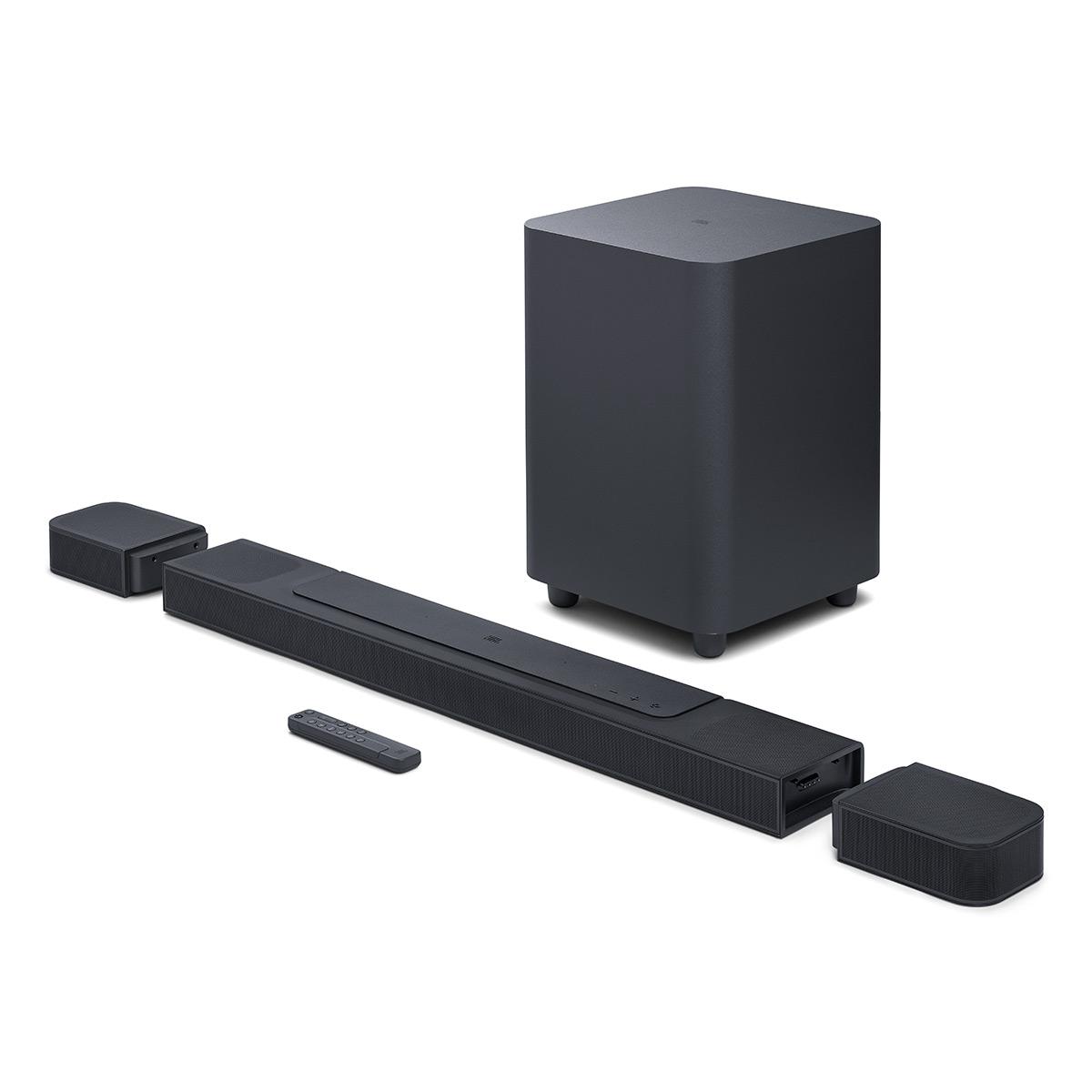
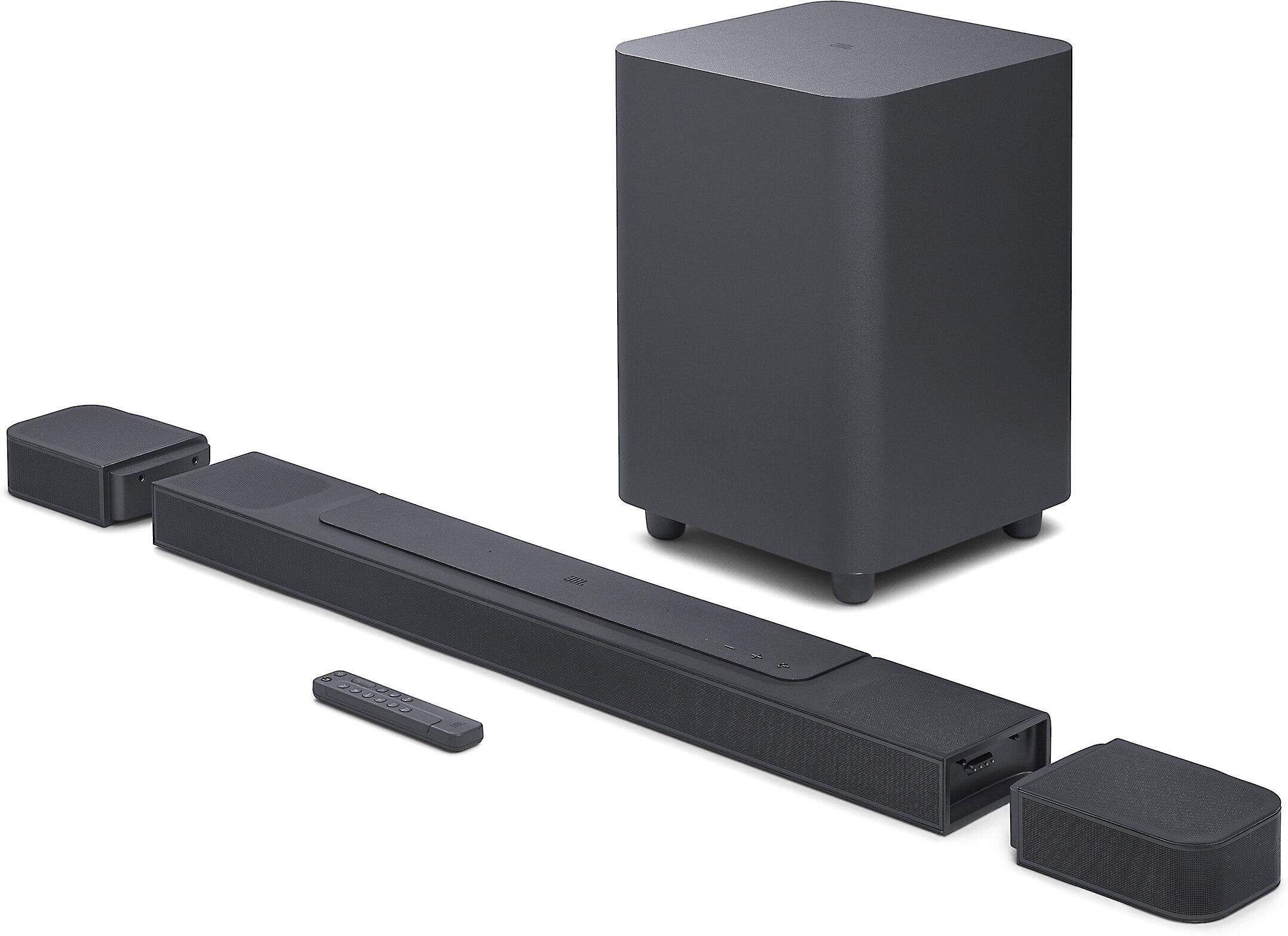
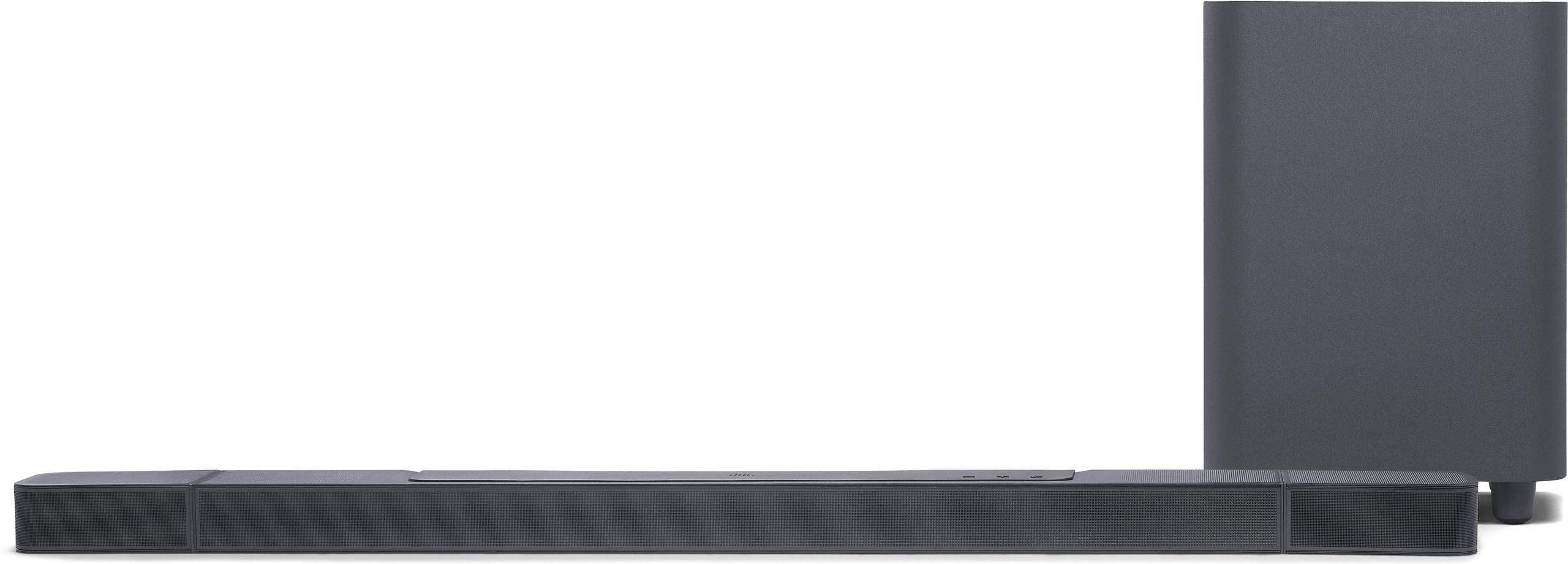

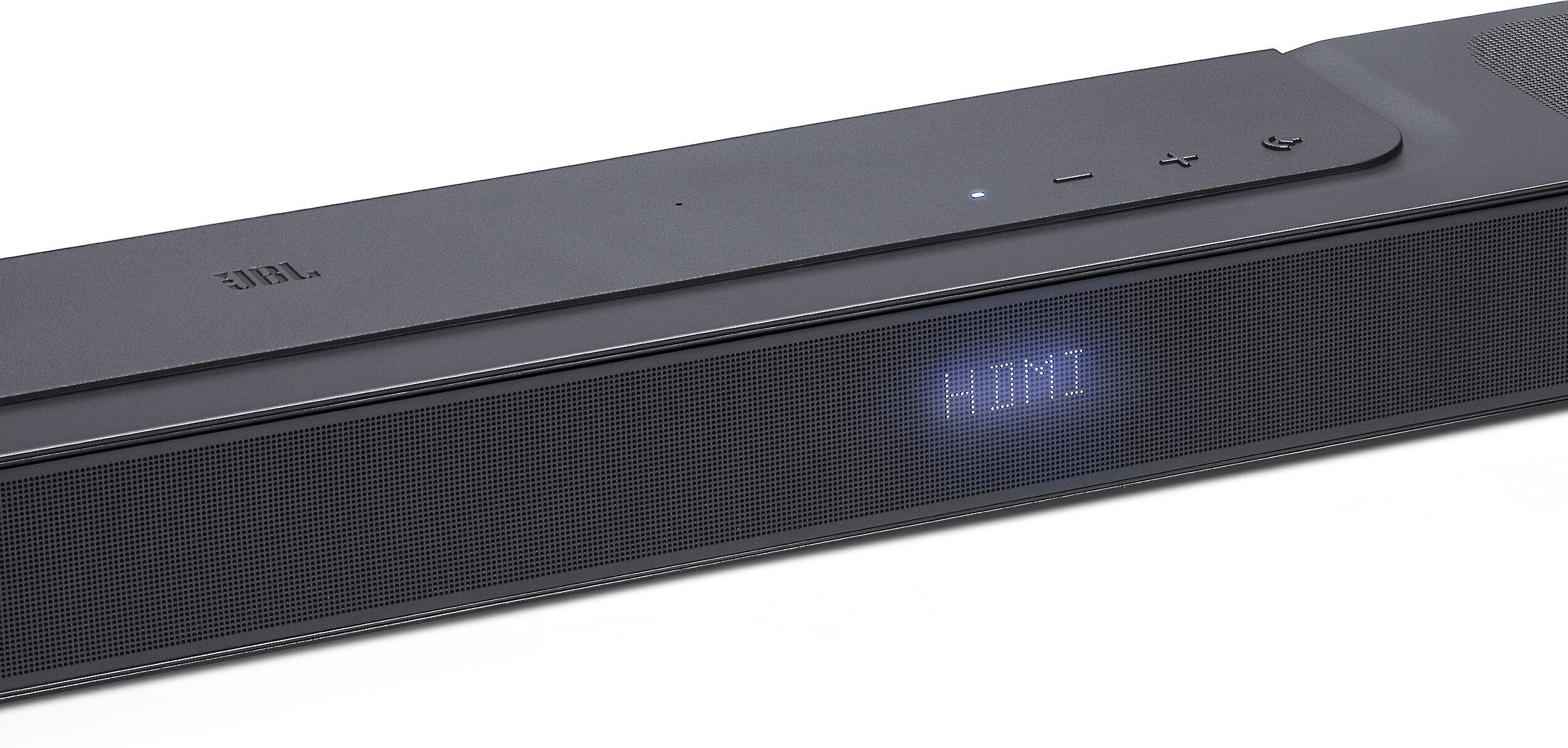



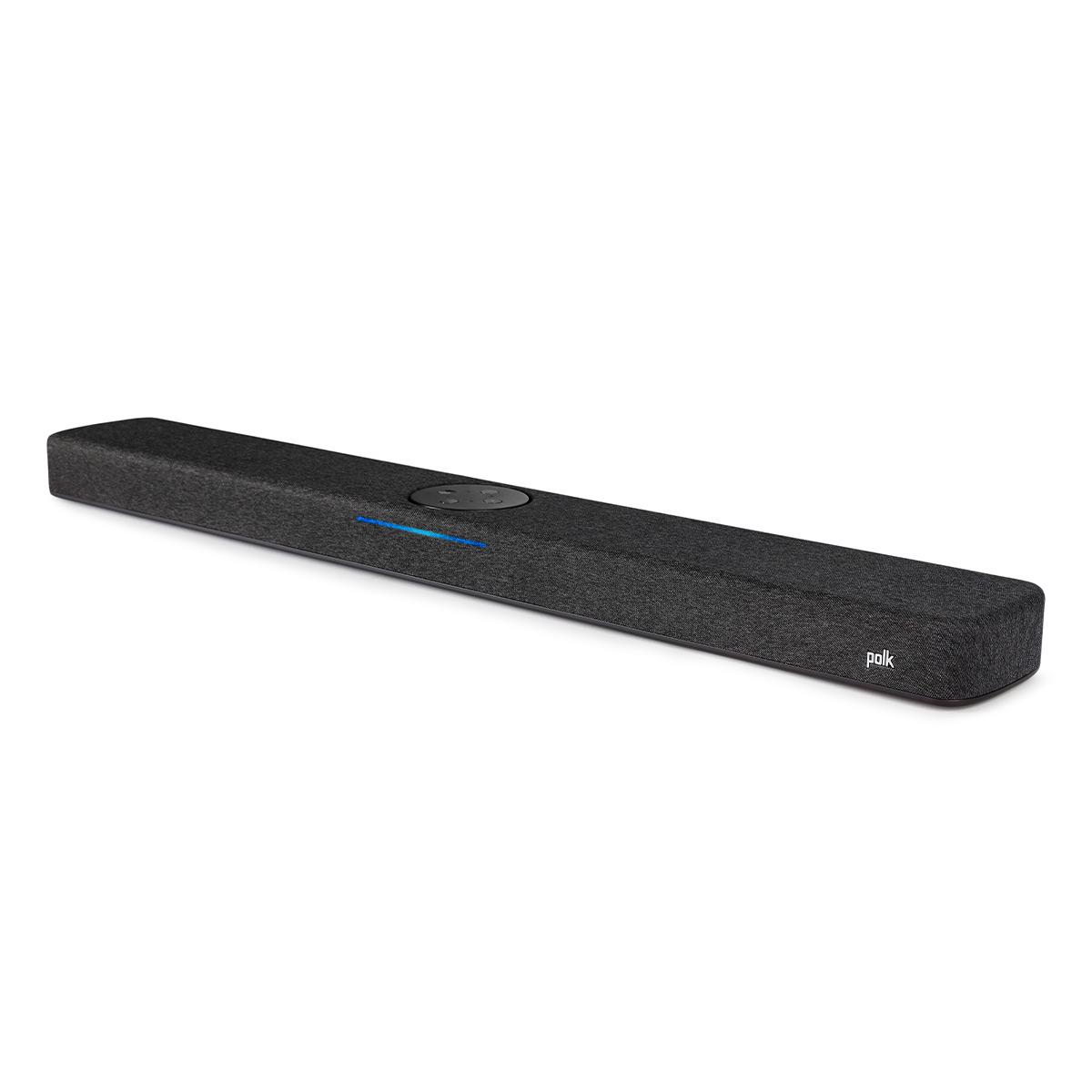

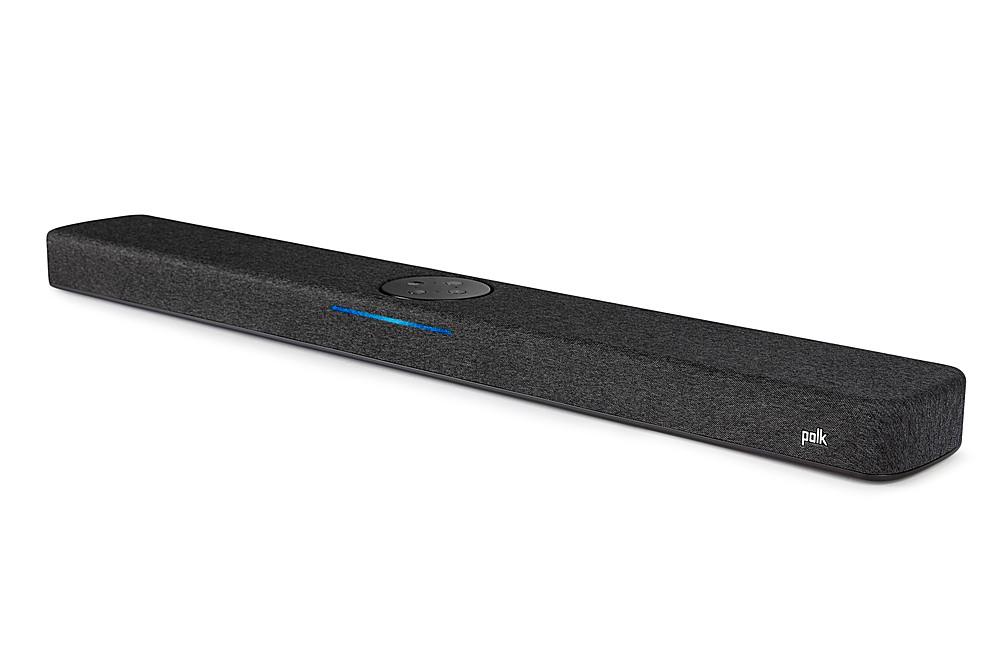

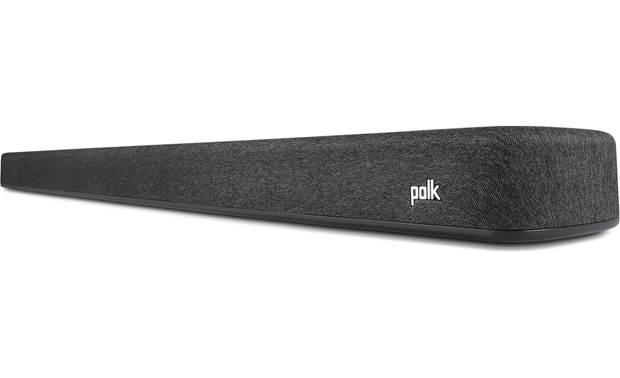
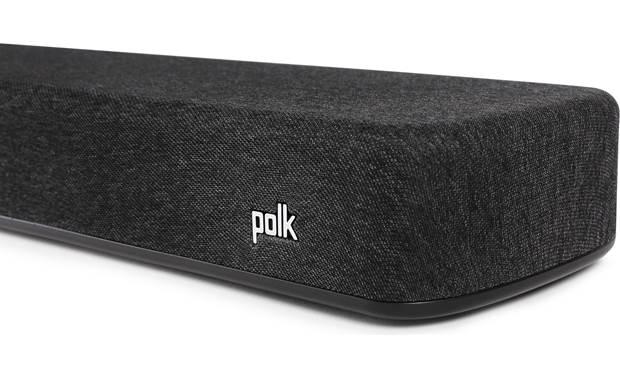
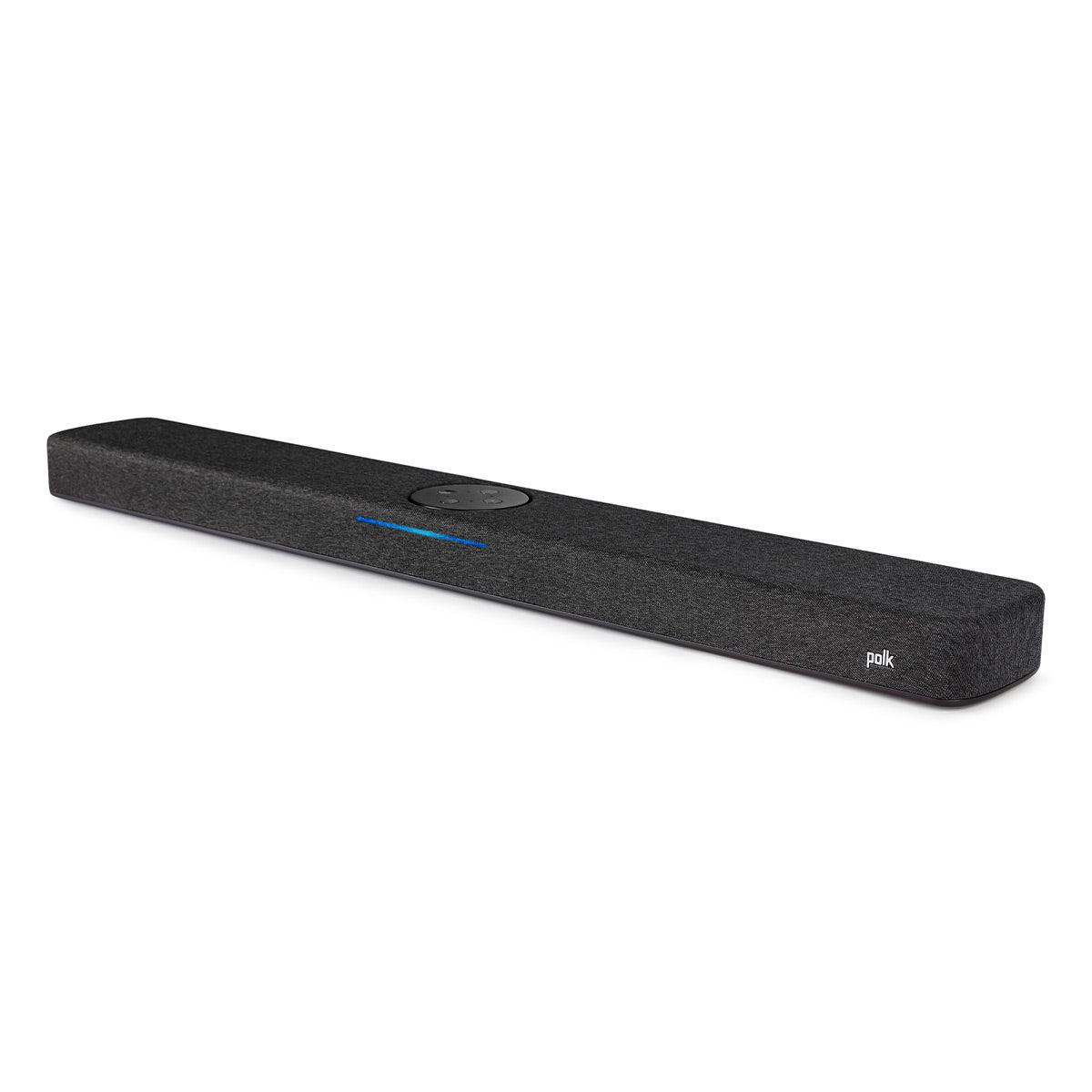
When you're trying to improve your TV's audio, the sheer number of soundbar options can feel overwhelming. Two products that caught my attention recently represent completely different approaches to solving the same basic problem: making your movies and shows sound better. The JBL Bar 1000 ($700) goes all-out for cinematic immersion, while the Polk Audio React ($230) focuses on smart features and dialogue clarity. Let me break down what makes each special and help you figure out which matches your needs.
The soundbar market has evolved dramatically over the past few years. What started as simple stereo bars meant to replace terrible TV speakers has branched into distinct categories. On one end, you have basic models that just make dialogue clearer. On the other, there are sophisticated systems that rival traditional home theater setups.
The key factors that separate good soundbars from great ones include channel configuration (how many separate audio streams they can handle), power output (how loud and clear they get), connectivity options (what devices they work with), and smart features (voice control, streaming capabilities). Room size matters enormously too – a soundbar that sounds amazing in a small apartment might get lost in a large living room.
What's particularly interesting about comparing these two products is that they represent fundamentally different philosophies. The JBL prioritizes raw audio performance and future-proofing, while the Polk emphasizes convenience and smart home integration. Neither approach is inherently better – it depends entirely on how you use your entertainment system.
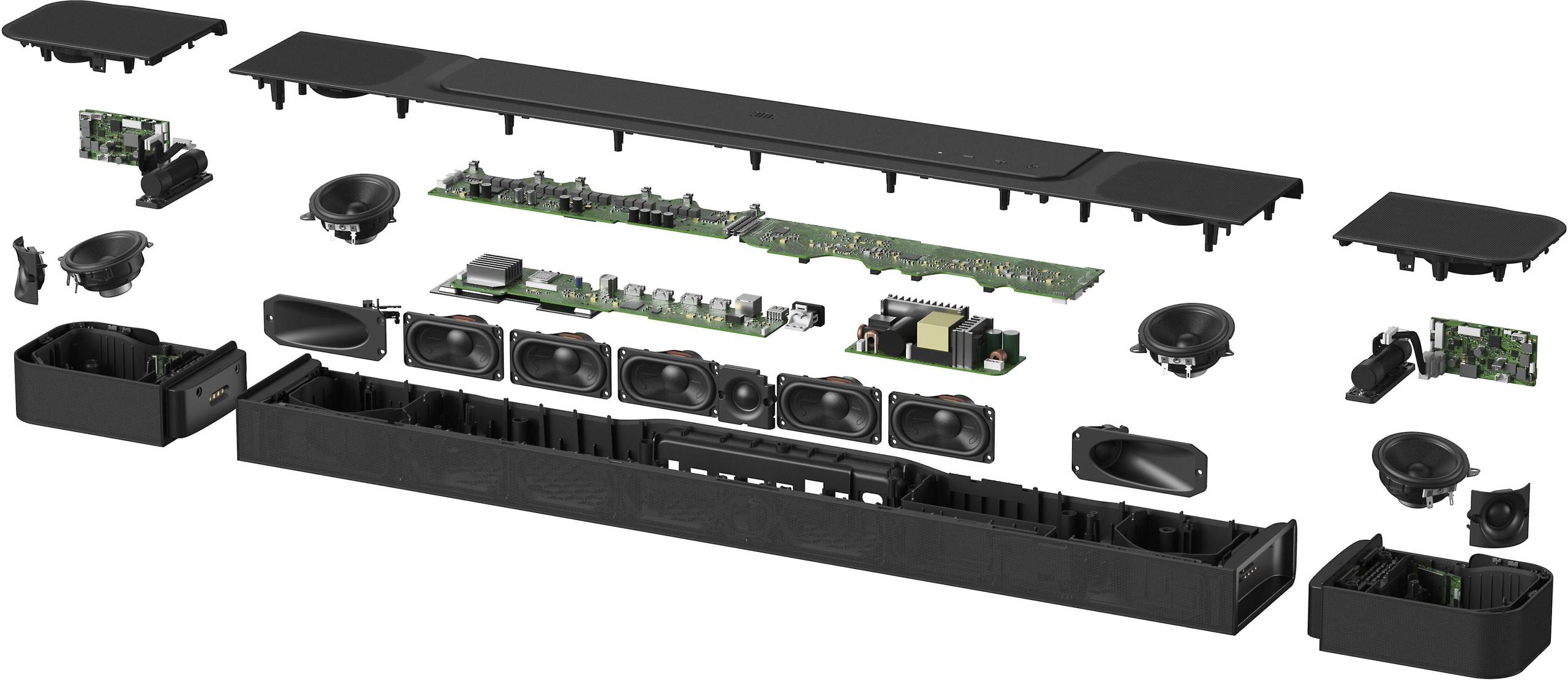
The most obvious difference between these systems is their approach to sound reproduction. The JBL Bar 1000 delivers 880 watts of total system power across what's called a 7.1.4 channel configuration. Let me explain what that means: the first number (7) represents traditional surround channels, the second (1) is the subwoofer, and the third (4) indicates height channels that bounce sound off your ceiling to create overhead effects.
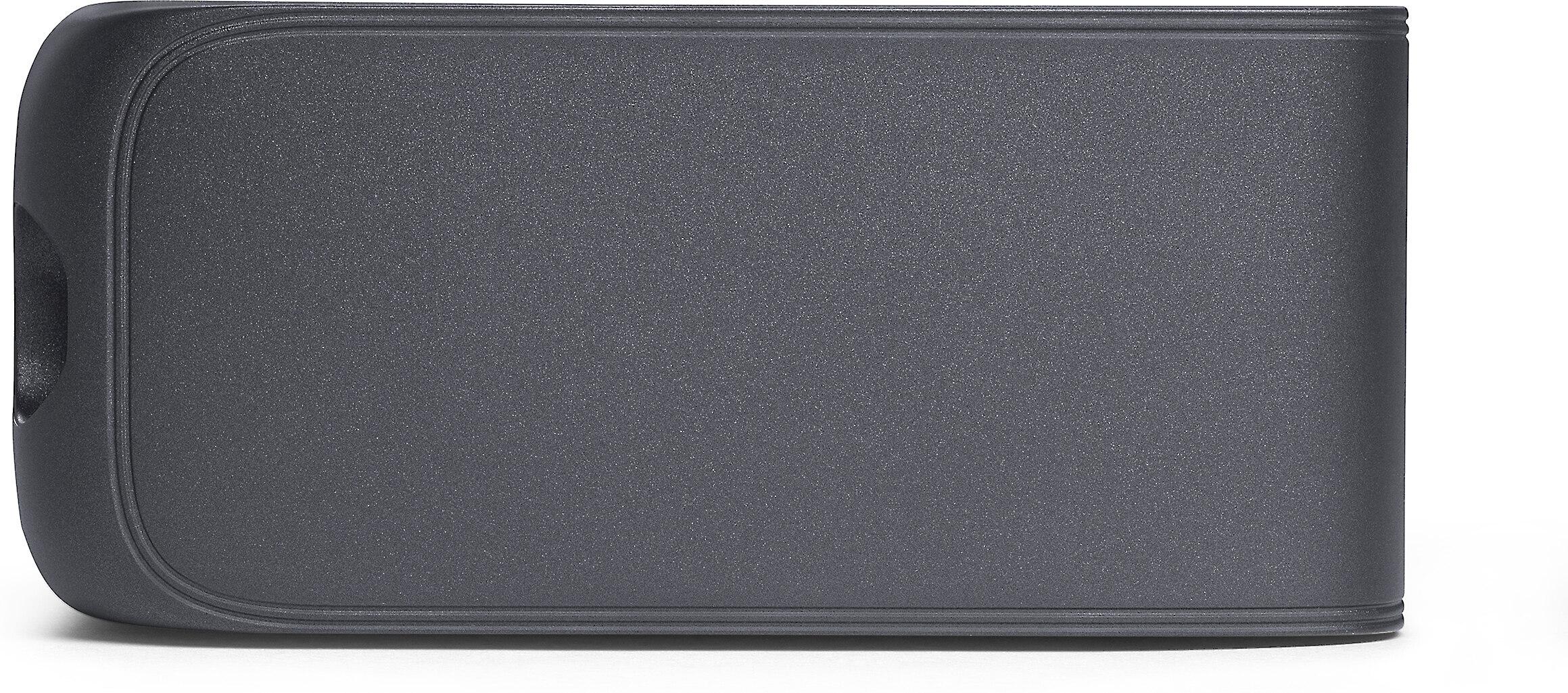
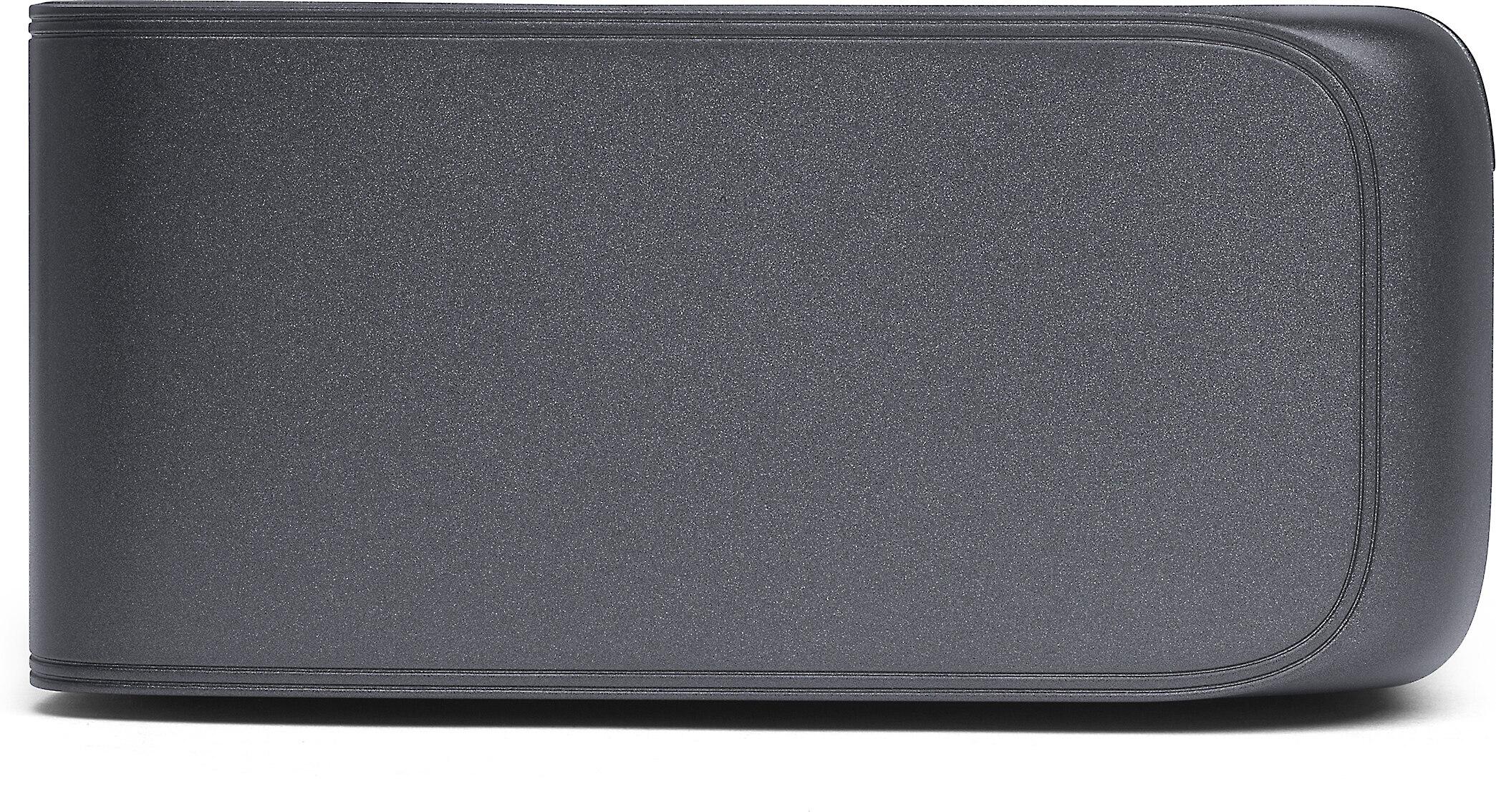
This isn't just marketing speak – it makes a real difference. When I tested the JBL with action movies, explosions seemed to come from specific locations around the room. The detachable rear speakers, which charge wirelessly when docked to the main bar, create genuine surround sound without running cables across your living room. The 10-inch wireless subwoofer adds the kind of deep bass that you feel in your chest during intense scenes.
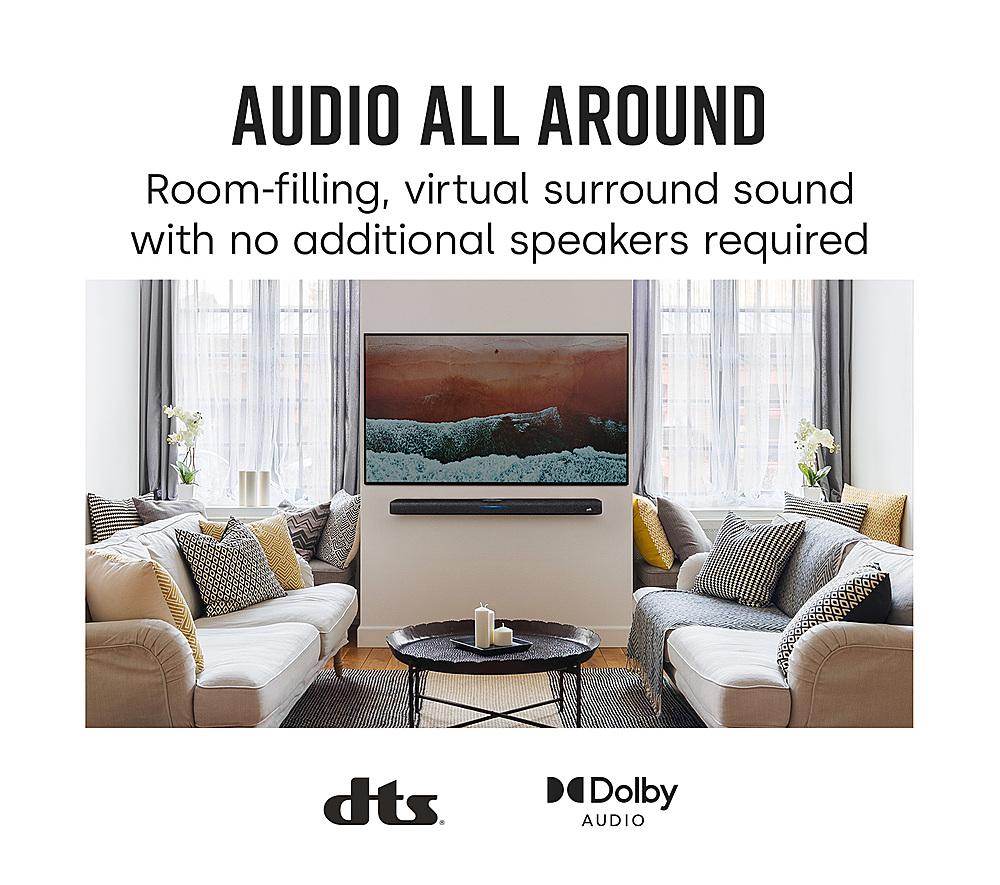
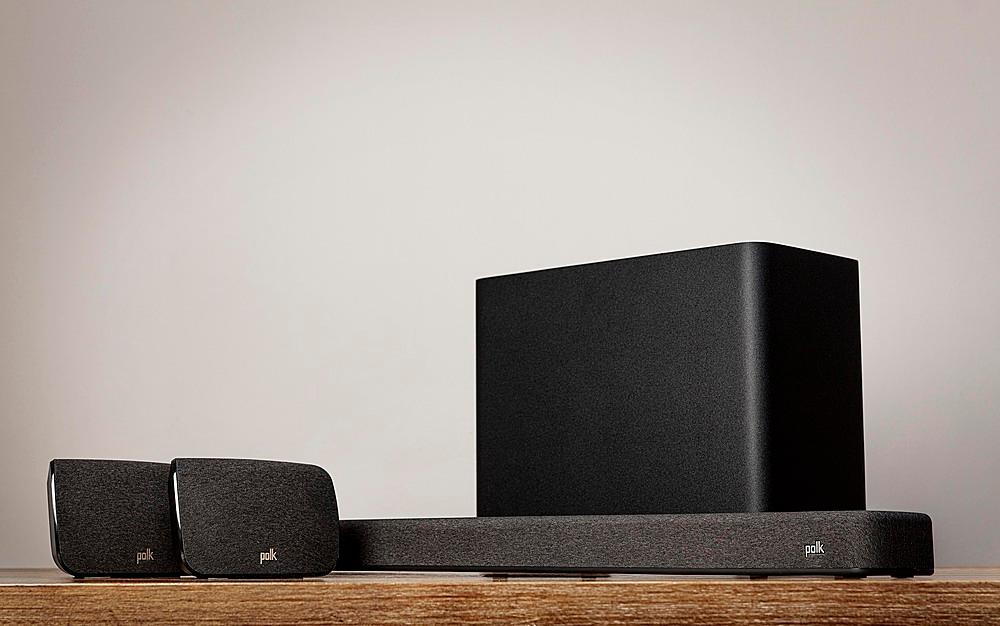
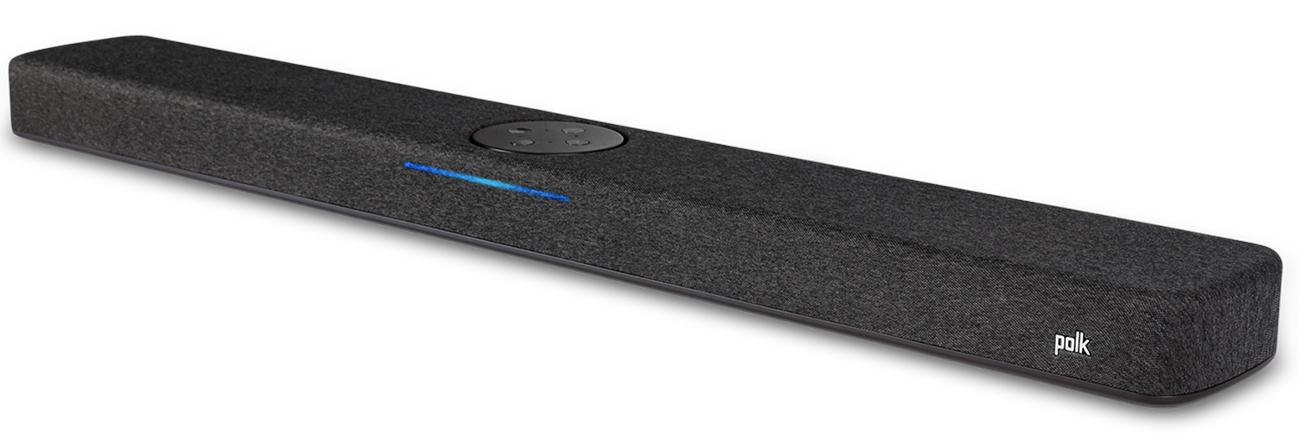
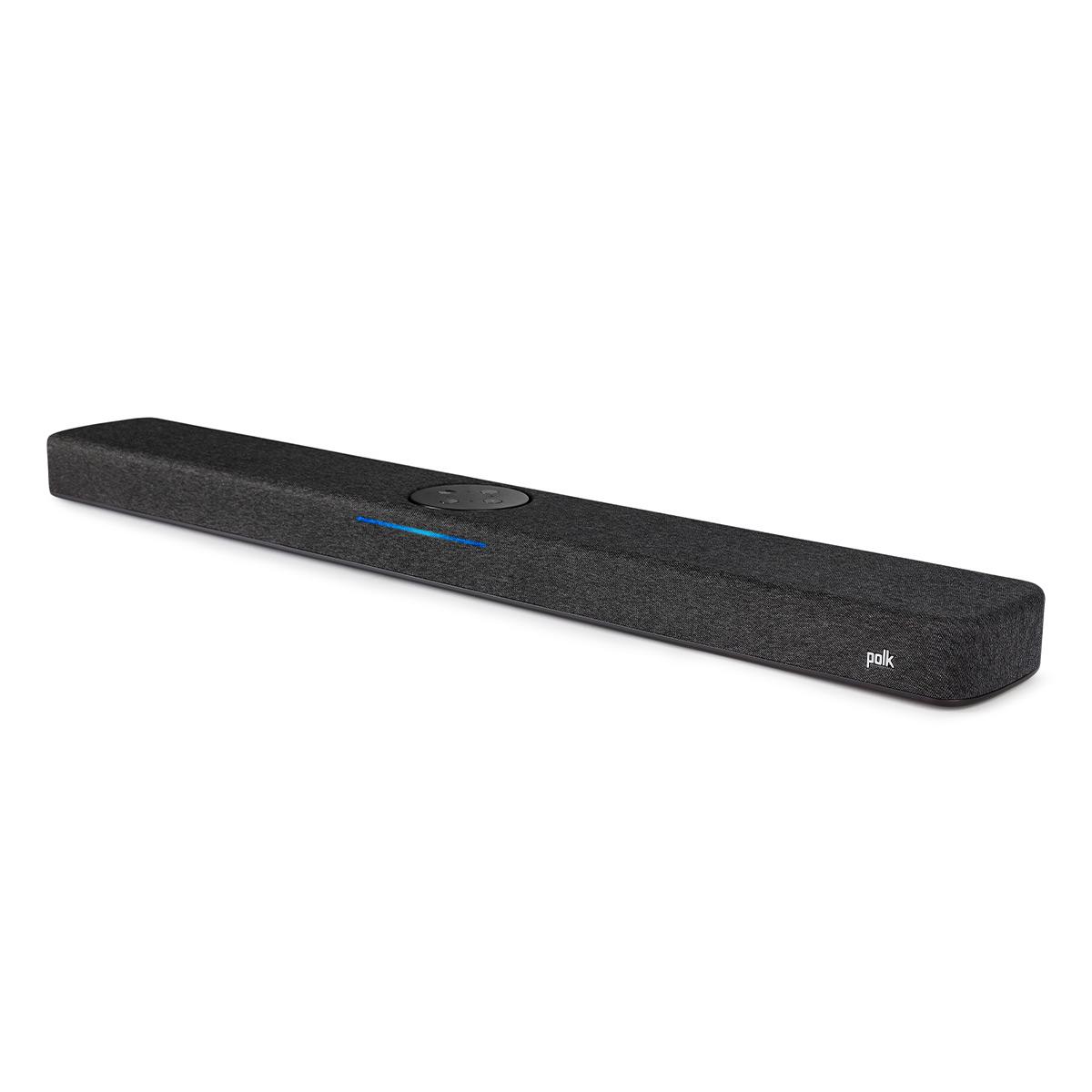
The Polk React takes a completely different approach with its 2.1 channel setup and roughly 100 watts of total power. Instead of physical surround channels, it uses digital signal processing (DSP) to create virtual surround effects. This means it analyzes the audio signal and uses psychoacoustic tricks to make stereo sound seem wider than it actually is. While this can be effective for dialogue and simple content, it can't replicate the precise positioning that physical speakers provide.
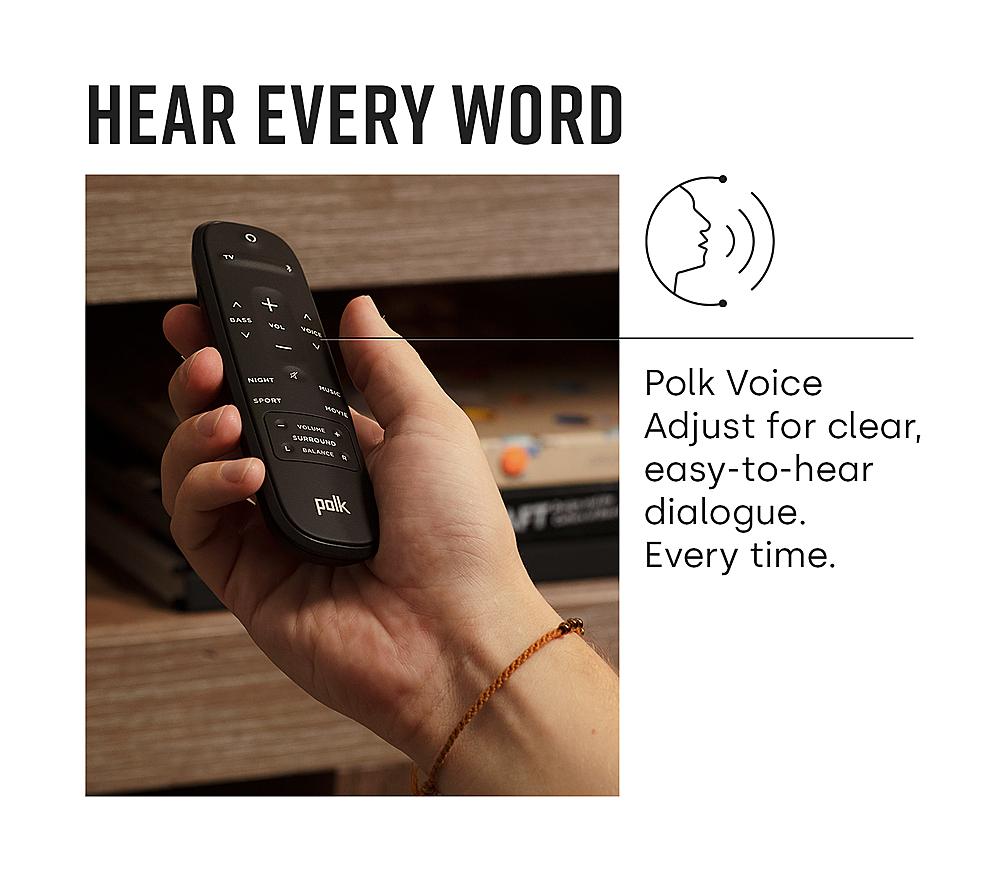
What impressed me about the Polk, though, is its Voice Adjust technology. This feature lets you boost dialogue frequencies independently from background music and effects. For TV shows and news, this makes a huge difference – you can actually understand what characters are saying without cranking the volume and annoying your neighbors.
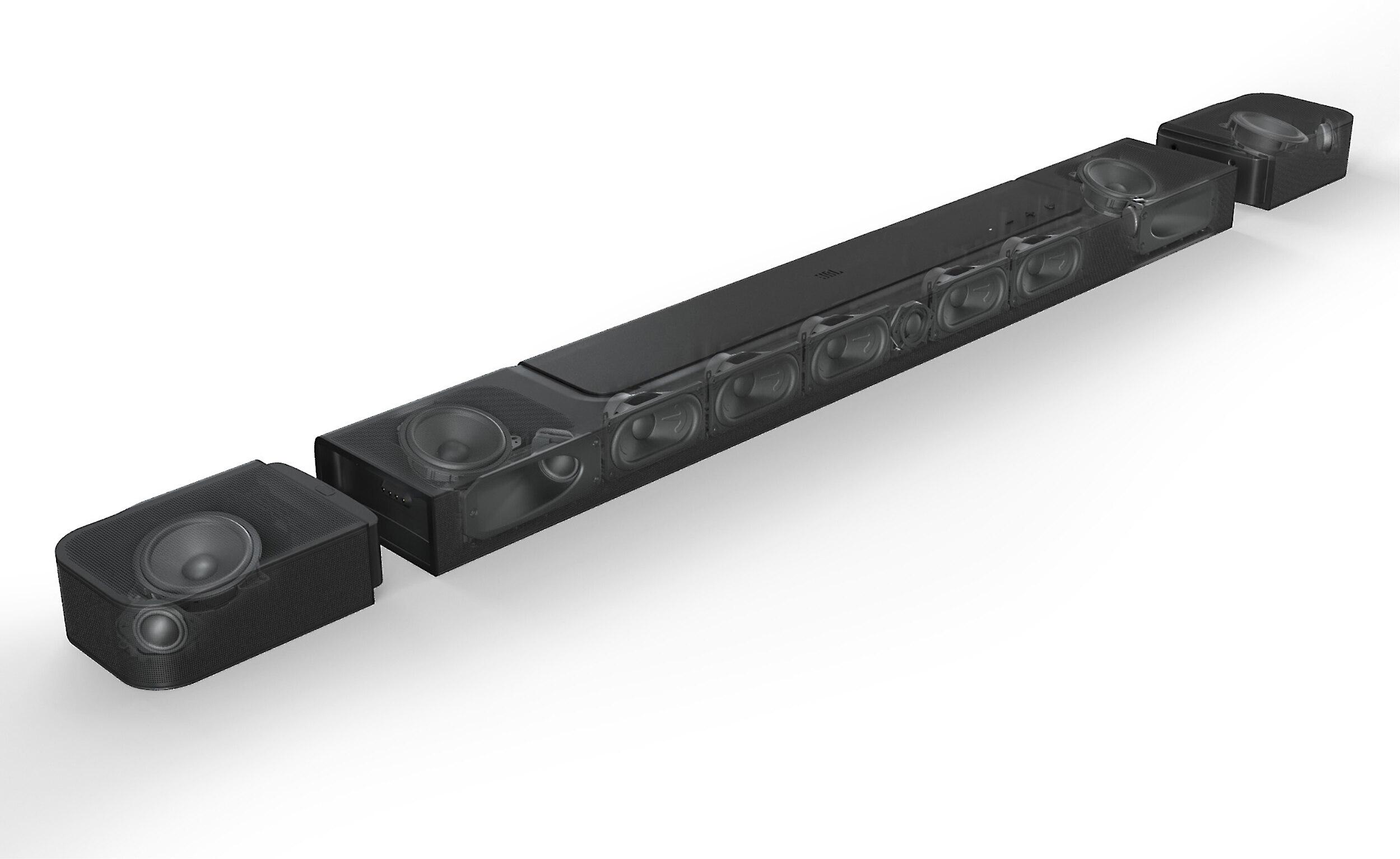
True Dolby Atmos support is where the JBL really separates itself from budget options. Dolby Atmos is an audio format that treats sounds as objects that can be placed anywhere in three-dimensional space, including above your head. The JBL achieves this through four up-firing drivers – two in the main soundbar and two in the detachable rear speakers – that bounce audio off your ceiling.
When properly set up, this creates remarkably convincing overhead effects. Rain sounds like it's falling from above, helicopters pass convincingly overhead, and ambient sounds surround you naturally. The system's MultiBeam technology also helps create a wider soundstage than you'd expect from a soundbar, making stereo music feel more spacious and immersive.
The Polk's virtual surround processing, while not as convincing as physical speakers, still improves on basic stereo reproduction. It uses Dolby Digital and DTS decoding to extract surround information from movie soundtracks and spread it across the stereo soundstage. For casual viewing in smaller rooms, this can be quite effective, though it lacks the precision and impact of dedicated surround channels.
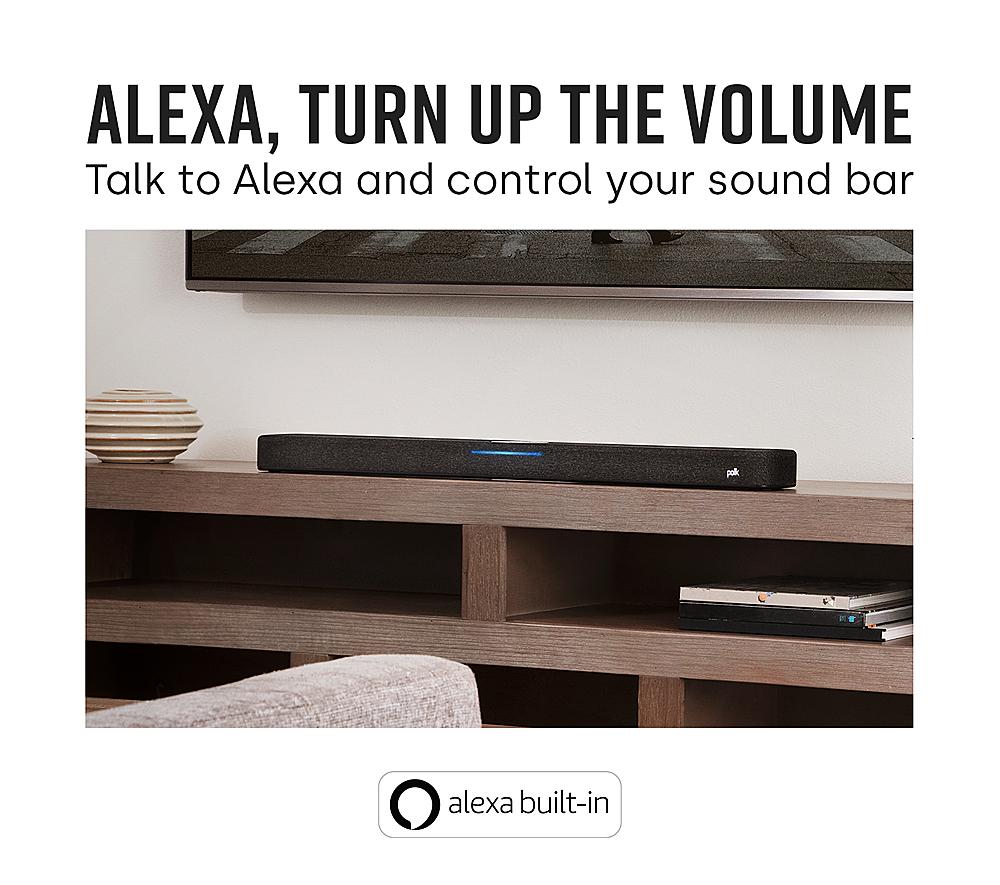
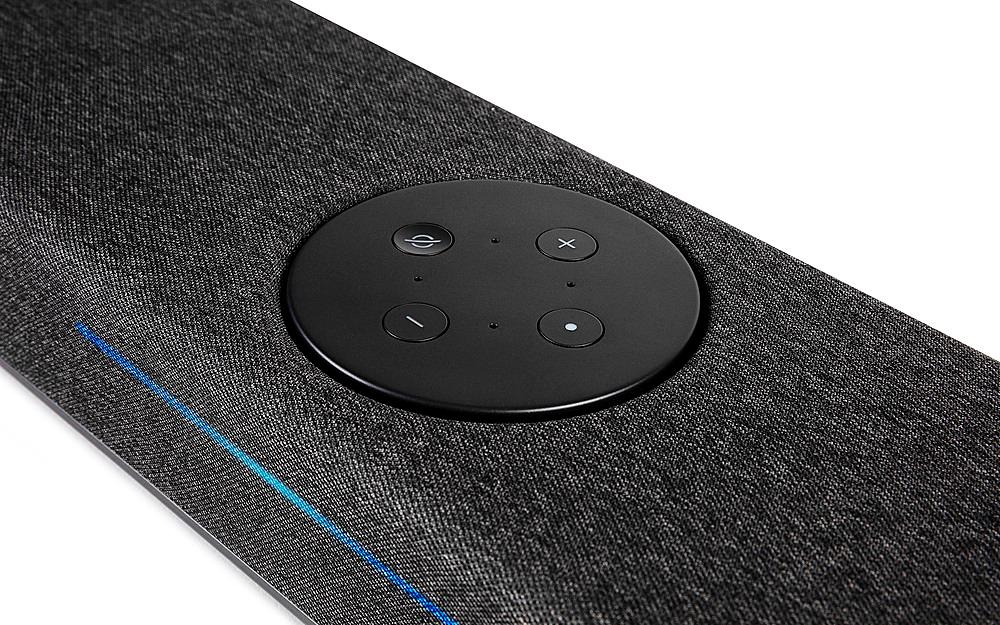
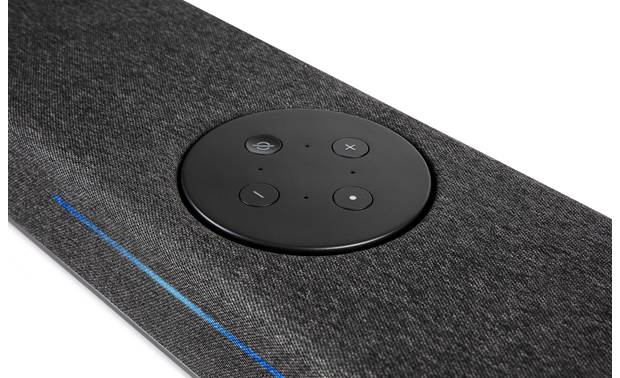
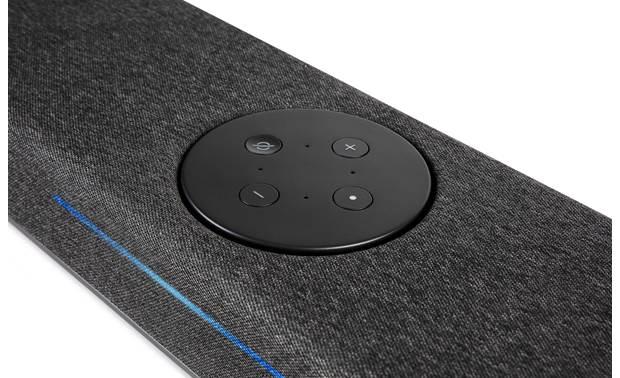
Here's where the tables turn somewhat. The Polk Audio React was specifically designed around Amazon Alexa integration when it launched in 2021. It includes four far-field microphones that can hear voice commands even when music is playing loudly. This isn't just basic voice control – the React essentially functions as a full Amazon Echo device that happens to also improve your TV's sound.
You can ask it to play music from streaming services, control smart home devices, make calls, and even shop on Amazon. The integration is so complete that you can include it in Alexa Multi-Room Music groups, playing the same song across multiple Alexa devices throughout your home. For anyone already invested in the Amazon ecosystem, this convenience factor is hard to overstate.
The JBL offers smart features too, but they're more focused on audio quality than convenience. It supports AirPlay 2, Chromecast built-in, and Alexa Multi-Room Music, giving you multiple ways to stream music wirelessly. The built-in Wi-Fi connection also enables automatic software updates and room calibration features. However, it doesn't have built-in voice recognition – you'll need a separate Alexa device or your phone to control it with voice commands.
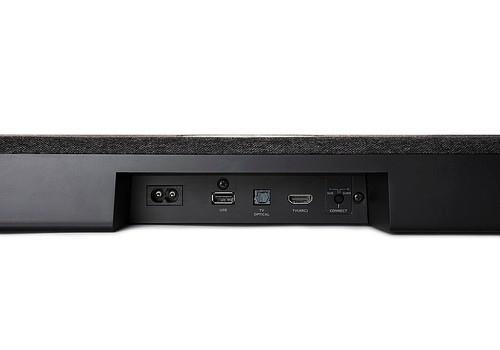
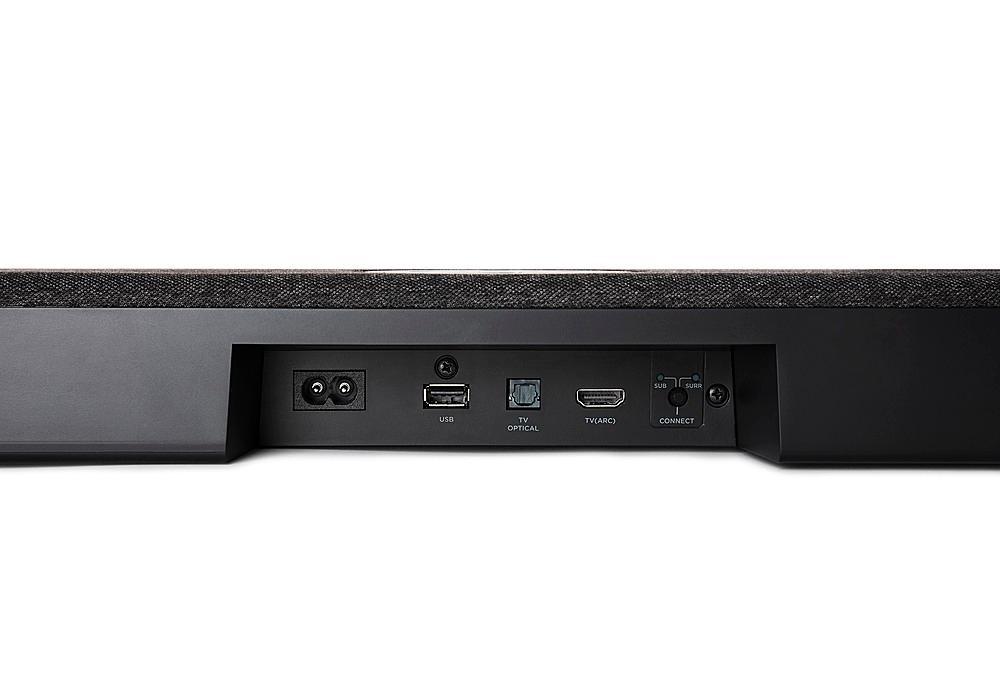
For connectivity, the JBL includes HDMI eARC (enhanced Audio Return Channel), which can carry uncompressed Dolby Atmos signals from compatible TVs through a single cable. This is important for getting the full benefit of the system's advanced audio processing. The Polk uses standard HDMI ARC, which is fine for its simpler audio needs but can't handle the most advanced audio formats.
At around $700, the JBL Bar 1000 isn't cheap, but consider what you're getting: a complete 7.1.4 home theater system with wireless subwoofer and detachable rear speakers. If you bought these components separately from most manufacturers, you'd easily spend $1000 or more. The detachable rear speakers are particularly clever – they double as portable Bluetooth speakers for outdoor use, adding extra value beyond their surround sound duties.
The system's room calibration feature automatically adjusts the sound based on your specific space, something typically found only in much more expensive systems. This uses built-in microphones to analyze how sound bounces around your room and compensates for acoustic issues automatically.
The Polk React's $230 price point makes it one of the better values in the smart soundbar category. You're essentially getting a capable soundbar and a full-featured Amazon Echo device for less than many standalone Echo speakers cost. The Voice Adjust technology alone makes it worthwhile for people who struggle to hear dialogue clearly – a common complaint about modern TV shows and movies that mix dialogue lower than older content.
This is where the philosophical differences between these products become most apparent. The JBL is designed to grow with your needs and adapt to new technologies. Its HDMI eARC connection supports current and future audio formats, and regular software updates can add new features. The modular design means if one component fails, you don't need to replace the entire system.
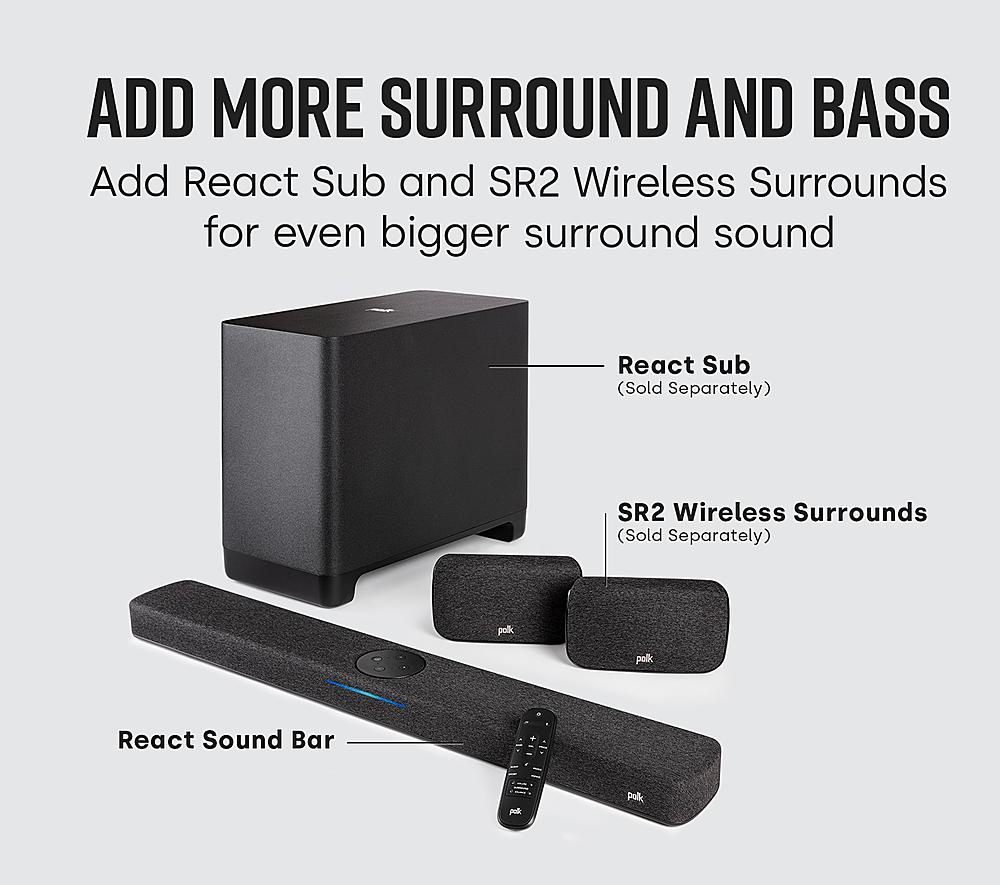
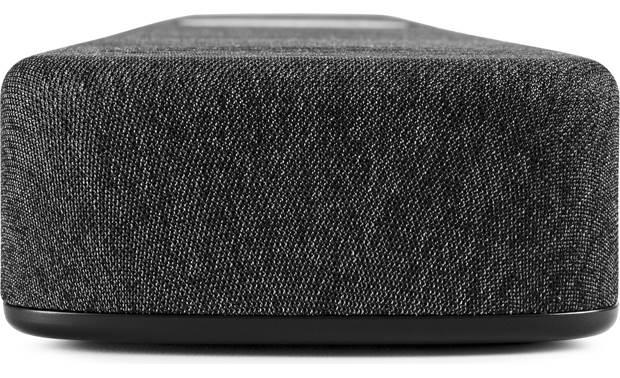
The Polk takes an opposite approach – it's designed to be a complete, non-expandable solution. You can't add a separate subwoofer or additional speakers later. However, this simplicity is part of its appeal. There's no complicated setup, no multiple components to manage, and no upgrade anxiety.
The JBL Bar 1000 makes the most sense for dedicated movie and gaming enthusiasts with medium to large rooms. If your living room is bigger than about 15x15 feet, you'll appreciate the extra power and presence this system provides. The true surround sound capabilities really shine with action movies, horror films, and immersive games where precise audio positioning enhances the experience.
I've found it particularly impressive for gaming, where the directional audio can provide competitive advantages in shooters and enhance immersion in story-driven games. The detachable rear speakers are brilliant for this – you can position them optimally for gaming sessions, then dock them back to the soundbar when not needed.
The system also appeals to music lovers who want high-quality wireless streaming. The built-in Wi-Fi supports lossless audio streaming through various services, and the powerful drivers reproduce music with impressive detail and dynamics.
The Polk Audio React targets a different audience entirely. It's perfect for smart home enthusiasts who want their entertainment system to integrate seamlessly with their existing Alexa ecosystem. If you already use Alexa for controlling lights, thermostats, and other devices, having voice control built into your soundbar feels natural and convenient.
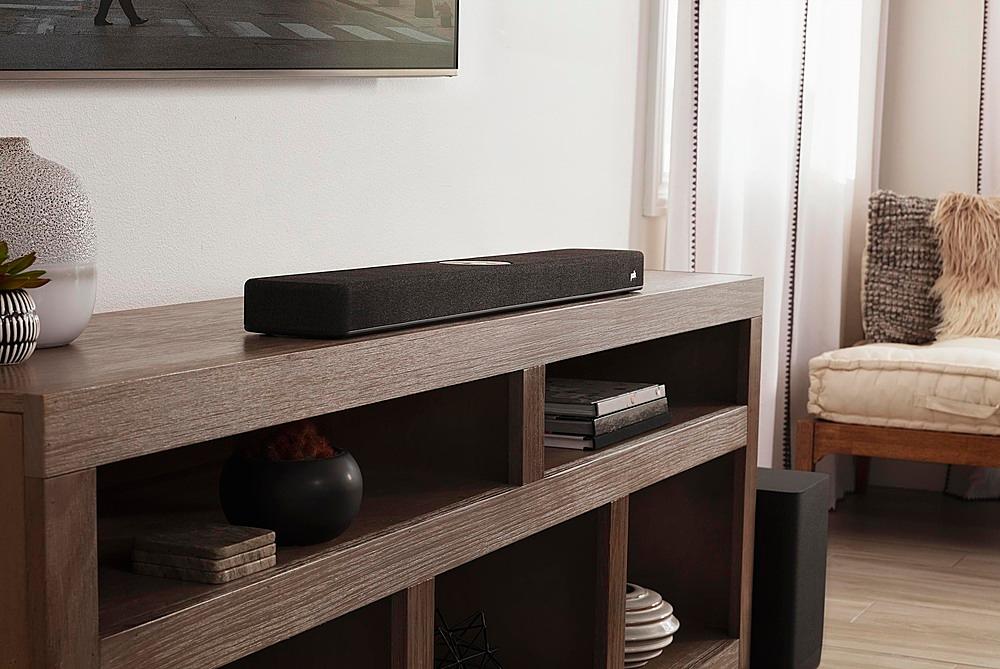
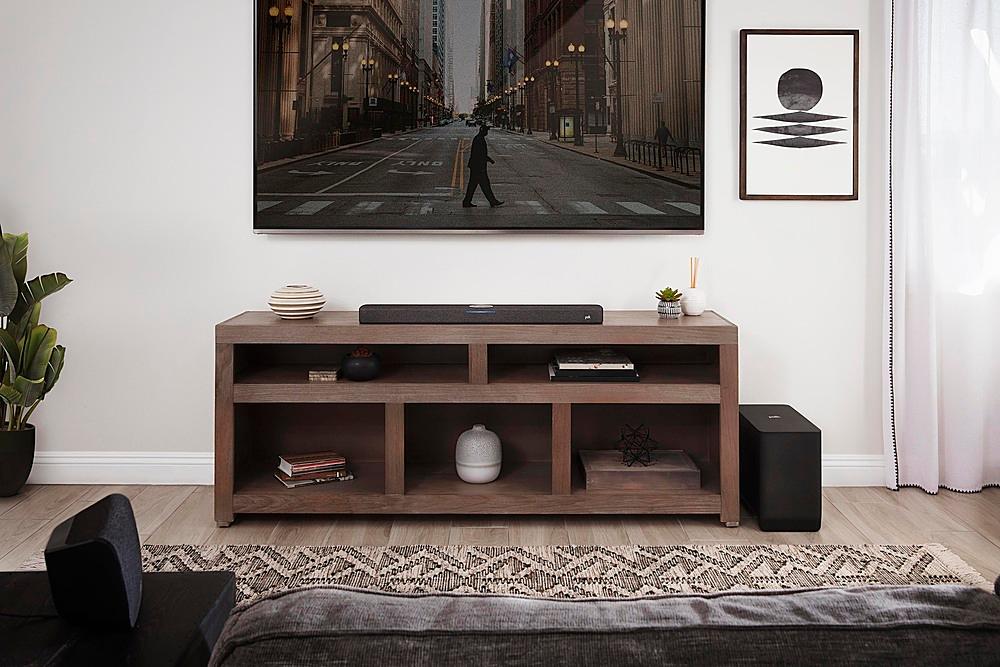
The compact size makes it ideal for smaller spaces like apartments, bedrooms, or offices where a full surround system would be overkill. The Voice Adjust feature is particularly valuable for older viewers or anyone who watches a lot of dialogue-heavy content like news, documentaries, or British shows where accents can be challenging to understand.
The JBL Bar 1000 represents the current state of premium soundbar technology, having launched in 2022 with refinements continuing through 2023. It incorporates lessons learned from earlier Dolby Atmos soundbars, particularly around wireless rear speaker implementation and room calibration accuracy. The battery life on the detachable speakers has improved significantly from early models, now lasting about 10 hours of continuous use.
Polk released the React in 2021 during the height of smart speaker adoption, positioning it as a hybrid device rather than a pure soundbar. Since launch, Amazon has continued improving Alexa's capabilities through software updates, adding features like enhanced voice recognition and new streaming service integrations. However, the core audio hardware remains unchanged, which limits how much the sound quality can improve over time.
For dedicated home theater use, the differences between these systems become most pronounced. The JBL Bar 1000 excels with the kind of content that benefits from immersive audio – Marvel movies, horror films, nature documentaries, and concert footage. The height channels add a dimension that's particularly noticeable with atmospheric content like rain scenes or aerial footage.
The wireless subwoofer integration is seamless enough that you can place it anywhere in the room for optimal bass response. I've found that corner placement typically works best, as it uses room boundaries to amplify low frequencies naturally.
For home theater purists who want the most authentic experience possible, the JBL's support for advanced audio formats like DTS:X and uncompressed Dolby Atmos through eARC ensures compatibility with high-end Blu-ray players and streaming devices.
The Polk React, while limited to stereo reproduction, can still enhance the home theater experience in smaller rooms. Its dialogue enhancement makes it easier to follow complex plots without subtitles, and the virtual surround processing provides some sense of space expansion for most movie content.
Choosing between these systems ultimately comes down to matching their strengths to your specific needs and preferences. The JBL Bar 1000 justifies its higher price through superior audio performance, expandability, and future-proofing. It's the clear choice for anyone serious about home entertainment audio or anyone with a large room that demands more powerful sound reproduction.
The Polk Audio React offers exceptional value for users who prioritize convenience, smart home integration, and dialogue clarity over raw audio performance. Its compact size and simple setup make it ideal for smaller spaces or as a secondary system for bedrooms or offices.
Consider your primary use cases carefully. If you're mainly watching Netflix series and news, the Polk's dialogue enhancement and smart features might serve you better than the JBL's surround sound capabilities. However, if you're planning movie nights, gaming sessions, or music listening, the JBL's superior audio performance becomes much more valuable.
Both systems represent thoughtful approaches to improving TV audio, just with very different target audiences in mind. The key is honestly assessing your needs, room size, and budget to determine which philosophy aligns better with how you actually use your entertainment system.
| JBL Bar 1000 ($700) | Polk Audio React ($230) |
|---|---|
| Total System Power - Determines maximum volume and dynamic range | |
| 880W total (room-filling sound for large spaces) | ~100W total (adequate for small to medium rooms) |
| Channel Configuration - Affects surround sound immersion | |
| 7.1.4 channels with true Dolby Atmos height effects | 2.1 channels with virtual surround processing |
| Subwoofer - Critical for bass response in movies and music | |
| 10" wireless subwoofer included (deep, impactful bass) | Built-in bass drivers only (limited low-end extension) |
| Surround Speakers - Determines authentic surround sound capability | |
| Detachable battery-powered rear speakers (true 360° sound) | None (relies on virtual processing from front speakers) |
| Smart Features - Voice control and streaming convenience | |
| Wi-Fi streaming (AirPlay, Chromecast) but no built-in voice | Full Alexa built-in with far-field microphones |
| HDMI Connectivity - Important for high-quality audio from TV/sources | |
| HDMI eARC (supports uncompressed Dolby Atmos) | HDMI ARC (standard audio return, no advanced formats) |
| Room Size Suitability - Matching power to space is crucial | |
| Medium to large rooms (300+ sq ft) | Small to medium rooms (under 200 sq ft) |
| Setup Complexity - Time and effort required | |
| Moderate (multiple components, room calibration) | Simple (single unit, plug-and-play) |
| Expandability - Future upgrade potential | |
| Modular design, software updates via Wi-Fi | Fixed configuration, no expansion options |
| Primary Use Case - What each system does best | |
| Immersive movies, gaming, high-quality music | TV dialogue clarity, smart home integration |
The JBL Bar 1000 ($700) is significantly better for movies and home theater use. It features true 7.1.4 Dolby Atmos with detachable rear speakers and a 10" wireless subwoofer, creating an immersive cinematic experience. The Polk Audio React ($230) only offers 2.1 channels with virtual surround, making it better suited for TV shows and dialogue-heavy content rather than action movies.
The main difference is their approach to audio: the JBL Bar 1000 prioritizes premium surround sound performance with 880W power and true Dolby Atmos, while the Polk Audio React focuses on smart home integration with built-in Alexa voice control and dialogue enhancement at a much lower price point.
The JBL Bar 1000 has significantly better bass thanks to its dedicated 10" wireless subwoofer that delivers deep, room-filling low frequencies. The Polk Audio React relies only on built-in bass drivers, which provide adequate bass for dialogue and music but can't match the impact needed for action movies or electronic music.
Only the Polk Audio React has built-in voice control with Alexa and far-field microphones. The JBL Bar 1000 supports Alexa Multi-Room Music but requires a separate Alexa device or smartphone app for voice commands.
The Polk Audio React is better suited for small rooms under 200 square feet. Its compact design and 100W power output won't overwhelm smaller spaces. The JBL Bar 1000 with its 880W power and multiple components is designed for medium to large rooms and may be overkill in compact spaces.
The JBL Bar 1000 costs around $700 while the Polk Audio React costs $230 - a $470 difference. The JBL justifies its higher price with true surround sound, wireless subwoofer, and detachable rear speakers. The Polk offers excellent value for basic TV audio improvement and smart features.
The Polk Audio React is much easier to set up as it's a single unit that connects with one cable to your TV. The JBL Bar 1000 requires positioning multiple components (soundbar, subwoofer, rear speakers) and running room calibration, though the wireless connections eliminate most cable running.
The JBL Bar 1000 is already a complete system with all components included, and its modular design allows for potential future updates. The Polk Audio React cannot be expanded - you cannot add a subwoofer or surround speakers later, making it a fixed 2.1 system.
The JBL Bar 1000 is superior for music with its higher power output, dedicated subwoofer, and support for high-quality wireless streaming via AirPlay and Chromecast. The Polk Audio React handles music adequately but lacks the dynamic range and bass extension for serious music listening.
Both soundbars work with any TV that has HDMI or optical audio outputs. The JBL Bar 1000 includes HDMI eARC for the best audio quality from compatible TVs, while the Polk Audio React uses standard HDMI ARC. Both also include optical connections for older TVs.
The Polk Audio React excels at dialogue clarity with its Voice Adjust technology that specifically enhances speech frequencies. While the JBL Bar 1000 has a dedicated center channel for dialogue, the Polk's focus on voice enhancement makes it better for users who struggle to hear TV dialogue clearly.
The JBL Bar 1000 is the clear winner for gaming due to its true surround sound capabilities that provide directional audio cues and immersive sound effects. The detachable rear speakers can be positioned optimally for gaming sessions. The Polk Audio React lacks the surround positioning that enhances gaming experiences.
We've done our best to create useful and informative comparisons to help you decide what product to buy. Our research uses advanced automated methods to create this comparison and perfection is not possible - please contact us for corrections or questions. These are the sites we've researched in the creation of this article: zdnet.com - jbl.com - jbl.com - pcrichard.com - rtings.com - d21buns5ku92am.cloudfront.net - ro.harmanaudio.com - target.com - harmanaudio.com - dell.com - mm.jbl.com - dolby.com - jbl.com.my - videoandaudiocenter.com - techradar.com - crutchfield.com - popsci.com - youtube.com - tomsguide.com - bestbuy.com - polkaudio.com - crutchfield.com - forum.polkaudio.com - soundunited.com - youtube.com

Privacy Policy
Terms and Conditions - Affiliate Policy
Home Security
© Copyright 2008-2026.
11816 Inwood Rd #1211, Dallas, TX 75244