

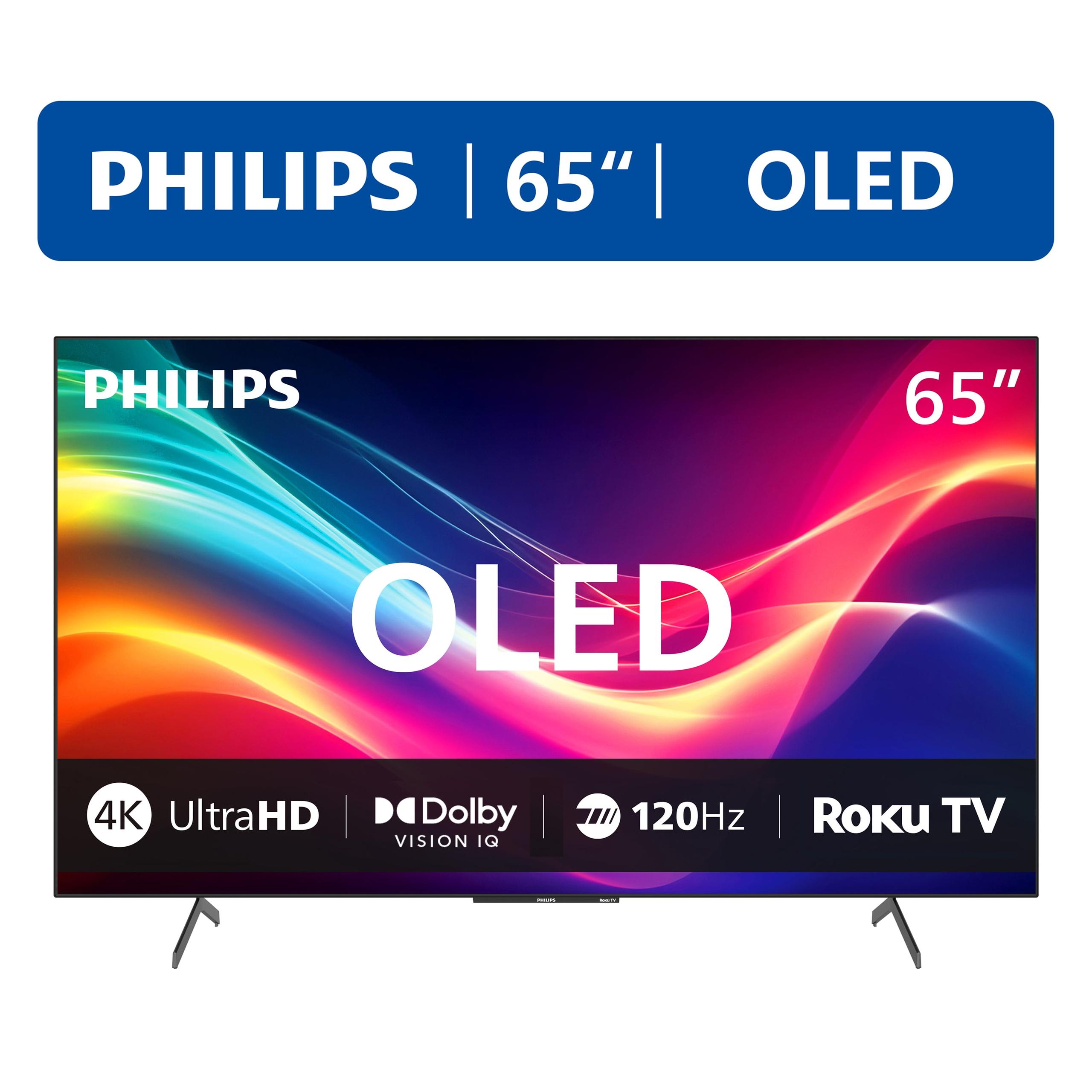
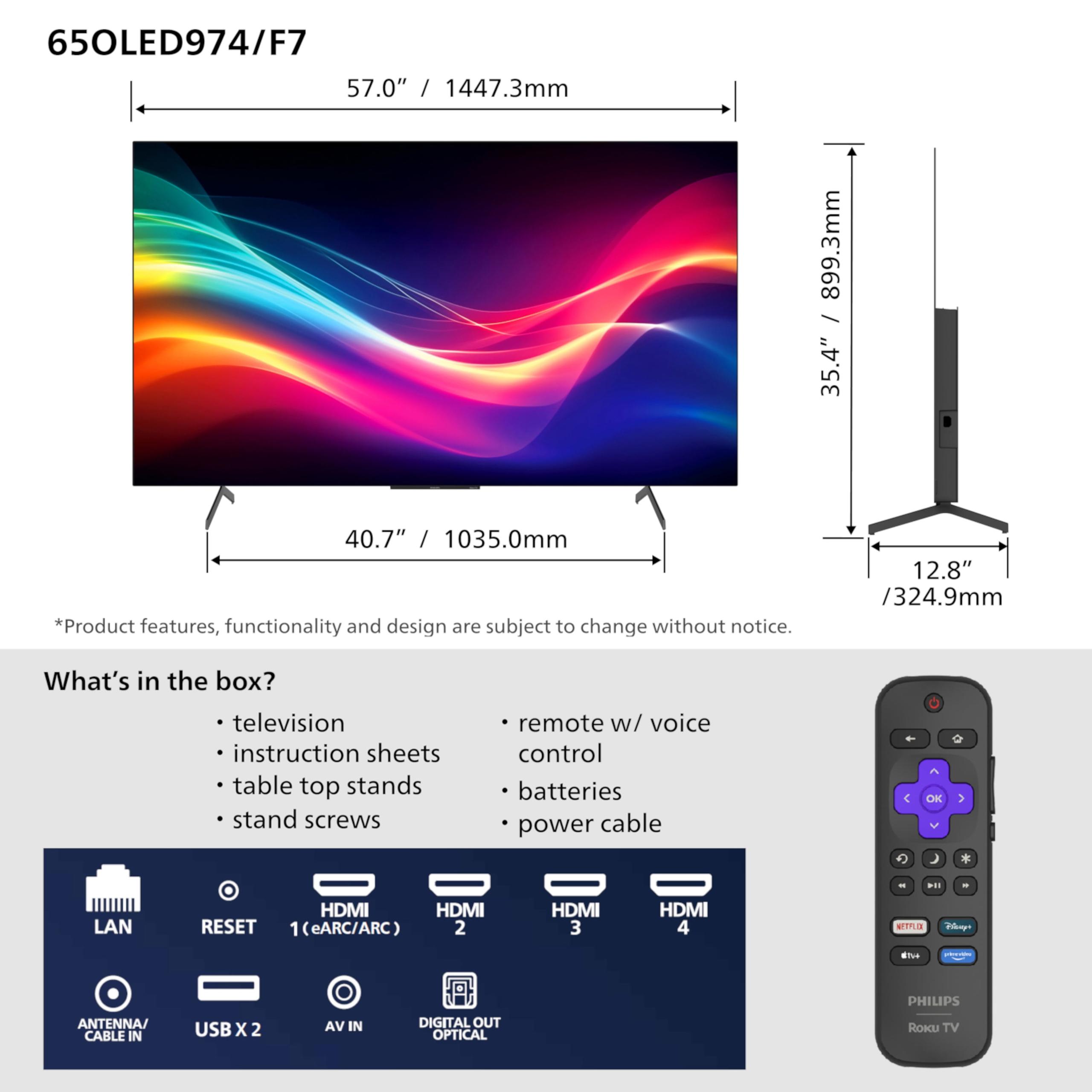






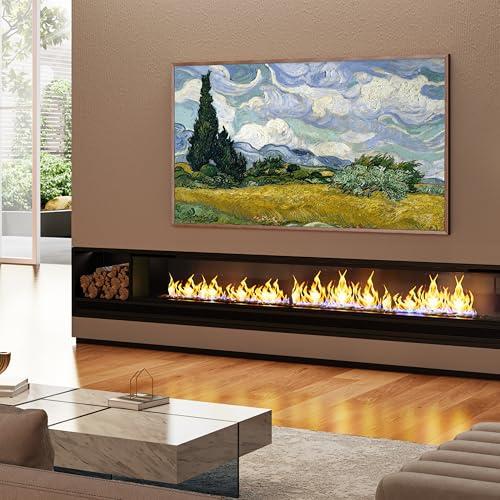
When you're shopping for a 65-inch premium TV, you're making a significant investment that will anchor your living room for years to come. The decision becomes particularly interesting when comparing two fundamentally different approaches: the Philips 65OLED974/F7, a traditional performance-focused OLED released in 2024, and the Hisense 65" S7N CanvasTV, also from 2024, which reimagines what a TV can be when it's not actually displaying your favorite shows.
Both represent the latest thinking in their respective categories, but they solve very different problems. Understanding which approach fits your lifestyle and viewing habits will save you from buyer's remorse and ensure you get the most value from your purchase.
The premium TV market has evolved dramatically over the past few years. Where we once simply chose between LCD and plasma (remember those?), today's landscape offers OLED technology that can turn individual pixels completely off, QLED displays that use quantum dots for enhanced color, and innovative approaches like the art-focused TV that doubles as home décor.
The most important considerations when evaluating premium TVs include display technology impact on picture quality, brightness performance across different room conditions, gaming capabilities for modern consoles, smart platform usability, and increasingly, how well the TV integrates with your home's aesthetic. The Philips OLED and Hisense CanvasTV represent two distinct philosophies in addressing these needs.
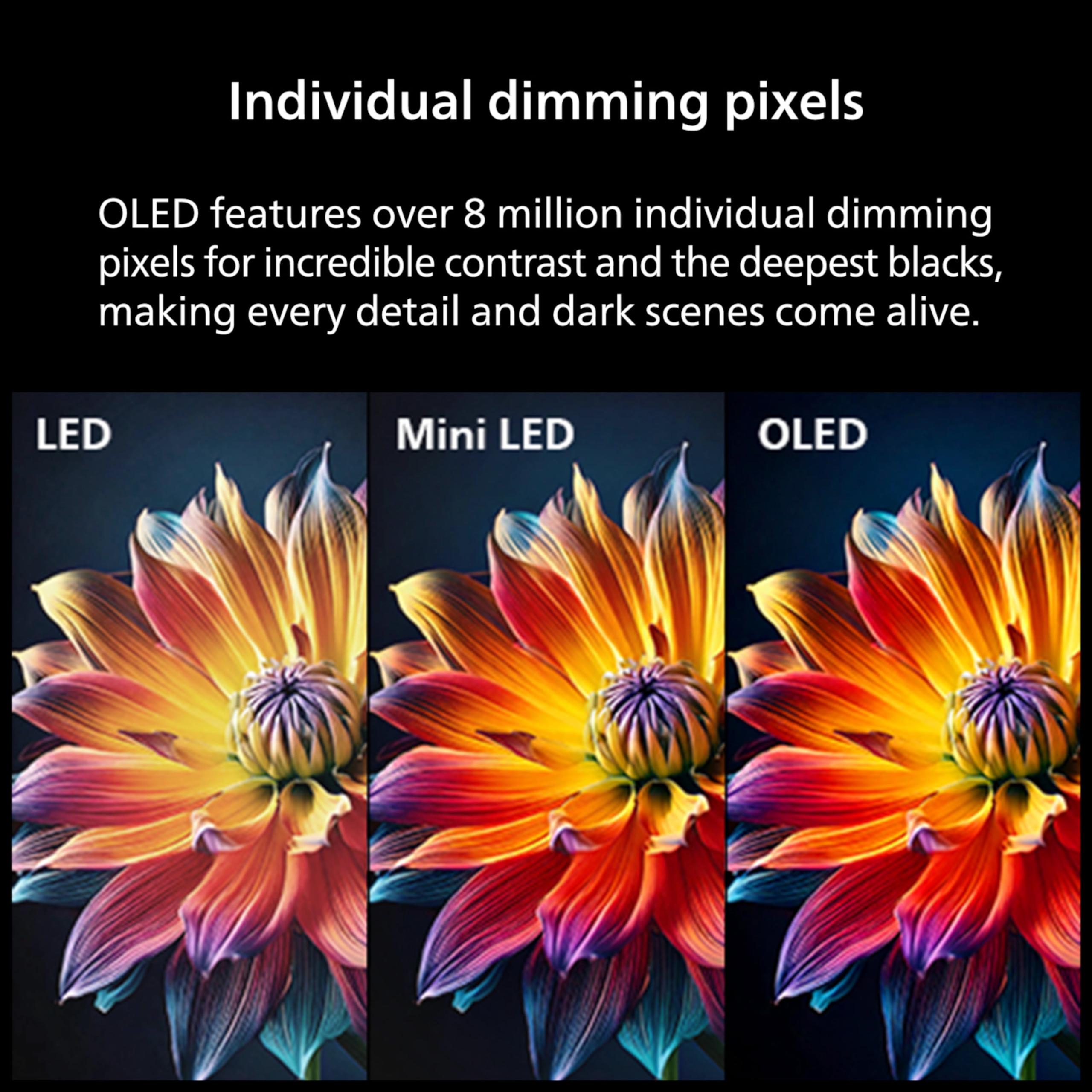
The Philips 65OLED974/F7 uses OLED (Organic Light Emitting Diode) technology, where each of the roughly 8 million pixels can illuminate independently or turn completely off. This creates what's called "pixel-level dimming" – imagine having 8 million tiny light switches that can create perfect black levels since there's literally no light emitting from dark areas of the screen.
The Hisense CanvasTV uses QLED (Quantum Dot LED) technology, which is essentially a very advanced LCD display. It uses a backlight that shines through quantum dot filters to enhance color purity, particularly in red and blue spectrums. While it can't achieve true blacks like OLED (since there's always some backlight bleeding through), it offers other advantages we'll discuss.
Here's where the Philips OLED truly shines – literally by not shining at all. When displaying a starfield in space or a dark movie scene, those black areas emit zero light, creating an infinite contrast ratio. This makes shadows look genuinely deep and gives the image a three-dimensional quality that's immediately noticeable.
The Hisense QLED achieves a respectable 5000:1 contrast ratio, which is quite good for LCD technology, but it can't match OLED's perfect blacks. However, in practical viewing scenarios, especially with ambient light present, this difference becomes less pronounced than you might expect.
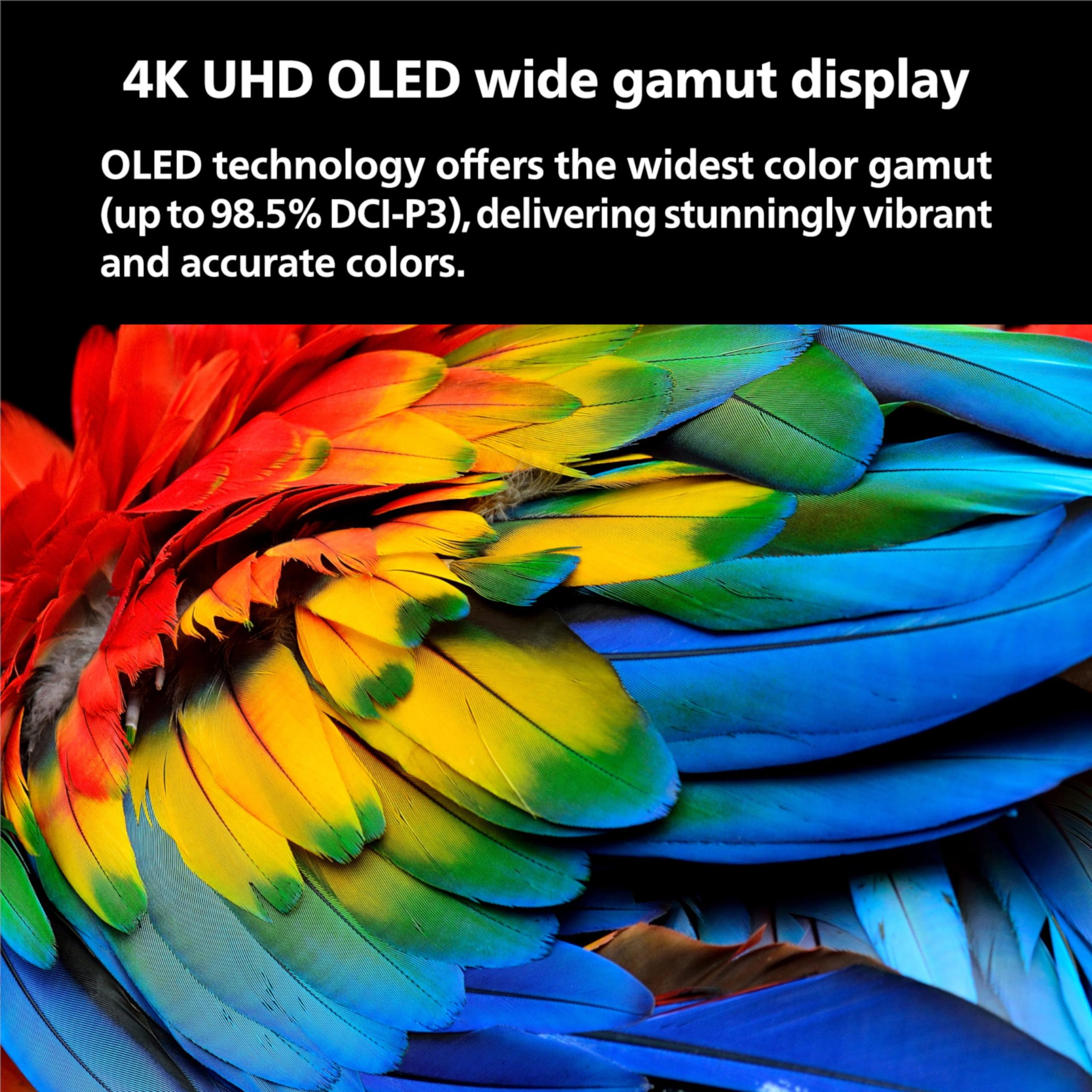
Both displays deliver excellent color performance, but through different approaches. The Philips covers an impressive 98.5% of the DCI-P3 color gamut (the standard used in digital cinema) with exceptional out-of-the-box accuracy in standard dynamic range (SDR) content. This means colors look natural without requiring professional calibration.
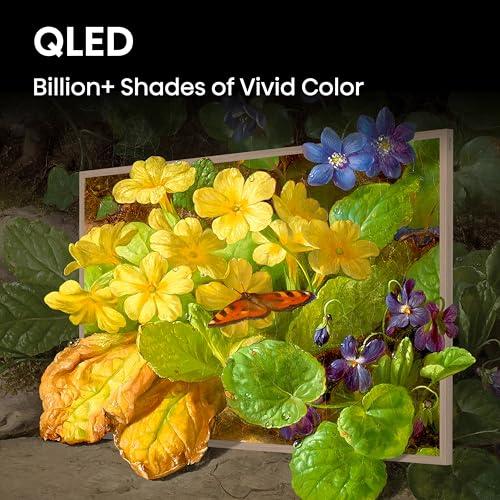
The Hisense uses quantum dot technology to produce over one billion distinct colors, creating vibrant, saturated imagery that pops off the screen. The quantum dots act like color filters, making reds more red and blues more blue, which can make content appear more vivid than the Philips, though sometimes at the expense of absolute color accuracy.
This is where our research reveals the most significant performance difference between these TVs. The Philips OLED suffers from poor peak brightness, which fundamentally limits its usability in many real-world scenarios. Expert reviews consistently highlight this as the TV's primary weakness – it simply cannot get bright enough to overcome ambient light in well-lit rooms.
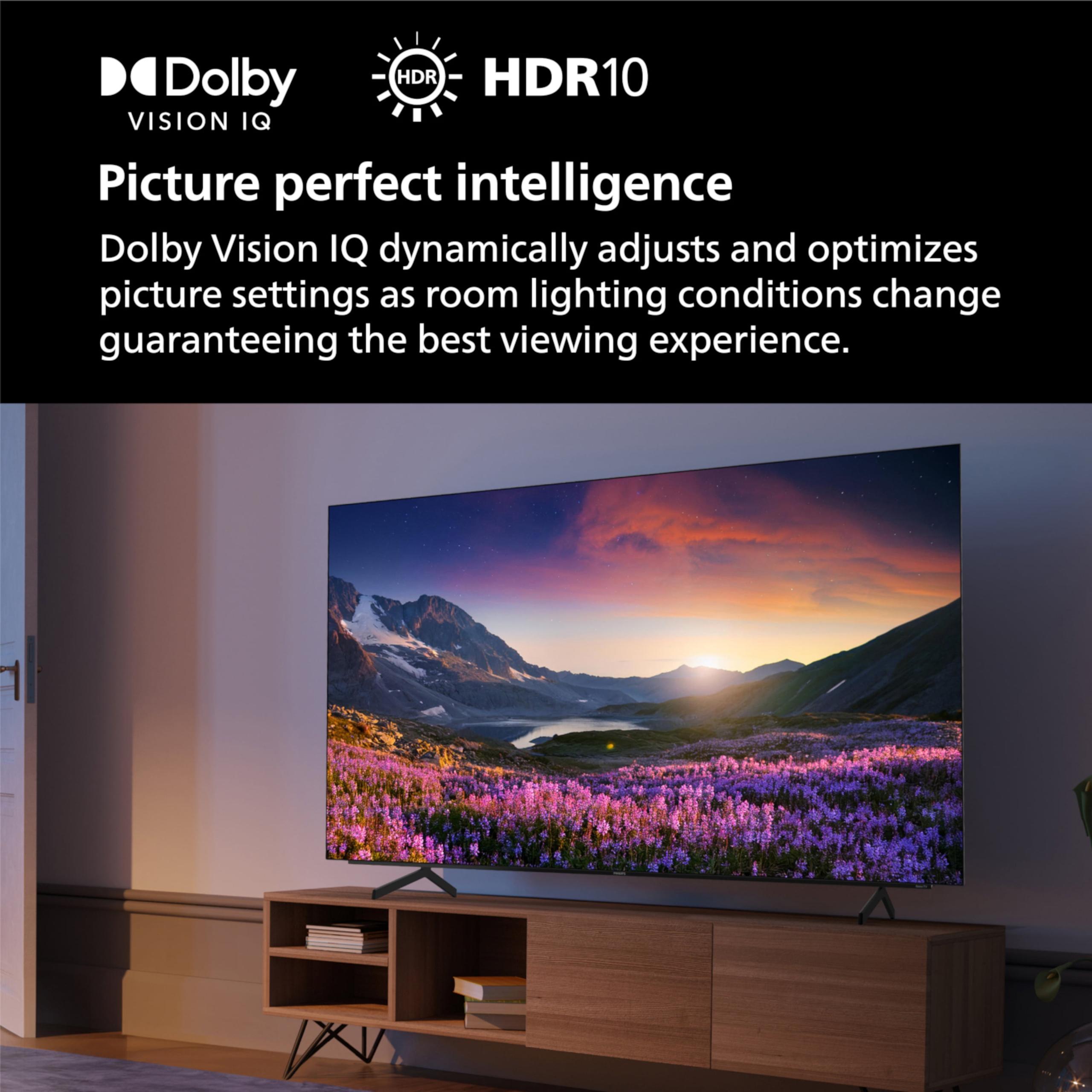
In practical terms, this means the Philips looks spectacular in a dark basement home theater but struggles in a typical living room with windows. HDR (High Dynamic Range) content, which is designed to showcase bright highlights like sunlight reflecting off water or explosions in action movies, appears muted and lacks the intended impact.
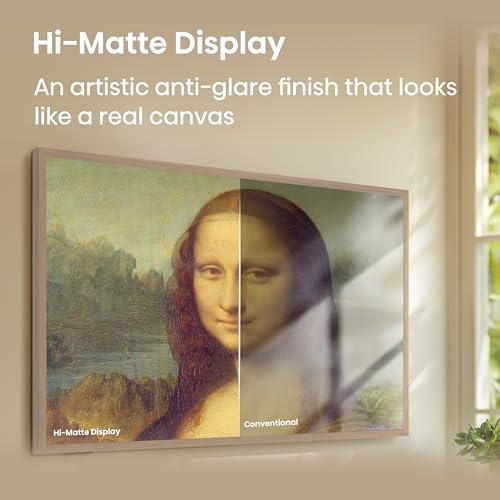
The Hisense CanvasTV addresses this challenge head-on with both higher peak brightness (450 nits) and its innovative Hi-Matte anti-glare coating. This coating reduces reflections to just 5%, meaning even with lamps or windows creating potential glare, the screen remains viewable and colors stay vibrant. This single feature dramatically expands where and how you can use the TV effectively.
Both TVs launched in 2024 with full awareness of the gaming revolution brought by the PlayStation 5, Xbox Series X/S, and anticipation of future consoles. However, they approach gaming performance differently.
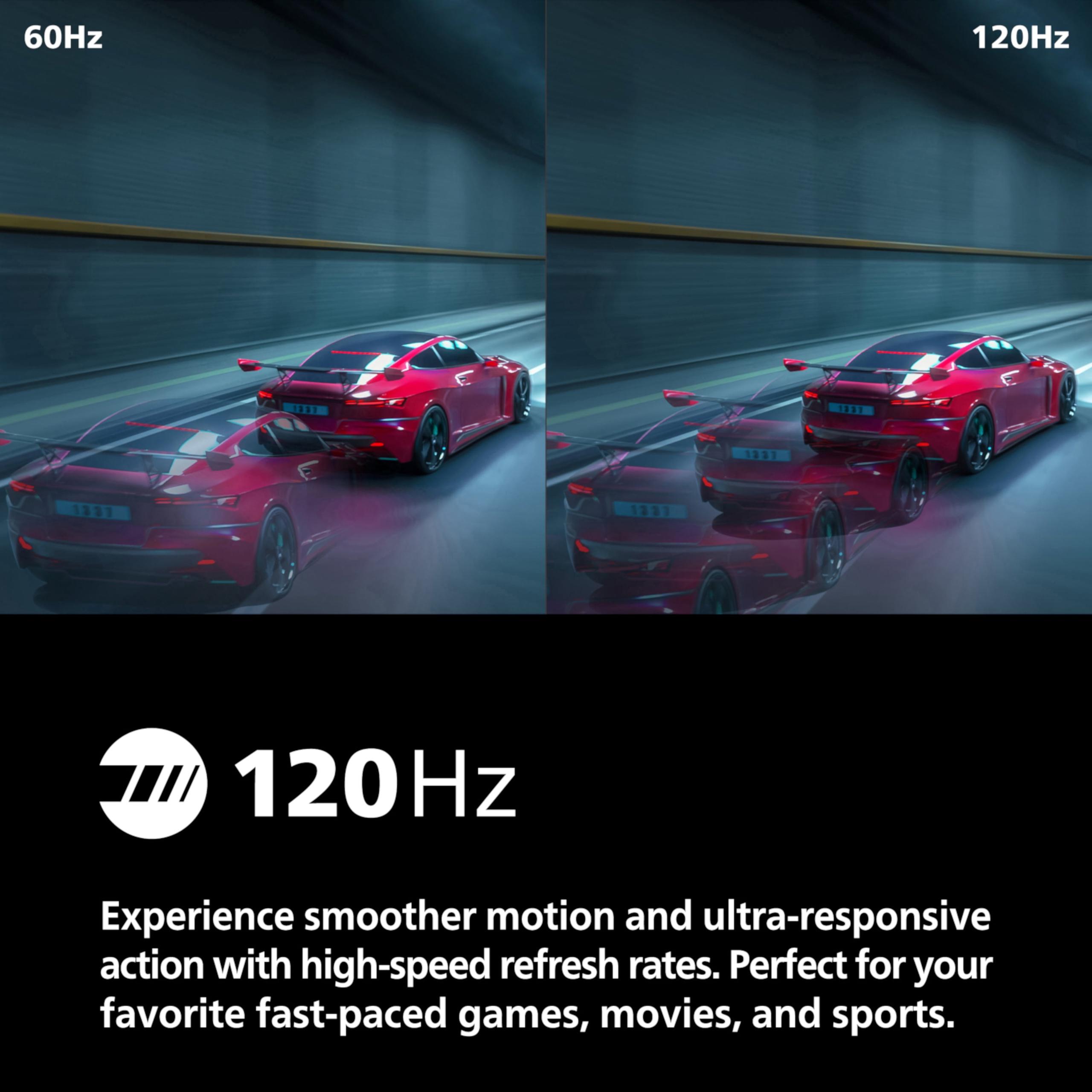
The Philips OLED offers a 120Hz native refresh rate with an incredibly fast response time of less than 0.1 milliseconds. This near-instantaneous pixel response means you won't see motion blur behind fast-moving objects – crucial for competitive gaming or fast-paced action movies.
The Hisense goes further with a 144Hz native refresh rate, supporting gaming up to 4K resolution at 144 frames per second, and even 1080p gaming at 240Hz for esports enthusiasts. While its 4.8ms response time isn't as fast as the Philips, it's still excellent for gaming and imperceptible to most users.
Both TVs include essential modern gaming features like ALLM (Auto Low Latency Mode), which automatically switches to game mode when it detects a console, and VRR (Variable Refresh Rate), which synchronizes the display's refresh rate with your game's frame rate to eliminate screen tearing.
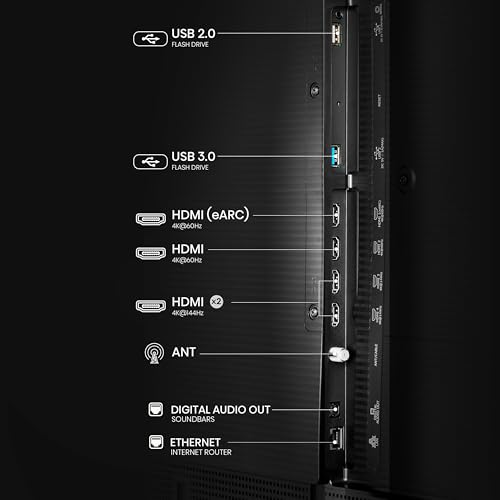
The Hisense adds AMD FreeSync Premium certification and a dedicated Game Bar interface for quick access to gaming settings without diving into complex menus. Both TVs provide two HDMI 2.1 ports capable of handling the full bandwidth needed for next-generation console gaming.
For input lag – the delay between pressing a button and seeing the action on screen – the Hisense measures an excellent 5.4ms, while the Philips achieves similarly low latency, especially at 120Hz operation.
Your TV's smart platform determines how easily you can access Netflix, Disney+, and other streaming services, making this a crucial consideration for daily usability.
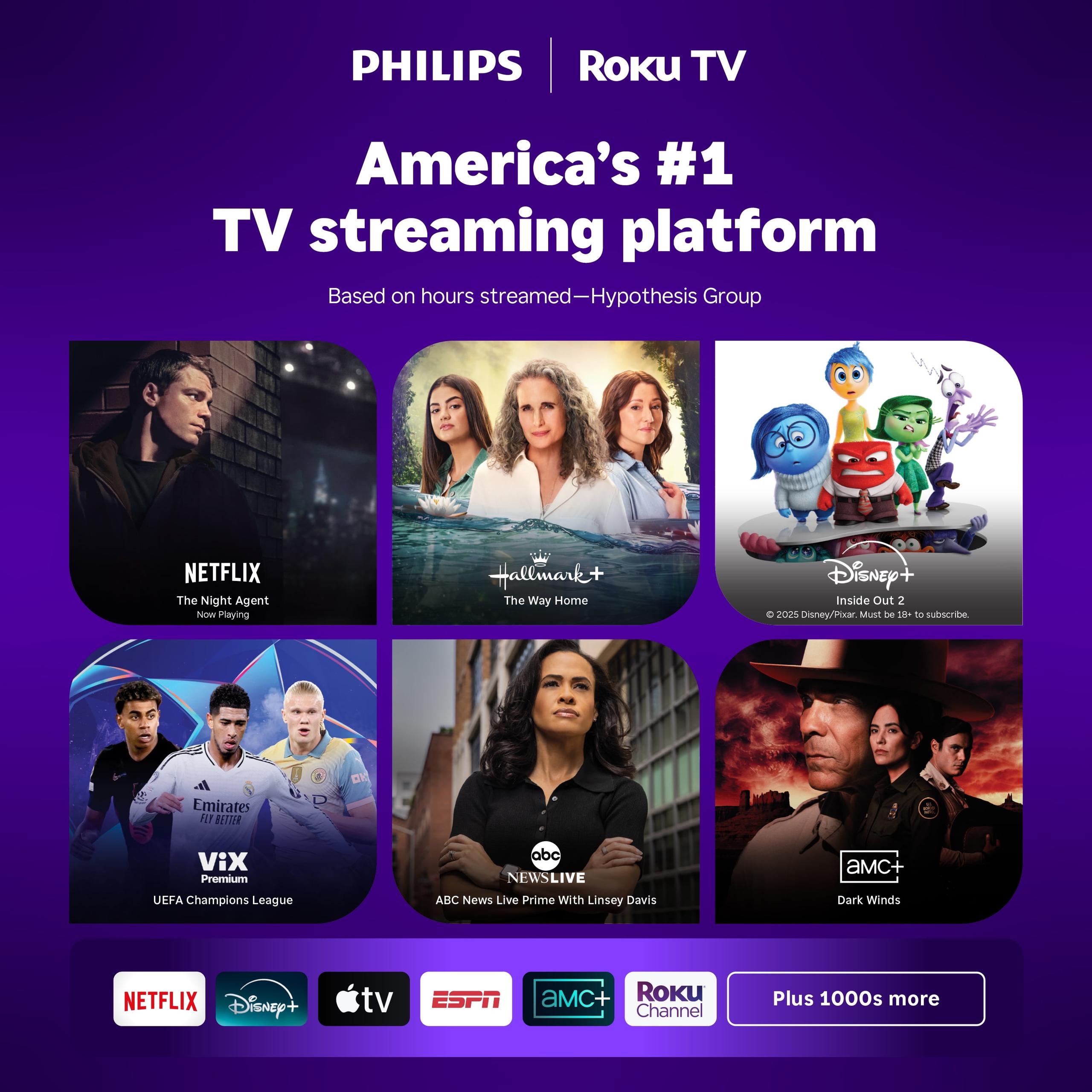
The Philips OLED runs Roku TV, which has earned a reputation for simplicity and reliability. The interface is straightforward, app loading is generally fast, and the platform supports virtually every major streaming service. The included Bluetooth voice remote allows basic voice commands for searching content and controlling playback.
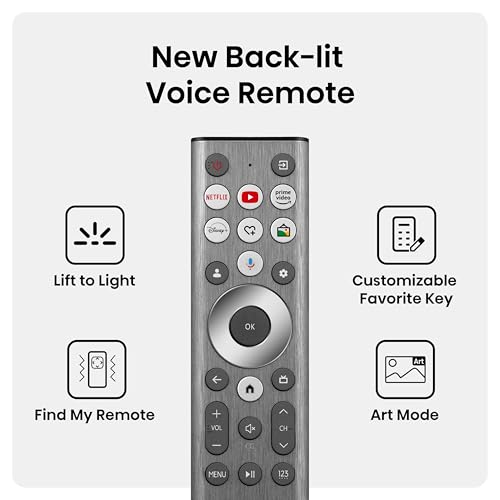
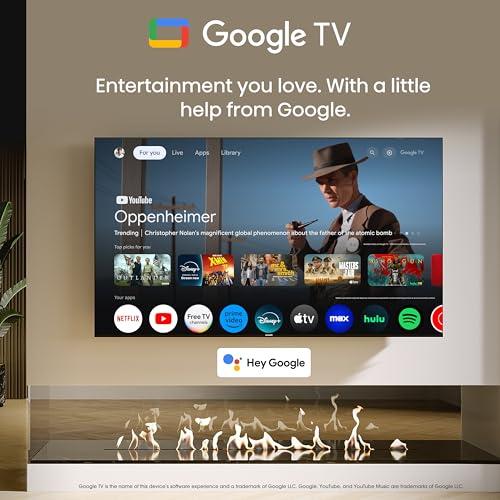
The Hisense CanvasTV uses Google TV, which offers a more modern, personalized interface that learns your viewing habits and suggests content across different apps. It includes built-in Google Assistant and Amazon Alexa support, enabling hands-free voice control and smart home integration. You can ask it to dim your smart lights while starting a movie or check the weather without picking up the remote.
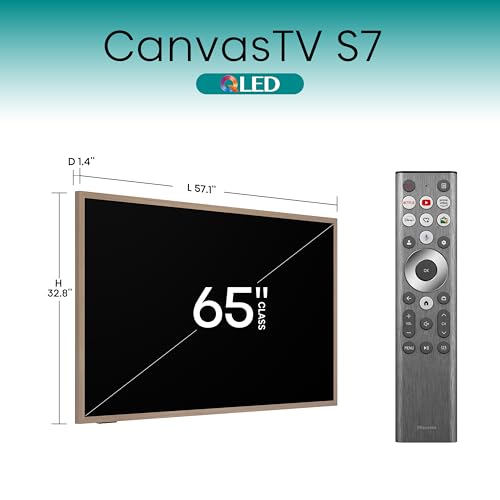
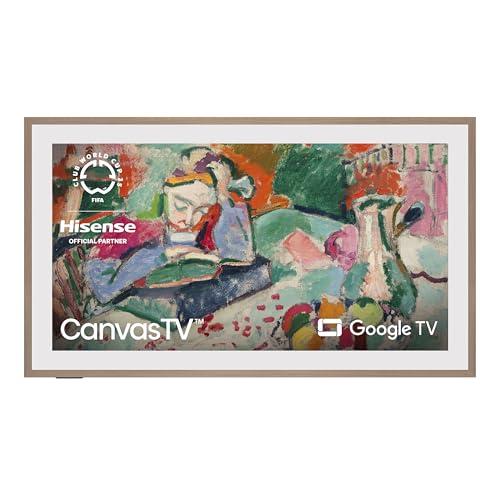
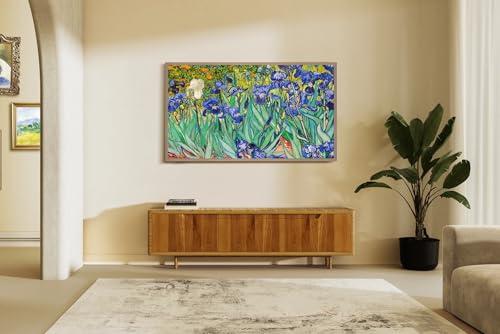
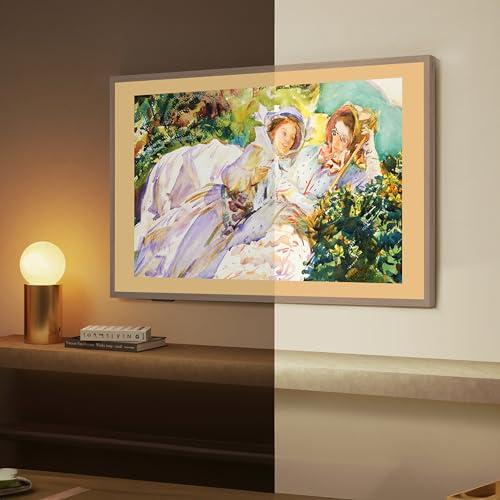
Here's where the Hisense CanvasTV becomes genuinely innovative. When not displaying traditional content, it transforms into a digital art gallery through its Art Mode. This isn't just a screensaver – the Hi-Matte coating gives displayed artwork a texture and depth that mimics real paintings, while the magnetic frame system lets you change the TV's appearance to match your décor.
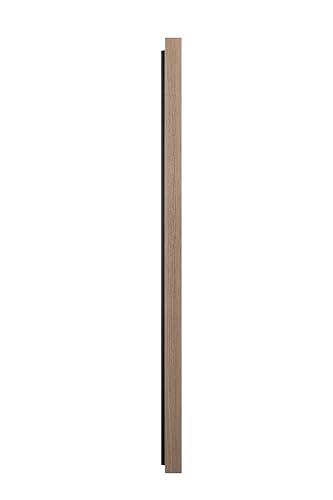
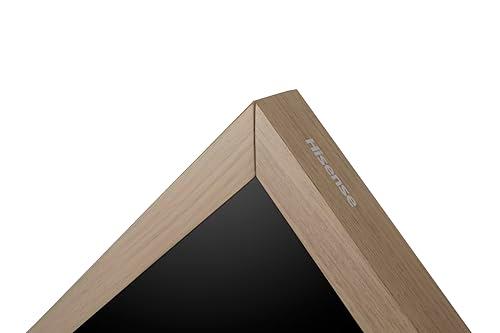
The frames come in teak (standard), white, and walnut options, and they're genuinely easy to swap – no tools required. Combined with the UltraSlim wall mount that positions the TV just 3mm from the wall, the result looks remarkably like a framed piece of art rather than a black rectangle dominating your wall space.
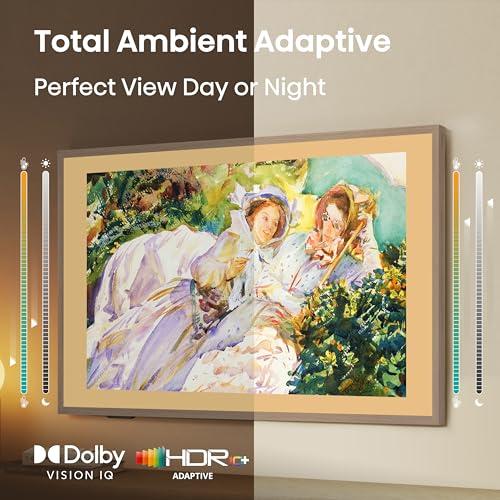
Motion sensors can automatically activate Art Mode when someone enters the room, and light sensors adjust the display brightness to optimize energy consumption. Unlike Samsung's competing Frame TV, the Hisense includes hundreds of artworks without requiring a subscription service.
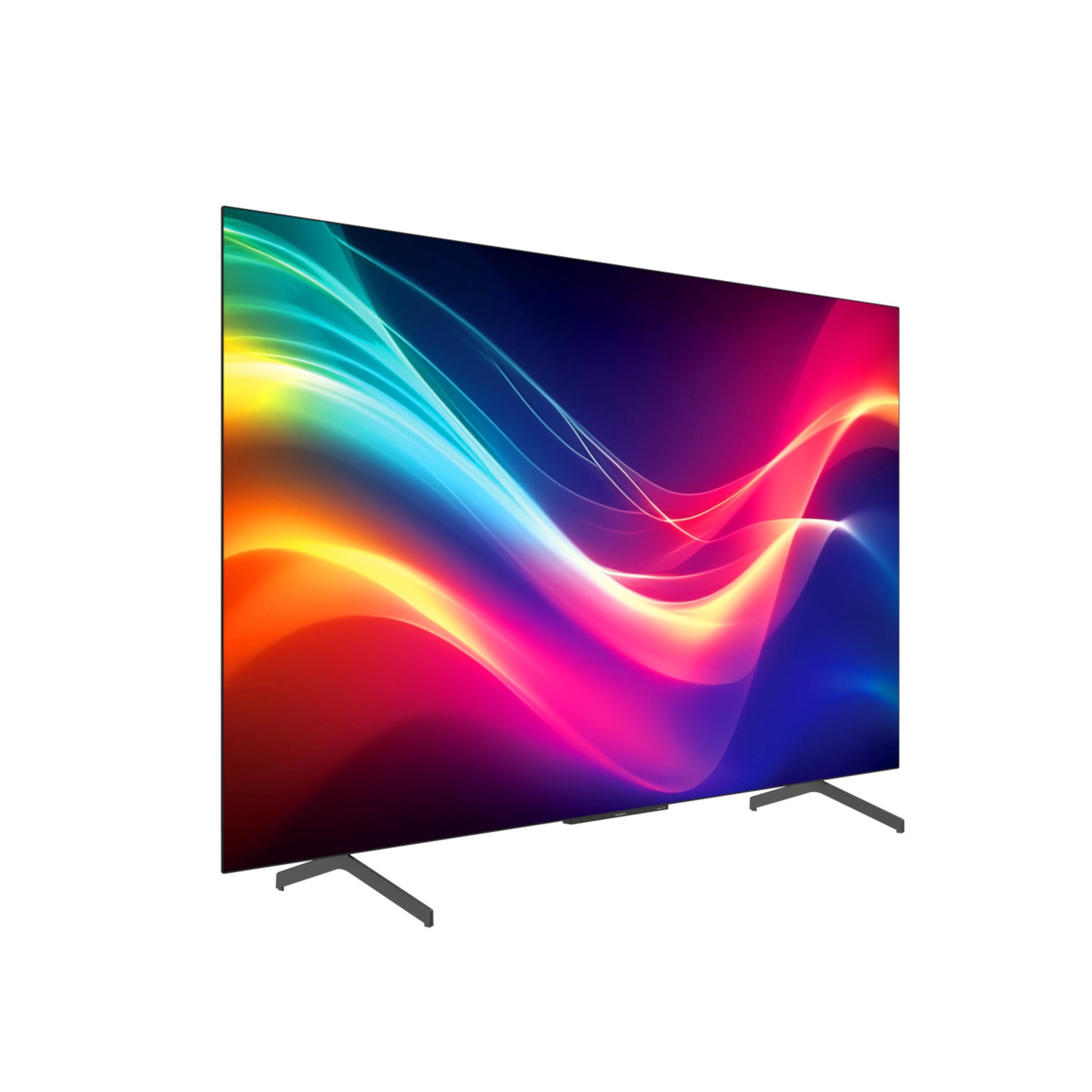
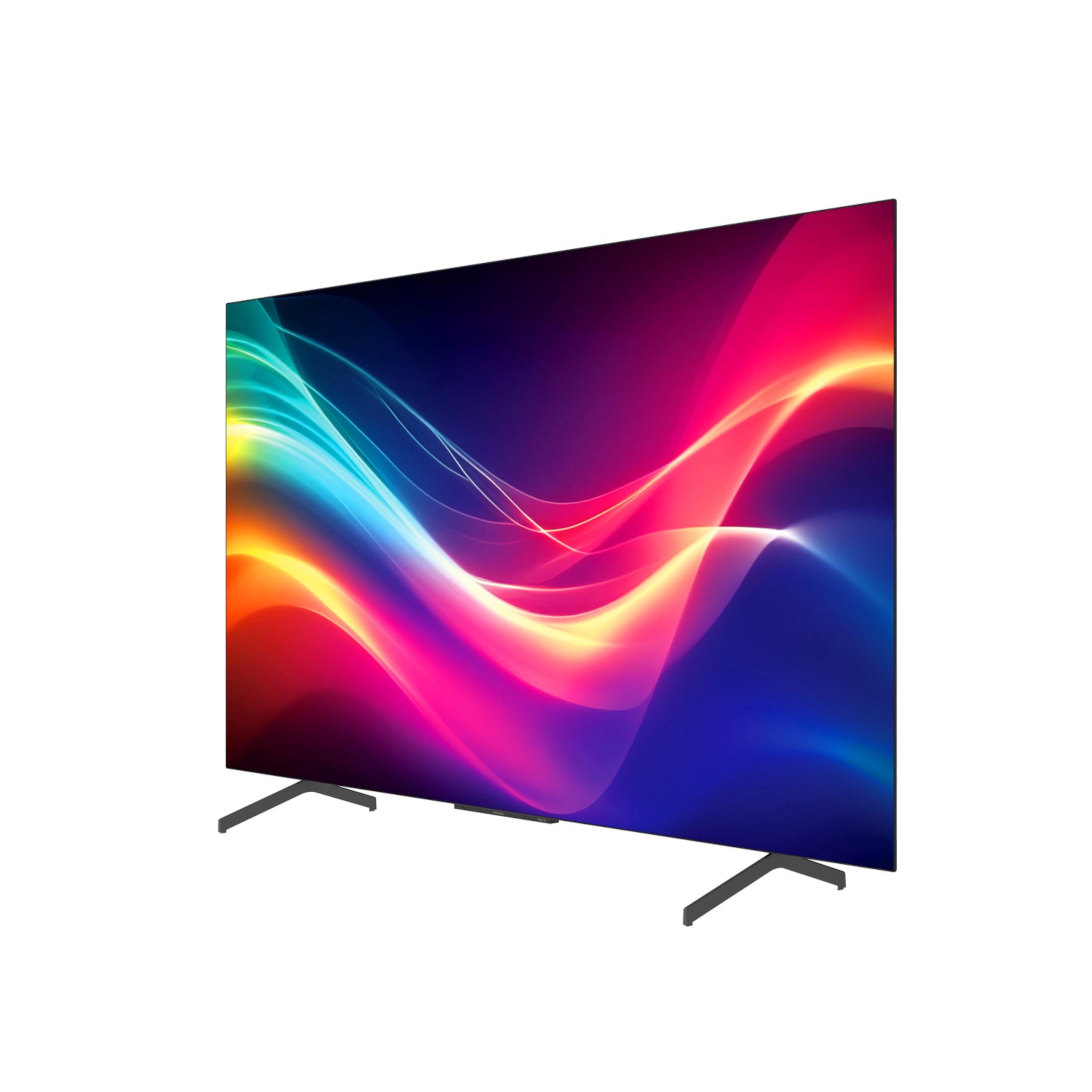
The Philips OLED takes a traditional approach with an elegant 3-sided borderless design that disappears into dark rooms but remains obviously a TV in normal lighting conditions.
Both TVs recognize that many users prefer not to immediately invest in external sound systems, so they include capable built-in audio.
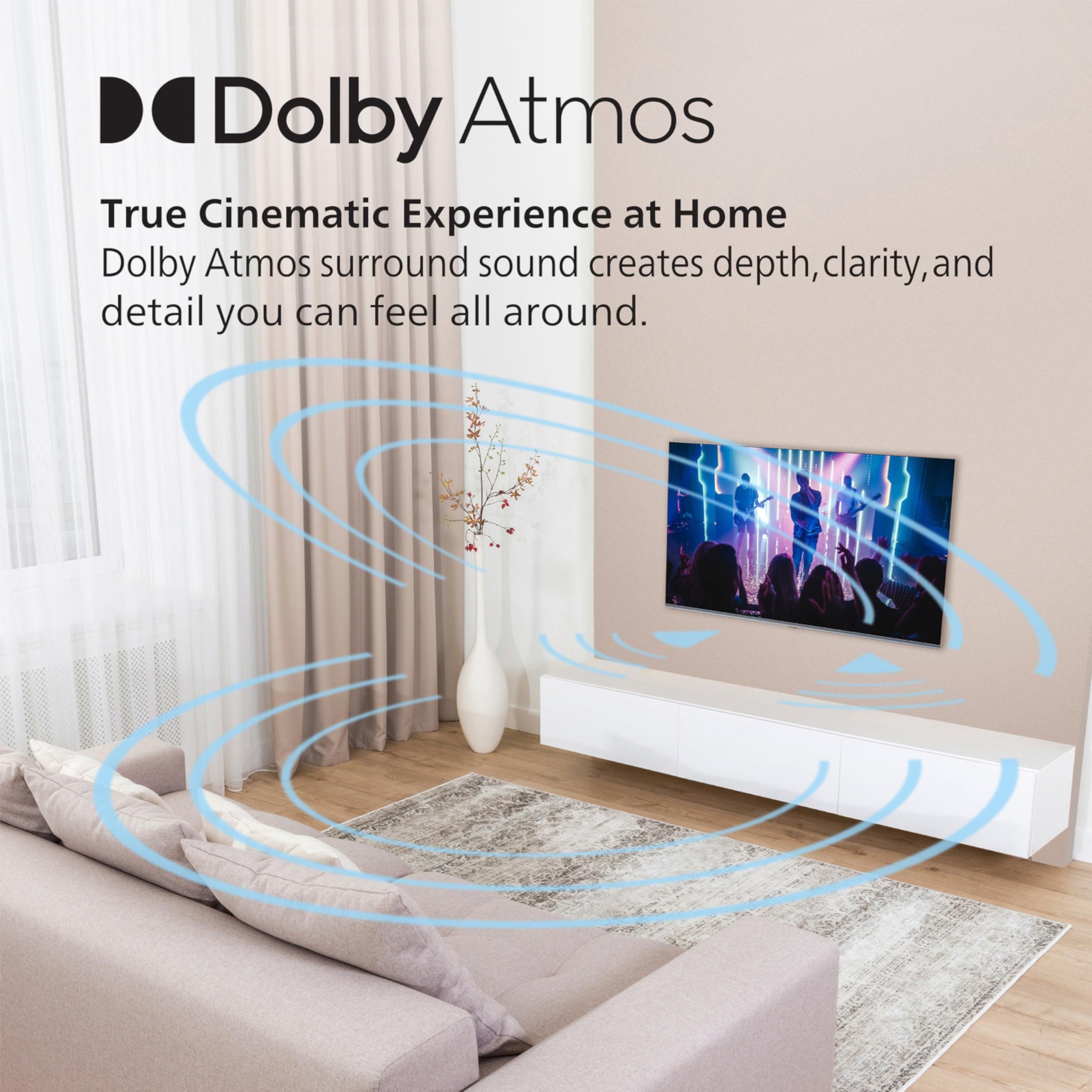
The Philips features a 2.1 speaker system with dedicated subwoofer and support for Dolby Atmos pass-through to external sound systems. The built-in audio provides clear dialogue and surprisingly impactful bass for a flat-panel TV.
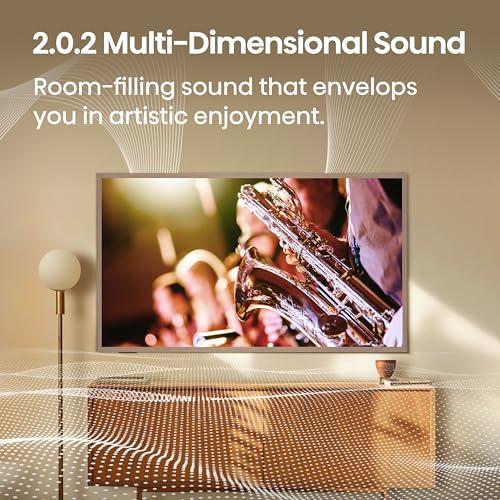
The Hisense goes with a 2.0.2 configuration (two main speakers plus two upward-firing speakers) totaling 36 watts with DTS Virtual:X processing. User reviews consistently describe the sound as "booming" and sufficient for most viewing without requiring a soundbar – unusual praise for built-in TV speakers.
The Philips consumes 240 watts during operation, while the Hisense averages 200 watts – a meaningful difference for long-term energy costs. The Hisense also includes smart energy-saving features like automatic brightness adjustment and motion sensing that powers down the display when the room is empty.
At the time of writing, premium OLED TVs typically command higher prices than QLED alternatives, though the gap has narrowed significantly. The Hisense generally offers stronger value proposition by combining entertainment performance with its unique art functionality, essentially providing two products in one.
For dedicated home theater use in a controlled lighting environment, the Philips OLED delivers reference-quality picture performance. Those perfect black levels create an immersive experience where the screen seems to disappear, drawing you into the content. However, its brightness limitations mean you'll need to control ambient light carefully for optimal performance.
The Hisense offers more flexibility for mixed-use spaces where you might watch movies with some ambient lighting present. While it can't match OLED's perfect blacks, its superior brightness and anti-glare properties maintain picture quality across a wider range of viewing conditions.
Since both TVs launched in 2024, they incorporate the latest display technologies and smart platform updates. The Philips benefits from years of OLED refinement, though brightness remains a fundamental limitation of current OLED technology. The Hisense represents newer thinking about TV integration with modern homes, addressing practical use challenges through innovative engineering.
Choose the Philips 65OLED974/F7 if you primarily watch in dark environments, value absolute picture quality over versatility, prefer the simplicity of Roku TV, and don't need your TV to serve decorative purposes. It excels as a traditional premium TV for serious movie watching and gaming in controlled environments.
Choose the Hisense 65" S7N CanvasTV if you want a TV that doubles as room décor, watch in varied lighting conditions, value the latest gaming features like 144Hz refresh rates, prefer Google TV's modern interface, or simply want better overall versatility for a typical living room environment.
Based on our research and analysis of expert reviews and user feedback, the Hisense CanvasTV offers better value and versatility for most buyers. Its innovative approach to solving real-world TV placement and aesthetic integration challenges, combined with strong performance across all content types, makes it the more practical choice for typical home environments. The Philips OLED serves a more specific audience who can accommodate its brightness limitations to benefit from its superior contrast performance.
The decision ultimately depends on your priorities: perfect picture quality in ideal conditions versus excellent picture quality with superior versatility and innovative design integration.
| Philips 65OLED974/F7 | Hisense 65" S7N CanvasTV |
|---|---|
| Display Technology - Determines contrast, brightness, and overall picture quality | |
| OLED with pixel-level dimming for perfect blacks | QLED with Quantum Dot color and Hi-Matte anti-glare coating |
| Peak Brightness - Critical for HDR impact and bright room viewing | |
| Poor brightness performance, best for dark rooms only | 450 nits with anti-glare coating, excellent for any lighting |
| Native Refresh Rate - Important for gaming and smooth motion | |
| 120Hz native panel | 144Hz native (supports up to 240Hz at 1080p) |
| Response Time - Affects motion blur and gaming performance | |
| <0.1ms (virtually instant pixel response) | 4.8ms (still excellent for gaming) |
| Gaming Features - Modern console compatibility and performance | |
| HDMI 2.1, VRR, ALLM, AMD FreeSync Premium | HDMI 2.1, VRR, ALLM, AMD FreeSync Premium, dedicated Game Bar |
| Smart Platform - Daily usability and app ecosystem | |
| Roku TV (simple, reliable interface) | Google TV (modern interface with Google Assistant and Alexa) |
| Art Mode/Design Features - Aesthetic integration when not watching | |
| Traditional TV design, 3-sided borderless display | Art Mode with customizable magnetic frames, UltraSlim wall mount |
| Audio System - Built-in sound quality | |
| Dolby 2.1 with subwoofer, Dolby Atmos pass-through | 2.0.2 surround (36W) with upward-firing speakers, DTS Virtual:X |
| Power Consumption - Long-term energy costs | |
| 240W operation, <0.5W standby | 200W average operation, smart energy-saving sensors |
| Best Use Case - Where each TV excels | |
| Dark room home theater with perfect black levels | Versatile living room TV that doubles as wall art |
| Primary Advantage - Key selling point | |
| Infinite contrast ratio and perfect blacks | Anti-glare performance and dual-purpose art functionality |
| Main Limitation - Potential deal-breaker | |
| Poor brightness limits bright room use and HDR impact | Cannot achieve true blacks like OLED technology |
The Hisense 65" S7N CanvasTV is significantly better for bright rooms due to its Hi-Matte anti-glare coating that reduces reflections to just 5%. The Philips 65OLED974/F7 has poor peak brightness and struggles with glare, making it unsuitable for well-lit spaces despite its superior contrast performance.
The Philips 65OLED974/F7 uses OLED technology where individual pixels turn completely off to create perfect black levels and infinite contrast. The Hisense S7N CanvasTV uses QLED with quantum dot color enhancement and a backlight system, offering brighter images but without true blacks.
Both TVs support modern gaming features, but the Hisense CanvasTV has advantages with its 144Hz refresh rate (vs 120Hz), dedicated Game Bar interface, and excellent 5.4ms input lag. The Philips OLED offers faster response time (<0.1ms) but lower maximum refresh rate for competitive gaming.
Only the Hisense 65" S7N CanvasTV features dedicated Art Mode with customizable magnetic frames and motion sensors. It transforms into a digital art gallery with hundreds of included artworks. The Philips 65OLED974/F7 is a traditional TV design without art display capabilities.
The Hisense CanvasTV generally offers superior audio with its 2.0.2 surround system including upward-firing speakers and DTS Virtual:X, which users describe as "booming" sound. The Philips OLED has a 2.1 system with subwoofer and Dolby Atmos pass-through, providing clear dialogue and good bass.
The Philips 65OLED974/F7 runs Roku TV, known for its simple interface and reliable performance. The Hisense S7N CanvasTV uses Google TV with built-in Google Assistant and Alexa support, offering more advanced voice control and smart home integration features.
For dark, controlled home theater environments, the Philips 65OLED974/F7 excels with perfect black levels and infinite contrast that create an immersive cinematic experience. However, the Hisense CanvasTV offers more flexibility if you occasionally watch with ambient lighting present.
The Philips OLED covers 98.5% DCI-P3 color gamut with excellent accuracy but suffers from poor HDR brightness that limits impact. The Hisense CanvasTV offers vibrant quantum dot colors with better HDR brightness performance, supporting more HDR formats including HDR10+ Adaptive.
The Hisense 65" S7N CanvasTV is more energy-efficient, consuming 200W average operation versus 240W for the Philips 65OLED974/F7. The Hisense also includes smart energy-saving features like motion sensors and automatic brightness adjustment.
The Hisense CanvasTV includes an UltraSlim wall mount that positions the TV just 3mm from the wall for a painting-like appearance. The Philips OLED supports standard VESA wall mounting (400x300mm) but won't achieve the same flush, artwork-style installation.
The Hisense 65" S7N CanvasTV generally provides better overall value by combining strong entertainment performance with unique art functionality, essentially offering two products in one. The Philips 65OLED974/F7 serves a more specific audience who prioritize perfect contrast over versatility.
The Philips OLED's main limitation is poor brightness that restricts use to dark rooms and diminishes HDR impact. The Hisense CanvasTV's primary drawback is that it cannot achieve the perfect black levels and infinite contrast of OLED technology, though this matters less in typical bright room viewing.
We've done our best to create useful and informative comparisons to help you decide what product to buy. Our research uses advanced automated methods to create this comparison and perfection is not possible - please contact us for corrections or questions. These are the sites we've researched in the creation of this article: rtings.com - versus.com - versus.com - rtings.com - samsclub.com - versus.com - youtube.com - usa.philips.com - bestbuy.com - usa.philips.com - consumerreports.org - usa.philips.com - documents.philips.com - tvoutlet.ca - displayspecifications.com - business.walmart.com - displayspecifications.com - ecoustics.com - walmart.com - bestbuy.com - hisense.sg - tomsguide.com - content.syndigo.com - rtings.com - hisense-usa.com - youtube.com - bestbuy.com - youtube.com - displayspecifications.com - displayspecifications.com - manuals.plus - displayspecifications.com - bestbuy.com - hisense-canada.com - manuals.plus - bargainoutletandmore.com - bestbuy.com - device.report

Privacy Policy
Terms and Conditions - Affiliate Policy
Home Security
© Copyright 2008-2026.
11816 Inwood Rd #1211, Dallas, TX 75244