

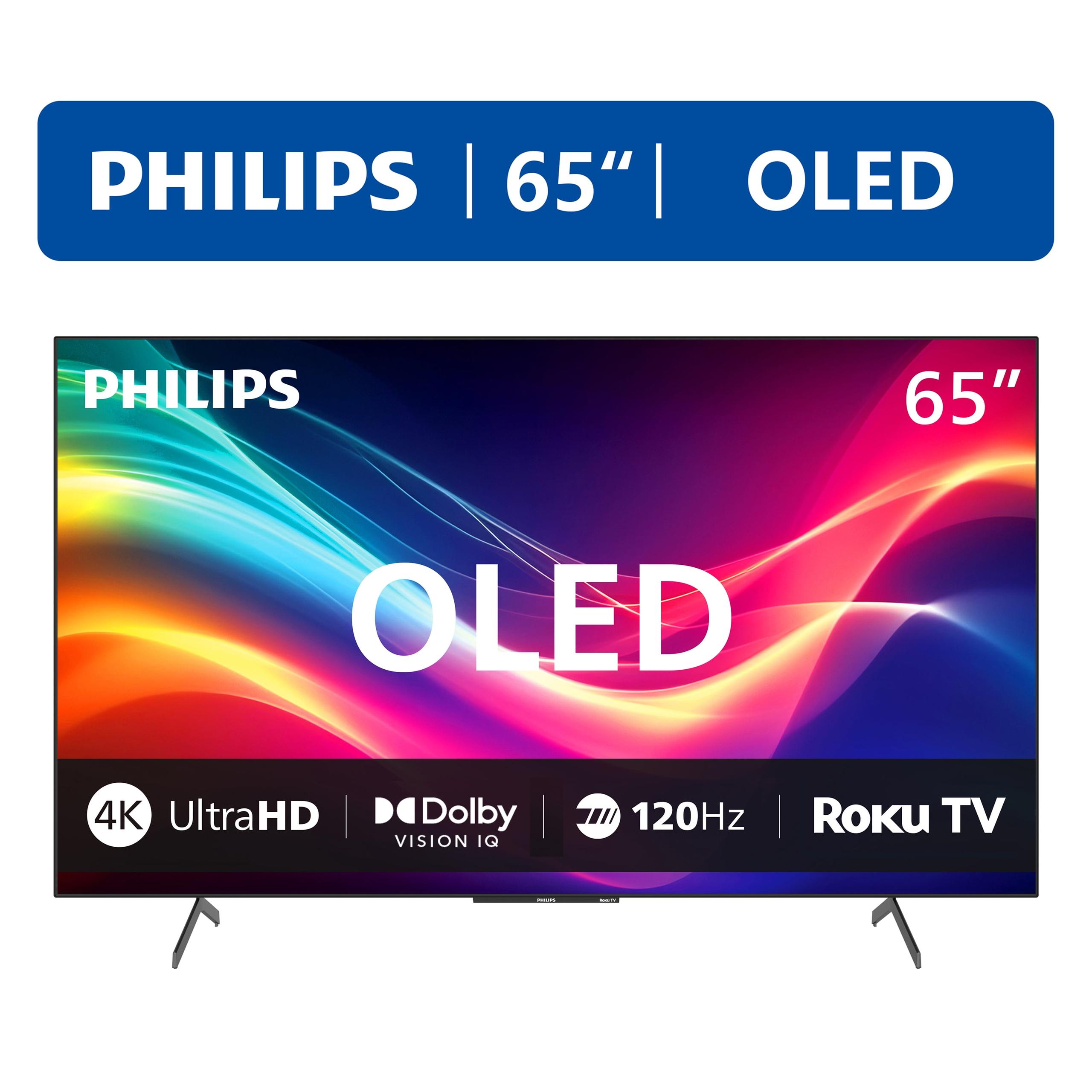
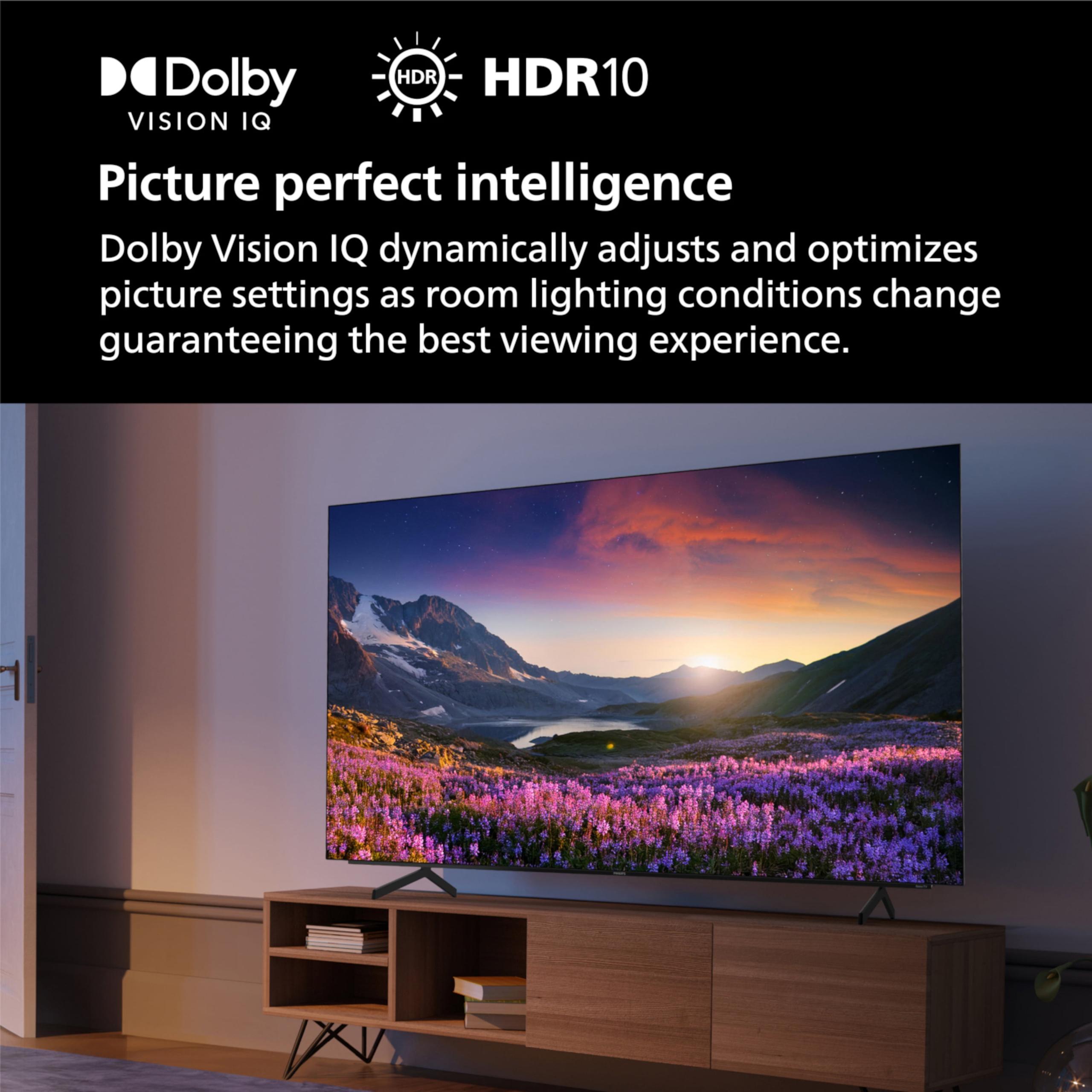
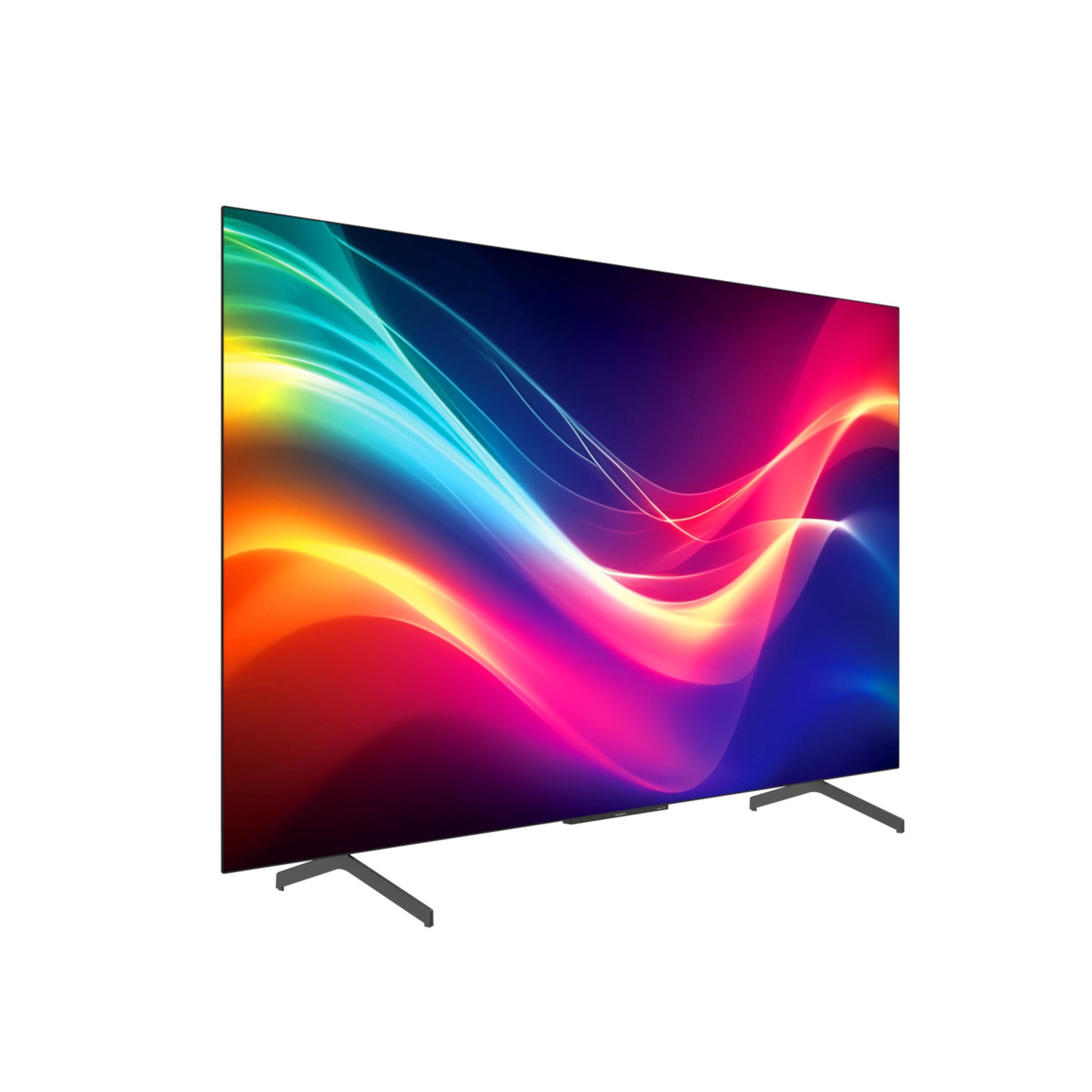
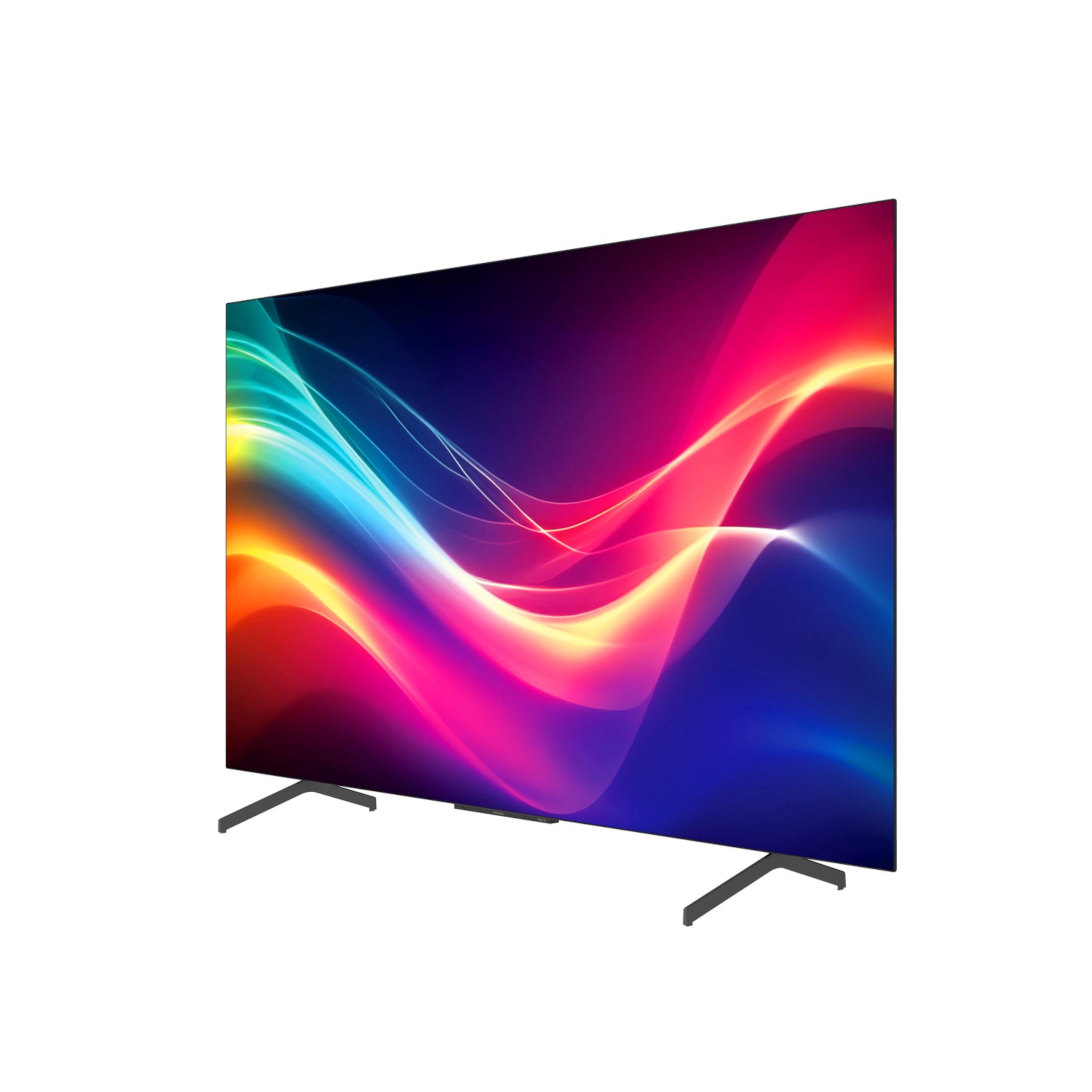
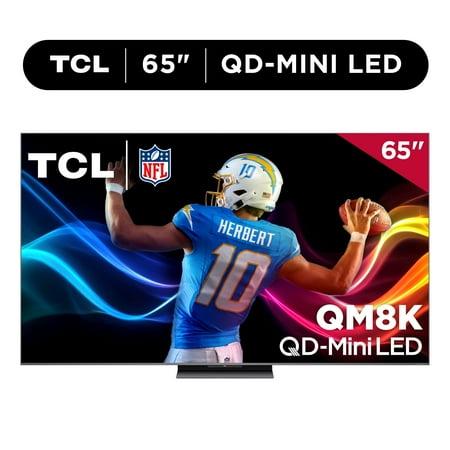
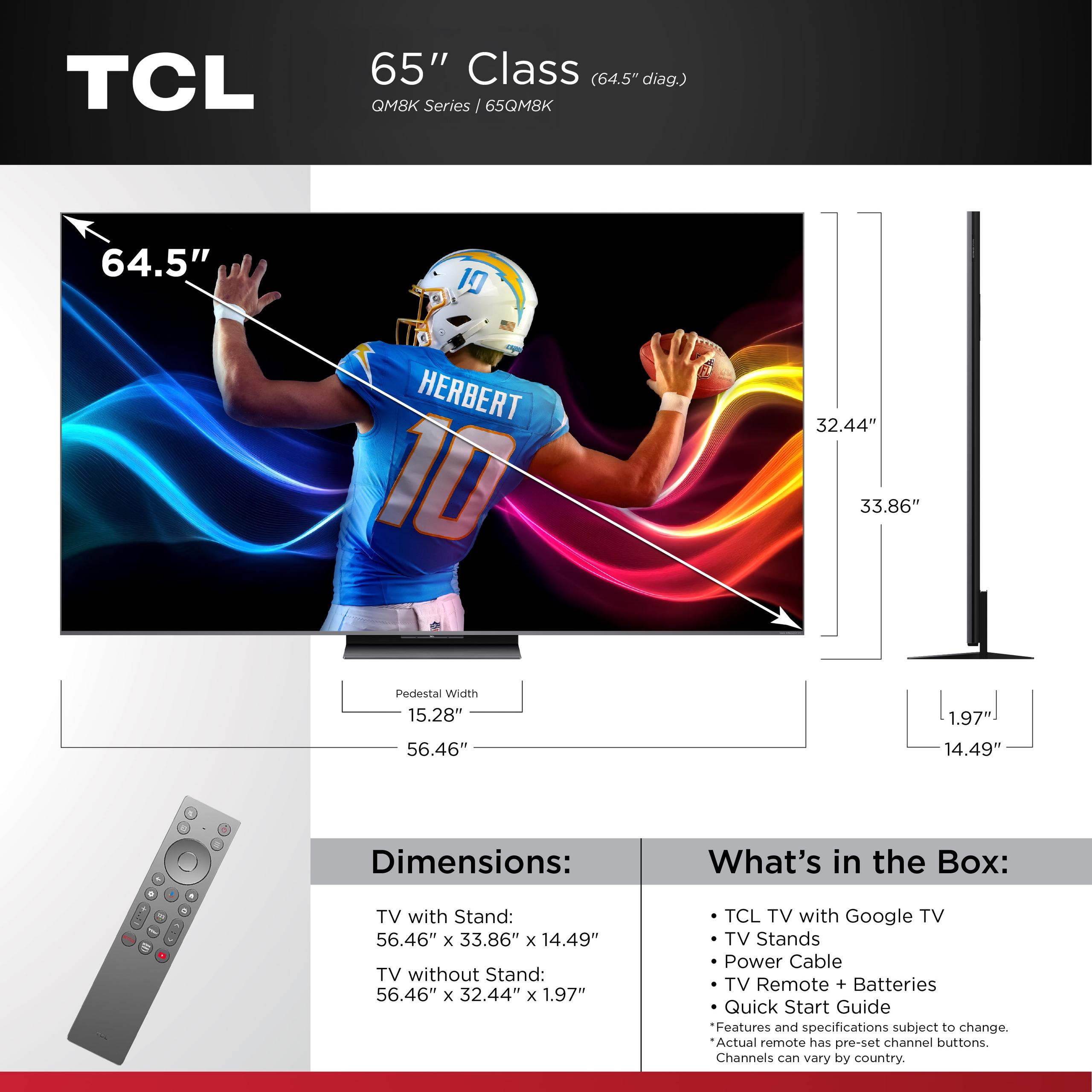


Choosing a premium 65-inch TV in 2024 means picking sides in one of the most interesting technology battles happening today. On one corner, we have the Philips 65OLED974/F7, representing the pinnacle of OLED technology with its perfect blacks and infinite contrast. In the other corner sits the TCL QM8K, showcasing how far Mini LED technology has advanced with its jaw-dropping brightness levels.
Both TVs arrived in 2024 during a fascinating period for display technology. OLED panels have matured significantly since their consumer debut, becoming brighter and more durable while maintaining their signature perfect blacks. Meanwhile, Mini LED technology has evolved from early models plagued by blooming issues to sophisticated systems with thousands of dimming zones that can rival OLED contrast in many scenarios.
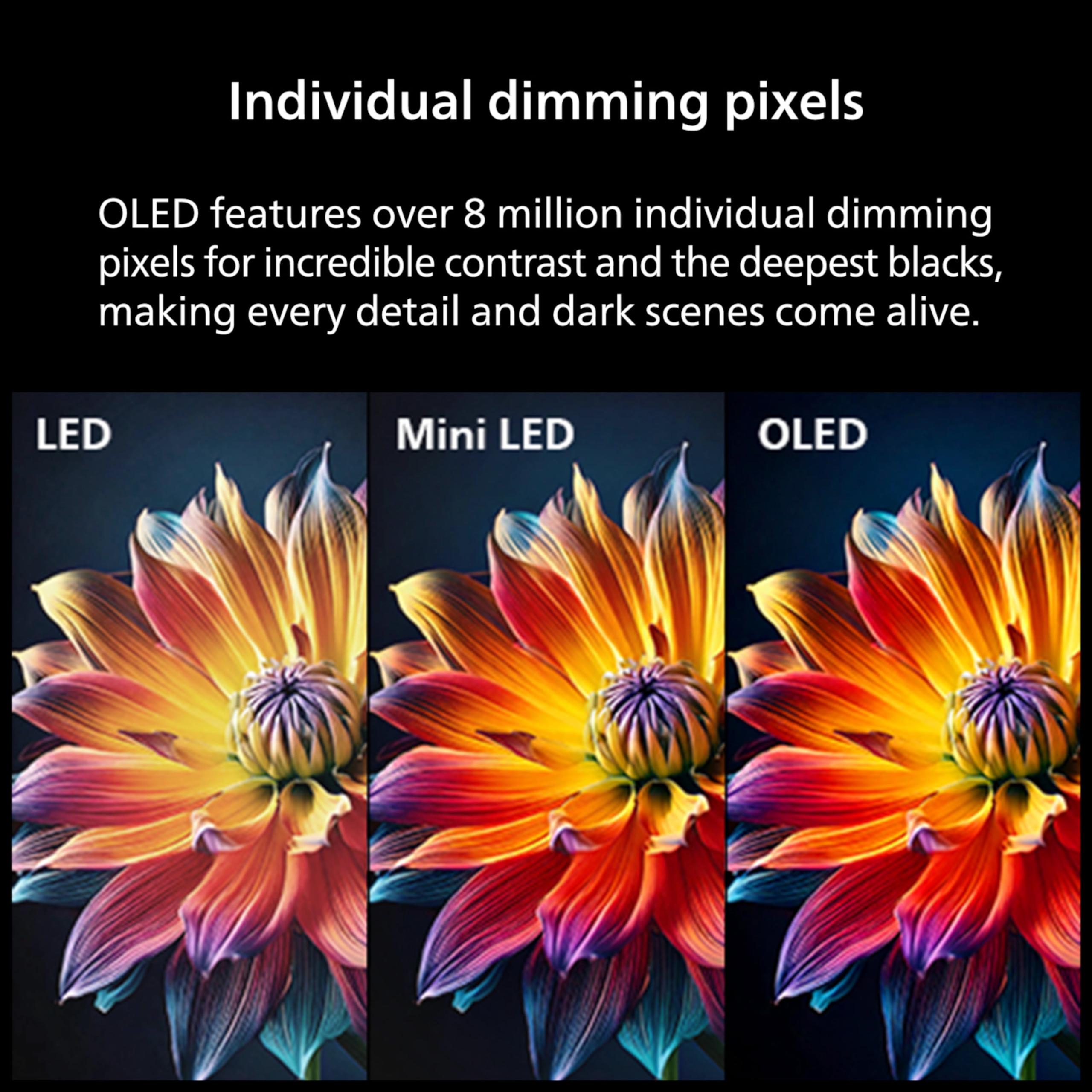
The fundamental difference between these displays shapes everything about how they perform. OLED stands for Organic Light-Emitting Diode, which means each pixel produces its own light. When you need black, those pixels simply turn off completely - no backlight bleeding through, no compromises. It's like having 8 million tiny light bulbs that can switch on and off individually.
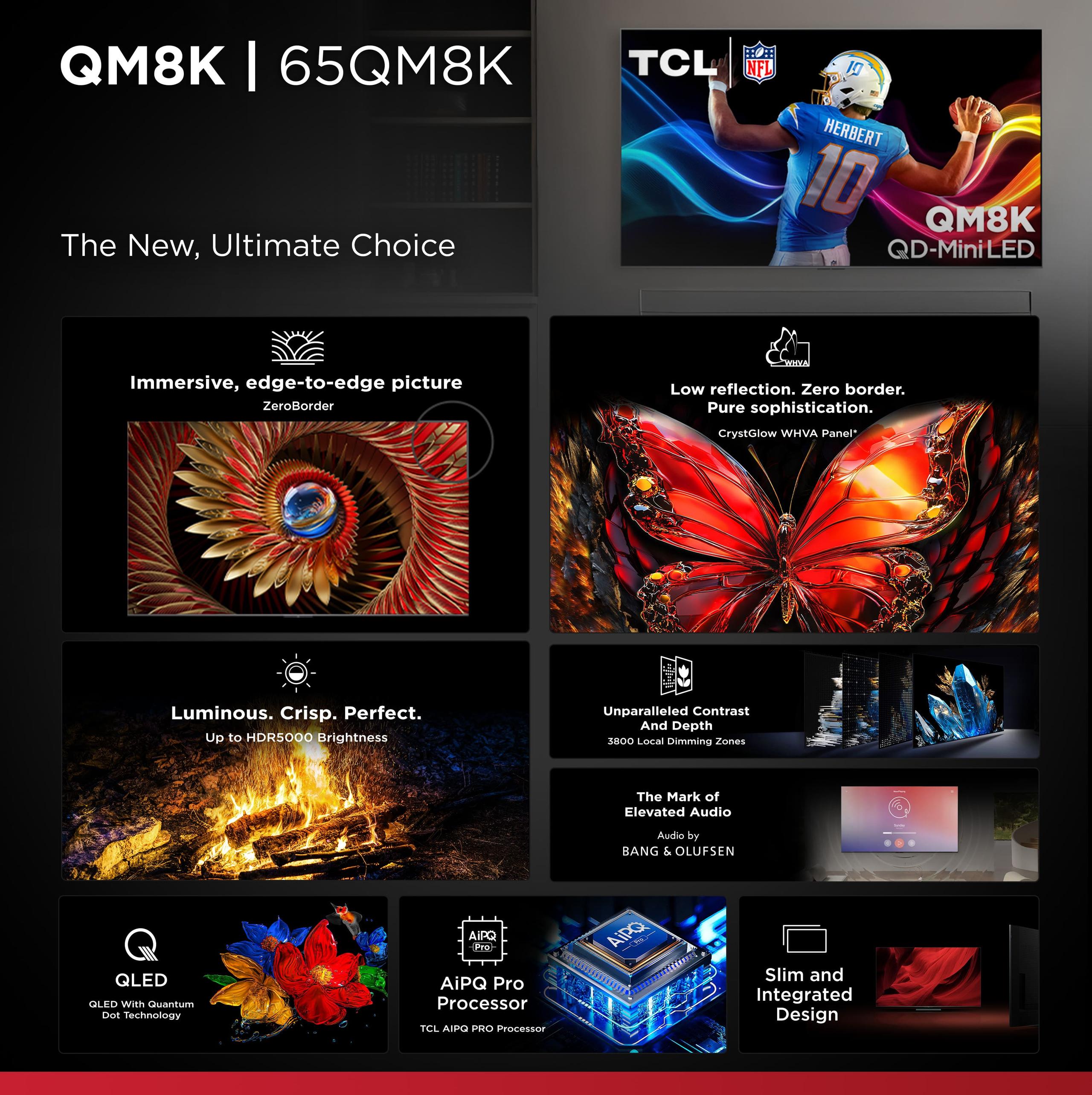
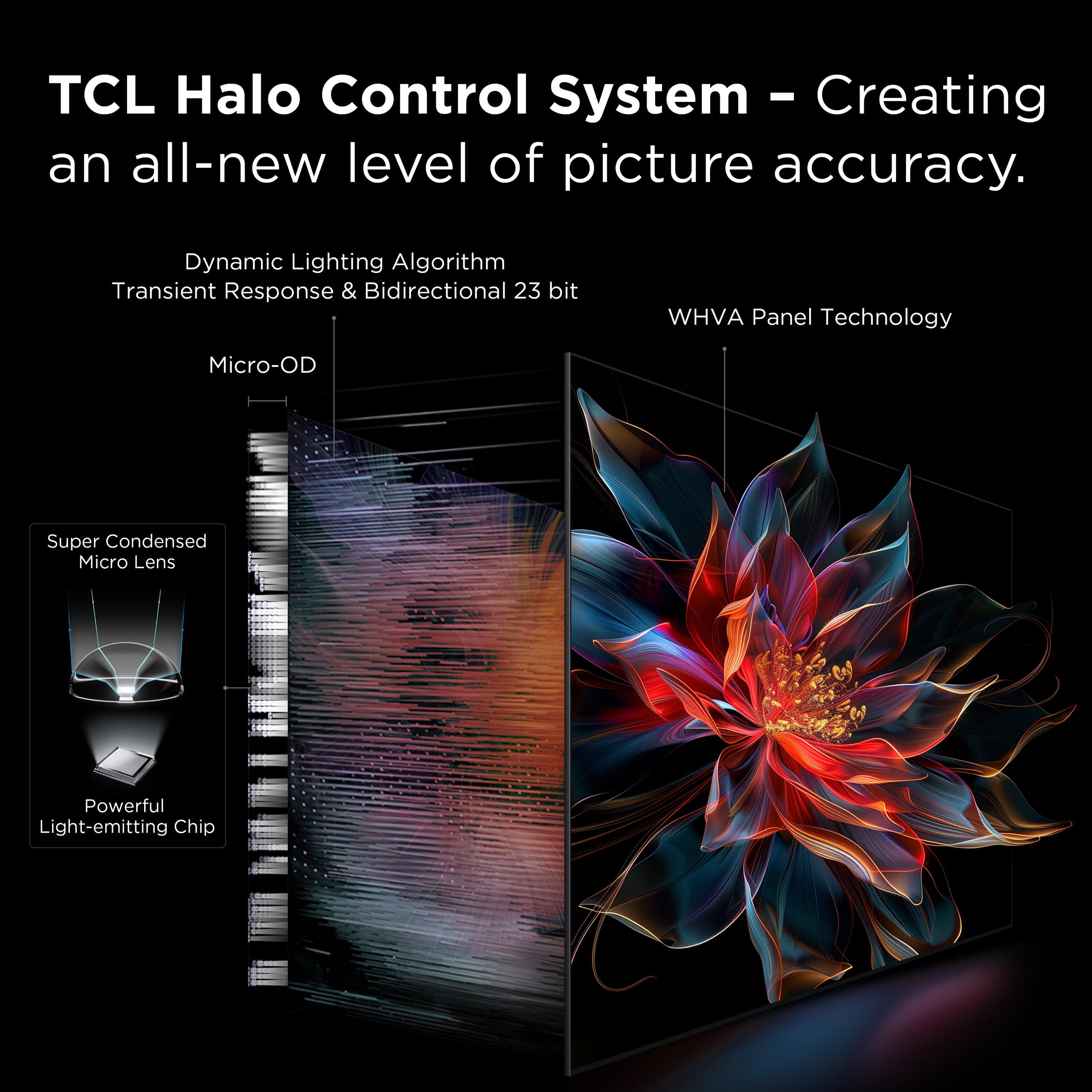
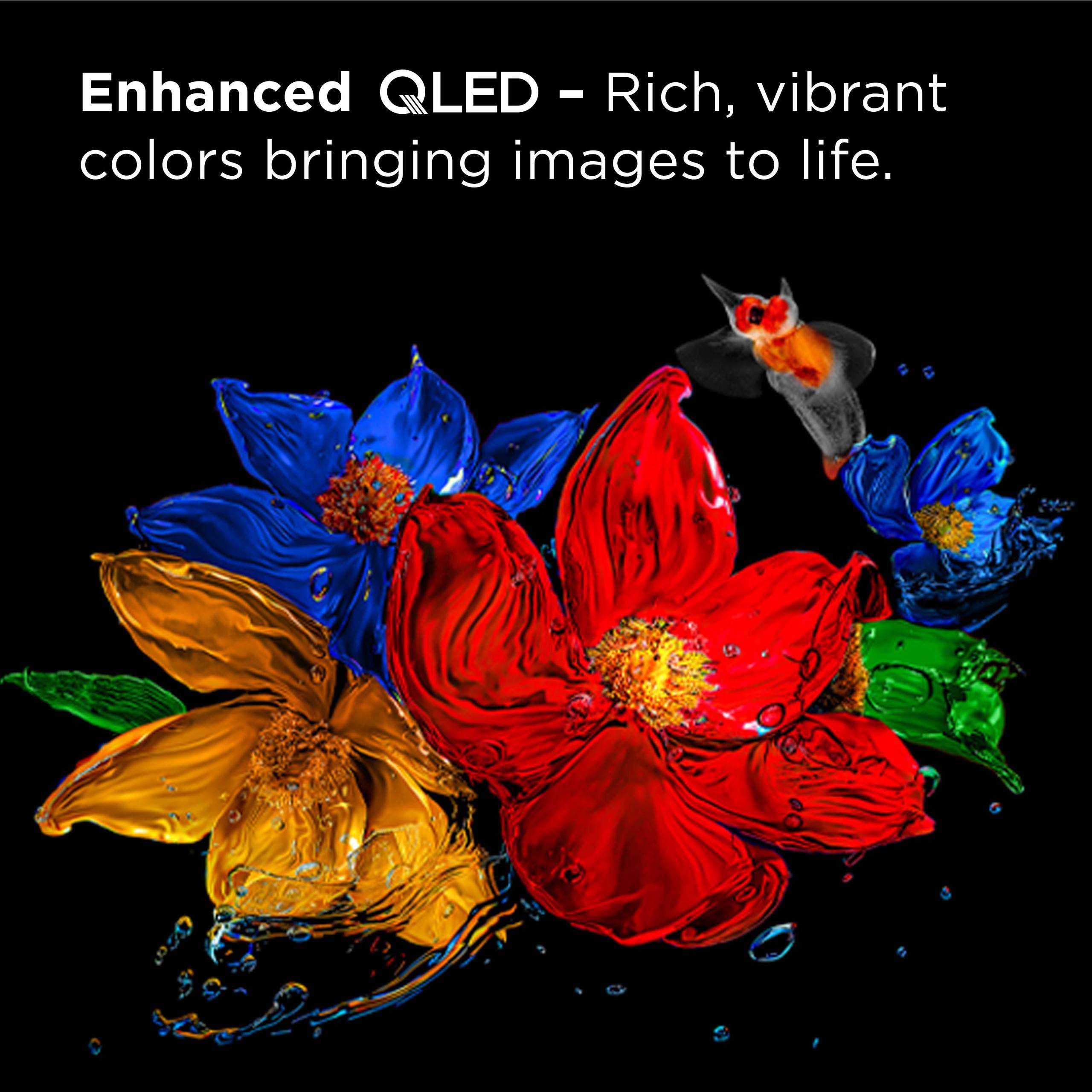
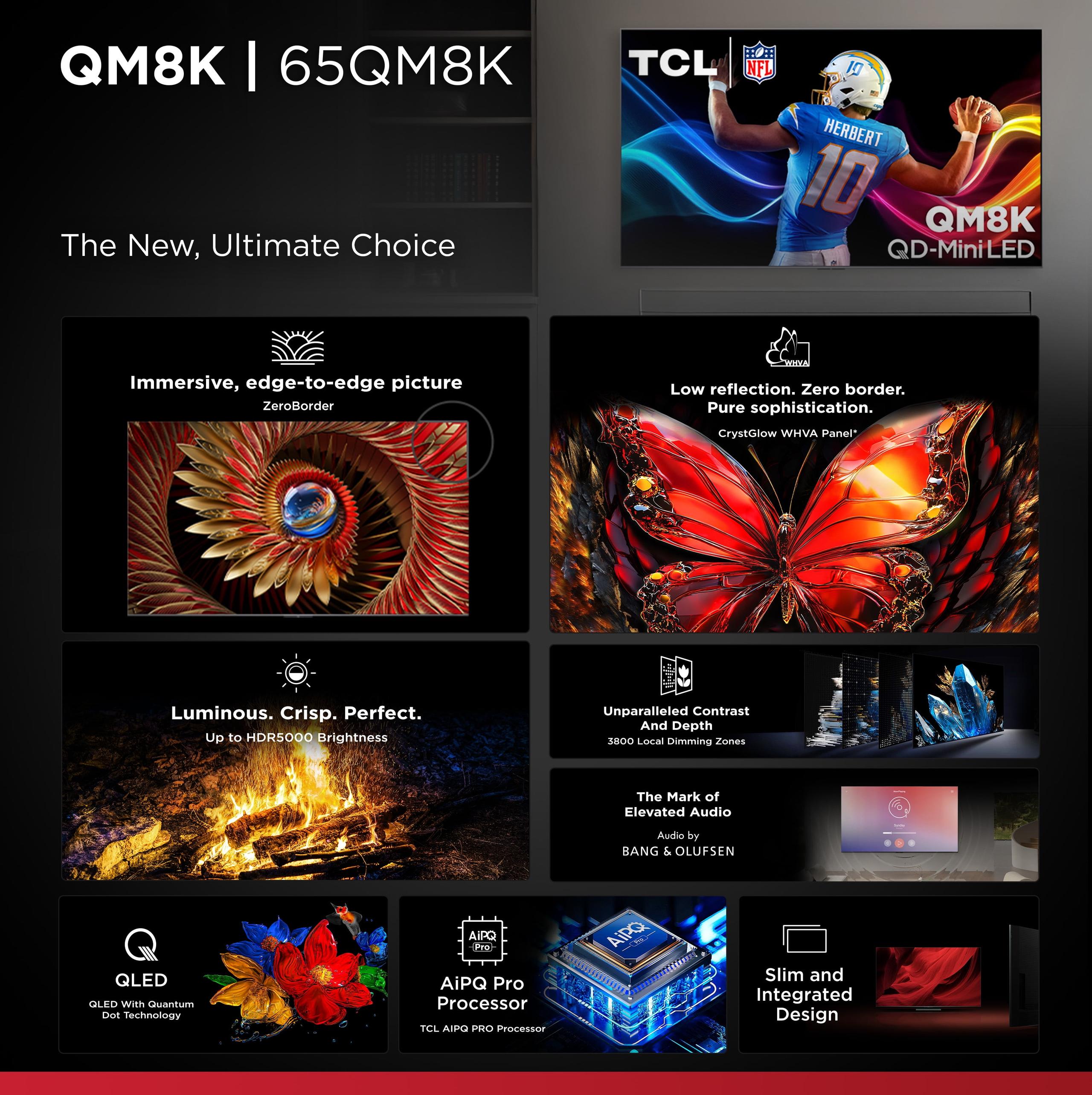
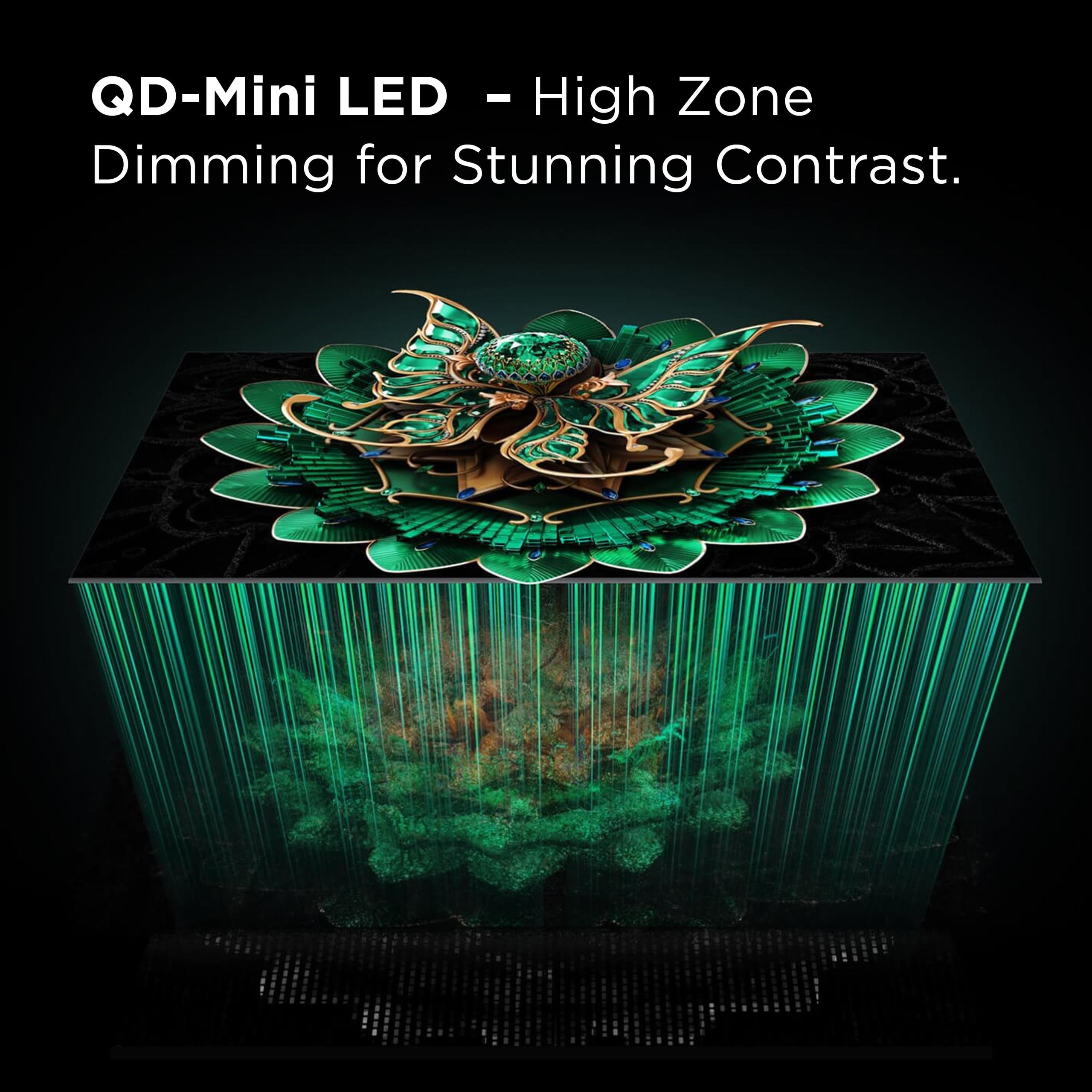
The TCL QM8K takes a completely different approach with QD-Mini LED technology. QD stands for Quantum Dot - tiny crystals that convert blue LED light into incredibly pure red and green colors, creating a wider color spectrum than traditional LCD panels. Mini LED refers to the backlight system using thousands of tiny LEDs instead of the strips found in regular TVs. The QM8K packs around 3,800 individual dimming zones, each containing multiple Mini LEDs that can brighten or dim independently.
Think of it this way: OLED is like a field of fireflies that can each decide whether to glow or stay dark, while Mini LED is like a sophisticated stage lighting system with thousands of spotlights working together to create the scene.
Here's where things get really interesting, and frankly, where most people make their decision without realizing it. The Philips 65OLED974/F7 peaks at around 500 nits in typical viewing scenarios - bright enough for a darkened room but struggling against even moderate ambient light. The TCL QM8K reaches a staggering 5,000 nits peak brightness, with sustained brightness levels that can maintain over 3,600 nits across larger portions of the screen.
To put this in perspective, a bright sunny day outside measures about 100,000 nits, while indoor lighting typically ranges from 50-500 nits. HDR content is mastered expecting displays capable of 1,000-4,000 nits, which means the TCL can actually reproduce the filmmaker's intent, while the Philips has to compress those bright highlights significantly.
This brightness difference fundamentally changes how these TVs work in real homes. The Philips OLED absolutely demands a dark or dimly lit room to shine. Those perfect blacks that make space scenes look infinite? They turn gray and washed out the moment you have windows without blackout curtains or bright overhead lights.
The TCL QM8K, on the other hand, fights through ambient light like a champion. Its anti-reflective coating combined with that massive brightness reserves means it actually looks better in a bright living room than most TVs do in moderate lighting.
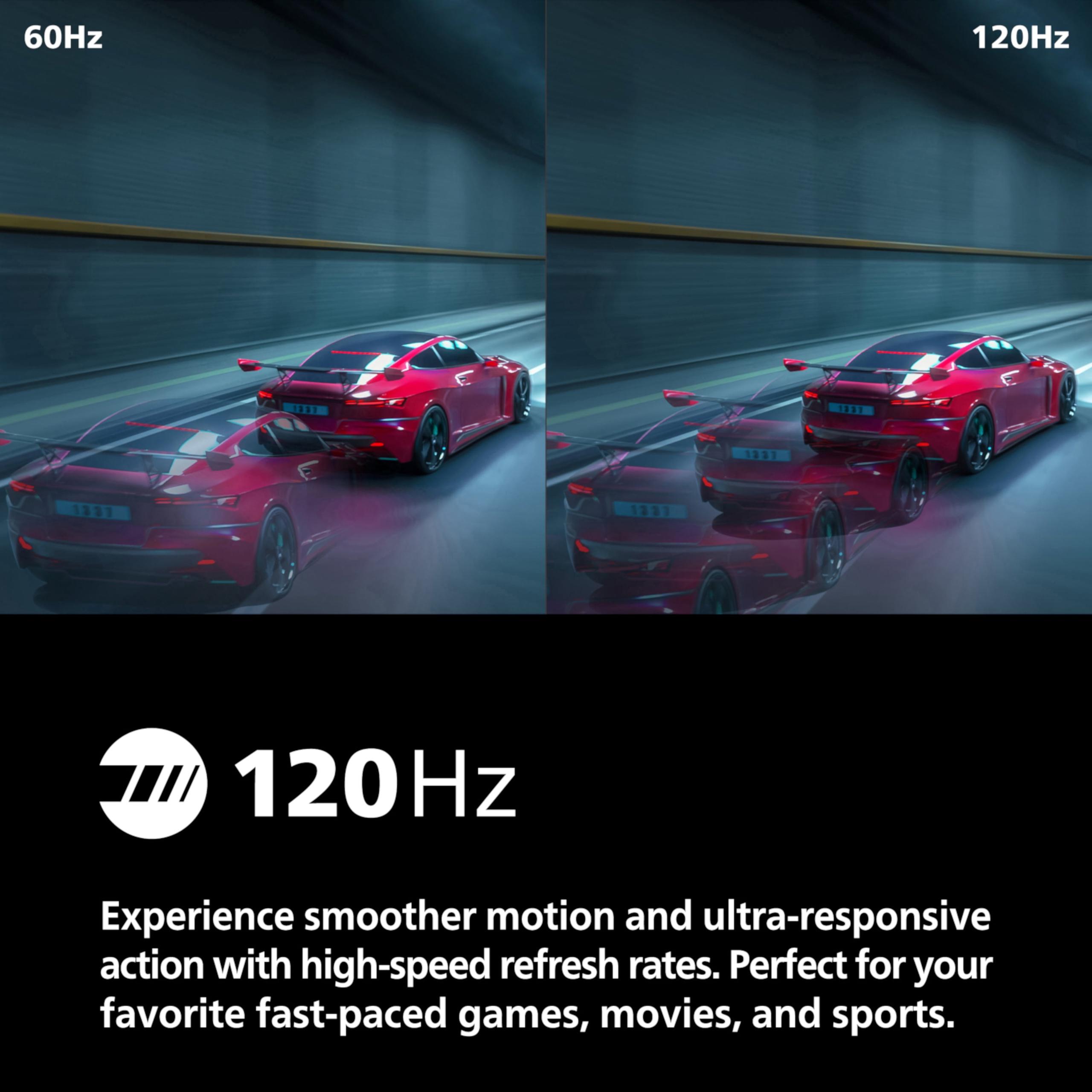
Both TVs excel at gaming but in different ways that matter to different types of gamers. The Philips 65OLED974/F7 offers what's essentially instantaneous pixel response - under 0.1 milliseconds. When you're playing fast-paced games like first-person shooters or racing games, this translates to zero motion blur. Every frame is crystal clear, even during the most chaotic action sequences.
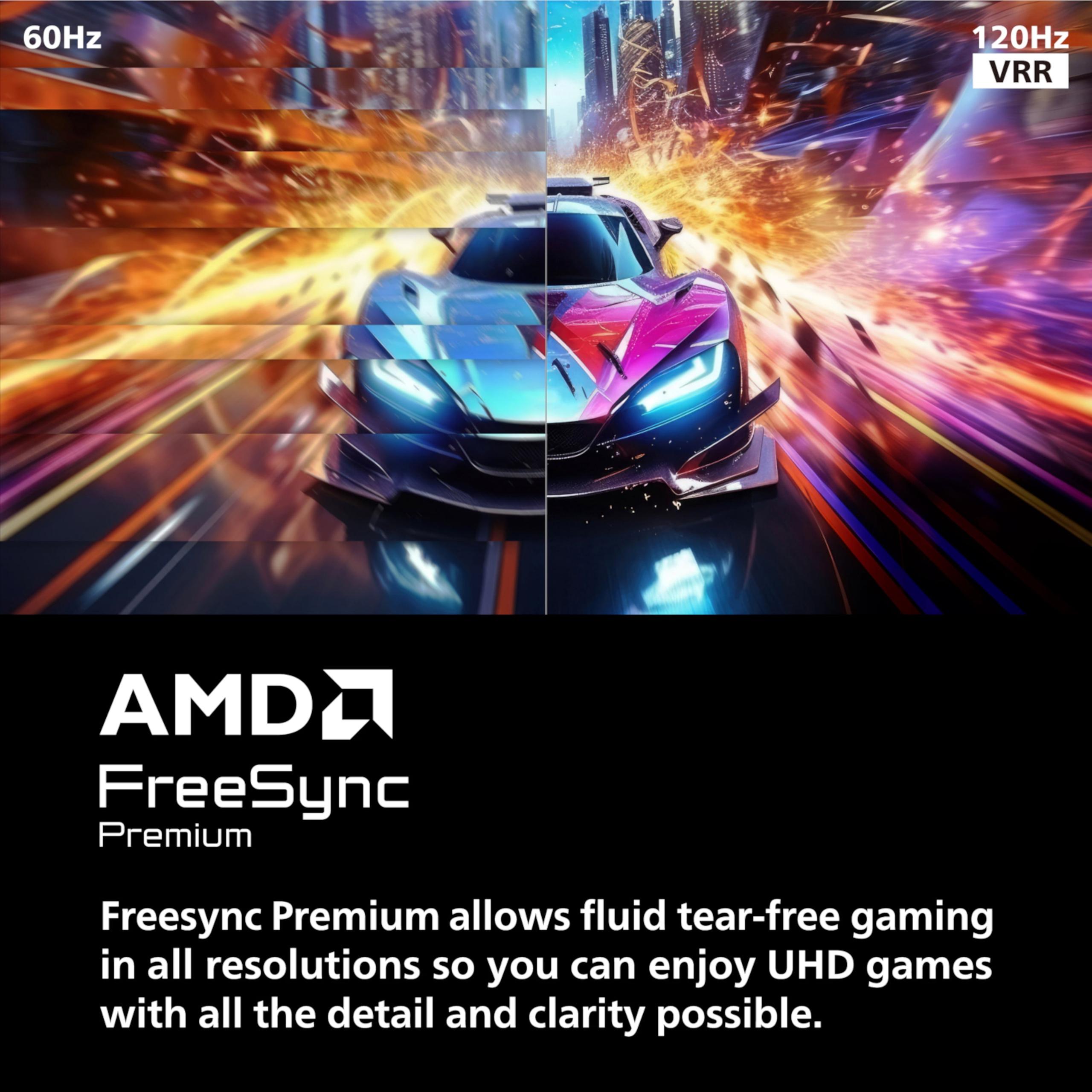
The OLED also supports 4K gaming at 120Hz with Variable Refresh Rate (VRR) and Auto Low Latency Mode (ALLM). VRR synchronizes the TV's refresh rate with your console's frame rate, eliminating screen tearing and stuttering. ALLM automatically switches the TV to its lowest latency mode when it detects game content.
The TCL QM8K goes even further with refresh rates, supporting up to 144Hz and VRR up to an impressive 288Hz through its Game Accelerator feature. For PC gamers with high-end graphics cards, this means smoother gameplay at higher frame rates than the Philips can handle. However, the TCL's response time, while still excellent, isn't quite as instantaneous as OLED technology.
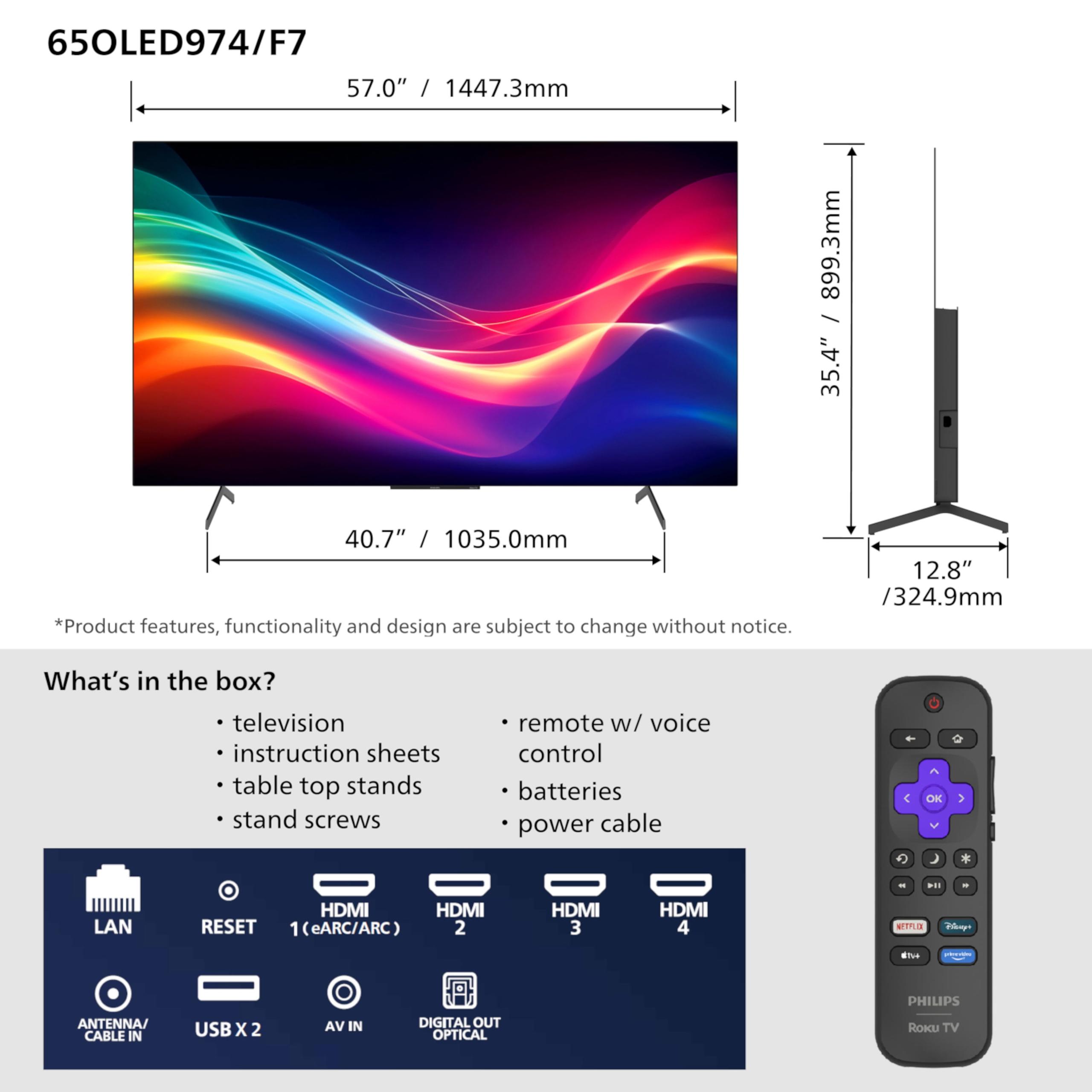
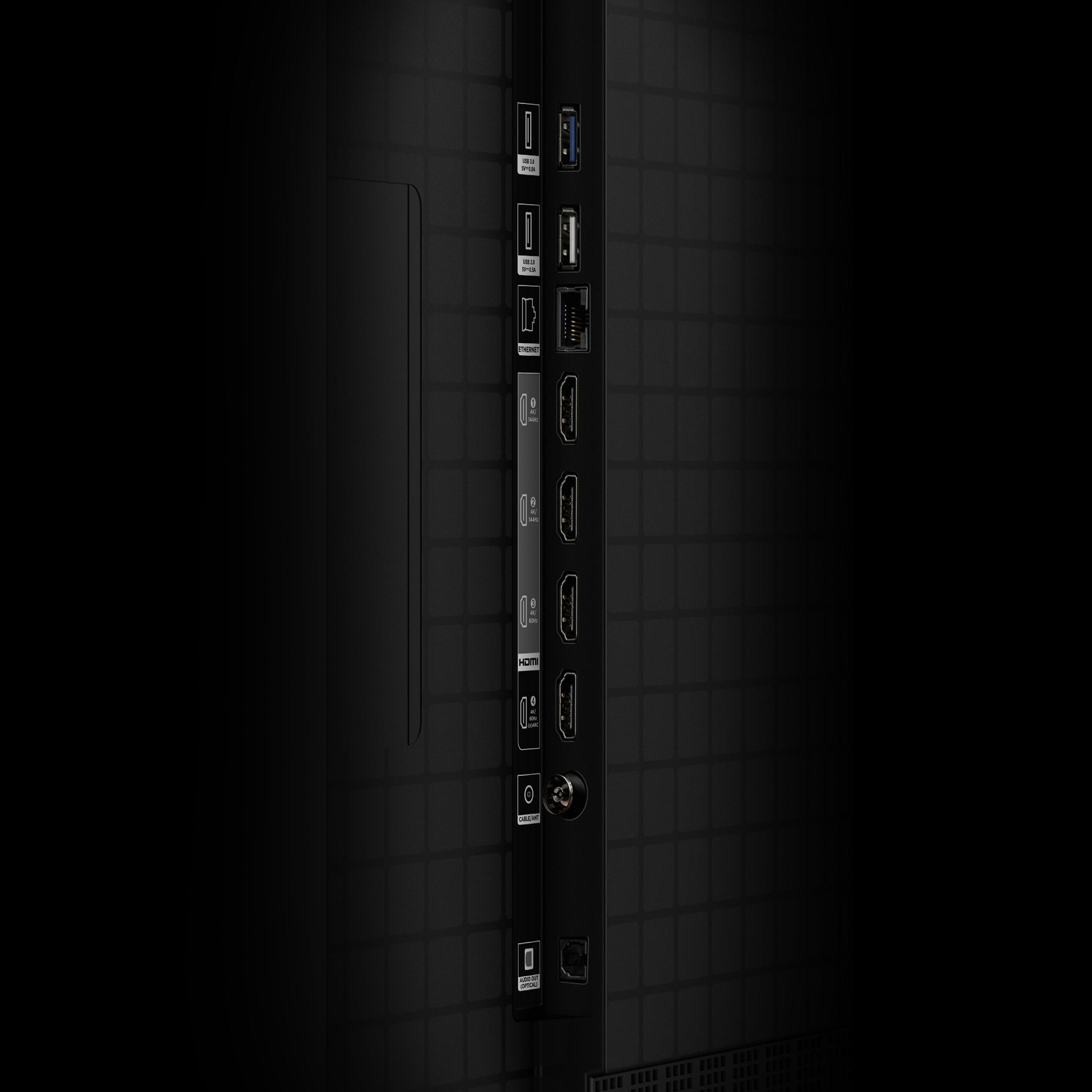
Both TVs include two HDMI 2.1 ports, which is the current standard for next-generation gaming consoles like the PlayStation 5 and Xbox Series X. This ensures full compatibility with the latest gaming features and maximum performance.
High Dynamic Range (HDR) is where these TVs show their most dramatic differences. HDR content contains brightness information ranging from deep blacks to brilliant highlights, often measured in thousands of nits. The goal is to reproduce the full range of brightness your eyes can see in real life.
The Philips 65OLED974/F7 handles the dark end of HDR beautifully - those perfect blacks create incredible depth and shadow detail. However, its limited brightness means bright HDR highlights get compressed and don't deliver the intended impact. Watching a sunset scene, you'll see amazing detail in the shadows but the sun itself won't have that eye-searing brilliance the director intended.
The TCL QM8K delivers the opposite experience. Bright highlights pop with almost painful intensity - exactly as intended. Explosions, sunlight, and bright reflections have a three-dimensional quality that makes you want to squint. The trade-off is that blacks, while very deep thanks to those 3,800 dimming zones, don't quite achieve that infinite darkness of OLED.
In practical terms, if you watch a lot of HDR content from Netflix, Disney+, or 4K Blu-rays, the TCL will consistently deliver more impactful visuals that match the creator's vision.
Both TVs excel at color reproduction but through different technologies. The Philips OLED delivers excellent out-of-the-box color accuracy in standard dynamic range (SDR) content. Colors appear vibrant and natural without oversaturation, and the TV requires minimal calibration for accurate reproduction.
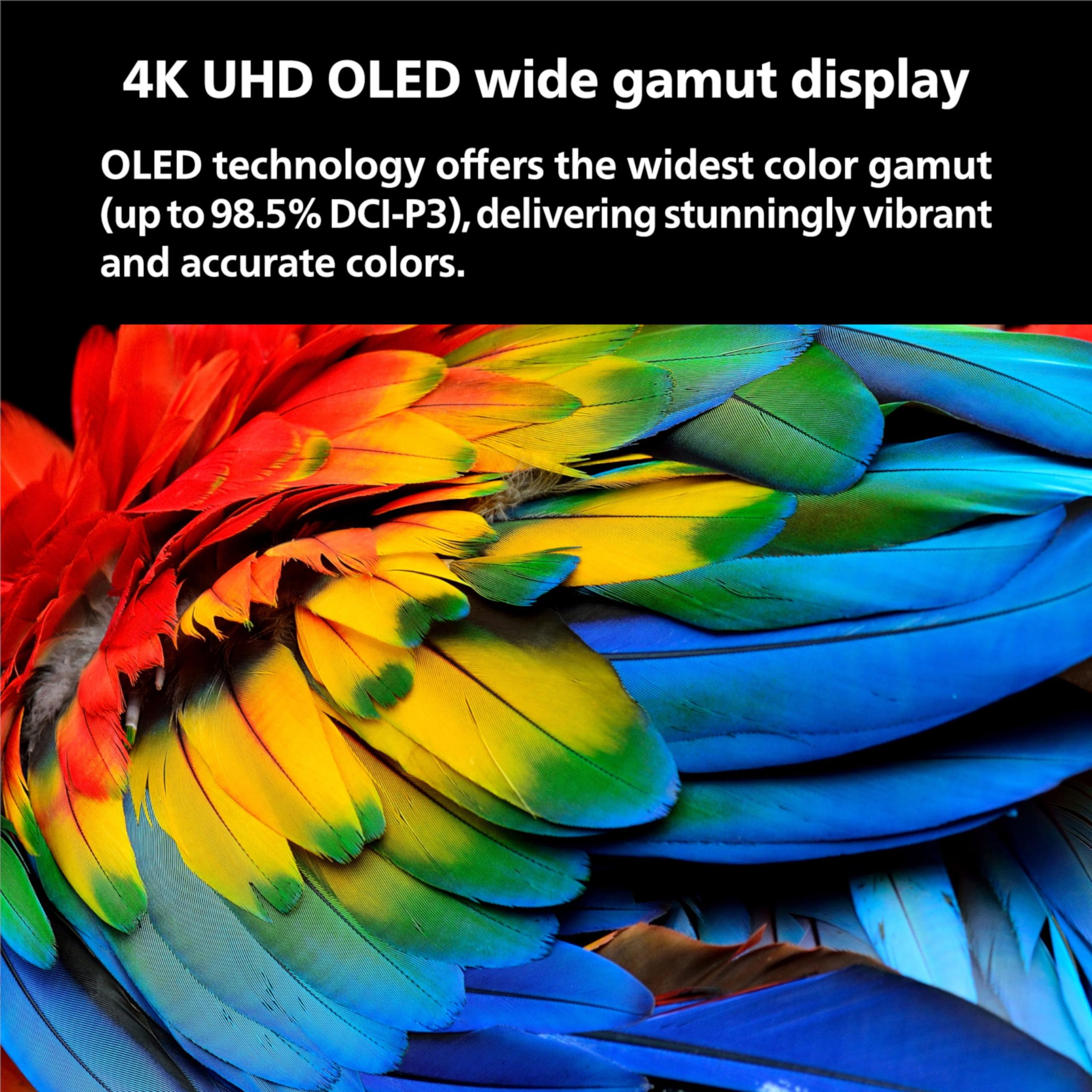
The TCL QM8K uses Quantum Dot technology to achieve its impressive color performance. Those tiny crystals convert blue light into incredibly pure red and green wavelengths, covering 97% of the DCI-P3 color space used in modern movies and TV shows. This means more vibrant and saturated colors, especially in bright scenes where the quantum dots really shine.
For color-critical viewing, both TVs perform admirably, though the Philips has a slight edge in accuracy while the TCL offers more color volume - the ability to maintain color saturation at high brightness levels.
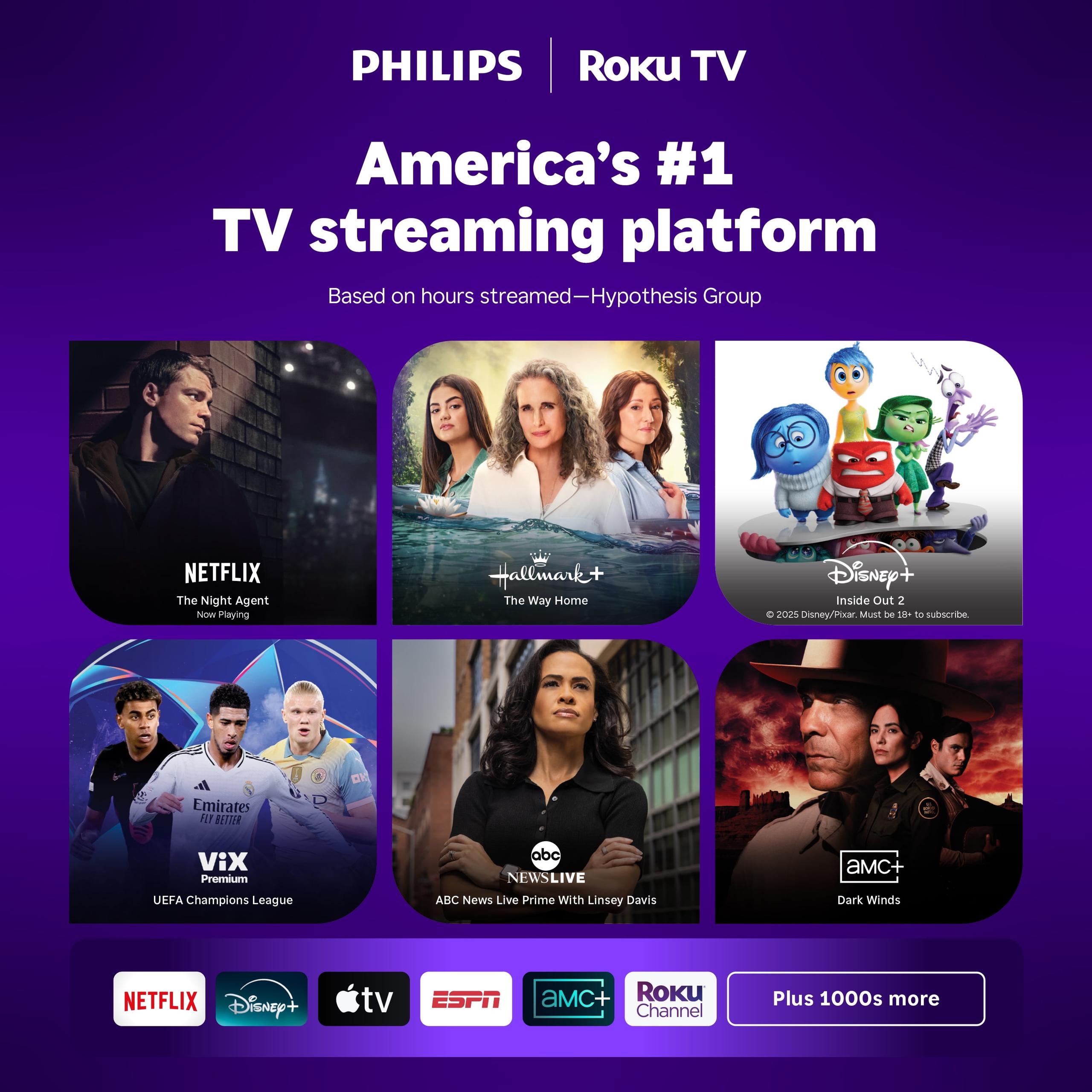
The software experience differs significantly between these models. The Philips 65OLED974/F7 runs Roku TV, which has become one of the most reliable and user-friendly smart TV platforms available. The interface is simple, fast, and includes virtually every streaming app you could want. Roku's search function works across multiple services, and the platform rarely slows down or crashes.
The TCL QM8K uses Google TV, which offers a more sophisticated experience with better content recommendations and integration with Google services. The interface is faster and more modern than Roku TV, with better organization of content across different streaming services. If you use Google products like YouTube TV or have a Google smart home setup, the integration feels seamless.
Both TVs support voice control, with the Philips using Roku's voice remote and the TCL offering hands-free Google Assistant. The TCL also includes Apple AirPlay 2 support, making it easy to cast content from iPhones and iPads.
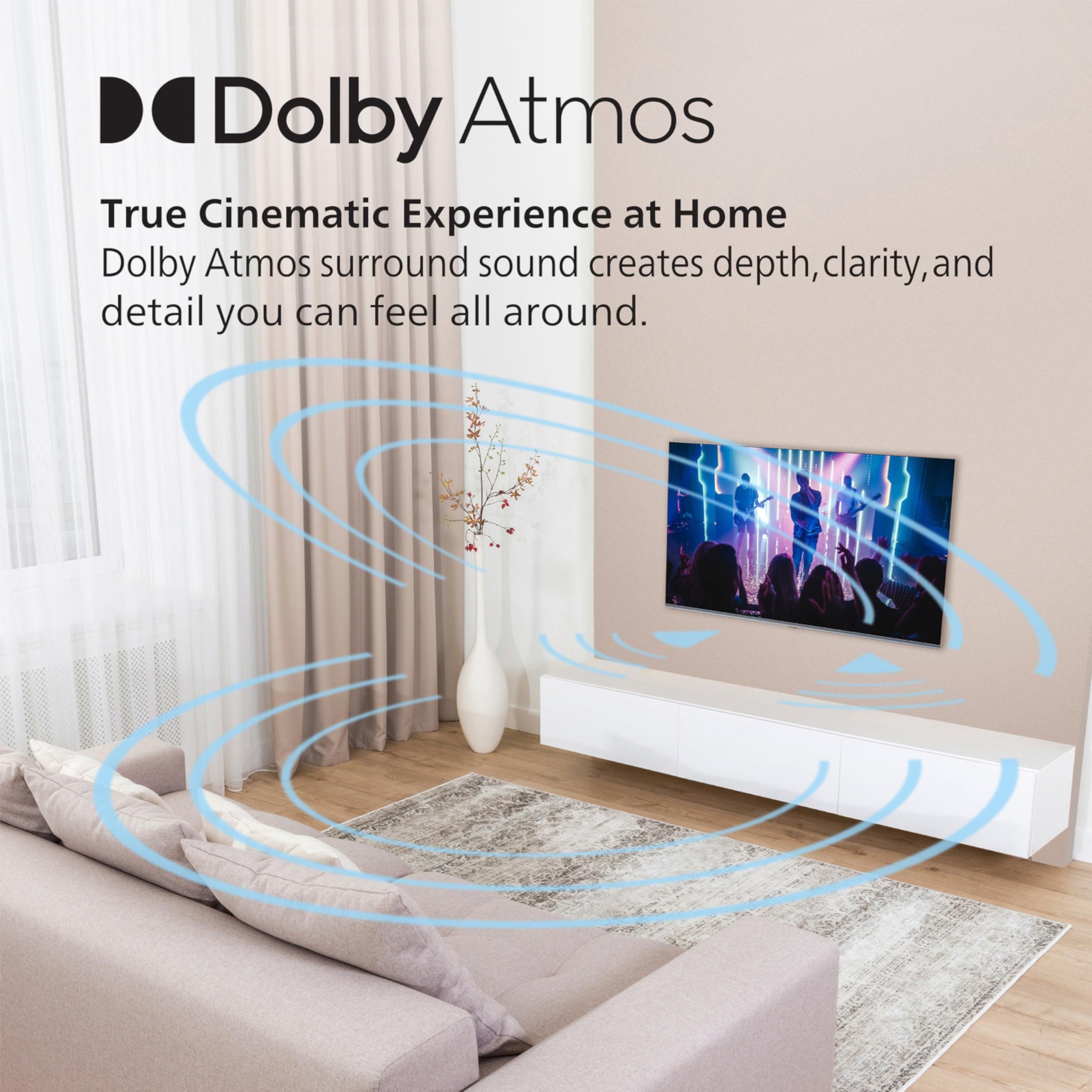
Audio represents one area where both TVs show their limitations compared to dedicated sound systems. The Philips OLED includes a Dolby 2.1 speaker system with built-in subwoofer and Dolby Atmos support. The sound is clear and adequate for casual viewing, with reasonable bass response for a flat-panel TV.
The TCL QM8K features audio tuned by Bang & Olufsen with Dolby Atmos and DTS Virtual:X support. The sound quality is noticeably better than the Philips, with more balanced audio and clearer dialogue. However, at maximum volume, the frequency response becomes uneven.
For serious home theater setups, both TVs benefit significantly from external audio systems. Both include HDMI eARC (enhanced Audio Return Channel) support, allowing them to pass high-quality audio formats like Dolby TrueHD and DTS-HD to compatible soundbars or receivers.
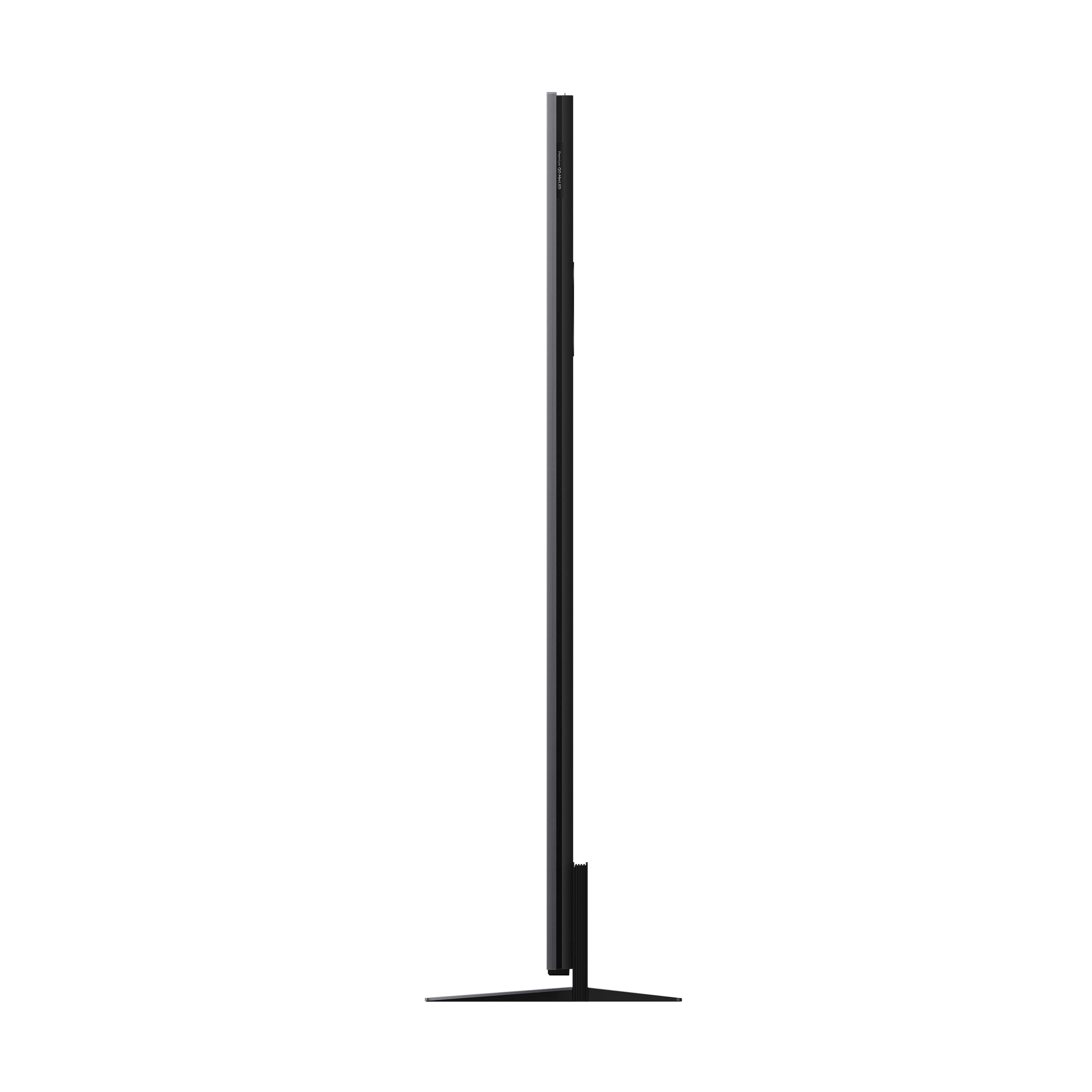
Both TVs showcase premium design philosophies appropriate for their price points. The Philips 65OLED974/F7 features an elegant, minimalist design with a 3-sided borderless display and ultra-thin 2.2-inch panel depth. The included stand is stable and well-engineered, though the TV also supports VESA wall mounting.
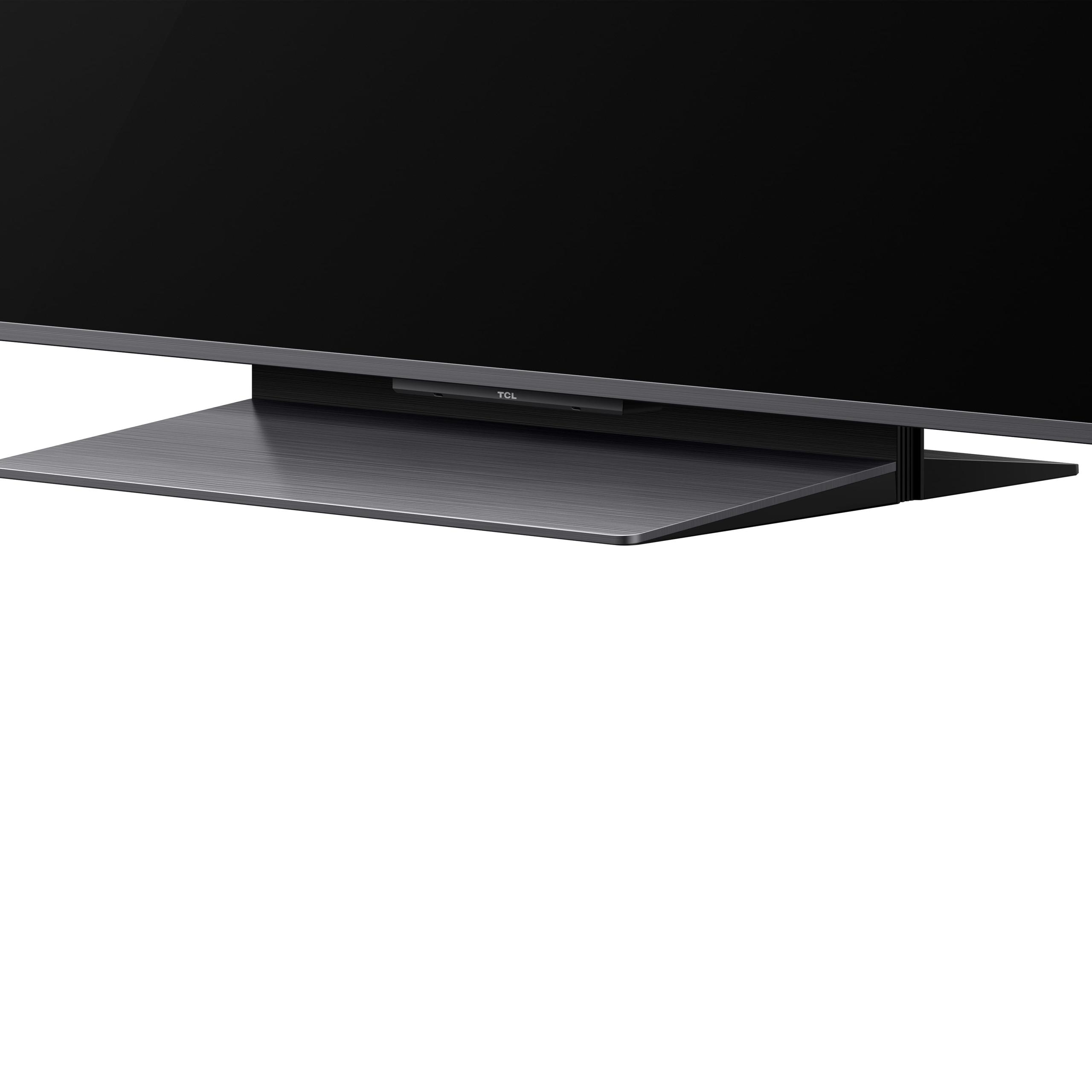
The TCL QM8K adopts a "ZeroBorder" design approach, minimizing visible bezels for an immersive viewing experience. Despite housing a complex Mini LED backlight system, the TV maintains a relatively slim profile. The height-adjustable pedestal stand offers two mounting positions, accommodating different furniture heights and providing flexibility for soundbar placement.
At the time of writing, these TVs occupy similar price segments in the premium 65-inch market, though the TCL typically sells for slightly less than the Philips. This creates an interesting value proposition since you're essentially choosing between two different philosophies of TV technology.
The Philips 65OLED974/F7 offers premium OLED technology with perfect blacks and excellent gaming performance, but its brightness limitations significantly restrict where and how you can use it effectively. The three-year manufacturer warranty (longer than typical) adds value for buyers concerned about OLED longevity.
The TCL QM8K delivers flagship-level performance across almost all metrics while costing less. Its exceptional brightness, advanced gaming features, and versatility in different lighting conditions make it arguably the better value for most households.
For dedicated home theater setups, the choice becomes more nuanced. The Philips OLED absolutely excels in light-controlled environments where you can appreciate its perfect blacks and infinite contrast ratio. Movie enthusiasts who prioritize that immersive, cinema-like depth will find the OLED experience hard to beat.
However, the TCL QM8K delivers more accurate HDR reproduction, which increasingly matters as more content is mastered in HDR formats. If you invest in 4K HDR Blu-rays or stream premium HDR content, the TCL's ability to hit those bright highlights creates a more impactful and accurate viewing experience.
For mixed-use family rooms that serve multiple purposes, the TCL's brightness and anti-reflective properties make it far more versatile and practical.
The Philips 65OLED974/F7 makes sense for specific scenarios: dark room movie watching, serious gaming enthusiasts who prioritize motion clarity above all else, and buyers who want the ultimate contrast experience regardless of brightness limitations. If you can control your viewing environment and primarily watch content in dim conditions, the OLED's perfect blacks create an unmatched sense of depth and immersion.
The TCL QM8K suits almost everyone else. Its combination of exceptional brightness, strong HDR performance, advanced gaming features, and lower cost makes it the more practical choice for typical living rooms. If you watch TV during the day, have windows in your viewing room, or want a single TV that excels across all content types, the TCL delivers better overall performance.
The TCL also makes more sense for families or shared spaces where viewing conditions vary throughout the day. Its ability to look great in bright afternoon light and excellent in dim evening conditions provides the flexibility most homes actually need.
Ultimately, both TVs represent excellent examples of their respective technologies at the time of writing. Your choice should depend primarily on your viewing environment and priorities. If perfect blacks in a dark room matter most, choose the Philips OLED. If brightness, versatility, and overall value matter more, the TCL QM8K is the smarter choice for most buyers.
| Philips 65OLED974/F7 | TCL QM8K Series |
|---|---|
| Display Technology - Fundamentally different approaches to image quality | |
| OLED with self-illuminating pixels for perfect blacks | QD-Mini LED with 3,800 dimming zones for exceptional brightness |
| Peak Brightness - Critical for HDR impact and bright room viewing | |
| ~500 nits (requires dark rooms, poor HDR highlights) | 5,000 nits (excellent for any lighting, impactful HDR) |
| Black Level Performance - Determines contrast and depth perception | |
| Perfect blacks with infinite contrast ratio | Very deep blacks with minimal blooming, excellent control |
| Gaming Refresh Rate - Higher rates provide competitive advantages | |
| 120Hz native with VRR support | 144Hz native with VRR up to 288Hz |
| Response Time - Lower is better for motion clarity | |
| <0.1ms (virtually instant, zero motion blur) | Good but measurable (slight motion blur at 60/120Hz) |
| Color Gamut Coverage - More coverage means more vibrant, accurate colors | |
| 98.5% DCI-P3 with excellent SDR accuracy | 97% DCI-P3 with quantum dot enhancement |
| Viewing Angles - Important for larger rooms and group viewing | |
| 176° horizontal and vertical (OLED advantage) | Decent for angled viewing, improved over previous TCL models |
| Smart TV Platform - Affects daily usability and app performance | |
| Roku TV (simple, reliable, extensive app support) | Google TV (fast navigation, better recommendations, smart home integration) |
| Audio System - Built-in sound quality before adding external speakers | |
| Dolby 2.1 with subwoofer and Atmos support | Bang & Olufsen tuned with Atmos, noticeably better than Philips |
| HDMI 2.1 Ports - Essential for next-gen gaming consoles | |
| 2 ports supporting 4K@120Hz, VRR, ALLM | 2 ports supporting 4K@144Hz, VRV, ALLM |
| HDR Format Support - Broader support means better compatibility | |
| Dolby Vision IQ, Dolby Vision, HDR10, HLG | Dolby Vision IQ, HDR10+, HDR10, HLG |
| Best Use Case - Where each TV excels most | |
| Dark room movie watching, motion-critical gaming | Bright rooms, versatile lighting, impactful HDR content |
| Warranty Coverage - Protection for premium purchase | |
| 3-year manufacturer warranty (above average) | Standard warranty coverage |
| Value Proposition - Performance per dollar at time of writing | |
| Premium OLED experience with significant brightness limitations | Flagship Mini LED performance at lower cost, maximum versatility |
The TCL QM8K Series is significantly better for bright rooms with its 5,000 nits peak brightness that easily cuts through ambient light and glare. The Philips 65OLED974/F7 struggles in bright environments due to its limited ~500 nits brightness, making it unsuitable for well-lit living rooms or spaces with large windows.
OLED technology in the Philips 65OLED974/F7 uses self-illuminating pixels that can turn completely off for perfect blacks and infinite contrast. Mini LED technology in the TCL QM8K uses thousands of tiny LED backlights with local dimming zones to achieve exceptional brightness while maintaining deep blacks, though not quite as perfect as OLED.
Both TVs excel at gaming but differently. The Philips OLED offers superior motion clarity with <0.1ms response time and 120Hz refresh rate, ideal for competitive gaming. The TCL QM8K supports higher refresh rates up to 144Hz with VRR up to 288Hz, making it better for PC gaming with high-end graphics cards.
The TCL QM8K Series delivers superior HDR performance with its exceptional brightness that can reproduce the intended impact of bright highlights and explosions. The Philips 65OLED974/F7 provides excellent shadow detail with perfect blacks but compressed bright highlights due to limited peak brightness.
The Philips 65OLED974/F7 excels in dark rooms with its perfect black levels and infinite contrast that creates incredible depth and immersion. While the TCL QM8K also performs very well in dark rooms with minimal blooming, it cannot match the absolute darkness that OLED technology provides.
The Philips OLED uses Roku TV, which offers a simple, reliable interface with extensive app support and rarely slows down. The TCL QM8K runs Google TV, providing faster navigation, better content recommendations, and superior smart home integration, especially for users in the Google ecosystem.
The TCL QM8K Series typically offers better value with flagship-level performance at a lower cost, plus exceptional brightness and versatility for various lighting conditions. The Philips 65OLED974/F7 provides premium OLED technology but with brightness limitations that restrict its use cases.
The TCL QM8K features superior built-in audio with Bang & Olufsen tuning, Dolby Atmos support, and noticeably better sound quality than the Philips OLED. The Philips 65OLED974/F7 includes a Dolby 2.1 system that's adequate for casual viewing but less impressive overall.
The TCL QM8K Series is better for sports viewing due to its exceptional brightness that works well in typical living room lighting where sports are often watched. The Philips 65OLED974/F7 offers superior motion clarity but requires dim lighting conditions that aren't practical for most sports viewing scenarios.
Yes, both the Philips OLED and TCL QM8K include two HDMI 2.1 ports supporting 4K gaming, Variable Refresh Rate (VRR), and Auto Low Latency Mode (ALLM) for full compatibility with PlayStation 5, Xbox Series X/S, and other next-gen gaming devices.
The Philips 65OLED974/F7 offers excellent out-of-the-box color accuracy, particularly in SDR content, with minimal calibration needed. The TCL QM8K Series uses quantum dot technology for vibrant colors covering 97% of DCI-P3 color space, providing excellent color volume and saturation across all content types.
Choose the Philips 65OLED974/F7 for perfect blacks in dark rooms, superior motion clarity for gaming, and excellent color accuracy. Choose the TCL QM8K Series for bright room versatility, impactful HDR performance, higher gaming refresh rates, and better overall value for most households.
We've done our best to create useful and informative comparisons to help you decide what product to buy. Our research uses advanced automated methods to create this comparison and perfection is not possible - please contact us for corrections or questions. These are the sites we've researched in the creation of this article: rtings.com - versus.com - versus.com - rtings.com - samsclub.com - versus.com - youtube.com - usa.philips.com - bestbuy.com - usa.philips.com - consumerreports.org - usa.philips.com - documents.philips.com - tvoutlet.ca - displayspecifications.com - business.walmart.com - displayspecifications.com - ecoustics.com - walmart.com - tomsguide.com - youtube.com - businessinsider.com - rtings.com - youtube.com - avsforum.com - avsforum.com - bestbuy.com - tcl.com - tcl.com - tcl.com - flatpanelshd.com - romomattressfurniture.com - brandsmartusa.com - pcrichard.com - tvsbook.com - tcl.com - youtube.com - prnewswire.com - tcl.com - tcl.com

Privacy Policy
Terms and Conditions - Affiliate Policy
Home Security
© Copyright 2008-2026.
11816 Inwood Rd #1211, Dallas, TX 75244