

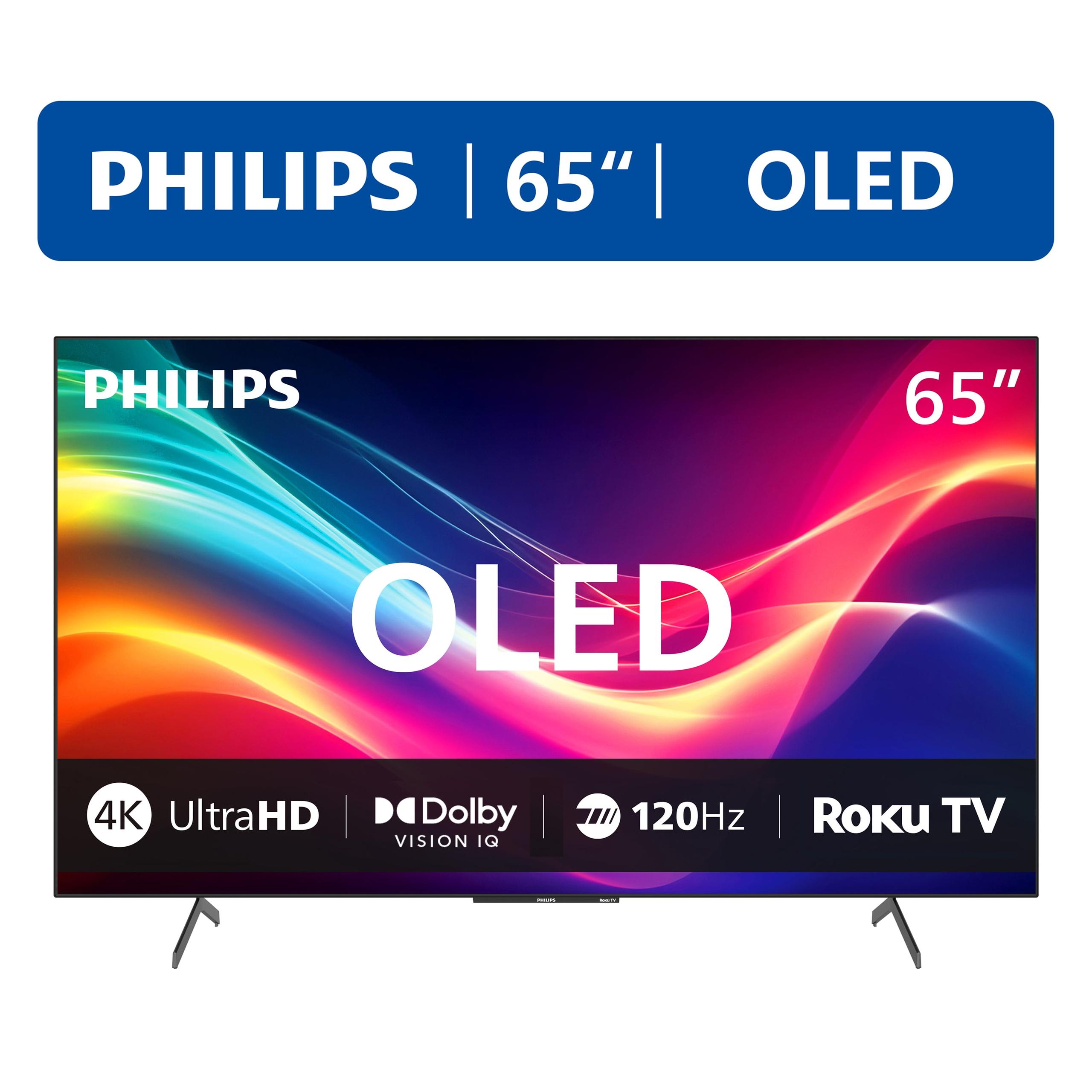
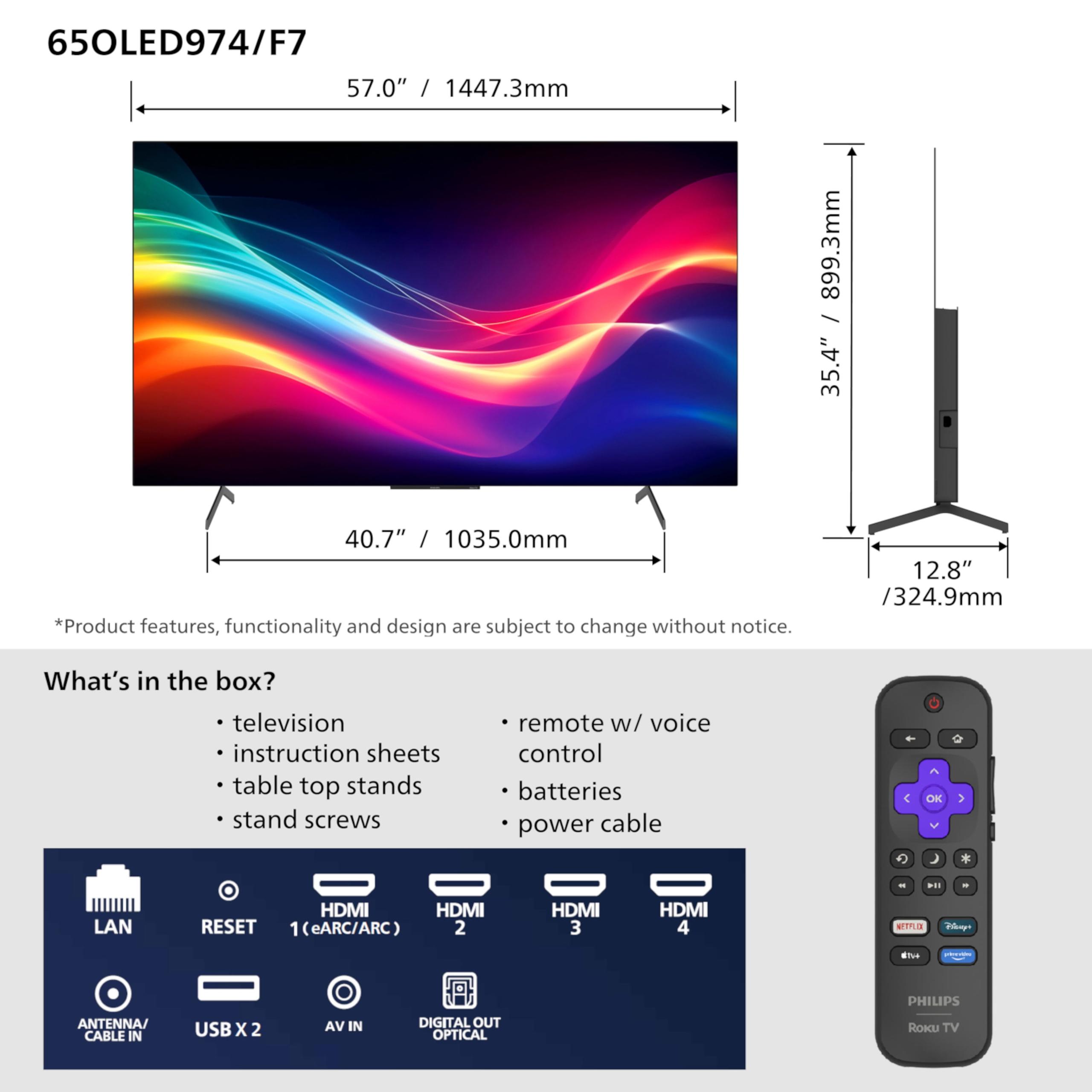

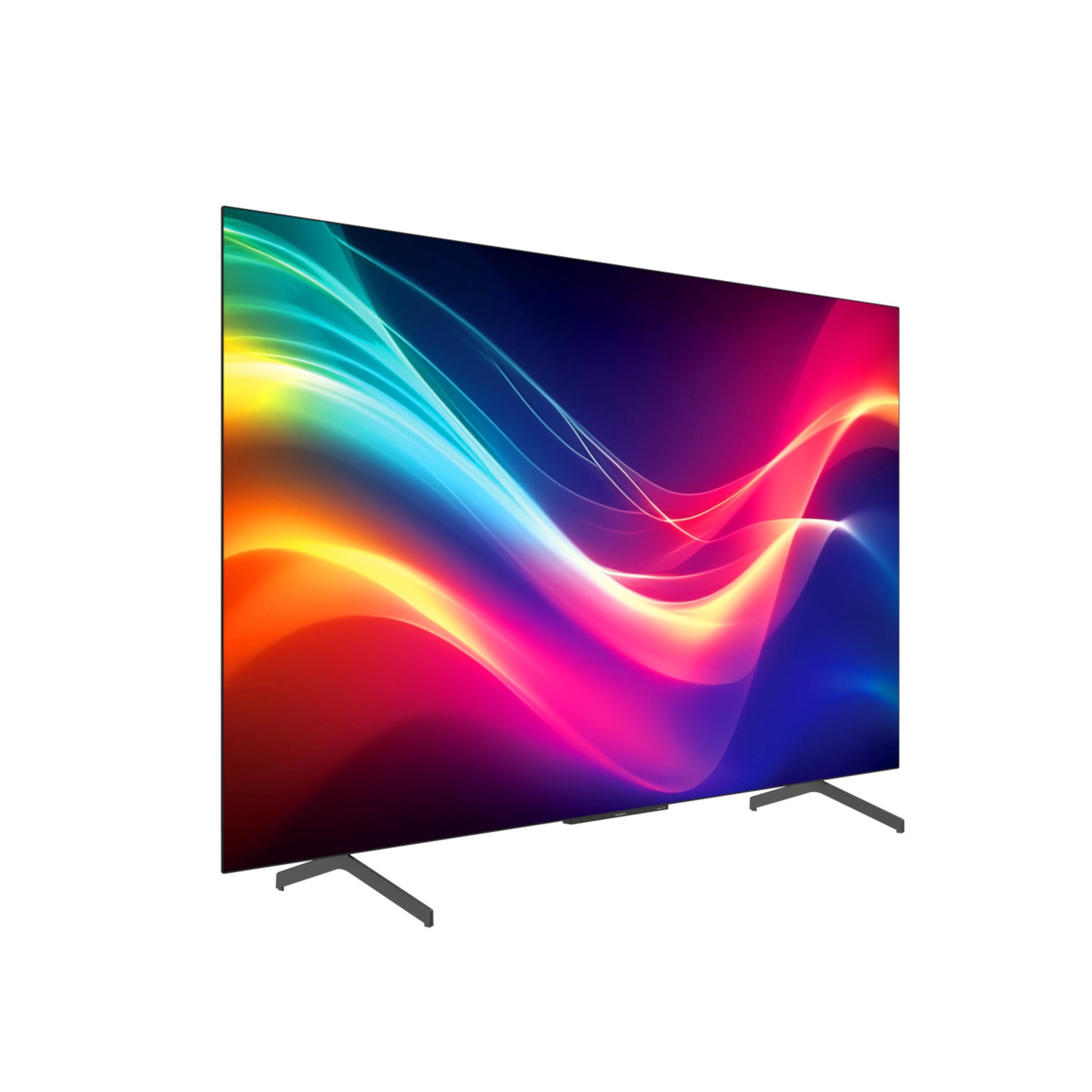
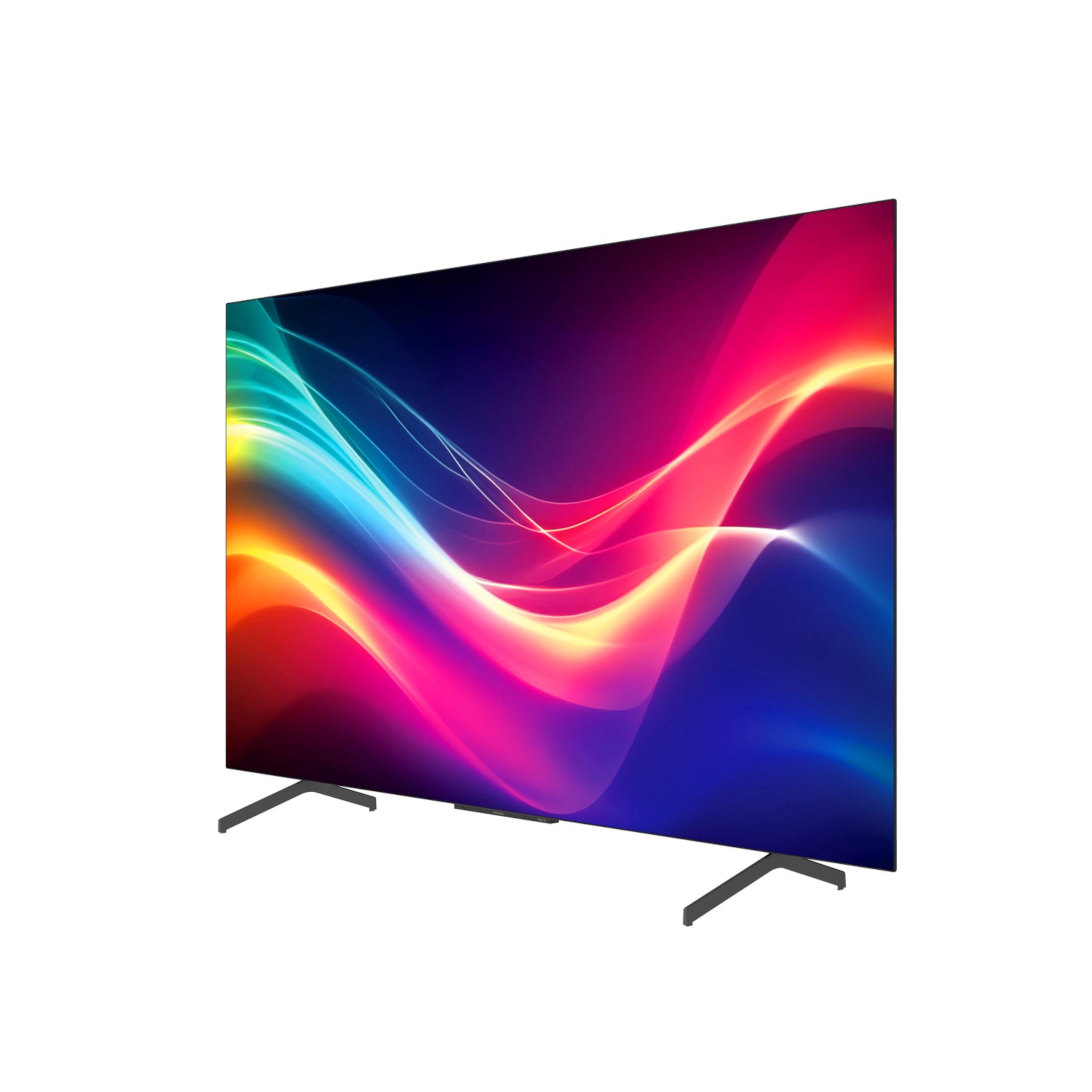


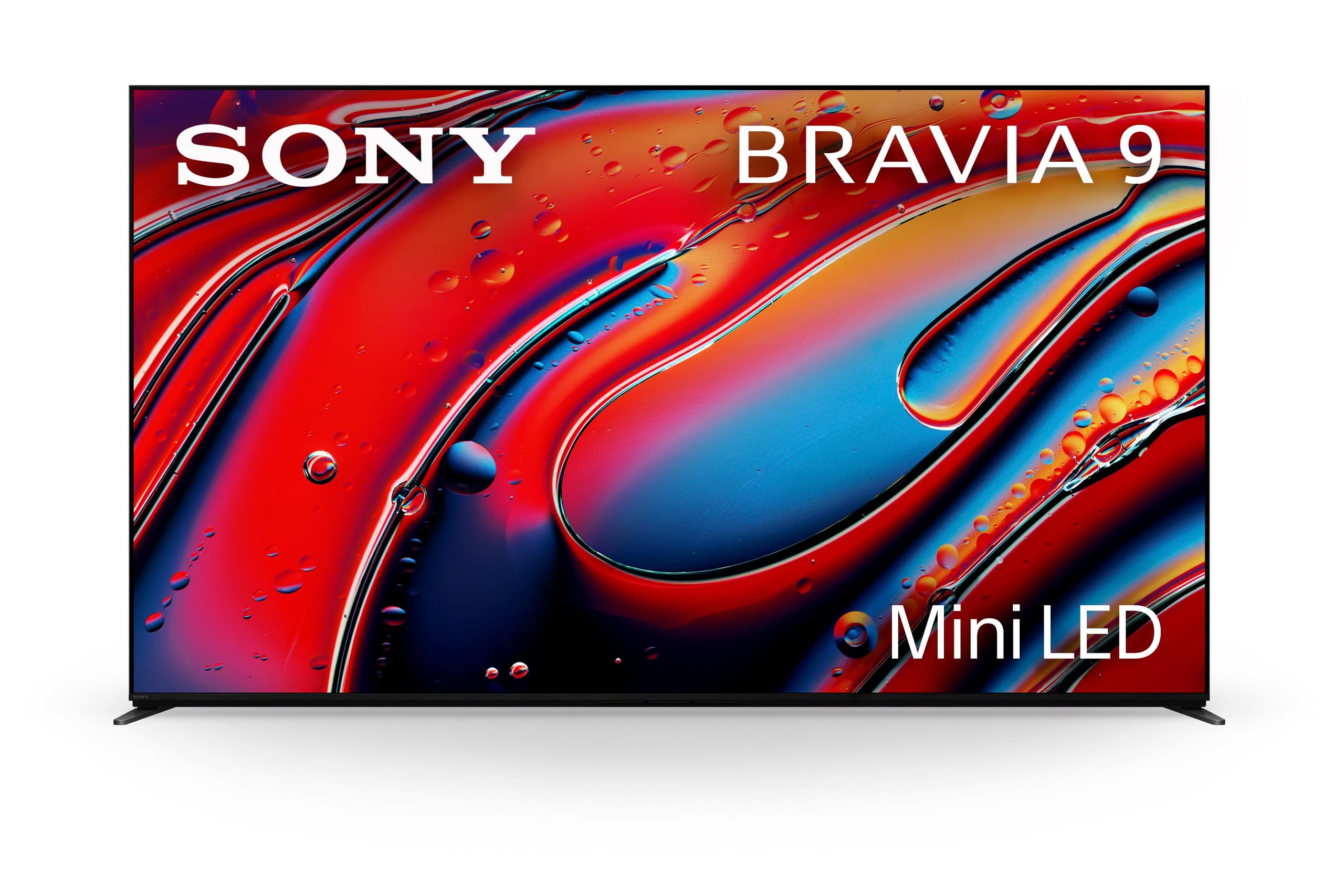
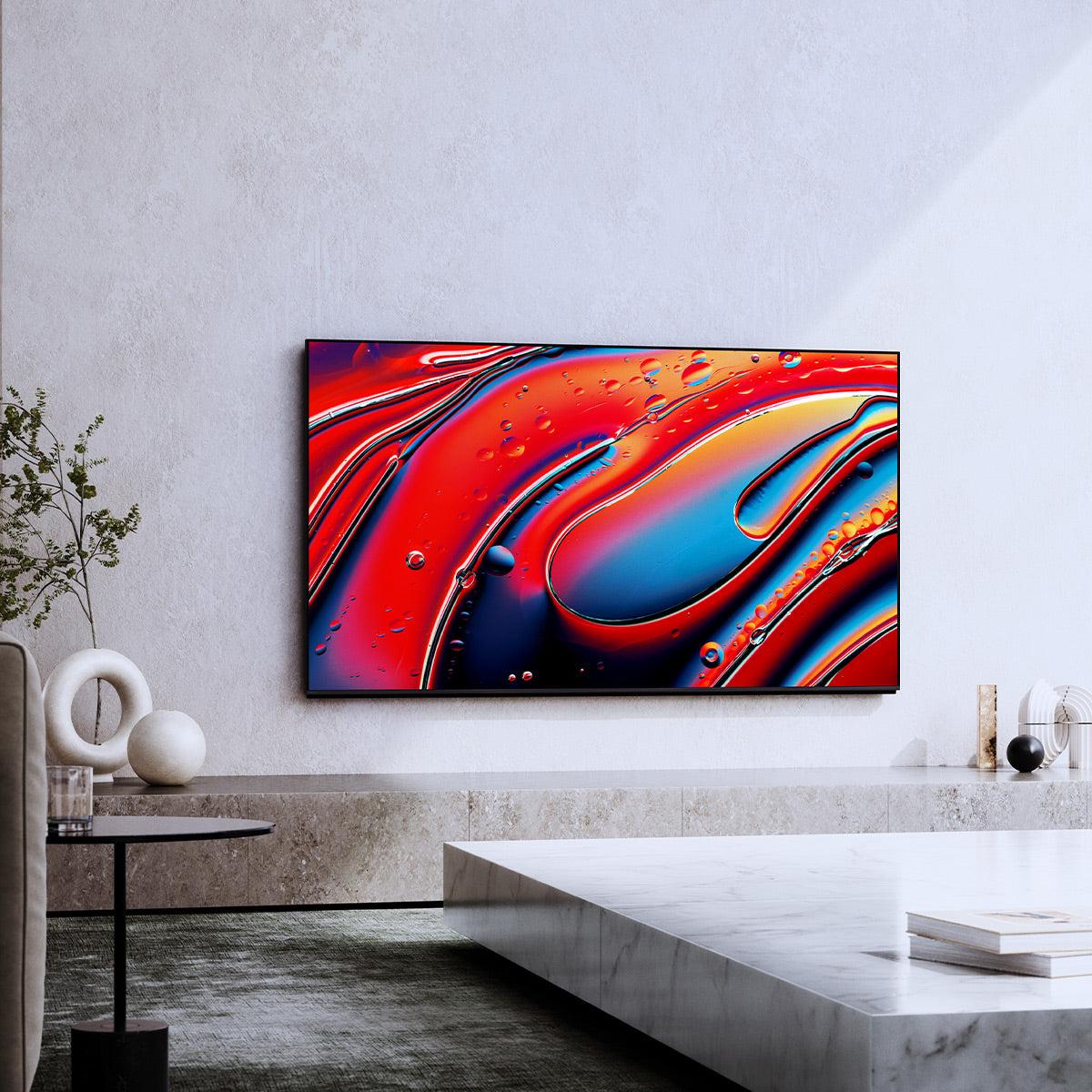
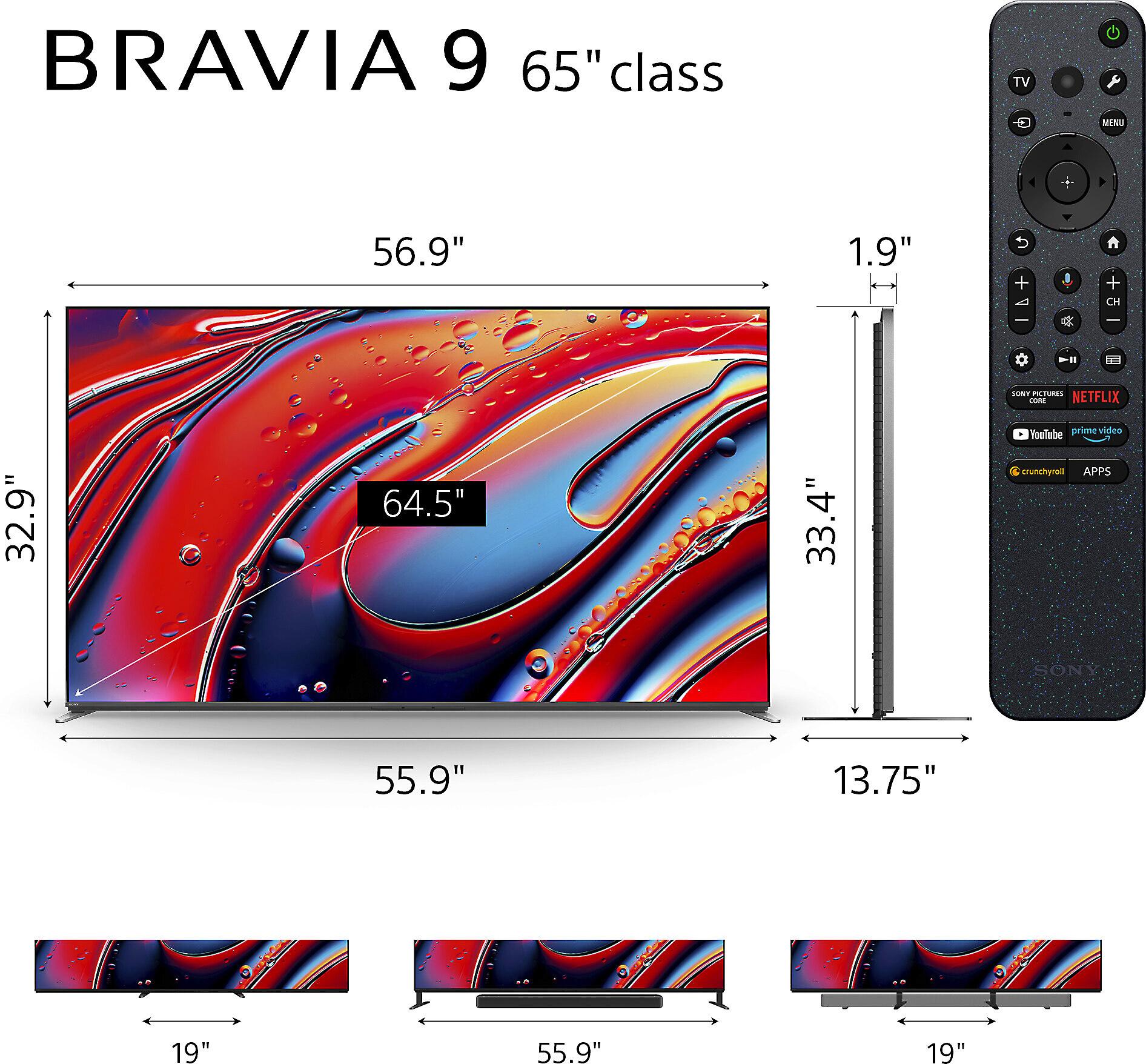
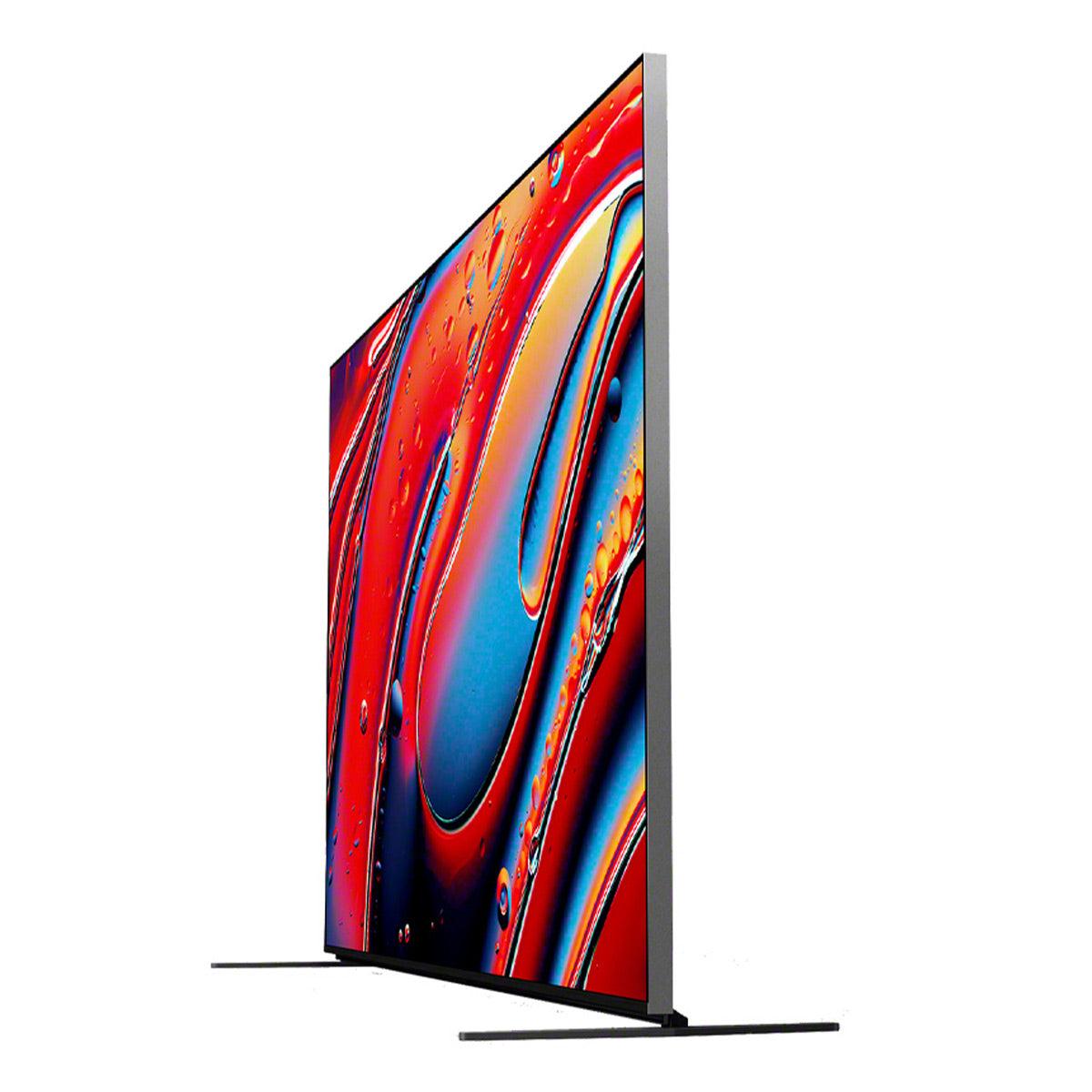
When you're shopping for a premium 65-inch TV in 2024, you're essentially choosing between two revolutionary display technologies that each take a completely different approach to creating stunning pictures. The Philips 65OLED974/F7 represents the OLED camp with its self-lighting pixels, while the Sony BRAVIA 9 showcases the latest Mini-LED technology. Both launched in 2024, but they couldn't be more different in how they deliver exceptional picture quality.
Understanding these technologies isn't just about specs—it's about how you actually watch TV. Do you binge Netflix in a dark basement theater room, or do you watch the big game with all the lights on and sunlight streaming through the windows? Your viewing habits will determine which technology serves you better.
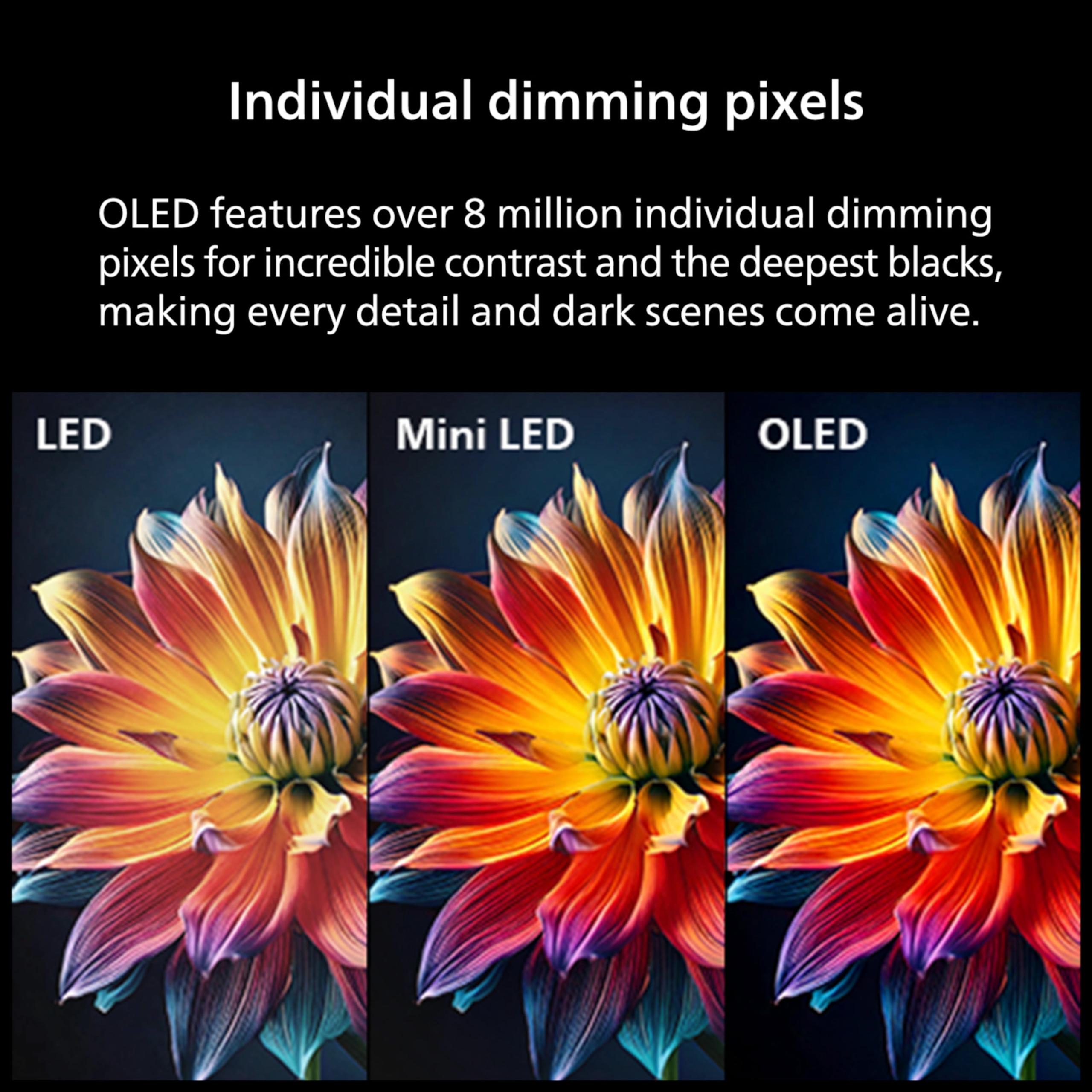
OLED technology uses millions of organic pixels that literally light themselves up. When a pixel needs to be black, it simply turns off completely. This creates what we call "perfect blacks"—areas of the screen that are truly dark, not just dim gray like traditional TVs. It's like having millions of tiny light bulbs that can switch on and off independently.
Mini-LED takes a different approach. Instead of self-lighting pixels, it uses thousands of incredibly small LED backlights behind a traditional LCD panel. These LEDs can dim or brighten in precise zones (called "local dimming"), creating contrast that approaches OLED quality while delivering much brighter highlights. Think of it as having thousands of tiny flashlights behind the screen, each one carefully controlled to light up only specific areas.
The Philips OLED974/F7 launched in 2024 as something of a surprise—a legitimate OLED TV at a price point where we typically only see basic LED models. This represents a significant shift in the OLED market, which has traditionally been dominated by premium pricing. Meanwhile, the Sony BRAVIA 9 arrived as Sony's flagship Mini-LED offering, incorporating years of refinement in their backlight control technology.
Since 2024, we've seen both technologies mature significantly. OLED panels have become more efficient and less prone to burn-in (permanent image retention), while Mini-LED systems have packed in more dimming zones and improved their light control algorithms.
Contrast ratio—the difference between the brightest whites and darkest blacks—forms the foundation of compelling picture quality. Here's where these TVs diverge most dramatically.
The Philips OLED974/F7 delivers what technicians call "infinite contrast." When you're watching a space movie with stars against the black void, those black areas are truly black, not backlit gray. This creates an almost three-dimensional depth to images that's immediately noticeable. Dark movie scenes retain all their detail without the "crushed blacks" that plague cheaper TVs.
However, our research into expert reviews reveals a significant limitation: brightness. The Philips OLED974/F7 struggles with peak brightness, particularly in HDR content. HDR (High Dynamic Range) content is designed to showcase both deep blacks and brilliant highlights—think of sunlight gleaming off car chrome or stadium lights during a night game. While this OLED nails the blacks, those bright highlights appear disappointingly dim.
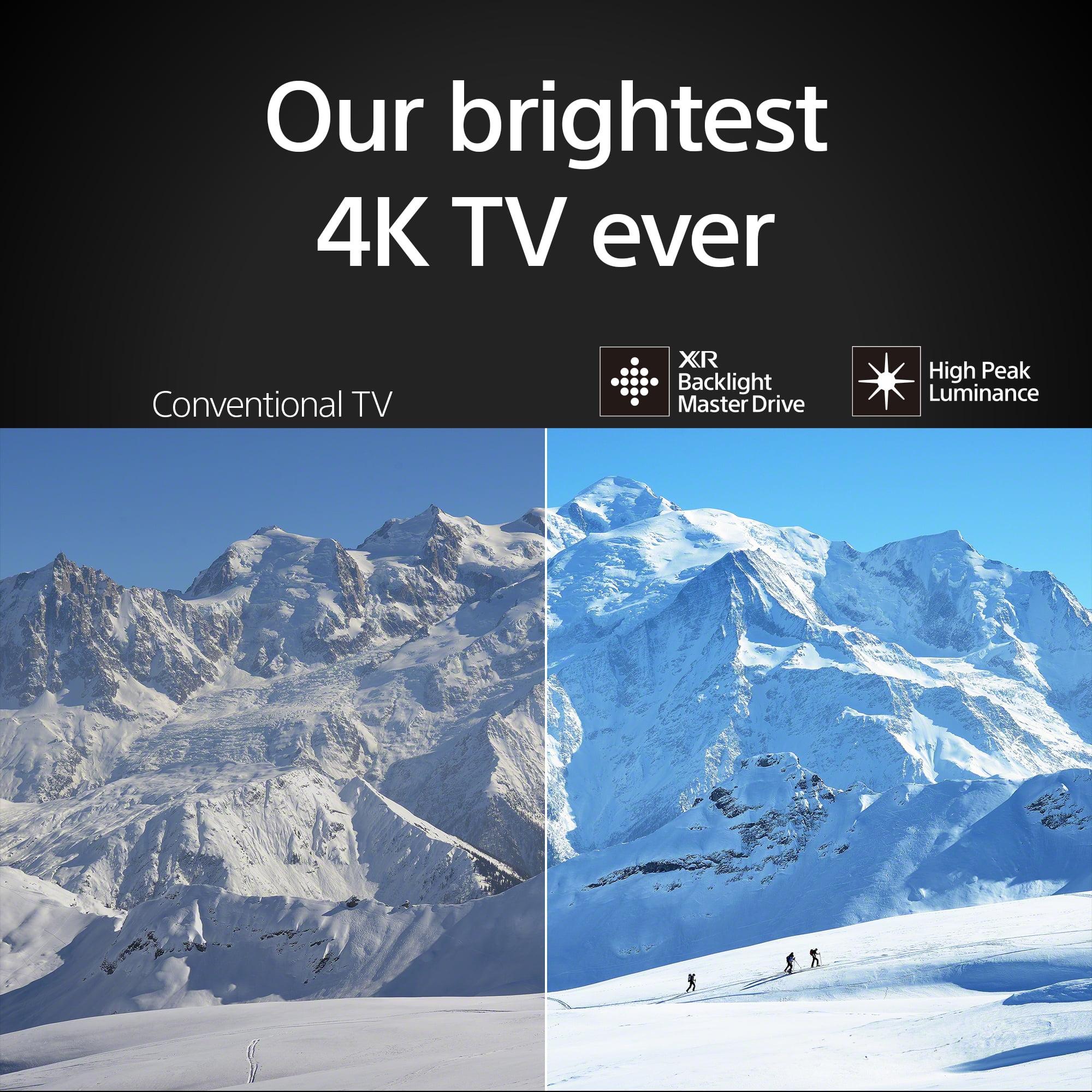
The Sony BRAVIA 9 tackles contrast differently through its advanced Mini-LED system. Sony's "XR Backlight Master Drive" controls thousands of individual LED zones with what they call "22-bit light control"—that's over 4 million brightness levels for incredibly precise dimming. While it can't match OLED's perfect blacks, it gets remarkably close while delivering significantly brighter highlights.
In practical terms, this means the Sony BRAVIA 9 makes HDR content pop the way directors intended. That sunset scene in your favorite movie will actually look like a sunset, with bright, impactful highlights that make you squint.
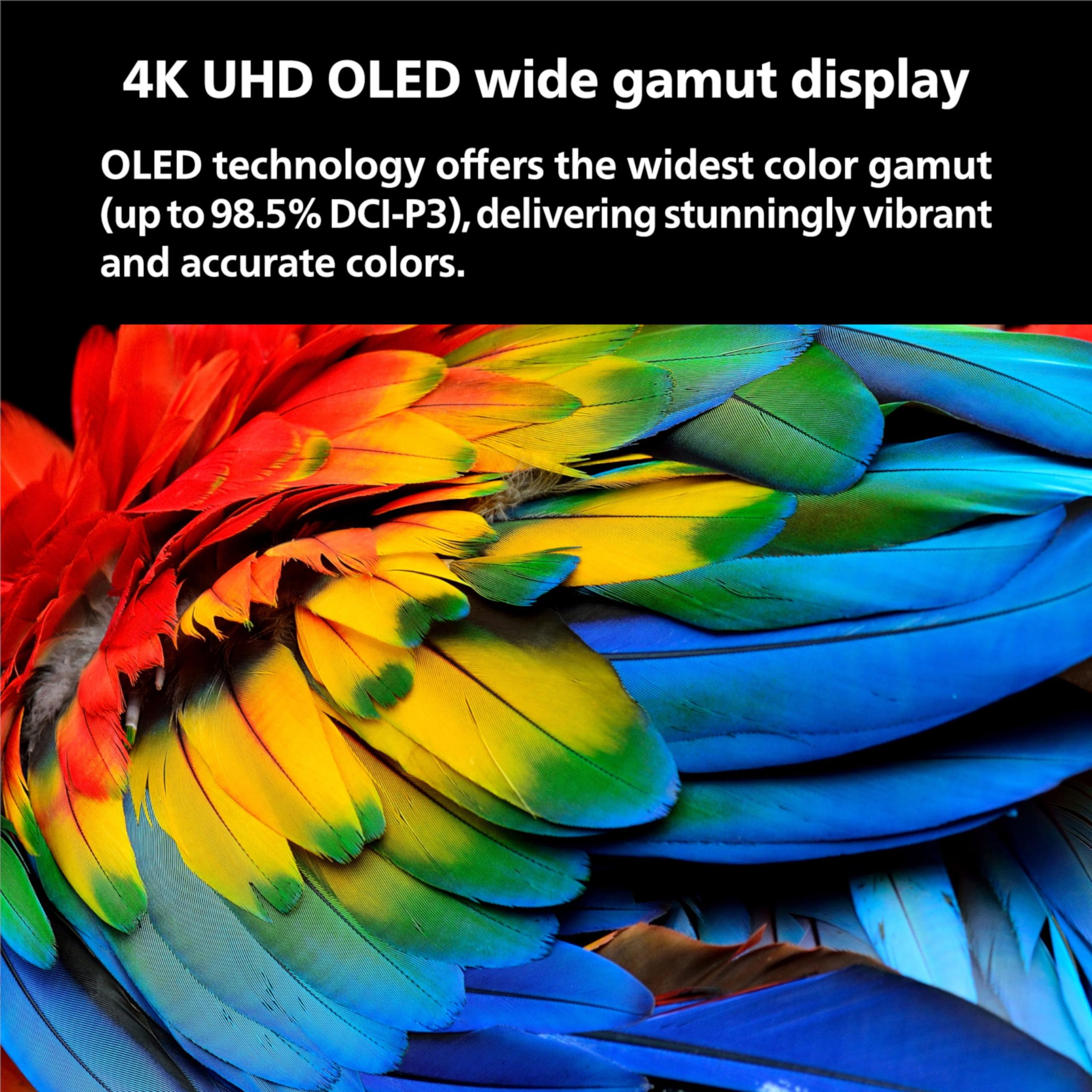
Both TVs handle color differently, and the results matter more than you might think. The Philips OLED974/F7 excels with Standard Dynamic Range (SDR) content—regular TV shows, most streaming content, and cable TV. Our evaluation of user reviews consistently highlights its excellent out-of-the-box color accuracy, meaning colors look natural without any calibration.
However, that brightness limitation hurts color performance in HDR content. Bright, saturated colors—like a red Ferrari in sunlight—appear muted because the TV simply can't get bright enough to display them properly. It's like looking at a beautiful painting through sunglasses.
The Sony BRAVIA 9 uses "XR Triluminos Pro" technology, which maintains color saturation even at high brightness levels. This is crucial for HDR content where colors need to remain vibrant even in bright scenes. Sony's processing also upscales lower-resolution content more effectively, making your older shows and movies look sharper and more detailed.
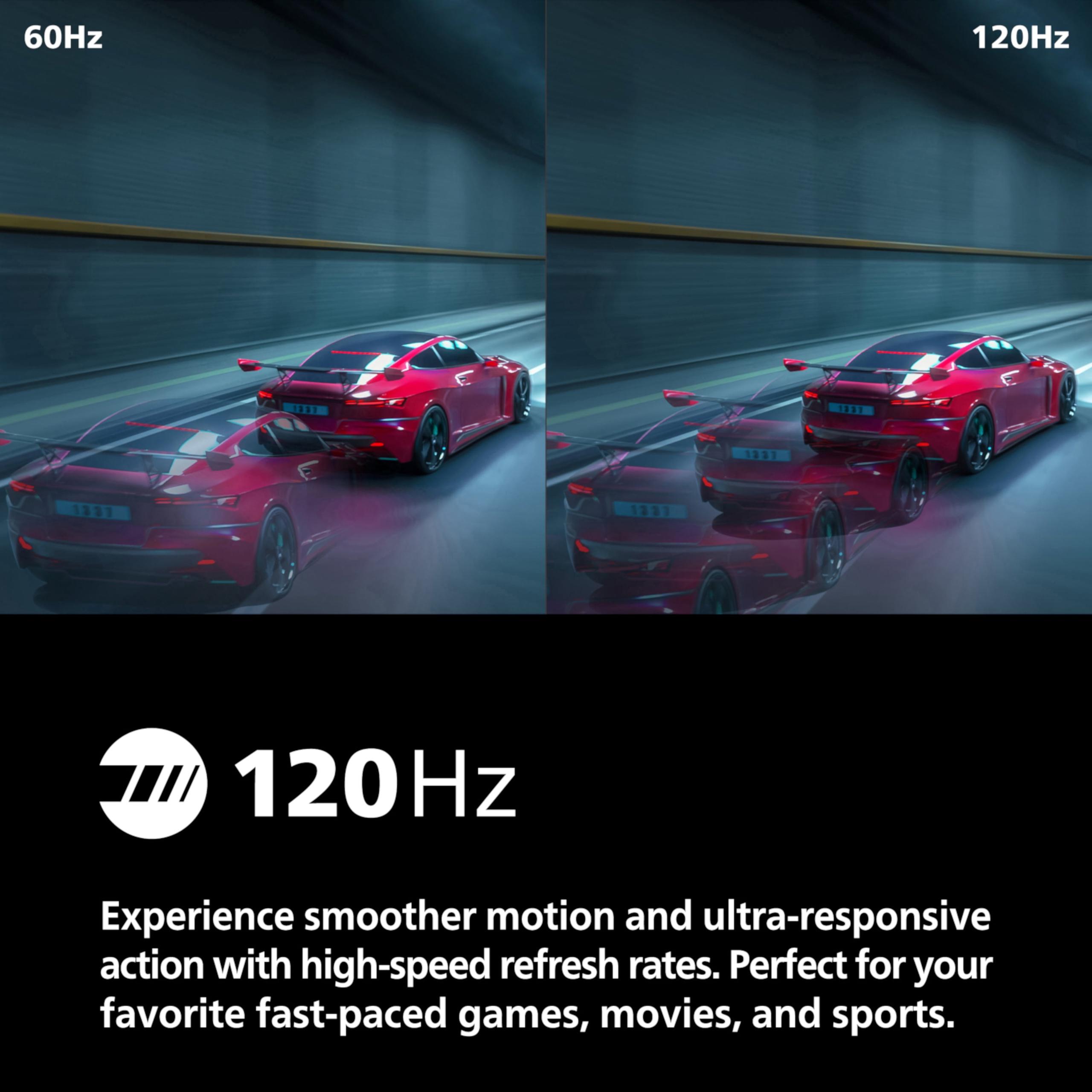
Both TVs support 120Hz refresh rates, which matters for sports, action movies, and gaming. The Philips OLED974/F7 has an inherent advantage here—OLED pixels switch nearly instantaneously (less than 0.1 milliseconds). This means fast-moving objects appear sharp and clear without the motion blur that plagues many TVs.
The Sony BRAVIA 9 compensates with "XR Motion Clarity" processing, which Sony claims is their best motion technology yet. While it can't match OLED's instant pixel response, it does an admirable job keeping sports and action scenes clear and smooth.
Modern gaming demands specific features, and both TVs deliver admirably. The Philips OLED974/F7 supports 4K gaming at 120Hz through its HDMI 2.1 ports, with Variable Refresh Rate (VRR) and Auto Low Latency Mode (ALLM). VRR syncs the TV's refresh rate with your console's frame rate, eliminating screen tearing, while ALLM automatically switches to the fastest processing mode when it detects a gaming console.
The OLED's near-instant pixel response creates incredibly sharp motion in fast-paced games. AMD FreeSync Premium support adds another layer of smooth gaming performance, particularly beneficial for PC gaming setups.
The Sony BRAVIA 9 matches these gaming features while adding Sony-specific enhancements like Auto HDR Tone Mapping optimized for PlayStation 5. This feature automatically adjusts HDR settings for the best gaming experience without manual tweaking.
Where the Sony BRAVIA 9 pulls ahead is in HDR gaming. Those brilliant explosions and realistic lighting effects that modern games showcase simply look more impactful on the brighter Mini-LED display. If you're playing the latest AAA games with spectacular HDR implementation, the Sony delivers the visual punch developers intended.
TV audio has improved dramatically in recent years, and these models showcase different approaches. The Philips OLED974/F7 includes a 2.1 speaker system with a dedicated subwoofer, providing decent bass response for a flat-panel TV. Dolby Atmos support adds some spatial audio effects, though the TV's thin profile limits acoustic possibilities.
The Sony BRAVIA 9 takes audio more seriously with its 2.2.2-channel system delivering 70 watts of power. The "Acoustic Multi-Audio+" system includes up-firing speakers that bounce sound off your ceiling, creating a more immersive soundscape. "Voice Zoom 3" technology makes dialogue clearer—particularly helpful for older viewers or in noisy environments.
If you're planning to add a soundbar eventually, both TVs support enhanced Audio Return Channel (eARC) for high-quality audio passthrough. However, the Philips OLED974/F7 has a notable limitation in DTS format support, which could affect compatibility with some Blu-ray discs and streaming content.
Your TV's operating system affects daily usability more than many realize. The Philips OLED974/F7 runs Roku TV, which prioritizes simplicity and speed. The interface is intuitive, app selection is excellent, and performance remains snappy even after years of use. Voice control works well through the included remote, though it's not hands-free.
The Sony BRAVIA 9 uses Google TV, which offers more sophisticated features but with added complexity. Google Assistant integration allows hands-free voice control, while AI-driven content recommendations learn your viewing habits. Built-in Chromecast and Apple AirPlay 2 support make wireless streaming seamless from phones and tablets.
Google TV's interface is more visually rich but can feel overwhelming initially. However, its content aggregation—showing all your streaming options in one place—proves valuable once you're accustomed to it.
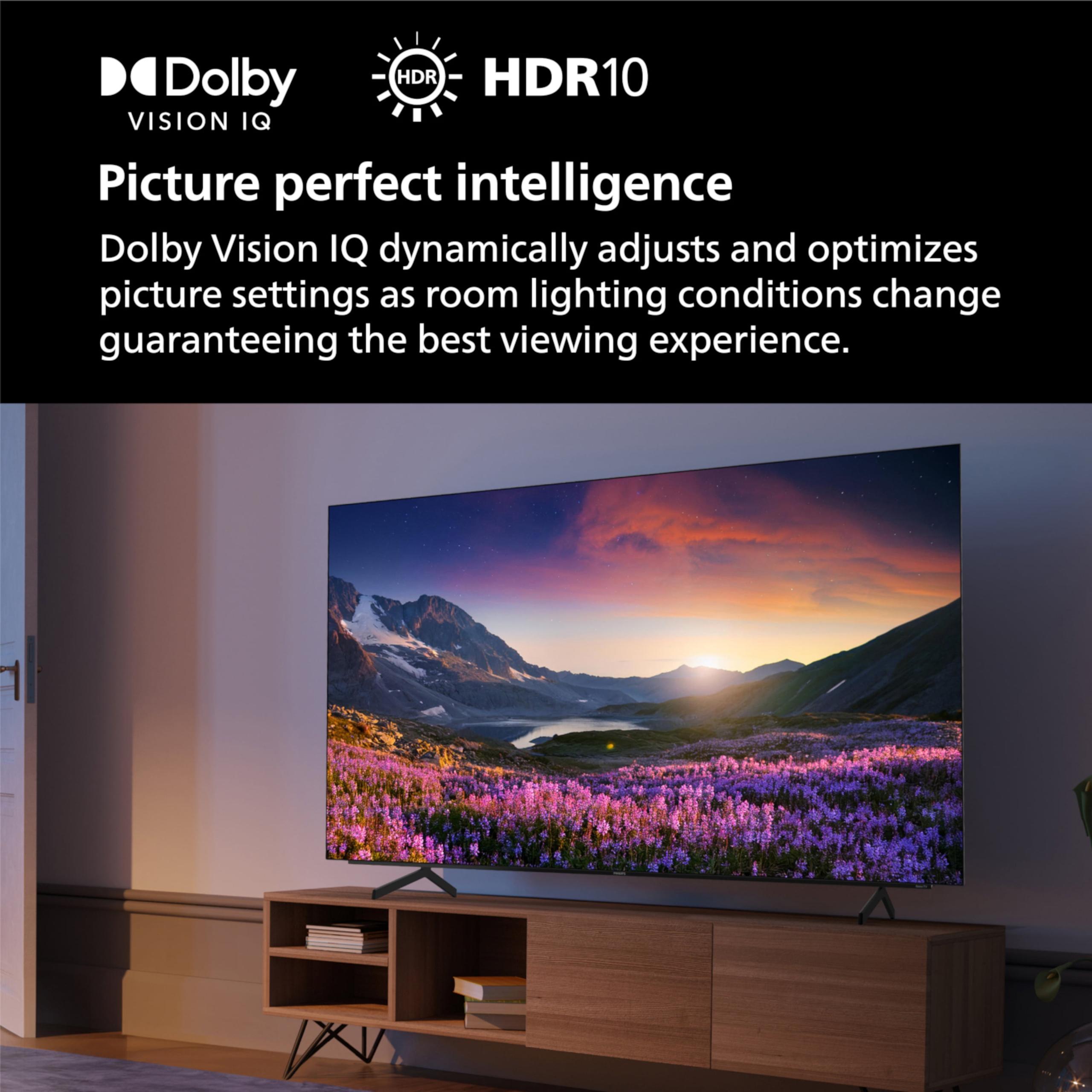
This is where real-world usage diverges from spec sheets. The Philips OLED974/F7 transforms dark rooms into cinematic experiences. Those perfect blacks create an almost theatrical depth that's genuinely immersive. However, our research into user experiences consistently reveals the same limitation: bright room performance suffers significantly.
In well-lit rooms, the OLED's limited brightness becomes problematic. Glare becomes noticeable, and HDR content loses its impact. This TV demands either dedicated dark viewing spaces or careful light control during prime viewing times.
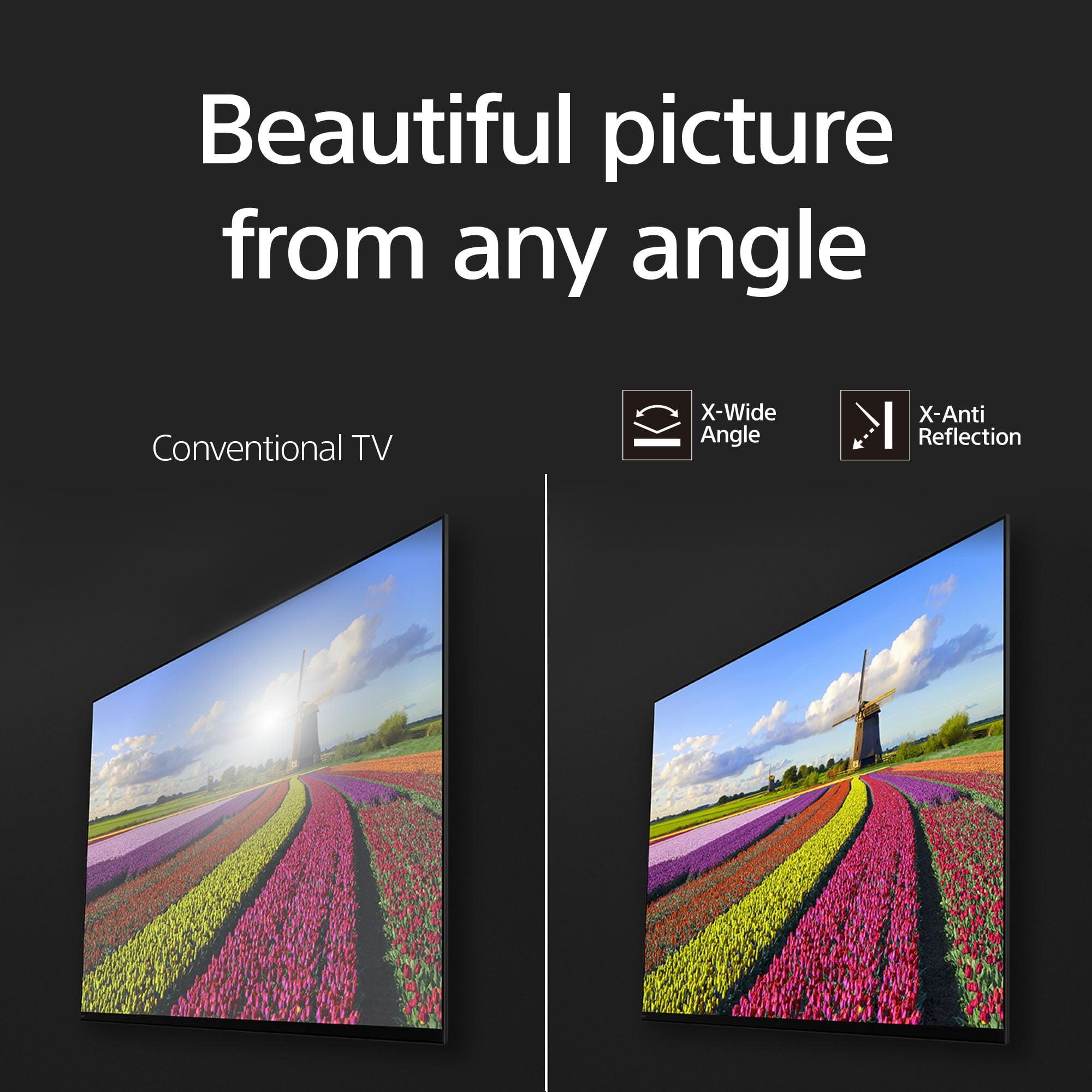
The Sony BRAVIA 9 excels regardless of lighting conditions. Sony's anti-reflection technology and superior brightness allow it to maintain picture quality even with windows behind the seating area or overhead lighting. This versatility makes it suitable for family rooms, open-concept living spaces, or anywhere you can't control ambient lighting perfectly.
For home theater enthusiasts with dedicated dark rooms, the Philips OLED974/F7 delivers that reference-quality experience at an unprecedented price point (at the time of writing). The infinite contrast and perfect blacks create the immersive experience that dedicated theater rooms are designed to showcase.
At the time of writing, these TVs occupy vastly different price segments. The Philips OLED974/F7 represents exceptional value for OLED technology, delivering genuine OLED benefits at prices typically associated with premium LED TVs. This democratization of OLED technology marks a significant shift in the TV market.
The Sony BRAVIA 9 commands premium pricing that reflects its flagship status and comprehensive feature set. Sony's advanced processing, superior brightness, and build quality justify the higher investment for buyers prioritizing versatility and peak performance.
Choose the Philips OLED974/F7 if you primarily watch in dark or carefully controlled lighting environments. This TV excels for dedicated home theater setups, late-night movie watching, or basements with minimal ambient light. The value proposition is compelling for buyers who want genuine OLED quality without premium pricing.
The perfect blacks and infinite contrast create an almost magical viewing experience for cinematic content. If your viewing habits align with this TV's strengths—dark room viewing, SDR content, and budget consciousness—it's difficult to find better value.
Select the Sony BRAVIA 9 for versatile performance across all viewing scenarios. This TV adapts to bright rooms, delivers impactful HDR content, and provides premium features throughout. It's the better choice for main living areas, family rooms with lots of windows, or situations where you can't control ambient lighting.
The superior brightness makes HDR content genuinely impressive, while excellent processing ensures all content looks its best. If you value peak performance and can invest in premium technology, the Sony justifies its higher price through consistent excellence across all usage scenarios.
The bottom line: both TVs represent significant achievements in their respective technologies. The Philips OLED974/F7 democratizes OLED quality, while the Sony BRAVIA 9 pushes Mini-LED technology toward OLED-like performance with superior brightness. Your room setup, viewing habits, and budget constraints should guide your choice between these compelling but fundamentally different approaches to premium picture quality.
| Philips 65OLED974/F7 | Sony BRAVIA 9 |
|---|---|
| Display Technology - Fundamentally different approaches to picture quality | |
| OLED with self-illuminating pixels for perfect blacks | Mini-LED with thousands of backlight zones for superior brightness |
| Peak Brightness - Critical for HDR impact and bright room viewing | |
| Poor brightness performance, struggles in well-lit rooms | Sony's brightest TV ever, excels in any lighting condition |
| Contrast Ratio - Foundation of cinematic picture quality | |
| Infinite contrast with true blacks (major OLED advantage) | Excellent contrast through precise local dimming (approaches OLED) |
| HDR Performance - Makes or breaks premium content experience | |
| Disappointing due to limited brightness, highlights appear dim | Exceptional HDR with impactful bright scenes as intended |
| Gaming Features - Essential for console and PC gaming | |
| 4K@120Hz, VRR, ALLM, AMD FreeSync Premium, <0.1ms response | 4K@120Hz, VRR, ALLM, PS5 optimization, XR Motion Clarity |
| Smart Platform - Daily interface and app experience | |
| Roku TV (simple, fast, intuitive interface) | Google TV (advanced AI, Google Assistant, Chromecast built-in) |
| Audio System - Built-in sound quality | |
| 2.1 channel with subwoofer, Dolby Atmos support | 2.2.2 channel 70W system with Acoustic Multi-Audio+ |
| Viewing Angles - Important for group watching | |
| Excellent 176° viewing angles (OLED strength) | Good viewing angles with X-Wide Angle technology |
| Best Use Case - Where each TV truly excels | |
| Dark room cinematic viewing, exceptional OLED value | Versatile performance in any room, premium HDR experience |
| Ideal Room Setup - Lighting requirements for optimal performance | |
| Requires dark or dimly lit environments | Performs excellently in bright rooms with ambient lighting |
| Value Proposition - What you get for your investment | |
| Genuine OLED experience at unprecedented price point | Premium Mini-LED flagship with comprehensive features |
The Sony BRAVIA 9 is significantly better for bright rooms. The Philips 65OLED974/F7 struggles with poor peak brightness and can't overcome glare in well-lit environments, making it unsuitable for rooms with windows or overhead lighting. Sony's Mini-LED technology delivers much higher brightness levels, allowing it to maintain picture quality even in daylight conditions.
The Philips 65OLED974/F7 uses OLED technology where each pixel lights itself and can turn completely off for perfect blacks. The Sony BRAVIA 9 uses Mini-LED technology with thousands of tiny LED backlights behind an LCD panel, providing much brighter images while maintaining excellent contrast through precise local dimming zones.
For dark room movie watching, the Philips 65OLED974/F7 offers superior cinematic experience with perfect blacks and infinite contrast. However, the Sony BRAVIA 9 provides better overall movie performance due to its superior HDR brightness, making bright scenes and highlights appear as directors intended across all lighting conditions.
Yes, both the Philips 65OLED974/F7 and Sony BRAVIA 9 excel for gaming with 4K@120Hz support, Variable Refresh Rate (VRR), and Auto Low Latency Mode (ALLM). The Philips offers near-instant pixel response for ultra-sharp motion, while the Sony provides better HDR gaming impact and PlayStation 5 optimization features.
The Philips 65OLED974/F7 offers exceptional value by providing genuine OLED technology at a significantly lower price point than typical OLED TVs. The Sony BRAVIA 9 commands premium pricing but justifies it through superior brightness, versatile room performance, and comprehensive flagship features.
The Philips 65OLED974/F7 runs Roku TV, which offers a simple, fast interface with excellent app selection and straightforward navigation. The Sony BRAVIA 9 uses Google TV with more advanced features including hands-free Google Assistant, AI content recommendations, and built-in Chromecast for seamless device integration.
The Sony BRAVIA 9 is significantly better for HDR content due to its superior peak brightness, making highlights and bright scenes appear impactful as intended. The Philips 65OLED974/F7 struggles with HDR performance because its limited brightness causes highlights to appear dim and muted, reducing the HDR experience.
The Philips 65OLED974/F7 is excellent for dedicated dark home theater rooms where its perfect blacks and infinite contrast create an immersive cinematic experience. The Sony BRAVIA 9 works better for multi-purpose home theater spaces with ambient lighting, offering superior brightness and more comprehensive audio features.
The Sony BRAVIA 9 offers superior built-in audio with its 2.2.2-channel 70W system featuring up-firing speakers and Acoustic Multi-Audio+ technology. The Philips 65OLED974/F7 has a basic 2.1 system with subwoofer that's adequate for casual viewing but has limitations with DTS audio format support.
The Philips 65OLED974/F7 has excellent 176° viewing angles typical of OLED technology, maintaining consistent picture quality from any seating position. The Sony BRAVIA 9 also provides good viewing angles with Sony's X-Wide Angle technology, though not quite matching OLED's performance when viewed from extreme angles.
Both the Philips 65OLED974/F7 and Sony BRAVIA 9 use mature display technologies. OLED panels have improved burn-in resistance in recent years, while Mini-LED systems avoid burn-in entirely. Sony's premium build quality and processing may provide longer-term reliability, though both should offer years of dependable performance with proper care.
Choose the Sony BRAVIA 9 for main living rooms with mixed lighting conditions, as it performs well regardless of ambient light and delivers impactful HDR content. Select the Philips 65OLED974/F7 only if you have a dark living room or can control lighting during viewing, where its perfect blacks and exceptional value shine.
We've done our best to create useful and informative comparisons to help you decide what product to buy. Our research uses advanced automated methods to create this comparison and perfection is not possible - please contact us for corrections or questions. These are the sites we've researched in the creation of this article: rtings.com - versus.com - versus.com - rtings.com - samsclub.com - versus.com - youtube.com - usa.philips.com - bestbuy.com - usa.philips.com - consumerreports.org - usa.philips.com - documents.philips.com - tvoutlet.ca - displayspecifications.com - business.walmart.com - displayspecifications.com - ecoustics.com - walmart.com - bestbuy.com - bestbuy.com - youtube.com - whathifi.com - crutchfield.com - rtings.com - pcrichard.com - merlinstv.com - youtube.com - sony.ca - electronics.sony.com

Privacy Policy
Terms and Conditions - Affiliate Policy
Home Security
© Copyright 2008-2026.
11816 Inwood Rd #1211, Dallas, TX 75244