

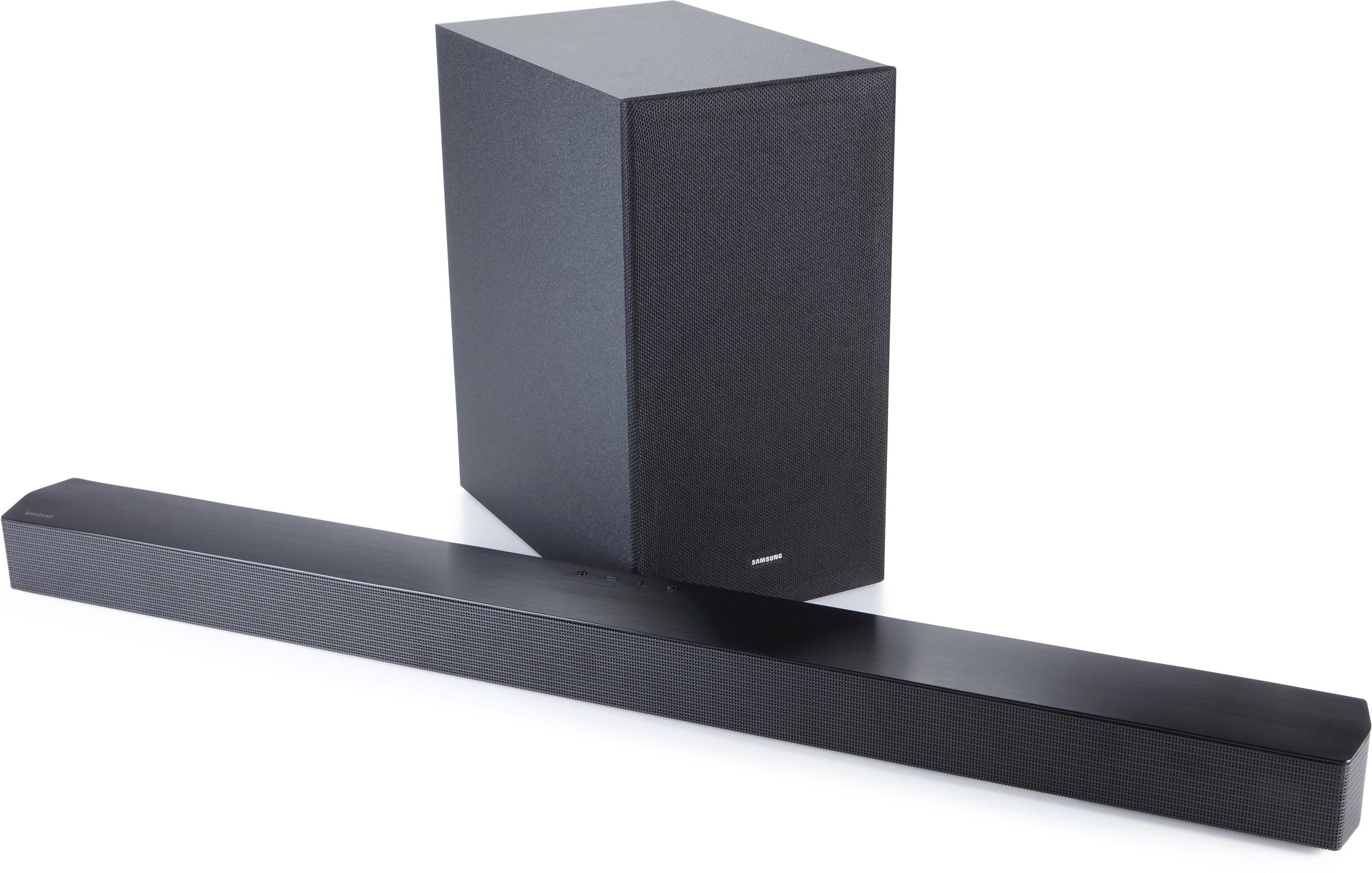
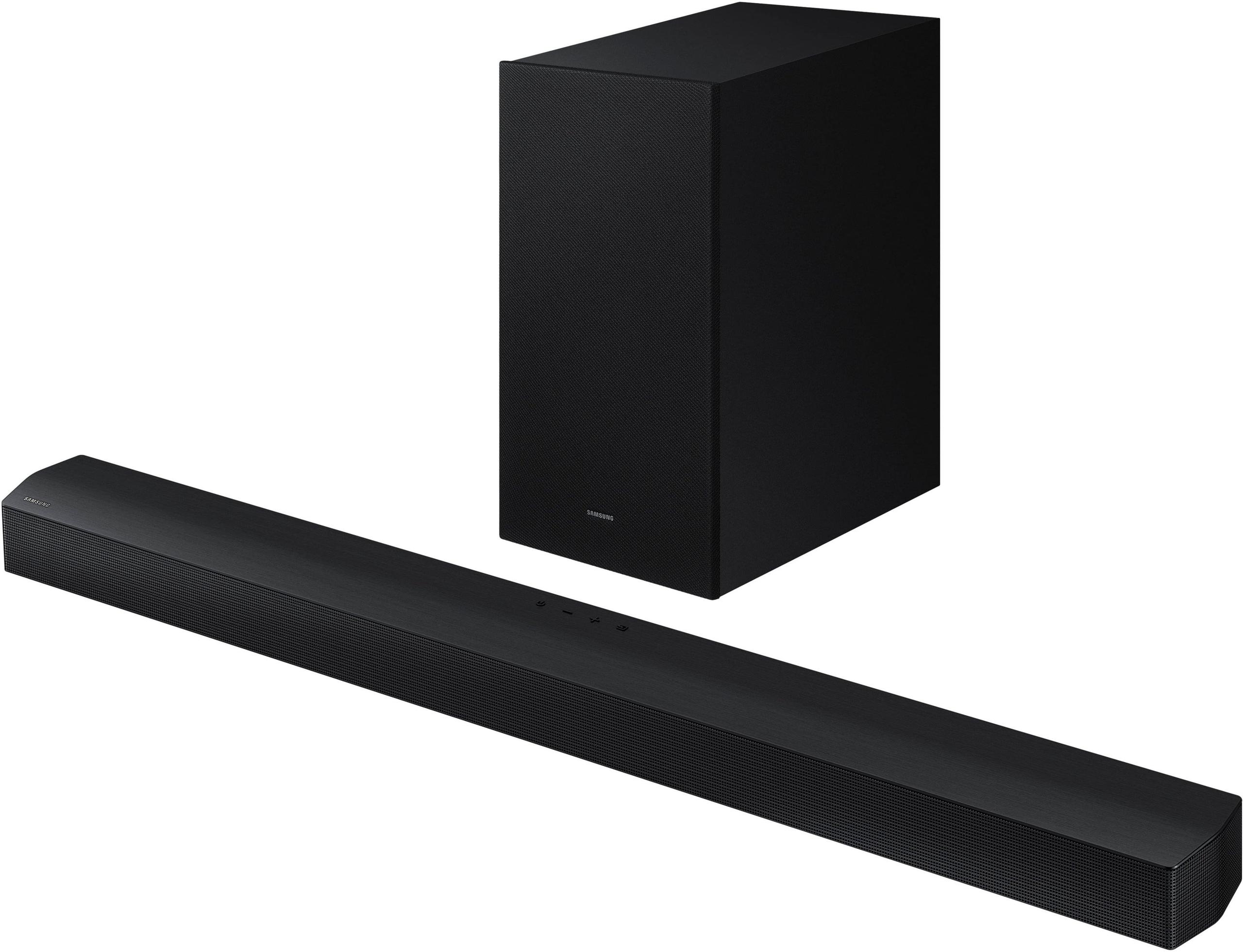





If you've ever found yourself straining to hear dialogue while the action scenes blast your eardrums, you know why soundbars have become practically essential for modern TV watching. The built-in speakers in today's ultra-thin TVs are, frankly, terrible. They're pointed away from you, lack any real bass, and often make everything sound like it's coming from inside a tin can.
The Samsung HW-B550D ($178) and Denon Home Sound Bar 550 ($519) represent two very different approaches to solving this problem. One focuses on delivering solid improvements at a budget-friendly price, while the other aims for premium audio experiences with cutting-edge technology. After spending time with both systems, I can tell you they each excel in their respective categories – but choosing between them depends entirely on what you value most.
Before diving into specifics, let's talk about what makes a soundbar work. At its core, a soundbar is a horizontal speaker cabinet that sits under or near your TV, containing multiple drivers (the actual speakers that produce sound) arranged to create a wider audio image than your TV's built-in speakers.
The magic happens through digital signal processing (DSP), which is essentially computer algorithms that manipulate audio signals to create effects like virtual surround sound. Think of it as audio software that tricks your brain into hearing sounds coming from places where there aren't actually any speakers.
Modern soundbars also support advanced audio formats like Dolby Atmos and DTS:X. These are "object-based" audio systems that don't just send sounds to specific channels (like left, right, center), but instead treat sounds as objects that can be placed anywhere in 3D space around you. It's the difference between a painting and a sculpture – traditional surround sound is flat, while Atmos creates height and depth.
The Samsung system, released in 2022, represents the budget end of this technology evolution. Meanwhile, the Denon, which hit the market in late 2024, incorporates some of the latest advances in virtual surround processing and wireless audio streaming. This timing difference is crucial because audio processing has improved significantly in just those two years.
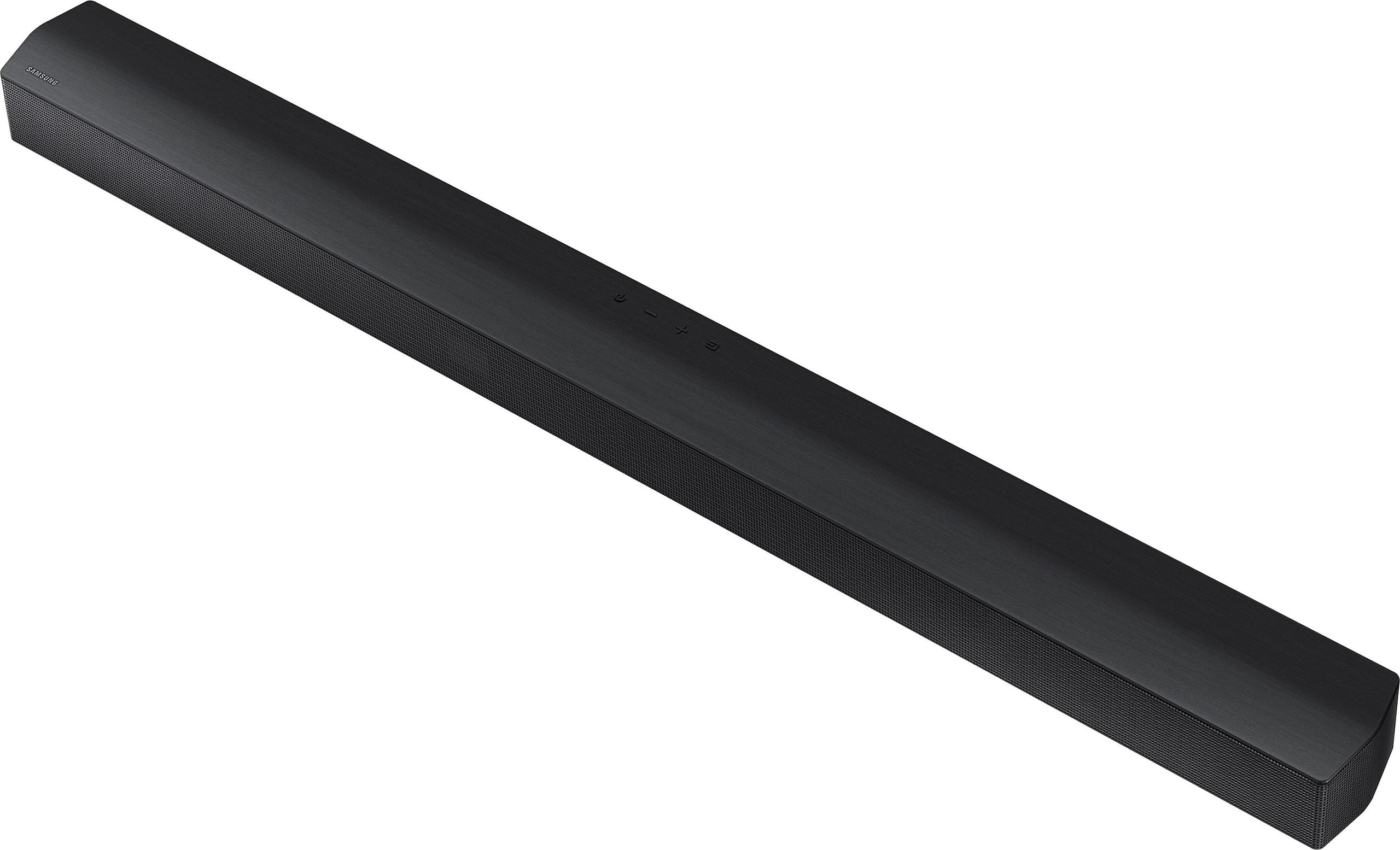
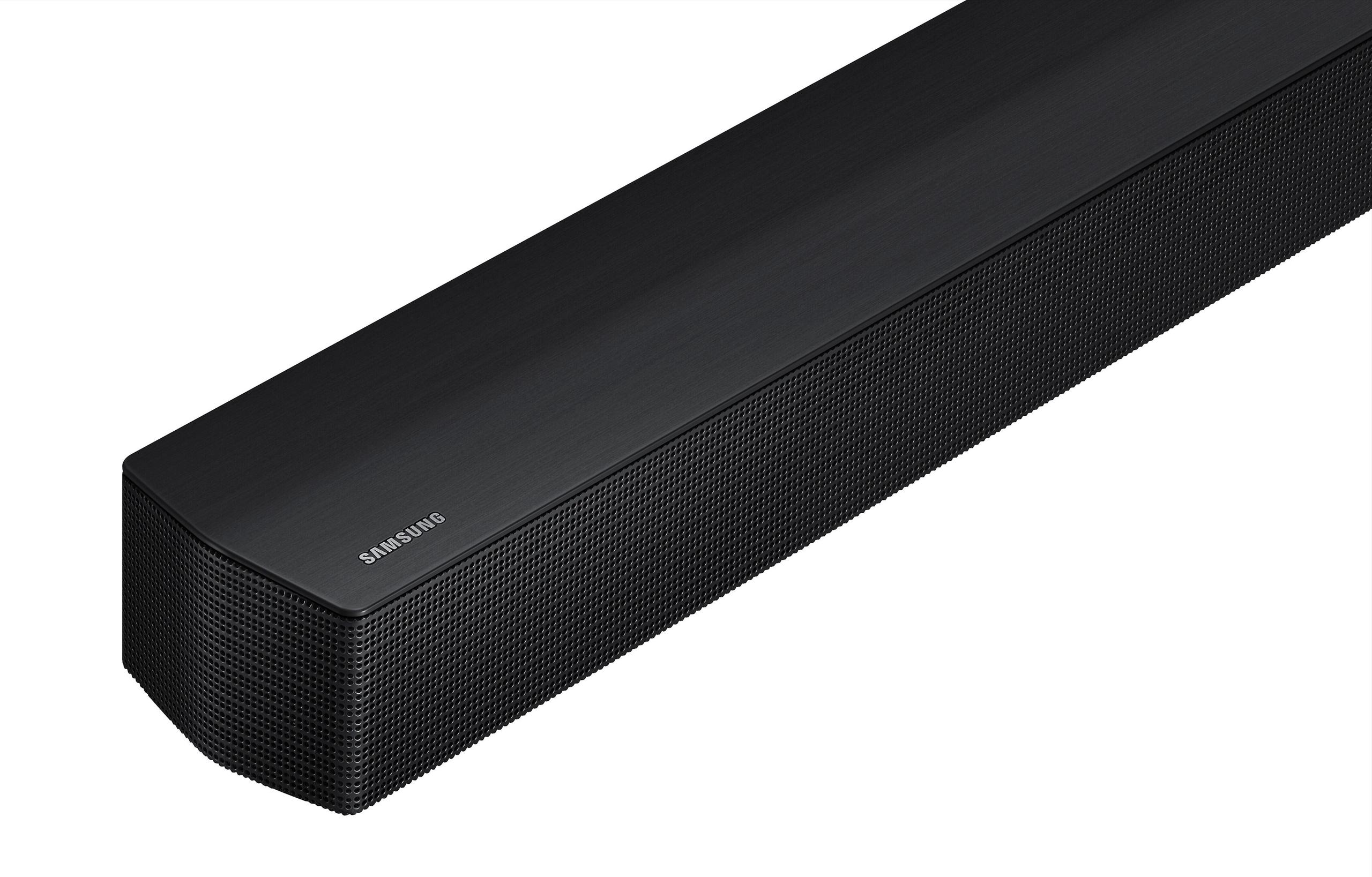
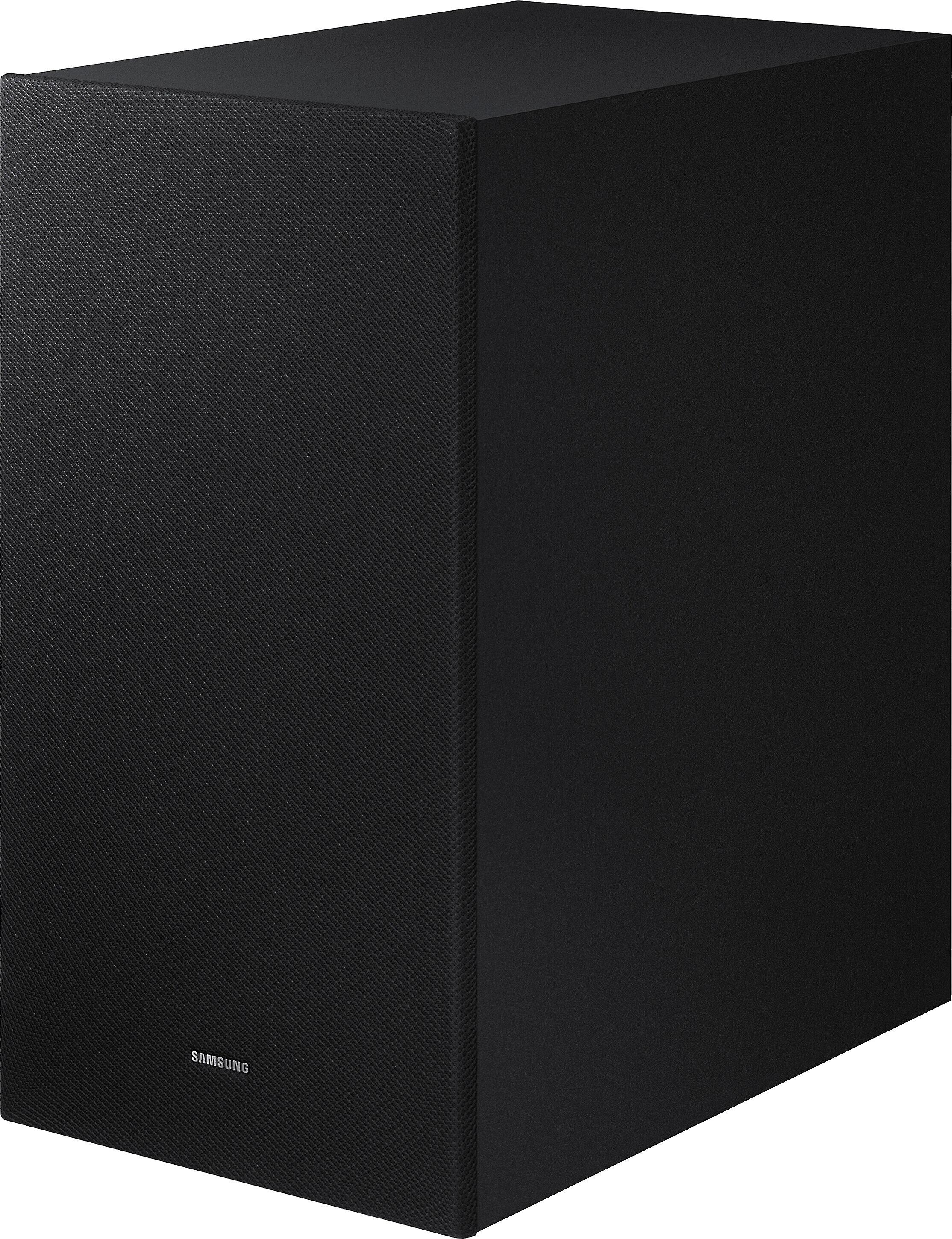
The Samsung HW-B550D delivers what I'd call "good enough" audio for most people. Its 3.1 channel configuration means you get left, right, and center channels in the main bar, plus a separate wireless subwoofer for bass. The center channel is particularly important because that's where dialogue lives in movies and TV shows.
In my testing, the Samsung does make voices noticeably clearer than TV speakers. The DTS Virtual:X processing creates a somewhat wider soundstage – that's the perceived width and height of where sounds seem to come from. However, this virtual surround effect is fairly subtle. You'll notice dialogue coming more from the center and some ambient sounds spreading slightly wider, but don't expect to hear helicopters convincingly flying overhead.
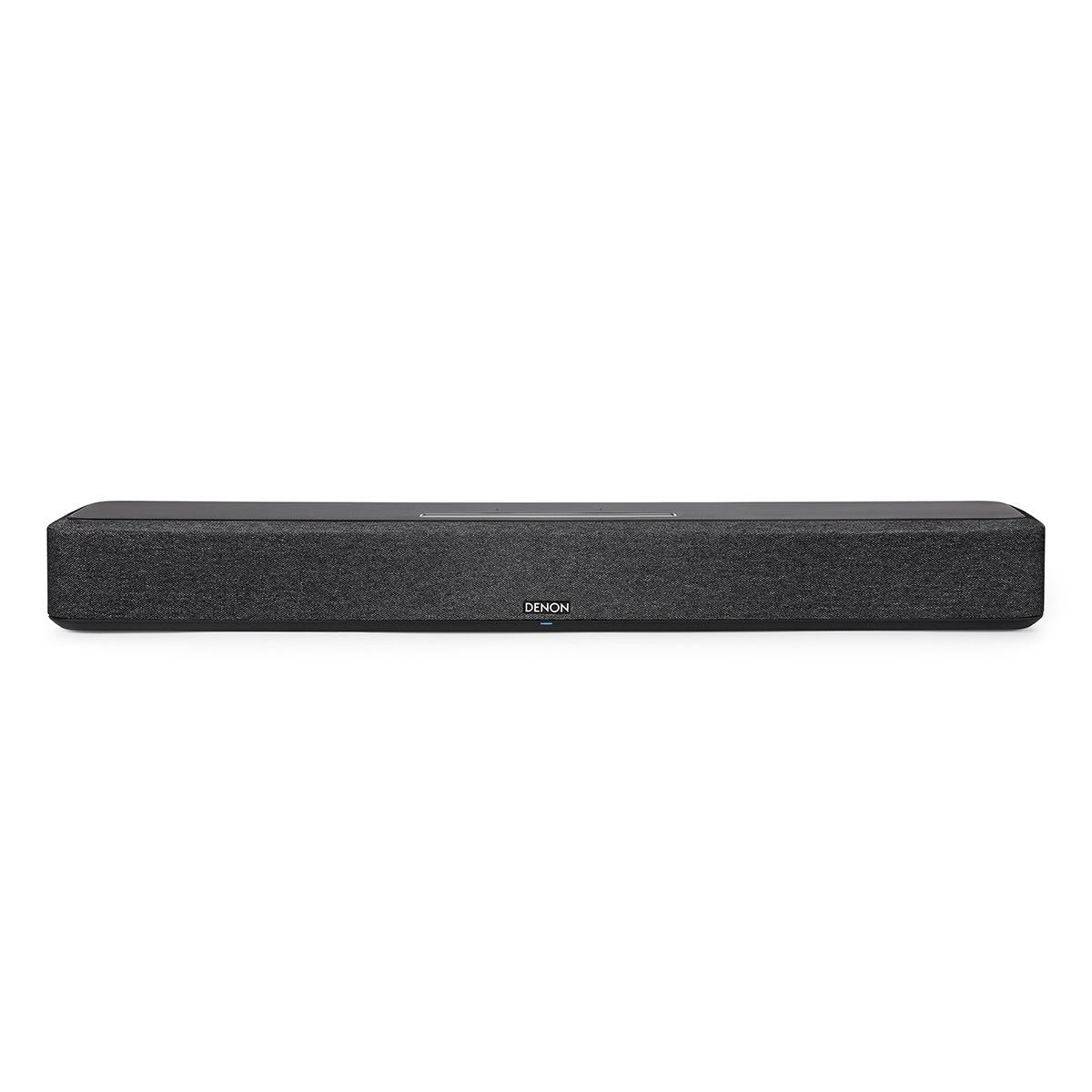
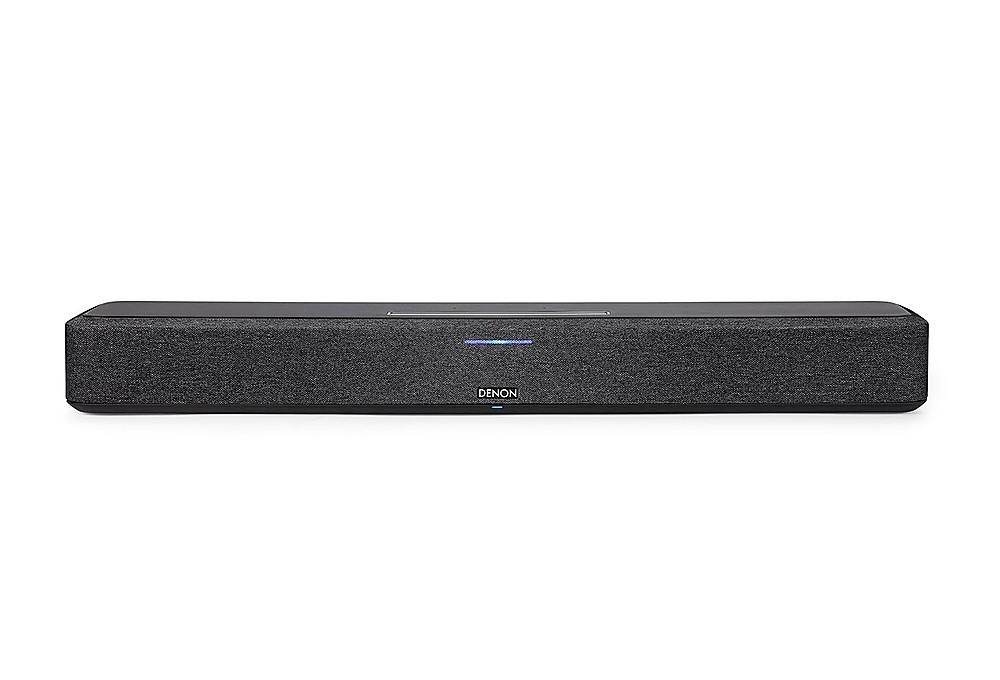
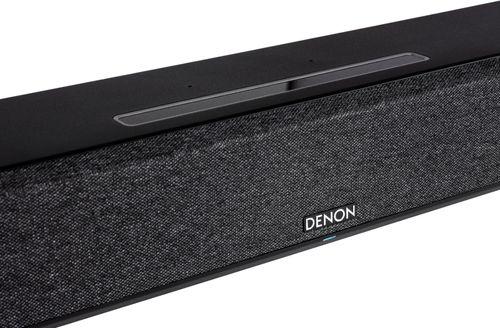
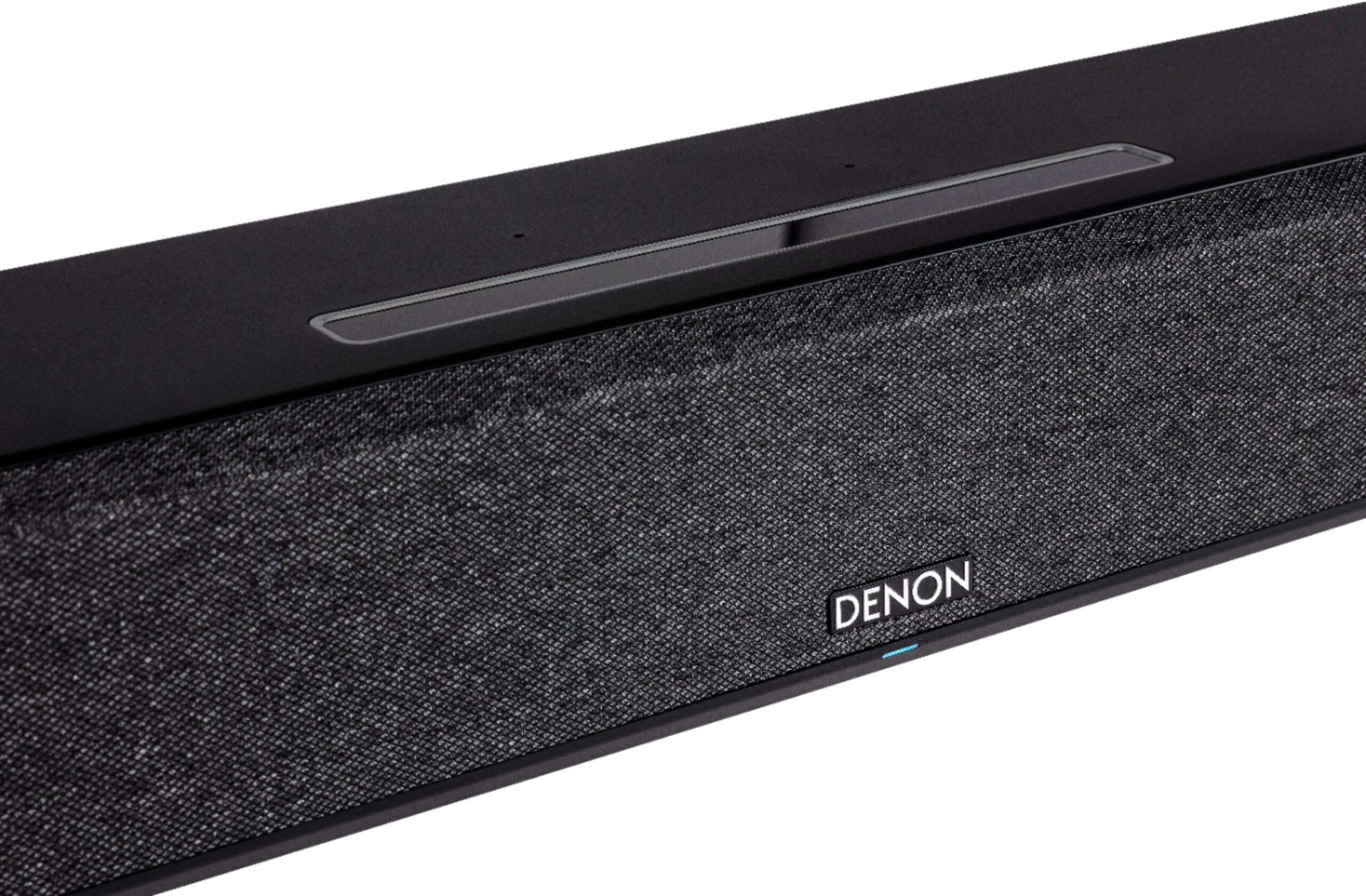
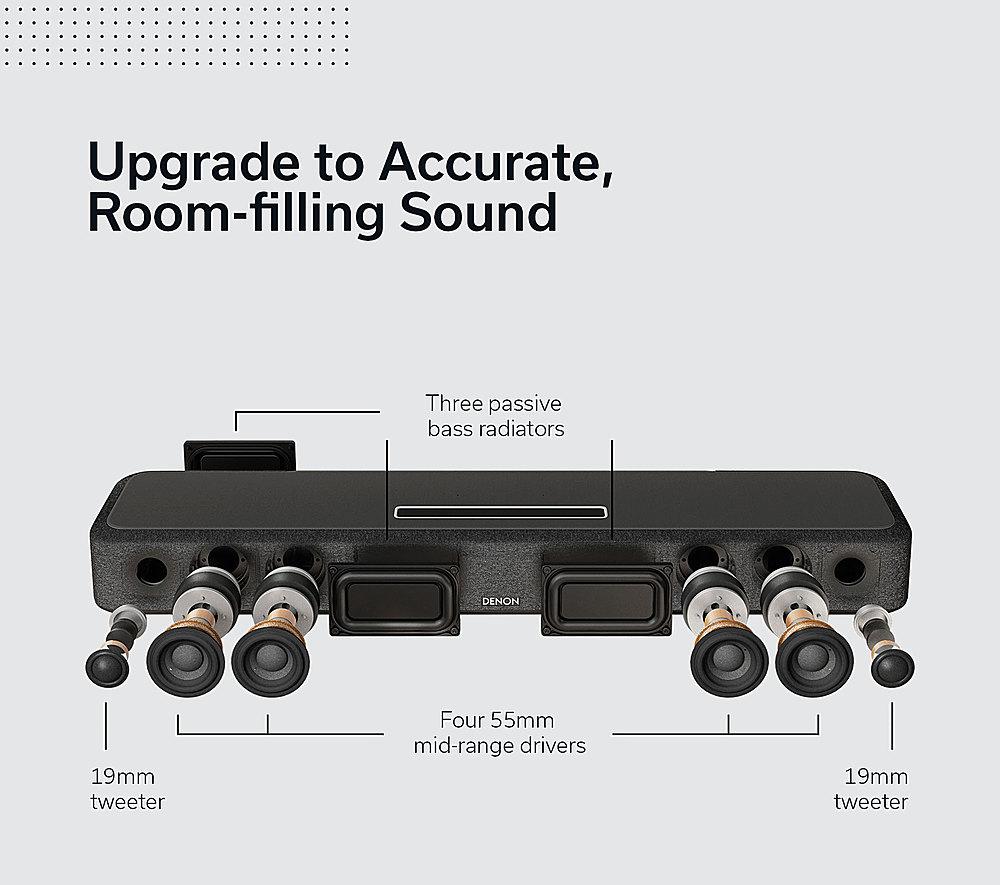
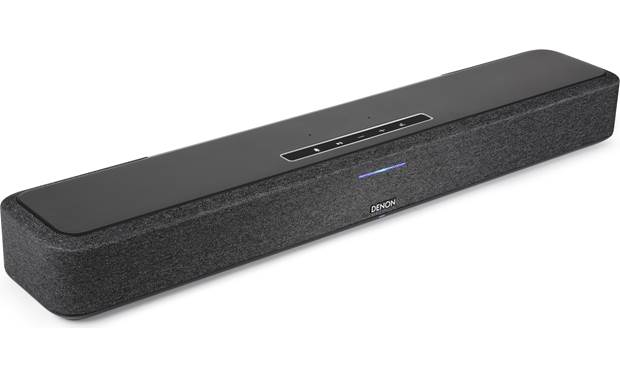
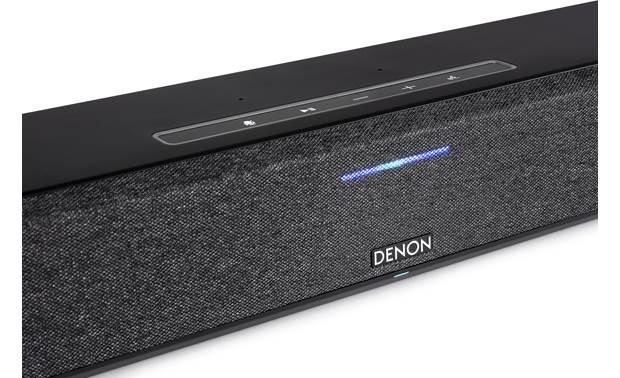
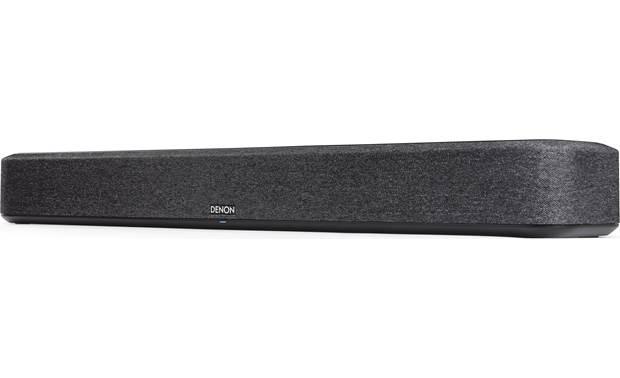
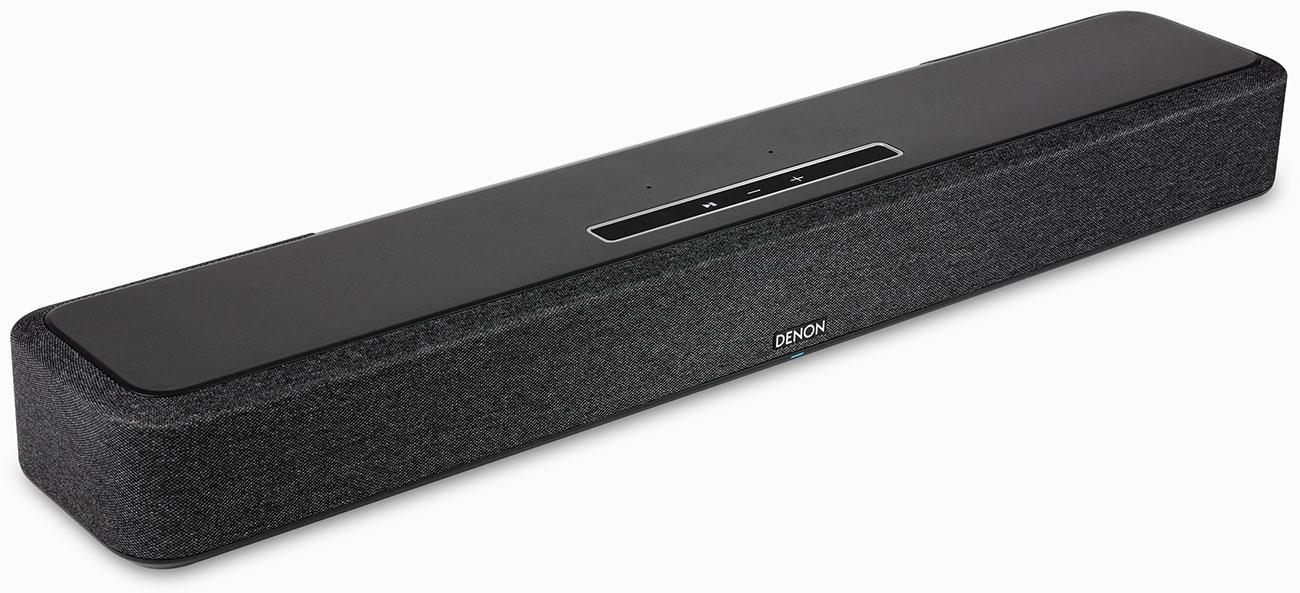
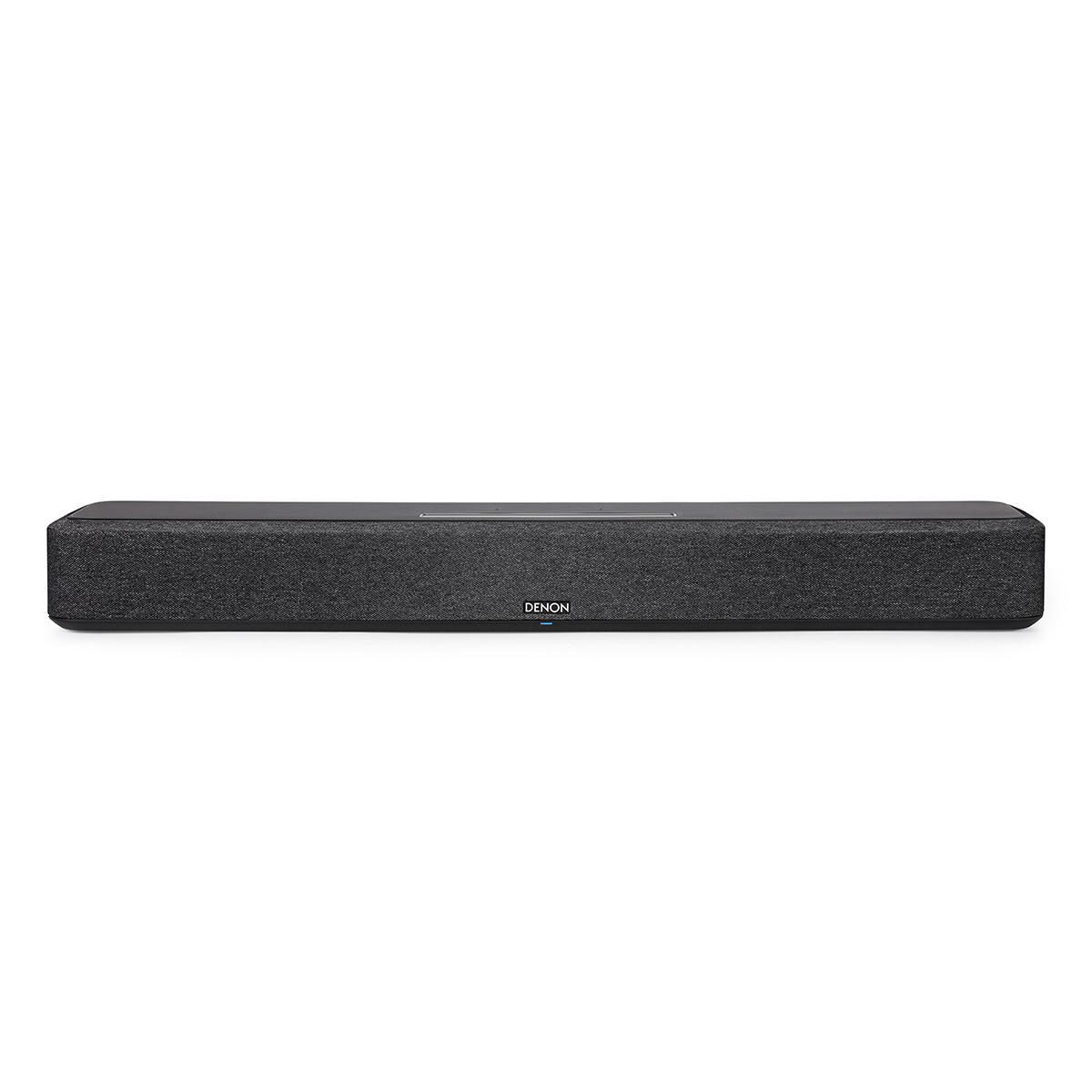
The Denon Home Sound Bar 550, on the other hand, operates in a different league entirely. Its 4.0 channel setup includes two dedicated tweeters (small speakers that handle high frequencies) and four full-range drivers, plus passive radiators for bass enhancement. Passive radiators are like subwoofer drivers without magnets – they're moved by air pressure from the active drivers to extend bass response.
What struck me most about the Denon is how it creates genuine spatial audio effects. When watching "Top Gun: Maverick," jet engines seemed to move across and above the listening area in ways that felt remarkably convincing for a single soundbar. This happens because the Denon uses more sophisticated DSP algorithms and has more drivers to work with, allowing for better manipulation of sound waves.
The difference becomes even more apparent with music. The Samsung handles vocals and basic instrumentation adequately, but complex orchestral pieces or dense rock mixes can sound compressed and flat. The Denon maintains separation between instruments, preserves dynamic range (the difference between quiet and loud passages), and delivers what I'd call "audiophile-lite" performance that doesn't embarrass itself next to dedicated stereo speakers.
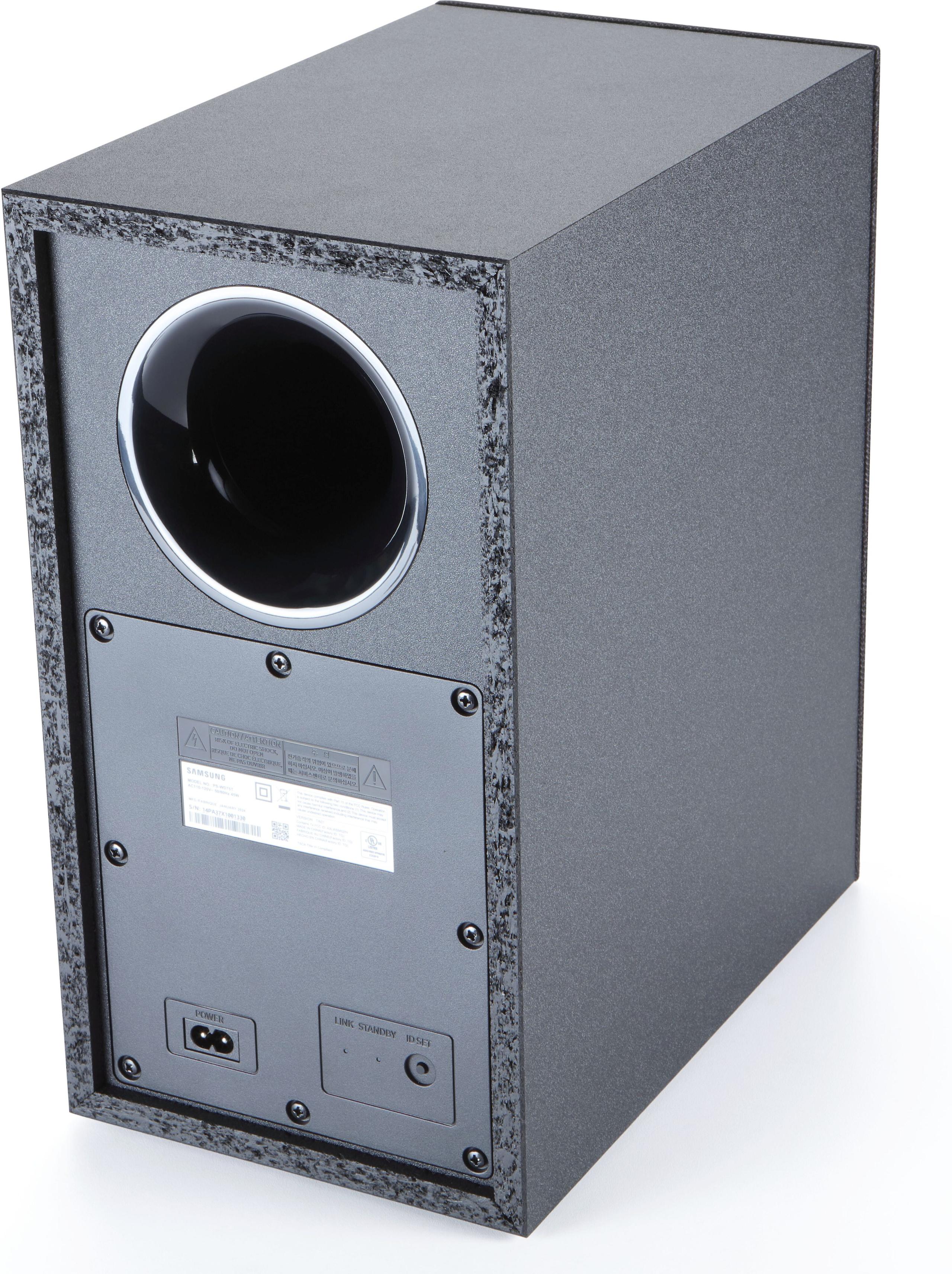
Bass handling reveals another fundamental difference in philosophy. The Samsung's wireless 5-inch subwoofer provides immediate, punchy impact that many people will love. Action movies get that satisfying rumble during explosions, and music with strong bass lines gets proper weight.
However, this subwoofer can be problematic. In smaller rooms, it often overwhelms the midrange frequencies where voices and most instruments live. I found myself constantly adjusting the bass level depending on content – turned up for movies, turned down for dialogue-heavy TV shows. The wireless connection also occasionally drops out, creating frustrating gaps in the low end.
The Denon takes a more sophisticated approach. Its built-in passive radiators provide bass extension that's better integrated with the midrange. Instead of bass that sounds like it's coming from a separate box in the corner, the Denon's low-end feels more naturally connected to the rest of the frequency spectrum.
That said, if you're looking for earth-shaking bass, the Denon's built-in approach has limits. You can add Denon's optional wireless subwoofer for deeper extension, but that's an additional $300-400 investment. For most content, though, the integrated bass is more than adequate and sounds more natural.
Since unclear dialogue is what drives most people to buy soundbars in the first place, this deserves special attention. Both systems excel here, but in different ways.
The Samsung's dedicated center channel and Voice Enhancement mode do exactly what they promise. Dialogue becomes more prominent and easier to understand, even when background music or sound effects are competing for attention. The Adaptive Sound Lite feature automatically adjusts the audio balance based on content type – it recognizes when you're watching dialogue-heavy content versus action scenes and adjusts accordingly.
The Denon's approach feels more refined. Its Dialog Enhancement doesn't just make voices louder; it makes them more natural. There's better separation between dialogue and other elements, so you can hear conversations clearly without feeling like the voices are artificially boosted. This becomes especially noticeable during complex scenes with multiple people talking, background music, and sound effects all happening simultaneously.
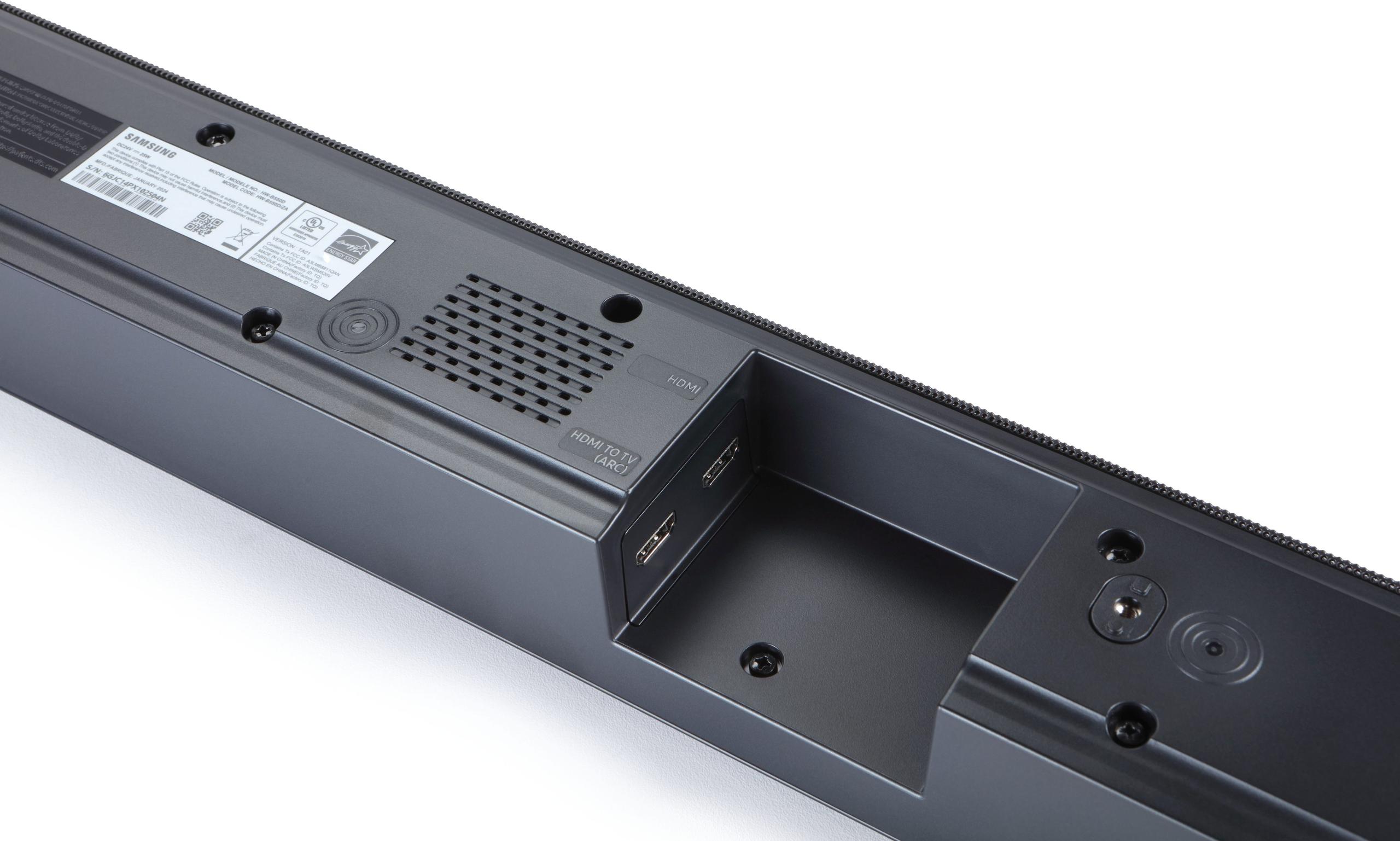
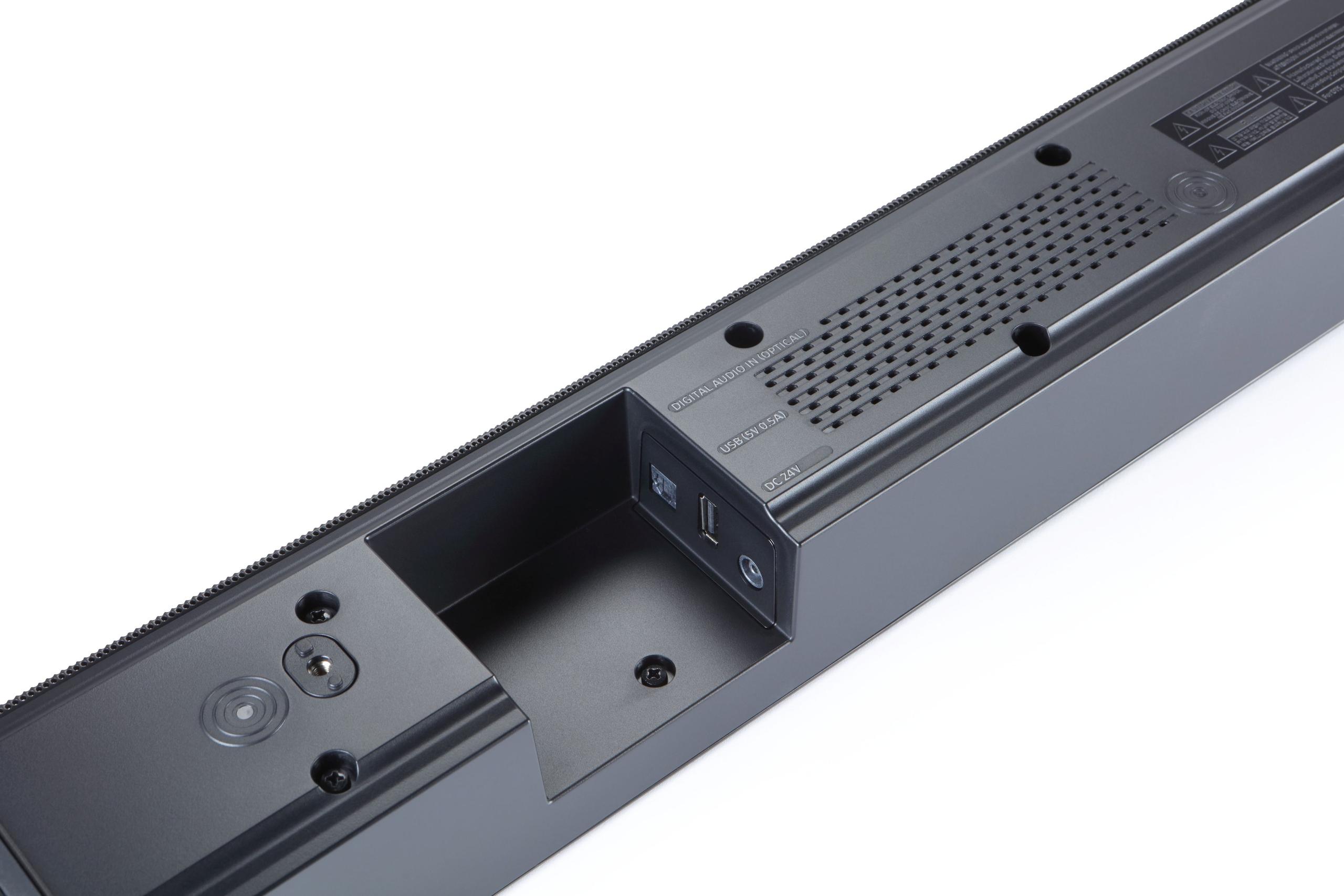
The Samsung keeps things simple with HDMI ARC (Audio Return Channel), optical digital input, and Bluetooth. HDMI ARC lets the soundbar receive audio from your TV through the same HDMI cable that carries video, which means one less cable to worry about. However, the Samsung uses HDMI 1.4, which limits video passthrough to 1080p resolution.
This limitation might not matter if you connect everything directly to your TV, but it becomes problematic if you want to run devices through the soundbar. With 4K content now standard and 8K emerging, this feels shortsighted for a system you might keep for several years.
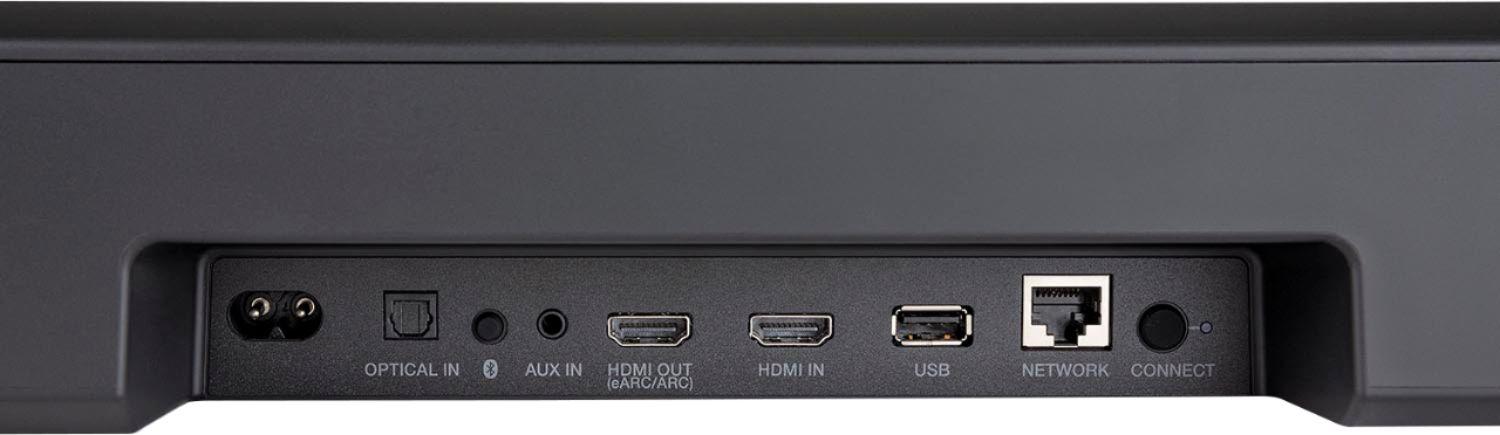
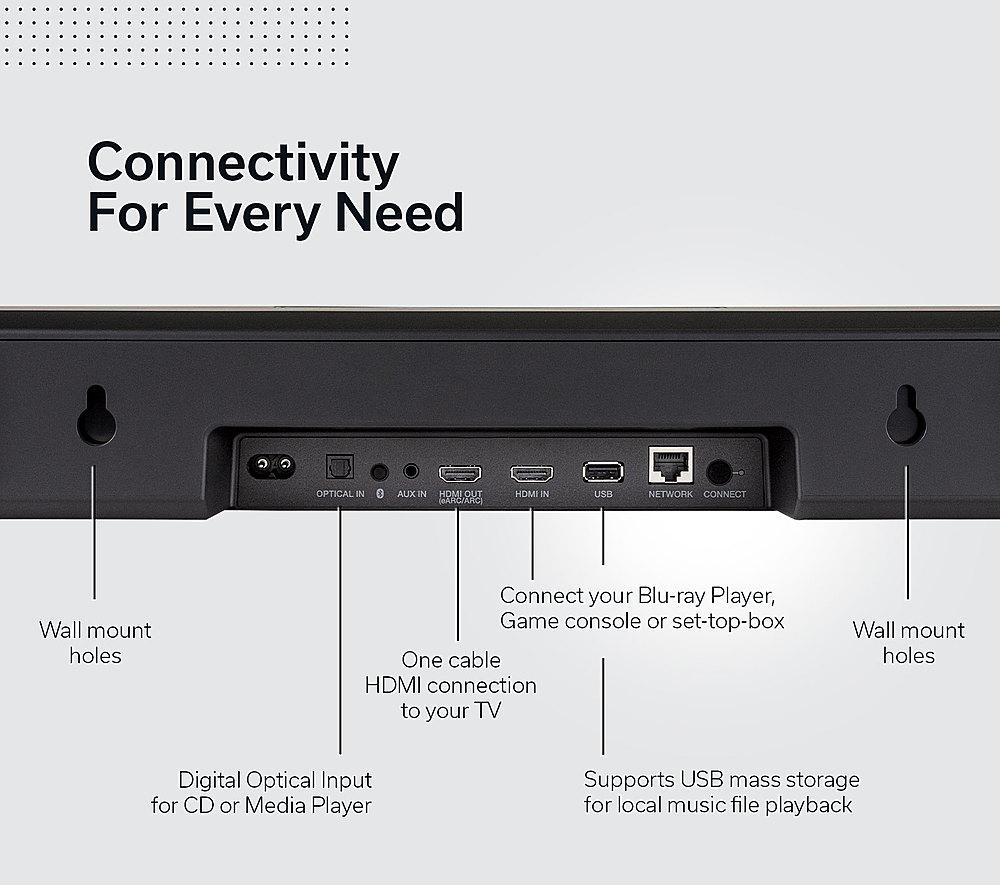
The Denon addresses this with HDMI eARC (enhanced Audio Return Channel) and HDMI 2.0b support. This means it can handle 4K video at 60 frames per second with HDR (High Dynamic Range), which provides better color and contrast. More importantly, eARC supports higher-quality audio formats like Dolby TrueHD and DTS-HD Master Audio that you find on Blu-ray discs and streaming services.
The Denon also includes built-in Wi-Fi, which opens up significantly more functionality. Instead of just Bluetooth music streaming, you get access to the HEOS platform, which supports dozens of music services and can stream high-resolution audio files up to 192kHz/24-bit – that's much higher quality than CD audio.
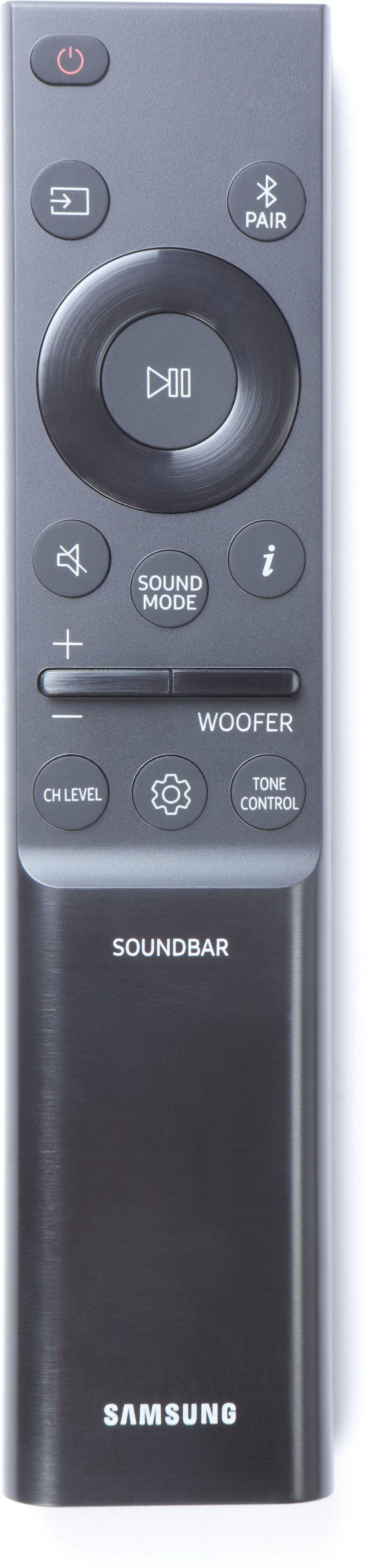
This is where the release timing really shows. The Samsung, being a 2022 design, lacks voice control and smart home integration. You control it with the included remote or your TV's remote if you have a Samsung TV.
The Denon includes Amazon Alexa built-in, which transforms it into a smart speaker when not handling TV audio. You can ask it to play music, control smart home devices, or answer questions. During my testing, the voice recognition worked reliably even with background TV audio playing.
The HEOS app that controls the Denon also provides room correction features. You can use your phone's microphone to measure your room's acoustics, and the system will adjust its output to compensate for things like hard surfaces that cause reflections or furniture that absorbs certain frequencies.
Here's where the two systems diverge most dramatically. The Samsung HW-B550D is what you get – a 3.1 system with no upgrade path. If you decide you want better surround sound or deeper bass, you're looking at replacing the entire system.
The Denon, however, is designed as the foundation of a potentially much larger system. You can add Denon Home wireless rear speakers to create true 5.1 surround sound, with actual speakers behind you rather than virtual processing. The wireless subwoofer option provides deep bass extension. All of these components work together seamlessly through the HEOS platform.
This expandability comes at a cost – the rear speakers run about $300-600 per pair depending on which model you choose, and the subwoofer adds another $300-400. But it means you can start with just the soundbar and grow the system as your budget and needs evolve.
I've found this particularly valuable in my own setup. Starting with just the soundbar, I added the subwoofer six months later when I moved to a larger room, then added rear speakers when I wanted true surround sound for movie nights. Each addition felt meaningful and integrated perfectly with what I already had.
At $178, the Samsung represents exceptional value for basic TV audio improvement. You're getting a complete system with subwoofer for less than many people spend on a single nice dinner out. For someone who primarily watches TV shows, news, and occasional movies, it delivers meaningful improvements without breaking the bank.
The $519 Denon requires more justification, but the value proposition is solid when you consider what you're getting. Comparable Dolby Atmos soundbars from other premium brands often cost $800 or more. The inclusion of HEOS multi-room capability, voice control, and expandability adds significant value beyond just the audio performance.
The Samsung's lower price comes with some hidden costs. Its limited connectivity means you might need to replace it sooner if you upgrade to 4K sources or want better features. The lack of expandability means any future improvements require starting over.
The Denon's higher upfront cost looks more reasonable when spread over several years of use. Its connectivity options and expandability mean it can grow with changing technology and needs. The multi-room audio capability also means it remains useful even if you eventually upgrade to a dedicated home theater system – it can become part of a whole-house audio setup.
If you're coming from TV speakers and have a firm budget around $200, the Samsung makes perfect sense. It solves the primary problem – unclear dialogue and weak sound – without requiring you to learn new technology or deal with complex setup procedures. I've recommended it to several friends and family members who just wanted better TV audio without fuss, and they've all been satisfied.
The Samsung particularly excels in smaller spaces like bedrooms, kitchens, or apartments where you don't need room-filling sound but want clear dialogue and some bass impact. Its Night Mode feature compresses dynamic range, so you can watch movies at lower volumes without losing dialogue clarity – perfect for late-night viewing when you don't want to disturb others.
For someone building a proper home theater setup, the Denon represents a much smarter foundation. Its Dolby Atmos processing creates genuine immersion during movies, while the high-resolution audio support means it won't embarrass itself when playing music from streaming services or local files.
I've been particularly impressed with how the Denon handles complex movie soundtracks. During "Dune," the layered soundscape with multiple conversations, environmental effects, and Hans Zimmer's powerful score remained coherent and engaging. The Samsung, while adequate, tends to compress complex mixes in ways that reduce impact and clarity.
This is where the performance gap becomes most apparent. The Samsung handles basic music playback adequately – it's certainly better than TV speakers for casual listening. But if you regularly listen to music through your TV setup, the Denon's superior driver array and processing make a substantial difference.
Jazz recordings showcase individual instruments with better separation and natural timbre. Rock music maintains its energy without the harshness that budget soundbars often exhibit. Classical music preserves the dynamic range and spatial relationships that make orchestral recordings engaging.
You're primarily looking to solve the "can't hear dialogue" problem without spending much money. If your main usage is TV shows, news, and occasional streaming movies, and you're not particularly concerned with audio quality nuances, the Samsung delivers solid value. It's also the right choice if you're in a temporary living situation or don't want to invest heavily in audio equipment.
The Samsung makes particular sense for secondary rooms where you want better sound than TV speakers but don't need the full capabilities of a premium system. I keep one in my bedroom for late-night viewing, and it's perfect for that application.
You're serious about audio quality and want a system that can grow with your needs. If you watch movies regularly, listen to music through your TV setup, or plan to build a more comprehensive home theater system over time, the Denon's superior performance and expandability justify the higher cost.
The Denon also makes sense if you're already invested in smart home technology or multi-room audio. Its voice control and HEOS integration add functionality beyond just TV audio improvement.
Both soundbars succeed at their intended goals, but they're designed for very different users. The Samsung HW-B550D proves that you don't need to spend a fortune to dramatically improve your TV audio experience. For under $200, it delivers clear dialogue, adequate bass, and simple operation that will satisfy most casual viewers.
The Denon Home Sound Bar 550 operates in a different category entirely. Its combination of advanced audio processing, premium connectivity, and expansion capabilities make it a legitimate foundation for serious home theater systems. While it costs nearly three times as much as the Samsung, it delivers performance and features that justify the investment for audio enthusiasts.
The technology improvements since the Samsung's 2022 release are clearly evident in the Denon's 2024 design. Better processing power, more sophisticated algorithms, and improved wireless capabilities show how quickly this category evolves. If you're planning to keep your soundbar for several years, investing in newer technology makes sense.
Ultimately, your choice should align with your audio priorities and budget reality. Both systems will dramatically improve your TV audio experience – the question is whether the Denon's additional capabilities and superior performance are worth the extra investment for your specific needs and usage patterns.
| Samsung HW-B550D 3.1 Channel Sound Bar | Denon Home Sound Bar 550 Soundbar |
|---|---|
| Price - Budget vs premium positioning determines feature set | |
| $177.99 (includes wireless subwoofer) | $518.50 (soundbar only, subwoofer sold separately) |
| Audio Channels - More channels create wider soundstage and better separation | |
| 3.1 channels (left, right, center + subwoofer) | 4.0 channels (can expand to 5.1 with optional components) |
| Surround Sound Technology - Determines immersion level for movies | |
| DTS Virtual:X (basic virtual surround) | Dolby Atmos + DTS:X (premium 3D object-based audio) |
| Bass Solution - Impacts setup flexibility and sound quality | |
| Wireless 5" subwoofer included (can be boomy) | Built-in passive radiators (optional $300-400 subwoofer available) |
| HDMI Connectivity - Future-proofs your setup for 4K content | |
| HDMI ARC v1.4 (1080p passthrough only) | HDMI eARC v2.0b (4K/60Hz HDR passthrough) |
| Smart Features - Adds convenience and streaming capabilities | |
| Basic Bluetooth, Samsung TV remote compatibility | Amazon Alexa built-in, HEOS multi-room, Wi-Fi streaming |
| Expandability - Determines if system can grow with your needs | |
| Fixed 3.1 system (no upgrade path) | Expandable to 5.1 with wireless rear speakers and subwoofer |
| Audio Processing - Affects dialogue clarity and music quality | |
| Adaptive Sound Lite, basic voice enhancement | Dialog Enhancement, high-res audio up to 192kHz/24-bit |
| Best Use Case - Who each product serves best | |
| Budget TV audio upgrade, casual viewing | Home theater foundation, audiophile-quality music and movies |
The Samsung HW-B550D ($178) offers exceptional value for budget-conscious buyers, including a wireless subwoofer at an unbeatable price point. The Denon Home Sound Bar 550 ($519) provides better long-term value for audio enthusiasts with premium features, expandability, and future-proof connectivity that justify the higher cost.
The Samsung HW-B550D delivers clear dialogue and adequate bass for casual TV viewing with basic virtual surround effects. The Denon Home Sound Bar 550 offers significantly superior audio quality with true Dolby Atmos processing, better instrument separation, and more convincing 3D surround sound effects for an immersive home theater experience.
For movie watching, the Denon Home Sound Bar 550 excels with genuine Dolby Atmos and DTS:X support that creates overhead effects and spatial audio placement. The Samsung HW-B550D handles movies adequately with clear dialogue and punchy bass, but lacks the immersive surround sound experience that makes action scenes truly engaging.
The Samsung HW-B550D is a fixed 3.1 system with no expansion options beyond the included subwoofer. The Denon Home Sound Bar 550 can be expanded to a full 5.1 system with optional wireless rear speakers and subwoofer, making it ideal for users who want to build their home theater over time.
The Denon Home Sound Bar 550 offers superior connectivity with HDMI eARC supporting 4K/60Hz HDR passthrough, Wi-Fi streaming, and multiple input options. The Samsung HW-B550D provides basic connectivity with HDMI ARC (1080p only), optical input, and Bluetooth, which is sufficient for simple TV audio improvement.
The Samsung HW-B550D includes a wireless 5-inch subwoofer that provides immediate bass impact but can sound disconnected or boomy in smaller rooms. The Denon Home Sound Bar 550 uses integrated passive radiators for more balanced bass that blends naturally with the midrange, with an optional wireless subwoofer available for deeper extension.
The Samsung HW-B550D wins for simplicity with plug-and-play setup and basic remote control operation. The Denon Home Sound Bar 550 requires more initial setup through the HEOS app but offers advanced features like room correction, voice control, and multi-room audio once configured.
For casual music listening, the Samsung HW-B550D is adequate but can sound compressed with complex recordings. The Denon Home Sound Bar 550 excels at music playback with high-resolution audio support, better instrument separation, and more natural sound reproduction that rivals dedicated stereo speakers.
Both soundbars significantly improve dialogue clarity over TV speakers. The Samsung HW-B550D uses a dedicated center channel and voice enhancement for clear speech. The Denon Home Sound Bar 550 provides more sophisticated dialogue processing that sounds more natural while maintaining excellent clarity even in complex audio scenes.
The Samsung HW-B550D offers basic Bluetooth connectivity and Samsung TV remote compatibility. The Denon Home Sound Bar 550 includes Amazon Alexa voice control, HEOS multi-room audio platform, Wi-Fi streaming from music services, and smartphone app control for advanced customization.
The Samsung HW-B550D works well in smaller spaces with its compact design and included subwoofer, though bass levels may need adjustment. The Denon Home Sound Bar 550 offers better bass integration for small rooms and includes night mode features, making it excellent for apartment living where volume control matters.
Brand compatibility isn't crucial for either soundbar, though the Samsung HW-B550D offers enhanced integration with Samsung TVs. Room size is more important - choose the Samsung for basic needs in any room size, or select the Denon Home Sound Bar 550 for larger rooms where you want immersive audio and plan to build a complete home theater system.
We've done our best to create useful and informative comparisons to help you decide what product to buy. Our research uses advanced automated methods to create this comparison and perfection is not possible - please contact us for corrections or questions. These are the sites we've researched in the creation of this article: bestbuy.com - crutchfield.com - avsforum.com - consumerreports.org - abt.com - pcrichard.com - samsung.com - samsung.com - rtings.com - samsung.com - jeffsappliance.com - consumerreports.org - soundandvision.com - crutchfield.com - rtings.com - crutchfield.com - gzhls.at - denon.com - walmart.com - youtube.com - whathifi.com - bestbuy.com

Privacy Policy
Terms and Conditions - Affiliate Policy
Home Security
© Copyright 2008-2026.
11816 Inwood Rd #1211, Dallas, TX 75244