














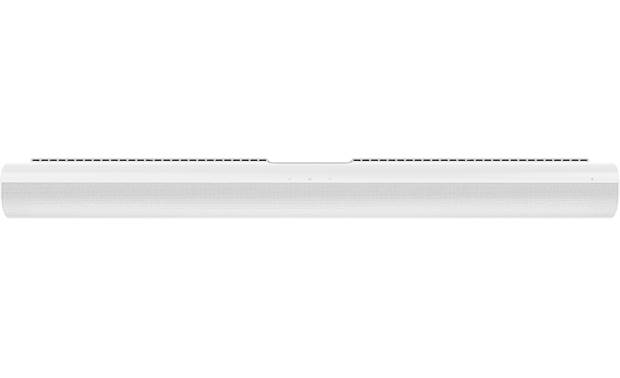




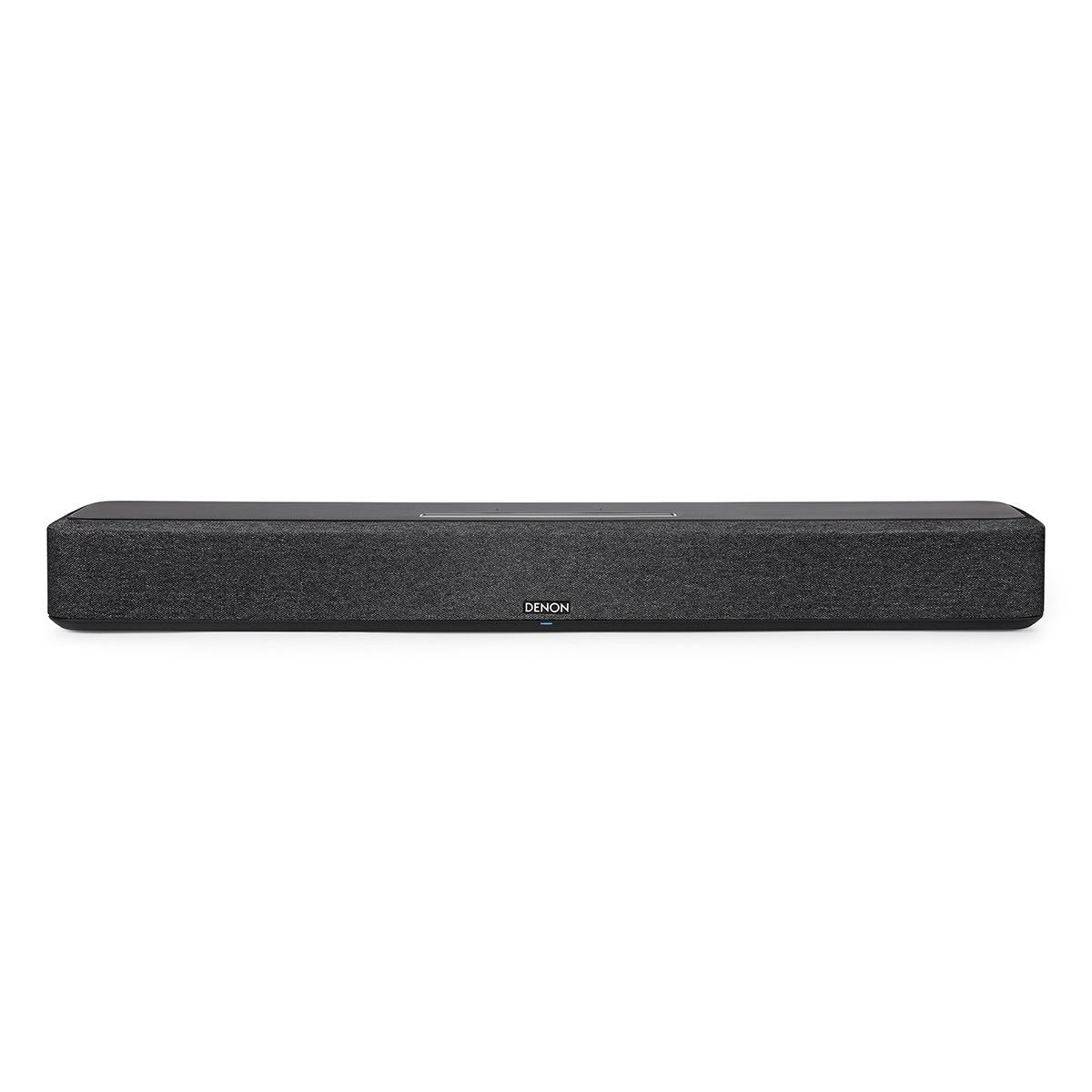

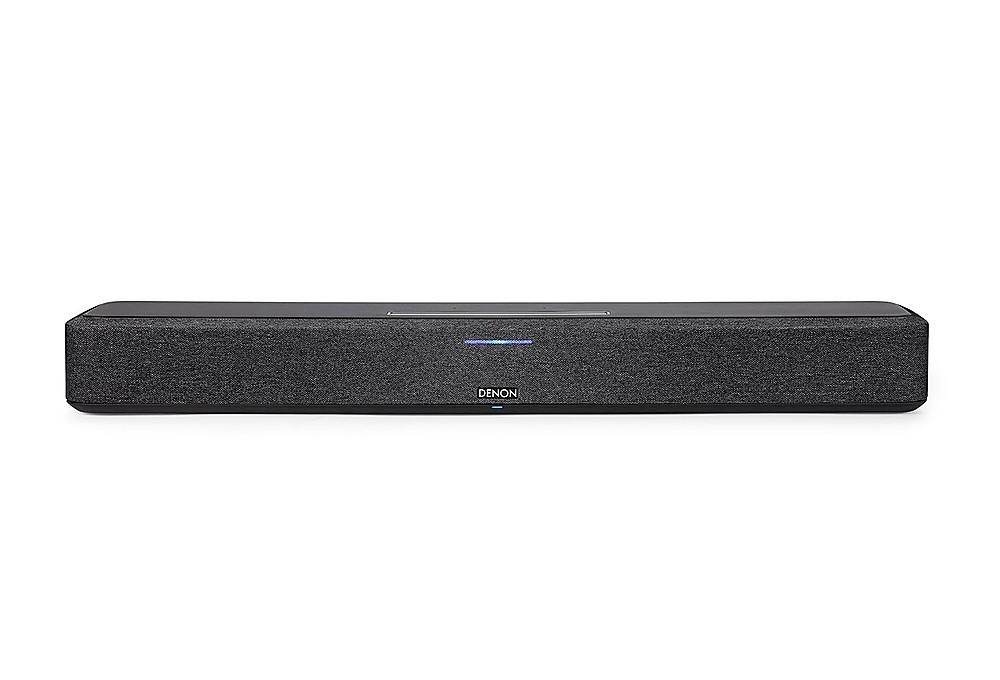
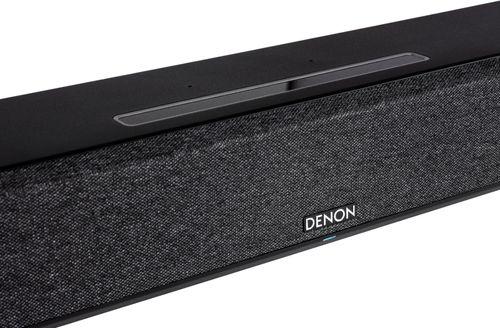
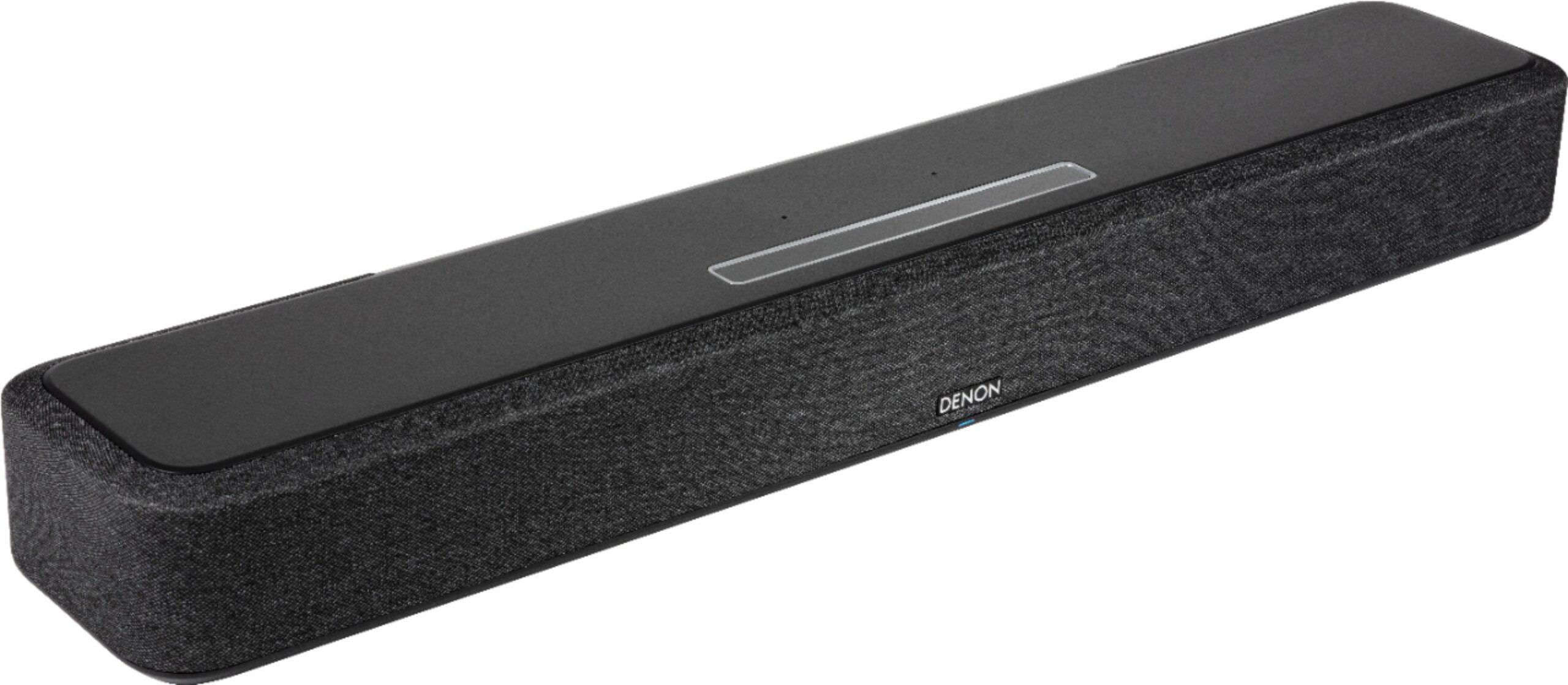

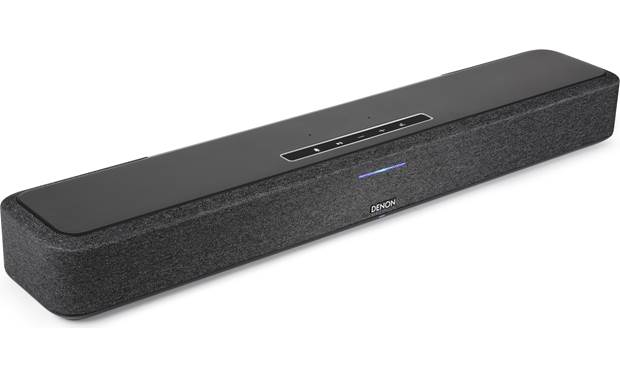
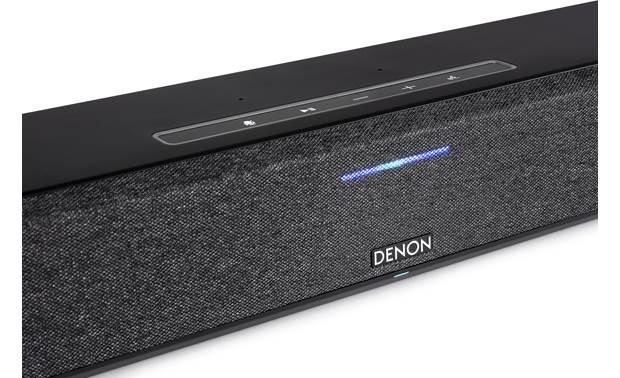
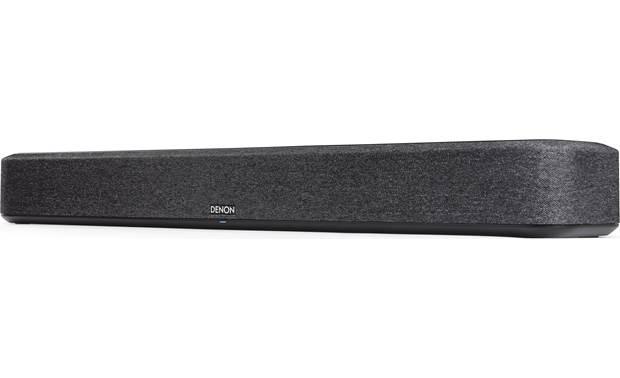
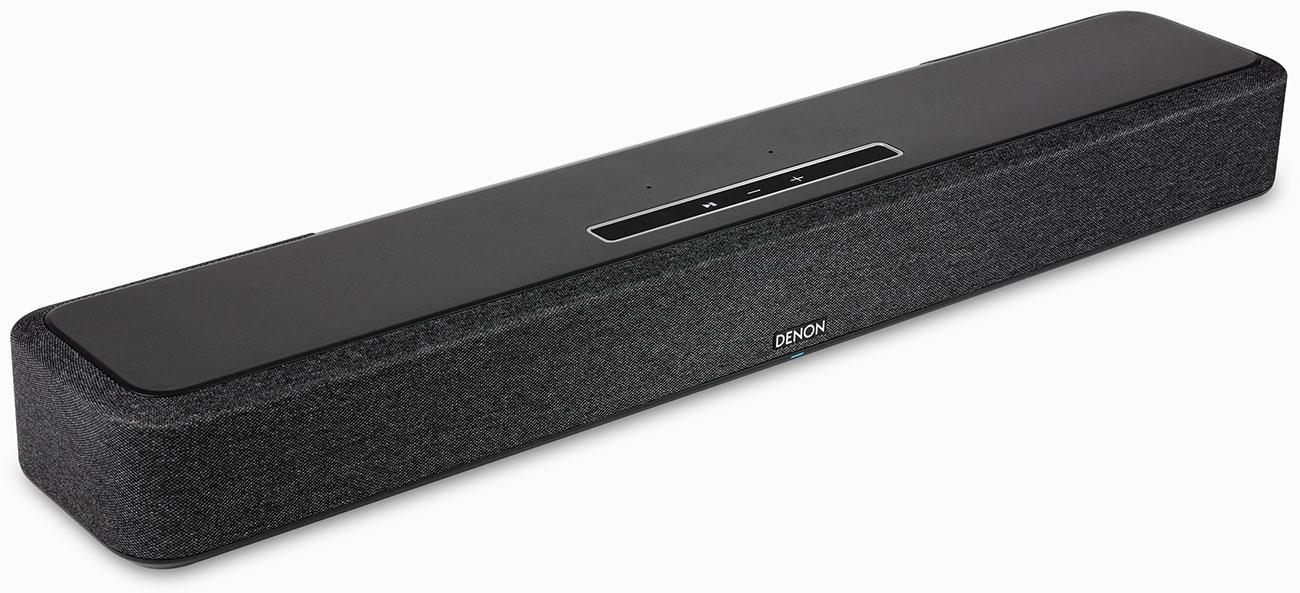
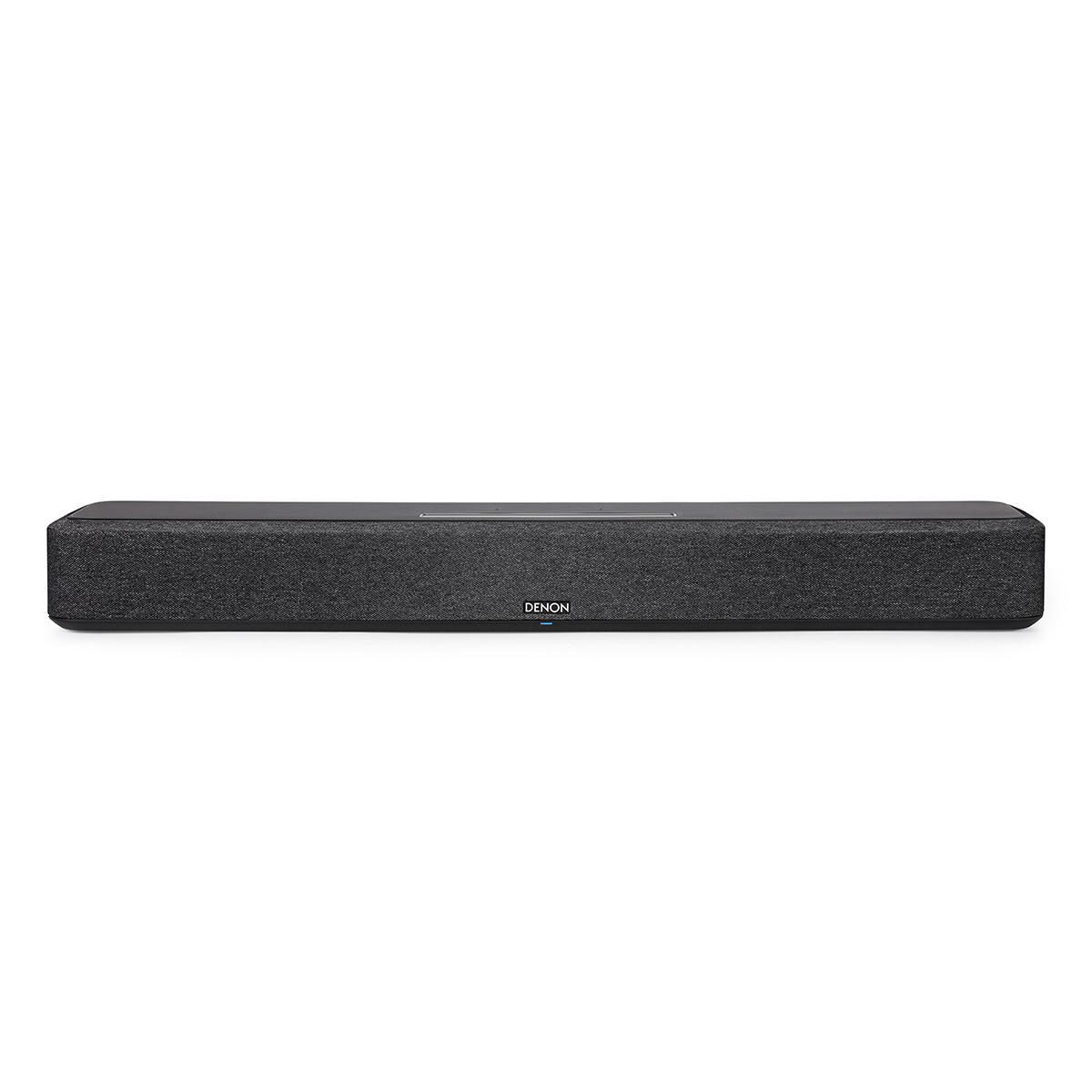
If you've been shopping for a premium soundbar lately, you've probably noticed that prices have climbed significantly over the past few years. What used to be a $300-400 category has evolved into a sophisticated market where $500-800 soundbars compete with traditional surround sound systems. Two standout options that frequently appear in shopping carts are the Sonos Arc ($540.60) and the Denon Home Sound Bar 550 ($518.50).
The soundbar market has undergone a massive transformation since 2020. Early soundbars were essentially glorified TV speakers that made dialogue clearer—nothing more. Today's premium models are genuinely attempting to replace full surround sound systems, and in many cases, they're succeeding remarkably well.
The key breakthrough has been the integration of Dolby Atmos, which is a surround sound technology that places audio "objects" anywhere in a three-dimensional space around you. Instead of traditional channel-based audio (like 5.1 surround), Atmos treats sounds as individual objects that can move freely through your room. This means a helicopter in a movie can literally seem to fly overhead, even from a single soundbar sitting under your TV.
When evaluating premium soundbars, you should focus on several critical areas: how convincingly they create that immersive surround experience, whether they'll work well in your specific room setup, what devices you can connect to them, and whether you can expand the system later. The sweet spot seems to be around $500-600, where manufacturers can include premium drivers and sophisticated processing without reaching the stratospheric prices of flagship models.
The Sonos Arc launched in June 2020, arriving during the height of the pandemic when home entertainment upgrades were surging. Sonos positioned it as their flagship soundbar, replacing the well-regarded Playbar with something far more ambitious. The Arc represented Sonos's first serious attempt at Dolby Atmos, incorporating upward-firing speakers that bounce sound off your ceiling to create height effects.
Since its release, the Arc has received numerous software updates that have actually improved its performance over time—something fairly unique in consumer electronics. Sonos added features like Speech Enhancement for clearer dialogue, Night Sound for late-night viewing, and improved voice control responsiveness. The company's commitment to long-term software support means early adopters haven't been left behind as the platform evolved.
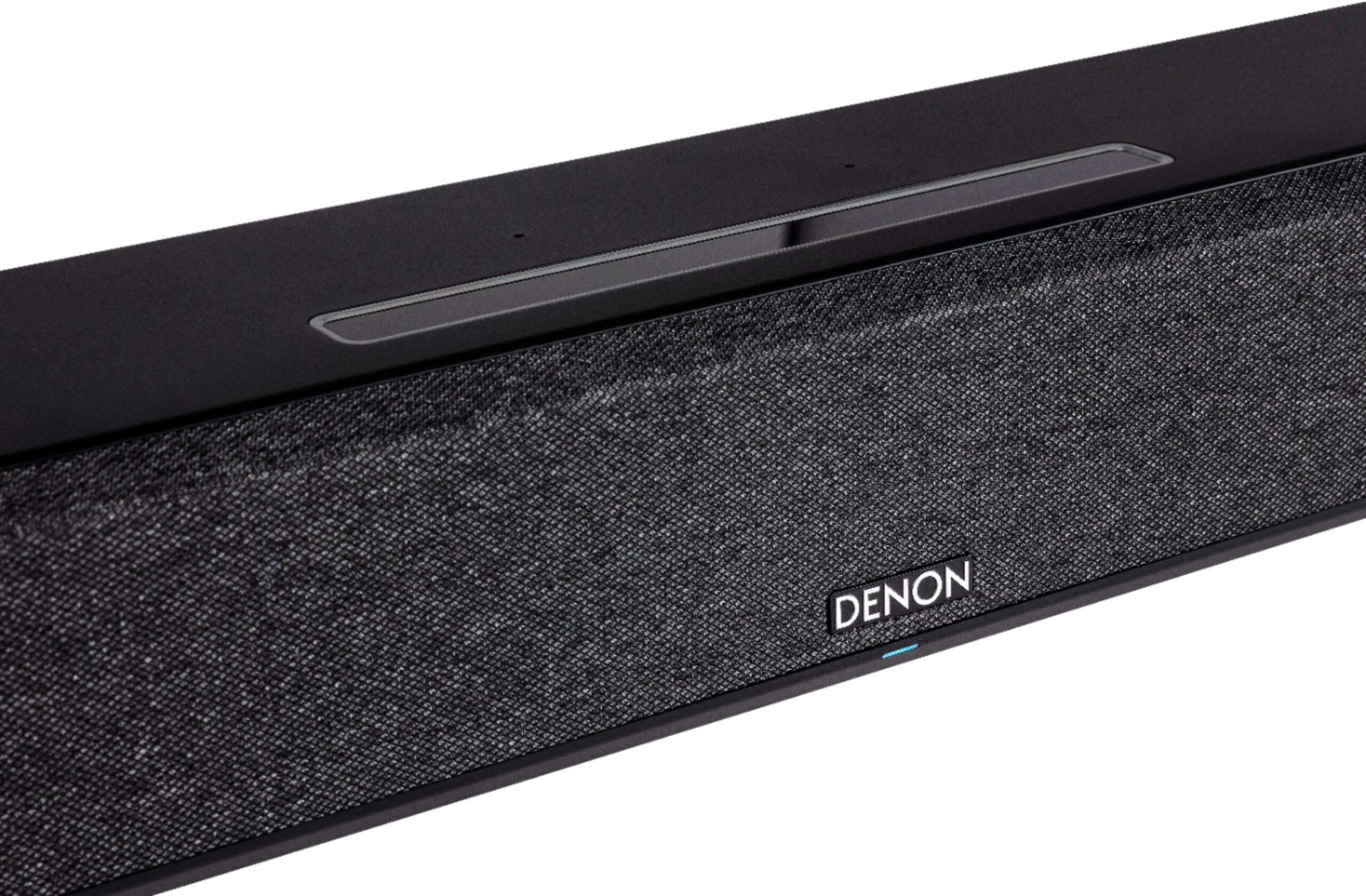
The Denon Home Sound Bar 550 is considerably newer, arriving in late 2023 as part of Denon's push into the wireless speaker market. While Denon has decades of experience in high-end audio receivers, the Home series represents their attempt to capture the simplicity and convenience that companies like Sonos pioneered. The timing is strategic—by 2023, consumers were looking for alternatives to the dominant Sonos ecosystem, and Denon leveraged their audio engineering expertise to create something genuinely different.
Here's where these two soundbars take fundamentally different approaches to the same goal. The Sonos Arc uses what I'd call the "brute force" method: it actually fires sound upward using dedicated speakers built into the top of the soundbar. When you're watching a movie with Atmos content, these upward-firing drivers bounce audio off your ceiling, creating the illusion that sounds are coming from above and behind you.
I've spent considerable time with the Arc in different rooms, and the effectiveness of this approach varies significantly based on your ceiling height and material. In my living room with 9-foot ceilings and a textured surface, the height effects are genuinely impressive—almost startling the first time a spaceship whooshes overhead. However, in rooms with vaulted ceilings or highly absorptive materials, the effect diminishes noticeably.
The Sonos Arc's 11-driver array is meticulously designed. Three silk-dome tweeters handle high frequencies and dialogue with exceptional clarity, while eight elliptical woofers manage mid-range and bass frequencies. This isn't just marketing speak—the difference in driver count and quality is audible. During quiet dialogue scenes, voices have a natural presence that cheaper soundbars simply can't match.
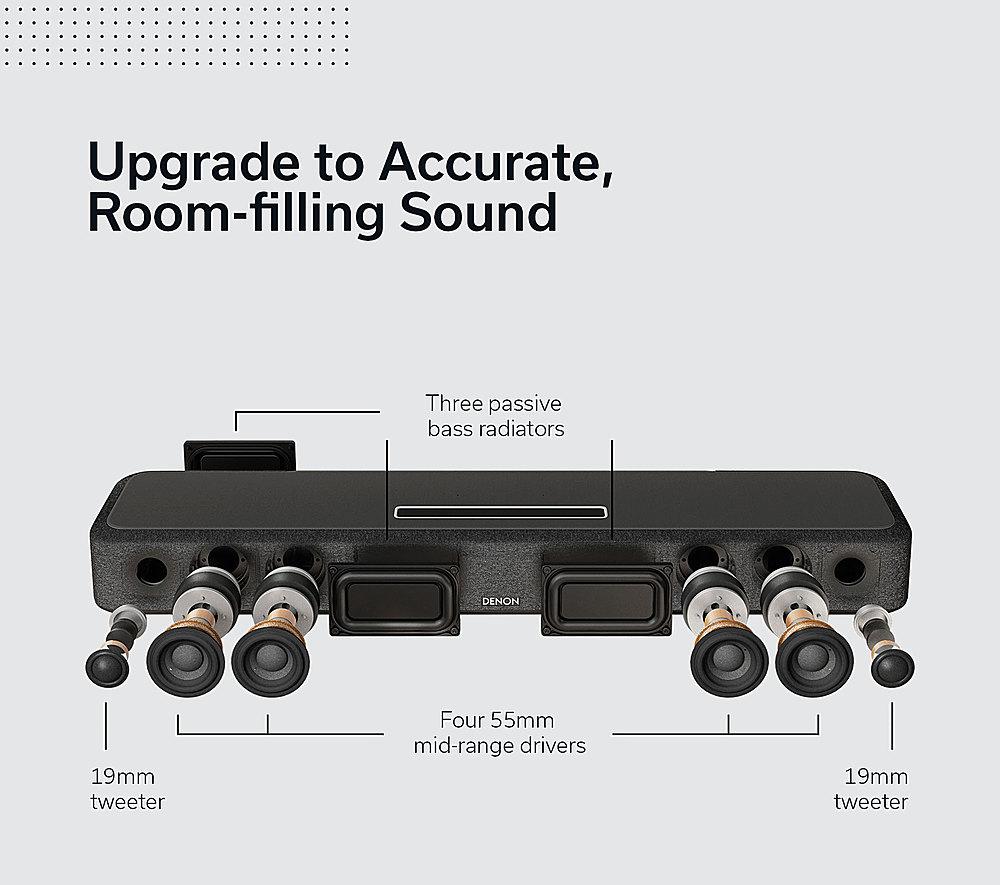
The Denon Home Sound Bar 550 takes a completely different approach, using digital signal processing (DSP) to create virtual Dolby Atmos effects. Instead of physically bouncing sound off your ceiling, sophisticated algorithms analyze the audio signal and use psychoacoustic tricks to fool your brain into perceiving height and surround effects from the soundbar's six forward-firing drivers.
In my testing, the Denon's virtual approach works surprisingly well for the price point, but it's clearly not as convincing as the Arc's physical implementation. The difference becomes most apparent during action sequences—explosions and environmental effects feel more "around" you with the Arc, while the Denon keeps things more focused in front of your viewing position.
This is where things get interesting, and personal preference starts to matter significantly. The Sonos Arc has been tuned for a fairly neutral sound signature that works well across different content types. Music playback is clean and detailed, with good separation between instruments. The Arc particularly excels with acoustic content—jazz vocals and classical music sound natural and engaging.
However, the Arc's bass response, while adequate for most content, isn't particularly deep or punchy. Sonos clearly expects users to add their Sub ($749) for serious low-frequency extension. This modular approach makes sense financially—you can start with just the soundbar and upgrade later—but it does mean the standalone Arc lacks the visceral impact some users crave.
The Denon 550 takes a more aggressive approach to bass management, using three passive radiators (which are essentially speakers without voice coils that vibrate sympathetically with the active drivers) to extend low-frequency response. In smaller rooms, this creates noticeably more bass impact than the Arc alone. The trade-off is that the Denon can sound slightly boomy at higher volumes, particularly with bass-heavy content.
Where the Denon really shines is with high-resolution audio files. It supports formats up to 192kHz/24-bit FLAC and even DSD files (a super high-quality format used for audiophile releases). If you're someone who has invested in high-quality music downloads or subscribes to services like Tidal's Master quality tier, the Denon will actually make use of that extra resolution. The Sonos Arc, while supporting high-quality streaming, doesn't quite reach the same audiophile heights.
Room acoustics play a huge role in soundbar performance, and this is where Sonos has invested heavily in solutions. The Arc includes Trueplay room correction, which uses your iPhone's microphone to measure how sound bounces around your specific space, then adjusts the soundbar's output accordingly. I've used this feature in several different rooms, and the difference is consistently noticeable—dialogue becomes clearer, and the overall tonal balance improves.
The catch is that Trueplay only works with iOS devices, which seems unnecessarily limiting in 2024. If you're an Android user, you're stuck with the Arc's default tuning, which is still quite good but not optimized for your space.
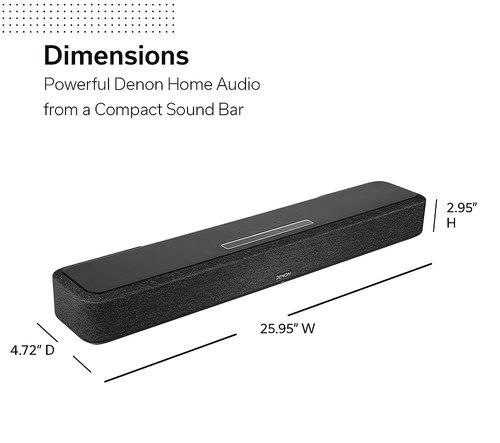
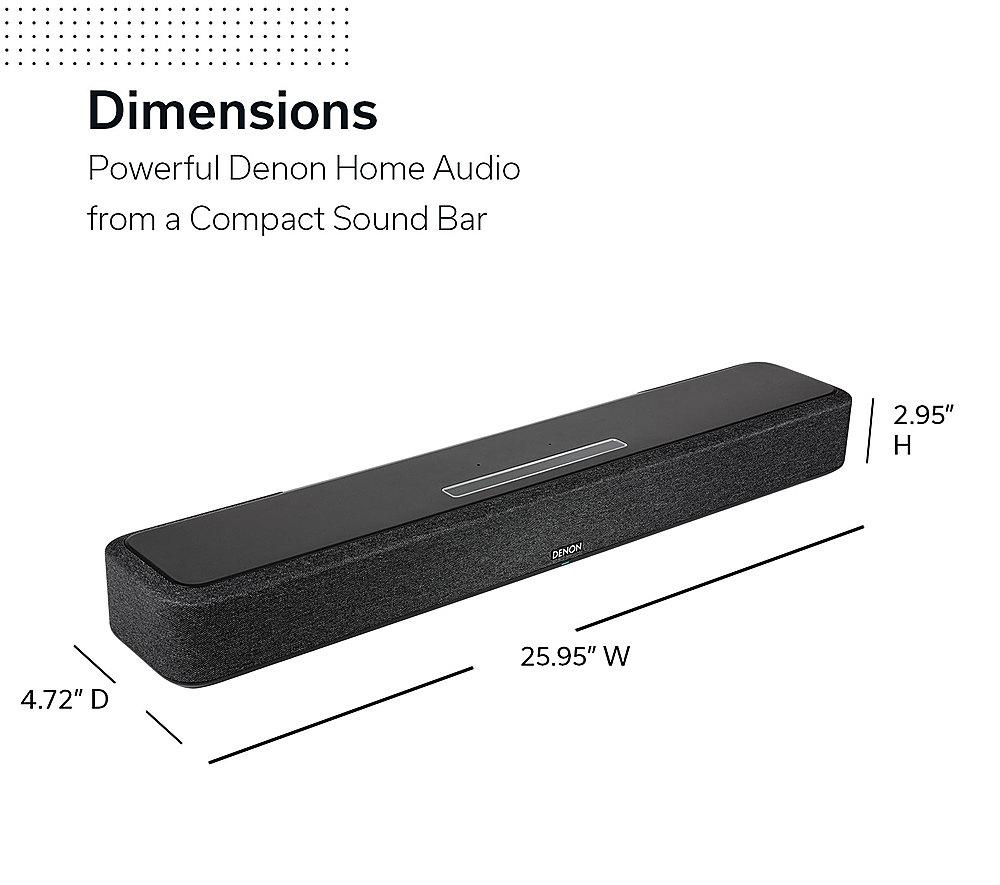
The Denon 550 doesn't include automatic room correction, but its smaller size (26 inches versus the Arc's 45 inches) makes it more flexible for different room layouts. I've found it works particularly well in apartments or smaller rooms where the Arc might feel oversized.
This is where the two soundbars reveal their different philosophies most clearly. The Sonos Arc follows the "everything through your TV" approach, providing just one HDMI eARC connection. This means all your devices—game consoles, streaming boxes, Blu-ray players—must connect to your TV first, then send audio to the soundbar through that single cable.
This approach has pros and cons. On the positive side, it's incredibly clean and simple. One cable connects the soundbar to your TV, and you're done. The Arc also includes an optical adapter for older TVs without HDMI eARC, showing Sonos's attention to backward compatibility.
The limitation becomes apparent when you have multiple 4K devices and a TV with limited HDMI ports. I've encountered this personally with older TVs that only have two or three HDMI inputs—suddenly you're shopping for HDMI switches, which adds complexity and potential compatibility issues.
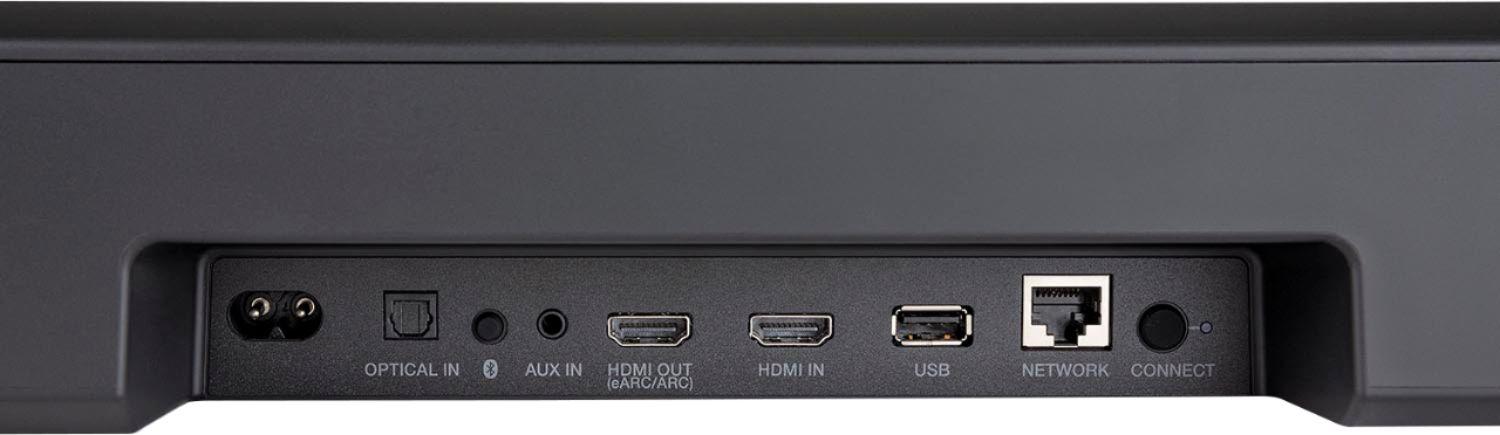
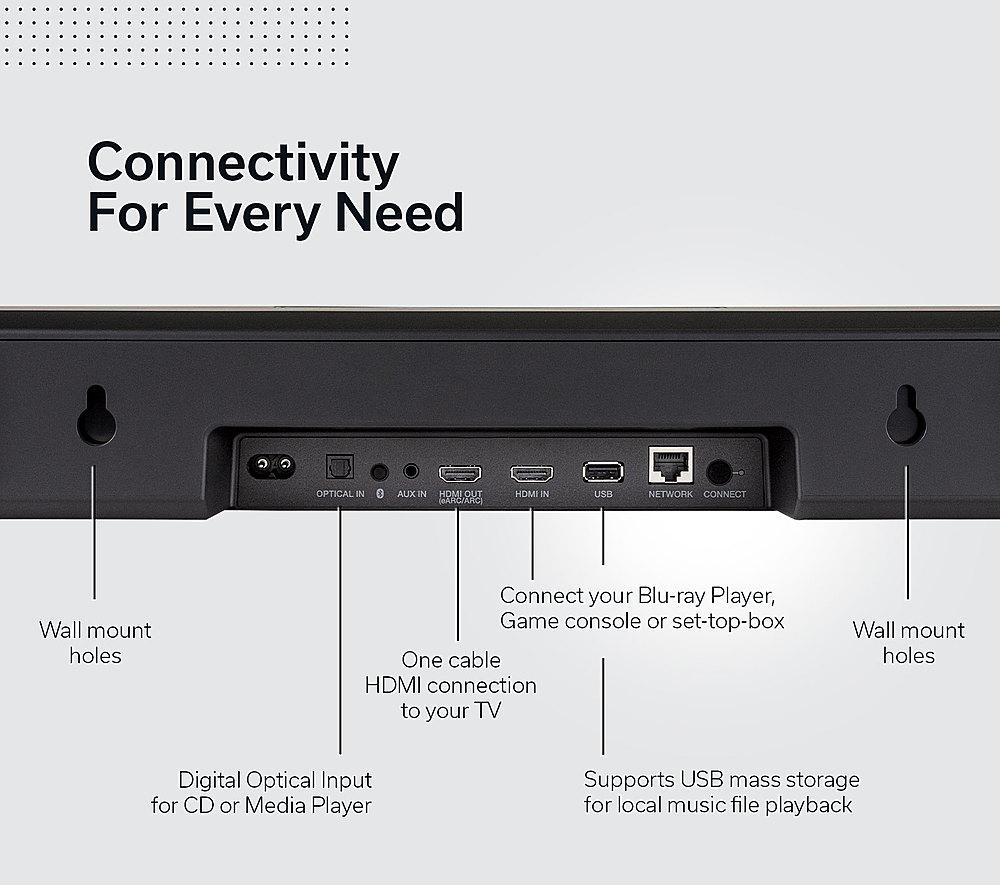
The Denon 550 solves this elegantly with dual HDMI ports: one input with 4K/HDR passthrough, and one eARC output to your TV. This means you can connect one high-priority device (like a game console or premium streaming box) directly to the soundbar, while less demanding devices connect to your TV. It's a small difference on paper, but it provides meaningful flexibility in real-world setups.
The Denon also includes optical digital, 3.5mm analog, and USB inputs, making it compatible with virtually any audio source. This versatility extends to older equipment—if you have a turntable with a built-in preamp or a CD player you still use, the Denon can accommodate them directly.
The smart speaker revolution has fundamentally changed how we think about audio equipment, and both soundbars embrace this shift while taking different approaches.
The Sonos Arc benefits from Sonos's years of experience in wireless multi-room audio. The integration is seamless—if you already have other Sonos speakers, the Arc appears in your existing app and can be grouped instantly for whole-home audio. I've used this feature extensively for parties and casual listening, and it works flawlessly across different generations of Sonos hardware.
Voice control through both Amazon Alexa and Google Assistant works reliably, though the implementation feels more natural with music control than with TV functions. You can ask the Arc to play specific playlists, adjust volume, or skip tracks without picking up a remote, which becomes surprisingly habitual once you get used to it.
Apple AirPlay 2 support means iPhone and iPad users can stream audio directly to the Arc without using the Sonos app. This is particularly convenient for podcast listening or when friends want to quickly share a song.
The Denon 550 uses the HEOS platform, which is Denon's answer to Sonos's ecosystem. HEOS works well but feels less mature—the app is functional but not as intuitive as Sonos's interface. However, if you already own other Denon or Marantz equipment, the integration can be valuable for creating a cohesive high-end audio system.
Where HEOS shines is in its openness to different music services and file formats. The platform supports a wider range of streaming services than Sonos, and the high-resolution audio support extends throughout the ecosystem.
Both soundbars are designed as the foundation of larger systems, but they approach expansion differently.
The Sonos Arc can be paired with the Sonos Sub and rear speakers (like the Era 300s) to create a full 5.1.2 surround system. The integration is wireless and seamless—speakers automatically sync with zero latency, and the system balances audio between all components intelligently.
The total cost for a complete Sonos system approaches $2,000, which puts it in competition with dedicated home theater receivers and separate speakers. However, the convenience and reliability of the wireless implementation justifies the premium for many users.
The Denon 550 follows a similar expansion path with Denon Home wireless speakers and subwoofer options. The pricing is generally lower than Sonos equivalents, making it more accessible for budget-conscious upgrades.
Both systems receive regular firmware updates that can actually improve performance over time. I've noticed meaningful improvements in dialogue clarity and bass management through software updates on both platforms.
At nearly identical pricing—the Sonos Arc at $540.60 versus the Denon 550 at $518.50—the decision comes down to priorities rather than budget.
The Sonos Arc represents the more mature, refined approach. It delivers superior Dolby Atmos immersion, has better long-term software support, and integrates more seamlessly into smart home environments. If your primary use case is movie and TV watching, and you value the convenience of a proven ecosystem, the Arc is the safer choice.
The Denon 550 appeals to users who prioritize flexibility and audiophile features. The dual HDMI connectivity alone can be worth the price of admission for users with complex setups, and the high-resolution audio support caters to serious music listeners.
Choose the Sonos Arc if movie and TV watching dominates your usage, you want the most convincing Dolby Atmos experience possible, you value long-term software support and ecosystem reliability, or you already own other Sonos products. The Arc is also the better choice if you prefer to route everything through your TV and don't mind the single HDMI connection.
Choose the Denon Home Sound Bar 550 if you need direct HDMI connectivity for multiple sources, you're an audiophile who appreciates high-resolution audio support, you have a smaller TV or room where the compact size is advantageous, or you want excellent performance at a slightly lower price point.
Both soundbars represent significant upgrades over basic TV audio and cheaper soundbars. Your choice should align with how you plan to use the system and what aspects of performance matter most in your specific setup. The good news is that either choice will dramatically improve your home entertainment experience.
| Sonos Arc Wireless Sound Bar ($540.60) | Denon Home Sound Bar 550 ($518.50) |
|---|---|
| Dolby Atmos Implementation - Key difference in immersive sound quality | |
| True Dolby Atmos with physical up-firing drivers for authentic overhead effects | Virtual Dolby Atmos using DSP processing (no up-firing speakers) |
| Driver Configuration - Determines overall sound quality and power | |
| 11 drivers: 3 tweeters, 8 woofers in 5.0.2 configuration | 6 active drivers + 2 passive radiators in virtual 4-channel setup |
| HDMI Connectivity - Critical for connecting multiple 4K devices | |
| Single HDMI eARC only (all sources must connect through TV) | Dual HDMI: 1x input with 4K passthrough + 1x eARC output |
| Size and Weight - Important for TV compatibility and installation | |
| 45" wide, 13.78 lbs (requires larger TV stand or wall mount) | 26" wide, 7.3 lbs (fits smaller TVs and spaces) |
| Voice Assistant Support - Convenience for hands-free control | |
| Amazon Alexa + Google Assistant built-in | Amazon Alexa only |
| High-Resolution Audio - Matters for audiophile music listening | |
| Standard streaming quality (up to CD quality) | Supports 192kHz/24-bit FLAC and DSD 5.6MHz files |
| Multi-Room Audio Platform - Ecosystem compatibility and expansion | |
| Sonos ecosystem (100+ compatible speakers, mature platform) | HEOS platform (Denon/Marantz compatibility, newer ecosystem) |
| Room Correction Technology - Optimizes sound for your specific space | |
| Trueplay tuning (iOS devices only) | No automatic room correction |
| Apple Integration - Important for iPhone/iPad users | |
| AirPlay 2 support for direct streaming | No AirPlay support |
| Additional Audio Inputs - Flexibility for legacy devices | |
| Optical adapter included (for older TVs) | Optical, 3.5mm analog, USB inputs |
| Expandability Options - Building a full surround system | |
| Sonos Sub ($749) + Era 300 rears ($898/pair) | Compatible Denon Home subwoofer and wireless speakers |
| Software Update History - Long-term value and feature additions | |
| Regular updates since 2020 launch with new features added | Newer product (2023) with less update history |
The Sonos Arc ($540.60) delivers superior Dolby Atmos performance with physical up-firing drivers that bounce sound off your ceiling for authentic overhead effects. The Denon Home Sound Bar 550 ($518.50) uses virtual Dolby Atmos processing, which creates height effects through digital signal processing but isn't as convincing as the Arc's physical implementation.
The Sonos Arc costs $540.60 while the Denon Home Sound Bar 550 is priced at $518.50, making them nearly identical in price with only a $22 difference. This puts the decision on features and performance rather than budget considerations.
The Denon Home Sound Bar 550 is better suited for small rooms due to its compact 26-inch width and lighter 7.3-pound weight. The Sonos Arc measures 45 inches wide and weighs nearly 14 pounds, making it more appropriate for larger TVs and spaces.
The Denon Home Sound Bar 550 offers dual HDMI ports with one input for direct 4K device connection and one eARC output to your TV. The Sonos Arc only has a single HDMI eARC port, requiring all external devices to connect through your TV first.
The Denon Home Sound Bar 550 supports high-resolution audio up to 192kHz/24-bit FLAC and DSD files, making it superior for audiophile music listening. The Sonos Arc focuses on standard streaming quality but offers better integration with music services through its mature ecosystem.
The Sonos Arc includes both Amazon Alexa and Google Assistant built-in for comprehensive voice control. The Denon Home Sound Bar 550 only supports Amazon Alexa integration, limiting voice assistant options.
Both soundbars can be expanded with wireless subwoofers and rear speakers. The Sonos Arc pairs with the Sonos Sub and Era speakers for seamless integration, while the Denon Home Sound Bar 550 works with Denon Home wireless speakers at generally lower costs.
The Sonos Arc uses the well-established Sonos app, which is widely regarded as the best in the industry for reliability and ease of use. The Denon Home Sound Bar 550 uses the newer HEOS app, which is functional but less refined than Sonos's mature platform.
The Sonos Arc includes Apple AirPlay 2 support for direct streaming from iPhones and iPads. The Denon Home Sound Bar 550 does not support AirPlay, limiting direct Apple device integration to Bluetooth connectivity only.
The Sonos Arc typically offers better long-term value due to Sonos's consistent software updates that add new features over time, plus strong resale value. The Denon Home Sound Bar 550 provides excellent immediate value with its connectivity flexibility and high-res audio support, but has less proven long-term software support history.
We've done our best to create useful and informative comparisons to help you decide what product to buy. Our research uses advanced automated methods to create this comparison and perfection is not possible - please contact us for corrections or questions. These are the sites we've researched in the creation of this article: whathifi.com - soundandvision.com - en.community.sonos.com - cnet.com - worldwidestereo.com - abt.com - creativeaudio.net - target.com - sonos.com - worldwidestereo.com - businessinsider.com - en.community.sonos.com - youtube.com - consumerreports.org - soundandvision.com - crutchfield.com - rtings.com - crutchfield.com - gzhls.at - denon.com - walmart.com - youtube.com - whathifi.com - bestbuy.com

Privacy Policy
Terms and Conditions - Affiliate Policy
Home Security
© Copyright 2008-2026.
11816 Inwood Rd #1211, Dallas, TX 75244