

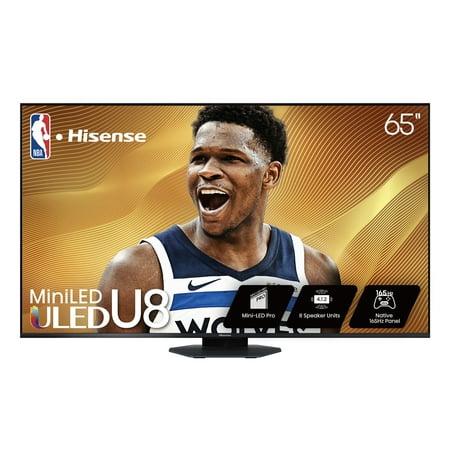
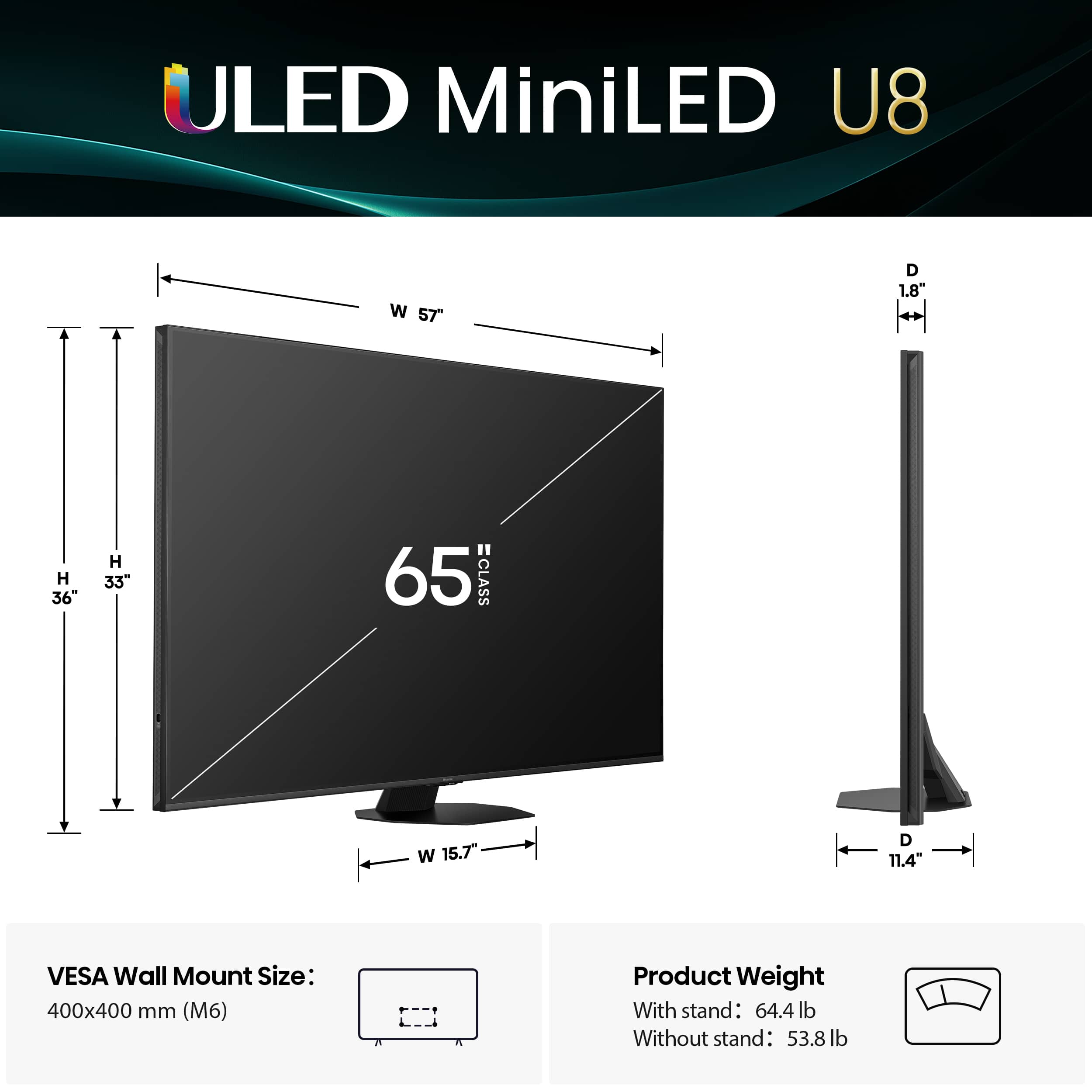
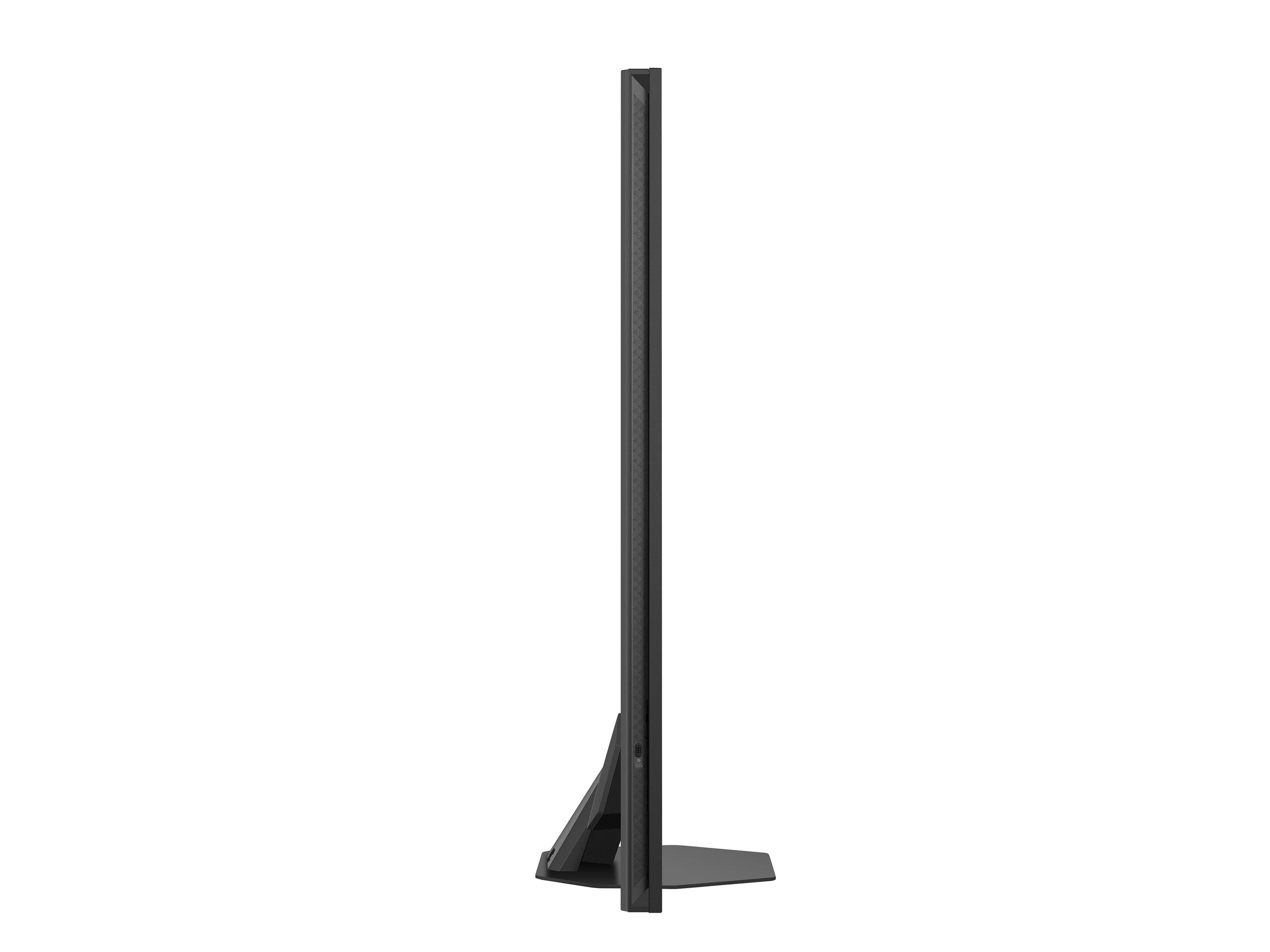
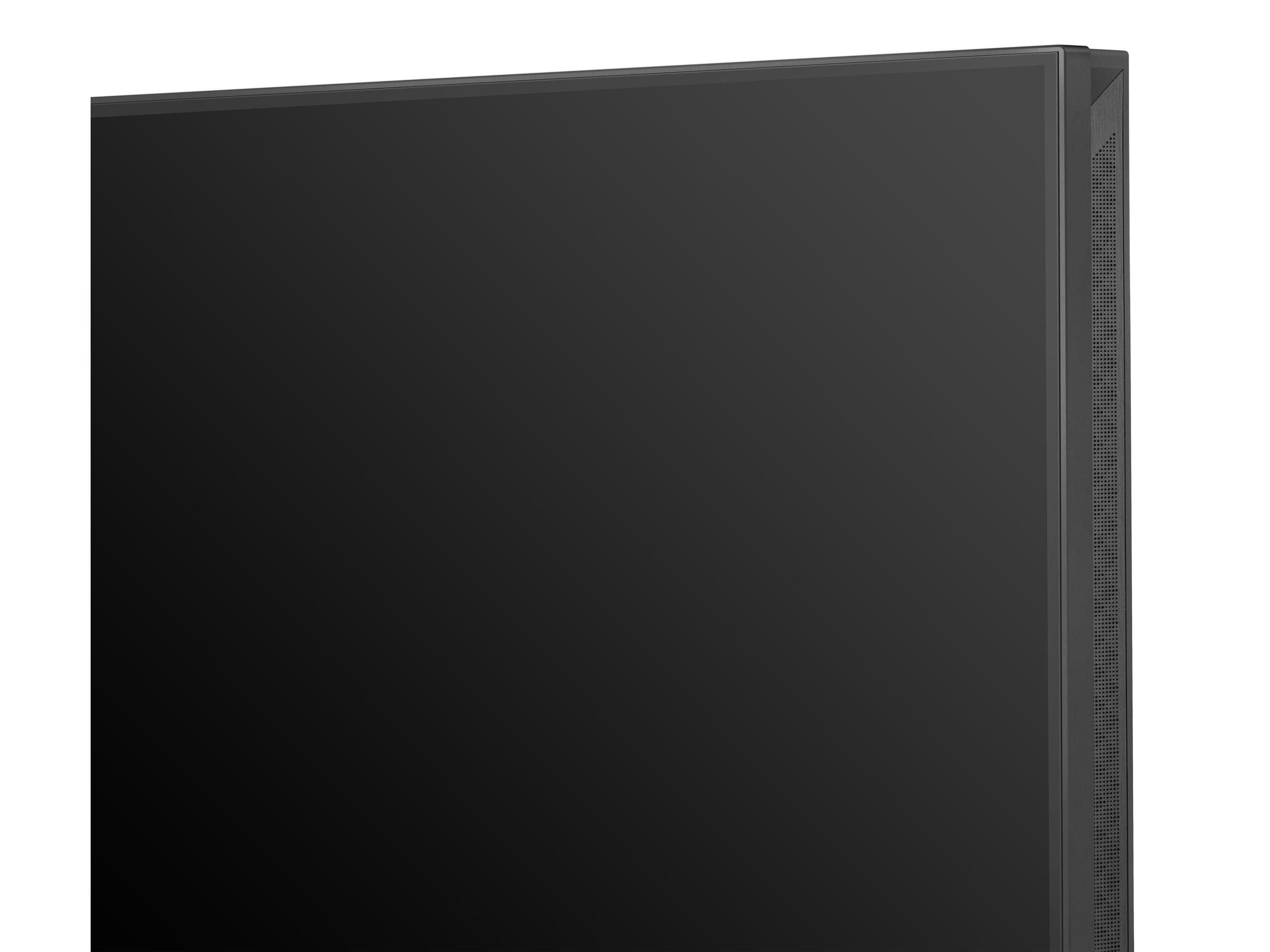
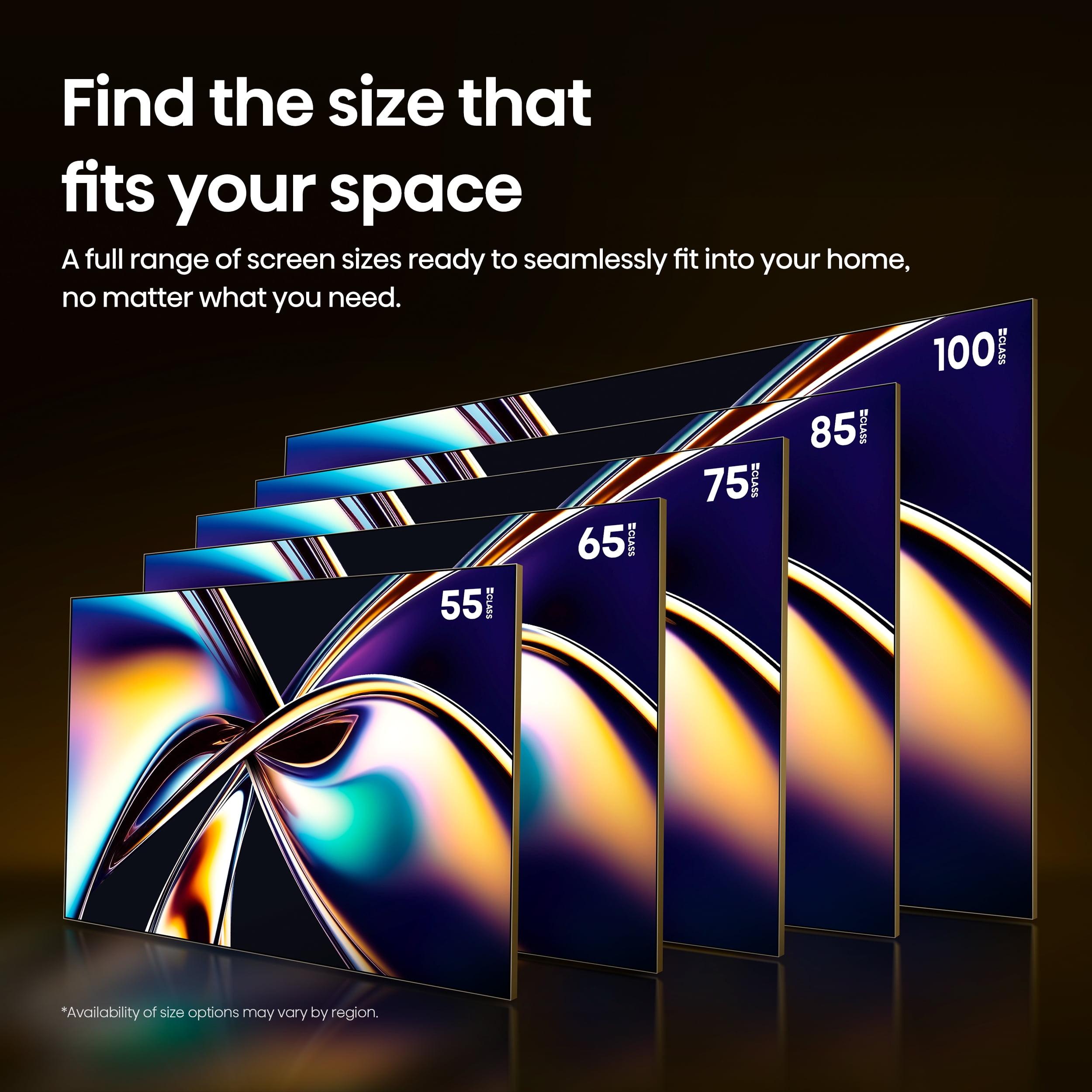


If you're shopping for a premium TV in 2025, you've probably noticed that Mini-LED technology has become the sweet spot between affordability and performance. Two standout options that consistently top "best of" lists are the Hisense 65" U8 Series Mini-LED ULED 4K Google TV at $997.99 and the TCL 65" QM8K Series QD-Mini LED 4K Smart TV at $998.00. At nearly identical prices, these TVs represent different philosophies in premium display technology, and choosing between them comes down to understanding what matters most for your viewing habits.
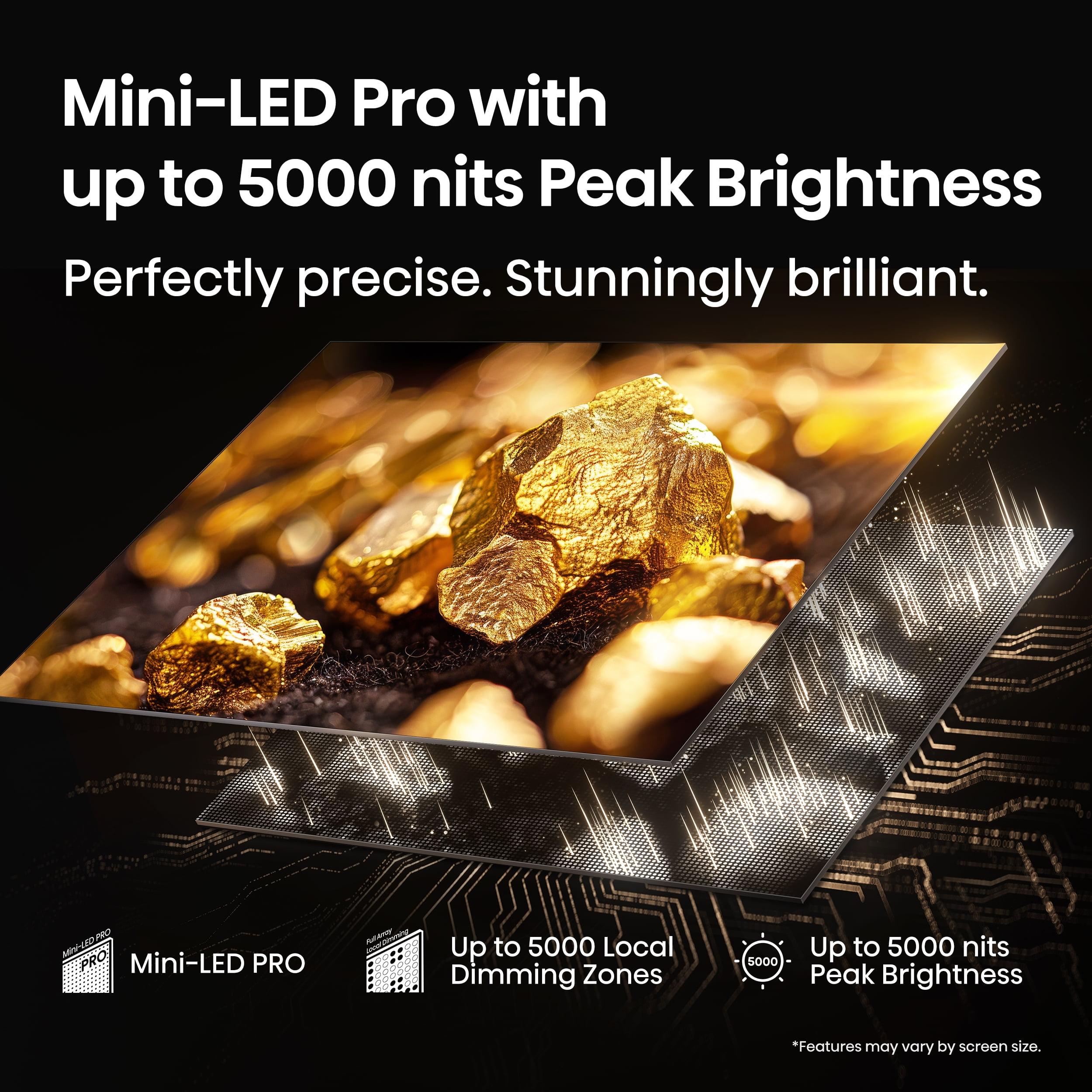
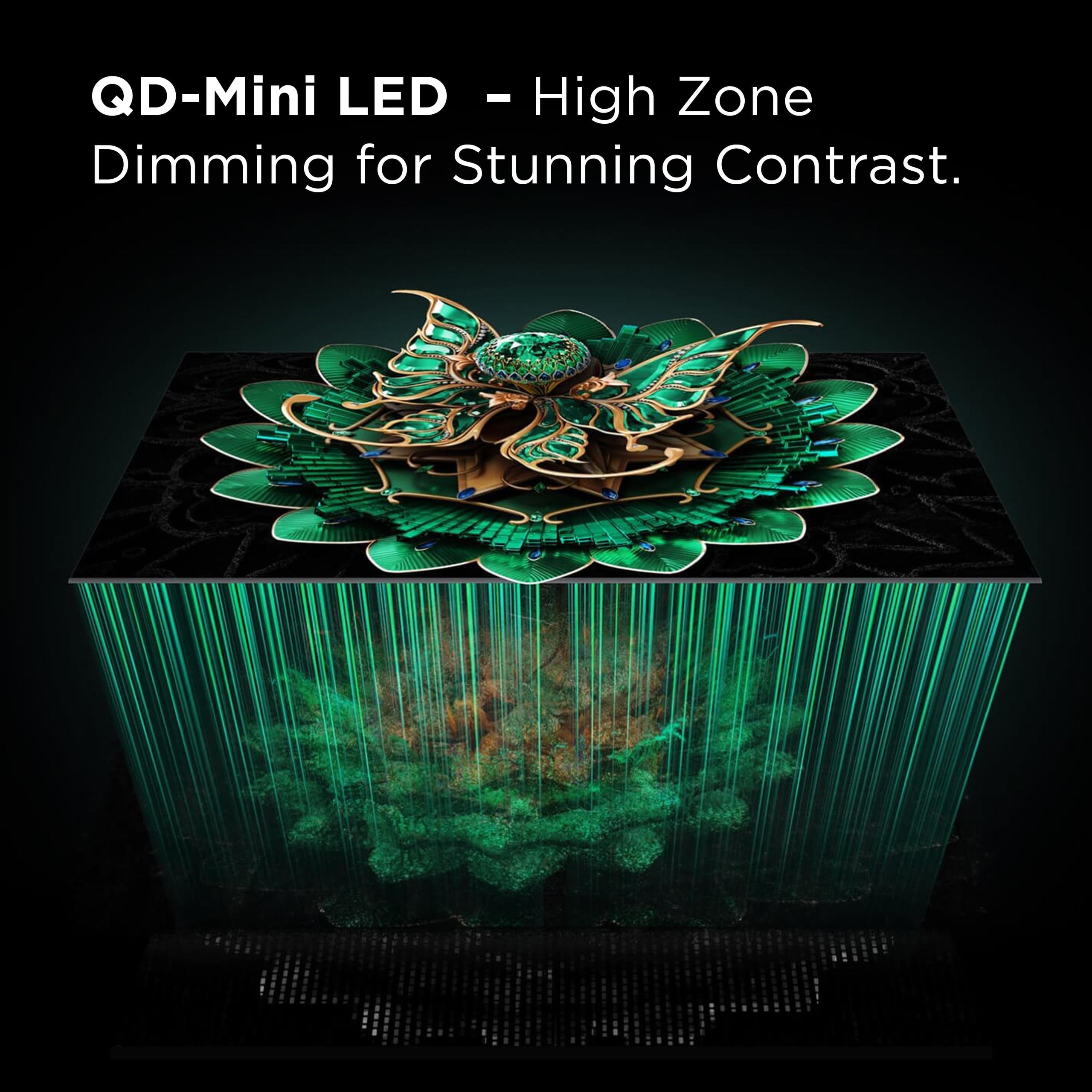
Before diving into the comparison, let's talk about what makes Mini-LED TVs special. Traditional LED TVs use large LED backlights that can create uneven brightness and poor contrast. Mini-LED technology uses thousands of tiny LEDs (each about the size of a grain of rice) arranged behind the screen. This allows for incredibly precise control over which parts of the screen are bright and which are dark – a feature called "local dimming."
Think of it like having thousands of tiny flashlights that can independently turn on and off behind your TV screen. When you're watching a movie with a starry night sky, the Mini-LEDs behind the stars can shine brightly while the LEDs behind the dark sky stay dim. This creates the deep blacks and bright highlights that make HDR (High Dynamic Range) content look so impressive.
Both the Hisense U8 and TCL QM8K use this technology, but they've implemented it differently, and those differences matter a lot for your viewing experience.
The Hisense U8 Series has been evolving since 2023, with the current U8K and U8N models representing refinements of the original design. Hisense has focused on improving their local dimming algorithm and color processing over the years. The latest version features over 2,000 local dimming zones – double what the previous generation offered – and a new Hi-View AI Engine PRO that analyzes content in real-time to optimize picture quality.
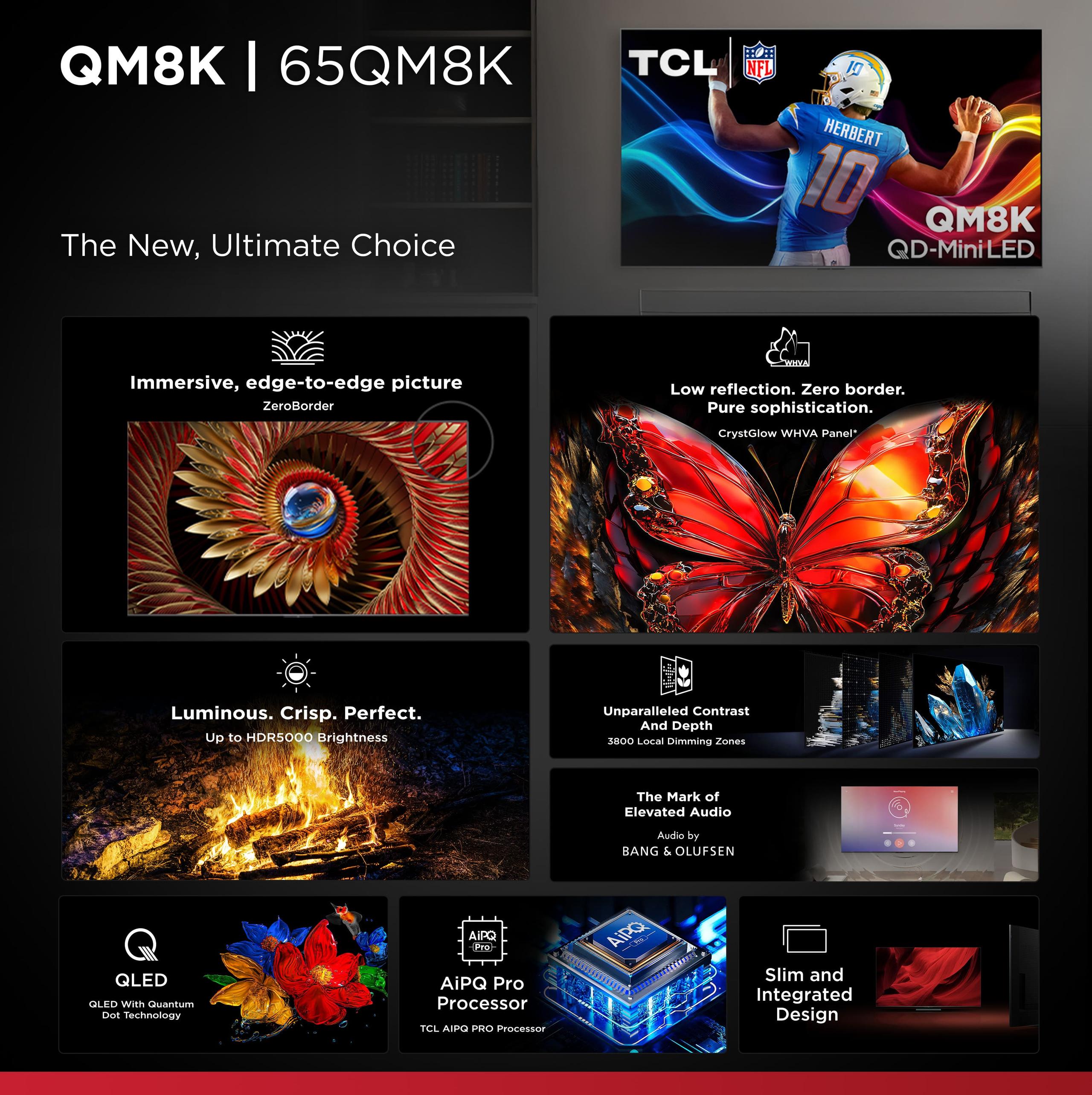
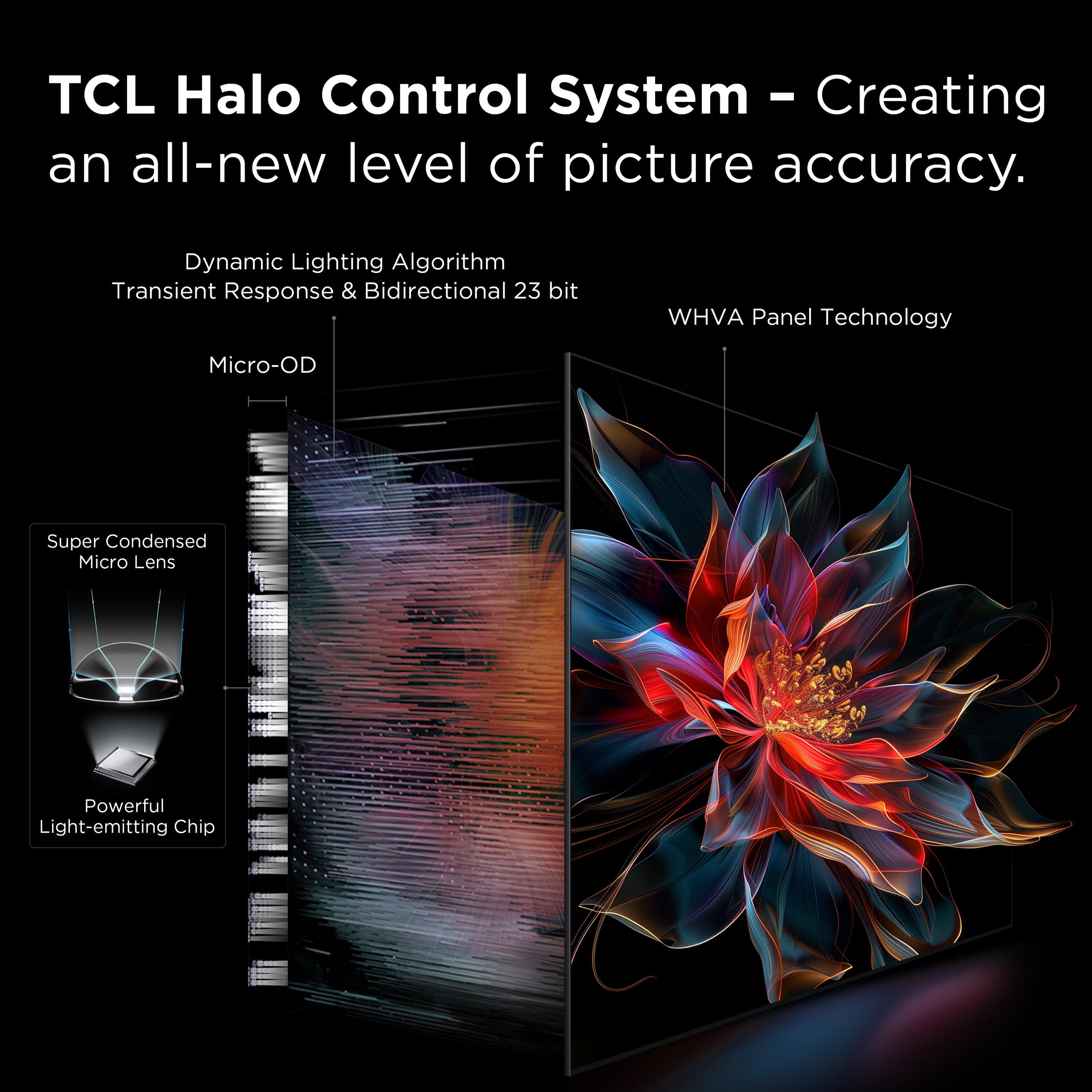
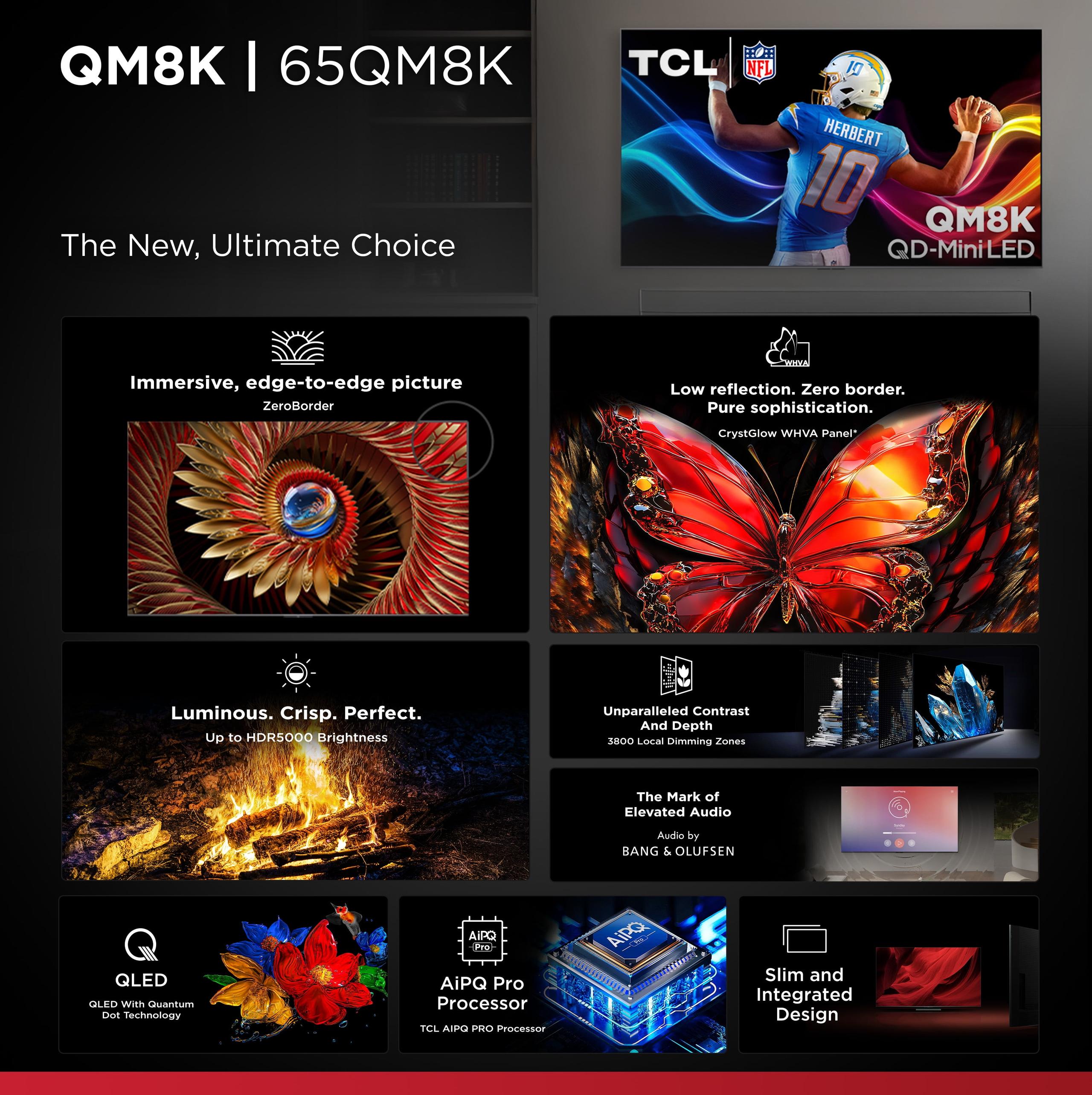
The TCL QM8K represents TCL's 2025 flagship, building on their 2023 QM8 foundation. TCL has made significant improvements in their "Halo Control System" – their proprietary technology for minimizing the blooming effect (unwanted light spill around bright objects on dark backgrounds). They've also boosted peak brightness significantly, now reaching an impressive 5,000 nits compared to the previous generation's 3,000 nits.
When it comes to raw brightness, the TCL QM8K is the clear winner. With peak brightness reaching 5,000 nits compared to the Hisense's 3,000 nits, the difference is immediately noticeable, especially in HDR content. Those extra 2,000 nits translate to more impactful highlights – think of the sun glinting off car chrome in a action movie or the bright explosions in a sci-fi film.
This brightness advantage makes the TCL particularly appealing if you have a bright living room with large windows. In my experience testing TVs in various lighting conditions, that extra brightness can be the difference between clearly seeing details in HDR content during the day versus squinting at a washed-out image.
However, brightness isn't everything. The Hisense U8 takes a more measured approach, focusing on what the industry calls "tone mapping" – how the TV translates the brightness information in movies and shows to what you actually see on screen. While the TCL can display brighter highlights, the Hisense often presents a more natural, film-like image that doesn't fatigue your eyes during long viewing sessions.
Here's where the Hisense U8 Series really differentiates itself. Out of the box, without any calibration, the Hisense delivers significantly more accurate colors. This matters because most people never calibrate their TVs, so what you see when you first turn it on is what you'll live with.
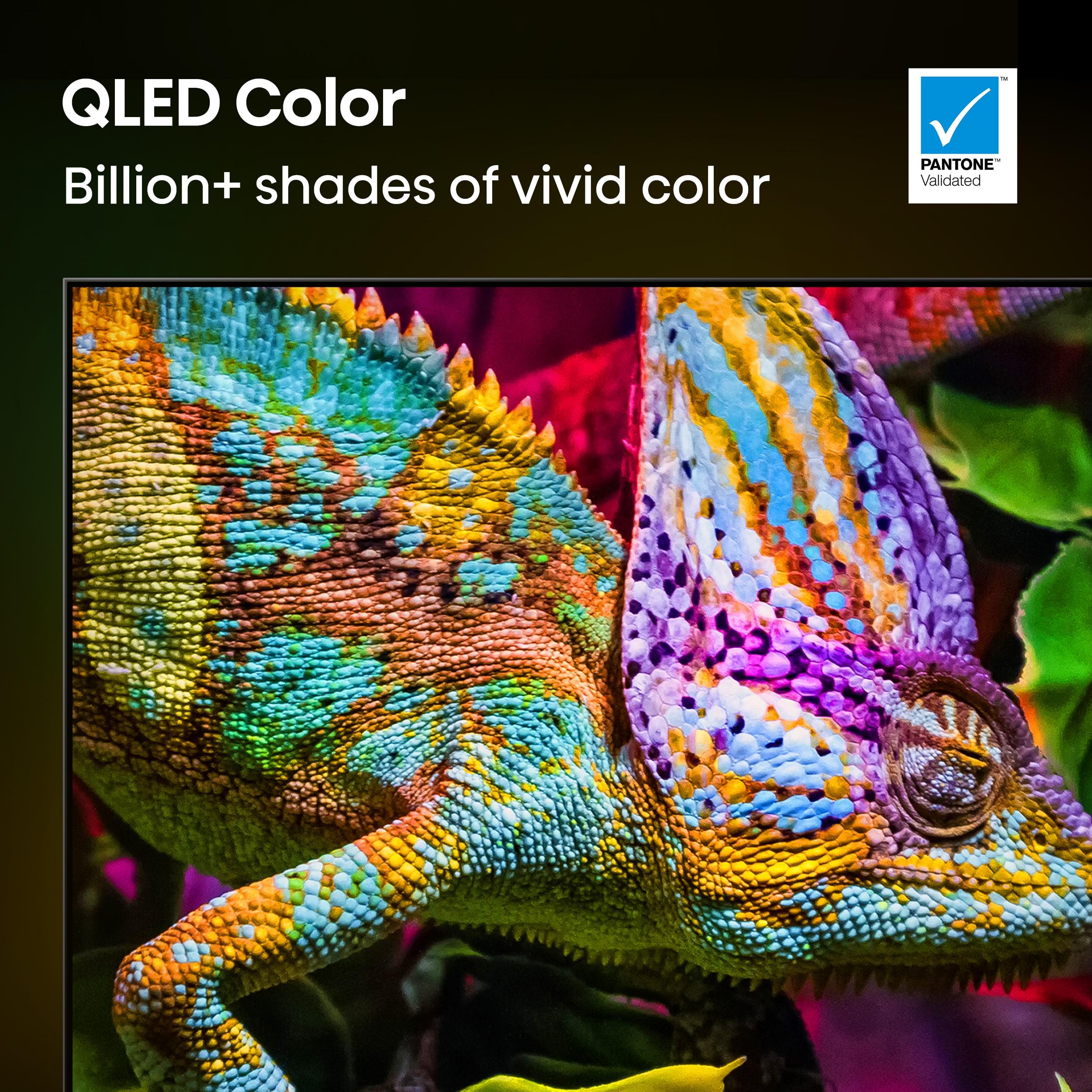
The Hisense covers a wider color gamut – essentially the range of colors the TV can display – and does so with better accuracy. When you're watching nature documentaries or movies with rich, varied colors, the Hisense presents them in a way that's closer to what the content creators intended.
The TCL uses what's called a "true 10-bit panel" while the Hisense uses "8-bit + FRC" (Frame Rate Control). In simple terms, the TCL's panel can theoretically display more color gradations, which should result in smoother color transitions. However, in real-world testing, the Hisense's superior processing often delivers smoother gradients despite the technical disadvantage. It's a perfect example of how implementation matters more than specifications.
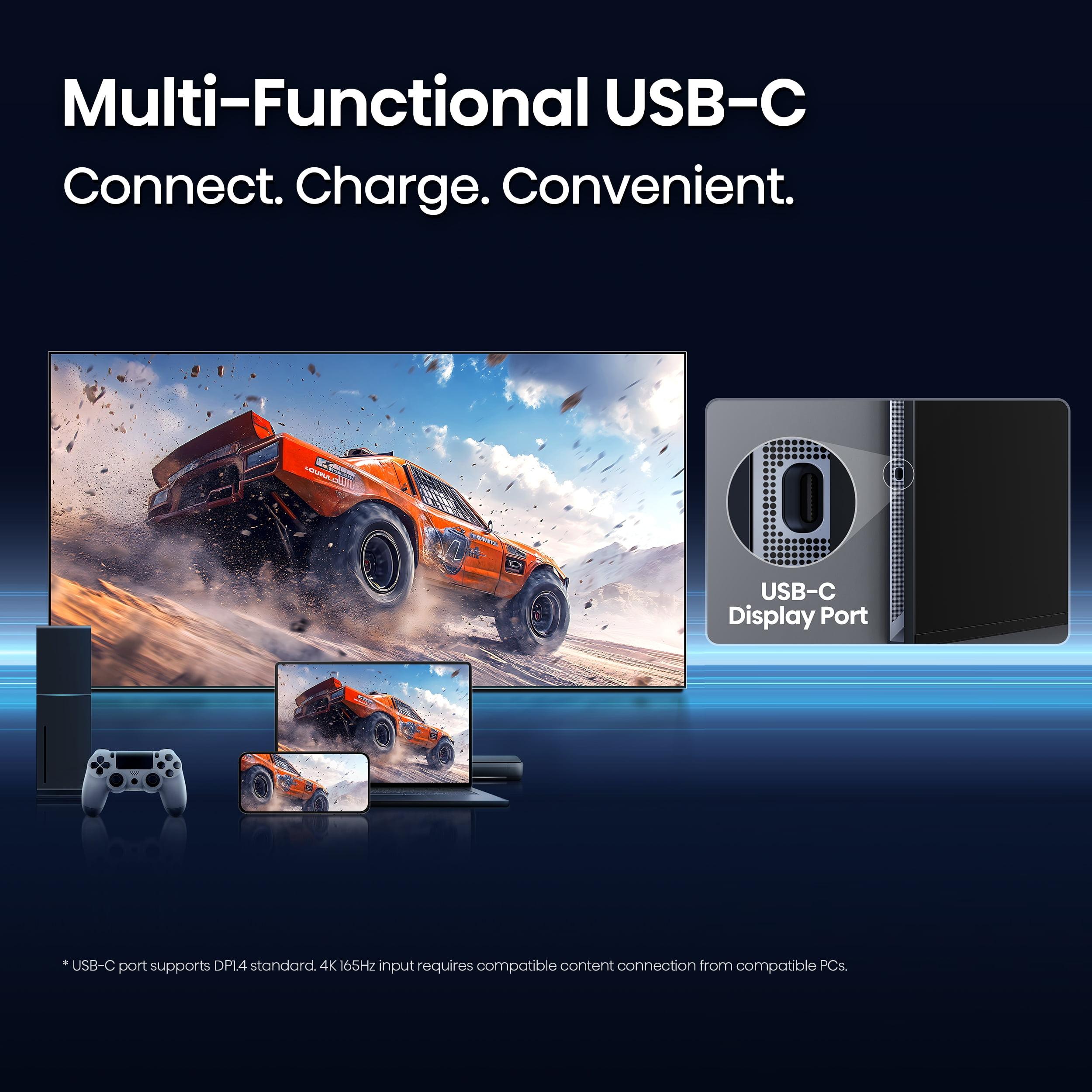
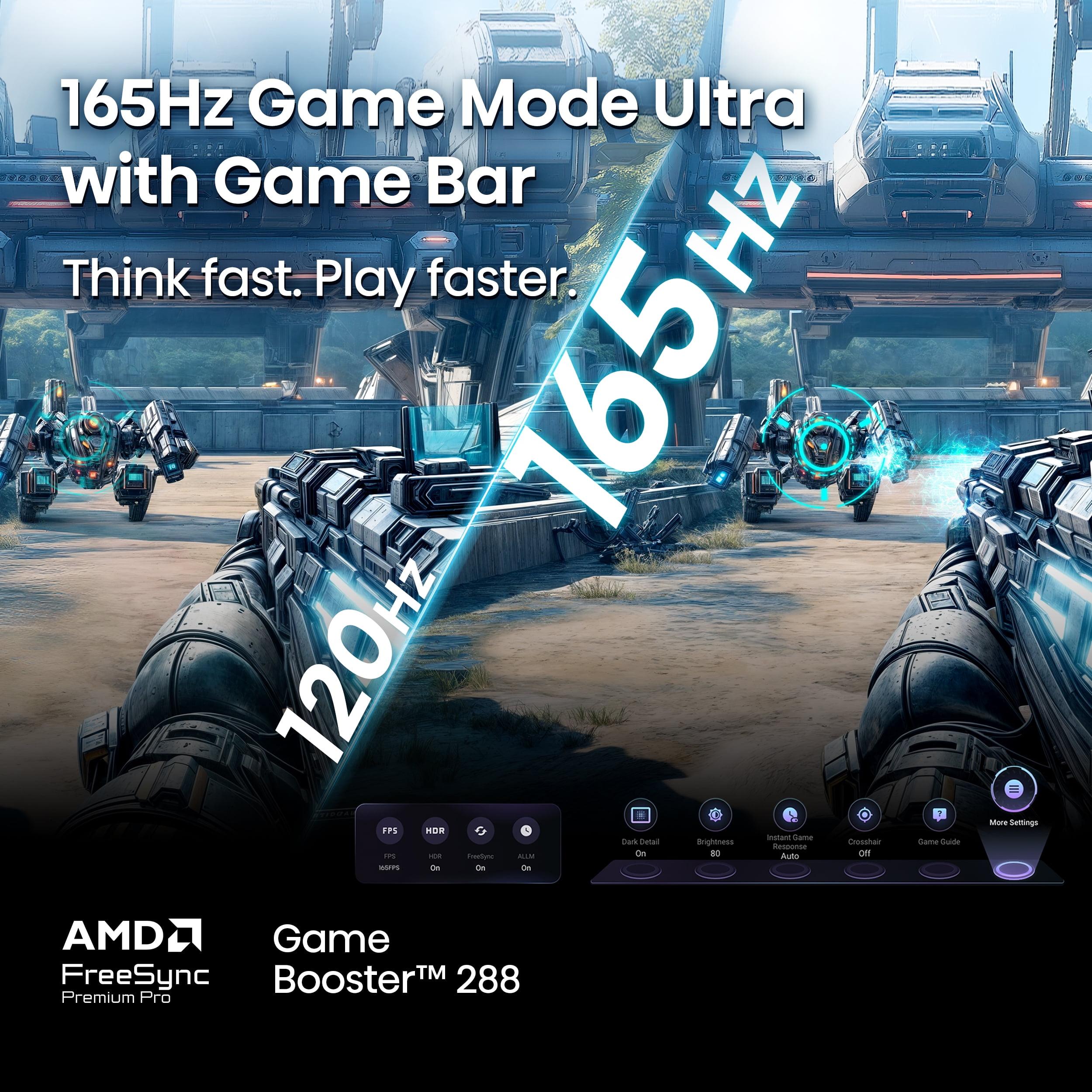
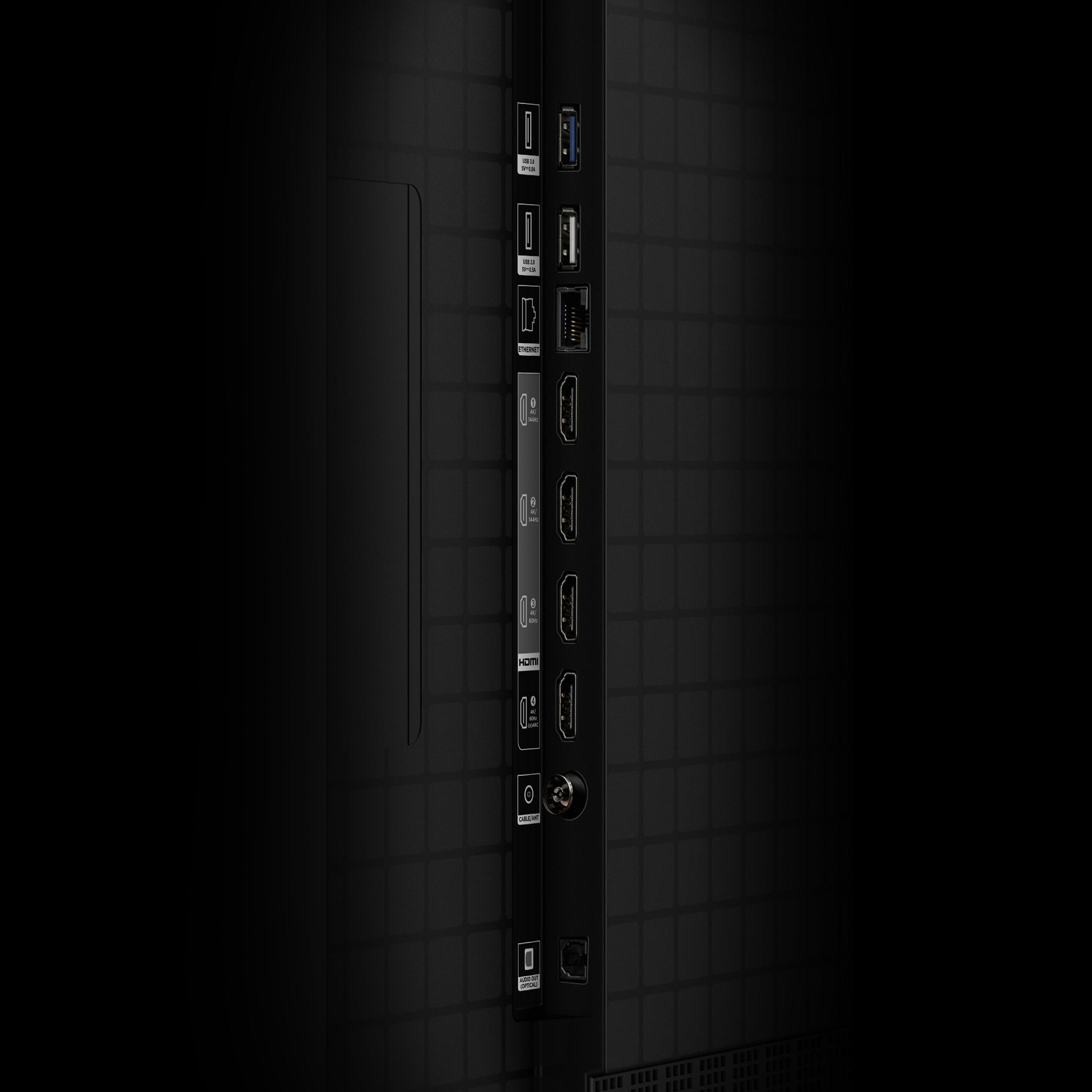
Both TVs excel for gaming, but in different ways. The Hisense U8 provides more flexibility with both of its HDMI 2.1 ports supporting 4K at 144Hz. This means you can connect a PlayStation 5, Xbox Series X, and a gaming PC all at the same time without any compromises in performance.
The TCL QM8K takes a different approach. While only one HDMI port supports 4K at 144Hz, it offers something unique: Game Accelerator technology that can push refresh rates up to 240Hz at 1080p resolution. For competitive gamers playing esports titles like Counter-Strike or Valorant, this higher refresh rate can provide a competitive advantage.
Both TVs support Variable Refresh Rate (VRR), which synchronizes the TV's refresh rate with your console or PC's frame rate to eliminate screen tearing. They also feature Auto Low Latency Mode (ALLM), which automatically switches to a gaming mode when it detects a gaming signal, reducing input lag to around 13ms on both models.
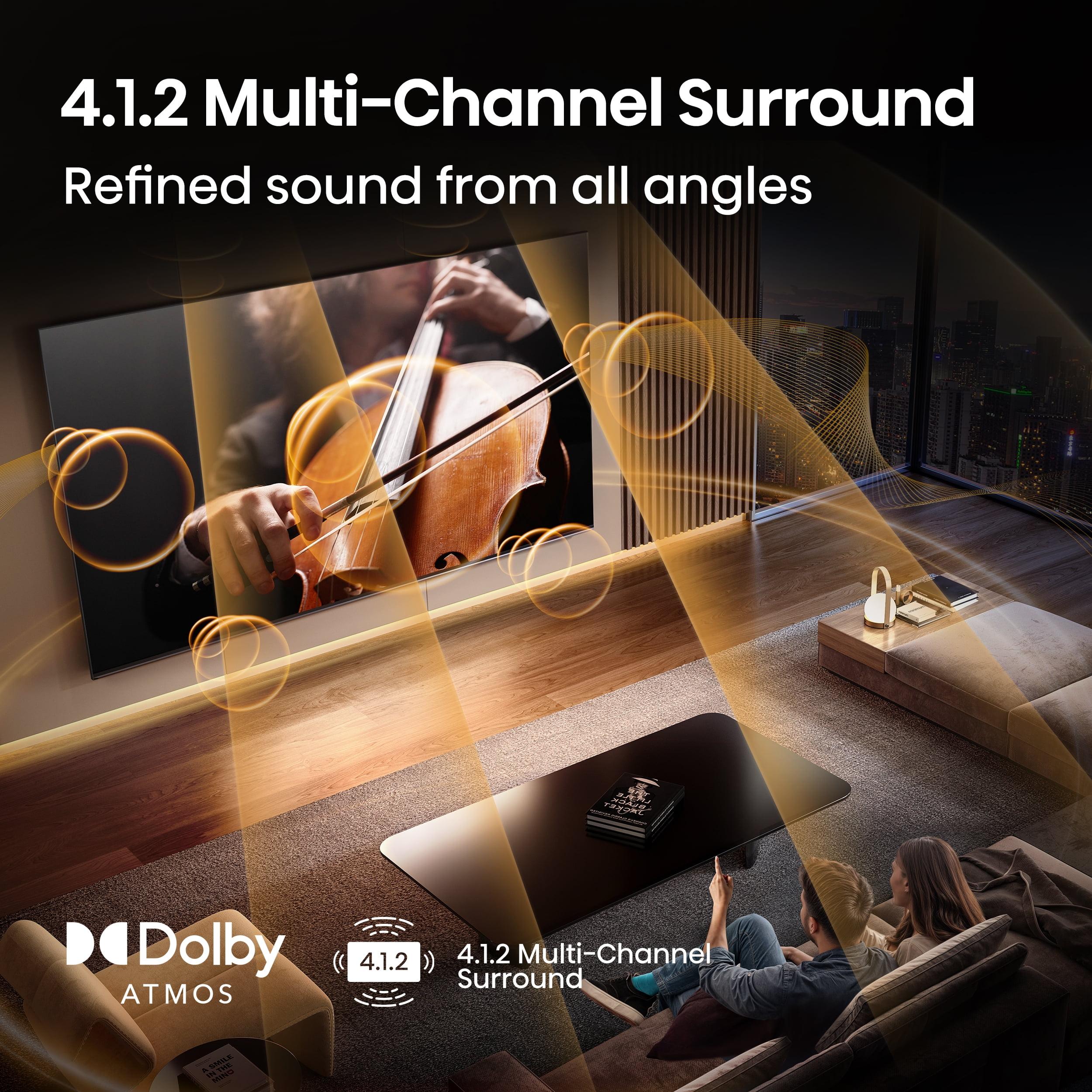
This is where the differences become stark. The Hisense U8 Series includes a 2.1.2-channel audio system with upfiring speakers. Those upfiring speakers bounce sound off your ceiling to create a true Dolby Atmos experience, where you can actually hear helicopters flying overhead or rain falling from above.
The TCL QM8K offers a more conventional 2.1-channel system with virtual surround processing. While it can get loud and has decent bass, it lacks the spatial audio experience that makes movies truly immersive. In my testing, the difference is immediately apparent when watching action movies or nature documentaries with rich soundscapes.
If you're planning to use a soundbar or home theater system, this difference becomes less important. But for those who want great audio without additional purchases, the Hisense is the clear choice.
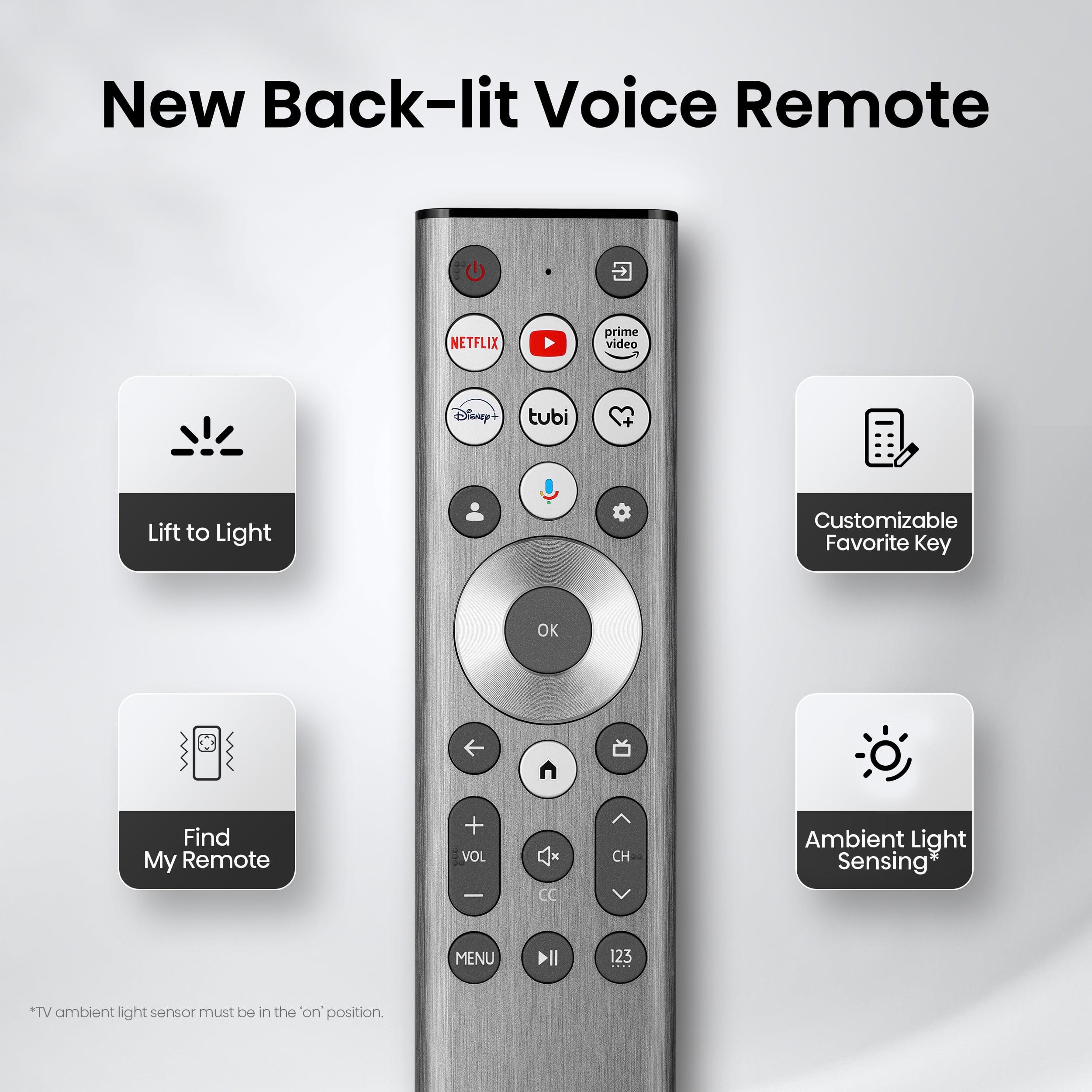
Both TVs run Google TV, which provides a smooth, intuitive interface with access to all major streaming services. The experience is virtually identical between the two models, with fast navigation and reliable performance.
However, there's one important connectivity difference: the Hisense U8 includes an ATSC 3.0 tuner, while the TCL only has ATSC 1.0. ATSC 3.0 is the next-generation broadcast standard that supports 4K over-the-air television. If you use an antenna for local channels, this future-proofing could be valuable as more broadcasters adopt the new standard.
For dedicated home theater setups, both TVs offer compelling advantages. The Hisense U8 provides better color accuracy and contrast, which is crucial for movie watching in controlled lighting conditions. Its more natural tone mapping means you'll see movies closer to how directors intended them to look.
The TCL QM8K excels in brightness, which can be beneficial even in dark rooms when watching HDR content. Those bright highlights in space scenes or action sequences can be more impactful. However, some viewers might find the aggressive brightness fatiguing during long movie sessions.
Both TVs handle 24fps film content well, with minimal judder or stuttering. They also support all major HDR formats, including Dolby Vision, HDR10+, and standard HDR10, ensuring compatibility with content from all major streaming services and disc formats.
One challenge with Mini-LED technology is "blooming" – when bright objects on dark backgrounds create unwanted light halos. Both manufacturers have worked hard to minimize this effect, but they've taken different approaches.
The TCL's Halo Control System uses advanced algorithms and hardware optimizations to reduce blooming. In practice, it performs quite well, with blooming being barely noticeable in most content.
The Hisense takes a more conservative approach, using slightly less aggressive brightness settings but more sophisticated local dimming algorithms. The result is often cleaner, more controlled lighting with less noticeable blooming, especially in challenging scenes with subtitles or UI elements.
At $998 for both 65-inch models, value comes down to which features matter most to you. The Hisense U8 Series offers better color accuracy, superior audio, more gaming connectivity, and future-proof broadcast capabilities. It's the better choice for users who want a balanced, refined experience without additional purchases.
The TCL QM8K provides class-leading brightness, advanced gaming features for competitive players, and more impactful HDR presentation. It's ideal for bright rooms and users who prioritize maximum visual impact.
Both TVs come with comprehensive warranties and have proven reliable in long-term use. Software updates have been consistent for both manufacturers, with regular improvements to performance and new features.
Choose the Hisense U8 Series if you:
Choose the TCL QM8K if you:
Both TVs represent excellent value in the premium Mini-LED category. The choice ultimately comes down to your specific viewing environment, content preferences, and whether you prioritize technical accuracy or visual impact. Either way, you'll be getting a TV that delivers near-OLED performance at a fraction of the cost, making both the Hisense U8 and TCL QM8K smart choices for upgrading your home entertainment experience.
| Hisense 65" U8 Series Mini-LED ULED 4K Google TV | TCL 65" QM8K Series QD-Mini LED 4K Smart TV |
|---|---|
| Peak Brightness - Critical for HDR impact and bright room viewing | |
| Up to 3,000 nits (excellent for most rooms) | Up to 5,000 nits (class-leading brightness) |
| Local Dimming Zones - Controls contrast and reduces blooming | |
| Up to 2,000+ zones (precise control) | Up to 3,800 zones (industry-leading precision) |
| Color Accuracy - How natural colors look out of the box | |
| Superior pre-calibration accuracy, wider color gamut | Good accuracy but requires calibration for best results |
| Panel Technology - Affects color gradation smoothness | |
| 8-bit + FRC (excellent processing compensates) | True 10-bit panel (theoretically smoother gradients) |
| Gaming HDMI 2.1 Ports - Matters for multiple consoles | |
| 2 ports with 4K 144Hz support (more flexible) | 1 port with 4K 144Hz, 1 port with 4K 120Hz |
| Gaming Refresh Rate - Important for competitive gaming | |
| Native 144Hz with VRR support | Native 144Hz plus Game Accelerator (240Hz at 1080p) |
| Audio System - Built-in sound quality | |
| 2.1.2 channel with upfiring Dolby Atmos speakers | 2.1 channel with virtual surround processing |
| Smart TV Platform - User experience and app support | |
| Google TV (fast, comprehensive) | Google TV (identical experience) |
| Broadcast Tuner - Future-proofing for over-the-air TV | |
| ATSC 3.0 NextGen TV support | ATSC 1.0 only (no 4K broadcast support) |
| Contrast Performance - Black levels and image depth | |
| Excellent native contrast with smooth gradation | Very good contrast but more aggressive processing |
| Current Price - Value proposition | |
| $997.99 | $998.00 |
The TCL QM8K Series is significantly better for bright rooms with its 5,000 nits peak brightness compared to the Hisense U8 Series at 3,000 nits. This extra brightness helps overcome ambient light and maintains vivid HDR performance even with windows open during the day.
Both TVs are priced nearly identically, with the Hisense U8 Series at $997.99 and the TCL QM8K at $998.00 for the 65-inch models. This makes the decision based purely on features and performance rather than cost.
The Hisense U8 Series delivers superior color accuracy without calibration, offering wider color gamut coverage and more natural-looking colors. The TCL QM8K can achieve good color accuracy but typically requires professional calibration for optimal results.
Yes, both excel for gaming but differently. The Hisense U8 offers more flexibility with two HDMI 2.1 ports supporting 4K 144Hz, while the TCL QM8K features Game Accelerator technology for up to 240Hz at 1080p, benefiting competitive gamers.
The Hisense U8 Series has significantly better audio with its 2.1.2-channel system including upfiring speakers for true Dolby Atmos. The TCL QM8K offers a standard 2.1-channel system with virtual surround processing.
Yes, both the Hisense U8 and TCL QM8K run Google TV platform, providing identical access to Netflix, Disney+, Prime Video, and all major streaming services with the same user interface.
For dedicated home theaters, the Hisense U8 Series typically performs better due to superior color accuracy, better contrast control, and more natural tone mapping. However, the TCL QM8K can provide more impactful HDR highlights for action movies.
The TCL QM8K features up to 3,800 local dimming zones compared to the Hisense U8's 2,000+ zones. More zones generally mean better contrast control and reduced blooming, giving TCL an advantage in this technical specification.
Both TVs handle sports well with their 144Hz refresh rates and motion processing. The Hisense U8 tends to provide smoother, more natural motion, while the TCL QM8K offers more aggressive motion enhancement that some users prefer for fast action.
The Hisense U8 Series includes an ATSC 3.0 tuner for next-generation 4K over-the-air broadcasts, while the TCL QM8K only has ATSC 1.0. This gives Hisense an advantage for cord-cutters using antennas.
The TCL QM8K delivers more impactful HDR with higher peak brightness, making highlights more dramatic. The Hisense U8 provides more accurate HDR with better tone mapping and color handling, resulting in more natural-looking HDR content.
Choose the Hisense U8 Series for balanced performance, better color accuracy, superior audio, and multiple gaming inputs. Choose the TCL QM8K for maximum brightness, competitive gaming features, and the most impactful HDR presentation.
We've done our best to create useful and informative comparisons to help you decide what product to buy. Our research uses advanced automated methods to create this comparison and perfection is not possible - please contact us for corrections or questions. These are the sites we've researched in the creation of this article: bestbuy.com - hisense-usa.com - rtings.com - bestbuy.com - rtings.com - hisense-usa.com - youtube.com - hisense-usa.com - avsforum.com - hisense-usa.com - hisense-usa.com - rtings.com - avsforum.com - hisense-usa.com - prnewswire.com - hisense-usa.com - bestbuy.com - youtube.com - hisense-usa.com - tomsguide.com - youtube.com - businessinsider.com - rtings.com - youtube.com - avsforum.com - avsforum.com - bestbuy.com - tcl.com - tcl.com - tcl.com - flatpanelshd.com - romomattressfurniture.com - brandsmartusa.com - pcrichard.com - tvsbook.com - tcl.com - youtube.com - prnewswire.com - tcl.com - tcl.com

Privacy Policy
Terms and Conditions - Affiliate Policy
Home Security
© Copyright 2008-2026.
11816 Inwood Rd #1211, Dallas, TX 75244