

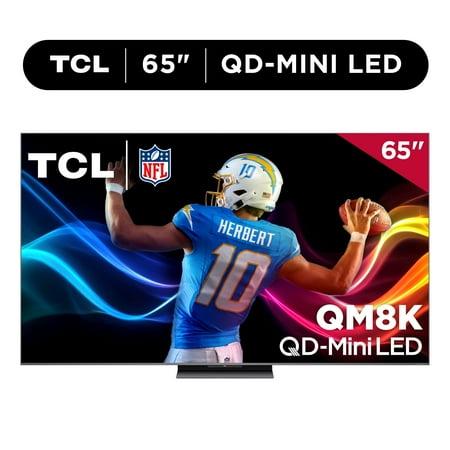
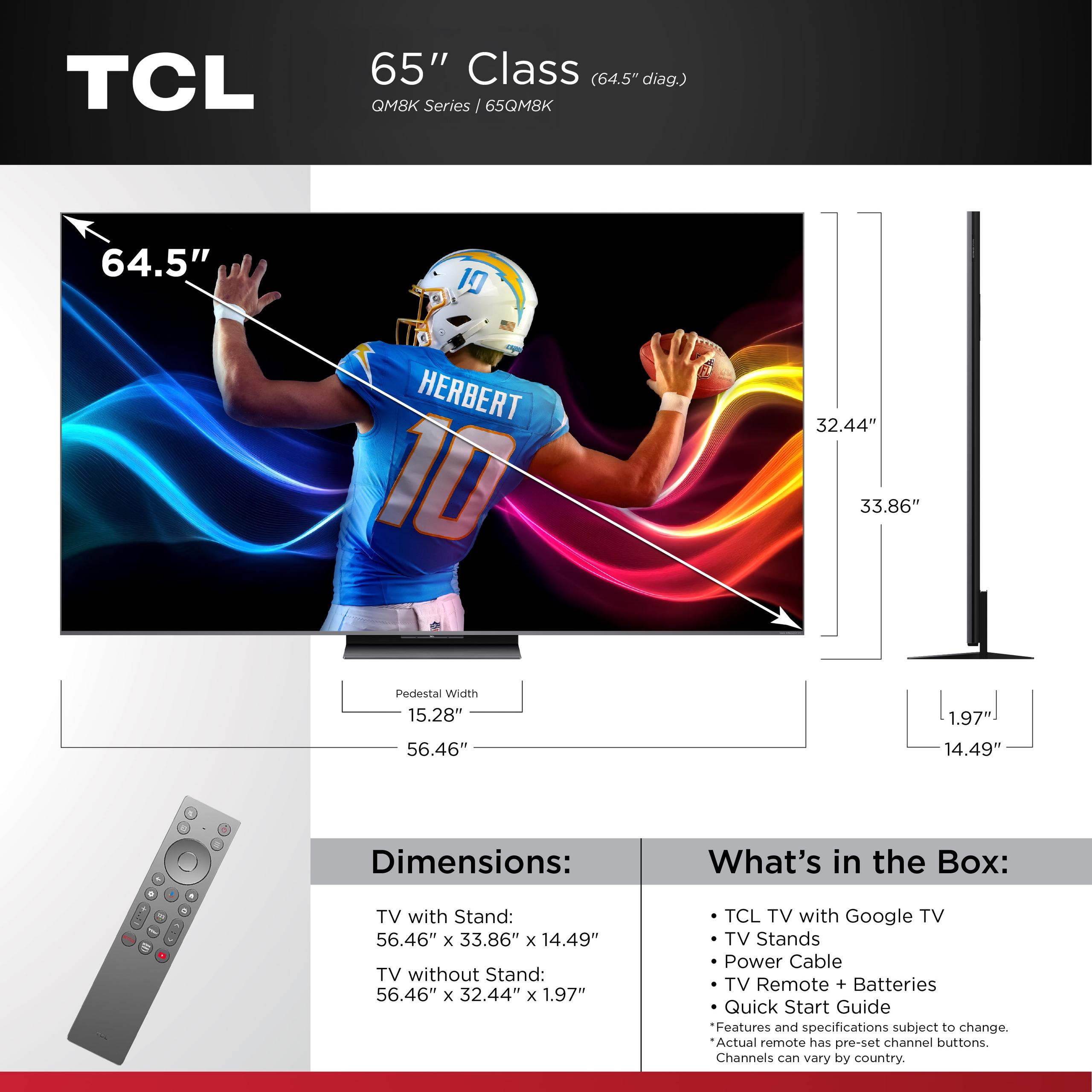


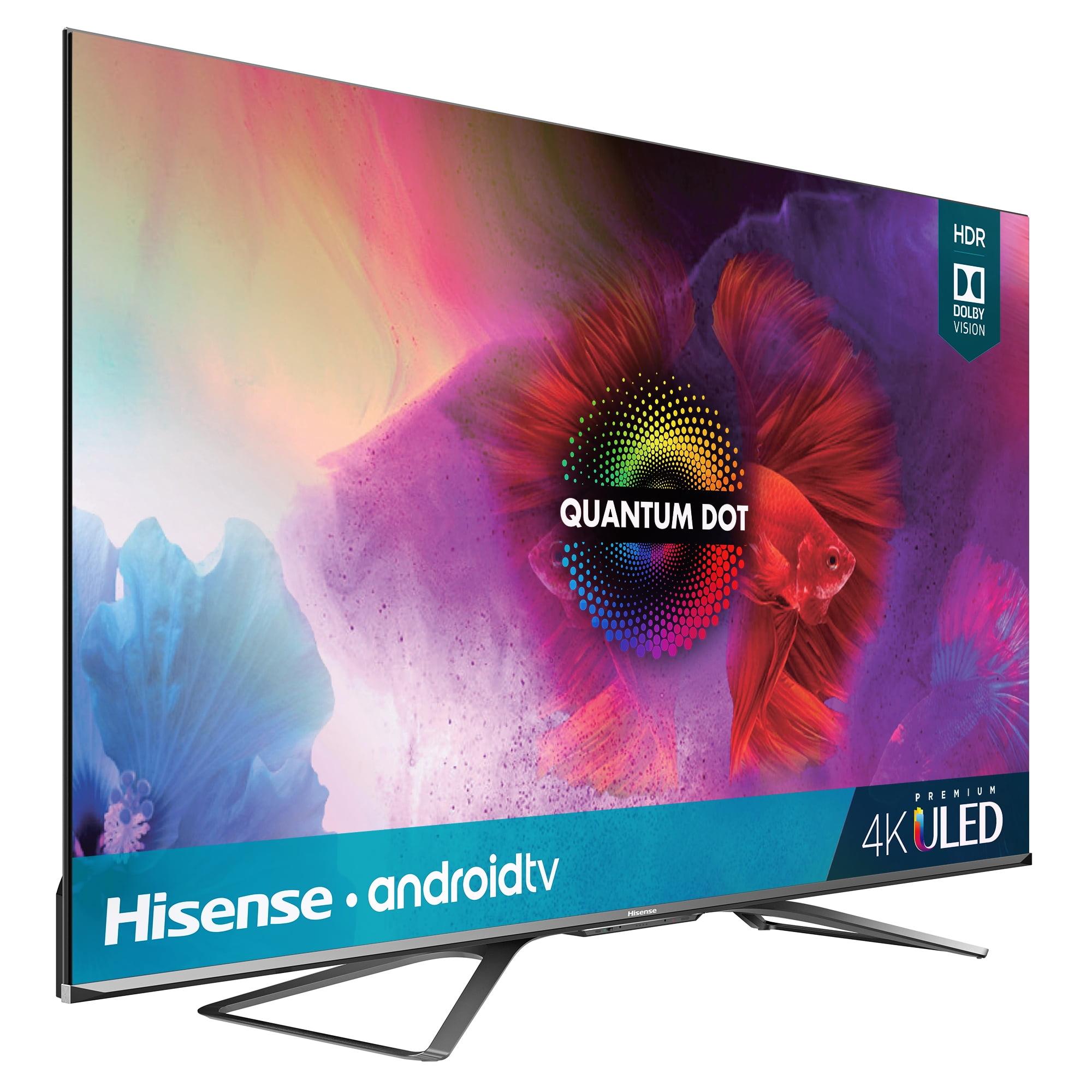

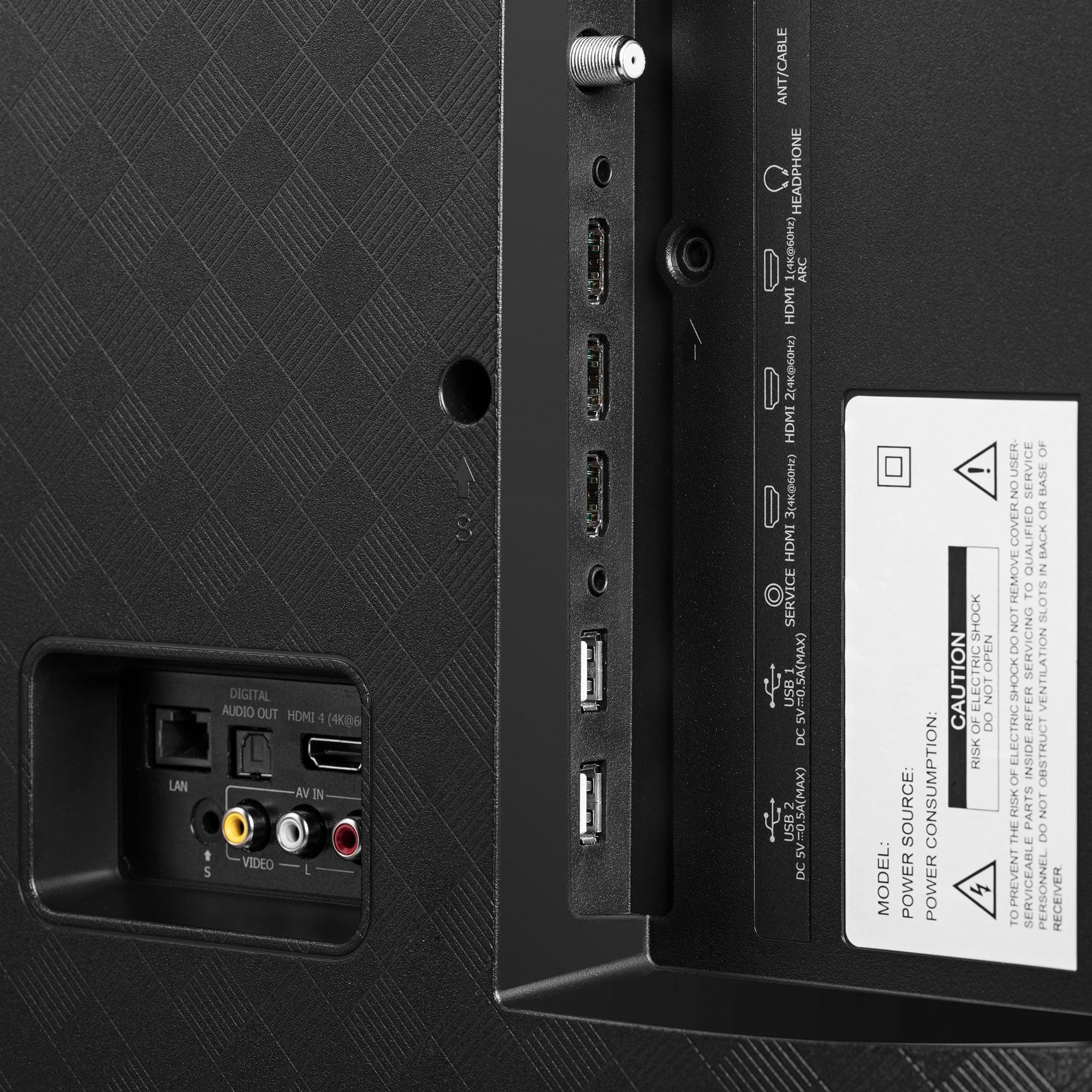
When you're shopping for a premium 4K TV, the sheer number of options can feel overwhelming. Two models that often come up in conversations are the TCL 65" QM8K Series QD-Mini LED 4K Smart TV at $998 and the Hisense 65" H9G Quantum Series 4K UHD Smart Android TV at $1,253. While both aim to deliver exceptional picture quality without OLED pricing, they represent different generations of TV technology and philosophy.
Before diving into the specifics, let's talk about what makes a premium 4K TV worth considering. These TVs sit in the sweet spot between budget models and ultra-premium OLEDs, offering features like local dimming (where the TV can brighten or darken specific areas of the screen independently), wide color gamuts (the range of colors a TV can display), and high peak brightness for HDR content.
The key factors that separate good TVs from great ones include picture quality metrics like contrast ratio (the difference between the darkest and brightest parts of an image), color accuracy, gaming performance, and smart TV functionality. For home theater enthusiasts, these elements combine to create an immersive viewing experience that can rival commercial cinemas.
The release timing of these TVs tells an important story. The Hisense H9G launched in 2020, representing the peak of traditional LED-LCD technology at that time. The TCL QM8K, released in 2023, incorporates Mini LED technology—a significant advancement that bridges the gap between traditional LED and OLED displays.
This three-year gap matters more than you might think. TV technology has evolved rapidly, with manufacturers focusing on improving local dimming, increasing brightness, and adding gaming features to compete with next-generation consoles. The QM8K benefits from these advances, while the H9G represents what was cutting-edge in 2020.
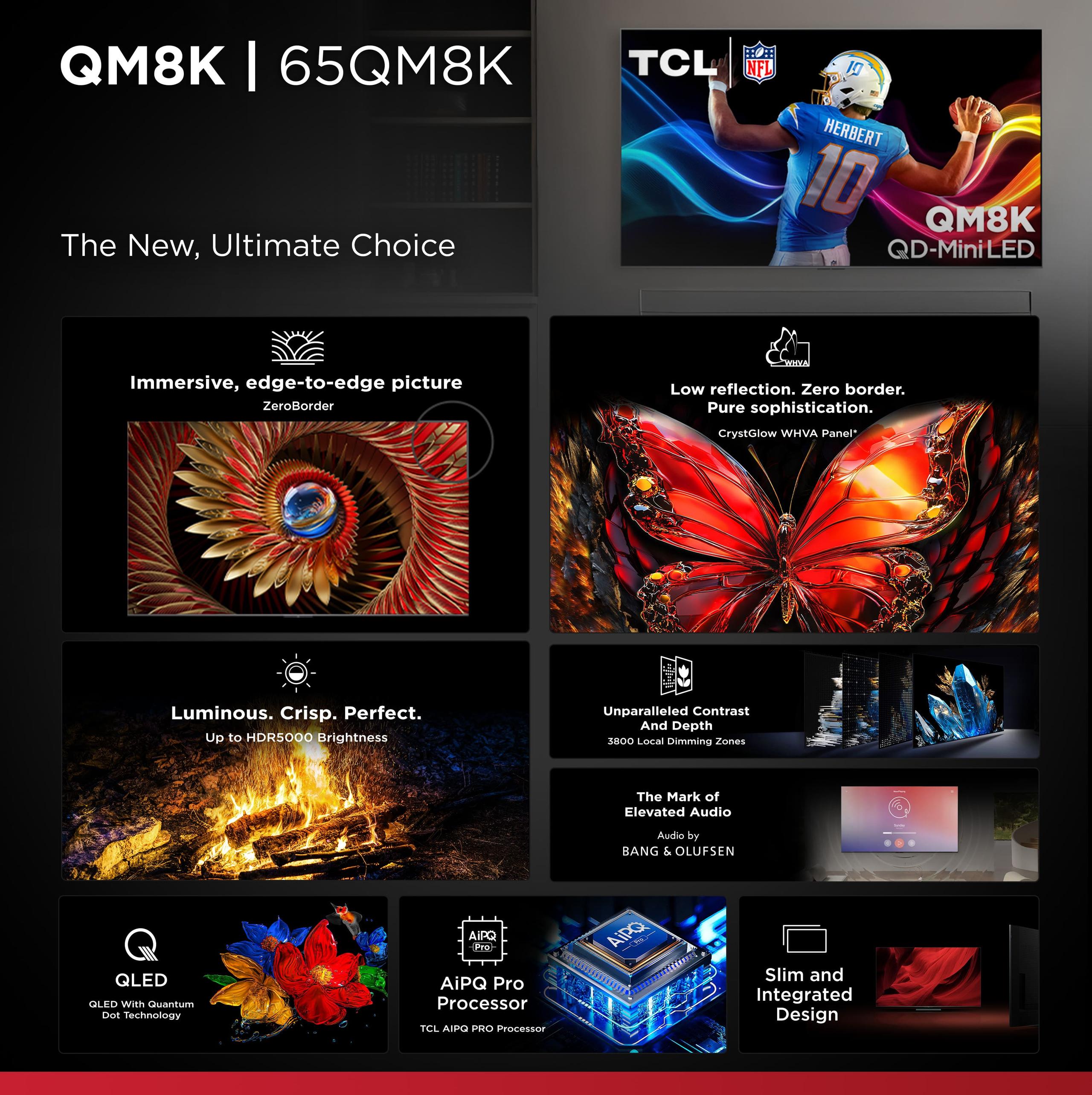
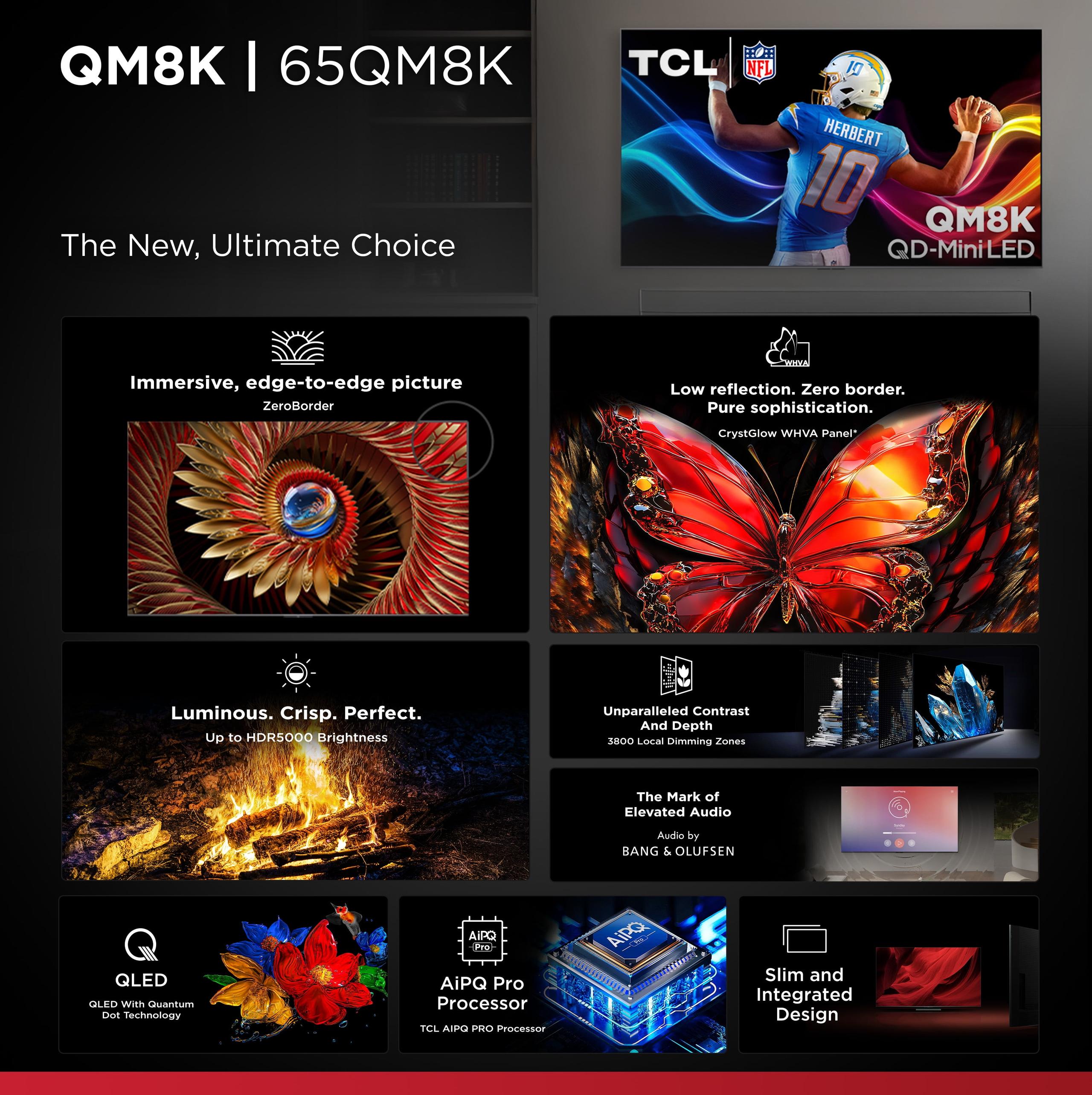
The most striking difference between these TVs lies in their brightness capabilities. The TCL QM8K achieves up to 5,000 nits of peak brightness, while the Hisense H9G maxes out around 1,000 nits. To put this in perspective, a typical sunny day produces about 100,000 nits, while indoor lighting ranges from 100-1,000 nits.
Why does this matter? HDR (High Dynamic Range) content is mastered with brightness levels that can exceed 4,000 nits. When watching movies like "Blade Runner 2049" or "Mad Max: Fury Road," the TCL can actually display the intended brightness of explosions, car headlights, and sunlit scenes. The Hisense, while still impressive, has to compress these bright details, losing some of the impact that directors intended.
I've noticed this difference is most apparent in daytime viewing. The TCL's exceptional brightness means you can watch HDR content in a bright living room without feeling like you're squinting at a dim screen. The Hisense performs admirably in darker rooms but struggles to compete with ambient light.
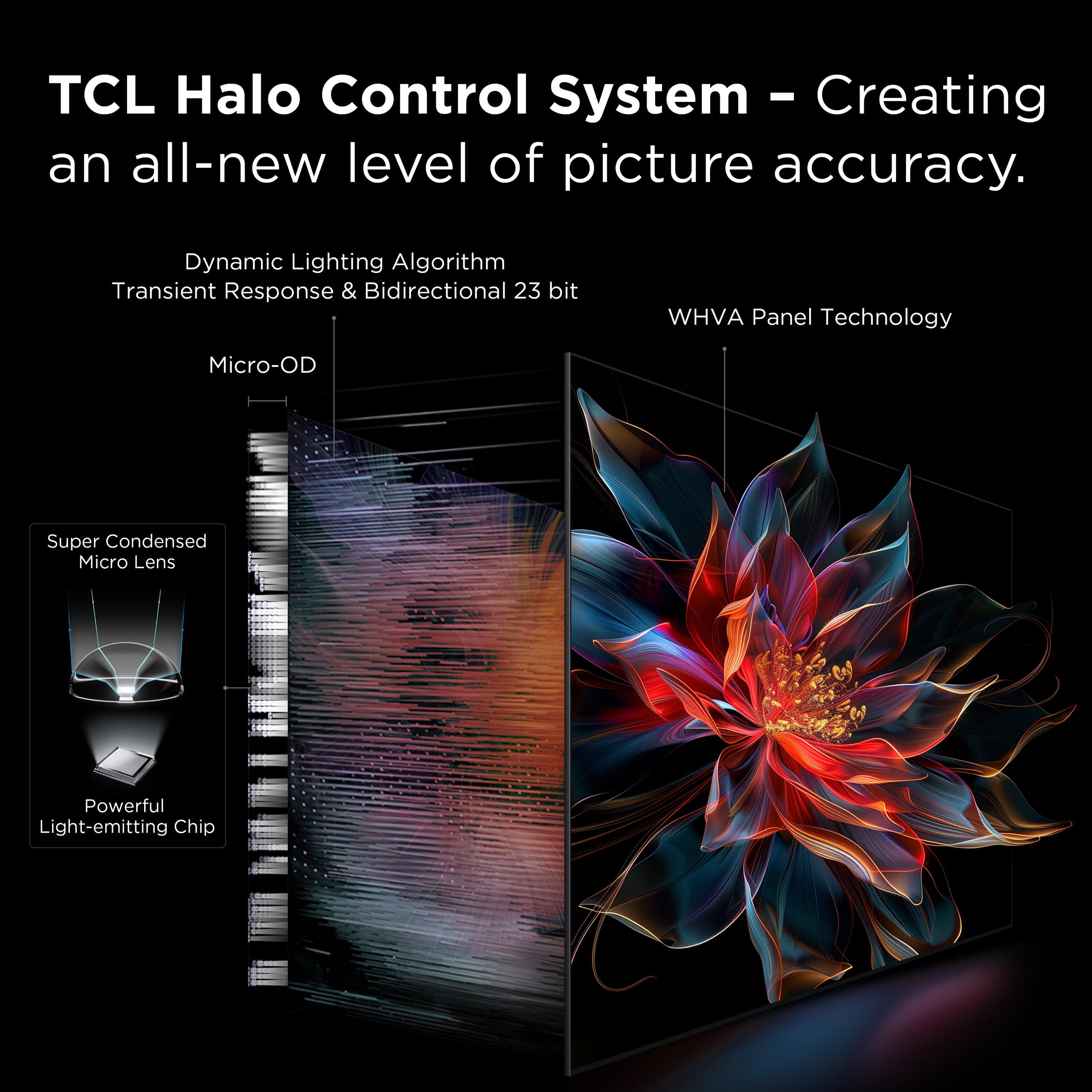
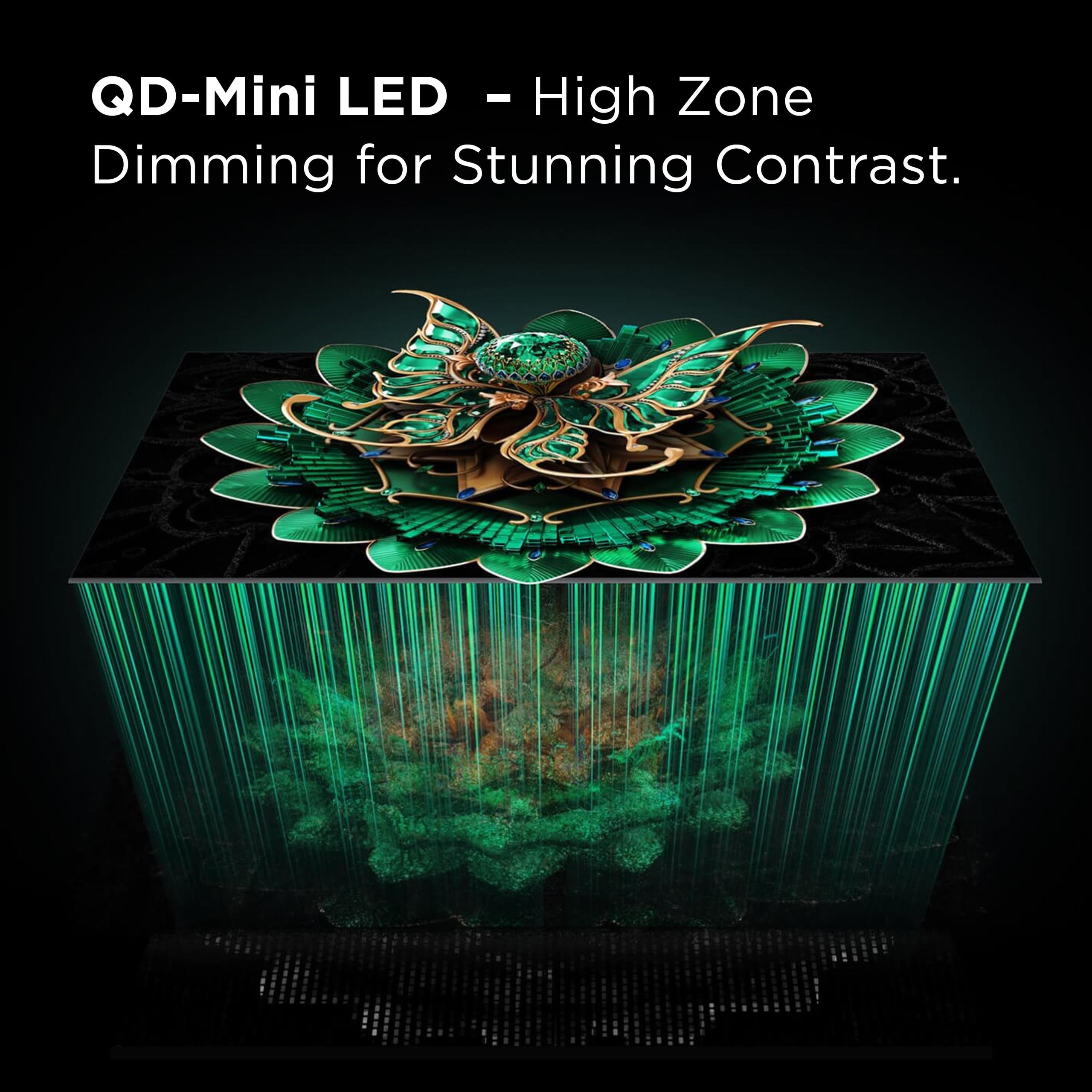
Local dimming is where these TVs really show their technological differences. The TCL QM8K uses Mini LED technology with up to 3,800 dimming zones—tiny areas that can be independently controlled. Think of it like having thousands of tiny flashlights behind the screen, each able to turn on or off based on what the picture needs.
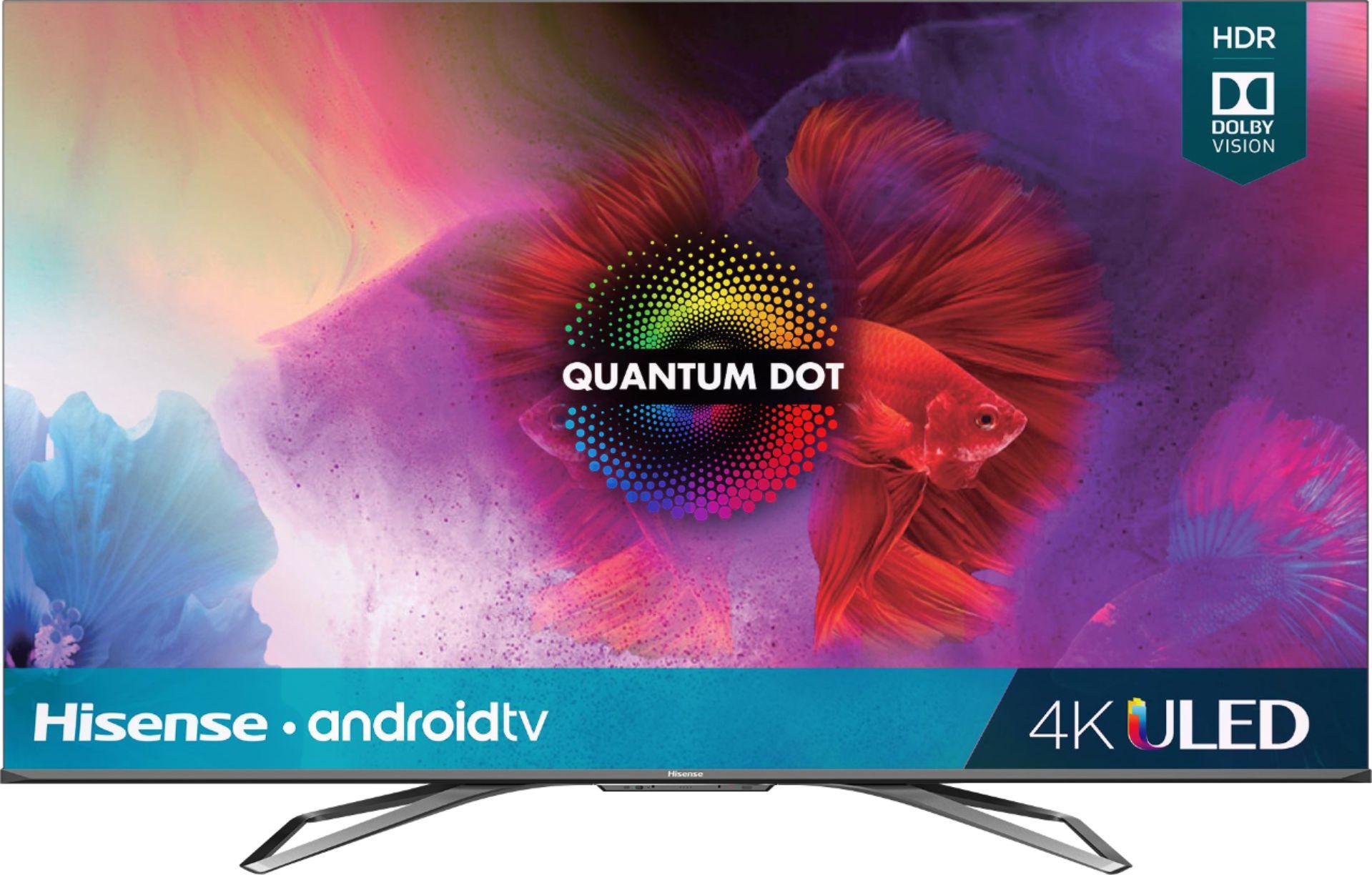
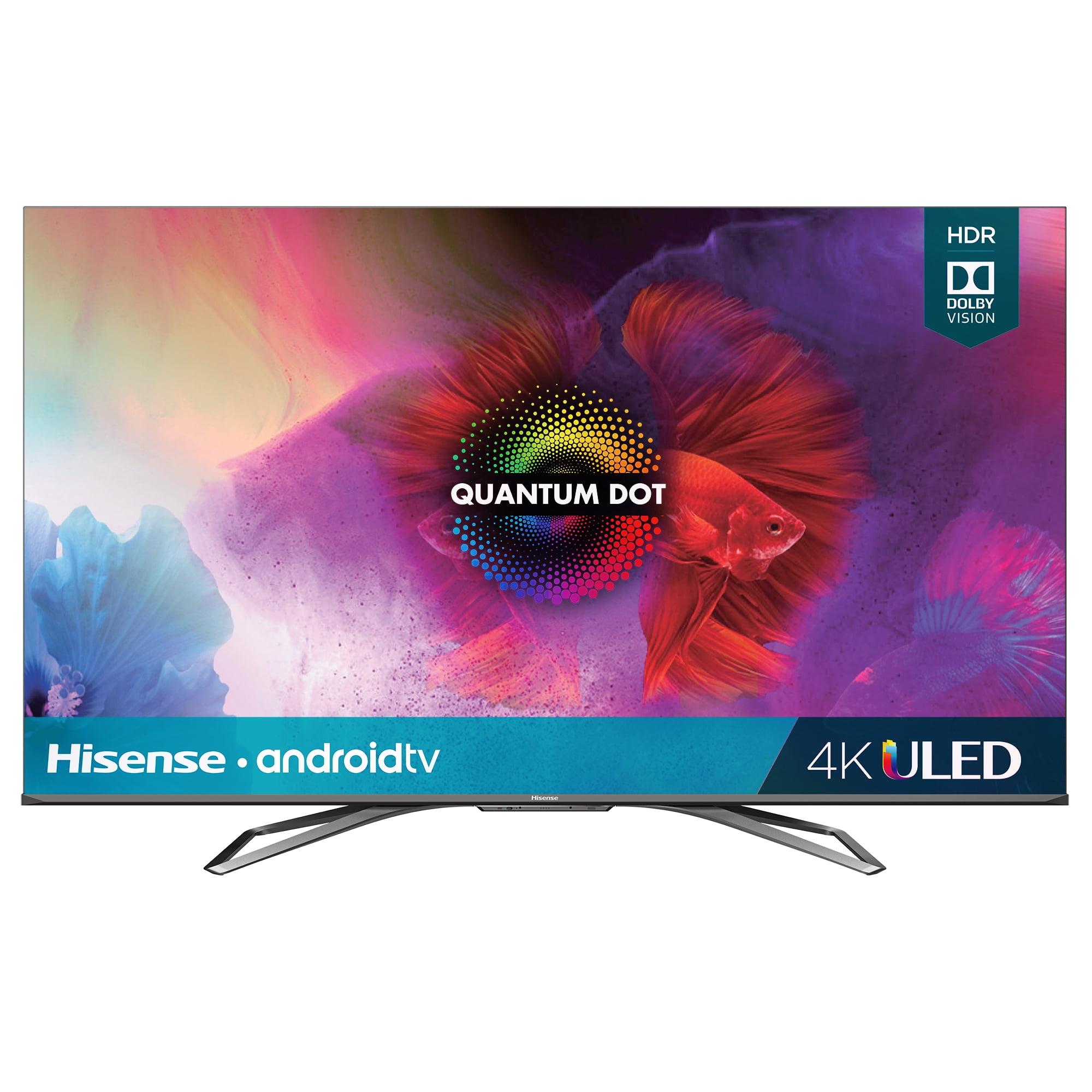
The Hisense H9G uses traditional LED backlighting with significantly fewer dimming zones. While it still produces excellent black levels for its category, it can't match the precision of Mini LED technology. This shows up most noticeably in scenes with bright objects against dark backgrounds—like stars in space or credits rolling over a dark scene.
The practical result? The TCL produces deeper blacks with less "blooming" (unwanted light spilling around bright objects). When watching "The Dark Knight" or any space movie, the difference becomes immediately apparent. The TCL's precision creates an almost OLED-like experience, while the Hisense, though still impressive, shows more of the traditional LED limitations.
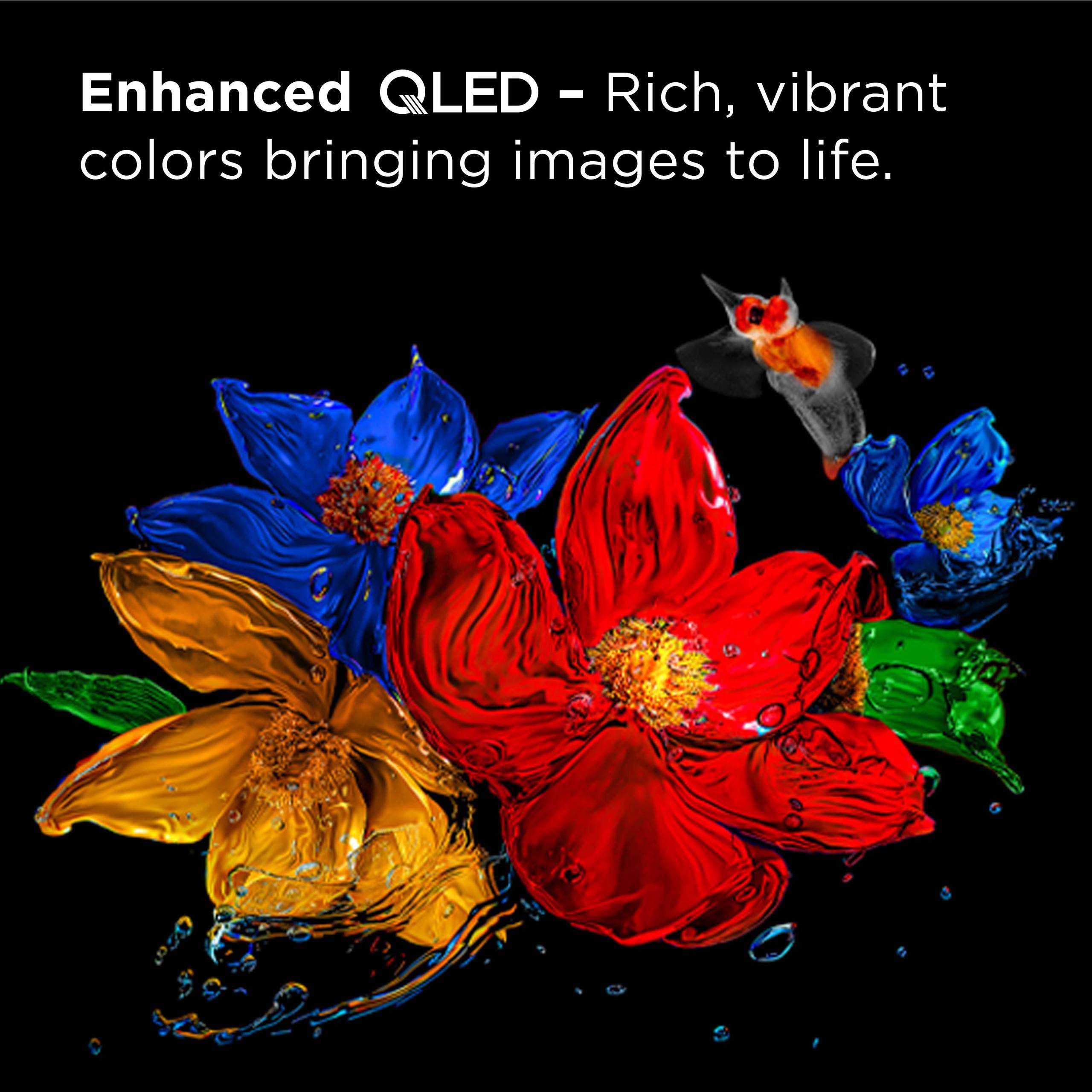
Both TVs use Quantum Dot technology, which enhances color reproduction by using microscopic crystals that emit specific colors when lit. The TCL QM8K covers 97% of the DCI-P3 color space (the standard used for movie production), while the Hisense H9G covers a respectable but slightly smaller gamut.
Where they differ is in color processing. The TCL's AiPQ Pro processor uses artificial intelligence to optimize colors in real-time, analyzing each scene and adjusting colors for accuracy. The Hisense uses more traditional processing, which can sometimes result in oversaturated colors that look impressive at first glance but become fatiguing over time.
In my experience, the TCL produces more natural skin tones and better color consistency across different content types. The Hisense can appear more vibrant, which some users prefer, but it's less accurate to what content creators intended.
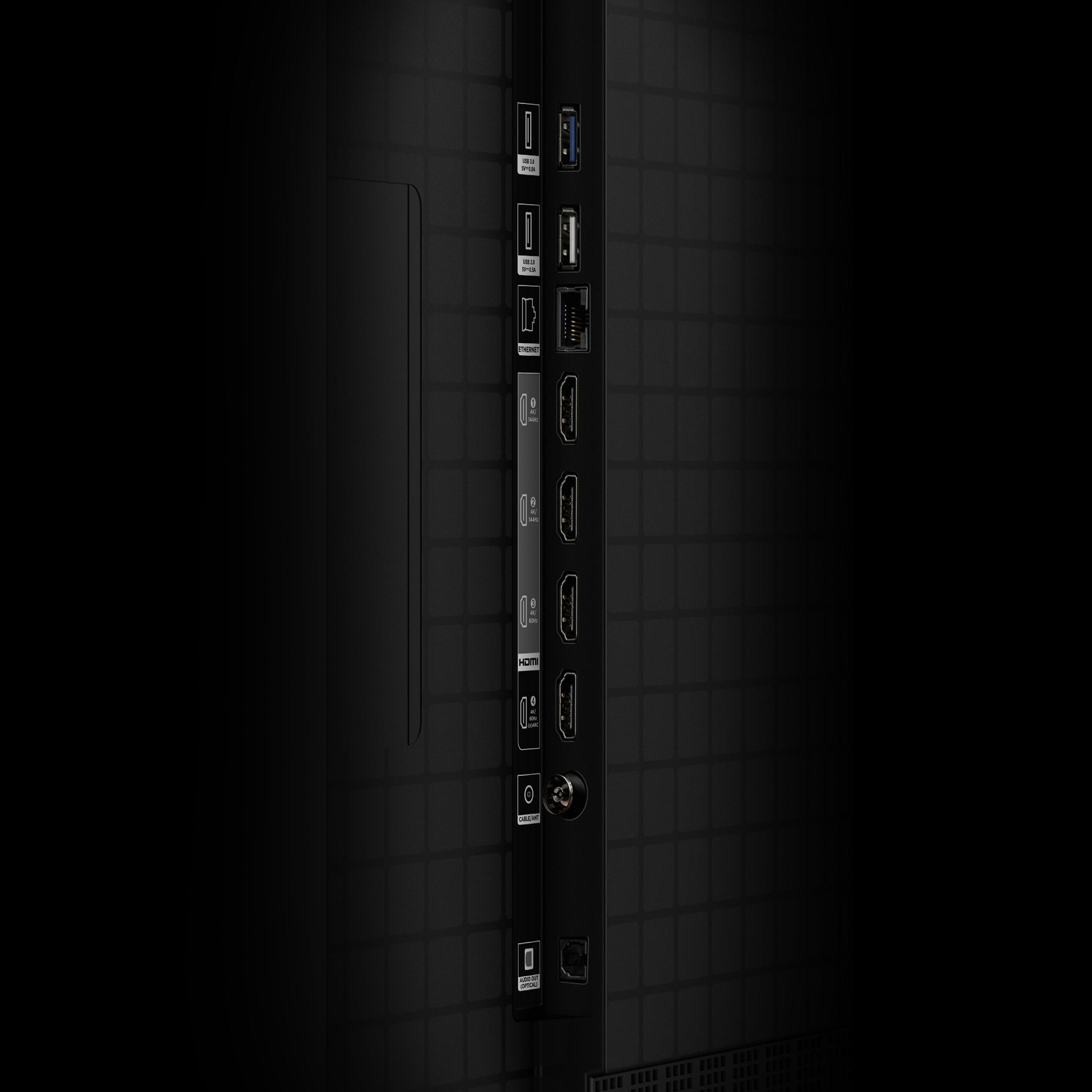
This is where the three-year technology gap becomes most apparent. The TCL QM8K includes HDMI 2.1 ports with Variable Refresh Rate (VRR) support up to 144Hz, while the Hisense H9G is limited to HDMI 2.0 and 60Hz.
For context, VRR allows the TV to synchronize its refresh rate with your gaming console or PC, eliminating screen tearing and providing smoother gameplay. Modern consoles like the PlayStation 5 and Xbox Series X can output games at 120Hz, but only the TCL can display these higher frame rates.
The TCL also features significantly lower input lag (the delay between pressing a button and seeing the action on screen). For competitive gaming, this difference can be crucial. Even for casual gaming, the smoother motion and reduced lag create a more responsive, enjoyable experience.
If gaming is important to you, the TCL represents a clear generational leap. The Hisense remains adequate for casual gaming but lacks the modern features that enhance the gaming experience.
The smart TV experience often gets overlooked, but it's something you'll interact with daily. The TCL runs Google TV, which launched in 2020 as an evolution of Android TV. It's faster, more intuitive, and offers better content recommendations based on your viewing habits.
The Hisense uses the original Android TV platform, which, while functional, feels dated by comparison. Navigation is slower, the interface is less polished, and app performance can be sluggish. Both platforms offer access to major streaming services, but the day-to-day experience favors the TCL.
The TCL also includes more advanced voice control features and better integration with smart home devices. These might seem like small details, but they add up to a more modern, user-friendly experience.
For dedicated home theater setups, several factors become particularly important. The TCL's higher brightness might seem counterintuitive for dark room viewing, but it's actually beneficial for HDR content. The key is having precise control over that brightness, which the Mini LED technology provides.
The TCL's superior local dimming creates better contrast in dark scenes, reducing the "gray" look that can plague LED TVs. This is crucial for movies where dark scenes contain important visual information. The Hisense performs well in this regard too, but can't match the precision of the newer technology.
Both TVs support major HDR formats including Dolby Vision, but the TCL's higher brightness allows it to display more of the HDR range as intended. For home theater enthusiasts who have invested in 4K Blu-ray players and high-quality audio systems, this difference enhances the overall experience.
Here's where the comparison gets interesting. The TCL QM8K costs $998, while the Hisense H9G is priced at $1,253. You're paying $255 less for significantly better performance across virtually every metric.
This pricing reflects the reality of TV technology cycles. The Hisense was premium when it launched but hasn't dropped in price as much as you might expect. The TCL benefits from newer, more efficient manufacturing processes and economies of scale in Mini LED production.
From a pure value perspective, the TCL offers exceptional performance for its price point. It delivers picture quality that was reserved for much more expensive TVs just a few years ago. The Hisense, while still a capable TV, represents older technology at a higher price.
In daily use, these differences translate to noticeably better performance from the TCL. HDR movies have more impact, games feel more responsive, and the overall experience is more polished. The Hisense isn't bad—it was excellent for its time—but technology has moved forward.
The TCL's superior brightness means you can enjoy HDR content during the day without closing curtains. Its better local dimming creates more convincing night scenes in movies. The gaming improvements make modern consoles feel more responsive and immersive.
The TCL QM8K is the better choice for most buyers. It offers superior performance at a lower price, making it ideal for anyone who wants the best picture quality for their money. It's particularly well-suited for gamers, HDR enthusiasts, and anyone who watches TV in bright rooms.
The Hisense H9G only makes sense in specific scenarios. If you can find it heavily discounted (under $800), it becomes more competitive on value. It's also worth considering if you specifically prefer the Android TV interface or if you've had good experiences with Hisense products in the past.
Technology rarely offers such clear-cut choices, but this comparison comes close. The TCL QM8K represents newer, better technology at a lower price. It's not just incrementally better—it's a generational leap in key areas like brightness, local dimming, and gaming performance.
The Hisense H9G was a strong performer in 2020, but three years in TV technology is significant. Unless you find compelling reasons to choose the older model (like a substantial discount or specific feature preferences), the TCL offers better value and performance.
For most buyers, the decision comes down to whether you want yesterday's premium technology or today's at a better price. The TCL QM8K delivers on the promise of premium picture quality without premium pricing, making it the clear winner in this comparison.
| TCL 65" QM8K Series QD-Mini LED 4K Smart TV | Hisense 65" H9G Quantum Series 4K UHD Smart Android TV |
|---|---|
| Price - Direct cost comparison | |
| $998 | $1,253 |
| Release Year - Technology generation difference | |
| 2023 (latest Mini LED technology) | 2020 (traditional LED with local dimming) |
| Peak Brightness - Critical for HDR impact and daytime viewing | |
| 5,000 nits (exceptional HDR performance) | 1,000 nits (good but limited HDR range) |
| Local Dimming Zones - Controls contrast and blooming | |
| Up to 3,800 Mini LED zones (precise control) | 180 traditional LED zones (good but less precise) |
| Color Gamut - Color accuracy and vibrancy | |
| 97% DCI-P3 (excellent color reproduction) | Good coverage but less than DCI-P3 |
| Gaming Features - Modern console compatibility | |
| HDMI 2.1, 144Hz VRR, low input lag | HDMI 2.0, 60Hz max, no VRR |
| Smart Platform - Daily user experience | |
| Google TV (fast, modern interface) | Android TV (older, slower platform) |
| Display Technology - Fundamental picture quality approach | |
| QD-Mini LED with thousands of zones | Quantum Dot LED with fewer zones |
| Processor - Real-time picture optimization | |
| AiPQ Pro with AI enhancement | Standard processing |
| Best For - Ideal user scenarios | |
| Gamers, HDR enthusiasts, bright rooms, future-proofing | Dark room viewing, budget-conscious buyers seeking proven reliability |
The TCL 65" QM8K Series QD-Mini LED 4K Smart TV at $998 offers significantly better value than the Hisense 65" H9G Quantum Series 4K UHD Smart Android TV at $1,253. You get superior Mini LED technology, 5x higher peak brightness, modern gaming features, and a faster smart platform for $255 less.
The biggest difference is brightness and local dimming precision. The TCL QM8K delivers 5,000 nits peak brightness with up to 3,800 Mini LED dimming zones, while the Hisense H9G maxes out at 1,000 nits with 180 traditional LED zones. This means much better HDR performance and contrast on the TCL.
The TCL QM8K is far superior for gaming with HDMI 2.1, 144Hz Variable Refresh Rate support, and low input lag. The Hisense H9G is limited to HDMI 2.0 and 60Hz with no VRR support, making it inadequate for modern gaming consoles.
Both work well for home theater, but the TCL QM8K excels with its superior local dimming that creates deeper blacks and better contrast in dark scenes. The higher brightness also allows proper HDR display as filmmakers intended. The Hisense H9G performs well in dark rooms but can't match the precision.
The TCL QM8K runs Google TV, which is faster, more intuitive, and offers better content recommendations than the older Android TV platform on the Hisense H9G. The Google TV interface is more responsive and modern.
The TCL QM8K significantly outperforms in bright rooms due to its 5,000 nits peak brightness, allowing clear HDR viewing even with windows open. The Hisense H9G at 1,000 nits struggles with ambient light and requires controlled lighting for optimal viewing.
The TCL QM8K offers superior color accuracy with 97% DCI-P3 coverage and AI-powered color processing that produces more natural skin tones. The Hisense H9G has good color reproduction but can appear oversaturated and less accurate to source material.
The main advantages of the Hisense H9G are its proven reliability after 3+ years in the market and potentially deeper discounts as retailers clear inventory. However, at current pricing, the TCL QM8K offers better performance and value.
The TCL QM8K is superior for movies due to its exceptional HDR brightness, precise local dimming that creates true blacks, and better color accuracy. These features allow movies to display as directors intended, especially in challenging scenes with mixed lighting.
Both TVs offer standard manufacturer warranties, but the Hisense H9G has a longer track record in the market. However, the TCL QM8K uses more advanced Mini LED technology that's generally more reliable than traditional LED backlighting systems.
Both the TCL QM8K and Hisense H9G support major HDR formats including Dolby Vision, HDR10+, and HDR10. However, the TCL's higher brightness allows it to actually display more of the HDR range as intended by content creators.
Choose the TCL QM8K unless you find the Hisense H9G heavily discounted under $800. The TCL offers newer technology, better performance across all categories, gaming features, and costs less at current pricing, making it the clear winner for most buyers.
We've done our best to create useful and informative comparisons to help you decide what product to buy. Our research uses advanced automated methods to create this comparison and perfection is not possible - please contact us for corrections or questions. These are the sites we've researched in the creation of this article: tomsguide.com - youtube.com - businessinsider.com - rtings.com - youtube.com - avsforum.com - avsforum.com - bestbuy.com - tcl.com - tcl.com - tcl.com - flatpanelshd.com - romomattressfurniture.com - brandsmartusa.com - pcrichard.com - tvsbook.com - tcl.com - youtube.com - prnewswire.com - tcl.com - tcl.com - rtings.com - bestbuy.com - techradar.com - youtube.com - digitaltrends.com - assets.hisense-usa.com - bestbuy.com - youtube.com - bestbuy.com

Privacy Policy
Terms and Conditions - Affiliate Policy
Home Security
© Copyright 2008-2026.
11816 Inwood Rd #1211, Dallas, TX 75244