

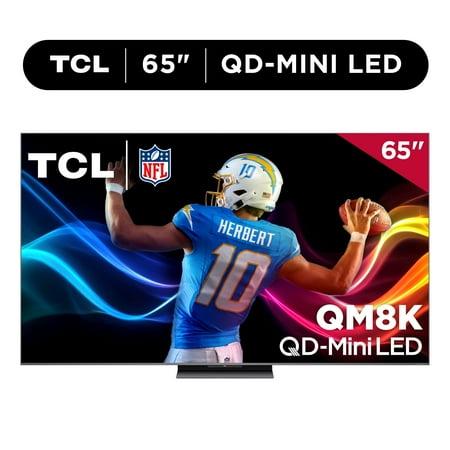

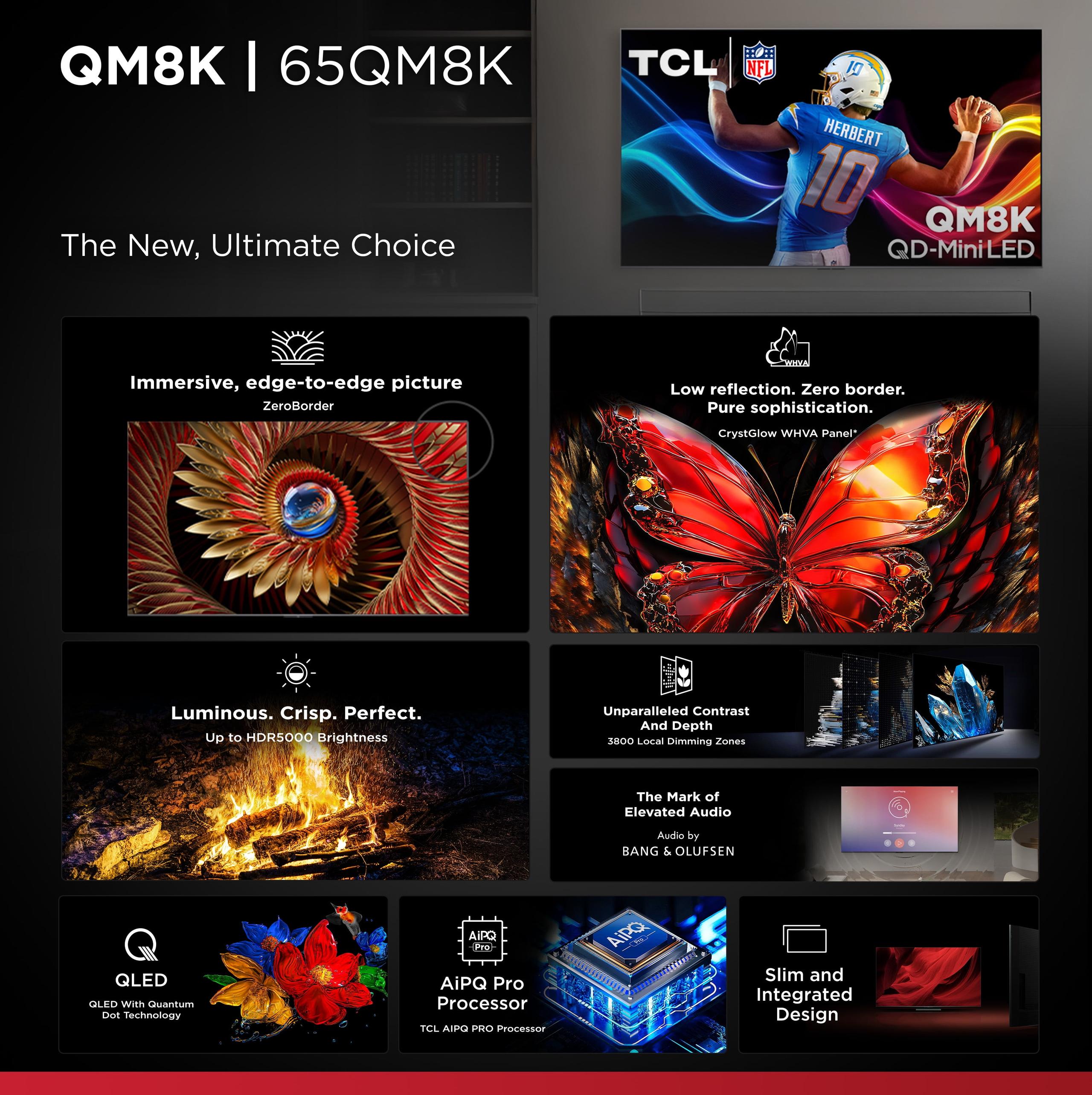

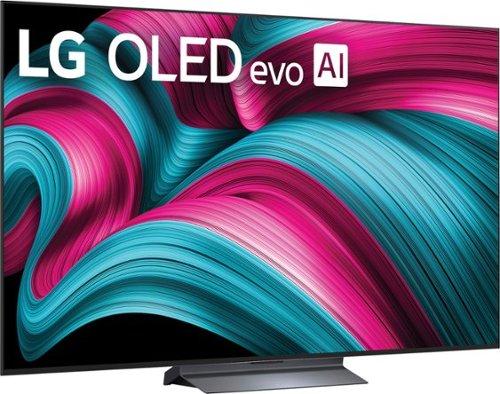
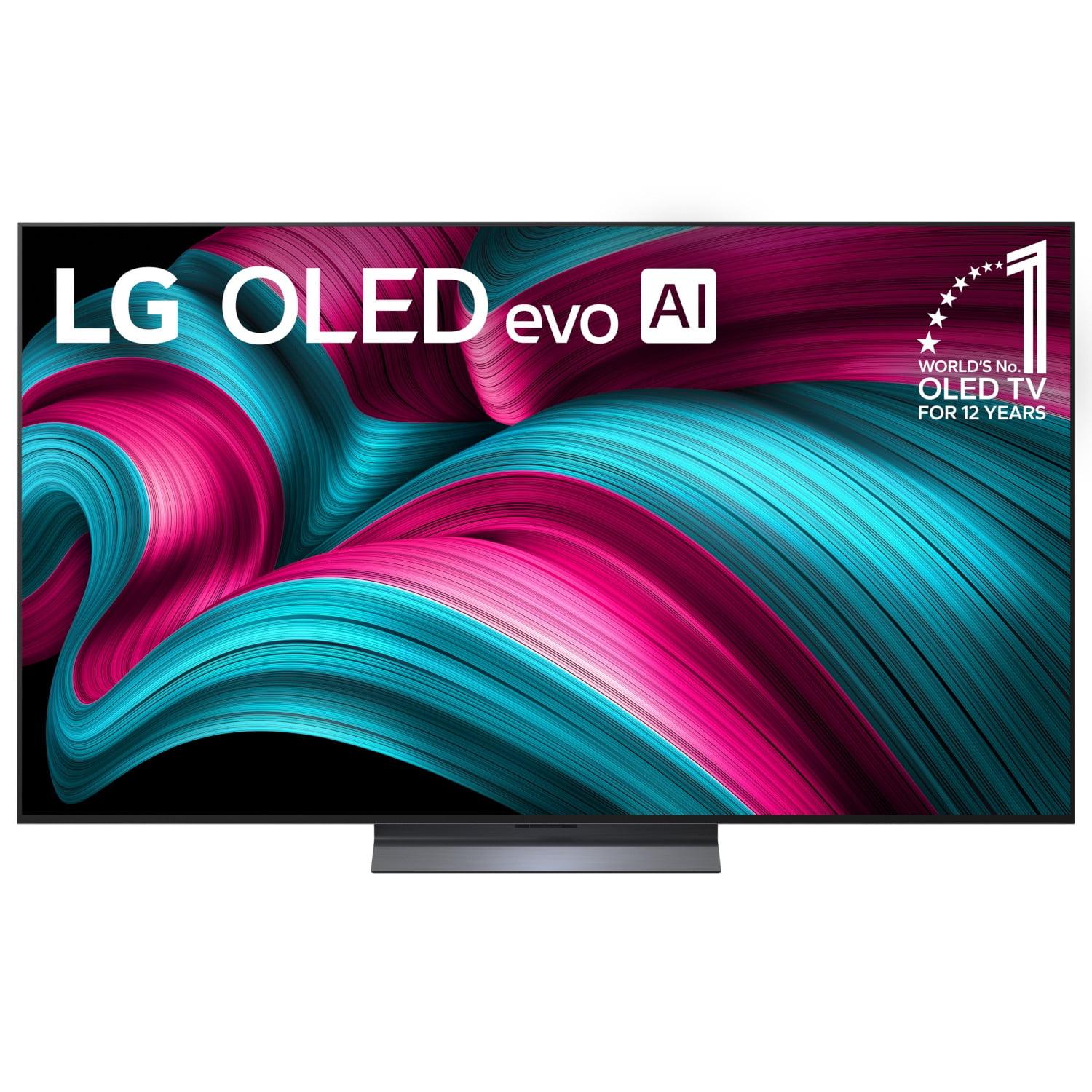
Shopping for a premium 65" 4K TV can feel overwhelming, especially when you're comparing two completely different display technologies. The TCL 65" QM8K Series QD-Mini LED 4K Smart TV ($998) and the LG OLED evo C5 65" 4K TV 2025 ($2,197) represent two distinct approaches to achieving excellent picture quality, each with unique strengths that cater to different viewing environments and preferences.
The premium 65" 4K TV market has evolved dramatically over the past few years, with manufacturers pushing the boundaries of brightness, color accuracy, and contrast. Today's top-tier TVs compete on several fronts: how bright they can get, how dark they can go, how accurately they display colors, and how well they handle fast-moving content like sports and gaming.
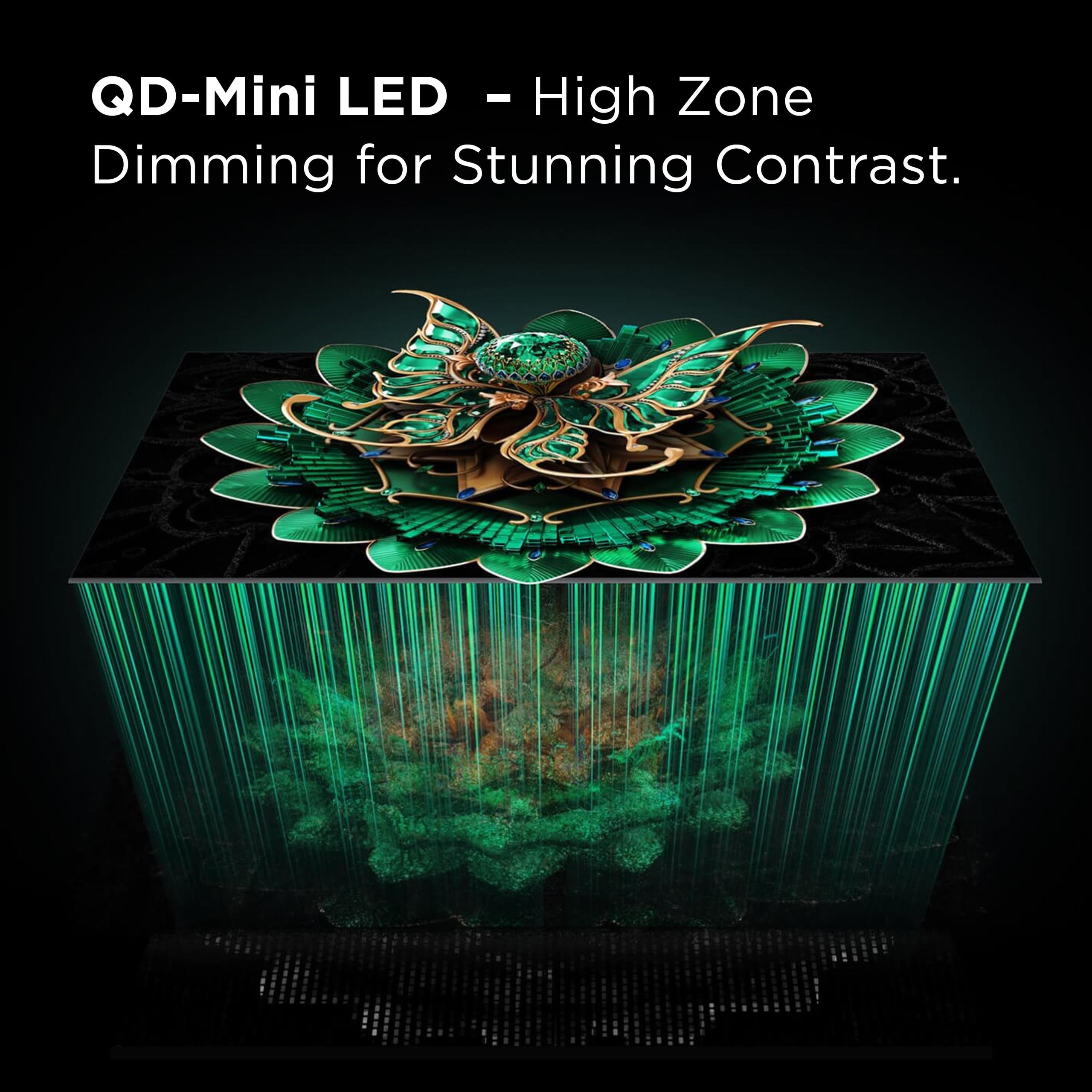
The two dominant technologies in this space take fundamentally different approaches. Mini LED displays, like the TCL QM8K, use thousands of tiny LEDs behind the screen to create incredibly bright images with precise local dimming (where different areas of the screen can be brightened or darkened independently). OLED displays, like the LG C5, use pixels that emit their own light and can turn completely off, creating perfect blacks but with inherent brightness limitations.
Think of it this way: Mini LED is like having thousands of tiny flashlights behind your screen, while OLED is like having millions of microscopic light bulbs that make up the picture itself. Each approach has distinct advantages depending on your viewing environment and priorities.
The TCL QM8K Series launched in early 2025 as TCL's flagship QLED model, representing a significant upgrade from their previous QM851G. This timing is crucial because TCL has been aggressively improving their premium TV offerings, and the QM8K includes several breakthrough technologies that weren't available in earlier models.
The LG OLED evo C5 arrived in March 2025 as part of LG's annual OLED refresh cycle. What's interesting about the C5 is that it launched at $2,699 but has already seen price drops to around $2,197, which is typical for LG's OLED pricing strategy. The C5 represents LG's continued refinement of OLED technology, with meaningful improvements in brightness and color accuracy over the previous C4 generation.
Both TVs benefit from 2025's technological advances, including more powerful processors, improved smart TV platforms, and enhanced gaming features that weren't available just a year ago.
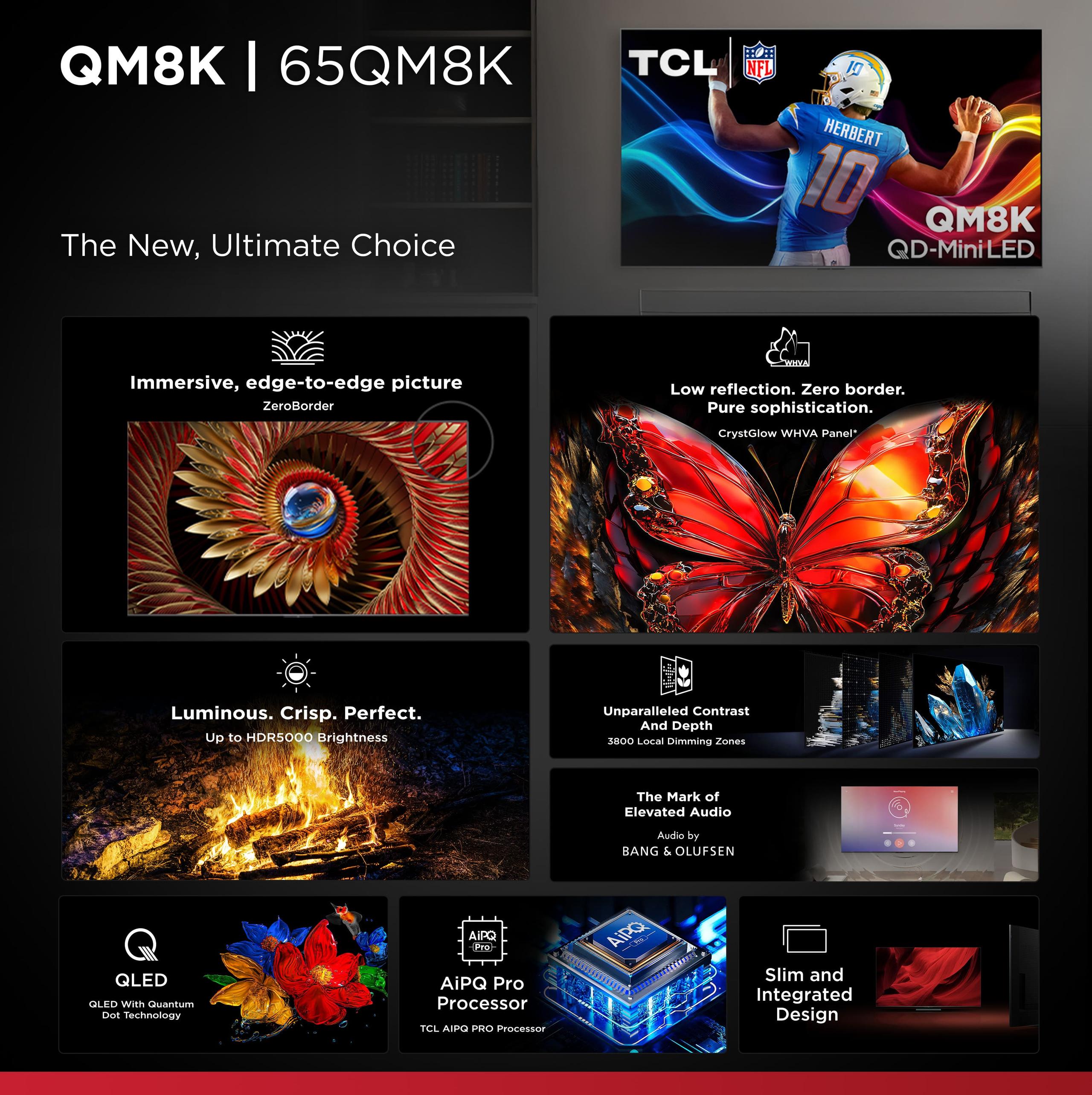
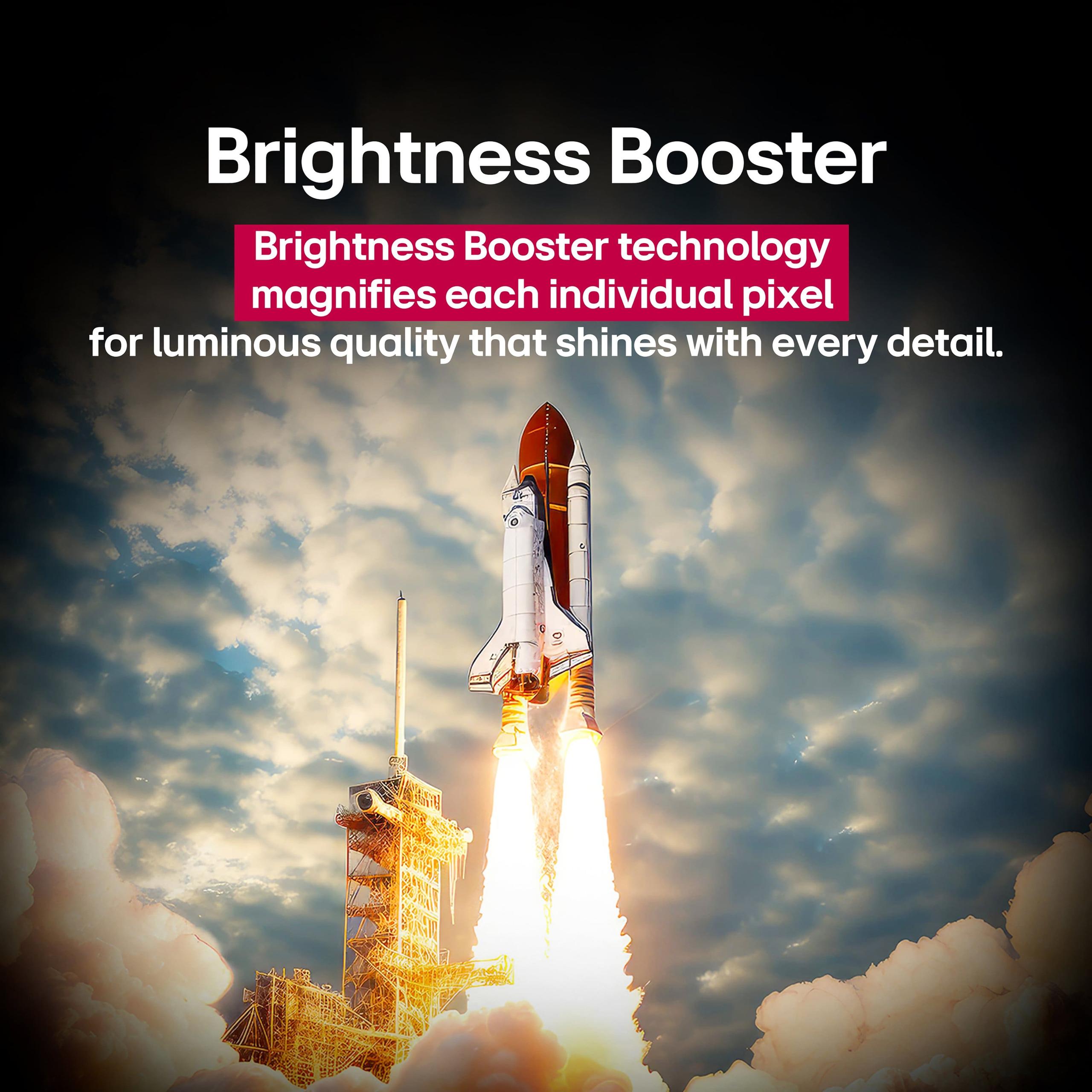
The most significant difference between these TVs is their brightness capabilities. The TCL QM8K can reach an astounding 5,000 nits peak brightness, which is among the highest available in consumer TVs. To put this in perspective, a typical sunny day measures around 100,000 nits, while most indoor lighting ranges from 100-1,000 nits. For TV viewing, anything above 1,000 nits is considered very bright.
This extreme brightness makes the TCL exceptional for bright rooms. When sunlight streams through windows or ceiling lights are on, the QM8K can overpower ambient light in ways that dimmer TVs simply cannot. HDR (High Dynamic Range) content, which is designed to showcase a wide range of brightness levels, truly comes alive on this display. Think of HDR as the difference between looking at a photo of a sunset versus actually seeing one – the brighter your TV, the more it can replicate that real-world intensity.
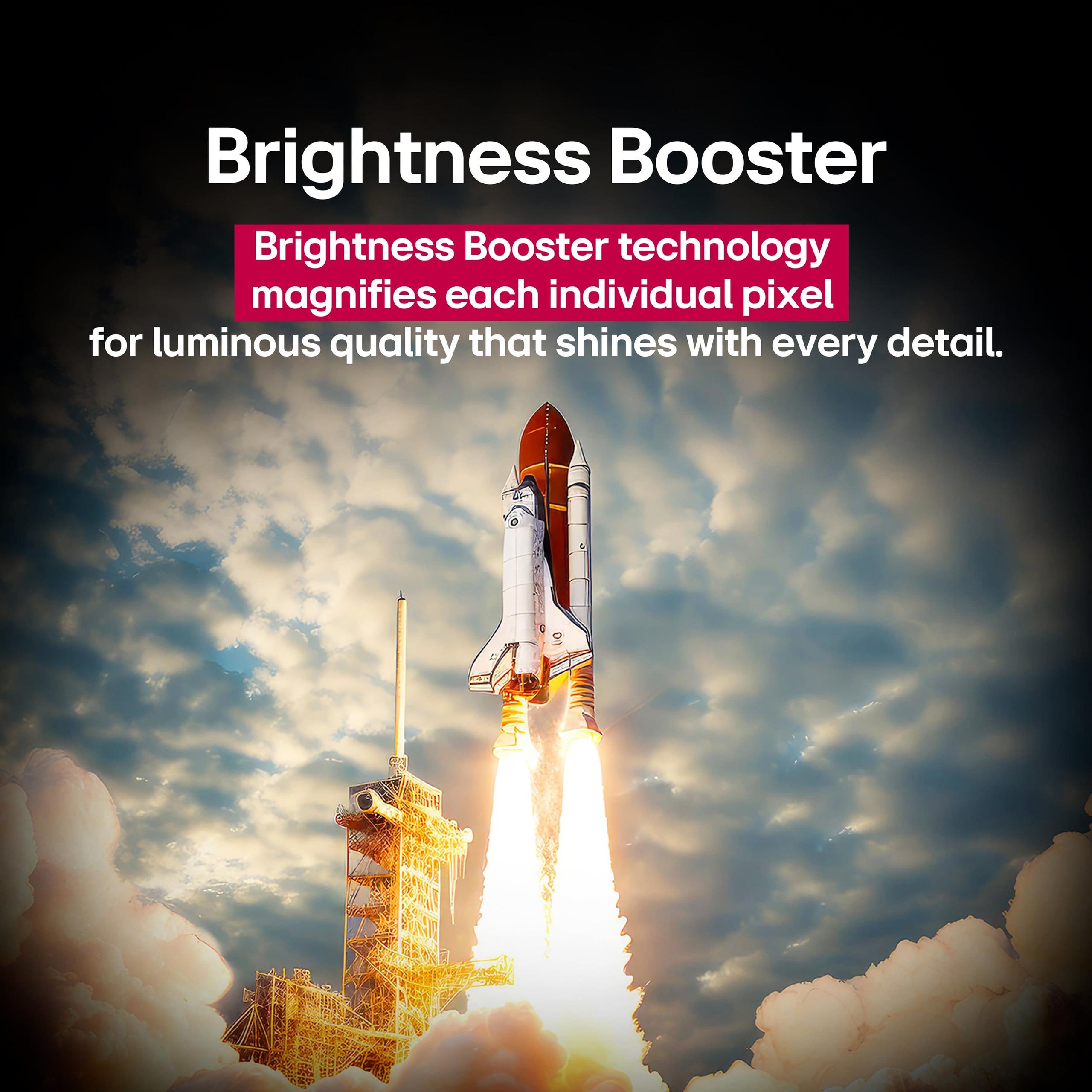
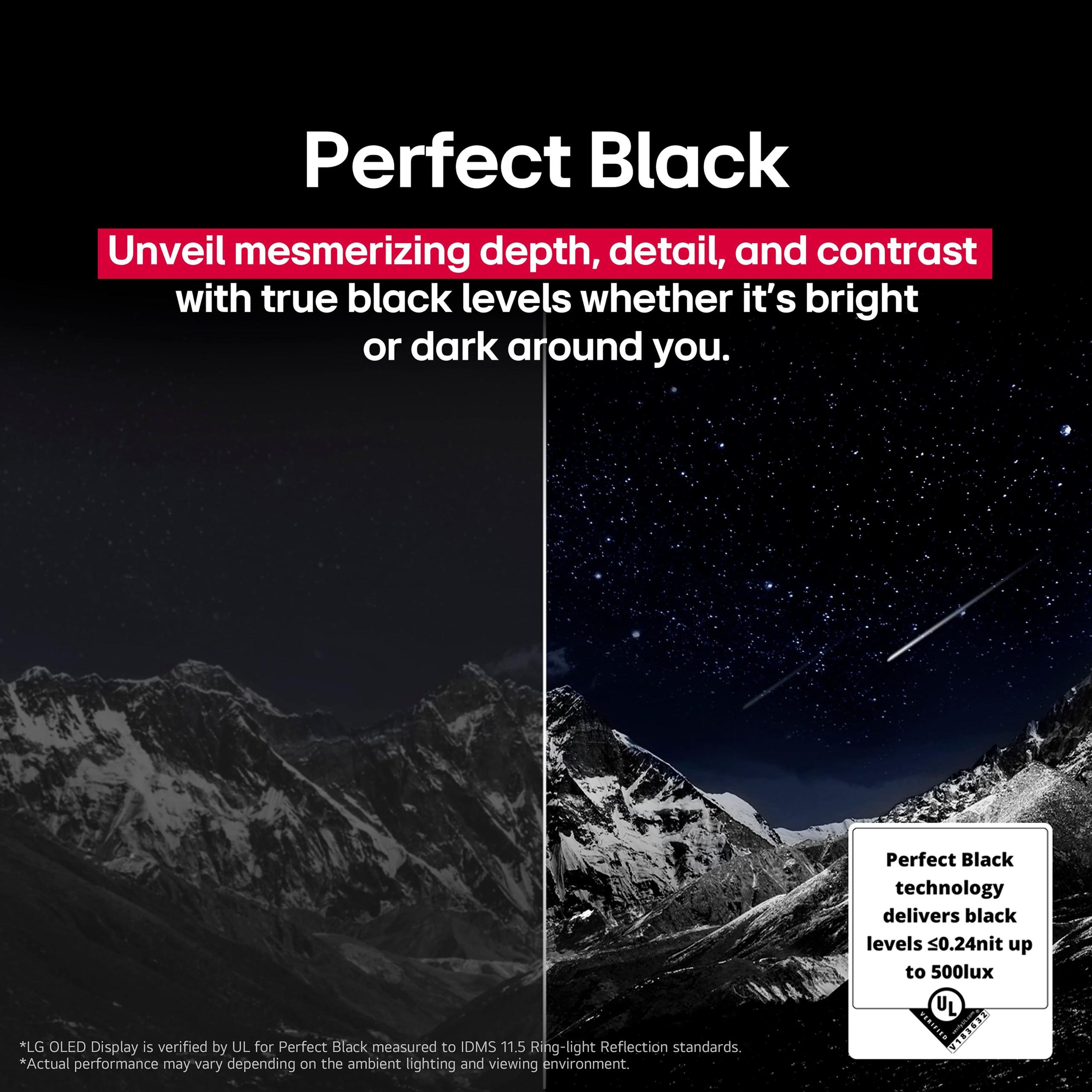
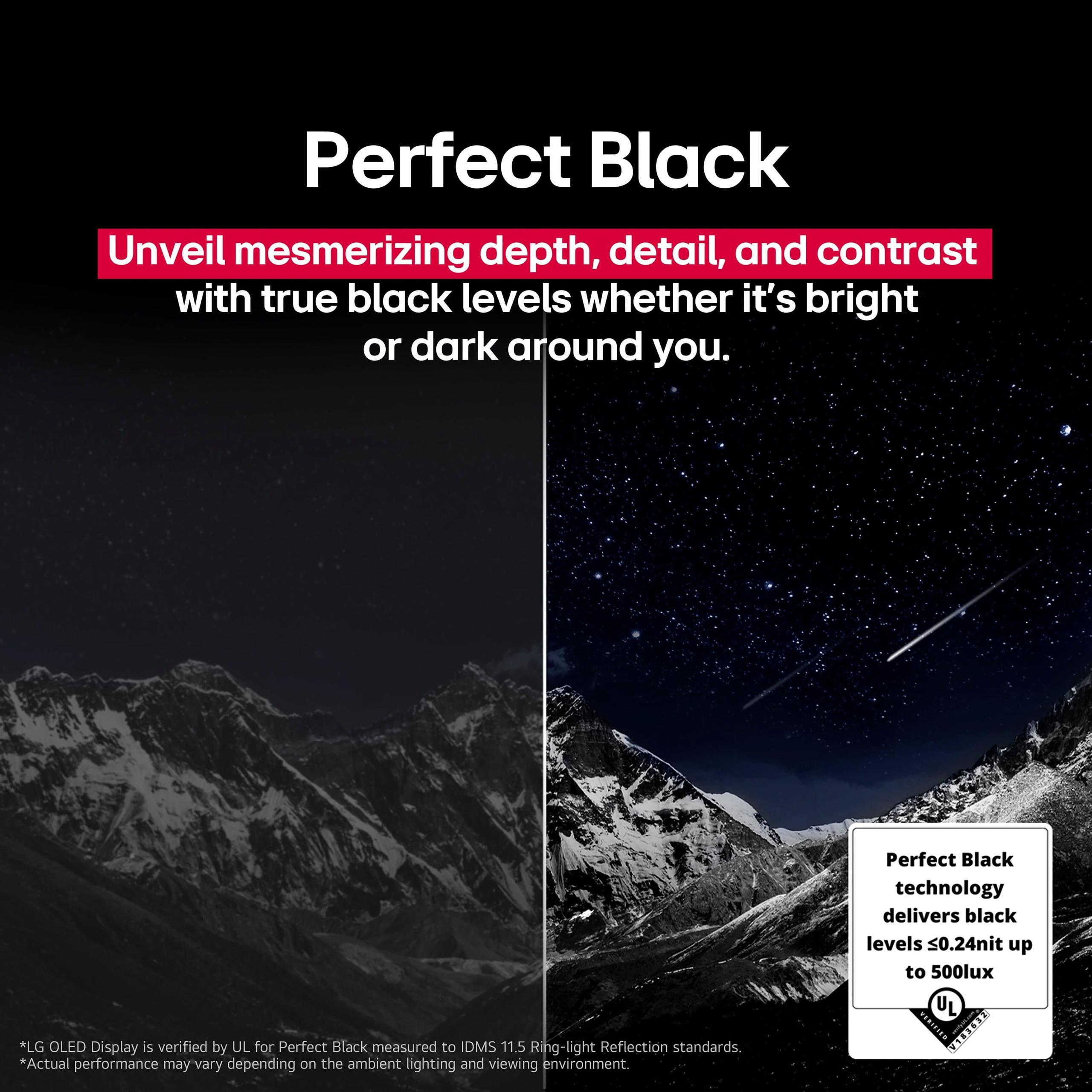
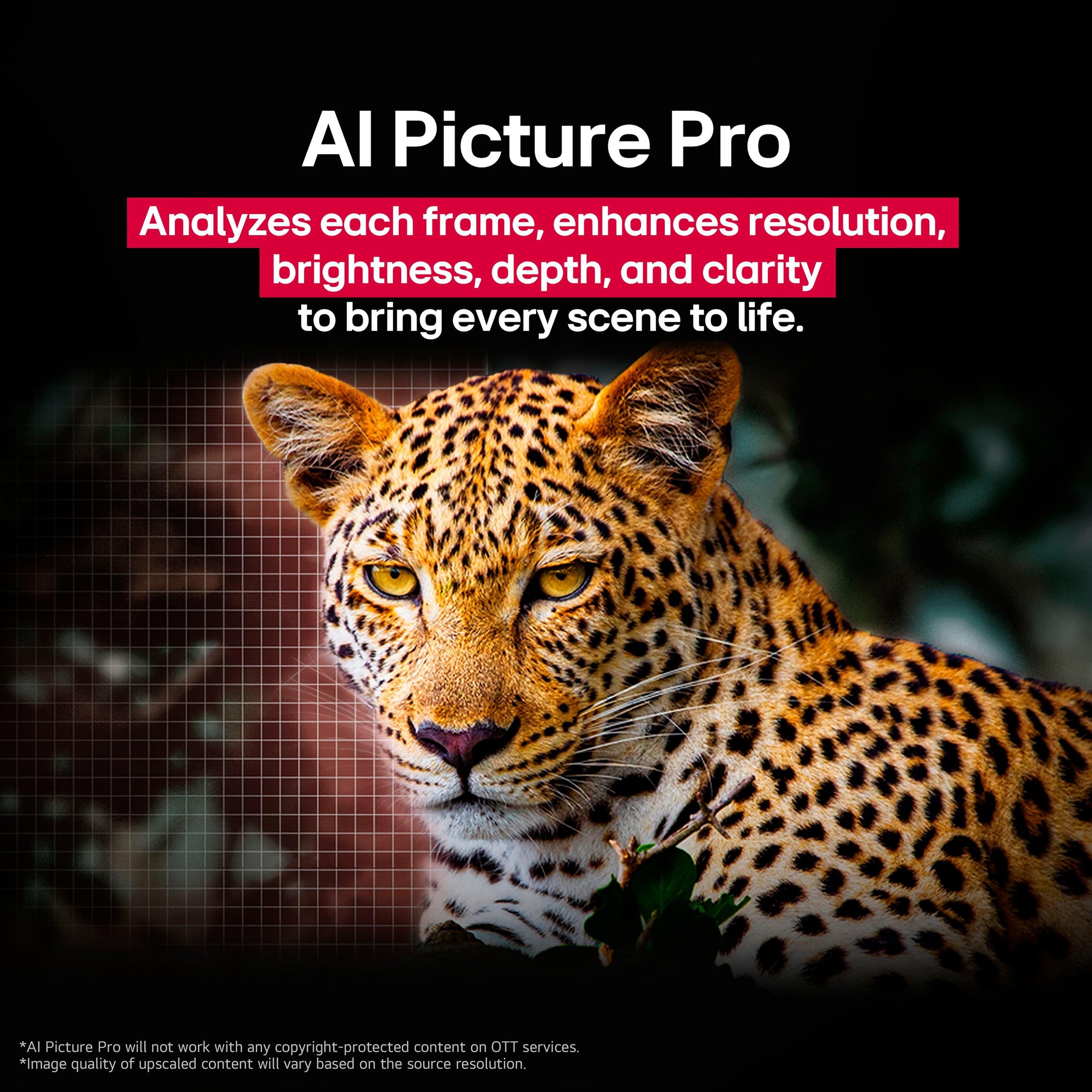
The LG C5, while significantly improved over previous OLED generations, typically peaks around 800-1,000 nits. This might sound disappointing, but remember that OLED's strength lies elsewhere. In a dark room, the C5's perfect blacks create a contrast ratio that's technically infinite – the brightest whites next to the darkest blacks create a visual impact that's hard to describe until you experience it.
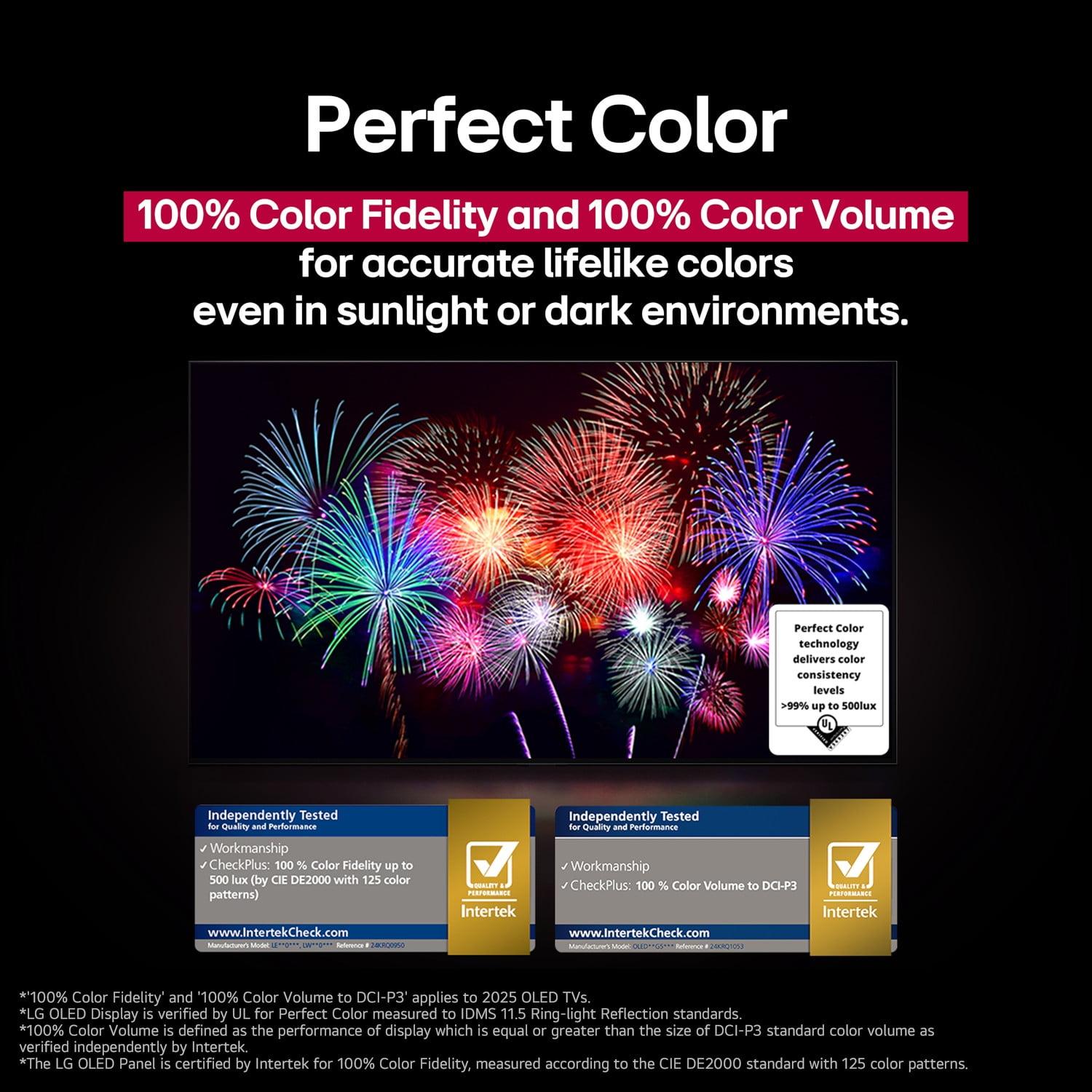
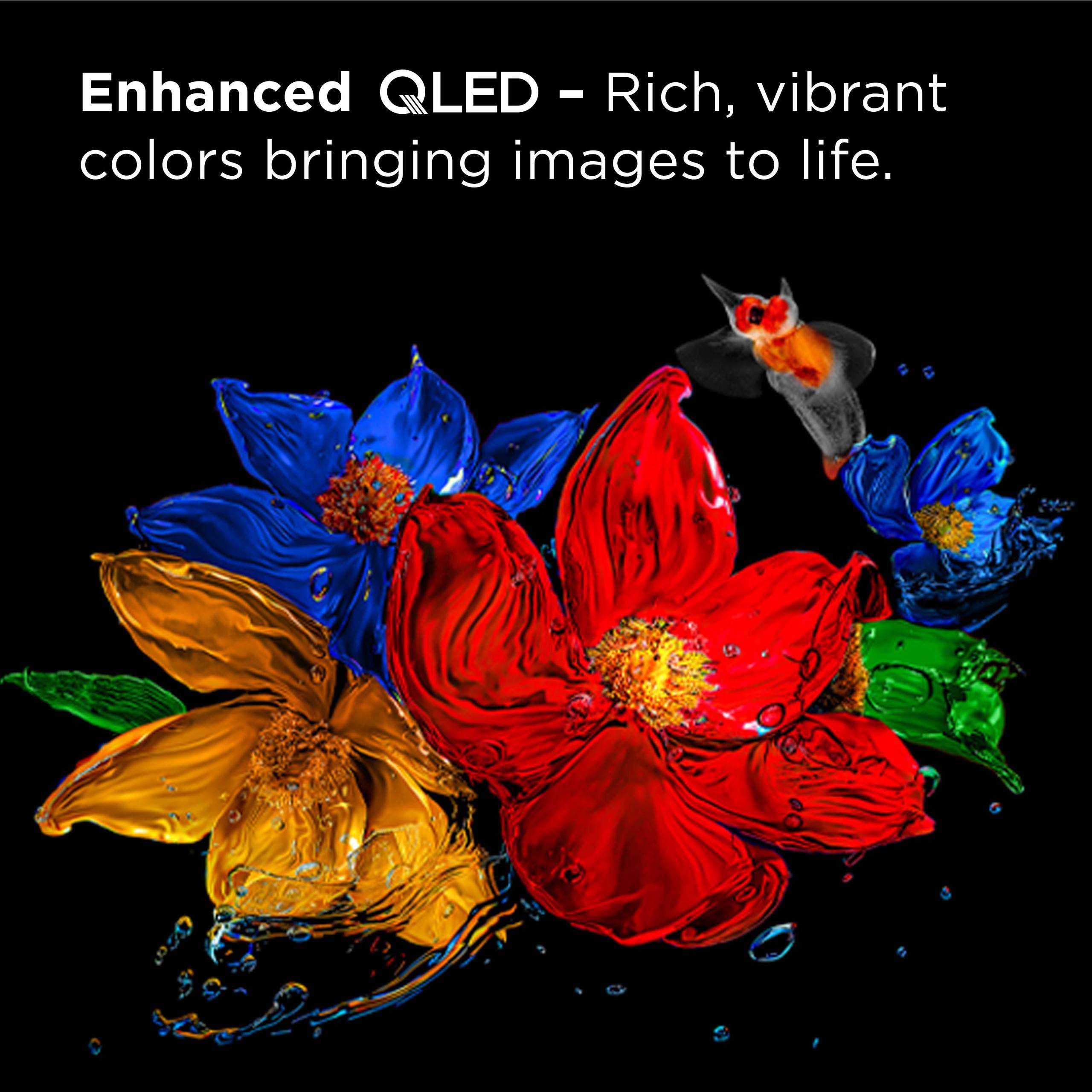
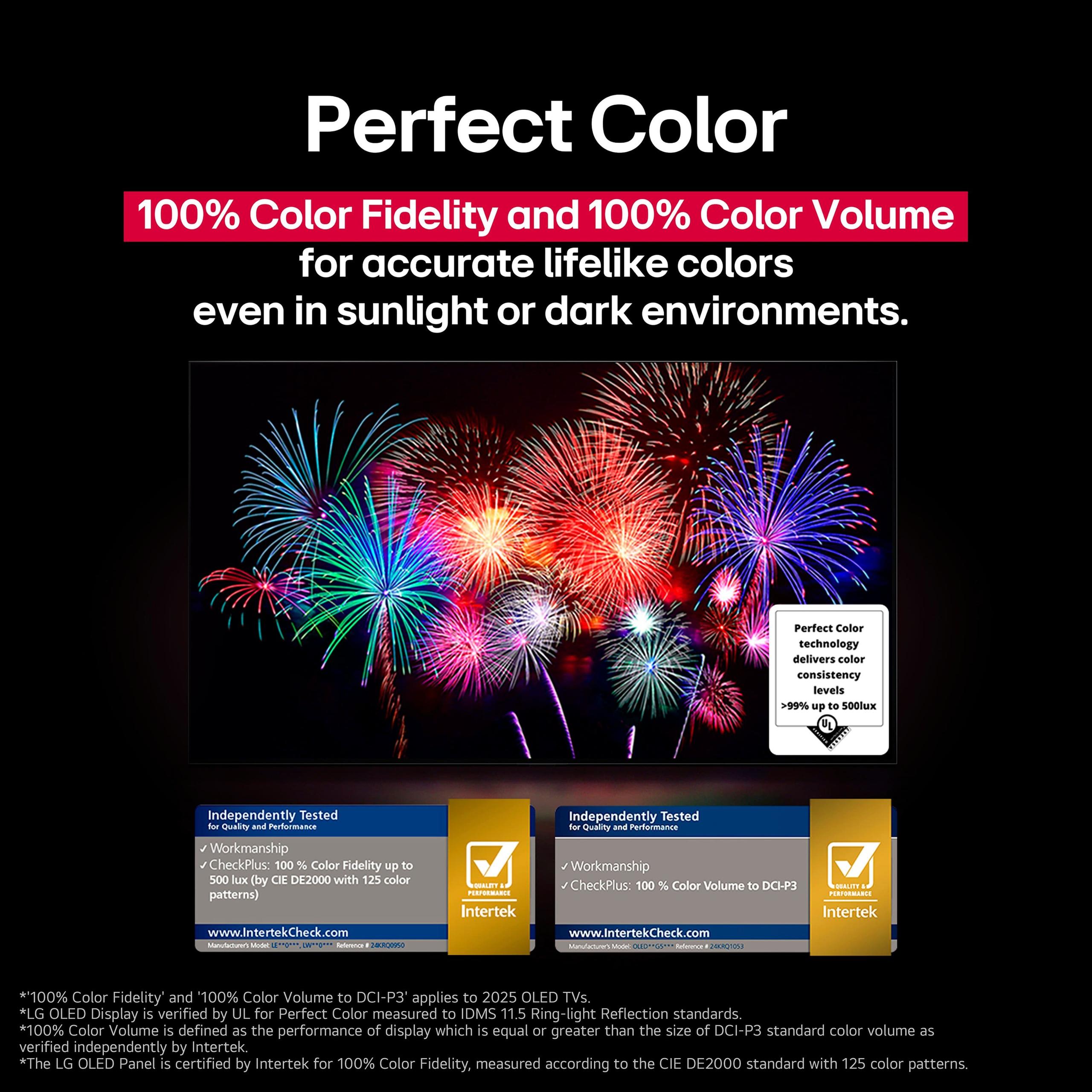
Color performance is where both TVs excel, but in different ways. The TCL QM8K uses Quantum Dot technology, which enhances color volume and vibrancy. Color volume refers to how many colors a TV can display at different brightness levels – it's not just about having wide color gamut (the range of colors), but maintaining those colors even when the image gets very bright or very dark.
The QM8K covers 97% of the DCI-P3 color space, which is the professional standard for digital cinema. This means that what you see at home closely matches what filmmakers intended. The quantum dots act like tiny color filters that create extremely pure, saturated colors that really pop off the screen.
The LG C5 takes a different approach, prioritizing color accuracy over maximum saturation. Out of the box, the C5 delivers some of the most accurate colors available in consumer TVs, often requiring minimal calibration. This accuracy means that skin tones look natural, landscapes appear lifelike, and the overall image has a realistic quality that some find more pleasing than hyper-saturated displays.
This is where the fundamental difference between these technologies becomes most apparent. The TCL QM8K achieves its impressive contrast through local dimming – it can dim specific areas of the backlight to create deeper blacks. With up to 3,800 dimming zones, the QM8K can create very convincing dark areas, but there's still a backlight behind the entire screen that can never truly turn off.
The LG C5's pixels can turn completely off, creating true black. When you're watching a movie with black bars on the top and bottom, those areas are literally emitting no light. This creates a viewing experience where dark scenes have incredible depth and detail that backlit displays struggle to match.
However, this comes with a trade-off in bright room performance. In well-lit environments, the C5's screen can appear grayish because ambient light reflects off the panel, reducing the perceived contrast. The TCL's much higher brightness helps overcome this reflection issue.
Both TVs are designed for serious gaming, but they take slightly different approaches. The TCL QM8K features a native 144Hz refresh rate with Game Accelerator 288 technology, which can boost the variable refresh rate (VRR) up to 288Hz. VRR synchronizes the TV's refresh rate with your gaming console or PC's frame rate, eliminating screen tearing and creating smoother gameplay.
The QM8K also includes AMD FreeSync Premium Pro support and gaming-specific features like Shadow Enhancer (which brightens dark areas to help you spot enemies) and Aiming Aid (which highlights crosshairs and targeting reticles). These features might seem gimmicky, but they can provide real advantages in competitive gaming.
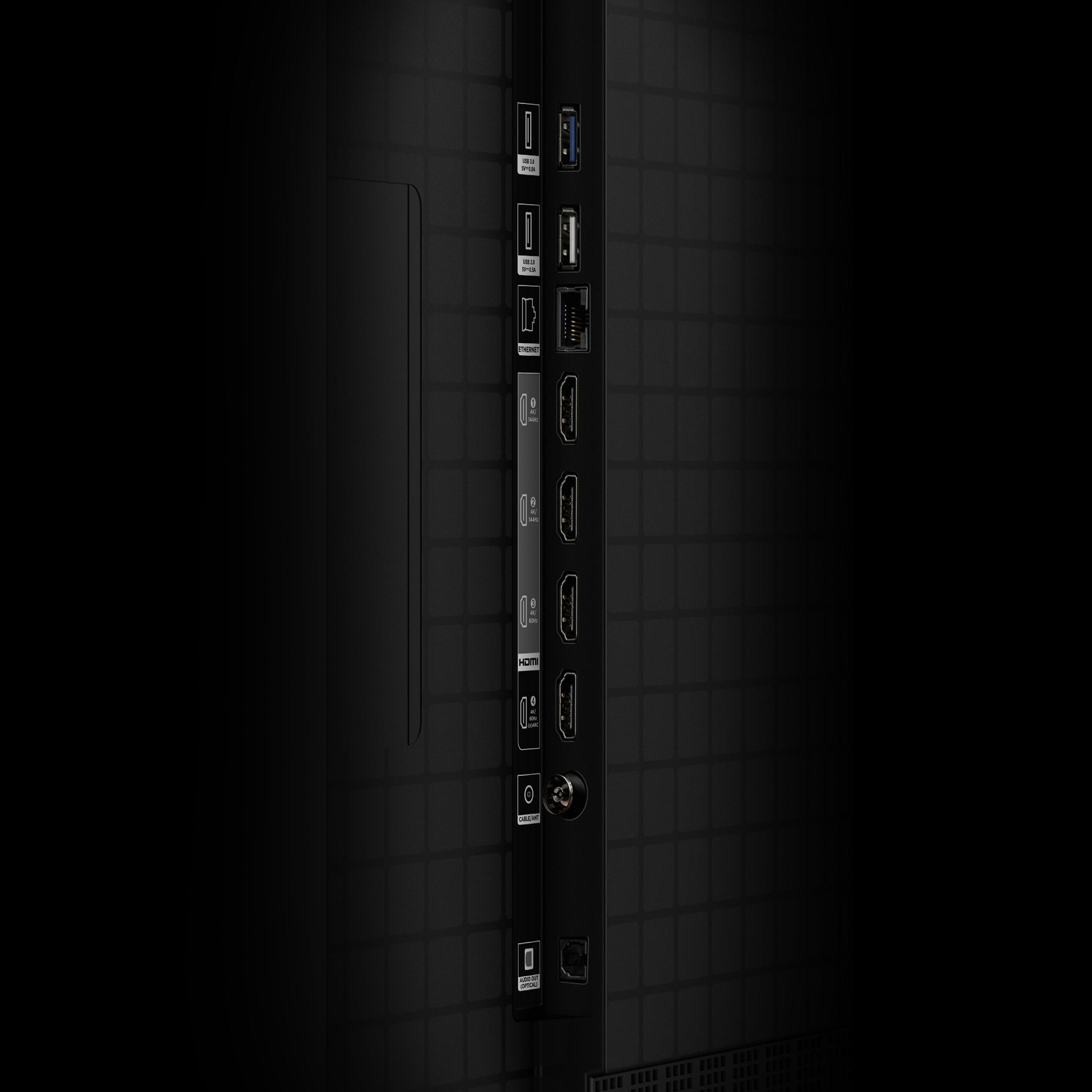
The LG C5 offers a native 120Hz refresh rate with support up to 144Hz, but its real strength lies in its 0.1ms response time – essentially instantaneous pixel response. This ultra-low response time, combined with support for both G-Sync and FreeSync Premium, makes the C5 exceptional for fast-paced gaming. The C5 also includes four HDMI 2.1 ports, ensuring you can connect multiple high-end gaming devices without compromise.
Both TVs support Auto Low Latency Mode (ALLM), which automatically switches to game mode when it detects a gaming console, reducing input lag to imperceptible levels.
The smart TV experience differs significantly between these models. The TCL QM8K runs Google TV, which offers excellent app selection, intuitive navigation, and seamless integration with Google services. Google TV's content aggregation is particularly useful – it combines recommendations from multiple streaming services into a unified interface, making it easier to find something to watch.
The LG C5 uses webOS 25, LG's latest smart TV platform. webOS is known for its smooth, fast performance and clean interface. The Magic Remote included with the C5 supports both traditional navigation and point-and-click control, making it easier to navigate complex menus. LG's platform also includes over 300 free streaming channels and excellent integration with various streaming services.
Both platforms support voice control through multiple assistants (Google Assistant, Amazon Alexa, and Apple HomeKit), ensuring compatibility with your existing smart home ecosystem.
At $998, the TCL QM8K delivers flagship-level performance at a mid-range price point. This represents exceptional value, especially considering its brightness capabilities typically found in TVs costing twice as much. The QM8K's performance in bright rooms is simply unmatched at this price level, making it an outstanding choice for most living room environments.
The LG C5 at $2,197 costs more than twice as much, but this premium pricing reflects OLED's inherent advantages and LG's position as the OLED market leader. The C5's perfect blacks, superior color accuracy, and premium build quality justify the higher cost for users who prioritize these qualities and have the budget for them.
For dedicated home theater setups, room lighting becomes the crucial factor in choosing between these displays. If you have a properly darkened theater room with controlled lighting, the LG C5 becomes the clear choice. Its perfect blacks create an immersive experience where the screen seems to disappear, and the image appears to float in space. This is particularly effective for cinematic content with dark scenes.
The C5's superior viewing angles also make it better for theater seating arrangements where viewers might be sitting off to the sides. OLED technology maintains color accuracy and contrast even when viewed from extreme angles, ensuring everyone gets the optimal picture quality.
However, if your "home theater" is really a multi-purpose family room with some ambient light, the TCL QM8K might be the better choice. Its exceptional brightness ensures that even with some room lighting, HDR content maintains its impact and colors remain vibrant.
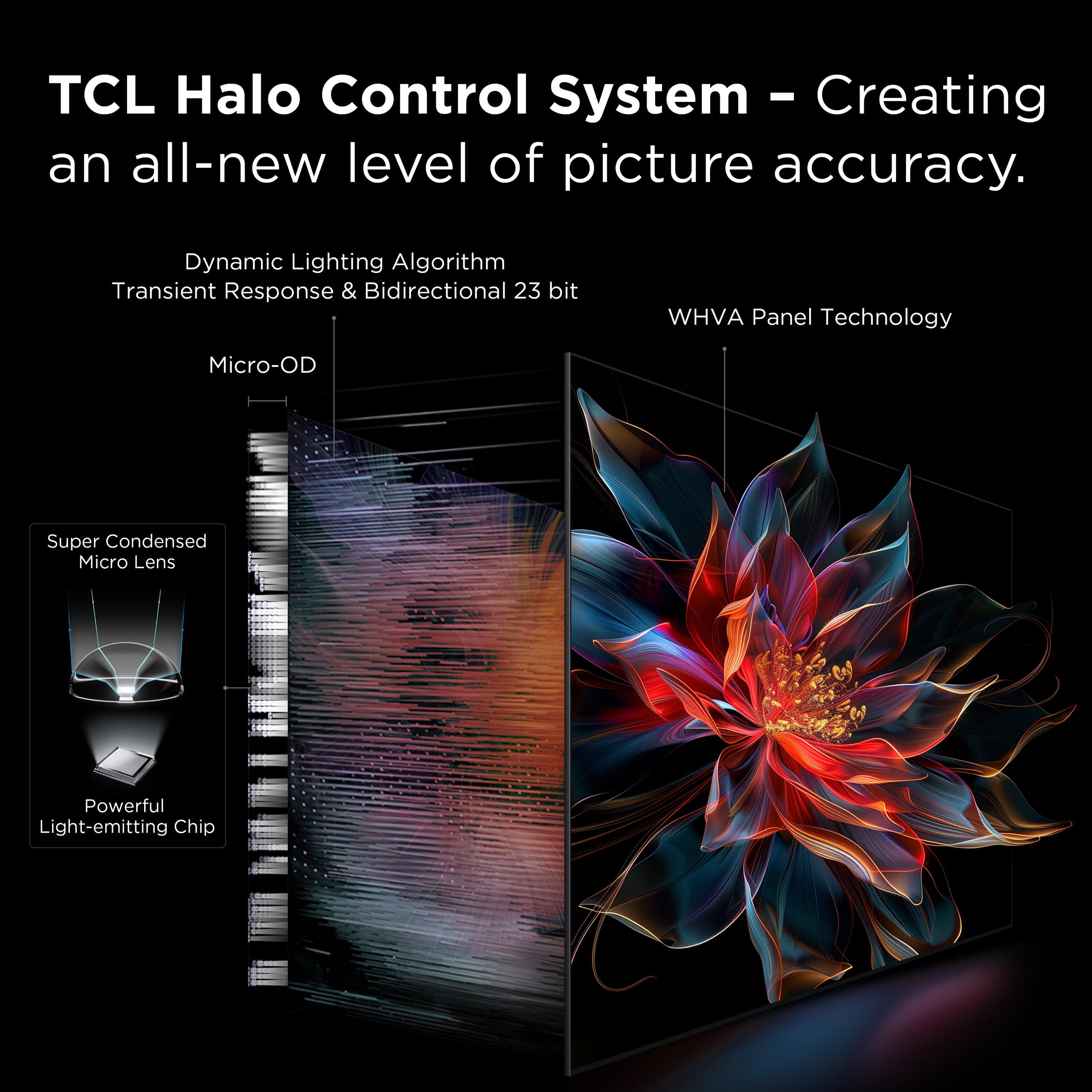
Both TVs include significant technological improvements over their predecessors. The TCL QM8K features a new Halo Control System that minimizes blooming (light bleeding around bright objects on dark backgrounds) better than previous Mini LED implementations. This addresses one of the main criticisms of earlier Mini LED displays.
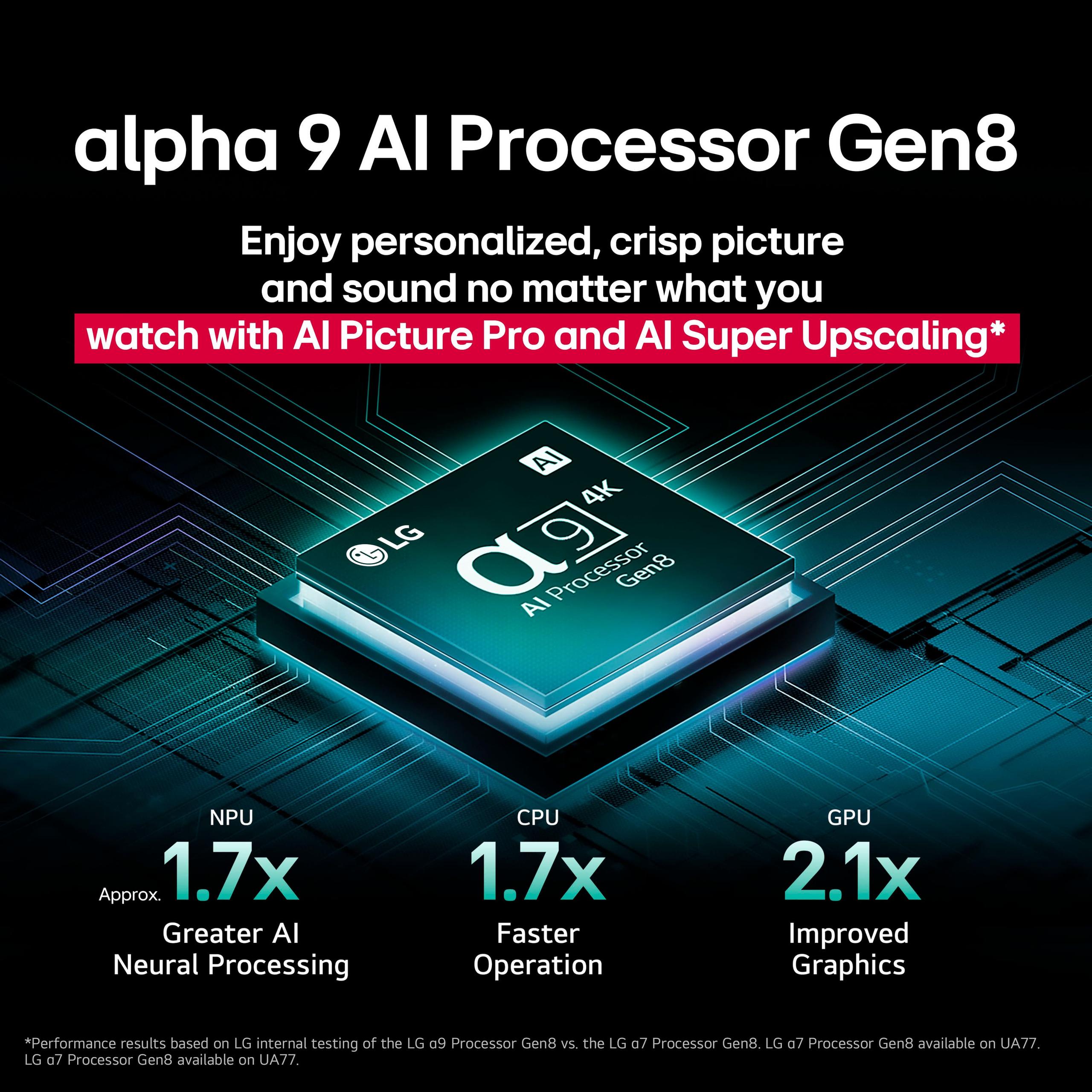
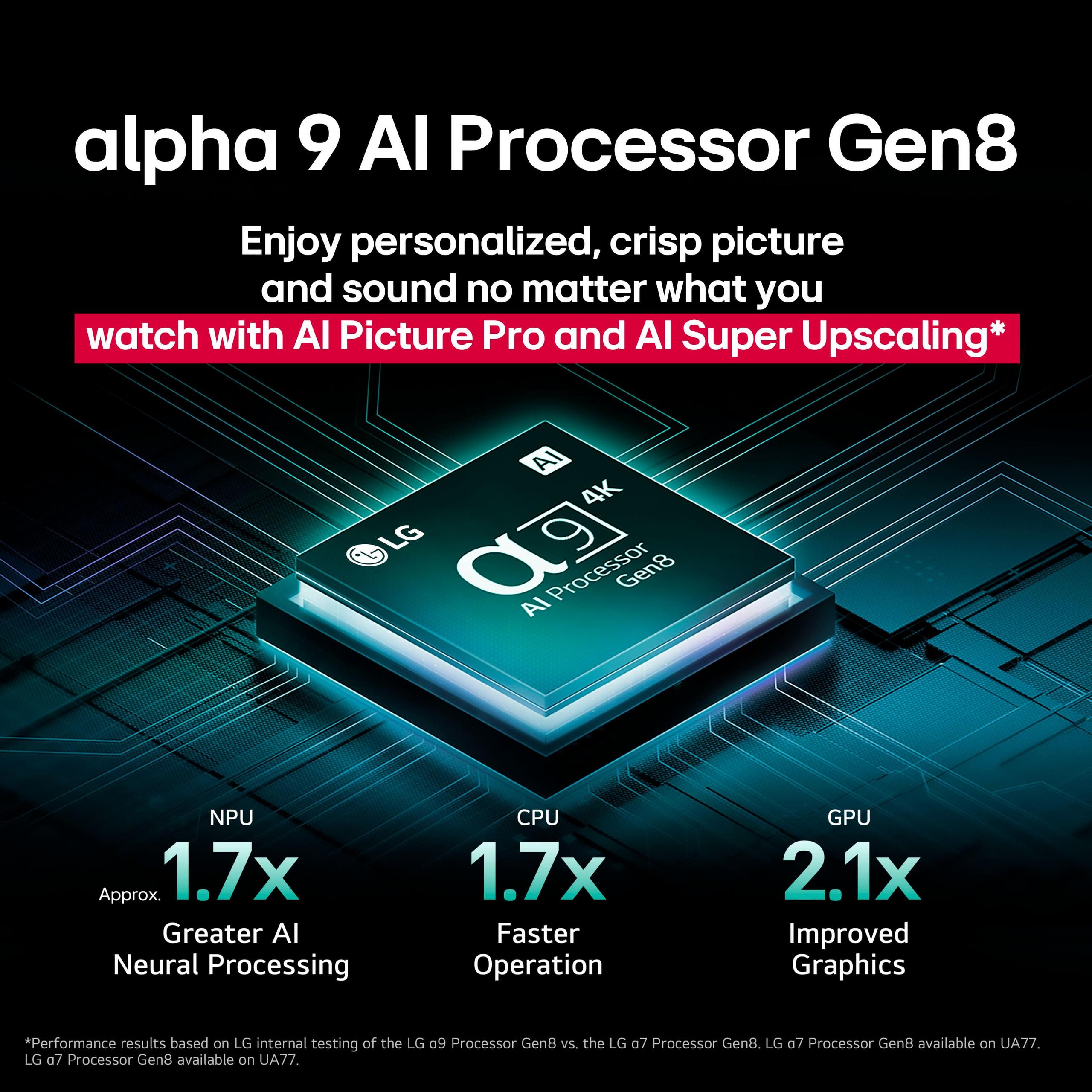
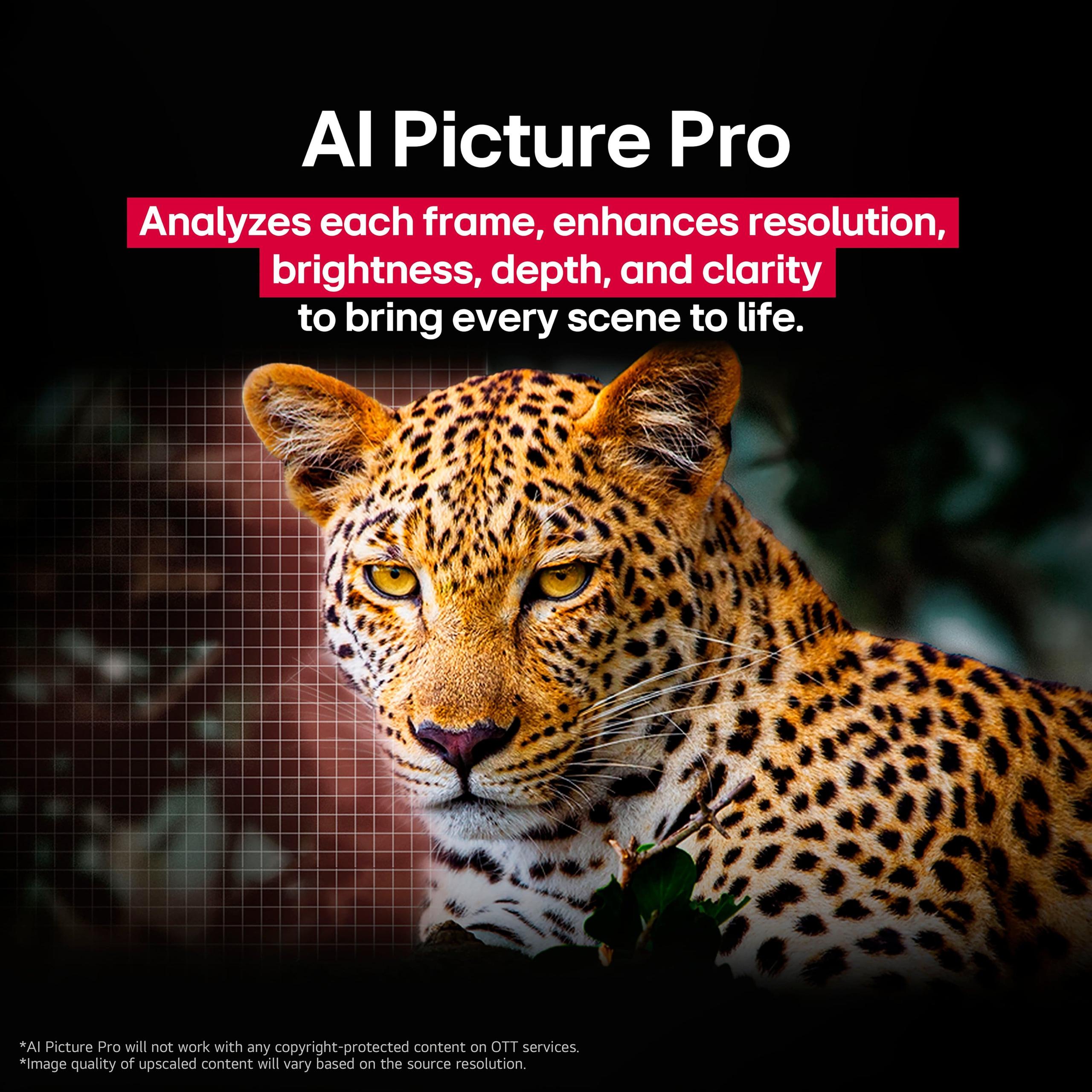
The LG C5 includes LG's latest Alpha 9 Gen8 processor, which provides improved AI upscaling for lower-resolution content and better motion handling. LG has also improved the panel's brightness while maintaining OLED's signature color accuracy and response times.
Both TVs support HDMI 2.1 features essential for next-generation gaming, including VRR, ALLM, and 4K at high refresh rates. This ensures compatibility with current and future gaming consoles and graphics cards.
Your choice between these TVs should primarily depend on your viewing environment and priorities. If you watch TV primarily during the day or in well-lit rooms, the TCL QM8K's brightness advantage is transformative. Its HDR performance in bright environments is simply superior to any OLED, regardless of price.
If you primarily watch in dark or controlled lighting environments and value perfect blacks and color accuracy above all else, the LG C5 justifies its premium pricing. The OLED experience in a dark room is genuinely special and something that Mini LED technology, despite its improvements, cannot fully replicate.
For gaming enthusiasts, both TVs offer excellent performance, but the LG C5 has a slight edge due to its proven track record and comprehensive gaming features. However, the TCL QM8K offers 90% of the gaming performance at less than half the price, making it the better value for most gamers.
Budget considerations also play a crucial role. The $1,200 savings with the TCL QM8K could be invested in a sound system, streaming device, or other home theater equipment that might provide more overall improvement to your viewing experience than the incremental picture quality gains of OLED.
Both TVs represent excellent choices in their respective strengths. The TCL QM8K offers flagship performance at an accessible price point, while the LG C5 delivers the premium OLED experience with meaningful improvements over previous generations. Your specific viewing conditions, content preferences, and budget will ultimately determine which display technology better serves your needs.
| TCL 65" QM8K Series QD-Mini LED 4K Smart TV ($998) | LG OLED evo C5 65" 4K TV 2025 ($2,197) |
|---|---|
| Peak Brightness - Critical for HDR impact and bright room viewing | |
| 5,000 nits (industry-leading, dominates bright rooms) | ~800-1,000 nits (good for OLED, struggles in bright rooms) |
| Black Level Performance - Essential for dark room contrast | |
| Very good with local dimming (some backlight bleed possible) | Perfect infinite blacks (pixels turn completely off) |
| Display Technology - Determines overall picture characteristics | |
| QD-Mini LED with 3,800 local dimming zones | OLED evo with 8.3 million self-lit pixels |
| Color Accuracy - Important for natural, lifelike images | |
| Very good, 97% DCI-P3 coverage (vibrant, punchy colors) | Excellent out-of-box accuracy (natural, realistic colors) |
| Gaming Performance - Key for console and PC gaming | |
| 144Hz native, up to 288Hz VRR, AMD FreeSync Premium Pro | 120Hz native, up to 144Hz, 0.1ms response time, G-Sync/FreeSync |
| Viewing Angles - Important for group viewing setups | |
| Good but some color shift at extreme angles | Excellent with minimal color/contrast degradation |
| Smart TV Platform - Affects daily usability and app selection | |
| Google TV (excellent app selection, Google integration) | webOS 25 (smooth interface, Magic Remote, LG features) |
| Build Quality & Design - Premium feel and aesthetic appeal | |
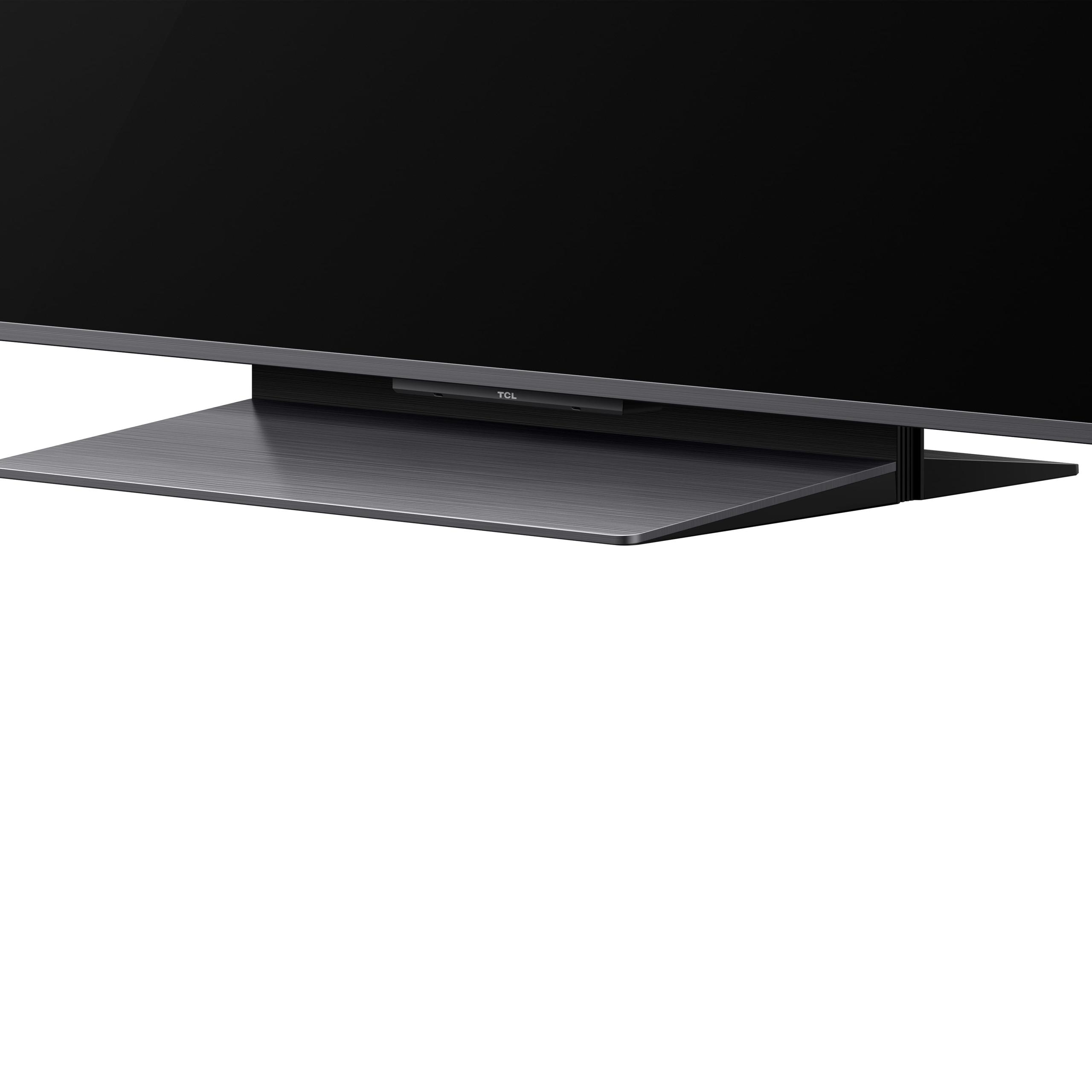
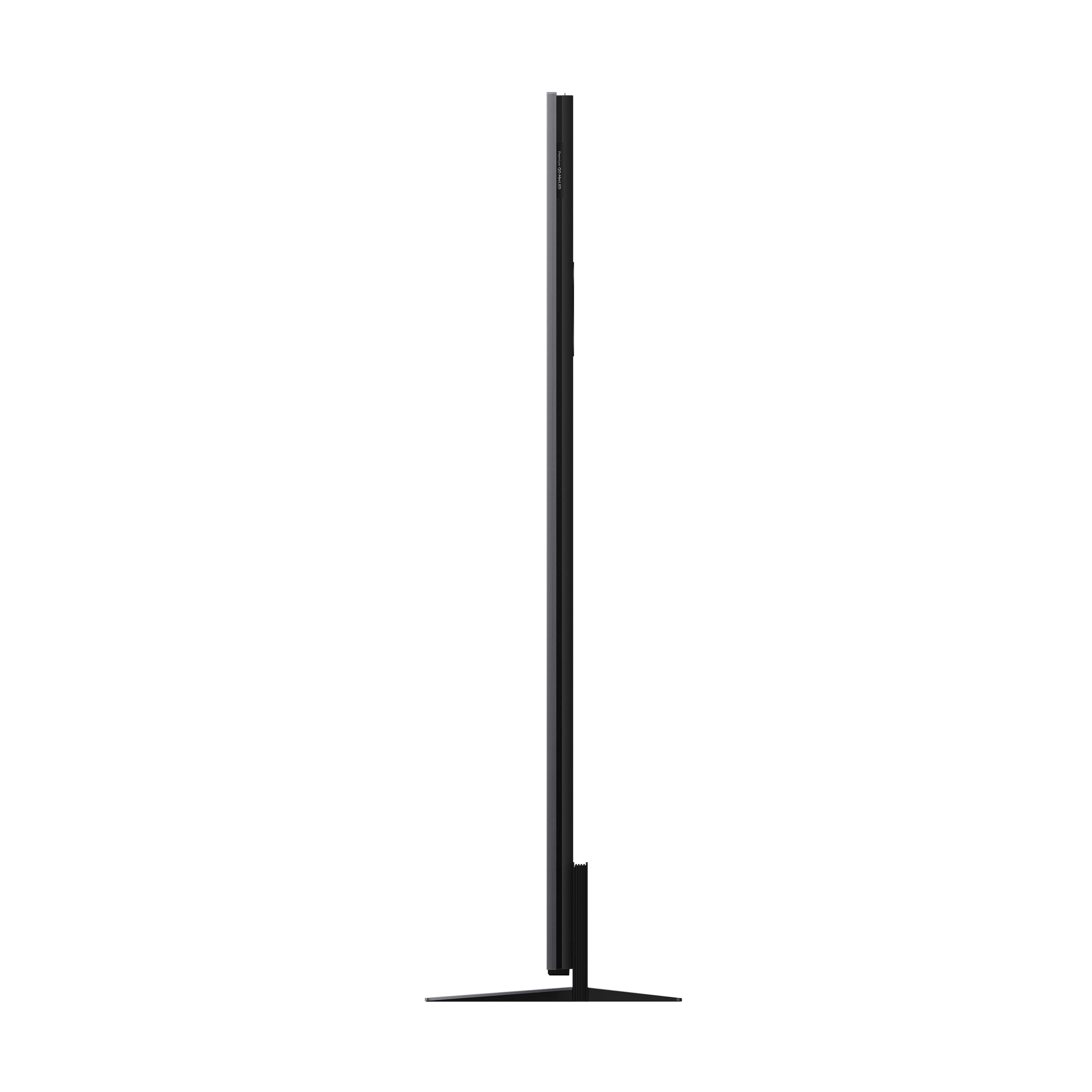
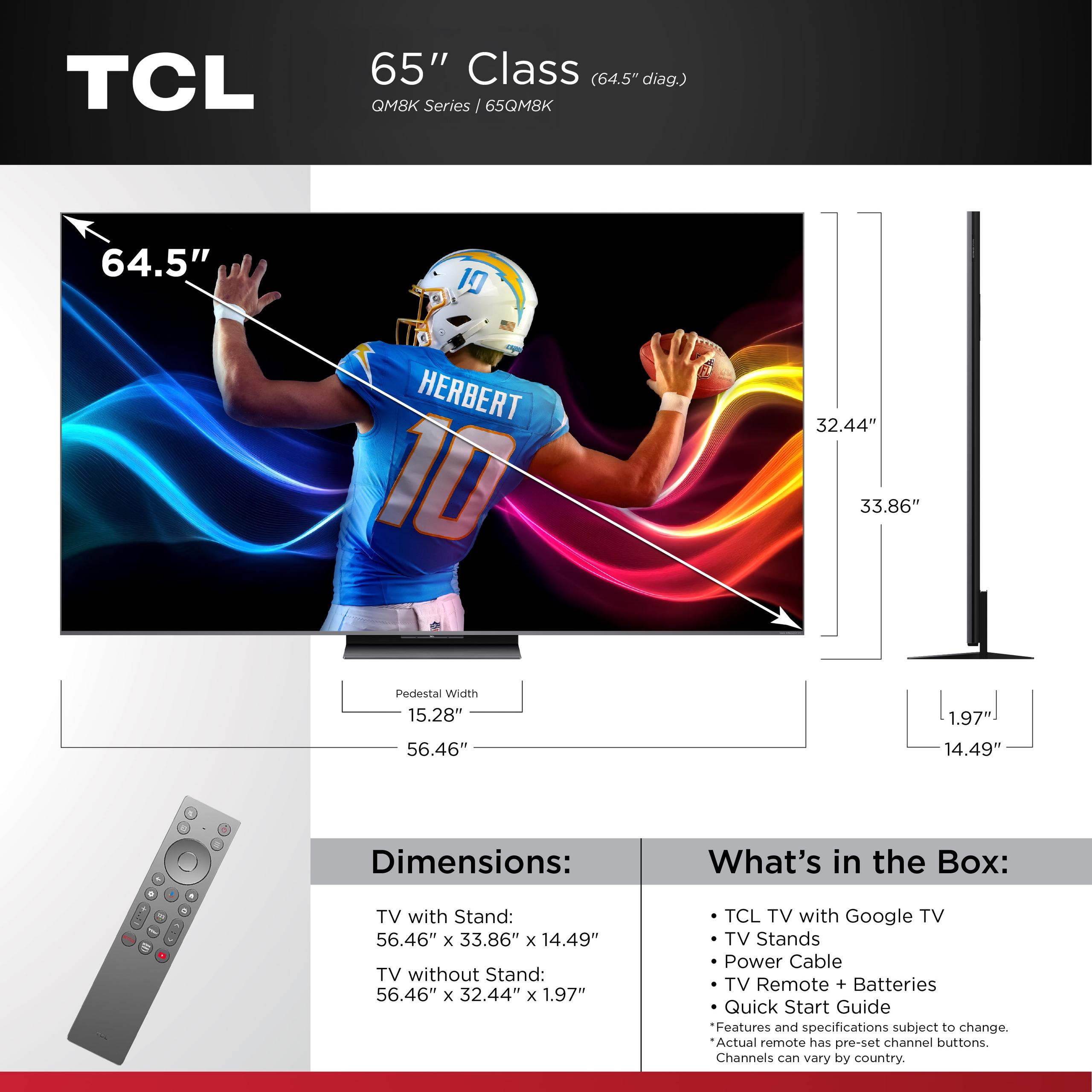
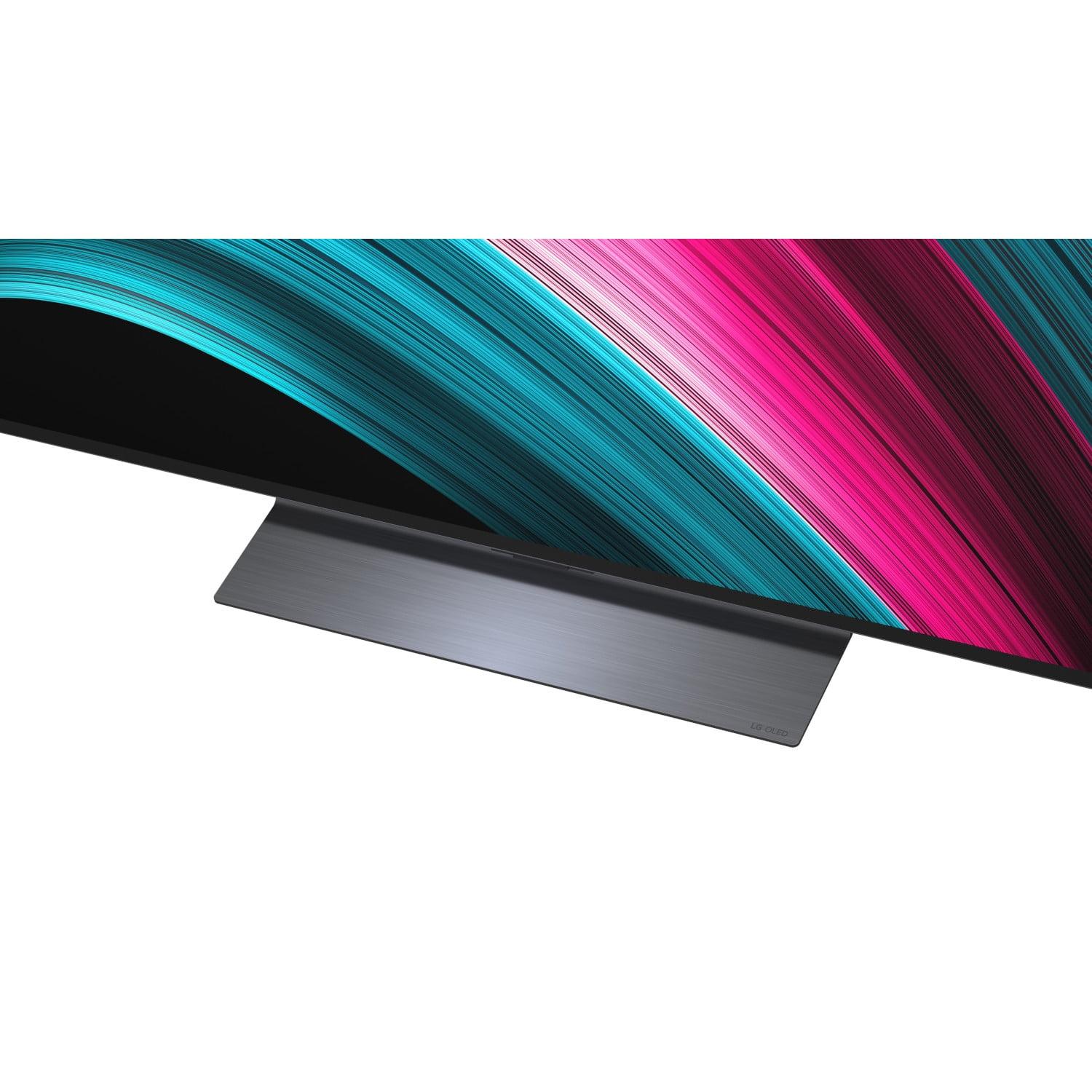
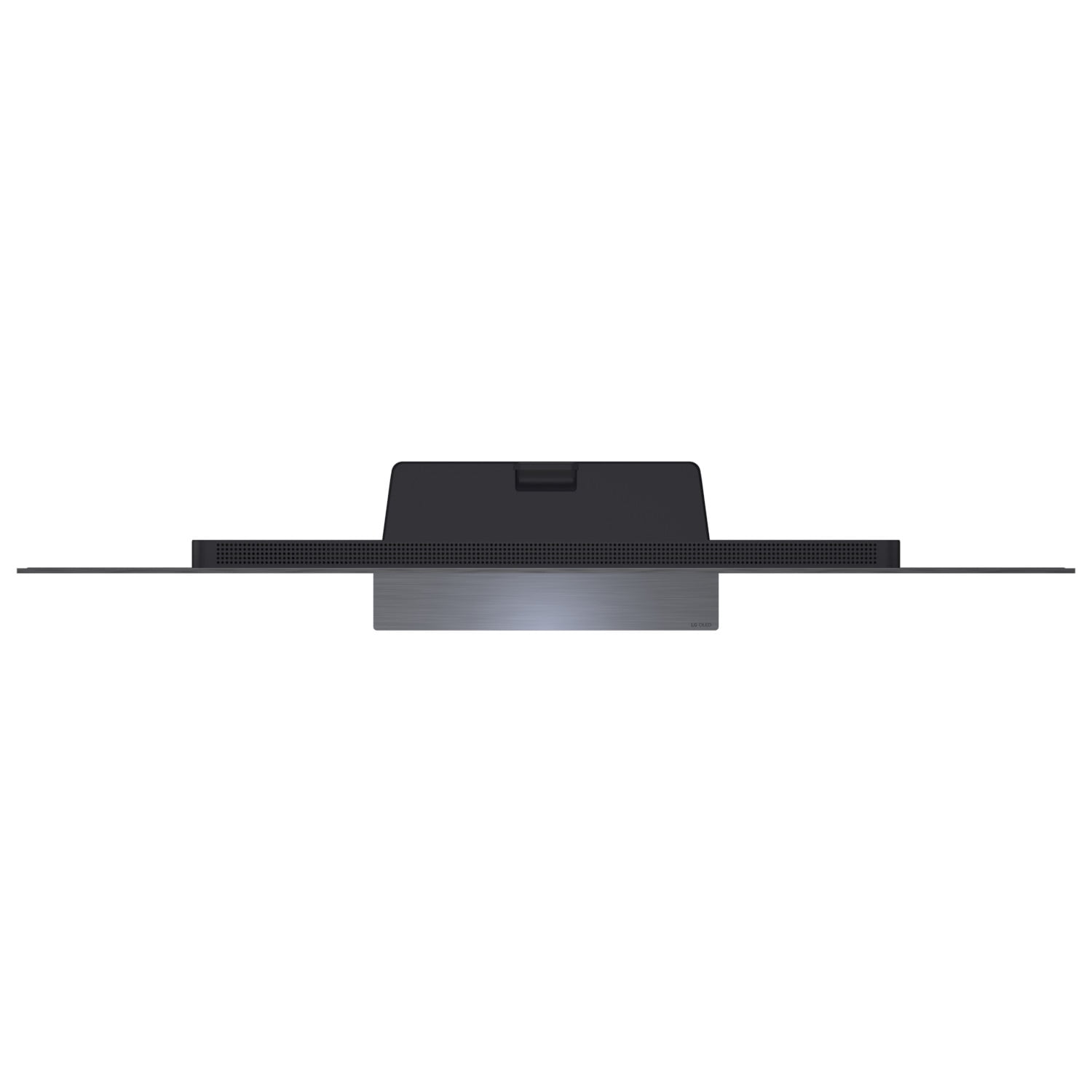
| Solid construction, ZeroBorder design, adjustable stand | Premium materials, wafer-thin profile, nearly invisible bezels |
| HDR Support - Essential for modern streaming and UHD content | |
| Dolby Vision IQ, HDR10+, HDR10, HLG | Dolby Vision, HDR10, HLG |
| Blooming/Halo Control - Affects picture quality in high-contrast scenes | |
| Excellent control for Mini LED, minimal blooming | None (no backlight means no blooming possible) |
| Price Value Proposition - Cost vs performance consideration | |
| Exceptional value - flagship brightness at mid-range price | Premium pricing justified by OLED advantages and build quality |
| Best Use Case - Optimal viewing scenarios | |
| Bright rooms, daytime viewing, budget-conscious premium performance | Dark rooms, home theaters, picture quality purists |
The TCL 65" QM8K Series QD-Mini LED 4K Smart TV ($998) is significantly better for bright rooms. With its 5,000 nits peak brightness, it can easily overcome ambient light and glare, maintaining vibrant colors and HDR impact even during daytime viewing. The LG OLED evo C5 65" 4K TV 2025 ($2,197) struggles in bright environments due to its lower brightness and reflective screen surface.
Picture quality depends on your viewing environment. The LG OLED evo C5 delivers superior picture quality in dark rooms with perfect blacks, infinite contrast, and exceptional color accuracy. The TCL QM8K offers excellent picture quality with industry-leading brightness and vibrant colors, making it better for bright room viewing and HDR content impact.
The LG C5 ($2,197) costs $1,199 more than the TCL QM8K ($998). Whether it's worth it depends on your priorities: if you value perfect blacks, premium build quality, and primarily watch in dark rooms, the LG justifies its premium. For bright room viewing and exceptional value, the TCL offers flagship performance at half the price.
Both TVs are excellent for gaming, but the LG OLED evo C5 has a slight edge with its 0.1ms response time, four HDMI 2.1 ports, and proven gaming performance. The TCL QM8K offers 144Hz native refresh rate with up to 288Hz VRR and gaming-specific features like Shadow Enhancer, providing excellent gaming performance at a much lower price.
The TCL QM8K gets dramatically brighter with 5,000 nits peak brightness compared to the LG C5's approximately 800-1,000 nits. This makes the TCL far superior for bright room viewing, HDR content impact, and overcoming ambient light, while the LG's lower brightness is better suited for dark room environments.
For dedicated home theaters with controlled lighting, the LG OLED evo C5 is the superior choice due to its perfect blacks, infinite contrast, and immersive dark room experience. The TCL QM8K works well in multi-purpose rooms that serve as home theaters but have some ambient light, thanks to its exceptional brightness performance.
The LG OLED evo C5 has perfect black levels since its pixels can turn completely off, creating true blacks and infinite contrast. The TCL QM8K has very good black levels for a Mini LED display with excellent local dimming, but cannot achieve the perfect blacks that OLED technology provides.
The TCL QM8K uses QD-Mini LED technology with thousands of tiny LEDs and quantum dots for exceptional brightness and color volume. The LG C5 uses OLED evo technology where each pixel emits its own light, providing perfect blacks and infinite contrast but with brightness limitations compared to Mini LED.
For movie watching, the LG OLED evo C5 excels in dark rooms with its perfect blacks, accurate colors, and cinematic experience that makes the screen seem to disappear. The TCL QM8K is better for movie watching in bright rooms where its superior brightness maintains HDR impact and color vibrancy despite ambient light.
The TCL QM8K runs Google TV, offering excellent app selection, intuitive navigation, and seamless Google services integration. The LG C5 uses webOS 25 with a smooth interface, Magic Remote for easy navigation, and over 300 free streaming channels. Both platforms are highly capable with voice control support.
The LG OLED evo C5 has superior viewing angles with minimal color shift or contrast degradation when viewed from the sides, making it ideal for group viewing. The TCL QM8K has good viewing angles for a Mini LED display but experiences some color shift at extreme angles, though this is acceptable for most viewing scenarios.
Choose the TCL QM8K ($998) if you watch primarily in bright rooms, want exceptional value, prioritize HDR brightness, or have budget constraints. Choose the LG OLED evo C5 ($2,197) if you watch mainly in dark rooms, want perfect blacks and premium picture quality, prioritize gaming performance, or don't mind paying premium for OLED advantages.
We've done our best to create useful and informative comparisons to help you decide what product to buy. Our research uses advanced automated methods to create this comparison and perfection is not possible - please contact us for corrections or questions. These are the sites we've researched in the creation of this article: tomsguide.com - youtube.com - businessinsider.com - rtings.com - youtube.com - avsforum.com - avsforum.com - bestbuy.com - tcl.com - tcl.com - tcl.com - flatpanelshd.com - romomattressfurniture.com - brandsmartusa.com - pcrichard.com - tvsbook.com - tcl.com - youtube.com - prnewswire.com - tcl.com - tcl.com - bestbuy.com - rtings.com - youtube.com - businessinsider.com - youtube.com - bestbuy.com - lg.com - files.bbystatic.com - lg.com - flatpanelshd.com - lg.com - blvdhome.com - bhphotovideo.com - flanners.com - videopro.com.au

Privacy Policy
Terms and Conditions - Affiliate Policy
Home Security
© Copyright 2008-2026.
11816 Inwood Rd #1211, Dallas, TX 75244