



Shopping for a new 4K TV can feel overwhelming with all the technical jargon and marketing claims floating around. Today we're comparing two very different approaches to 4K television: Samsung's entry-level Crystal UHD U8000F and TCL's flagship QM8K Series QD-Mini LED. Both launched in 2025, but they represent completely different philosophies on what makes a great TV.
The TV market has evolved dramatically over the past few years. We've seen the rise of Mini LED technology, gaming-focused features like high refresh rates, and increasingly sophisticated smart platforms. Understanding where these two models fit in this landscape will help you make the right choice for your home and budget.
Before diving into the comparison, let's establish what matters most in a 4K TV today. The display technology forms the foundation of everything else – it determines how bright the screen can get, how deep the blacks appear, and how vibrant colors look. Beyond that, processing power affects how well the TV handles different types of content, while gaming features have become crucial for many buyers.
Smart TV platforms now serve as the primary interface for most people's viewing habits. The days of channel surfing are largely gone, replaced by navigating between Netflix, Disney+, and YouTube. Finally, audio quality often gets overlooked until you're actually living with a TV, but built-in speakers can make or break the experience.
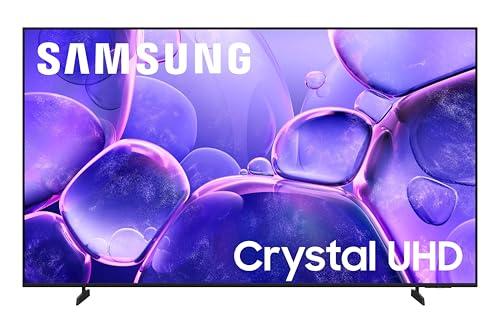
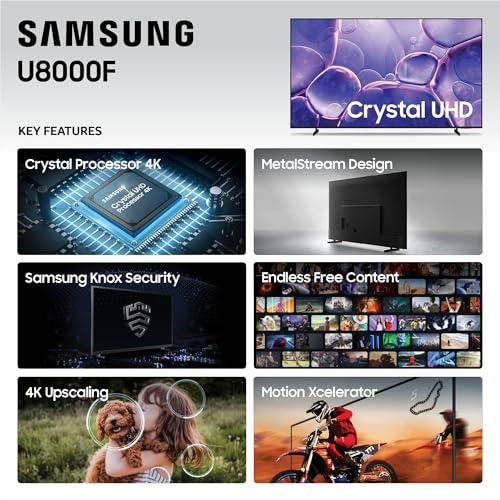
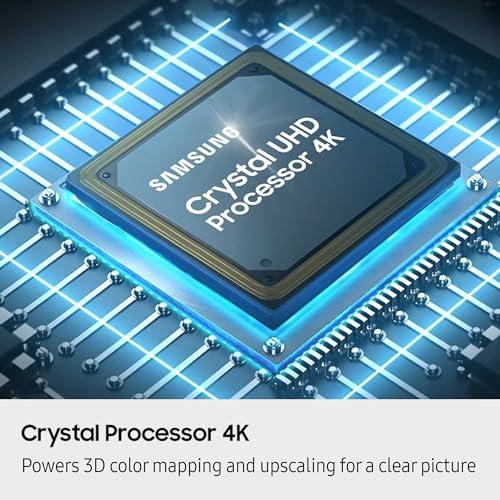
The Samsung U8000F represents Samsung's entry point into their 2025 lineup, using their Crystal UHD technology – essentially a marketing term for LED backlighting with quantum dot-enhanced phosphors. It's designed for buyers who want the Samsung name and ecosystem without paying premium prices.
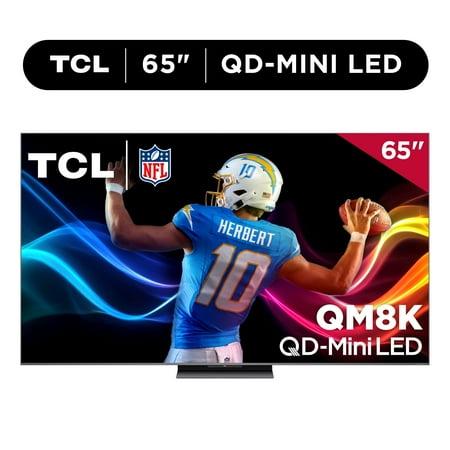
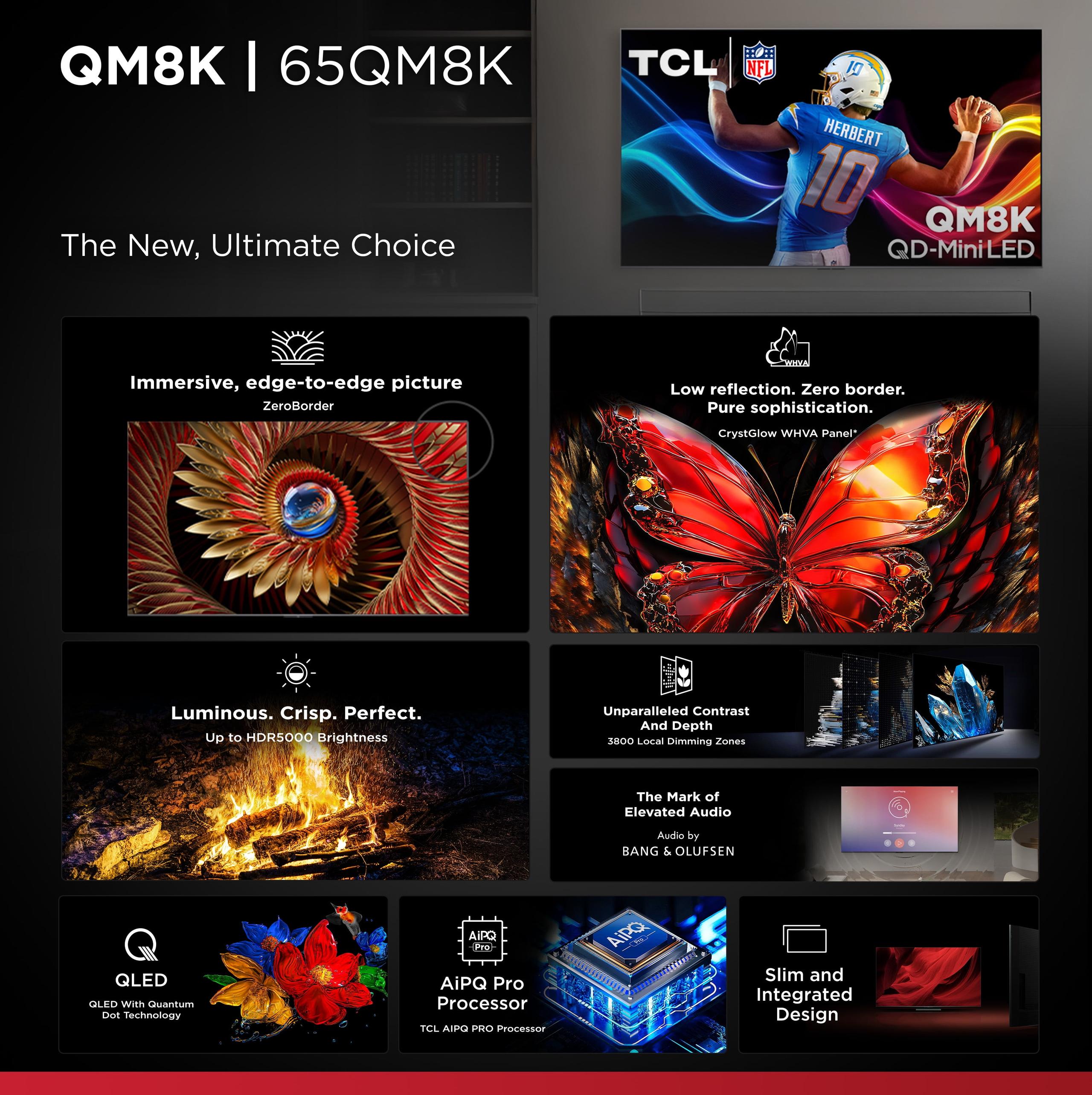
The TCL QM8K, meanwhile, sits at the top of TCL's hierarchy. It uses QD-Mini LED technology, which combines quantum dot color enhancement with Mini LED backlighting. This represents a significant technological leap that, until recently, was reserved for TVs costing several thousand dollars.
The most fundamental difference between these TVs lies in how they create the picture you see. The Samsung U8000F uses traditional LED backlighting with a single zone of control. Imagine trying to light a detailed painting with one large floodlight – you can make the whole thing brighter or dimmer, but you can't emphasize specific areas without affecting everything else.
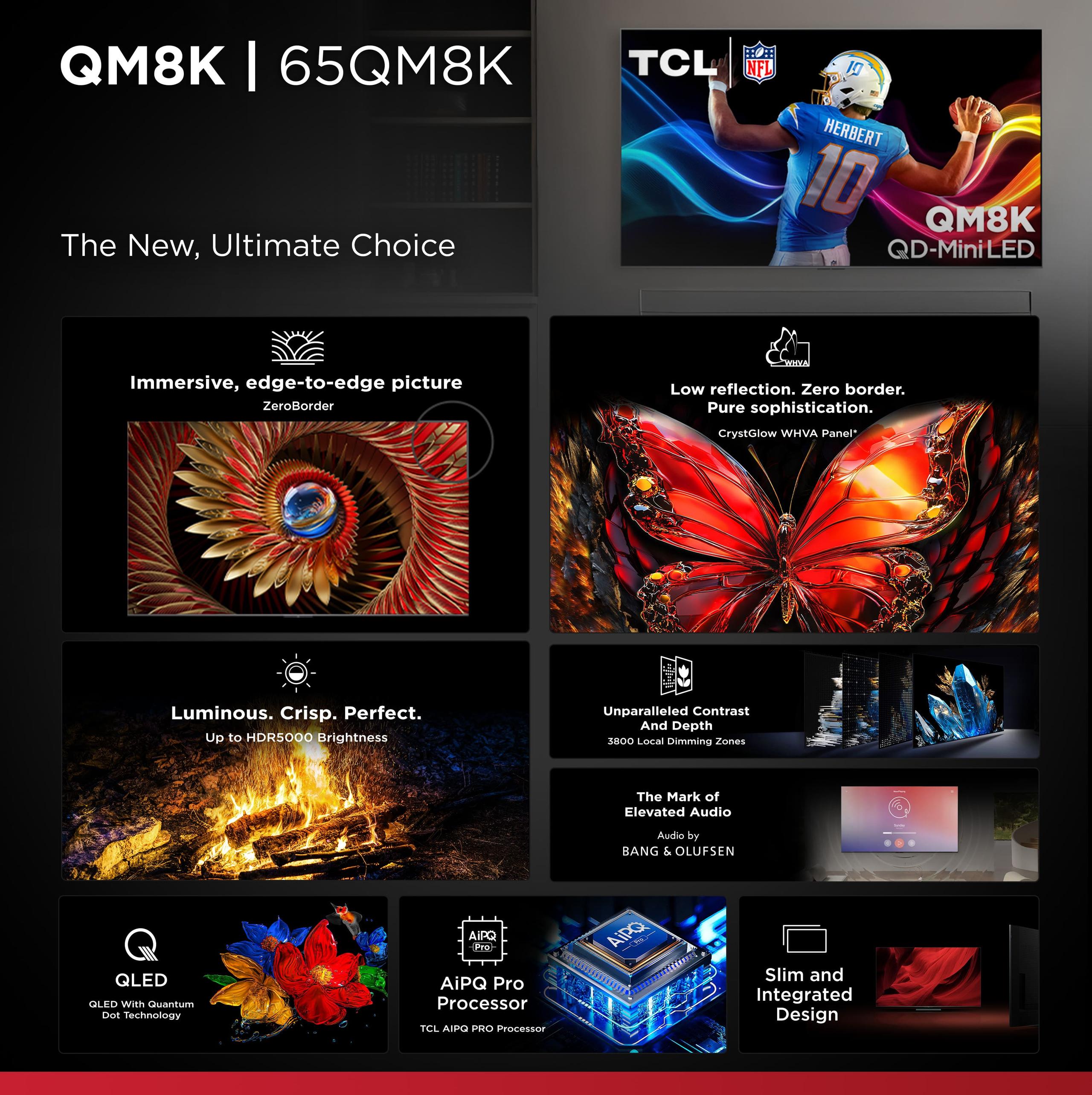
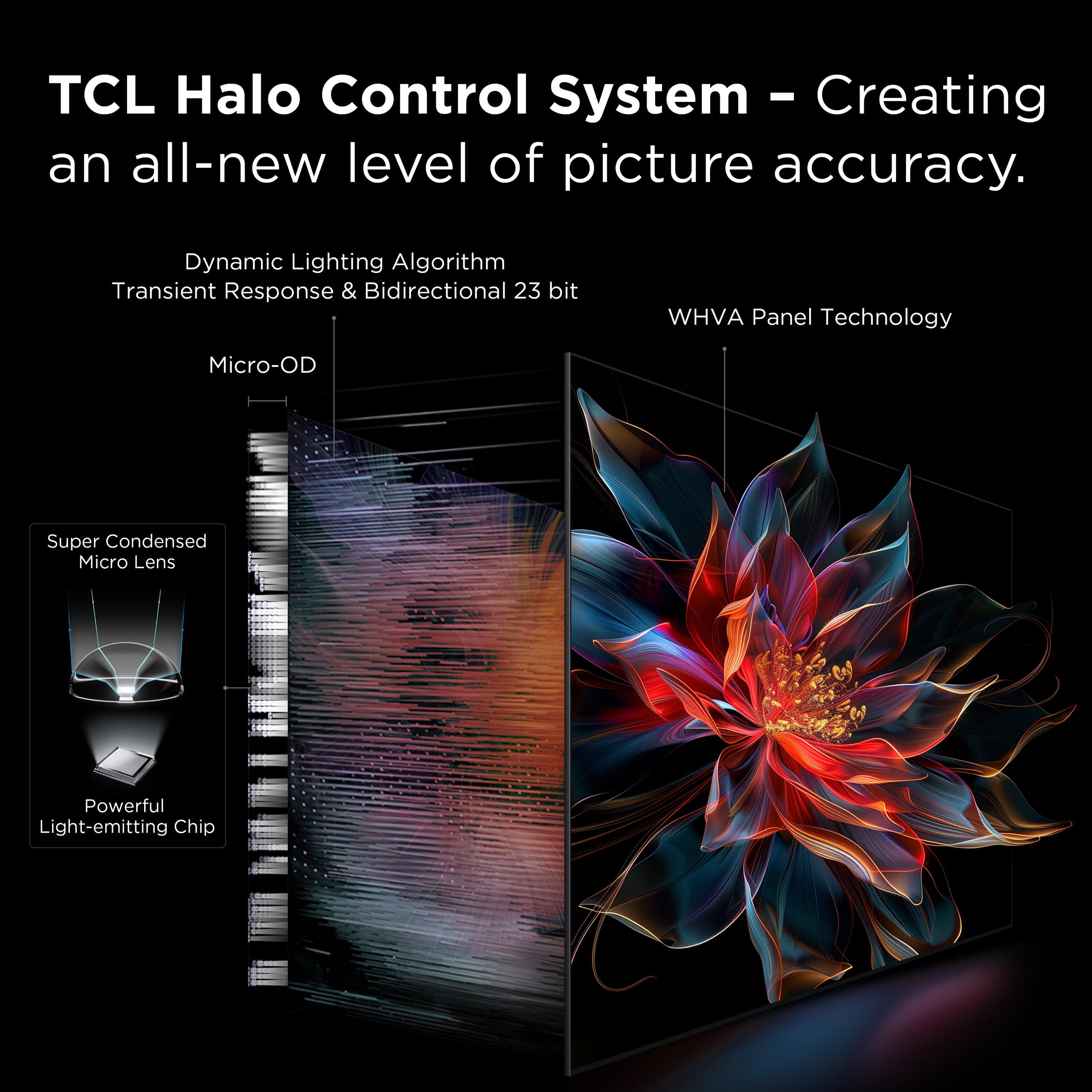
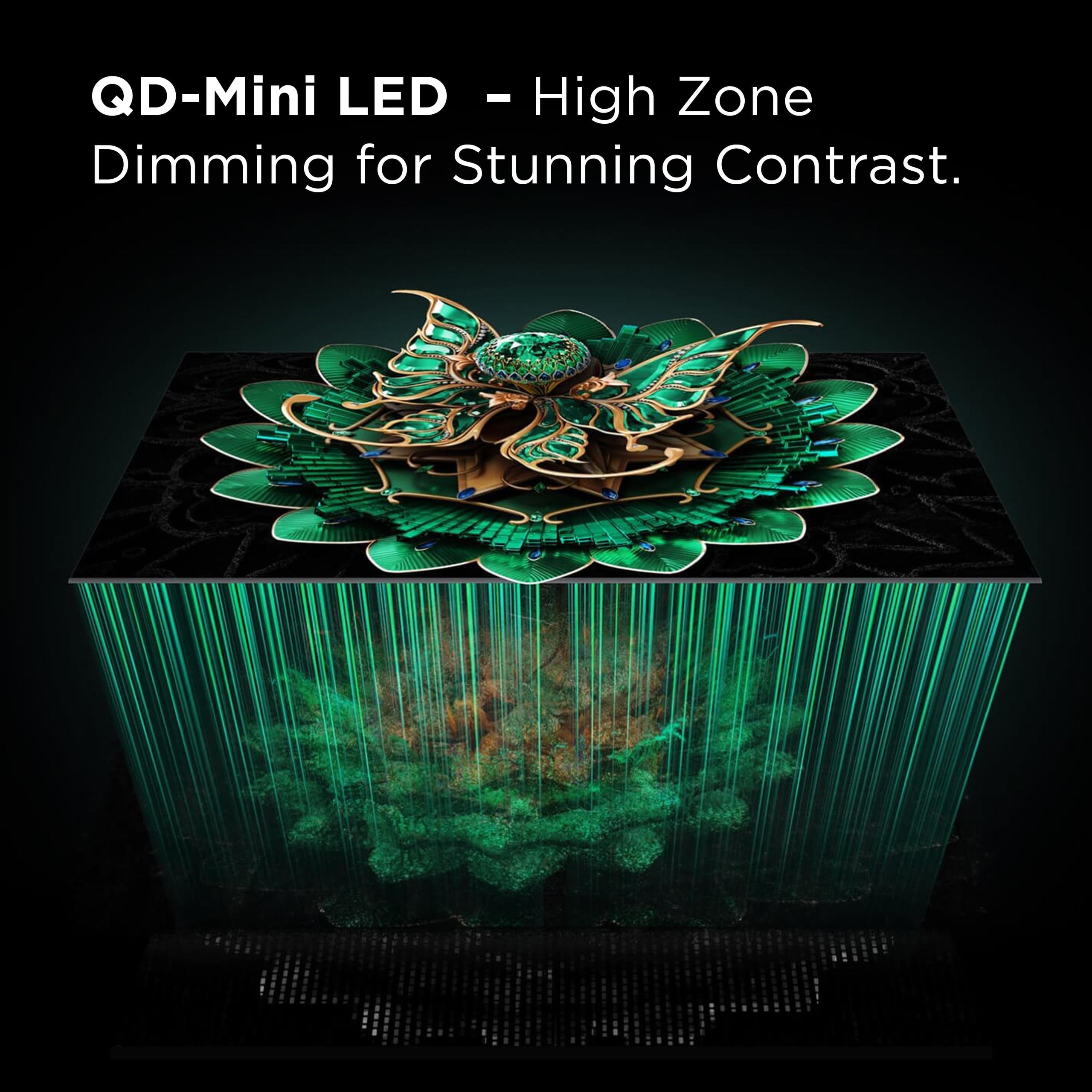
The TCL QM8K takes a radically different approach with its Mini LED system featuring up to 3,800 individual dimming zones. Think of it like having thousands of tiny, precisely controlled spotlights instead of one floodlight. Each zone can be independently adjusted, allowing bright objects to shine while keeping dark areas truly black. This is called local dimming, and it's the foundation of premium TV performance.
When researching user experiences and professional reviews, the difference becomes immediately apparent. The Samsung U8000F struggles with what's called "light bleed" – when bright elements on screen cause the entire dark area to appear grayish rather than black. The TCL QM8K, according to multiple professional evaluations, demonstrates exceptional control over this blooming effect, with reviewers noting that even challenging content like bright subtitles over dark scenes shows minimal halo artifacts.
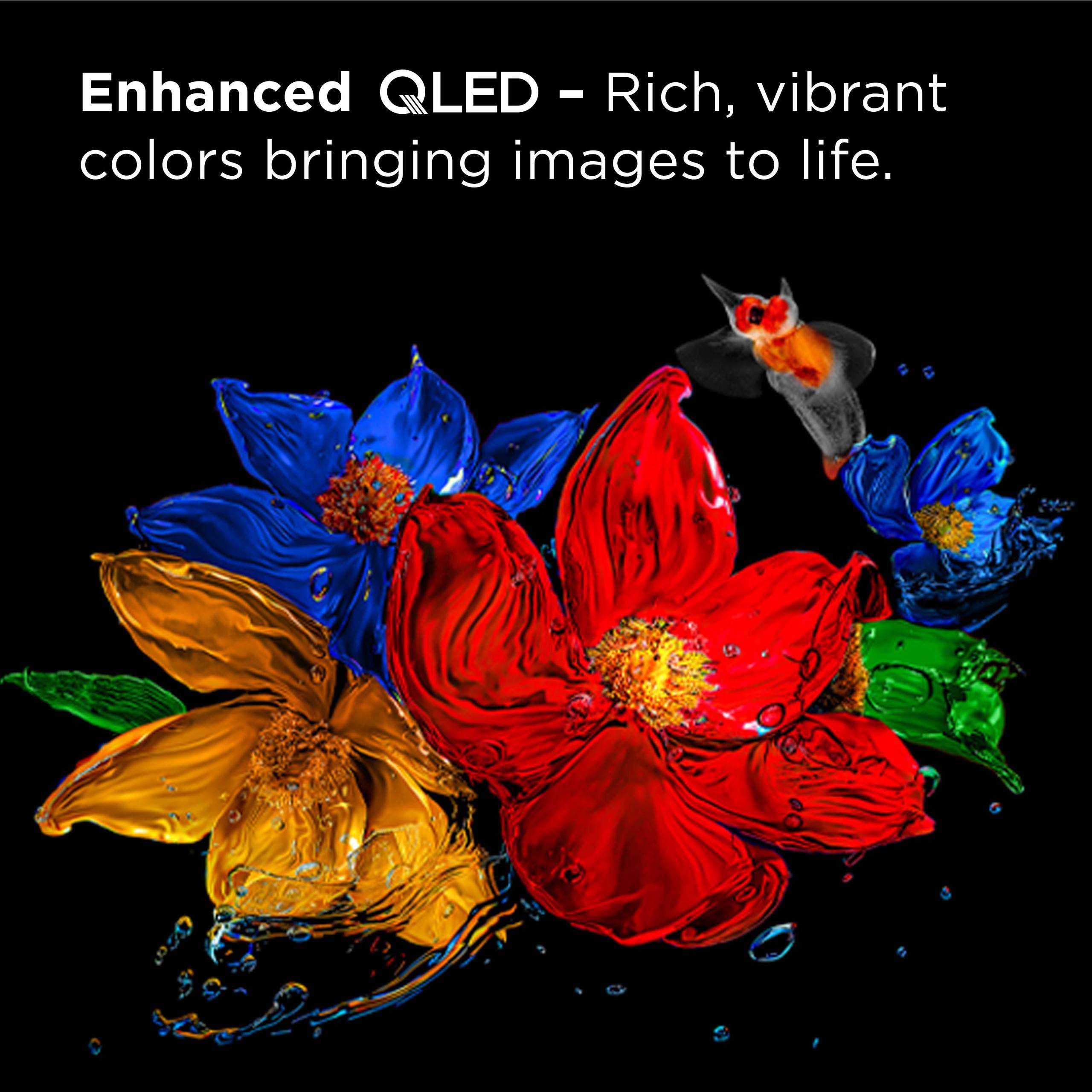
The quantum dot technology in both TVs works differently too. Samsung's Crystal UHD uses basic quantum dot enhancement primarily for marketing differentiation. TCL's implementation uses what they call "Colorful Quantum Crystal material" to achieve 97% coverage of the DCI-P3 color space – a technical standard that represents the full range of colors used in digital cinema. This translates to more vibrant, accurate colors that don't fade over time.
Brightness might sound like a simple specification, but it's become one of the most important factors in TV performance. Modern HDR (High Dynamic Range) content is mastered at brightness levels that were impossible to display just a few years ago. When a director wants to show the sun reflecting off water or an explosion lighting up a scene, they need a TV capable of producing enough light to make those moments feel real.
The Samsung U8000F produces brightness levels typical of budget TVs – adequate for darker rooms but nothing exceptional. Based on our research of user reviews and professional testing, it performs best when ambient lighting is controlled, like a dedicated media room or evening viewing.
The TCL QM8K achieves up to 5,000 nits peak brightness, putting it among the brightest consumer displays available. To put this in perspective, a typical bright sunny day measures around 10,000 nits, while most budget TVs struggle to exceed 400 nits. This extreme brightness capability means HDR content actually looks HDR – bright highlights pop off the screen while maintaining detail and color accuracy.
In practical terms, this brightness advantage makes the TCL QM8K incredibly versatile. Whether you're watching in a bright living room with large windows or a dark basement theater, it adapts beautifully. The Samsung U8000F, while perfectly functional, works best in controlled lighting environments.
Gaming has become a major consideration for TV buyers, even those who don't consider themselves serious gamers. Modern consoles like the PlayStation 5 and Xbox Series X can output 4K at 120 frames per second, and PC gaming is pushing even higher frame rates.
The Samsung U8000F is limited to 60Hz refresh rate, which means it can display a maximum of 60 frames per second. While it includes Variable Refresh Rate (VRR) support to prevent screen tearing, the 60Hz ceiling constrains its gaming potential. For casual gaming and older console titles, this performs adequately, but it won't future-proof your setup.
The TCL QM8K features a native 144Hz refresh rate, allowing it to display up to 144 frames per second at 4K resolution. More impressively, it supports what TCL calls "Game Accelerator 288," enabling up to 288Hz at lower resolutions like 1080p or 1440p. This feature particularly appeals to competitive PC gamers who prioritize ultra-smooth motion over maximum resolution.
Beyond refresh rates, the TCL QM8K includes AMD FreeSync Premium Pro, which synchronizes the display with compatible graphics cards to eliminate screen tearing while maintaining HDR quality. It also features dedicated gaming interfaces and optimization modes that automatically adjust picture settings when gaming is detected.
For perspective, if you primarily play story-driven single-player games or use gaming consoles casually, the Samsung U8000F will serve you fine. However, if you're serious about competitive gaming or want to future-proof for upcoming console generations, the TCL QM8K is in a different league entirely.
The smart TV platform determines how you'll interact with your television every day, making it surprisingly important for long-term satisfaction. Both TVs represent different philosophical approaches to the smart TV experience.
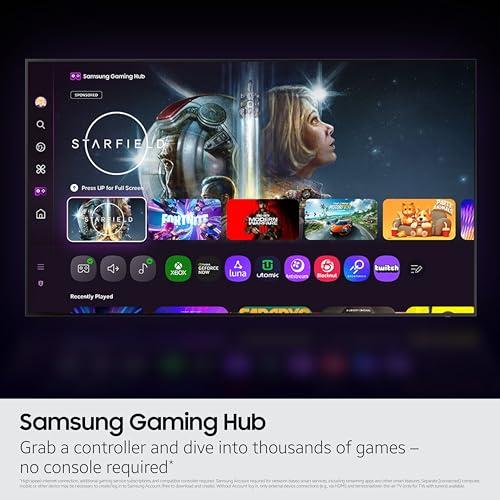
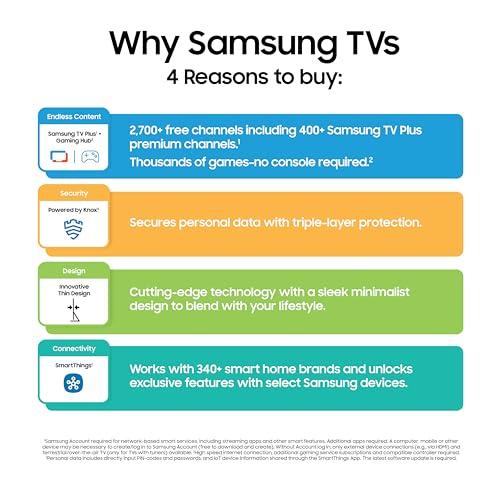
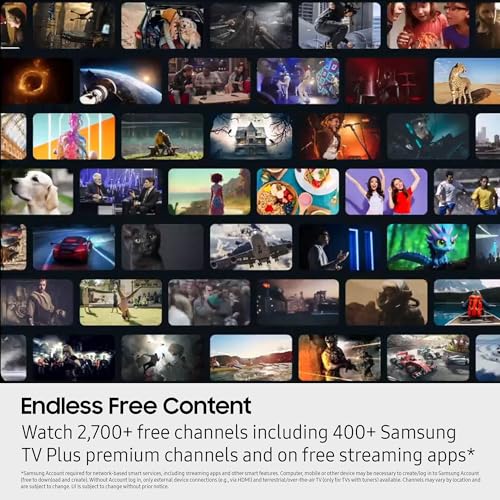
The Samsung U8000F runs Tizen OS with Samsung's new One UI interface, which launched in 2025 with improved navigation and personalization features. Samsung has invested heavily in free content through Samsung TV Plus, offering over 2,700 channels without subscription fees. The platform integrates tightly with Samsung's SmartThings ecosystem, making it appealing if you already use Samsung devices.
However, voice control requires connecting external devices like Amazon Echo or Google Assistant speakers – there's no built-in voice assistant. Samsung Knox Security provides robust protection for smart home integration, but the overall experience feels more closed compared to competitors.
The TCL QM8K uses Google TV, which Google refined significantly since its Android TV origins. It excels at content discovery, aggregating shows and movies from multiple streaming services into a unified interface. The hands-free voice control works without additional devices, and the backlit remote makes nighttime use much more convenient.
Google TV's open ecosystem supports broader smart home integration, including Apple HomeKit, Amazon Alexa, and Google Assistant natively. Chromecast built-in and AirPlay 2 support make it easy to cast content from any device.
From our research of user feedback, Google TV generally receives higher satisfaction ratings for content discovery and ease of use, while Samsung's Tizen appeals to users already invested in Samsung's ecosystem.
TV audio often gets dismissed because many enthusiasts immediately add soundbars or surround sound systems. However, built-in audio quality matters significantly for everyday viewing, and many people never upgrade their TV speakers.
The Samsung U8000F includes basic 20W stereo speakers with support for Samsung's Q-Symphony technology, which allows compatible Samsung soundbars to work in harmony with the TV speakers for enhanced audio. The built-in sound is adequate for dialogue and basic content but lacks depth and bass response.
The TCL QM8K features an Audio by Bang & Olufsen 2.1.1 channel system with an integrated subwoofer. This setup produces noticeably fuller sound with actual bass response and supports Dolby Atmos processing for three-dimensional audio effects. While it won't replace a dedicated sound system, it's genuinely good enough that many users might not feel compelled to upgrade immediately.
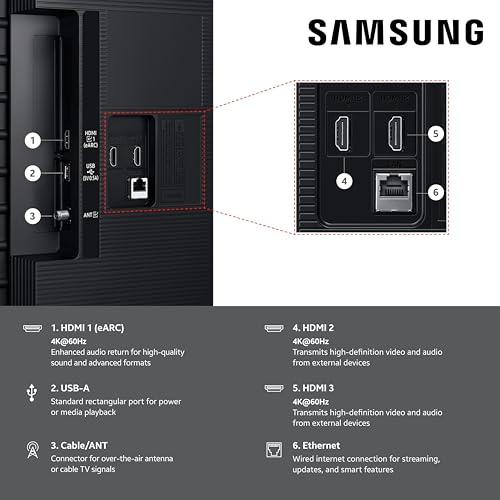
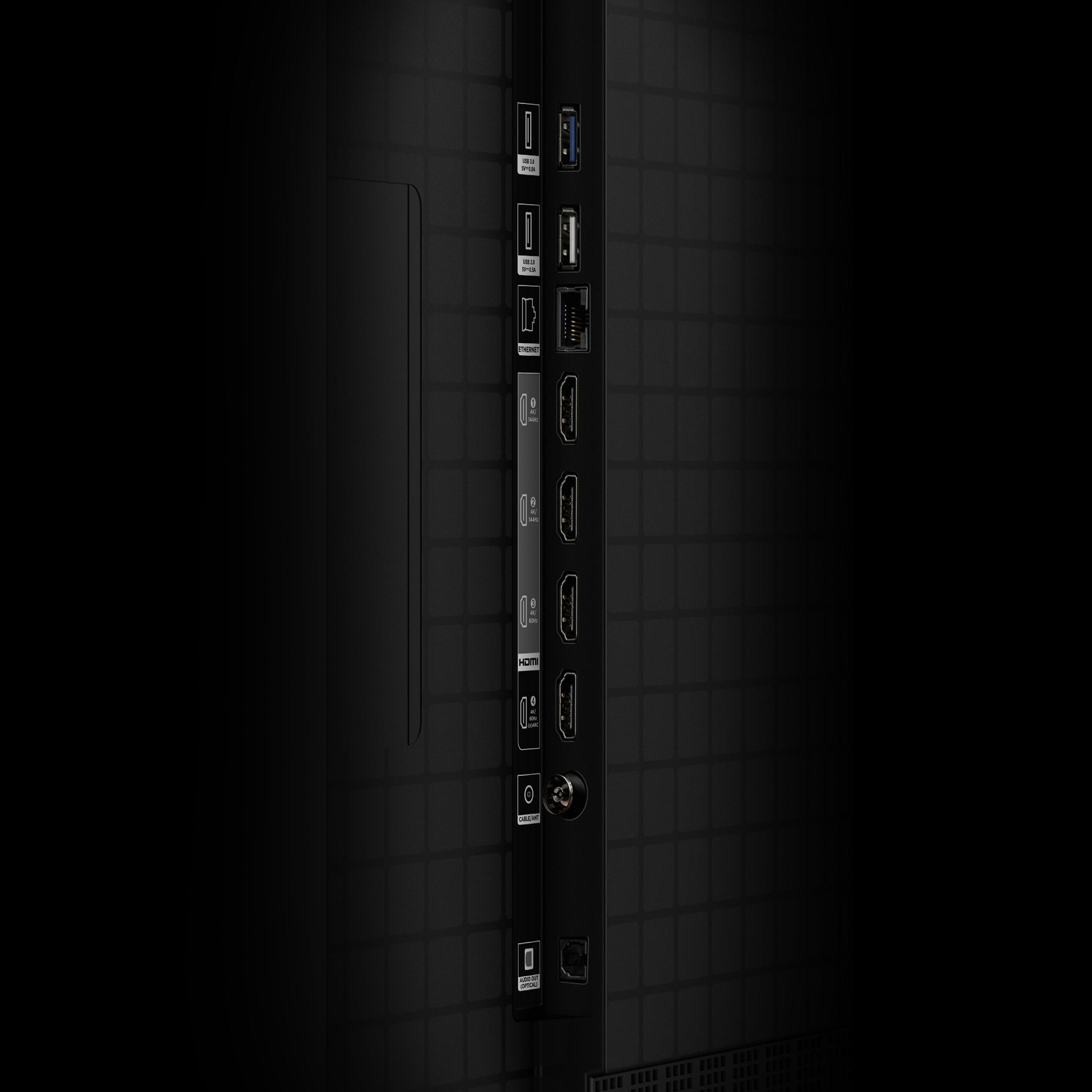
For home theater enthusiasts, both TVs include eARC (enhanced Audio Return Channel) support for passing high-quality audio to external sound systems, but the TCL QM8K offers better flexibility with more comprehensive audio format support.
If you're building a dedicated home theater, several factors become particularly important. The TCL QM8K excels in this environment thanks to its exceptional contrast ratio and brightness control. Dark movie scenes maintain detail in shadows while bright scenes don't wash out, creating the immersive experience that home theater enthusiasts seek.
The TV's support for professional color standards like DCI-P3 means it can accurately reproduce the colors that filmmakers intended. Its IMAX Enhanced certification ensures compatibility with IMAX-formatted content, providing the closest possible experience to commercial cinema.
For acoustics, while the TCL QM8K's built-in Bang & Olufsen system sounds impressive, serious home theater setups will bypass TV speakers entirely. Both models support the necessary audio passthrough formats, but the TCL QM8K offers more comprehensive codec support.
The Samsung U8000F can work in a home theater setting, but its limited brightness and contrast capabilities mean it performs best in light-controlled environments. It's perfectly adequate for casual movie watching but won't deliver the "wow factor" that justifies dedicating a room to entertainment.
At the time of writing, these TVs occupy very different price segments, which affects how we evaluate their value. The Samsung U8000F typically prices in the entry-level range for 65-inch 4K TVs, making it accessible to budget-conscious buyers who want basic 4K functionality with Samsung's brand reliability.
The TCL QM8K commands a premium price that positions it against mid-to-high-end competitors from established brands. However, our research suggests it delivers performance typically found in TVs costing significantly more from traditional premium manufacturers.
The key value question becomes whether the TCL QM8K's advanced features justify its higher cost. For buyers primarily watching streaming content in bright rooms, gaming regularly, or wanting a TV that won't feel outdated in five years, the performance advantages provide clear value. For basic TV needs in controlled lighting with minimal gaming, the Samsung U8000F offers adequate performance at a more accessible price.
The decision between these TVs ultimately depends on your specific needs, budget, and viewing environment. The Samsung U8000F makes sense if you're working with a tight budget, primarily watch content in darker rooms, value Samsung's ecosystem integration, and don't need advanced gaming features. It delivers competent basic performance with Samsung's reliability and attractive design.
Choose the TCL QM8K if you can invest in better long-term performance, watch content in bright rooms, care about gaming capabilities, want impactful HDR performance, or prefer superior built-in audio. It represents exceptional value in the premium TV segment, delivering flagship-level performance at prices typically associated with mid-range models.
For most buyers, the TCL QM8K provides better future-proofing and overall satisfaction, especially as content creators continue pushing HDR capabilities and gaming becomes increasingly important. However, the Samsung U8000F serves budget-conscious buyers well, particularly those already invested in Samsung's ecosystem.
The TV market has never offered more choice or better performance at accessible prices. Both of these 2025 models represent solid options within their respective segments, but understanding their fundamental differences ensures you'll choose the one that best matches your needs and expectations.
| Samsung 65-Inch Crystal UHD U8000F | TCL 65" QM8K Series QD-Mini LED |
|---|---|
| Display Technology - Foundation of picture quality and longevity | |
| Crystal UHD LED with no local dimming | QD-Mini LED with up to 3,800 dimming zones |
| Peak Brightness - Critical for HDR impact and bright room viewing | |
| Entry-level brightness (best in dark rooms) | 5,000 nits (exceptional for any lighting condition) |
| Refresh Rate - Essential for gaming and smooth motion | |
| 60Hz maximum | 144Hz native, up to 288Hz VRR |
| HDR Support - Determines quality of modern streaming content | |
| HDR10+ only | Dolby Vision IQ, HDR10+, IMAX Enhanced |
| Gaming Features - Important for console and PC gaming | |
| Basic VRR and ALLM at 60Hz | Game Accelerator 288, AMD FreeSync Premium Pro |
| Smart Platform - Your daily interface for streaming | |
| Samsung Tizen OS with Samsung TV Plus | Google TV with hands-free voice control |
| Audio System - Built-in sound quality | |
| 20W stereo speakers | Bang & Olufsen 2.1.1 with subwoofer, Dolby Atmos |
| Color Performance - Accuracy and vibrancy of colors | |
| Standard LED color gamut | 97% DCI-P3 quantum dot technology |
| Contrast Performance - Depth of blacks and overall picture dynamics | |
| Basic contrast without zone control | 30,000,000:1 contrast ratio with precise dimming |
| Target Market - Who each TV serves best | |
| Budget-conscious buyers wanting Samsung ecosystem | Performance enthusiasts seeking flagship features at accessible pricing |
The TCL 65" QM8K Series QD-Mini LED delivers significantly better picture quality thanks to its Mini LED backlighting with up to 3,800 dimming zones and 5,000 nits peak brightness. This creates deeper blacks, brighter highlights, and more vivid colors compared to the Samsung 65-Inch Crystal UHD U8000F, which uses basic LED backlighting without local dimming. For movie watching, especially HDR content, the TCL QM8K provides a much more cinematic experience.
The TCL 65" QM8K Series QD-Mini LED is far superior for gaming with its 144Hz native refresh rate and Game Accelerator 288 technology supporting up to 288Hz VRR. It also includes AMD FreeSync Premium Pro for smooth, tear-free gaming. The Samsung 65-Inch Crystal UHD U8000F is limited to 60Hz refresh rate, making it suitable only for casual gaming. Serious gamers should choose the TCL QM8K.
The TCL 65" QM8K Series QD-Mini LED excels in bright rooms due to its exceptional 5,000 nits peak brightness and anti-reflective panel technology. The Samsung 65-Inch Crystal UHD U8000F has much lower brightness levels and performs best in darker, controlled lighting environments. If your TV room has lots of windows or bright lighting, the TCL QM8K is the clear choice.
The Samsung 65-Inch Crystal UHD U8000F runs Samsung's Tizen OS with Samsung TV Plus offering free streaming channels, but requires external devices for voice control. The TCL 65" QM8K Series QD-Mini LED uses Google TV with built-in hands-free voice control, Chromecast, and AirPlay 2 support. The TCL QM8K offers more comprehensive smart features and better content discovery.
The TCL 65" QM8K Series QD-Mini LED features a Bang & Olufsen 2.1.1 audio system with integrated subwoofer and Dolby Atmos support, delivering significantly better built-in sound. The Samsung 65-Inch Crystal UHD U8000F has basic 20W stereo speakers that are adequate for dialogue but lack bass and depth. The TCL QM8K provides much richer audio without needing an immediate soundbar upgrade.
While the Samsung 65-Inch Crystal UHD U8000F costs less upfront, the TCL 65" QM8K Series QD-Mini LED offers exceptional value by delivering flagship-level performance typically found in much more expensive TVs. The TCL QM8K provides better future-proofing, superior picture quality, and advanced gaming features that justify its higher cost for most buyers seeking long-term satisfaction.
The TCL 65" QM8K Series QD-Mini LED excels at HDR with support for Dolby Vision IQ, HDR10+, and IMAX Enhanced, plus the brightness and contrast needed to make HDR content truly impactful. The Samsung 65-Inch Crystal UHD U8000F supports HDR10+ but lacks the brightness and local dimming to deliver compelling HDR performance. For streaming HDR movies and shows, the TCL QM8K is dramatically better.
The TCL 65" QM8K Series QD-Mini LED is ideal for home theater use with its exceptional contrast ratio, precise dimming zones, and support for cinema-grade color standards like DCI-P3. It maintains detail in dark scenes while delivering bright highlights that create an immersive viewing experience. The Samsung 65-Inch Crystal UHD U8000F can work in a controlled home theater but lacks the performance to truly shine in this application.
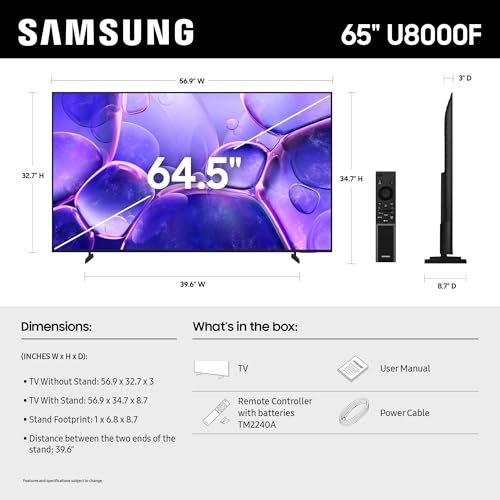
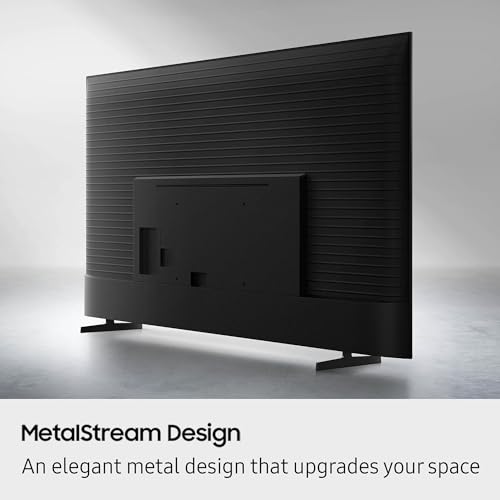
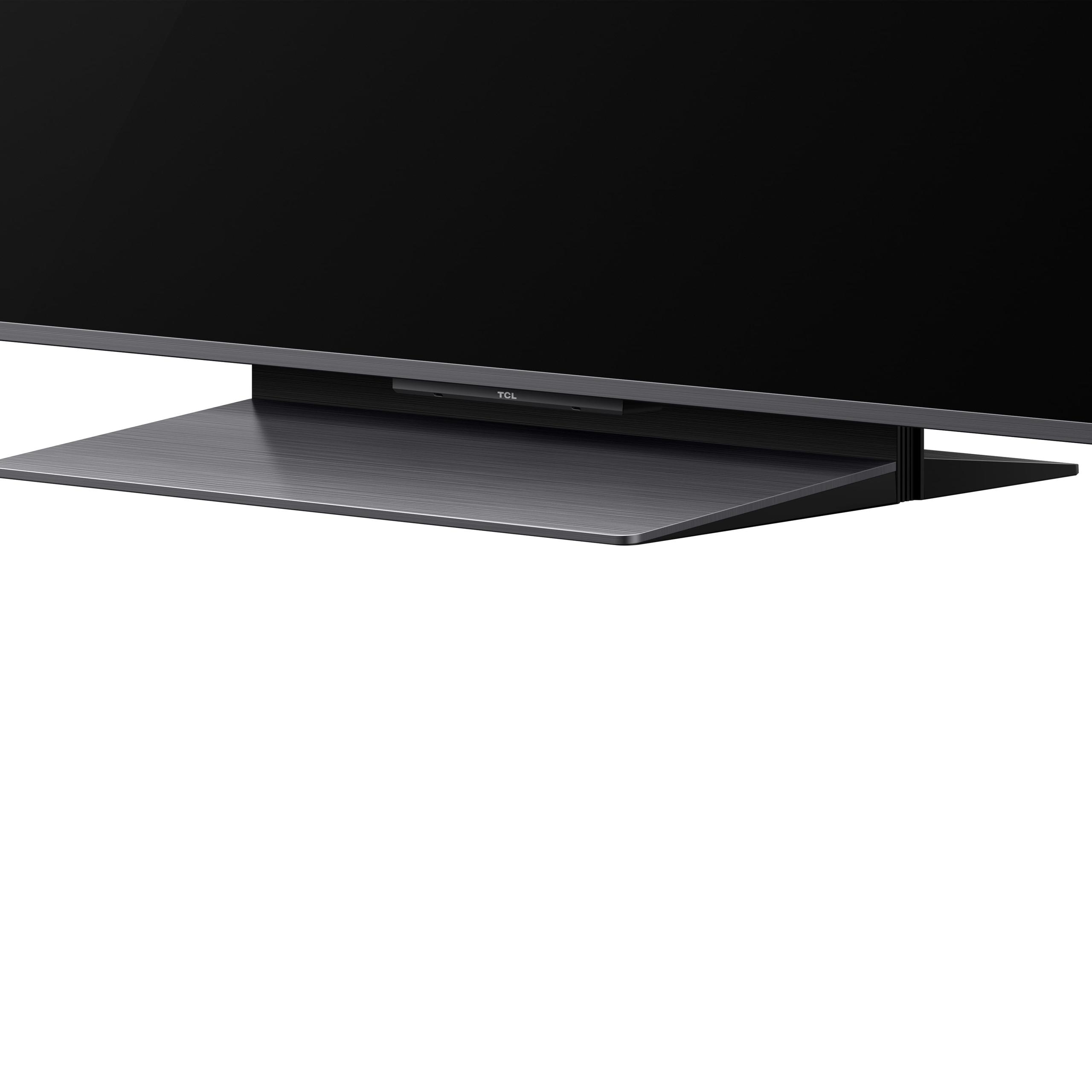
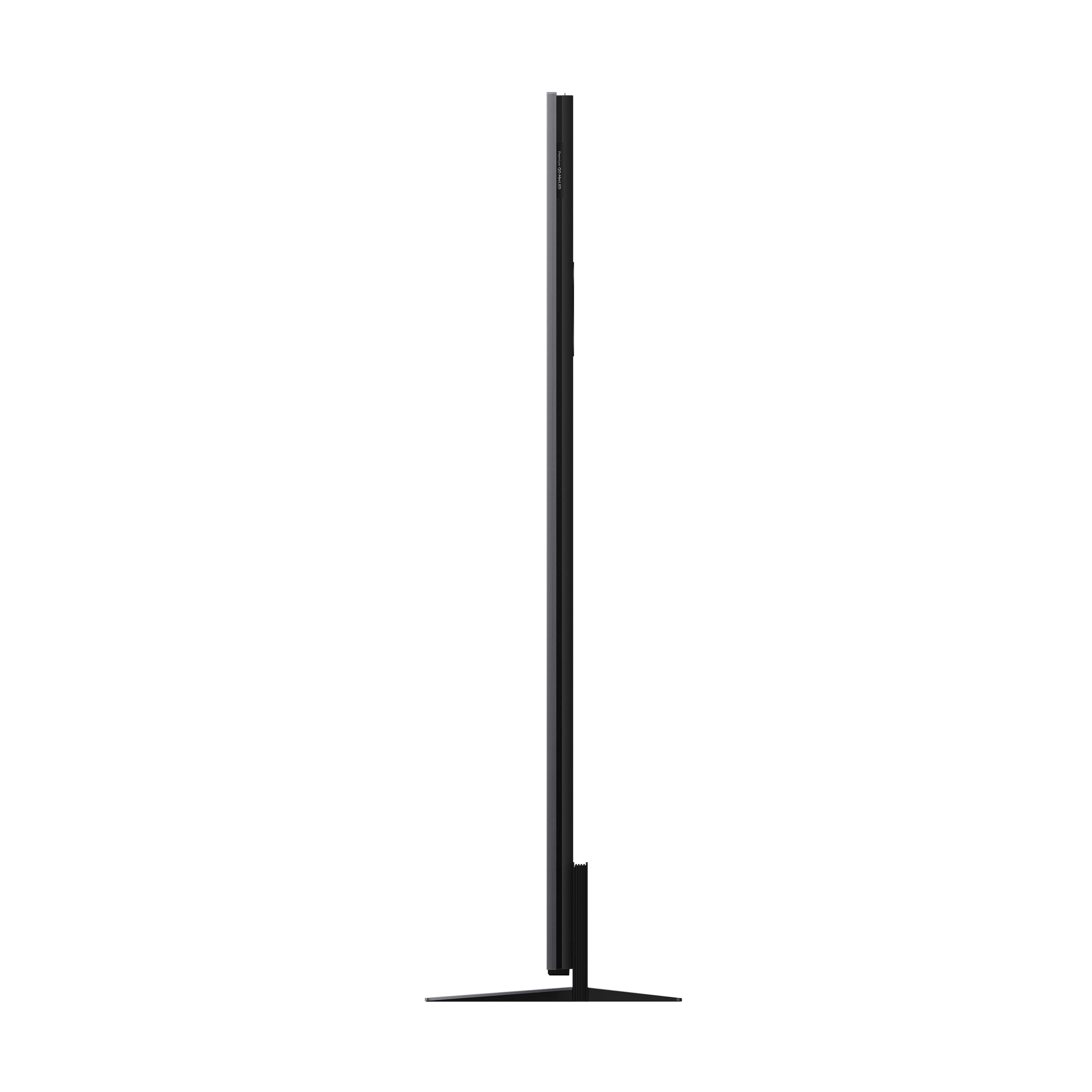
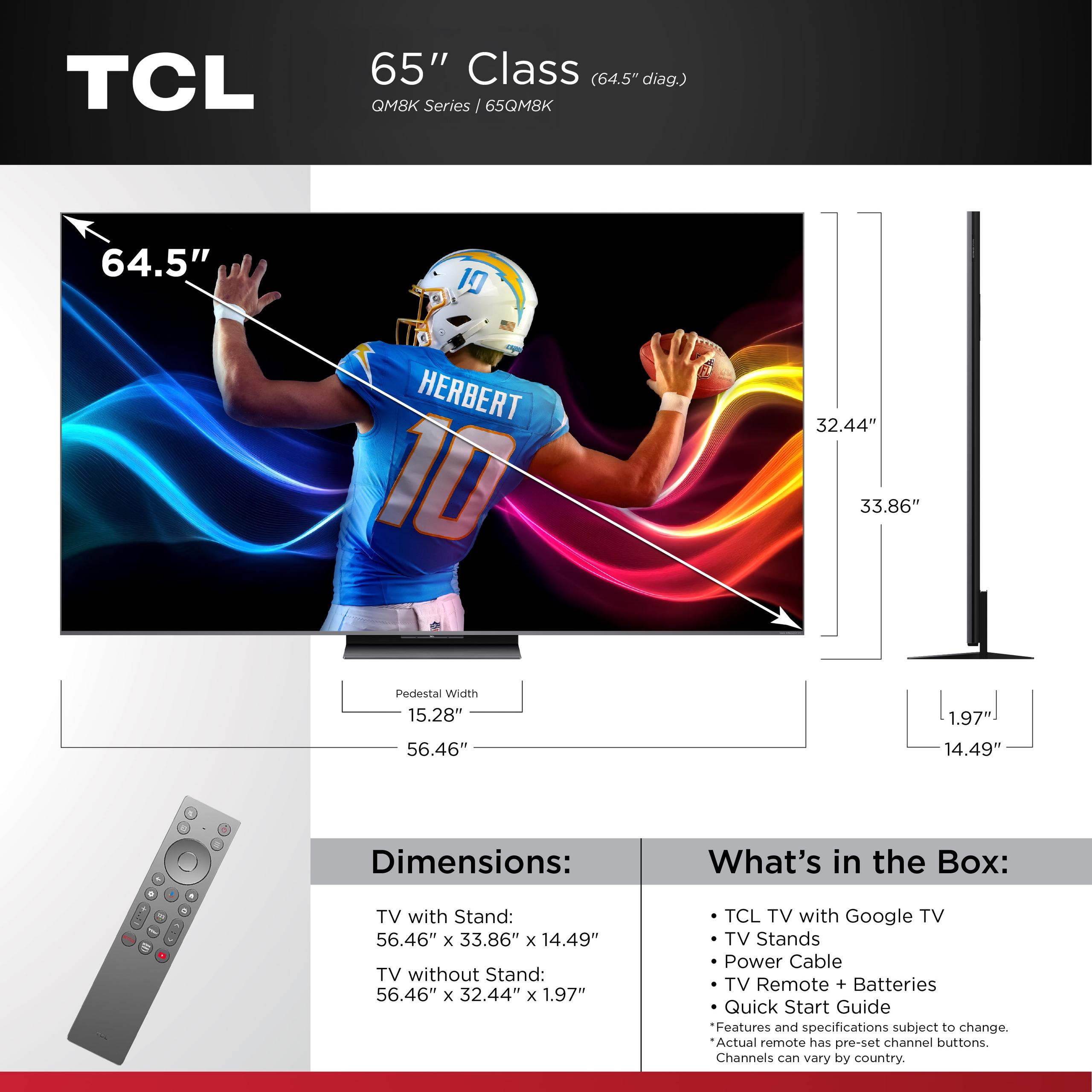
Both TVs feature attractive, slim designs with minimal bezels. The Samsung 65-Inch Crystal UHD U8000F uses Samsung's MetalStream design with a metal back panel, while the TCL 65" QM8K Series QD-Mini LED features an ultra-slim profile with ZeroBorder anti-reflective technology. Both offer solid build quality, though the TCL QM8K includes more premium materials and design elements consistent with its higher positioning.
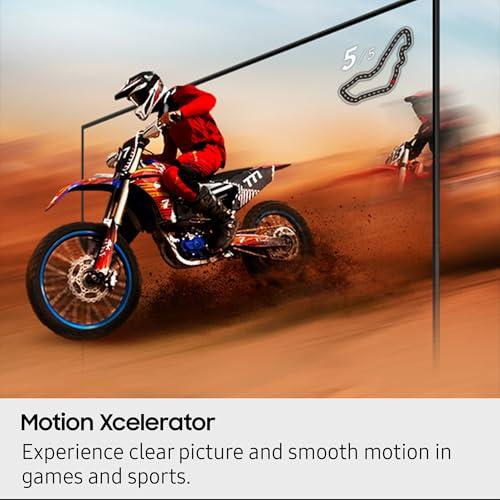
The TCL 65" QM8K Series QD-Mini LED provides superior motion handling with its 144Hz native refresh rate, Motion Rate 480, and MEMC frame insertion technology. This delivers smoother, clearer motion for fast-paced sports content. The Samsung 65-Inch Crystal UHD U8000F is limited to 60Hz with basic motion processing, making it adequate but not exceptional for sports viewing. The TCL QM8K is the better choice for sports fans.
The Samsung 65-Inch Crystal UHD U8000F integrates well with Samsung's SmartThings ecosystem and includes Samsung TV Plus for free content, making it ideal for existing Samsung device users. The TCL 65" QM8K Series QD-Mini LED supports broader ecosystem compatibility including Google Assistant, Amazon Alexa, and Apple HomeKit. Both support major streaming services, but the TCL QM8K offers more universal compatibility.
For buyers prioritizing affordability and basic 4K functionality, the Samsung 65-Inch Crystal UHD U8000F provides adequate performance with Samsung's user-friendly interface and reliable brand reputation. However, the TCL 65" QM8K Series QD-Mini LED offers much better future-proofing and performance that won't feel outdated quickly. First-time buyers who can stretch their budget should strongly consider the TCL QM8K for long-term satisfaction.
We've done our best to create useful and informative comparisons to help you decide what product to buy. Our research uses advanced automated methods to create this comparison and perfection is not possible - please contact us for corrections or questions. These are the sites we've researched in the creation of this article: bestbuy.com - youtube.com - youtube.com - rtings.com - youtube.com - samsung.com - hometechnologyreview.com - rtings.com - samsung.com - displayspecifications.com - samsung.com - displayspecifications.com - walmart.com - billsmith.com - dentonstv.com - samsung.com - samsung.com - samsung.com - youtube.com - bestbuy.com - bestbuy.com - youtube.com - samsung.com - donstv.com - tomsguide.com - youtube.com - businessinsider.com - rtings.com - youtube.com - avsforum.com - avsforum.com - bestbuy.com - tcl.com - tcl.com - tcl.com - flatpanelshd.com - romomattressfurniture.com - brandsmartusa.com - pcrichard.com - tvsbook.com - tcl.com - youtube.com - prnewswire.com - tcl.com - tcl.com

Privacy Policy
Terms and Conditions - Affiliate Policy
Home Security
© Copyright 2008-2026.
11816 Inwood Rd #1211, Dallas, TX 75244