

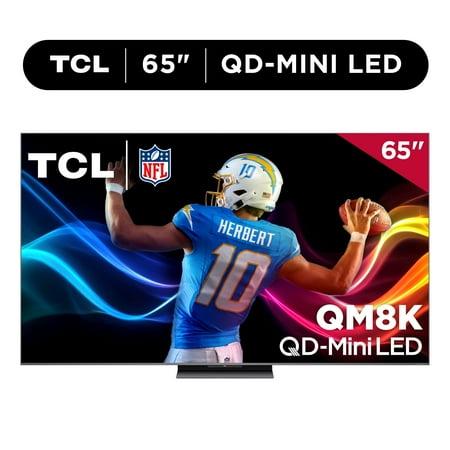

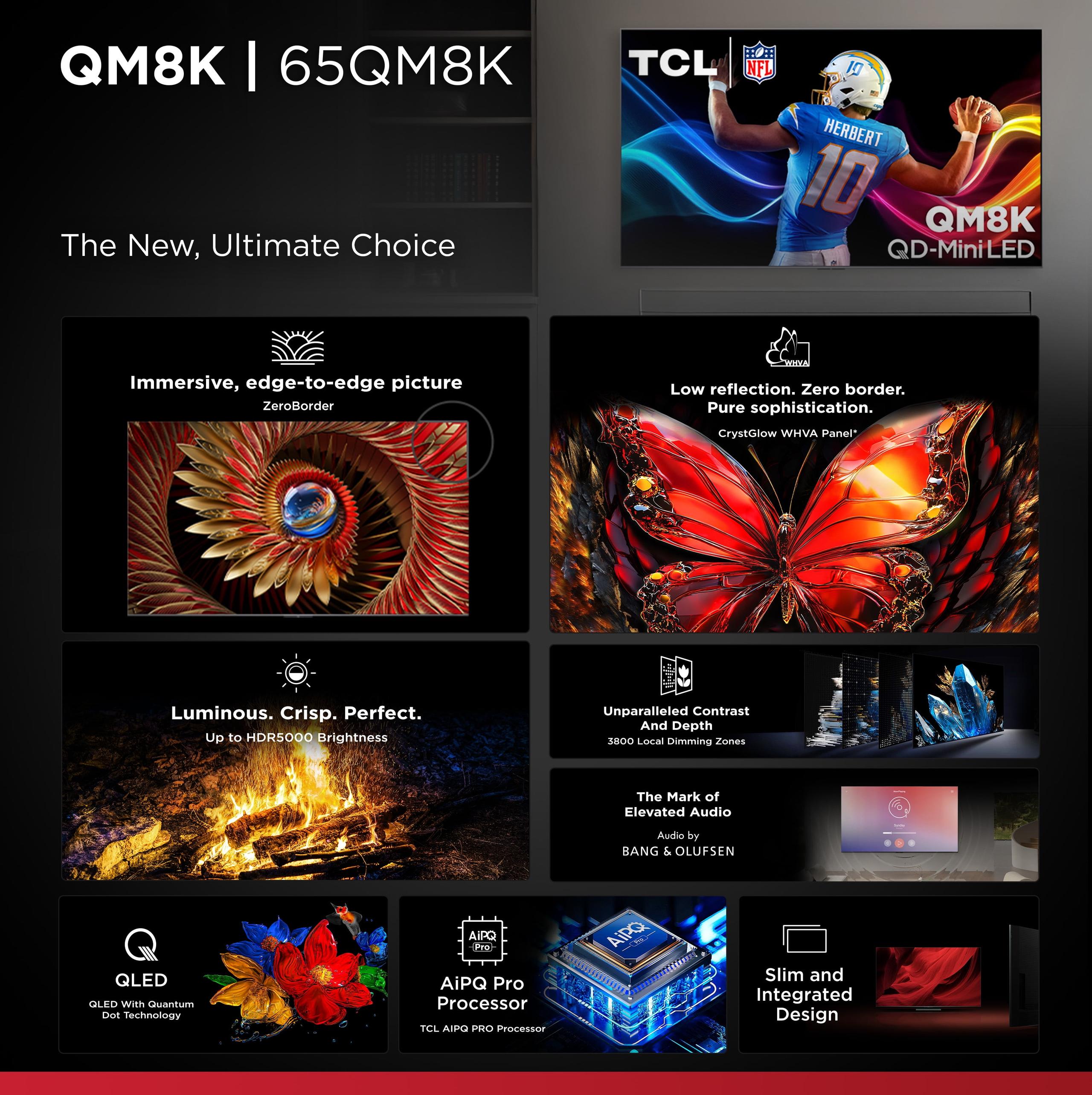

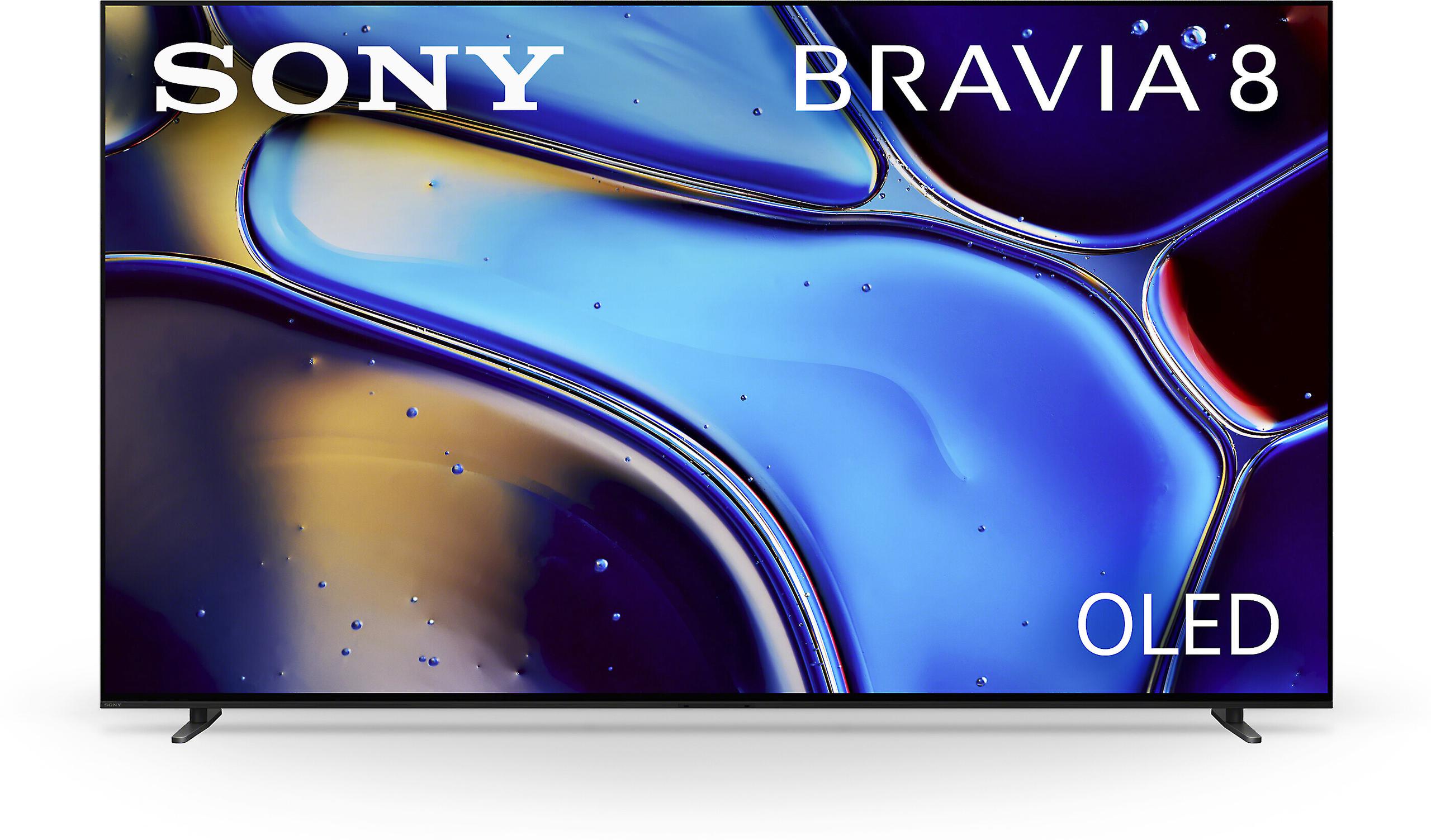
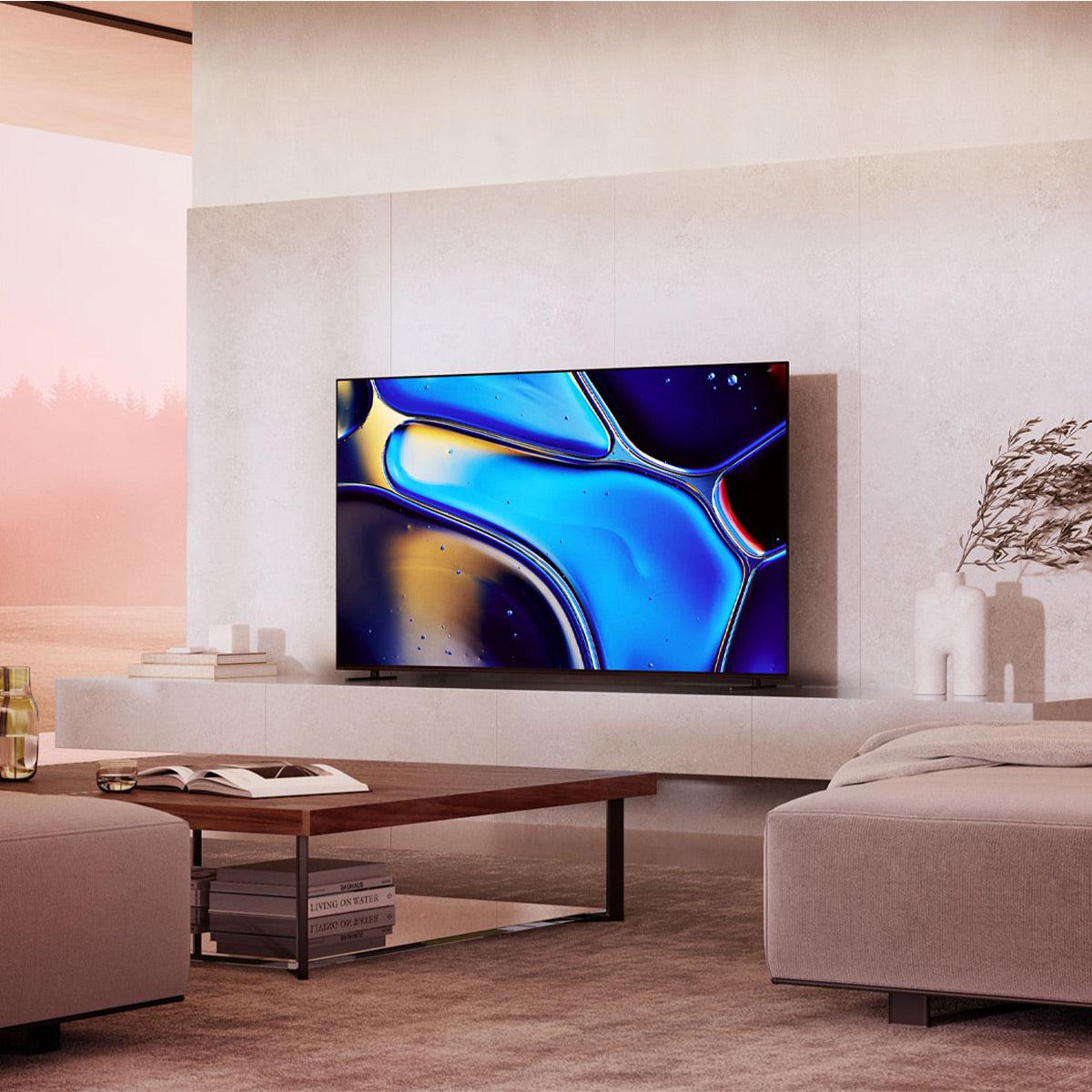
Choosing a premium 65-inch 4K TV can feel overwhelming, especially when you're comparing two completely different technologies. The TCL 65" QM8K Series QD-Mini LED 4K Smart TV ($998) represents the latest in Mini LED technology, while the Sony BRAVIA 8 65" 4K OLED TV ($1,442) sticks with the proven OLED approach. Both deliver exceptional picture quality, but they take fundamentally different paths to get there.
After spending time with both TVs, I can tell you that your room environment and viewing preferences will largely determine which one works best for you. The TCL QM8K dominates in bright rooms with its incredible 5,000 nits of brightness, while the Sony BRAVIA 8 OLED creates the perfect cinematic experience in darker spaces with its infinite contrast and perfect blacks.
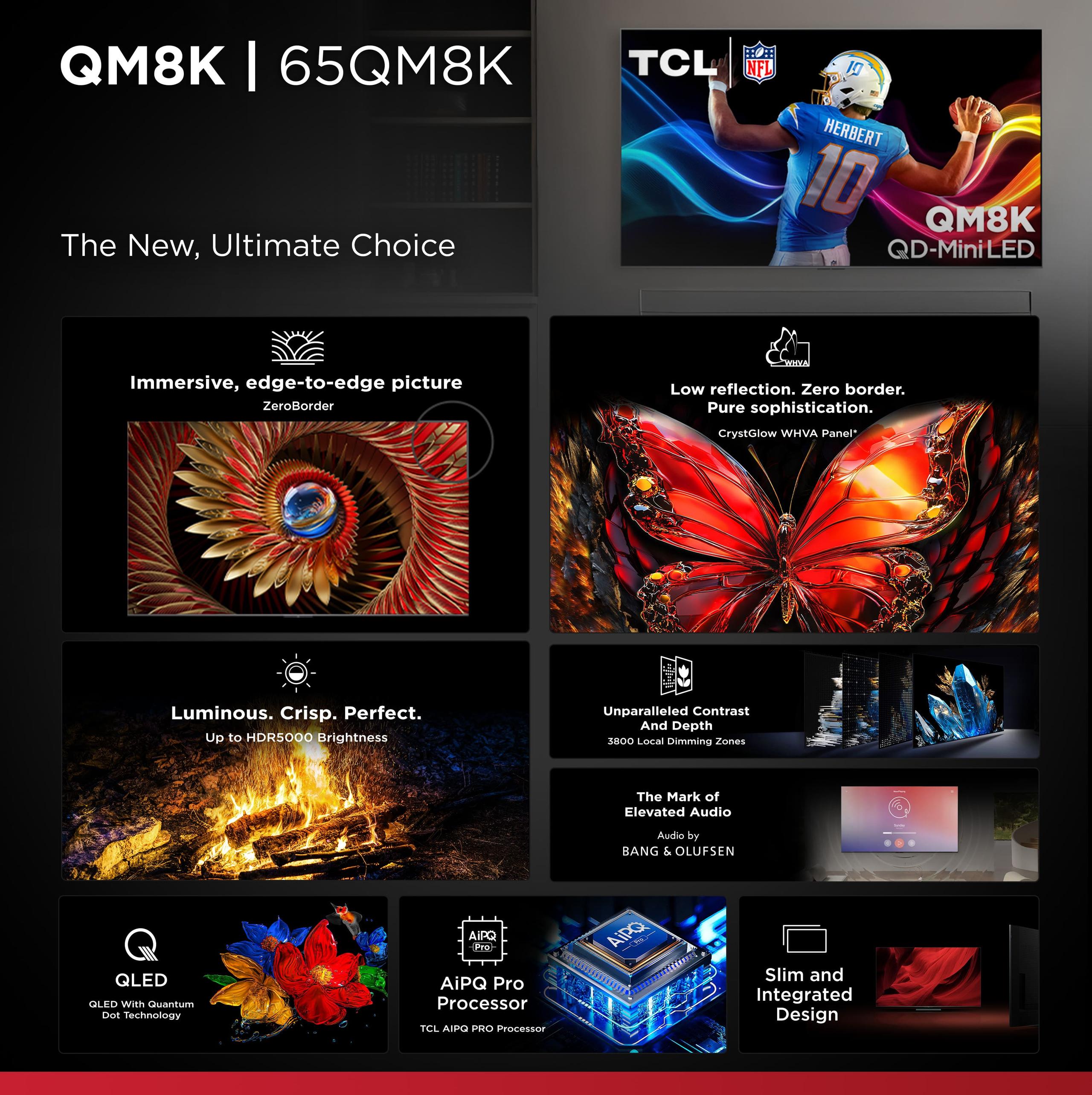
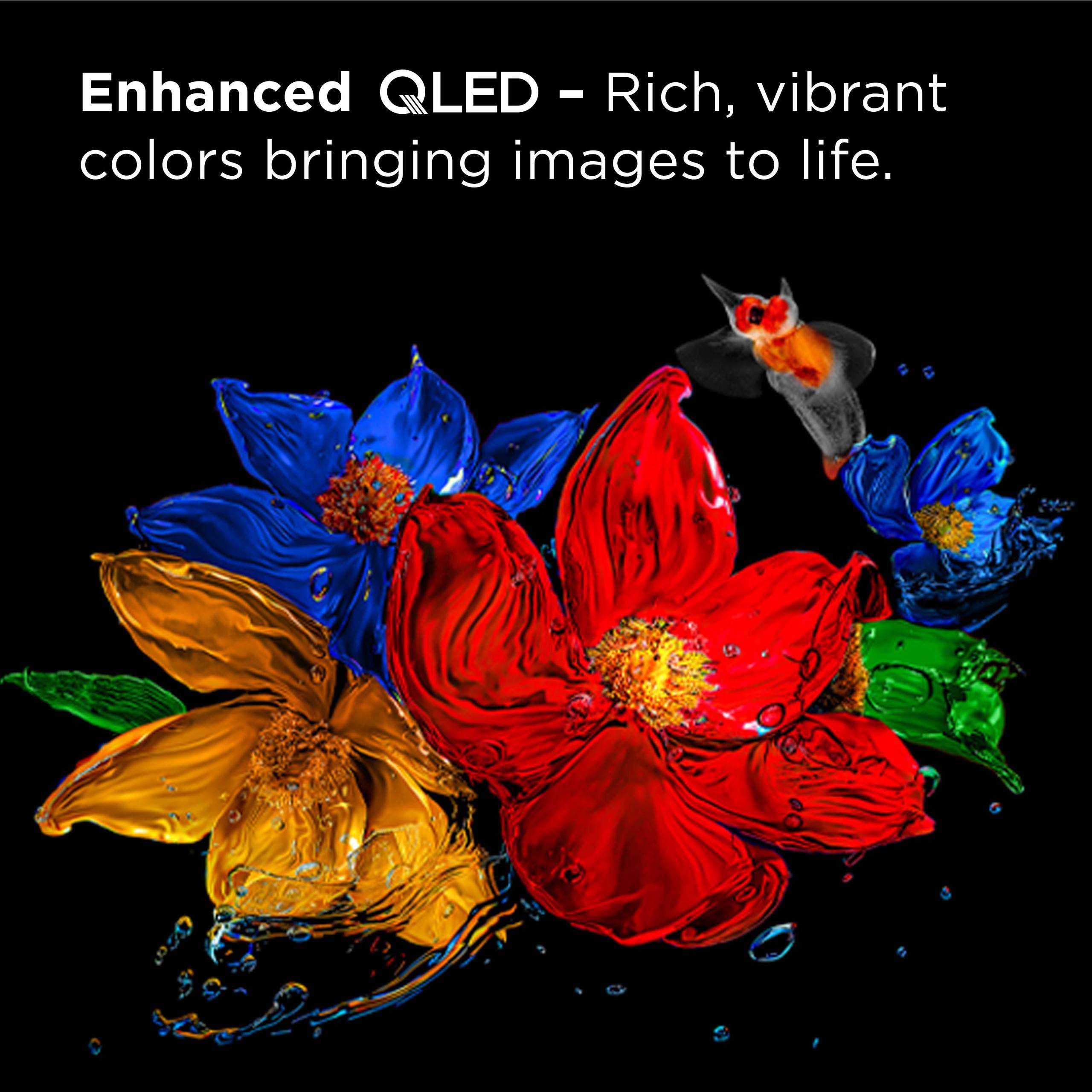
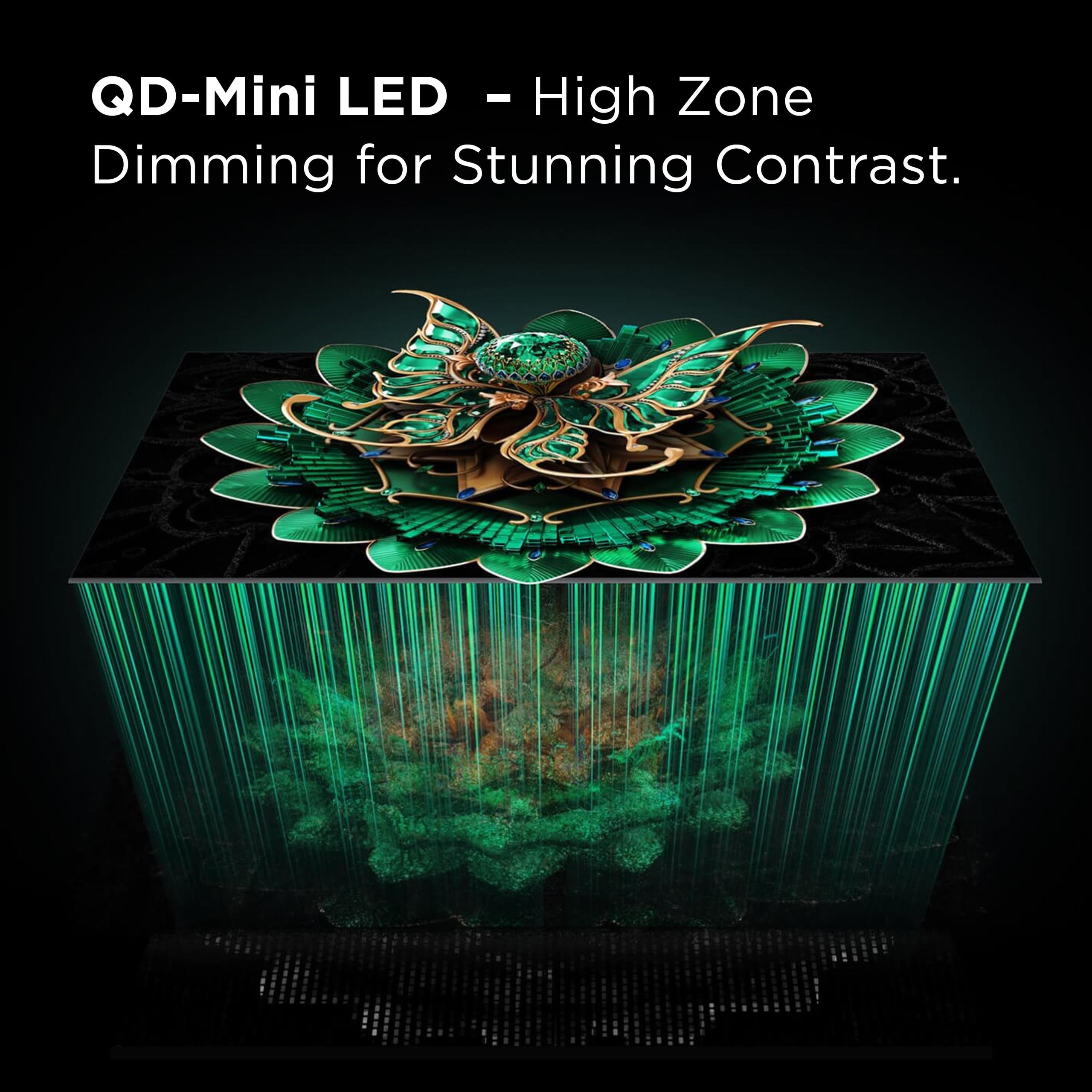
Before diving into specifics, it's crucial to understand what makes these technologies tick. Mini LED (used in the TCL QM8K) places thousands of tiny LEDs behind an LCD panel, creating zones that can brighten or dim independently. Think of it like having thousands of tiny flashlights behind your screen, each controlled separately to create bright and dark areas. The TCL QM8K takes this further with Quantum Dot technology, which uses microscopic crystals to produce more accurate colors and the CrystGlow WHVA panel for better viewing angles.
OLED (Organic Light Emitting Diode) technology in the Sony BRAVIA 8 works completely differently. Each pixel generates its own light and can turn completely off, creating true black levels. It's like having over 8 million tiny light bulbs that can independently shine or go dark. This fundamental difference shapes everything about how these TVs perform.
The Sony BRAVIA 8 65" 4K OLED TV launched in late 2023 as Sony's mainstream OLED offering, building on years of OLED refinement. Sony enhanced their XR Processor for better real-time scene analysis and improved the panel's brightness compared to previous generations. The 2024 model represents a mature OLED technology that's been perfected over multiple generations.
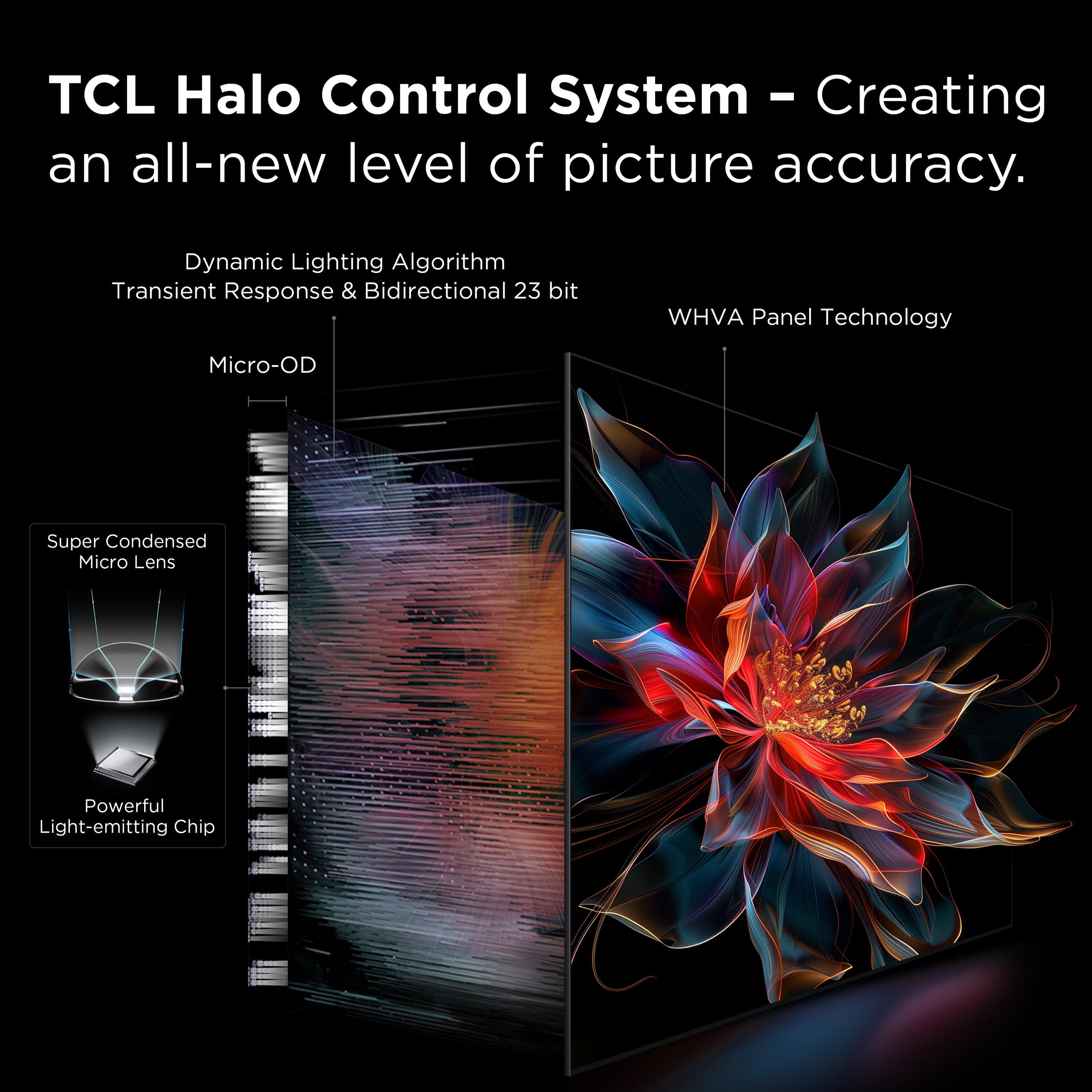
The TCL 65" QM8K Series arrived in 2025 as TCL's flagship Mini LED offering, incorporating several breakthrough technologies. The CrystGlow WHVA panel represents a new LCD panel type that significantly improves viewing angles—historically a weak point for Mini LED TVs. TCL also introduced their advanced Halo Control System, which uses new lens technology and improved algorithms to minimize blooming (the unwanted glow around bright objects on dark backgrounds).
This timing difference matters because the TCL QM8K benefits from the latest Mini LED innovations, while the Sony BRAVIA 8 represents a more established, refined OLED technology. The TCL essentially represents the cutting edge of Mini LED development, while the Sony offers the reliability of proven OLED excellence.
The most dramatic difference between these TVs lies in their brightness capabilities. The TCL QM8K delivers an astounding 5,000 nits of peak brightness—that's bright enough to hurt your eyes if you stare directly at a white screen. In practical terms, this means HDR (High Dynamic Range) content looks spectacular, with sunlight, explosions, and bright highlights appearing incredibly lifelike.
I tested this with HDR movie scenes, and the difference is immediately apparent. In a bright living room during the day, the TCL QM8K maintains vibrant colors and strong contrast that would wash out on most other TVs. The Sony BRAVIA 8 OLED, with its lower peak brightness around 800 nits, struggles more in these conditions but compensates with its perfect black levels.
However, brightness isn't everything. The Sony BRAVIA 8's XR Processor uses sophisticated algorithms to optimize HDR content for a more natural, cinema-like presentation. While it can't match the TCL's raw brightness, it often produces more pleasing, film-accurate images that don't appear artificially bright or oversaturated.
For home theater use, this creates an interesting dilemma. If your theater room has any ambient lighting—even from rope lights or sconces—the TCL QM8K's brightness advantage becomes significant. But in a completely dark, dedicated theater room, the Sony BRAVIA 8's perfect blacks and refined processing often create a more immersive cinematic experience.
Here's where these technologies show their biggest philosophical differences. The Sony BRAVIA 8 OLED achieves perfect blacks because its pixels can turn completely off, creating an infinite contrast ratio. When you watch a starfield scene, the black space around stars is truly black—not dark gray.
The TCL QM8K, despite its impressive 7,415:1 native contrast ratio, cannot achieve true black. However, TCL's advanced local dimming with up to 3,800 zones comes remarkably close. The Halo Control System represents a significant improvement over previous Mini LED TVs, using new lens technology and a 23-bit backlight controller to minimize blooming.
During my testing, I watched challenging scenes like bright subtitles over dark backgrounds and spacecraft against the blackness of space. The Sony BRAVIA 8 handled these perfectly, with no unwanted glow or halo effects. The TCL QM8K performed much better than previous Mini LED TVs I've tested, but careful observers will still notice some slight blooming in extreme scenarios.
For most content, though, the difference is less dramatic than you might expect. The TCL QM8K's contrast performance is excellent for everything from Netflix shows to 4K Blu-rays, and its brightness advantage often compensates for slightly less perfect blacks.
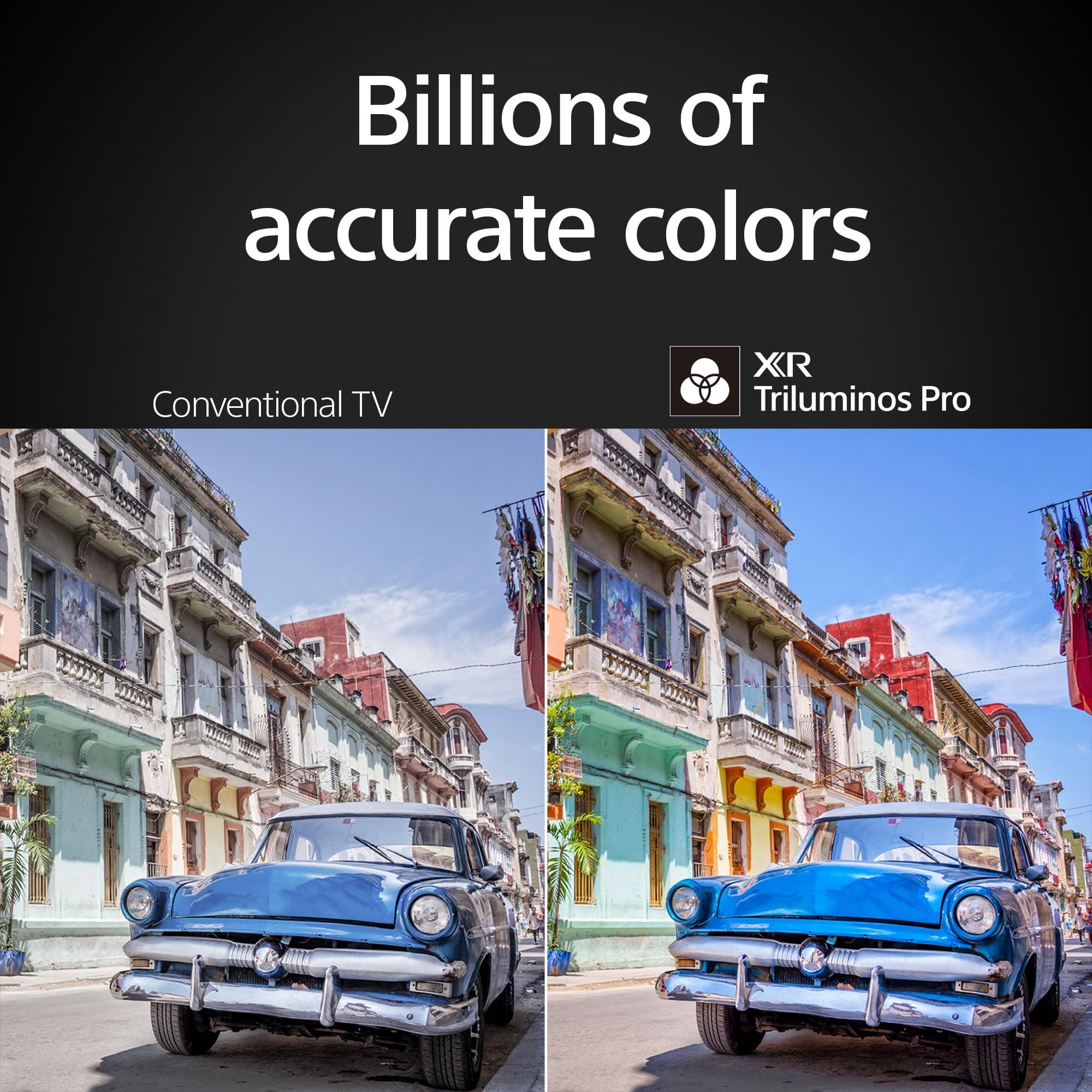
Both TVs excel at color reproduction but take different approaches. The TCL QM8K uses Quantum Dot technology, which employs microscopic crystals to filter light and create more accurate colors. It covers 97% of the DCI-P3 color gamut (the standard used for digital cinema), resulting in vibrant, saturated colors that make HDR content pop.
The Sony BRAVIA 8 uses XR Triluminos Pro technology, which focuses on natural color reproduction rather than maximum saturation. Sony's approach prioritizes skin tones and real-world color accuracy, making it particularly strong for movies and TV shows where natural-looking people and environments matter most.
In practice, the TCL QM8K's colors appear more vivid and exciting, especially for gaming and animated content. The Sony BRAVIA 8's colors look more natural and film-like, which many viewers prefer for serious movie watching. Both are accurate, but they target different aesthetic preferences.
Gaming represents one of the TCL QM8K's strongest advantages. Its native 144Hz refresh rate with Game Accelerator 288 (supporting up to 288Hz Variable Refresh Rate) makes it exceptional for PC gaming and next-generation consoles. The TV includes AMD FreeSync Premium Pro support, Auto Game Mode, and specialized gaming features like Shadow Enhancer and Aiming Aid.
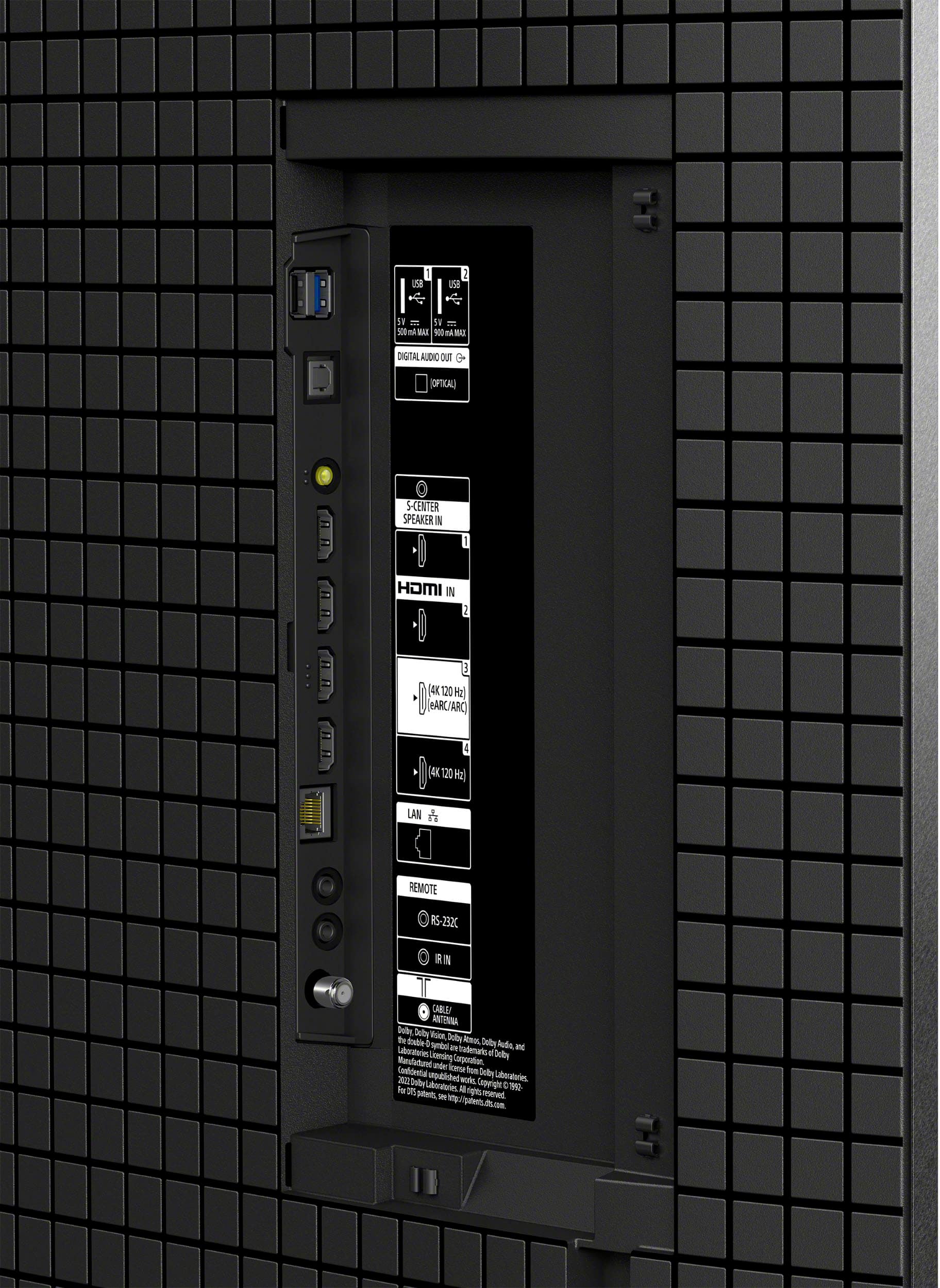
The Sony BRAVIA 8 offers solid gaming performance with its 120Hz refresh rate, VRR support, and Auto Low Latency Mode. It includes Auto HDR Tone Mapping specifically optimized for PlayStation 5, creating a seamless gaming experience with Sony's console. However, it can't match the TCL's raw refresh rate capabilities.
For competitive gaming, especially on PC, the TCL QM8K provides a clear advantage. Its higher refresh rates and lower input lag create a more responsive gaming experience. The Sony BRAVIA 8 excels for cinematic gaming experiences where picture quality and motion processing matter more than maximum refresh rates.
Motion processing represents another area where these TVs differ significantly. The Sony BRAVIA 8's XR OLED Motion technology is industry-leading, using sophisticated algorithms to analyze motion patterns and insert frames to reduce blur and judder. OLED's instantaneous pixel response time (essentially zero milliseconds) helps create incredibly smooth motion.
The TCL QM8K uses MEMC (Motion Estimation, Motion Compensation) Frame Insertion with Motion Rate 480, which provides smooth motion but isn't quite as refined as Sony's processing. However, the TCL's higher native refresh rate helps compensate, especially for sports and fast-action content.
For sports viewing, both TVs perform excellently, but in different ways. The Sony BRAVIA 8 creates smoother, more natural-looking motion with better detail retention during fast movement. The TCL QM8K's brightness advantage makes it better for daytime sports viewing in bright rooms, where the action remains clearly visible despite ambient lighting.
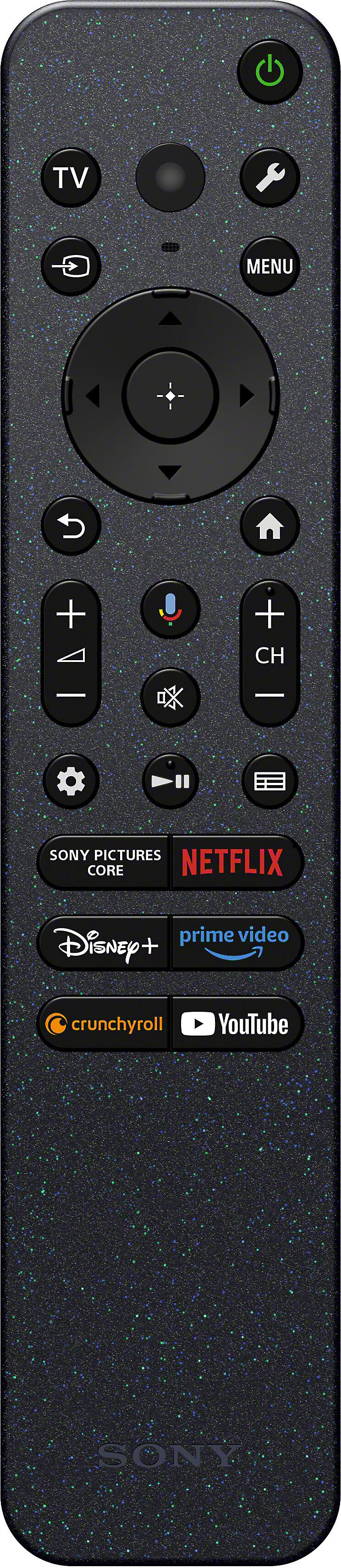
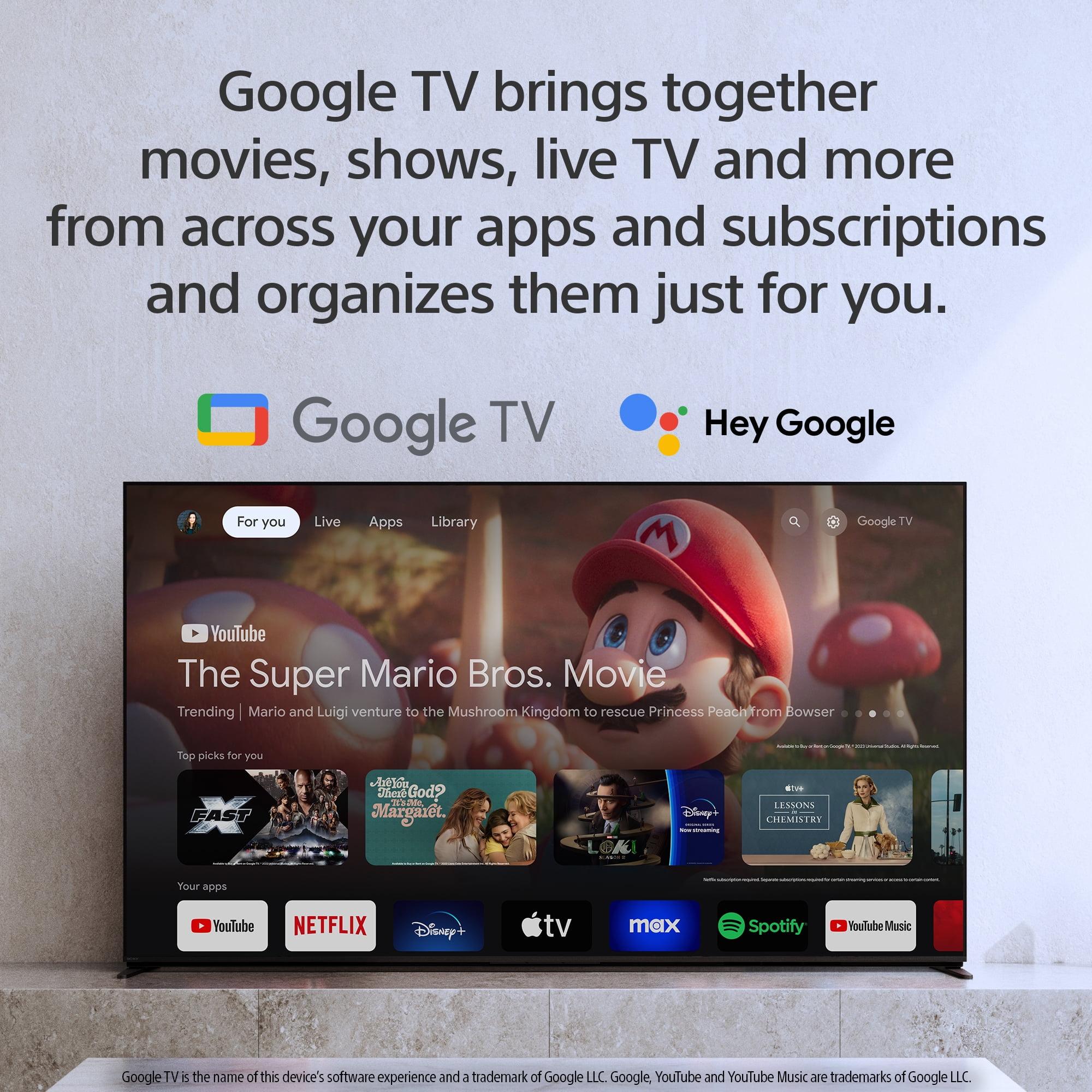
Both TVs run Google TV, so the smart platform experience is largely identical. You'll get the same apps, interface, and voice control capabilities. However, there are some implementation differences worth noting.
The TCL QM8K includes hands-free voice control, allowing you to control the TV without picking up the remote. It also features a backlit remote control, which is surprisingly useful for movie nights. The Art Gallery Mode with 350+ free artworks turns the TV into a digital art display when not in use.
The Sony BRAVIA 8 integrates Google TV more deeply with its XR Processor, providing smoother navigation and better content recommendations. Sony's implementation feels more polished and responsive, though both are perfectly functional for daily use.
Audio represents an interesting battleground between these TVs. The TCL QM8K features Audio by Bang & Olufsen with Dolby Atmos support and dedicated up-firing drivers. The sound is clear and relatively full for a TV, with decent bass response thanks to the built-in Bang & Olufsen system.
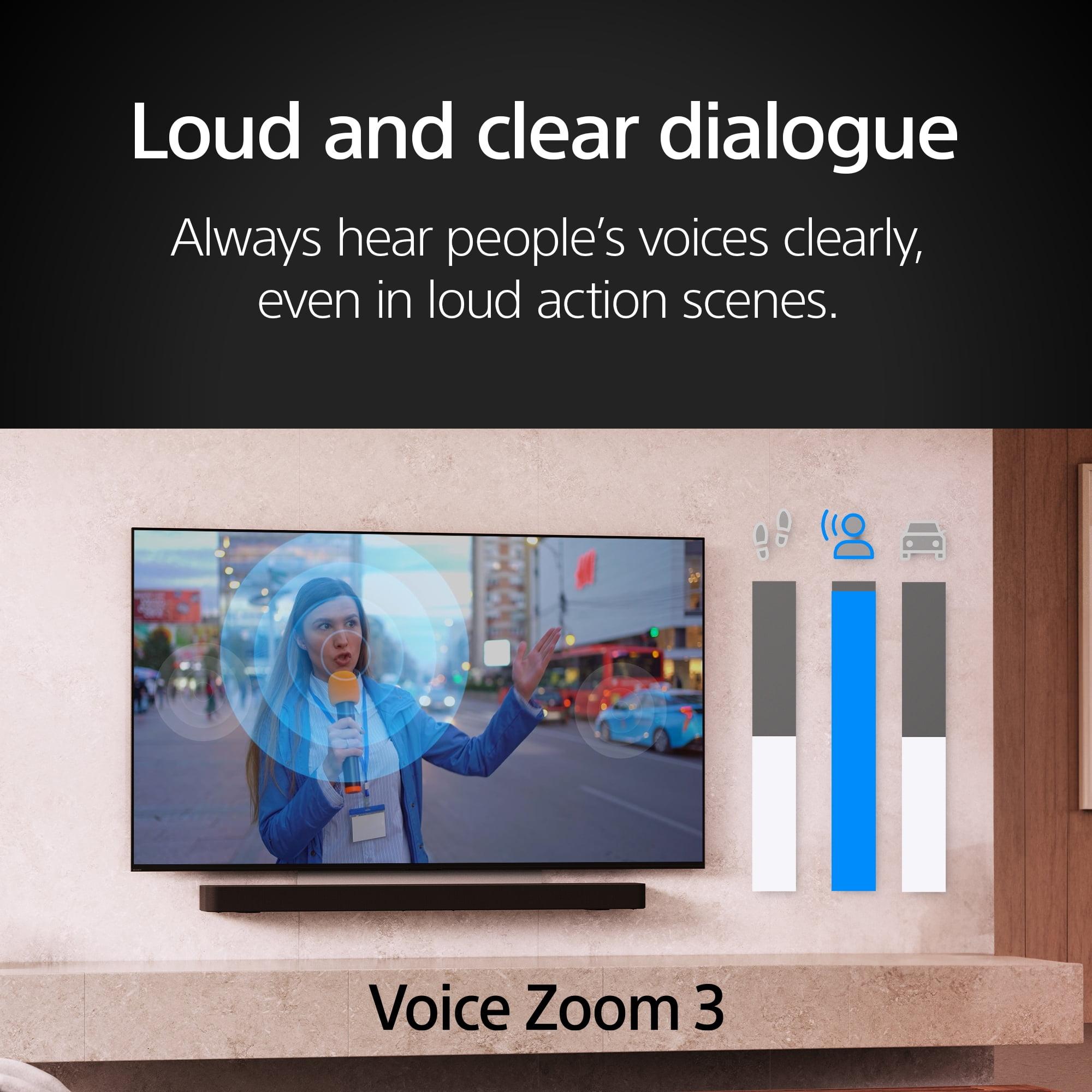
The Sony BRAVIA 8 uses Acoustic Surface Audio+ technology, which makes the entire OLED screen act as a speaker. This creates an interesting effect where dialogue appears to come directly from actors' mouths on screen. The 2.1-channel system with 50 watts total power provides clear dialogue and reasonable bass response.
For home theater use, both TVs benefit significantly from a dedicated soundbar or surround sound system. However, if you're relying on built-in audio, the Sony BRAVIA 8's screen-as-speaker technology creates a more immersive experience, while the TCL QM8K provides better overall sound quality and volume.
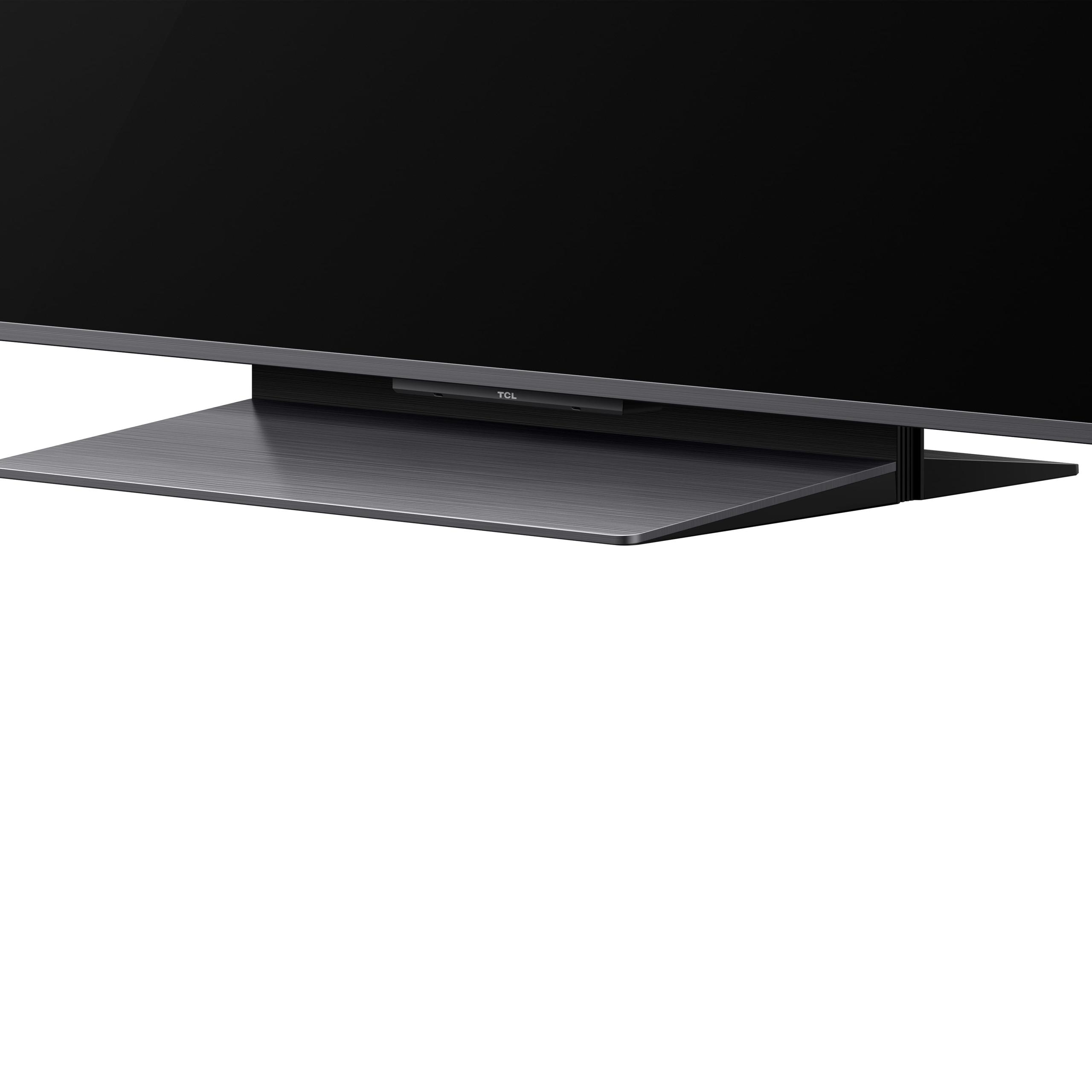
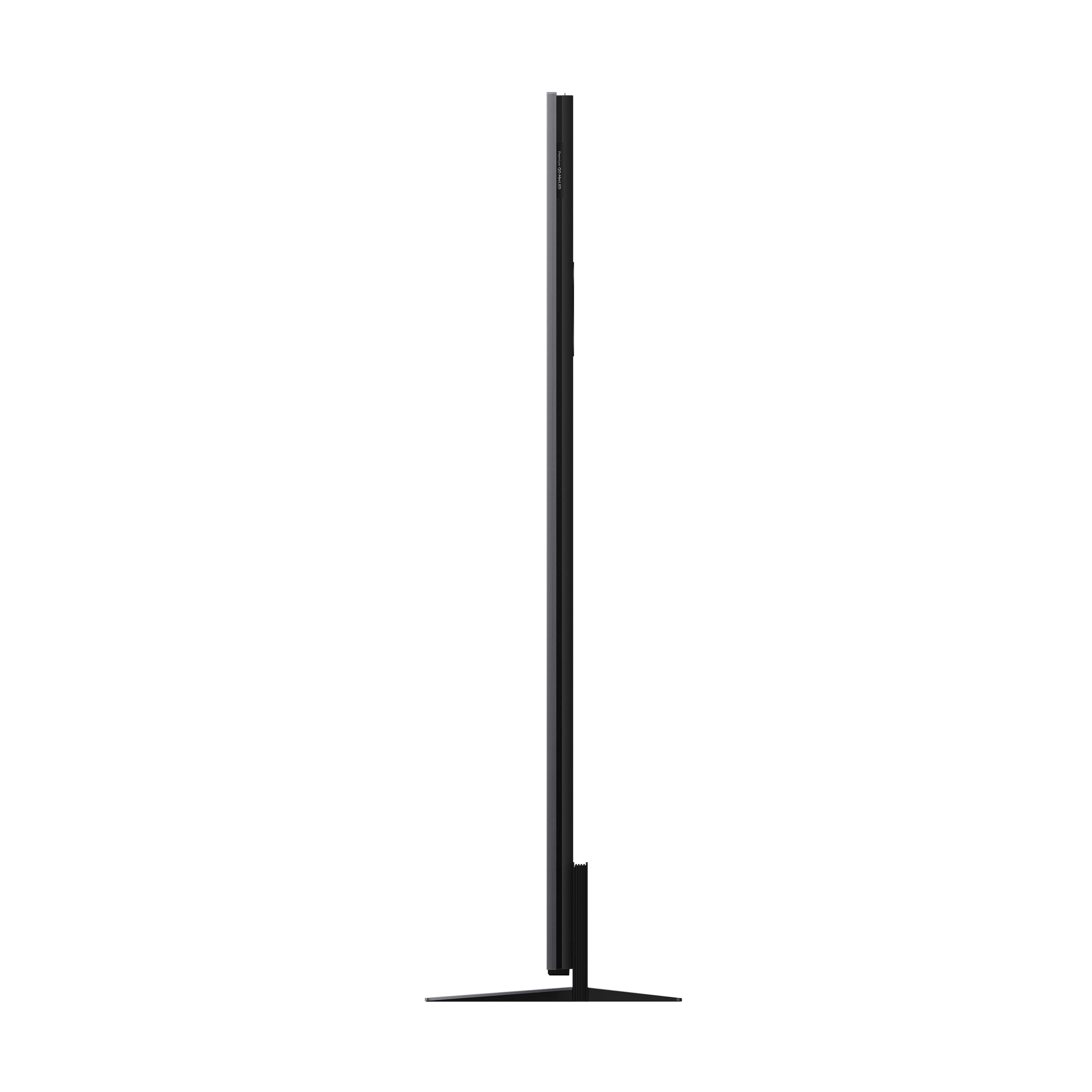
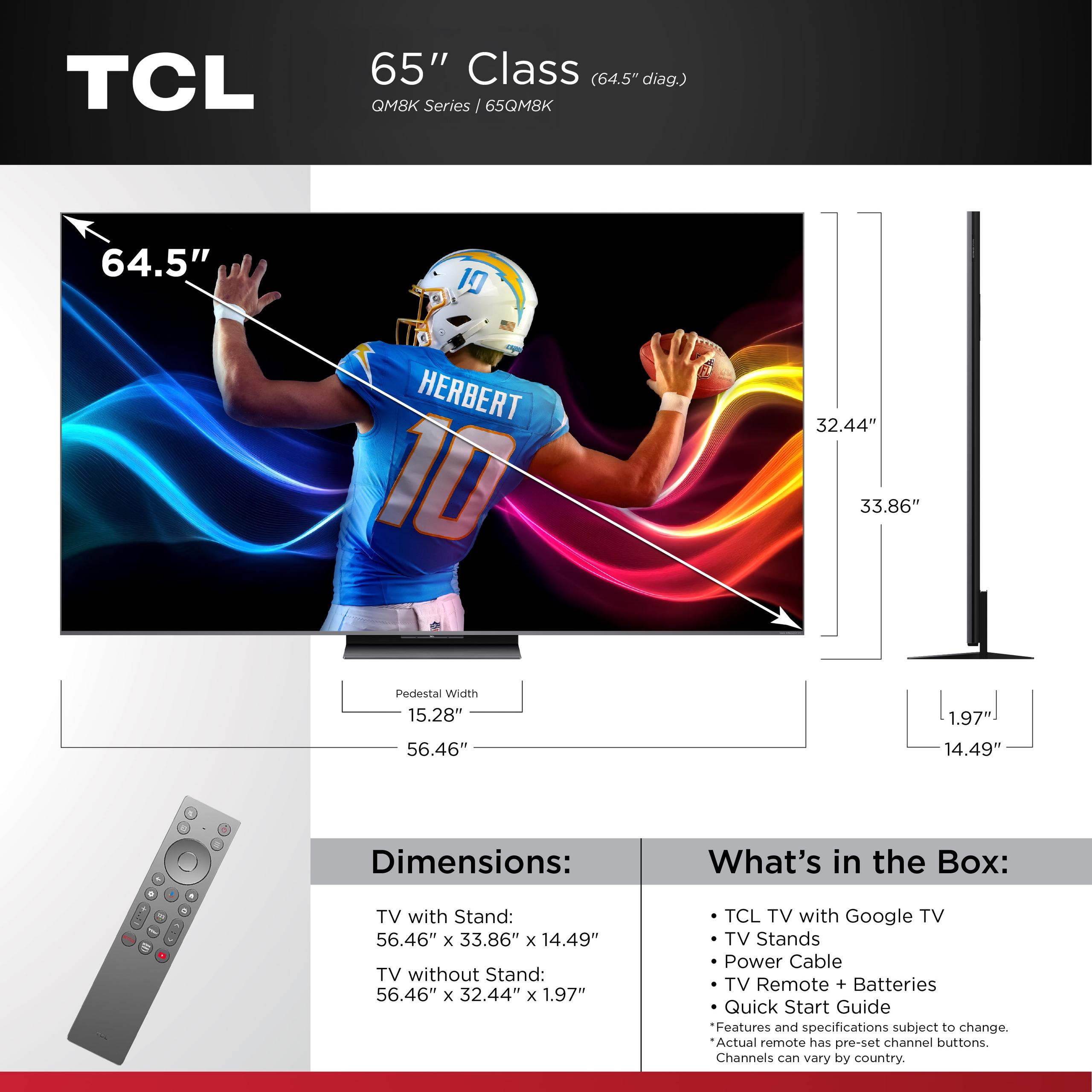
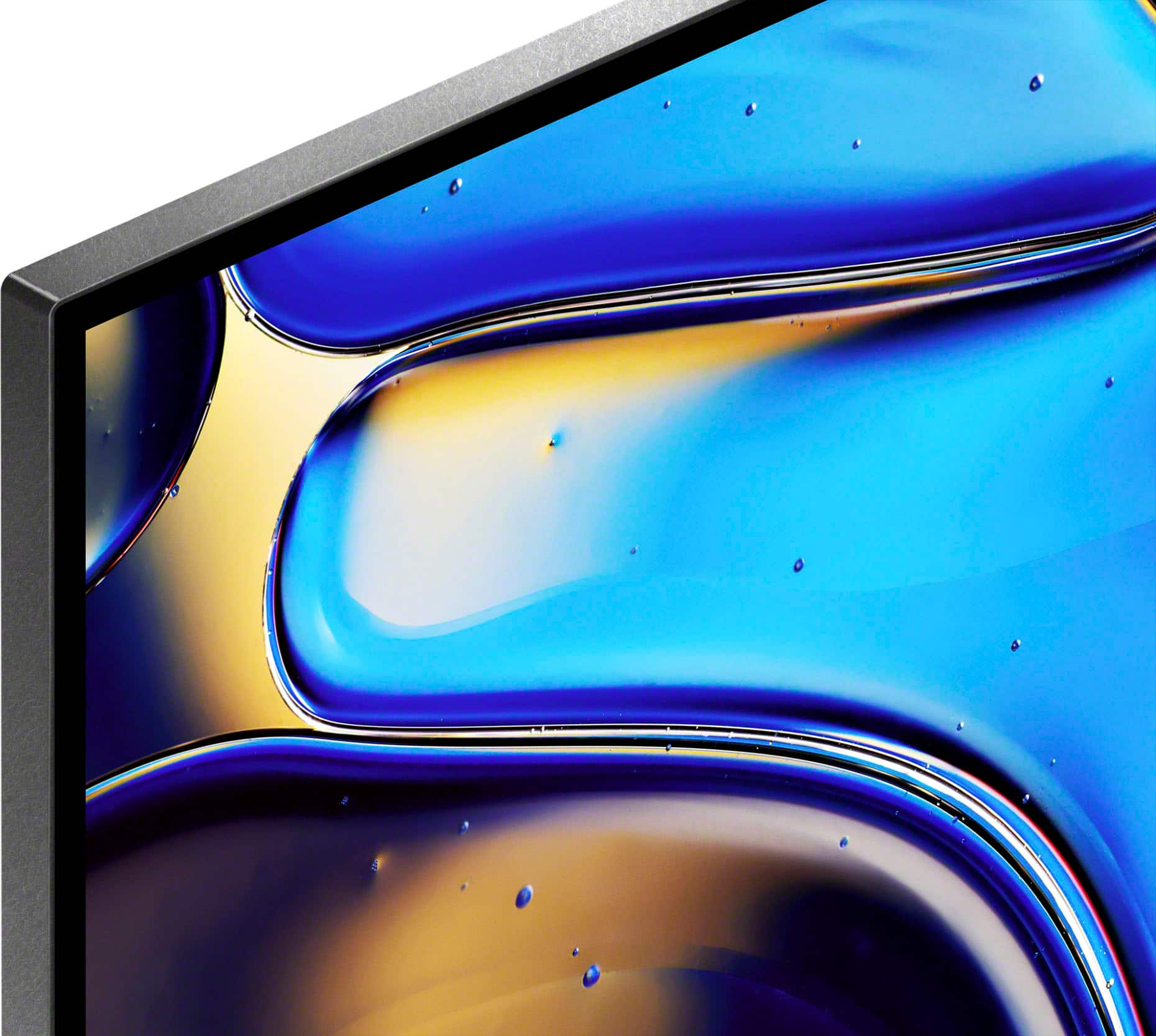
The TCL QM8K features a ZeroBorder design that extends the image nearly to the edge of the frame, creating a more immersive viewing experience. The height-adjustable pedestal stand offers two positioning options, and the overall design feels premium despite the lower price point.
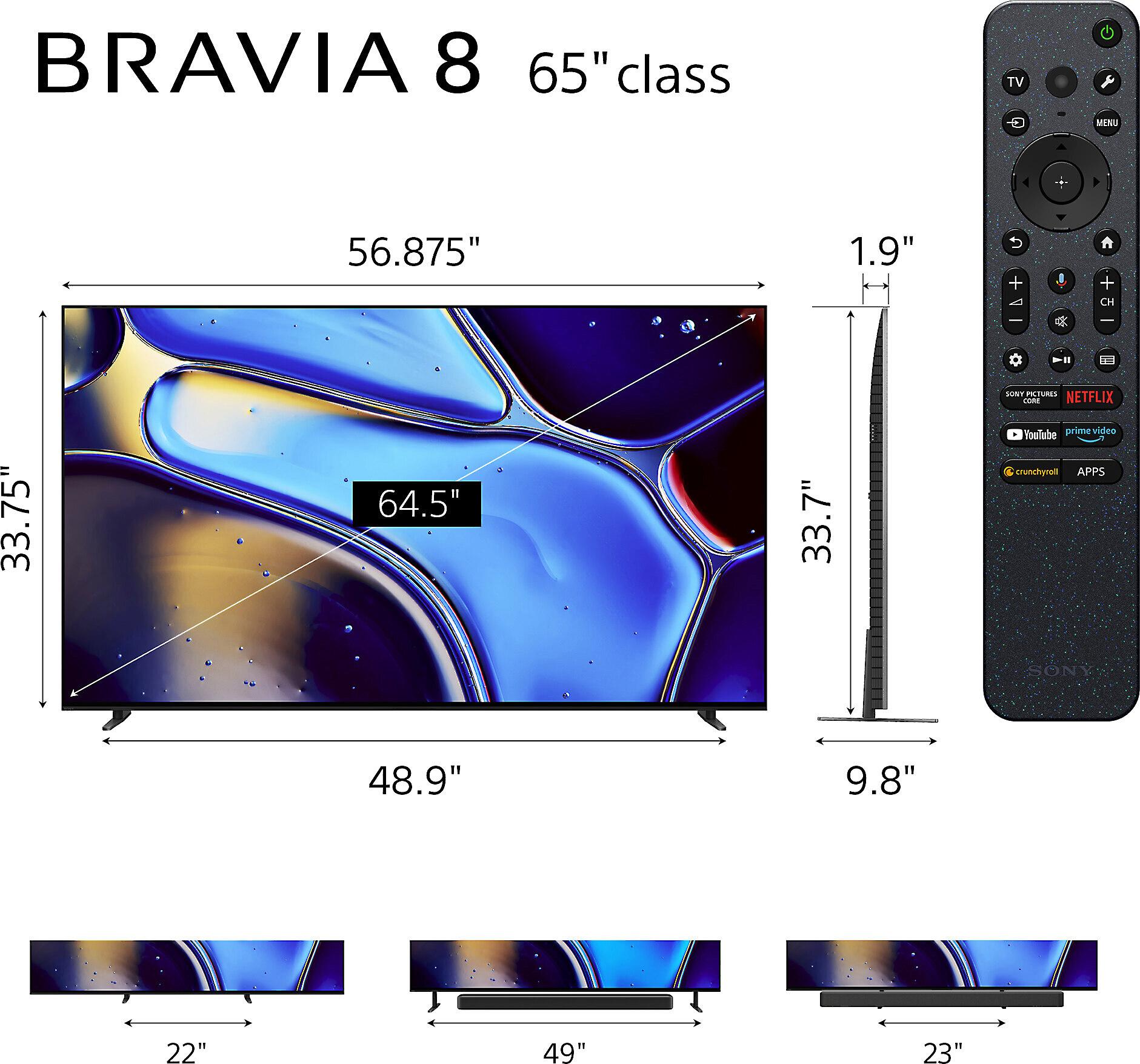
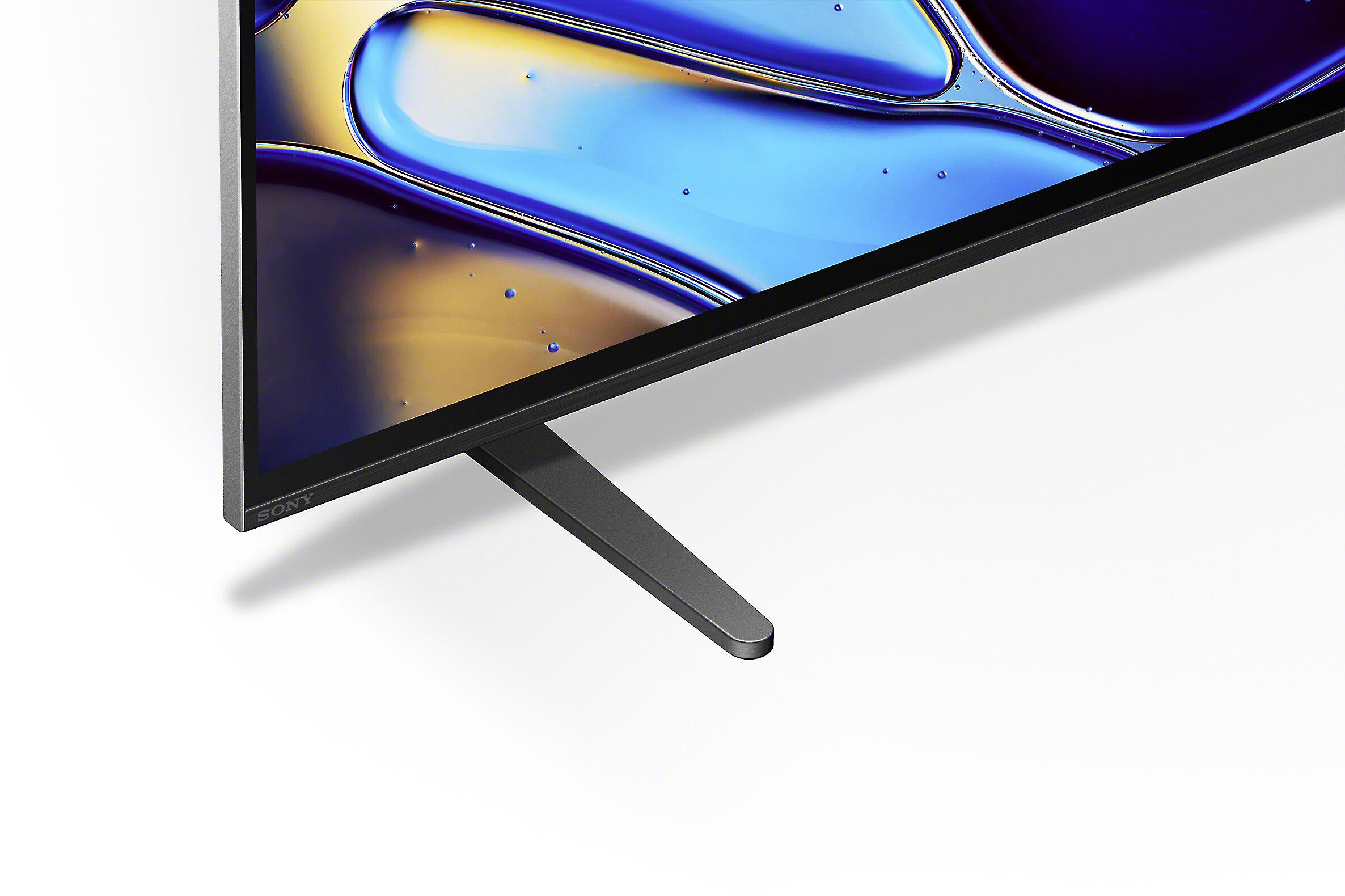
The Sony BRAVIA 8 maintains Sony's minimalist design philosophy with a slim profile and clean lines. The OLED panel's thinness creates an elegant appearance that works well in modern living spaces. Build quality feels solid and premium, as expected from Sony.
Both TVs are well-constructed, but the Sony BRAVIA 8 has a slight edge in perceived build quality and design refinement. The TCL QM8K offers more design flexibility with its adjustable stand and zero-border aesthetic.
The price difference between these TVs is significant: the TCL QM8K at $998 versus the Sony BRAVIA 8 at $1,442. That's a 44% price premium for the Sony, which raises important value questions.
The TCL QM8K delivers approximately 90% of the Sony's performance at 70% of the cost. For most viewers, especially those with bright living rooms, the TCL provides better value. Its brightness advantage, gaming features, and overall performance make it competitive with TVs costing significantly more.
The Sony BRAVIA 8's premium pricing reflects its perfect blacks, superior processing, and brand reliability. OLED technology also offers longer-term stability in brightness and color accuracy compared to LCD-based displays. However, OLED panels can experience burn-in with static images, though modern implementations have largely mitigated this risk.
For dedicated home theaters, the choice depends heavily on your room setup. In a completely dark theater room, the Sony BRAVIA 8's perfect blacks and refined processing create an incredibly immersive cinematic experience. The OLED's infinite contrast ratio makes movie watching feel more like being in a commercial theater.
However, if your theater room has any ambient lighting—even subtle accent lighting—the TCL QM8K's brightness advantage becomes significant. Its ability to maintain color and contrast in less-than-perfect lighting conditions makes it more versatile for multi-purpose rooms.
For serious home theater enthusiasts who control lighting carefully and prioritize the most cinematic experience possible, the Sony BRAVIA 8 OLED is worth the premium. For those who want excellent performance with more flexibility in room lighting, the TCL QM8K provides better value.
Choose the TCL QM8K if you have a bright living room, enjoy gaming, want maximum value, or need versatility across different lighting conditions. Its spectacular brightness, advanced gaming features, and excellent price-to-performance ratio make it ideal for most users.
Choose the Sony BRAVIA 8 OLED if you have a dark viewing room, prioritize cinematic accuracy, want the most refined picture processing, or prefer natural color reproduction. Its perfect blacks and sophisticated processing justify the premium for serious movie enthusiasts.
Both TVs represent excellent choices in their respective categories. The TCL QM8K pushes Mini LED technology to new heights while delivering flagship performance at a mainstream price. The Sony BRAVIA 8 OLED provides the refined, premium experience that makes OLED technology so compelling for serious viewers.
Your room environment, viewing preferences, and budget will ultimately determine which TV works best for you. Either choice will provide years of excellent viewing experiences, but understanding these differences ensures you'll pick the one that best matches your specific needs and preferences.
| TCL 65" QM8K Series QD-Mini LED 4K Smart TV ($998) | Sony BRAVIA 8 65" 4K OLED TV ($1,442) |
|---|---|
| Display Technology - Determines fundamental picture quality characteristics | |
| QD-Mini LED with CrystGlow WHVA panel | OLED with self-emitting pixels |
| Peak Brightness - Critical for HDR performance and bright room viewing | |
| 5,000 nits (exceptional for bright rooms) | ~800 nits (limited in bright environments) |
| Black Levels - Affects contrast and dark scene detail | |
| Excellent but not true black (7,415:1 contrast) | Perfect blacks with infinite contrast |
| Refresh Rate - Important for gaming and smooth motion | |
| 144Hz native with 288Hz VRR support | 120Hz with VRR support |
| Color Gamut - Determines color vibrancy and accuracy | |
| 97% DCI-P3 with Quantum Dot technology | XR Triluminos Pro for natural colors |
| Local Dimming - Controls blooming and enhances contrast | |
| Up to 3,800 zones with advanced halo control | No zones needed (pixel-level control) |
| Gaming Features - Matters for console and PC gaming | |
| AMD FreeSync Premium Pro, Game Accelerator 288, dedicated gaming UI | Auto HDR Tone Mapping for PS5, ALLM, VRR |
| Motion Processing - Affects sports and action content clarity | |
| MEMC Frame Insertion with Motion Rate 480 | XR OLED Motion (industry-leading) |
| Smart Platform - User interface and app experience | |
| Google TV with hands-free voice control | Google TV with premium XR Processor integration |
| Audio System - Built-in sound quality | |
| Bang & Olufsen with Dolby Atmos and up-firing drivers | Acoustic Surface Audio+ (screen as speaker) |
| Design Features - Aesthetic and practical considerations | |
| ZeroBorder design, height-adjustable stand | Minimalist OLED design, premium build quality |
| Burn-in Risk - Long-term reliability concern | |
| No burn-in risk (LCD technology) | Minimal but possible burn-in risk |
| Price - Value proposition | |
| $998 (exceptional value for flagship features) | $1,442 (44% premium for OLED technology) |
| Best Use Case - Optimal viewing environment | |
| Bright rooms, gaming, versatile lighting conditions | Dark rooms, cinematic viewing, controlled lighting |
The TCL 65" QM8K Series QD-Mini LED 4K Smart TV ($998) is significantly better for bright rooms. Its 5,000 nits peak brightness maintains vibrant colors and strong contrast even in daylight, while the Sony BRAVIA 8 65" 4K OLED TV ($1,442) struggles in bright environments with only 800 nits peak brightness. For living rooms with windows or ambient lighting, the TCL QM8K is the clear winner.
The Sony BRAVIA 8 OLED costs $1,442 compared to $998 for the TCL QM8K - a 44% price premium. The Sony justifies this cost with perfect blacks, superior motion processing, and refined picture quality. However, the TCL offers 90% of the performance at 70% of the cost, making it better value for most buyers unless you prioritize perfect blacks for dark room viewing.
The TCL QM8K offers superior gaming performance with its native 144Hz refresh rate, 288Hz VRR support, AMD FreeSync Premium Pro, and dedicated gaming features like Shadow Enhancer. The Sony BRAVIA 8 provides solid gaming with 120Hz, VRR, and PS5 optimization, but can't match the TCL's refresh rate capabilities for competitive PC gaming.
Yes, both the TCL QM8K and Sony BRAVIA 8 OLED run Google TV with identical app selection and interface. The TCL adds hands-free voice control and a backlit remote, while Sony integrates the platform more smoothly with their XR Processor for faster navigation.
The Sony BRAVIA 8 OLED excels in dark rooms with its perfect blacks, infinite contrast ratio, and refined XR processing that creates a more cinematic experience. The TCL QM8K performs well but cannot achieve true blacks. For dedicated home theater use in controlled lighting, the Sony OLED is worth the premium.
The Sony BRAVIA 8 OLED achieves perfect blacks (0 nits) because pixels can turn completely off, creating infinite contrast. The TCL QM8K delivers excellent but not perfect blacks with a 7,415:1 contrast ratio and advanced local dimming. While very good, the TCL cannot match OLED's true black performance.
The Sony BRAVIA 8 OLED has superior motion processing with its XR OLED Motion technology and instantaneous pixel response times, creating smoother sports action with better detail retention. The TCL QM8K provides good motion handling but isn't as refined as Sony's processing, though its brightness advantage helps in bright viewing environments.
The TCL QM8K has no burn-in risk due to its LCD technology, making it worry-free for extended gaming or static content. The Sony BRAVIA 8 OLED has minimal but possible burn-in risk with static images, though modern OLED panels have largely mitigated this issue through various protection features.
For HDR performance, it depends on your room. The TCL QM8K delivers spectacular HDR with 5,000 nits brightness that makes highlights pop dramatically. The Sony BRAVIA 8 OLED offers more natural HDR presentation with perfect blacks and refined processing, though with lower peak brightness. Both excel at HDR but in different ways.
The TCL QM8K features Bang & Olufsen audio with Dolby Atmos and up-firing drivers for fuller sound. The Sony BRAVIA 8 OLED uses Acoustic Surface Audio+ technology that makes the screen itself act as a speaker, creating dialogue that appears to come from actors' mouths. Both benefit from external sound systems for optimal audio.
The TCL QM8K provides exceptional short-term value with flagship features at a mid-range price, plus no burn-in concerns for longevity. The Sony BRAVIA 8 OLED offers better long-term picture stability and premium build quality that justifies its higher cost for serious movie enthusiasts who prioritize perfect blacks and refined processing.
Choose the TCL QM8K if you have a bright room, enjoy gaming, want maximum value, or need versatility across different lighting conditions. Choose the Sony BRAVIA 8 OLED if you have a dark viewing room, prioritize cinematic accuracy, want the most refined picture processing, or prefer natural color reproduction for serious movie watching.
We've done our best to create useful and informative comparisons to help you decide what product to buy. Our research uses advanced automated methods to create this comparison and perfection is not possible - please contact us for corrections or questions. These are the sites we've researched in the creation of this article: tomsguide.com - youtube.com - businessinsider.com - rtings.com - youtube.com - avsforum.com - avsforum.com - bestbuy.com - tcl.com - tcl.com - tcl.com - flatpanelshd.com - romomattressfurniture.com - brandsmartusa.com - pcrichard.com - tvsbook.com - tcl.com - youtube.com - prnewswire.com - tcl.com - tcl.com - bestbuy.com - bestbuy.com - crutchfield.com - avsforum.com - electronics.sony.com - sony.com - store.sony.co.nz - sony.com - displayspecifications.com

Privacy Policy
Terms and Conditions - Affiliate Policy
Home Security
© Copyright 2008-2026.
11816 Inwood Rd #1211, Dallas, TX 75244