

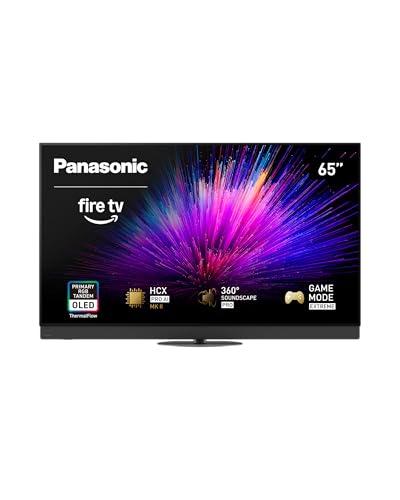
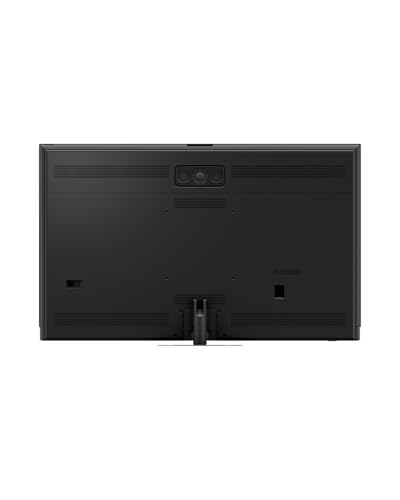

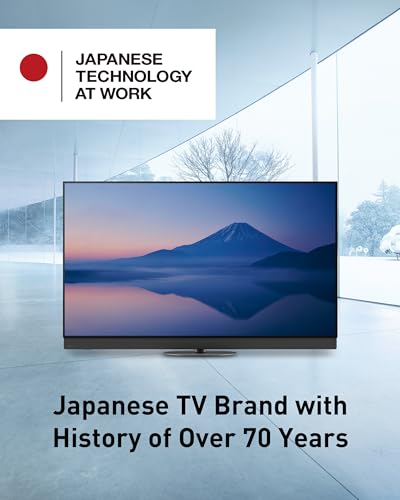
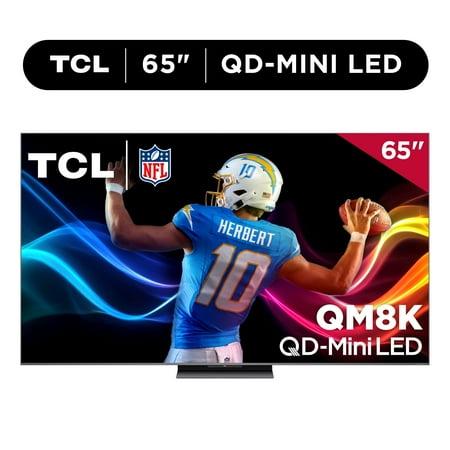
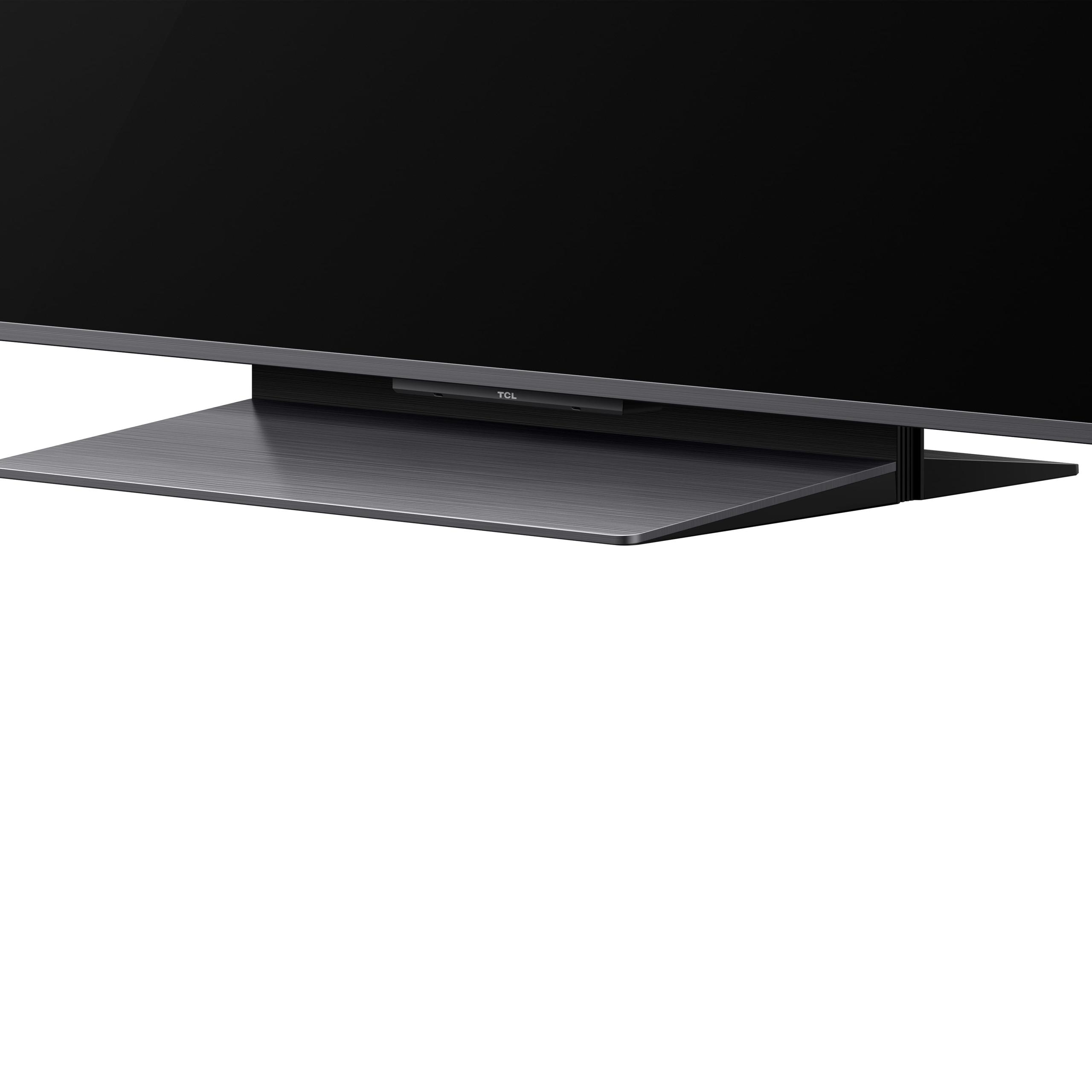
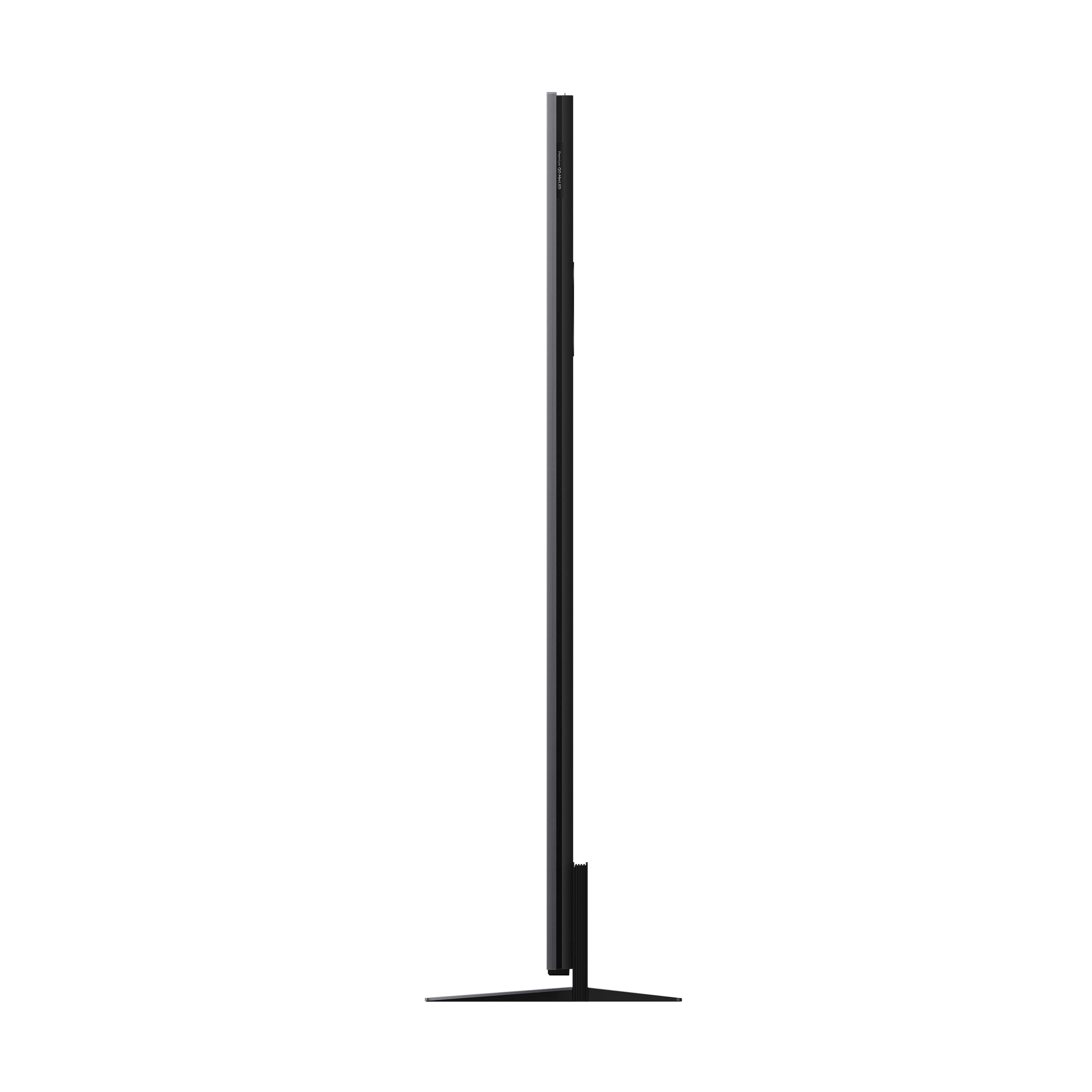
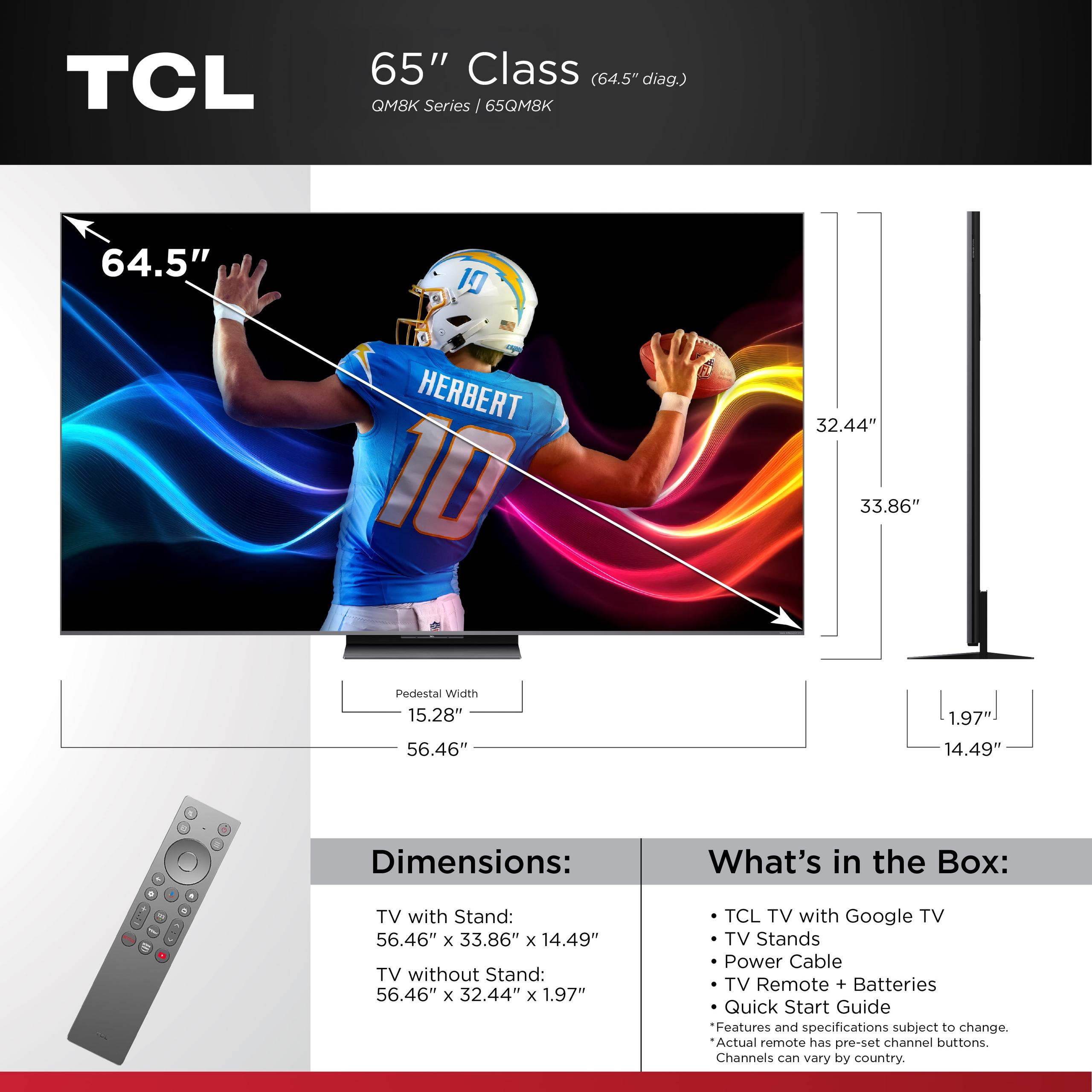


Shopping for a premium 65-inch TV in 2025? You're entering one of the most exciting battles in display technology. The Panasonic Z95B Series OLED and TCL QM8K Series QD-Mini LED represent two completely different approaches to achieving stunning picture quality, and at the time of writing, they're priced about $1,600 apart—making the decision even more interesting.
Before diving into specifics, let's talk about what makes these TVs special. Both displays target the premium segment where picture quality, advanced features, and future-proofing matter most. These aren't just bigger versions of budget TVs—they're engineered to handle everything from HDR movies to competitive gaming while serving as the centerpiece of your entertainment setup.
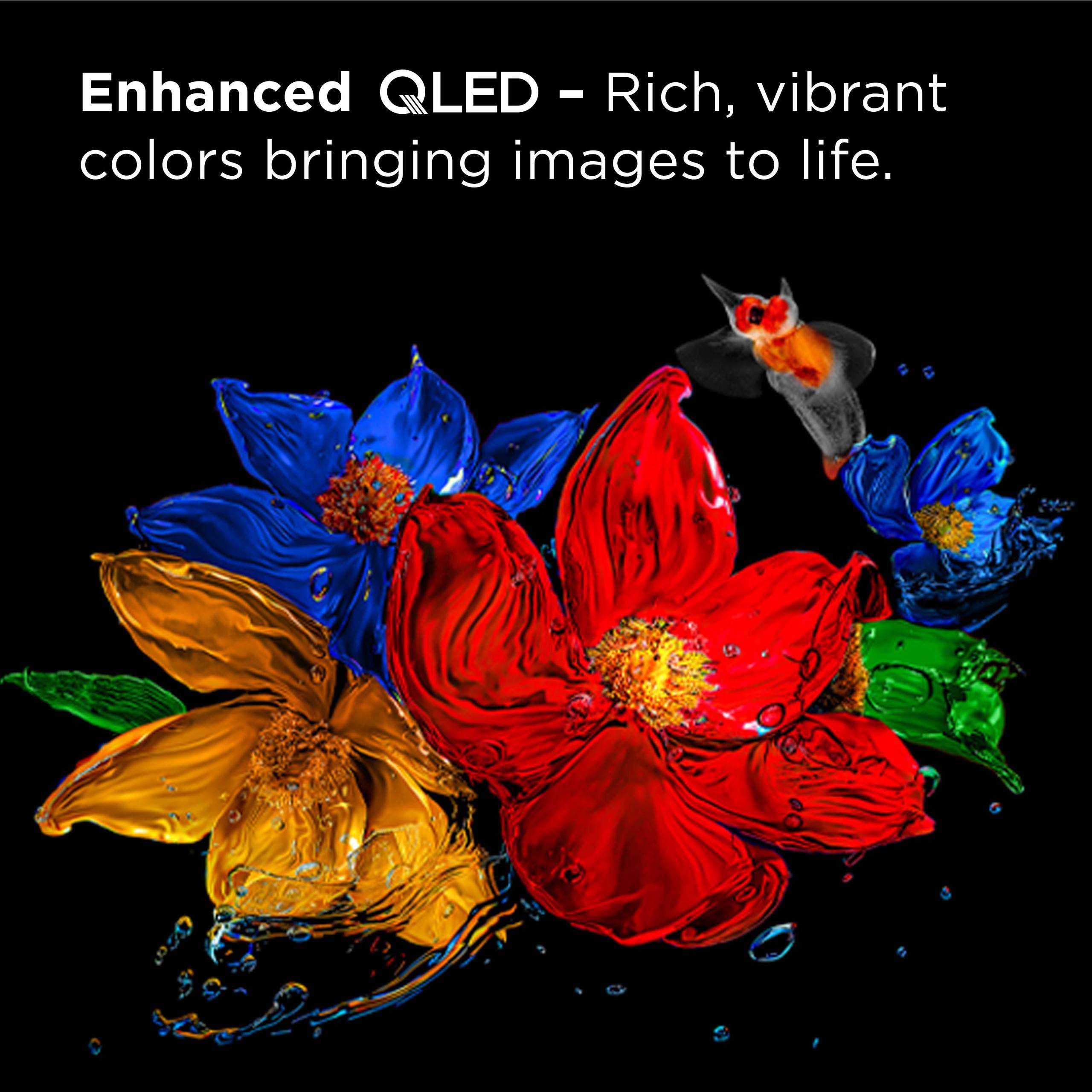
The fundamental difference comes down to display technology. The Panasonic Z95B uses OLED (Organic Light-Emitting Diode), where each pixel produces its own light and can turn completely off for perfect blacks. The TCL QM8K employs QD-Mini LED, which uses thousands of tiny LED backlights with quantum dots (microscopic crystals that enhance color) to achieve similar results through entirely different means.
The Panasonic Z95B showcases what makes OLED special—when a pixel needs to be black, it simply turns off completely. There's no backlight bleeding through, no gray blacks, and no compromise. This creates an infinite contrast ratio, meaning the difference between the darkest and brightest parts of the image is theoretically unlimited.
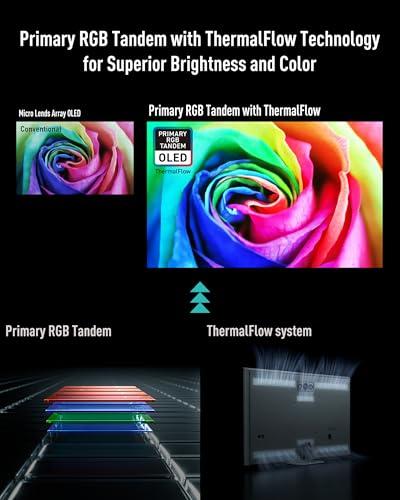
But Panasonic didn't stop with standard OLED technology. The Z95B uses what's called Primary RGB Tandem OLED—a four-layer emission structure that refines light wavelengths and increases color purity by 40% compared to conventional OLED panels. Think of it like having four separate light sources working together instead of one, creating more accurate colors and better efficiency. The ThermalFlow cooling system, inspired by aerodynamic race car design, keeps everything running at optimal temperatures to maintain peak performance.
This advanced panel technology means the Panasonic Z95B achieves exceptional color coverage—81.42% of the demanding Rec. 2020 color space that most TVs struggle to reach 75% of. The color accuracy is also remarkable, with a Delta-E of just 1.3, meaning colors are virtually indistinguishable from the original content creator's intent.
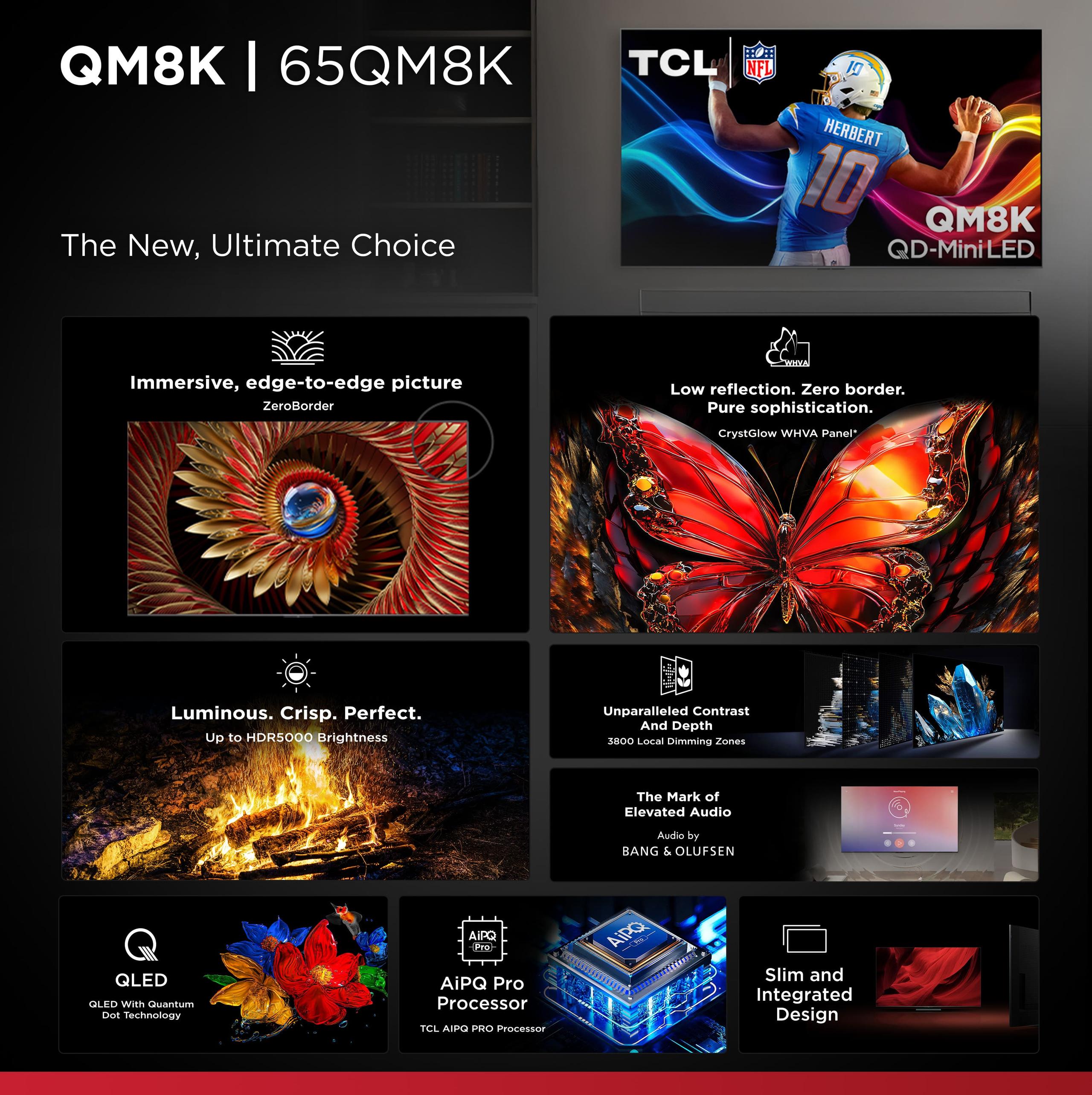
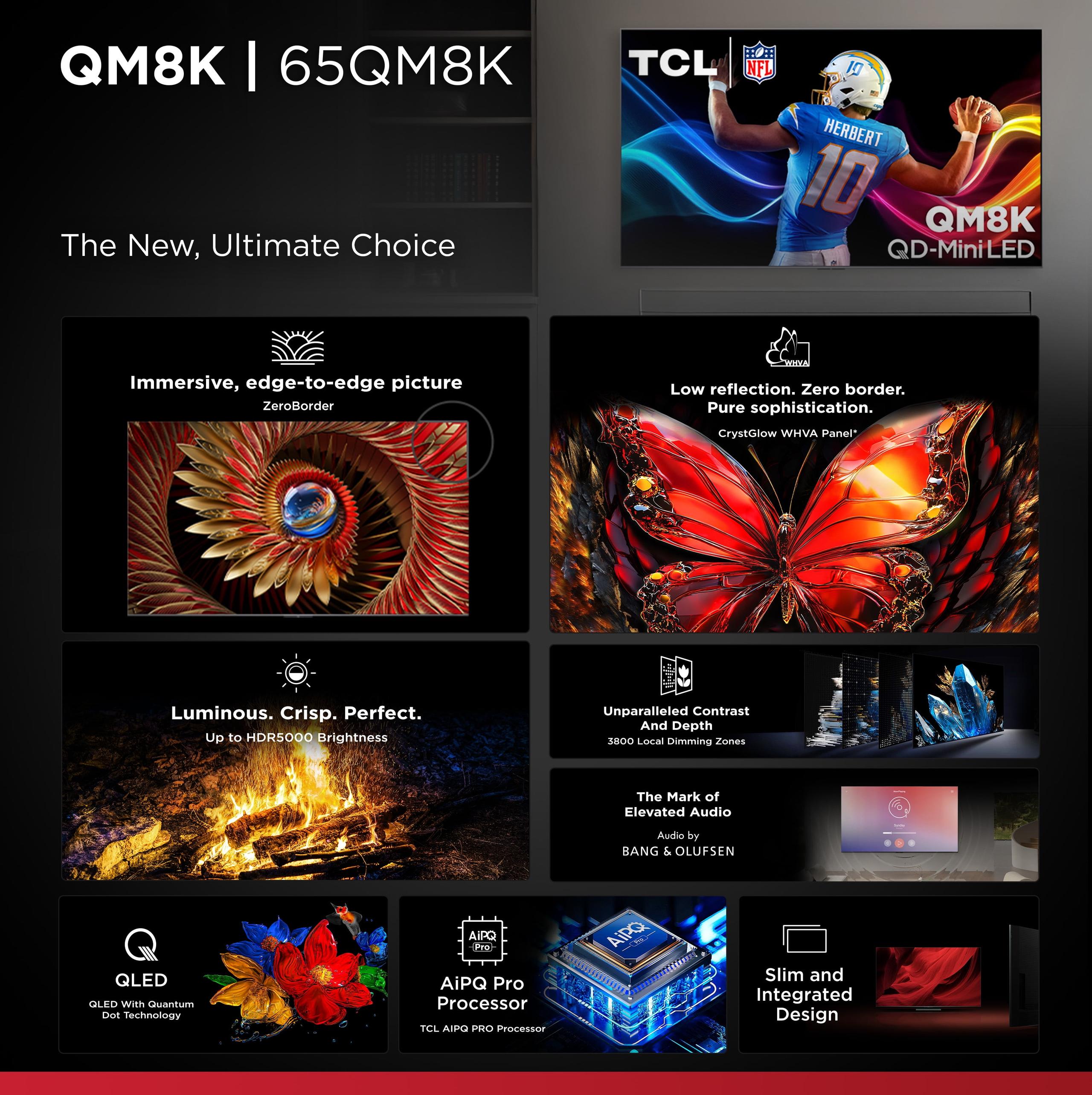
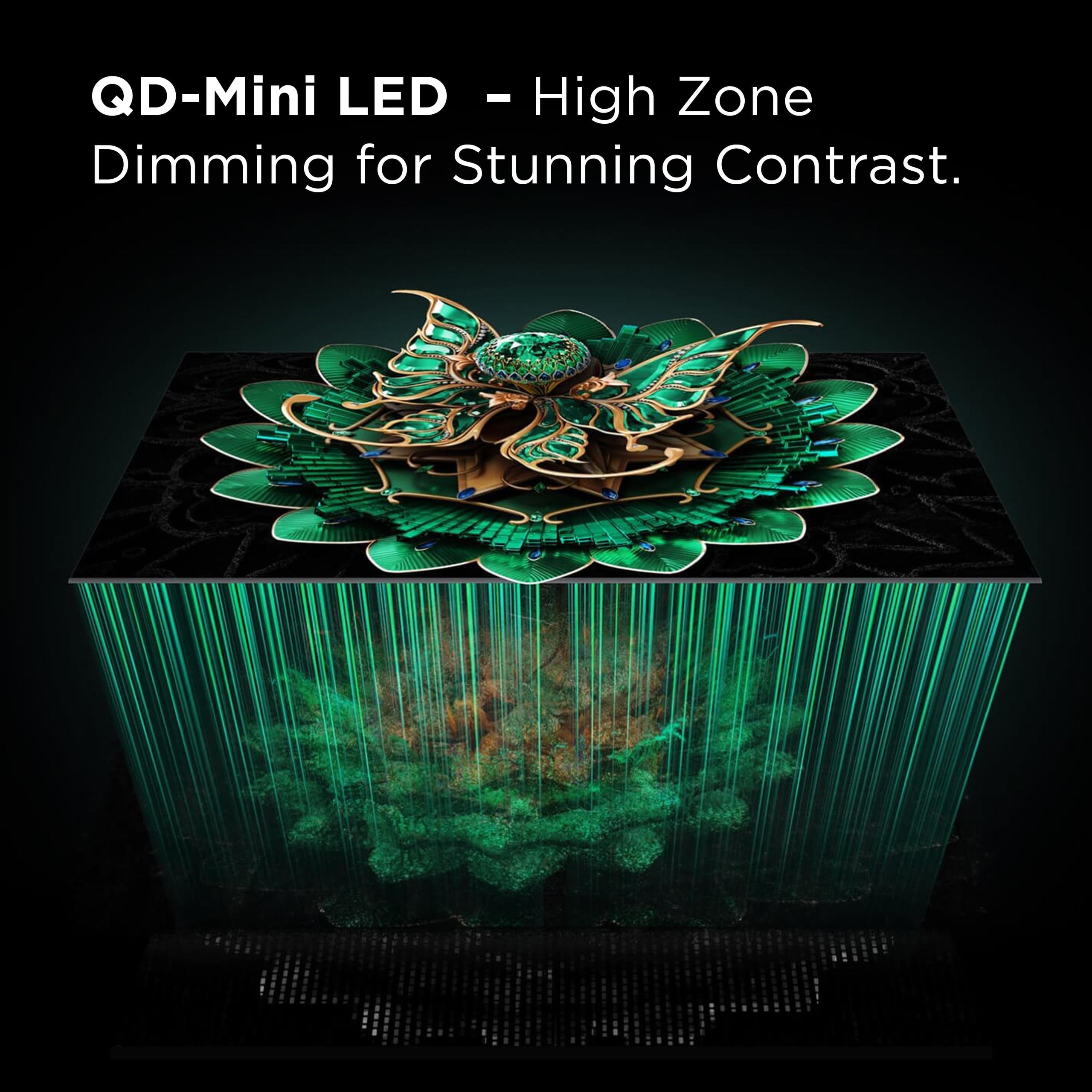
The TCL QM8K takes a different approach with QD-Mini LED technology. Instead of self-emitting pixels, it uses thousands of tiny LED backlights controlled by precise dimming zones—up to LD3800 zones according to TCL's specifications. Each zone can dim independently, creating deep blacks while maintaining bright highlights.
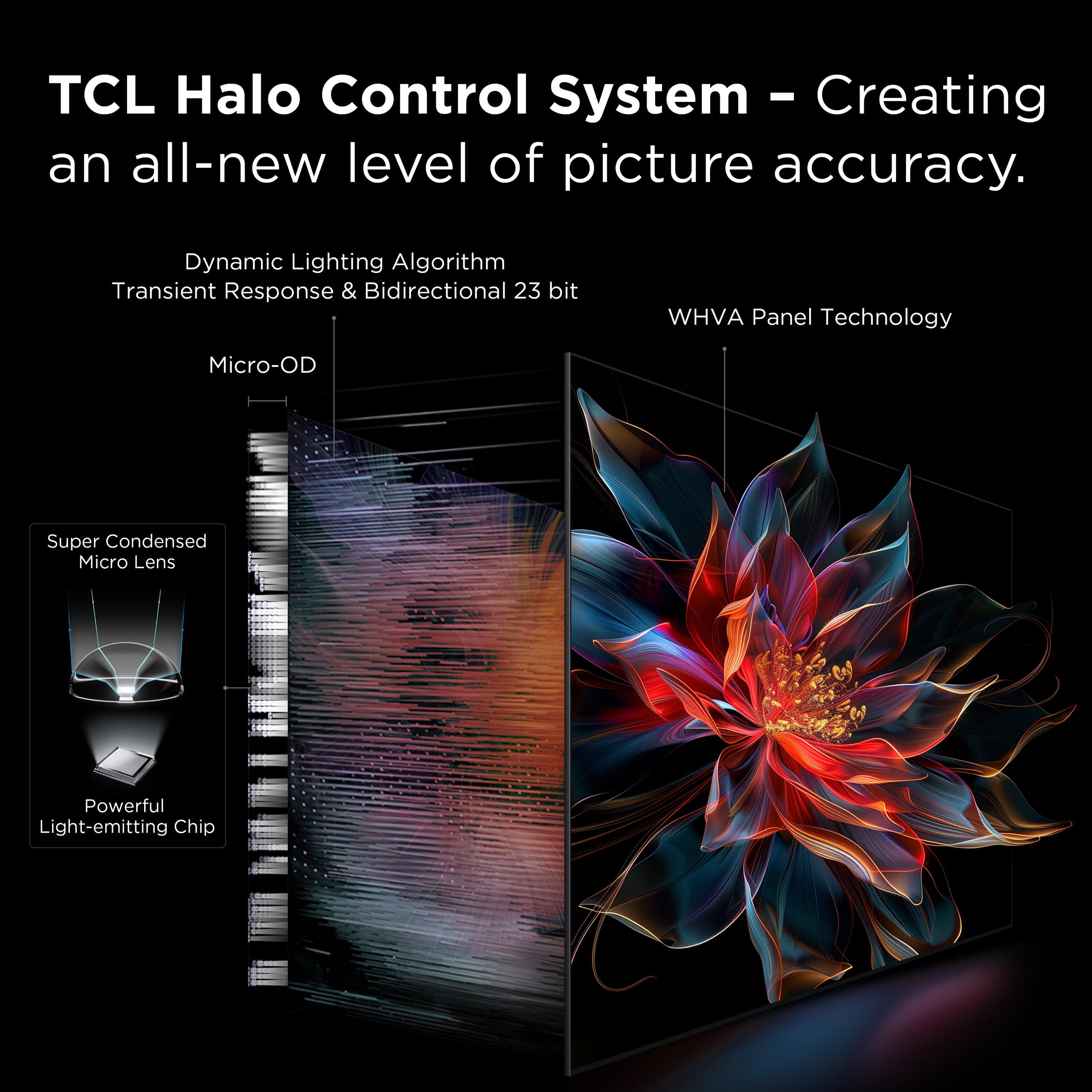
Here's where it gets interesting: the QM8K can reach up to 5,000 nits of peak brightness. To put that in perspective, that's roughly 10 times brighter than what most rooms need for comfortable viewing, but it means HDR content with bright explosions, sunlight, or reflections can truly pop off the screen. TCL's Halo Control System uses advanced micro-lens technology and algorithms to minimize the blooming effect—that annoying halo you sometimes see around bright objects on LCD displays.
The quantum dot layer adds another advantage, enabling the TCL QM8K to display over a billion colors with 97% DCI-P3 color gamut coverage. While not quite as wide as the Panasonic's color space, it's still excellent and more than sufficient for current content.
HDR (High Dynamic Range) is where both TVs aim to shine, but they achieve it differently. HDR content contains much more information about brightness and color than standard video, allowing for more realistic images that better match what our eyes see in real life.
The Panasonic Z95B reaches about 2,260 nits in HDR content, which might sound modest compared to the TCL's 5,000 nits, but here's the crucial detail: OLED's perfect blacks mean even moderate brightness levels create stunning contrast. More importantly, the Panasonic supports both HDR10+ and Dolby Vision—unusual for OLED TVs, which typically support one or the other. This means you'll get optimal HDR performance regardless of whether you're watching Netflix (Dolby Vision) or Amazon Prime Video (HDR10+).
The TCL QM8K excels in extremely bright HDR scenes. Based on expert testing, it can maintain color detail and accuracy up to 4,000 nits without the tone mapping issues that plague many bright displays. This makes it exceptional for action movies with bright explosions or outdoor scenes in direct sunlight. The TV basically handles whatever HDR content throws at it without breaking a sweat.
For home theater enthusiasts, both approaches have merit. The Panasonic Z95B creates a more cinematic experience with its perfect blacks and sophisticated color processing, while the TCL QM8K delivers impactful brightness that can cut through ambient room lighting.
Both TVs launched in 2025 with serious gaming credentials, reflecting how important this market has become. Modern gaming demands low input lag (the delay between pressing a button and seeing the result), high refresh rates for smooth motion, and variable refresh rate (VRR) support to eliminate screen tearing.
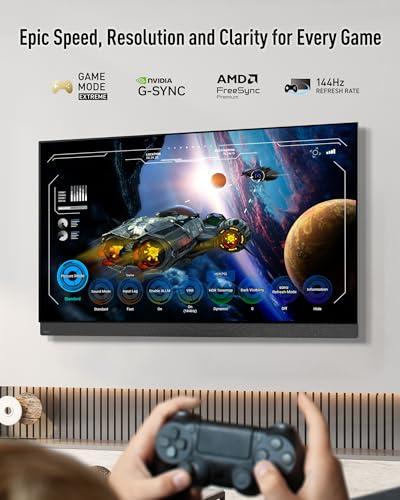
The Panasonic Z95B achieves an impressive 12.7ms of input lag—essentially instantaneous for practical purposes. Its OLED pixels have near-zero response time, meaning fast-moving objects appear crystal clear without motion blur. The TV supports 144Hz refresh rates and works with both AMD FreeSync Premium and NVIDIA G-SYNC Compatible systems.
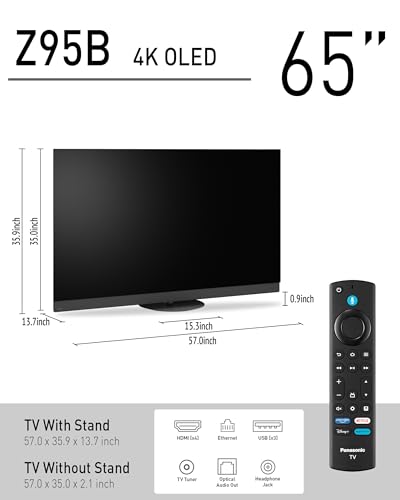
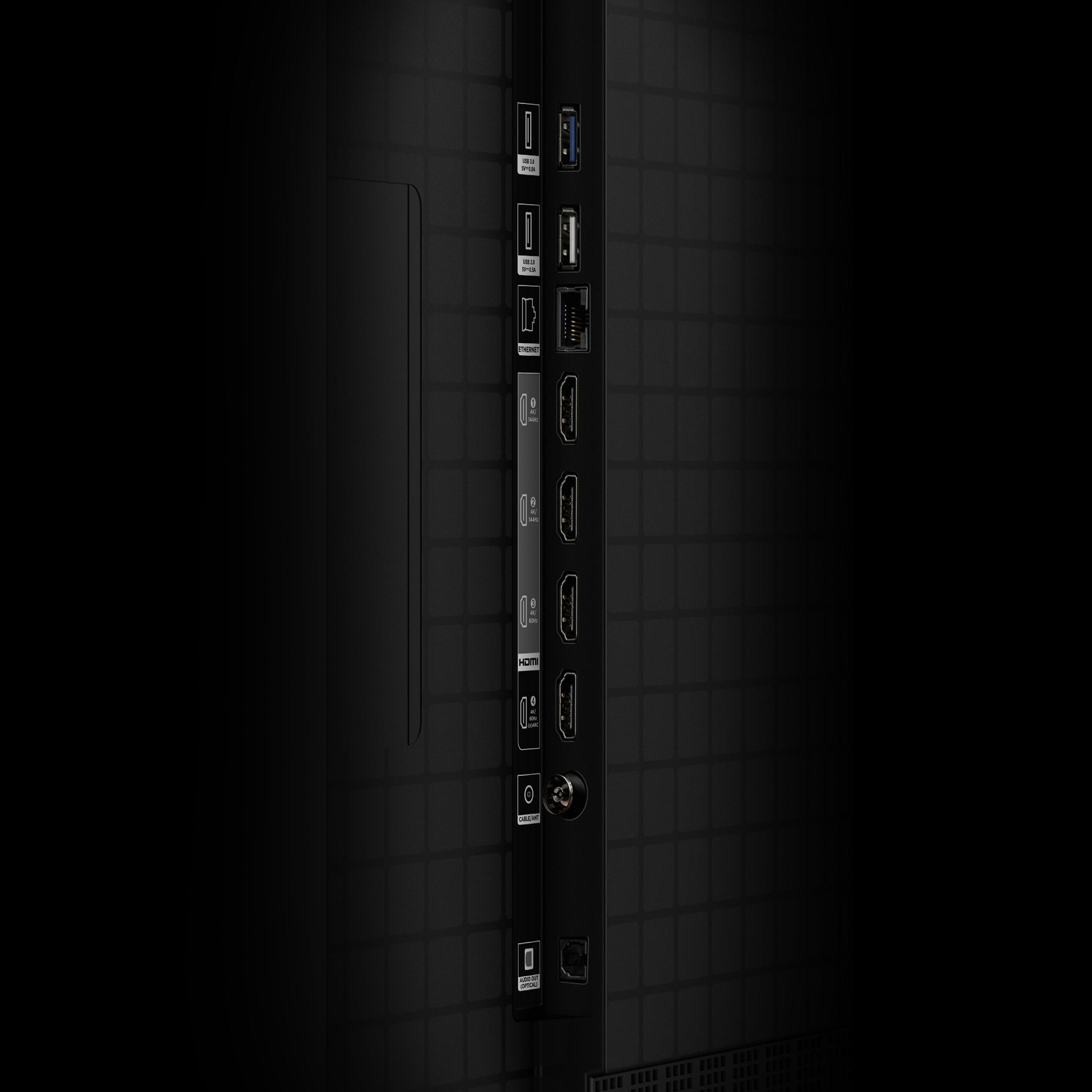
However, there's a connectivity limitation worth noting: the Panasonic only has two HDMI 2.1 ports capable of 4K at 144Hz, and one of them doubles as the eARC port for connecting soundbars. If you're running multiple gaming consoles plus a high-end sound system, you might need an HDMI switcher.
The TCL QM8K offers native 144Hz refresh rates and claims support for up to 288Hz VRR through its Game Accelerator feature. While Mini LED technology can't match OLED's instantaneous pixel response, the QM8K's gaming performance is still excellent for the vast majority of players. The main consideration is that motion blur becomes more noticeable at 60Hz and 120Hz compared to the Panasonic's perfect clarity at all refresh rates.
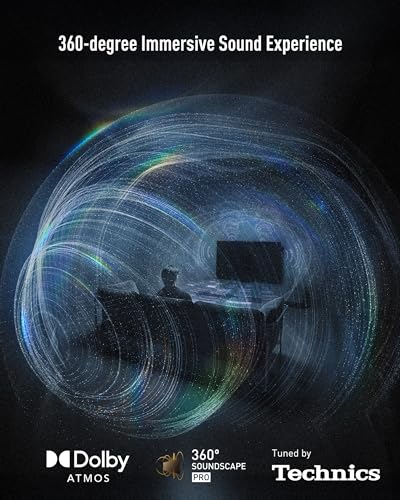
Audio quality often gets overlooked in TV comparisons, but both manufacturers made serious investments here. The Panasonic Z95B features a comprehensive 5.1.2 channel system with 170 watts of power, tuned by Technics (Panasonic's premium audio brand). The 360° Soundscape Pro includes dedicated up-firing drivers for Dolby Atmos effects, creating genuine surround sound without external speakers.
This is genuinely impressive—many users might not need a separate soundbar. However, there's a significant limitation: the Panasonic doesn't support DTS audio passthrough. If you collect Blu-rays or have media files with DTS soundtracks, you'll miss out on that audio information.
The TCL QM8K includes Audio by Bang & Olufsen with an integrated ONKYO subwoofer, representing a major step up from previous TCL models. Dialogue is clear and there's actual bass response, but it still sounds like a TV rather than a dedicated audio system. Most users will eventually want to add a soundbar or sound system for the full experience.
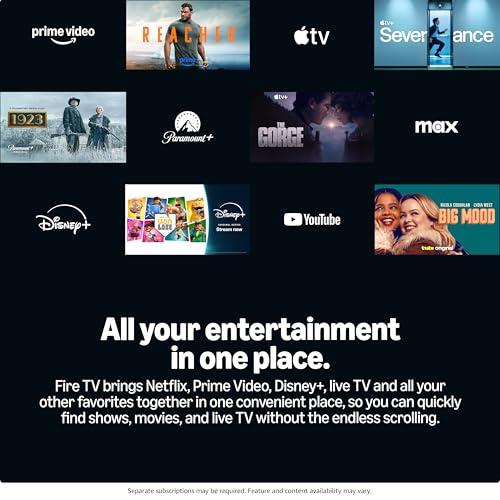
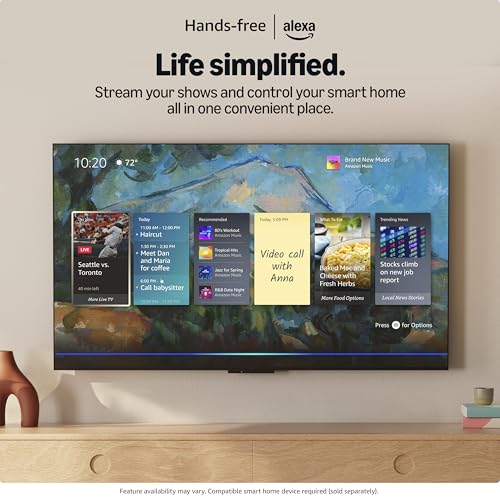
The software experience matters more than you might think since you'll interact with it daily. The Panasonic Z95B runs Fire TV with hands-free Alexa built-in. The interface prioritizes Amazon's content ecosystem but includes all major streaming apps. The experience is smooth and the voice control works well, though some users find Amazon's content recommendations a bit pushy.
The TCL QM8K uses Google TV, which many consider the most refined smart TV platform available. The interface is fast, intuitive, and excellent at aggregating content from different sources. If you're already invested in Google's ecosystem, the integration feels seamless.
This is where the Panasonic Z95B really shines. The HCX Pro AI Processor MK II represents years of development in image processing. It excels at upscaling lower-resolution content, reducing noise, and minimizing the banding issues that can plague HDR content. The TV includes filmmaker modes, professional calibration support, and Prime Video's calibrated mode for the most accurate picture possible.
Panasonic's processing particularly excels with streaming content, which often has compression artifacts that cheaper TVs can't handle gracefully. The Z95B makes even mediocre source material look considerably better than it has any right to.
The TCL QM8K includes TCL's AiPQ Pro processor, which provides solid performance for the price point. It handles upscaling and motion processing capably, though it can't match the sophistication of Panasonic's system. For most content, the difference won't be dramatic, but side-by-side comparisons reveal the Panasonic's superior processing.
At the time of writing, these TVs represent very different value propositions. The Panasonic Z95B commands a significant premium—roughly $1,600 more than the TCL—but delivers flagship OLED technology with advanced processing and premium built-in audio. It's positioned against other high-end OLEDs and justifies its cost through superior color accuracy, processing quality, and the comprehensive audio system.
The TCL QM8K offers what experts call "near-OLED" picture quality at roughly half the price. The brightness advantage makes it better for bright rooms, and the lack of burn-in risk (a theoretical concern with OLED) provides peace of mind. The value proposition is exceptional—you get about 80% of the picture quality for 50% of the cost.
Your room setup significantly influences which TV makes more sense. The Panasonic Z95B excels in controlled lighting environments where you can appreciate those perfect blacks. It's ideal for dedicated home theaters or living rooms where you can control ambient light during serious viewing sessions.
The TCL QM8K handles bright rooms better due to its superior peak brightness. If your TV sits opposite large windows or in a room that stays well-lit during the day, the extra brightness helps maintain picture quality that would wash out on dimmer displays.
Choose the Panasonic Z95B if you prioritize the ultimate picture quality experience and have the budget for it. The perfect blacks, superior color accuracy, advanced processing, and premium built-in audio create a comprehensive entertainment experience that's hard to match. It's particularly appealing if you watch a lot of movies and TV shows in darker environments where OLED technology truly shines.
The TCL QM8K makes sense for value-conscious buyers who want excellent picture quality without the premium price. The exceptional brightness makes it versatile for any room, and the performance gap isn't as large as the price difference suggests. If you're planning to add external audio anyway, the TCL's weaker built-in sound becomes less of a concern.
Both represent excellent choices in their respective categories. The Panasonic delivers flagship OLED excellence at a flagship price, while the TCL provides outstanding value with performance that rivals much more expensive displays. Your room, budget, and priorities around features like built-in audio will ultimately determine which better fits your needs.
In 2025's competitive TV market, you really can't go wrong with either choice—they just excel in different ways.
| Panasonic Z95B Series 65" OLED 4K Smart Fire TV | TCL 65" QM8K Series QD-Mini LED 4K Smart TV |
|---|---|
| Display Technology - Fundamental difference affecting picture quality | |
| Primary RGB Tandem OLED with perfect blacks and infinite contrast | QD-Mini LED with up to LD3800 dimming zones for excellent contrast |
| Peak Brightness - Critical for HDR impact and bright room viewing | |
| ~2,260 nits HDR (excellent for dark rooms) | Up to 5,000 nits HDR (exceptional for bright rooms) |
| Color Performance - Affects how realistic and vibrant images appear | |
| 81.42% Rec. 2020, 99.77% UHDA-P3, 1.3 Delta-E (reference-level accuracy) | 97% DCI-P3 color gamut (very good, though not as wide as Panasonic) |
| Gaming Features - Important for console and PC gaming | |
| 144Hz, 12.7ms input lag, near-zero response time, 2 HDMI 2.1 ports | Native 144Hz, up to 288Hz VRR, solid input lag performance |
| Audio System - Determines if you need external speakers | |
| 5.1.2 channel 170W Technics-tuned system (can replace soundbar) | Bang & Olufsen audio with ONKYO subwoofer (good but benefits from external audio) |
| HDR Format Support - Affects compatibility with streaming services | |
| HDR10+, Dolby Vision IQ, HDR10, HLG (rare to support both major formats) | Standard HDR10, Dolby Vision support |
| Smart Platform - Daily user experience and app performance | |
| Fire TV with hands-free Alexa (Amazon-focused but comprehensive) | Google TV (generally considered the best smart TV platform) |
| Special Features - Unique capabilities that set each apart | |
| ThermalFlow cooling, Prime Video Calibrated Mode, Calman support | Halo Control System, Art Gallery Mode, ATSC 3.0 missing |
| Major Limitations - Important drawbacks to consider | |
| No DTS passthrough support, limited bright room performance | Cannot achieve perfect blacks, potential for minor blooming |
| Best For - Target buyer and use cases | |
| Cinema enthusiasts, dark room viewing, those wanting premium built-in audio | Value-conscious buyers, bright rooms, those planning external audio |
The Panasonic Z95B OLED delivers superior movie picture quality with perfect blacks, infinite contrast, and exceptional color accuracy (81.42% Rec. 2020 coverage). Its Primary RGB Tandem OLED technology and advanced HCX Pro AI processing create a more cinematic experience. The TCL QM8K offers excellent picture quality with much higher brightness, but cannot achieve the perfect blacks that make OLED ideal for movie watching in dark rooms.
The TCL QM8K QD-Mini LED is significantly better for bright rooms with its peak brightness of up to 5,000 nits, compared to the Panasonic Z95B's ~2,260 nits. The TCL's superior brightness helps maintain picture quality and color saturation even with windows or lights creating ambient glare, while OLED displays can appear washed out in very bright environments.
OLED technology in the Panasonic Z95B uses self-emitting pixels that can turn completely off for perfect blacks and infinite contrast. Mini LED in the TCL QM8K uses thousands of tiny LED backlights with local dimming zones to control brightness. OLED excels in dark rooms with perfect blacks, while Mini LED offers higher brightness and no burn-in risk.
Both TVs offer excellent gaming performance. The Panasonic Z95B OLED has ultra-low 12.7ms input lag and near-instantaneous pixel response with no motion blur at any refresh rate. The TCL QM8K supports up to 288Hz VRR through Game Accelerator and offers solid gaming performance, though with slightly more motion blur at lower refresh rates than the OLED.
The Panasonic Z95B features a premium 5.1.2 channel Technics-tuned audio system that can potentially replace a soundbar for many users. The TCL QM8K has improved Bang & Olufsen audio with an ONKYO subwoofer, but most users will still benefit from adding external audio for the best experience.
The TCL QM8K offers exceptional value, delivering "near-OLED" picture quality at roughly half the cost of the Panasonic Z95B. While the Panasonic provides superior color accuracy, processing, and built-in audio, the TCL's performance-to-price ratio is outstanding for buyers prioritizing value over ultimate picture quality.
The Panasonic Z95B OLED has theoretical burn-in risk if static images are displayed for extended periods, though modern OLEDs have protective features to minimize this. The TCL QM8K Mini LED has no burn-in risk whatsoever due to its LED backlight technology, making it worry-free for gaming, news channels, or other static content.
The TCL QM8K runs Google TV, widely considered the best smart TV platform with fast performance and excellent content aggregation. The Panasonic Z95B uses Fire TV with hands-free Alexa, which is comprehensive but more Amazon-focused. Both platforms support all major streaming services.
The Panasonic Z95B supports both HDR10+ and Dolby Vision (unusual for OLEDs) with excellent tone mapping and gradation. The TCL QM8K excels in extremely bright HDR scenes, maintaining color detail up to 4,000 nits without issues. Both offer excellent HDR performance but excel in different scenarios - the Panasonic for color accuracy, the TCL for peak brightness.
The Panasonic Z95B OLED is ideal for dedicated home theaters with its perfect blacks, superior color accuracy, advanced processing, and premium built-in 5.1.2 audio system. The controlled lighting environment of a home theater maximizes OLED's advantages while minimizing its brightness limitations compared to the TCL QM8K.
The brightness difference is significant - the TCL QM8K's 5,000 nits versus the Panasonic Z95B's ~2,260 nits matters most in bright viewing environments. For dark room viewing, the OLED's perfect blacks create excellent perceived contrast even at lower brightness levels. Choose based on your typical viewing conditions and room lighting.
Choose the Panasonic Z95B OLED if you prioritize ultimate picture quality, watch primarily in dark rooms, and want premium built-in audio. Select the TCL QM8K if you want excellent performance at a much lower cost, have a bright viewing environment, or plan to add external audio. Both are excellent choices that excel in different scenarios.
We've done our best to create useful and informative comparisons to help you decide what product to buy. Our research uses advanced automated methods to create this comparison and perfection is not possible - please contact us for corrections or questions. These are the sites we've researched in the creation of this article: rtings.com - whathifi.com - techradar.com - tomsguide.com - youtube.com - youtube.com - youtube.com - avsforum.com - bestbuy.com - manuals.plus - na.panasonic.com - panasonic.com - displayspecifications.com - valueelectronics.com - flatpanelshd.com - valueelectronics.com - displayspecifications.com - flatpanelshd.com - tomsguide.com - youtube.com - businessinsider.com - rtings.com - youtube.com - avsforum.com - avsforum.com - bestbuy.com - tcl.com - tcl.com - tcl.com - flatpanelshd.com - romomattressfurniture.com - brandsmartusa.com - pcrichard.com - tvsbook.com - tcl.com - youtube.com - prnewswire.com - tcl.com - tcl.com

Privacy Policy
Terms and Conditions - Affiliate Policy
Home Security
© Copyright 2008-2026.
11816 Inwood Rd #1211, Dallas, TX 75244