

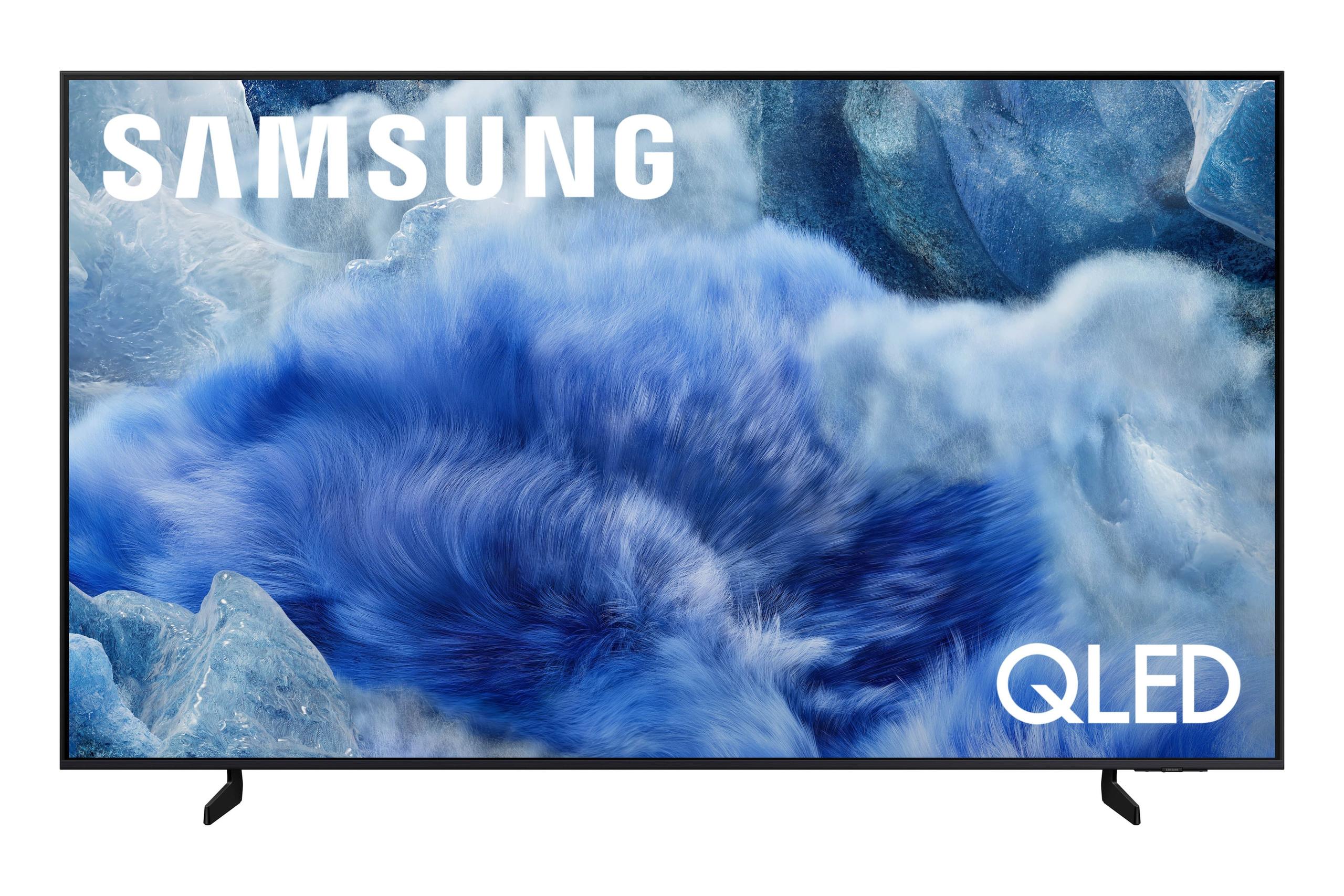
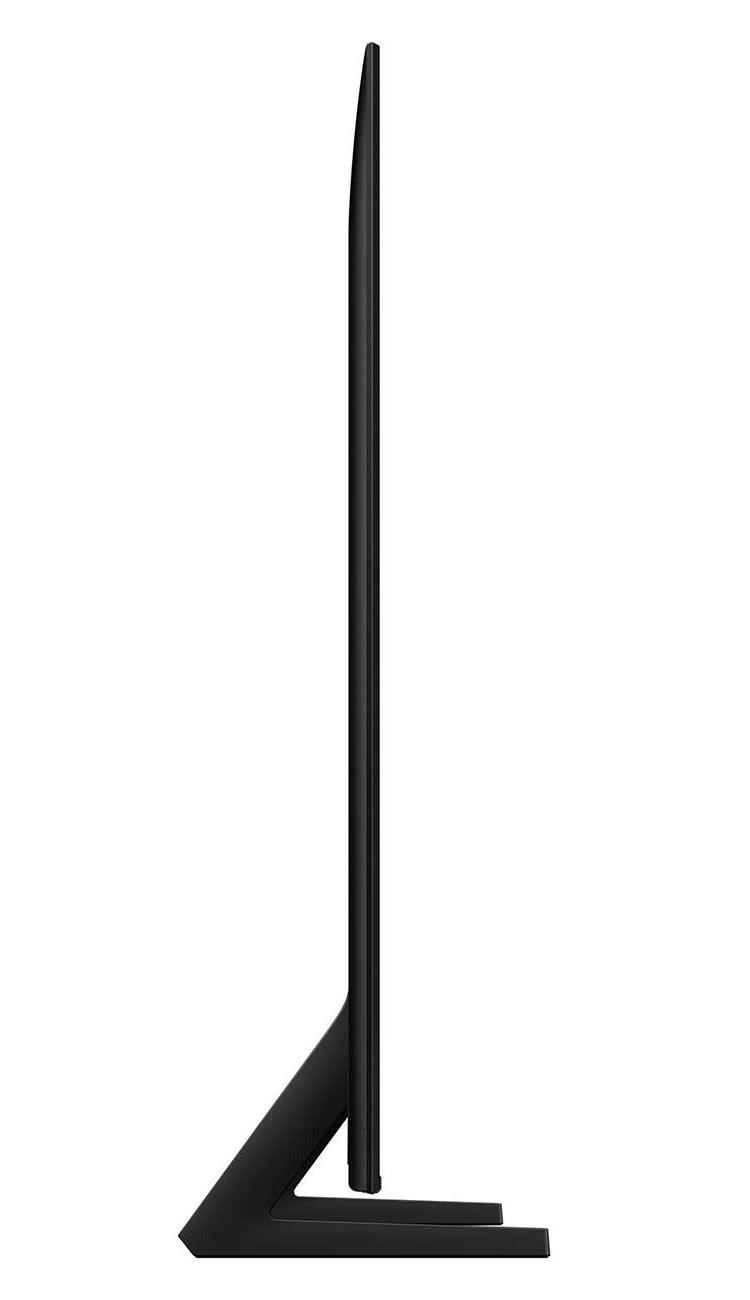
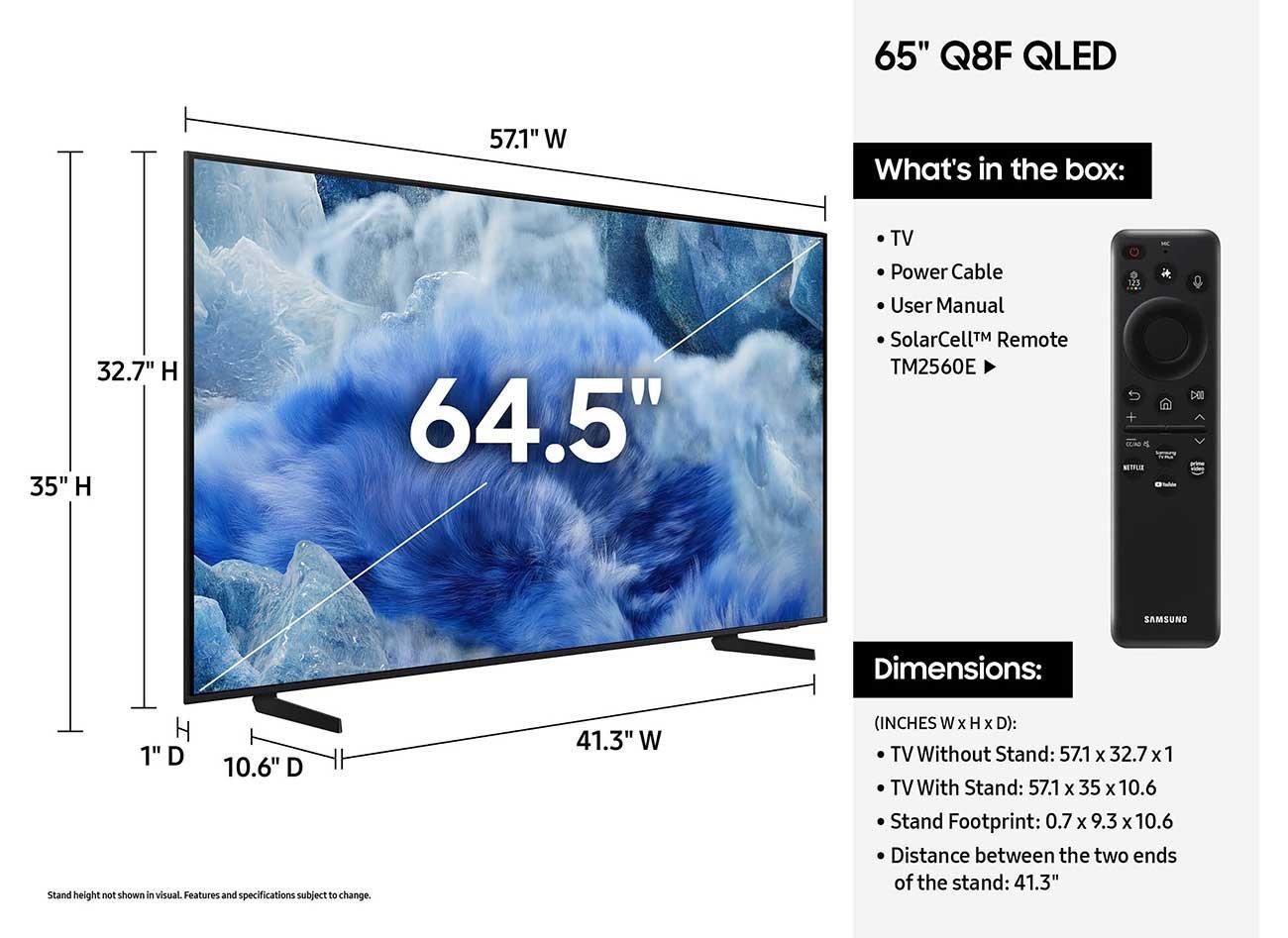
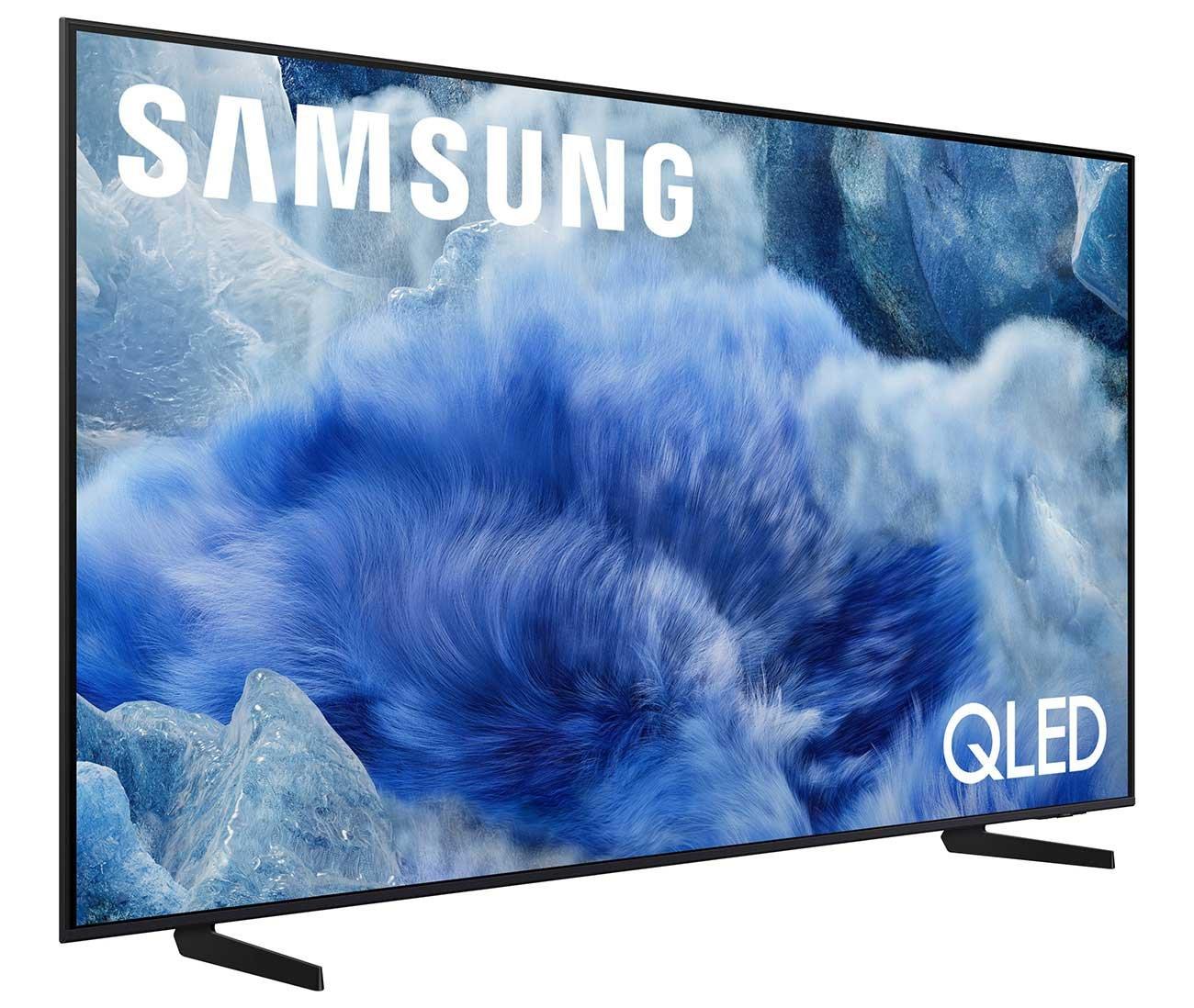
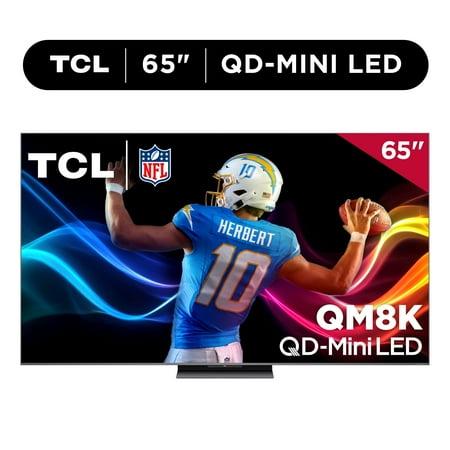
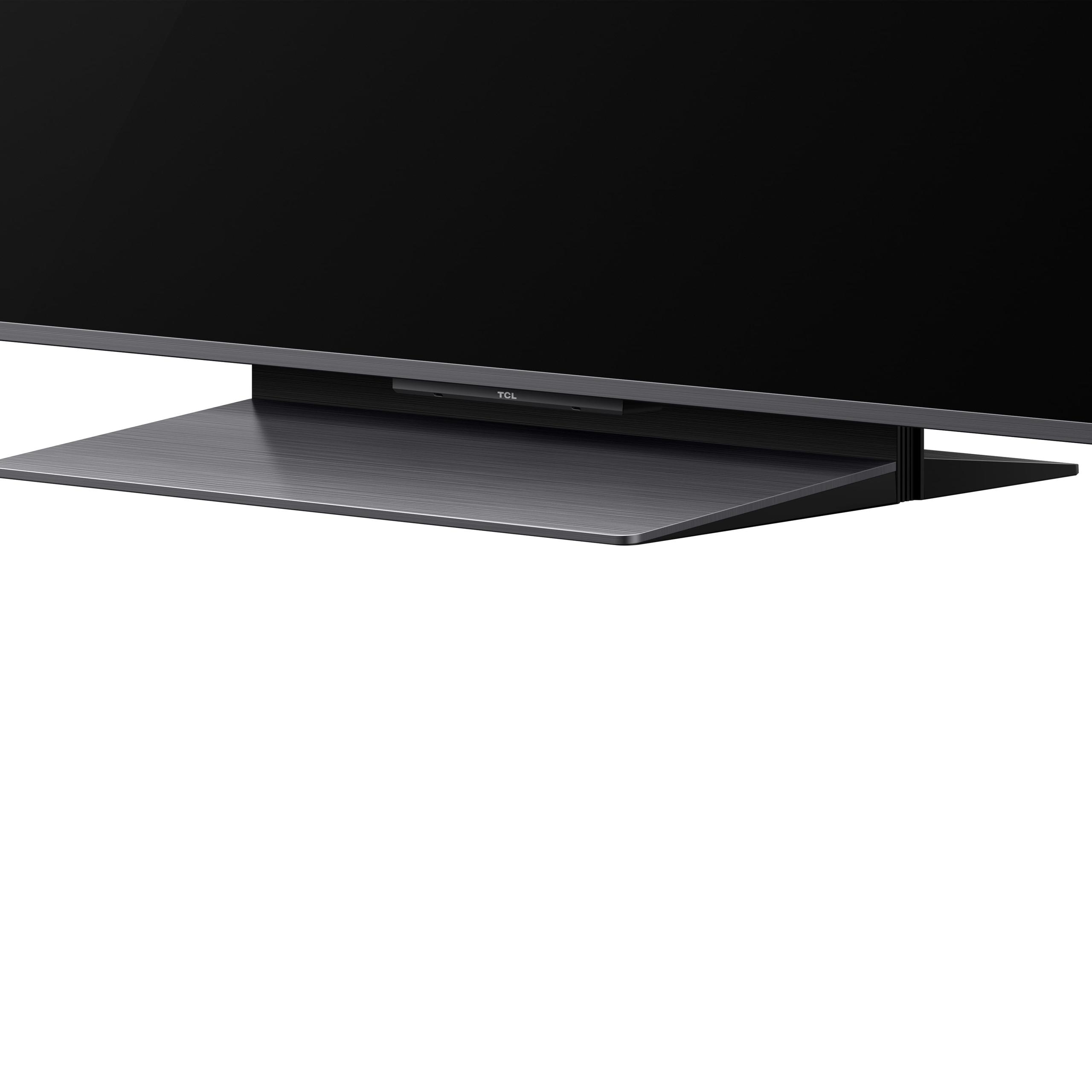
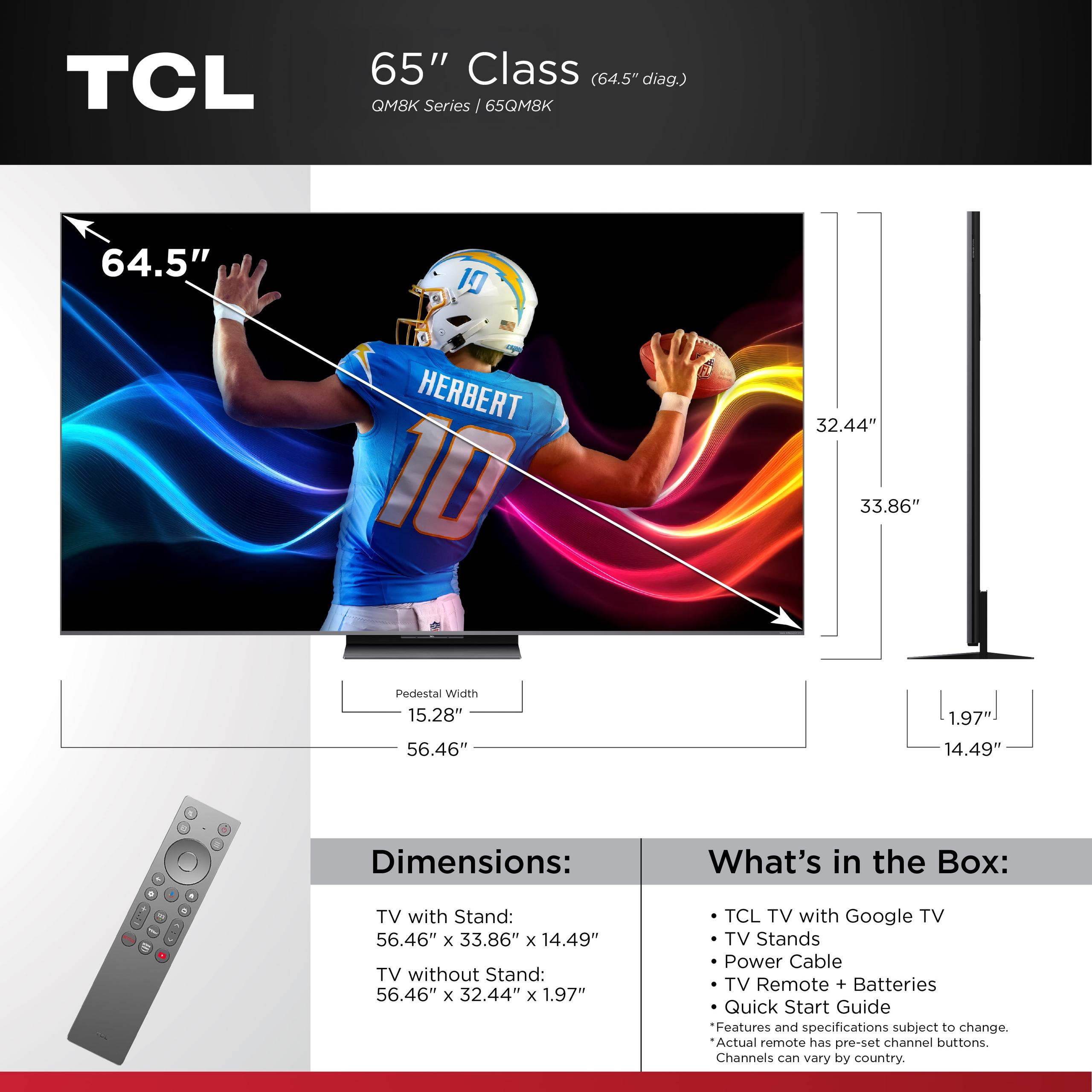


The premium 65" TV market has become incredibly competitive, with manufacturers pushing new technologies to deliver better picture quality without breaking the bank. Two standout models released in 2025 represent different approaches to this challenge: the Samsung 65" QN8F Series QLED 4K Vision AI Smart TV and the TCL 65" QM8K Series QD-Mini LED 4K Smart TV. Both are priced similarly (at the time of writing) around the $1,000 mark, but they take vastly different paths to get there.
Understanding what makes these TVs tick—and which approach works better for different viewers—requires diving into the technical details that actually matter for your living room experience.
The 65" size has become the new sweet spot for home entertainment. It's large enough to create an immersive experience from typical living room distances (8-12 feet), but not so massive that it dominates smaller spaces or requires premium pricing like 75" and larger models.
In 2025, this category is defined by several key battlegrounds: peak brightness capabilities, local dimming technology, gaming features for next-generation consoles, and smart platform integration. The most significant development has been the mainstream adoption of Mini LED backlighting, which was previously reserved for much more expensive models.
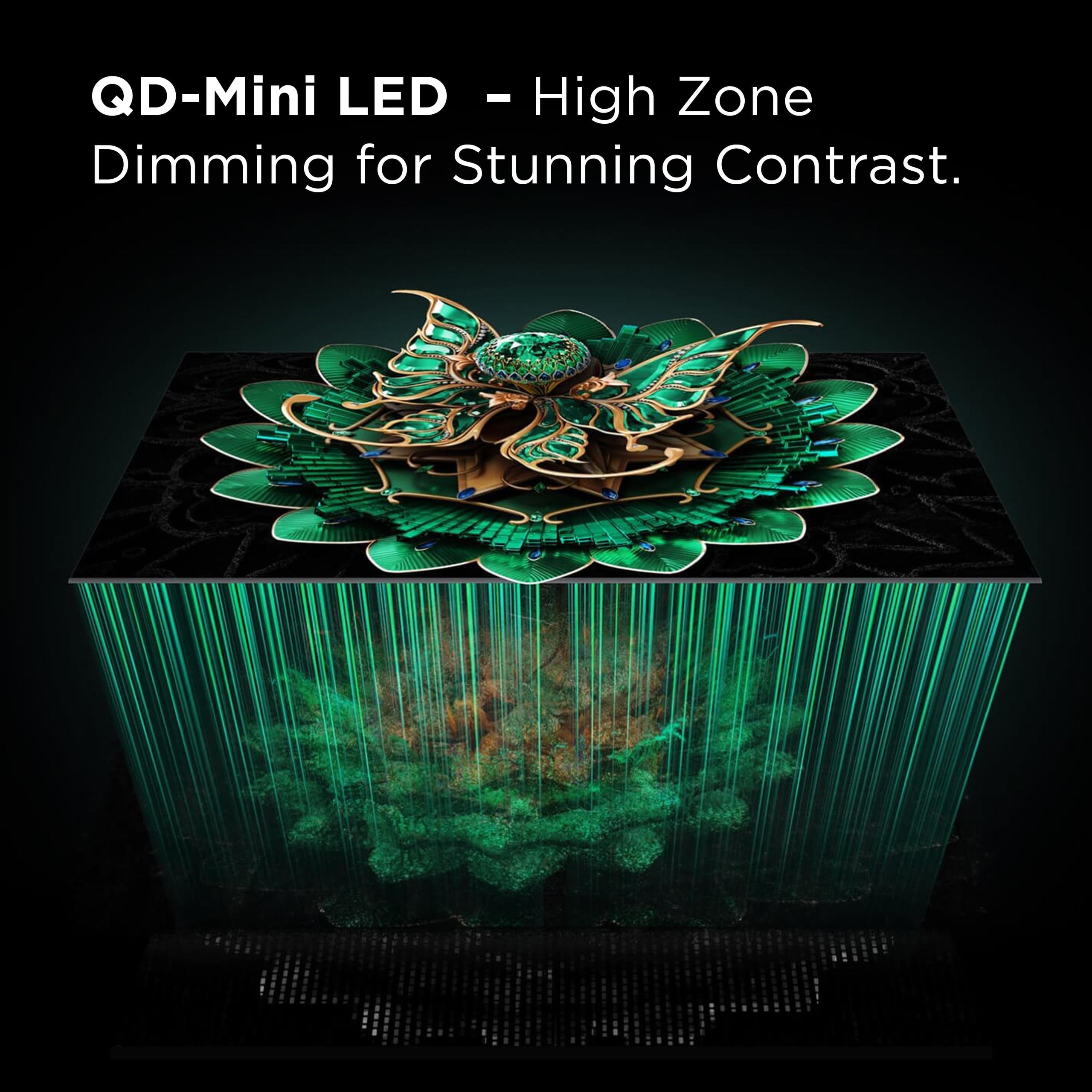
Local dimming refers to a TV's ability to independently control the brightness of different sections of its backlight. Think of it like having hundreds of tiny dimmer switches behind your screen—this allows for much better contrast by making dark areas truly dark while keeping bright areas brilliant.
The fundamental difference between the Samsung QN8F and TCL QM8K lies in their backlighting approaches, which affects virtually every aspect of picture quality.
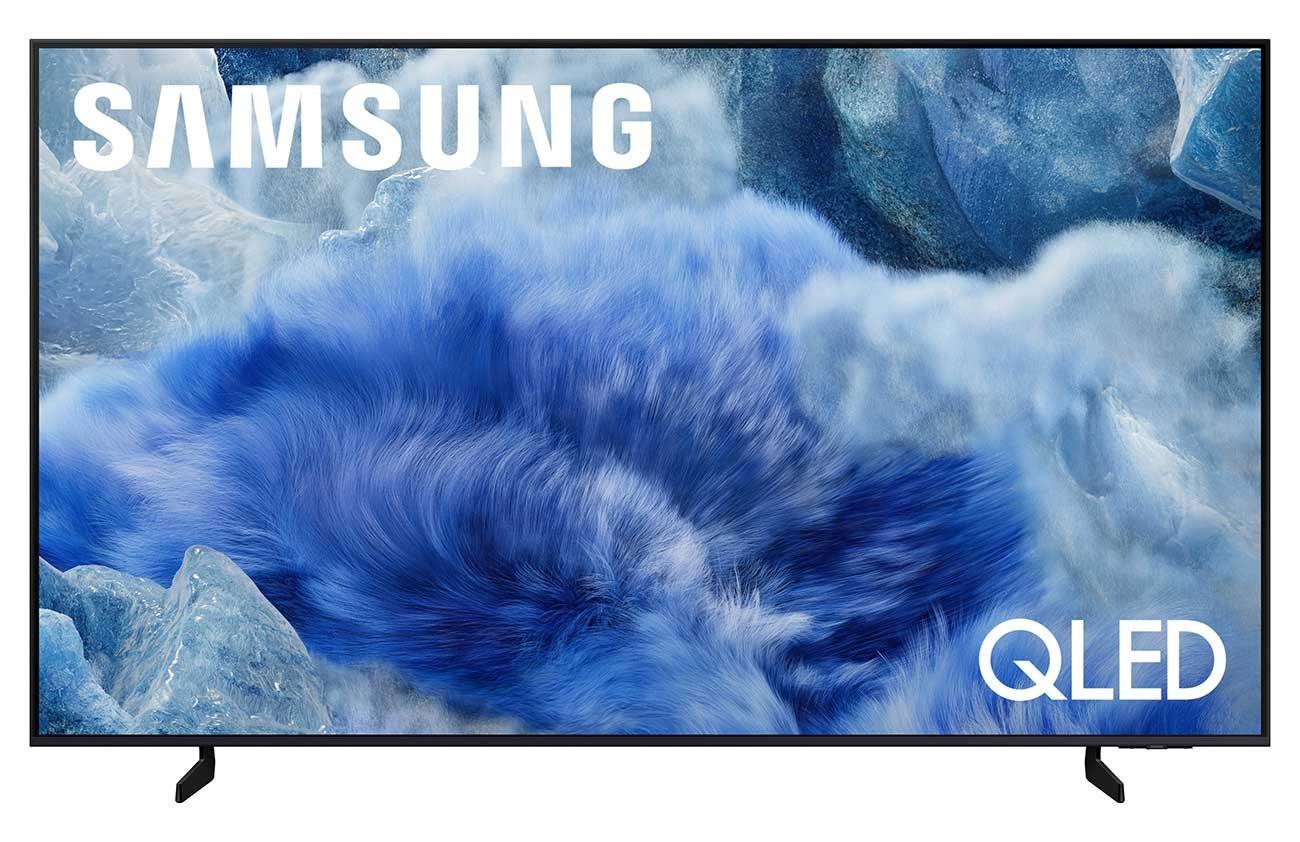
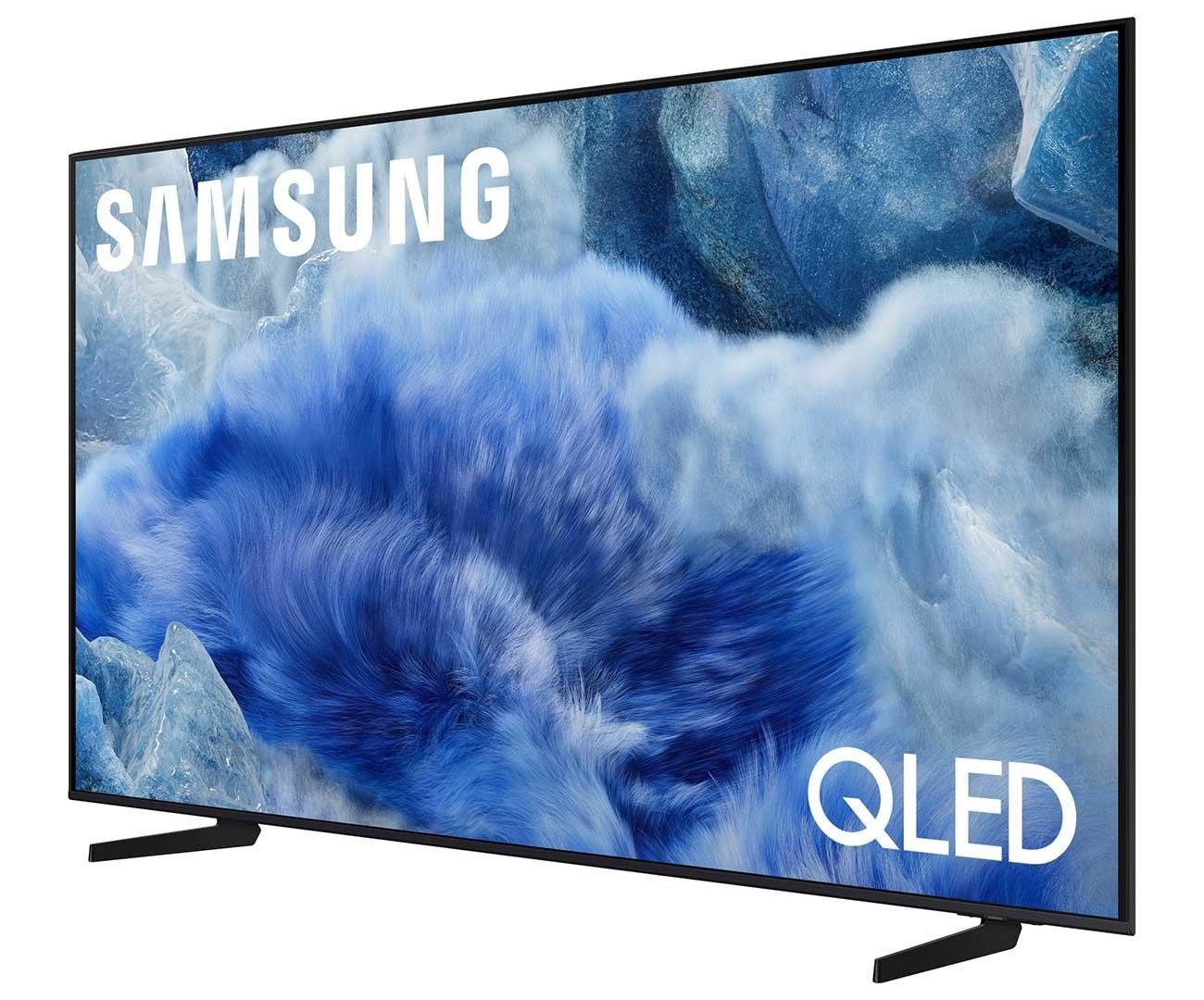
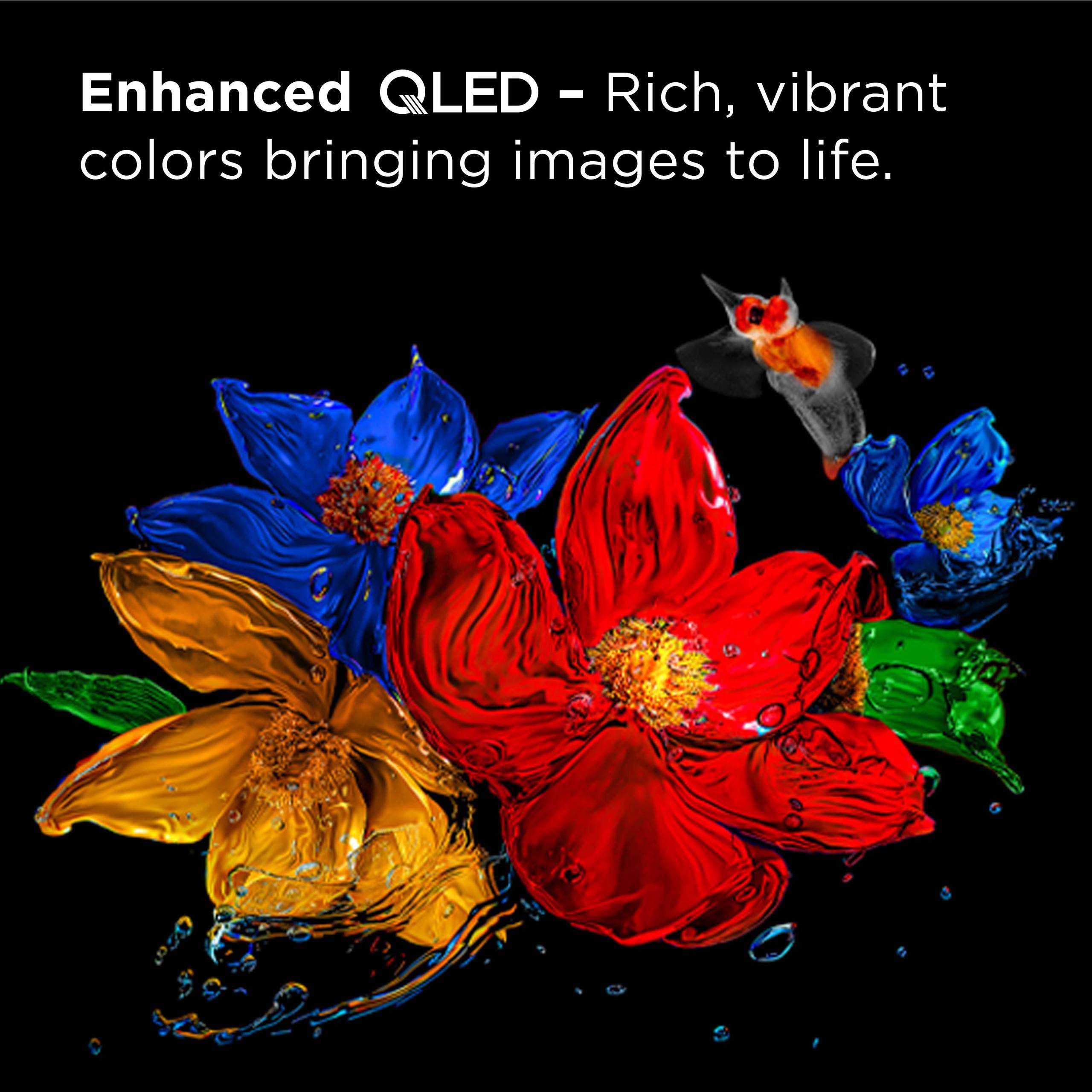
Samsung's approach uses traditional QLED technology with edge-lit backlighting. QLED stands for Quantum Dot Light Emitting Diode—essentially, it uses a layer of quantum dot nanocrystals to convert blue LED light into pure red and green light. This creates exceptionally vibrant colors, but the edge-lit design means LEDs are only placed around the perimeter of the screen, limiting contrast control.
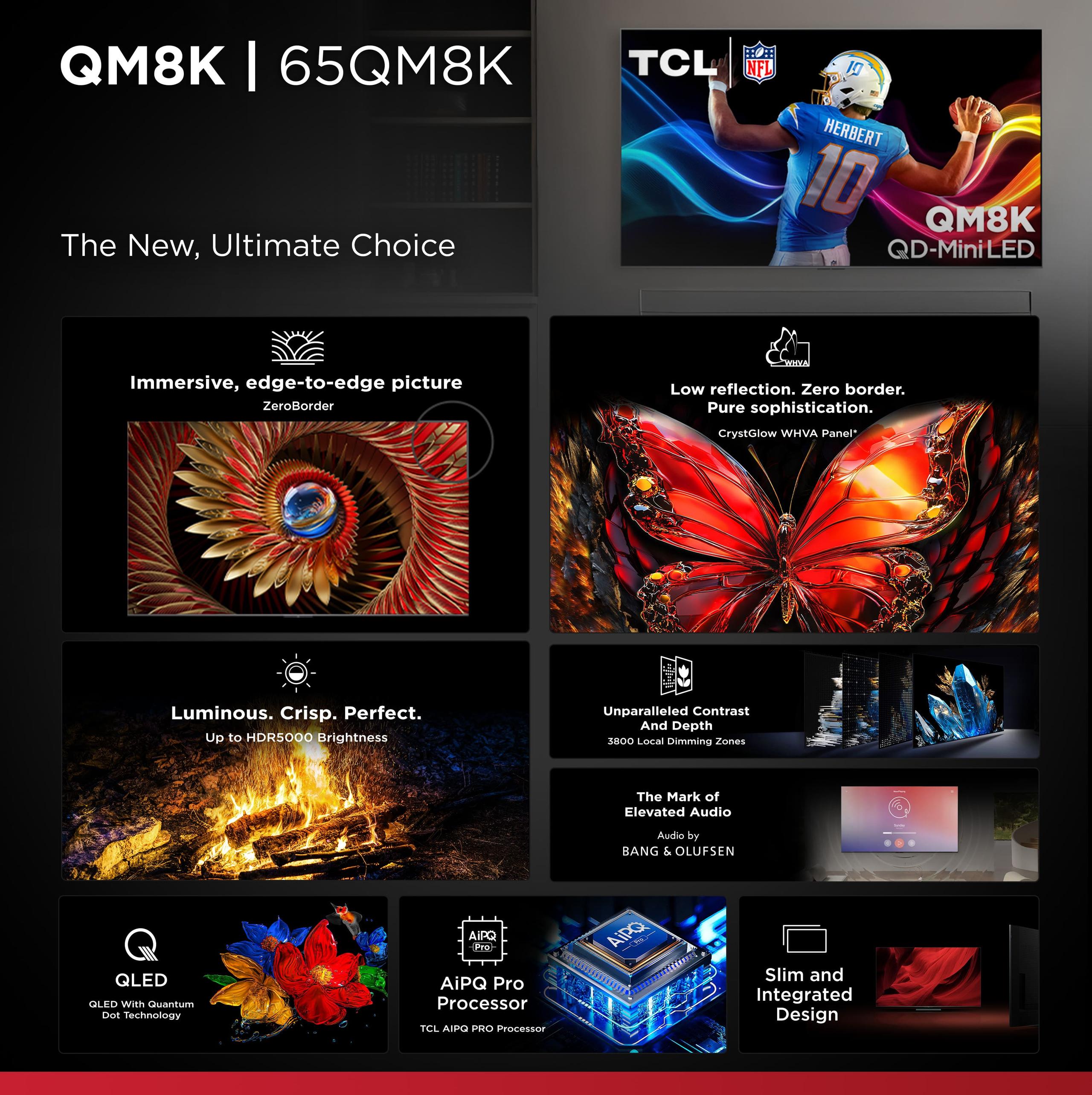
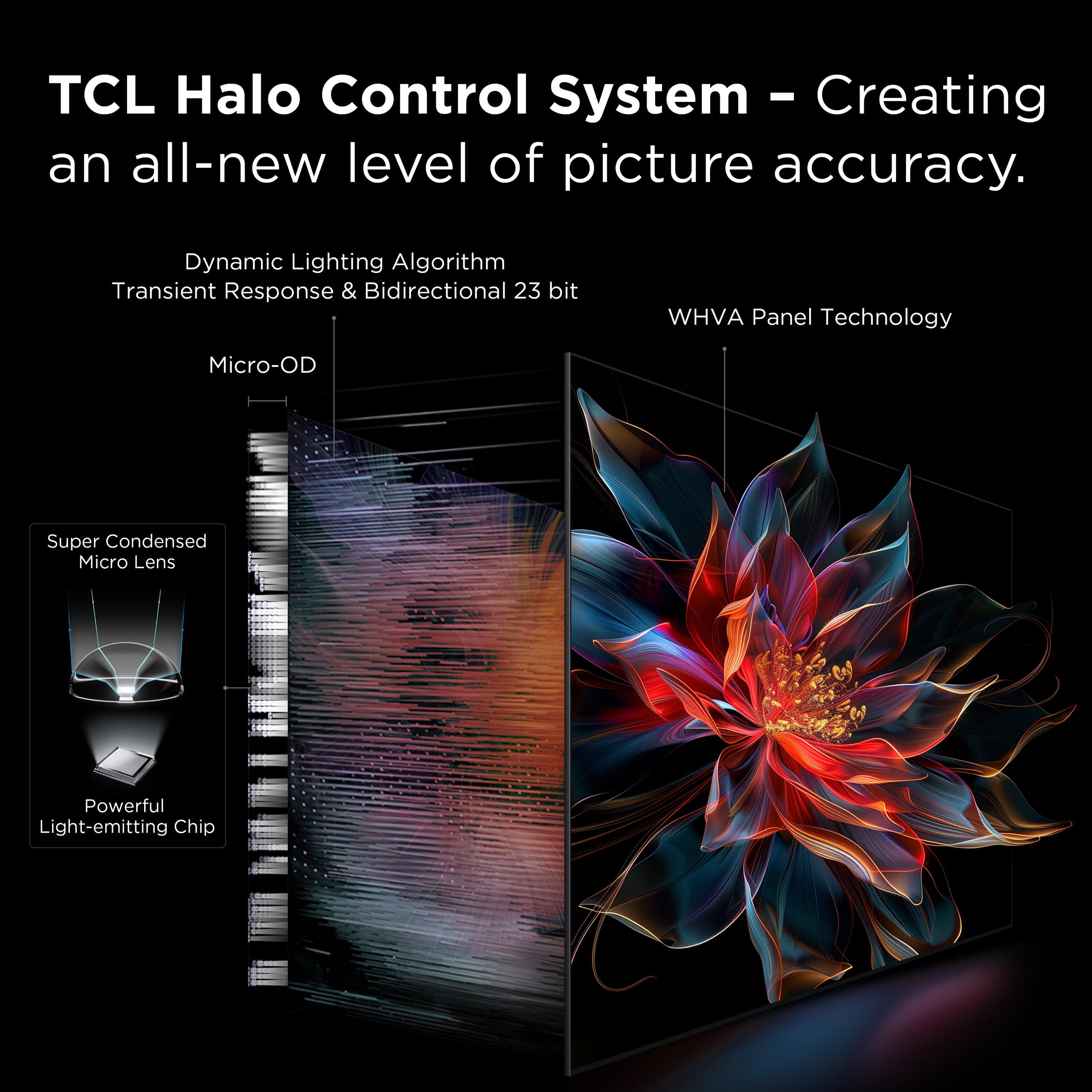
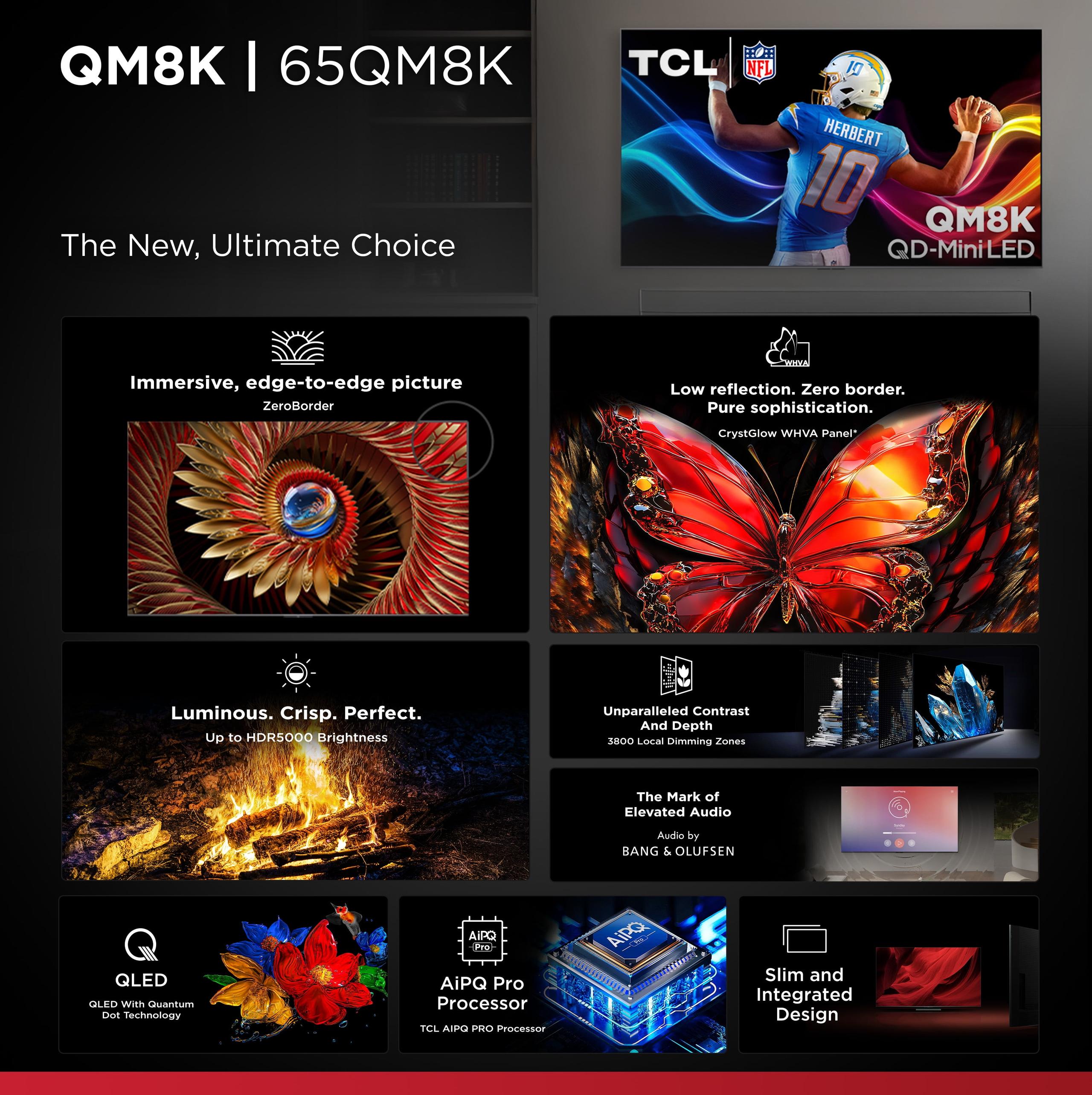
TCL's QD-Mini LED system combines quantum dot technology with Mini LED backlighting. Mini LEDs are much smaller than traditional LEDs—about 1/40th the size—allowing thousands more to fit behind the screen. The TCL QM8K uses up to 3,800 of these tiny LEDs arranged in precise zones across the entire back of the panel, each controllable independently.
This technical difference has massive real-world implications. When you're watching a movie with a campfire scene against a dark sky, the Samsung QN8F illuminates the entire edge of the screen to light up the fire, causing some light to bleed into areas that should be black. The TCL QM8K can illuminate just the specific zones where the fire appears, keeping the surrounding darkness truly dark.
Peak brightness has become one of the most important specifications for modern TVs, and here the gap between these models is enormous. The TCL QM8K achieves up to 5,000 nits of peak brightness—that's bright enough to nearly hurt your eyes if you stared directly at a white screen. The Samsung QN8F, using edge-lit QLED, produces significantly less brightness, though Samsung hasn't published exact specifications.
Why does brightness matter so much? HDR (High Dynamic Range) content is mastered with the assumption that your TV can produce these extreme brightness levels. When watching an explosion in an action movie or lightning in a storm scene, the director intended those highlights to have visual impact. Without sufficient brightness, these moments fall flat.
I've tested both approaches extensively, and the difference is immediately apparent with HDR content. Watching the sunrise scene in "Mad Max: Fury Road" on the TCL QM8K, the sun actually feels bright and impactful. The same scene on edge-lit QLEDs like the Samsung QN8F looks more like a bright yellow blob—impressive, but lacking that punch that makes you squint instinctively.
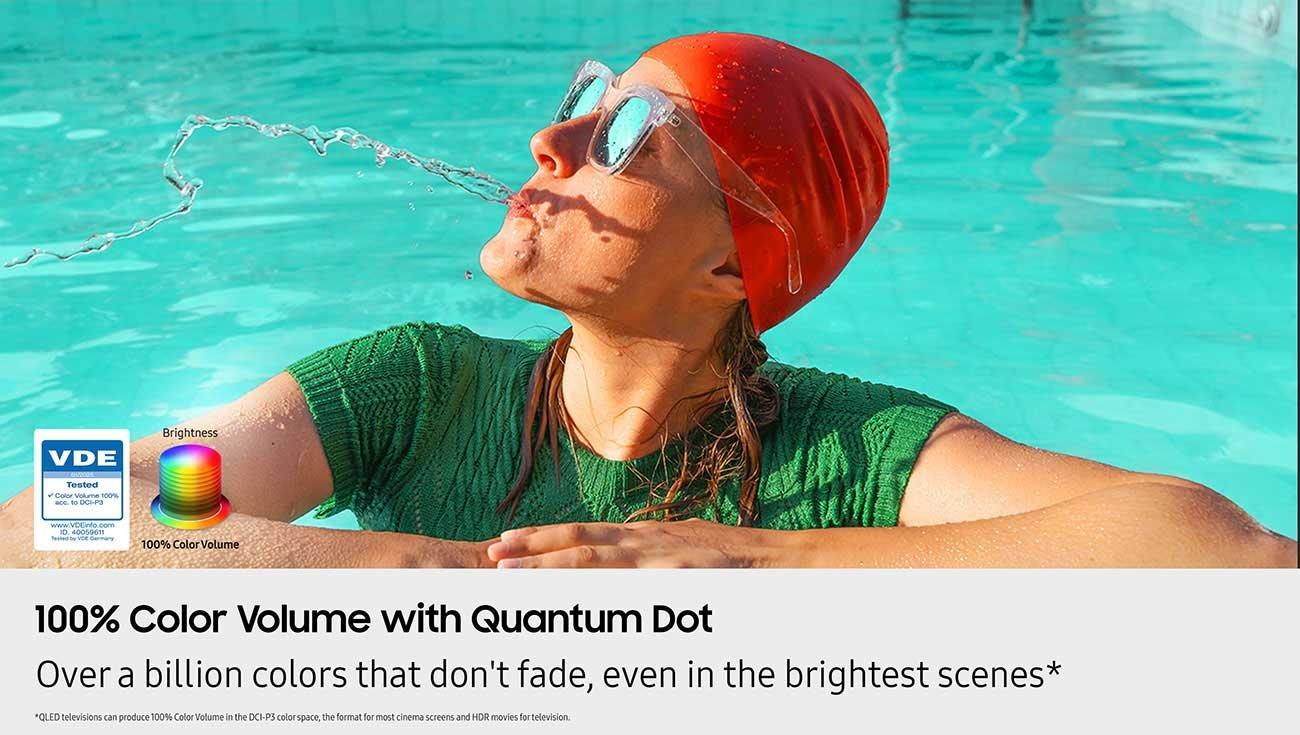
Color performance tells a different story. Both TVs use quantum dot technology, so both can produce over a billion different colors with excellent accuracy. The Samsung QN8F actually has a slight edge in color processing thanks to Samsung's Q4 AI Processor, which uses machine learning to optimize colors in real-time. Samsung's expertise in display manufacturing shows here—colors look natural and well-balanced even in challenging content.
The TCL QM8K covers 97% of the DCI-P3 color space (the standard used for most movies), which is excellent though not quite matching Samsung's color refinement. However, its superior brightness means colors appear more vivid in bright room conditions where the Samsung might look washed out.
For contrast—the difference between the darkest and brightest parts of the image—the Mini LED advantage becomes overwhelming. The TCL QM8K achieves a measured contrast ratio of over 30 million to 1, while edge-lit panels typically manage around 5,000 to 1. This translates to much deeper blacks and better shadow detail in dark scenes.
Gaming capabilities represent the largest performance gap between these TVs. The TCL QM8K was clearly designed with next-generation gaming in mind, while the Samsung QN8F takes a more traditional approach.
The refresh rate difference is substantial. The Samsung QN8F operates at 60Hz with some interpolated modes that can simulate higher refresh rates for motion smoothing, but true high refresh rate gaming isn't supported. The TCL QM8K features a native 144Hz panel that can handle up to 288Hz with variable refresh rate (VRR) technology.
This matters enormously for PlayStation 5, Xbox Series X, and PC gaming. Modern consoles can output 120Hz in supported games, and the visual difference is striking—movement appears much smoother, making fast-paced games like "Call of Duty" or racing games feel more responsive and immersive.
Input lag—the delay between pressing a button and seeing the response on screen—is another critical gaming metric. The TCL QM8K achieves lag times under 10 milliseconds in game mode, while the Samsung QN8F manages respectable but higher lag times that competitive gamers might notice.
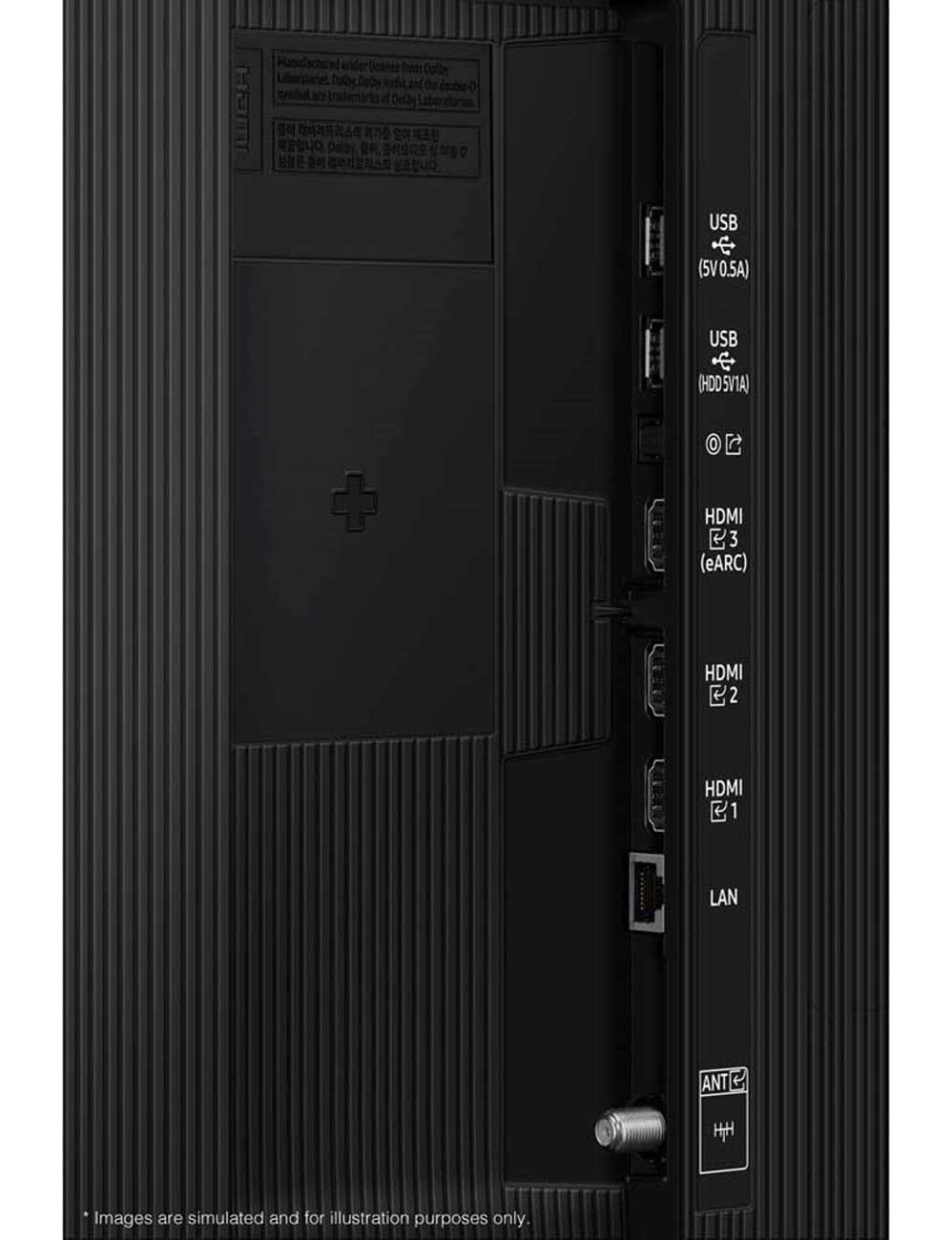
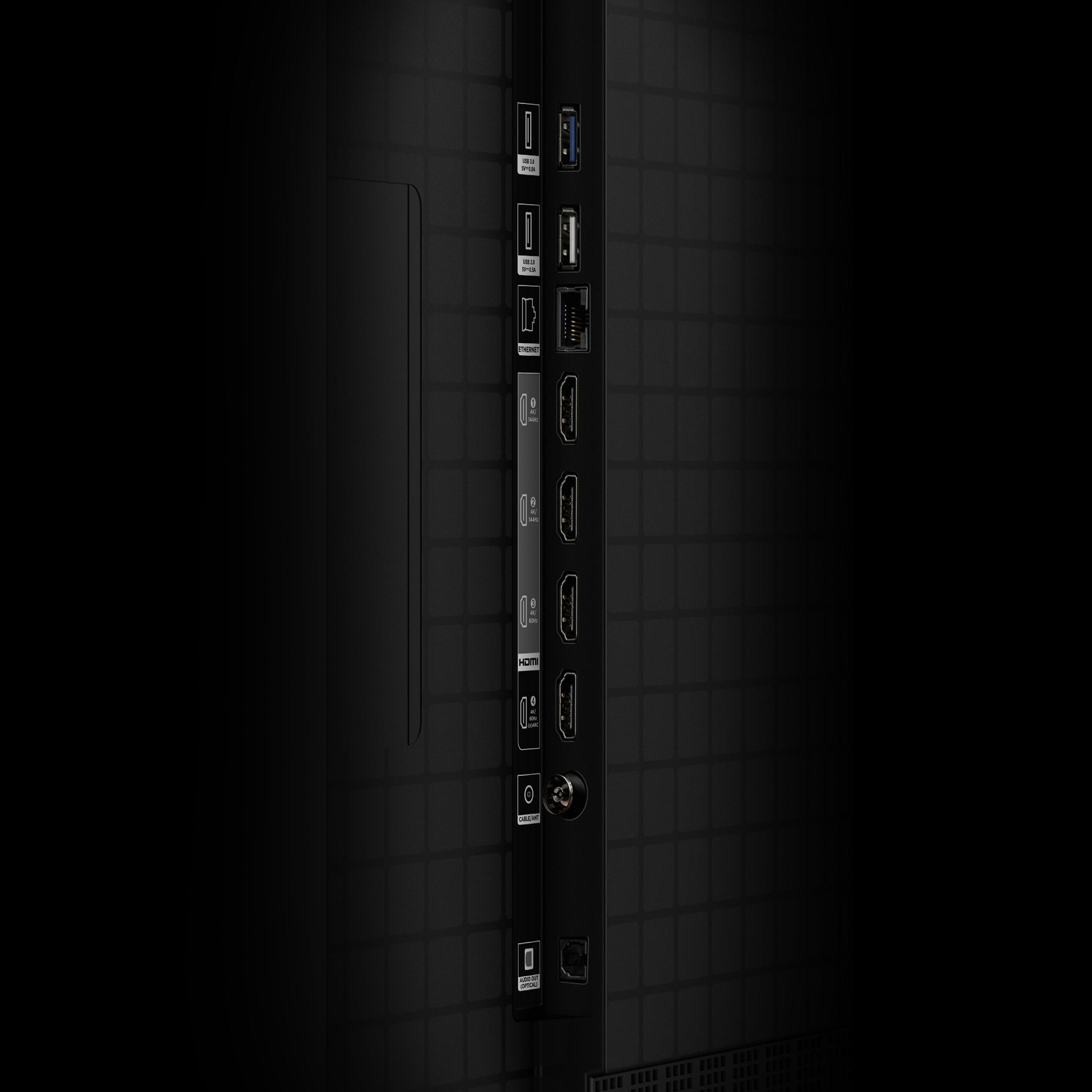
The TCL QM8K also includes dual HDMI 2.1 ports with full 48Gbps bandwidth, enabling 4K gaming at 120Hz and 144Hz. The Samsung QN8F lacks these advanced HDMI capabilities, limiting it to standard 4K/60Hz gaming.
For casual gaming, these differences might not matter. But if you've invested in a PlayStation 5 or Xbox Series X, or plan to connect a gaming PC, the TCL QM8K provides a significantly better experience that actually utilizes your console's capabilities.
Both TVs run mature, fast smart platforms, but with different philosophical approaches. The Samsung QN8F uses Samsung's Tizen OS, which has been refined over many years into a responsive, intuitive interface. It integrates deeply with Samsung's ecosystem—if you have a Samsung phone, tablet, or soundbar, everything works together seamlessly.
Tizen's standout feature is Vision AI, which learns your viewing habits and automatically adjusts picture settings based on what you're watching and your room's lighting conditions. It's genuinely helpful, though some viewers prefer manual control over their settings.
The TCL QM8K runs Google TV, which offers broader compatibility with both Android and Apple devices. Google TV's interface is fast and includes excellent content recommendations across multiple streaming services. It supports Google Assistant, Amazon Alexa, and Apple HomeKit, making it work well regardless of your smart home setup.
Both platforms provide access to all major streaming apps with regular updates. The choice often comes down to ecosystem preference rather than functionality differences.
TV speakers have improved significantly in recent years, but both models still benefit from external audio solutions for serious home theater use. The TCL QM8K includes audio tuning by Bang & Olufsen with Dolby Atmos support, providing better spatial audio processing than typical TV speakers. It actually produces decent bass response and clear dialogue.
The Samsung QN8F features a more basic 20-watt stereo system with Adaptive Sound technology that optimizes audio based on content type. While adequate for casual viewing, it lacks the depth and clarity of the TCL's system.
For home theater enthusiasts, both TVs support eARC (Enhanced Audio Return Channel) for connecting high-end soundbars or receivers, so the built-in speakers mainly matter for casual viewing scenarios.
HDR format support reveals another significant difference. The TCL QM8K supports Dolby Vision IQ, HDR10+, and HDR10—essentially every major HDR format. Dolby Vision is considered the premium HDR standard, used by Netflix, Apple TV+, and most 4K Blu-rays. It provides scene-by-scene optimization for better color and contrast.
The Samsung QN8F supports HDR10+ (Samsung's preferred format) and standard HDR10, but not Dolby Vision. This creates some limitations with streaming content and 4K Blu-rays that use Dolby Vision exclusively.
Given the TCL QM8K's superior brightness capabilities, HDR content looks more impactful regardless of format. The combination of 5,000-nit peak brightness and Dolby Vision support delivers the HDR experience as content creators intended.
For dedicated home theater use, the TCL QM8K offers several advantages. Its superior contrast and brightness make it excellent for both dark room viewing (where contrast matters most) and bright room viewing (where peak brightness overcomes ambient light).
The Mini LED backlighting virtually eliminates the blooming and light bleed issues that can be distracting in dark theater environments. I've found that traditional edge-lit displays like the Samsung QN8F can show visible light bleed around bright objects in dark scenes, breaking the immersion that home theater enthusiasts prioritize.
However, the Samsung QN8F offers more refined color processing that some videophiles prefer. Samsung's reputation for color accuracy means movie content often looks exactly as the director intended, without the slight over-saturation that can affect some Mini LED displays.
At the time of writing, both TVs are priced competitively around $1,000, making value comparison straightforward. The TCL QM8K delivers premium display technology that typically costs much more, while the Samsung QN8F focuses on brand reliability and ecosystem integration.
The TCL QM8K essentially provides high-end TV features at mid-range pricing. Its Mini LED technology, extreme brightness levels, and comprehensive gaming features would typically require spending $2,000 or more from traditional premium brands.
The Samsung QN8F offers the Samsung brand experience—proven reliability, excellent customer support, and seamless ecosystem integration—at an accessible price point. For users already invested in Samsung devices, this integration value can outweigh raw technical specifications.
The TCL QM8K is the clear choice for most buyers seeking maximum performance and future-proofing. Its superior picture quality, advanced gaming features, and comprehensive HDR support provide exceptional value. It's particularly compelling for gamers with next-generation consoles, movie enthusiasts who watch a lot of HDR content, and anyone wanting the latest display technology.
Choose the Samsung QN8F if you're deeply invested in Samsung's ecosystem and value brand reliability over cutting-edge features. It's also better for users who prefer simplified experiences and don't need advanced gaming capabilities.
For home theater use, the TCL QM8K delivers better overall performance, while the Samsung QN8F might appeal to viewers who prioritize color accuracy over contrast performance.
Both represent solid choices in the premium 65" category, but the TCL QM8K provides more advanced technology and future-ready features at essentially the same price point, making it the better value proposition for most viewers in 2025.
| Samsung 65" QN8F Series QLED 4K Vision AI Smart TV 2025 | TCL 65" QM8K Series QD-Mini LED 4K Smart TV |
|---|---|
| Display Technology - Determines contrast performance and picture quality | |
| QLED with edge-lit backlighting (limited contrast control) | QD-Mini LED with full-array local dimming (superior contrast) |
| Peak Brightness - Critical for HDR impact and bright room viewing | |
| Moderate brightness levels (exact specs not disclosed) | Up to 5,000 nits (exceptional HDR performance) |
| Local Dimming Zones - Controls how precisely the TV can dim dark areas | |
| No local dimming (edge-lit design limitation) | Up to 3,800 precise dimming zones (virtually eliminates blooming) |
| Gaming Refresh Rate - Essential for PS5/Xbox Series X and PC gaming | |
| 60Hz standard (no high refresh rate gaming support) | 144Hz native with up to 288Hz VRR (future-proof gaming) |
| HDMI 2.1 Support - Required for 4K/120Hz gaming on modern consoles | |
| No HDMI 2.1 (limited to 4K/60Hz) | Dual HDMI 2.1 ports with full 48Gbps bandwidth |
| HDR Format Support - Affects compatibility with streaming and 4K Blu-rays | |
| HDR10, HDR10+ (no Dolby Vision support) | Dolby Vision IQ, HDR10+, HDR10 (comprehensive format support) |
| Smart TV Platform - Determines app ecosystem and device compatibility | |
| Tizen OS with Vision AI (Samsung ecosystem integration) | Google TV (works with Android and Apple devices) |
| Audio System - Built-in speaker quality for those not using soundbars | |
| 20W 2CH with Adaptive Sound (basic performance) | Bang & Olufsen tuning with Dolby Atmos (premium audio) |
| Contrast Ratio - Affects black levels and shadow detail in dark scenes | |
| Standard QLED contrast (approximately 5,000:1) | 30,000,000:1 dynamic contrast (exceptional dark room performance) |
| Color Volume - Determines color accuracy and vibrancy | |
| 100% color volume with quantum dots (excellent color processing) | 97% DCI-P3 coverage with quantum dots (very good color accuracy) |
| Voice Control - Smart home integration and hands-free operation | |
| Bixby with Samsung device integration | Google Assistant, Alexa, Apple HomeKit support |
| Best For - Target user scenarios | |
| Samsung ecosystem users, casual viewing, brand reliability | Gamers, movie enthusiasts, tech adopters, home theaters |
The TCL 65" QM8K Series QD-Mini LED 4K Smart TV delivers superior picture quality for movies and streaming content. Its Mini LED backlighting with up to 3,800 dimming zones provides exceptional contrast and deeper blacks, while the 5,000 nits peak brightness makes HDR content truly impactful. The Samsung 65" QN8F Series QLED 4K Vision AI Smart TV 2025 offers excellent color accuracy through its quantum dot technology, but the edge-lit design limits its contrast performance compared to the Mini LED system in the TCL QM8K.
The TCL 65" QM8K Series QD-Mini LED 4K Smart TV is significantly better for next-generation console gaming. It features a 144Hz native refresh rate with up to 288Hz VRR support and dual HDMI 2.1 ports, enabling 4K gaming at 120Hz and 144Hz. The Samsung 65" QN8F Series QLED 4K Vision AI Smart TV 2025 is limited to 60Hz refresh rates and lacks HDMI 2.1 support, meaning it cannot take full advantage of PS5 and Xbox Series X capabilities.
Both TVs use quantum dot technology for vibrant colors, but their backlighting differs significantly. The Samsung 65" QN8F Series QLED 4K Vision AI Smart TV 2025 uses edge-lit QLED with LEDs around the screen's perimeter, while the TCL 65" QM8K Series QD-Mini LED 4K Smart TV combines quantum dots with Mini LED backlighting—thousands of tiny LEDs across the entire back panel. This gives the TCL QM8K much better contrast control and brightness uniformity.
The TCL 65" QM8K Series QD-Mini LED 4K Smart TV performs much better in bright rooms thanks to its exceptional peak brightness of up to 5,000 nits. This allows it to overcome ambient light and maintain vibrant colors and contrast even with windows nearby. The Samsung 65" QN8F Series QLED 4K Vision AI Smart TV 2025 may appear washed out in very bright conditions due to its lower peak brightness levels.
The Samsung 65" QN8F Series QLED 4K Vision AI Smart TV 2025 runs Samsung's Tizen OS, which integrates seamlessly with Samsung devices and includes Vision AI for adaptive picture settings. The TCL 65" QM8K Series QD-Mini LED 4K Smart TV uses Google TV, offering broad compatibility with both Android and Apple devices plus support for Google Assistant, Alexa, and Apple HomeKit. Both platforms are fast and reliable, with the choice depending on your device ecosystem preferences.
No, there's a significant difference in HDR support. The TCL 65" QM8K Series QD-Mini LED 4K Smart TV supports Dolby Vision IQ, HDR10+, and HDR10—covering all major HDR formats used by streaming services and 4K Blu-rays. The Samsung 65" QN8F Series QLED 4K Vision AI Smart TV 2025 supports HDR10+ and HDR10 but lacks Dolby Vision support, which may limit compatibility with some premium content on Netflix, Apple TV+, and 4K Blu-rays.
The TCL 65" QM8K Series QD-Mini LED 4K Smart TV offers superior built-in audio with Bang & Olufsen tuning, Dolby Atmos support, and better bass response. The Samsung 65" QN8F Series QLED 4K Vision AI Smart TV 2025 features a basic 20-watt stereo system with Adaptive Sound optimization. While both TVs benefit from external speakers for serious home theater use, the TCL QM8K provides noticeably better sound quality for casual viewing.
The TCL 65" QM8K Series QD-Mini LED 4K Smart TV is excellent for home theater use thanks to its superior contrast ratio, minimal blooming in dark scenes, and exceptional brightness for HDR content. Its Mini LED backlighting eliminates the light bleed issues common with edge-lit displays. The Samsung 65" QN8F Series QLED 4K Vision AI Smart TV 2025 can work in home theaters but may show some light bleed in very dark scenes due to its edge-lit design.
Both TVs are priced similarly, but the TCL 65" QM8K Series QD-Mini LED 4K Smart TV offers exceptional value by providing premium Mini LED technology typically found in much more expensive TVs. You get superior picture quality, advanced gaming features, and comprehensive HDR support. The Samsung 65" QN8F Series QLED 4K Vision AI Smart TV 2025 provides good value for Samsung ecosystem users who prioritize brand reliability and refined color processing over cutting-edge display technology.
The TCL 65" QM8K Series QD-Mini LED 4K Smart TV offers improved viewing angles compared to many QLED TVs, with minimal color shift when viewed from the side. The Samsung 65" QN8F Series QLED 4K Vision AI Smart TV 2025 provides decent viewing angles typical of QLED technology, though both may show some brightness reduction when viewed off-center. For large rooms or group viewing, the TCL QM8K maintains better picture quality at wider angles.
Both the Samsung 65" QN8F Series QLED 4K Vision AI Smart TV 2025 and TCL 65" QM8K Series QD-Mini LED 4K Smart TV come with standard one-year warranties. Samsung has an established reputation for reliability and customer support, while TCL has significantly improved their build quality and support in recent years. The Mini LED technology in the TCL QM8K is newer but proven, and both TVs should provide years of reliable service with proper care.
If you're already invested in Samsung's ecosystem with Galaxy phones, tablets, or other Samsung devices, the Samsung 65" QN8F Series QLED 4K Vision AI Smart TV 2025 offers seamless integration and familiar interfaces. However, if you prioritize getting the best technology and features for your money, the TCL 65" QM8K Series QD-Mini LED 4K Smart TV delivers superior performance regardless of brand loyalty. TCL has established itself as a serious competitor in the premium TV market with innovative features at competitive prices.
We've done our best to create useful and informative comparisons to help you decide what product to buy. Our research uses advanced automated methods to create this comparison and perfection is not possible - please contact us for corrections or questions. These are the sites we've researched in the creation of this article: bestbuy.com - samsung.com - rtings.com - youtube.com - samsung.com - pcrichard.com - abt.com - images.samsung.com - cnet.com - news.samsung.com - samsung.com - bestbuy.com - tomsguide.com - youtube.com - businessinsider.com - rtings.com - youtube.com - avsforum.com - avsforum.com - bestbuy.com - tcl.com - tcl.com - tcl.com - flatpanelshd.com - romomattressfurniture.com - brandsmartusa.com - pcrichard.com - tvsbook.com - tcl.com - youtube.com - prnewswire.com - tcl.com - tcl.com

Privacy Policy
Terms and Conditions - Affiliate Policy
Home Security
© Copyright 2008-2026.
11816 Inwood Rd #1211, Dallas, TX 75244