

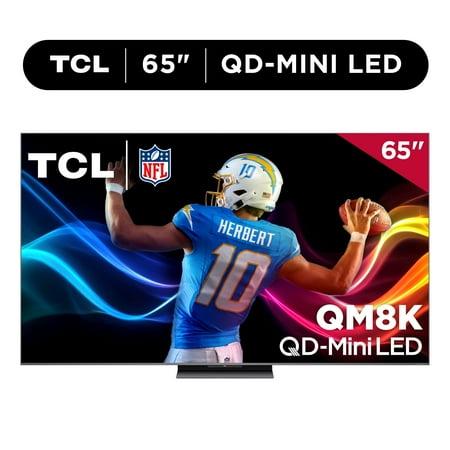
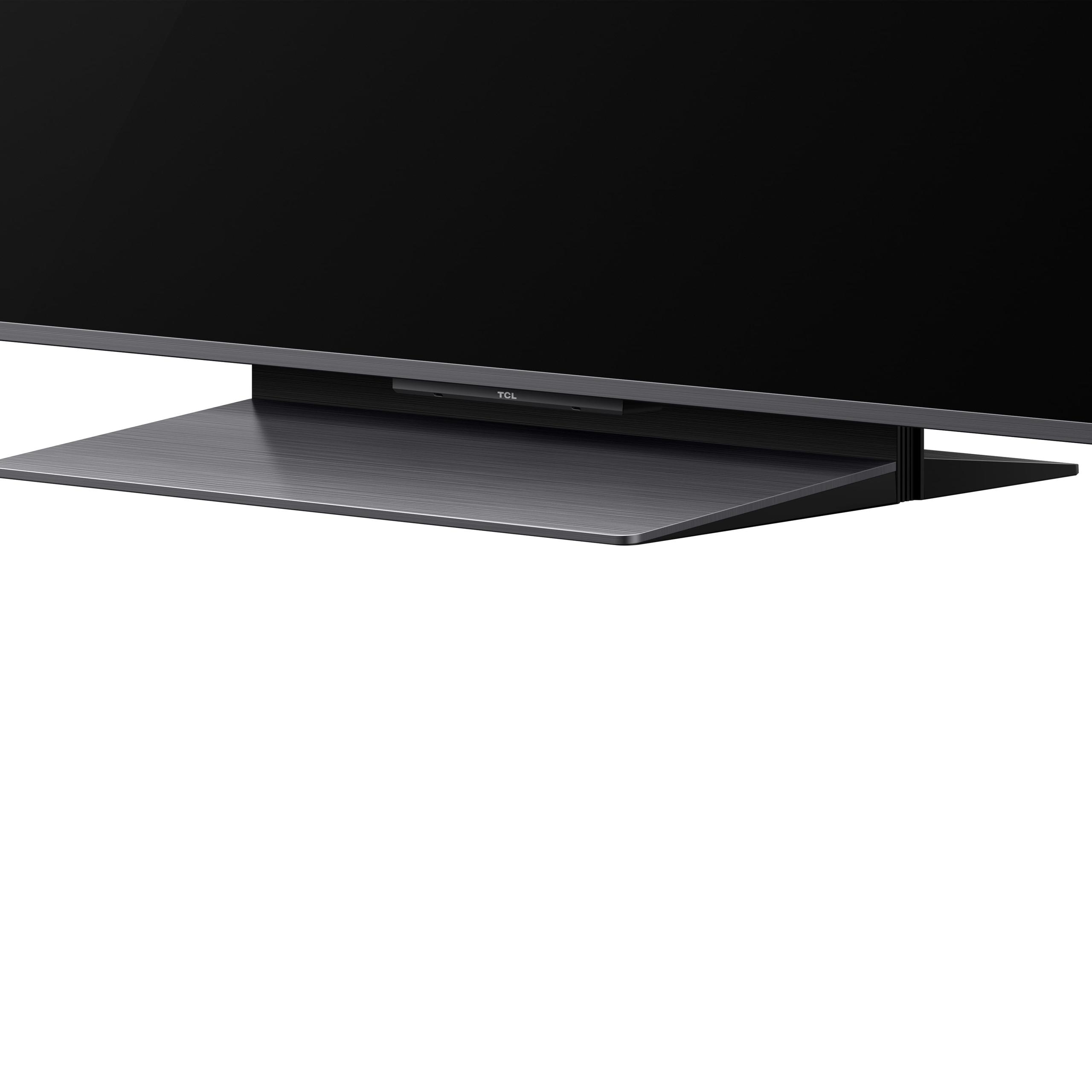
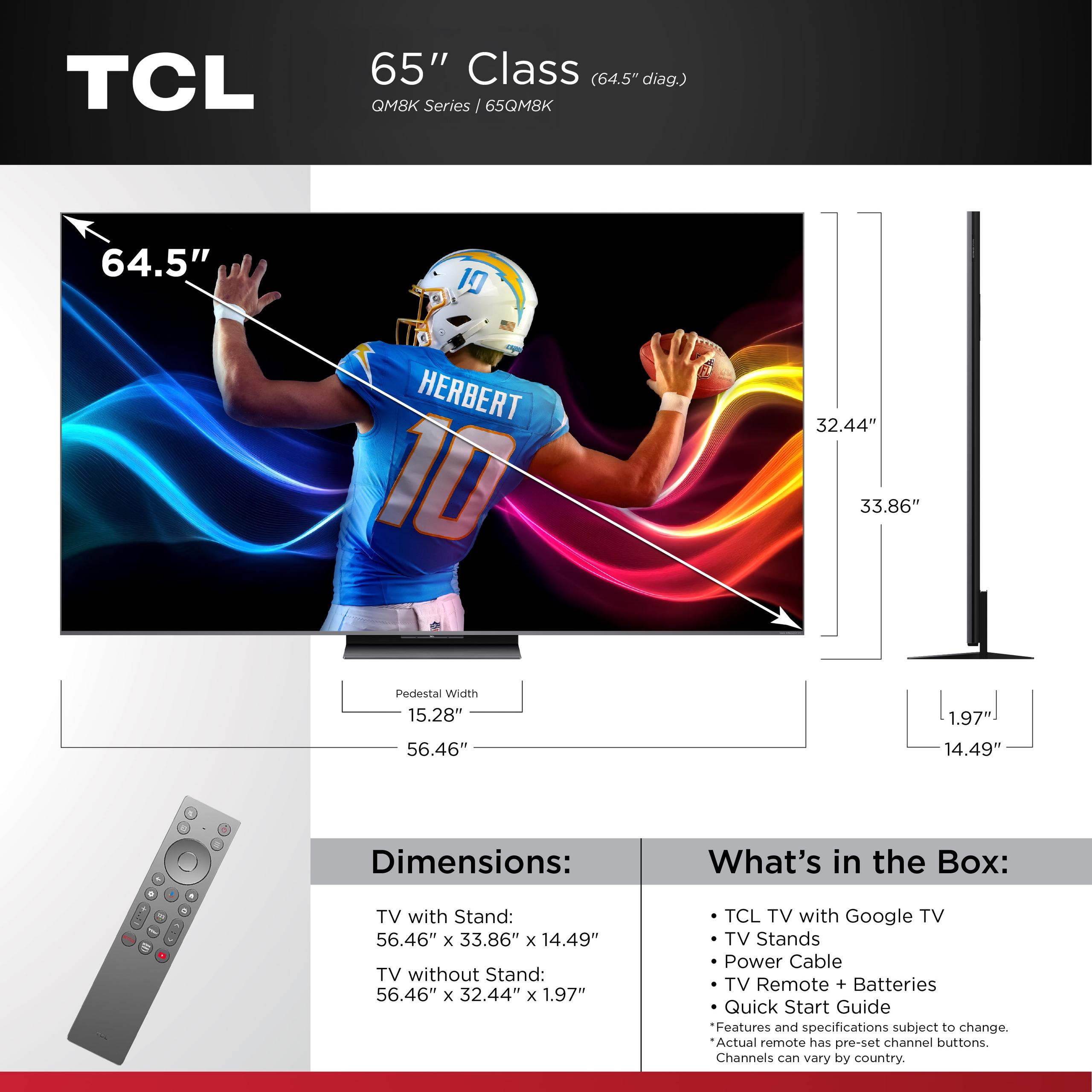


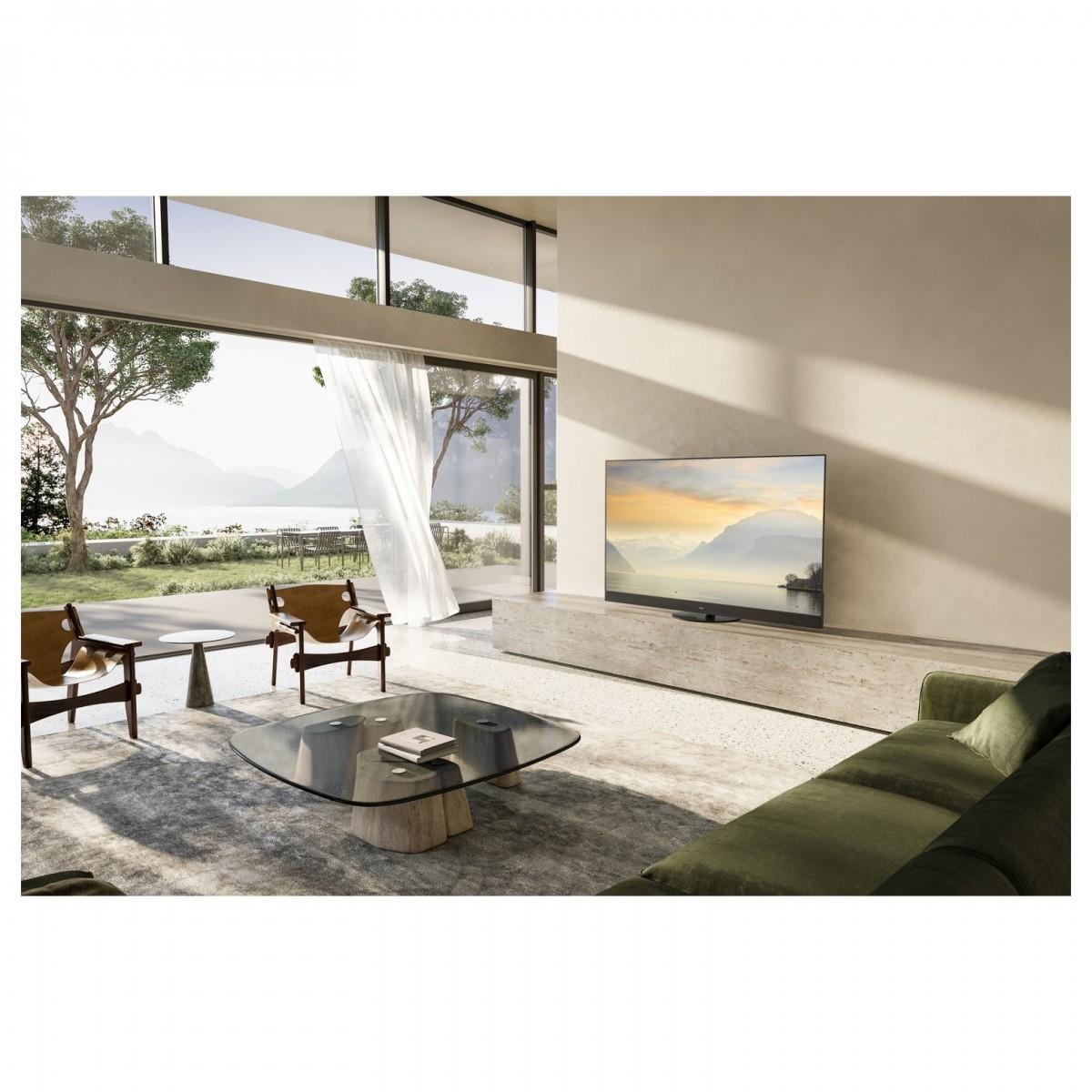
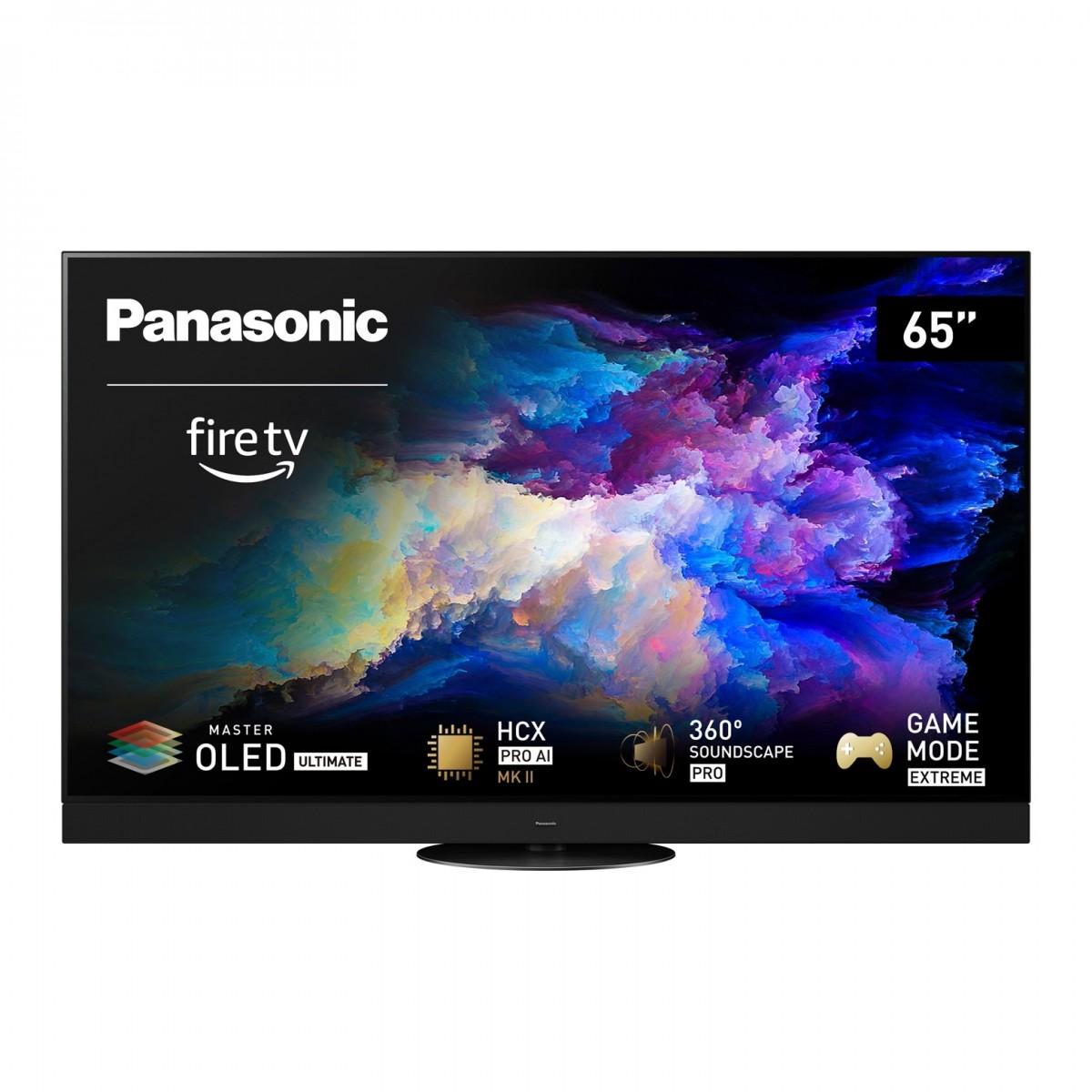
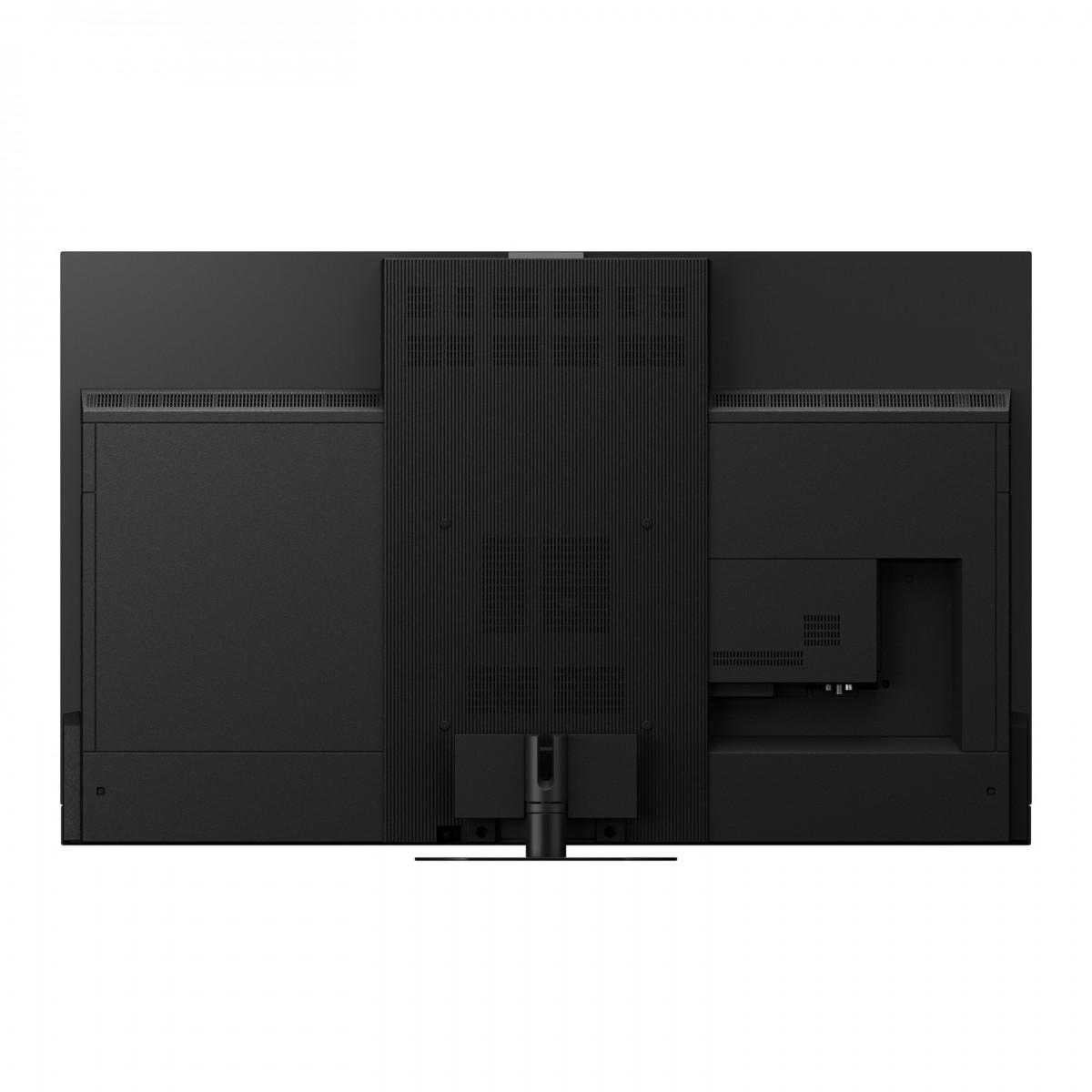
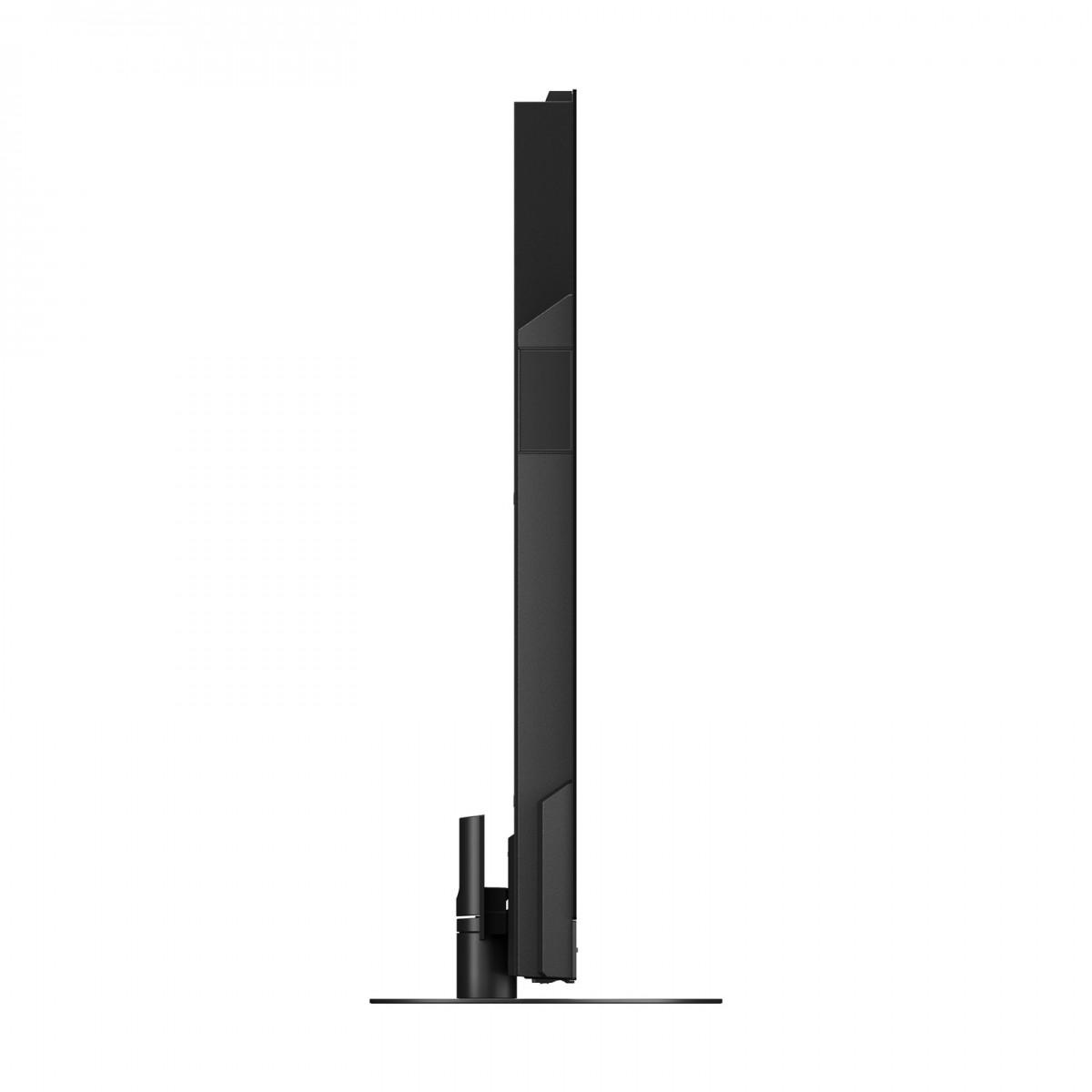
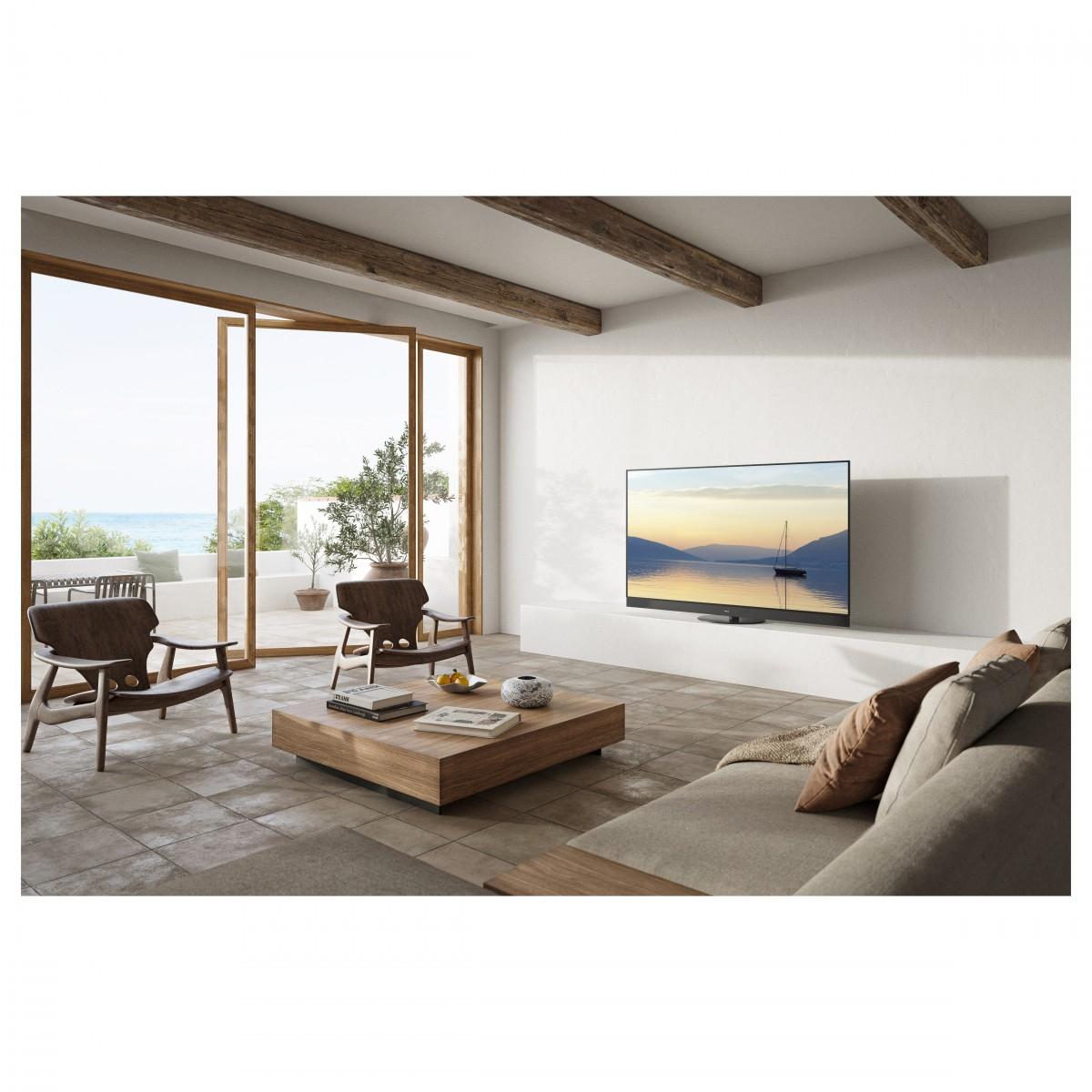
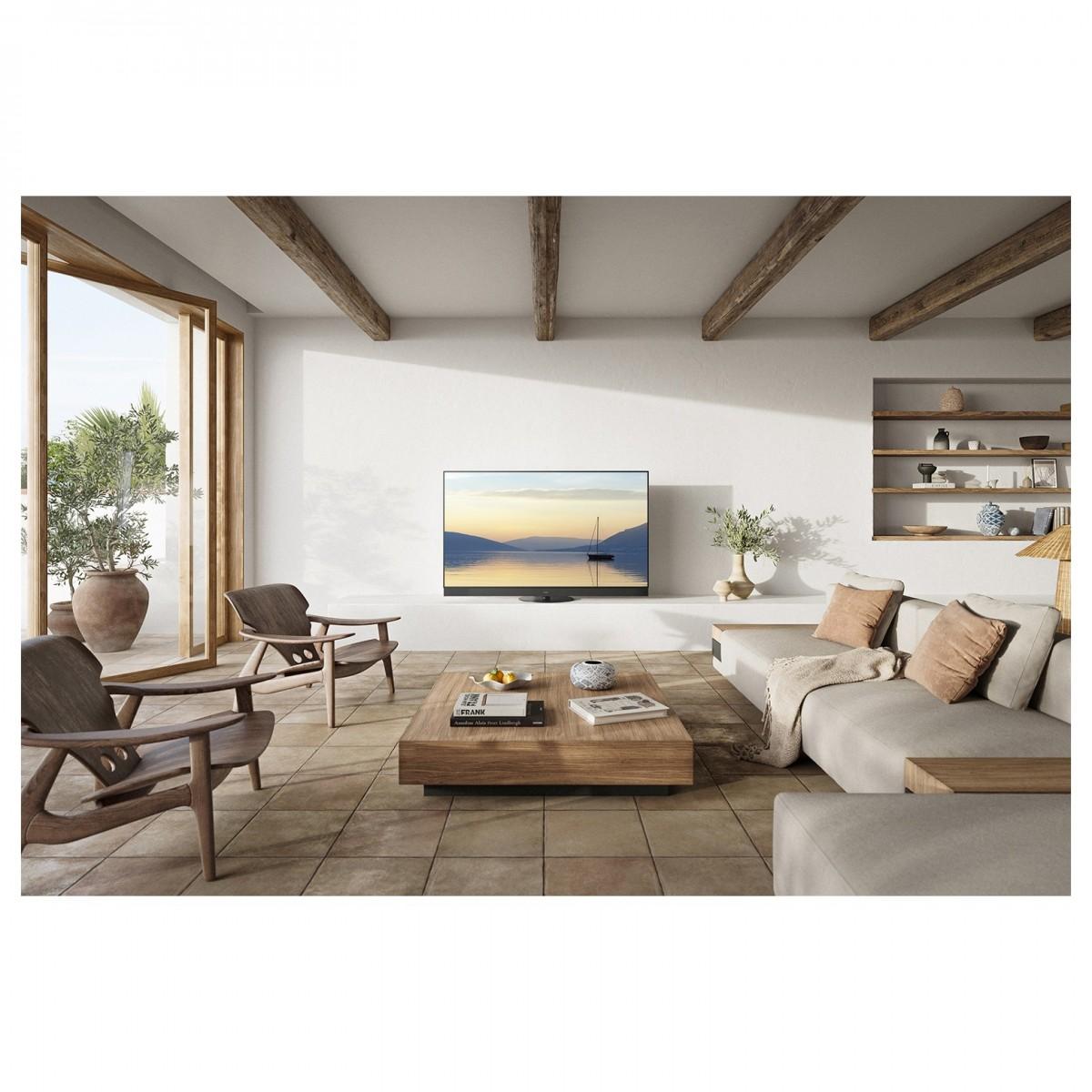
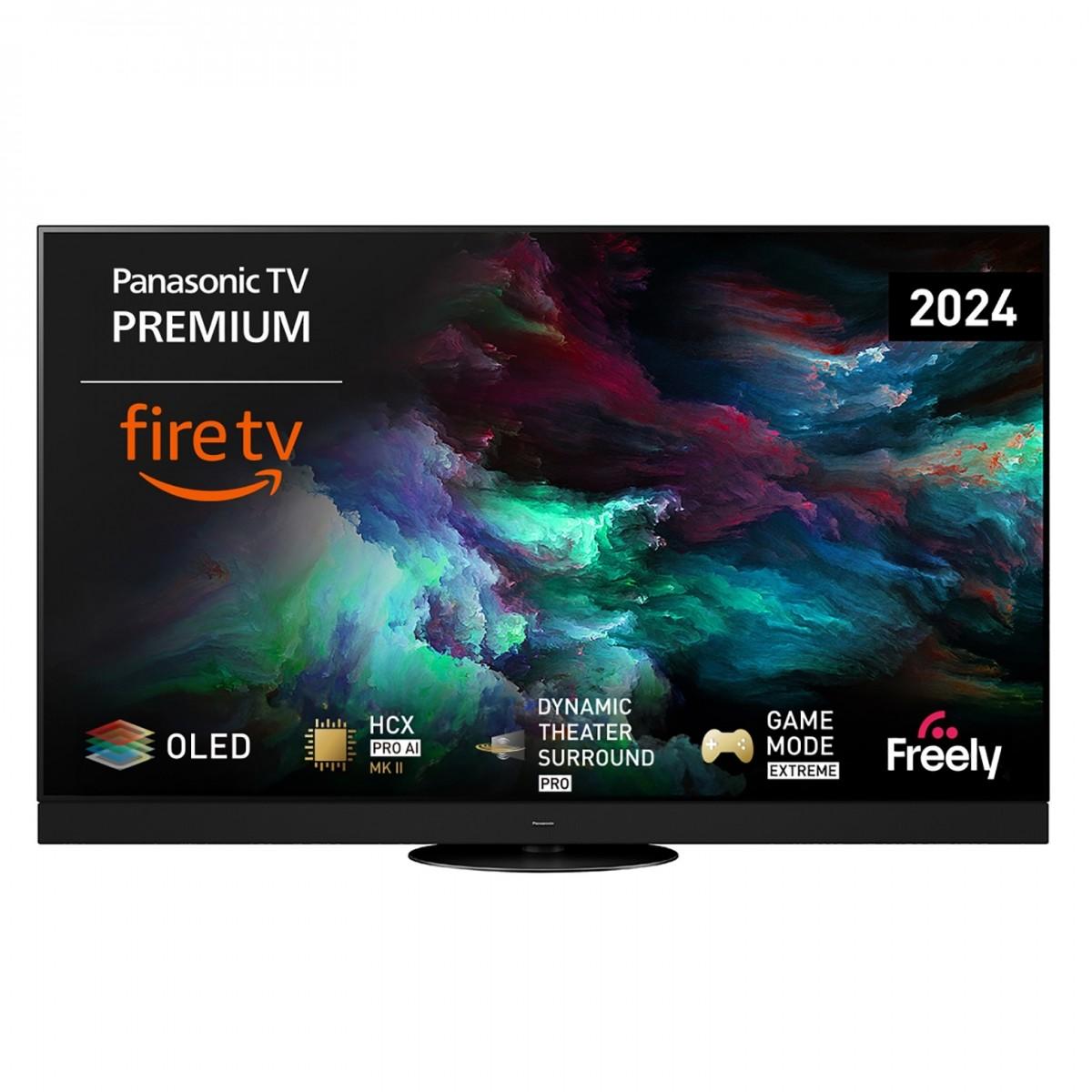
Shopping for a premium 65-inch TV in 2025 means choosing between two fundamentally different technologies that each excel in specific areas. The Panasonic Z95A 65" OLED represents the pinnacle of self-emissive display technology, while the TCL 65" QM8K Series QD-Mini LED showcases how advanced LCD backlighting can challenge OLED supremacy at a fraction of the cost.
At the time of writing, these TVs sit at opposite ends of the premium market pricing spectrum, with the TCL QM8K positioning itself as flagship performance for value-conscious buyers, while the Panasonic OLED commands a significant premium for reference-quality picture reproduction. Understanding which technology suits your specific needs requires diving into what makes each approach unique.
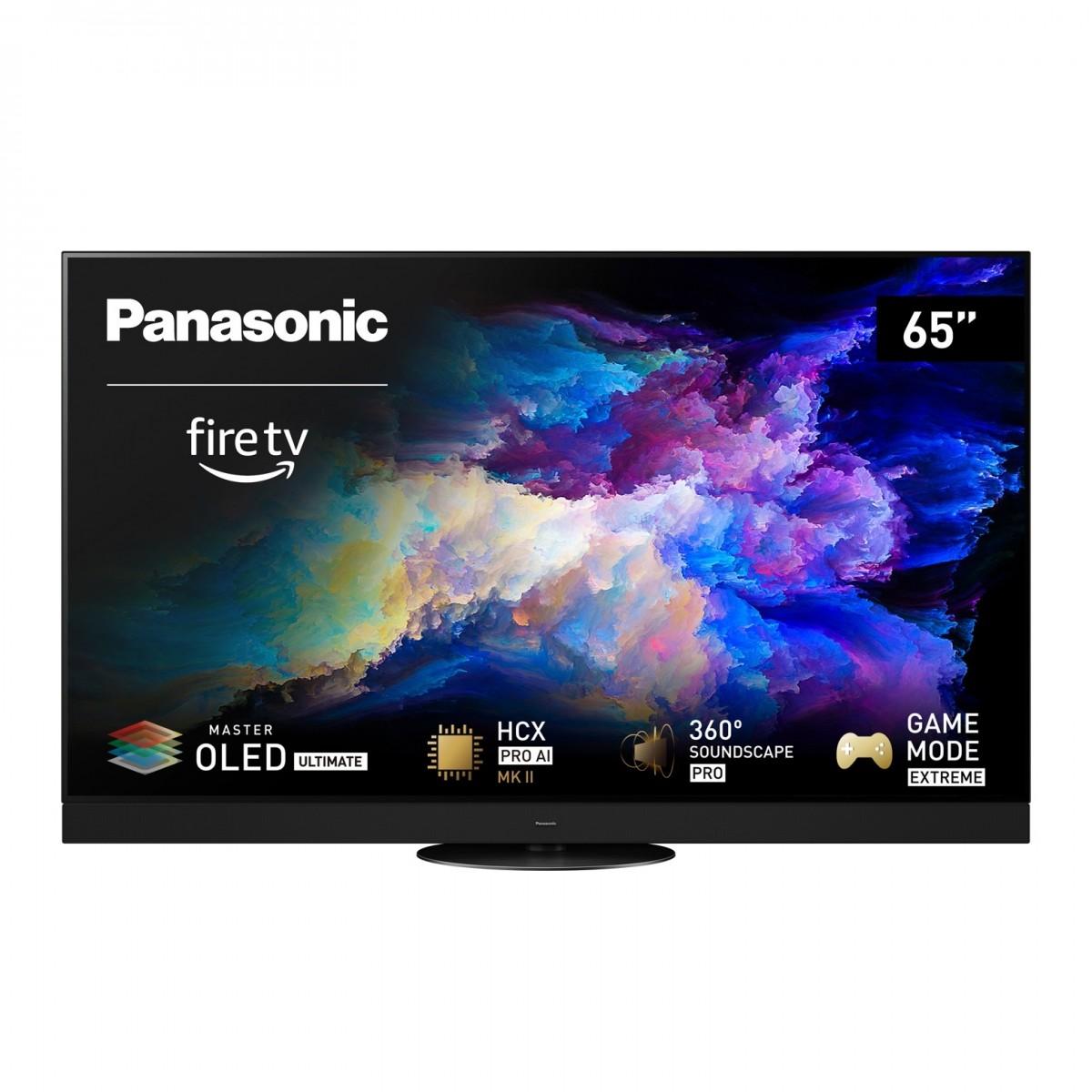
The core difference between these displays comes down to how they create light and color. The Panasonic Z95A OLED uses millions of organic compounds that emit their own light when electricity passes through them. This means each pixel can turn completely off, creating perfect blacks and infinite contrast ratios - a fundamental advantage that has made OLED the gold standard for home theaters.
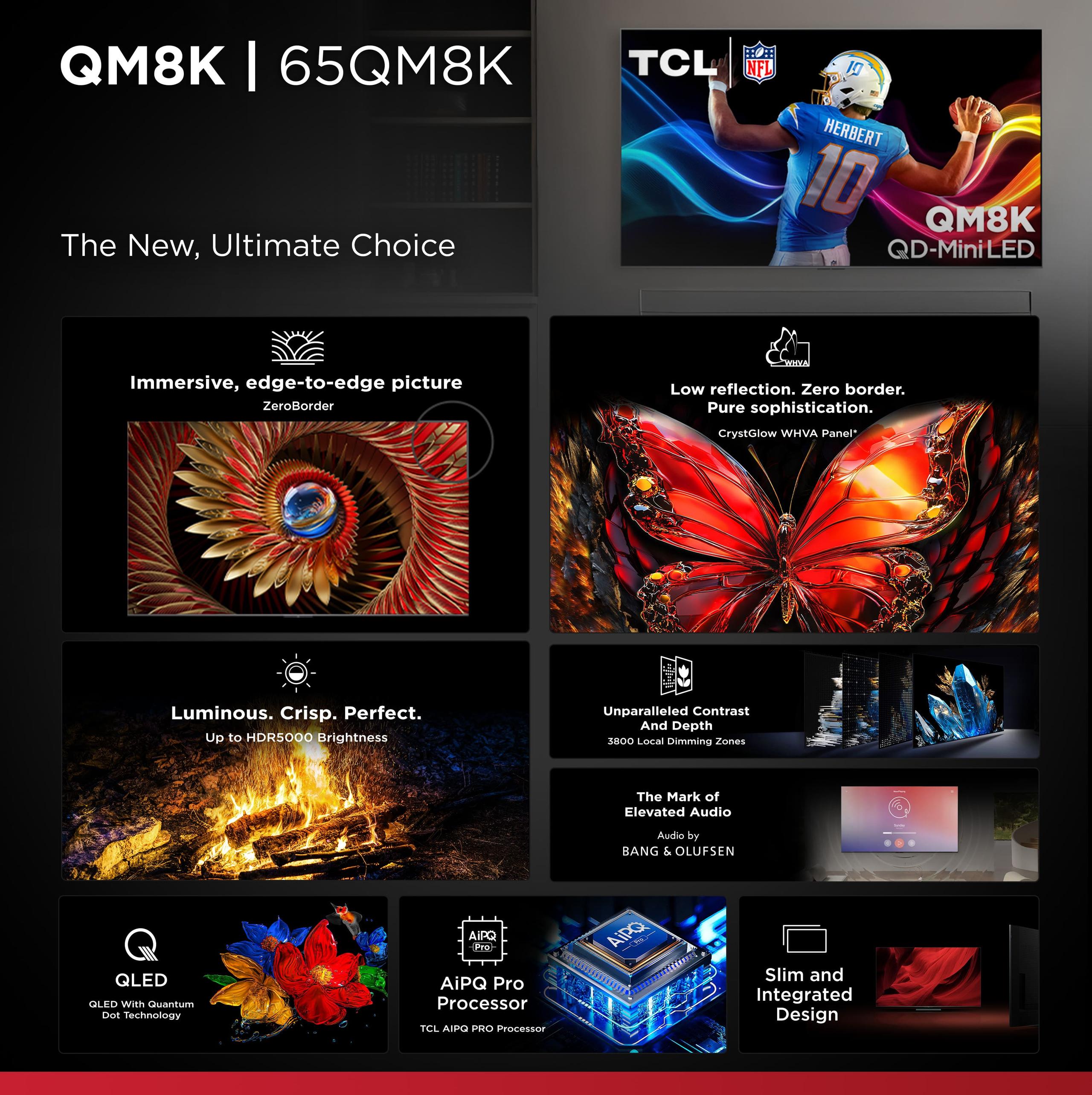
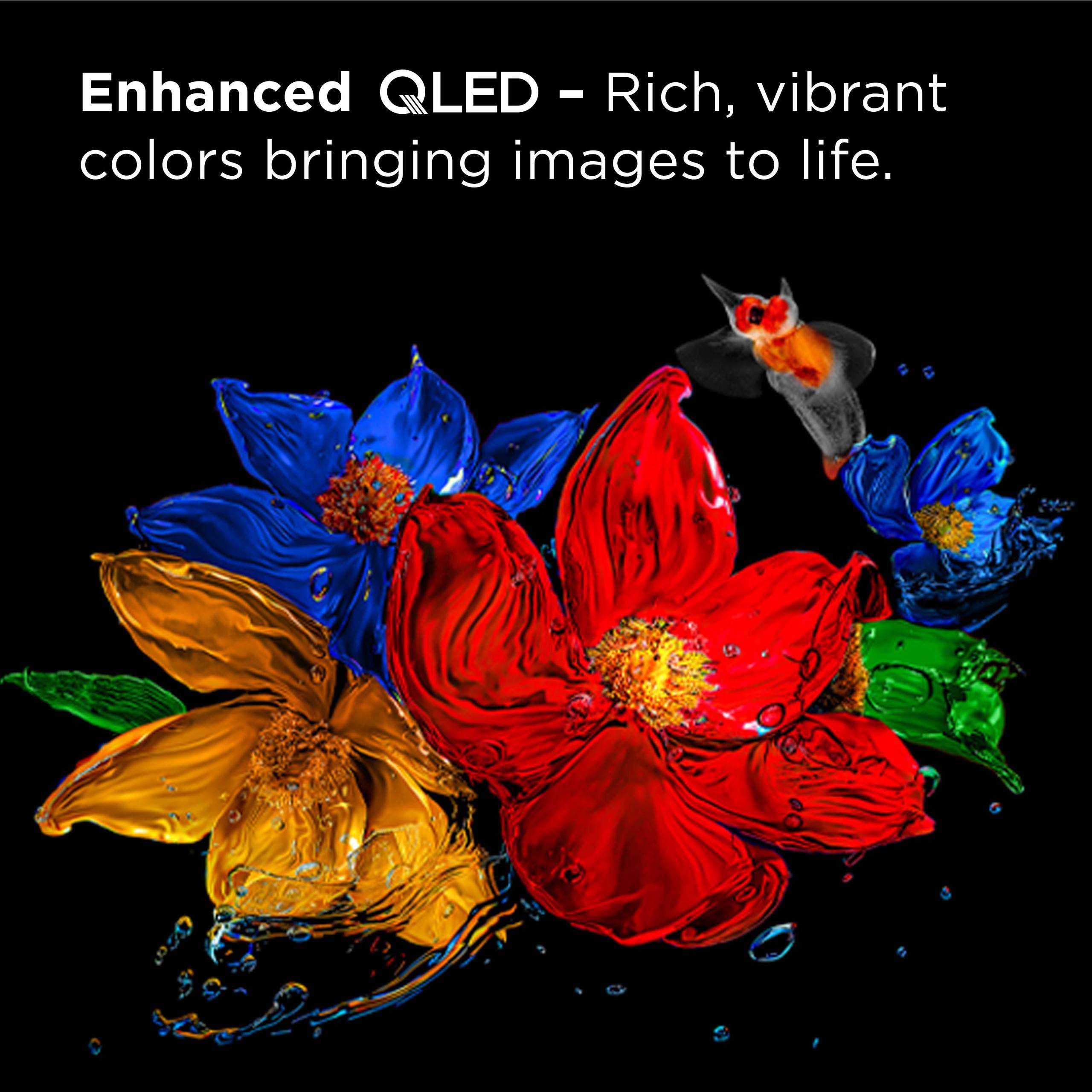
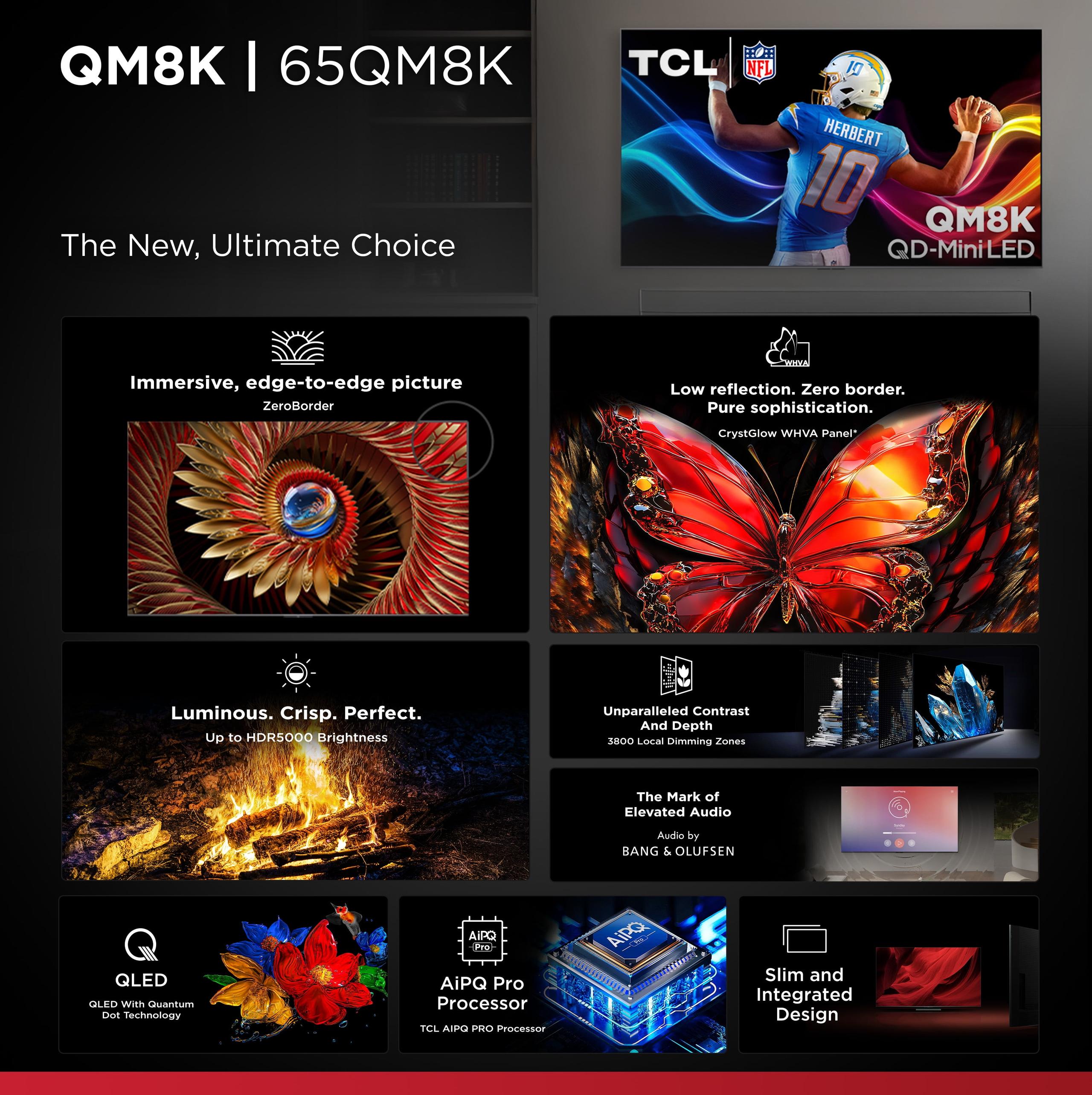
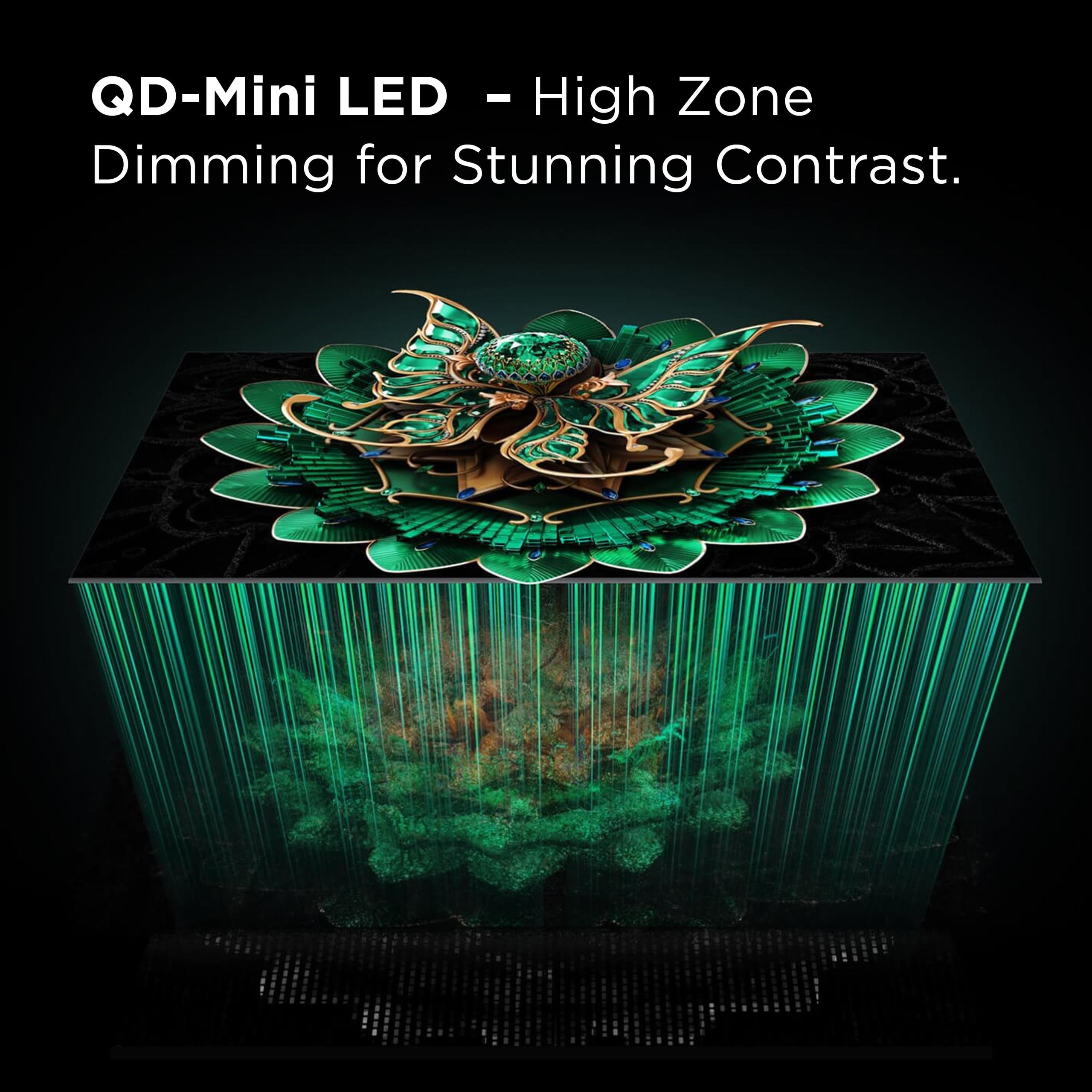
The TCL QM8K takes a different approach with QD-Mini LED technology. QD stands for Quantum Dot, which are microscopic crystals that convert blue LED light into precise colors when energized. The "Mini LED" part refers to thousands of tiny LED backlights - much smaller than traditional LCD backlights - that can be dimmed independently in zones across the screen. This combination allows LCD panels to approach OLED-like contrast while maintaining LCD's traditional brightness advantages.
Both technologies have evolved significantly since their introduction. OLED has largely solved early concerns about burn-in (permanent image retention) through better materials and pixel-shifting algorithms, while Mini LED has dramatically improved local dimming precision and reduced blooming effects that plagued earlier LCD TVs.
This is where the fundamental technology differences become most apparent. Our research into expert reviews consistently shows the Panasonic OLED delivering perfect blacks that no LCD technology can match. When a pixel needs to be black, it simply turns off completely. This creates an infinite contrast ratio that makes dark scenes in movies appear incredibly realistic, with deep shadows that seem to extend beyond the screen surface.
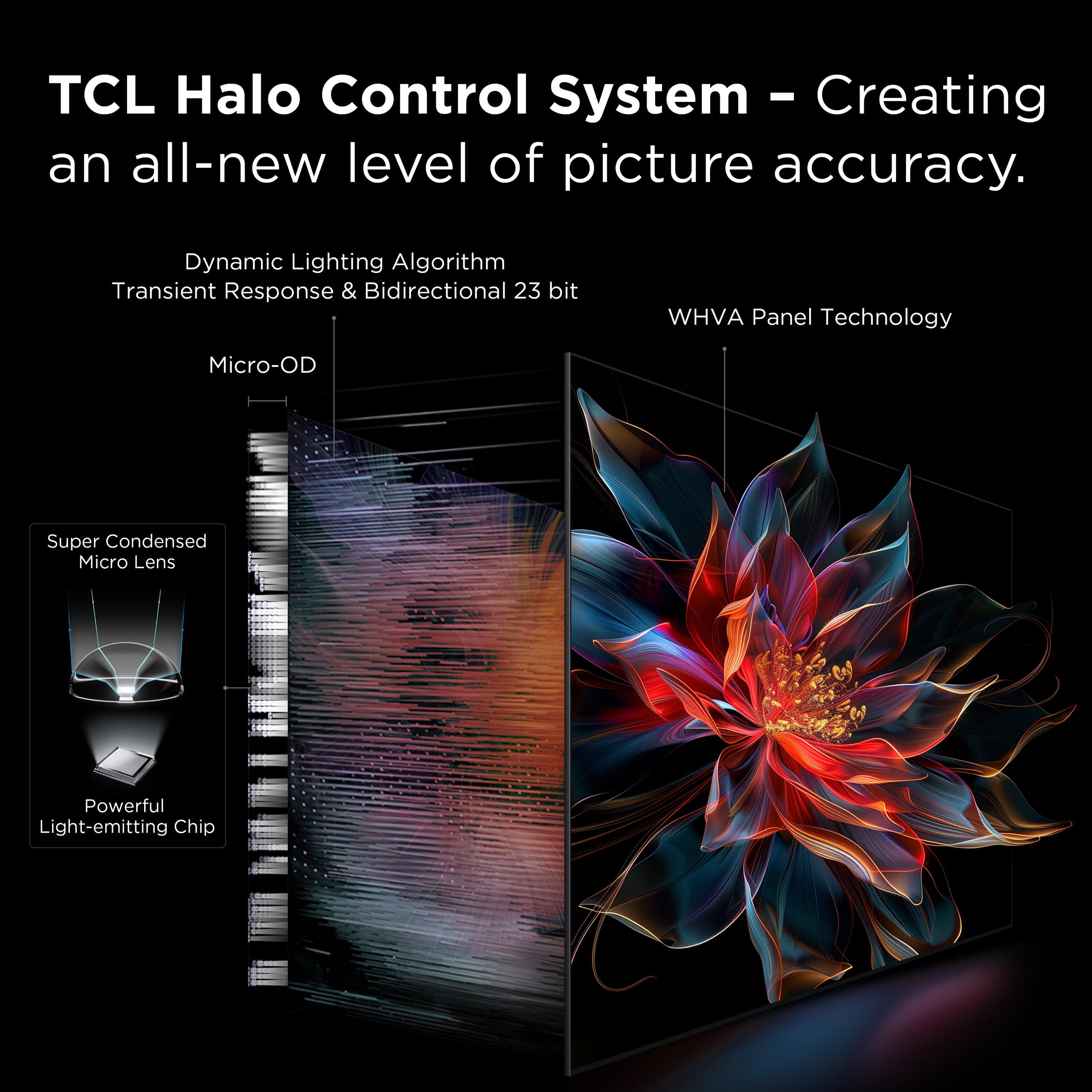
The TCL QM8K handles blacks differently but impressively for LCD technology. Its Halo Control System uses up to 3,800 local dimming zones - areas where the backlight can be independently controlled. While it can't achieve perfect blacks like OLED, our evaluation of user feedback suggests blooming (light bleeding around bright objects on dark backgrounds) is minimal and rarely noticeable during normal viewing. The 30,000,000:1 dynamic contrast ratio specification, while not infinite like OLED, represents excellent real-world performance.
For dark room viewing, particularly with cinematic content that relies on subtle shadow details, the Panasonic OLED maintains a clear advantage. However, the gap has narrowed considerably compared to earlier LCD technologies.
Here's where the tables turn dramatically. The TCL QM8K can achieve up to 5,000 nits peak brightness - a specification that puts it among the brightest consumer TVs available. In practical terms, this means HDR (High Dynamic Range) highlights like sunlight reflecting off water or explosions in action movies appear incredibly impactful and realistic.
The Panasonic OLED typically peaks around 1,000 nits, which is still bright enough for excellent HDR reproduction but lacks the jaw-dropping highlight intensity of high-end Mini LED displays. This brightness difference becomes most noticeable in bright room viewing, where the TCL QM8K can maintain image quality against ambient light that would wash out the OLED.
Based on professional reviews we've analyzed, the TCL QM8K excels with content that features bright highlights - think nature documentaries with snow-capped mountains, space movies with bright stars, or HDR gaming with explosive effects. The Panasonic OLED provides more balanced overall picture quality but may appear dim by comparison in direct sunlight or bright living rooms.
Both TVs approach color reproduction differently but achieve excellent results. The Panasonic OLED is renowned for natural, film-accurate colors that appear exactly as content creators intended. Its HCX Pro AI Processor MKII analyzes incoming signals and applies sophisticated color correction that results in lifelike skin tones and natural-looking landscapes.
The TCL QM8K leverages quantum dot technology to achieve 97% coverage of the DCI-P3 color gamut - the standard used by movie studios. This translates to more saturated, punchy colors that can appear more vivid than real life. The quantum dot layer ensures these colors remain stable over time, addressing a traditional LCD weakness.
Your preference between these approaches often comes down to viewing habits. Those who prioritize cinematic accuracy for movies and artistic content typically prefer the Panasonic OLED's natural approach. Viewers who enjoy vibrant HDR content, gaming, and sports often gravitate toward the TCL QM8K's more aggressive color presentation.
Both TVs released in the 144Hz era, offering native 144Hz refresh rates that smooth motion in fast-paced content and gaming. However, their approaches to gaming differ significantly.
The TCL QM8K includes Game Accelerator 288, which can handle Variable Refresh Rate (VRR) signals up to 288Hz. VRR eliminates screen tearing by matching the TV's refresh rate to the game's frame rate output. Additional gaming features like Shadow Enhancer (brightens dark areas to spot enemies) and Aiming Aid (highlights crosshairs) cater specifically to competitive gamers.
The Panasonic OLED's gaming strength lies in its near-instantaneous pixel response time. When a pixel needs to change color, OLED technology responds almost immediately, eliminating motion blur and ghosting that can affect fast-moving objects. This makes it exceptional for racing games, first-person shooters, and any content with rapid movement.
Input lag - the delay between pressing a controller button and seeing the response on screen - is excellent on both displays when Game Mode is enabled. Our research suggests both achieve the sub-20 millisecond response times that competitive gamers demand.
The TCL QM8K runs Google TV, Google's latest smart TV platform that replaced Android TV. This provides access to virtually every major streaming app, excellent voice search functionality, and integration with Google's ecosystem. The interface is fast and intuitive, though some users report occasional app crashes with lesser-known streaming services.
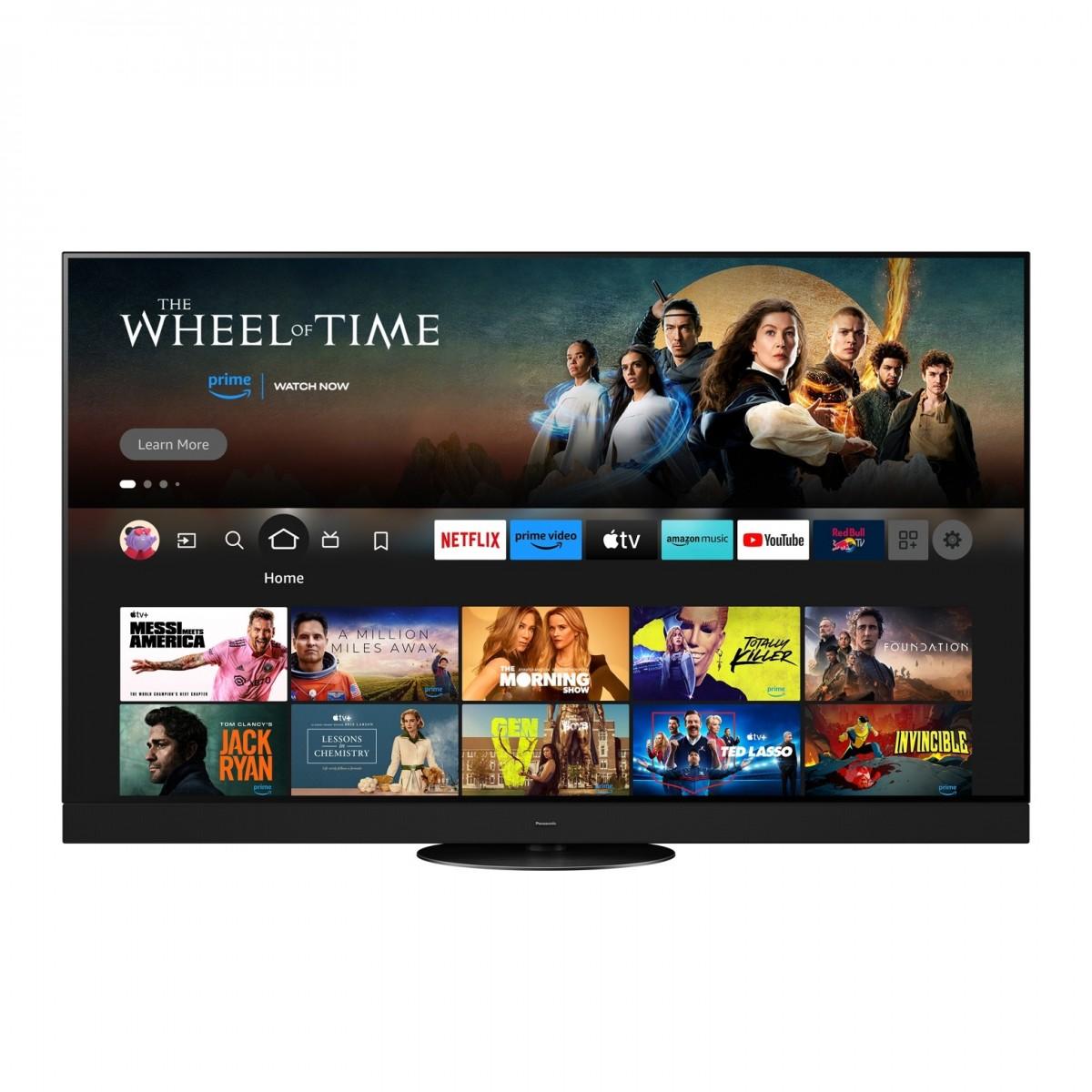
The Panasonic OLED uses Amazon Fire TV Built-in, which offers seamless integration with Prime Video and Alexa voice control. While the app selection is slightly more limited than Google TV, all major streaming services are available. The interface prioritizes Amazon content, which some users find intrusive while others appreciate the content discovery.
Both platforms receive regular updates and support the latest streaming standards, so your choice often comes down to ecosystem preference - Google services versus Amazon Prime integration.
TV audio has improved dramatically in recent years, and both models reflect this trend. The TCL QM8K features Bang & Olufsen tuned speakers with built-in subwoofer and Dolby Atmos support. This creates surprisingly robust sound with actual bass response - something most TVs struggle with due to size constraints.
The Panasonic OLED includes standard Dolby Atmos speakers but lacks the enhanced tuning and dedicated subwoofer of the TCL. While adequate for casual viewing, it benefits more from external sound system integration.
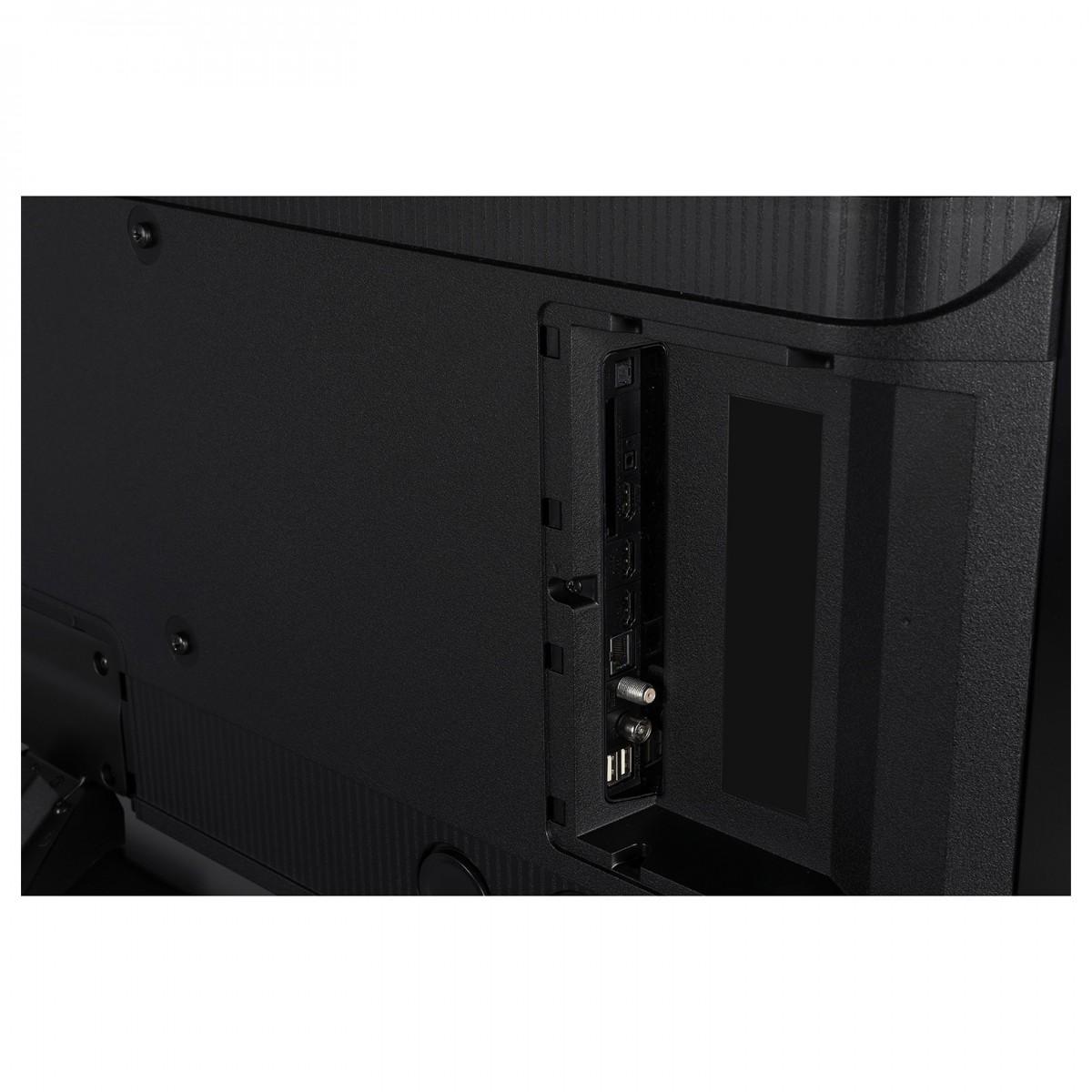
However, at this price level, most users invest in dedicated soundbars or home theater systems. Both TVs support HDMI eARC (Enhanced Audio Return Channel), which can pass high-quality audio formats to compatible sound systems without quality loss.
OLED technology's emissive nature means the Panasonic OLED maintains consistent picture quality from almost any viewing angle. Colors remain accurate and brightness stays stable whether you're sitting directly in front or off to the side - crucial for living rooms where multiple people watch from different positions.
The TCL QM8K uses a WHVA (Wide Horizontal Viewing Angle) panel that improves off-axis performance compared to traditional LCD panels. While not matching OLED's consistency, it performs well enough that most viewers won't notice significant degradation unless sitting at extreme angles.
Room lighting plays a crucial role in the viewing experience. The TCL QM8K's high brightness makes it more versatile in various lighting conditions, maintaining picture quality even with windows behind the seating area. The Panasonic OLED performs best in controlled lighting environments where its perfect blacks and accurate colors can be fully appreciated.
OLED burn-in concerns, while largely addressed in modern panels, still exist with the Panasonic OLED. Displaying static images like news tickers or gaming HUDs for extended periods can potentially cause permanent image retention. However, current OLED panels include pixel-shifting algorithms and brightness adjustments that make burn-in unlikely with normal viewing habits.
The TCL QM8K, using traditional LCD technology with LED backlights, doesn't face burn-in concerns and typically maintains consistent performance for many years. The quantum dot layer is designed for long-term color stability, addressing traditional LCD color degradation over time.
Choose the TCL 65" QM8K if you want flagship-level performance without flagship pricing. It excels in bright rooms, delivers impactful HDR content, includes superior built-in audio, and offers extensive gaming features. The picture quality approaches premium OLED levels while maintaining LCD's traditional reliability advantages. This makes it ideal for families with mixed viewing habits, gamers who want competitive features, and anyone prioritizing value without sacrificing performance.
The Panasonic Z95A OLED justifies its premium pricing for viewers who prioritize ultimate picture quality above all else. Its perfect blacks, infinite contrast, natural colors, and excellent viewing angles create a reference-quality viewing experience that LCD technology still can't fully match. It's the clear choice for dedicated home theaters, movie enthusiasts, and users who primarily watch content in controlled lighting conditions.
Your room environment often makes the decision easier. Bright living rooms with large windows favor the TCL QM8K's superior brightness capability. Dedicated theater rooms or basement setups showcase the Panasonic OLED's contrast advantages.
At the time of writing, the price difference between these technologies remains substantial, with the TCL QM8K offering roughly 80-90% of OLED picture quality at approximately one-third the cost. This value proposition makes it difficult to recommend OLED unless picture quality is truly your primary concern and budget is secondary.
Both represent excellent choices within their respective market positions. The TCL QM8K proves that LCD technology can compete with OLED when properly implemented, while the Panasonic OLED demonstrates why OLED remains the reference standard for critical viewing applications. Your specific viewing habits, room environment, and budget priorities will ultimately determine which technology serves you better.
| Panasonic Z95A 65" OLED 4K Ultra HD Smart TV | TCL 65" QM8K Series QD-Mini LED 4K Smart TV |
|---|---|
| Display Technology - Fundamentally different approaches to creating the picture | |
| OLED (self-emissive pixels, perfect blacks) | QD-Mini LED (quantum dots + mini LED backlight) |
| Peak Brightness - Critical for HDR impact and bright room viewing | |
| ~1,000 nits (excellent for dark rooms, adequate for bright rooms) | Up to 5,000 nits (exceptional HDR punch, excellent for any lighting) |
| Black Levels - Most important for contrast and dark scene detail | |
| Perfect blacks, infinite contrast (pixels turn completely off) | Very good blacks with minimal blooming (not perfect but impressive) |
| Local Dimming Zones - Controls how precisely the TV can adjust brightness | |
| Pixel-level dimming (8+ million zones, one per pixel) | Up to 3,800 zones (excellent for LCD, prevents most blooming) |
| Color Gamut Coverage - Determines color vibrancy and accuracy | |
| Natural, film-accurate colors with deep saturation | 97% DCI-P3, vivid quantum dot enhanced colors |
| Gaming Refresh Rate - Important for smooth motion and competitive gaming | |
| 144Hz native with VRR support | 144Hz native, Game Accelerator up to 288Hz VRR |
| Viewing Angles - Matters for rooms with wide seating arrangements | |
| Excellent (minimal color/brightness shift off-axis) | Good (WHVA panel improves LCD limitations, but not OLED-level) |
| Smart TV Platform - Affects app selection and user experience | |
| Amazon Fire TV Built-in (Alexa integration, Prime Video focus) | Google TV (extensive app library, Google ecosystem integration) |
| Built-in Audio - Quality of speakers without external sound system | |
| Standard Dolby Atmos speakers (adequate but benefits from soundbar) | Bang & Olufsen tuned with subwoofer (notably better bass and clarity) |
| Burn-in Risk - Long-term reliability consideration | |
| Minimal risk with modern panels and protective features | No burn-in risk (traditional LCD technology advantage) |
| Value Proposition - Performance per dollar consideration | |
| Premium pricing for reference-quality picture and perfect blacks | Exceptional value delivering near-OLED performance at much lower cost |
The Panasonic Z95A 65" OLED is superior for dark room viewing due to its perfect black levels and infinite contrast ratio. Each OLED pixel can turn completely off, creating true blacks that make dark scenes appear incredibly realistic. The TCL 65" QM8K Series QD-Mini LED performs well in dark rooms but cannot achieve the perfect blacks of OLED technology.
The TCL 65" QM8K Series QD-Mini LED is significantly brighter with up to 5,000 nits peak brightness, making it excellent for bright living rooms with lots of ambient light. The Panasonic Z95A 65" OLED peaks around 1,000 nits, which may appear dim in very bright environments but is adequate for most lighting conditions.
The TCL 65" QM8K Series QD-Mini LED offers exceptional value, delivering near-premium picture quality at a much lower cost than OLED alternatives. While the Panasonic Z95A 65" OLED provides reference-quality performance, it commands a significant premium that may not be justified for most viewers.
Both TVs excel at gaming with 144Hz refresh rates and low input lag. The TCL 65" QM8K Series QD-Mini LED has an edge with Game Accelerator 288 supporting up to 288Hz VRR and specialized gaming features like Shadow Enhancer. The Panasonic Z95A 65" OLED offers near-instant pixel response times that eliminate motion blur.
The TCL 65" QM8K Series QD-Mini LED runs Google TV with extensive app selection and Google ecosystem integration. The Panasonic Z95A 65" OLED uses Amazon Fire TV Built-in with excellent Alexa integration and Prime Video optimization. Both platforms are robust, so choice depends on your preferred ecosystem.
The TCL 65" QM8K Series QD-Mini LED features superior built-in audio with Bang & Olufsen tuning, a dedicated subwoofer, and better bass response. The Panasonic Z95A 65" OLED has standard TV speakers that, while adequate, benefit significantly from an external sound system.
Both TVs work excellently for home theaters. The Panasonic Z95A 65" OLED is ideal for dedicated theater rooms with controlled lighting, offering perfect blacks and natural colors. The TCL 65" QM8K Series QD-Mini LED works well in multipurpose rooms and provides impactful HDR that can compete with commercial theater brightness.
The Panasonic Z95A 65" OLED maintains consistent picture quality from virtually any viewing angle with minimal color shift. The TCL 65" QM8K Series QD-Mini LED uses a WHVA panel that improves LCD viewing angles but cannot match OLED's off-axis performance.
The TCL 65" QM8K Series QD-Mini LED uses traditional LCD technology without burn-in concerns and typically maintains consistent performance for many years. The Panasonic Z95A 65" OLED has minimal burn-in risk with modern protective features, but OLED panels can potentially develop image retention with extreme usage patterns.
The Panasonic Z95A 65" OLED excels with movies due to its perfect blacks, infinite contrast, and natural color accuracy that matches filmmakers' intentions. The TCL 65" QM8K Series QD-Mini LED provides excellent movie performance with superior brightness for HDR highlights, though blacks aren't quite as deep.
Both TVs excel with HDR content but in different ways. The TCL 65" QM8K Series QD-Mini LED delivers more impactful HDR highlights with its 5,000-nit peak brightness, making bright scenes incredibly realistic. The Panasonic Z95A 65" OLED provides better overall HDR balance with perfect blacks complementing bright highlights.
Choose the TCL 65" QM8K Series QD-Mini LED for bright living rooms with mixed viewing habits, offering excellent performance across all content types at great value. Select the Panasonic Z95A 65" OLED if you prioritize ultimate picture quality for movie watching and have a controlled lighting environment with budget flexibility for premium performance.
We've done our best to create useful and informative comparisons to help you decide what product to buy. Our research uses advanced automated methods to create this comparison and perfection is not possible - please contact us for corrections or questions. These are the sites we've researched in the creation of this article: youtube.com - youtube.com - whathifi.com - tomsguide.com - shop.panasonic.com - store.in.panasonic.com - rtings.com - applianceplus.co.nz - rtings.com - store.in.panasonic.com - samsung.com - tomsguide.com - youtube.com - businessinsider.com - rtings.com - youtube.com - avsforum.com - avsforum.com - bestbuy.com - tcl.com - tcl.com - tcl.com - flatpanelshd.com - romomattressfurniture.com - brandsmartusa.com - pcrichard.com - tvsbook.com - tcl.com - youtube.com - prnewswire.com - tcl.com - tcl.com

Privacy Policy
Terms and Conditions - Affiliate Policy
Home Security
© Copyright 2008-2026.
11816 Inwood Rd #1211, Dallas, TX 75244