

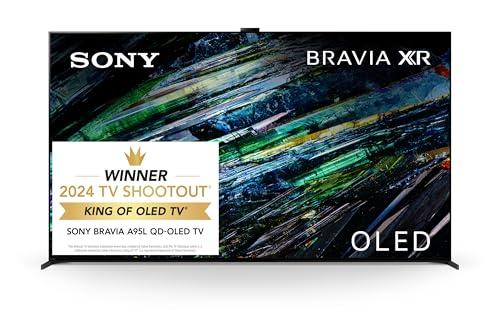


Shopping for a premium OLED TV can feel overwhelming, especially when you're comparing models from the same manufacturer. Sony offers two compelling options that, while sharing the OLED name, use fundamentally different technologies and target different audiences. The Sony BRAVIA XR A95L, released in 2023, represents Sony's flagship QD-OLED technology, while the Sony BRAVIA 8, launched in 2024, uses conventional OLED panels at a more accessible price point.
Understanding these differences matters because OLED TVs have become the gold standard for home entertainment. They deliver perfect blacks by turning individual pixels completely off, create infinite contrast ratios that make images pop off the screen, and provide viewing angles that remain consistent from almost any seat in the room. But not all OLEDs are created equal, and the technology behind each panel significantly affects what you'll see on screen.
The most important distinction between these two Sony models lies in their panel technology. The A95L uses QD-OLED (Quantum Dot OLED), while the BRAVIA 8 relies on W-OLED (White OLED). This isn't just marketing jargon—it fundamentally changes how each TV produces the colors and brightness you see.
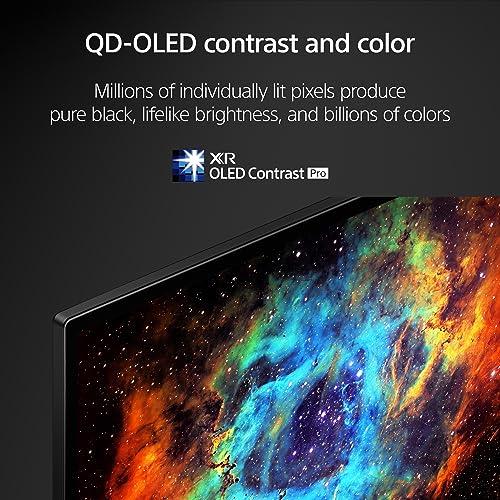
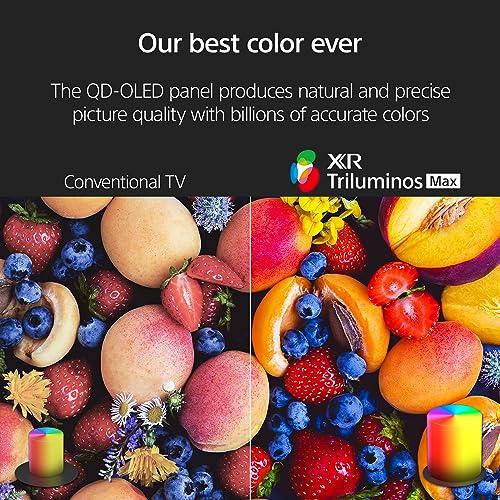
QD-OLED panels work by using quantum dots, which are tiny semiconductor crystals that emit specific colors when hit with light. In the A95L's case, blue OLED light hits these quantum dots to create pure red and green colors. This approach produces more vibrant, saturated colors because there's no color filter reducing the light output. Think of it like using a prism to split white light into a rainbow—you get purer, more intense colors.
W-OLED panels, used in the BRAVIA 8, take a different approach. They create white light from OLED pixels, then use color filters to produce red, green, and blue. While this method is proven and reliable, those color filters inevitably reduce brightness and can make colors appear less vivid. It's like looking at a beautiful sunset through sunglasses—still impressive, but not quite as punchy.
Since 2023, QD-OLED technology has matured significantly. Samsung pioneered this approach, but Sony's implementation in the A95L adds sophisticated processing that many consider superior for cinematic content. Meanwhile, W-OLED panels have also improved, becoming more efficient and reliable, which explains why Sony continues using them in models like the BRAVIA 8.
Peak brightness might be the single most important specification when comparing these TVs, especially for HDR (High Dynamic Range) content. HDR works by displaying a much wider range of brightness levels than standard content, from deep blacks to blindingly bright highlights. The brighter your TV can get, the more impactful those HDR scenes become.
Our research into expert reviews consistently shows the A95L achieving around 1,300 nits of peak brightness in HDR mode. That's roughly double what many traditional OLEDs can manage. In practical terms, this means HDR highlights like the sun reflecting off water, explosions in action movies, or bright stadium lights in sports really pop off the screen. The BRAVIA 8, limited by its W-OLED technology, typically maxes out around 700-800 nits—still respectable, but noticeably less impactful in bright HDR scenes.
This brightness advantage becomes crucial if you're planning a home theater setup in a room with ambient lighting. While OLED's perfect blacks shine in dark rooms, higher peak brightness helps maintain HDR punch even when you can't achieve complete darkness.
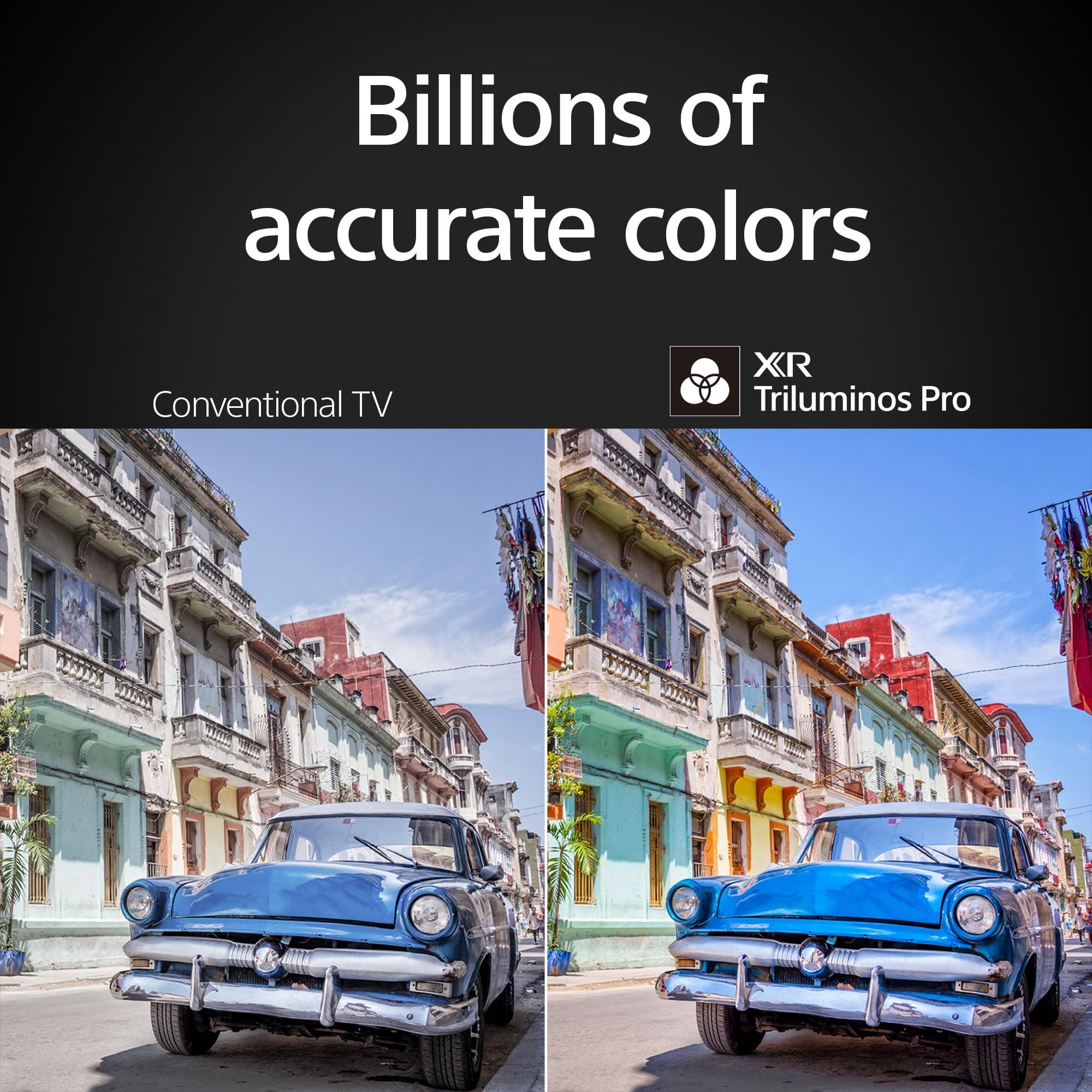
Color reproduction separates good TVs from great ones, and here the panel technology differences become immediately apparent. The A95L delivers what reviewers consistently describe as more vibrant, lifelike colors straight out of the box. This QD-OLED advantage shows up most dramatically in highly saturated scenes—think animated movies, nature documentaries, or video games with stylized art.
But vibrancy isn't everything. Color accuracy matters just as much, especially if you watch a lot of movies and want to see them as the director intended. Professional reviews indicate the A95L arrives pre-calibrated to impressive accuracy levels, often eliminating the need for professional calibration that costs several hundred dollars. The BRAVIA 8 requires more tweaking to achieve comparable accuracy, though it's certainly capable of excellent results with proper adjustment.
Color volume represents another technical advantage for QD-OLED. This metric measures how well a TV maintains color saturation as brightness increases. Traditional OLEDs often see colors fade as they get brighter, but the A95L's quantum dot layer helps maintain rich colors even in bright HDR highlights.
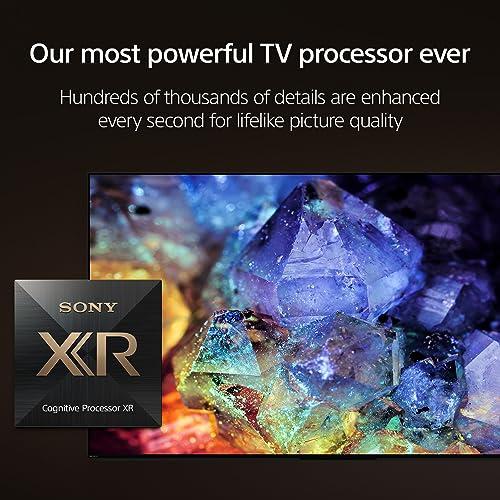
Both TVs benefit from Sony's Cognitive Processor XR, which uses AI-based algorithms to analyze and enhance every element of the picture in real-time. However, the A95L features a more advanced version that takes better advantage of the QD-OLED panel's capabilities.
This processing prowess becomes especially noticeable with upscaling—converting lower-resolution content to 4K. Sony has always excelled here, and both models make standard HD content look surprisingly sharp and detailed. The A95L edges ahead with slightly better motion handling and more sophisticated tone mapping for HDR content, though both deliver excellent results for everyday viewing.
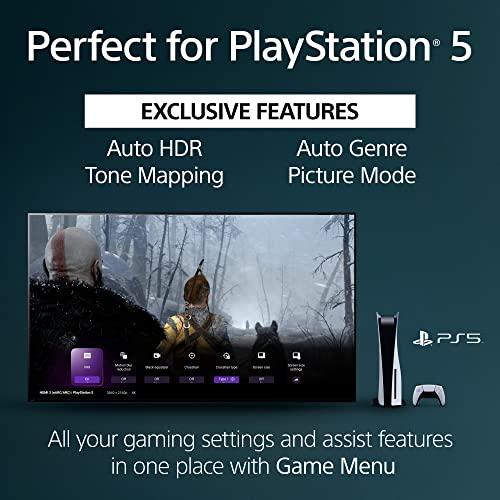
Modern gaming demands have pushed TV manufacturers to include features that were unthinkable just a few years ago. Both the A95L and BRAVIA 8 support 4K gaming at 120Hz, Variable Refresh Rate (VRR) to eliminate screen tearing, and Auto Low Latency Mode (ALLM) that automatically switches to the fastest response settings when gaming.
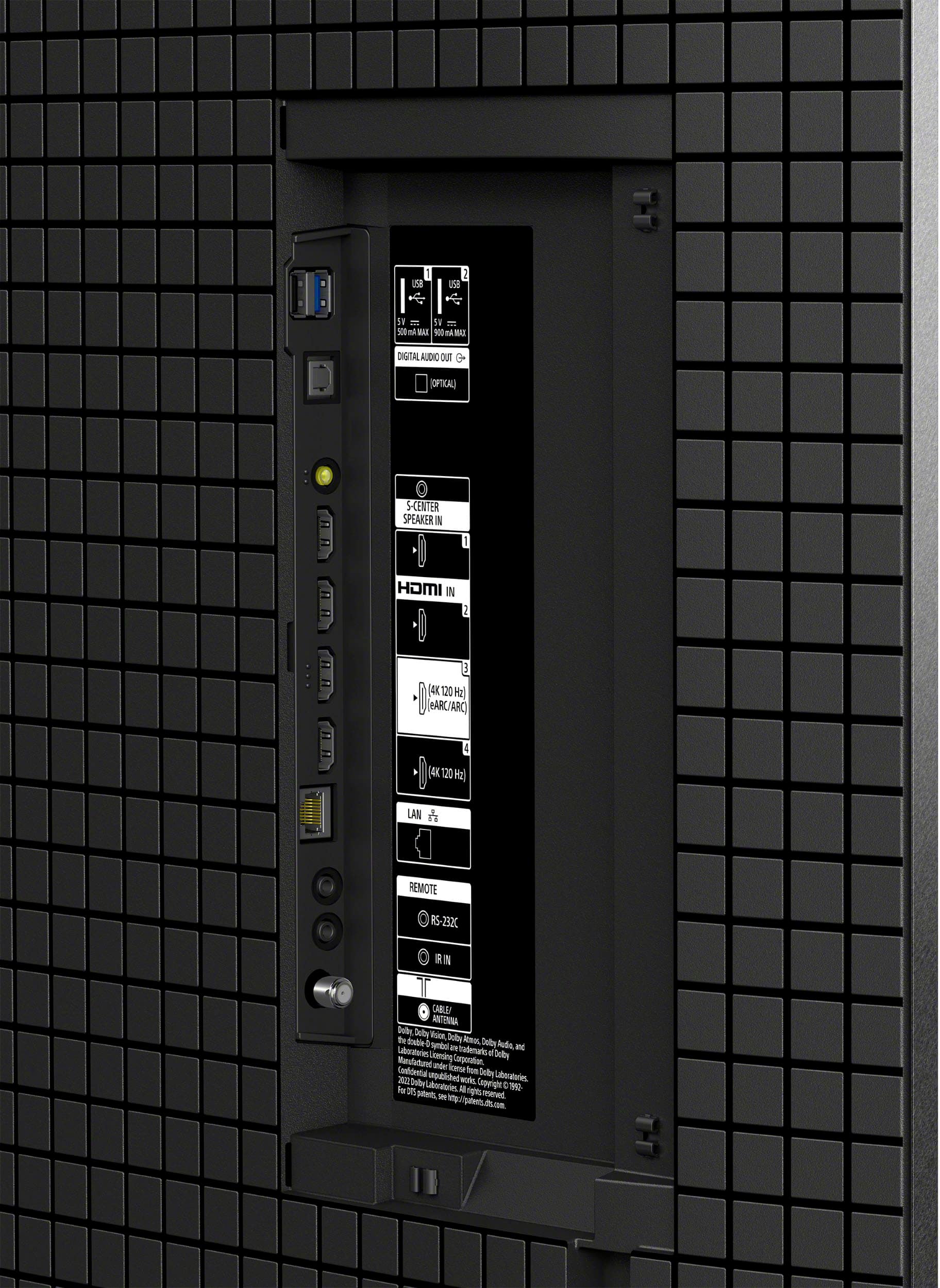
The nearly instantaneous pixel response time of OLED technology means motion blur is virtually nonexistent—crucial for competitive gaming where every frame matters. However, both Sony models share a limitation that might frustrate serious gamers: only two of their four HDMI ports support full HDMI 2.1 features. Competitors from Samsung and LG typically offer four full-speed ports.
Input lag measurements from professional reviews show both TVs performing well for gaming, though the A95L maintains a slight edge in processing speed. For most gamers, the difference won't be noticeable, but competitive players might prefer alternatives with lower latency.
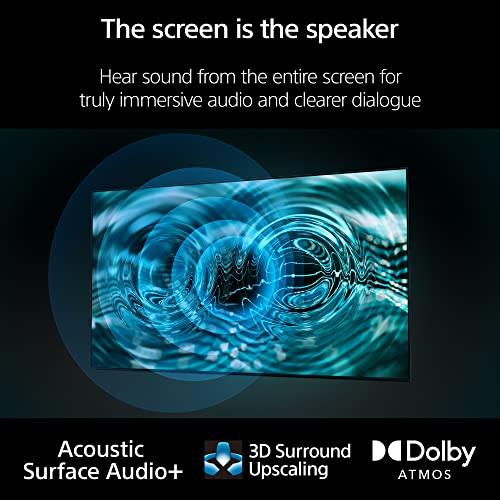
Sony's Acoustic Surface Audio+ technology represents one of their most innovative features. Instead of traditional speakers, both TVs use actuators behind the screen to vibrate the entire panel, turning the display itself into a speaker. This creates an incredibly immersive experience where sound appears to come directly from the action on screen.
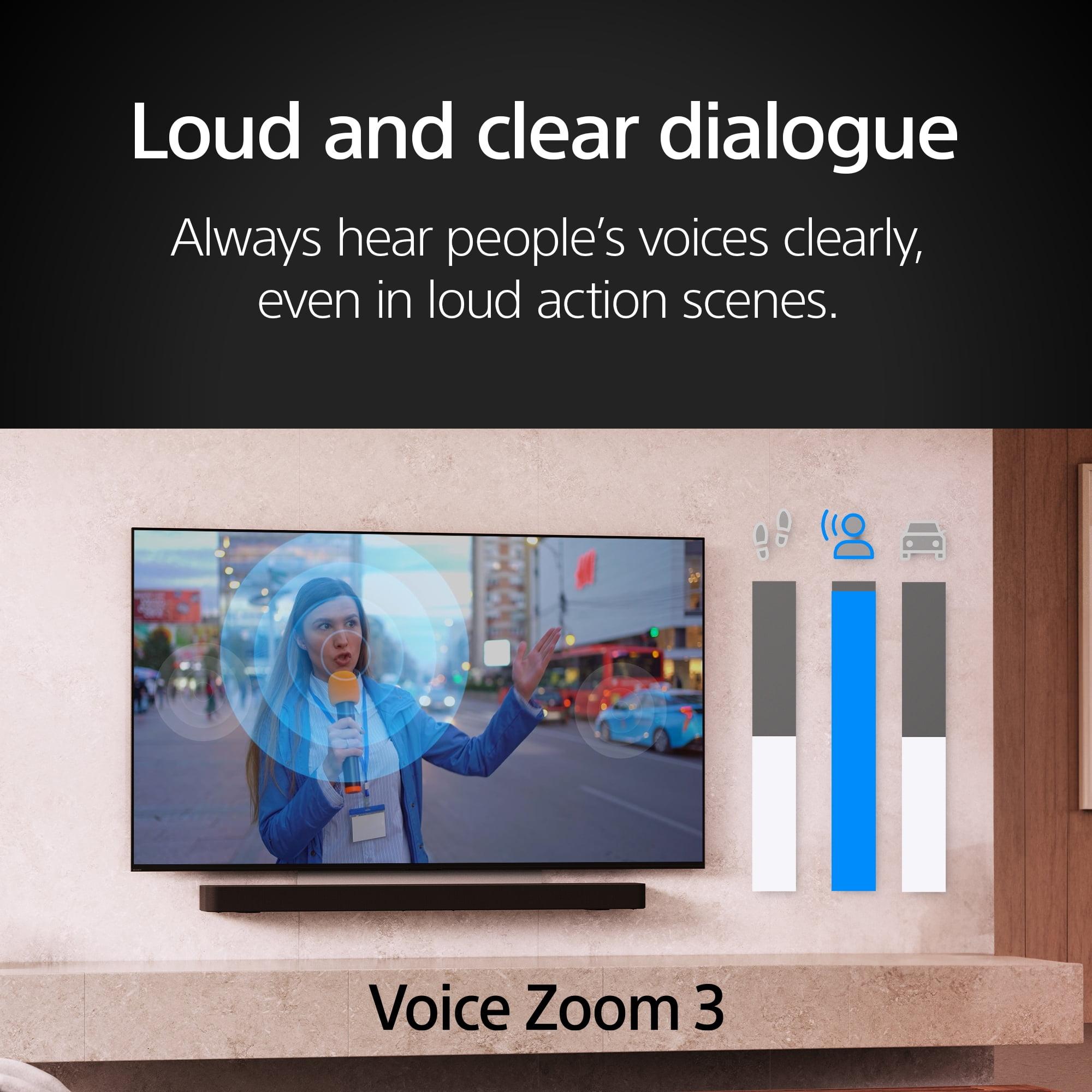
For dialogue-heavy content like dramas or news, this technology excels at keeping voices perfectly synced with lip movements. The effect is subtle but noticeable, creating a more natural viewing experience than traditional speaker setups. The A95L includes slightly more refined audio tuning, but both models deliver surprisingly good sound quality for built-in TV audio.
Both TVs support Dolby Atmos and can work as center channel speakers when paired with compatible Sony soundbars through Acoustic Center Sync. This feature essentially turns your TV into part of a larger home theater system, though dedicated speakers will always outperform built-in options for serious audiophiles.
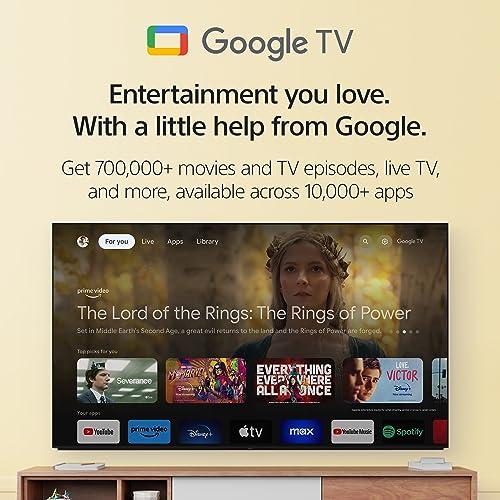
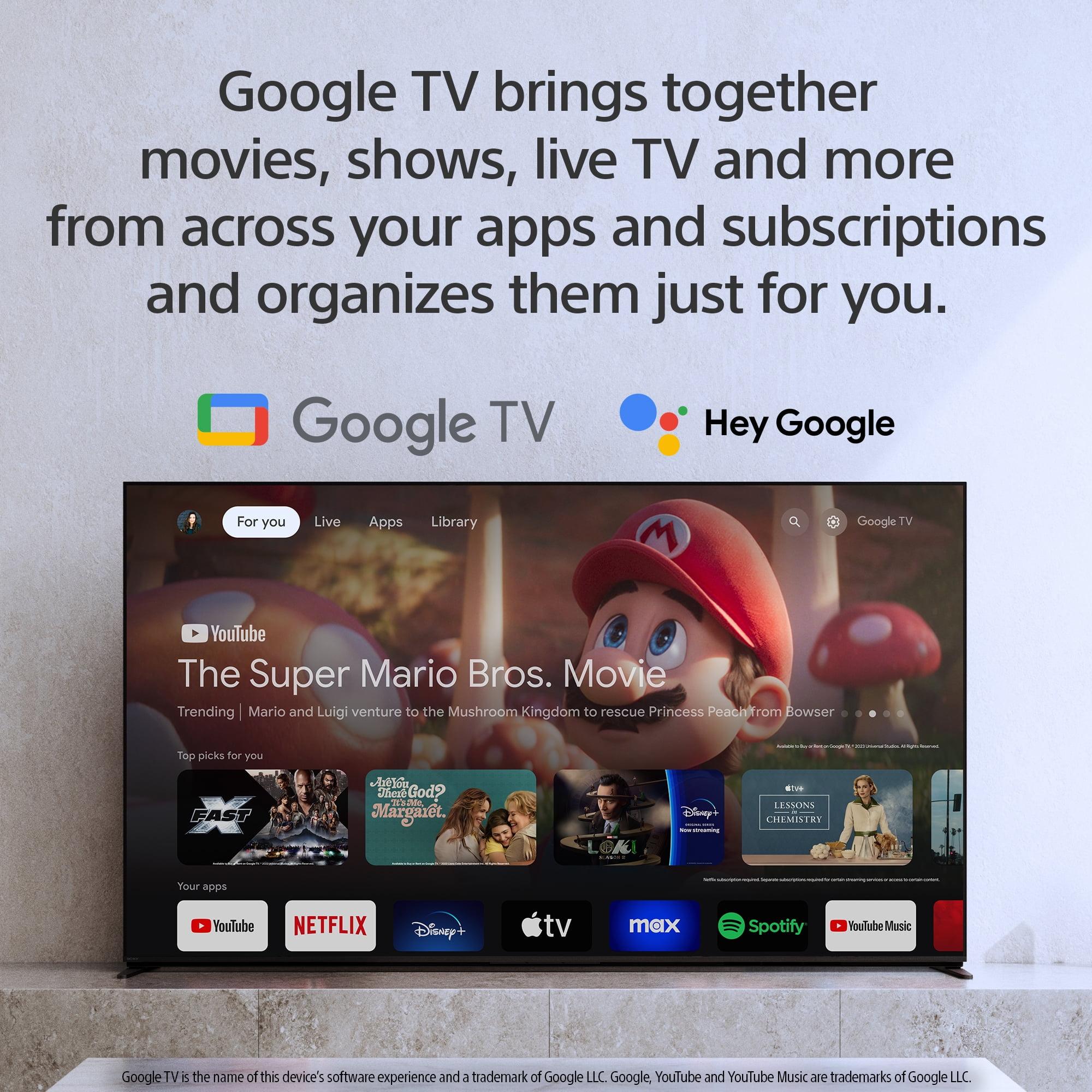
Both models run Google TV, which has evolved into one of the more user-friendly smart TV platforms. The interface aggregates content from multiple streaming services into a single, browsable feed, making it easier to find something to watch without jumping between apps.
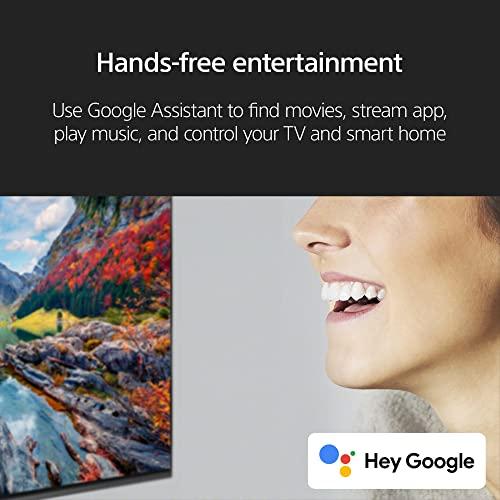
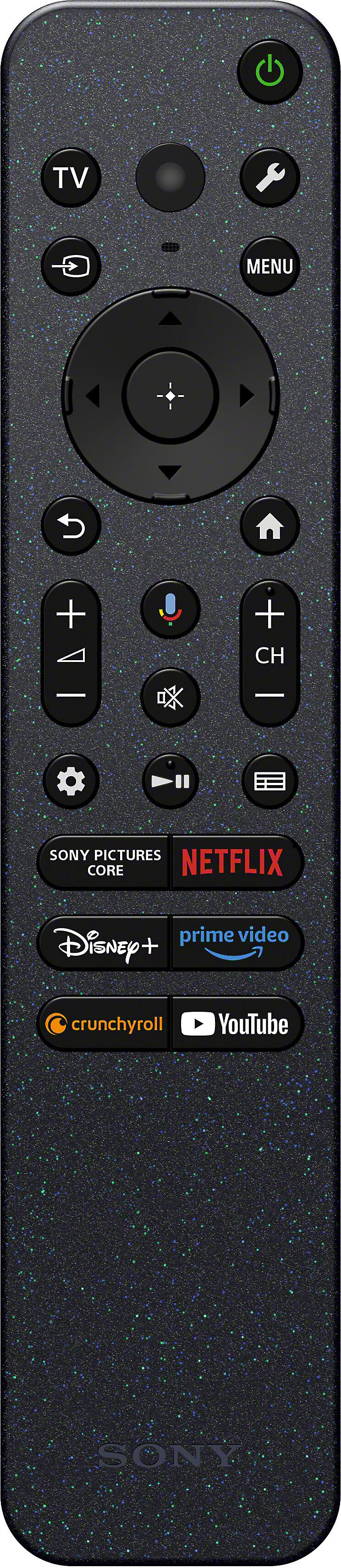
Voice control works through either the remote or hands-free commands, and both TVs support Apple AirPlay, Chromecast built-in, and Apple HomeKit integration. The platform feels responsive during normal use, though some reviewers note occasional sluggishness when first powering on or switching between certain inputs.
One practical advantage of Google TV is its wide app support and regular updates. Both models should receive several years of software support, though the newer BRAVIA 8 will likely see updates for a longer period.
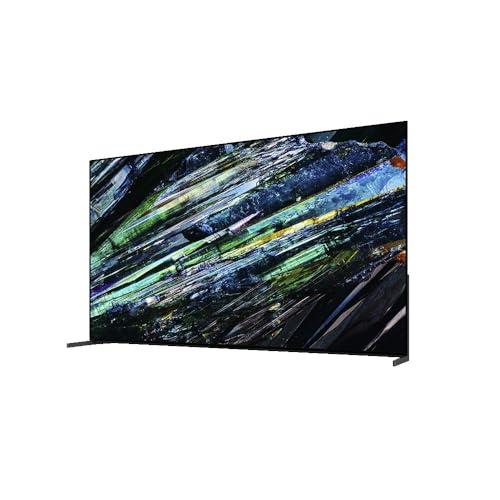
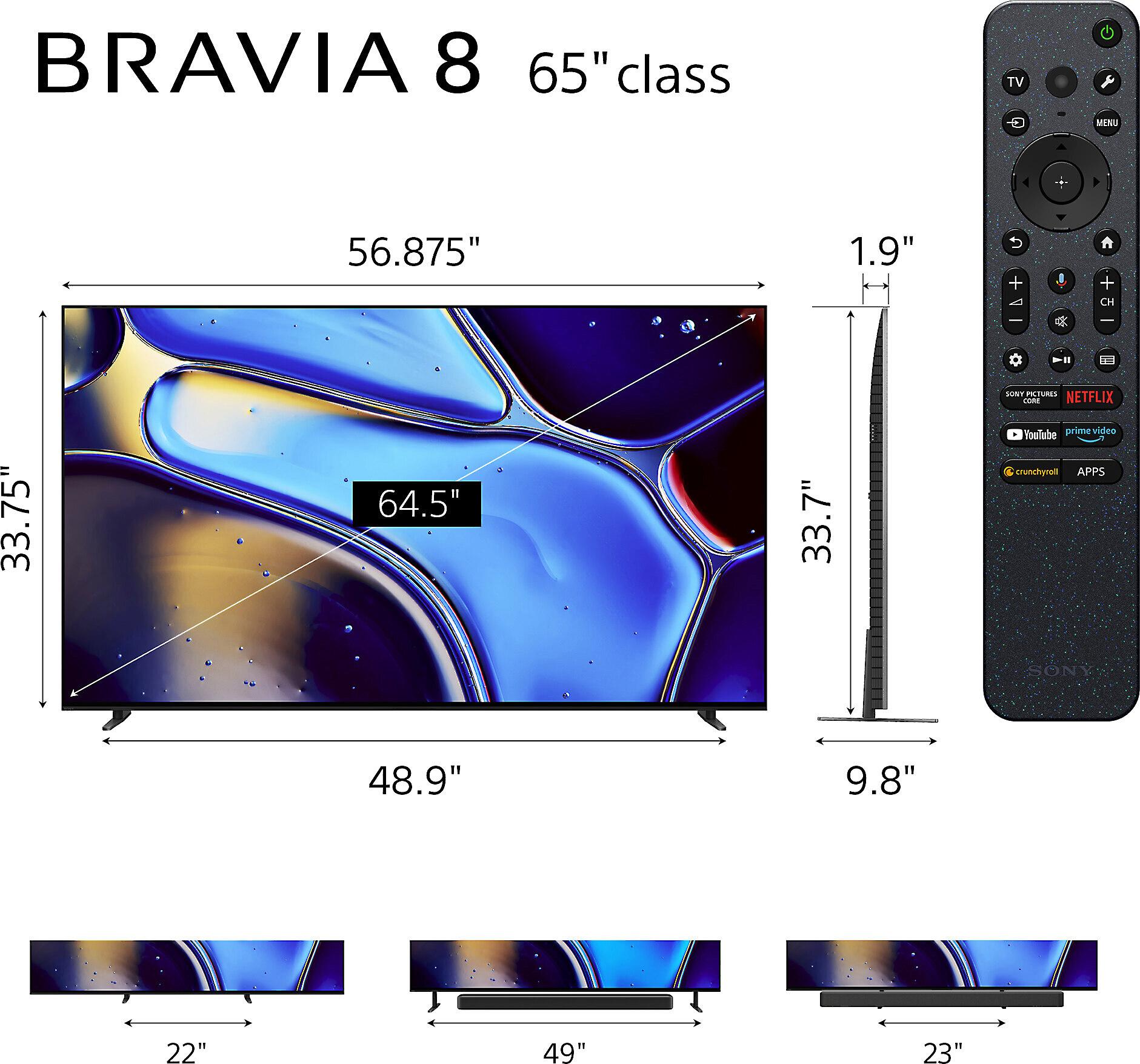
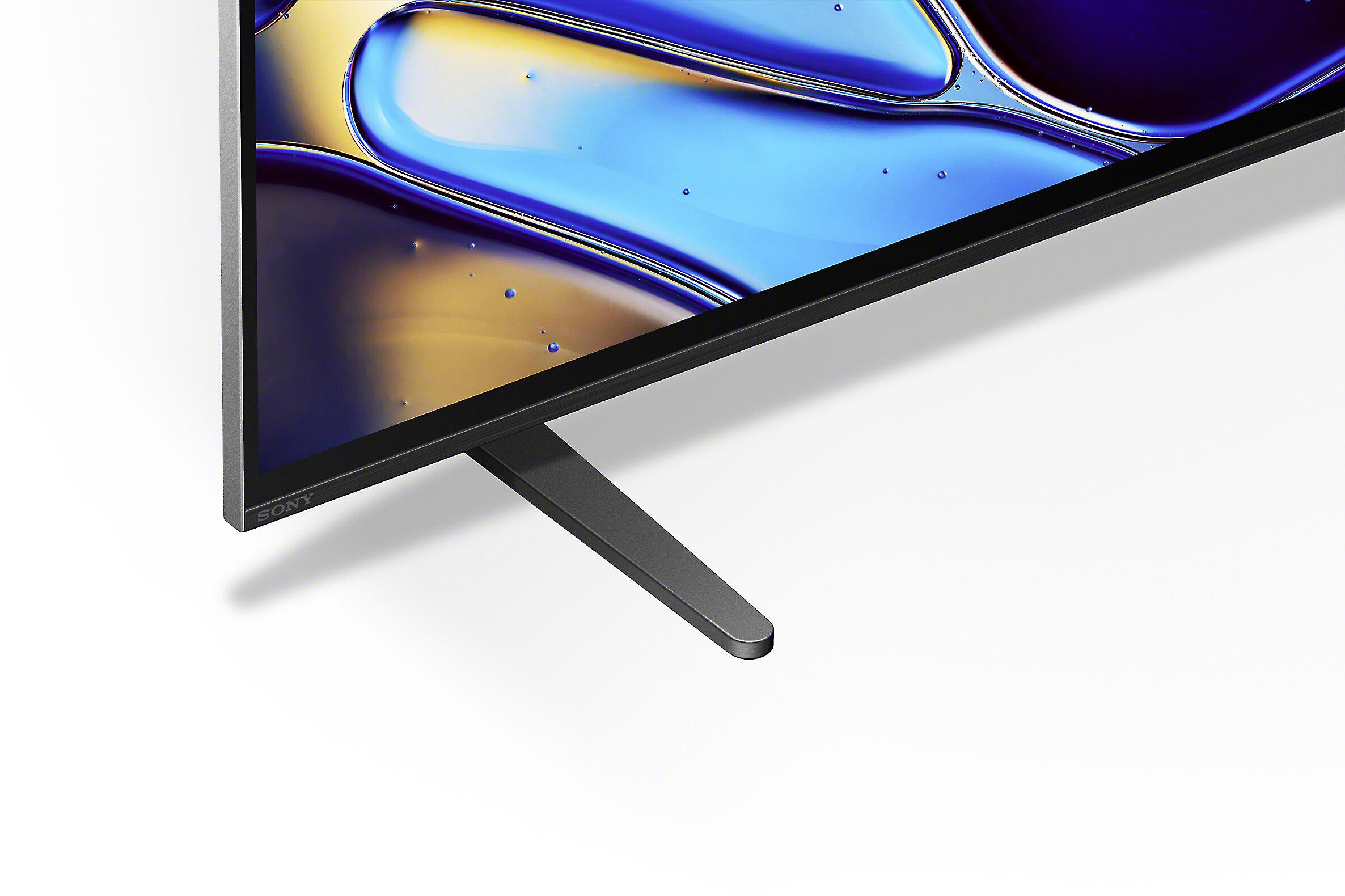
Sony's design philosophy emphasizes minimalism and build quality. Both TVs feature slim bezels, premium materials, and the company's distinctive blade-style adjustable feet. These stands can accommodate different furniture heights and allow space for soundbars, though they only position at the outer edges of the TV.
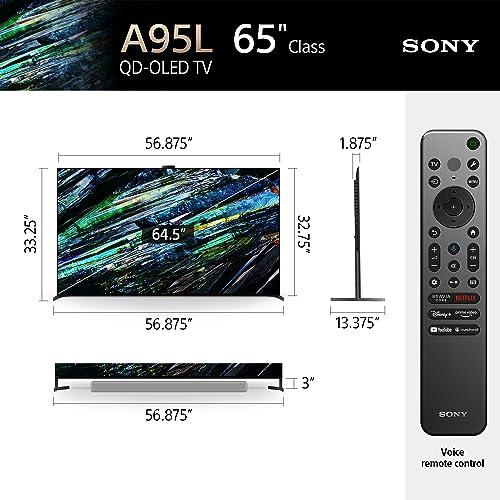
This stand design requires careful consideration of your TV furniture. For the 65-inch models, you'll need a stand at least 64.5 inches wide to support the outer-positioned feet. Wall mounting eliminates this concern and showcases the TVs' slim profiles effectively.
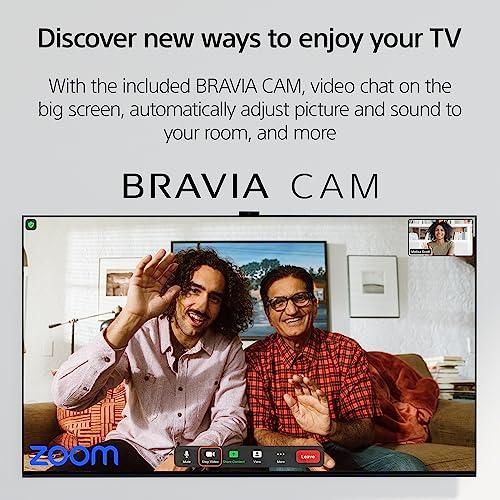
The textured plastic back panels feel substantial and well-built, while cable management systems help maintain clean installations. Premium touches like backlit remotes and the included BRAVIA CAM (for the A95L) reinforce the quality positioning.
At the time of writing, pricing dynamics heavily favor different models depending on availability and discounting. The A95L, being a 2023 model, has seen significant price reductions as Sony transitions focus to newer models. These discounts can make the premium QD-OLED technology surprisingly accessible.
The BRAVIA 8 represents Sony's current mid-tier OLED offering, priced to compete with similar models from LG and Samsung. At typical retail pricing, it delivers solid OLED performance at a more approachable price point than flagship models.
For value-conscious buyers, the equation comes down to current pricing and availability. If the A95L is available at or near the BRAVIA 8's price due to clearance or promotional pricing, the superior QD-OLED technology makes it an obvious choice. However, if the BRAVIA 8 offers significant savings, its W-OLED panel still delivers an excellent premium TV experience.
For dedicated home theater setups, the A95L's superior brightness and color performance become more important. Dark room viewing environments maximize OLED's contrast advantages, while the QD-OLED's enhanced HDR impact creates more cinematic experiences with properly mastered content.
The BRAVIA 8 certainly works well in home theater applications, especially for viewers who prioritize value or plan to upgrade again within a few years. Its W-OLED panel delivers the infinite contrast and perfect blacks that make OLED technology special, even if it can't match the A95L's peak performance.
Both models support the full range of HDR formats except HDR10+, which remains relatively uncommon. For most home theater content—4K Blu-rays, streaming movies, and premium TV shows—either TV will deliver impressive results.
The Sony BRAVIA XR A95L makes sense for viewers who prioritize absolute picture quality and have flexibility in their budget. If you're building a serious home theater, watch a lot of 4K HDR content, or simply want Sony's best QD-OLED technology, the performance advantages justify seeking out this model—especially if current pricing makes it competitive.
The Sony BRAVIA 8 appeals to buyers who want premium OLED performance at a more accessible price point. It's an excellent choice for first-time OLED buyers, those primarily viewing in dark rooms where W-OLED limitations are less noticeable, or anyone who prefers the peace of mind that comes with purchasing a current-generation model with longer software support expectations.
For most viewers, either TV will deliver a significantly better experience than LCD alternatives. The choice often comes down to current pricing, availability, and how much you value having absolute peak performance versus excellent performance at a better price point.
Both represent solid investments in premium TV technology, with the A95L offering cutting-edge performance and the BRAVIA 8 providing accessible entry into Sony's premium OLED lineup. Your decision should align with your viewing habits, room setup, and budget priorities rather than any fear of making a wrong choice—both TVs deliver the exceptional picture quality that makes OLED technology worth the investment.
| Sony BRAVIA XR A95L 65" QD-OLED 4K HDR Google TV | Sony BRAVIA 8 65" 4K OLED TV |
|---|---|
| Panel Technology - Determines brightness, color quality, and overall performance | |
| QD-OLED (Quantum Dot OLED) - Superior color and brightness | W-OLED (White OLED) - Proven, reliable technology |
| Peak Brightness - Critical for HDR impact and bright room viewing | |
| ~1,300 nits (excellent HDR highlights, bright room capable) | ~700-800 nits (good HDR, best in darker rooms) |
| Color Performance - Affects vibrancy and accuracy of all content | |
| Wider color gamut, exceptional color volume, pre-calibrated accuracy | Good color reproduction, requires more calibration |
| Release Year - Impacts software support and pricing | |
| 2023 flagship model (heavily discounted, shorter support) | 2024 current model (full price, longer support expected) |
| Picture Processor - Handles upscaling and image enhancement | |
| Advanced Cognitive Processor XR (flagship processing) | Cognitive Processor XR (excellent but less advanced) |
| Gaming Features - Important for console players | |
| 4K/120Hz on 2 ports, VRR, ALLM, PS5 optimization | 4K/120Hz on 2 ports, VRR, ALLM, PS5 optimization |
| HDMI 2.1 Ports - Limits connectivity for multiple gaming devices | |
| 2 full HDMI 2.1 ports (may require HDMI switching) | 2 full HDMI 2.1 ports (may require HDMI switching) |
| Audio System - Built-in sound quality | |
| Acoustic Surface Audio+ with refined tuning | Acoustic Surface Audio+ (2.1 channel, 50W) |
| Smart Platform - Interface and app support | |
| Google TV with premium features and BRAVIA CAM | Google TV with standard feature set |
| Target Market - Who should consider each model | |
| Videophiles wanting flagship QD-OLED performance | Value-conscious buyers wanting premium OLED experience |
| Best For - Primary use cases where each excels | |
| Home theater, bright rooms, critical viewing | Dark room viewing, budget-conscious OLED upgrade |
The Sony BRAVIA XR A95L delivers superior picture quality due to its QD-OLED panel technology. It produces brighter highlights (around 1,300 nits vs 700-800 nits), more vibrant colors, and better color accuracy out of the box. The Sony BRAVIA 8 still offers excellent OLED picture quality with perfect blacks, but can't match the brightness and color performance of the A95L's quantum dot technology.
The primary difference is panel technology. The Sony BRAVIA XR A95L uses QD-OLED (Quantum Dot OLED) panels that deliver higher brightness and more vivid colors, while the Sony BRAVIA 8 uses conventional W-OLED panels with color filters. This makes the A95L better for bright rooms and HDR content, while the BRAVIA 8 offers solid OLED performance at a more accessible price point.
Both the Sony BRAVIA XR A95L and Sony BRAVIA 8 offer identical gaming features, including 4K at 120Hz, VRR (Variable Refresh Rate), and ALLM (Auto Low Latency Mode). Both have only 2 HDMI 2.1 ports, which may limit connectivity for multiple gaming devices. The A95L has slightly better processing, but for gaming performance, they're essentially equal.
The Sony BRAVIA XR A95L is significantly better for bright rooms due to its higher peak brightness capabilities. Its QD-OLED technology can reach around 1,300 nits, making HDR content more impactful and the overall image more visible in well-lit environments. The Sony BRAVIA 8 performs best in darker rooms where its lower brightness limitations are less noticeable.
Both TVs excel in home theater environments. The Sony BRAVIA XR A95L is the premium choice for dedicated home theaters, offering superior HDR performance and more cinematic color reproduction. The Sony BRAVIA 8 also works excellently in home theaters, especially for budget-conscious setups. Both feature Acoustic Surface Audio+ technology and support Dolby Vision and Dolby Atmos.
Value depends on current pricing and availability. The Sony BRAVIA 8 typically offers better value as a current 2024 model with standard pricing. However, if the Sony BRAVIA XR A95L is available at discounted prices due to being a 2023 model, its superior QD-OLED technology makes it the better value choice.
Yes, both the Sony BRAVIA XR A95L and Sony BRAVIA 8 run Google TV and support the same streaming applications, including Netflix, Prime Video, Disney+, YouTube, and Apple TV+. Both also support Apple AirPlay, Chromecast built-in, and have Google Assistant voice control with identical smart TV functionality.
Both TVs feature Sony's Acoustic Surface Audio+ technology, where the screen itself acts as a speaker. The Sony BRAVIA XR A95L has slightly more refined audio tuning, but both offer similar 2.1-channel sound systems with 50W total power. Both support Dolby Atmos and can work with Sony soundbars through Acoustic Center Sync technology.
The Sony BRAVIA 8 will likely receive longer software support as a 2024 current model. The Sony BRAVIA XR A95L, being a 2023 model, may have a shorter remaining support window. Both should receive several years of Google TV updates, but the newer BRAVIA 8 has the advantage for long-term software longevity.
The Sony BRAVIA XR A95L is superior for movie watching due to its more accurate colors, higher brightness for HDR films, and advanced processing that better preserves filmmaker intent. It arrives pre-calibrated to cinema standards. The Sony BRAVIA 8 also delivers excellent movie performance with perfect OLED blacks, but requires more calibration for optimal accuracy.
Both the Sony BRAVIA XR A95L and Sony BRAVIA 8 share the limitation of only having 2 HDMI 2.1 ports instead of 4 like some competitors. The A95L may have limited availability as a discontinued 2023 model. The BRAVIA 8 can't match the brightness and color performance of premium QD-OLED panels, making it less suitable for very bright viewing environments.
Choose the Sony BRAVIA XR A95L if you want the best possible picture quality, plan to use it in bright rooms, or can find it at competitive pricing. Choose the Sony BRAVIA 8 if you prefer a current model with longer support, have a tighter budget, or primarily watch in darker rooms. Both deliver excellent OLED performance, with the A95L offering premium features and the BRAVIA 8 providing solid value.
We've done our best to create useful and informative comparisons to help you decide what product to buy. Our research uses advanced automated methods to create this comparison and perfection is not possible - please contact us for corrections or questions. These are the sites we've researched in the creation of this article: rtings.com - youtube.com - rtings.com - avsforum.com - rtings.com - smarthomesounds.co.uk - smarthomesounds.co.uk - rtings.com - smarthomesounds.co.uk - youtube.com - tomsguide.com - avsforum.com - rtings.com - perfectrec.com - flatpanelshd.com - videoandaudiocenter.com - sonypremiumhome.com - bestbuy.com - sony.com - electronics.sony.com - displayspecifications.com - donstv.com - youtube.com - static.pcrichard.com - smarthomesounds.co.uk - youtube.com - electronics.sony.com - electronics.sony.com - displayspecifications.com - bestbuy.com - bestbuy.com - crutchfield.com - avsforum.com - electronics.sony.com - sony.com - store.sony.co.nz - sony.com - displayspecifications.com

Privacy Policy
Terms and Conditions - Affiliate Policy
Home Security
© Copyright 2008-2026.
11816 Inwood Rd #1211, Dallas, TX 75244