

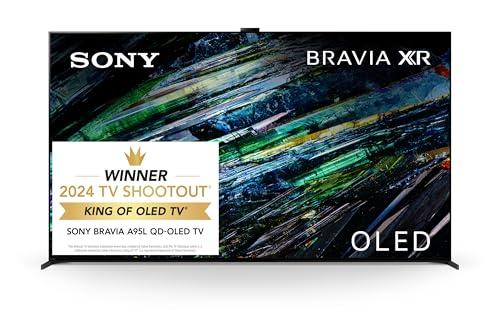
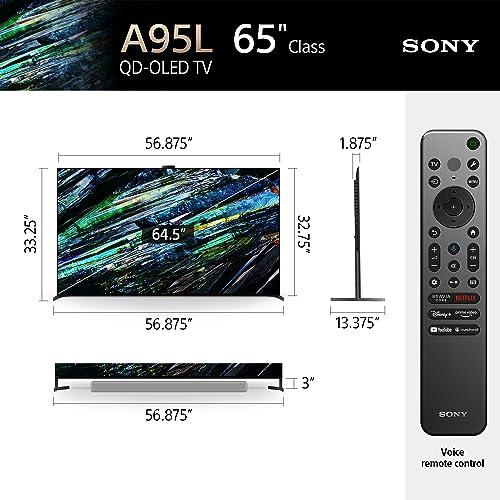


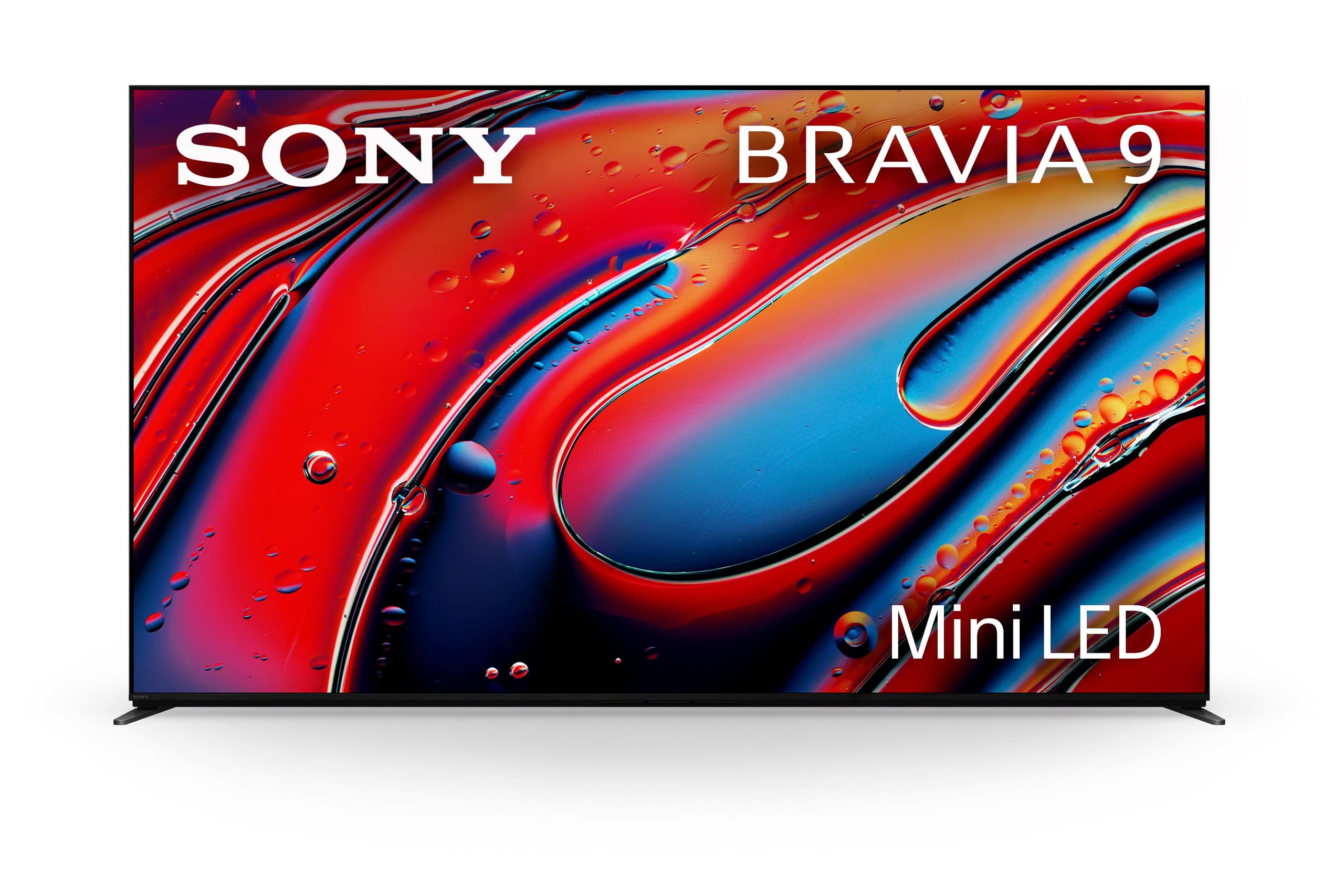
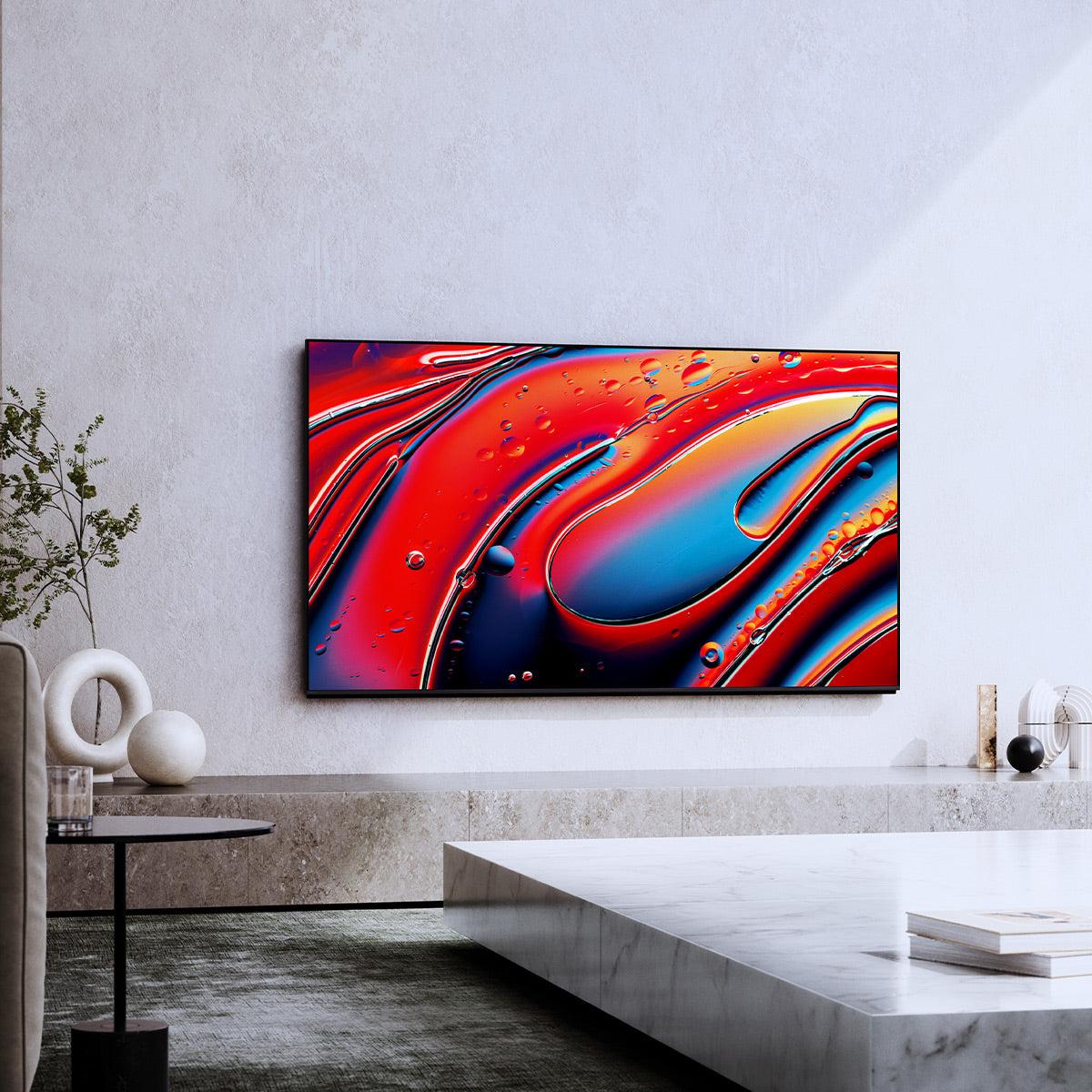
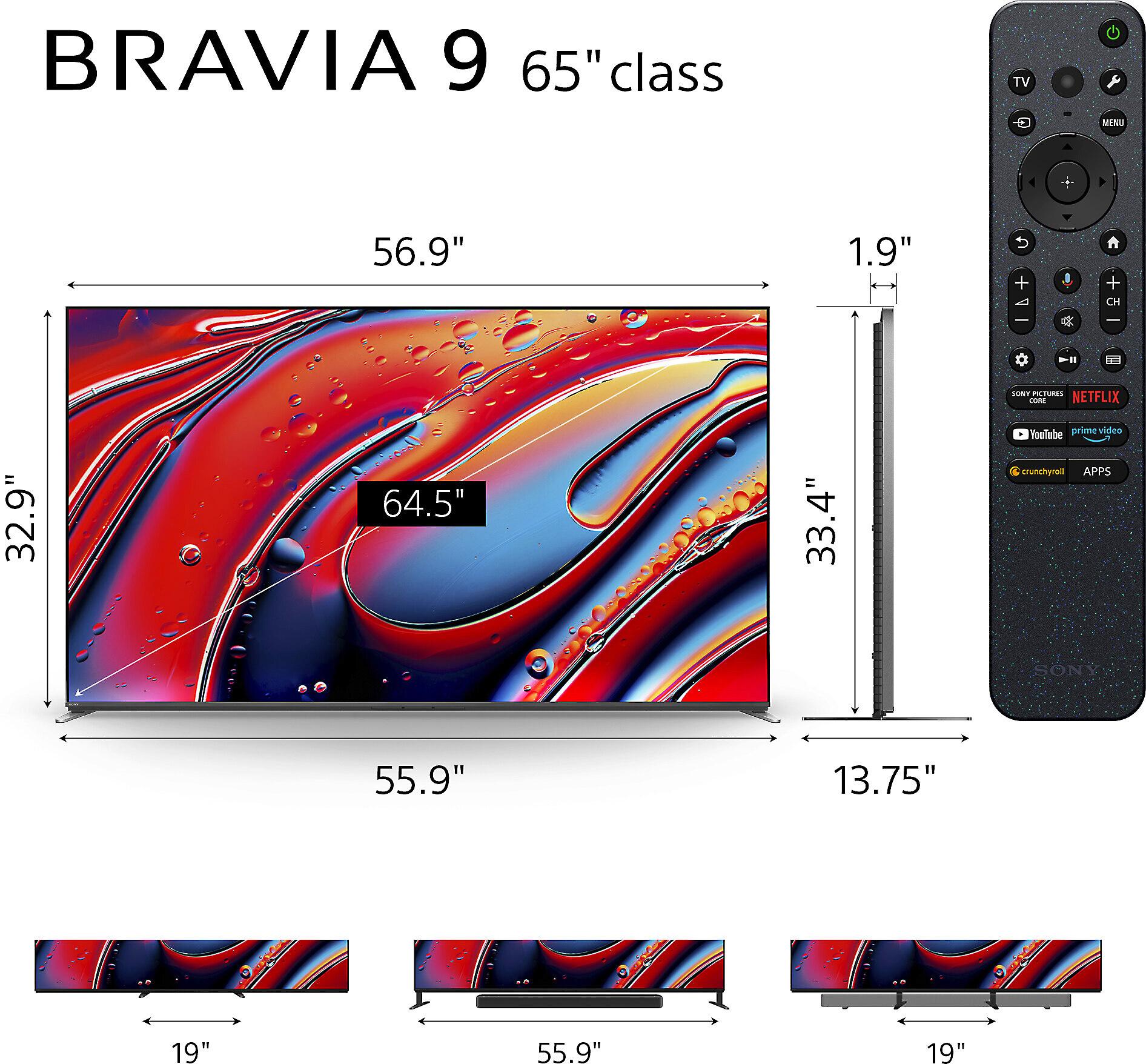
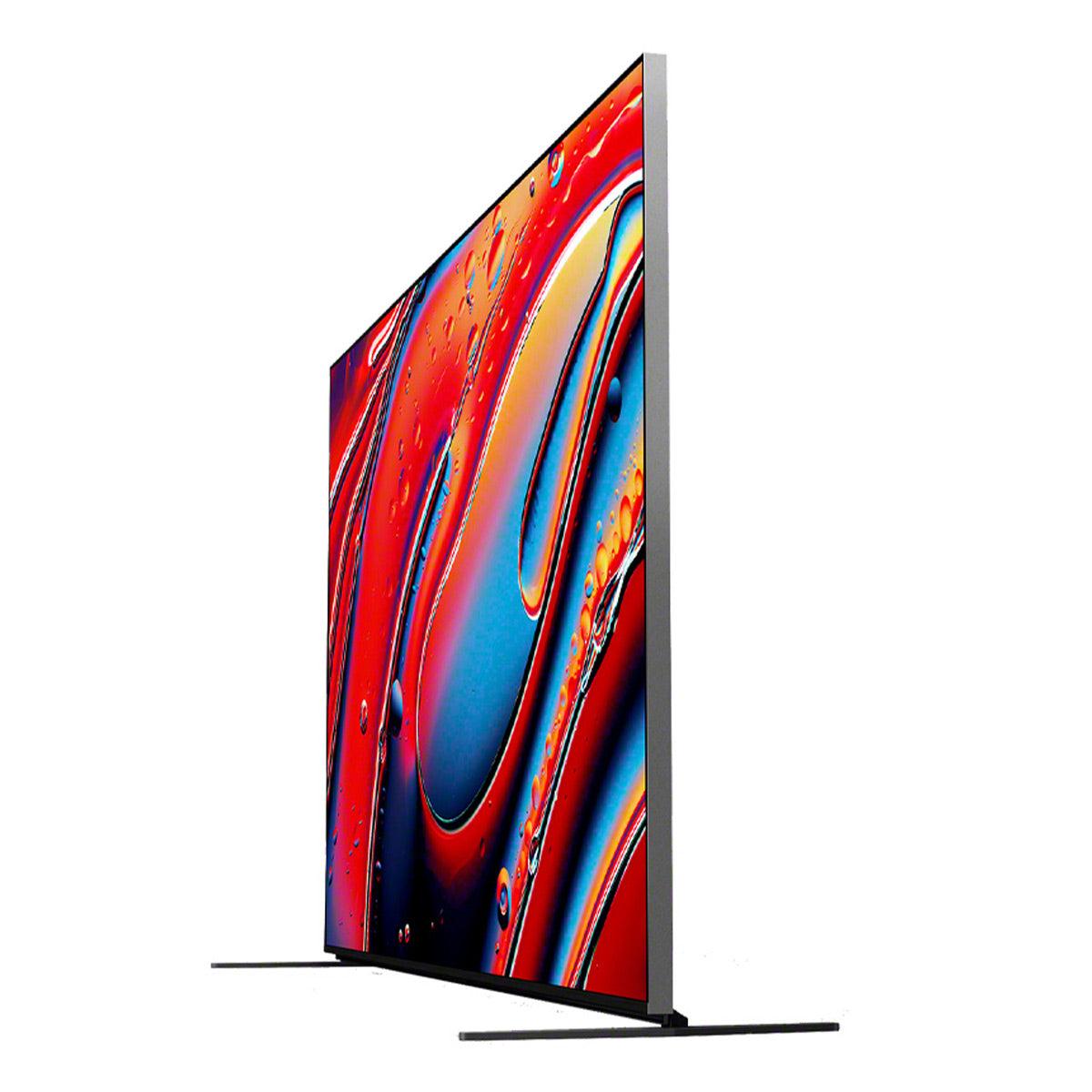
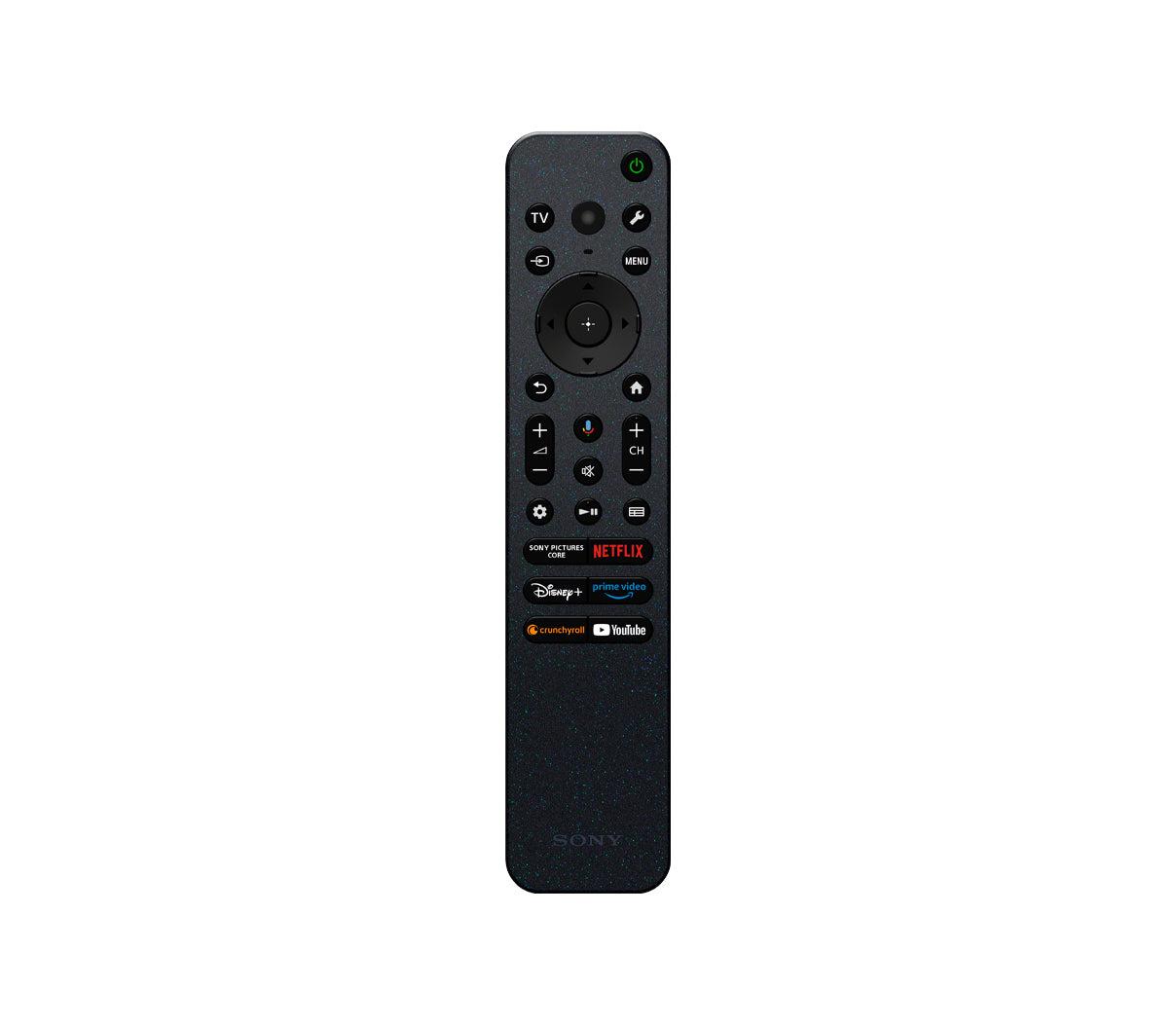
When you're ready to invest in a premium TV, the choices can feel overwhelming. Sony's latest flagship models – the BRAVIA XR A95L QD-OLED and the BRAVIA 9 Mini LED – represent two fundamentally different approaches to creating stunning picture quality. Both TVs cost roughly the same amount at launch (around $3,300 for the 65-inch models at the time of writing), but they achieve their performance through completely different technologies.
Understanding these differences is crucial because your room setup, viewing habits, and priorities will determine which TV delivers the better experience for your specific situation. After researching extensive expert reviews and user feedback, it's clear that both TVs excel in different areas – and both have some notable limitations you should understand before making a decision.
Premium TVs today represent the pinnacle of home entertainment technology, but they achieve their impressive performance through different methods. The core difference lies in how they create light and control it to form the images you see.
Traditional LCD TVs use a backlight behind the entire screen, which can cause light bleeding and reduce contrast. Premium TVs solve this problem in two main ways: self-emissive displays (like OLED) where each pixel creates its own light, or advanced backlighting systems (like Mini LED) that use thousands of tiny lights for precise control.
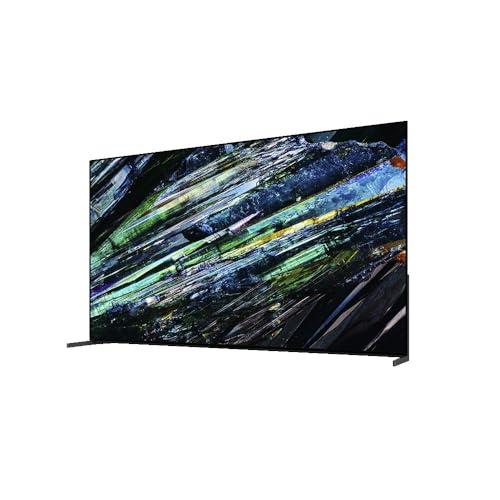
The A95L released in 2023 uses QD-OLED technology – an evolution of OLED that adds Quantum Dots for enhanced color and brightness. The BRAVIA 9 arrived in 2024 with Sony's most advanced Mini LED system yet, featuring thousands of precisely controlled LEDs behind the LCD panel.
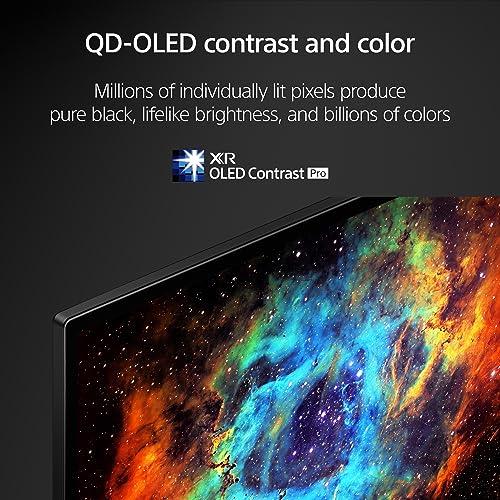
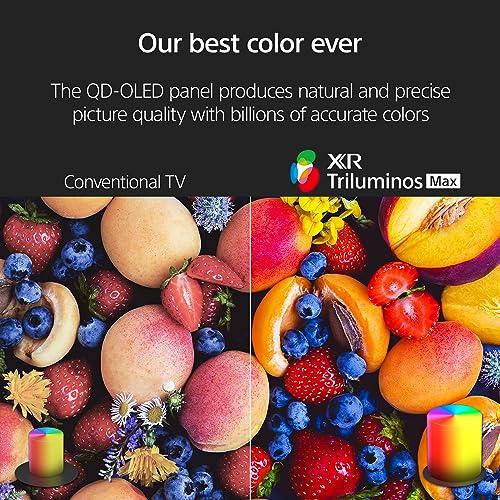
The A95L's QD-OLED panel represents a significant advancement over traditional OLED technology. Each pixel can turn completely off, creating true blacks with infinite contrast – something that immediately catches your eye when watching dark scenes. Unlike regular OLED panels that use color filters, QD-OLED generates blue light from the OLED layer and uses Quantum Dots to convert some of that blue light to red and green.
This approach delivers several benefits: higher efficiency (meaning brighter images with less power consumption), wider color coverage, and reduced risk of burn-in compared to first-generation OLED panels. The A95L can reach peak brightness levels around 1,300 nits – roughly double what previous Sony OLEDs achieved.
However, QD-OLED panels use a triangular subpixel structure that can occasionally cause minor color fringing around text or high-contrast edges, particularly if you plan to use the TV as a computer monitor. For normal TV viewing, this isn't noticeable.
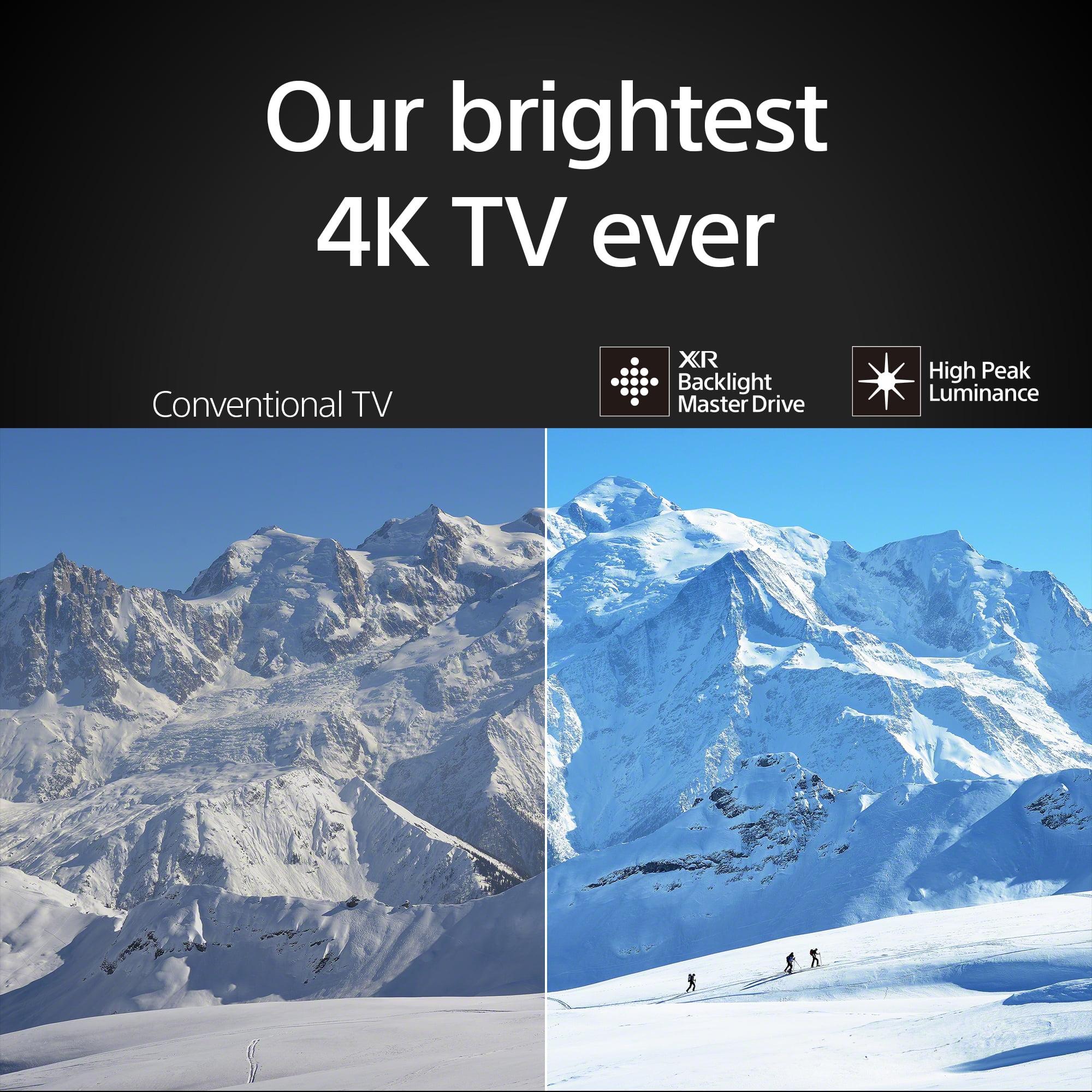
The BRAVIA 9 takes the opposite approach with its Mini LED system. Instead of self-emitting pixels, it uses thousands of tiny LEDs (much smaller than traditional LED backlights) arranged behind an LCD panel. Sony's XR Backlight Master Drive technology controls these LEDs in precise zones, dimming some areas while brightening others to create contrast.
This system allows the BRAVIA 9 to achieve Sony's highest brightness levels ever – significantly brighter than the A95L in both standard and HDR content. When watching HDR movies with bright highlights like explosions or sunlit scenes, the difference is immediately apparent.
The trade-off is that Mini LED can't achieve perfect blacks like OLED. Even with advanced local dimming, some light leakage occurs around bright objects on dark backgrounds – though Sony's implementation minimizes this better than many competitors.
This is where the fundamental technology difference creates the most dramatic viewing differences. The A95L delivers perfect blacks because its pixels can turn completely off. When you're watching a movie with dark scenes – think space movies or horror films – the black areas are truly black, not dark gray. This creates an almost three-dimensional depth that draws you into the image.
Our research into user experiences consistently shows this perfect black capability making a significant impression on viewers. Dark room movie watching becomes more immersive because there's no light pollution from the screen during dark scenes.
The BRAVIA 9, despite its advanced Mini LED system, can't match this perfect black performance. However, it compensates with exceptional brightness that makes HDR highlights pop dramatically. In scenes with bright sunshine, reflections on water, or explosions, the BRAVIA 9 can display these elements with intensity that the A95L simply can't match.
Both TVs excel at color reproduction, but with different strengths. The A95L tends toward more natural, film-accurate colors. Its Quantum Dot enhancement provides wide color coverage while maintaining accuracy that professional colorists intended. Expert reviews consistently praise its out-of-the-box calibration – you can expect accurate colors without needing professional setup.
The BRAVIA 9 can display more vivid, saturated colors, particularly in bright scenes where its superior brightness allows colors to maintain their intensity. This can make nature documentaries or animated content look more vibrant and eye-catching, though it may appear less natural to viewers who prefer cinema-accurate presentation.
For home theater enthusiasts who want the most film-accurate presentation possible, the A95L has the edge. For those who prefer more vivid, punchy visuals that make content pop, the BRAVIA 9 might be more appealing.
HDR (High Dynamic Range) content reveals the biggest performance differences between these TVs. HDR allows content to have much brighter highlights and darker shadows than standard video – but only if your TV can display the full range.
The A95L handles HDR beautifully with perfect blacks and good brightness, but it reaches its limits with the brightest HDR content. Movies mastered for 4,000+ nit displays (increasingly common for streaming content) will have highlights that appear dimmer than intended.
The BRAVIA 9 excels with this bright HDR content. Its extreme brightness capability means those intense highlights – sun reflections, explosions, bright skies – appear much closer to what content creators intended. However, this advantage only applies to the brightest HDR scenes; in mixed lighting scenes, the A95L's superior contrast often looks more impressive overall.
Your viewing room dramatically affects which TV performs better. The A95L excels in dark or moderately lit rooms where its perfect blacks create stunning contrast. However, in bright rooms with lots of windows or ambient lighting, some of that OLED magic disappears as the black levels appear raised due to light reflecting off the screen.
The BRAVIA 9 handles bright rooms much better. Its extreme brightness can overcome ambient light and glare, maintaining good contrast and color even in challenging lighting conditions. If your TV room has large windows or bright overhead lighting that you can't control, the BRAVIA 9 provides a more consistent experience throughout the day.
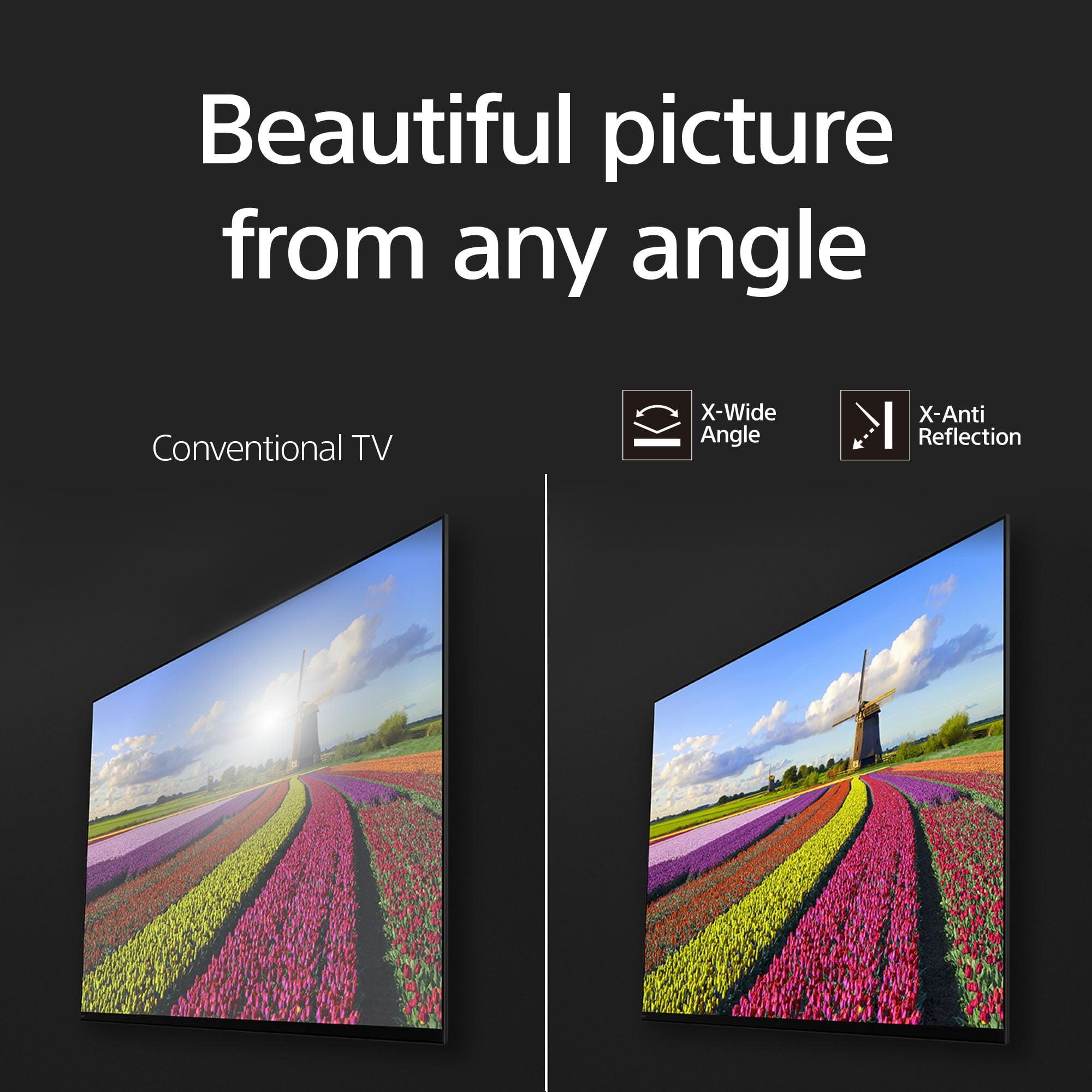
Both TVs include anti-reflection treatments, but the BRAVIA 9's superior brightness gives it the edge in bright environments.
The A95L significantly outperforms the BRAVIA 9 for viewing angles. OLED technology maintains consistent color and brightness from extreme side angles – nearly 178 degrees in each direction. This makes it ideal for rooms where people sit off to the sides or for parties where multiple people view from different positions.
The BRAVIA 9, like all LCD-based TVs, suffers from angle-dependent viewing. Colors shift and contrast reduces when viewed from the sides. If you have a narrow seating area directly in front of the TV, this won't matter. But for wider room layouts, the A95L provides a better experience for everyone.
For motion handling, the A95L has inherent advantages due to its near-instantaneous pixel response times. Fast-moving content like sports or action movies appears sharper with less motion blur. The BRAVIA 9 handles motion well but can't match OLED's natural advantage in this area.
Both TVs feature advanced built-in audio systems that surpass typical TV speakers, though they take different approaches.
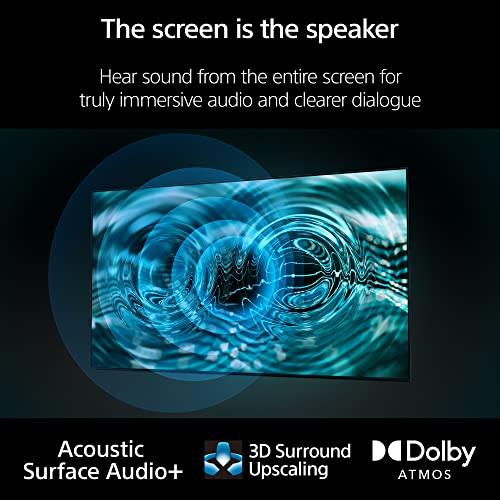
The A95L uses Acoustic Surface Audio+ technology, where actuators behind the screen vibrate the entire panel to create sound. This creates an interesting effect where dialogue appears to come directly from the actors' mouths on screen, rather than from speakers below the image. The system provides 60 watts of power with clear dialogue and good dynamics, though bass response is limited.
The BRAVIA 9 introduces Sony's new Acoustic Multi Audio+ system with 70 watts of power. It features an innovative design with beam tweeters along the top frame that fire upward and frame tweeters on the sides for width. This creates a more expansive soundstage than typical TV speakers. The new Voice Zoom 3 feature enhances dialogue clarity without significantly affecting other audio elements.
Neither system replaces a dedicated soundbar or home theater system for serious audio enthusiasts, but both provide surprisingly good audio for built-in speakers. The A95L's unique screen-as-speaker approach feels more natural, while the BRAVIA 9's higher power output and spatial design creates more impressive surround effects.
Both TVs target gamers with similar feature sets, though with some frustrating limitations. Each provides two HDMI 2.1 ports capable of 4K at 120Hz, Variable Refresh Rate (VRR), and Auto Low Latency Mode (ALLM) – features that unlock the full potential of PlayStation 5 and Xbox Series X consoles.
However, having only two HDMI 2.1 ports creates problems for gamers with multiple current-generation consoles, especially since one port is typically reserved for eARC audio return to a soundbar. This limitation feels particularly disappointing on premium TVs at this price level.
The A95L provides superior gaming motion clarity due to its instantaneous pixel response times. Fast-paced games appear sharper with no ghosting or blur trails. Input lag is reasonable for both TVs, though competitive gamers might prefer other options specifically optimized for gaming.
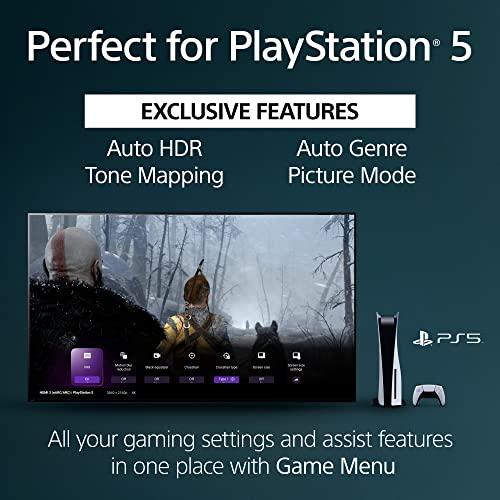
Both TVs include "Perfect for PlayStation 5" modes that automatically optimize settings for Sony's console, including specific picture modes for different game genres.
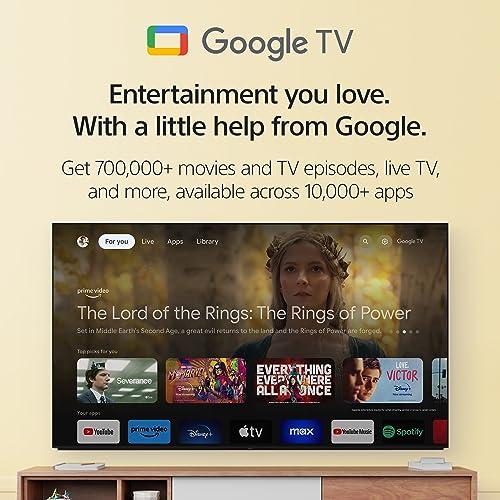
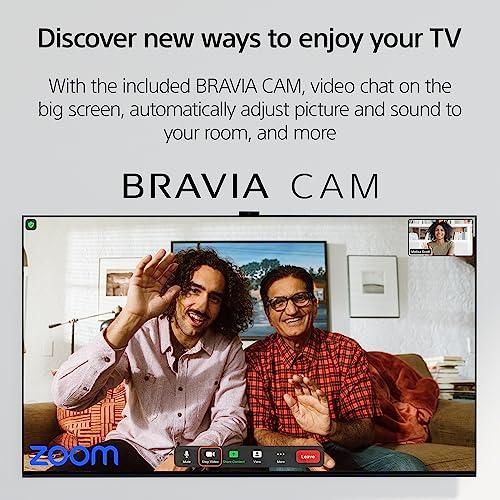
Both TVs run Google TV, providing access to all major streaming services and a clean, recommendation-driven interface. The platform works well but can occasionally feel sluggish, particularly immediately after powering on or switching inputs.
The BRAVIA 9 includes a new Prime Video Calibrated Mode that automatically adjusts picture settings when watching Amazon Prime Video content, ensuring you see movies and shows as their creators intended.
Both TVs support HDR10, Dolby Vision, and HLG HDR formats but lack HDR10+ support – an omission that's becoming less important as most content uses Dolby Vision instead.
This is where our research reveals significant differences between the TVs. The A95L represents mature, proven technology with consistent performance out of the box. Users report high satisfaction levels with reliable operation and excellent picture quality immediately after setup.
The BRAVIA 9, however, launched with notable software issues that significantly impact the viewing experience. Expert reviews consistently mention distracting brightness jumps when local dimming is active, and turning off local dimming results in flat, dull picture quality. The preset picture modes are heavily compromised, making it difficult to achieve optimal performance regardless of settings.
These appear to be software-related problems that Sony could potentially address through firmware updates, but as of this writing, they remain unresolved. This creates a frustrating situation where the TV shows impressive technical capabilities in some areas but fails to deliver a polished overall experience.
At similar price points (around $3,300 for 65-inch models at the time of writing), these TVs offer very different value propositions.
The A95L provides exceptional overall picture quality, proven reliability, and high user satisfaction. It represents mature technology that works excellently out of the box. For most premium TV buyers, it delivers the complete package without significant compromises.
The BRAVIA 9 offers cutting-edge brightness capabilities and innovative audio design, but its software issues prevent it from reaching its potential. If Sony resolves these problems through updates, it could become highly competitive, especially for bright room viewing. However, current buyers would need to accept notable limitations while waiting for fixes.
For dedicated home theater setups in dark rooms, the A95L provides the more cinematic experience. Its perfect blacks, accurate colors, and wide viewing angles create the immersive environment that home theater enthusiasts prioritize. The Acoustic Surface Audio+ technology also provides more natural dialogue placement, though serious home theater setups would use external audio systems regardless.
The BRAVIA 9 works better in multi-purpose family rooms where ambient light control isn't possible. Its superior brightness maintains good contrast and color even with some room lighting, making it more versatile for everyday viewing.
Based on extensive research into expert reviews and user experiences, the A95L is the safer choice for most buyers. It provides superior overall picture quality, proven reliability, and high satisfaction levels. Its perfect blacks, accurate colors, and wide viewing angles create an excellent viewing experience for movies, TV shows, and gaming.
Choose the A95L if you prioritize picture accuracy, plan to watch in dark or moderately lit rooms, want wide viewing angles for group watching, or simply want a TV that works optimally from day one.
The BRAVIA 9 shows impressive technical capabilities, particularly its extreme brightness for HDR content. However, its current software issues make it difficult to recommend until Sony addresses these problems. If you primarily watch in bright rooms and are willing to wait for software fixes, it could eventually become the better choice for that specific use case.
For now, the A95L offers the more complete, refined experience that most premium TV buyers will find satisfying long-term. The BRAVIA 9 feels like promising technology that needs more development time to reach its full potential.
| Sony BRAVIA XR A95L 65" QD-OLED | Sony BRAVIA 9 65" Mini LED QLED |
|---|---|
| Display Technology - Fundamentally different approaches to creating the image | |
| QD-OLED with self-emissive pixels | Mini LED backlight with LCD panel |
| Peak Brightness - Critical for HDR impact and bright room viewing | |
| Up to 1,300 nits (excellent for most content) | Significantly higher (Sony's brightest TV ever, ideal for bright rooms) |
| Black Levels - Determines contrast and dark scene detail | |
| Perfect blacks (pixels turn completely off) | Very good blacks with minimal light bleed |
| Viewing Angles - Important for group watching and room layout flexibility | |
| Excellent 178° (consistent from all angles) | Limited (color/contrast degrades from sides) |
| Motion Handling - Key for sports and action content | |
| Near-instantaneous response (blur-free motion) | Good motion with some LCD blur |
| Color Accuracy - Affects how natural content appears | |
| Exceptional out-of-box accuracy (film-accurate) | Very good with more vivid/saturated colors |
| Audio System - Built-in speaker quality and innovation | |
| Acoustic Surface Audio+ 60W (screen as speaker) | Acoustic Multi Audio+ 70W (beam tweeters, wider soundstage) |
| Gaming Features - Next-gen console compatibility | |
| Two HDMI 2.1 ports, 4K/120Hz, VRR, ALLM | Two HDMI 2.1 ports, 4K/120Hz, VRR, ALLM |
| Smart Platform - Streaming and interface experience | |
| Google TV with standard features | Google TV plus Prime Video Calibrated Mode |
| Release Year - Affects feature set and software maturity | |
| 2023 (mature, proven performance) | 2024 (latest tech but with current software issues) |
| Current Status - Real-world performance reliability | |
| Excellent reliability and user satisfaction | Notable software issues affecting picture quality |
| Best Use Case - Where each TV excels most | |
| Dark/moderate rooms, accurate picture, group viewing | Bright rooms, vivid HDR, center seating (once software fixed) |
The Sony BRAVIA XR A95L delivers superior overall picture quality with its QD-OLED technology that produces perfect blacks and exceptional color accuracy. While the Sony BRAVIA 9 excels in brightness for HDR content, the A95L provides more consistent performance across all types of content with better contrast and more natural colors.
The A95L uses QD-OLED technology where each pixel creates its own light and can turn completely off for perfect blacks. The BRAVIA 9 uses Mini LED backlighting with thousands of tiny LEDs behind an LCD panel for precise brightness control. This means the A95L has infinite contrast while the BRAVIA 9 achieves much higher peak brightness.
The Sony BRAVIA 9 performs significantly better in bright rooms due to its superior peak brightness capabilities - it's Sony's brightest TV ever made. The A95L works well in moderately lit rooms but can struggle to maintain its contrast advantage when competing with ambient light and reflections.
Both the Sony BRAVIA XR A95L and Sony BRAVIA 9 offer excellent gaming features including two HDMI 2.1 ports supporting 4K at 120Hz, Variable Refresh Rate (VRR), and Auto Low Latency Mode (ALLM). The A95L has a slight edge with faster pixel response times for blur-free motion, while both work great with PlayStation 5 and Xbox Series X consoles.
The Sony BRAVIA XR A95L has significantly better viewing angles with consistent picture quality from nearly 178 degrees in any direction. The BRAVIA 9, like all LCD-based TVs, experiences color shifting and contrast reduction when viewed from the sides, making it best suited for centered seating arrangements.
Both TVs offer impressive built-in audio that surpasses typical TV speakers. The A95L uses Acoustic Surface Audio+ where the screen itself acts as a speaker, creating natural dialogue placement. The BRAVIA 9 features the newer Acoustic Multi Audio+ system with 70W output and beam tweeters for wider soundstage coverage.
The Sony BRAVIA XR A95L is superior for dedicated home theater rooms with its perfect blacks, accurate colors, and wide viewing angles that create a more cinematic experience in dark environments. The A95L delivers the film-accurate presentation that home theater enthusiasts prioritize for movie watching.
Yes, both the Sony BRAVIA XR A95L and Sony BRAVIA 9 run Google TV with access to all major streaming platforms including Netflix, Prime Video, Disney+, and YouTube. The BRAVIA 9 adds a Prime Video Calibrated Mode that automatically optimizes picture settings for Amazon content.
The Sony BRAVIA XR A95L handles motion significantly better due to its near-instantaneous pixel response times that eliminate motion blur. This makes it ideal for fast-paced sports and action content where the A95L delivers crisp, clear motion that the BRAVIA 9 cannot match due to LCD technology limitations.
The Sony BRAVIA XR A95L represents mature, proven technology with excellent reliability and high user satisfaction. The BRAVIA 9 currently has notable software issues including distracting brightness jumps and compromised picture presets that affect the viewing experience, though Sony may address these through firmware updates.
At similar pricing, the Sony BRAVIA XR A95L offers better value with its superior overall picture quality, proven reliability, and excellent out-of-box performance. While the BRAVIA 9 has impressive brightness capabilities, its current software issues make the A95L the safer choice for most buyers seeking premium TV performance.
Unless you specifically need the Sony BRAVIA 9's extreme brightness for very bright room viewing, the Sony BRAVIA XR A95L is the better choice right now. The A95L delivers exceptional performance without waiting for potential software fixes, making it ideal for buyers who want premium picture quality that works perfectly from day one.
We've done our best to create useful and informative comparisons to help you decide what product to buy. Our research uses advanced automated methods to create this comparison and perfection is not possible - please contact us for corrections or questions. These are the sites we've researched in the creation of this article: rtings.com - youtube.com - rtings.com - avsforum.com - rtings.com - smarthomesounds.co.uk - smarthomesounds.co.uk - rtings.com - smarthomesounds.co.uk - youtube.com - tomsguide.com - avsforum.com - rtings.com - perfectrec.com - flatpanelshd.com - videoandaudiocenter.com - sonypremiumhome.com - bestbuy.com - sony.com - electronics.sony.com - displayspecifications.com - donstv.com - youtube.com - static.pcrichard.com - smarthomesounds.co.uk - youtube.com - electronics.sony.com - electronics.sony.com - displayspecifications.com - bestbuy.com - bestbuy.com - youtube.com - whathifi.com - crutchfield.com - rtings.com - pcrichard.com - merlinstv.com - youtube.com - sony.ca - electronics.sony.com

Privacy Policy
Terms and Conditions - Affiliate Policy
Home Security
© Copyright 2008-2026.
11816 Inwood Rd #1211, Dallas, TX 75244