



When you're shopping for a new TV in 2025, the entry-level QLED market presents some fascinating choices. Samsung's latest offerings include the Samsung 75-Inch QLED Q6F Series 2025 Smart TV and the Samsung 65-Inch Q7F Series QLED Smart TV 2025, two models that represent a classic dilemma: bigger screen or better features for your money.
QLED technology uses quantum dots—tiny semiconductor particles that emit pure colors when hit by light—to produce more vibrant and accurate colors than traditional LED TVs. Think of quantum dots as microscopic color factories that can create over a billion different shades while maintaining brightness and accuracy. This technology sits between basic LED TVs and premium OLED displays in both performance and price.
The entry-level QLED market has evolved significantly since Samsung first introduced quantum dot technology. In 2025, even budget QLED models offer features that were once reserved for flagship TVs, including AI-enhanced processing, comprehensive smart platforms, and impressive color reproduction. However, these models still make strategic compromises to hit attractive price points.
The most important considerations when choosing between entry-level QLEDs are screen size versus feature density, room lighting conditions, viewing distance, and how you plan to use the TV. Unlike premium QLEDs that offer local dimming (where sections of the backlight can dim independently for better contrast), these models use full-array or edge lighting that illuminates the entire screen uniformly.
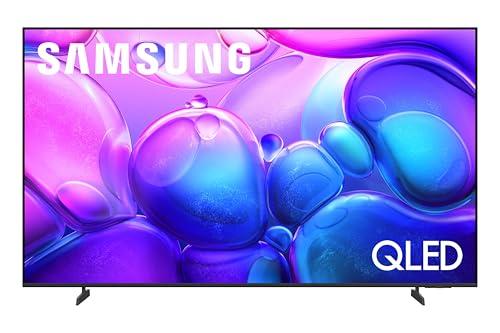
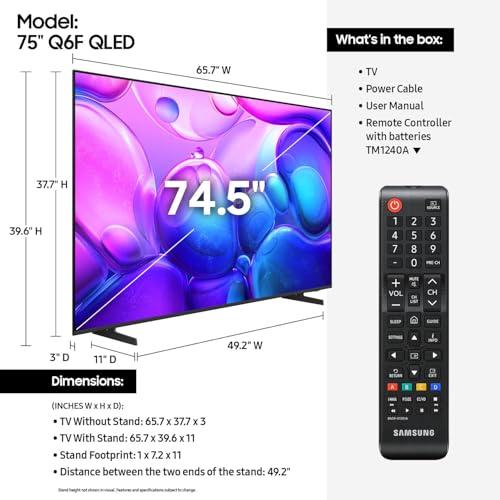
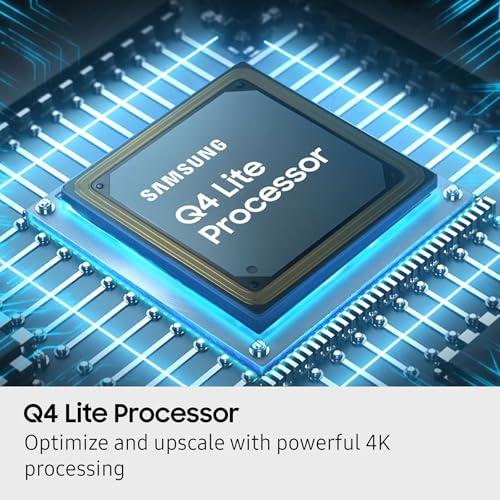
The Samsung Q6F 75" represents Samsung's "size-first" approach. Released in early 2025, it's designed for buyers who prioritize screen real estate above all else. At 75 inches, it delivers an immersive viewing experience that can transform a living room into a home theater environment. However, Samsung kept costs manageable by using their Q4 Lite Processor and limiting advanced features.
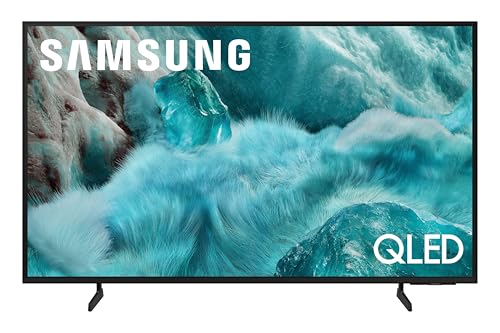
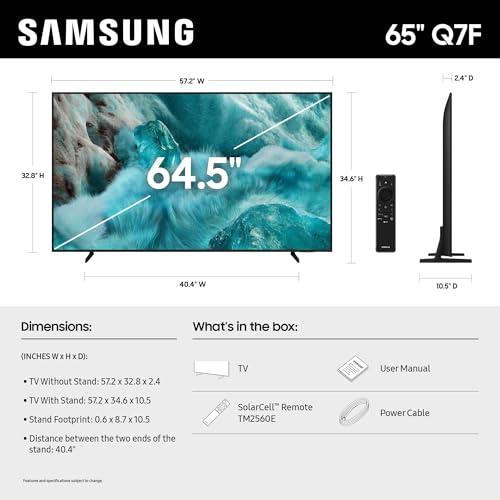
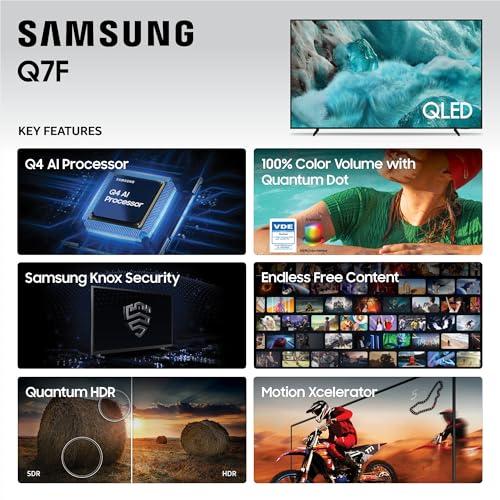
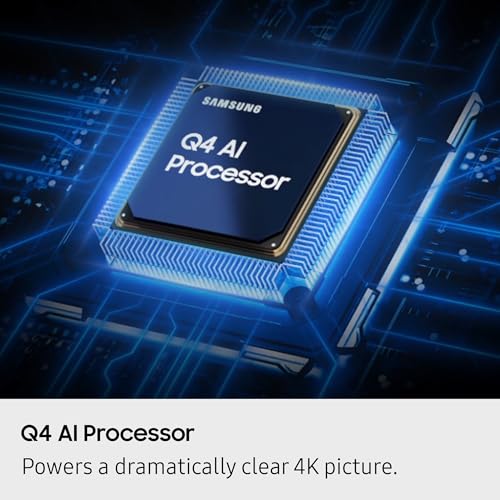
The Samsung Q7F 65", also launched in 2025, takes the opposite approach. Despite being 10 inches smaller, it packs Samsung's Q4 AI Processor and includes features that were typically found in mid-range models just a few years ago. This represents Samsung's recognition that many consumers prefer smarter picture processing and enhanced features over pure size.
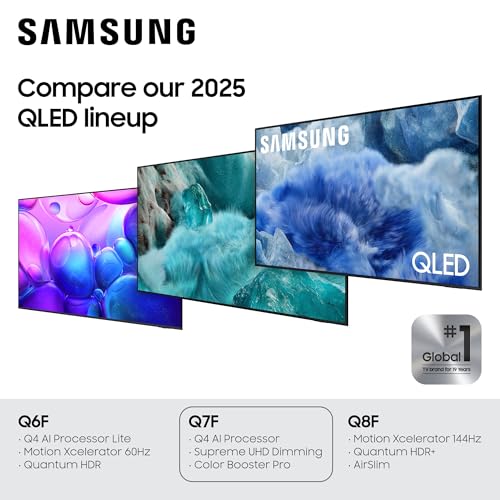
The difference in picture quality between these models is more significant than you might expect from two TVs in the same product family. The Samsung Q7F 65" includes Supreme UHD Dimming, a feature that analyzes the image in multiple zones and adjusts brightness and darkness accordingly. While it's not true local dimming—where individual LED zones can turn completely off—it's a meaningful step up from the uniform backlighting in the Samsung Q6F 75".
In practical terms, this means the Q7F produces deeper blacks and brighter whites within the same scene. When watching a movie with both bright daylight scenes and dark interior shots, the Q7F maintains better shadow detail and prevents the washed-out look that affects many budget TVs. The Q6F, lacking this technology, tends to display blacks as dark gray and can struggle with subtle gradations in darker scenes.
Based on professional reviews and user feedback, both models produce adequate brightness for most viewing conditions, but neither excels in very bright rooms. The Q7F's enhanced processing helps it punch above its weight class, while the Q6F's larger size can compensate somewhat by providing a more immersive experience even if individual pixels aren't as precisely controlled.
This is where the processor difference becomes most apparent. The Samsung Q7F 65" features Color Booster Pro, an AI-driven system that analyzes each scene and adjusts color saturation, hue, and brightness in real-time. This isn't just a blanket color enhancement—it's intelligent processing that recognizes whether you're watching a nature documentary (where vibrant greens and blues matter) or a period drama (where accurate skin tones are critical).
The Samsung Q6F 75" uses standard Color Booster technology, which applies more generic color enhancement across all content. While both TVs achieve quantum dot technology's signature wide color gamut, the Q7F's contextual processing delivers noticeably more realistic and pleasing colors.
In side-by-side viewing, the Q7F produces grass that looks actually green rather than artificially enhanced, and skin tones that appear natural under various lighting conditions. The Q6F's colors are certainly vibrant and punchy, but they lack the nuanced accuracy that AI processing provides.
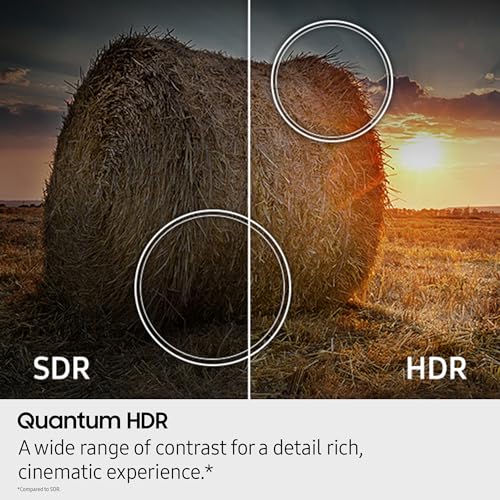
Both models support HDR10+ and Samsung's Quantum HDR, but neither supports Dolby Vision—a limitation that's becoming increasingly noticeable as more streaming content uses Dolby's format. HDR, or High Dynamic Range, expands the range between the brightest whites and darkest blacks while showing more colors than standard content.
The challenge with entry-level QLEDs is that they don't produce enough peak brightness to make HDR content truly shine. Professional testing suggests both models struggle to exceed 400 nits of brightness, well below the 1000+ nits that make HDR content pop off the screen. The Samsung Q7F 65" handles this limitation better through its AI processing, which optimizes tone mapping to make the most of available brightness.
For most viewers, this means HDR content will look better than standard definition but won't deliver the dramatic impact you'd see on premium TVs. The Q7F's smarter processing makes HDR content more watchable, while the Q6F's larger size can help compensate for less impressive HDR highlights.
The processor difference between these models represents a generational leap in smart TV capabilities. The Samsung Q7F 65" includes Vision AI, Samsung's 2025 smart TV platform that goes well beyond basic streaming. This system learns your viewing habits, provides personalized recommendations, and can even optimize picture settings based on ambient lighting conditions detected through the TV's sensors.
The Q4 AI Processor in the Q7F also enables real-time upscaling that's genuinely impressive. When watching older content or lower-resolution streaming, the AI analyzes each frame and intelligently adds detail and sharpness. It's not magic—you can't turn standard definition into true 4K—but the improvement is noticeable, especially with content from the early days of HD streaming.
The Samsung Q6F 75" uses the Q4 Lite Processor, which handles basic upscaling and standard TV functions competently but lacks the contextual intelligence of the AI system. Content looks good, but you won't get the adaptive optimization that makes the Q7F feel more responsive to your viewing environment.
Both TVs run Samsung's Tizen operating system, which has evolved into one of the more user-friendly smart TV platforms. The interface is responsive, app selection is comprehensive, and integration with Samsung's ecosystem (phones, tablets, home automation) is seamless.
However, the Samsung Q7F 65" includes exclusive 2025 features that enhance the smart TV experience. The SolarCell Remote with built-in voice control means you can adjust settings, search content, and control smart home devices without hunting for buttons. The Art Store and Generative Wallpaper features turn the TV into a digital art display when you're not watching content—a surprisingly useful feature for maintaining room aesthetics.
Multi View capability lets you watch two sources simultaneously, perfect for keeping up with sports scores while watching a movie. These features might seem like nice-to-haves, but they represent the direction smart TVs are heading, and their absence on the Q6F makes it feel less future-proof.
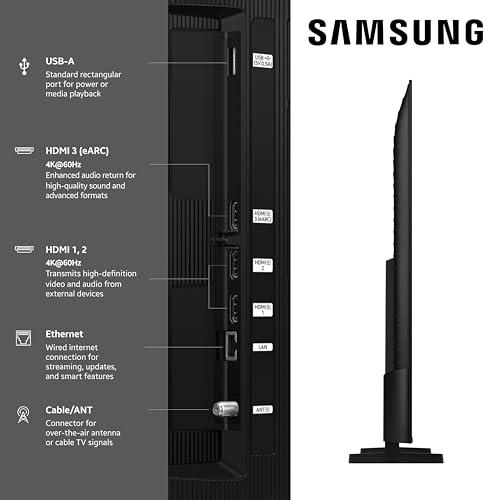
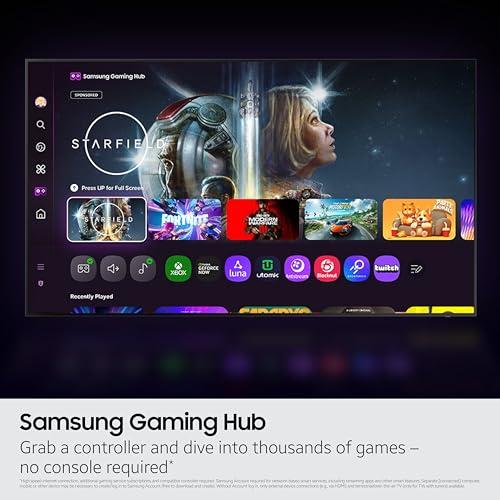
Neither model excels for serious gaming, lacking HDMI 2.1, Variable Refresh Rate (VRR), and 120Hz capability. VRR synchronizes the TV's refresh rate with your gaming console's output, eliminating screen tearing and stuttering. Without it, fast-paced games can show visual artifacts during rapid movement.
Both TVs offer Auto Game Mode, which reduces input lag—the delay between pressing a button and seeing the action on screen—to around 10 milliseconds. This is acceptable for casual gaming but not ideal for competitive play where every millisecond matters.
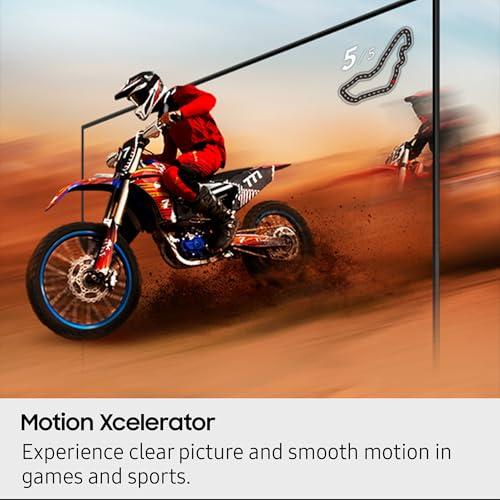
For motion handling in movies and sports, the Samsung Q7F 65" has a slight advantage due to its AI processing, which can better predict and smooth motion between frames. The Samsung Q6F 75" handles motion adequately, but you might notice some blur during fast sports action or panning shots in movies.
Both models feature 20-watt, 2-channel speakers with Object Tracking Sound Lite, which creates the illusion that sound follows action across the screen. While this is clever technology, the reality is that built-in TV speakers have fundamental limitations. The thin profile that makes modern TVs attractive doesn't leave room for the large drivers needed for full-range audio.
For casual viewing, both TVs produce clear dialogue and adequate volume. However, if you're planning a home theater setup, you'll want to budget for a soundbar or separate audio system. Both models support Q-Symphony, which allows Samsung soundbars to work in conjunction with the TV speakers for a more immersive experience.
The size difference between these models isn't just about bigger being better—it's about optimal viewing experience for your space. The Samsung Q6F 75" requires a viewing distance of at least 9-10 feet to be comfortable, and it really shines in rooms where you can sit 12-15 feet away. At that distance, the 75-inch screen fills your field of view without overwhelming it, creating an immersive experience that smaller screens can't match.
The Samsung Q7F 65" is ideal for viewing distances of 7-9 feet, making it perfect for most living rooms and bedrooms. Sitting closer than 7 feet to either TV might reveal pixelation or processing artifacts, while sitting too far reduces the impact of the larger screen.
Consider your room's lighting as well. Both TVs handle moderate ambient light well, but neither excels in very bright rooms with large windows or overhead lighting. The Q7F's enhanced processing helps somewhat, but if your TV room gets a lot of natural light, you might need to consider placement carefully or invest in window treatments.
At the time of writing, the Samsung Q7F 65" represents exceptional value in the entry-level QLED market. You're getting significantly more technology, better picture processing, and enhanced smart features while paying less money. The only trade-off is screen size, which is admittedly significant if you have the room for a 75-inch display.
The Samsung Q6F 75" commands a premium primarily for its size. That 75-inch screen is impressive and can transform your viewing experience, but you're essentially paying extra for diagonal inches rather than technological advancement.
From a future-proofing perspective, the Q7F's AI capabilities and enhanced smart features better prepare it for evolving streaming standards and content formats. As content creators increasingly optimize for intelligent processing and personalized viewing experiences, the Q7F's smarter processor becomes more valuable over time.
If you're building a dedicated home theater, screen size typically takes priority over processing features, especially if you're controlling lighting and viewing conditions. The Samsung Q6F 75" offers that cinema-like experience where a larger screen creates better immersion than incremental picture quality improvements.
However, even in home theater settings, the Samsung Q7F 65" has merits. Its superior motion handling and AI-enhanced processing can make movies look more polished, and the 65-inch size is still substantial enough for most home theater rooms. The money saved could go toward a better sound system, which arguably improves the home theater experience more than those extra 10 inches of screen.
Choose the Samsung Q6F 75" if you have a large room where a 75-inch TV fits naturally, you prioritize immersive viewing over technological bells and whistles, and you're comfortable paying a premium for size. It's also the better choice if you primarily watch content that benefits from large screens—sports, movies, and nature documentaries—rather than using smart TV features extensively.
The Samsung Q7F 65" is the smarter choice for most buyers. It delivers better picture quality, more advanced features, and superior value while still providing a substantial viewing experience. Choose this model if you appreciate technology that adapts to your viewing habits, want the most features for your money, or if your room is better suited to a 65-inch display.
My recommendation leans strongly toward the Q7F unless you specifically need the larger screen. The AI processing, enhanced smart features, and superior value proposition make it the more compelling option for 2025. The TV market moves quickly, and buying the model with more advanced processing typically results in a better experience over the TV's lifespan.
Both TVs represent solid entry points into QLED technology, but the Q7F feels like a glimpse of where budget TVs are heading, while the Q6F feels more like a traditional approach focused primarily on screen size. For most viewing rooms and use cases, smarter processing trumps those extra diagonal inches.
| Samsung 75-Inch QLED Q6F Series 2025 Smart TV | Samsung 65-Inch Q7F Series QLED Smart TV 2025 |
|---|---|
| Screen Size - The most obvious difference affecting room compatibility and viewing experience | |
| 75 inches (ideal for 9-12+ foot viewing distance) | 65 inches (ideal for 7-9 foot viewing distance) |
| Processor - Determines picture optimization and smart features | |
| Q4 Lite Processor (basic 4K upscaling) | Q4 AI Processor with Vision AI (real-time scene optimization) |
| Picture Enhancement - Critical for color accuracy and contrast | |
| Basic UHD Dimming + standard Color Booster | Supreme UHD Dimming + Color Booster Pro with AI analysis |
| Smart Features - Affects long-term usability and convenience | |
| Standard Tizen OS with basic voice assistant support | Advanced Tizen OS with SolarCell Remote, voice control, Art Store, Multi View |
| Design Philosophy - Impacts room aesthetics | |
| Metal Stream rear panel (single metal sheet construction) | Slim Look panel design for modern room integration |
| HDR Support - Important for streaming content quality | |
| Quantum HDR + HDR10+ (no Dolby Vision) | Quantum HDR + HDR10+ with AI tone mapping (no Dolby Vision) |
| Audio System - Built-in sound capabilities | |
| 20W 2-channel with Object Tracking Sound Lite | 20W 2-channel with Object Tracking Sound Lite + Q-Symphony |
| Gaming Features - Relevant for console users | |
| Auto Game Mode, 60Hz, no VRR or HDMI 2.1 | Auto Game Mode, 60Hz, no VRR or HDMI 2.1 |
| Size Options - Flexibility for different room sizes | |
| Available in 75" and 85" only | Available in 43", 50", 55", 65", 75", and 85" |
| Value Proposition - The bottom line for buyers | |
| Premium price for maximum screen size | Better features and AI processing at lower cost |
The Samsung Q7F 65" delivers superior picture quality despite being smaller. It features Supreme UHD Dimming for better contrast and Color Booster Pro with AI analysis that optimizes colors for each scene. The Samsung Q6F 75" uses basic UHD dimming and standard color enhancement without AI optimization, resulting in less refined picture processing.
The primary difference is that the Samsung Q6F 75" prioritizes screen size with a 75-inch display, while the Samsung Q7F 65" focuses on advanced features with AI processing, enhanced smart capabilities, and better picture optimization in a 65-inch package.
For dedicated home theaters where size matters most, the Samsung Q6F 75" provides a more cinematic experience with its larger 75-inch screen. However, the Samsung Q7F 65" offers better motion handling and AI-enhanced processing that can improve movie quality, making it suitable for most home theater rooms while leaving budget for better audio equipment.
Both run Samsung's Tizen OS with access to major streaming apps, but the Samsung Q7F 65" includes exclusive 2025 features like voice control via SolarCell Remote, Art Store, Generative Wallpaper, Multi View, and advanced AI capabilities. The Samsung Q6F 75" offers basic smart TV functionality without these enhanced features.
Both the Samsung Q6F 75" and Samsung Q7F 65" offer similar basic gaming performance with Auto Game Mode and low input lag around 10ms. Neither supports advanced gaming features like HDMI 2.1, VRR, or 120Hz refresh rates, making them suitable for casual gaming but not ideal for competitive or next-gen console gaming.
The Samsung Q7F 65" uses the Q4 AI Processor with Vision AI technology that provides real-time scene optimization, intelligent upscaling, and adaptive picture adjustments. The Samsung Q6F 75" features the Q4 Lite Processor, which handles basic 4K upscaling and standard TV functions without AI enhancements.
The Samsung Q7F 65" provides significantly better value, offering more advanced features, superior picture processing, and enhanced smart capabilities at a lower price point. The Samsung Q6F 75" commands a premium primarily for its larger screen size rather than technological advancement.
The Samsung Q6F 75" requires larger rooms with 9-12+ foot viewing distances to be comfortable and truly shine. The Samsung Q7F 65" is ideal for most living rooms and bedrooms with 7-9 foot viewing distances, making it more versatile for typical home layouts.
Both the Samsung Q6F 75" and Samsung Q7F 65" support Quantum HDR and HDR10+ but lack Dolby Vision. The key difference is that the Q7F's AI processing provides better tone mapping and optimization of HDR content, making it more watchable despite similar peak brightness limitations.
The Samsung Q7F 65" offers superior motion handling thanks to its AI processor that can better predict and smooth motion between frames. While both TVs handle motion adequately, the Samsung Q6F 75" may show more blur during fast sports action or quick camera movements.
The Samsung Q6F is only available in 75-inch and 85-inch sizes, limiting flexibility. The Samsung Q7F offers much more variety with 43", 50", 55", 65", 75", and 85" options, making it suitable for a wider range of room sizes and budgets.
Choose the Samsung Q6F 75" if you have a large living room where the 75-inch size fits naturally and screen size is your top priority. Select the Samsung Q7F 65" if you want the best features and picture quality for your money, prefer AI-enhanced viewing, or have a medium-sized living room where 65 inches is more appropriate.
We've done our best to create useful and informative comparisons to help you decide what product to buy. Our research uses advanced automated methods to create this comparison and perfection is not possible - please contact us for corrections or questions. These are the sites we've researched in the creation of this article: youtube.com - rtings.com - cnet.com - youtube.com - rtings.com - samsung.com - bestbuy.com - samsung.com - samsung.com - bestbuy.com - manuals.plus - arrowassociatedstores.com - samsung.com - samsung.com - samsung.com - flatpanelshd.com - device.report - bestbuy.com - bestbuy.com - youtube.com - youtube.com - youtube.com - samsung.com - samsung.com - samsung.com - billsmith.com - costco.com - samsung.com - hometechnologyreview.com - hometechnologyreview.com - bestbuy.com - samsung.com - bestbuy.com - samsung.com - hometechnologyreview.com - samsung.com - samsung.com

Privacy Policy
Terms and Conditions - Affiliate Policy
Home Security
© Copyright 2008-2026.
11816 Inwood Rd #1211, Dallas, TX 75244