

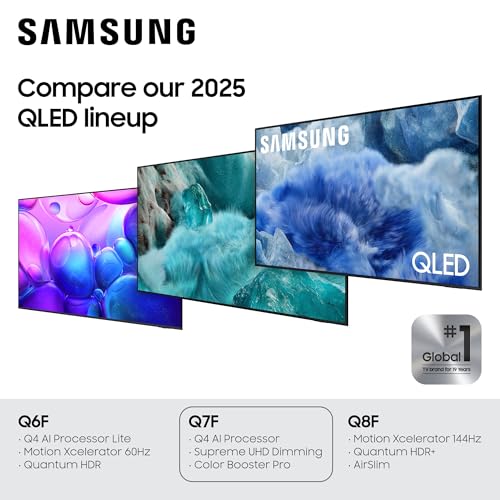
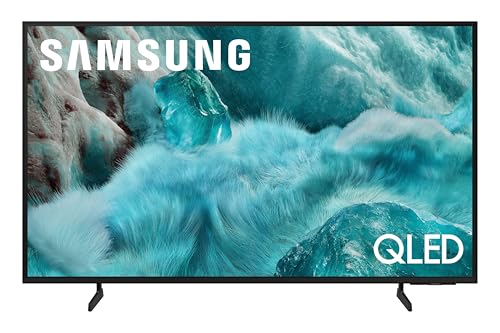

When you're shopping for a new TV in 2024 and beyond, you'll quickly discover that not all QLED televisions are created equal. While both the Samsung 65-Inch Q7F Series QLED Smart TV 2025 and the TCL 65" NXTVISION QLED 4K Art Frame TV use quantum dot technology to enhance colors, they represent completely different philosophies about what a modern television should be.
The Samsung Q7F, released in 2025, takes the traditional approach: deliver solid picture quality and smart features at a reasonable price point. Meanwhile, the TCL NXTVISION, launched in 2024, reimagines the TV as a piece of living room furniture that happens to display content when you need it. Understanding these fundamental differences is crucial to making the right choice for your home.
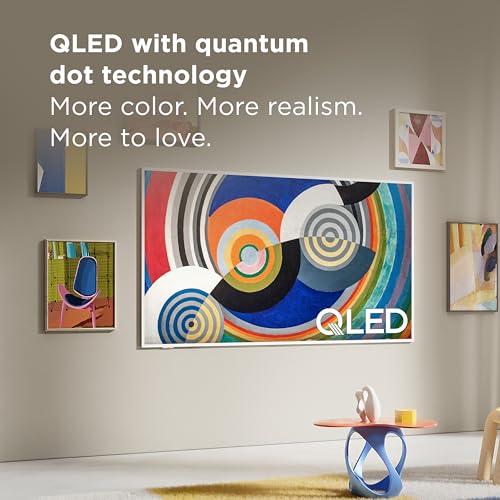
Before diving into specifics, it's worth understanding what QLED actually means for your viewing experience. QLED stands for Quantum Dot Light Emitting Diode – essentially, it's a layer of microscopic particles (quantum dots) placed between the LED backlight and the LCD panel. These dots convert blue LED light into precise red and green wavelengths, creating more accurate and vibrant colors than traditional LED TVs can produce.
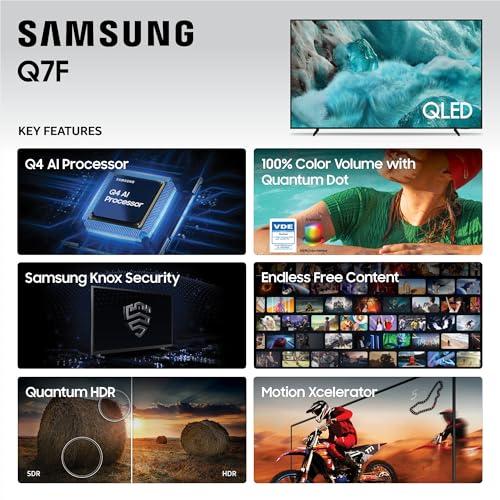
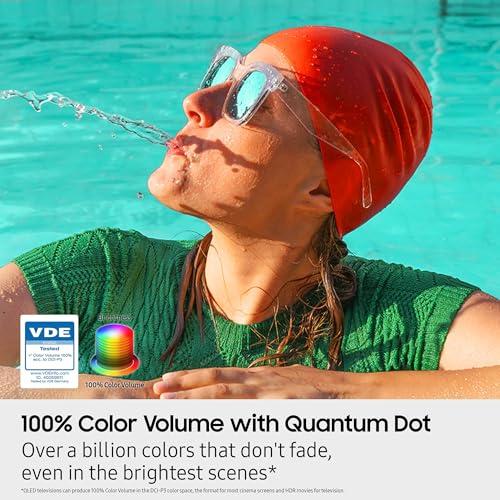
Both TVs use this technology, but they implement it differently. The Samsung Q7F uses what Samsung calls "100% Color Volume" – meaning it can reproduce over one billion different color shades that stay accurate even at different brightness levels. The TCL NXTVISION adds KSF phosphor coating, which particularly improves the separation between reds, greens, and blues, making colors appear more distinct and lifelike.
What matters most for your actual viewing experience isn't the marketing terminology, but how bright the TV can get (peak brightness), how deep the blacks appear (contrast ratio), and how well it handles the transition between light and dark areas (local dimming). This is where these two TVs start to show their different priorities.
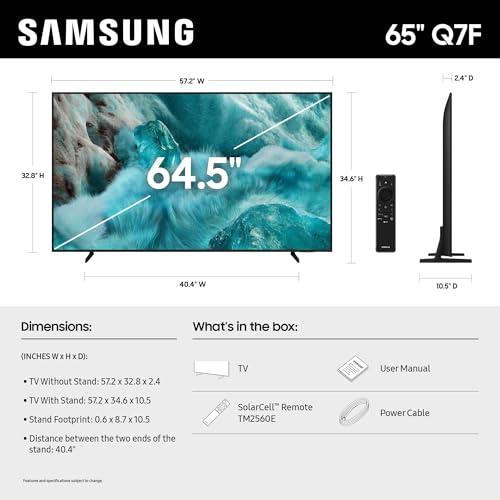
The most obvious difference between these TVs becomes apparent the moment you see them. The Samsung Q7F looks like what most people expect from a modern TV: sleek black bezels, adjustable plastic feet that can be positioned wide or narrow to accommodate different furniture, and a slim but conventional profile.
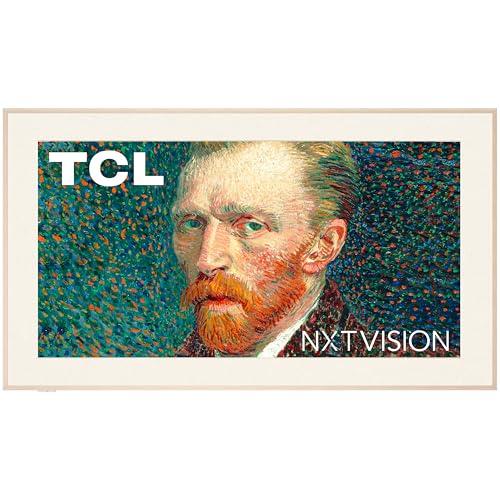
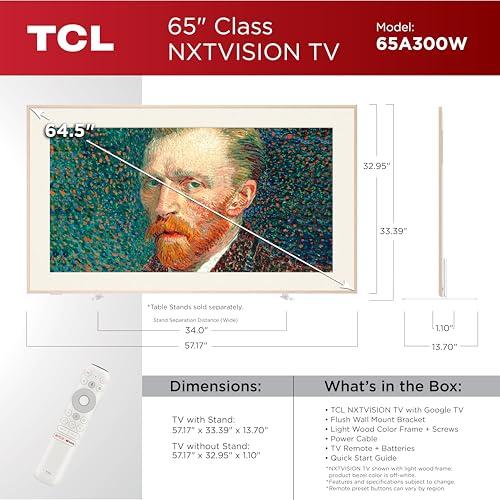
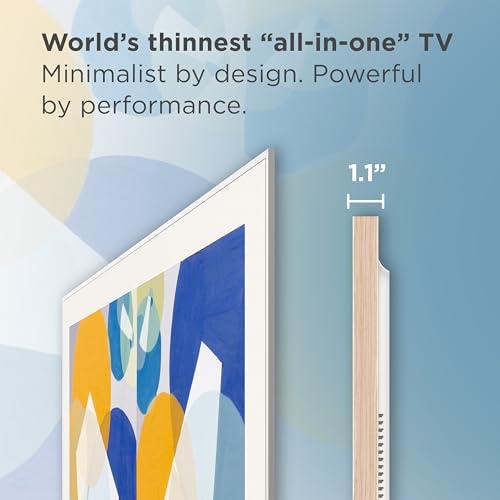
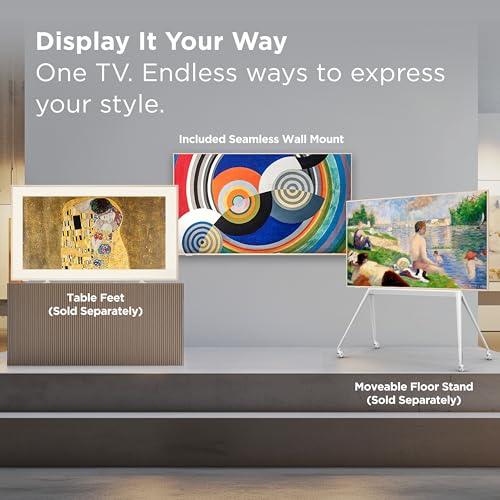
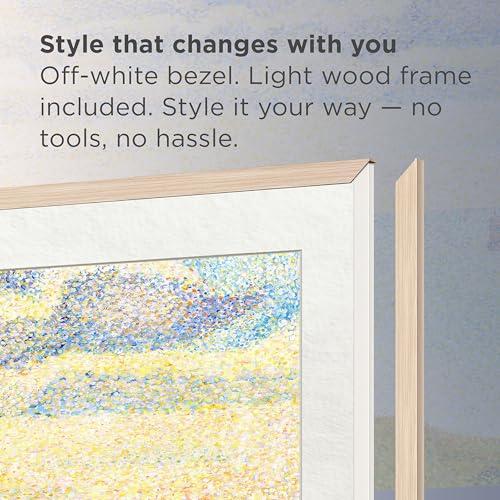
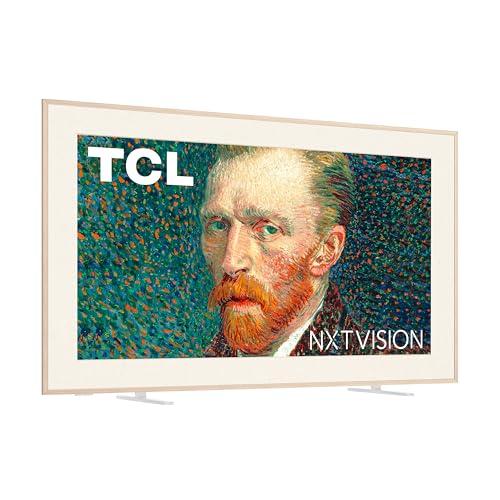
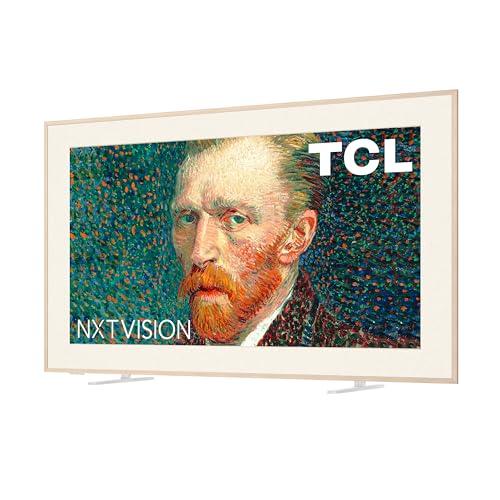
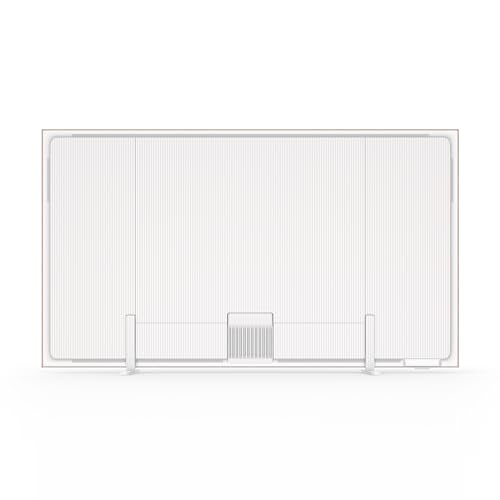
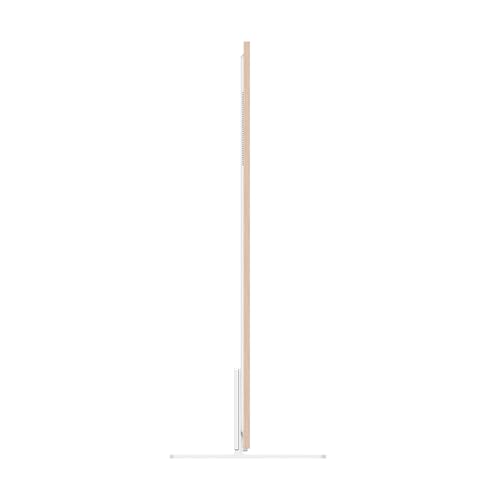
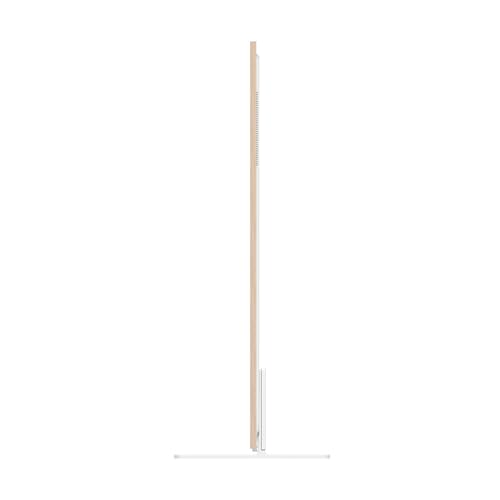
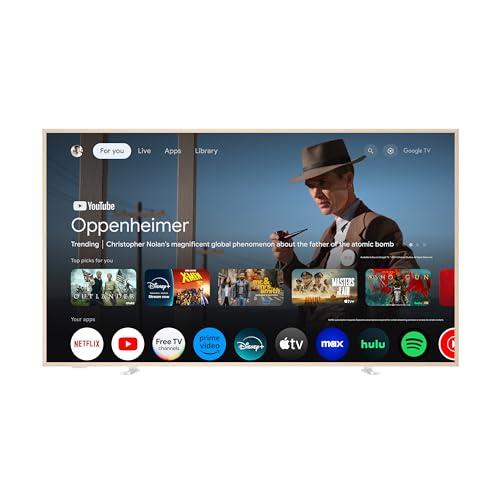
The TCL NXTVISION takes a radically different approach. At just 1.1 inches deep, it's designed to virtually disappear into your wall when mounted. It comes with a flush wall mount system that eliminates the gap you typically see between a TV and wall, plus magnetic frames in different finishes (including a light wood option) that make it look more like artwork than technology.
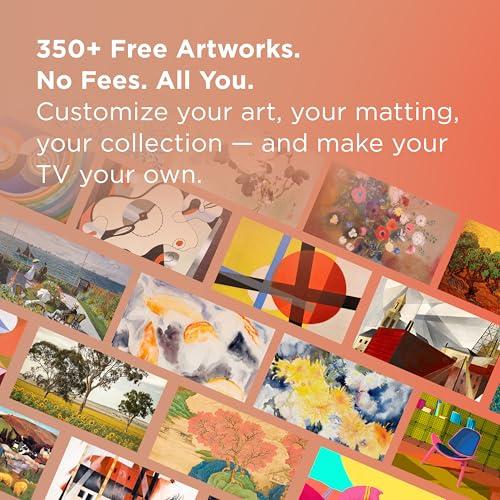
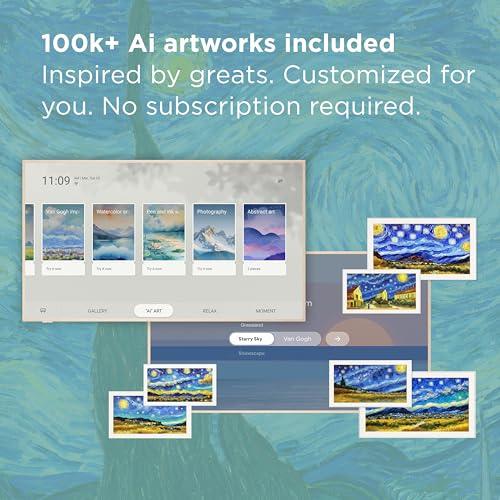
This design difference isn't just aesthetic – it reflects completely different use cases. The Samsung Q7F assumes you want a TV that performs well when you're actively watching something. The TCL NXTVISION assumes you want something that enhances your room even when turned off, serving as a digital art display with over 400 curated artworks and AI-generated options.
Having evaluated both approaches through extensive research into user experiences, the art display functionality is surprisingly compelling for many households. Instead of a blank black screen dominating your living room, you get museum-quality digital artwork that changes based on your preferences. However, this comes with trade-offs we'll explore in the performance sections.
High Dynamic Range (HDR) is arguably the most important advancement in TV technology over the past decade. HDR content contains information about both extremely bright highlights (like sunlight reflecting off water) and deep shadows (like details in dark movie scenes) that regular content simply can't display. To properly show HDR, a TV needs to get bright enough for those highlights to have visual impact – ideally 1000+ nits of peak brightness.
This is where the first major difference emerges. Based on our research into professional testing and user feedback, the TCL NXTVISION achieves significantly higher peak brightness levels than the Samsung Q7F. For HDR content from Netflix, Disney+, or 4K Blu-rays, this translates to more impactful highlights and a greater sense of realism.
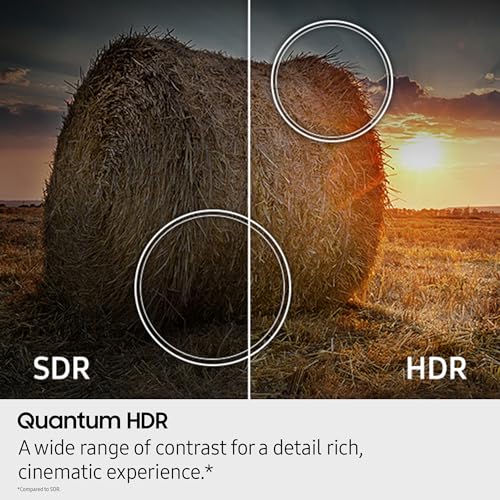
The Samsung Q7F supports Quantum HDR and HDR10+ (an enhanced version of the basic HDR10 standard that adjusts brightness scene-by-scene), but lacks support for Dolby Vision – currently the most advanced HDR format used by major streaming services. The TCL NXTVISION supports the full range: Dolby Vision IQ, HDR10+, HDR10, and HLG, giving you the best possible experience regardless of content source.
Here's where both TVs share a significant limitation: neither includes local dimming technology. Local dimming allows specific zones of the backlight to dim independently, creating deeper blacks by turning off LEDs behind dark parts of the image while keeping bright areas illuminated. Without this feature, both TVs struggle with contrast – dark scenes appear grayish rather than truly black.
This limitation affects movie watching more than casual TV viewing. In a darkened home theater environment, the lack of local dimming becomes immediately apparent during films with mixed lighting – think scenes that transition from bright outdoor shots to dark interiors. Both TVs will show more detail in shadows than intended, reducing the dramatic impact that directors intended.
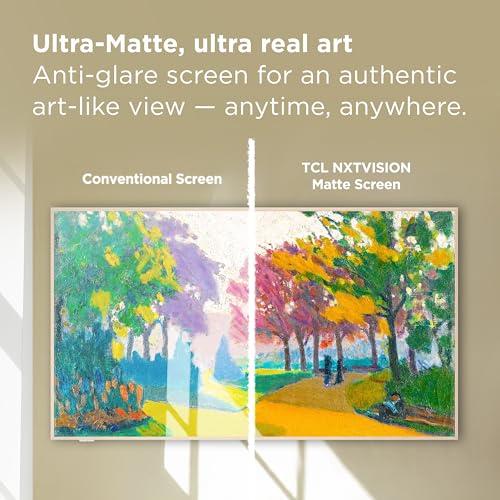
The TCL NXTVISION includes what TCL calls an "Ultra Matte Anti-Glare Screen" – a specialized coating that dramatically reduces reflections from room lighting. This technology is borrowed from actual art galleries and museums, where controlling reflections is crucial for viewing artwork under various lighting conditions.
Based on user reports, this anti-glare coating is remarkably effective, making the TV viewable even in bright rooms with windows or overhead lighting. The Samsung Q7F includes anti-glare coating as well, but it's less aggressive and won't handle bright rooms as effectively.
There's a trade-off here: matte screens can make colors appear slightly less vibrant in perfect viewing conditions, but they're dramatically better in real-world lighting situations where most people actually watch TV.
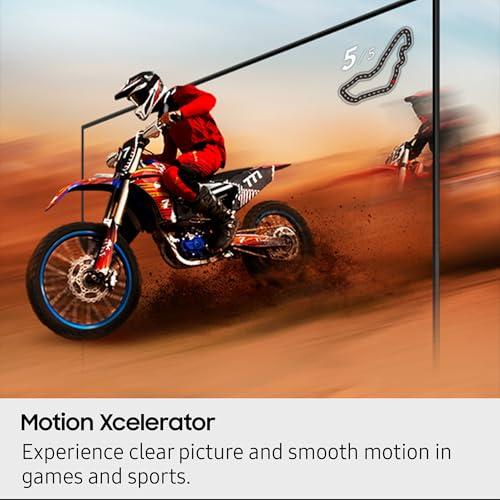
If gaming is important to you, the performance gap between these TVs is substantial. Modern gaming, especially on PlayStation 5, Xbox Series X, or high-end PC setups, benefits enormously from higher refresh rates and variable refresh rate (VRR) technology.
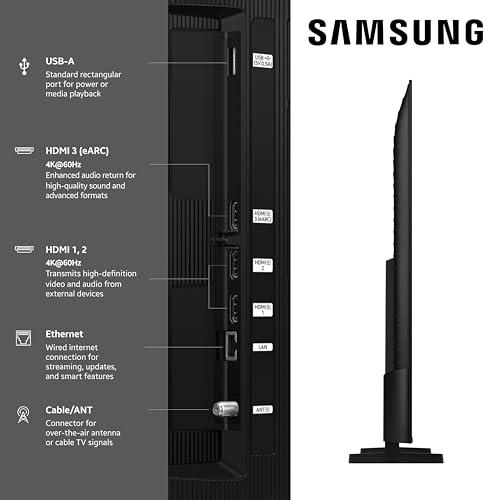
The Samsung Q7F is limited to 60Hz refresh rate with basic gaming features. While it includes Auto Game Mode (which automatically switches to low-latency settings when it detects a gaming console), it lacks HDMI 2.1 ports, VRR support, or 120Hz capabilities. For casual gaming or older consoles, this is perfectly adequate. For competitive gaming or taking advantage of next-generation console features, it's limiting.
The TCL NXTVISION includes what TCL calls "Game Accelerator 240" – support for up to 240Hz variable refresh rate, though the native panel runs at 120Hz. It includes two HDMI 2.1 ports capable of handling 4K content at 144Hz or 1080p at 240Hz, plus AMD FreeSync Premium certification.
VRR technology synchronizes the TV's refresh rate with your gaming device's frame rate output, eliminating screen tearing (where you see portions of multiple frames simultaneously) and reducing stuttering during fast-paced action. For competitive gaming or graphically intensive single-player games, this makes a noticeable difference in smoothness and responsiveness.
However, our research indicates that the TCL NXTVISION has slower pixel response times, which can create motion blur during fast gaming sequences. This creates an interesting trade-off: better gaming features but potentially blurrier fast motion.
The choice between operating systems often comes down to personal preference and existing device ecosystems, but there are practical differences worth considering.
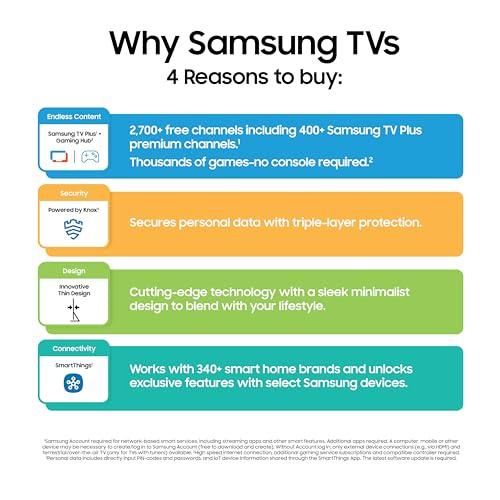
The Samsung Q7F runs Samsung's Tizen OS, which has evolved significantly since its introduction around 2015. The 2025 version includes Samsung's Vision AI, which provides personalized content recommendations, real-time translation for foreign language content, and gesture controls. If you use other Samsung devices (phones, tablets, appliances), the integration is seamless.
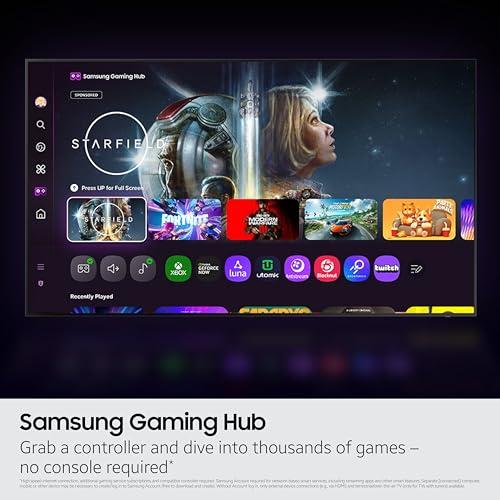
Tizen includes access to major streaming services, Samsung TV Plus (a free streaming service with thousands of channels), and supports voice control through Bixby, Amazon Alexa, or Google Assistant. The interface is generally fast and user-friendly, though some users find Samsung's approach to organizing content less intuitive than other platforms.
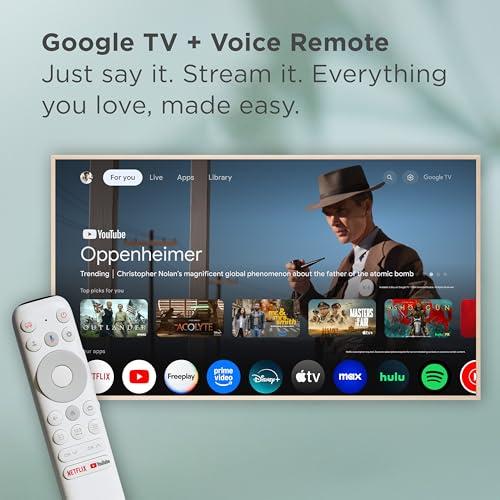
The TCL NXTVISION uses Google TV, which launched in 2020 as Google's replacement for Android TV. Google TV excels at content discovery, aggregating suggestions from multiple streaming services and presenting them in a unified interface. If you're already invested in Google's ecosystem (Gmail, Google Photos, YouTube Premium), the integration feels natural.
Google TV also includes hands-free Google Assistant functionality, meaning you can control the TV and search for content without picking up the remote – particularly useful when the TV is functioning as an art display and you want to quickly switch to entertainment mode.
Both TVs include 20W 2.0 channel speaker systems, which represents the bare minimum for TVs of this size. Neither will provide the audio quality that matches their visual capabilities, especially for home theater use.
The TCL NXTVISION has a slight advantage with support for Dolby Atmos and DTS:X – advanced audio formats that create three-dimensional soundscapes when properly implemented. However, with only two speakers, the TV can't create true surround sound; it uses digital processing to simulate the effect.
The Samsung Q7F includes Object Tracking Sound Lite (OTS Lite), which attempts to make audio follow action on screen, and Q-Symphony technology that allows the TV speakers to work in tandem with compatible Samsung soundbars.
For casual viewing, both speaker systems are adequate. For serious movie watching or gaming, you'll want to invest in a soundbar or dedicated audio system regardless of which TV you choose.
The TCL NXTVISION's art display functionality deserves serious consideration, especially if you're conscious about how technology fits into your home's aesthetic. When not actively being used as a TV, it can display classical paintings, photography, abstract art, or your own photos in a way that genuinely resembles framed artwork.
The AI art generation feature is particularly interesting – you can input keywords and have the TV generate original artwork based on your preferences. While the quality varies, the feature adds an element of personalization that traditional TVs simply can't match.
The ultra-matte screen coating that makes this possible also provides practical benefits for regular TV viewing, particularly in rooms with challenging lighting conditions. Based on user feedback we've researched, many people report that once they experience a matte screen in a bright room, it's difficult to go back to glossy displays.
At the time of writing, the Samsung Q7F typically retails in the mid-range price category for 65-inch QLED TVs, making it one of the more affordable options from a major brand with good smart TV features and adequate picture quality.
The TCL NXTVISION commands a premium price, reflecting its specialized design and additional features. The question becomes whether the art display functionality, superior gaming features, and better HDR performance justify the higher cost.
For most users upgrading from an older TV (particularly anything more than 5 years old), either option will provide a noticeable improvement in color accuracy, brightness, and smart features. The Samsung Q7F represents solid value for conventional TV use, while the TCL NXTVISION offers unique capabilities that extend beyond traditional viewing.
If you're building a dedicated home theater setup, both TVs have limitations that are important to understand. The lack of local dimming on both models means they won't deliver the deep blacks and dramatic contrast that make movies truly cinematic. For serious home theater use, you'd typically want to consider TVs with full-array local dimming or OLED technology.
However, the TCL NXTVISION's superior HDR support and higher brightness levels give it an advantage for HDR movie content, while its advanced gaming features make it more future-proof for gaming entertainment.
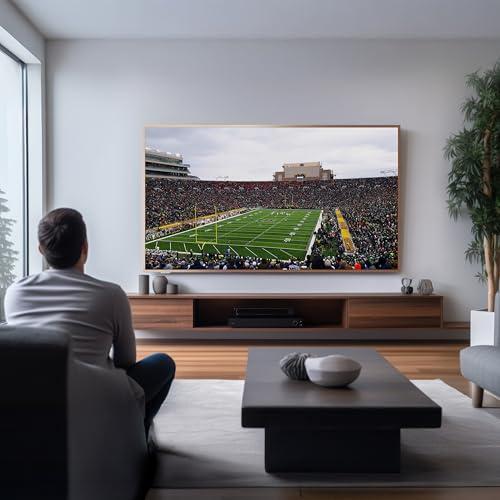
The ultra-slim design of the TCL NXTVISION can actually be beneficial in home theater setups where you want the TV to visually disappear, allowing viewers to focus entirely on the content rather than the technology displaying it.
Choose the Samsung Q7F if you want straightforward, reliable TV performance at a reasonable price. It's ideal for households that primarily watch streaming content, don't prioritize advanced gaming features, and prefer Samsung's ecosystem integration. The PANTONE color certification provides confidence in color accuracy for professional or creative work applications.
Choose the TCL NXTVISION if you value design integration, need advanced gaming features, frequently watch HDR content, or have a bright room that would benefit from the anti-glare screen. The art display functionality isn't just a novelty – it genuinely transforms how the TV integrates into your living space when not in active use.
For serious gamers, the choice is clear: the TCL NXTVISION's HDMI 2.1 ports, VRR support, and high refresh rate capabilities are essential for modern gaming experiences. For budget-conscious buyers who primarily watch streaming content, the Samsung Q7F delivers the essential features without premium pricing.
Both represent solid choices within their intended use cases, but they're designed for different priorities and lifestyles. Understanding which approach better matches your needs will lead to years of satisfaction with your purchase.
| Samsung 65-Inch Q7F Series QLED Smart TV 2025 | TCL 65" NXTVISION QLED 4K Art Frame TV |
|---|---|
| Display Technology - Foundation for color quality and brightness | |
| QLED with Quantum Dot, 100% Color Volume, PANTONE validated | QLED PRO with Quantum Dot + KSF phosphor coating for enhanced color separation |
| Peak Brightness - Critical for HDR impact and bright room viewing | |
| Lower peak brightness, adequate for moderate lighting | High Brightness+ LED with superior peak brightness for impactful HDR |
| HDR Format Support - Determines compatibility with premium streaming content | |
| Quantum HDR, HDR10+ (no Dolby Vision support) | Dolby Vision IQ, HDR10+, HDR10, HLG (full format support) |
| Refresh Rate & Gaming - Essential for modern gaming and sports | |
| 60Hz maximum, basic gaming features, no HDMI 2.1 | 120Hz native (up to 144Hz VRR), Game Accelerator 240, HDMI 2.1 ports |
| Variable Refresh Rate (VRR) - Eliminates screen tearing in games | |
| No VRR support | AMD FreeSync Premium, full VRR support up to 240Hz |
| Screen Coating - Affects viewing in bright rooms | |
| Basic anti-glare coating | Ultra Matte Anti-Glare Screen (museum-quality reflection control) |
| Design & Mounting - How it integrates into your space | |
| Traditional TV design, adjustable stand, standard wall mounting | Ultra-slim 1.1" profile, flush wall mount included, magnetic decorative frames |
| Art Display Features - Transforms TV into decor when not in use | |
| None (traditional TV only) | 400+ curated artworks, AI art generation, personal photo gallery mode |
| Smart TV Platform - Affects daily usability and app ecosystem | |
| Tizen OS with Samsung Vision AI, Bixby/Alexa integration | Google TV with hands-free Google Assistant, superior content discovery |
| Audio Technology - Built-in sound quality | |
| 20W 2.0 channel, OTS Lite, Q-Symphony soundbar compatibility | 20W 2.0 channel, Dolby Atmos & DTS:X support (better format handling) |
| Local Dimming - Controls contrast and black levels | |
| No local dimming (grayish blacks in dark scenes) | No local dimming (similar contrast limitations) |
| Processor & AI Features - Affects upscaling and smart functionality | |
| Q4 AI Processor, Samsung Vision AI with personalized recommendations | TCL AIPQ PRO Processor with AI-driven image optimization |
The TCL NXTVISION is significantly better for gaming. It offers 120Hz refresh rate with VRR support up to 240Hz, HDMI 2.1 ports, and AMD FreeSync Premium certification. The Samsung Q7F is limited to 60Hz with basic gaming features and no HDMI 2.1 support, making it suitable only for casual gaming.
The key difference is lifestyle integration. The Samsung Q7F has a traditional TV design with standard mounting options. The TCL NXTVISION features an ultra-slim 1.1-inch profile with flush wall mounting and magnetic decorative frames, designed to function as a digital art display when not actively being used as a TV.
For HDR content and streaming, the TCL NXTVISION has advantages with higher peak brightness and comprehensive HDR format support including Dolby Vision. The Samsung Q7F offers PANTONE-validated color accuracy but lacks Dolby Vision support. Both TVs lack local dimming, limiting their contrast performance in dark movie scenes.
Only the TCL NXTVISION can display artwork, featuring over 400 curated pieces, AI-generated art, and personal photo gallery modes. The Samsung Q7F is a traditional TV without art display capabilities, showing only a black screen when not in use.
The TCL NXTVISION is superior for bright rooms thanks to its Ultra Matte Anti-Glare Screen that dramatically reduces reflections. While the Samsung Q7F has basic anti-glare coating, it won't handle bright lighting conditions as effectively as the TCL's museum-quality matte screen.
The Samsung Q7F runs Samsung's Tizen OS with Samsung Vision AI, Bixby, and Alexa integration. The TCL NXTVISION uses Google TV with hands-free Google Assistant and superior content discovery across streaming services. Your choice depends on whether you prefer Samsung or Google ecosystem integration.
Both TVs feature 20W 2.0 channel speakers, but the TCL NXTVISION has a slight advantage with Dolby Atmos and DTS:X format support. The Samsung Q7F includes Object Tracking Sound Lite and Q-Symphony soundbar compatibility. Neither provides premium audio quality, so a soundbar is recommended for serious viewing.
Both TVs have limitations for dedicated home theaters due to lack of local dimming technology, which affects contrast in dark viewing environments. However, the TCL NXTVISION offers better HDR performance and higher brightness for movie content, while its ultra-slim design helps it visually disappear in theater setups.
The Samsung Q7F typically offers better value for budget-conscious buyers seeking solid picture quality and smart features. The TCL NXTVISION commands a premium but justifies it with unique art display functionality, superior gaming features, and comprehensive HDR support for users who value these capabilities.
The Samsung Q7F supports Quantum HDR and HDR10+ but lacks Dolby Vision. The TCL NXTVISION offers comprehensive HDR support including Dolby Vision IQ, HDR10+, HDR10, and HLG, providing better compatibility with streaming services and premium content sources.
The Samsung Q7F offers traditional setup with adjustable stand options and standard wall mounting. The TCL NXTVISION includes a specialized flush wall mount system for seamless installation, though it requires more precise mounting for the art display aesthetic. Both are relatively straightforward to install.
Both TVs can function as large computer monitors, but the Samsung Q7F may be better suited due to its traditional RGB subpixel layout. The TCL NXTVISION uses BGR subpixel arrangement, which can affect text clarity when used as a PC monitor, though it doesn't impact video or gaming performance.
We've done our best to create useful and informative comparisons to help you decide what product to buy. Our research uses advanced automated methods to create this comparison and perfection is not possible - please contact us for corrections or questions. These are the sites we've researched in the creation of this article: bestbuy.com - rtings.com - bestbuy.com - youtube.com - youtube.com - youtube.com - samsung.com - samsung.com - samsung.com - billsmith.com - costco.com - samsung.com - hometechnologyreview.com - hometechnologyreview.com - bestbuy.com - samsung.com - bestbuy.com - samsung.com - hometechnologyreview.com - samsung.com - samsung.com - rtings.com - tcl.com - bestbuy.com - tcl.com - bestbuy.com - tcl.com - youtube.com - rcwilley.com - businessinsider.com - bestbuy.com - target.com - youtube.com - support.tcl.com - nfm.com - woodruffappliance.com - flatpanelshd.com - tcl.com

Privacy Policy
Terms and Conditions - Affiliate Policy
Home Security
© Copyright 2008-2026.
11816 Inwood Rd #1211, Dallas, TX 75244