

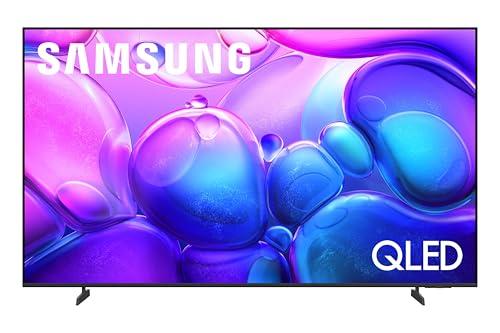
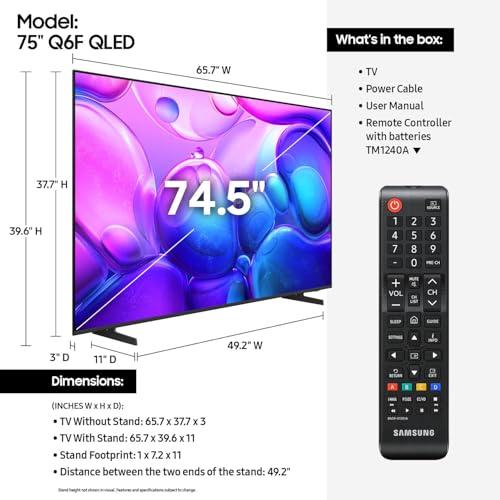
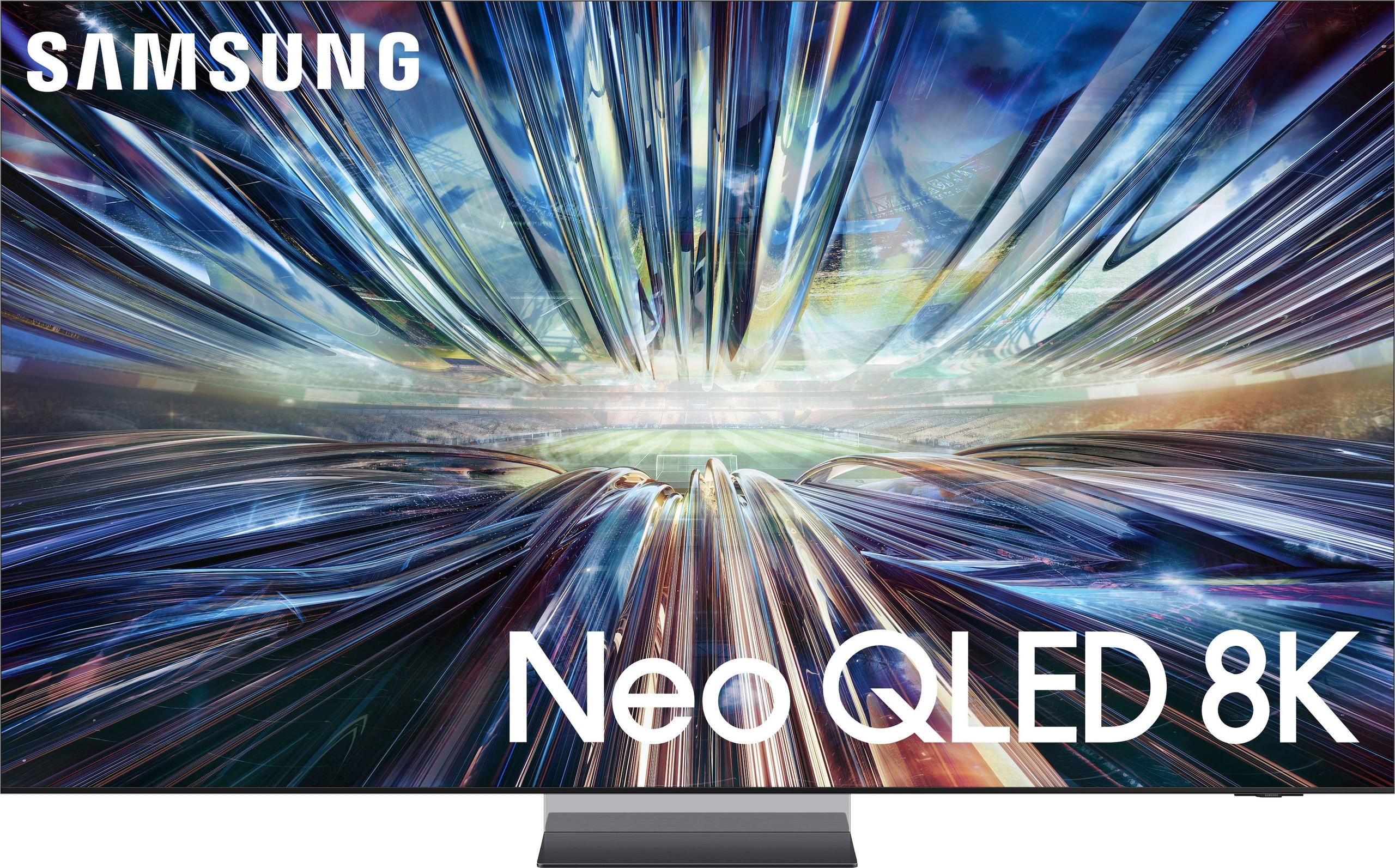
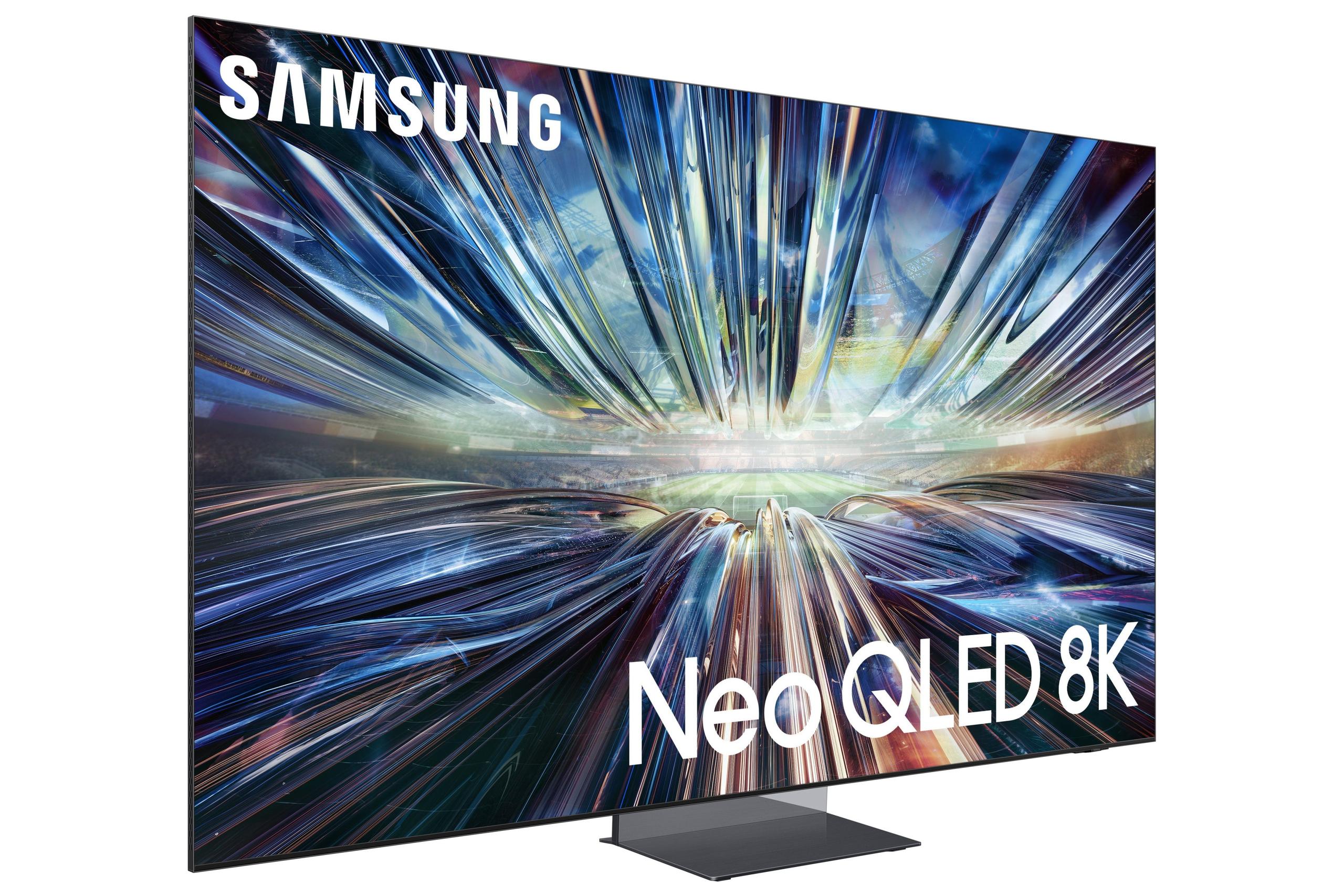
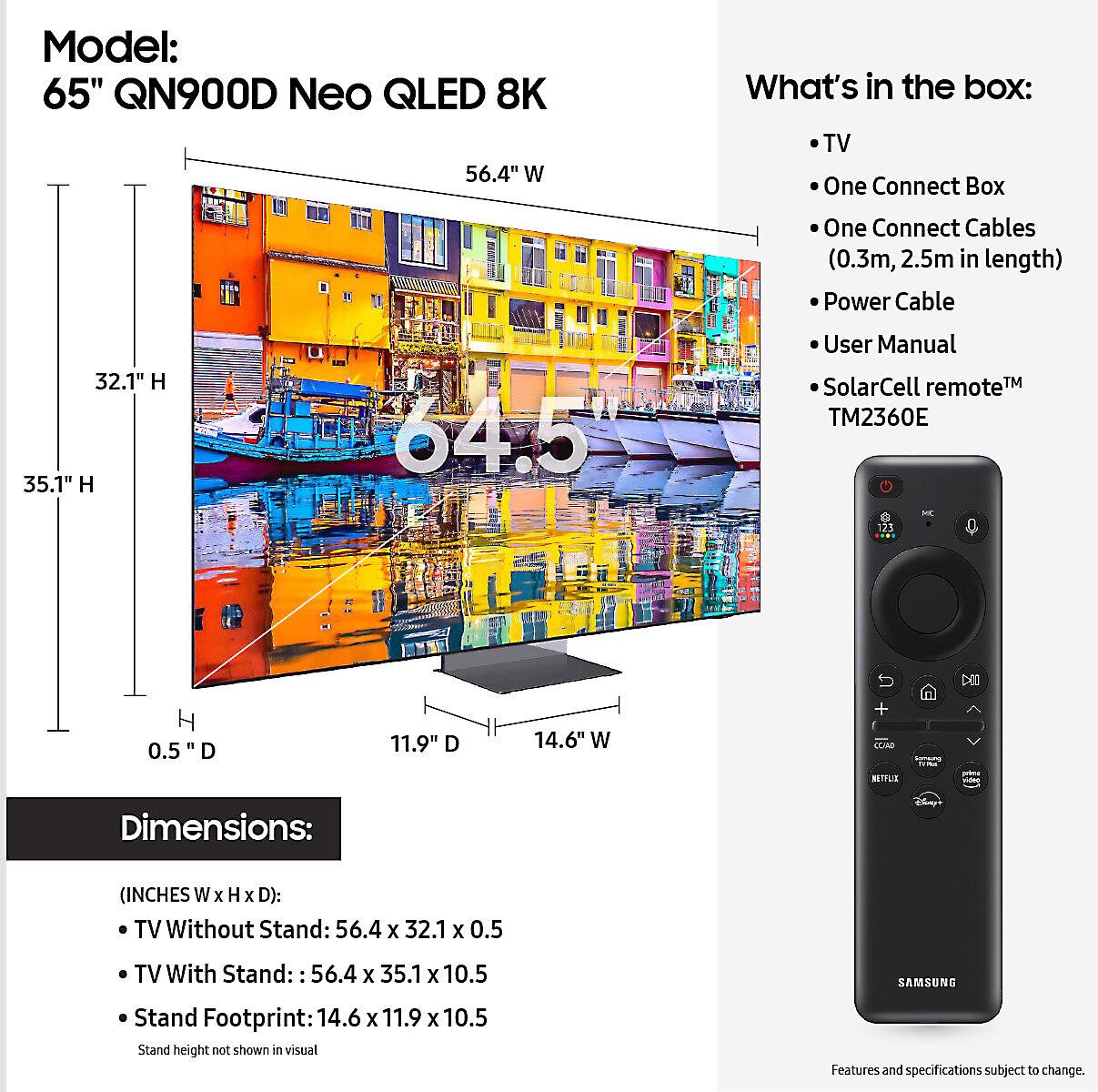
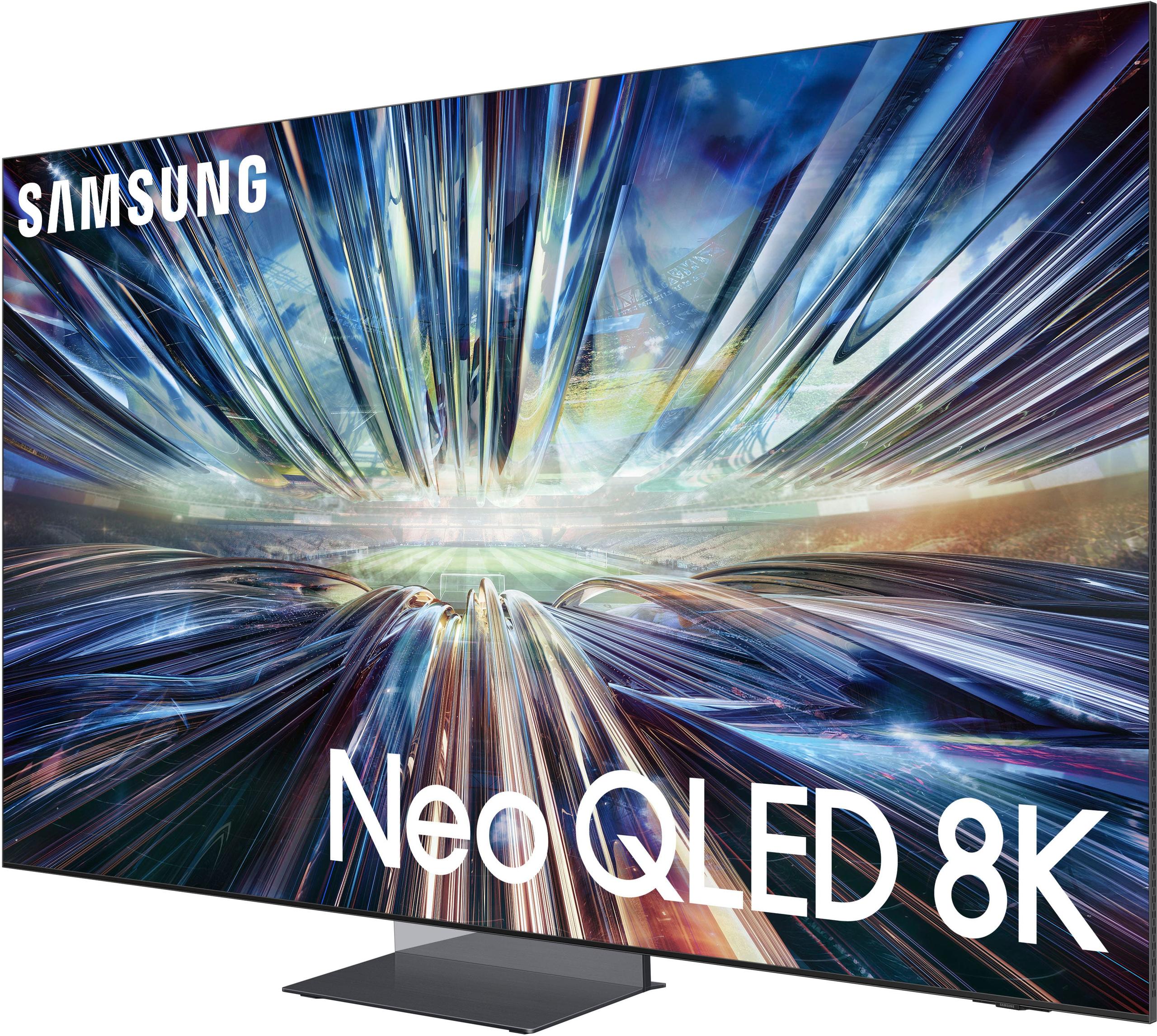
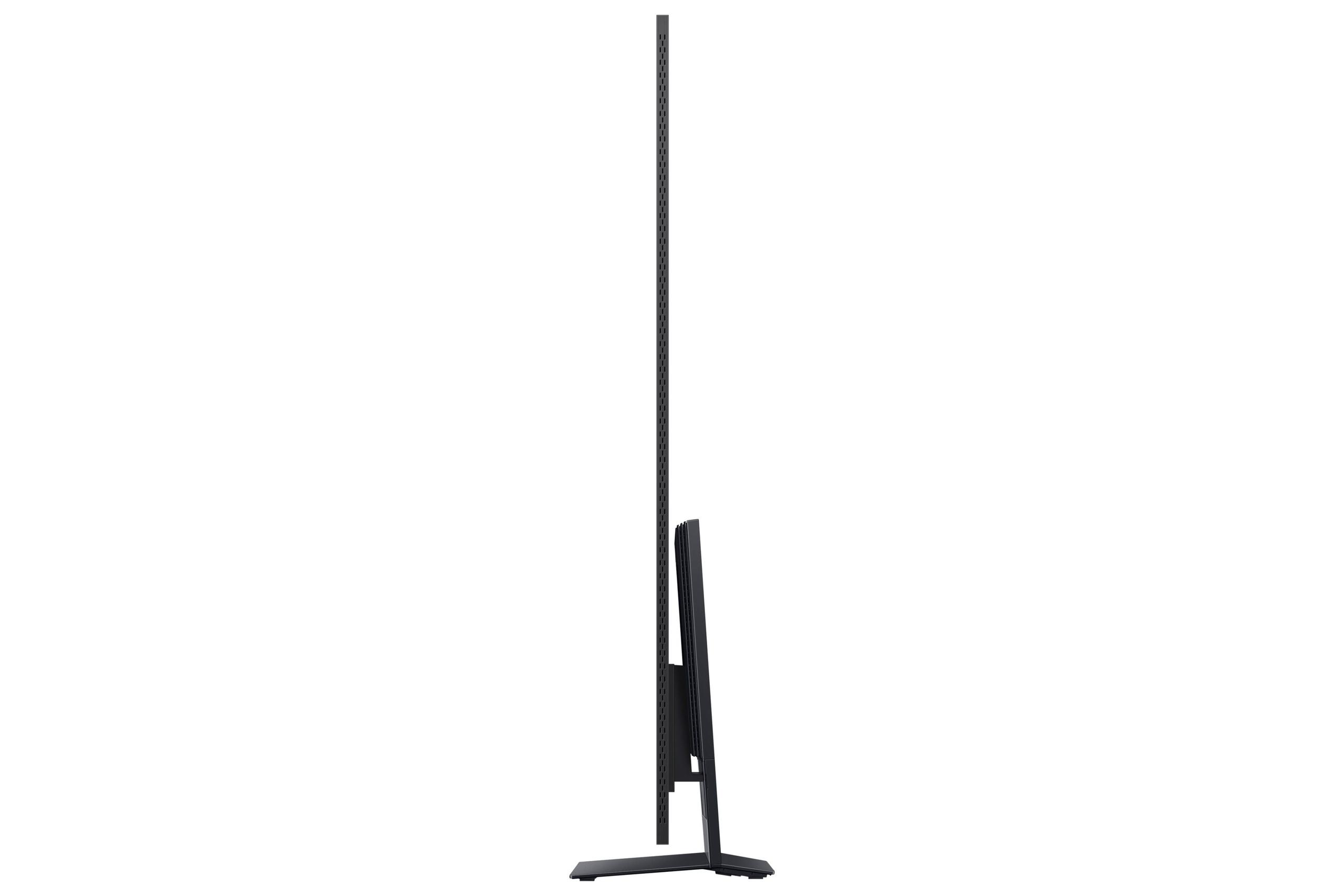
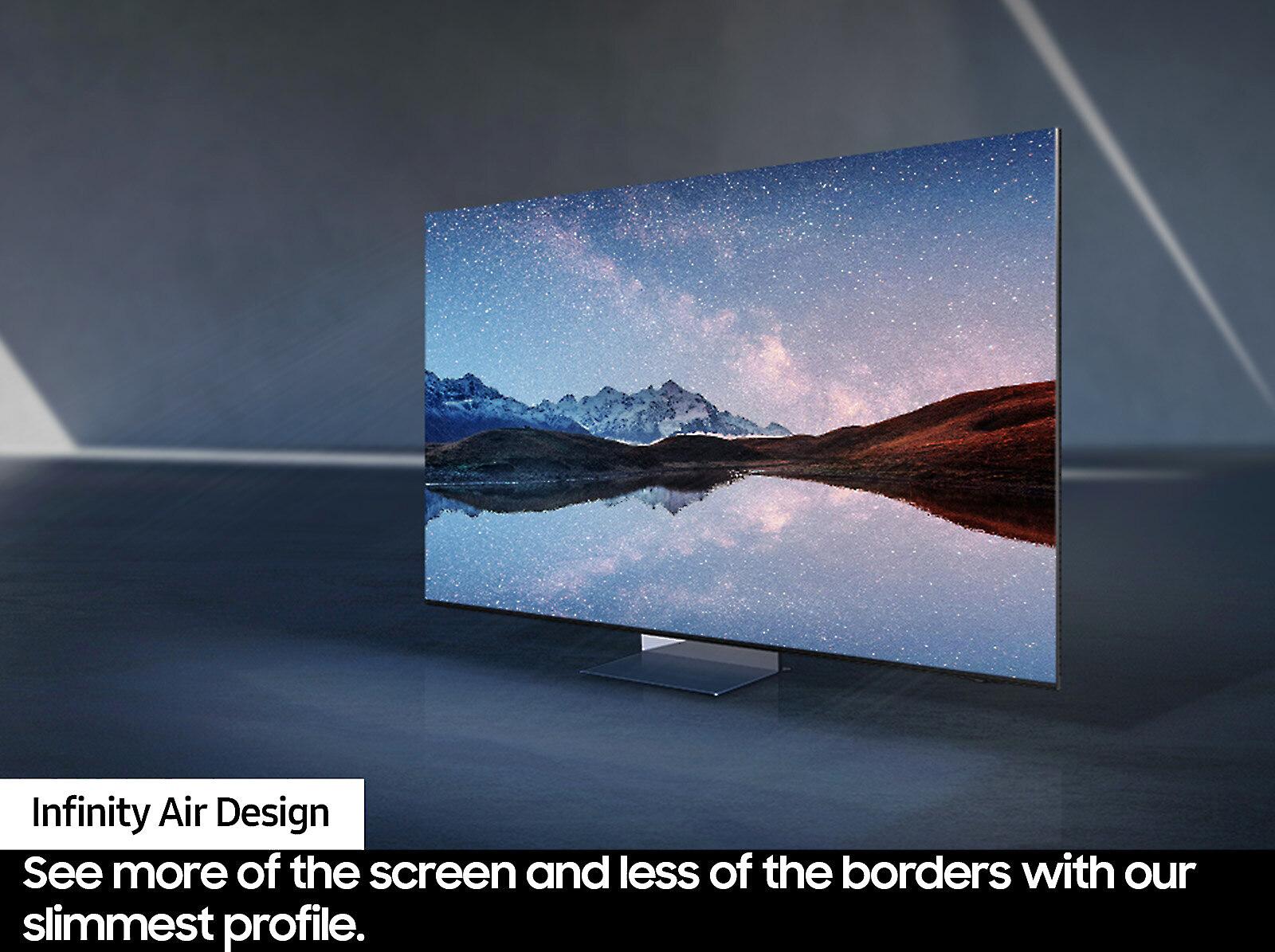
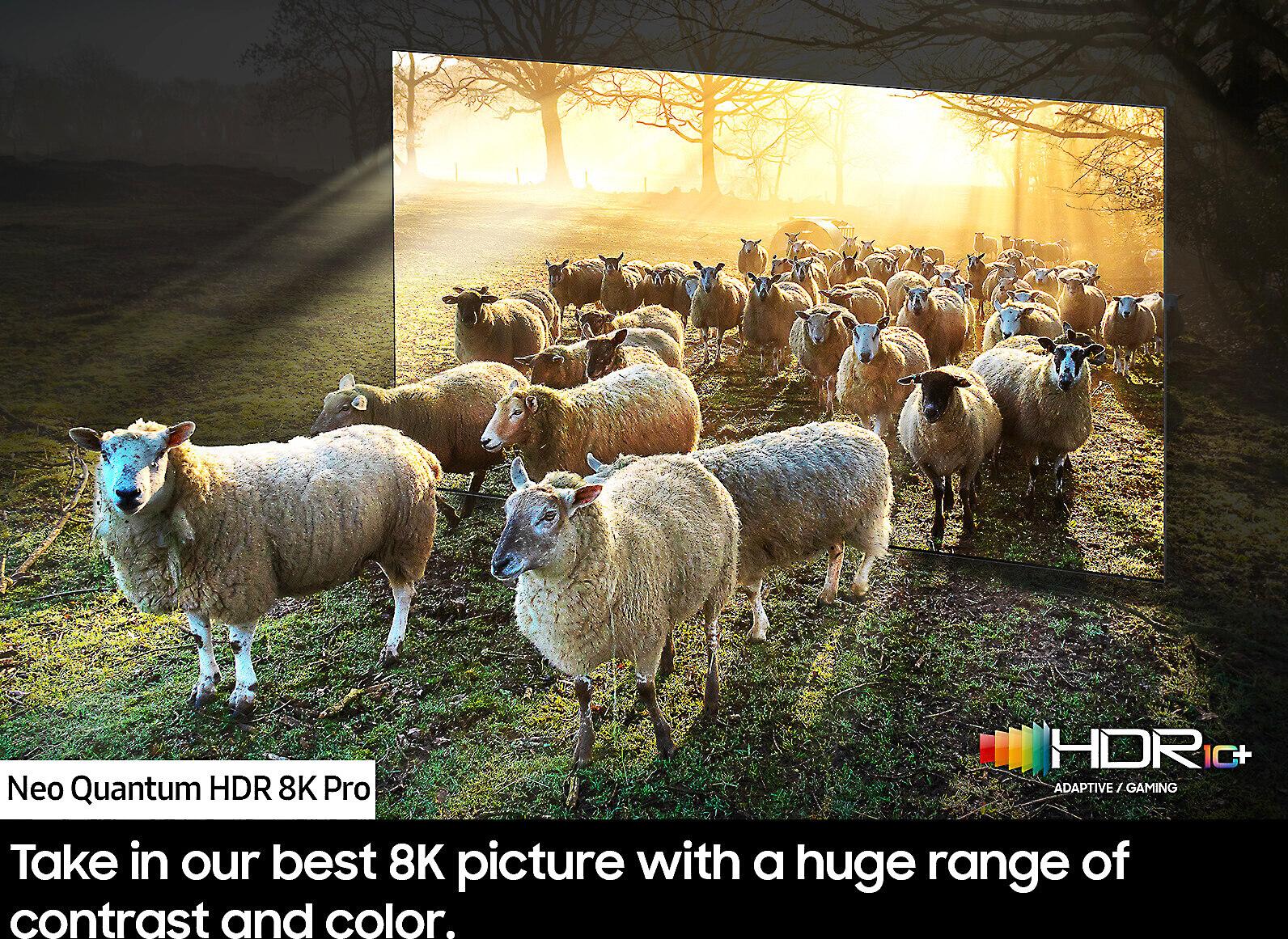
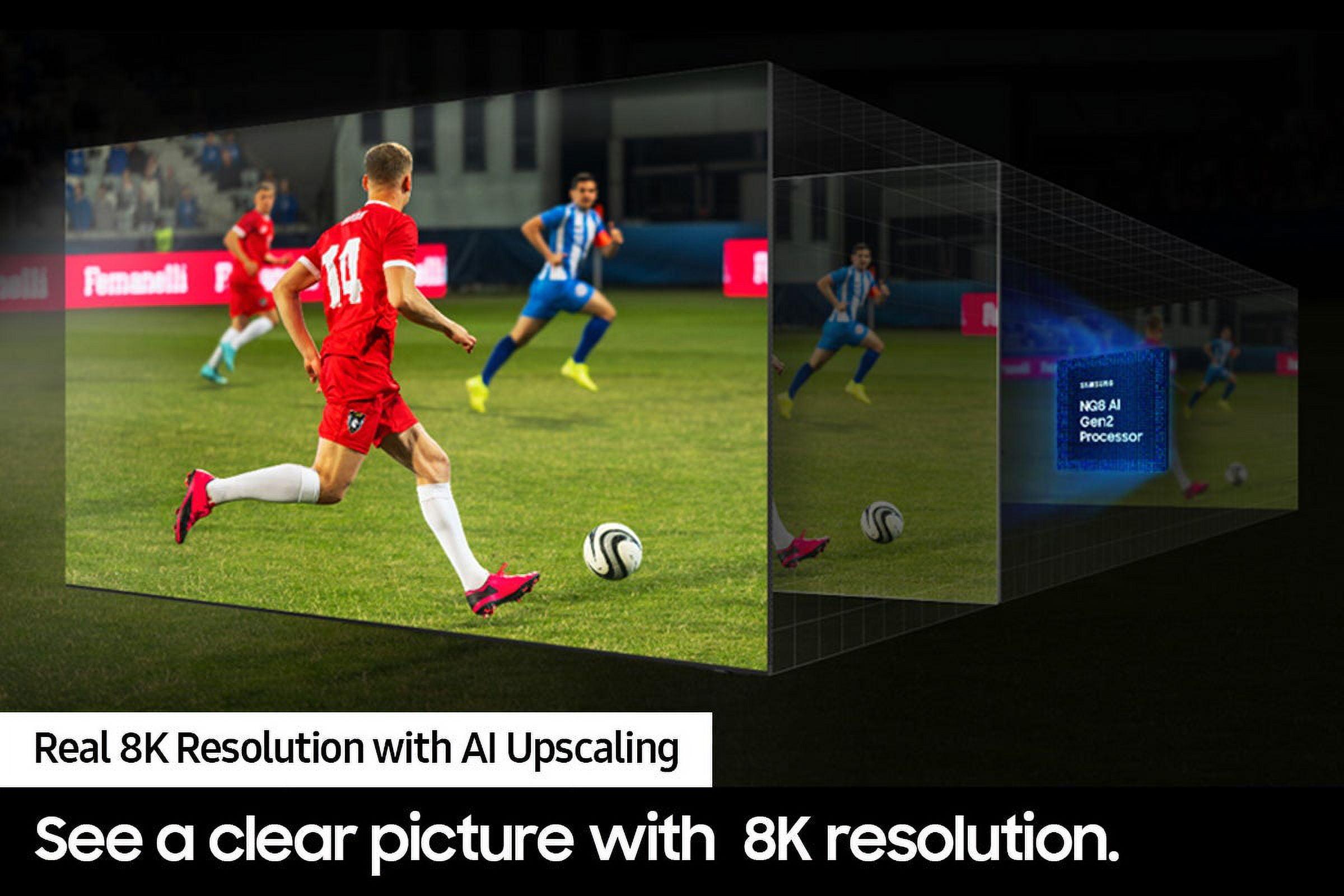
When Samsung released their TV lineup updates, they created an interesting comparison point between two very different philosophies: the budget-friendly approach of the 75-inch QLED Q6F Series from 2025 and the premium flagship QN900D Series 65" Neo QLED 8K from 2024. While these TVs serve different markets, understanding their approaches helps clarify what you're actually paying for when TV shopping.
Before diving into specifics, let's establish what matters most in today's TV landscape. The fundamental technologies that separate good TVs from great ones include quantum dot color enhancement (which creates more vibrant, accurate colors), local dimming (allowing different screen areas to get brighter or darker independently), and AI processing (which intelligently optimizes picture quality in real-time).
Peak brightness—measured in nits—determines how punchy HDR content looks and how well the TV performs in bright rooms. Refresh rates affect motion smoothness, with higher numbers reducing blur during fast scenes or gaming. These technical specifications translate directly into real-world viewing experiences.
The Samsung Q6F represents Samsung's 2025 strategy for bringing QLED technology to budget-conscious buyers. At roughly one-third the cost of premium models, it prioritizes screen size and basic quantum dot color reproduction while making compromises on backlighting and processing power.
Meanwhile, the QN900D showcases Samsung's 2024 flagship approach—cramming cutting-edge technology into a premium package. This includes 8K resolution, Mini LED backlighting, and advanced AI processing that would have been science fiction just a few years ago.
The technology gap between 2024 and 2025 models isn't dramatic since TV improvements happen incrementally. However, Samsung's 2025 budget models like the Q6F appear to have taken a step backward compared to their 2024 predecessors in terms of peak brightness and color volume, according to expert reviews. This suggests Samsung prioritized cost-cutting over performance improvements for their entry-level lineup.
The most fundamental difference lies in backlighting approach. The Q6F uses edge-lit LED backlighting, where LEDs line the TV's perimeter and light spreads across the screen through a light guide. This design keeps costs down but creates uniformity issues—you might notice brighter areas near the edges or "clouding" in dark scenes.
The QN900D employs Mini LED backlighting with thousands of tiny LEDs positioned directly behind the screen. These LEDs work in local dimming zones—imagine having hundreds of individual dimmer switches controlling different screen areas. When a movie shows a bright explosion against a dark sky, the Mini LEDs behind the explosion can blast at full brightness while the sky areas dim to true black.
This Quantum Matrix Technology Pro in the QN900D provides dramatically superior contrast compared to the Q6F's basic setup. In practical terms, this means movie scenes look more cinematic, with deeper blacks that don't appear gray and brighter highlights that pop off the screen.
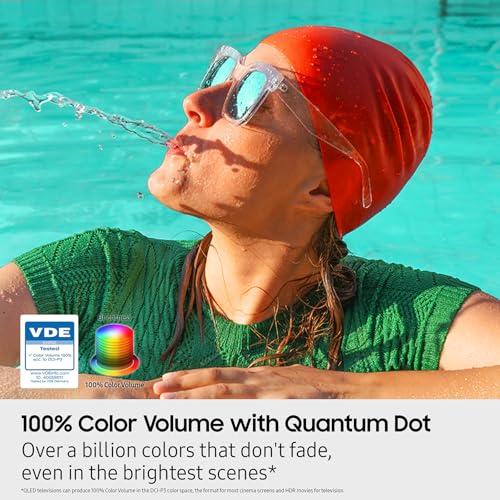
Both TVs use quantum dot technology, which involves microscopic particles that convert blue LED light into pure red and green wavelengths. This creates more saturated, accurate colors than traditional LED displays. However, the Q6F's implementation is more basic, delivering decent color reproduction without the wow factor.
The QN900D's color performance reaches reference monitor levels thanks to its superior backlighting and advanced processing. When watching HDR content—which contains brightness and color information beyond standard TV signals—the difference becomes dramatic. The Q6F displays HDR adequately but lacks the peak brightness to make highlights truly spectacular. The QN900D's superior brightness capabilities make HDR scenes genuinely impressive, with sunlight appearing realistically bright and neon signs that seem to glow.
Peak brightness measurements tell the story: budget QLEDs like the Q6F typically reach 400-600 nits, sufficient for moderate room lighting. Premium models like the QN900D can exceed 1,500 nits, rivaling actual sunlight reflections and making HDR content look dramatically more realistic.
The resolution difference between these models raises important questions about current technology versus future-proofing. The Q6F delivers standard 4K resolution—3,840 x 2,160 pixels—which remains the sweet spot for most content today. Netflix, Disney+, and gaming consoles primarily output 4K, making this resolution perfectly matched to current media.
The QN900D's 8K resolution—7,680 x 4,320 pixels—provides four times the detail of 4K, but here's the catch: virtually no consumer content exists in native 8K. This might seem like paying for unused capability, but the real magic lies in AI upscaling.
The QN900D's NQ8 AI Gen3 processor uses machine learning to analyze lower-resolution content and intelligently recreate missing detail. This isn't simple pixel multiplication—the AI recognizes faces, textures, and objects, then applies sophisticated algorithms to enhance them. The result transforms 4K content into something approaching true 8K quality, and the improvement is genuinely noticeable on larger screens.
From our research into user experiences, this upscaling technology proves most beneficial for viewers who sit relatively close to large screens or those who appreciate fine detail in cinematography. However, if you typically watch from across the room, the resolution advantage becomes less apparent.
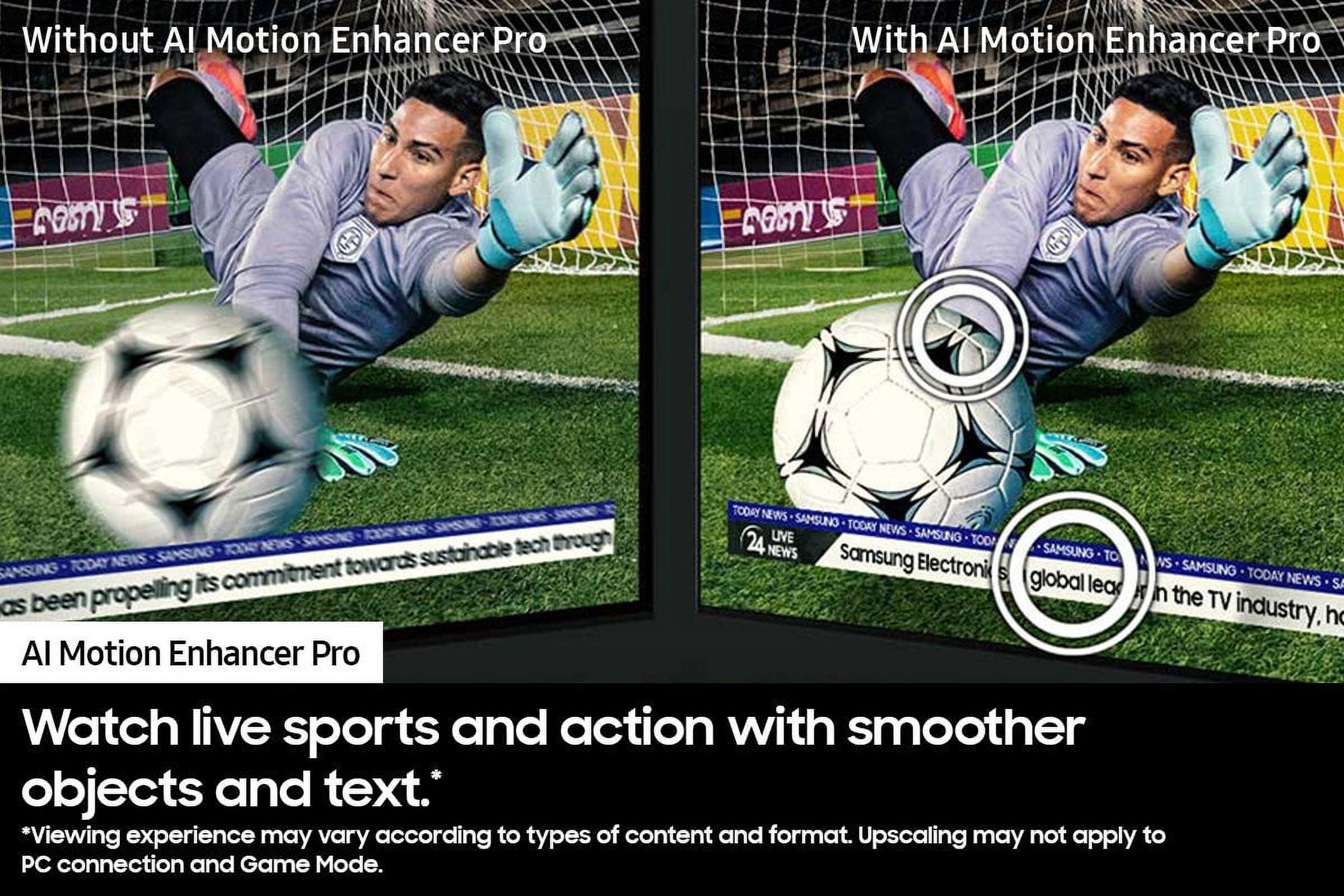
Refresh rate differences significantly impact viewing experiences, especially for sports, action movies, and gaming. The Q6F's 60Hz refresh rate handles standard content adequately but shows limitations during fast motion. Motion Xcelerator technology attempts to smooth transitions between frames, but it's basic compared to premium implementations.
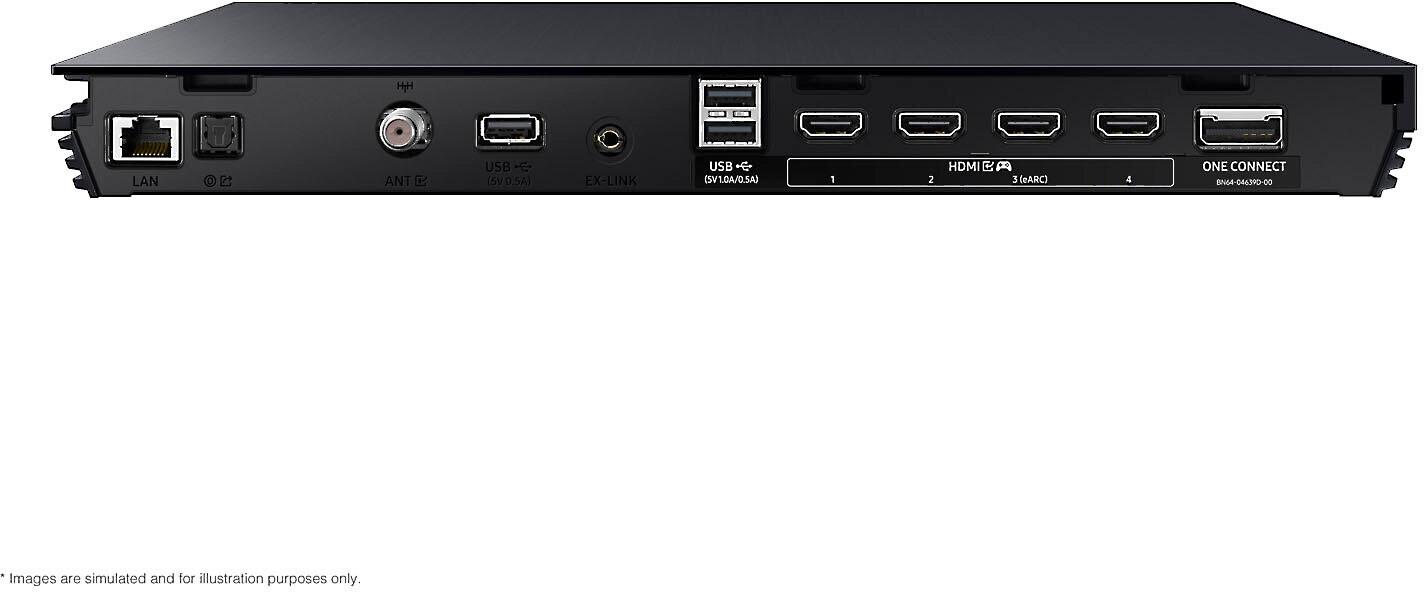
The QN900D operates at 120Hz natively, displaying twice as many frames per second for inherently smoother motion. More impressively, it supports 4K at 240Hz for gaming, which provides ultra-responsive gameplay that competitive gamers demand. This high refresh rate capability requires HDMI 2.1 bandwidth—think of it as a wider highway allowing more data to flow between your gaming console and TV.
Variable Refresh Rate (VRR) support in the QN900D eliminates screen tearing—those annoying horizontal lines that appear when game frame rates fluctuate. The Q6F lacks these gaming-focused features, making it suitable for casual gaming but limiting for serious players.
Input lag—the delay between pressing a controller button and seeing the action on screen—measures incredibly low on the QN900D when gaming mode activates. This responsiveness advantage proves crucial for competitive gaming where milliseconds matter.
Both TVs run Samsung's Tizen operating system, providing access to streaming apps, voice assistants, and smart home integration. However, the intelligence levels differ dramatically.
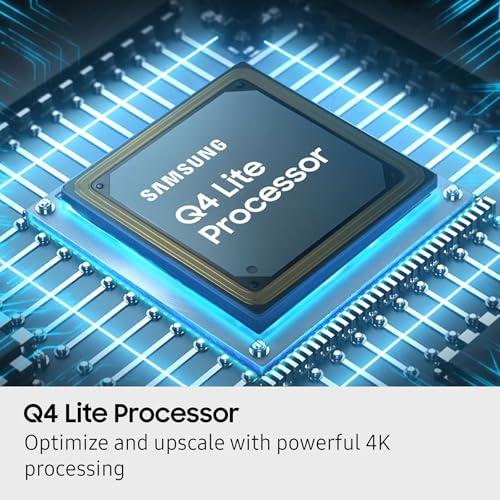
The Q6F's Q4 Lite processor handles basic upscaling and standard smart TV functions competently. It recognizes different content types and applies appropriate picture settings, but the processing remains relatively simple.
The QN900D's NQ8 AI Gen3 processor represents a significant leap forward. This chip uses neural networks—computer systems that learn and adapt—to analyze content continuously. It recognizes whether you're watching sports, movies, or news, then optimizes picture settings accordingly. The AI also enhances specific elements: faces appear more detailed, grass textures look more realistic, and motion appears smoother.
Auto HDR Remastering on the QN900D converts standard content to near-HDR quality by analyzing scenes and intelligently boosting contrast and color. This means older movies and TV shows receive modern enhancements automatically.
Television audio often gets overlooked, but these models reveal significant differences. The Q6F provides 20 watts of power through basic stereo speakers with Object Tracking Sound Lite—a feature that attempts to make audio follow on-screen action.
The QN900D delivers 90 watts through a 6.2.4-channel system with true Dolby Atmos support. This surround sound technology creates three-dimensional audio environments where sounds appear to come from specific locations, including overhead. When watching action movies, you'll hear helicopters flying overhead or rain falling from above, creating immersive experiences that basic stereo cannot match.
Active Voice Amplifier Pro on the QN900D intelligently boosts dialogue clarity when background noise increases—useful for late-night viewing or noisy environments.
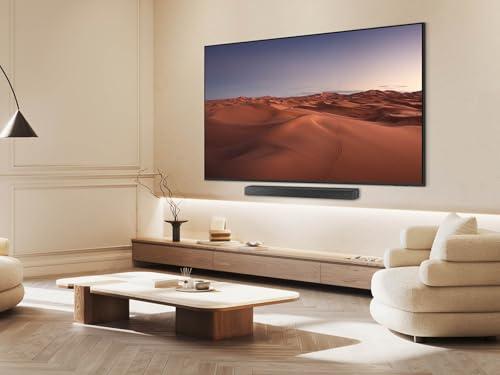
For dedicated home theater setups, the QN900D provides reference-quality performance suitable for discerning viewers. Its color accuracy, contrast capabilities, and HDR performance approach what professional colorists use when mastering content. The Filmmaker Mode preserves directors' creative intentions by displaying content exactly as intended without artificial enhancement.
The Q6F serves home theater purposes adequately for casual viewers, but limitations become apparent in dark room viewing where contrast shortcomings show. Edge-lit backlighting creates visible uniformity issues that can distract during movie watching.
Anti-reflection technology on the QN900D proves valuable in rooms with challenging lighting conditions, while the Q6F performs best in controlled lighting environments.
At the time of writing, the Q6F costs roughly one-third of the QN900D's price, making value calculations complex. The Q6F offers exceptional screen size for the money—75 inches of QLED technology at budget pricing represents genuine value for size-focused buyers.
However, the performance gulf is substantial. The QN900D justifies its premium pricing through superior performance across every category: picture quality, gaming capabilities, audio, and smart features.
For families prioritizing screen size and basic QLED benefits, the Q6F makes financial sense. Its 75-inch display creates immersive viewing experiences for sports, streaming content, and family movie nights without premium TV pricing.
Serious home theater enthusiasts, gamers, and viewers who appreciate cutting-edge technology will find the QN900D's capabilities worth the investment. Its 8K upscaling technology essentially future-proofs the purchase while delivering immediate benefits through enhanced 4K content.
The decision ultimately depends on your priorities and usage patterns. Choose the Samsung Q6F if you want the largest possible QLED screen within a strict budget, primarily watch streaming content and cable TV, and don't require advanced gaming features. Its 75-inch size provides impressive presence for larger rooms, and the quantum dot color technology delivers noticeably better color reproduction than basic LED TVs.
Opt for the Samsung QN900D if picture quality is paramount, you're a serious gamer or movie enthusiast, you want future-proof 8K capabilities, or you appreciate premium features like advanced AI processing and true Dolby Atmos audio. The 65-inch screen might be smaller, but every inch delivers flagship-level performance.
The size difference shouldn't be ignored—consider your room dimensions and seating distance. The Q6F's 75-inch display provides more immersive viewing for larger spaces, while the QN900D's 65-inch screen delivers superior per-inch quality.
Both TVs succeed within their intended markets, but they serve fundamentally different purposes. The Q6F democratizes QLED technology for budget-conscious buyers, while the QN900D showcases what's possible when cost isn't the primary constraint. Understanding these differences ensures your choice aligns with both your expectations and your wallet.
| Samsung 75-Inch QLED Q6F Series 2025 | Samsung QN900D Series 65" Neo QLED 8K Smart TV |
|---|---|
| Screen Size - Bigger isn't always better, consider your room size | |
| 75 inches (ideal for 9-12 foot viewing distance) | 65 inches (ideal for 8-10 foot viewing distance) |
| Resolution - 8K matters more for upscaling than native content | |
| 4K (3,840 x 2,160) - matches all current streaming content | 8K (7,680 x 4,320) - AI upscales 4K to near-8K quality |
| Backlight Technology - The biggest factor in picture quality | |
| Edge-lit LED (no local dimming, limited contrast) | Mini LED with Quantum Matrix Pro (thousands of dimming zones) |
| Peak Brightness - Critical for HDR impact and bright rooms | |
| ~400-600 nits (adequate for moderate lighting) | ~1,500+ nits (excellent for any room, stunning HDR) |
| Refresh Rate - Essential for gaming and sports | |
| 60Hz (basic motion handling, casual gaming only) | 120Hz native, 4K 240Hz gaming support |
| Gaming Features - Matters if you own Xbox/PlayStation | |
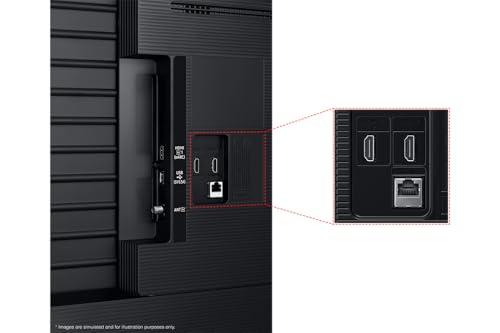
| Basic Auto Game Mode, no VRR or HDMI 2.1 | Full HDMI 2.1, VRR, ultra-low input lag, 4K 240Hz |
| Processor - Determines upscaling and AI features | |
| Q4 Lite (basic upscaling and processing) | NQ8 AI Gen3 (advanced AI upscaling and optimization) |
| HDR Support - Makes movies and shows more cinematic | |
| HDR10+ (limited brightness reduces impact) | Neo Quantum HDR 8K+ (dramatic contrast and brightness) |
| Audio System - Built-in sound quality | |
| 20W 2-channel with Object Tracking Sound Lite | 90W 6.2.4-channel with true Dolby Atmos |
| Smart Features - All modern conveniences included | |
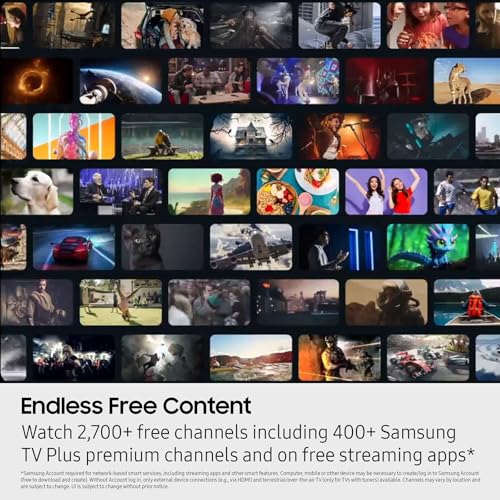
| Tizen OS, voice assistants, Samsung TV Plus | Advanced Tizen with AI optimization and premium features |
| Design Premium Features - Nice-to-have additions | |
| Basic plastic stand, standard remote | Anti-reflection coating, One Connect Box, premium build |
| Best For - Who should buy each model | |
| Budget-conscious families wanting large QLED screen | Home theater enthusiasts and serious gamers |
| Value Proposition - Cost vs performance consideration | |
| Exceptional size-to-price ratio with decent QLED quality | Premium pricing justified by flagship performance across all areas |
The biggest difference is display technology and resolution. The Samsung Q6F is a budget-friendly 75-inch 4K QLED TV with basic edge-lit backlighting, while the Samsung QN900D is a premium 65-inch 8K TV with advanced Mini LED backlighting and AI processing. The QN900D delivers significantly better picture quality, but the Q6F offers more screen size for less money.
The Samsung QN900D is far superior for gaming with its 120Hz refresh rate, 4K 240Hz support, Variable Refresh Rate (VRR), and ultra-low input lag. The Samsung Q6F only offers 60Hz refresh rate and basic gaming features, making it suitable only for casual gaming.
Yes, even without native 8K content. The Samsung QN900D uses advanced AI upscaling that transforms 4K content into near-8K quality, creating noticeably sharper and more detailed images. This upscaling technology provides immediate benefits for all your current streaming and gaming content.
The Samsung QN900D performs much better in bright rooms thanks to its higher peak brightness (1,500+ nits) and anti-reflection coating. The Samsung Q6F has limited brightness output and may appear washed out in very bright environments.
The picture quality gap is substantial. The Samsung QN900D offers superior contrast with Mini LED backlighting, deeper blacks, brighter highlights, and more vibrant colors. The Samsung Q6F provides decent QLED colors but lacks local dimming, resulting in more limited contrast and HDR performance.
For serious home theater use, the Samsung QN900D is the clear winner with its reference-quality picture, true Dolby Atmos sound, and Filmmaker Mode. The Samsung Q6F works adequately for casual movie watching but shows limitations in dark room viewing due to its basic backlighting.
Both TVs run Samsung's Tizen operating system with similar apps and streaming services. However, the Samsung QN900D includes advanced AI features like automatic picture optimization and HDR remastering that the Samsung Q6F lacks.
The Samsung QN900D has significantly better audio with its 90W 6.2.4-channel system and true Dolby Atmos support compared to the Samsung Q6F's basic 20W stereo speakers. The QN900D creates immersive surround sound while the Q6F provides adequate but basic audio.
Yes, the Samsung Q6F provides solid performance for families wanting a large QLED TV at a budget price. It's perfect for streaming Netflix, watching cable TV, and casual gaming. However, if you're particular about picture quality or want premium features, the Samsung QN900D is worth the investment.
This depends on your priorities. The Samsung Q6F offers exceptional value for screen size, giving you 75 inches of QLED technology at a budget price. The Samsung QN900D provides premium value with flagship-level performance across all categories, justifying its higher cost for quality-focused buyers.
Yes, both support HDR, but the experience differs dramatically. The Samsung Q6F displays HDR content adequately but lacks the brightness for true impact. The Samsung QN900D delivers spectacular HDR with bright highlights and deep blacks that make scenes look dramatically more realistic.
Choose the Samsung Q6F if you want the largest possible screen within a budget and primarily watch streaming content. Choose the Samsung QN900D if you prioritize picture quality, are a serious gamer, want premium features, or plan to use it for home theater. Consider your room size, viewing distance, and whether the 10-inch size difference matters for your space.
We've done our best to create useful and informative comparisons to help you decide what product to buy. Our research uses advanced automated methods to create this comparison and perfection is not possible - please contact us for corrections or questions. These are the sites we've researched in the creation of this article: youtube.com - rtings.com - cnet.com - youtube.com - rtings.com - samsung.com - bestbuy.com - samsung.com - samsung.com - bestbuy.com - manuals.plus - arrowassociatedstores.com - samsung.com - samsung.com - samsung.com - flatpanelshd.com - device.report - rtings.com - videoandaudiocenter.com - bestbuy.com - avsforum.com - bestbuy.com - walts.com - images.samsung.com - samsung.com - merlinstv.com - samsung.com - avsforum.com - samsung.com

Privacy Policy
Terms and Conditions - Affiliate Policy
Home Security
© Copyright 2008-2026.
11816 Inwood Rd #1211, Dallas, TX 75244