

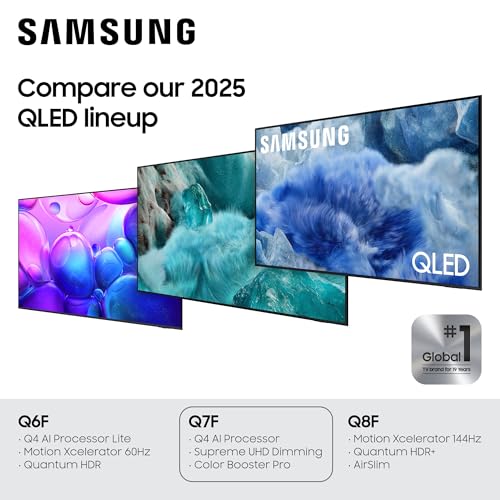
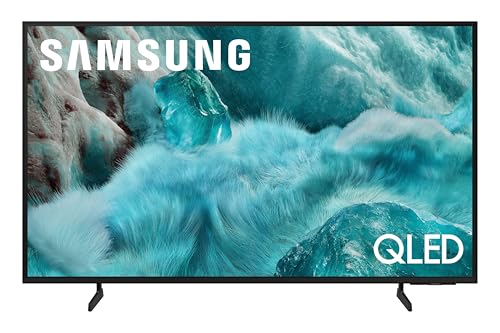
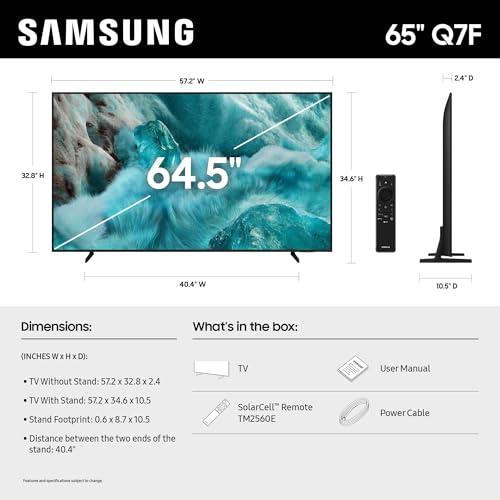
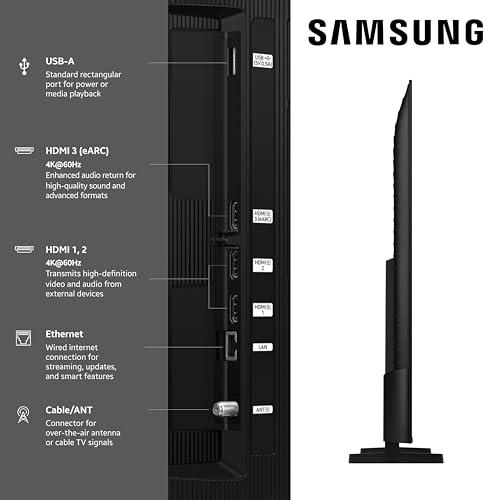
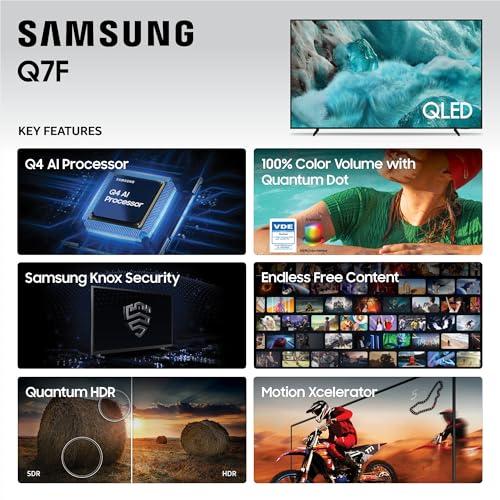
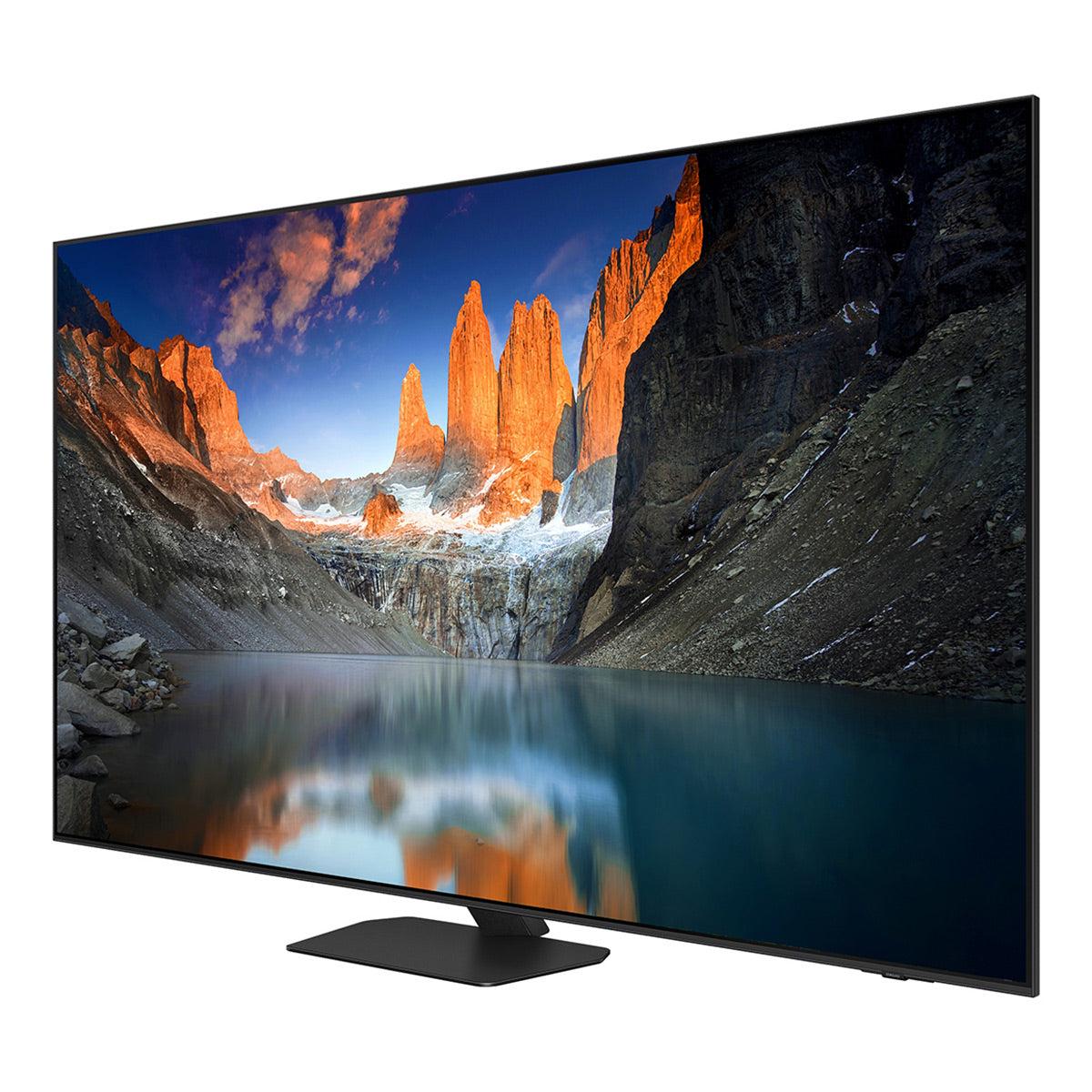
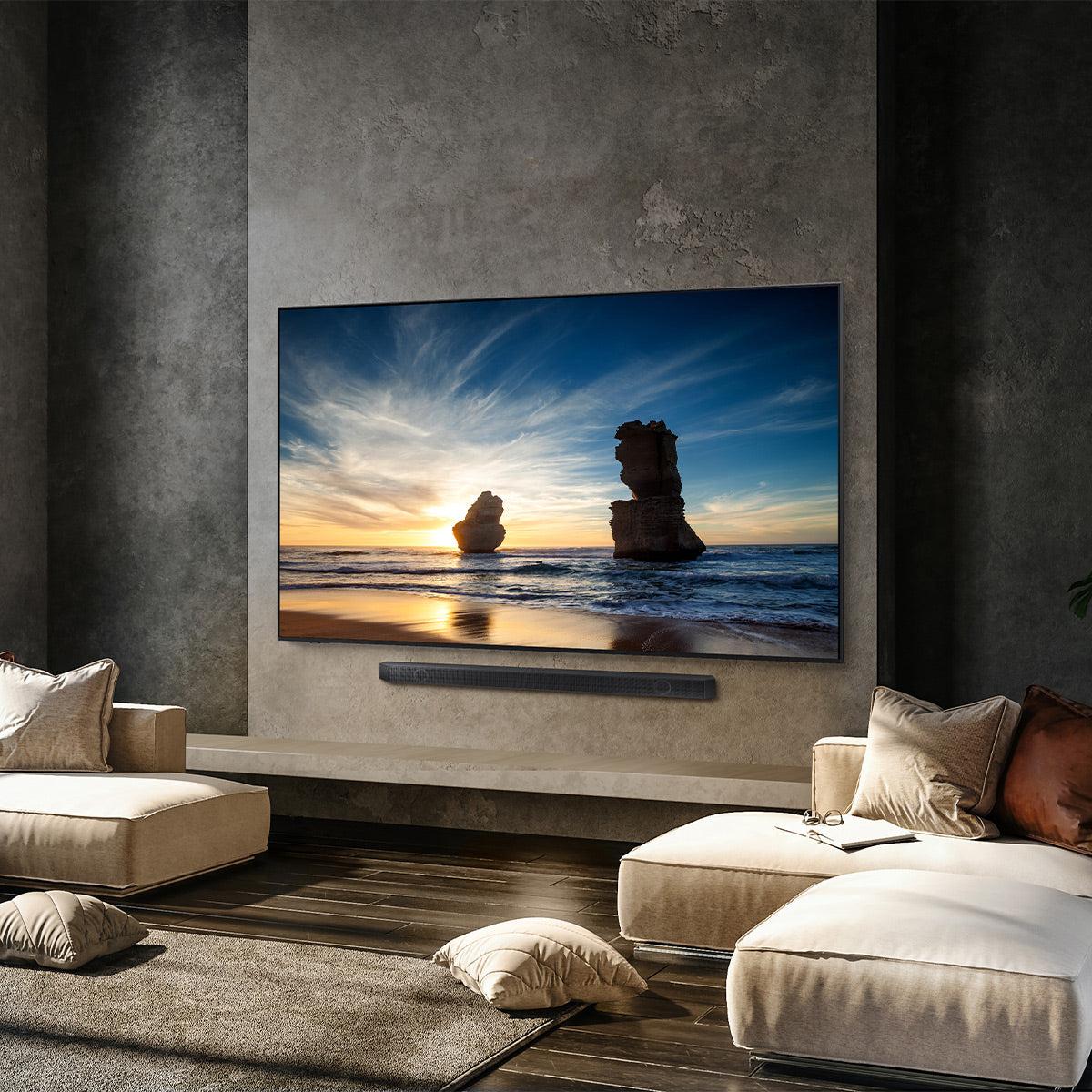
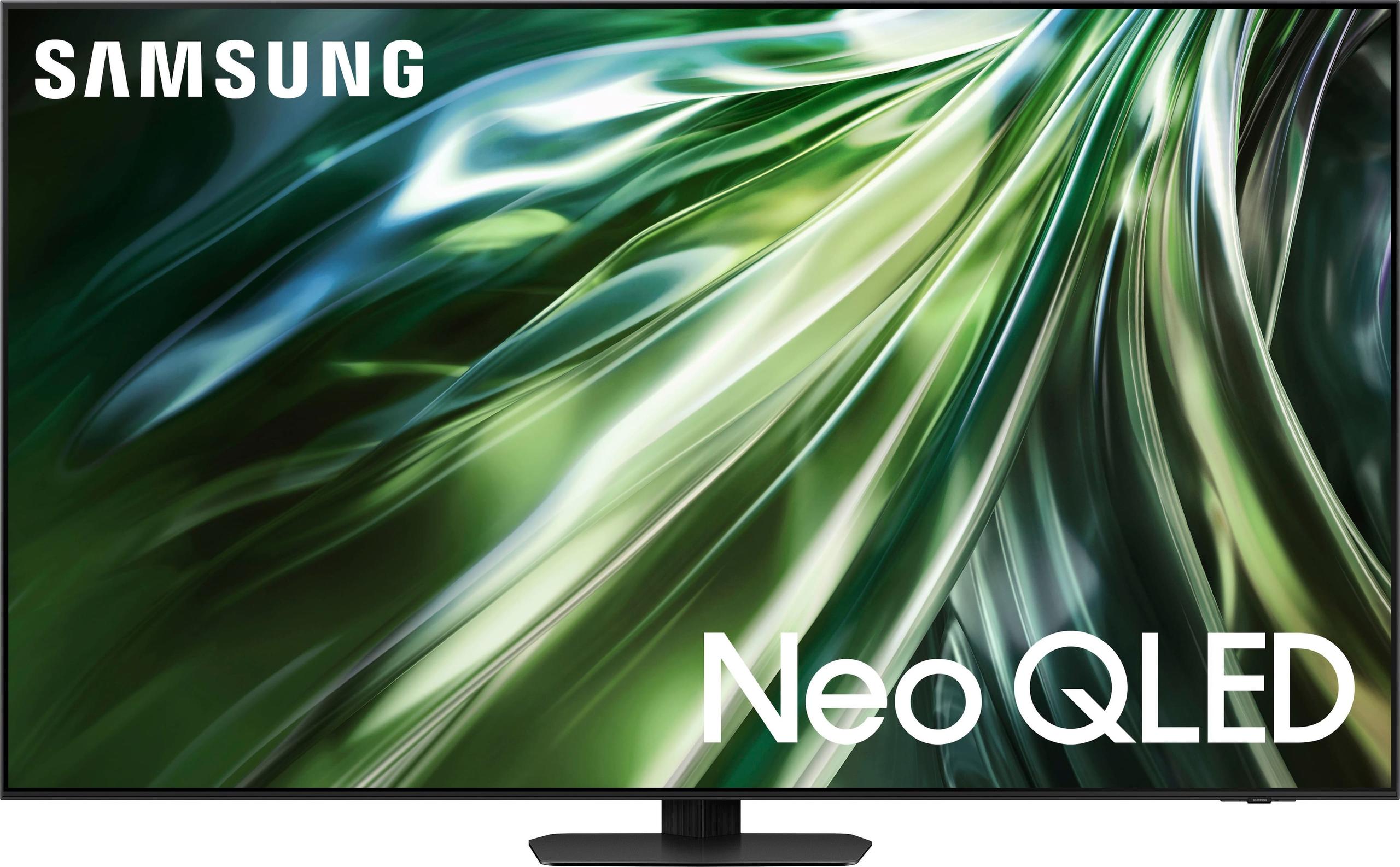

Choosing the right TV can feel overwhelming, especially when you're looking at Samsung's QLED lineup. The company offers everything from budget-friendly quantum dot displays to cutting-edge Mini LED powerhouses, and the performance differences between these tiers are more dramatic than you might expect. Today, we're comparing two Samsung QLEDs that represent opposite ends of this spectrum: the Samsung Q7F Series from 2025 and the Samsung QN90D Series from 2024.
At first glance, both might seem like similar quantum dot TVs from Samsung, but they're actually worlds apart in terms of technology and performance. The price difference between them—roughly double for the premium model at the time of writing—reflects fundamental differences in display technology that translate to dramatically different viewing experiences.
Before diving into the comparison, it's worth understanding what QLED actually means and why it matters. QLED stands for Quantum Dot Light Emitting Diode, which is Samsung's marketing term for LED TVs that use quantum dots—tiny semiconductor crystals that can produce very pure colors when hit by light. Think of quantum dots as extremely efficient color filters that can create more vivid, accurate colors than traditional LED TVs.
However, not all QLEDs are created equal. The real performance differences come from the backlighting system behind those quantum dots. This is where our two TVs diverge dramatically, and it's the single most important factor determining picture quality.
When evaluating any TV, the key performance areas to focus on are brightness and contrast (how deep the blacks are and how bright the highlights can get), color accuracy and volume, motion handling for sports and action content, gaming capabilities, and smart features. The backlighting system affects nearly all of these areas.
The most fundamental difference between the Samsung Q7F and Samsung QN90D lies in their backlighting technology, and this difference affects everything else about picture quality.
The Q7F uses what's called direct-lit LED backlighting—essentially a grid of regular-sized LED bulbs behind the entire screen that all turn on and off together. This is the same basic technology that's been used in TVs for over a decade. While it works fine for basic viewing, it means the TV can't create true blacks because the backlight is always on behind dark scenes, creating a grayish appearance in what should be pure black areas.
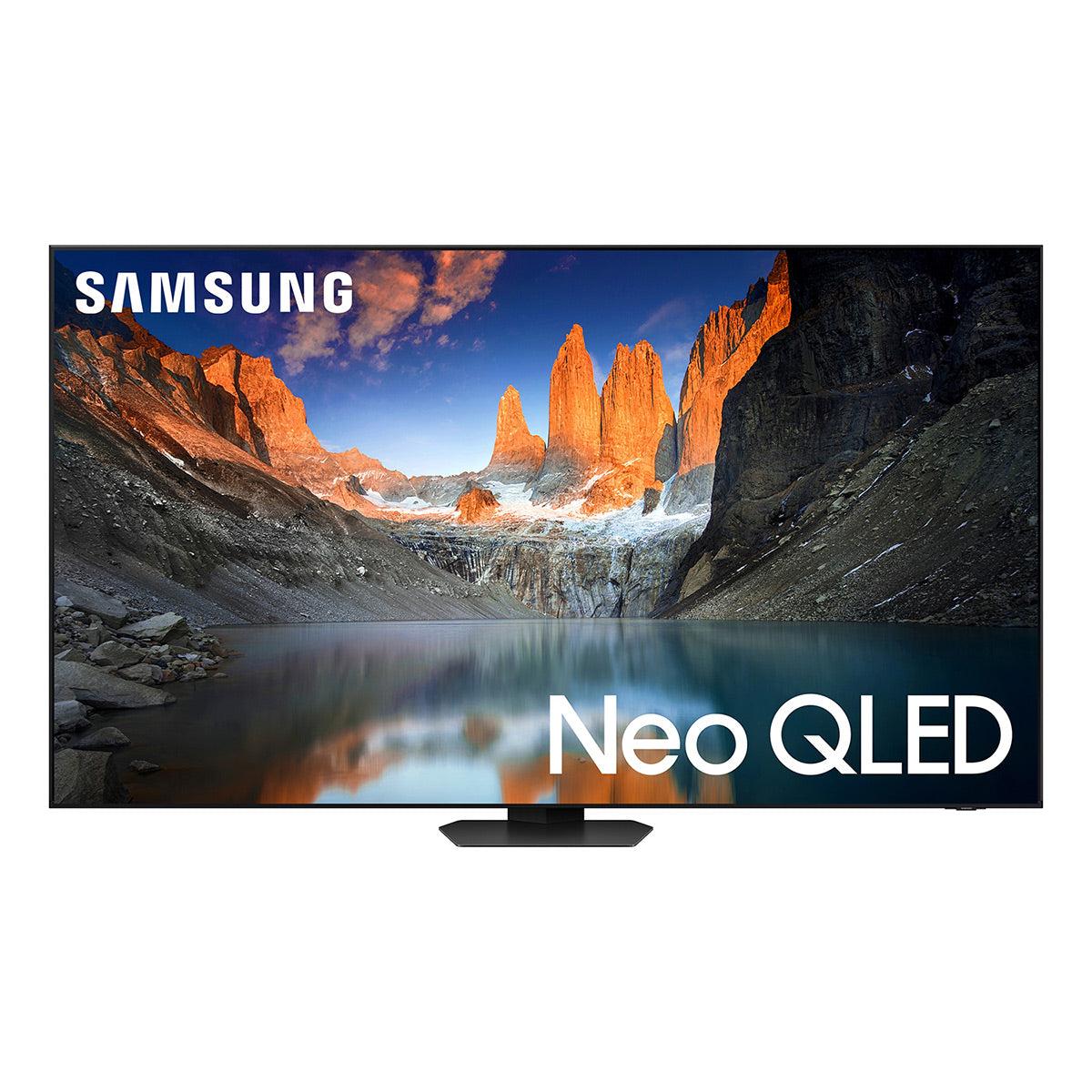
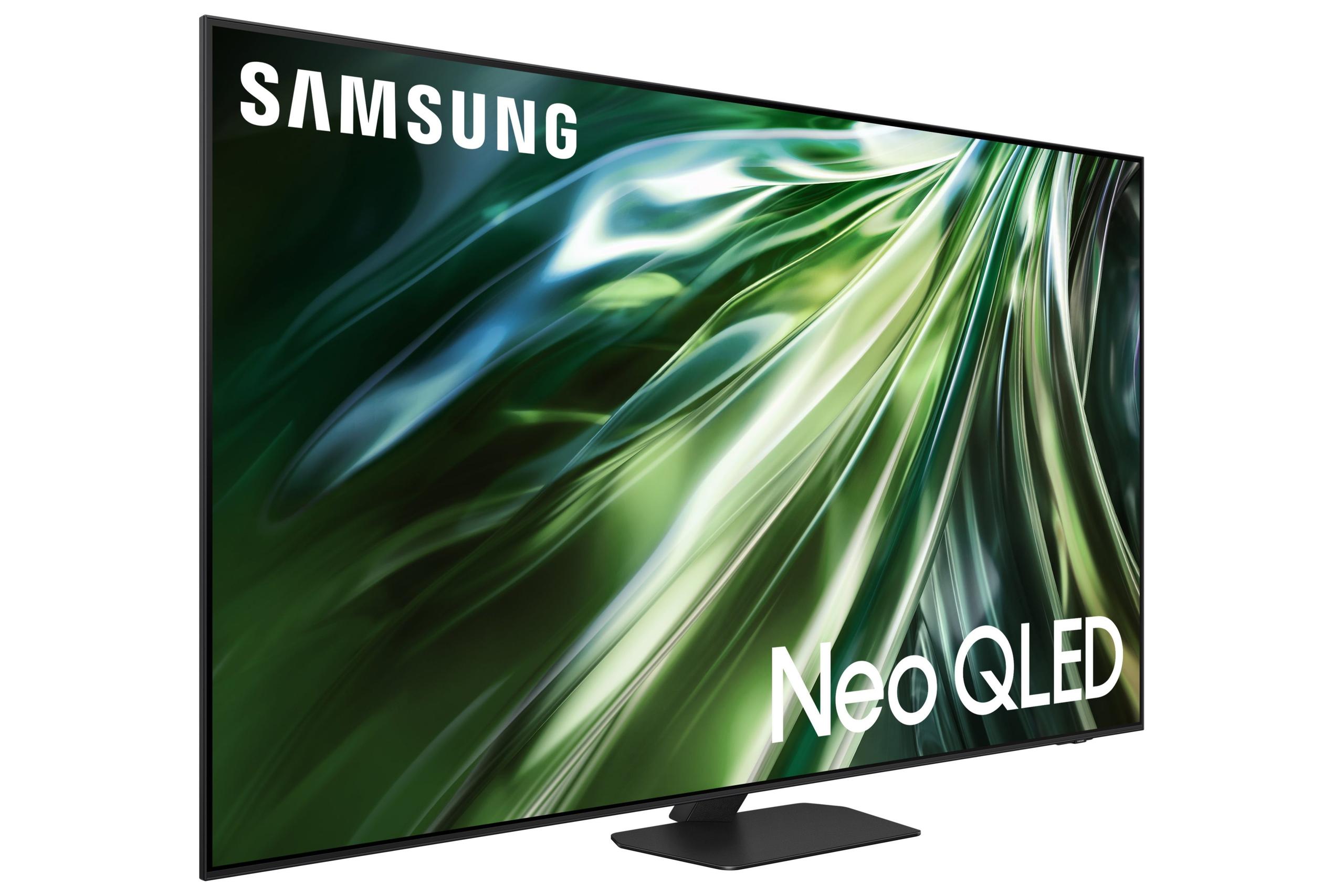
The QN90D, on the other hand, uses Samsung's Neo QLED technology with Mini LED backlighting. This system replaces those regular LEDs with thousands of tiny Mini LEDs that are about 1/40th the size of traditional LEDs. More importantly, these Mini LEDs are organized into hundreds of independently controlled dimming zones through what Samsung calls Quantum Matrix technology.
Here's why this matters: when you're watching a movie with a night scene that has bright stars or car headlights, the QN90D can keep the Mini LEDs behind the dark sky turned off while cranking up the brightness behind the bright objects. The Q7F has to compromise—either the entire screen is bright (washing out the dark areas) or dim (making the bright areas less impactful).
This local dimming capability—the ability to control brightness in different zones of the screen—is arguably the most important factor in modern TV picture quality. It's what creates the "pop" you see in premium TVs, where bright objects seem to jump off the screen while dark areas maintain their depth.
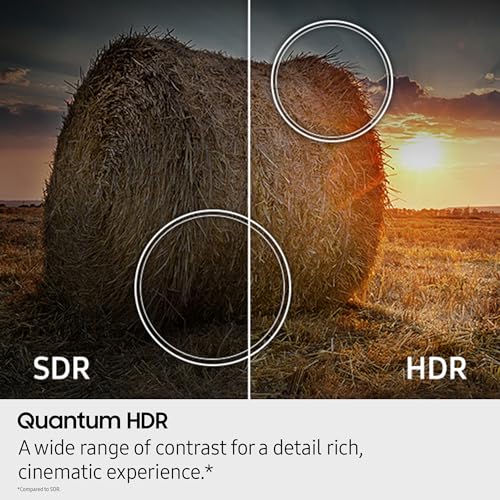
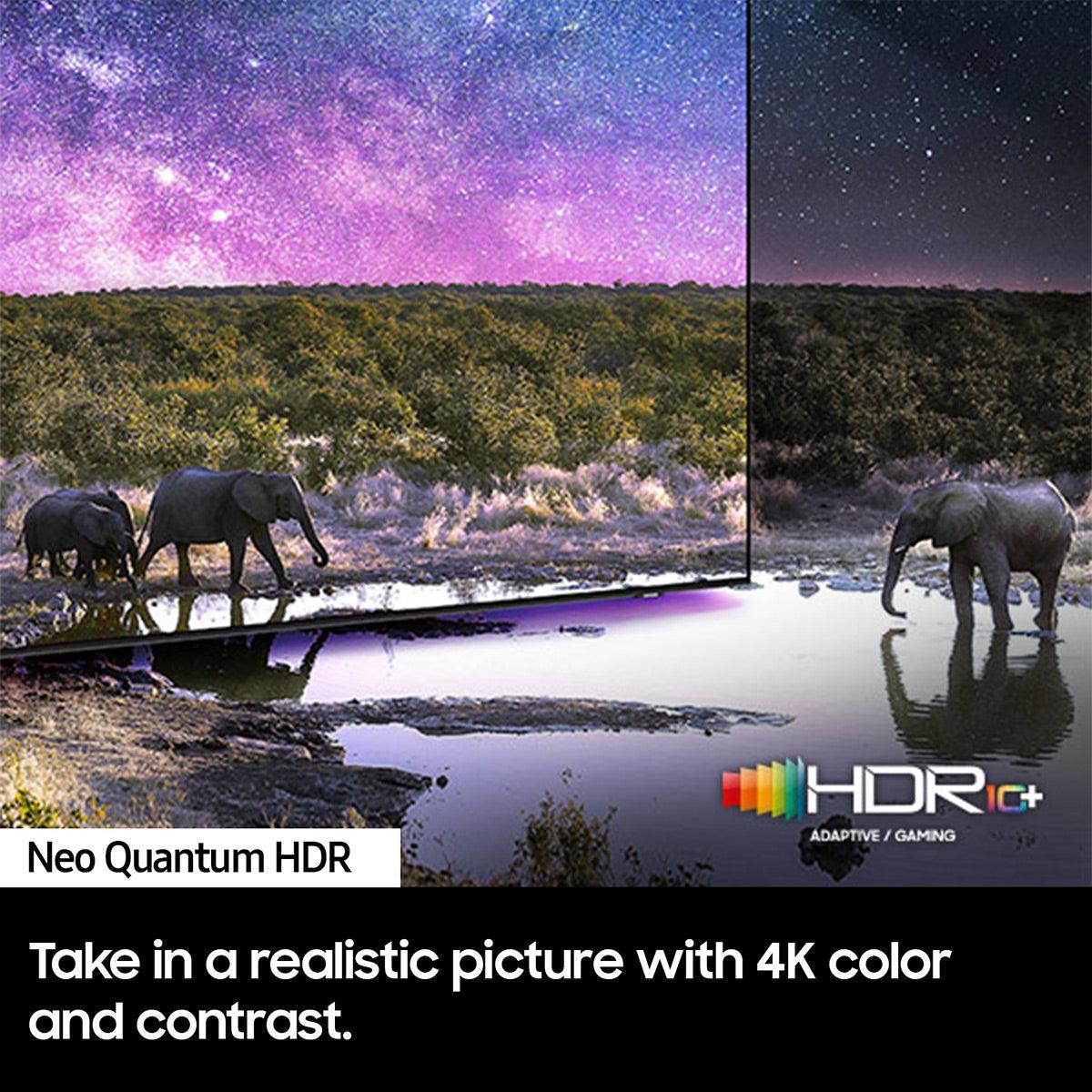
HDR (High Dynamic Range) content is designed to show a wider range of brightness levels than standard video, from deeper blacks to brighter highlights. But to truly appreciate HDR, your TV needs to be capable of displaying these extreme brightness levels.
Based on professional measurements, the QN90D can reach peak brightness levels exceeding 2,000 nits in small areas of the screen—that's genuinely bright enough to make you squint if you're looking at a reflection of the sun on water or a car headlight in a dark scene. For sustained highlights across larger portions of the screen, it typically maintains around 1,000-1,200 nits, which is still exceptionally bright.
The Q7F, meanwhile, typically maxes out around 400-500 nits for HDR content. While this is acceptable for standard viewing, it means HDR content will look relatively flat and unimpressive. Those stunning sunrise scenes in nature documentaries or the dramatic lighting in movies like "Blade Runner 2049" simply won't have the visual impact they're supposed to have.
This brightness difference also affects daytime viewing. If your TV is in a living room with windows, the QN90D can overcome ambient light much more effectively. The Q7F might look washed out during the day, forcing you to close curtains or wait until evening for optimal viewing.
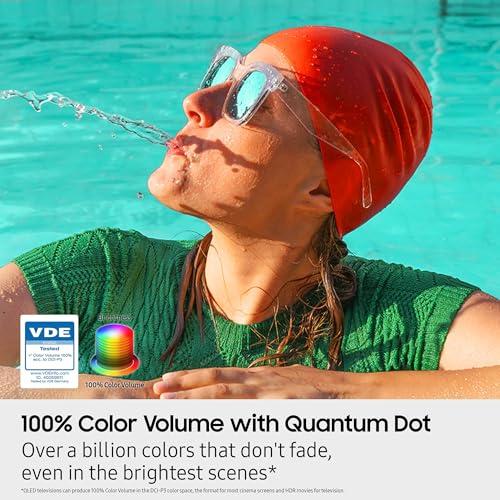
Both TVs use quantum dot technology for enhanced color reproduction, but the implementation differs significantly. The QN90D features what Samsung calls Quantum Dot 3 technology paired with more sophisticated processing, while the Q7F uses a more basic quantum dot implementation.
In practice, both TVs will show more vibrant colors than standard LED TVs, especially in the red and green spectrums where quantum dots excel. However, the QN90D's superior brightness capability allows it to maintain color saturation even in bright HDR scenes, while the Q7F tends to show washed-out colors when displaying HDR content.
Color accuracy is another consideration. Professional reviews consistently show that the QN90D delivers more accurate colors out of the box, particularly for skin tones, which is crucial for movies and TV shows. The Q7F can be calibrated to improve accuracy, but most users won't go through that process.
If you're a gamer, the differences between these TVs become even more pronounced. The QN90D is built for modern gaming with comprehensive support for the latest console and PC gaming features.
The refresh rate difference tells the story immediately: the QN90D supports 120Hz refresh rates, meaning it can display 120 frames per second, while the Q7F is limited to 60Hz. For gaming, this translates to noticeably smoother motion in fast-paced games, reduced motion blur, and support for high frame rate gaming modes on PlayStation 5 and Xbox Series X consoles.
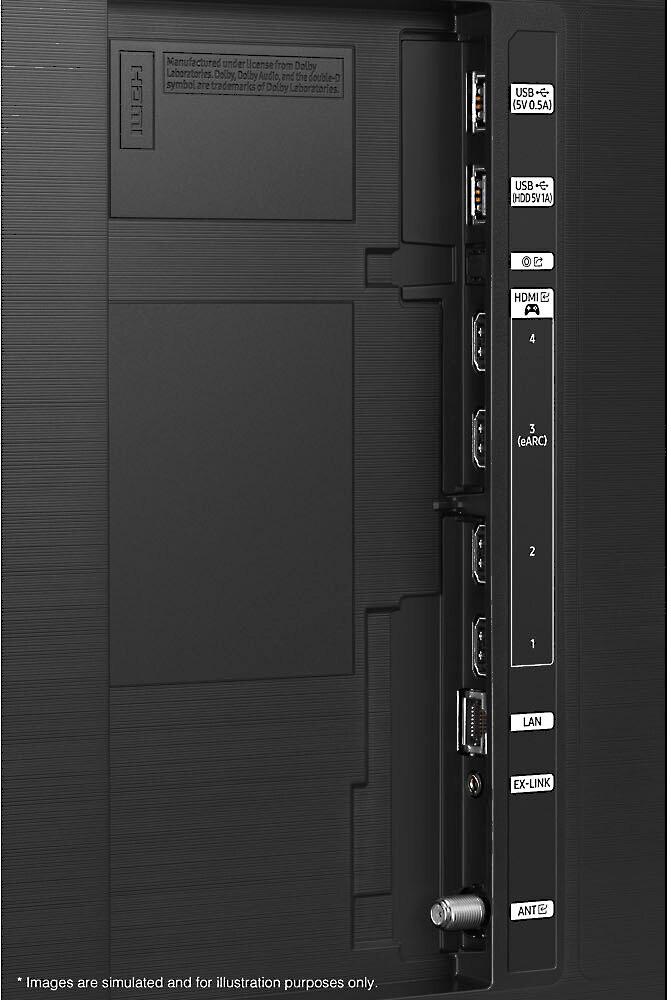
More importantly, the QN90D includes HDMI 2.1 ports with full bandwidth, enabling 4K gaming at 120fps. It also supports Variable Refresh Rate (VRR), which eliminates screen tearing by synchronizing the TV's refresh rate with your gaming device's output. Auto Low Latency Mode (ALLM) automatically switches the TV to its lowest input lag mode when it detects gaming content.
The Q7F lacks these modern gaming features entirely. While it offers reasonably low input lag for casual gaming, serious gamers will notice the limitations immediately. No VRR support means screen tearing is possible, and the 60Hz limitation means you can't take advantage of high frame rate modes on modern consoles.
For competitive gaming or anyone with a gaming PC, the QN90D is essentially required equipment. The Q7F works fine for casual gaming but feels dated for serious gaming applications.
Motion performance—how well a TV handles fast-moving content like sports or action movies—depends on several factors including refresh rate, processing power, and panel response times.
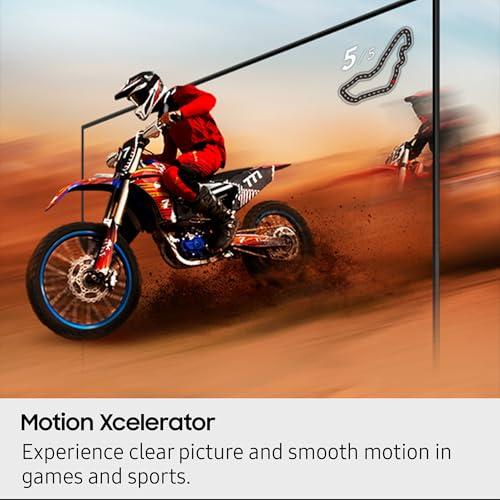
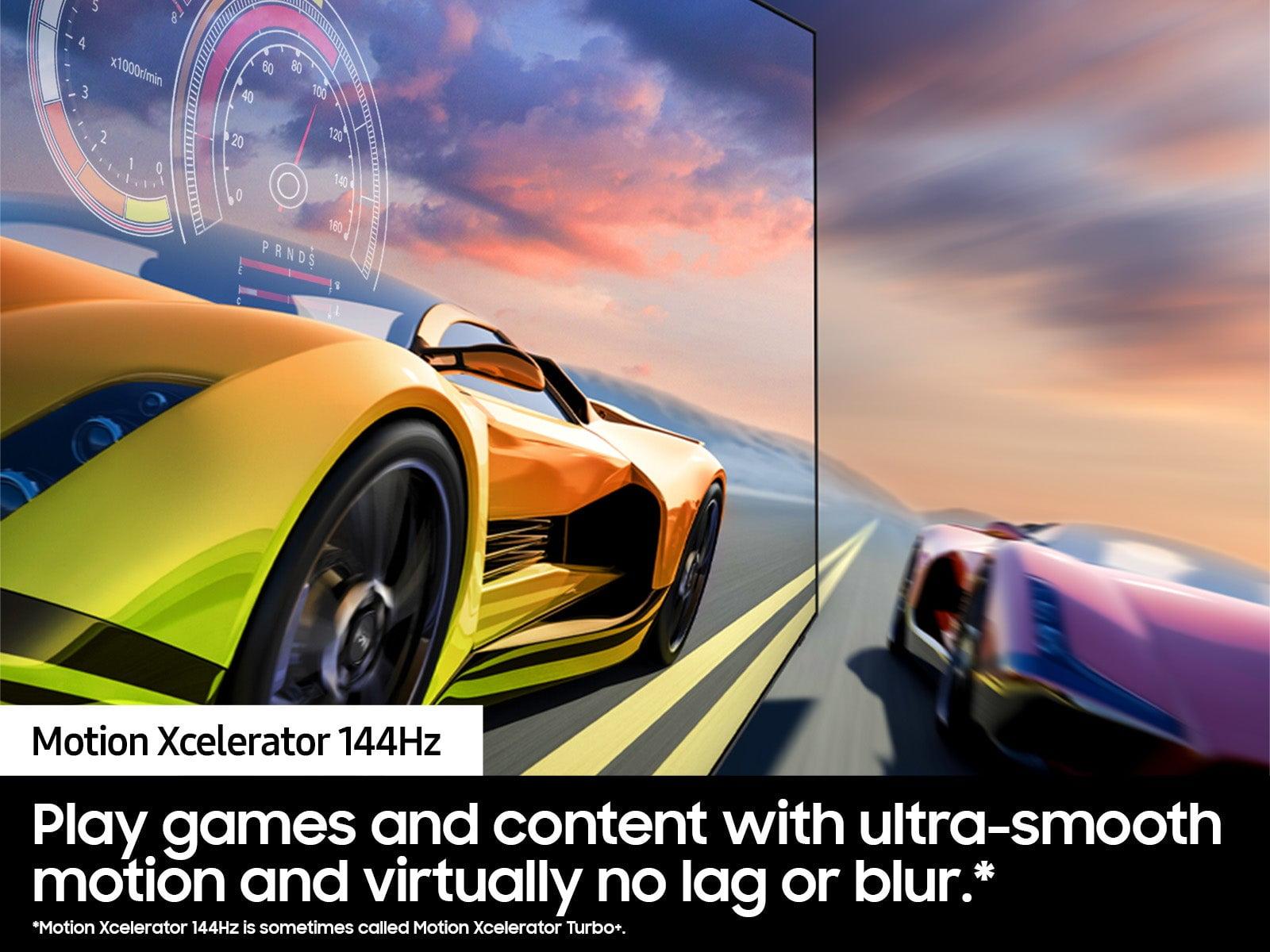
The QN90D excels here with its 120Hz panel and Motion Xcelerator Turbo+ processing. This combination results in smooth motion for sports content with minimal blur trail behind moving objects. Fast camera pans in movies appear stable rather than jerky.
The Q7F's 60Hz limitation creates more noticeable motion blur, particularly in sports content. Fast-moving objects like hockey pucks or soccer balls can appear less sharp, and camera pans can show more judder. While it's still watchable, sports enthusiasts will notice the difference.
Both TVs run Samsung's Tizen smart TV platform, which is generally responsive and includes all major streaming apps. The interface is similar between both models, but the QN90D benefits from a more powerful processor that makes navigation snappier and multitasking smoother.
Both support voice assistants including Samsung's Bixby, Amazon Alexa, and Google Assistant. The smart features are comprehensive enough that most users won't need an external streaming device.
One notable advantage of the QN90D is Samsung's commitment to software updates—the company has pledged five years of updates for their premium TVs, helping ensure the smart features remain current.
TV speakers have generally been an afterthought, but Samsung has made significant improvements in recent years, particularly in their premium models.
The QN90D features Object Tracking Sound+ (OTS+), which uses multiple speakers positioned around the TV to create the illusion that sound is coming from different parts of the screen. Combined with Dolby Atmos processing, this creates a genuinely immersive audio experience that's impressive for built-in TV speakers. The 60W total power output across a 4.2.2 channel configuration provides room-filling sound.
The Q7F includes basic stereo speakers with 20W total output. While adequate for casual viewing, the sound lacks depth and impact. Most users will want to add a soundbar for movie watching or any content where audio quality matters.
If you're building a dedicated home theater setup, the choice becomes clearer. The QN90D delivers the kind of performance that can serve as the centerpiece of a serious home theater. Its exceptional brightness and contrast make HDR movies genuinely impactful, while the wide viewing angles (unusual for a Mini LED TV) ensure good picture quality across multiple seating positions.
The built-in Dolby Atmos processing can hold its own until you're ready to invest in a full surround sound system. The gaming capabilities mean it can serve double duty as both a movie display and gaming center.
The Q7F, while adequate for casual viewing, doesn't deliver the performance most home theater enthusiasts are seeking. The limited brightness and contrast mean HDR content won't have proper impact, and the basic audio system will likely need immediate upgrading.
Traditional LED TVs suffer from narrow viewing angles—colors shift and brightness decreases when you're sitting off to the side. This is particularly problematic for wide seating arrangements or open floor plans.
Surprisingly, the QN90D breaks this trend, offering unusually wide viewing angles for a Mini LED TV. This makes it suitable for larger rooms where viewers might be seated at various angles from the screen.
The Q7F shows the typical viewing angle limitations of budget LED TVs. If you're sitting directly in front, it looks good, but picture quality degrades noticeably from side positions.
When considering long-term value, it's worth thinking about how these TVs will age. The QN90D includes cutting-edge features that will remain relevant for years—120Hz gaming, HDMI 2.1, advanced HDR processing, and Mini LED technology that competes with much more expensive display technologies.
The Q7F, while functional today, already feels dated in several key areas. The lack of modern gaming features, limited HDR performance, and basic backlighting technology mean it may feel inadequate sooner than you'd expect.
Technology has evolved rapidly in recent years. When the QN90D was released in 2024, it represented Samsung's flagship 4K technology with Mini LED implementation that had been refined over several generations. The 2025 Q7F uses more mature, cost-optimized technology that prioritizes affordability over cutting-edge performance.
The decision between these TVs ultimately comes down to priorities and budget constraints at the time of writing.
Choose the Samsung QN90D if you want exceptional picture quality, plan to use modern gaming features, watch a lot of HDR content, have a bright room, or want a TV that will remain competitive for many years. It's particularly compelling for home theater setups or as a primary family room TV where picture quality matters most.
The Samsung Q7F makes sense if budget is the primary concern, you're primarily watching standard streaming content, gaming at 60fps is sufficient, or you're looking for a secondary TV where cutting-edge performance isn't essential.
However, it's worth considering the performance gap relative to the price difference. While the QN90D costs roughly twice as much at the time of writing, it delivers significantly more than twice the performance in key areas like brightness, contrast, and gaming capabilities. For many users, the premium model represents better long-term value despite the higher upfront cost.
The Q7F serves a specific market segment—users who want Samsung's quantum dot color enhancement and smart platform at an accessible price point. But it's important to understand the compromises you're making, particularly in HDR performance and future gaming compatibility.
In my opinion, unless budget is truly constraining, the performance advantages of Mini LED technology make the QN90D the better choice for most users. The picture quality difference is immediately noticeable and becomes more apparent over time as you watch more varied content. The gaming features alone justify the price premium for anyone with modern consoles, and the superior brightness makes it more versatile across different room lighting conditions.
That said, the Q7F isn't a bad TV—it's a decent entry-level QLED that offers solid performance for casual viewing. Just make sure you understand what you're giving up and whether those compromises align with your viewing habits and expectations.
| Samsung 65-Inch Q7F Series QLED Smart TV 2025 Display | Samsung 65" QN90D Series 4K Neo QLED Smart TV |
|---|---|
| Backlighting Technology - The foundation of picture quality | |
| Direct-lit LED without local dimming (single zone control) | Mini LED with full-array local dimming (hundreds of zones) |
| Peak HDR Brightness - Critical for HDR impact and bright room viewing | |
| ~400-500 nits (adequate for moderate lighting) | Over 2,000 nits (exceptional for any lighting condition) |
| Refresh Rate - Essential for smooth motion and gaming | |
| 60Hz (standard for casual viewing) | 120Hz (premium for sports and gaming) |
| Gaming Features - Modern console and PC compatibility | |
| Basic ALLM, no VRR or HDMI 2.1 (limited future-proofing) | Full HDMI 2.1, VRR, 4K@120Hz (complete modern gaming support) |
| Local Dimming Zones - Controls contrast and black levels | |
| None (compromised contrast, grayish blacks) | Hundreds of Mini LED zones (excellent contrast, deep blacks) |
| Audio System - Built-in sound quality | |
| 20W 2.0 channel stereo (external sound recommended) | 60W 4.2.2 with Dolby Atmos and OTS+ (room-filling immersive audio) |
| HDR Format Support - Premium content compatibility | |
| HDR10, HDR10+ (missing Dolby Vision) | HDR10, HDR10+ (missing Dolby Vision, but superior brightness) |
| Processor - Smart features and upscaling performance | |
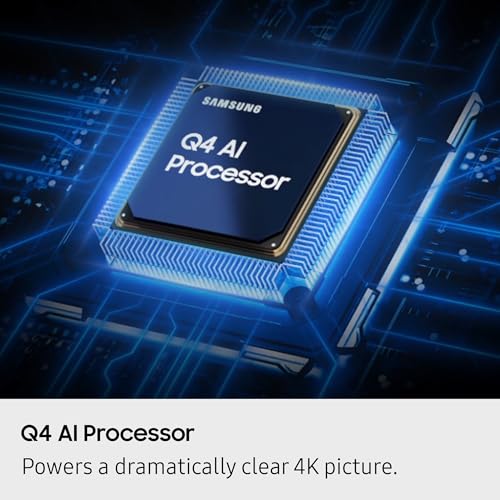
| Q4 AI Processor (basic processing) | NQ4 AI Gen2 Processor (advanced AI upscaling and optimization) |
| Viewing Angles - Picture quality from side positions | |
| Narrow (typical LCD limitations) | Wide (unusual for Mini LED, excellent for group viewing) |
| Target Market - Best suited for | |
| Budget-conscious buyers, casual viewing, secondary TVs | Home theater enthusiasts, gamers, primary family room displays |
The primary difference is backlighting technology. The Samsung Q7F uses standard direct-lit LED backlighting without local dimming, while the Samsung QN90D features advanced Mini LED backlighting with hundreds of local dimming zones. This gives the QN90D dramatically better contrast, deeper blacks, and brighter highlights for a more premium viewing experience.
The Samsung QN90D is significantly better for gaming. It offers 120Hz refresh rate, HDMI 2.1 ports, Variable Refresh Rate (VRR), and support for 4K@120Hz gaming. The Samsung Q7F is limited to 60Hz and lacks modern gaming features, making it suitable only for casual gaming.
The Samsung QN90D performs much better in bright rooms, achieving over 2,000 nits peak brightness compared to the Q7F's ~400-500 nits. This means the QN90D can overcome window glare and maintain picture quality during daytime viewing, while the Q7F may appear washed out in bright conditions.
The Samsung QN90D delivers superior HDR performance due to its exceptional brightness capability and local dimming. HDR content will have genuine impact with bright highlights and deep shadows. The Samsung Q7F can display HDR formats but lacks the brightness and contrast needed for compelling HDR viewing.
Both the Samsung Q7F and Samsung QN90D run Samsung's Tizen smart platform with similar app selection and interface. However, the QN90D has a more powerful processor for faster navigation and better multitasking performance.
The Samsung QN90D is better for sports viewing thanks to its 120Hz refresh rate and superior motion processing. Fast-moving action appears smoother with less blur. The Samsung Q7F's 60Hz limitation can result in more noticeable motion blur during fast-paced sports content.
The Samsung QN90D has significantly better audio with 60W 4.2.2 channel speakers, Dolby Atmos support, and Object Tracking Sound+ technology. The Samsung Q7F has basic 20W stereo speakers that are adequate for casual viewing but will likely require a soundbar for movie watching.
While the Samsung Q7F costs significantly less, the Samsung QN90D offers better long-term value due to its advanced Mini LED technology, modern gaming features, and superior picture quality. The Q7F provides good value for budget-conscious buyers who prioritize cost savings over cutting-edge performance.
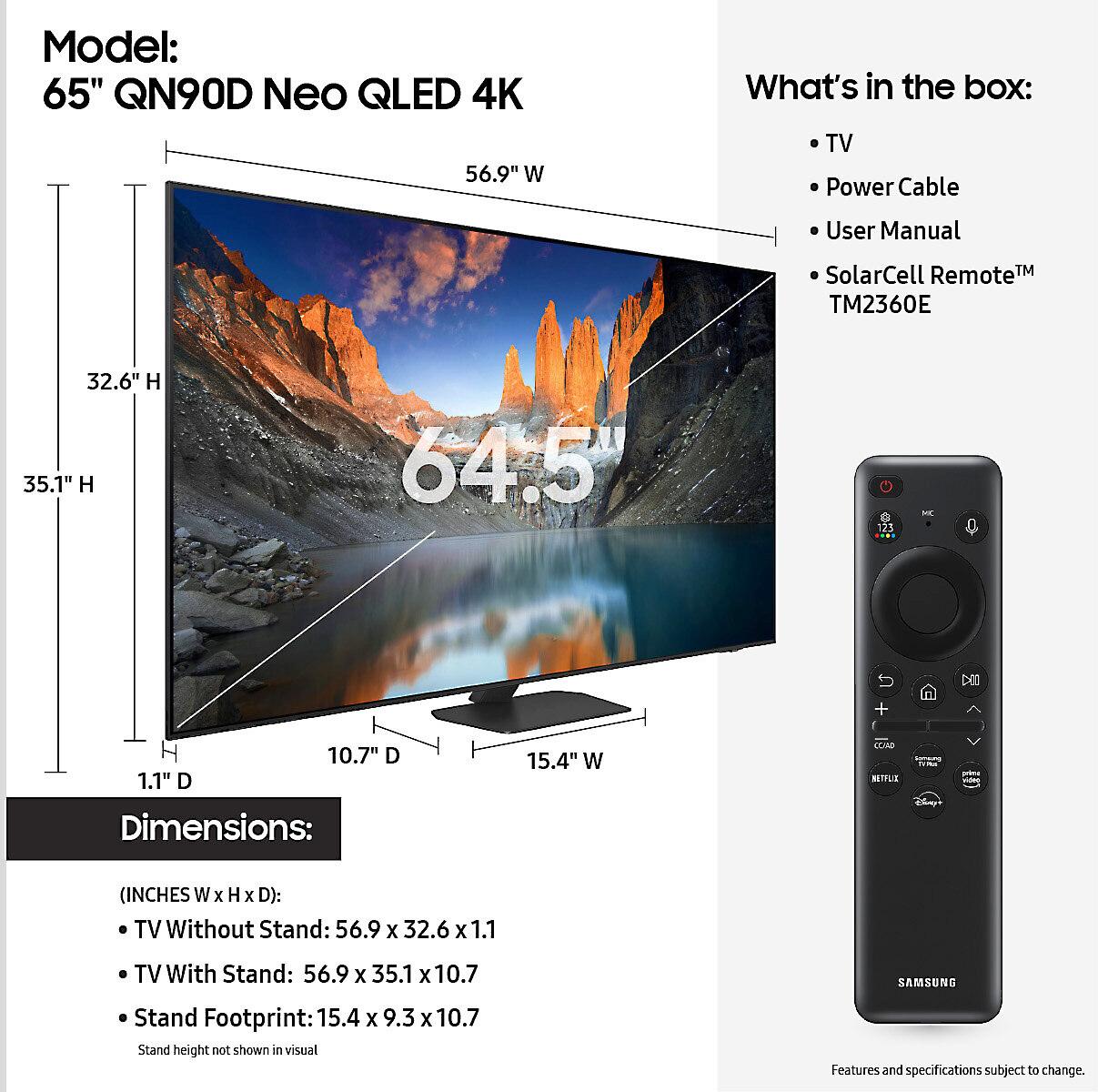
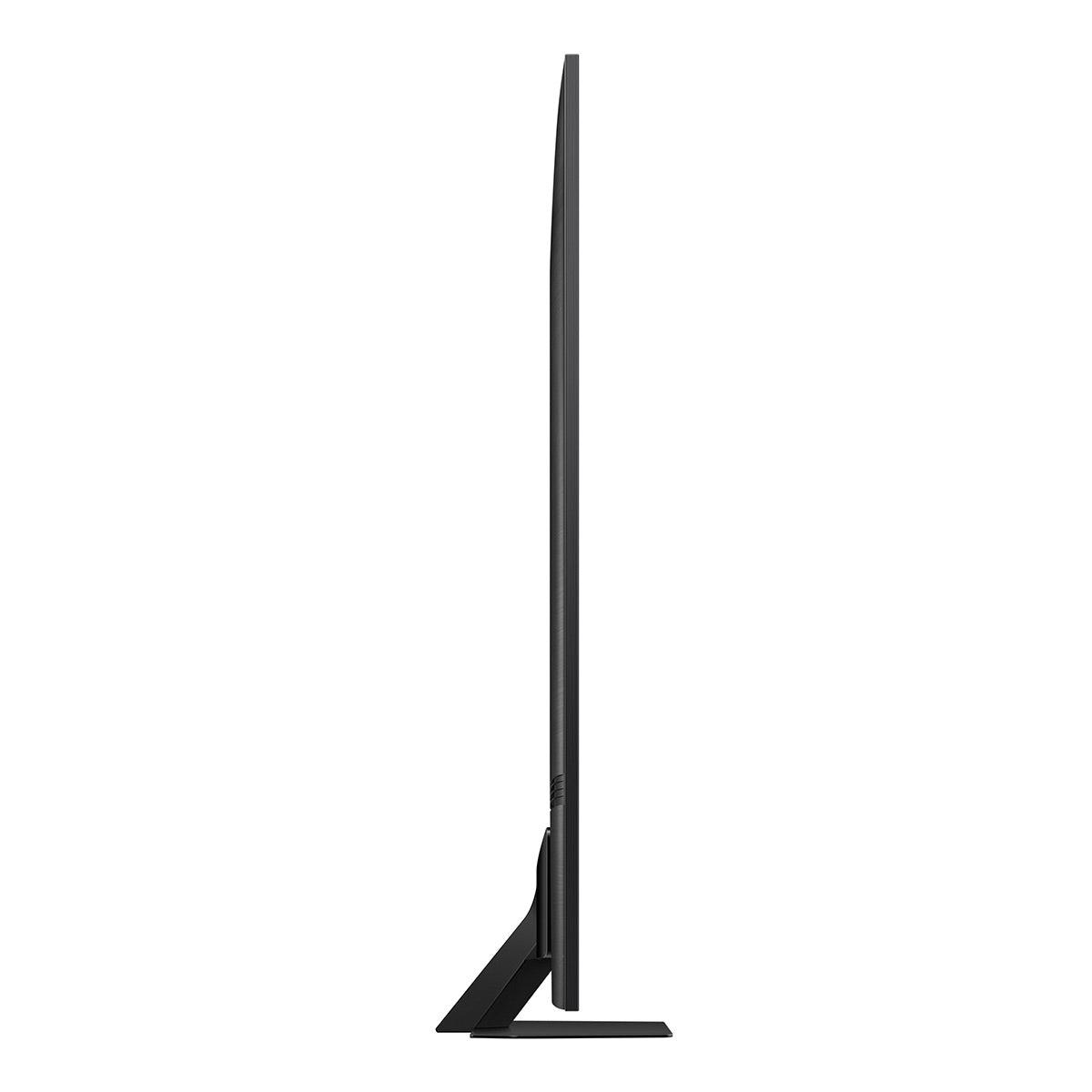
Yes, both the Samsung Q7F and Samsung QN90D support wall mounting with VESA-compatible brackets. The QN90D has a more premium build quality and slimmer profile that looks better wall-mounted.
The Samsung QN90D is much better suited for home theater use. Its Mini LED backlighting, exceptional brightness, wide viewing angles, and Dolby Atmos audio create a premium cinematic experience. The Samsung Q7F lacks the contrast and audio quality expected in dedicated home theater environments.
The Samsung QN90D offers unusually wide viewing angles for a Mini LED TV, maintaining good picture quality from side positions. The Samsung Q7F has typical LCD viewing angle limitations, with noticeable color shifting and brightness reduction when viewed off-center.
The Samsung QN90D is more future-proof with its 120Hz gaming capabilities, HDMI 2.1 ports, and advanced processing that will remain relevant longer. The Samsung Q7F already feels dated in key areas like gaming support and may need replacement sooner as content and gaming standards continue evolving.
We've done our best to create useful and informative comparisons to help you decide what product to buy. Our research uses advanced automated methods to create this comparison and perfection is not possible - please contact us for corrections or questions. These are the sites we've researched in the creation of this article: bestbuy.com - rtings.com - bestbuy.com - youtube.com - youtube.com - youtube.com - samsung.com - samsung.com - samsung.com - billsmith.com - costco.com - samsung.com - hometechnologyreview.com - hometechnologyreview.com - bestbuy.com - samsung.com - bestbuy.com - samsung.com - hometechnologyreview.com - samsung.com - samsung.com - tomsguide.com - abt.com - youtube.com - youtube.com - rtings.com - samsung.com - samsung.com - standardtvandappliance.com - gerhardsappliance.com - bestbuy.com - image-us.samsung.com - youtube.com - images.samsung.com

Privacy Policy
Terms and Conditions - Affiliate Policy
Home Security
© Copyright 2008-2026.
11816 Inwood Rd #1211, Dallas, TX 75244