





Shopping for a premium 65-inch TV in 2025 means navigating a landscape where display technology advances faster than most people replace their TVs. Two standout options represent fundamentally different approaches to delivering exceptional picture quality: the Samsung Q7F QLED and the TCL QM8 Mini-LED. Both promise stunning 4K visuals, but they achieve this through distinctly different technologies—and at significantly different price points.
At the time of writing, these TVs sit roughly $450 apart, with the Samsung Q7F positioned as an accessible entry into QLED technology, while the TCL QM8 represents a flagship Mini-LED experience that rivals OLED performance. Understanding which approach suits your viewing habits, room setup, and long-term expectations requires diving into the technical differences that actually matter.
The premium TV market has evolved dramatically since 2020, when most manufacturers focused primarily on OLED versus traditional LED distinctions. Today's landscape includes multiple display technologies that blur traditional category lines. QLED TVs use quantum dots—microscopic crystals that enhance color accuracy and brightness when combined with LED backlighting. Mini-LED represents the latest evolution in LED backlighting, using thousands of tiny LEDs arranged in zones that can be independently controlled.
The key considerations when evaluating premium TVs center on contrast performance (how deep blacks can get while maintaining bright whites), peak brightness capabilities for HDR content, motion handling for sports and gaming, and the overall ecosystem experience including smart features and connectivity. Color accuracy matters too, but modern quantum dot implementations have largely solved the color volume challenge that plagued older LED TVs.
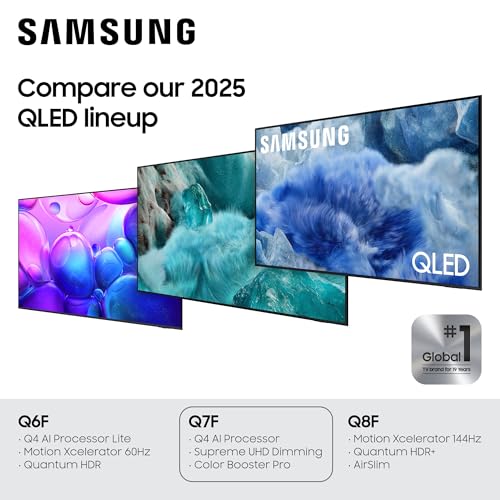
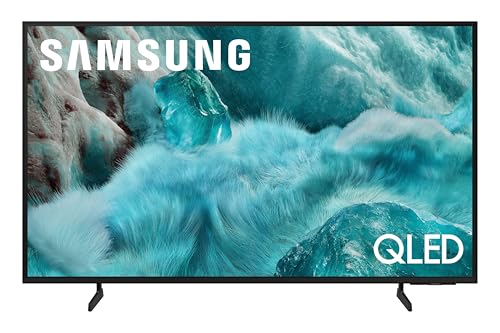
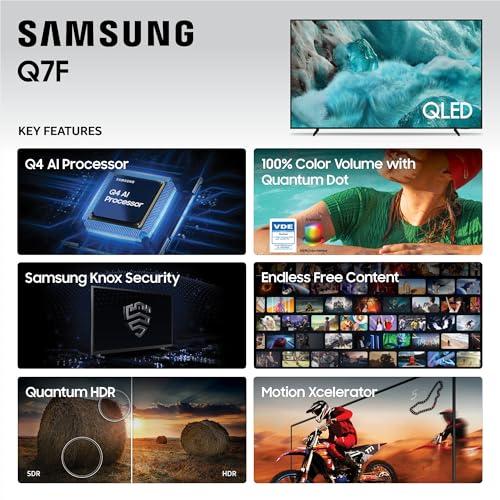
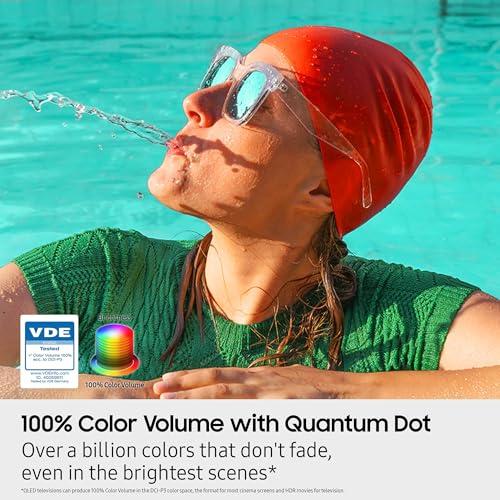
The Samsung Q7F represents Samsung's 2025 entry-level QLED offering, using quantum dot technology to enhance a traditional LED backlight. Quantum dots work like microscopic filters that convert blue LED light into precise red and green wavelengths, achieving what Samsung calls "100% Color Volume"—essentially meaning the TV can maintain color saturation across different brightness levels.
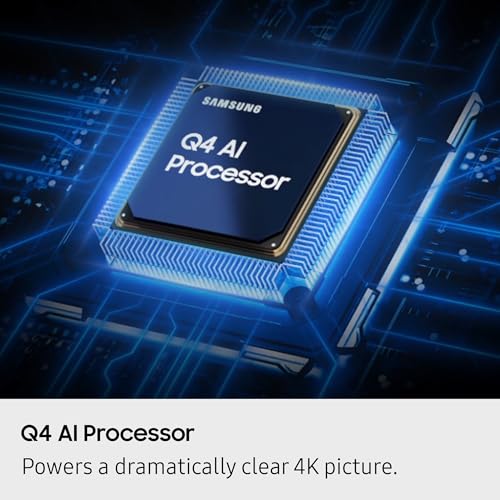
However, the Q7F uses what Samsung terms "Mega Contrast" lighting with "Supreme UHD Dimming" rather than true local dimming zones. This is essentially edge-lit or direct-lit LED backlighting with some intelligent brightness adjustment, but without the ability to independently control specific areas of the screen. The Q4 AI processor handles upscaling and scene optimization, but it's working with more limited hardware compared to Samsung's flagship models.
The practical impact becomes apparent in dark scenes. Without local dimming zones, blacks appear more like dark gray, and bright objects surrounded by darkness create a subtle glow across larger areas of the screen. It's perfectly acceptable for most viewing scenarios, particularly in moderately lit rooms where ambient light masks these limitations.
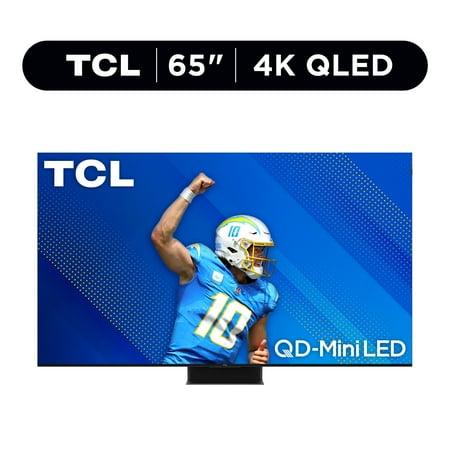
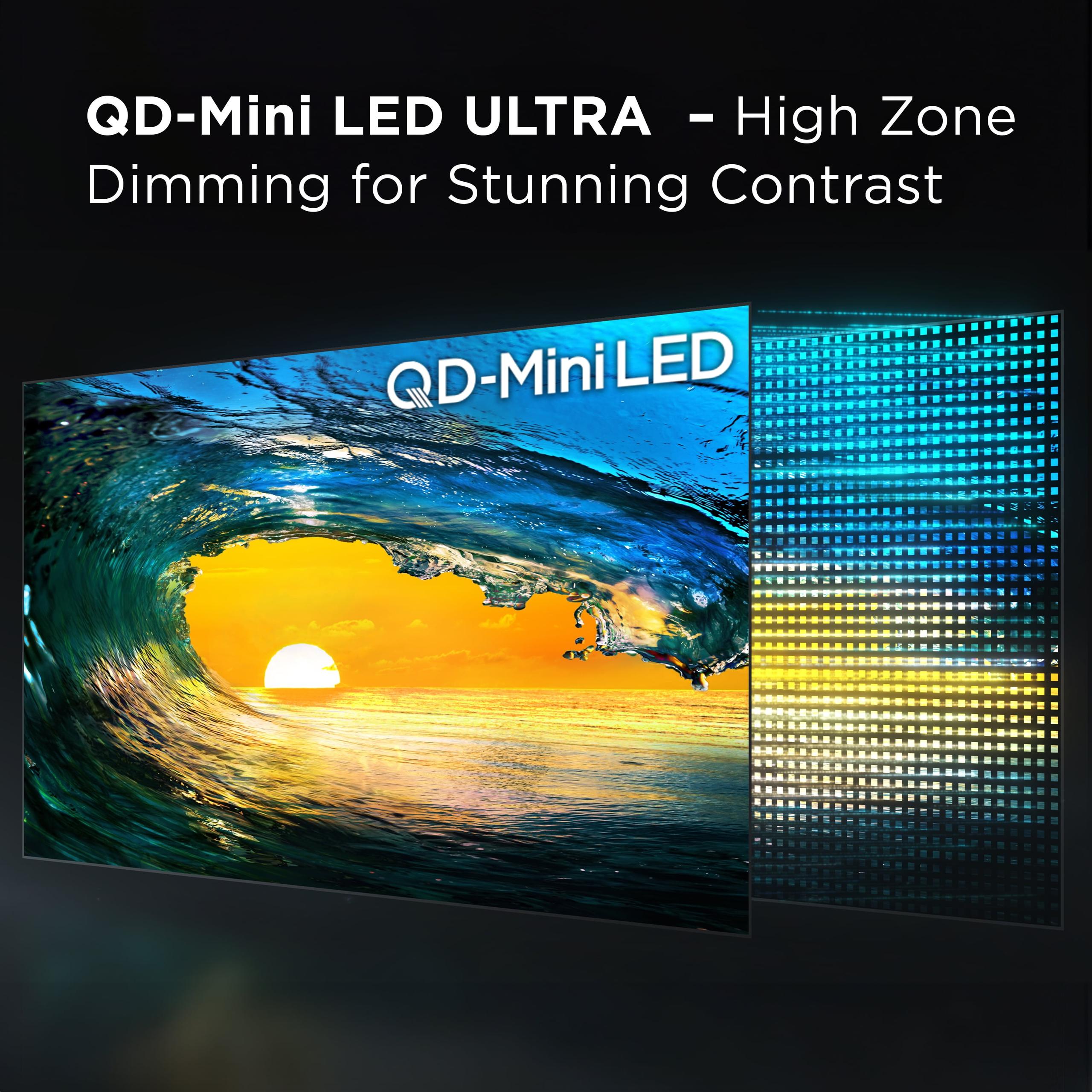
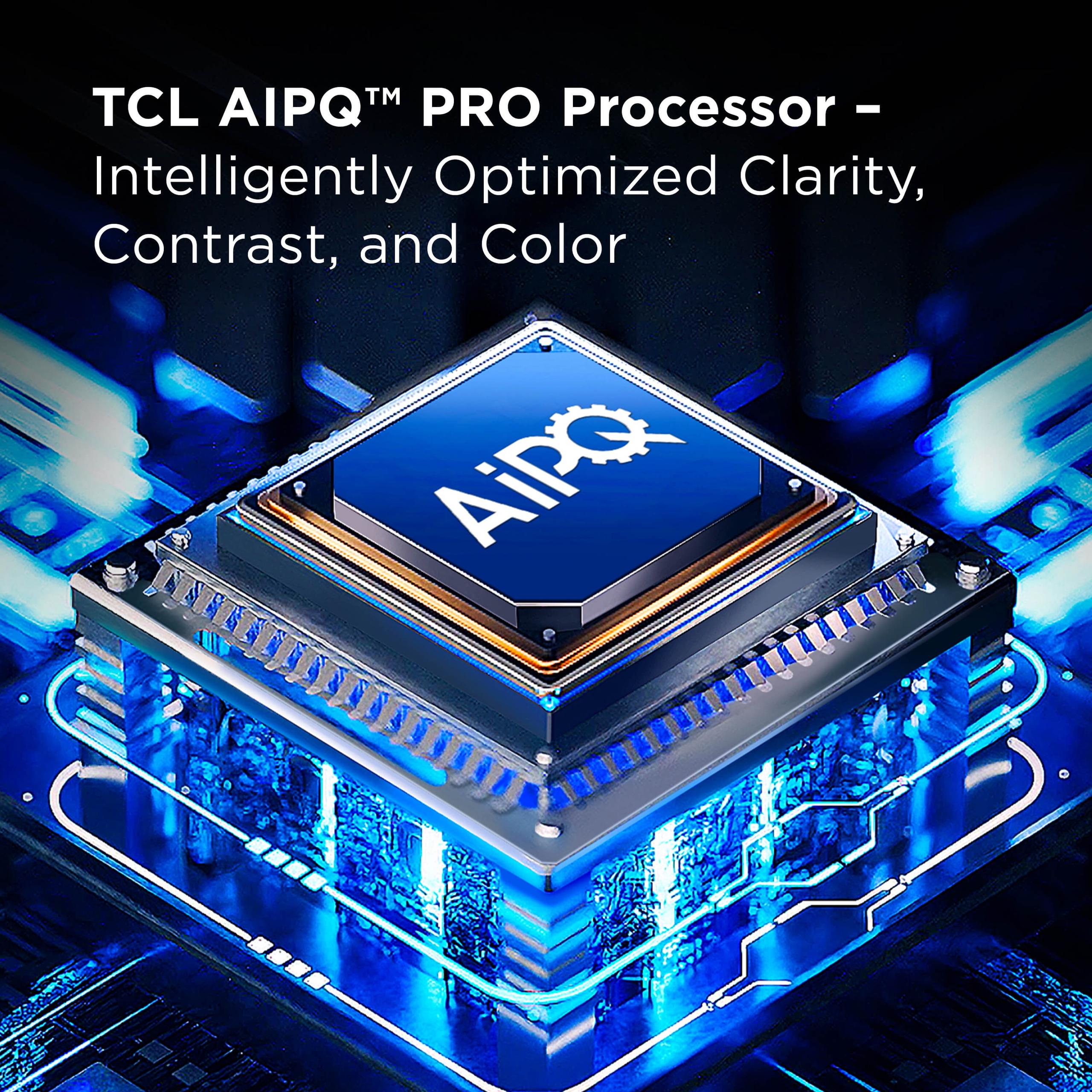
The TCL QM8 takes an entirely different approach with QD-Mini LED technology. Instead of traditional LED backlighting, it uses thousands of Mini-LEDs—LEDs roughly 1/40th the size of conventional ones—arranged behind the LCD panel. These Mini-LEDs are organized into up to 5,000 local dimming zones that can be independently controlled by the TCL AIPQ PRO processor.
This creates what's effectively a backlight that can turn completely off in specific areas while simultaneously achieving up to 5,000 nits peak brightness in others. The result approaches OLED-like contrast where bright stars against a black night sky appear truly distinct, with minimal blooming or haloing effects around bright objects.
The quantum dot layer in the TCL QM8 works similarly to Samsung's implementation, but it's enhanced by the superior backlighting control. Colors remain accurate and saturated even at the extreme brightness levels that Mini-LED can achieve, something that becomes crucial for impactful HDR performance.
This represents the most significant performance gap between these TVs. Based on professional testing and user feedback, the Samsung Q7F produces blacks that appear noticeably brighter than intended, particularly in dark room viewing. This is the fundamental limitation of displays without local dimming—the entire backlight operates as a single unit, so achieving true black requires dimming the entire screen.
The TCL QM8 delivers blacks that rival OLED performance while maintaining LED's brightness advantages. Individual zones can achieve near-zero light output while adjacent zones produce dazzling highlights. This creates the dramatic contrast range that makes HDR content genuinely impactful rather than merely brighter.
For home theater enthusiasts, this difference is transformative. Movies with dramatic lighting—think space scenes, underground sequences, or nighttime exteriors—showcase details in shadows that simply disappear on displays without effective local dimming.
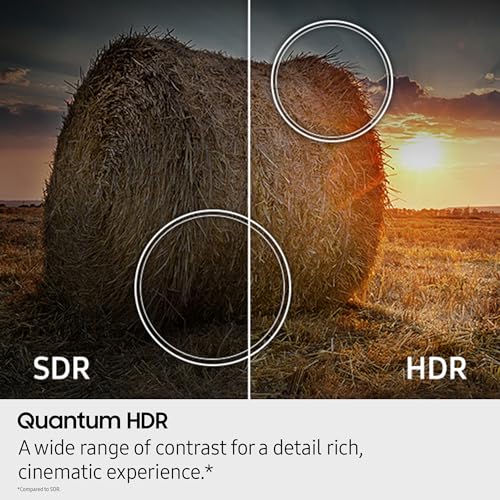
HDR (High Dynamic Range) content is designed to take advantage of displays that can produce both deeper blacks and brighter whites simultaneously. The Samsung Q7F supports HDR10+ but lacks Dolby Vision, and more importantly, its peak brightness limitations mean HDR content appears more like slightly enhanced standard content rather than the dramatic visual upgrade HDR promises.
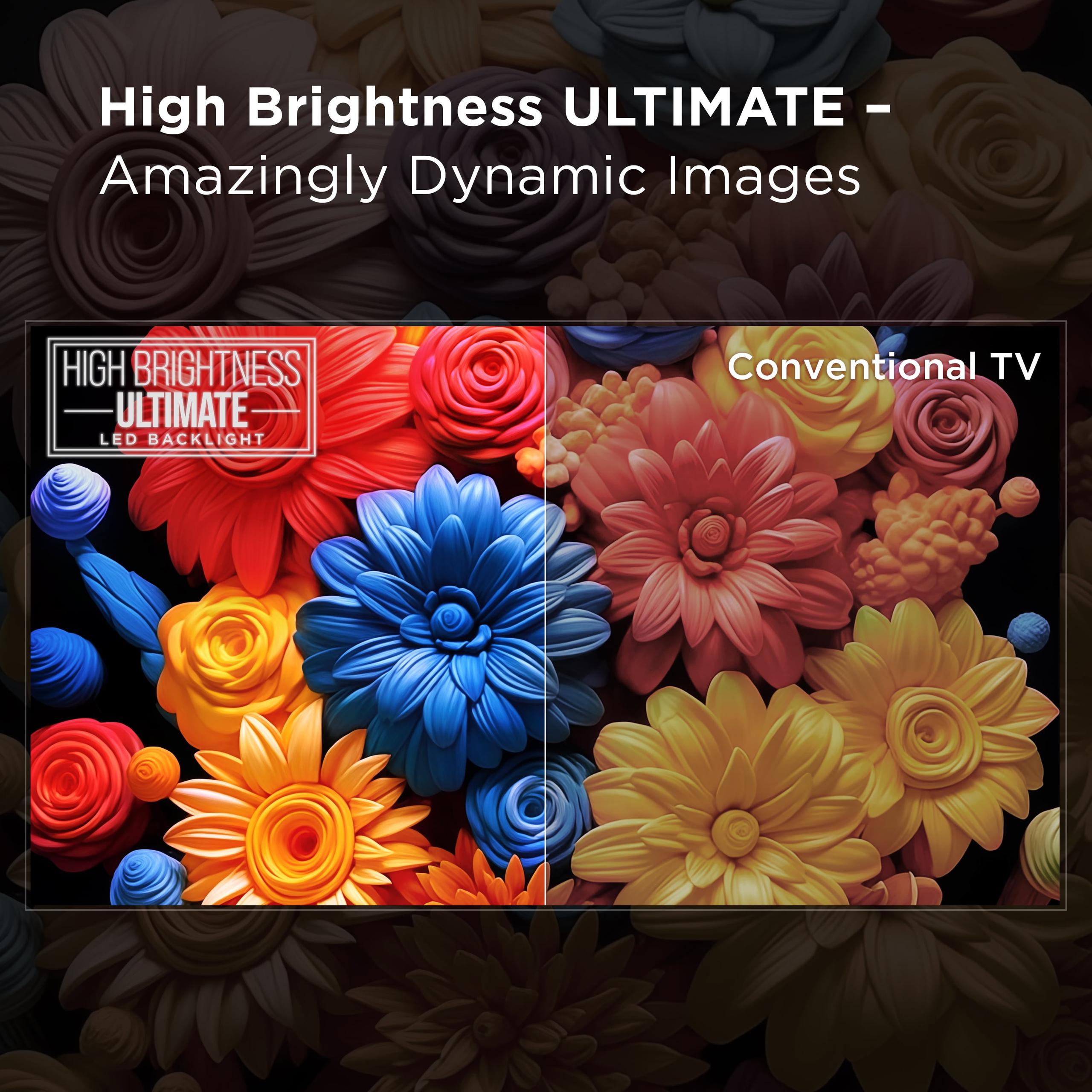
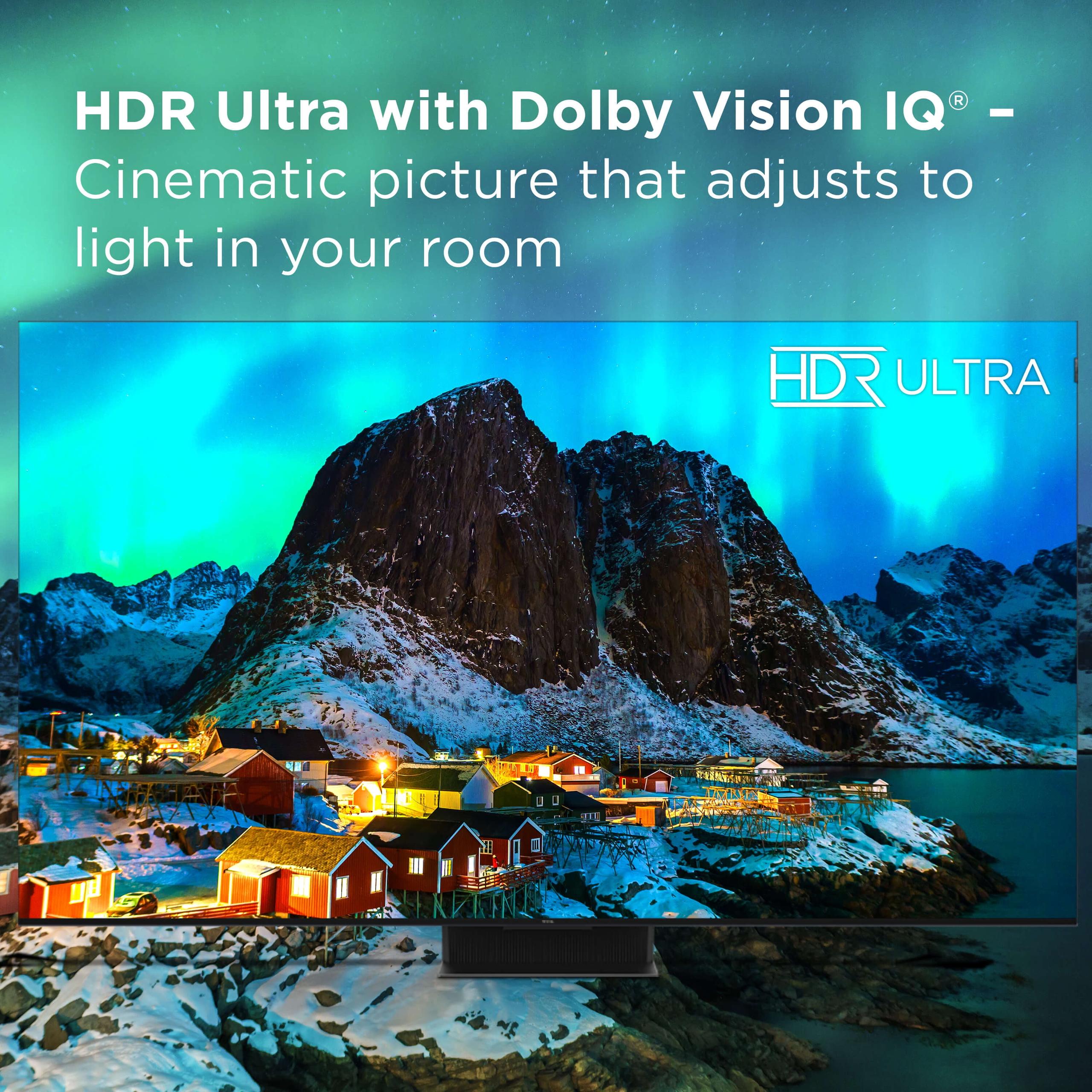
The TCL QM8 supports HDR ULTRA, including Dolby Vision IQ—an adaptive format that adjusts the HDR mapping based on your room's ambient lighting conditions. With peak brightness reaching 5,000 nits in specific zones, specular highlights like reflections on water, car headlights, or explosions genuinely pop from the screen with intensity that feels almost three-dimensional.
This brightness capability also translates to better performance in bright rooms. While both TVs handle moderate ambient light well, the TCL QM8 maintains picture quality even with significant window light or overhead lighting that would wash out lesser displays.
Both TVs utilize quantum dot technology for wide color gamut reproduction, and both achieve impressive results in this area. The Samsung Q7F includes PANTONE validation, ensuring accurate reproduction of over 2,000 PANTONE colors—particularly valuable for content creators or anyone who cares about precise color representation.
The TCL QM8 combines its quantum dots with superior backlighting control, maintaining color saturation even at extreme brightness levels. This becomes apparent with HDR content where vibrant colors need to appear alongside both deep shadows and bright highlights within the same frame.
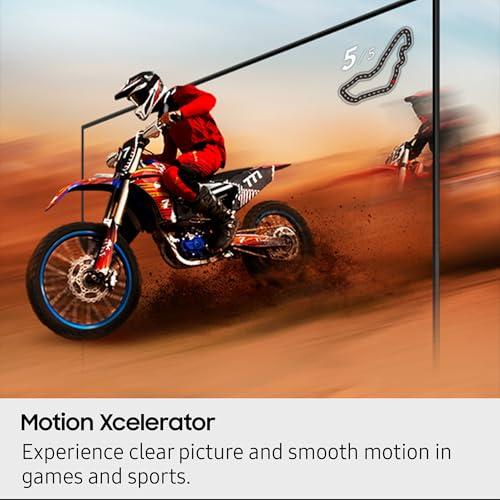
Here's where the generational difference between these TVs becomes stark. The Samsung Q7F operates at 60Hz with Motion Xcelerator technology that helps with basic motion smoothing. For traditional TV watching and casual gaming, this proves adequate. Input lag measures around 10ms in Game Mode, making it responsive for most gaming scenarios.
However, the Samsung Q7F lacks Variable Refresh Rate (VRR) support, HDMI 2.1 connectivity, and 120Hz capability. This means owners of PlayStation 5, Xbox Series X, or high-end gaming PCs cannot take advantage of higher frame rate gaming or features designed to eliminate screen tearing.
The TCL QM8 includes a native 120Hz panel with support for Variable Refresh Rate up to 144Hz. This allows smooth gaming at higher frame rates and includes Game Accelerator 240 technology for optimized gaming performance. The difference is immediately apparent in fast-paced games, sports content, and action movies where motion appears noticeably smoother and more defined.
For sports enthusiasts, the motion handling difference significantly impacts the viewing experience. Fast camera pans following soccer balls or hockey pucks maintain clarity on the TCL QM8 where the Samsung Q7F might show motion blur or judder.
Modern gaming has evolved beyond simple input lag considerations. Features like Auto Low Latency Mode (ALLM), which automatically switches the TV to Game Mode when it detects gaming input, appear on both models. However, the TCL QM8 includes advanced gaming features like support for multiple VRR standards and optimization for next-generation console features.
The Samsung Q7F removed HGIG (HDR Gaming Interest Group) support via firmware update, which affected HDR gaming calibration—particularly noticeable for Nintendo Switch users. This highlights how entry-level models sometimes sacrifice features through cost-cutting decisions that become apparent over time.
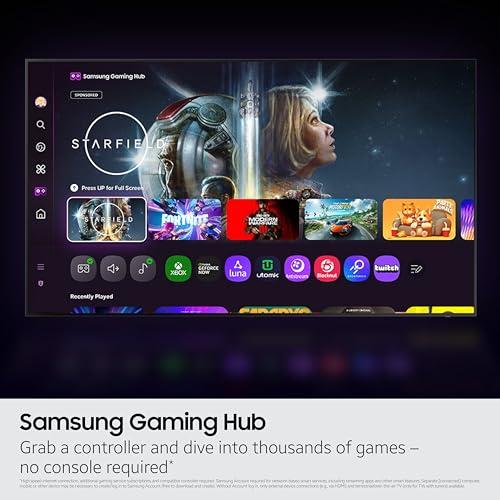
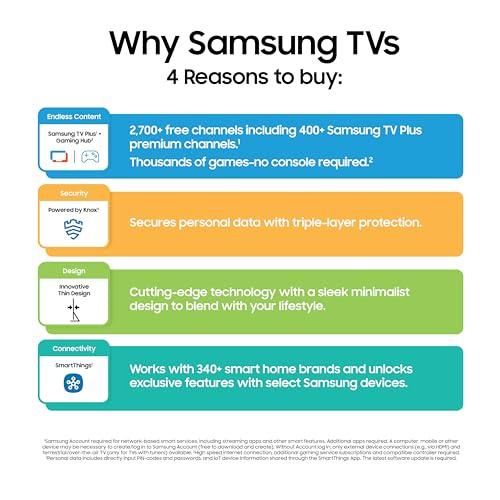
The Samsung Q7F runs Samsung's Tizen OS with the 2025 Samsung Vision AI integration. This includes personalized content recommendations, real-time translation capabilities, and gesture controls. The interface feels responsive and includes access to Samsung TV Plus, Multi-View for watching multiple content sources simultaneously, and seamless integration with Samsung smartphones and tablets.
Samsung's ecosystem integration shines if you already use Samsung devices. Features like SmartThings hub functionality turn the TV into a smart home control center, and Q-Symphony allows compatible Samsung soundbars to work in concert with the TV's built-in speakers.
The TCL QM8 utilizes Google TV, which provides excellent content aggregation across multiple streaming services and intuitive voice search through Google Assistant. The platform feels more neutral regarding ecosystem lock-in while still providing comprehensive smart features.
Both TVs include AI-powered processors designed to enhance lower-resolution content, but they approach this differently. The Samsung Q4 AI processor focuses on scene recognition and adaptive optimization, while the TCL AIPQ PRO processor emphasizes machine learning algorithms specifically tuned for Mini-LED backlight control.
In practical terms, both handle standard streaming content well, but the TCL QM8 shows superior upscaling of older content, particularly in how it manages contrast and detail enhancement without creating artifacts.
Audio often gets overlooked in TV comparisons, but it significantly impacts the overall experience. The Samsung Q7F includes 20W 2.0 channel speakers with Object Tracking Sound Lite technology that attempts to make audio follow on-screen movement. It's adequate for casual viewing but lacks the power and range for immersive movie watching.
The TCL QM8 features an 80W ONKYO 2.1.2 channel system with built-in subwoofer and up-firing speakers for Dolby Atmos support. This creates genuinely immersive audio that complements the superior picture quality. While external sound systems remain preferable for serious home theater setups, the TCL QM8 can deliver satisfying audio performance on its own.
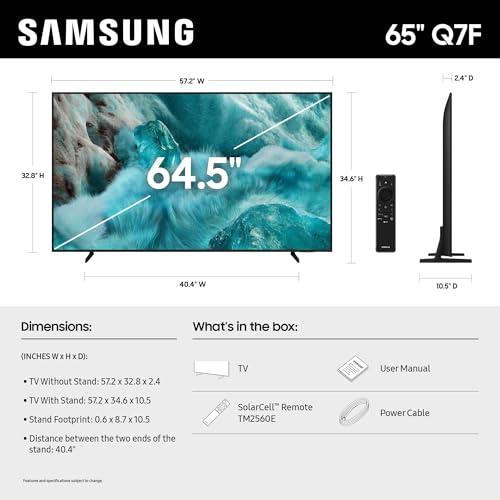
The Samsung Q7F emphasizes lightweight design at 37.7 pounds for the 65-inch model, making wall mounting straightforward. The adjustable stand allows for different spacing configurations to accommodate soundbars or different furniture arrangements. The build quality feels solid, though some flex in the back panel reflects the cost-conscious construction.
The TCL QM8 necessarily weighs more due to the complex Mini-LED backlighting system, but it maintains an elegant profile with minimal bezels. The additional weight actually contributes to a more premium feel, and the center-mounted stand provides stable support.
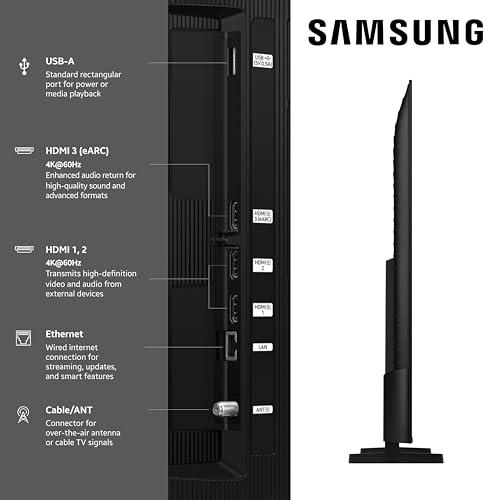
Both TVs include comprehensive cable management and wall-mounting compatibility, though the TCL QM8 offers more connectivity options with four HDMI ports versus three on the Samsung Q7F.
The Samsung Q7F includes three HDMI 2.0 ports and one USB connection—sufficient for current needs but potentially limiting as devices evolve. The lack of HDMI 2.1 means missing out on advanced gaming features and some future device compatibility.
The TCL QM8 provides four HDMI ports with eARC support, three USB connections including USB 3.0, and Wi-Fi 6 capability. The inclusion of ATSC 3.0 NextGen TV tuner adds future-proofing for over-the-air broadcast improvements.
At the time of writing, the price difference between these models reflects fundamentally different value propositions. The Samsung Q7F delivers acceptable QLED performance with Samsung's ecosystem integration at an entry-level premium price point. It suits buyers who want quantum dot color enhancement and smart features without paying for advanced display technology they might not fully utilize.
The TCL QM8 commands a significant premium but delivers Mini-LED technology that typically costs much more in competing brands. The performance gap in contrast, brightness, and gaming features justifies the higher price for viewers who prioritize picture quality and advanced capabilities.
You're seeking entry into premium TV features without the flagship price tag. This TV excels for casual viewing in moderately lit rooms where deep blacks aren't critical. Samsung ecosystem users will appreciate the seamless integration with smartphones, smartwatches, and other Samsung devices. The lightweight design and straightforward setup appeal to buyers who want good picture quality without complexity.
The Samsung Q7F makes sense for bedrooms, kitchens, or secondary viewing areas where advanced features feel unnecessary. It handles streaming content well and provides reliable smart TV functionality with Samsung's polished interface.
Picture quality represents your top priority, particularly for home theater viewing. The Mini-LED technology delivers contrast performance that approaches OLED while maintaining superior brightness for HDR content. Gamers with next-generation consoles will fully utilize the 120Hz panel and advanced gaming features.
The TCL QM8 suits main living room installations where it will serve as the primary entertainment center. The superior built-in audio system and comprehensive connectivity make it capable of serving as a complete home theater solution without immediately requiring additional components.
Both TVs succeed in their intended roles, but they serve distinctly different audiences. The Samsung Q7F provides a sensible entry point for buyers who want premium features without flagship pricing. However, the TCL QM8 delivers technology that represents the current state-of-the-art in LED-based displays.
For most buyers, the decision comes down to whether the superior contrast, gaming features, and HDR performance of Mini-LED technology justify the significant price premium. Based on our research and evaluation of professional reviews, the TCL QM8 offers better long-term value for buyers who consume significant amounts of premium content or use their TV for serious gaming.
The Samsung Q7F remains compelling for budget-conscious buyers who prioritize brand recognition and ecosystem integration over cutting-edge display technology. However, anyone planning to keep their TV for five-plus years should seriously consider whether the advanced features of the TCL QM8 warrant the additional investment, particularly as HDR content continues expanding and gaming capabilities evolve.
In the rapidly advancing world of display technology, the TCL QM8 represents a more future-proof choice that will continue delivering impressive performance as content and gaming standards advance.
| Samsung 65-Inch Q7F Series QLED Smart TV 2025 Display | TCL 65" QM8 Mini-LED Smart TV |
|---|---|
| Display Technology - The foundation that determines contrast and picture quality | |
| QLED with Direct LED backlighting, no local dimming zones | QD-Mini LED with up to 5,000 local dimming zones |
| Peak Brightness - Critical for HDR impact and bright room viewing | |
| Standard LED brightness levels (estimated 400-600 nits) | Up to 5,000 nits peak brightness for dazzling highlights |
| HDR Support - Determines compatibility with premium streaming content | |
| HDR10+ only (no Dolby Vision support) | HDR ULTRA with Dolby Vision IQ, HDR10+, HDR10, HLG |
| Refresh Rate & Gaming - Essential for smooth motion and modern gaming | |
| 60Hz panel, no VRR, no HDMI 2.1 | Native 120Hz panel with 144Hz VRR support |
| Local Dimming - The key spec that separates budget from premium TVs | |
| Supreme UHD Dimming (edge enhancement, not true zones) | Full Array Mini LED with thousands of independent zones |
| Audio System - Built-in sound quality affects overall experience | |
| 20W 2.0 channel speakers with Object Tracking Sound Lite | 80W ONKYO 2.1.2 system with subwoofer and Dolby Atmos |
| Smart Platform - Your daily interface and app ecosystem | |
| Tizen OS with Samsung Vision AI and ecosystem integration | Google TV with comprehensive content aggregation |
| Connectivity - Future-proofing and device compatibility | |
| 3 HDMI 2.0 ports, 1 USB, standard Wi-Fi | 4 HDMI ports (1 eARC), 3 USB, Wi-Fi 6, ATSC 3.0 tuner |
| Processor - Handles upscaling and picture optimization | |
| Q4 AI Processor with basic 4K upscaling | TCL AIPQ PRO Processor with deep learning AI |
| Target Market - Who each TV is designed for | |
| Entry-level QLED for Samsung ecosystem users and casual viewing | Premium Mini LED for picture quality enthusiasts and gamers |
The key difference is display technology. The Samsung Q7F uses basic QLED with standard LED backlighting, while the TCL QM8 features advanced Mini-LED technology with up to 5,000 local dimming zones. This gives the TCL QM8 dramatically better contrast, deeper blacks, and brighter highlights for superior picture quality.
The TCL QM8 is significantly better for gaming. It offers a native 120Hz panel with 144Hz Variable Refresh Rate support, multiple HDMI 2.1 ports, and Game Accelerator 240 technology. The Samsung Q7F is limited to 60Hz with no VRR support, making it suitable only for casual gaming.
The TCL QM8 performs much better in bright rooms thanks to its peak brightness capability of up to 5,000 nits and superior reflection handling. The Samsung Q7F can handle moderate lighting but struggles with significant ambient light or glare from windows.
No, only the TCL QM8 supports Dolby Vision and Dolby Vision IQ. The Samsung Q7F only supports HDR10+ format. This means the TCL QM8 is compatible with more premium streaming content and delivers better HDR performance overall.
The TCL QM8 has significantly better audio with its 80W ONKYO 2.1.2 channel system featuring a built-in subwoofer and up-firing speakers for Dolby Atmos. The Samsung Q7F has basic 20W 2.0 channel speakers that are adequate for casual viewing but lack power and immersion.
The TCL QM8 is excellent for home theater use with its Mini-LED contrast, Dolby Vision support, and powerful built-in audio system. The Samsung Q7F is more suitable for casual viewing and secondary rooms, as it lacks the deep blacks and HDR performance that home theater enthusiasts expect.
This depends on your priorities. The Samsung Q7F offers better value for budget-conscious buyers seeking basic QLED features and Samsung ecosystem integration. The TCL QM8 provides exceptional value for picture quality enthusiasts, delivering premium Mini-LED technology typically found in much more expensive TVs.
Yes, both offer comprehensive smart features. The Samsung Q7F runs Tizen OS with Samsung Vision AI, SmartThings integration, and Samsung TV Plus. The TCL QM8 uses Google TV with excellent content aggregation and voice search. Choose based on your preferred ecosystem.
The TCL QM8 is better for sports due to its 120Hz refresh rate and superior motion handling technology. Fast-moving action appears smoother and clearer compared to the 60Hz Samsung Q7F, which may show motion blur during rapid camera movements or fast gameplay.
The TCL QM8 offers superior connectivity with 4 HDMI ports (including eARC), 3 USB ports, Wi-Fi 6, and ATSC 3.0 NextGen TV tuner. The Samsung Q7F provides 3 HDMI 2.0 ports and 1 USB port, which may be limiting for users with multiple devices.
The TCL QM8 is more future-proof with its 120Hz/144Hz gaming support, HDMI 2.1 connectivity, Wi-Fi 6, and comprehensive HDR format support. The Samsung Q7F lacks many modern features that are becoming standard, potentially making it feel outdated sooner.
Both are reputable brands with different strengths. Choose the Samsung Q7F if you value brand recognition, ecosystem integration with Samsung devices, and want basic QLED performance at an accessible price. Choose the TCL QM8 if picture quality and advanced features matter more than brand prestige, as it delivers premium performance at competitive pricing.
We've done our best to create useful and informative comparisons to help you decide what product to buy. Our research uses advanced automated methods to create this comparison and perfection is not possible - please contact us for corrections or questions. These are the sites we've researched in the creation of this article: bestbuy.com - rtings.com - bestbuy.com - youtube.com - youtube.com - youtube.com - samsung.com - samsung.com - samsung.com - billsmith.com - costco.com - samsung.com - hometechnologyreview.com - hometechnologyreview.com - bestbuy.com - samsung.com - bestbuy.com - samsung.com - hometechnologyreview.com - samsung.com - samsung.com - rtings.com - rtings.com - techradar.com - tcl.com - the-gadgeteer.com - nfm.com - ecoustics.com - careyscommunications.com - pcrichard.com - tcl.com

Privacy Policy
Terms and Conditions - Affiliate Policy
Home Security
© Copyright 2008-2026.
11816 Inwood Rd #1211, Dallas, TX 75244