

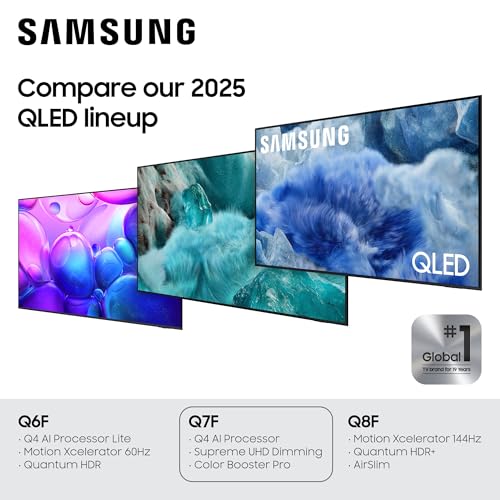
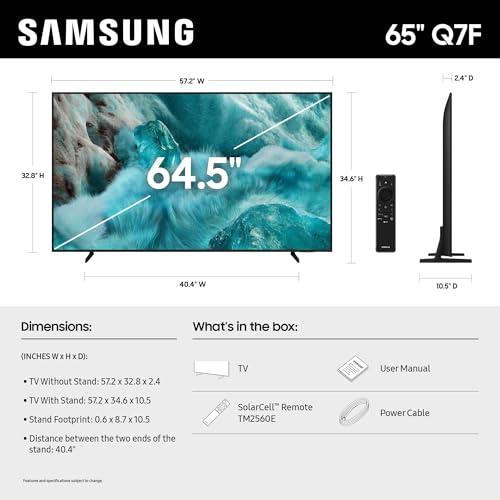
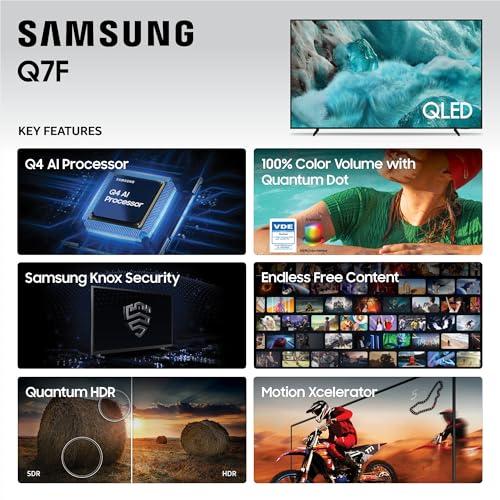
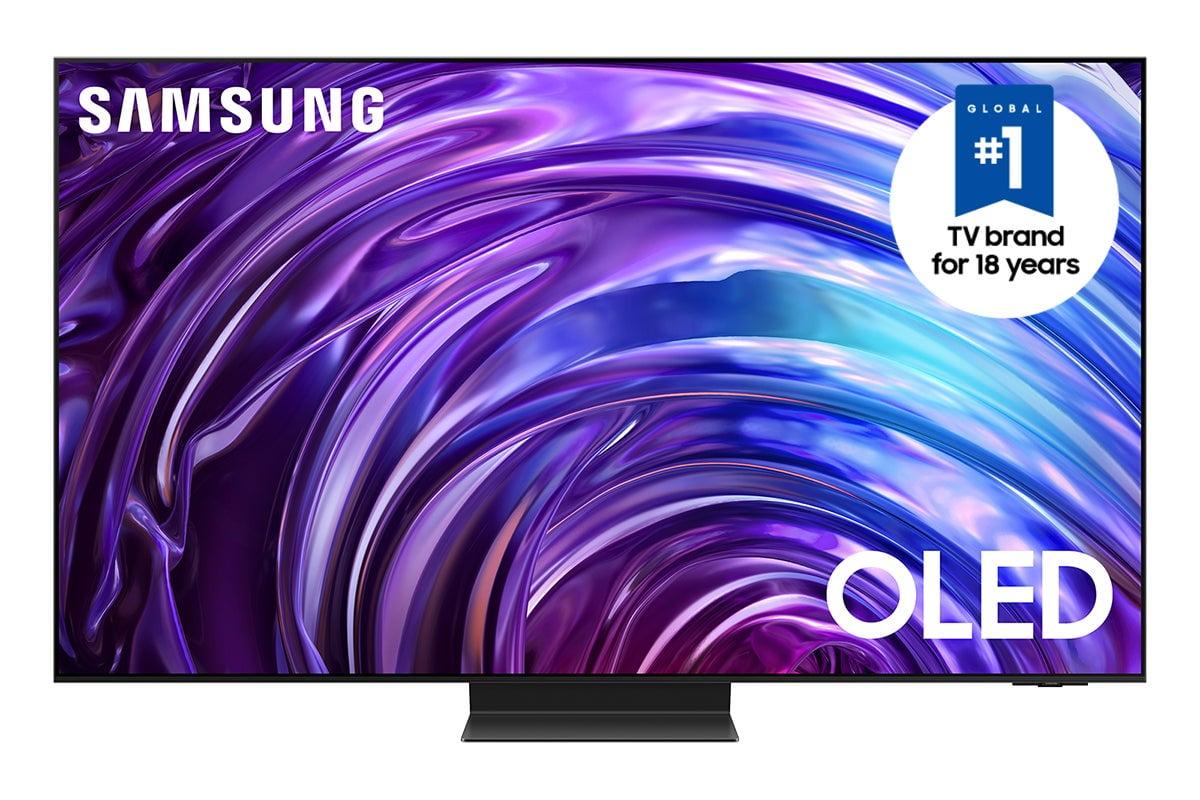
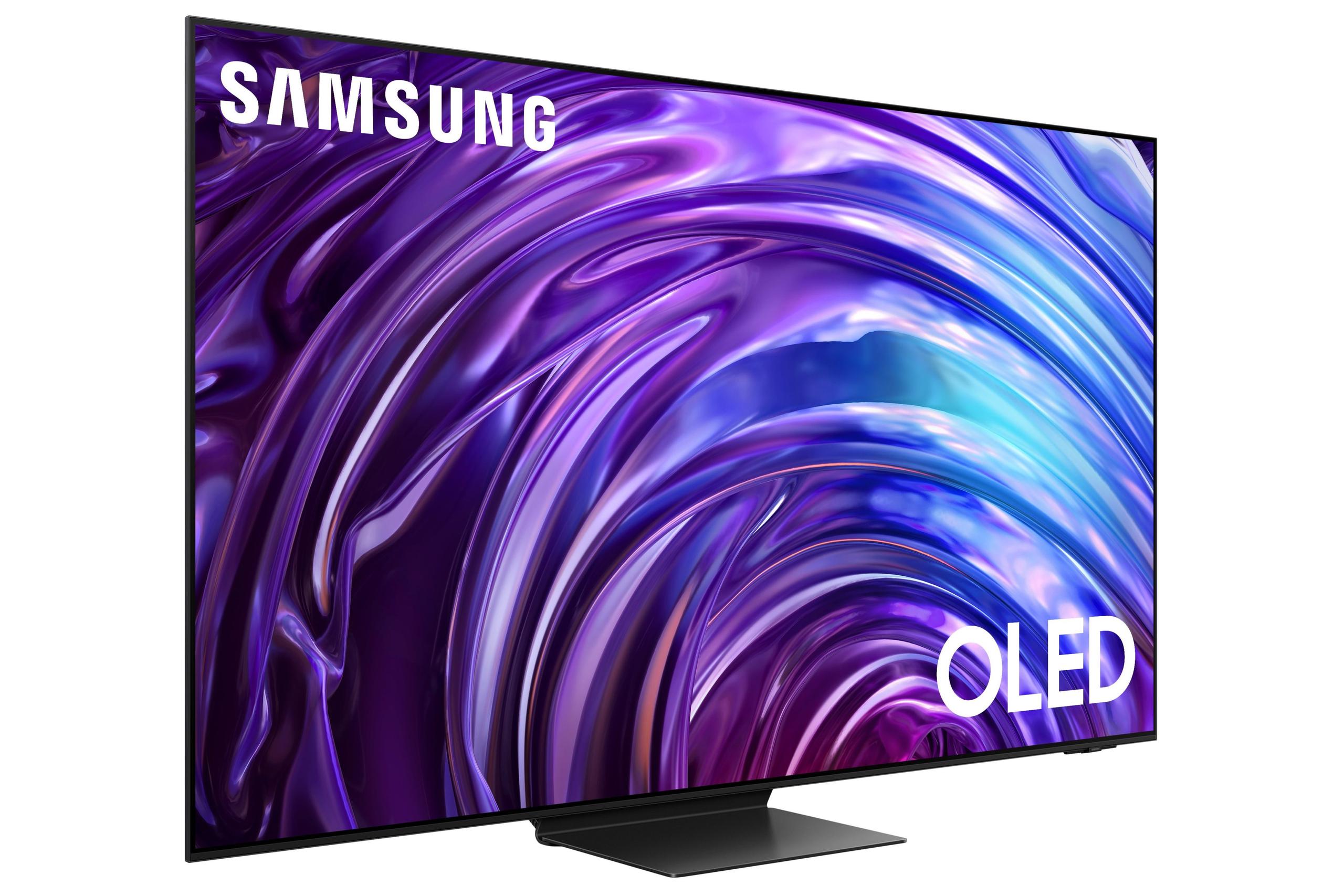
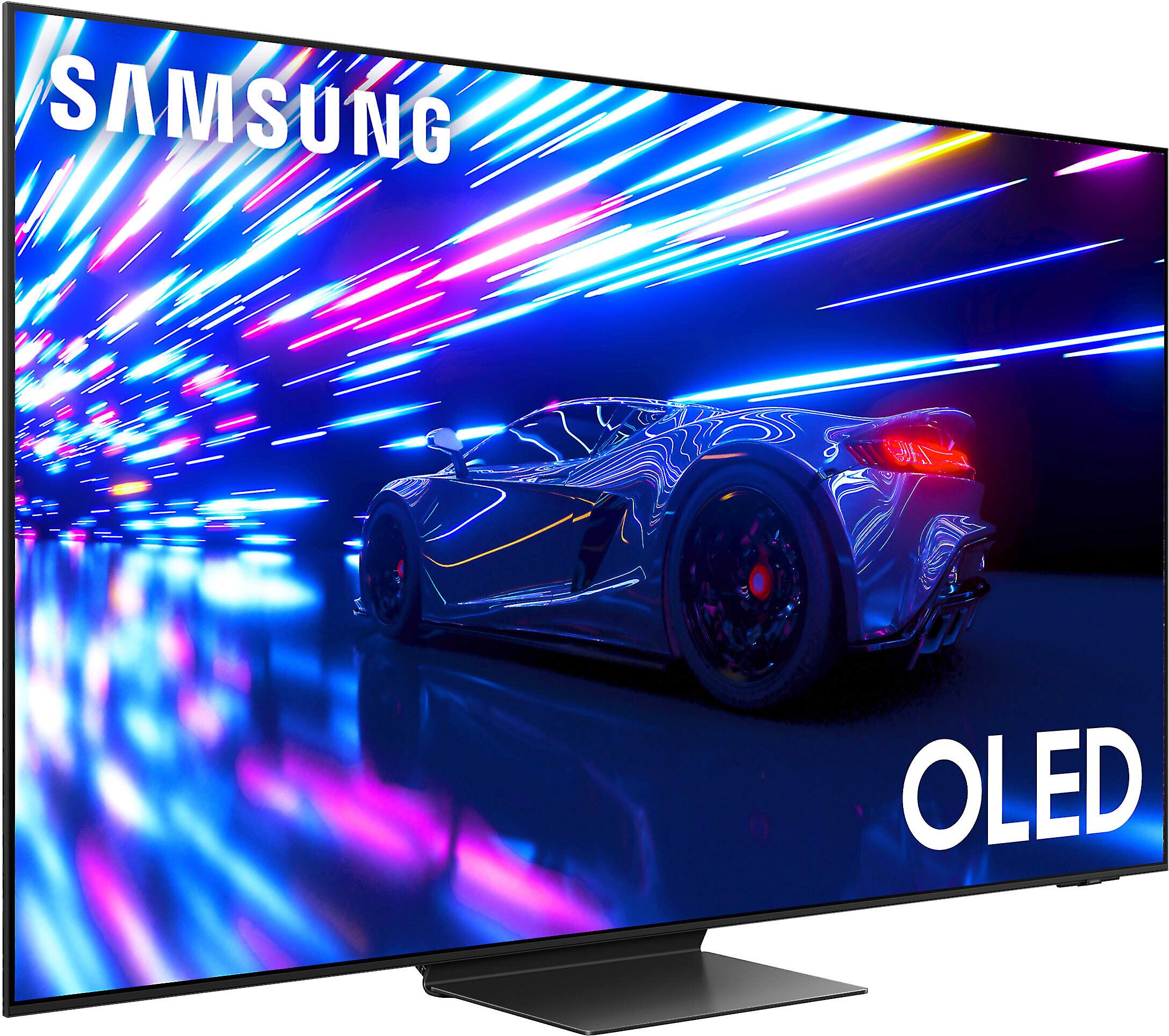
When shopping for a premium 65-inch TV, you'll quickly encounter Samsung's two dramatically different approaches to display technology. The Samsung Q7F QLED represents their 2025 entry-level quantum dot offering, while the Samsung S95D OLED launched in 2024 as their flagship organic light-emitting diode TV. These models sit at opposite ends of both Samsung's lineup and the price spectrum, making the choice between them a perfect case study in understanding modern TV technology.
The fundamental question isn't just about budget—though at the time of writing, the S95D costs roughly four times more than the Q7F. It's about understanding two completely different philosophies for creating images on your screen, each with distinct advantages that matter in real-world viewing scenarios.
To make an informed decision, you need to grasp how these TVs actually create the images you see. The Samsung Q7F uses QLED technology, which stands for Quantum Dot Light-Emitting Diode. Despite the similar name, it's fundamentally different from OLED. QLEDs are essentially advanced LCD TVs with LED backlighting enhanced by a quantum dot layer—microscopic particles that improve color accuracy and brightness when excited by light.
The Samsung S95D, however, uses QD-OLED technology, a newer hybrid approach. Each of its 8.3 million pixels produces its own light organically, without needing any backlighting. When you want a pixel to be black, it simply turns off completely. This self-emissive property creates what's called "infinite contrast"—the mathematical result of dividing any brightness level by true zero.
This technical difference translates into dramatically different viewing experiences, particularly in how each TV handles dark scenes, bright rooms, and everything in between.
Contrast and Black Levels: The Foundation of Cinematic Images
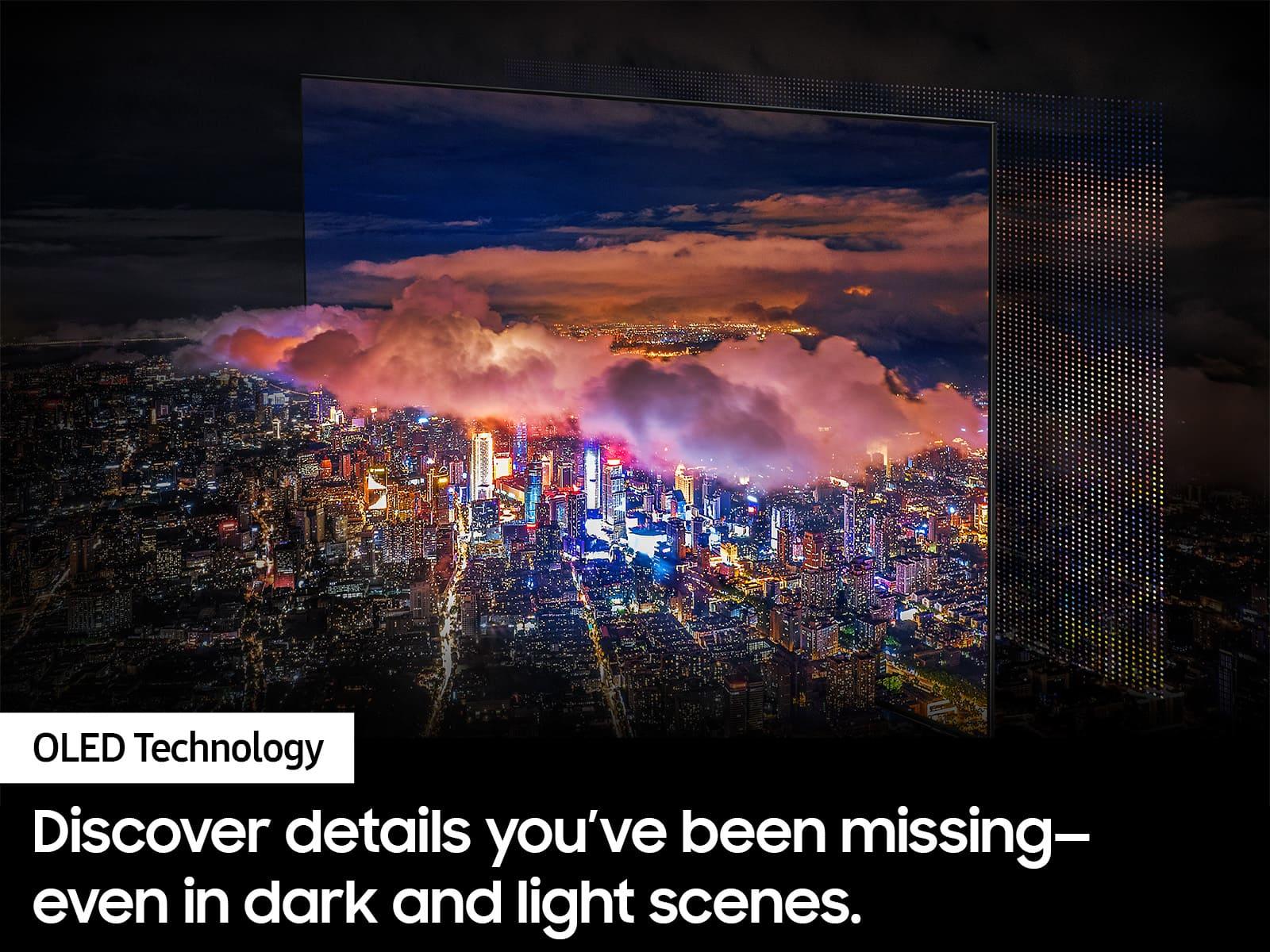
The most significant performance difference between these TVs lies in their contrast capabilities. The S95D's OLED technology delivers what many consider the holy grail of display performance—perfect blacks. When watching a movie like "Blade Runner 2049" or "Interstellar," dark space scenes appear truly black, not the grayish approximation you get from backlit displays.
The Q7F, being an entry-level QLED without local dimming zones, struggles here. Local dimming is a technology that selectively dims LED backlights behind dark parts of the image while keeping bright areas illuminated. Without it, the Q7F can't prevent light from bleeding through during dark scenes, creating what's called "elevated black levels"—essentially, blacks that look more like dark gray.
This difference is immediately apparent in dark room viewing. Horror movies, space films, and nighttime scenes showcase the S95D's superiority dramatically. However, this advantage diminishes in brighter viewing environments, where ambient light overwhelms the subtle differences in black level performance.
Brightness and HDR Performance: Bringing Images to Life
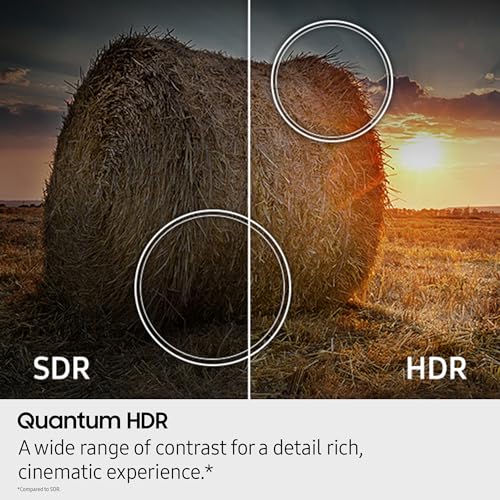
High Dynamic Range (HDR) content requires TVs to display both very bright and very dark elements simultaneously—think of a sunset scene with both shadowy foreground details and brilliant sky highlights. Traditionally, OLED TVs have struggled with peak brightness compared to their QLED counterparts.
The S95D breaks this conventional wisdom. Through quantum dot technology integrated with OLED, it achieves competitive peak brightness while maintaining perfect blacks. This combination allows it to display HDR content with the full range of contrast that filmmakers intended.
The Q7F, despite being a budget model, still benefits from quantum dot color enhancement. Quantum dots are essentially microscopic crystals that emit very pure colors when excited by light. This technology allows the Q7F to reproduce a wider color gamut than traditional LCD TVs, though it can't match the S95D's combination of brightness and contrast.
Color Accuracy and Volume: The Vibrancy Factor
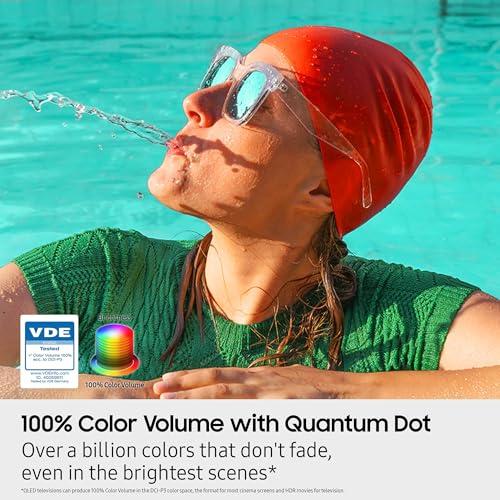
Both TVs use quantum dot technology, but they implement it differently. The S95D achieves what Samsung calls "100% color volume"—meaning it can reproduce accurate, vibrant colors at any brightness level. This is crucial for HDR content, where bright scenes often wash out colors on lesser displays.
The Q7F provides good color accuracy for its price point, with quantum dots ensuring better reds and greens than traditional LCD panels. However, without advanced local dimming or OLED's precise control, it can't maintain color saturation across all brightness levels as effectively as the S95D.
Modern gaming has transformed TV requirements. With PlayStation 5 and Xbox Series X consoles capable of 4K gaming at 120Hz, TVs need to keep pace with increasingly demanding specifications.
Refresh Rates and Input Lag: Responsiveness Matters
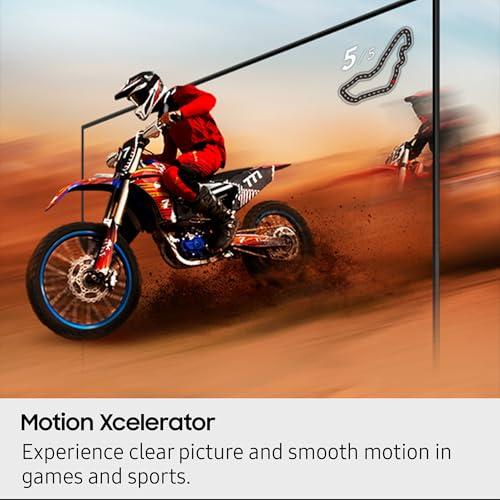
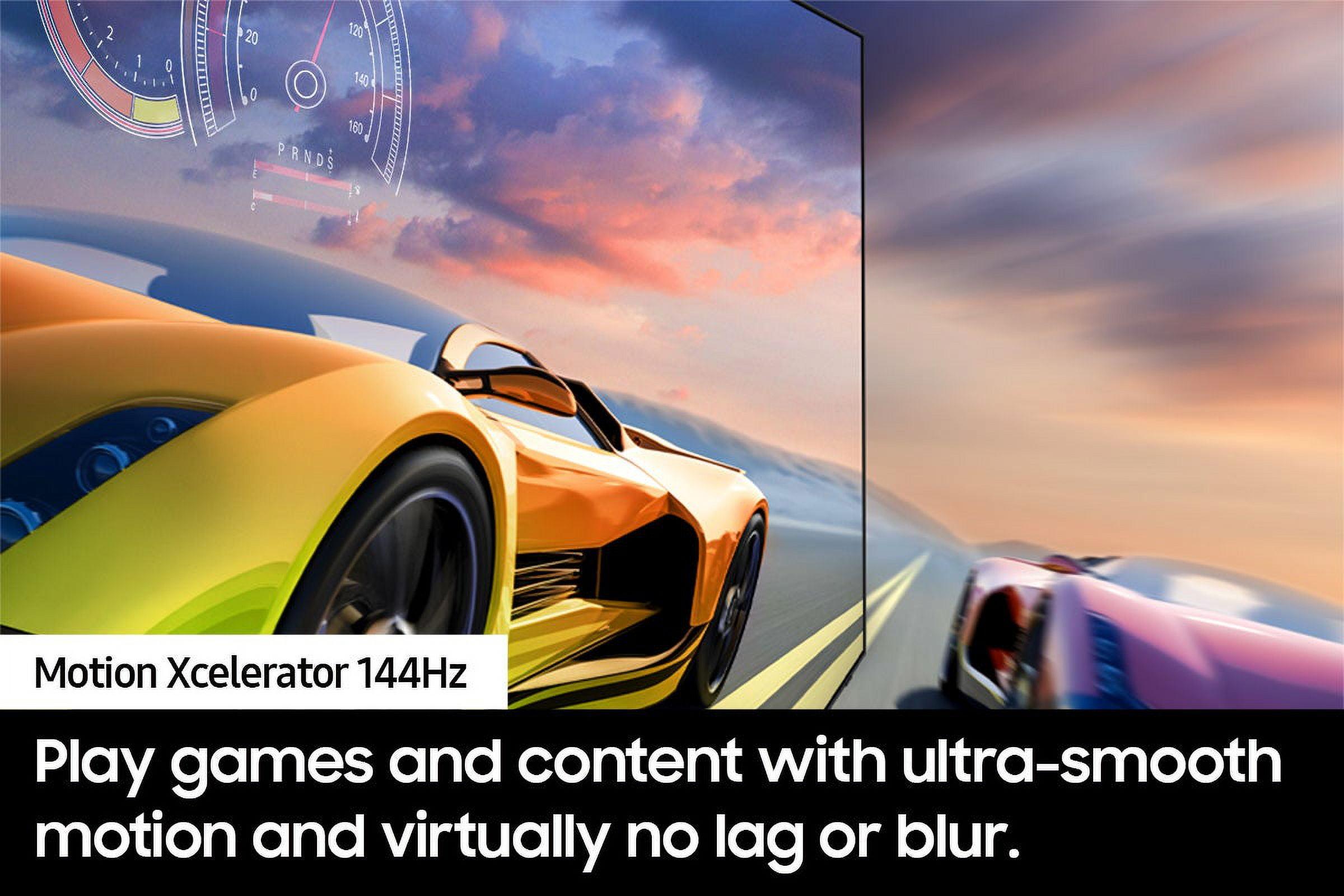
The S95D excels here with 144Hz refresh rate capability at 4K resolution—higher than most gaming monitors. This means it can display up to 144 unique frames per second, creating incredibly smooth motion during fast-paced gaming. Combined with near-instantaneous pixel response times (how quickly pixels can change color), the result is crisp, blur-free gaming even during the most chaotic action sequences.
The Q7F offers basic 120Hz support, which is adequate for most current console gaming. However, it likely supports this higher refresh rate only on select HDMI ports, and its pixel response times are slower due to LCD technology limitations. This can result in visible motion blur during fast movement—not ideal for competitive gaming.
Variable Refresh Rate and Modern Gaming Features
Variable Refresh Rate (VRR) is a technology that synchronizes the TV's refresh rate with the console's frame output, eliminating screen tearing—those horizontal lines that appear when frame rates are inconsistent. The S95D supports multiple VRR standards, including HDMI Forum VRR and FreeSync, ensuring compatibility with both major consoles and PC gaming.
The Q7F likely includes basic VRR support, but without the advanced gaming optimizations found in premium models. For casual gaming, this difference may not matter. For serious gamers or those planning to keep their TV for many years as gaming technology advances, the S95D's comprehensive gaming feature set provides better future-proofing.
Bright Room Performance: The Glare Challenge
Here's where the S95D introduces revolutionary technology. Its anti-glare matte screen coating represents a breakthrough in OLED design. Traditional OLEDs suffer in bright rooms because their glossy screens reflect light sources like windows and lamps, washing out the image. The S95D's matte coating virtually eliminates these reflections while maintaining image quality—something previously thought impossible.
The Q7F, like most budget TVs, has mediocre reflection handling. In bright living rooms with lots of windows, you'll struggle with glare and reduced contrast. The TV is adequate for moderate lighting conditions but can't compete with the S95D's anti-glare technology.
Viewing Angles: Family Viewing Considerations
OLED technology inherently provides wide viewing angles, meaning the S95D maintains color accuracy and contrast even when viewed from the side. This makes it excellent for family movie nights or entertaining guests.
The Q7F uses LCD technology, which typically suffers from color shifting and contrast degradation when viewed off-center. If you have a wide seating arrangement or frequently watch TV from the kitchen while cooking, this limitation becomes noticeable.
Perhaps the most important consideration for OLED buyers is burn-in risk. Burn-in occurs when static images—like news channel logos, sports scoreboards, or video game HUDs—remain on screen long enough to permanently damage the OLED pixels. Once burned in, these ghost images persist even when watching other content.
The S95D, despite technological improvements, remains susceptible to burn-in. If you regularly watch news channels, use the TV for gaming with persistent interface elements, or leave static images on screen for hours, burn-in risk becomes a serious consideration.
The Q7F uses LCD technology, which cannot burn-in. Samsung even offers burn-in immunity guarantees for their QLED lineup. For users who prioritize longevity and worry-free usage, this represents a significant advantage despite the picture quality compromises.
The S95D includes a sophisticated 70W 4.2.2 channel audio system with Dolby Atmos support and Object Tracking Sound+. This technology attempts to move sound around the screen to match on-screen action—when a car drives across the screen, the sound follows it.
The Q7F provides basic 20W 2.0 channel speakers adequate for casual viewing but lacking the power and sophistication for immersive experiences. Most buyers at this price point plan to add a soundbar anyway, making this less critical.
Both TVs run Samsung's Tizen operating system, providing access to all major streaming services. The S95D includes the latest 2024 version with enhanced AI processing for upscaling lower-resolution content and optimizing picture settings automatically.
The Q7F features Samsung's 2025 "Vision AI" smart platform, suggesting AI-powered enhancements despite its budget positioning. However, the processing power likely can't match the S95D's dedicated AI Gen2 processor.
For dedicated home theater setups, the S95D provides reference-quality performance that rivals expensive projector setups. Its perfect blacks create the cinematic experience that movie enthusiasts crave, particularly in dark, controlled environments.
The Q7F can anchor a budget home theater but requires careful room setup and realistic expectations. Without local dimming or OLED's contrast advantages, it can't deliver the dramatic visual impact that makes movies truly immersive.
However, the Q7F's immunity to burn-in makes it more suitable for mixed-use scenarios where the TV serves multiple purposes beyond movie watching.
The Q7F represents exceptional value for quantum dot color enhancement at an entry-level price point. At the time of writing, it costs roughly one-quarter the price of the S95D while providing solid performance for most viewing scenarios.
The S95D commands premium pricing but delivers cutting-edge technology that justifies the investment for enthusiasts. Its anti-glare OLED technology, comprehensive gaming features, and reference-quality picture performance target buyers who prioritize the absolute best viewing experience.
Choose the Samsung Q7F if you prioritize value and burn-in immunity. It's ideal for bright living rooms, mixed-use scenarios with news and sports viewing, and buyers who want quantum dot color enhancement without premium pricing. The Q7F provides good performance for casual viewing and represents smart spending for budget-conscious buyers.
Choose the Samsung S95D if picture quality justifies the premium investment. It's perfect for dark room viewing, serious gaming setups, and situations where the anti-glare coating solves specific reflection problems. The S95D targets enthusiasts who understand the technology differences and value cutting-edge performance.
The decision ultimately depends on your viewing environment, usage patterns, and budget flexibility. Both TVs represent Samsung's expertise in their respective categories, but they serve fundamentally different audiences with distinct priorities and needs.
| Samsung 65-Inch Q7F Series QLED Smart TV 2025 Display | Samsung 65" S95D 4K OLED Smart TV |
|---|---|
| Display Technology - Fundamental difference affecting picture quality and longevity | |
| QLED with LED backlighting and quantum dots | QD-OLED with self-emissive pixels |
| Black Levels - Critical for dark room viewing and contrast | |
| Elevated blacks due to LED backlight bleed | Perfect blacks with infinite contrast ratio |
| Peak Brightness - Important for HDR content and bright rooms | |
| Moderate brightness, struggles in very bright rooms | High brightness competitive with premium QLEDs |
| Refresh Rate - Essential for gaming and sports | |
| 60Hz standard, up to 120Hz on select inputs | 144Hz at 4K across all inputs |
| Gaming Features - Next-gen console compatibility | |
| Basic ALLM and limited VRR support | Full HDMI 2.1, VRR, FreeSync, Auto AI gaming |
| Input Lag - Responsiveness for gaming | |
| ~10ms (good for casual gaming) | ~9ms (excellent for competitive gaming) |
| Glare and Reflections - Viewing in bright environments | |
| Poor reflection handling, struggles with glare | Revolutionary anti-glare matte coating |
| Viewing Angles - Important for family viewing | |
| Narrow angles with color/contrast degradation | Wide angles maintaining image quality |
| Burn-in Risk - Long-term durability concern | |
| Immune to burn-in (guaranteed by Samsung) | Susceptible to permanent burn-in with static content |
| Local Dimming - Contrast enhancement technology | |
| None (major limitation for dark scenes) | Pixel-level dimming (8.3 million zones) |
| Color Volume - Accuracy across brightness levels | |
| Good quantum dot colors, limited by brightness | 100% color volume with Pantone validation |
| Audio System - Built-in sound quality | |
| 20W 2.0 channel basic speakers | 70W 4.2.2 channel with Dolby Atmos and Object Tracking Sound+ |
| HDMI Ports - Connectivity for devices | |
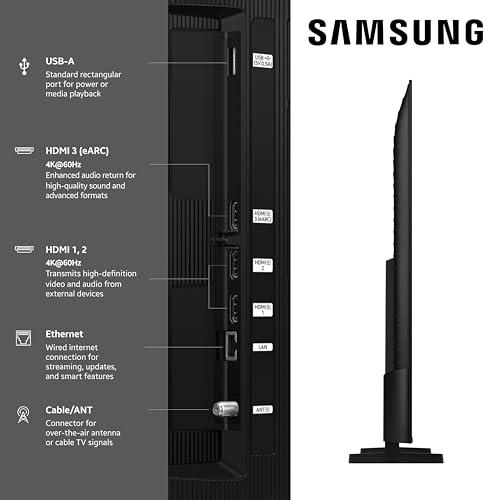
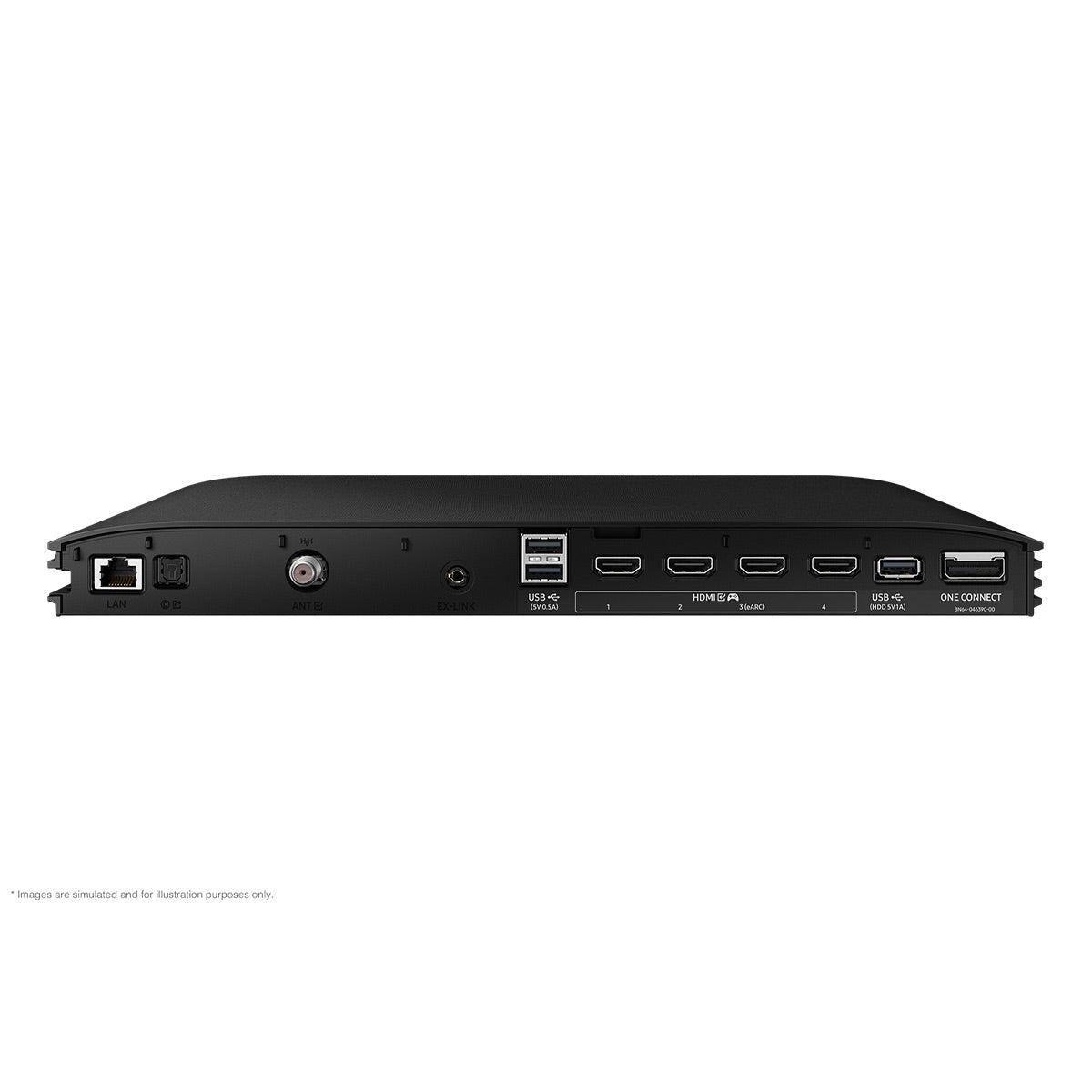
| 3 HDMI inputs (limited HDMI 2.1) | 4 HDMI 2.1 ports with full bandwidth |
| Smart Platform - User interface and apps | |
| 2025 Tizen with Vision AI features | 2024 Tizen with advanced AI Gen2 processor |
| HDR Support - High dynamic range compatibility | |
| HDR10+ and Quantum HDR (no Dolby Vision) | OLED HDR Pro, HDR10+ (no Dolby Vision) |
| Design Profile - Aesthetics and mounting | |
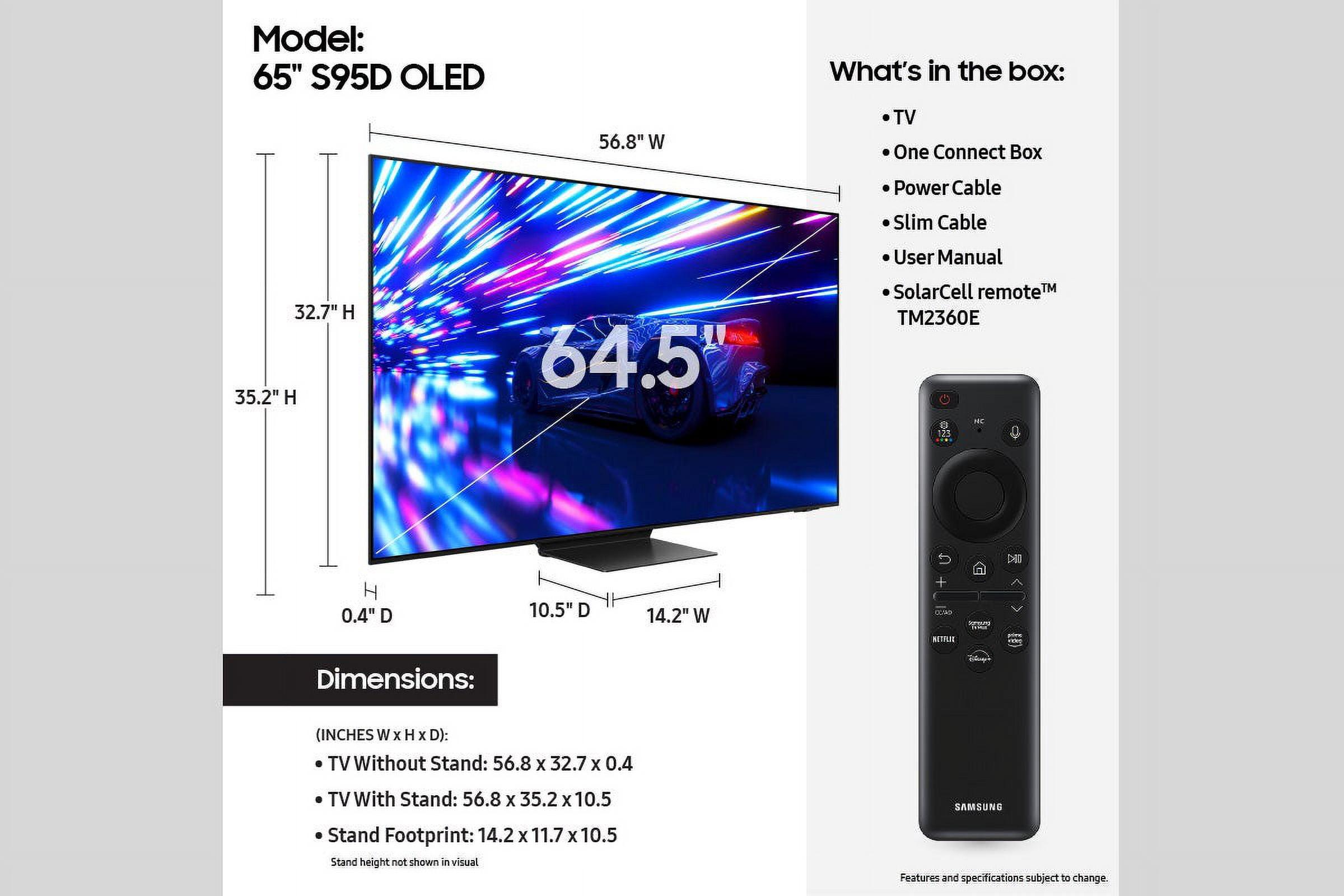
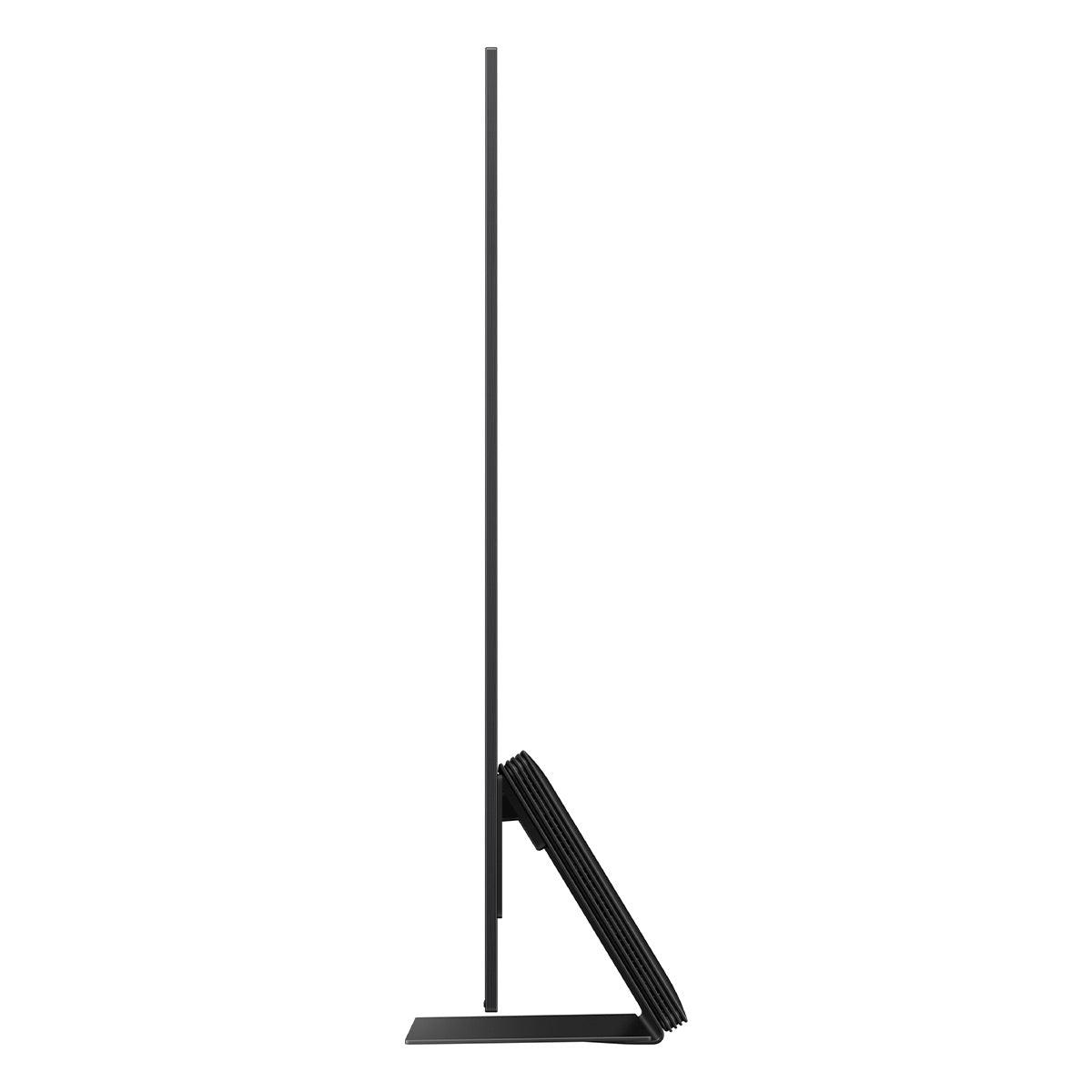
| Standard thickness with adjustable plastic feet | Ultra-slim 11mm profile with One Connect Box |
| Target Audience - Best suited for | |
| Budget-conscious buyers, bright rooms, burn-in concerns | Premium buyers, dark rooms, gaming enthusiasts |
The Samsung S95D OLED is significantly better for bright rooms thanks to its revolutionary anti-glare matte coating that virtually eliminates reflections from windows and lights. The Samsung Q7F QLED struggles with glare and has poor reflection handling, making it less suitable for bright living spaces.
QLED TVs like the Samsung Q7F use LED backlighting with quantum dots for color enhancement, while OLED TVs like the Samsung S95D have pixels that produce their own light. This means the S95D can turn pixels completely off for perfect blacks, while the Q7F always has some backlight bleed.
The Samsung S95D OLED is superior for next-gen gaming with its 144Hz refresh rate, four full HDMI 2.1 ports, comprehensive VRR support, and 9ms input lag. The Samsung Q7F QLED offers basic gaming features with 120Hz on select inputs but lacks advanced gaming optimizations.
The Samsung Q7F QLED cannot get burn-in and Samsung guarantees this for the TV's lifetime. The Samsung S95D OLED can suffer permanent burn-in from static images like news tickers or game interfaces, requiring careful usage habits for longevity.
The Samsung S95D OLED dramatically outperforms the Q7F QLED in dark rooms due to its perfect blacks and infinite contrast ratio. The Q7F shows grayish blacks and lacks the cinematic impact needed for serious home theater viewing.
The Samsung S95D features a powerful 70W 4.2.2 channel system with Dolby Atmos and Object Tracking Sound+, while the Samsung Q7F has basic 20W 2.0 channel speakers that typically require a soundbar upgrade for good audio quality.
The Samsung Q7F QLED provides exceptional value with quantum dot color enhancement at an entry-level price point. The Samsung S95D OLED costs significantly more but delivers premium features like anti-glare coating and superior picture quality for enthusiasts.
The Samsung Q7F QLED is actually better for heavy sports and news viewing because it's immune to burn-in from static scoreboards and logos. The Samsung S95D OLED provides better motion clarity but risks permanent damage from persistent on-screen graphics.
The Samsung S95D OLED is ideal for dedicated home theaters with its reference-quality picture, perfect blacks, and cinematic contrast. The Samsung Q7F QLED can work in a budget home theater but can't deliver the dramatic visual impact that movie enthusiasts expect.
Both TVs run Samsung's Tizen OS, but the Samsung S95D includes the advanced AI Gen2 processor for superior upscaling and optimization. The Samsung Q7F features 2025 Vision AI capabilities but with less processing power than the premium model.
The Samsung S95D OLED maintains excellent color accuracy and contrast when viewed from the side, making it perfect for wide seating arrangements. The Samsung Q7F QLED suffers from color shifting and reduced contrast when viewed off-center due to its LCD panel technology.
Choose the Samsung Q7F QLED if you prioritize value, have burn-in concerns, or watch lots of news/sports. Choose the Samsung S95D OLED if you want the absolute best picture quality, game frequently, or have a controlled viewing environment where its superior contrast can shine.
We've done our best to create useful and informative comparisons to help you decide what product to buy. Our research uses advanced automated methods to create this comparison and perfection is not possible - please contact us for corrections or questions. These are the sites we've researched in the creation of this article: bestbuy.com - rtings.com - bestbuy.com - youtube.com - youtube.com - youtube.com - samsung.com - samsung.com - samsung.com - billsmith.com - costco.com - samsung.com - hometechnologyreview.com - hometechnologyreview.com - bestbuy.com - samsung.com - bestbuy.com - samsung.com - hometechnologyreview.com - samsung.com - samsung.com - techradar.com - videoandaudiocenter.com - avsforum.com - cnet.com - abt.com - merlinstv.com - nfm.com - rtings.com - flintsfurniture.com - samsung.com - bestbuy.com - displayspecifications.com

Privacy Policy
Terms and Conditions - Affiliate Policy
Home Security
© Copyright 2008-2026.
11816 Inwood Rd #1211, Dallas, TX 75244