

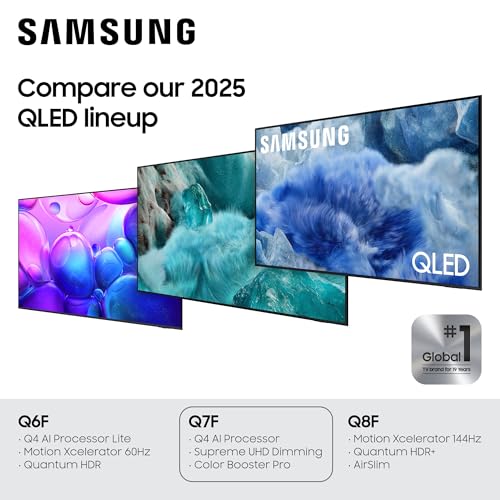
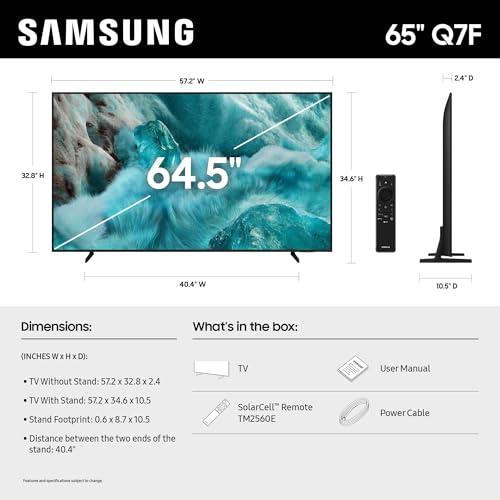
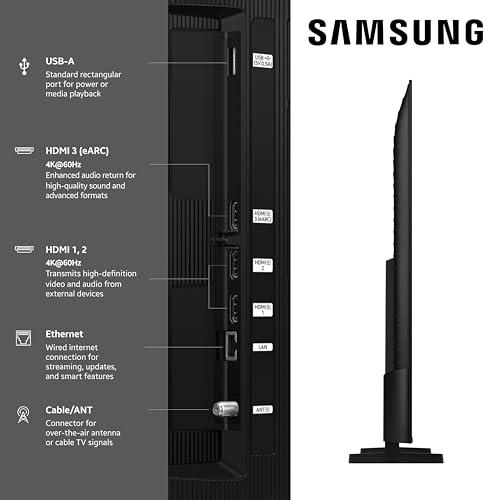
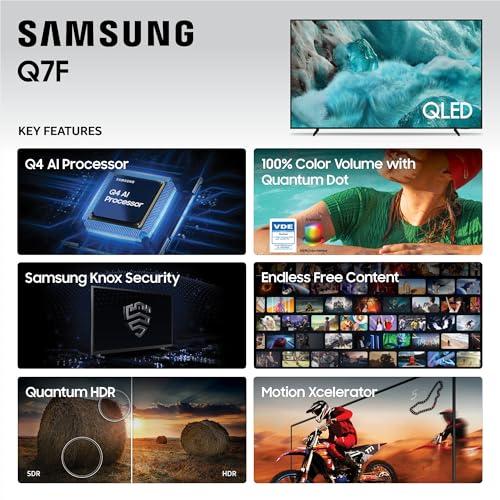
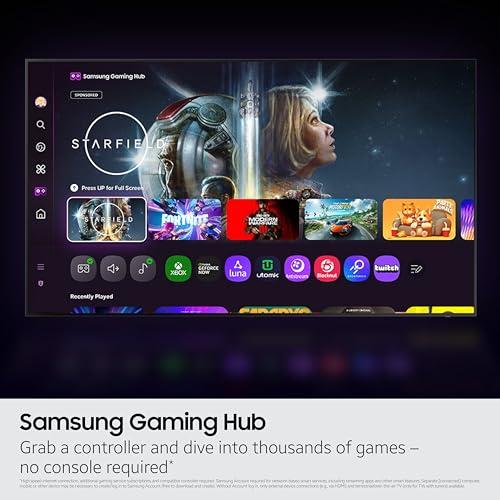
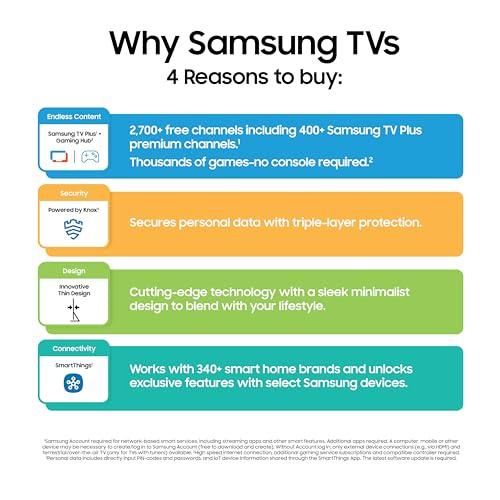
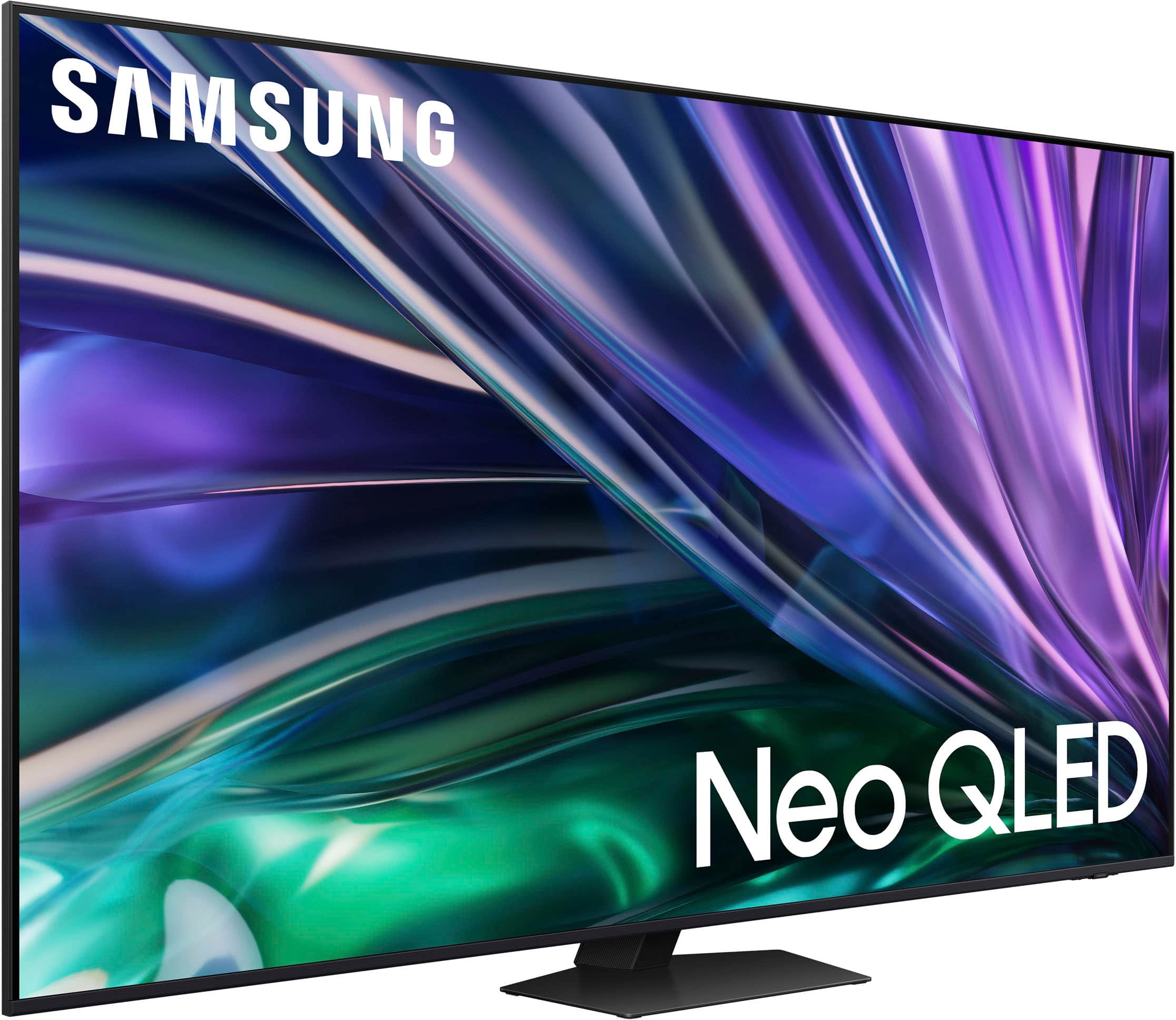
Shopping for a Samsung QLED TV can feel overwhelming with all the model numbers and technical jargon thrown around. Today we're comparing two very different Samsung TVs that highlight just how much TV technology has evolved: the entry-level Samsung Q7F from 2025 and the mid-tier Samsung QN85D from 2024. While both carry the QLED name, they represent fundamentally different approaches to delivering quantum dot technology.
The TV market has transformed dramatically in recent years. What used to be a simple choice between LCD and plasma has exploded into a complex landscape of QLED, OLED, Mini LED, and countless marketing terms. At the heart of this evolution is a simple truth: not all QLEDs are created equal. Samsung's quantum dot technology spans from basic implementations in budget models to sophisticated Mini LED arrays in premium sets.
Before diving into our comparison, let's clarify what QLED actually means and why it matters. QLED stands for Quantum Dot LED, where microscopic particles called quantum dots convert blue LED light into precise red and green wavelengths. This process creates more accurate colors and higher brightness than traditional LED TVs.
However, the real magic happens in how these quantum dots are lit up from behind. This backlighting system makes all the difference between a decent TV and a great one. The most important factors when evaluating any TV are:
Contrast ratio - how deep the blacks look compared to bright whites Peak brightness - how bright the screen can get for HDR content and bright rooms Color accuracy - how true-to-life colors appear Motion handling - how smooth fast-moving scenes look Gaming features - support for modern consoles and PCs
Understanding these fundamentals helps explain why the Samsung Q7F and Samsung QN85D perform so differently despite both being Samsung QLEDs.
The most significant difference between these TVs lies in their backlighting technology, which fundamentally determines picture quality.
The Samsung Q7F uses direct-lit LED backlighting without local dimming. Picture dozens of LED lights positioned directly behind the screen, all turning on and off together like a single light switch. When you're watching a movie with a dark night scene, those LEDs can't selectively dim just the dark parts of the image - they affect the entire screen. This creates what we call "grayish blacks" instead of true deep blacks.
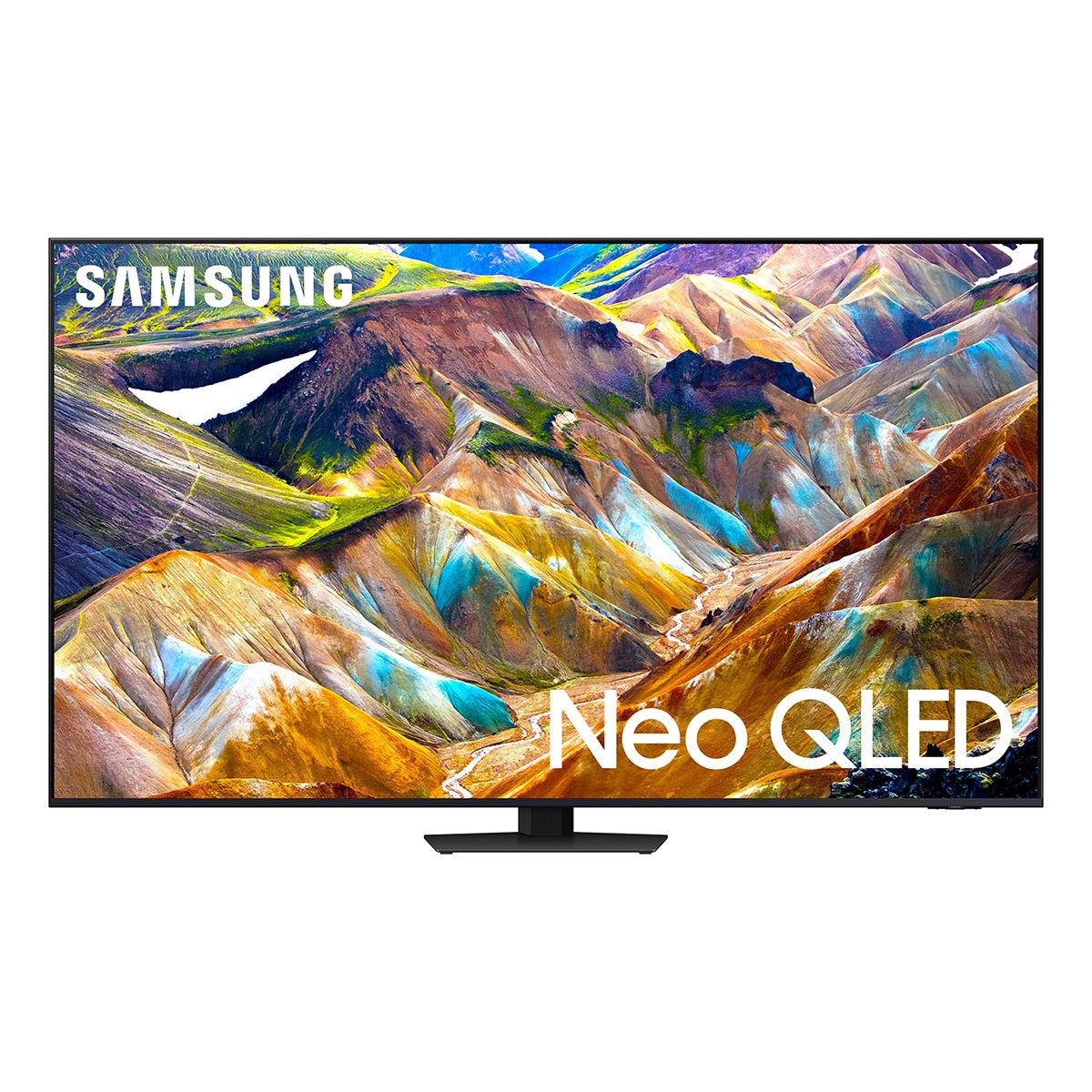
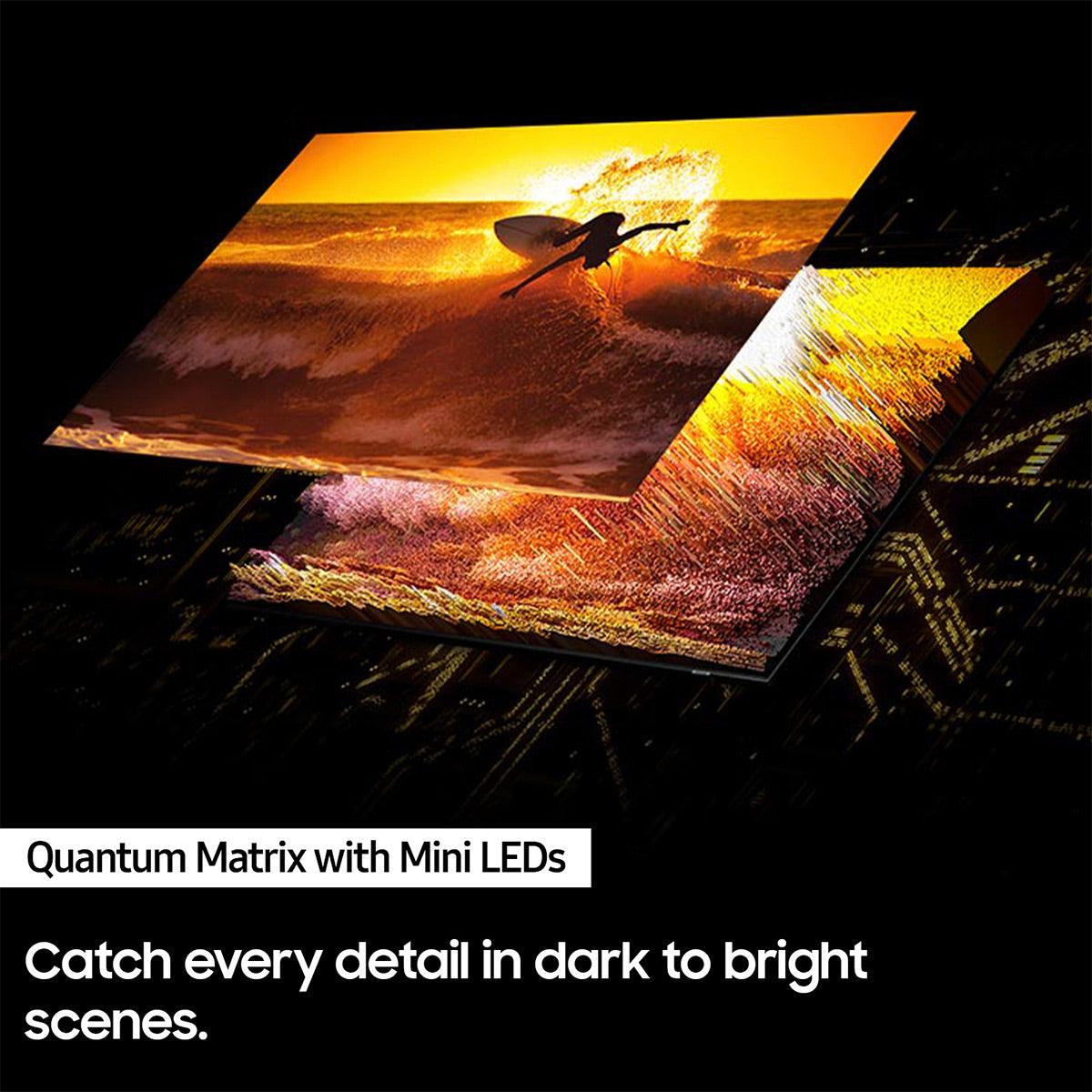
The Samsung QN85D represents a major technological leap with Mini LED backlighting and local dimming zones. Instead of dozens of regular-sized LEDs, it uses thousands of microscopic Mini LEDs organized into 160 controllable zones on the 65-inch model. Think of it like having 160 individual dimmer switches instead of one main switch. When that same dark movie scene plays, the TV can dim the LEDs behind the dark parts while keeping bright areas properly illuminated.
This local dimming capability creates what's called a high contrast ratio - the difference between the darkest blacks and brightest whites. Our research shows the QN85D achieves over 160,000:1 contrast ratio, while the Q7F manages only a fraction of that performance. In practical terms, this means movie nights with the lights off reveal dramatically more detail and realism on the Mini LED display.
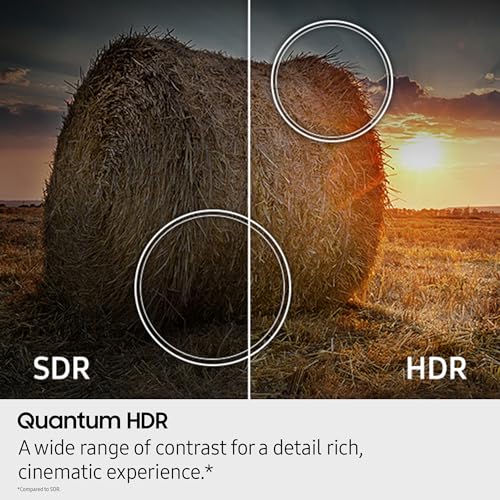
High Dynamic Range (HDR) content promises more lifelike images with brighter highlights and darker shadows, but it requires a TV capable of displaying those extremes. This is where the technology gap becomes most apparent.
The Samsung QN85D excels at brightness, reaching levels that make HDR content truly impactful. Whether you're watching a sunrise scene or explosion effects, the Mini LED backlighting can create those "wow" moments that justify HDR's existence. The quantum dots convert this brightness into vibrant, accurate colors that pop off the screen.
In contrast, our research consistently shows the Samsung Q7F struggling with HDR brightness. Professional reviews describe HDR content as appearing dim and muted, lacking the visual impact that makes modern content exciting. The direct LED backlighting simply can't produce enough brightness to make HDR highlights stand out from regular content.
For regular TV watching (called SDR content), both TVs perform adequately in moderately lit rooms, though the QN85D handles bright environments much better. If your TV sits opposite windows or in a room with lots of ambient lighting, the brightness difference becomes crucial for visibility.
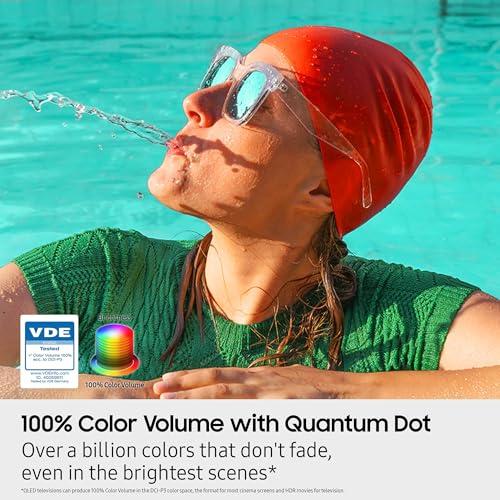
Both TVs use quantum dot technology, but implementation matters enormously. The Samsung QN85D achieves 100% color volume, meaning it can display vibrant colors at any brightness level. Whether you're watching animated movies with saturated colors or nature documentaries with subtle earth tones, the quantum dots maintain accuracy across the brightness spectrum.
The Samsung Q7F includes quantum dots but can't fully utilize them due to brightness limitations. Colors appear accurate at normal viewing levels but lose their vibrancy in HDR content where brightness and color must work together.
Both models offer Samsung's "Color Booster" setting for those who prefer more saturated, vivid colors, though the default settings provide more natural reproduction. The difference lies in the QN85D's ability to maintain color accuracy even in bright scenes where the Q7F begins to struggle.
Gaming capabilities represent one of the starkest differences between these generations of Samsung TVs. The gaming landscape has evolved dramatically since 2020, with new consoles and graphics cards demanding features that simply didn't exist in budget TVs a few years ago.
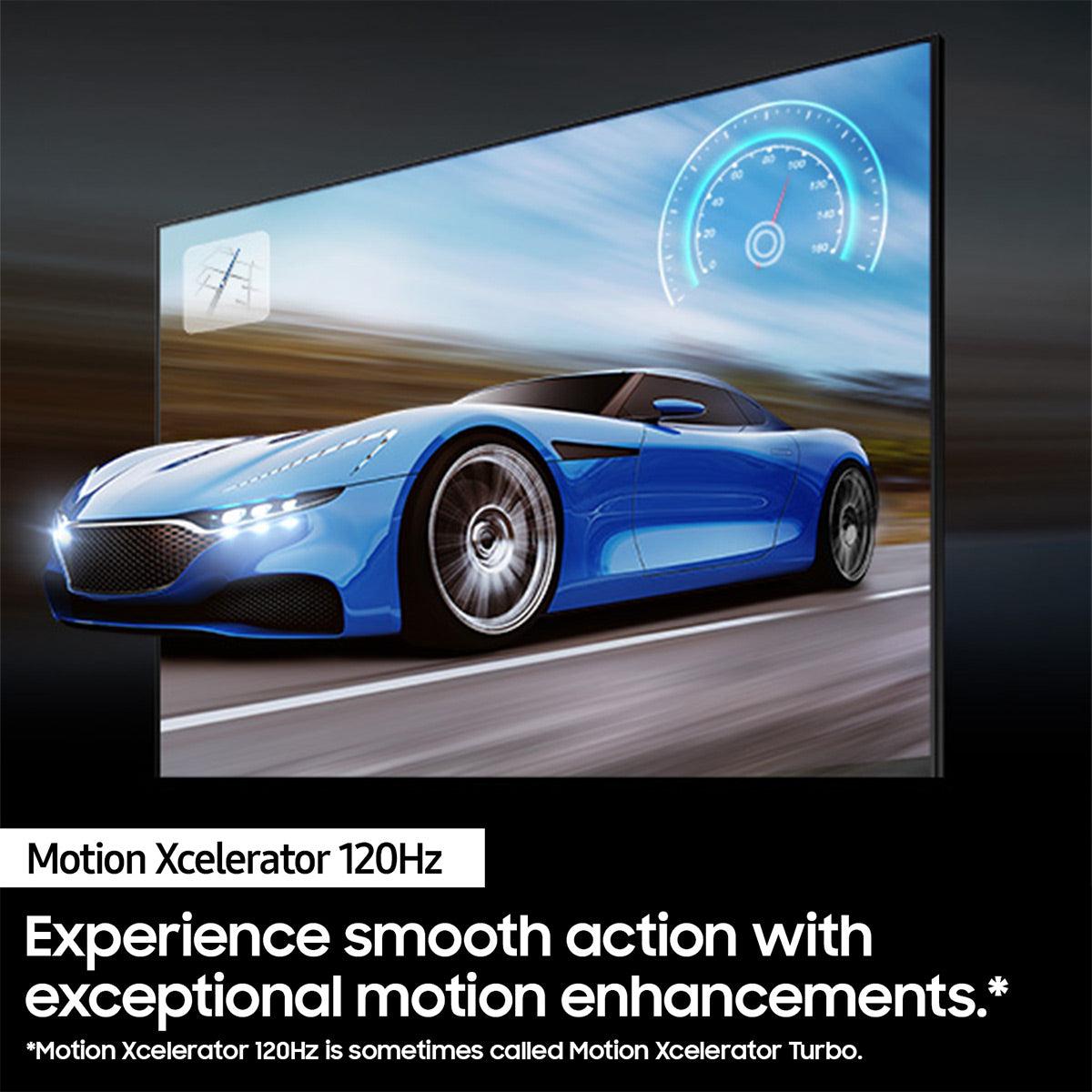
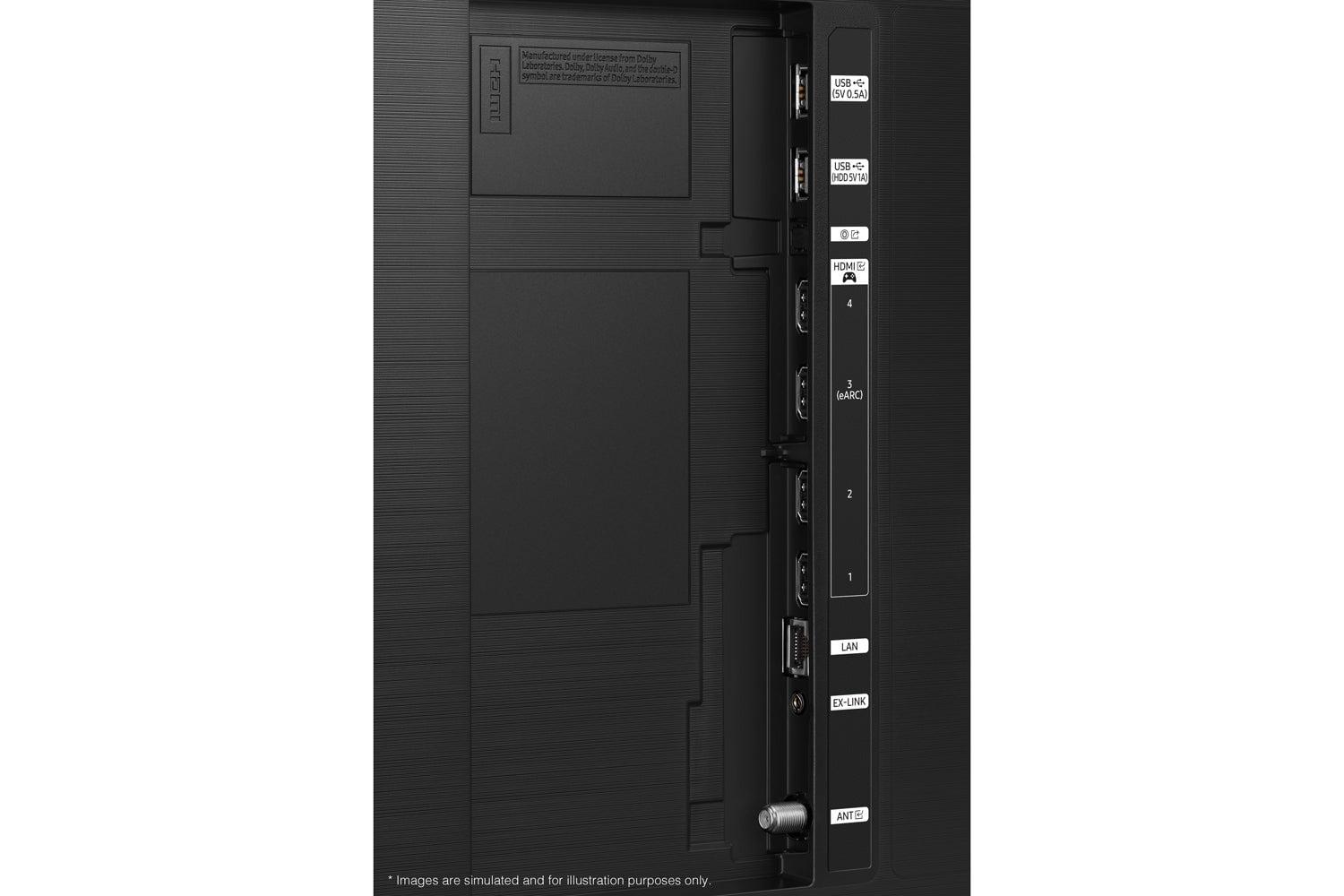
The Samsung QN85D includes four HDMI 2.1 ports supporting 4K resolution at 120Hz refresh rate. To understand why this matters, imagine watching a football where players move in smooth, fluid motion versus slightly choppy movement. The 120Hz refresh rate displays twice as many frames per second as traditional 60Hz TVs, creating dramatically smoother motion for gaming and sports.
Variable Refresh Rate (VRR) technology prevents screen tearing - those annoying horizontal lines that appear when your console or PC can't maintain consistent frame rates. Auto Low Latency Mode (ALLM) automatically switches the TV to its fastest response mode when gaming, reducing the delay between pressing a button and seeing the action on screen.
The Samsung Q7F lacks all these modern gaming features. It's limited to 60Hz refresh rate and standard HDMI connections, making it incompatible with the full capabilities of PlayStation 5, Xbox Series X, or high-end PC gaming. For casual gaming or older consoles, it performs adequately, but it won't unlock the potential of modern gaming hardware.
Our research shows input lag (response time) is reasonable on both models for casual gaming, but competitive gamers will strongly prefer the QN85D's comprehensive feature set and faster response times.
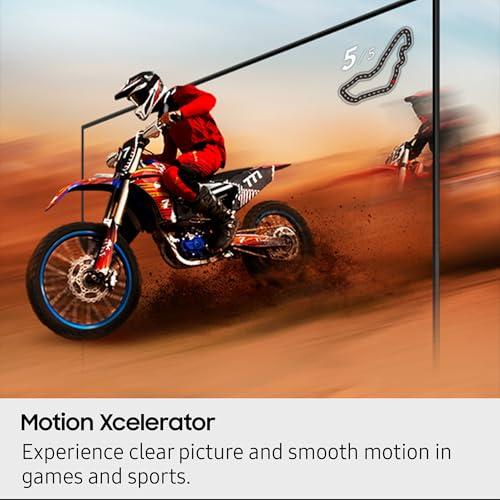
Sports fans and action movie enthusiasts need to pay special attention to motion handling capabilities. Fast-moving content can appear blurry or stuttering on TVs with poor motion processing.
The Samsung QN85D includes Motion Xcelerator Turbo 120Hz, which combines the 120Hz refresh rate with sophisticated processing to create smooth motion. Whether you're watching NFL games, Formula 1 racing, or action sequences, the higher refresh rate and better processing maintain clarity during rapid movement.
The Samsung Q7F uses basic 60Hz motion processing, which handles most content adequately but shows limitations with very fast movement. Some blur becomes visible during rapid camera pans or quick sports action, though it's not necessarily deal-breaking for casual viewing.
Both TVs handle movie content well, with minimal stutter during slow panning shots - a common issue with budget displays. The QN85D simply provides more headroom for demanding content.
TV audio has improved significantly in recent years, though both models benefit from external sound systems for serious home theater use.
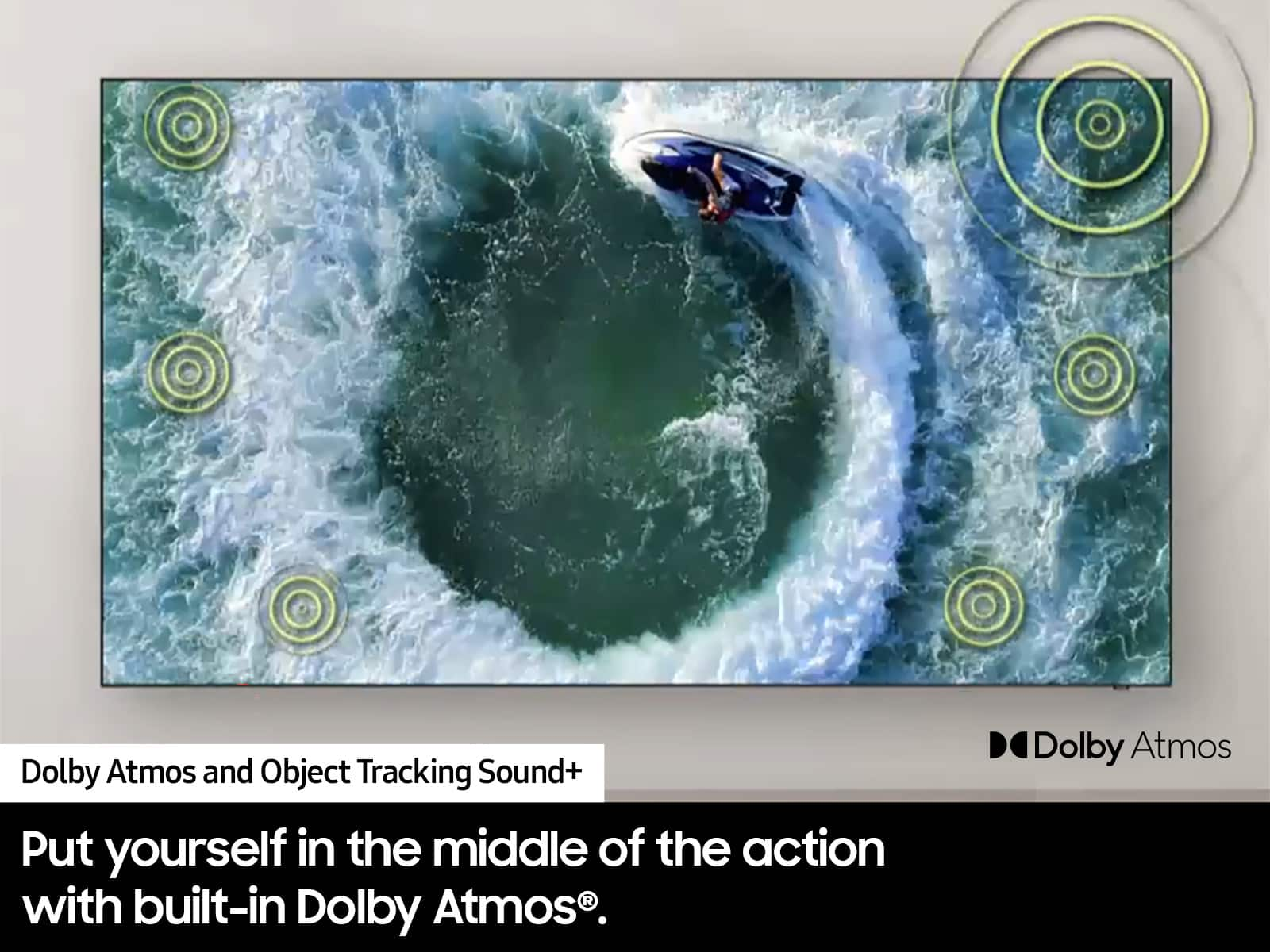
The Samsung QN85D includes Dolby Atmos and Object Tracking Sound Lite, creating a more immersive audio experience. Object Tracking Sound moves audio effects across the screen to match on-screen action - when a car drives from left to right, the sound follows that movement. While not a replacement for a dedicated sound system, it's surprisingly effective for built-in speakers.
The Samsung Q7F uses basic 20W stereo speakers that provide clear dialogue and adequate volume for most rooms. They lack the spatial audio effects and bass response of the QN85D, but they're functional for everyday viewing.
Both TVs support external audio systems through HDMI eARC or optical connections, though the QN85D offers more advanced audio format support for high-end sound systems.
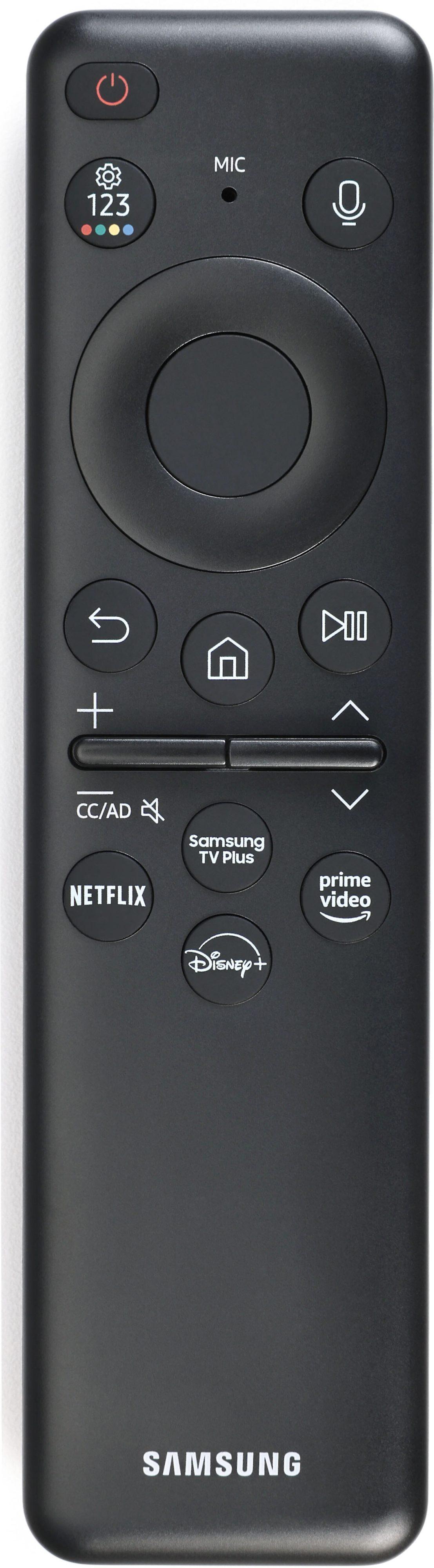
Samsung's Tizen operating system runs on both TVs, providing access to all major streaming services, Samsung TV Plus free content, and voice control through Bixby or Alexa. The interface is fast and intuitive, with minimal differences between models.
The key distinction lies in processing power. The Samsung QN85D uses Samsung's NQ4 AI Gen2 processor, which provides faster navigation, better upscaling of lower-resolution content, and more sophisticated image processing. When watching older TV shows or lower-quality streams, the superior processor creates noticeably sharper, cleaner images.
Both TVs integrate with Samsung's SmartThings ecosystem for smart home control and support features like Multi-View for watching multiple sources simultaneously.
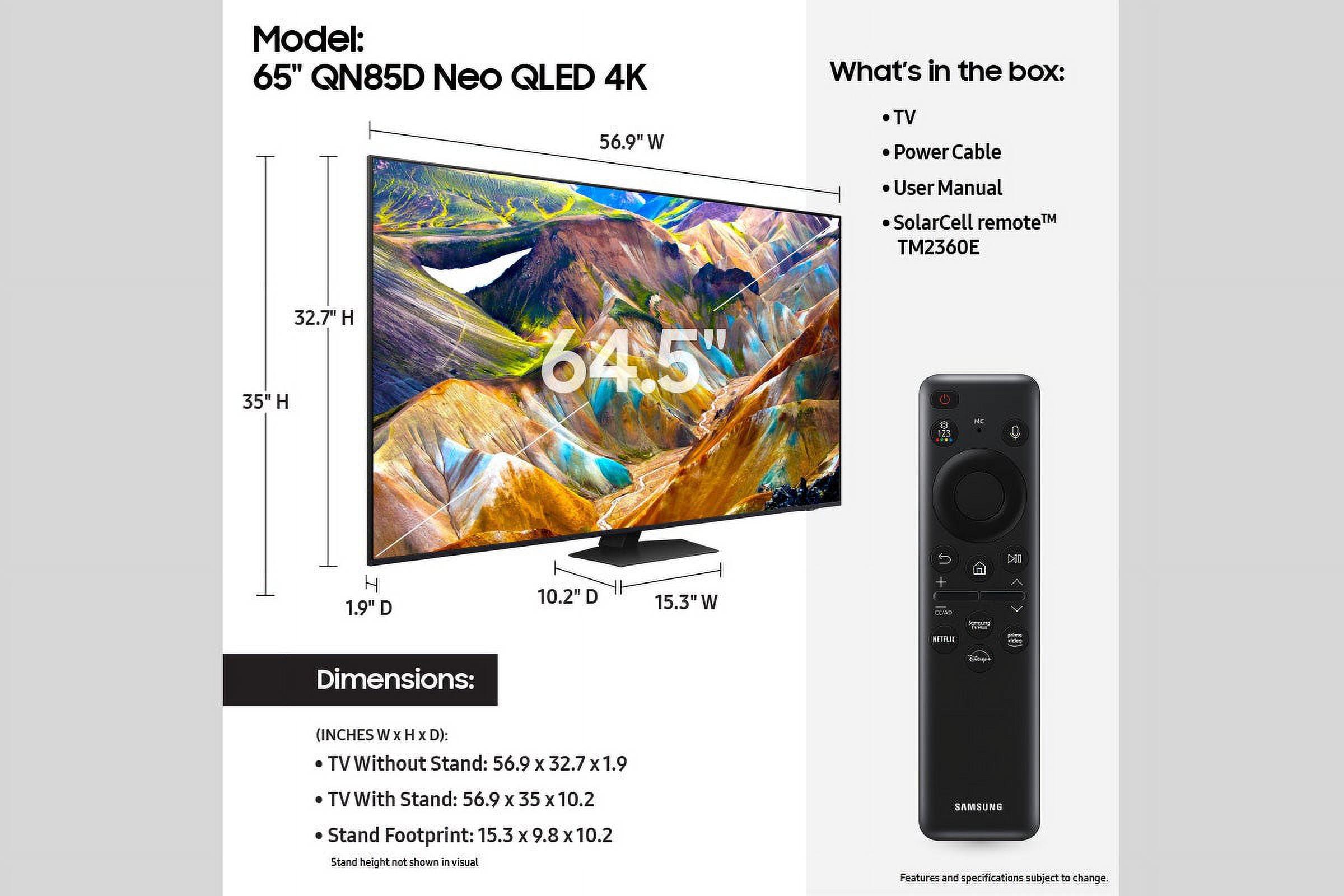
The Samsung Q7F emphasizes portability and flexibility with its lightweight 37.7-pound construction and adjustable stand that accommodates different furniture setups. The build quality is solid for the price point, though some flex in the back panel reflects the budget-focused construction.
The Samsung QN85D feels more substantial with premium materials and robust construction. The additional weight comes from the more complex Mini LED backlighting system and enhanced internal components.
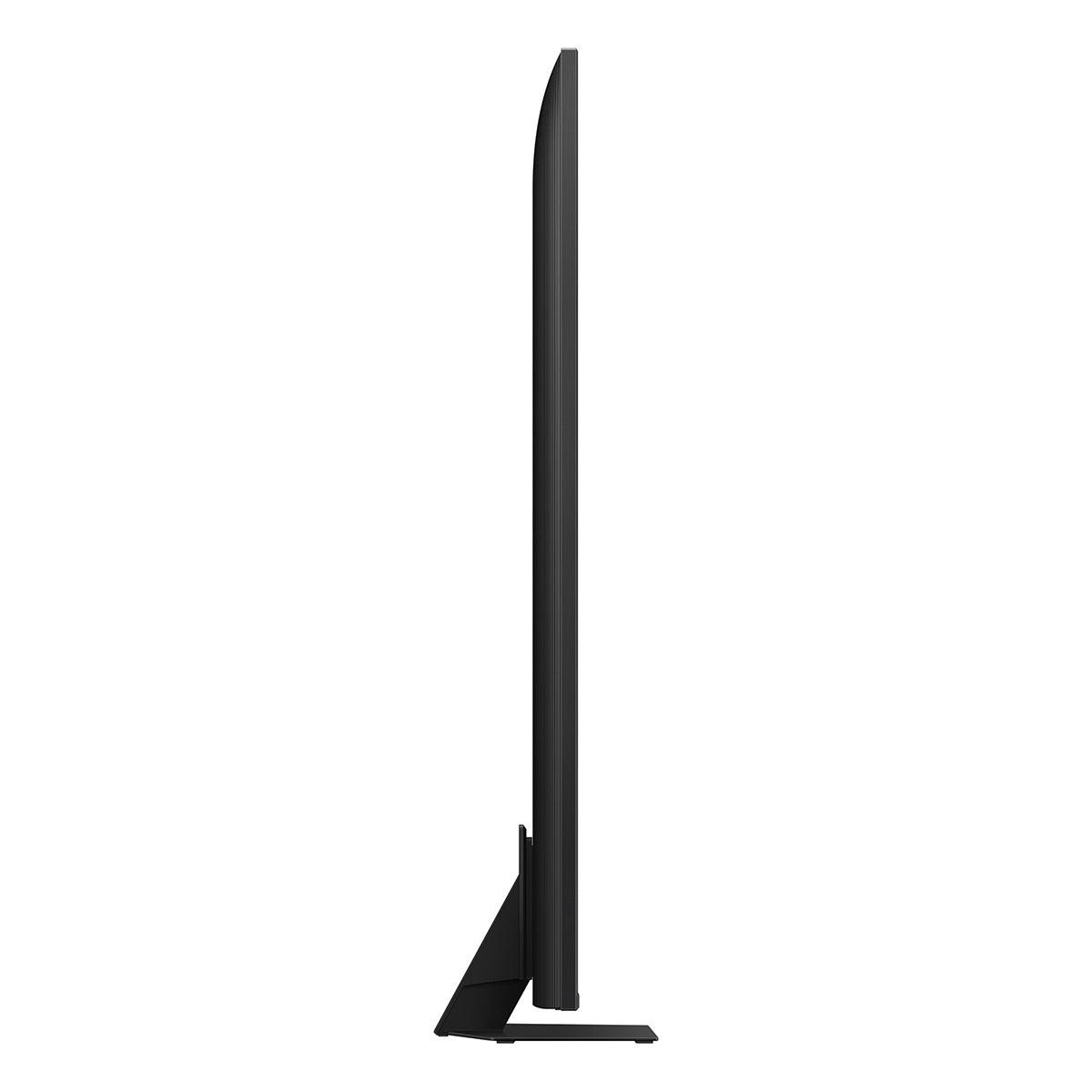
Both models offer clean, modern aesthetics that work well in most living rooms, with minimal bezels and effective cable management systems.
Both TVs use VA (Vertical Alignment) panel technology, which provides excellent contrast when viewed straight-on but loses color accuracy and brightness when viewed from the sides. This makes them less ideal for wide seating arrangements where people might watch from extreme angles.
For typical living room setups where viewers sit relatively centered, this isn't problematic. However, families with wraparound seating might want to consider OLED alternatives that maintain picture quality from any viewing angle.
At the time of writing, the Samsung Q7F represents exceptional value for budget-conscious buyers seeking quantum dot technology. It delivers the Samsung brand experience and basic QLED benefits at a price point that undercuts many competitors. For secondary bedrooms, apartments, or situations where picture quality isn't the primary concern, it provides solid performance.
The Samsung QN85D costs significantly more but delivers technology that was flagship-level just a few years ago. The Mini LED backlighting alone represents a massive upgrade that justifies much of the price premium for serious TV enthusiasts.
For dedicated home theater setups, the Samsung QN85D is the clear choice. The superior contrast ratio creates the dramatic blacks essential for cinematic experiences, while the peak brightness handles HDR content as directors intended. The comprehensive connectivity ensures compatibility with high-end audio systems and future content formats.
The Samsung Q7F can work in casual home theater setups, particularly in smaller rooms or for viewers who primarily watch standard definition content. However, the brightness limitations become more apparent in dark viewing environments where contrast deficiencies are most visible.
Choose the Samsung Q7F if you:
Choose the Samsung QN85D if you:
The Samsung Q7F and Samsung QN85D represent different philosophies in TV design. The Q7F focuses on delivering quantum dot technology at the lowest possible price, accepting significant performance compromises. The QN85D embraces Mini LED advancement to deliver picture quality that was unimaginable in budget TVs just a few years ago.
For most buyers, the decision comes down to budget versus performance priorities. The Q7F provides adequate performance for casual viewing, while the QN85D delivers the dramatic improvement in contrast, brightness, and features that justify its higher price for serious TV enthusiasts.
The technology gap between these models illustrates how rapidly TV display technology continues to evolve. Mini LED backlighting has transformed mid-tier TVs into displays that rival yesterday's flagship models, making it an exciting time to upgrade - if your budget allows for the premium features that truly enhance the viewing experience.
| Samsung 65-Inch Q7F Series QLED Smart TV 2025 Display | Samsung 65" QN85D Neo QLED 4K Smart TV |
|---|---|
| Backlighting Technology - The foundation of picture quality | |
| Direct LED without local dimming (basic lighting control) | Mini LED with 160 local dimming zones (precise brightness control) |
| Contrast Ratio - Critical for deep blacks and movie watching | |
| Poor contrast with grayish blacks | Excellent 160,000:1+ contrast ratio with true blacks |
| Peak Brightness - Essential for HDR content and bright rooms | |
| Very dim, struggles with HDR and bright environments | Excellent brightness for impactful HDR and room lighting |
| Gaming Features - Modern console and PC compatibility | |
| Basic 60Hz, no HDMI 2.1, VRR, or 120Hz support | Four HDMI 2.1 ports, 4K@120Hz, VRR, ALLM support |
| Motion Handling - Smoothness for sports and action | |
| 60Hz with basic motion processing | 120Hz with Motion Xcelerator Turbo for smooth motion |
| Audio System - Built-in sound quality | |
| 20W 2.0 channel speakers (adequate for casual use) | Dolby Atmos with Object Tracking Sound Lite (immersive audio) |
| Processor - Smart features and upscaling performance | |
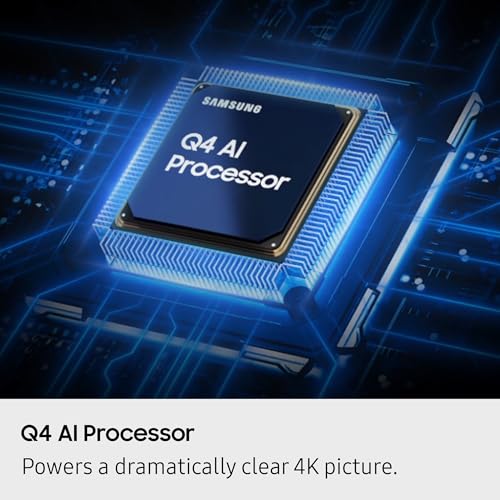
| Q4 AI Processor (basic 4K upscaling) | NQ4 AI Gen2 Processor (advanced upscaling and processing) |
| Color Performance - Vibrancy and accuracy | |
| Basic quantum dots, limited color volume in HDR | 100% color volume with quantum dots, vibrant at all brightness levels |
| Panel Type - Viewing angle considerations | |
| VA panel (good contrast, narrow viewing angles) | VA panel (excellent contrast, narrow viewing angles) |
| Build Quality - Construction and design | |
| Lightweight 37.7 lbs, basic plastic construction | Premium build, heavier construction with Mini LED components |
| Target Use Case - Best suited for | |
| Budget secondary TV, casual viewing, moderate lighting | Primary home theater TV, gaming, bright rooms, premium content |
| Future-Proofing - Longevity of features | |
| Limited by 60Hz and basic connectivity | Modern gaming ready, comprehensive HDMI 2.1 support |
The biggest difference is backlighting technology. The Samsung Q7F uses basic direct LED lighting without local dimming, while the Samsung QN85D features advanced Mini LED backlighting with 160 local dimming zones. This gives the QN85D dramatically better contrast, deeper blacks, and superior HDR performance.
The Samsung QN85D is significantly better for gaming. It offers four HDMI 2.1 ports, 4K@120Hz support, Variable Refresh Rate (VRR), and Auto Low Latency Mode (ALLM) - features that the Samsung Q7F completely lacks. The Q7F is limited to 60Hz and basic gaming capabilities.
The Samsung QN85D handles bright rooms much better due to its superior peak brightness capabilities. The Samsung Q7F struggles with brightness and has poor reflection handling, making it difficult to see clearly in well-lit environments or rooms with windows.
Yes, if picture quality matters to you. The Samsung QN85D delivers dramatically better contrast, brightness, and color performance thanks to its Mini LED technology. The Samsung Q7F offers basic QLED features but with significant compromises in HDR performance and overall picture quality.
The Samsung QN85D is far superior for movies and HDR content. Its Mini LED backlighting creates the deep blacks and bright highlights that make HDR impactful, while the Samsung Q7F displays HDR content as dim and muted, lacking visual impact.
Both TVs run Samsung's Tizen operating system with similar app support and smart features. However, the Samsung QN85D has a more powerful NQ4 AI Gen2 processor that provides faster navigation and better upscaling of lower-resolution content compared to the Q7F.
The Samsung QN85D is better for sports due to its 120Hz refresh rate and Motion Xcelerator Turbo technology, which creates smoother motion during fast-paced action. The Samsung Q7F uses basic 60Hz motion processing that can show some blur during rapid movement.
Both the Samsung Q7F and Samsung QN85D use VA panels, so they have similar narrow viewing angles. Colors and contrast degrade when viewed from the side on both models, making them best suited for centered viewing positions.
The Samsung QN85D offers superior audio with Dolby Atmos and Object Tracking Sound Lite technology that creates more immersive sound. The Samsung Q7F has basic 20W stereo speakers that provide adequate volume and clarity but lack the spatial audio effects.
The Samsung QN85D is the clear choice for home theater use. Its superior contrast ratio, peak brightness, and comprehensive connectivity make it ideal for dark room movie watching and premium content. The Q7F can work for casual home theater setups but lacks the performance for serious cinematic experiences.
The Samsung QN85D is much better future-proofed with its HDMI 2.1 ports, 120Hz support, and modern gaming features that will remain relevant for years. The Samsung Q7F lacks modern connectivity and is already limited by current gaming console capabilities.
Choose the Samsung Q7F if you need a budget-friendly secondary TV for casual viewing in moderate lighting. Choose the Samsung QN85D if you want superior picture quality, modern gaming features, bright room performance, or plan to use it as your primary entertainment display.
We've done our best to create useful and informative comparisons to help you decide what product to buy. Our research uses advanced automated methods to create this comparison and perfection is not possible - please contact us for corrections or questions. These are the sites we've researched in the creation of this article: bestbuy.com - rtings.com - bestbuy.com - youtube.com - youtube.com - youtube.com - samsung.com - samsung.com - samsung.com - billsmith.com - costco.com - samsung.com - hometechnologyreview.com - hometechnologyreview.com - bestbuy.com - samsung.com - bestbuy.com - samsung.com - hometechnologyreview.com - samsung.com - samsung.com - bestbuy.com - rtings.com - youtube.com - youtube.com - avsforum.com - youtube.com - samsung.com - videoandaudiocenter.com - shopjetson.com - mysoundconcepts.com - samsung.com - merlinstv.com - youtube.com - samsung.com - samsung.com

Privacy Policy
Terms and Conditions - Affiliate Policy
Home Security
© Copyright 2008-2026.
11816 Inwood Rd #1211, Dallas, TX 75244